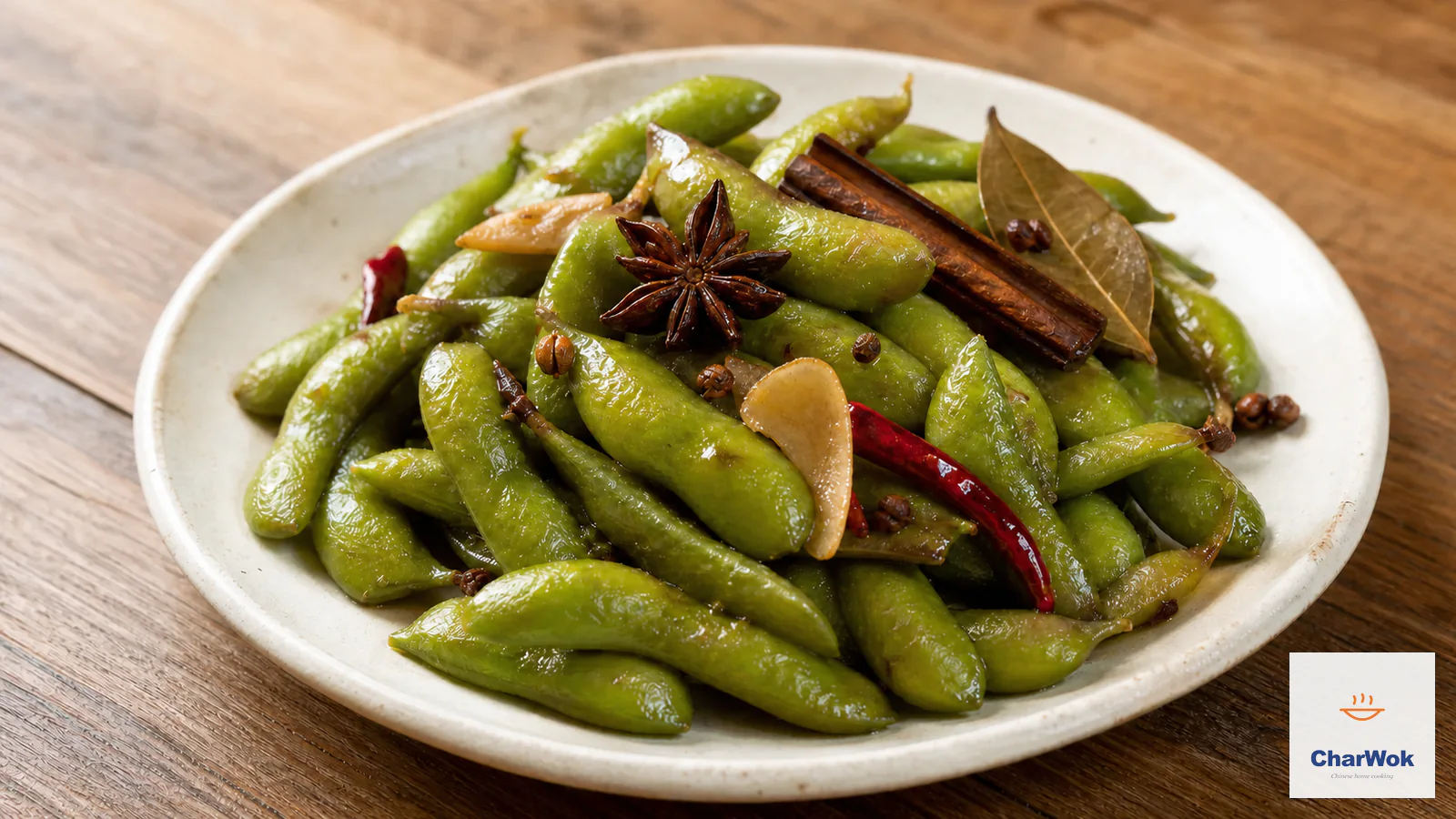
There is a particular kind of disappointment that comes from a bowl of cold soybean pods at a restaurant: gray-green, wrinkled, with a faint boiled-water smell and almost no seasoning past the salt on the shell. Good five spice edamame (wu xiang mao dou, 五香毛豆) is the opposite. The beans stay bright green and firm enough to pop between your teeth, and the brine has crept all the way through the pod so that each bean carries the warm, sweet-savory hum of star anise, cinnamon, and Sichuan pepper. It is one of the cheapest, lowest-effort things you can make, and most home versions still miss it because the method gets rushed.
The whole trick is this: you do not cook the flavor into the beans. You cook the beans barely, then let the spices do their work cold, over hours. Skip the steep and you have salted soybeans. I learned this the hard way the first time I tried to "save time" by simmering everything together. The pods went khaki, the texture turned mealy, and the spice flavor sat on the surface. The recipe below is the version I make every summer for friends who hover over the bowl before the rest of dinner is ready.
At a glance: Blanch trimmed edamame pods 2 minutes in salted boiling water, shock in cold water, then steep for 4 hours (or overnight) in the refrigerator in a separate brine simmered from ginger, star anise, cassia, Sichuan pepper, bay leaf, and dried chilies. Cool both the pods and brine promptly before combining them. Plan for about 10 minutes of active work and 4 hours of refrigerated steeping.
What this dish is, and where it comes from
Mao dou literally means "hairy beans," the fuzz on the pod. These are soybeans picked green and immature, before they dry into the beige seeds that become soy milk and tofu. In northern and eastern China they are everyday bar food, sold by the plate alongside cold beer at night markets, and equally common as an after-school snack cooked plain in salted water. The five-spice version is a slightly more deliberate treatment: the same quick blanch, then a fragrant brine borrowed from the cold-appetizer (liang cai, 凉菜) tradition that also produces things like smashed cucumber salad, wood ear mushroom salad, and napa cabbage salad.
What you are aiming for, in order of importance: a bean that holds its shape and snaps slightly when you bite it, a green that still looks alive, and a spice note that lingers a few seconds after you swallow. Color and texture are non-negotiable. Flavor you can tune to taste.
Ingredients
Ingredients at a glance
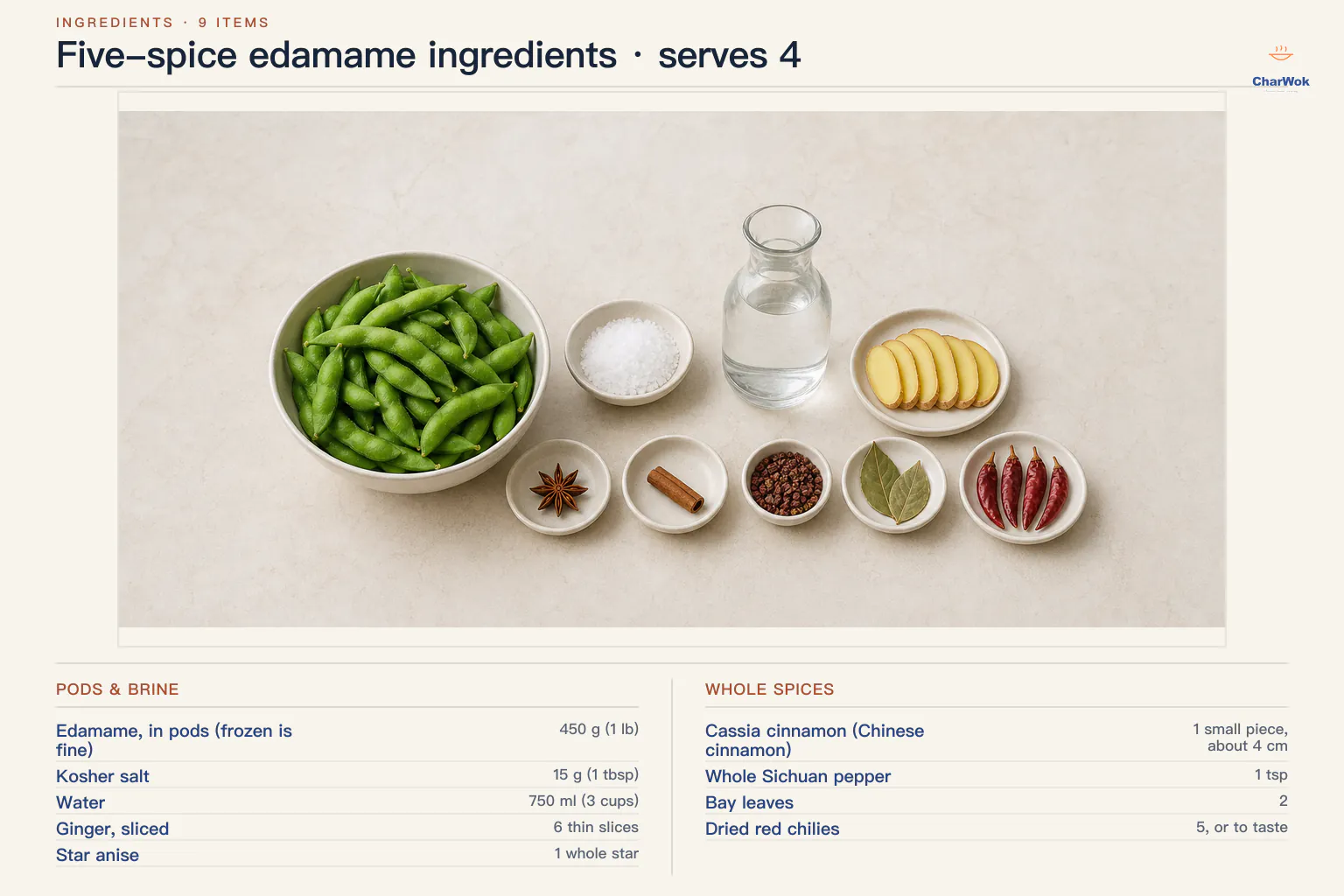
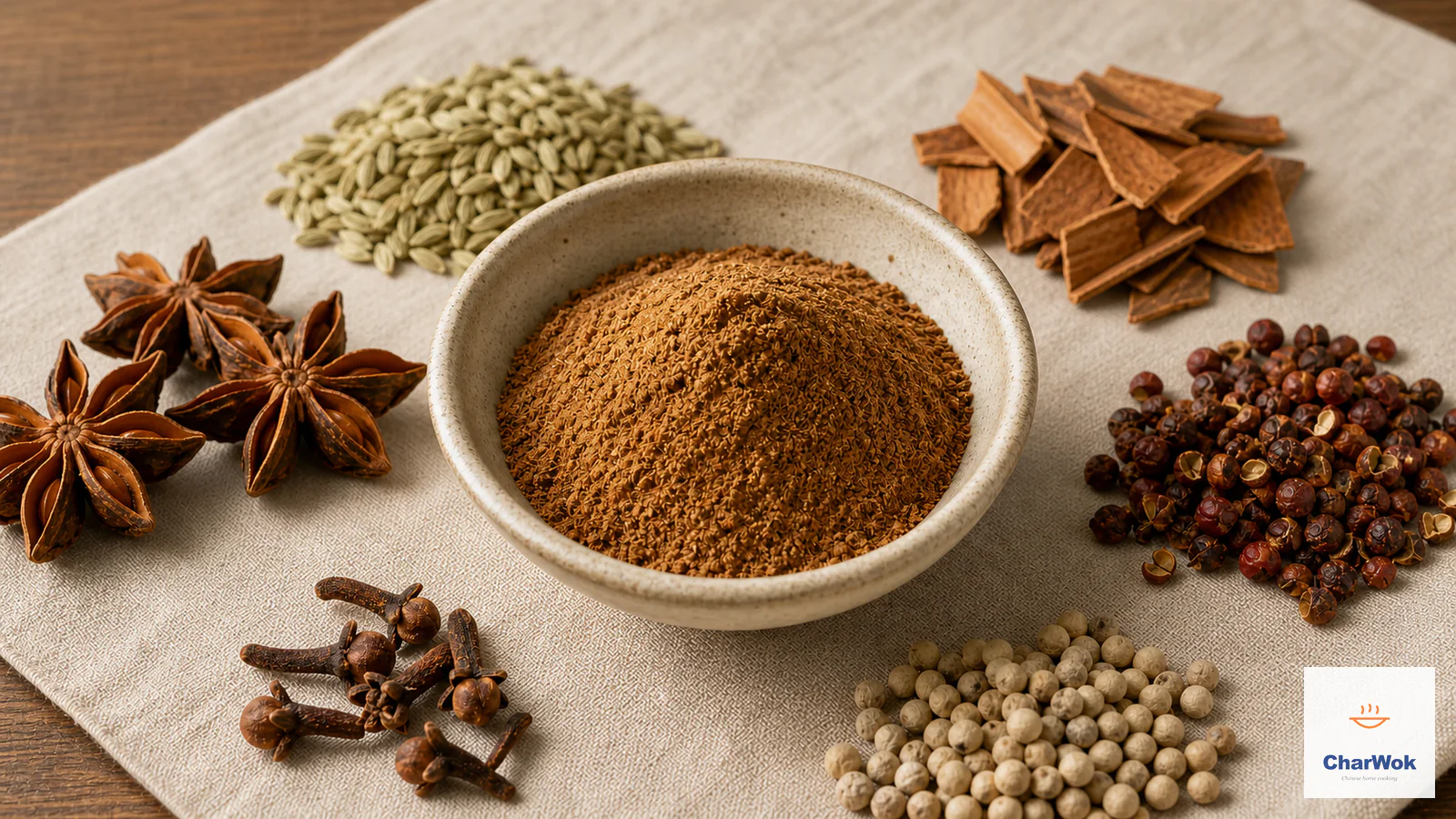
The spices here are the classic backbone of Chinese five spice minus the ground form. I prefer using whole spices for a brine because they infuse cleanly and you can fish them out. Ground five-spice turns the water muddy and coats the pods in grit. If you want to understand the lineup itself, the Sichuan pepper guide walks through that numbing-warm ingredient in detail.
| Ingredient | Amount | Notes / substitute |
|---|---|---|
| Edamame, in pods (frozen is fine) | 450 g (1 lb) | No need to thaw. Sold as "fresh green soybeans" in the freezer aisle of most US supermarkets and Asian grocers. |
| Kosher salt | 15 g (1 tbsp) | This is intentionally mild. Taste the brine before steeping; add more if you like it assertive. Fine table salt works but use about 2 tsp less. |
| Water | 750 ml (3 cups) | Just enough to cover the pods with room to boil. |
| Ginger, sliced | 6 thin slices | Cuts the "beany" edge. A smashed piece works too; avoid powder, which clouds the brine. |
| Star anise | 1 whole star | The dominant note. Skip only as a last resort. |
| Cassia cinnamon (Chinese cinnamon) | 1 small piece, about 4 cm | Cassia is bolder than regular cinnamon sticks; either will do. |
| Whole Sichuan pepper | 1 tsp | Adds the gentle numbing warmth. Toast briefly in a dry pan for more punch. See how to grind any leftover Sichuan pepper. |
| Bay leaves | 2 | Standard Mediterranean bay is fine. |
| Dried red chilies | 5, or to taste | Optional. Er jing tiao or facing-heaven chilies add aroma more than heat. Leave whole and intact for a gentle warmth; snip them for more fire. |
The method, with the why behind each step
Read the steps once before you start. The flow is blanch, shock, infuse, steep. Each move has a specific reason, and skipping one is exactly how the dish goes wrong.
- Snip the stem end off every pod. Use scissors and nip the corner where the pod attaches to the stem. You are opening a small door into the pod so the brine can reach the bean. You do not need to cut the other end. This is the single dullest step and the one most people skip, then wonder why the middle beans taste bland. Two minutes of scissor work pays off in the bowl.
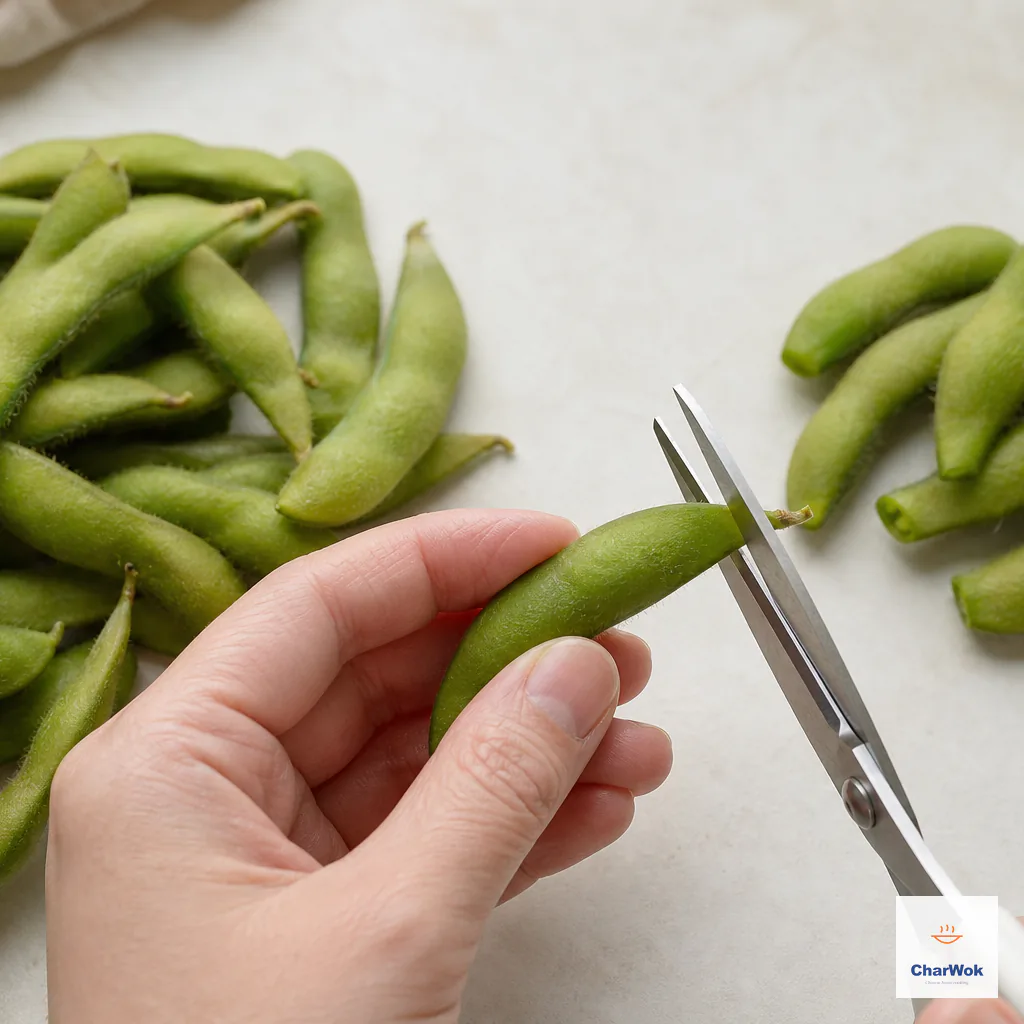
Open only the stem corner of each pod so the brine can enter without cutting into the beans
- Bring 750 ml water to a full, rolling boil in a saucepan, then add the salt and the pods. The water should be at a hard boil before the pods go in, not a simmer. Dropping cold or frozen pods into barely-hot water leaches color and stretches the cook. The large volume of boiling water recovers its boil fast, which is what you want.
- The moment the water returns to a boil, drop the heat and count 2 minutes. Two minutes is the window where the bean is fully cooked but still firm. At about 3 minutes the texture crosses into soft and starts losing its snap. If you like a softer bean, push to 3 minutes, but know you are trading the characteristic bite. I stay at 2.
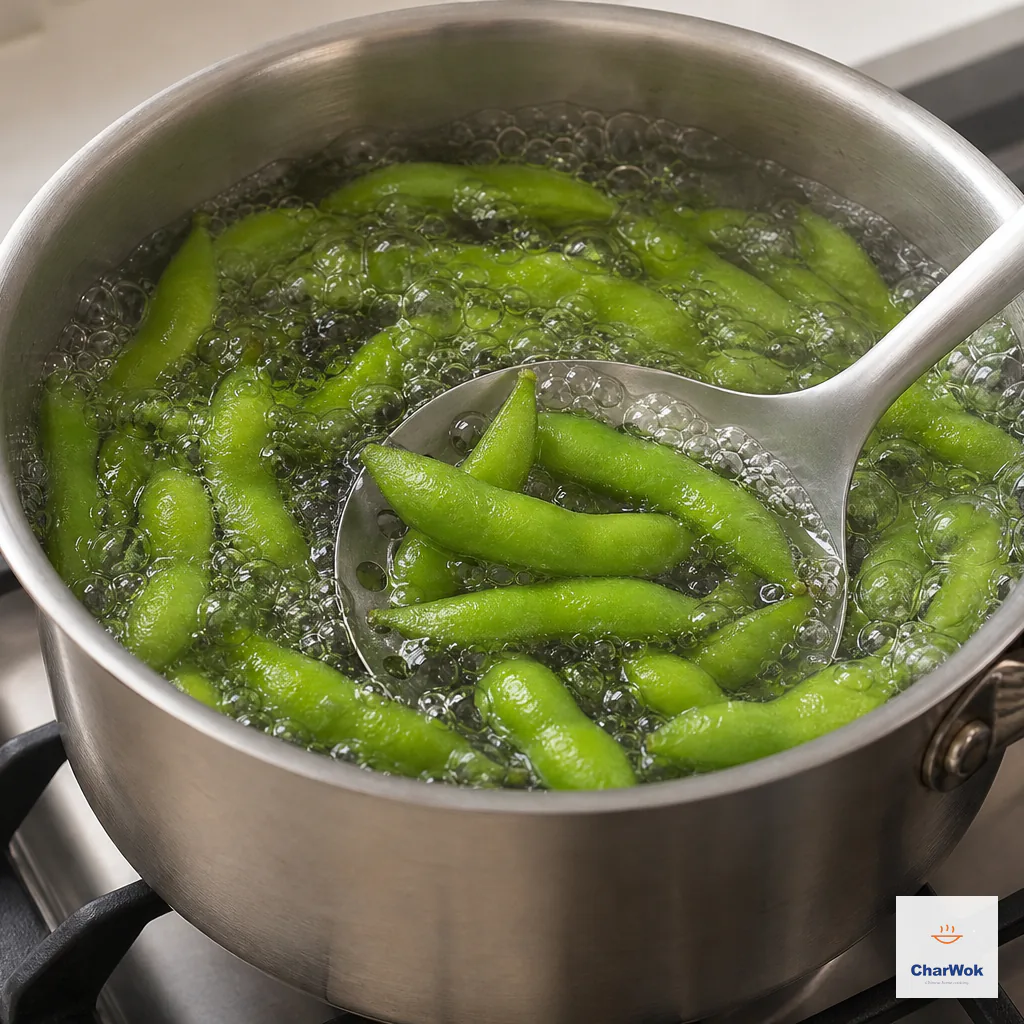
Once the water returns to a boil, lower the heat and cook two minutes for firm beans
- Scoop the pods straight into a bowl of cold water. Use a slotted spoon and move fast. This is the shock, and it does two things: it stops the cooking instantly so the beans do not carry over to mush, and it sets the chlorophyll so the green stays vivid instead of fading to olive. Leave the hot cooking water in the pan. You are about to use it.
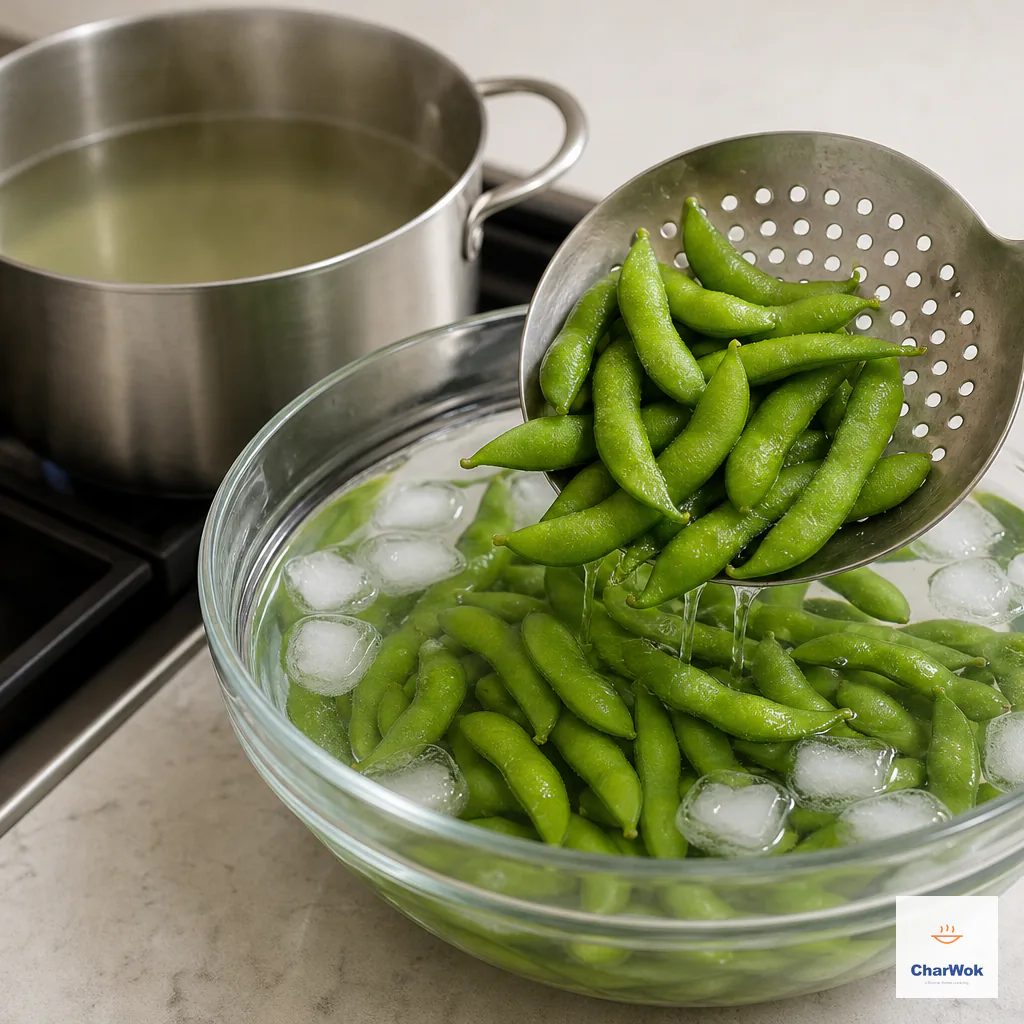
Move the pods straight into cold water to stop the cooking and keep the green vivid
- Add the ginger, star anise, cassia, Sichuan pepper, bay leaves, and chilies to the hot water and simmer 5 minutes on low. You are making a tea, not a stock. A long hard boil drives off the volatile aromatics in star anise and Sichuan pepper and leaves you with a flat, bitter liquid. Five gentle minutes is enough to pull the flavor out; any longer and the cinnamon starts to taste medicinal.
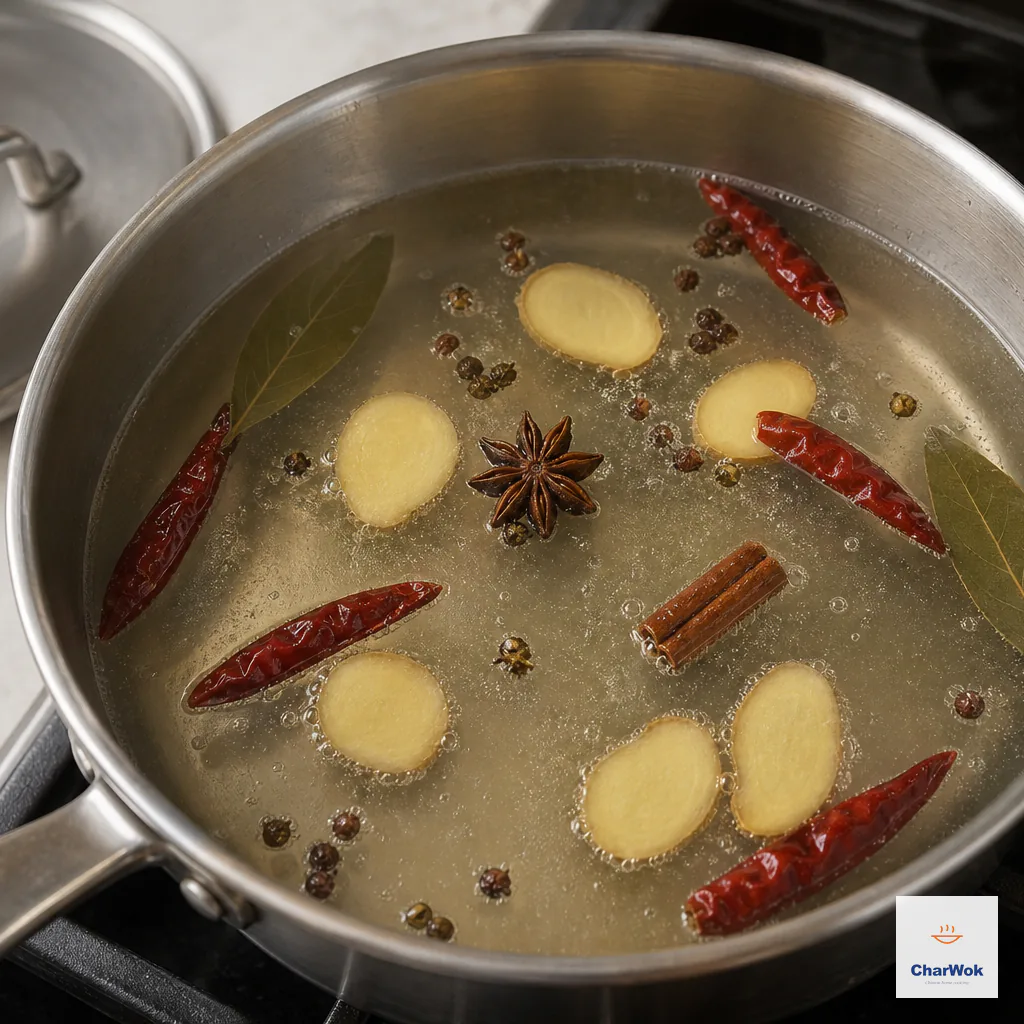
Use small lazy bubbles for five minutes, then cool the brine so the aromatics stay fragrant rather than bitter
- Cool the brine promptly. Set the saucepan in a larger bowl of ice water and stir the brine occasionally until it is no longer warm. Pouring hot brine over the pods would continue cooking them, while leaving a pot to drift slowly to room temperature keeps it warm longer than necessary.
- Drain the cold pods, put them in a container, and pour the cooled brine (spices and all) over them. Make sure the pods are submerged, cover the container, and put it straight into the refrigerator.
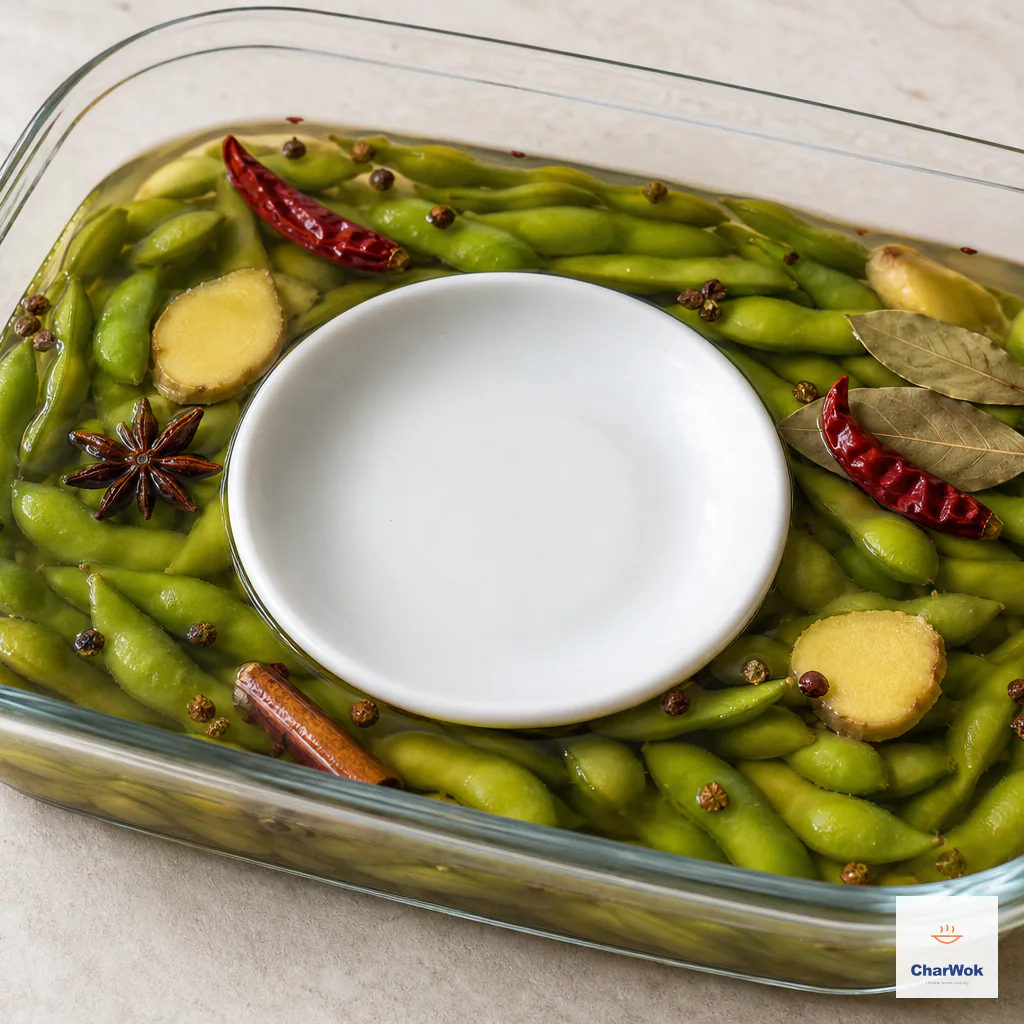
Cool the edamame and brine promptly, then keep every pod submerged while it steeps in the refrigerator for at least four hours or overnight.
- Steep 4 hours in the refrigerator, or leave it refrigerated overnight. Four hours gives a clear but present spice note; overnight gives more depth. Do not steep longer than a day, or the pods start to toughen and the chilies take over.
When it goes wrong
This is a forgiving dish, but the failures are consistent. Here is what I see most often, and the fix for each.
Beans are gray-green and soft. Carryover cooking. Either you boiled too long, skipped the cold shock, or poured warm brine over the pods. Next time, shock the pods promptly and cool the brine in an ice bath before combining them. Once the color is gone you cannot bring it back; eat them anyway, they still taste fine.
Beans taste bland in the middle. You skipped the stem snip, or you under-steeped. The pod is a sealed pouch; without an opening, salt and spice only reach the outside. Snip next time, and give it the full 4 hours in the refrigerator.
Brine is bitter or medicinal. Over-simmered spices, especially cinnamon, or too many dried chilies left in too long. Keep the simmer to 5 minutes low, and pull the chilies out of the steeping container if you are going past 4 hours.
Pods are too salty. You measured fine salt like kosher, or you steeped longer than a day. The fix is dilution: add a splash of plain hot water to the container and let it sit an hour to rebalance. Saltiness equalizes slowly, so always taste the brine before the steep and aim for "a little saltier than you'd drink," since most of it never reaches the bean.
Texture is mealy, not snappy. The pods were old. Frozen edamame keeps a long time but does degrade; a bag with heavy frost or ice crystals inside has been through freeze-thaw cycles and the beans will be starchy. Buy a fresh bag.
Variations and what to serve it with
The brine is a template. Once you have the base technique, small changes move the dish around.
Spicier, mala-style. Add an extra teaspoon of Sichuan pepper and a pinch of chili flakes to the steep. This leans the dish toward the mala peanut end of the snack shelf, with that tingling warmth. Toasting the Sichuan pepper dry for 20 seconds before it goes into the brine sharpens the effect.
Lighter, soy-and-ginger. Drop the warm spices and steep instead in a mix of the cooking water, 2 tablespoons soy sauce, a teaspoon of sugar, and extra ginger. This is closer to the ginger-dressed spinach and soybean salad family and reads cleaner on a hot day.
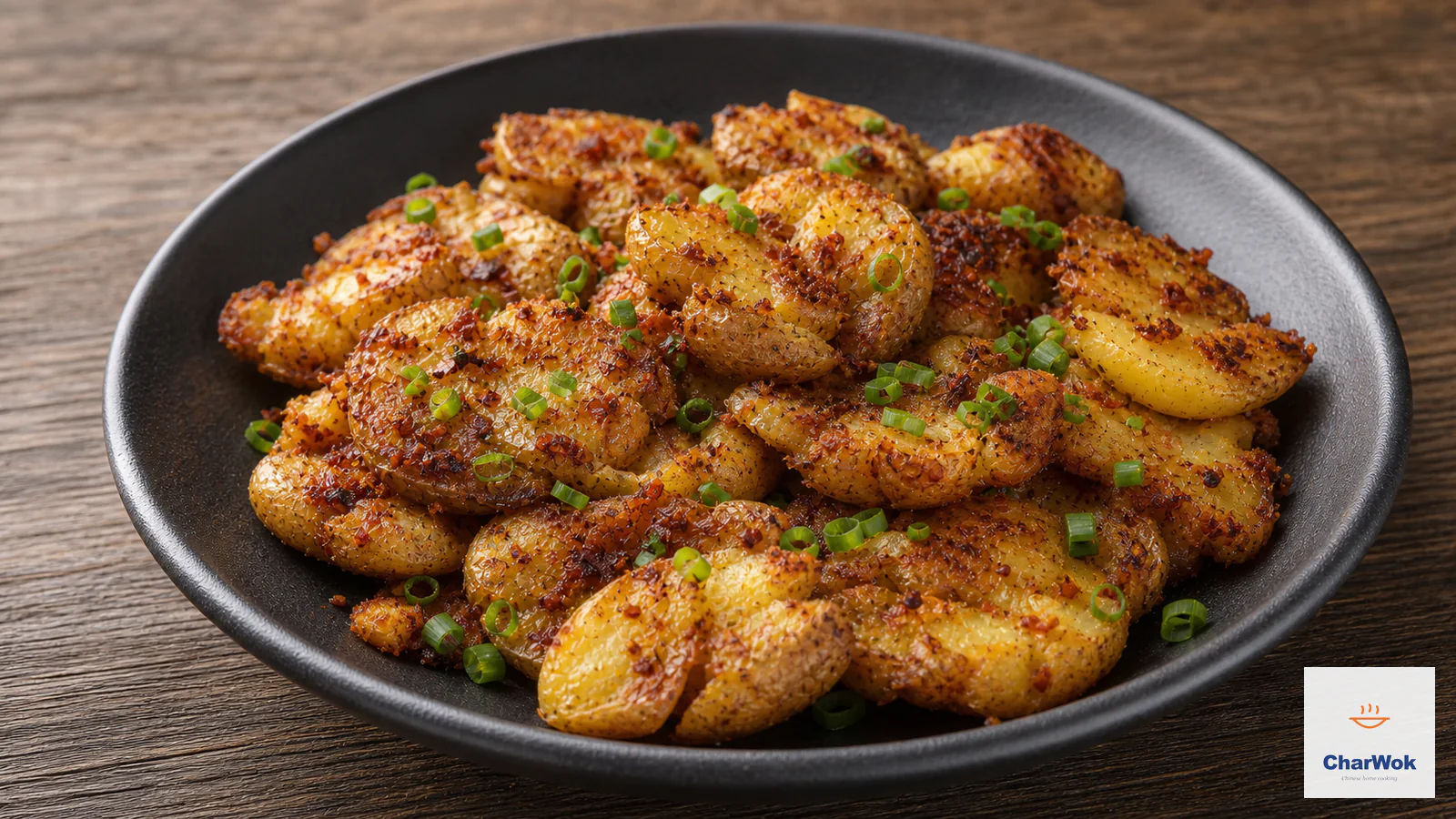
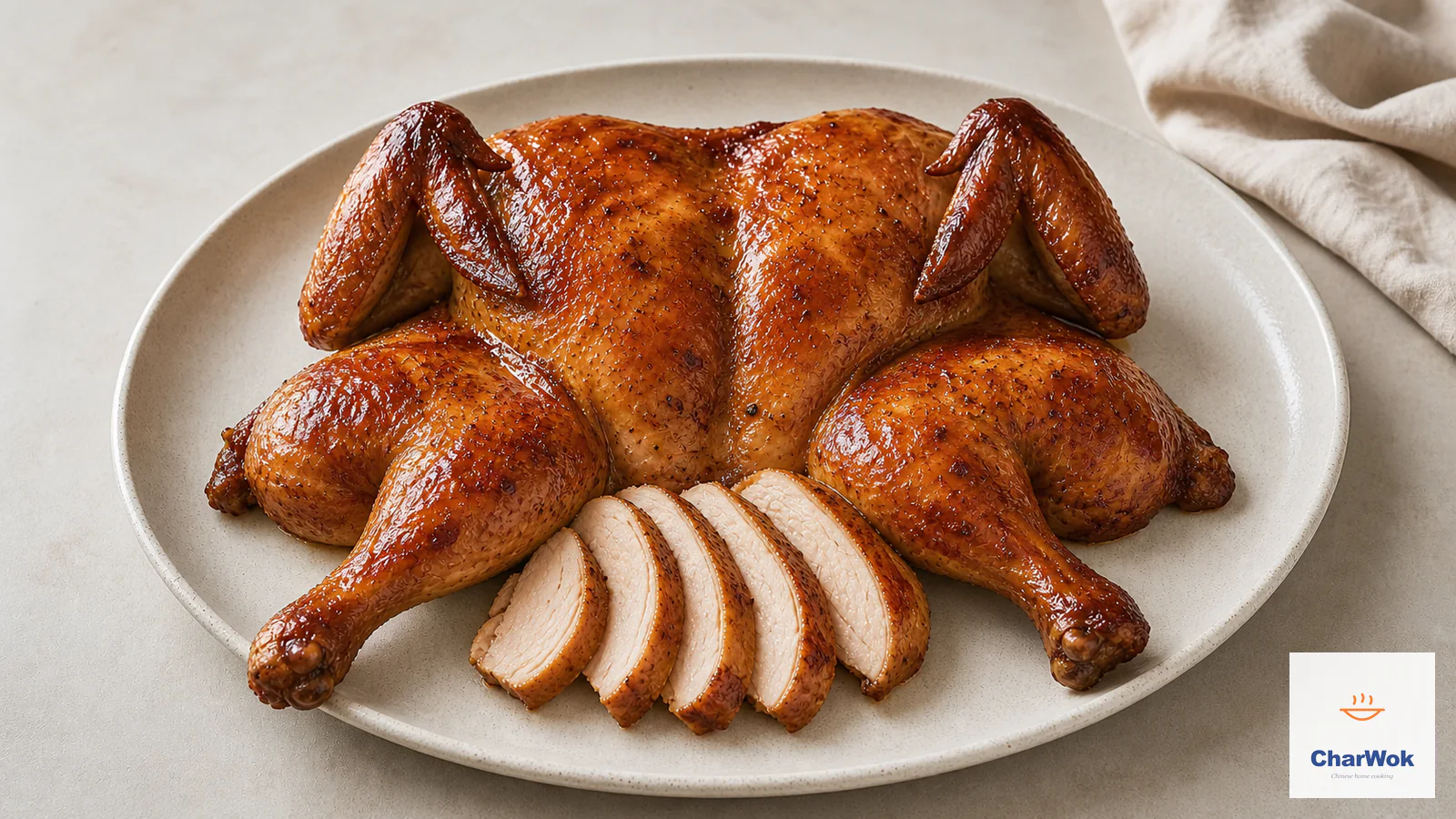
Five-spice everything. The same brine works on firm vegetables and proteins that can take a cold steep. Try it with blanched baby potatoes (the five spice potato idea in pod form), or lean on it as a side to five spice roast chicken for a meal built around one flavor profile.
For a drinks-and-snacks spread, put a bowl of these next to silken tofu with scallion soy dressing and a plate of quick-pickled vegetables. All three are cold, low-effort, and stretch a single cooking session into a full table. They also share a logic with cold Sichuan-dressed noodles, which use the same pepper-and-chili vocabulary in noodle form.
Storage and reheating
Keep the pods submerged in their brine, covered, in the fridge for up to 4 days. They actually improve on day two as the flavor equalizes. Serve them cold, straight from the container. Do not reheat; warming kills the bright color and the fresh snap that is the whole point of the dish.
The leftover brine is worth saving. Strain out the spent spices and freeze the liquid, the same way you would keep a master stock from a braise. Bring it back to a full boil before reusing, top up with a little fresh salt and one or two new spices, and you have a head start on the next batch. After two or three reuses it loses punch and I start fresh.
Quick answers
Do I need to thaw frozen edamame first? No. Put the frozen pods straight into the rolling boil. Thawing softens them and dulls the color before they even hit the water.
Can I use ground five-spice instead of whole spices? You can, and I have, but the brine turns cloudy and leaves a fine grit on the pods. Whole spices infuse cleanly and strain out in one pass.
How long is the minimum soak? Four hours in the refrigerator. An overnight refrigerated steep gives fuller flavor without leaving cooked beans at room temperature.
Why snip the pods at all? The pod is a closed pouch. Without an opening, the salt and spice only touch the shell. The snip is the difference between seasoned beans and seasoned shells.
Is this vegan? Yes. Soybeans and a spice brine, nothing else. It fits vegan and vegetarian tables with no changes.
If you take one thing from this, let it be the cold shock and the long steep. Those two moves are the entire gap between a bowl of salted soybeans and the bright, fragrant version people reach for first. Make the brine once and the rest of the work is mostly waiting.