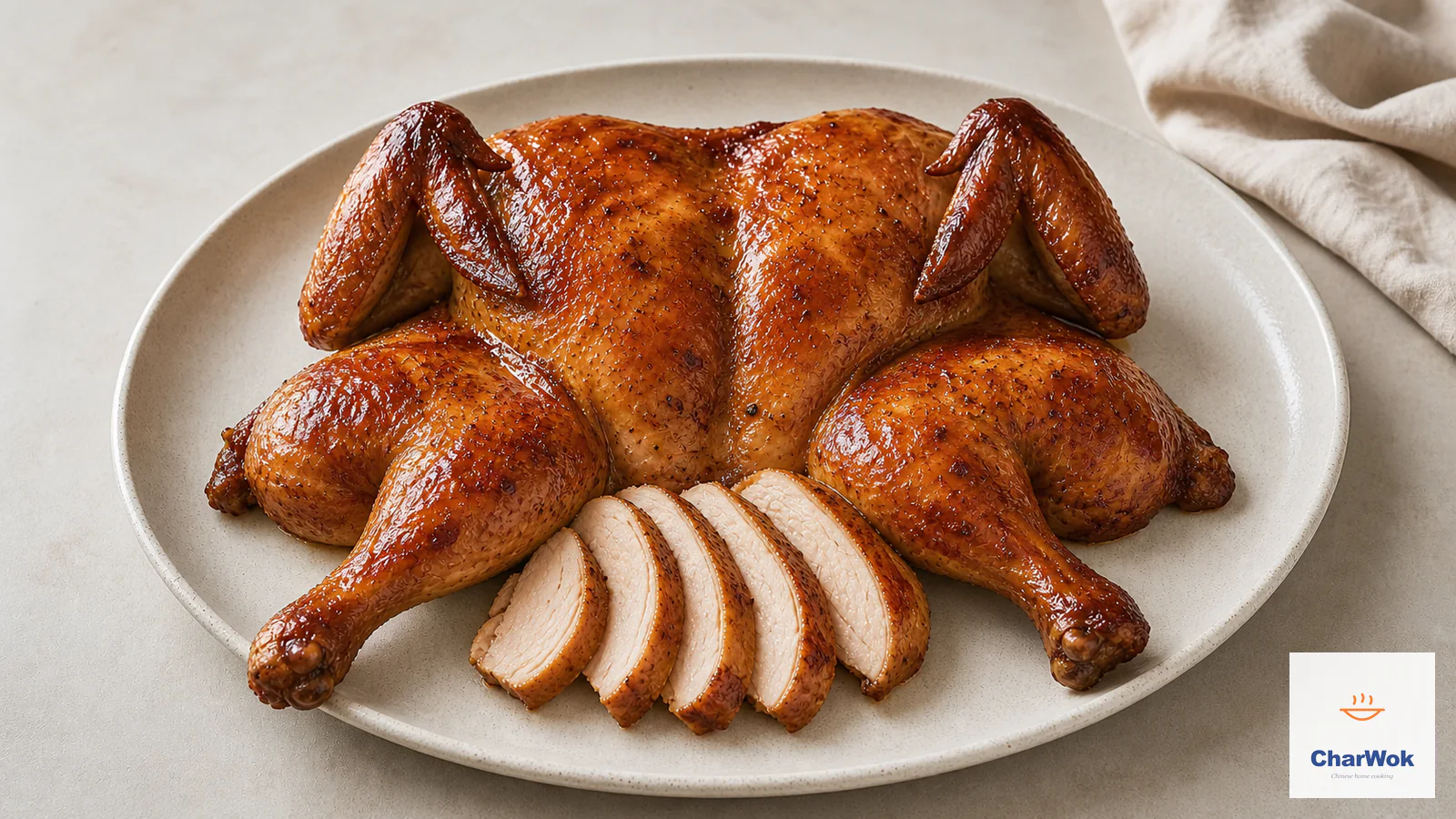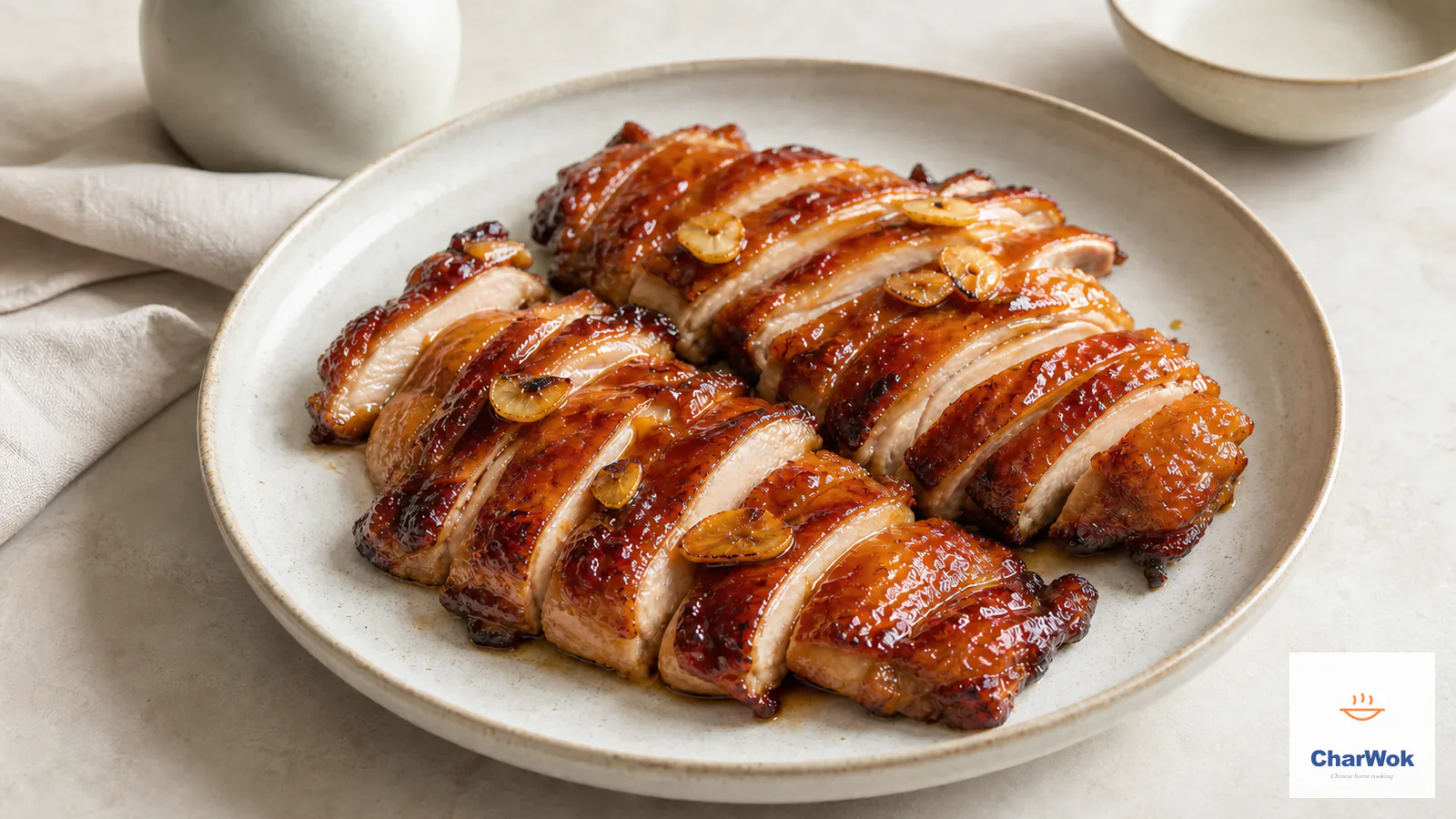
Char siu chicken applies the lacquered, honey-glazed flavor of Cantonese BBQ pork to chicken thighs or wings. The two practical controls are simple: reserve clean sauce before it touches raw chicken, then build the glaze near the end without using color as the doneness test.
The dish borrows its name and its flavor profile from char siu, the Cantonese roast pork you see hanging in shop windows with that glossy red-brown edge. Pork has the fat to survive long roasting; chicken does not. So we shorten the cook, lean on the same sweet-savory marinade, and finish under high heat to set the glaze. You can run this in a convection oven or an air fryer, and the two versions give you slightly different textures, both worth knowing.
Marinate at least 6 hours, ideally overnight. Before the sauce touches raw chicken, reserve 2 tablespoons in a separate covered bowl for the glaze; keep both portions refrigerated. Hold the honey out of the marinade and stir it into that clean reserved sauce only near the end. For 4 skin-on, boneless thighs (about 450 g / 1 lb), use the listed roasting times as check points, then verify every piece reaches 74°C/165°F before serving.
What this dish is, and where it comes from
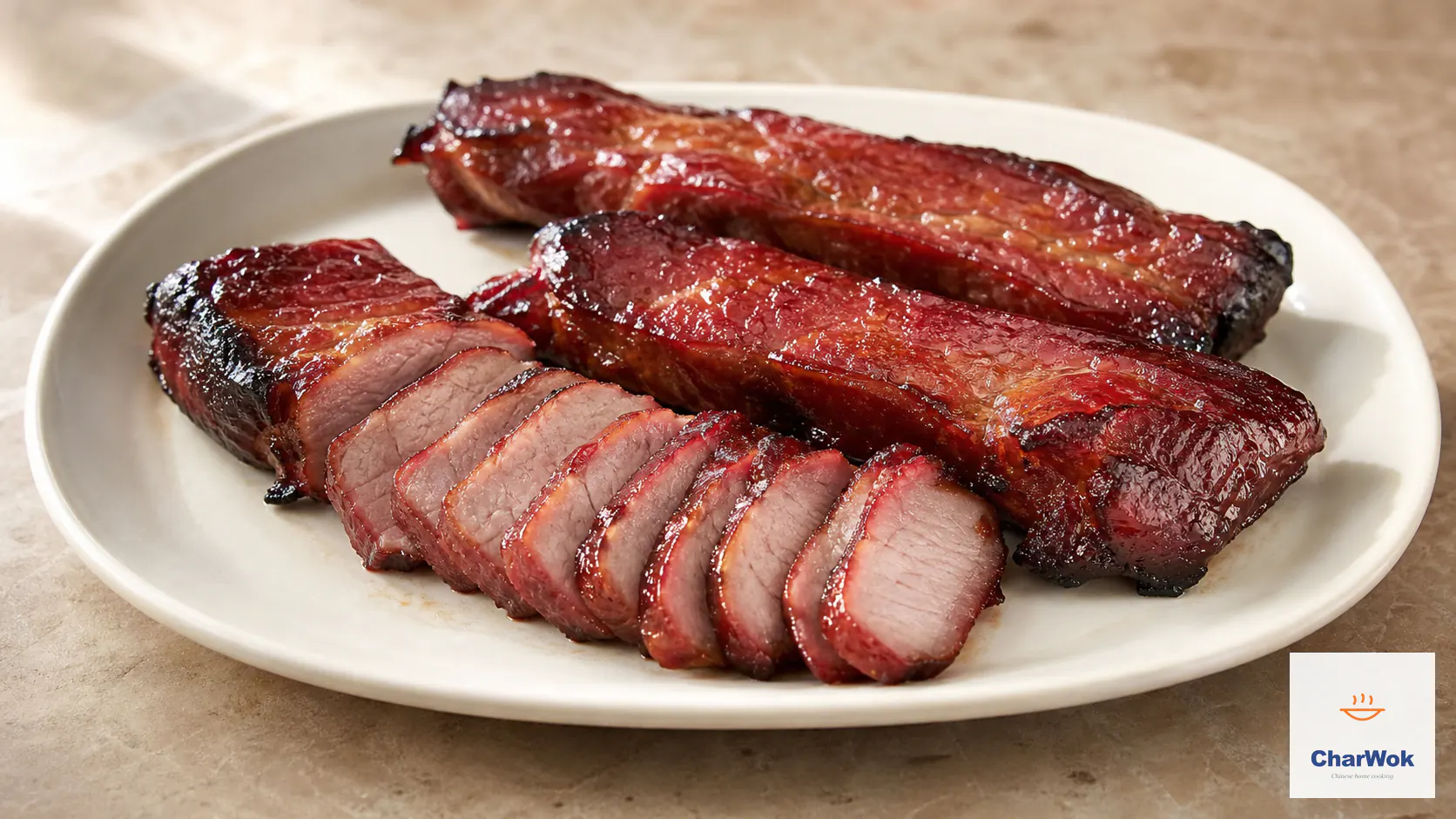
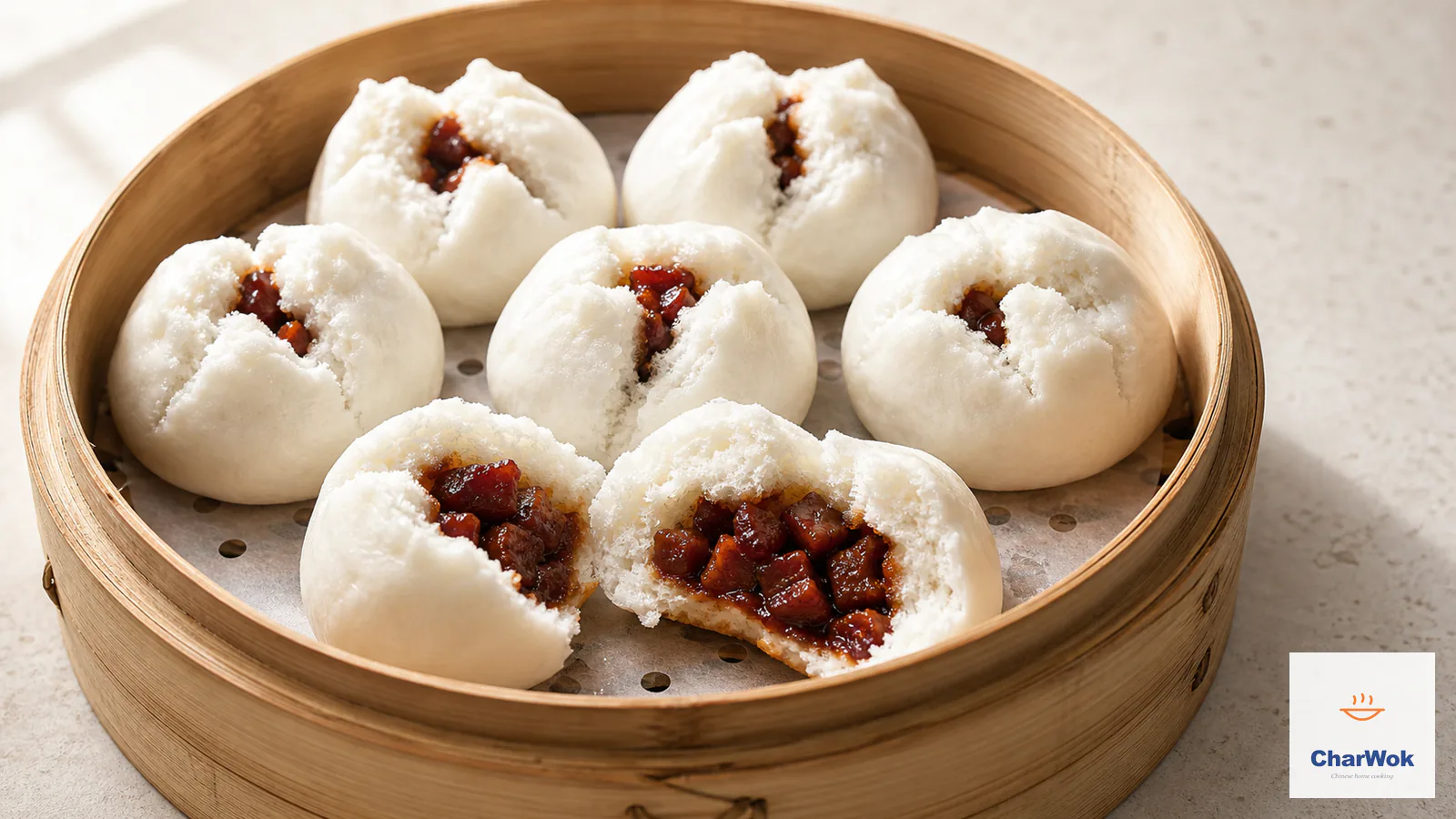
Char siu (叉烧) literally means "fork roast," a reference to the long metal skewers once used to hang strips of marinated pork over a fire or inside a roasting oven. It is a Cantonese specialty, and the same family of sweet, fermented, slightly smoky marinade shows up across southern Chinese cooking, on ribs, on the filling inside steamed BBQ pork buns, and on the sliced pork that tops a bowl of braised pork rice in spirit if not in recipe.
Char siu chicken is a home-cook adaptation, not a dish you will typically see hanging in a roast-meat shop. The shop version is pork because pork is forgiving and rewarms well. The home version exists because chicken thighs are cheap, quick, and already in most refrigerators. Treat it as a weeknight cousin of the real thing rather than a strict translation.
The two cuts that work
Boneless, skin-on thighs suit the oven method: the skin renders under the broiler while the dark meat stays comparatively moist. Skinless thighs also work, but they lose the crisp exterior that distinguishes this version.
Wings suit the air fryer because their smaller sections expose more surface to the glaze. The method below uses thighs for the oven and wing sections for the air fryer; when changing cuts, rely on the measured 74°C/165°F endpoint rather than transferring the same timing.
Chicken breast is less forgiving under the high-heat glaze. If it is the only cut available, a separate pan-sear followed by clean reduced glaze offers more control than the thigh timing below.
Ingredients
Ingredients at a glance
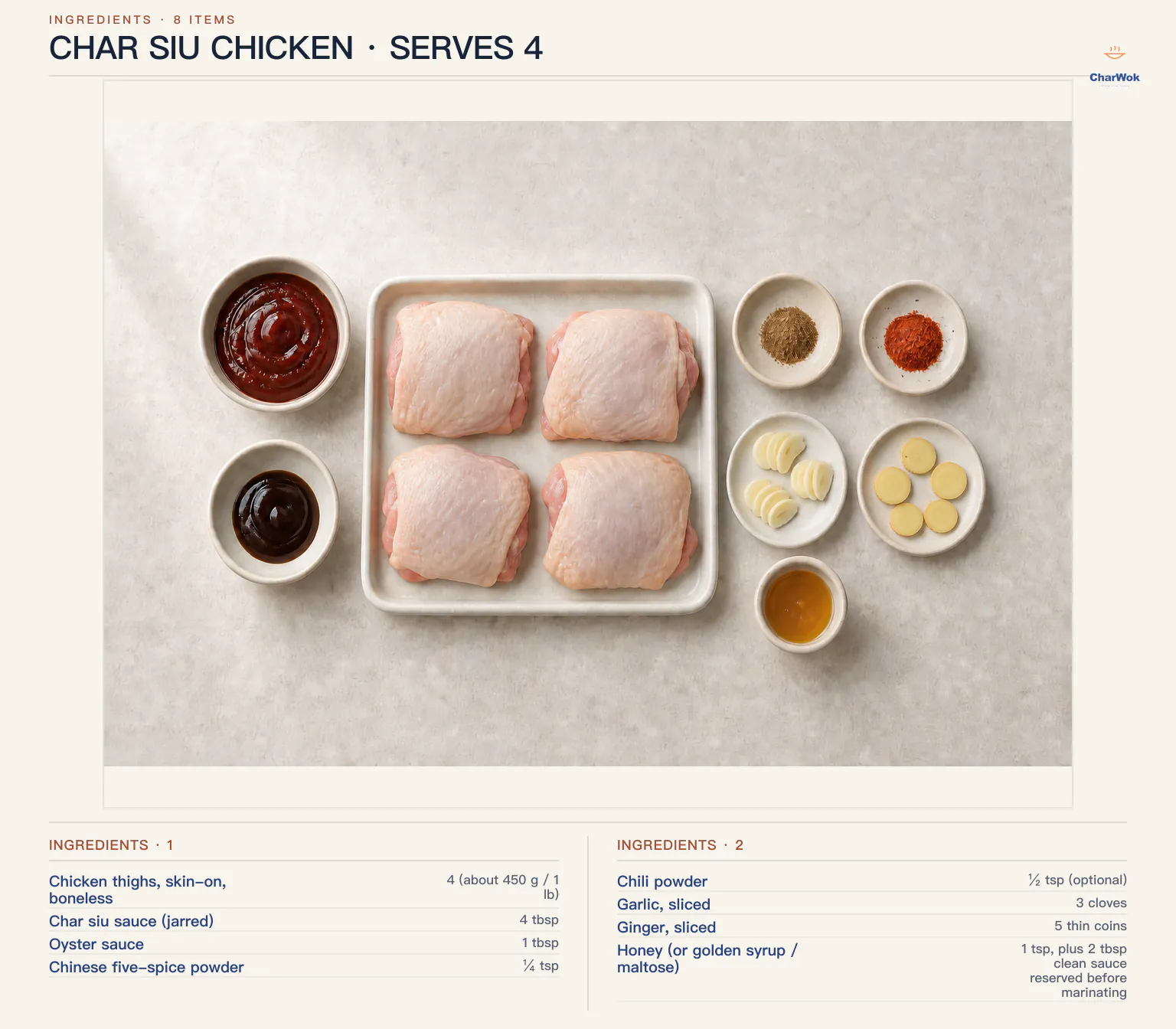
The quantities below cover 4 skin-on boneless thighs, roughly 450 g / 1 lb, which serves 4. For wings, use the same amount of seasoning on about 450 g / 1 lb of wing sections with the tips removed. Jarred char siu sauce is the quickest option; the table also gives a practical from-scratch substitute.
| Ingredient | Amount | Notes / substitute |
|---|---|---|
| Chicken thighs, skin-on, boneless | 4 (about 450 g / 1 lb) | Skinless works but is less good; wings are the air-fryer alternative |
| Char siu sauce (jarred) | 4 tbsp | Or see the from-scratch blend below |
| Oyster sauce | 1 tbsp | Adds body and umami; hoisin is a thicker, sweeter fallback |
| Chinese five-spice powder | ¼ tsp | A little goes far; homemade five-spice is more aromatic |
| Chili powder | ½ tsp (optional) | For warmth, not heat; leave out for a kid-friendly version |
| Garlic, sliced | 3 cloves | Smashed is fine; minced burns more easily on the surface |
| Ginger, sliced | 5 thin coins | Don't skip; it cuts the sweetness of the glaze |
| Honey (or golden syrup / maltose) | 1 tsp, plus 2 tbsp clean sauce reserved before marinating | Maltose is what roast-meat shops use for that glassy finish |
The marinade is doing three things at once
Before the method, it helps to know why this marinade works, because once you understand it you can stop measuring. Three things are happening. Salt from the oyster sauce and soy migrates into the meat and loosens the muscle fibers, which is what keeps the thigh juicy after a hot roast. Sugar from the char siu sauce sits on the surface and caramelizes in the final minutes, which is where the lacquer comes from. And the aromatics, garlic, ginger, five-spice, only penetrate a millimeter or two, so their job is mostly to perfume the surface and the juices that run out into the pan.
Marinating for 6 hours gives the seasoning time to move beyond the surface; overnight is convenient. Keep the chicken refrigerated throughout and do not reuse the raw-chicken marinade for glazing.
Method: oven version (thighs)
- Mix, reserve, and marinate. Combine all the sauce ingredients except the honey in a clean bowl. Before adding any chicken, transfer 2 tablespoons to a separate covered bowl and refrigerate it; this clean portion is for glazing. Put the thighs and the remaining marinade in a resealable bag, squeeze out the air, seal, and rub until the meat is coated. Refrigerate 6 hours, ideally overnight.
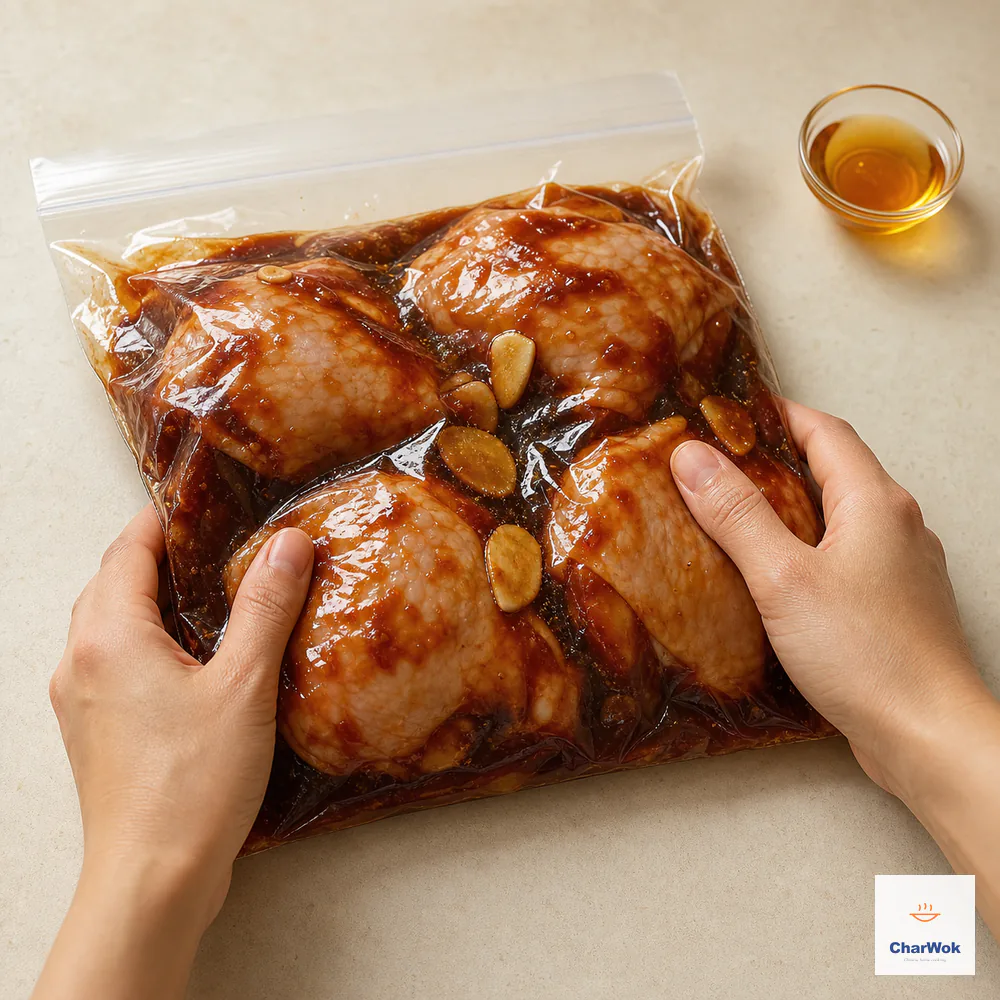
Before the sauce touches raw chicken, reserve 2 tablespoons in a separate covered bowl and refrigerate it. Marinate the 4 thighs in the remaining sauce for at least 6 hours; discard that raw-chicken marinade and add honey only to the clean reserved portion.
- Set up the glaze. When you are ready to cook, stir the honey into the clean sauce you reserved before marinating. Discard the marinade that held the raw chicken; do not brush it onto partially cooked meat.
- Preheat. Heat a convection (fan) oven to 200°C/390°F. If your oven has no fan, use 220°C/425°F; still air cooks cooler than moving air at the same dial setting.
- Build a steam tray. Set a wire rack inside a baking tray and pour in hot water until it sits just below the rack. The water does two jobs: it stops the drips from smoking in your oven, and the gentle steam keeps the thigh surface from drying out before the glaze goes on. Lay the thighs skin-side up on the rack.
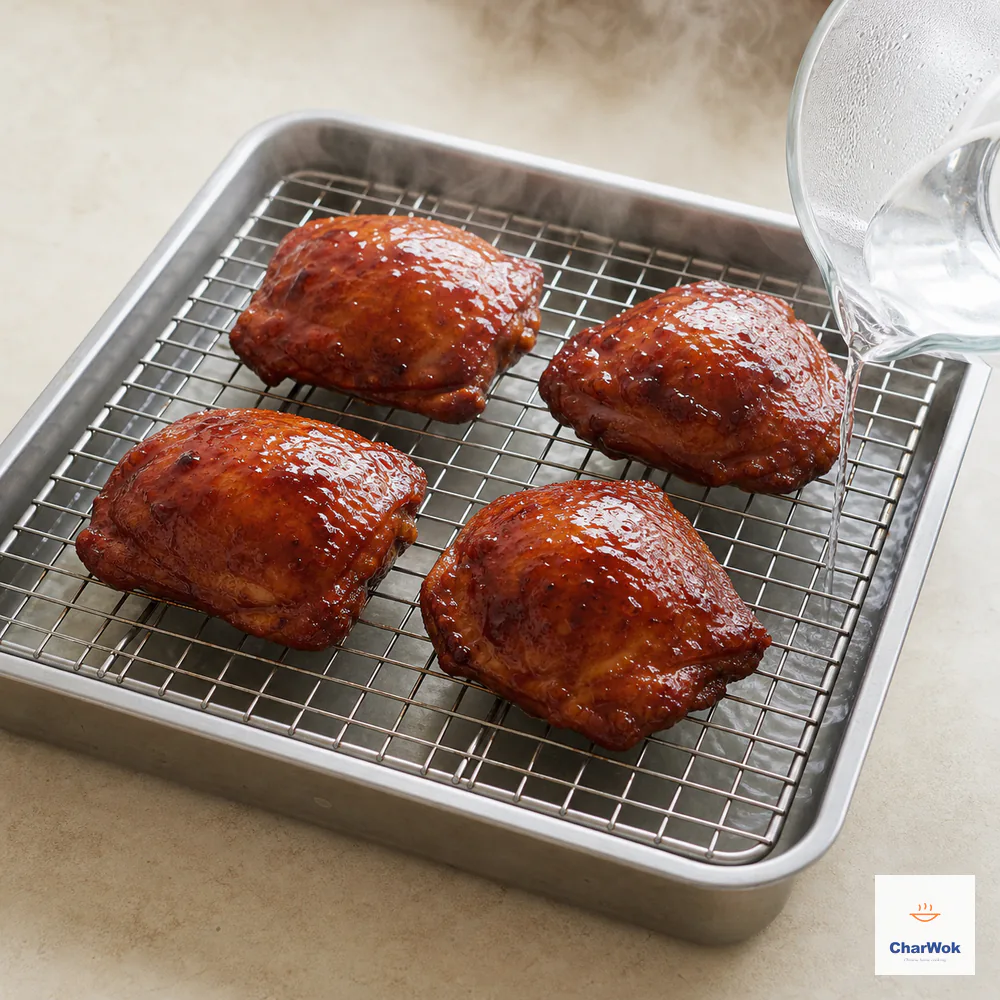
Set the thighs skin-side up on a rack over a tray of hot water, keeping the water below the rack so dripping sugar and fat cannot burn and smoke.
- Roast 10 minutes. Middle rack. Do not open the door. This sets the surface and starts rendering the fat under the skin.
- Flip and glaze. Take the tray out, flip the thighs skin-side down, and brush the bone side with glaze. Back in for 5 minutes. Check the water level in the tray; top it up with hot water if it has evaporated.
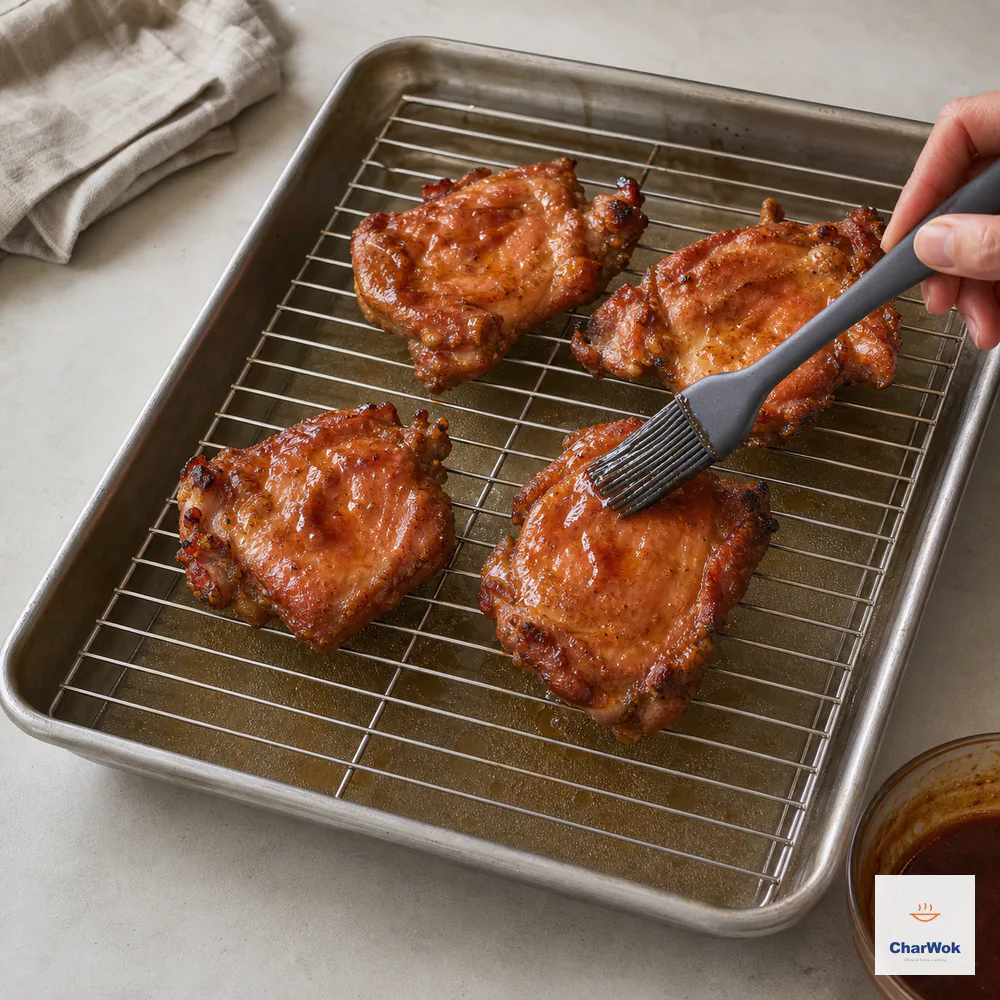
After 10 minutes, flip the thighs skin-side down, brush on a thin layer of clean sauce reserved before the raw chicken was added and mixed with honey, return them to the oven, and top up the hot water if needed.
- Flip and glaze again. Flip skin-side up and brush the skin generously. This is the layer that will char, so coat it evenly.
- Broil, then verify the temperature. Switch the oven to broil on its highest setting and move the tray near the element, following your appliance instructions for the door position. Watch continuously and stop when the glaze is deep red-brown with a few charred edges, usually after 2 to 4 minutes. Check the thickest part of every thigh with a clean instant-read thermometer; each must reach 74°C/165°F. If any is below that point, move the tray away from the broiler and continue at the regular oven setting before checking again.
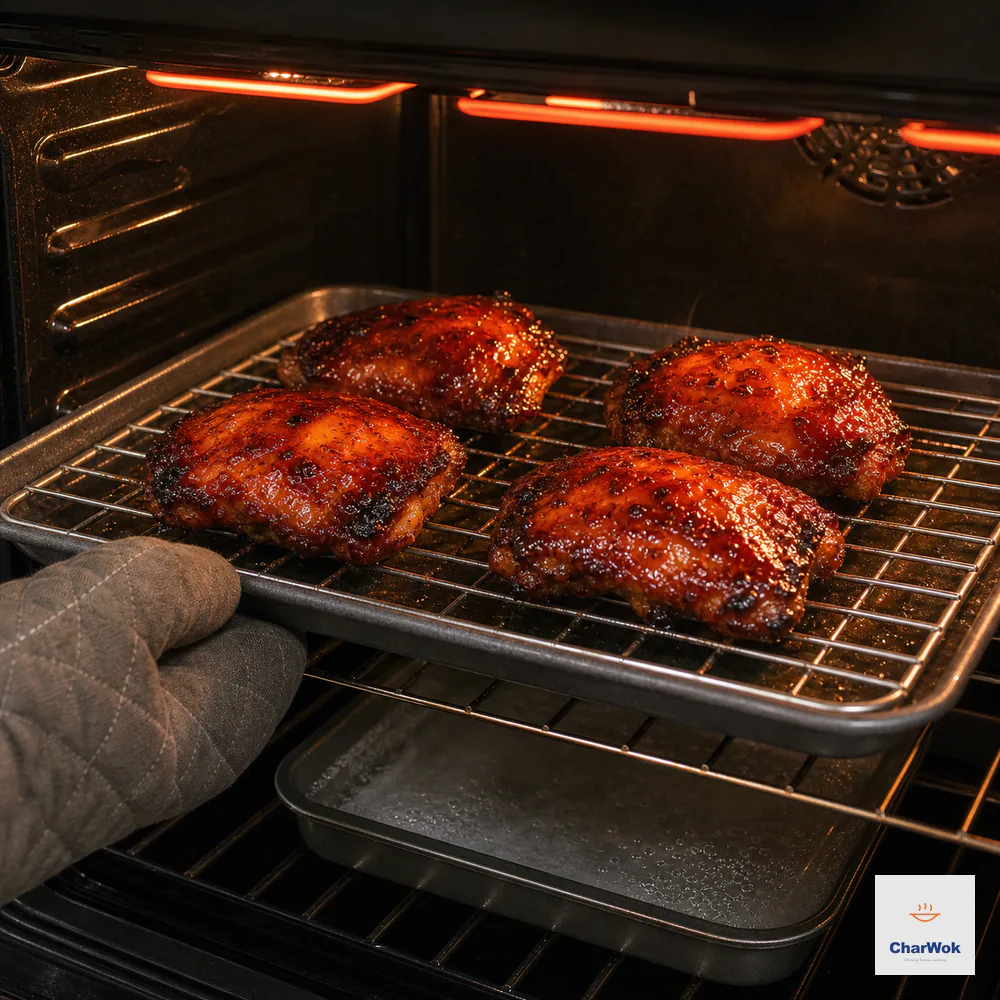
Broil the skin-up thighs under close watch until deeply colored, usually 2 to 4 minutes, then probe the thickest part of every thigh with a clean thermometer; each must reach 74°C (165°F).
Method: air-fryer version (wings)
- Marinate the wings the same way, 6 hours to overnight, reserving a clean portion of sauce before it touches the chicken and keeping it refrigerated for the glaze.
- Preheat the air fryer to 200°C/390°F for 3 minutes.
- Cook in one layer. Arrange the wing sections on the crisper tray without overlap and cook for 4 minutes.
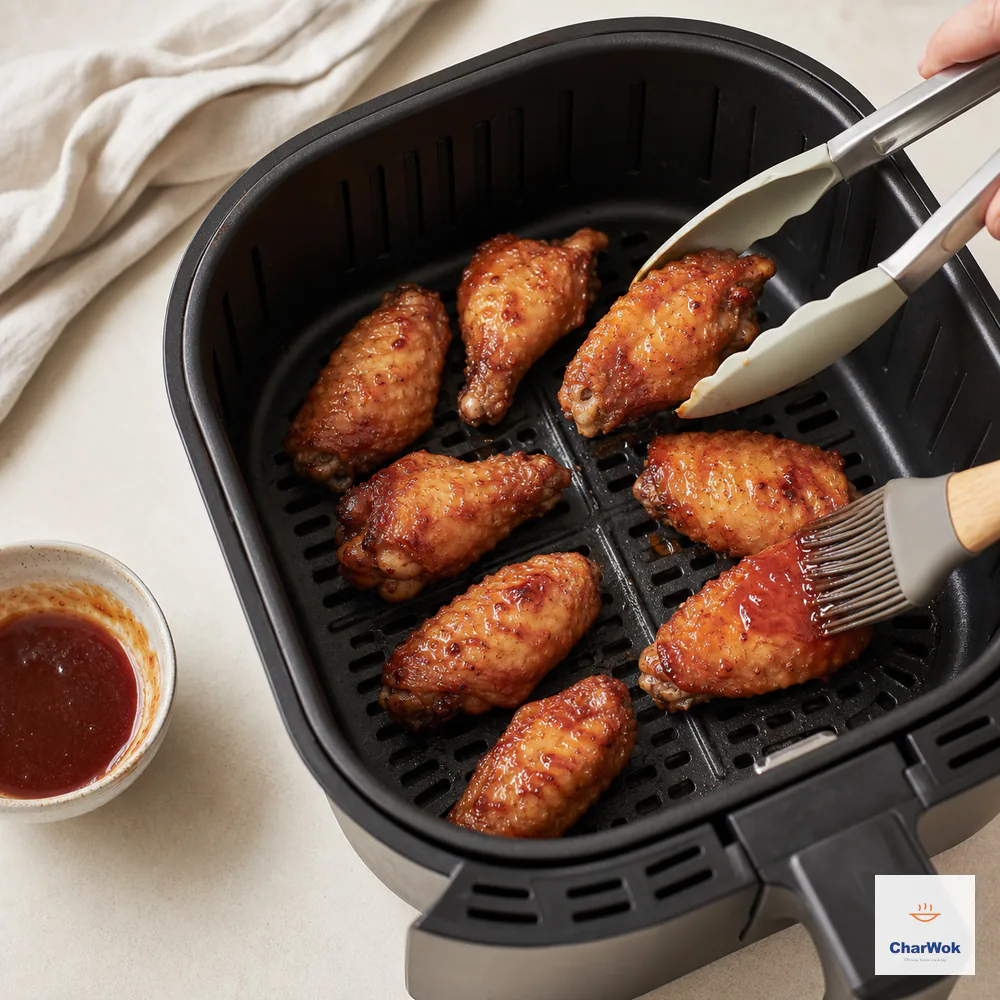
Keep each batch in one uncrowded layer; after the first 4 minutes, flip and brush with clean reserved glaze, then continue in short intervals until every wing section reaches 74°C (165°F) beside the bone.
- Flip and glaze. Flip every piece, brush with the honey mixed into the clean reserved sauce, cook another 4 minutes, then flip and brush once more.
- Finish by temperature. Begin checking after another 2 minutes. Probe the thickest part of every wing section without touching bone and continue in short intervals until each reaches 74°C/165°F. Browning and stickiness are glaze cues, not proof that the chicken is safe.
When it goes wrong, and how to fix it
The glaze burned but the meat is still pink inside. Your broiler or air fryer runs hot, or the glaze went on too early. Next time, pull the meat out 2 minutes sooner on the broil step and confirm doneness with a thermometer, 74°C/165°F at the thickest part of a thigh. If the glaze is already black, scrape it off, finish cooking the meat, and brush on a fresh thin layer of glaze under the broil for 60 seconds.
The skin is rubbery, not crisp. Two usual causes. One, the thighs went in wet from the marinade; pat them lightly before roasting so the surface can dry and brown. Two, the oven was too cool or too full of steam. Make sure the water in the tray stays below the rack, not touching the meat, and that you hit the broil step hard at the end. Skin needs high, dry heat in the final minutes.
The meat is dry. Almost always means you cooked breast instead of thigh, or you went well past 74°C/165°F. Thighs are forgiving up to about 80°C/175°F; past that they start to tighten. A shorter marinate also contributes, because salt is what lets the muscle hold on to water during cooking.
The color is pale, not that takeout red. Dark soy deepens the brown, while fermented red bean curd or a small amount of food coloring creates a stronger red tone. Extra broiling also darkens the surface, but stop before the sugar burns and verify doneness by temperature.
The pan smoked up the whole kitchen. The drips are hitting the dry bottom of the tray. That is what the water bath is for. Top it up with hot water mid-cook anytime it gets low, and line the tray with foil for easier cleanup.
Variations and pairings
Spicier. Double the chili powder, or serve a little chili oil or Chiu Chow chili oil at the table. Keeping it separate preserves the glaze and lets each person adjust the heat.
On the bone. Bone-in thighs usually take longer, but thickness and oven performance matter more than a fixed extension. Start checking beside the bone after the listed thigh timing and continue until every piece reaches at least 74°C/165°F; rotate under the broiler only as needed for even glazing.
As a rice-bowl topping. Slice the finished thigh into strips and lay it over plain rice with a spoonful of the pan juices. A bowl of stovetop jasmine rice or a scoop of egg fried rice is the natural base. For something heartier, it pairs beautifully with clay pot rice; the char siu flavor sits right at home on top of the crisp rice crust.
What to serve alongside. Keep the rest of the meal simple and green, because the chicken is sweet and rich. A quick plate of broccoli with garlic sauce or lettuce with oyster sauce balances it. If you want a full roast-meat spread, this chicken sits happily next to a platter of salt and pepper wings or a portion of soy sauce chicken for variety without competing.
Use the leftovers cold. Char siu chicken is one of the few roast meats that is genuinely good straight from the fridge, sliced over a salad or tucked into a sandwich. It also reappears chopped in fried rice; try it in a chicken fried rice in place of the raw chicken the recipe calls for.
Storage and reheating
Refrigerate cooked chicken in shallow covered containers within 2 hours, or within 1 hour when the room is above 32°C/90°F. Eat it within 3 to 4 days or freeze promptly. Properly chilled chicken may be served cold; for a hot serving, reheat every piece to 74°C/165°F. Thaw frozen raw marinated chicken in the refrigerator, never on the counter, and keep it separated from ready-to-eat food.
Frequently asked questions
Can I skip the overnight marinade?You can, but the result is noticeably thinner in flavor. Six hours is the realistic minimum; under that, season the meat the night before and accept that it will be good rather than great.
Is jarred char siu sauce necessary?No, but it is the easiest route to the authentic taste. The from-scratch blend in the table gets you close enough for a weeknight, with a slightly darker, less sweet profile.
Why do I glaze only at the end?Sugar in the glaze burns above roughly 180°C/355°F. If you brush it on at the start, the surface is black and bitter long before the center is cooked. Late glazing gives you color and stickiness without the char turning to carbon.
Can I make this without a wire rack?Yes. Set the thighs on a foil-lined tray with a little water in it and flip them once. They will brown less evenly on the underside because they sit in their own juice, but the flavor is fine.
How do I get that bright shop-window red?Commercial char siu uses food coloring or fermented red bean curd (nan ru). Add a teaspoon of mashed red bean curd to the marinade if you want the look. Without it, the dish runs from mahogany to deep red-brown, which is what most home cooks actually want.
What is the safe internal temperature?Check the thickest part of every thigh, or the thickest part of every wing section without touching bone. Each piece must reach at least 74°C/165°F; color and crispness are not doneness tests.
Food-safety references
- USDA FSIS: Chicken from Farm to Table — marinade handling, cross-contamination controls and poultry temperature.
- USDA FSIS: Leftovers and Food Safety — cooling, storage and reheating.