Open a jar of supermarket five-spice powder that has been sitting on the shelf for a year and you will understand, instantly, why it has a reputation for being vaguely medicinal. The blend should smell like warm star anise pushed forward by toasted fennel, with a low hum of clove and cassia underneath. What you usually get from an old tin is dusty, flat, and one-note. The fix is not a better brand. It is toasting and grinding whole spices yourself, which takes about ten minutes and transforms the result from something you use out of obligation into something you reach for on purpose.
Whole spices, toasted dry in a pan for roughly four minutes, ground warm, then sifted. Weight the spices, do not spoon-measure, because clove and cassia are dense and overpower everything if you eyeball them. Store the finished powder airtight and dark; treat anything past eight months as a fading guest, not a staple.
What five-spice actually is, and why the number five is a bit of marketing
Five-spice powder (wu xiang fen, 五香粉) is a ground aromatic blend built around a sweet-savory-warm core rather than heat. It carries no chili, no pepper heat in the capsaicin sense, and is meant to perfume a dish, not burn it. The Sichuan pepper in it contributes a citrusy tingle and fragrance, not real spice.
The "five" refers less to a strict ingredient count and more to the old Chinese idea of five flavor directions, sweet, sour, salty, bitter, and umami, folded into one seasoning. In practice, household and shop blends routinely run to six or seven components. Sand ginger (sha jiang), dried tangerine peel, black cardamom, nutmeg, and licorice root all show up in regional versions. The blend you make at home is a northern-style, balanced one, and it is the most useful default for a Western kitchen because nothing in it will surprise you.
Where it shines is on rich, fatty, or slow-cooked things. Pork belly, duck, chicken skin, beef shank, and the oily layers of layered bread all take the blend well, because the warmth cuts through fat the way an acid would. That is why it shows up in red-cooked pork belly and Taiwanese braised pork over rice, and why a pinch folded into the fat of a spiced beef flatbread tastes so much more deliberate than the same bread without it.
The spices and their weight ratios
Ingredients at a glance
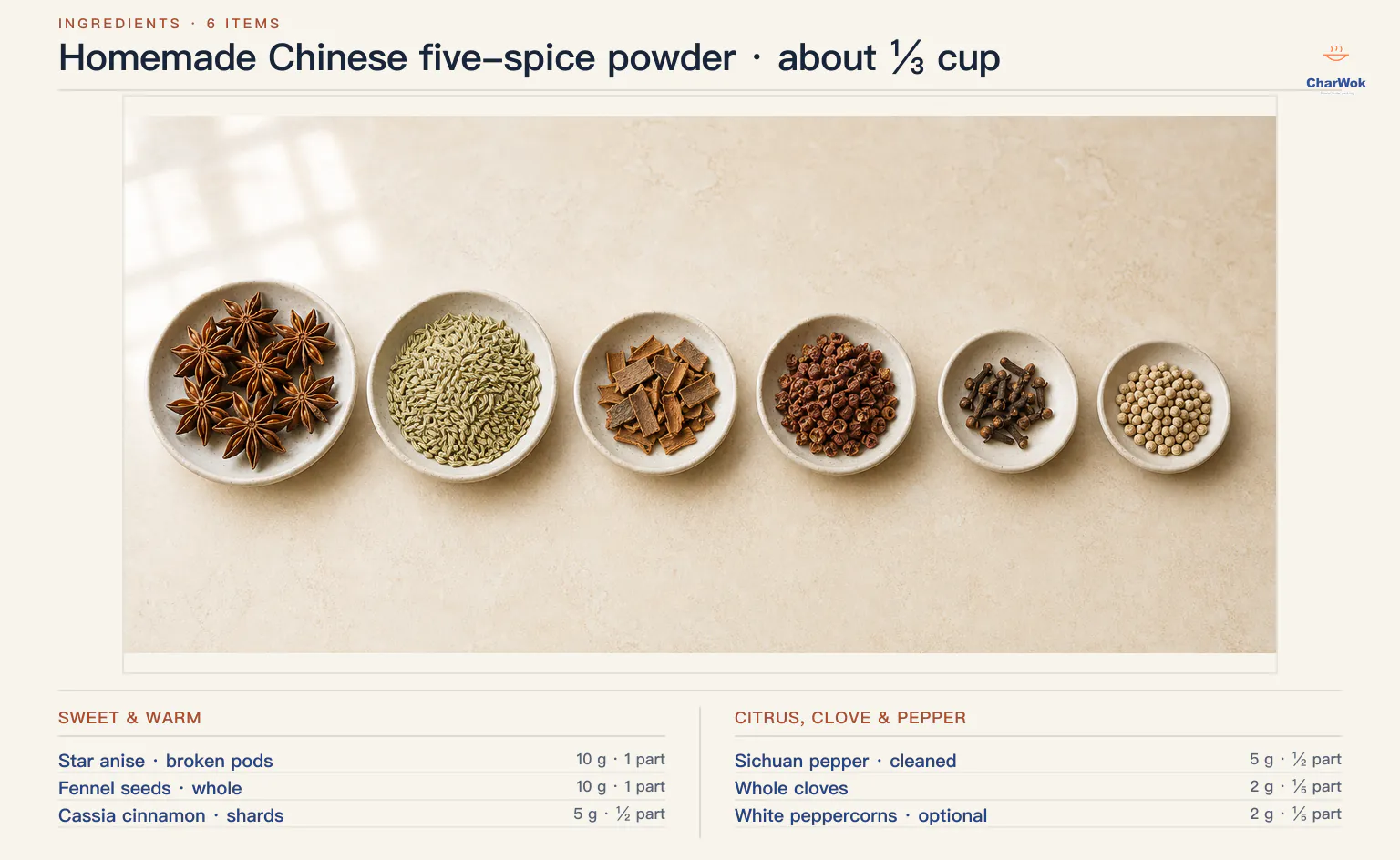
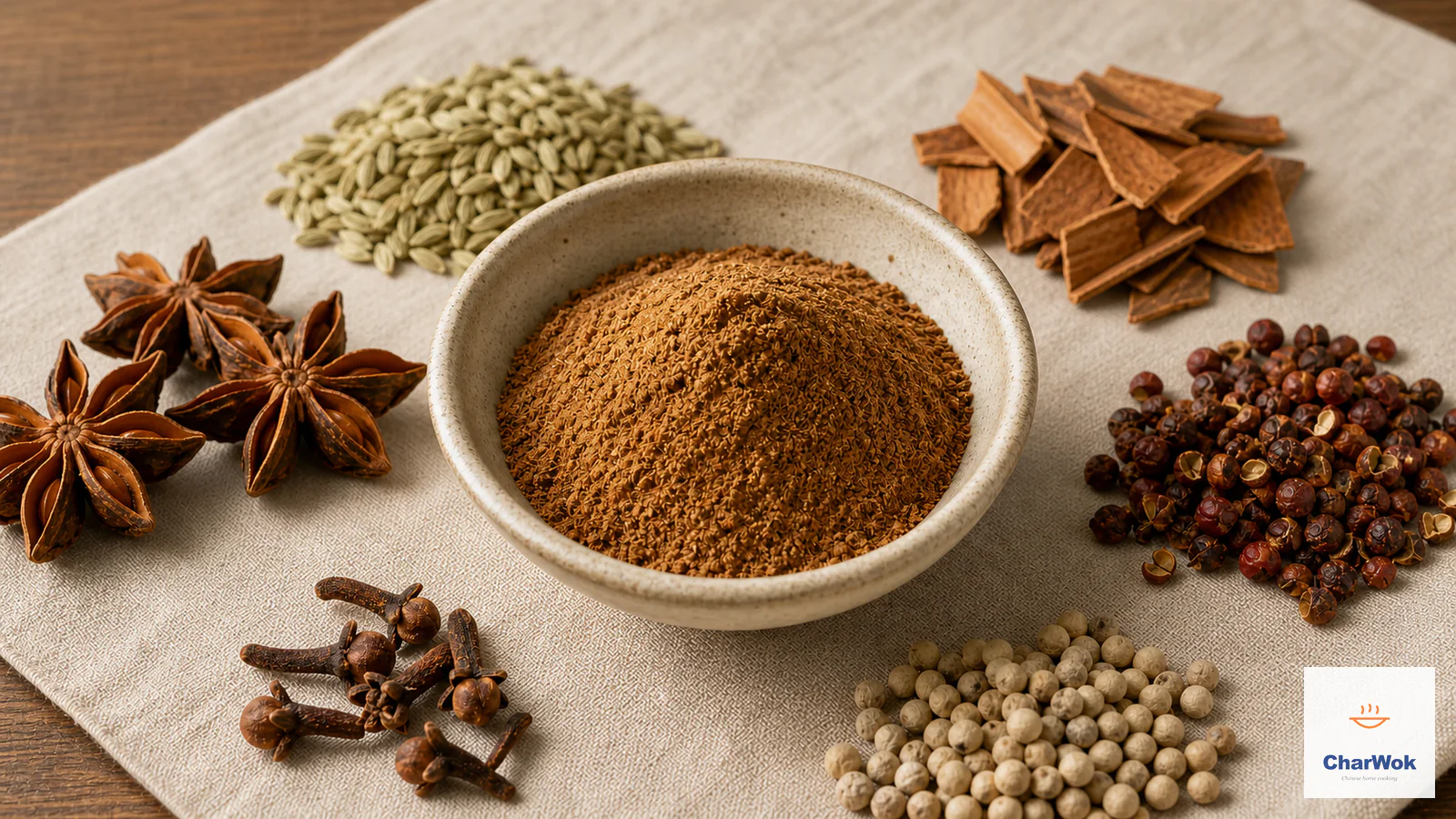
Weigh everything on a small kitchen scale set to grams. Spoons lie badly here: a level teaspoon of cloves weighs roughly twice what a teaspoon of fennel weighs, and the blend turns bitter fast once clove or cassia run even slightly high. The ratio below makes about a third of a cup, enough for several months of normal cooking without letting it go stale.
- 10 g star anise, whole pods, broken apart. The dominant note. One part by weight.
- 10 g fennel seeds, whole. Balances star anise with a softer, sweeter warmth and toasts the most visibly. One part.
- 5 g Sichuan pepper, whole, with any black seeds and twiggy stems picked out. Half a part. These are the reddish-brown husks, not peppercorns in the black-pepper sense; see the notes on how to grind Sichuan pepper correctly if yours are pre-powdered.
- 5 g cassia cinnamon (Chinese cinnamon), broken into shards. Half a part. Cassia is the bolder, hotter, more astringent bark used across Chinese cooking, distinct from the mild, flaky Ceylon cinnamon used in Western baking.
- 2 g whole cloves. A fifth of a part. Small in weight, large in impact.
- 2 g white peppercorns (optional). A fifth of a part. Adds a clean, earthy base note rather than heat. Leave it out if your blend is mainly for sweet-savory rubs.
On sourcing: star anise, fennel, cloves, and white pepper are easy in mainstream supermarkets. Cassia and Sichuan pepper are reliable in Chinese and Southeast Asian grocers and online. If you cannot find cassia specifically, you can use the supermarket "cinnamon" (usually cassia anyway in the US, sometimes Ceylon), but if it is genuinely Ceylon, cut the quantity in half because Ceylon is milder and you will need more volume to read it, which throws the grind off.
Toast first, then grind: the step everyone skips
Ground spices in a tin smell dull because two things have already left the building: the volatile oils that carry aroma, and any residual freshness. Toasting whole spices in a dry pan does two useful things at once. It drives off surface moisture so the spices grind to a true powder instead of a paste, and it pushes the volatile oils to the surface where your nose, and later the dish, can actually find them. Heat is what releases the aromatics locked inside the cell walls; without it you are grinding a sleeping spice.
The method
- Pick over and prep the spices. Snap the star anise pods into individual fingers so they toast and grind evenly. Pick out any black, shiny seeds still clinging to the Sichuan pepper husks and discard the thin stems; the seeds are gritty and slightly bitter and do not grind cleanly. Break cassia bark into pieces roughly the size of your thumbnail. Do not wash the spices. Water is the enemy of a clean toast, and a quick rinse does more harm than the dust it removes.
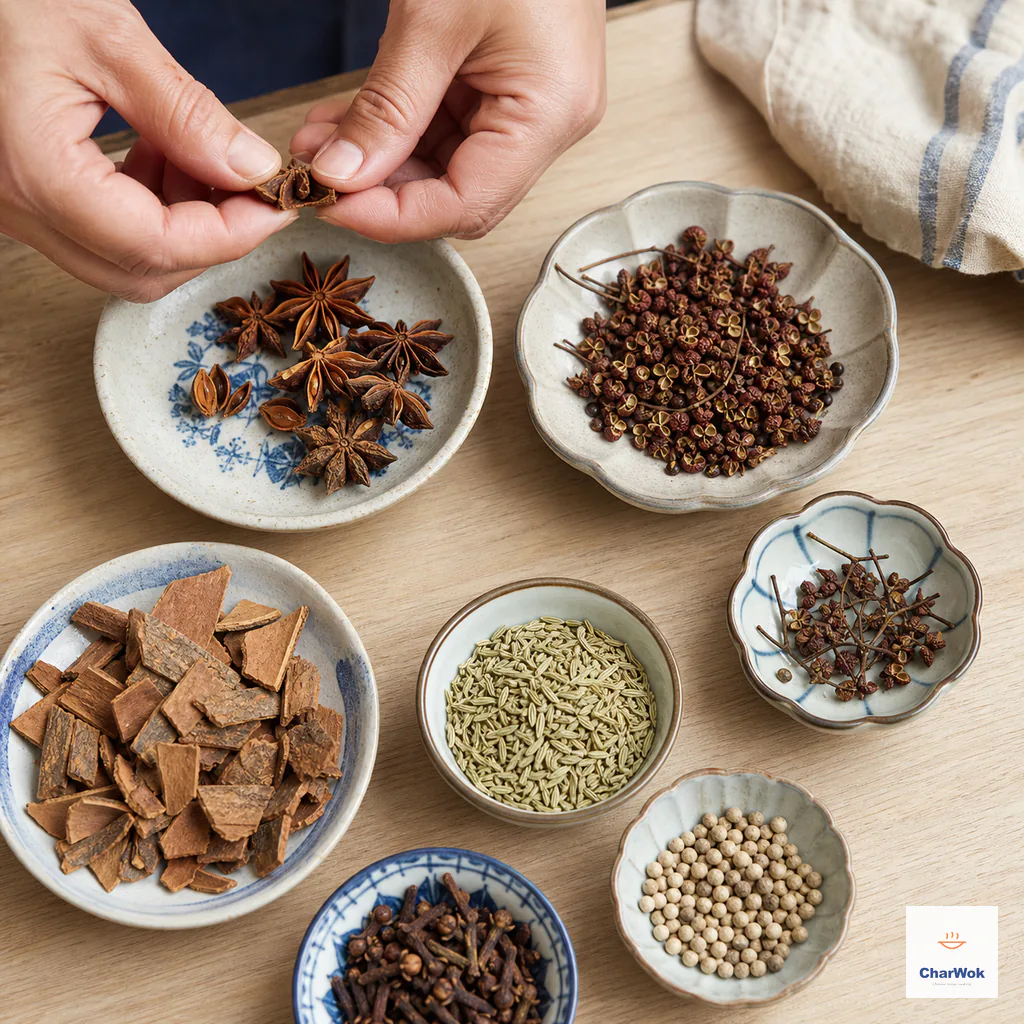
Break the hard spices small and remove gritty Sichuan-pepper seeds and stems before toasting
- Toast dry, medium-low, moving constantly. Put all the spices into a cold, dry pan, then set it over medium-low heat. Shake the pan or stir with a dry spatula the whole time. You are looking for two signals together: the fennel seeds darken a shade and turn slightly glossy, and you start to hear faint pops from the Sichuan pepper and cassia. Total time is about four minutes. The moment the smell becomes rich and clearly toasted, pull the pan off the heat. Cloves scorch before anything else, so if one looks oily and swollen, you are done.
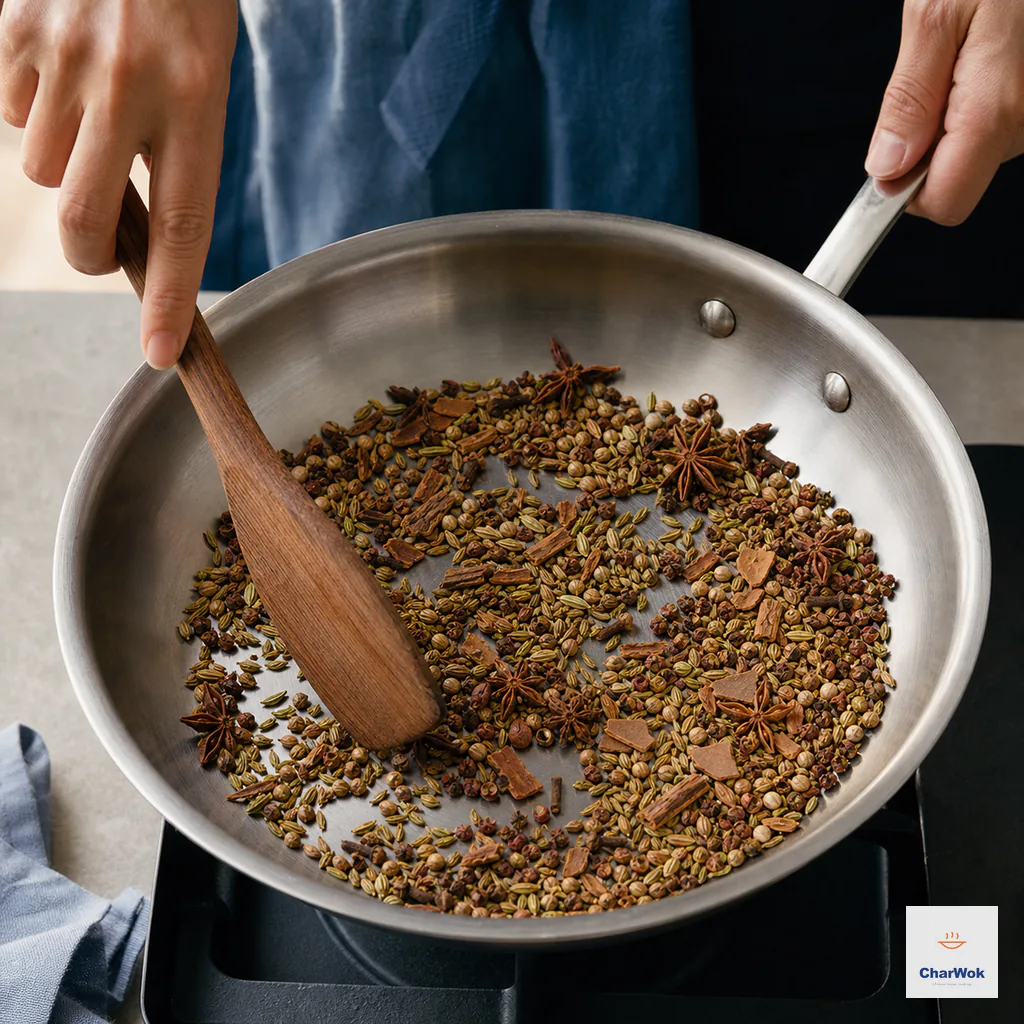
Pull the pan when the fennel darkens one shade, faint pops begin and the aroma turns rich
- Cool completely on a plate. Spread the spices out and leave them until they are cool to the touch, around ten minutes. Grinding warm spices will melt the oils into the grinder walls and leave you with flavored plastic instead of powder.
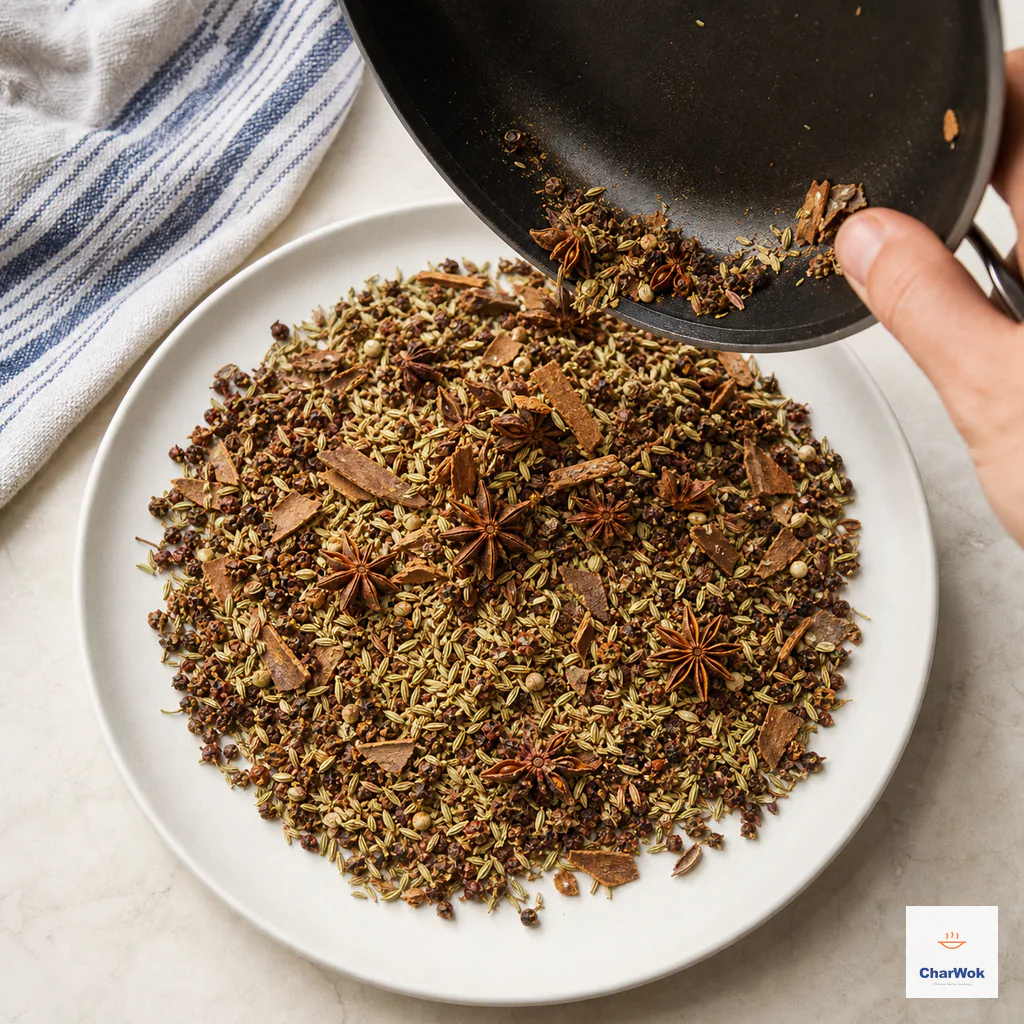
Cool the spices completely in a broad layer so their oils do not smear inside the grinder
- Grind in short pulses, not one long run. Use a dedicated electric spice grinder or a small blender. Pulse for three to four seconds, stop for three to four seconds, and repeat. The pause matters: continuous running builds friction heat that boils off the same aromatics you just toasted for. Star anise and cassia are the stubborn ones, so expect about fifteen pulses total. You are done when the mixture looks like fine sand with no visible chunks.
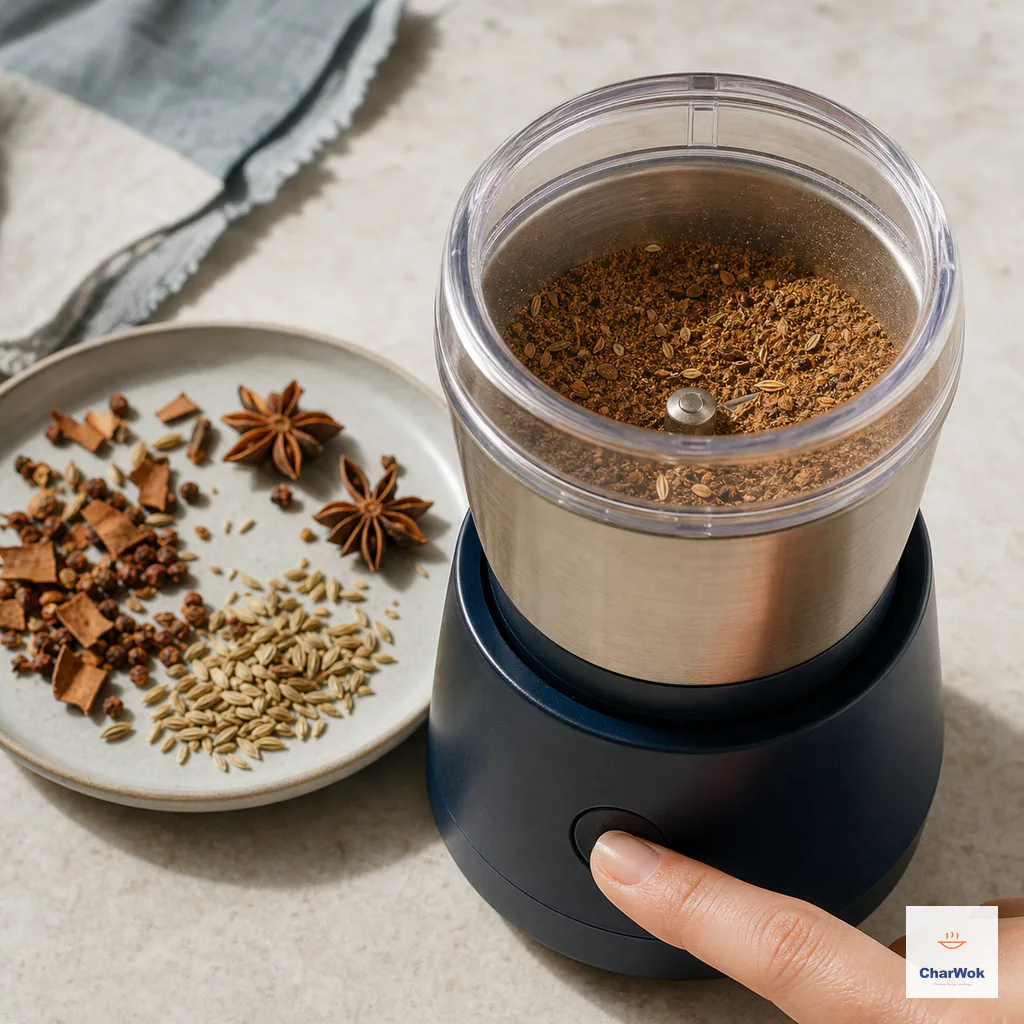
Alternate three- to four-second pulses with pauses so friction heat does not drive off the aroma
- Sift, then regrind the coarse bits. Push the powder through a fine-mesh sieve into a bowl. Whatever stays in the sieve is mostly star anise spikes and cassia fibers. Tip them back into the grinder, add nothing, and pulse again. Repeat the sift. A tiny amount of fibrous residue that will not break down is normal; throw it out rather than fight it.
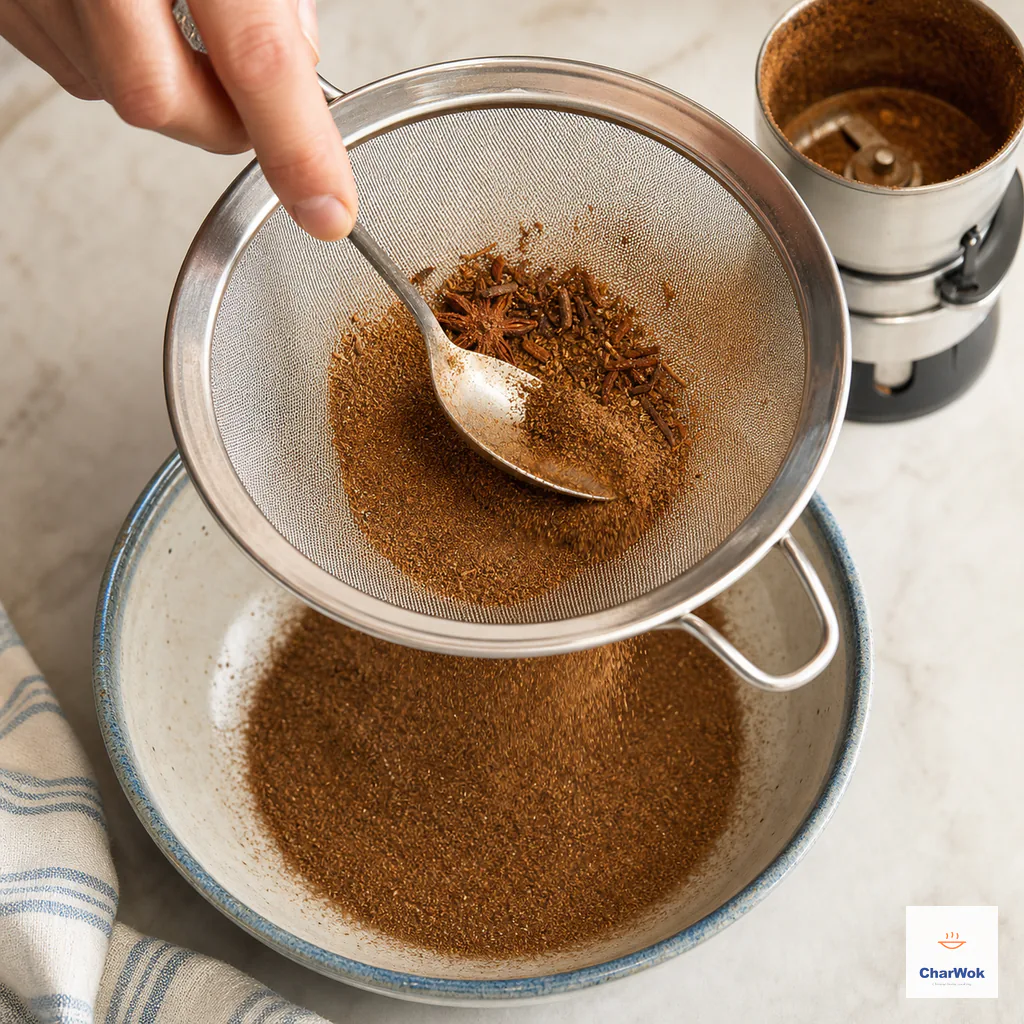
Sift once, regrind the coarse pieces and discard only the fibers that refuse to break down
- Store airtight and dark. Funnel the powder into a small clean jar with a tight lid and keep it in a cupboard away from the stove and sunlight. Glass is better than plastic because it does not hold smells.
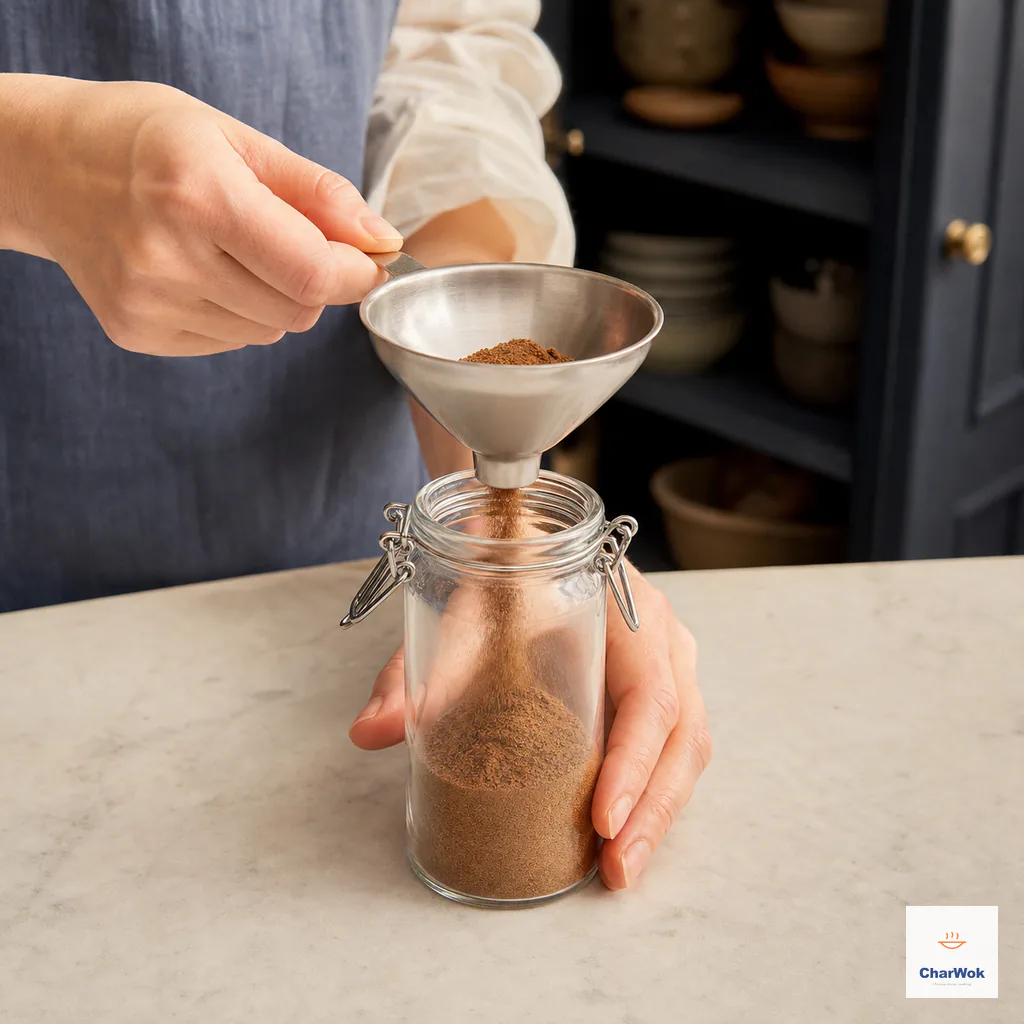
Seal the dry jar tightly and keep it away from the stove, heat and sunlight
When the blend goes wrong: troubleshooting
This is a forgiving project, but the failures fall into a few predictable buckets, and each one is easy to fix on the next batch.
- The powder tastes bitter or medicinal. Almost always too much clove or cassia, or cloves that scorched. Toast gentler next time and re-weigh the dense spices. You can rescue a bitter current batch by bulking it up with extra toasted fennel, which is the mildest component.
- It smells great raw but disappears in the dish. You added it too late. Five-spice needs heat and a little fat or liquid to bloom. For stir-fries, add it to the oil or with the aromatics early; for braise, toast it briefly in the oil before the liquid goes in. Dusting it on at the end reads as raw and dusty, the opposite of what you want.
- The powder is coarse and gritty. Either it was not toasted (residual moisture makes grinding gummy), or the grinder is underpowered for cassia. Toast longer at lower heat and sift more aggressively. A cheap blade grinder will always leave some cassia fibers; accept the loss.
- It numbs your tongue. You left too many black seeds in the Sichuan pepper, or you used a heavy hand with white pepper. Pick the husks cleaner next time. The blend should warm, not anesthetize.
- The jar smelled amazing on day one and flat by week three. Your container is not airtight, or it lives next to the stove. Move it to a cool, dark cupboard and use a jar with a real gasket lid.
How much to use, and where it does not belong
A little is a lot. For a single batch of marinade or a dry rub for one chicken, a half teaspoon is plenty; a full teaspoon is already pushing toward dominant. The blend is concentrated precisely because it is meant to be folded into other flavors, not tasted on its own.
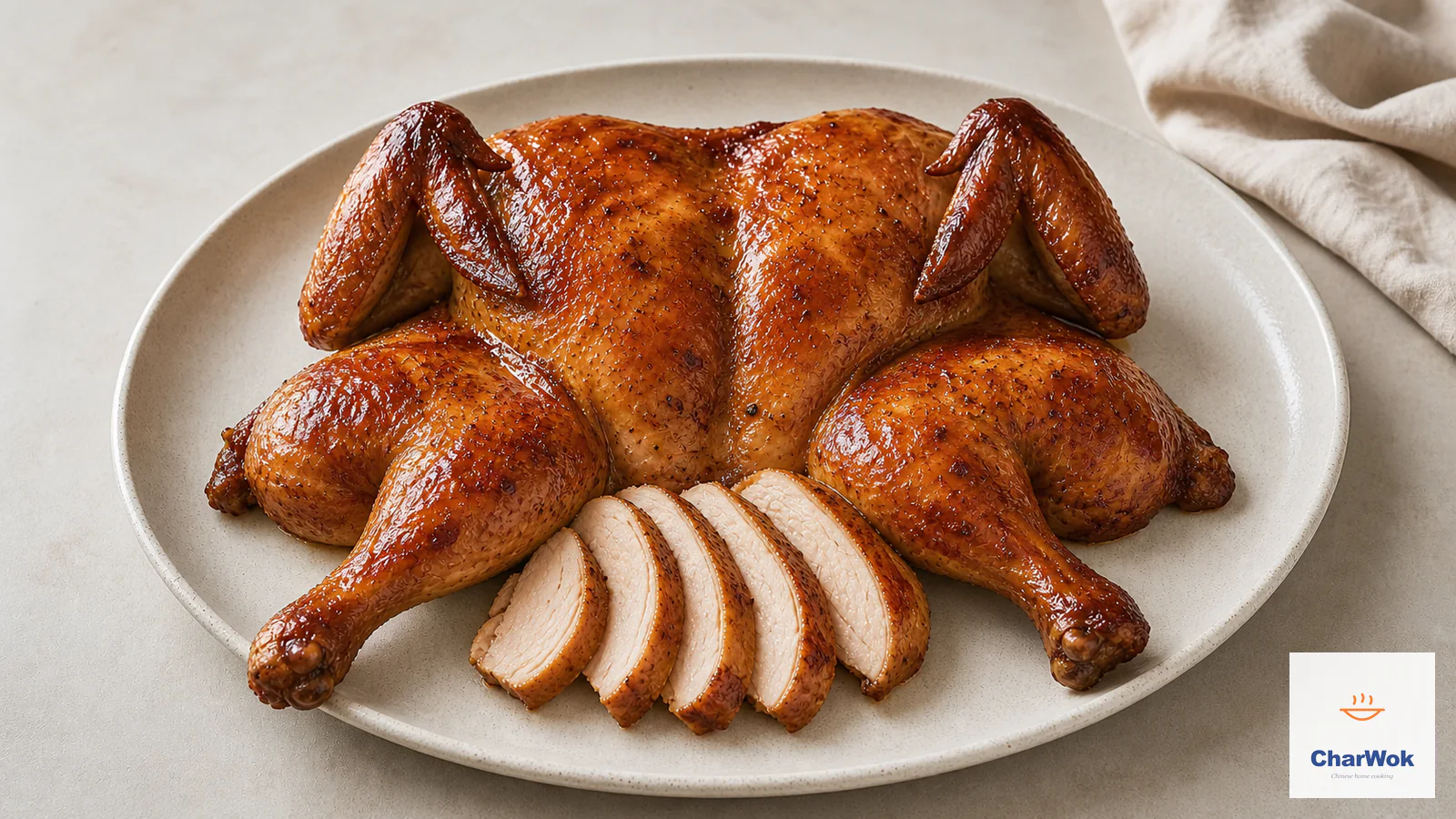
Where it earns its place: as a dry rub for roast or air-fried five-spice chicken; mixed into the filling for pork and napa cabbage dumplings; stirred into the marinade for char siu or other Chinese barbecue pork; simmered into the master stock for spiced braised beef shank; folded into the dough for scallion pancakes or the layers of a spiced flatbread; and dropped into the steeping liquid for marbled tea eggs, where it helps build that cracked, fragrant shell.
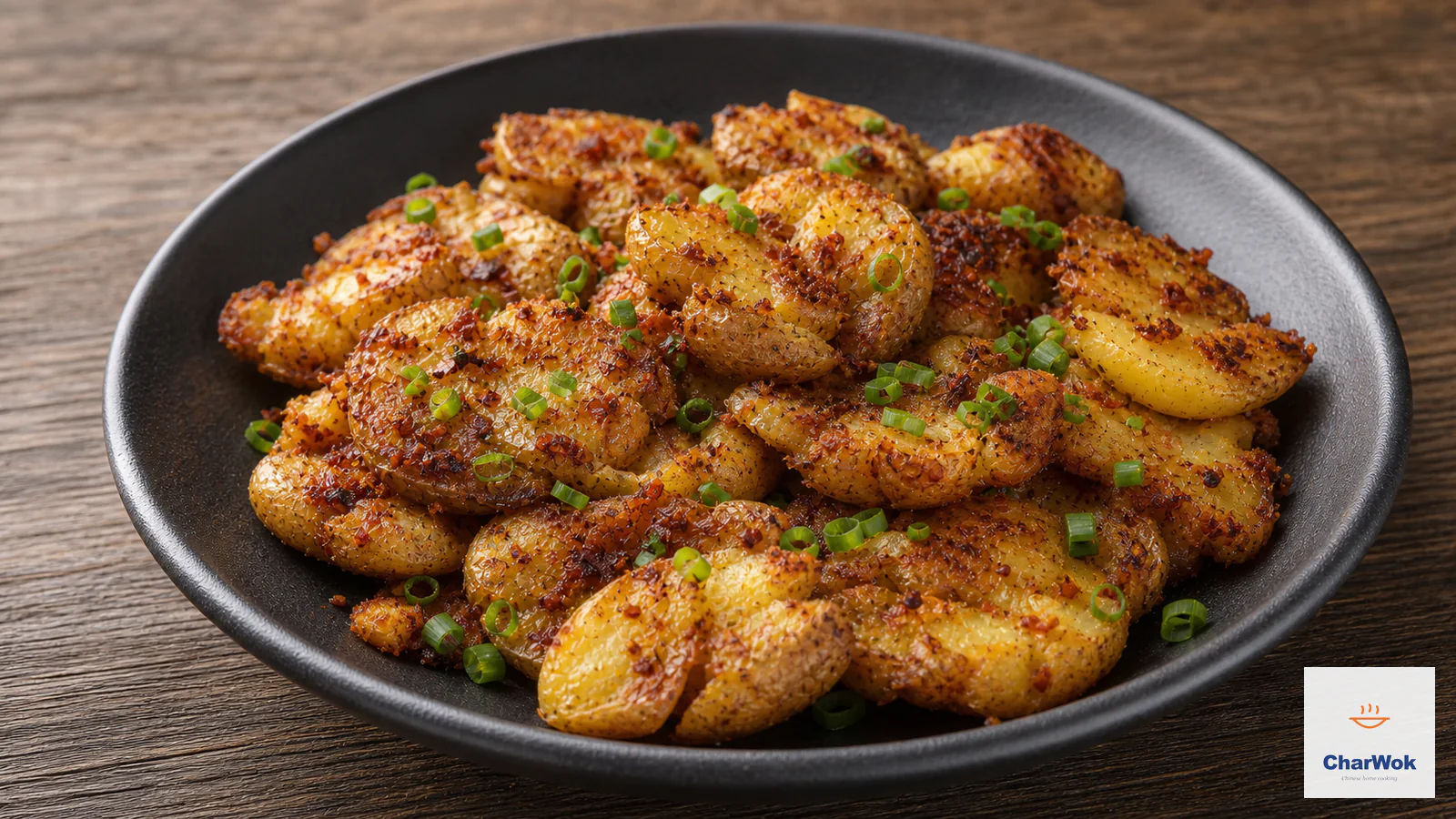
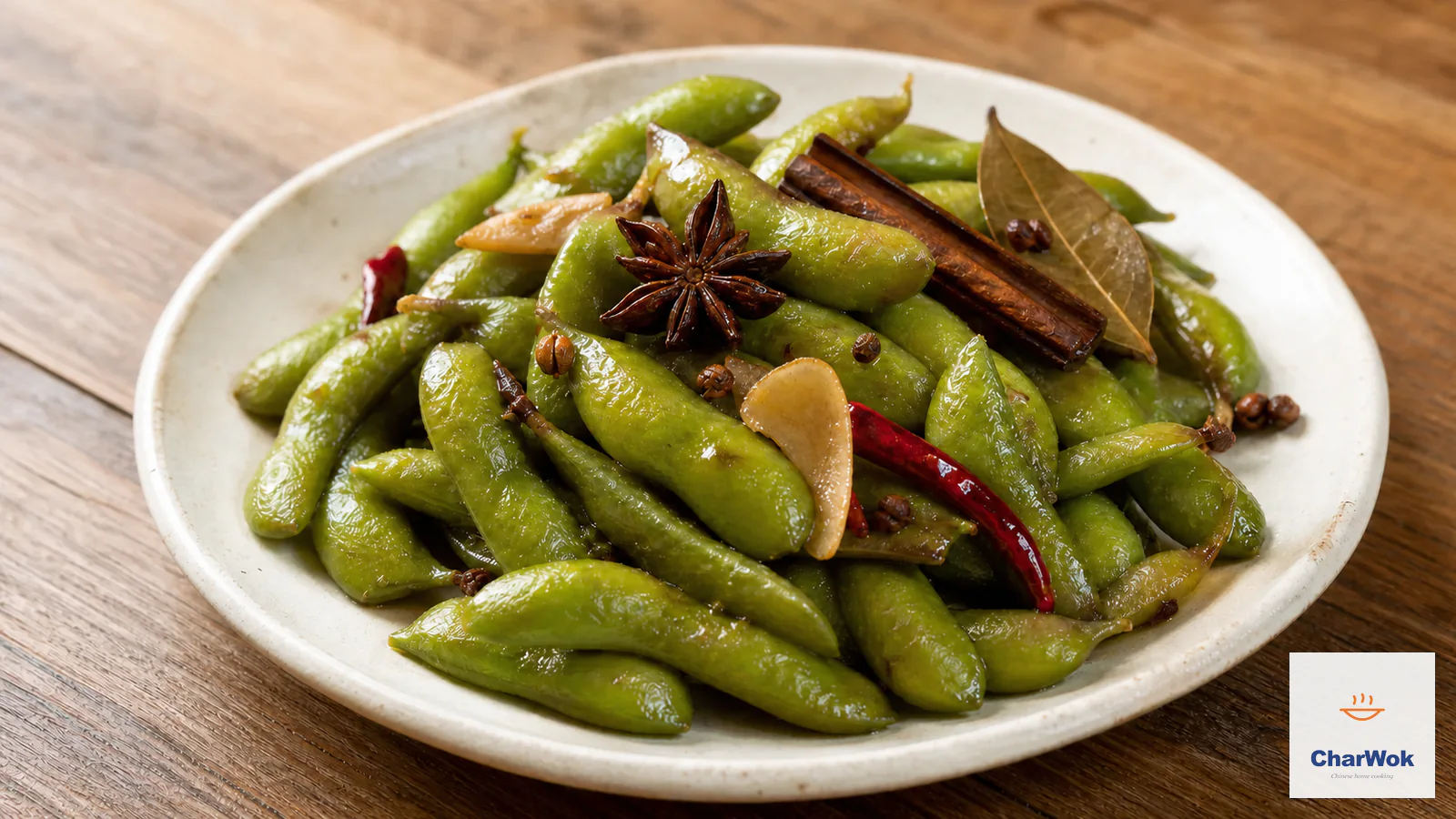
Where it does not belong: as a finishing sprinkle over a finished dish, especially a cold salad or a delicate steamed item. Five-spice raw on top of food reads as dusty and crude. The one near-exception is a tiny pinch over hot five-spice potatoes or five-spice edamame right out of the oil, where residual heat cooks it in. It also has no real place alongside bright, acidic cold dishes like Sichuan spicy peanuts, where raw ground Sichuan pepper is the better finishing note.
Variations and the bigger blends
Once you have the base blend, small tweaks point it in different directions. Add a small piece of broken-up dried tangerine peel (about 2 g, the kind used in Cantonese cooking) for a brighter, more southern-Chinese profile that pairs well with duck and pork. Add half a teaspoon of toasted, ground sand ginger for a savory depth that leans toward Taiwanese braises. A pinch of ground nutmeg pushed the blend toward the warmer, dessert-adjacent end and works surprisingly well in the dough for sweet filled buns.
The two larger commercial blends, shi san xiang (thirteen-spice) and shi ba xiang (eighteen-spice), are essentially five-spice scaled up with more components, cumin, coriander, dried ginger, cardamom, and so on. They are more aggressive and more northern, excellent in lamb dishes and hearty stews, and you can substitute them one-for-one in a recipe that calls for five-spice if you accept a louder result. For long braises, you can also skip grinding entirely and drop the whole spices into a muslin pouch or tea ball, then fish it out at the end; the flavor is cleaner and the broth stays clear.
Keeping it, and knowing when to start over
Stored properly, a homemade blend holds real aroma for about six months and stays acceptable to around a year. It will not make you sick after that, but the top notes, the fennel and the Sichuan pepper especially, fade first, and what is left is a dull cassia-and-clove shadow of the original. The honest test is your nose: open the jar and if the first hit is not clearly star anise with warmth behind it, toast a fresh small batch. Because the whole spices keep for well over a year in a sealed bag, the cheapest habit is to grind small amounts more often rather than one big jar you nurse for a year and a half.
If you cook Chinese food at home with any regularity, this is one of the few pantry items where homemade is unambiguously better than bought, and not by a small margin. Pair it with the other building blocks, good light and dark soy sauce, Shaoxing rice wine, and a jar of your own core condiments, and most of the classic dishes in this kitchen start to feel a lot more within reach.
Questions I get asked
Can I make five-spice without Sichuan pepper?
You can, and many commercial blends leave it out entirely. The result is softer and more purely sweet-savory, without the slight tingle. If you cannot find good Sichuan pepper, simply drop that component and keep the other ratios as they are; the blend still works in rubs, marinades, and braises.
Do I really need to weigh the spices?
For the dense spices, yes. Cloves and cassia pack far more weight into a spoon than fennel and star anise do, so spoon-measuring throws the balance hard. A five-dollar gram scale fixes this in thirty seconds. If you must use spoons, level everything off and cut the clove measure visibly short.
Is a coffee grinder okay for this?
Only if you dedicate it to spices. A grinder that has touched coffee will flavor your five-spice with cold brew, and the smell lingers for weeks. Cheap blade spice grinders, the kind sold for around fifteen dollars, do the job well. Wipe yours out with a dry paper towel after each use and grind a tablespoon of plain raw rice now and then to clean the oils off the walls.
Can I use pre-ground spices and just mix them?
You can, but you lose most of the point. Pre-ground spices are already stale compared with freshly toasted whole ones, and you skip the toasting step that brings the blend to life. Reserve the all-pre-ground shortcut for emergencies; the result will taste closer to the dusty tin you are trying to avoid.
How long does homemade five-spice keep?
About six months at full strength, up to a year at reduced aroma, in a sealed jar away from heat and light. Trust your nose over the calendar. If the jar no longer smells strongly of star anise when you open it, make a fresh small batch.