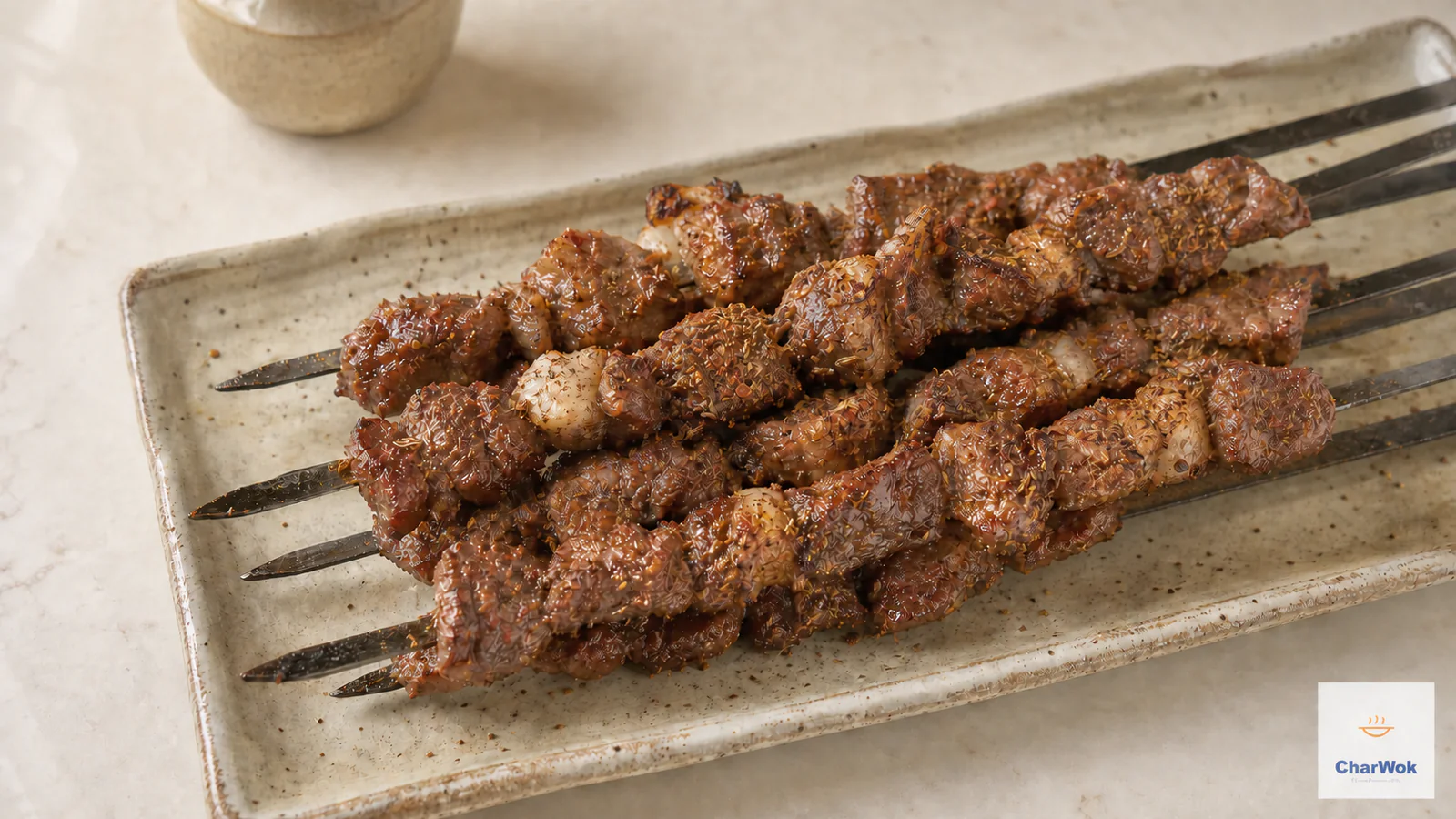
The smell of cumin hitting hot charcoal is one of the great come-hither scents of Chinese cooking. You follow your nose to a street cart, you wait, you eat the skewer standing up, and you order three more. That is the whole ritual of yang rou chuan'r, the lamb skewers of northwest China, and the reason I finally started making them at home: the smell never travels well in a takeout bag.
Here is the part that surprises people. The ingredient list is almost embarrassingly short. Lamb, onion, salt, cumin, chili. No soy sauce, no cornstarch, no overnight marinade in ten aromatics. The entire personality of the dish comes from fat, fire, and the timing of when the spices meet the meat. Get those three things right and the rest takes care of itself.
At a glance. The whole dish hangs on one ratio: aim for roughly one fatty cube for every three lean cubes on each skewer. Marinate the cubed lamb with sliced onion and salt for 40 minutes, grill over charcoal that has burned down to a white-ash glow, and only scatter the cumin and chili once the surface of the meat has gone pale. Total active cooking is about eight minutes a batch. The single biggest mistake is lean meat with no fat, which turns dry and gray no matter how much spice you throw at it.
Where these skewers come from
Lamb skewers belong to the northwest, to Xinjiang and the Hui Muslim communities of Gansu, Ningxia, and Shaanxi, where sheep have been the center of the table for centuries. The dish traveled east along the old trade roads and landed in Beijing night markets, then in every college-town barbecue joint in the country. What you eat on the street today is a slightly simplified version of a Uyghur and Hui tradition that runs much deeper than the snack suggests.
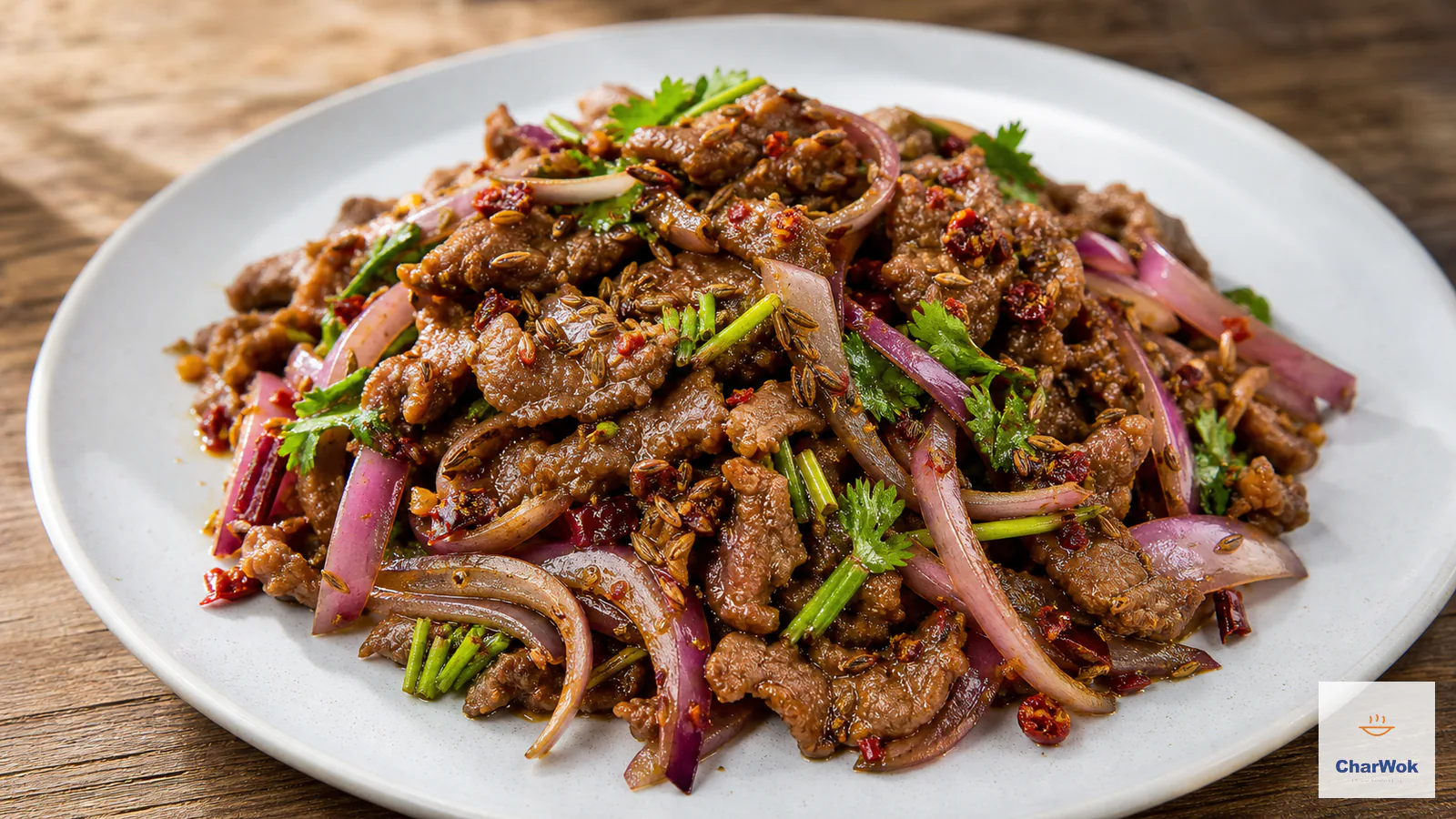
The seasoning is famously austere. Cumin and chili, both dry, both applied at the very end. There is a reason the spice mix is so lean: it has to survive open flame without turning bitter. If you have had a more elaborate northern lamb dish like cumin lamb stir-fry, you are already tasting a cousin that kept the same spice backbone but moved indoors into a wok.
The cut of lamb decides everything
Street vendors in China do not use lean loin for skewers. They use a mix of lean and fat, threaded in a pattern, because fat is the only thing standing between you and a tough, dry cube. A classic skewer runs about six lean pieces with two or three fatty pieces tucked between them. When the fat renders over the fire it bastes the lean meat next to it and crisps up into something almost like a savory chip.
My recommendation, after underbuying fat more than once: buy boneless lamb leg and ask the butcher to leave the fat cap on, or buy a well-marbled shoulder. Cut the lean meat into roughly 2 cm (¾ inch) cubes, then trim off the hard white fat separately and cut that into similar-sized pieces so you can thread them deliberately. If your cut has almost no fat, buy a small slab of lamb breast or a fatty chop on the side and use its fat. Do not skip this. I have tried to make these with extra-lean leg and the result is a sad, chewy cube that no amount of cumin rescues.
Beef works on the same blueprint, with the same seasoning, if someone at the table does not eat lamb. Use a tender, well-marbled cut such as sirloin or flank and thread a few pieces of beef fat or trimmed suet in between. For a quicker weeknight version of the same spice profile without skewers, the cumin chicken thigh approach is a good detour.
Why a 40-minute salt and onion marinade matters
The marinade is just onion and salt, but it does two real jobs. The onion softens the gaminess of lamb through mild enzymatic action and leaves a faint sweetness. The salt does something more useful: it denatures the surface proteins of the meat, which helps it hold onto moisture during a hard, fast grill. Forty minutes is the practical floor. Under that and the salt has not really done its work.
Do not go past about four hours, and never overnight. Salt left on lamb that long starts to cure the outer layer, and the texture goes soft and hammy in a way that is wrong for this dish. If you need to hold the marinated meat longer than four hours, move it to the fridge, but try to cook it the same day.
Ingredients
Ingredients at a glance
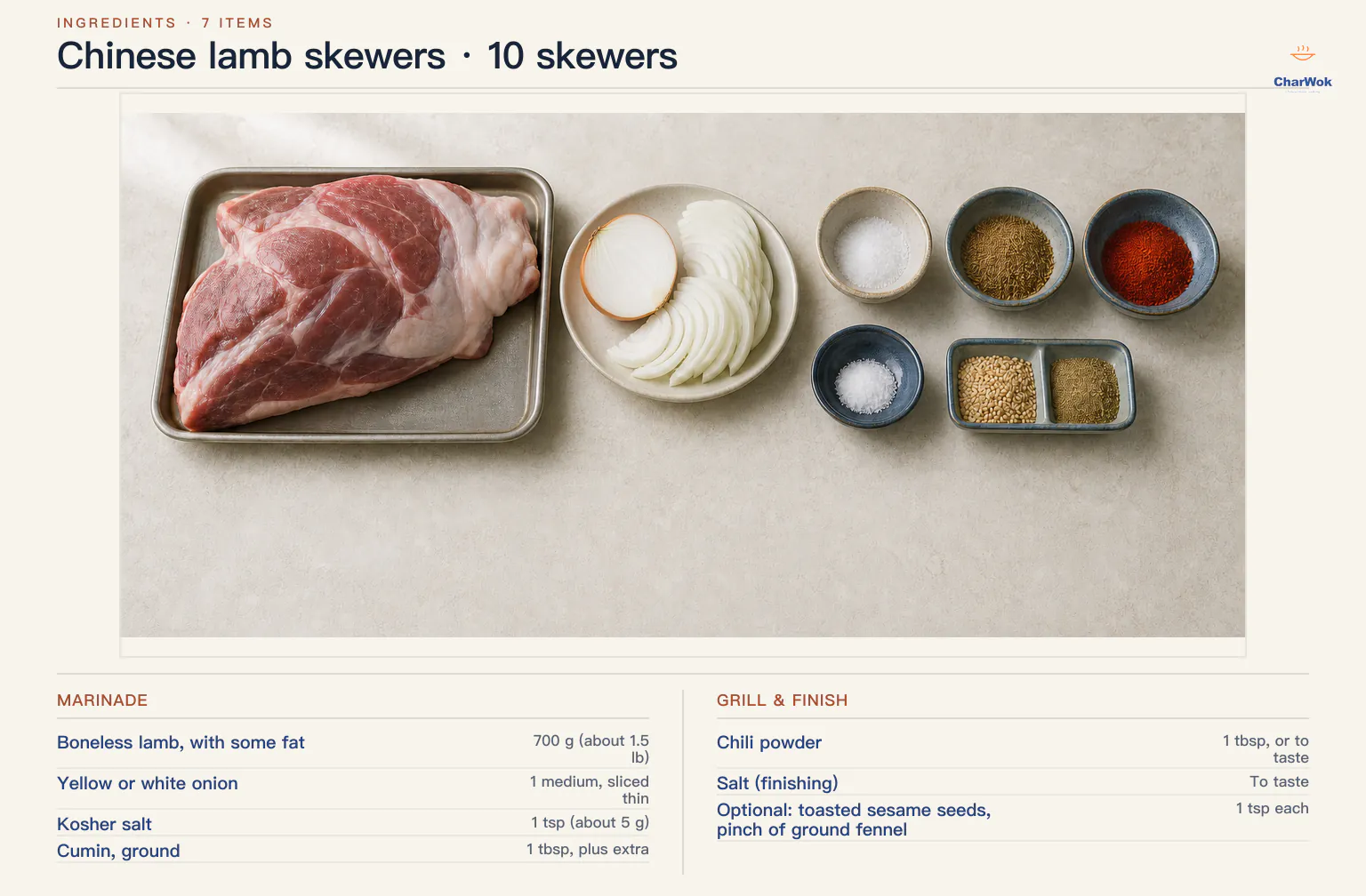
Quantities below make about 10 skewers, enough for two hungry people as a main or four as part of a spread. The spice amounts are a starting point, not a law. You will see vendors in China use a heavy hand, and the skewers are supposed to arrive at the table dusted red.
| Ingredient | Amount | Notes / substitute |
|---|---|---|
| Boneless lamb, with some fat | 700 g (about 1.5 lb) | Lamb leg with fat cap, or shoulder. Aim for roughly 25% fat by weight. |
| Yellow or white onion | 1 medium, sliced thin | For the marinade only, then discarded. Do not grill it. |
| Kosher salt | 1 tsp (about 5 g) | Use fine sea salt if that is what you have. |
| Cumin, ground | 1 tbsp, plus extra | Whole cumin seeds, toasted fresh and ground, beat pre-ground by a mile. |
| Chili powder | 1 tbsp, or to taste | Pure ground chilies, not a chili-blend seasoning. Kashmiri or Korean for color, Indian or Thai for heat. |
| Salt (finishing) | To taste | A final pinch at the grill fixes under-salting. |
| Optional: toasted sesame seeds, pinch of ground fennel | 1 tsp each | Modern vendor touches that round out the cumin. |
Equipment worth getting right
Charcoal beats gas for this dish, and the reason is not romance. When lamb fat drips onto hot coals it vaporizes into smoke that rises straight back onto the meat, and that is a large part of the flavor. A gas grill vents the drippings away through the bars and you lose it. A long, narrow charcoal grill is ideal because you can bank coals to one side for a hot zone and leave the other side cooler for resting finished skewers.
Use flat metal skewers, about 30 cm (12 in) long. The flat shape is the whole point: round skewers let the cubes spin freely when you flip, and you will be flipping constantly. If you only have bamboo skewers, soak them in water for at least 30 minutes first or they will scorch and catch. Soaking does not make them fireproof, only slower to burn, so keep the skewers moving regardless.
How to grill them, step by step
- Cube and marinate. Cut the lamb into 1.5 to 2 cm (½ to ¾ inch) cubes, keeping lean and fat separate. Toss with the sliced onion and the salt, cover, and rest at room temperature for 40 minutes. This window is when the salt actually tenderizes the surface.
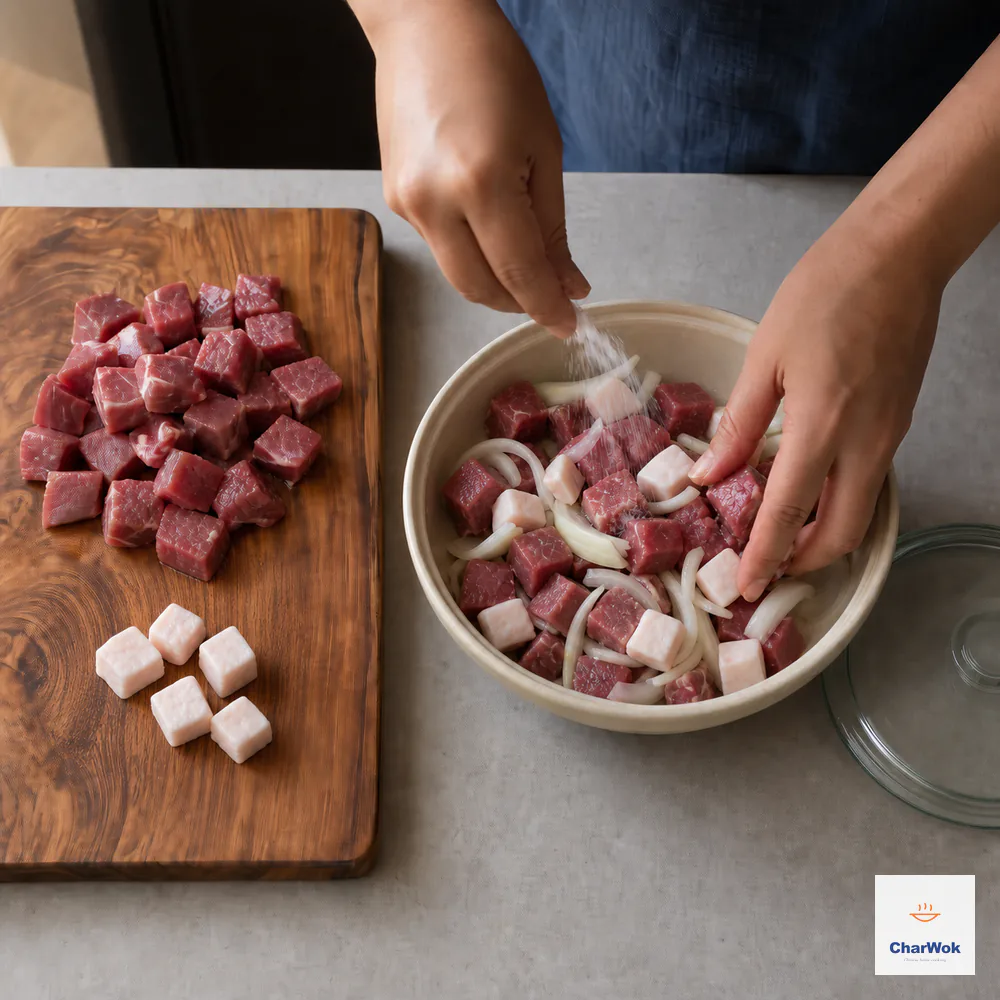
Cut the lean lamb and fat separately into 1.5-to-2-centimetre cubes, toss with sliced onion and salt, cover, and rest at room temperature for 40 minutes.
- Light the charcoal early. Start the coals while the lamb marinates so they have 20 to 30 minutes to burn down. You want a layer of coals covered in white ash with no visible flame when the meat goes on. Dancing flame will scorch the cumin into bitterness before the lamb is cooked.
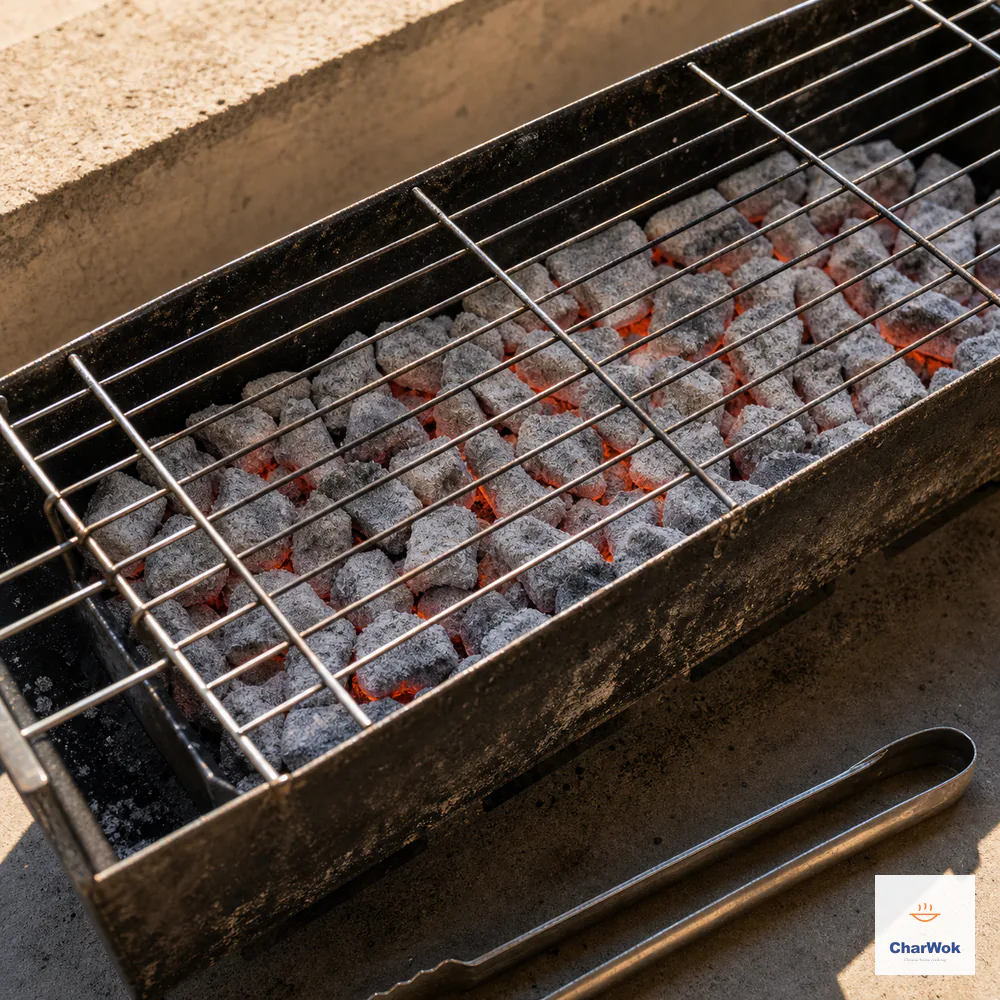
Light the charcoal early and let it burn for 20 to 30 minutes; the lamb goes on only when the coals wear white ash and no flame is dancing above them.
- Thread the skewers. Discard the onion. Thread lean and fat in a loose pattern, about one fat cube per three lean, with a small gap between pieces so heat can reach every surface. Pack them tight and the meat steams instead of searing.
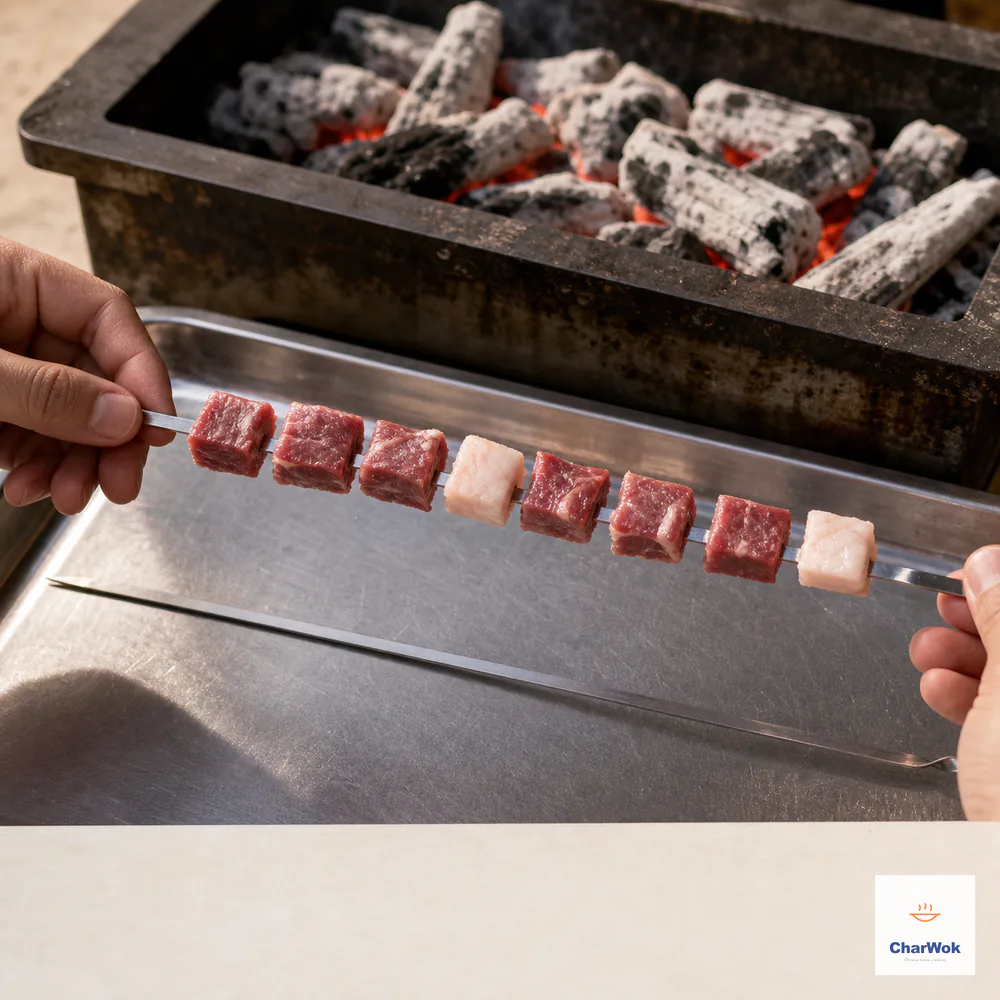
Discard every onion slice, then thread roughly one fat cube for every three lean cubes with small gaps so the meat sears instead of steaming.
- Sear first, season second. Lay the skewers about 10 cm (4 in) over the coals. Turn them every 20 to 30 seconds. Wait until the surface has lost its raw red color and turned pale before adding any spice, usually around the four-minute mark. Seasoning earlier burns the cumin.
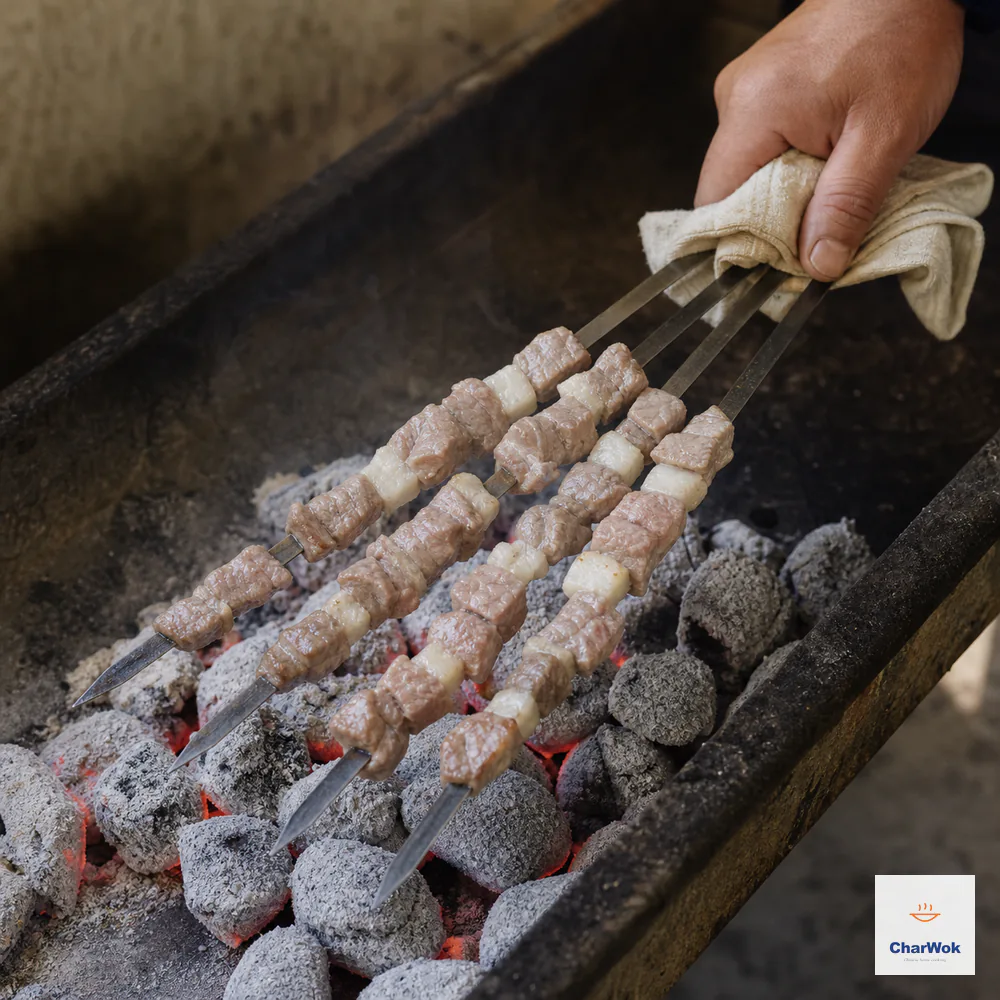
Sear about 10 centimetres above the coals and turn every 20 to 30 seconds; wait until the raw red surface turns pale before adding any spice.
- Apply the cumin and chili generously. Sprinkle from a height of about 20 cm (8 in) so the powder falls evenly. Use more than feels reasonable. A pinch each of sesame and ground fennel is welcome here if you have them.
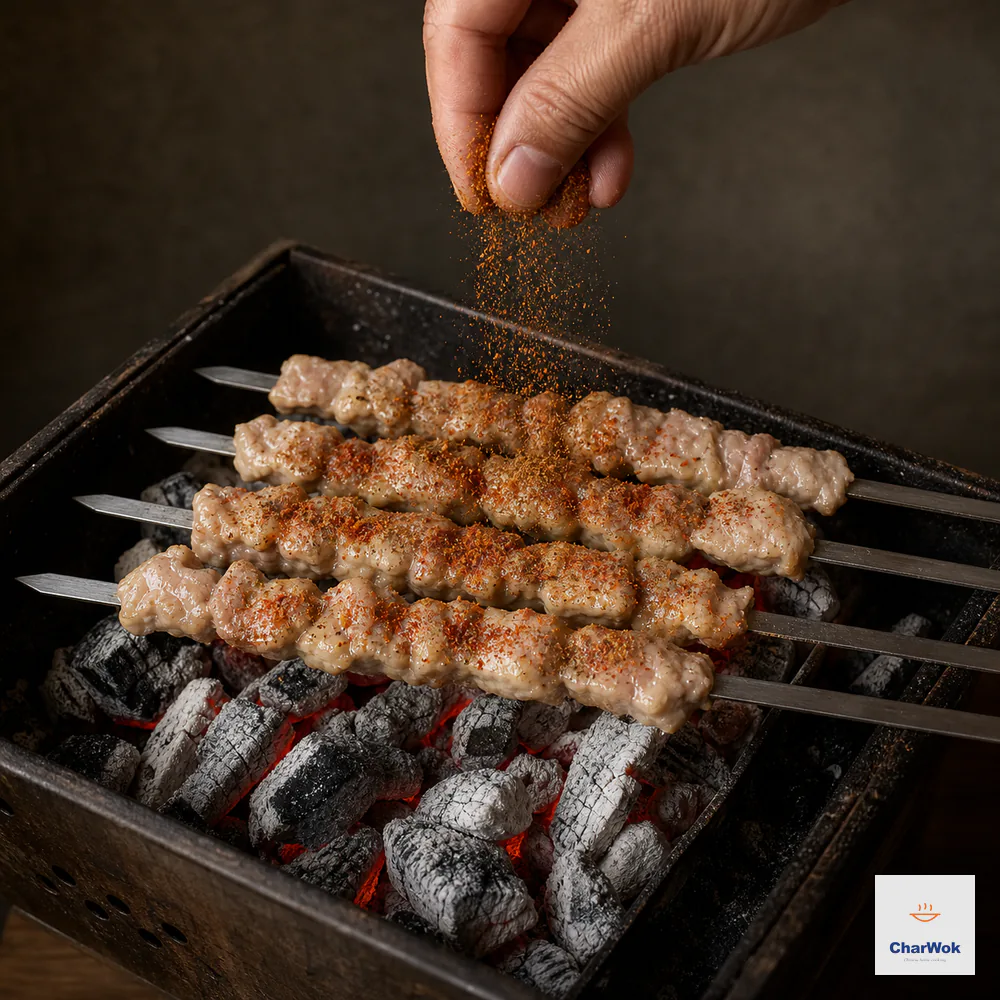
Once the meat is pale and releasing fat, sprinkle cumin and chili generously from about 20 centimetres above so the spices land evenly without burning.
- Baste by rubbing. Split the skewers into two bundles, hold one in each hand, and press and rub them against each other. This smears the rendered fat off the fatty cubes onto the lean ones and presses the spices into the meat. It looks odd and it works.
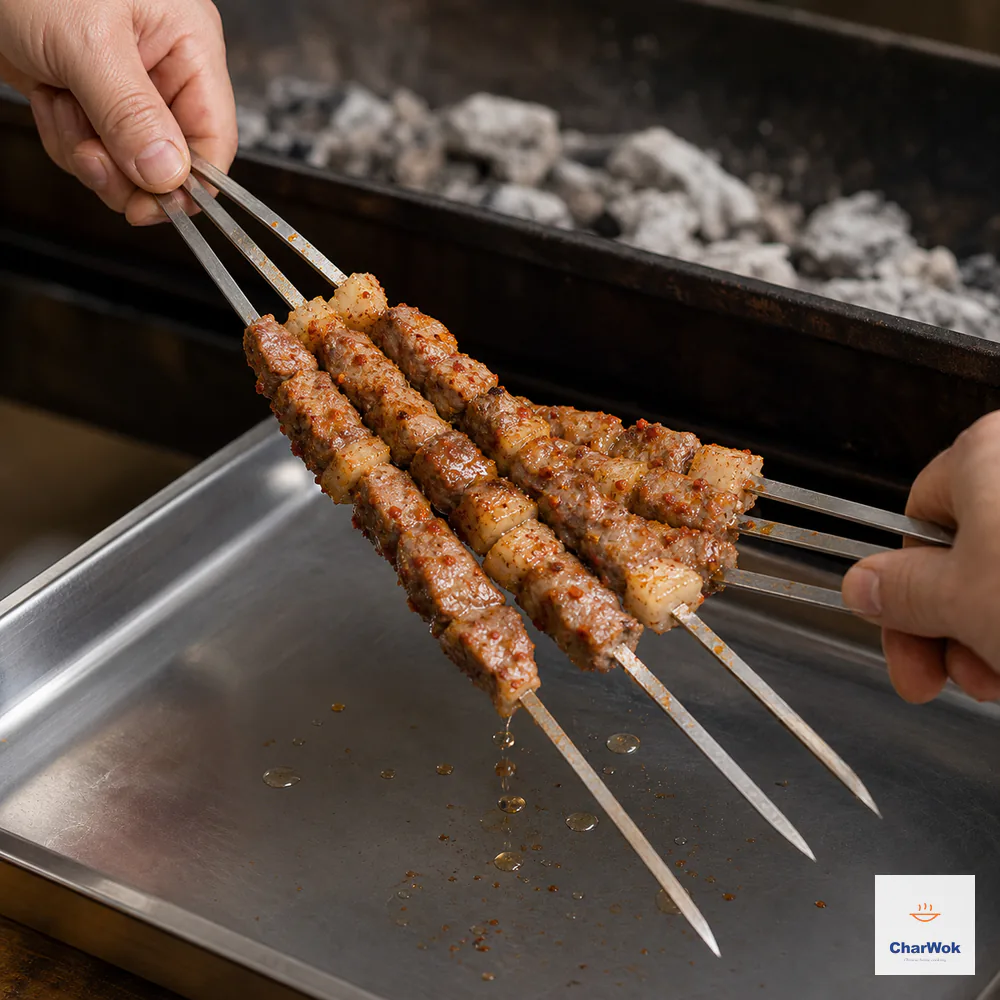
Press and rub two bundles together so rendered fat moves from the fatty cubes onto the lean meat and carries the spices across every surface.
- Finish and serve immediately. Cook another two to three minutes until the outside is browned in spots and there is no raw pink on the surface, then eat them hot off the grill. Lamb skewers wait for nobody.
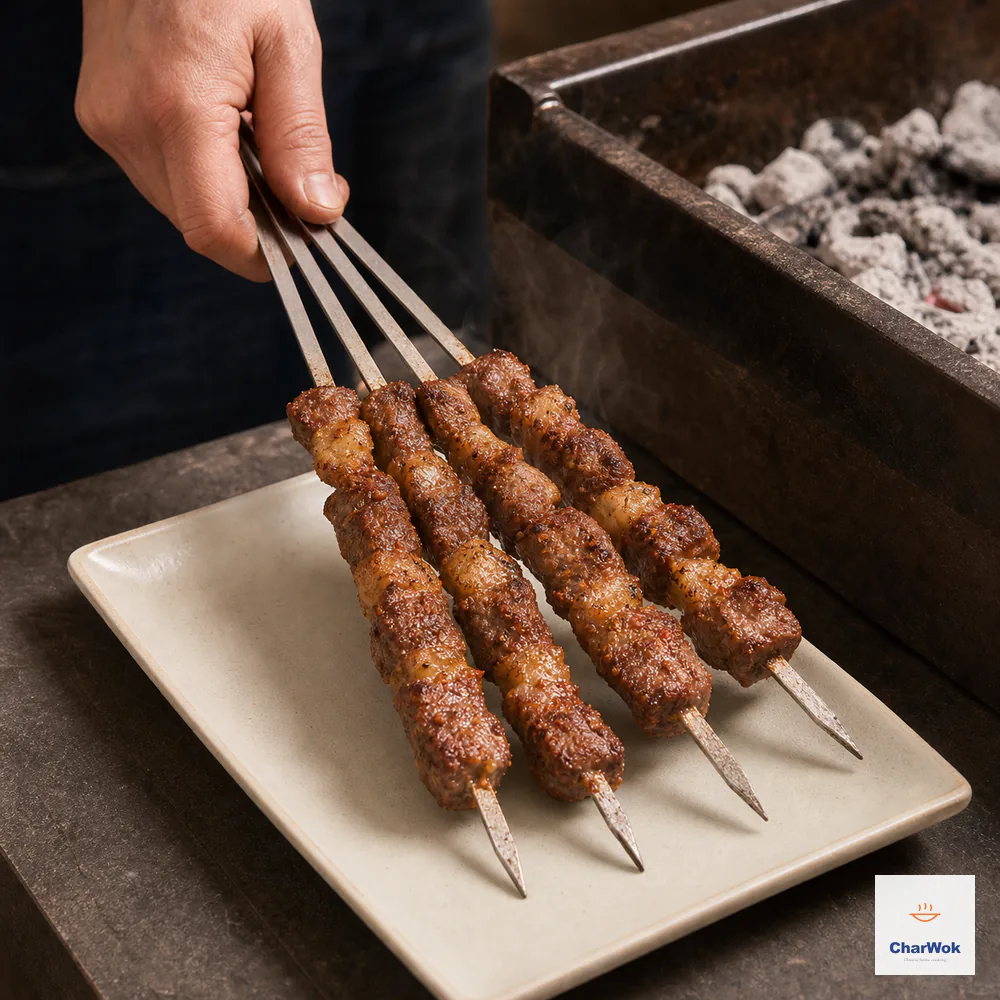
Lift the skewers as soon as the outside is browned in spots and no raw pink remains on the surface, then serve immediately while the lamb is hot.
When something goes wrong
These are the failures I have personally eaten my way through.
Dry, chewy cubes. Almost always a fat problem. Next time, deliberately buy a fattier cut or add separate lamb fat. Overcooking is the second cause; pull the skewers the moment the last pink leaves the surface, not after.
Bitter, acrid spice taste. The cumin burned. You either seasoned too early, the coals were still flaming, or you left the skewers in one spot too long. Toasted cumin should smell nutty and warm, never like char. Toast a pinch dry in a pan sometime and smell the difference; that baseline is what you are aiming for at the grill.
Spices fall straight off. The meat surface was too wet or too smooth. A light blot with paper towel before seasoning helps the powder adhere, and the rub-together step presses it in. A tiny brush of oil is a cheat that works but dilutes the dry-rub character.
Uneven cooking, some raw, some charred. Your cubes were cut to different sizes, or the coals were not level. Aim for uniform 2 cm cubes, and rake the coals into an even layer before the meat goes on. Cubes that are too big will burn outside before the center is safe.
Flare-ups torching the meat. Fat dripping onto coals will ignite. Do not panic and do not move the skewers away permanently. Just lift them off for a few seconds, let the flare subside, and rotate to a fresh spot. A spray bottle of water is the street-vendor trick, used sparingly.
No grill? The broiler route
You can do a respectable version under a hot oven broiler or a salamander. Set a wire rack over a sheet pan so rendered fat can drip away, preheat the pan so the meat sears on contact, and broil about 10 cm (4 in) from the element. Flip every minute and watch like a hawk. You lose the charcoal smoke, but the cumin-and-fat alchemy still works. This is also the safest method for a weeknight when you do not want to light a grill for two people.
What to serve with them
Lamb skewers want cold, crunchy, acidic things beside them to cut the richness. The classic partners are all on the refreshing end of the salad family. A plate of smashed cucumber salad is the most common, and the northwest version called Xinjiang tiger salad, piled with cilantro and scallion and chili, is the more authentic pairing for these skewers specifically. Five-spice edamame is a low-effort fourth dish for the table, and you can browse more ideas in the summer recipes collection, which is built around exactly this kind of outdoor, shareable meal.
If you want to turn the skewers into a fuller feast, add a carb. Hand-torn cumin lamb noodles double down on the same spice profile and turn the night into a theme, or tuck the grilled lamb into baked lamb bao buns for a northwest street-food dinner.
Spice notes and variations
A few words on the chili powder, because it carries the dish. Use pure ground dried chilies, not a chili seasoning blend that has salt and garlic and oregano mixed in. I like to combine two powders: a mild Korean or Kashmiri chili for the bright red color, and a hotter Indian or Thai powder for actual heat. This is the same logic I use for homemade chili oil, where color and heat rarely live in the same pepper. If you only keep one, a medium-heat pure chili powder is the safe call.
Variations worth trying: add a quarter teaspoon of ground Sichuan pepper for a faint numbing hum (read up on handling it in the Sichuan pepper guide); spike the cumin with a pinch of toasted, ground fennel seed as the modern vendors do; or finish with toasted sesame seeds for a nutty top note. A light dusting of five-spice powder sounds wrong but, used very sparingly, it adds a warm undertone that pairs surprisingly well with lamb.
The same dry-spice-over-fire technique is the backbone of a lot of Chinese grilled and roasted meats. If you enjoy this skewer, the low-and-slow logic behind Chinese braised beef shank shows the other end of the spectrum, while char siu BBQ pork and salt and pepper shrimp round out a Chinese barbecue spread that will use up the rest of your charcoal.
Storage and reheating
Lamb skewers are a cook-and-eat food. If you must hold leftovers, strip the meat off the skewers and refrigerate it for up to two days. Reheat in a hot dry pan to re-crisp the fat; the microwave turns the fat rubbery and the cumin stale. Raw marinated lamb, on the other hand, keeps in the fridge for a day, so you can cube and season it the morning of a cookout and grill in the evening.
Questions I get a lot
The short answers to the things people email me about most.
Can I use pre-ground cumin from the jar? You can, but the flavor is flatter. Toasting whole cumin seeds in a dry pan for a minute, then grinding, wakes up oils that went stale on the supermarket shelf. It is a one-minute step with an outsized payoff.
Is pork or chicken an option? Chicken thighs take the same seasoning well; pork is less traditional for this dish because the northwest skewer culture is Muslim. Cubed chicken thigh, skin off, will need a slightly shorter grill to stay juicy.
Why discard the onion after marinating? Raw onion burns and turns bitter long before the lamb is done, and its job is already finished once the meat has soaked. Threading it onto the skewer is a mistake I made exactly once.
Can I skip the marinade if I am short on time? You can, but the lamb will be slightly tougher and a touch gamier. Even twenty minutes of salt-on-meat is better than none; the full forty is the target.
The one thing to remember
If you forget everything else, remember the fat. Buy a cut with real fat on it, thread it onto the skewers alongside the lean, render it over honest charcoal, and season late. Do those four things and the cumin will do the rest. The first batch you pull off the grill will not look like the photograph from a street cart in Urumqi. It will taste like it, and that is the part that matters.