Walk into any Chinese home and the condiment shelf tells a quick story: the soy sauce bottle sits half empty from constant use, and right beside it stands a second dark bottle that gets opened just as much. That second bottle is rice vinegar, and outside China it is the seasoning people most often skip, then wonder why a home-cooked bowl of noodles or plate of sweet-and-sour pork lands flat. The sourness is easy to find. The depth is harder, and it lives in the grain-fermented vinegar most Western shops still stock sparsely.
That depth is the whole story. A Chinese black rice vinegar is not just sour. It is sour layered over months of grain fermentation, with a malty, slightly smoky aroma that distilled white vinegar and cider vinegar simply do not have. If you cook Chinese food more than once a month, one good bottle of Chinkiang vinegar will do more for your food than a shelf of sauces. This is the bottle I would tell a friend to buy first, alongside soy sauce and the few other staples in our must-have condiment list.
At a glance: Chinkiang (Zhenjiang) black rice vinegar is the everyday workhorse, dark and malty with a soft, rounded acidity. Add it late in cooking to keep the aroma alive. Keep one bottle in a cool, dark cupboard, lid tight; it does not need the fridge. Buy Chinkiang first, then explore Shanxi mature vinegar if you want something sharper and smokier.
What Chinese rice vinegar actually is
How to choose, use, and store Chinese rice vinegar at a glance
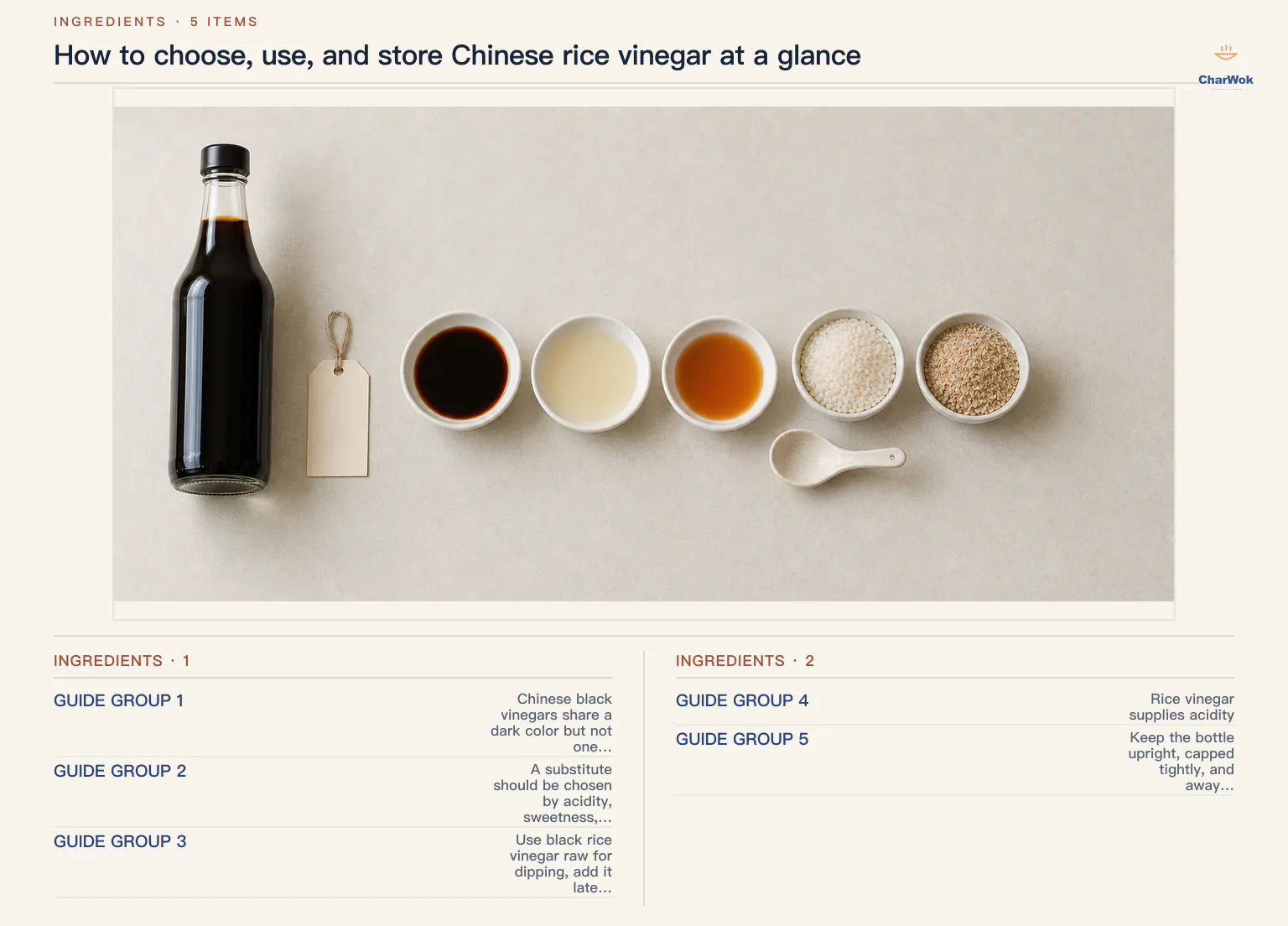
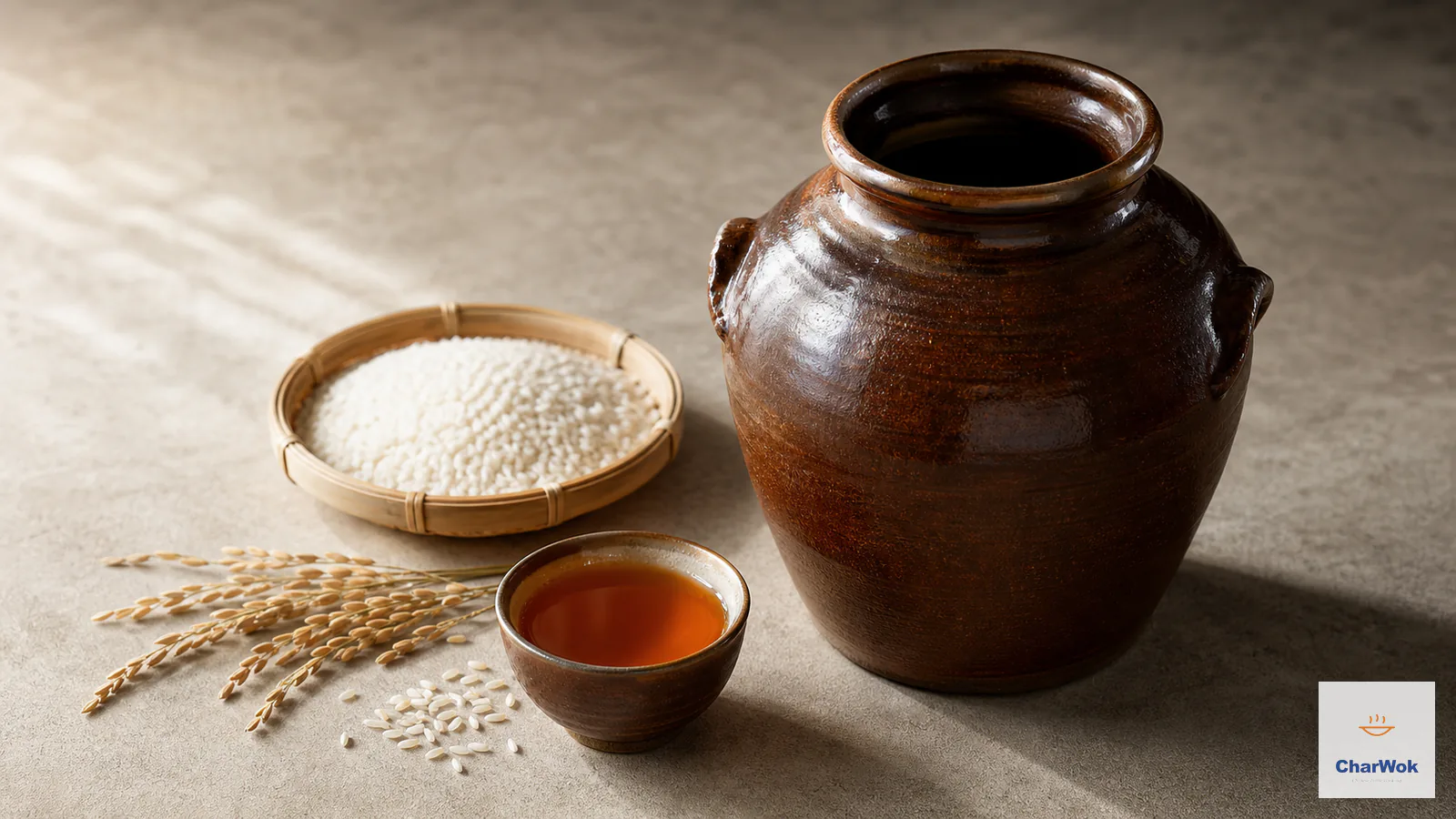
Rice vinegar starts the way sake does: cooked rice meets a fermentation starter and turns sugars into alcohol. Then a second set of microbes, acetic acid bacteria, take over and convert that alcohol into acetic acid. The grain base, the length of aging, and the region decide what the finished bottle tastes like. Glutinous rice is the classic backbone, but wheat bran, sorghum, barley, and peas all show up depending on where the vinegar is made. That grain mix matters for more than flavor: anyone avoiding gluten should know the dark styles generally contain enough wheat or barley to count, so do not assume a "rice" product is safe.
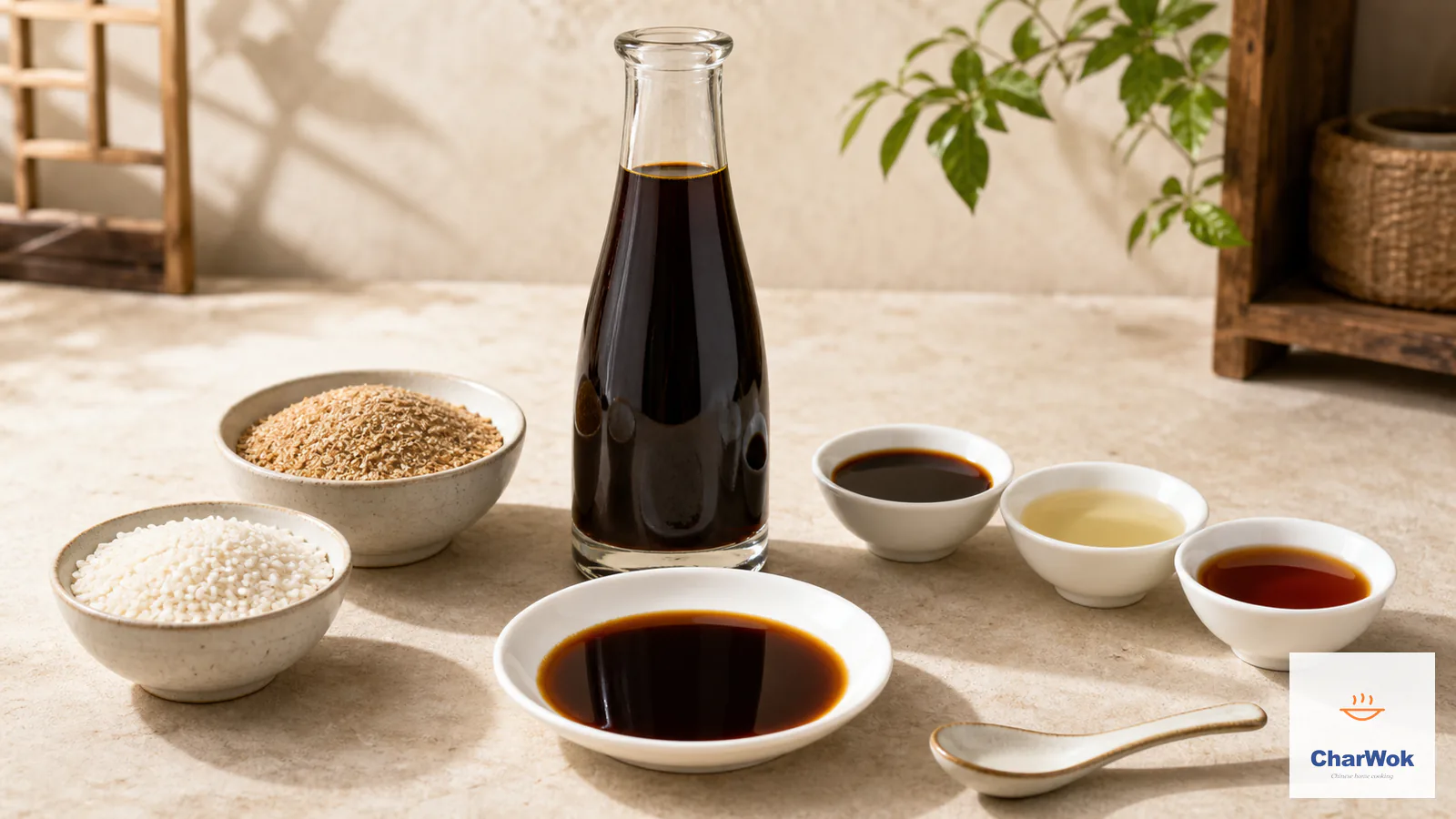
Chinese cooks sort rice vinegar by color into three families: black, white, and red, with black doing the heavy lifting in most home kitchens. White rice vinegar is pale and sharp, pulled out when acidity is wanted without darkening the dish, like in quick overnight pickles. Red rice vinegar is milder and slightly sweet, more common in southern regional cooking, and rarely seen in Western shops.
Why Chinkiang vinegar is the one to buy first
Black rice vinegar is a category, not a single product. Three regional styles dominate it. Chinkiang (also spelled Zhenjiang) vinegar comes from Jiangsu province and is the default behind the words "black rice vinegar" in nearly every recipe you will follow. Shanxi mature vinegar (laochen cu) from Shanxi is more assertive, sharper and smokier, and is what you want splashed over noodles in the northwest. Baoning vinegar from Sichuan, made with bran and medicinal herbs, has a funky, complex edge that Sichuan cooks love in cold dishes.
For a first bottle, choose Chinkiang. It is the easiest style to track down abroad, it forgives a heavy hand, and its rounded sweetness makes it the most flexible player in the pantry. The two names you will see most are Gold Plum (Jinmei) and Hengshun, both long-standing makers whose bottles are simple to find in Chinese grocers and online. If you fall in love with it, add a Shanxi mature vinegar later for when you want a more piercing, smoky kick.
A guide to the three styles
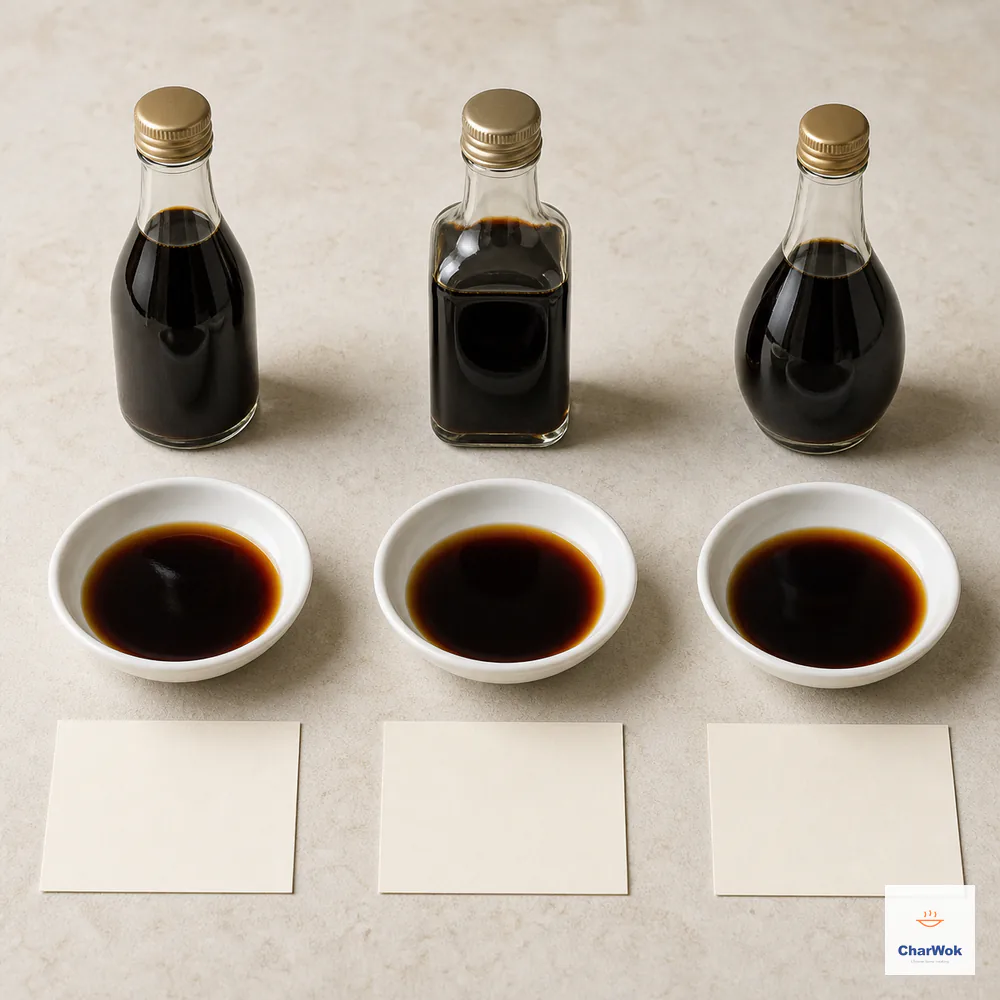
Chinese black vinegars share a dark color but not one flavor: Chinkiang, Shanxi mature, and Sichuan-style vinegars differ in grain base, aging, aroma, sweetness, and weight.
| Type | Region | Flavor profile | Best use |
|---|---|---|---|
| Chinkiang (Zhenjiang) | Jiangsu | Dark, malty, softly sweet, rounded acidity | Everyday all-purpose; dumpling dips, sweet-and-sour, braises |
| Shanxi mature (laochen cu) | Shanxi | Sharp, smoky, drier finish | Noodle bowls, dumplings, anything needing a piercing tang |
| Baoning | Sichuan | Complex, herbal, slightly funky | Sichuan cold dishes, dipping sauces |
| White rice vinegar | Various | Pale, clean, sharp | Pickles, sweet-and-sour dishes where color matters |
| Red rice vinegar | Southern China | Mild, slightly sweet | Specific regional dishes; hard to source abroad |
Is there a substitute?
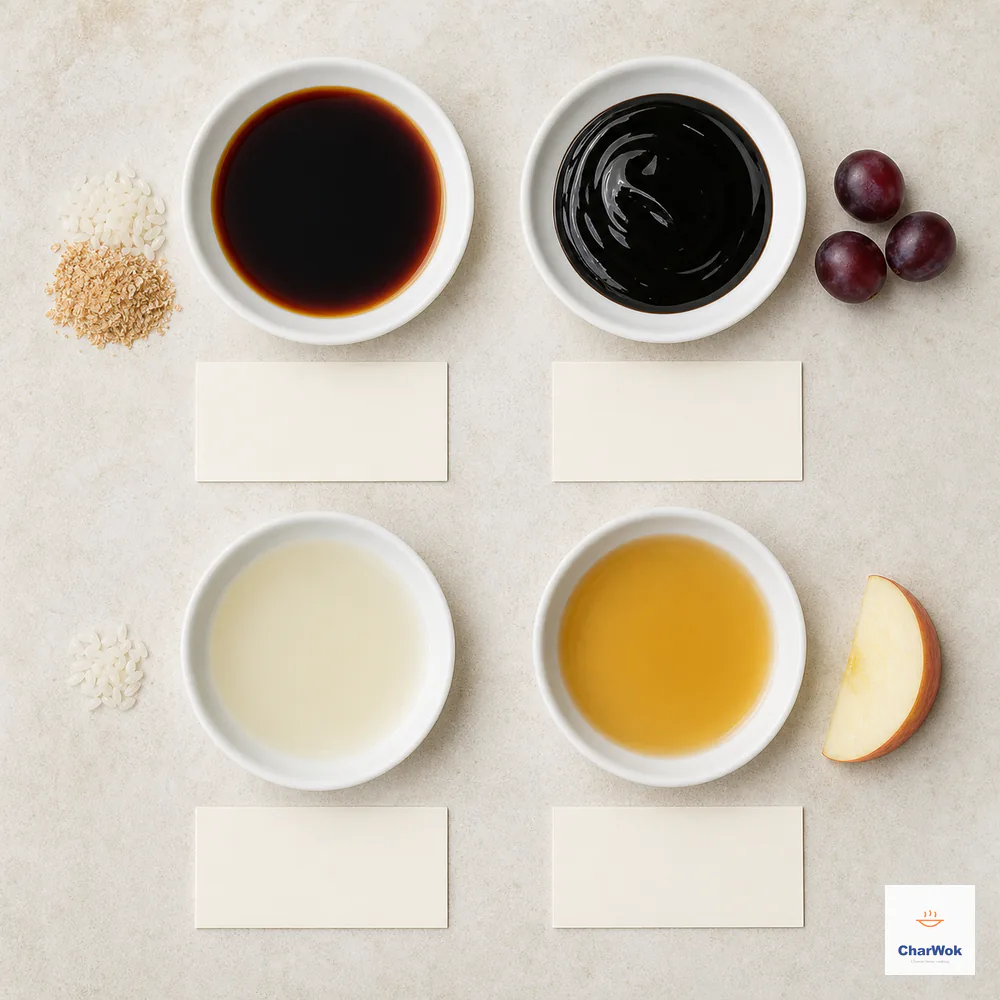
A substitute should be chosen by acidity, sweetness, color, and body: balsamic is darker and thicker, white rice vinegar is paler and cleaner, and cider vinegar is fruitier.
Nothing reproduces it, so I will say that plainly. The substitution people reach for first is balsamic, drawn in by the matching dark color, and it leads the field in disappointment. Balsamic ferments from grapes, not grain; it is thick, sugary, and tastes of cooked fruit. Drop it into a dumpling dip and the bowl reads wrong. Cook it into a braise and it hijacks the whole pot.
White rice vinegar, Japanese rice vinegar, and cider vinegar can all supply acidity if you are completely stuck, but they are missing the roasted, malty depth that defines black rice vinegar. If a dish leans on the vinegar's own flavor, like a cold cucumber salad or a sweet-and-sour glaze, no substitute will land. Get the real bottle; the substitutes will only remind you it is missing.
How to use it, and when to add it
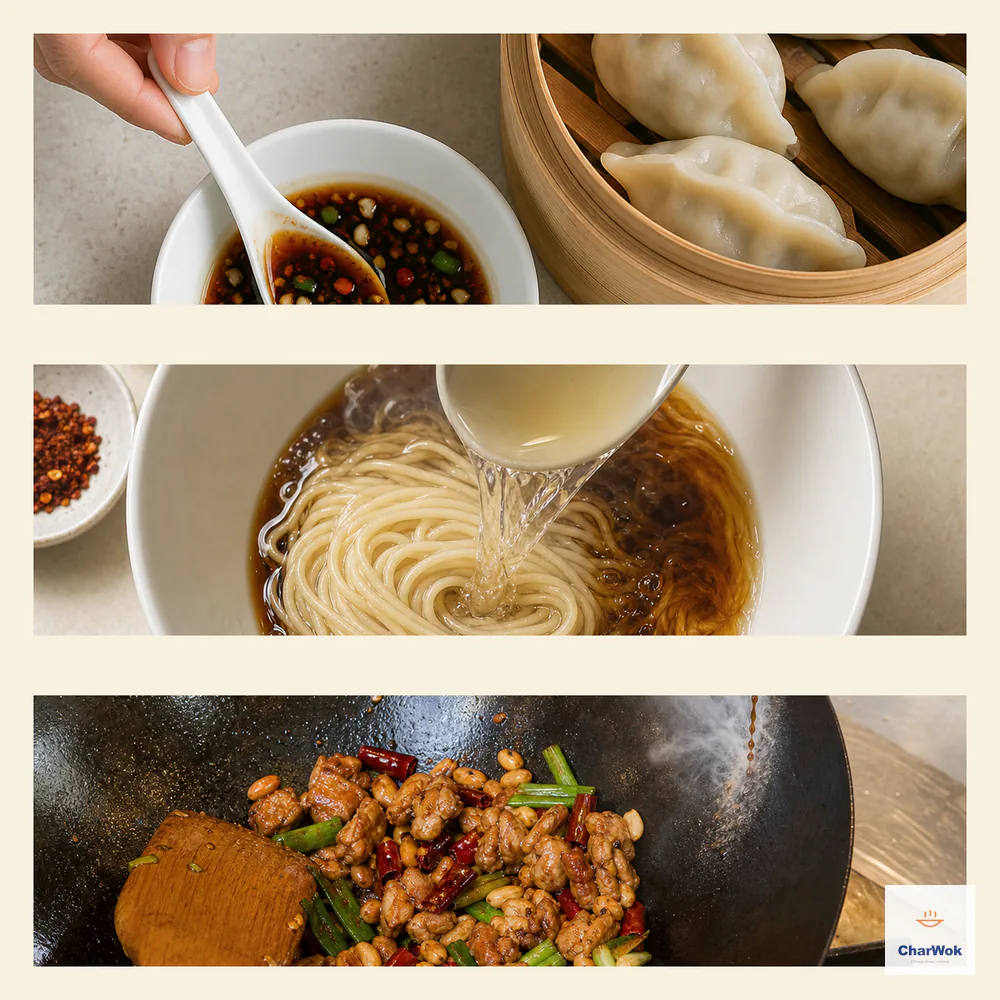
Use black rice vinegar raw for dipping, add it late to soups and noodles, or flash it around a hot wok rim so the aroma stays rounded instead of boiling away.
The single rule I hammer with vinegar is timing. Acetic acid and the volatile aromas that give black rice vinegar its character both evaporate and dull with heat. Add it early in a long braise and you lose most of what you paid for. Add it in the last minute, or off the heat, and the flavor stays bright. There are exceptions, which I flag below.
- Raw, in the bowl. This is where the vinegar shows its best self, untouched by heat. Build dipping sauces for dumplings and savory pancakes from minced garlic, sesame or chili oil, and a splash of soy; let the vinegar lead and season around it, tasting as you go. The same raw logic drives dressings for smashed cucumber, cold wood-ear mushroom, and mung bean jelly — salt the vegetable first so it drinks the dressing instead of shedding it. Save your finest bottle for these, since nothing masks a flat vinegar when it is served cold.
- Into the bowl, not the pot. For noodle dishes the vinegar belongs at the bottom of the serving bowl, where the just-poured broth wakes it up as you eat. That is the trick behind Xi'an biang biang noodles and hot and sour noodle soup, and the same late-add move is what gives hot and sour soup its clean tang: pour it in after the egg ribbons, off a hard simmer, or the broth goes one-note and dull.
- Flashed, then finished. A different principle governs the wok. Drizzle a few drops around the screaming-hot edge of the pan for dishes like Kung Pao Chicken and fish-fragrant shredded pork. The instant heat burns off the most aggressive acid and leaves a softer, smokier background — one of the few times vinegar goes in early on purpose. For sweet-and-sour ribs, split the addition: part of the vinegar cooks down with rock sugar and soy to build body and cut the fat, then a last splash brightens the glaze off the heat.
When vinegar goes wrong
I have made every vinegar mistake in the book, and most of them come down to the same error: reaching for the bottle the way you reach for salt, as if more is better.
- Too sour, no aroma. You added it too early or too generously while the food was still cooking. Fix it next time by halving the amount and moving the addition to the last minute. Rescue this batch with a pinch of sugar.
- One-dimensional acidity. The dish is sour but boring. Acidity always wants something sweet beside it. Add sugar, rock sugar, or a sweeter ingredient like tomato to round the edges.
- Braised meat turned harsh. Vinegar added early can clash with long-cooked pork. Pull most of it to the end, leaving only a small measure for body during the braise.
- Cold salad tastes thin. The vinegar is sitting on the surface. Salt and drain the vegetable for ten minutes first so the dressing actually penetrates.
- Pickles went mushy. That is white rice vinegar's job, not black; black rice vinegar darkens and softens quick pickles in a way you usually do not want.
Rice vinegar is not rice wine
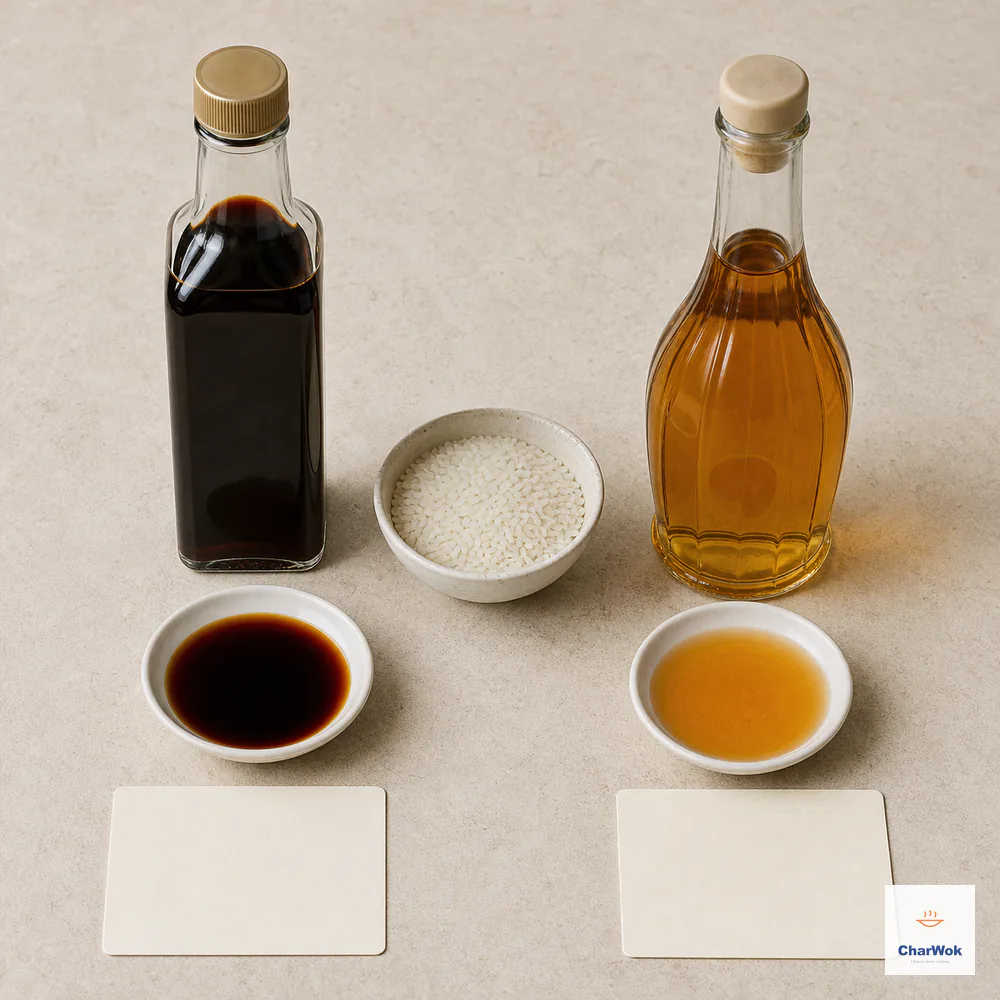
Rice vinegar supplies acidity; rice wine supplies alcohol, fermented grain aroma, and sweetness. They are different pantry ingredients and are not interchangeable.
The names are close enough that beginners mix them up constantly, and the bottles even sit near each other in the shop. They do completely different jobs. Rice vinegar is sour, a seasoning used for flavor and balance. Shaoxing rice wine is a cooking wine used mainly to perfume meat and seafood and mute any gamey smell during marinating. One is an acid, the other is an alcohol. You cannot swap them. If a marinade calls for rice wine and you use vinegar, the meat will taste pickled, not aromatic.
Buying and storing
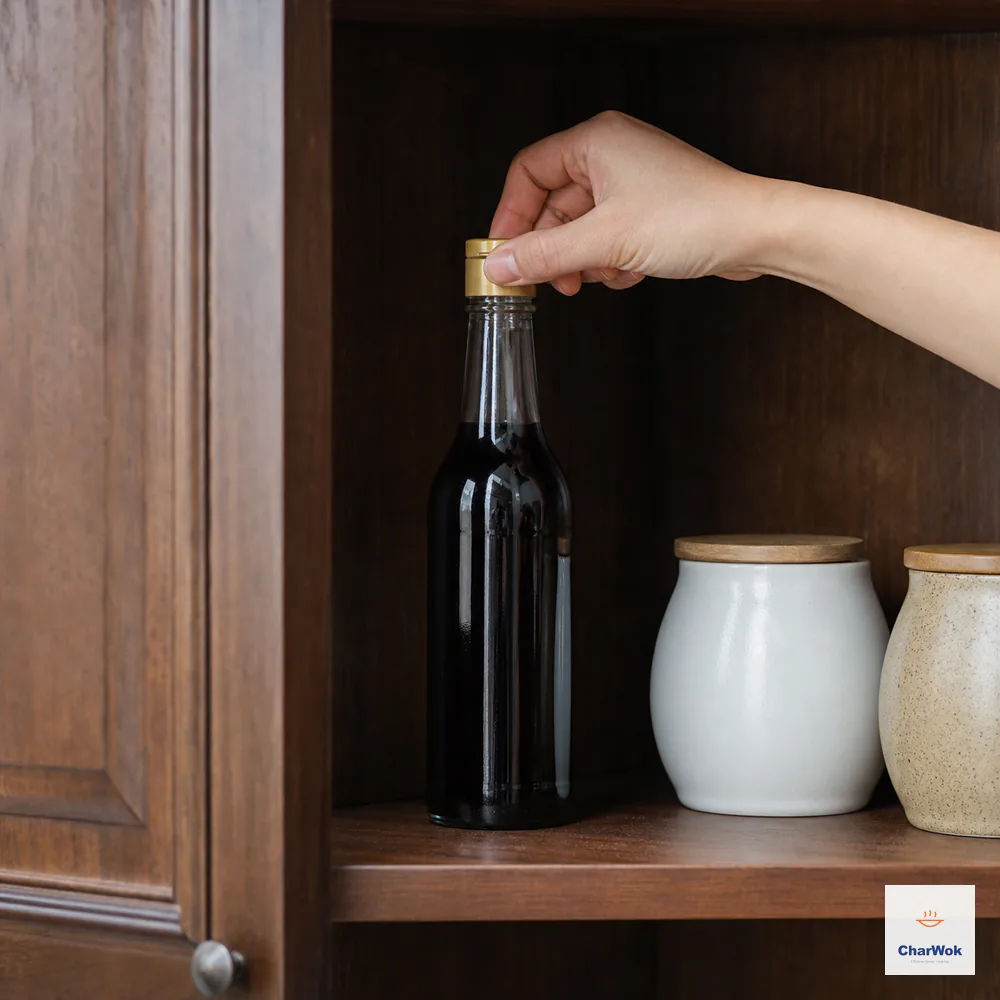
Keep the bottle upright, capped tightly, and away from heat and direct light; refrigeration is normally unnecessary unless the label says otherwise.
A few things to check on the label. Chinkiang vinegar will say "Zhenjiang aromatic vinegar" or show the characters 镇江香醋. The ingredient list should start with rice, water, and possibly wheat bran, with no caramel color added to fake the darkness. Price is a fair signal: the cheapest bottle is often the one padded with additives and coloring, and it does not taste like the aged product. Trustworthy names to look for include Gold Plum (Jinmei) and Hengshun.
Store it in a cool, dark cupboard with the lid screwed on. Refrigeration is unnecessary. The high acidity keeps it safe almost indefinitely, though the aroma slowly softens after a couple of years, so buy a size you will use, not the economy jug. Like chili bean paste and other fermented pantry items, it rewards being opened regularly.
Quick questions
A handful of things readers ask again and again. If you want the short version, it is below; the long answers are scattered through the sections above.
Is black rice vinegar the same as balsamic?
No. They share a dark color and that is where the resemblance ends. Balsamic is grape-based, thick, and sweet, while black rice vinegar is grain-fermented, malty, and far less sweet. Reach for balsamic and your dumpling dip will taste like a dessert accident.
Can I use white vinegar instead?
Only as a last resort. Distilled white vinegar gives you pure acidity with none of the toasted, fermented aroma, so the dish lands sharp and flat. White rice vinegar is closer but still lighter and cleaner; it works in a pinch for pickles, not for anything where the vinegar is the star.
Is Chinese rice vinegar gluten-free?
Usually not. Traditional black rice vinegars include wheat bran or barley in the grain mix, so most are not gluten-free. White rice vinegar is more often safe, but read the label and do not assume.
Does it need to be refrigerated?
No. A cool, dark cupboard with the lid tight is ideal. The acidity preserves it well for a year or more; flavor slowly fades after that, so a smaller bottle you finish is better than a giant one that sits.
What if I can only find one bottle?
Make it Chinkiang. It is the most versatile of the lot and the default in most recipes. From there, Shanxi mature vinegar is the natural second bottle if you cook a lot of northern noodles and dumplings.