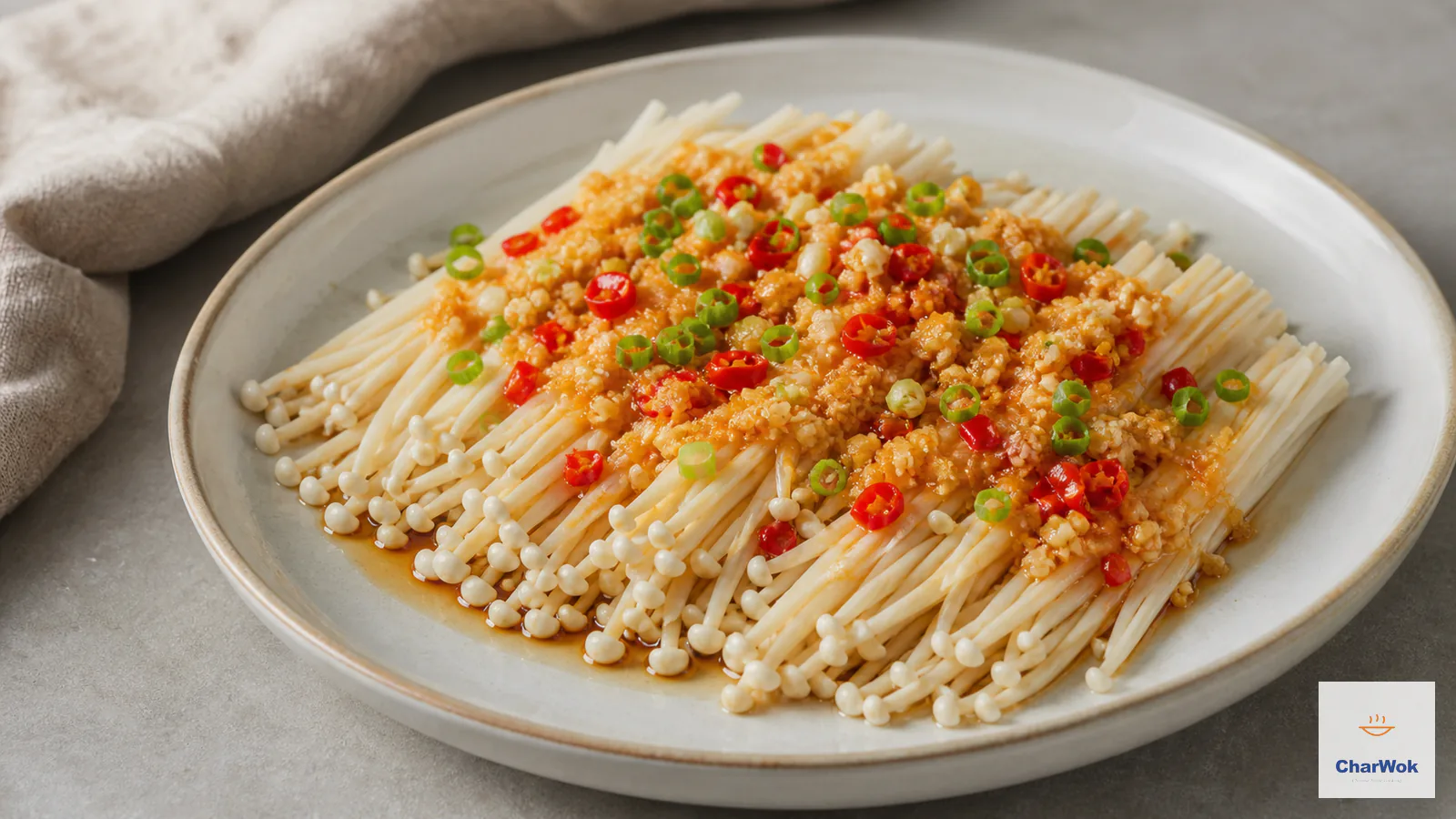
Enoki mushrooms are the one vegetable I keep buying and then regretting. They sit in the fridge looking innocent, and somehow I always end up stir-frying them into a tangled, watery mess, or dumping them into a soup where they vanish. If that sounds familiar, here is the version that fixed the problem for me: steam them, briefly, under a hot garlic and chili sauce. Eight minutes from fridge to table, and the texture stays crisp instead of going limp.
The dish is called Suan Rong Jin Zhen Gu (蒜蓉金针菇), literally "garlic-paste golden-needle mushrooms." It is a home-style steamed vegetable plate that turns up at Cantonese and Shanghainese family tables, in dim-sum restaurants, and on late-night hot pot menus as a cooling, crunchy counterpoint to rich braises. The genius of it is the cooking method: steam pulls flavor into the stems instead of washing it out, and the garlic sauce blooms in the steam rather than frying off.
At a glance. Trim, wash, and pat dry one 300 g (10 oz) pack of enoki. Fry garlic and chili briefly, stir in soy and oyster sauce, spoon it over the mushrooms, then steam exactly 4 minutes over a full rolling boil. Garnish and eat at once. The whole dish lives or dies on one number: do not pass 4 minutes, or the famous crunch is gone.
What you are actually cooking
Enoki (Flammulina velutipes) grows in clusters of long, thread-thin white stems with tiny pale caps. Wild ones are amber and stocky; the cultivated ones in the supermarket are grown in the dark and packed in CO2, which is why they are so pale and elongated. The Chinese name jin zhen gu, golden-needle mushroom, describes the look better than the English name does.
What makes enoki worth cooking is the texture. Most mushrooms are soft or spongy; enoki has a distinct snap, closer to a thin noodle than to a cap mushroom. The only other common Chinese ingredient in that crisp-firm family is wood ear mushroom, and both of them are prized precisely because they give your teeth something to do. The flavor is mild and slightly fruity, which is the point: enoki is a carrier. It drinks up whatever sauce you put on it, and the thin stems act like wicks.
That is also why steaming beats every other method here. Blanching and the mushroom gives up its flavor to the water. Stir-frying and it tangles and weeps. Steaming keeps the structure intact and lets the garlic sauce sink in. For the same logic applied to seafood, see steamed garlic shrimp with vermicelli, a near-identical technique applied to shrimp.
Ingredients
Ingredients at a glance
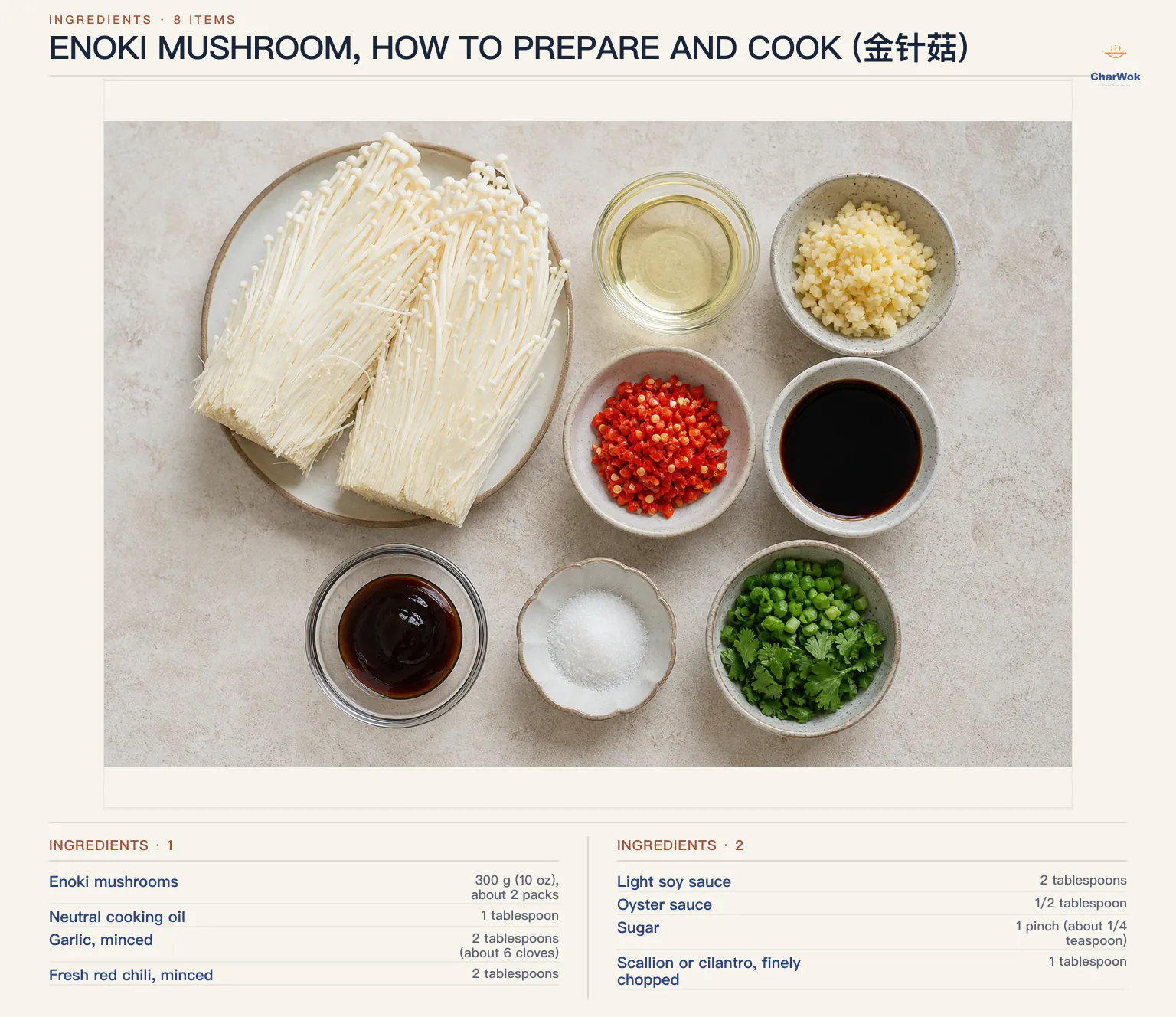
This serves two as a side, or one hungry person as a light main. The quantities assume one standard 200 to 300 g (7 to 10 oz) supermarket pack; scale the sauce up if you are doubling the mushrooms.
| Ingredient | Amount | Notes / substitute |
|---|---|---|
| Enoki mushrooms | 300 g (10 oz), about 2 packs | Trim the root end. Brown or slimy patches mean toss it. |
| Neutral cooking oil | 1 tablespoon | Grapeseed, canola, or avocado. Not olive oil, which fights the aromatics. |
| Garlic, minced | 2 tablespoons (about 6 cloves) | Mince fresh; pre-minced jar garlic is dull and acrid. |
| Fresh red chili, minced | 2 tablespoons | Or substitute 2 tablespoons pickled chili garlic sauce (duo jiao), which I actually prefer for the fermented depth. |
| Light soy sauce | 2 tablespoons | Light, not dark. Dark soy will stain the dish brown and add sweetness it does not need. See my notes on light versus dark soy sauce. |
| Oyster sauce | 1/2 tablespoon | For vegan: use mushroom-based vegetarian oyster sauce, or skip it and bump the light soy to 2 1/2 tablespoons. |
| Sugar | 1 pinch (about 1/4 teaspoon) | Balances salt and the fermented chili; do not taste-test for sweetness. |
| Scallion or cilantro, finely chopped | 1 tablespoon | For garnish. Scallion if you want onion bite, cilantro if you want green freshness. |
The method, step by step
- Trim and separate. Slice off the woody root end with a sharp knife, about 2 cm (3/4 inch) up from the base. Then tease the cluster apart into bite-sized bundles with your fingers. This is the boring step you will be tempted to skip, but tight clumps trap grit and steam unevenly. You want loose bundles so the heat and sauce reach every stem.
- Wash and dry. Drop the bundles into a large bowl of cold water and swish gently. Lift them out, change the water, and repeat if you see sediment. Drain in a colander, then press firmly between paper towels. Dry is the whole game here. Wet mushrooms dilute the sauce and pool water on the plate.
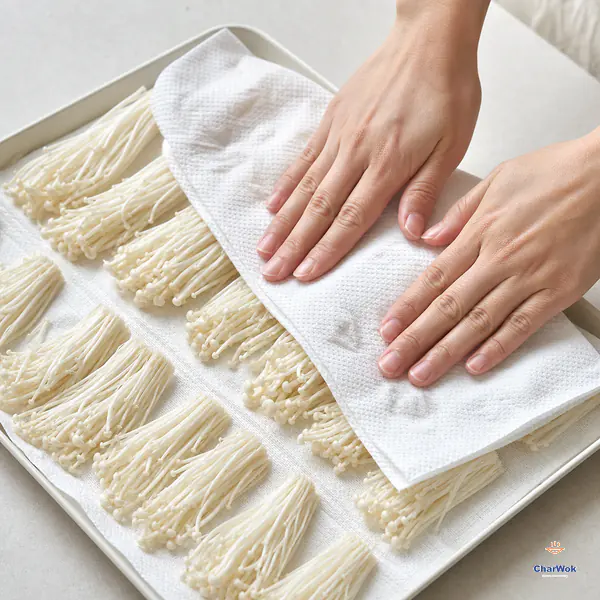
After washing and draining, press the separated bundles firmly between paper towels until the surface is nearly dry. Removing this water prevents the mushrooms from cooling the plate and diluting the sauce as they steam.
- Lay them on a serving plate. Spread the bundles in a loose, even layer. Use a plate with a slight rim, not a flat one: enoki releases a lot of liquid during steaming, and you want that broth to collect around the mushrooms, not run off the edge.
- Bloom the aromatics. Heat the oil in a wok or small pan over medium. Add the garlic and chili (or the pickled chili garlic sauce) and fry just until fragrant, about 20 to 30 seconds. Pull the pan off the heat the instant the garlic smells sweet and toasted, before it colors. Garlic left on the heat goes from golden to bitter in a few seconds, and bitter garlic will haunt the whole dish.
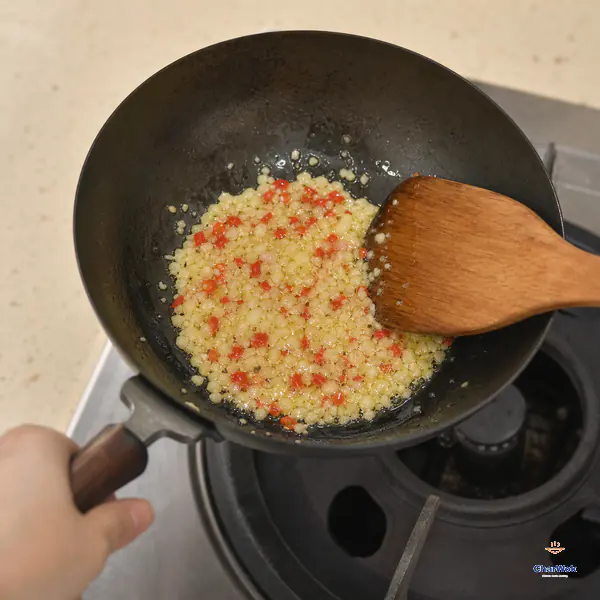
Fry the garlic and chilli over medium heat for only 20–30 seconds. Pull the pan off the burner as soon as the garlic turns translucent and its edges just begin to color, before it becomes brown and bitter.
- Build the sauce off the heat. With the pan off the burner, stir in the light soy sauce, oyster sauce, and the pinch of sugar. Off-heat matters: you are seasoning, not reducing. If you keep cooking, the soy sauce turns harsh and the sauce shrinks to nothing.
- Spoon and steam. Pour the sauce evenly over the mushrooms. Get your steaming water to a full, rolling boil first, then set the plate in. Cover and steam exactly 4 minutes. Start the timer when the lid goes on, not when the water boils.
- Garnish and serve immediately. Scatter scallion or cilantro over the top and bring the plate straight to the table. Enoki cools fast, and the texture is best in the first five minutes.
The steaming setup
You do not need a bamboo steamer for this, though a bamboo basket over a wok is the traditional choice and it absorbs condensation so water does not drip back onto the mushrooms. A metal steamer rack inside a wide pot or wok works fine, as does a folding metal steamer basket. If you have none of those, set a small heatproof bowl upside-down in a pot of shallow water and balance the plate on top. For a deeper dive on gear, see the bamboo steamer guide.
Whatever you use, two things must be true: the water is at a full boil before the plate goes in, and the lid fits tightly. Steam is the heat source, and a lid that lets vapor escape turns four minutes into seven and ruins the texture.
When it goes wrong, and how to fix it
This recipe is short, which means the failure modes are sharp. Here are the ones I have personally hit.
- Mushrooms went rubbery and chewy. You steamed too long. Five minutes is the cliff. The cellulose in the stems collapses past that point and never comes back. Re-set your timer for four minutes from lid-on, and if your stems are unusually thick, check at three.
- The plate swam in pale, watery liquid. Two causes: you did not dry the mushrooms after washing, or the steaming water was not at a full boil when the plate went in and the mushrooms sweated for a minute before real steaming started. Next time, pat dry and pre-boil.
- The garlic tasted bitter. It over-fried. Garlic in hot oil crosses from fragrant to acrid in about ten seconds. Pull the pan off the heat the moment you can smell it from across the kitchen, and remember the pan keeps cooking by residual heat, so move fast on adding the soy.
- Everything was bland. The sauce sat on top instead of soaking in. This happens when the bundles are too tight or piled too deep. Spread them thin and loose so the sauce runs between the stems, and let the finished plate rest one minute off the heat before serving so the stems wick up the liquid.
- It looked brown and muddy. You used dark soy sauce. Dark soy is for color and braising, not this dish. Stick with light soy; the finished sauce should be glossy and reddish-amber, not dark.
One honest limitation: this dish does not reheat well. The crispness is a one-time event. If you must make it ahead, under-steam to three minutes and finish the last minute right before serving.
Variations and pairings
Once the core technique is locked, the dish is a template. Try these.
- Add glass noodles. Soak 30 g (1 oz) of mung bean vermicelli in warm water for ten minutes, snip into short lengths, and lay them under the mushrooms. The noodles drink the garlic sauce and are often the first thing gone from the plate.
- Swap the chili. Fresh red chili gives clean heat; the pickled chili garlic sauce from the ingredient list gives a layered, tangy heat that I now prefer. A spoonful of chili oil at the end adds aroma without cooking the dish hotter.
- Add protein. A handful of ground pork, fried off before the garlic, turns this from a side into a main. Thin silken tofu cubes tucked underneath the mushrooms also work, and the steam warms them through gently.
- Change the vegetable. The same garlic-oyster sauce steams beautifully over broccoli florets, halved bok choy, or sliced king oyster mushrooms, which give a meatier bite than enoki.
For a meal, serve this alongside something savory and saucy that the mushrooms can cut through. Steamed dishes pair well with each other, so a plate of steamed fish or a bowl of silky steamed eggs and a bowl of rice makes a clean, gentle dinner. If you want contrast, put it next to something bold and oily, like a Sichuan braise or a char siu, and let the mushrooms be the palate cleanser.
Storage
Cooked enoki keeps in an airtight container in the fridge for up to two days, but the texture softens. Reheat gently in a covered pan over low heat or in the microwave at 50 percent power, just until warm. Do not steam it again, and do not boil it, or it turns to rope. Honestly, this is a cook-fresh dish, so plan the portions so nothing is left.
Raw enoki, unopened, lasts a week refrigerated and should be used before the date on the pack. Once opened, cook within a day or two. Never eat enoki raw; it should always be cooked through. If you have extra raw mushrooms you cannot get to, drop them into a soup at the last minute, the way you would in a hot and sour soup.
Frequently asked questions
Do I have to wash enoki mushrooms? Yes. They are grown in a substrate and the root end traps grit. A quick swish in two changes of cold water is enough.
Can I use other mushrooms? King oyster and shiitake work with the same sauce but need a longer steam, about 8 minutes for sliced king oyster. Enoki is specifically prized for the crunch, so the texture will differ.
Is this dish vegan? It is, if you swap the oyster sauce for a mushroom-based vegetarian version or leave it out and add a little extra light soy. Everything else in the recipe is plant-based.
Why steam instead of stir-fry? Stir-frying tangles the long stems and leaches out water into a soggy pan. Steaming sets the texture and lets the sauce absorb, which is exactly what enoki is built for.
Why I keep coming back to this one
Most vegetable side dishes ask you to babysit a wok. This one asks you to set a timer and walk away for four minutes. The crunch is real, the garlic sauce is loud enough to make a side feel like a main, and it works equally well as a quiet weeknight plate or as part of a bigger steamed spread. Once you trust the four-minute rule, it is one of the most reliable vegetable dishes in the Chinese home kitchen.