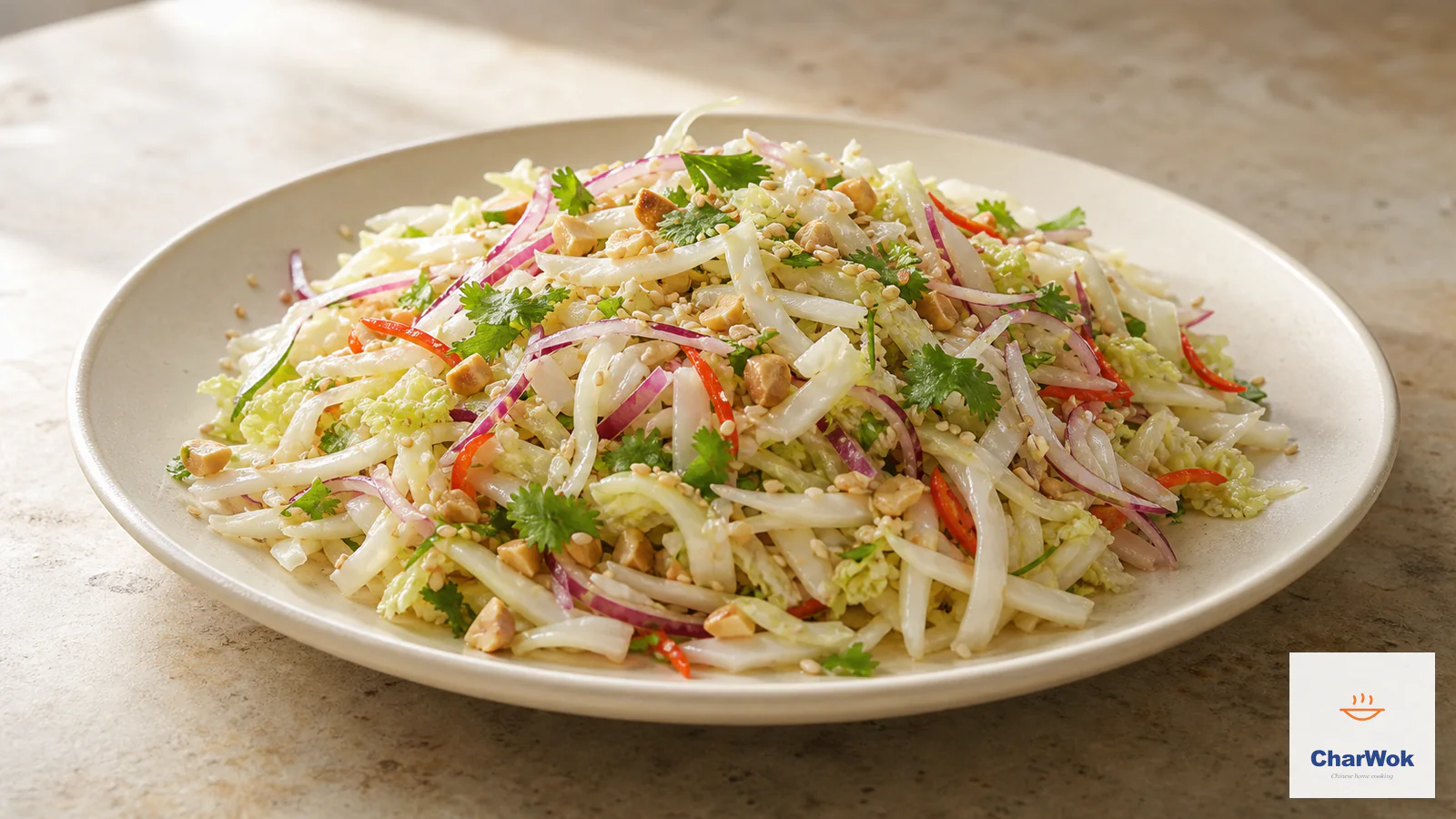
The best thing a Napa cabbage salad does is prove that "raw" and "boring" have nothing to do with each other. A good one snaps when you bite it, the dressing hits sour then sweet then savory in quick succession, and the bowl is empty before the rice is. The worst one, and I've made plenty of these, sits in a puddle of its own juice ten minutes after you toss it, the cabbage gone translucent and sad.
The difference between the two comes down to two things you can control: how wet the leaves are when they hit the dressing, and how late you let the salt touch them. Get those right and the rest almost doesn't matter.
At a glance: A no-cook, cold-tossed Chinese salad built on the crisp white stems of Napa cabbage, finished with a five-note dressing (soy, black rice vinegar, lime, sugar, sesame oil) at the very last second. Total active time about 6 minutes; serves 4. The single rule that decides whether it's great or a puddle: dress it at the table, never ahead.
What this dish is, and where it comes from
Liángbàn (凉拌) means "cold-mixed," and it covers a whole family of quickly dressed raw or briefly blanched dishes meant to open a meal or cool a hot one. The principle is older than any one region: take a vegetable with real texture, cut it small enough to absorb flavor, hit it with a sharp acidic dressing, and serve immediately. You see the same logic in a smashed cucumber salad, a wood ear mushroom salad, or the aggressive all-herb Xinjiang tiger salad from the northwest.
This version leans a little southwestern. The lime in the dressing is a tell — it belongs to Yunnan cooking, where the food borders Southeast Asia and citrus shows up in places the rest of China would reach for vinegar. Layered onto the standard northern soy-and-black-vinegar base, it gives the salad a brightness that plain rice vinegar can't quite match. I think of it as a Yunnan-inflected liángbàn, even if no single village would claim it.
Why the stems do all the work
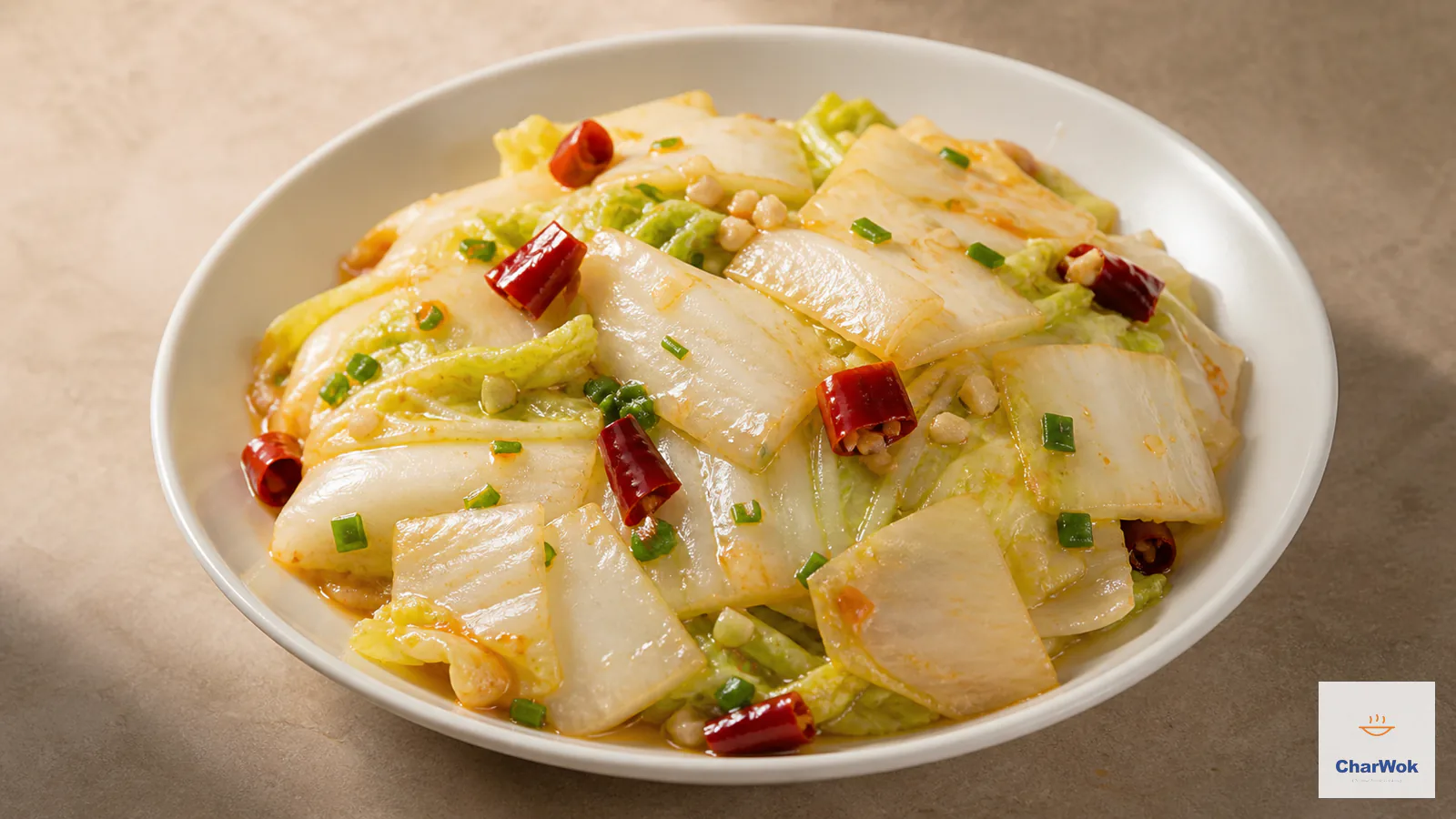
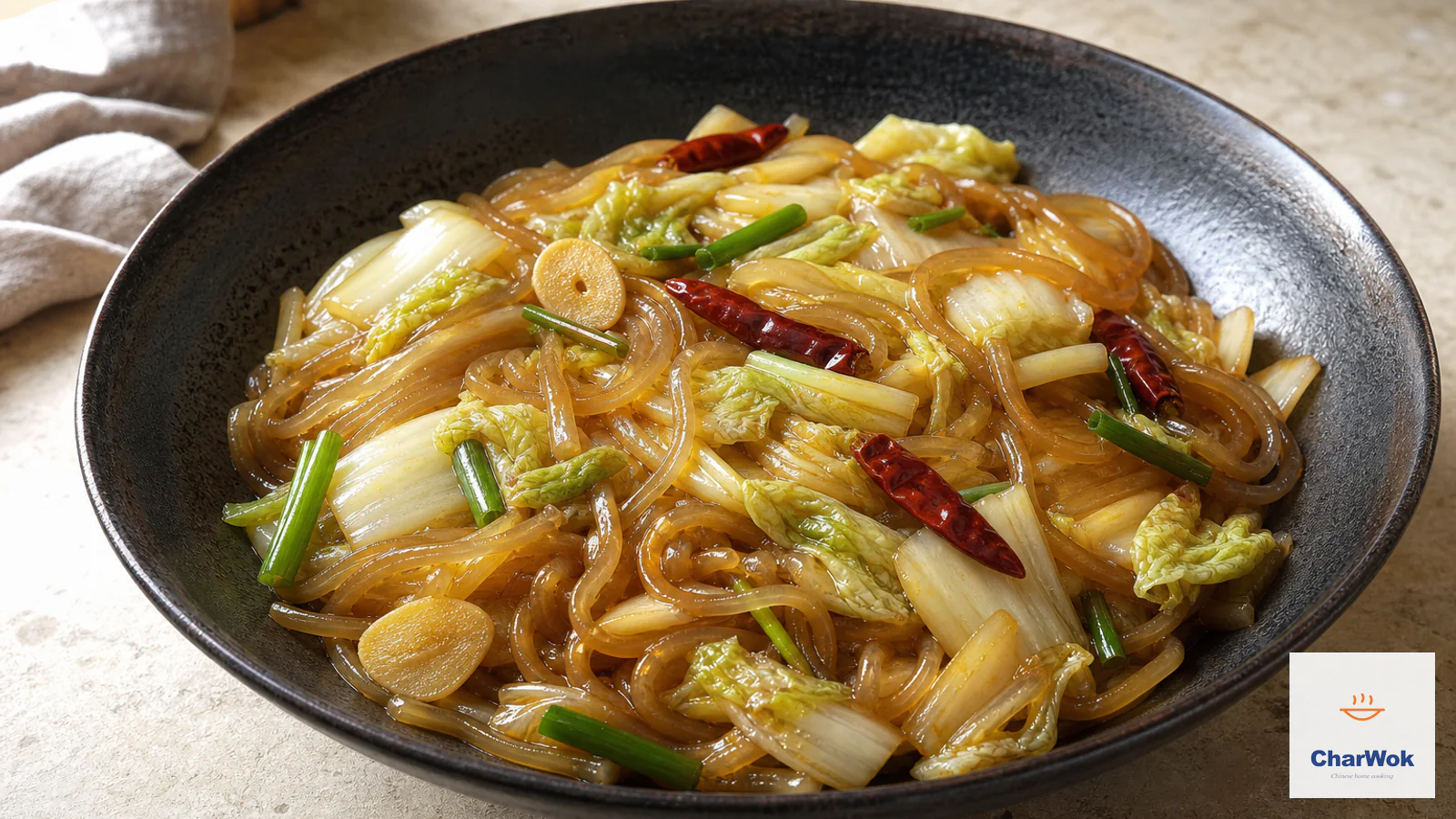
A Napa cabbage head is two vegetables in one. The white lower stem is dense, juicy, and crunchy, built almost entirely of water held in rigid cell walls. The pale-green leafy top is softer, more delicate, and collapses the instant it meets salt. For this salad you want the stems. Reserve the leafy tops for a braised glass noodle and cabbage dish, drop them into soup, or fold them into a stir-fry like hot and sour Napa cabbage.
Here's the science behind the wetness problem. Salt pulls water out of plant cells through osmosis. The stem's cell walls are strong enough to resist that pull for a few minutes, long enough to eat, but not forever. The leafy tops have weak cell walls and give up their water almost on contact. That's why a stem-heavy salad stays crisp and a whole-leaf salad weeps. The fix isn't more salt or less salt. It's ingredient choice plus timing.
Ingredients
Ingredients at a glance
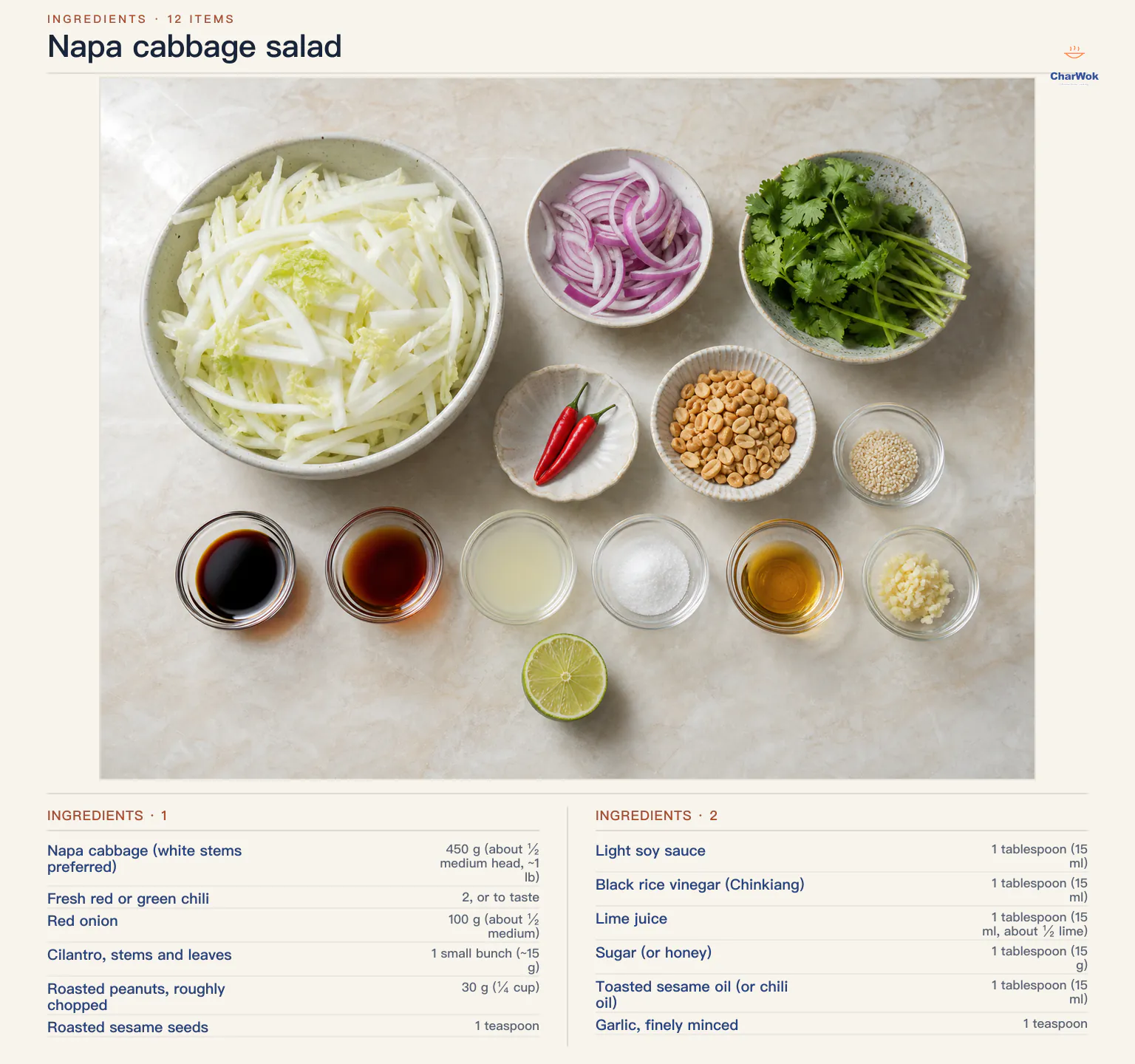
Serves 4 as a side. Active time about 6 minutes, no cooking.
| Ingredient | Amount | Notes / substitute |
|---|---|---|
| Napa cabbage (white stems preferred) | 450 g (about ½ medium head, ~1 lb) | Use mostly the crunchy white base; save green tops for soup or stir-fry |
| Fresh red or green chili | 2, or to taste | Serrano or Fresno work; remove seeds and membranes for less heat |
| Red onion | 100 g (about ½ medium) | Soak the slices in cold water 5 min to tame the bite |
| Cilantro, stems and leaves | 1 small bunch (~15 g) | Optional; flat-leaf parsley is a milder stand-in if you dislike cilantro |
| Roasted peanuts, roughly chopped | 30 g (¼ cup) | Cashews or toasted sunflower seeds for a nut-free version |
| Roasted sesame seeds | 1 teaspoon | Toast raw seeds in a dry pan until they smell nutty |
| Light soy sauce | 1 tablespoon (15 ml) | See the difference between light and dark soy sauce; don't substitute dark, it's too heavy and too sweet |
| Black rice vinegar (Chinkiang) | 1 tablespoon (15 ml) | Learn more about black rice vinegar; in a pinch use malt vinegar plus a drop of balsamic |
| Lime juice | 1 tablespoon (15 ml, about ½ lime) | Lemon juice works; it's slightly less aromatic but still bright |
| Sugar (or honey) | 1 tablespoon (15 g) | Dissolve fully; honey adds its own flavor |
| Toasted sesame oil (or chili oil) | 1 tablespoon (15 ml) | Use good toasted sesame oil; swap in Chinese chili oil for a spicy, hotter version |
| Garlic, finely minced | 1 teaspoon | Microplane it so it dissolves rather than clumping |
How to make it, step by step
- Prep and dry the cabbage. Pull the leaves apart and rinse under cold water. This is the step most people rush and pay for later: shake off the water, then lay the leaves on a clean towel and pat them dry, or spin them in a salad spinner. Stack six or seven leaves flat, then slice crosswise into strips about 5 mm (¼ inch) wide, starting from the root end where the crunch lives. Wet leaves will dilute the dressing; this is non-negotiable.
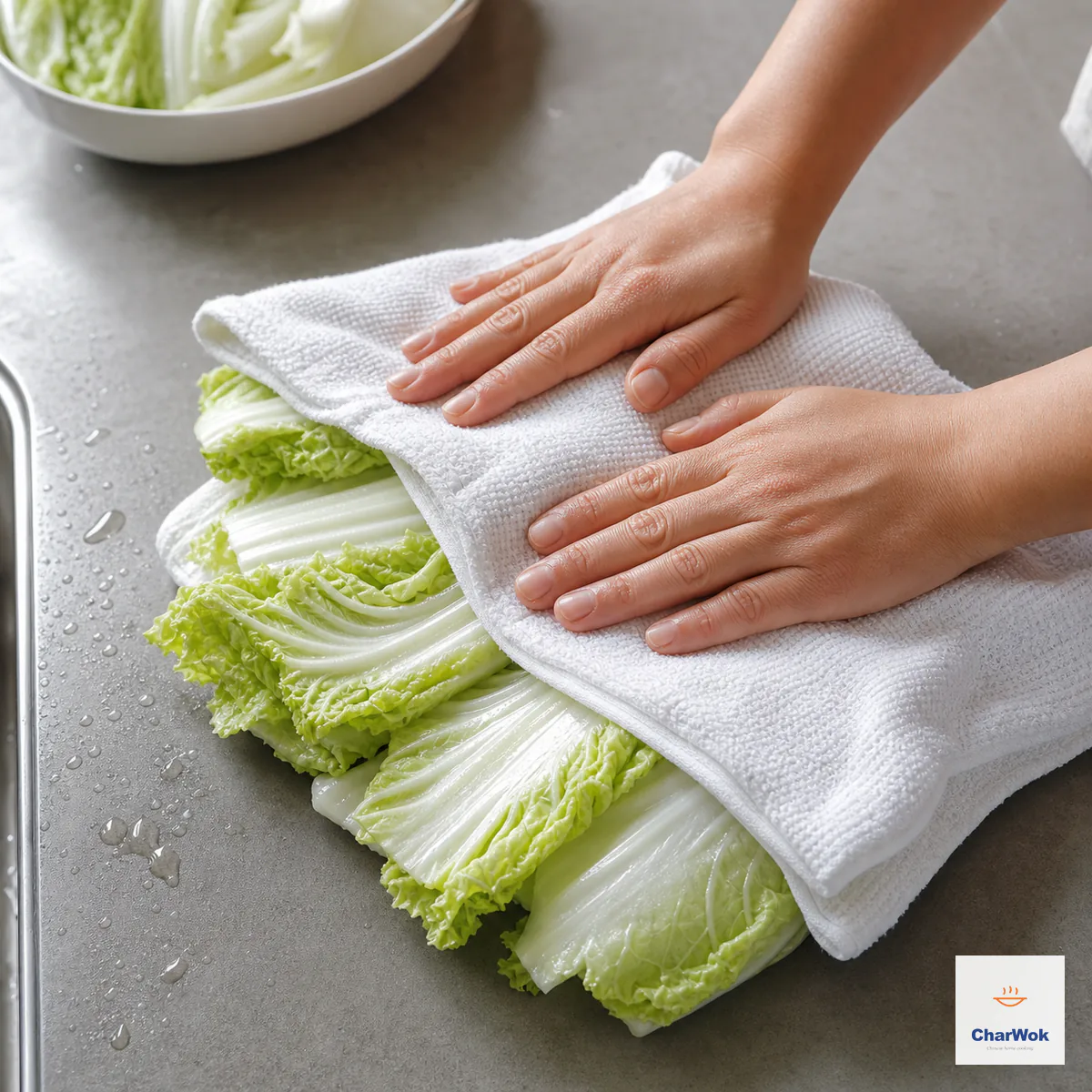
Pat every leaf dry rather than merely shaking it; surface water would dilute the dressing and make the finished salad weep
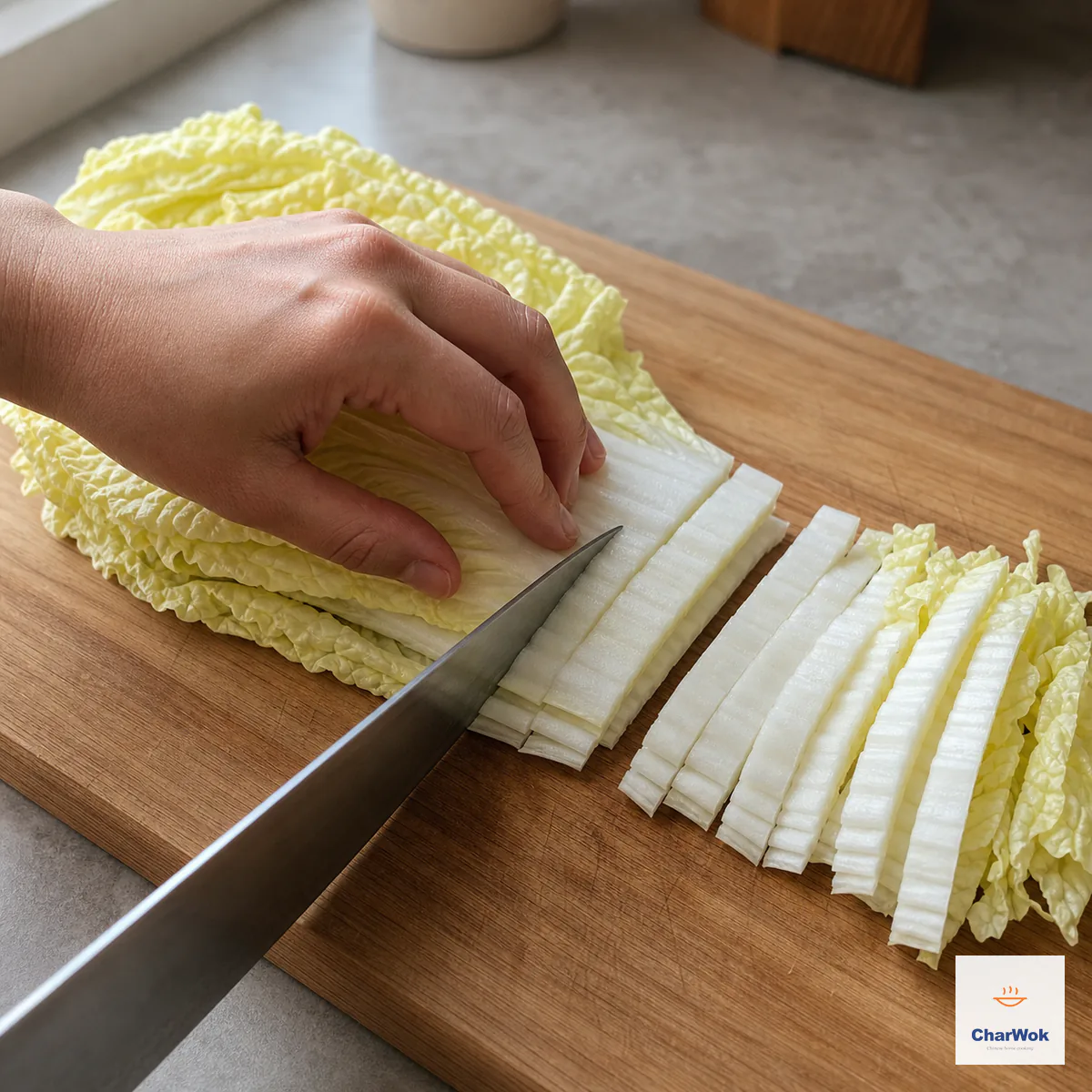
Stack the dry leaves and cut across the fibres from the root end into strips about 5 millimetres wide so they stay crisp but tender
- Match the garnishes to the cabbage. Halve the chilies lengthwise, scrape out the seeds and white membranes (that's where the heat concentrates), and slice them as thin as the cabbage strips. Cut the red onion the same way; similar width keeps every bite balanced instead of getting a lone chunk of raw onion. Rough-chop the cilantro, stems included; the stems have more flavor than the leaves. If the onion tastes sharp, drop the slices in cold water for five minutes and drain.
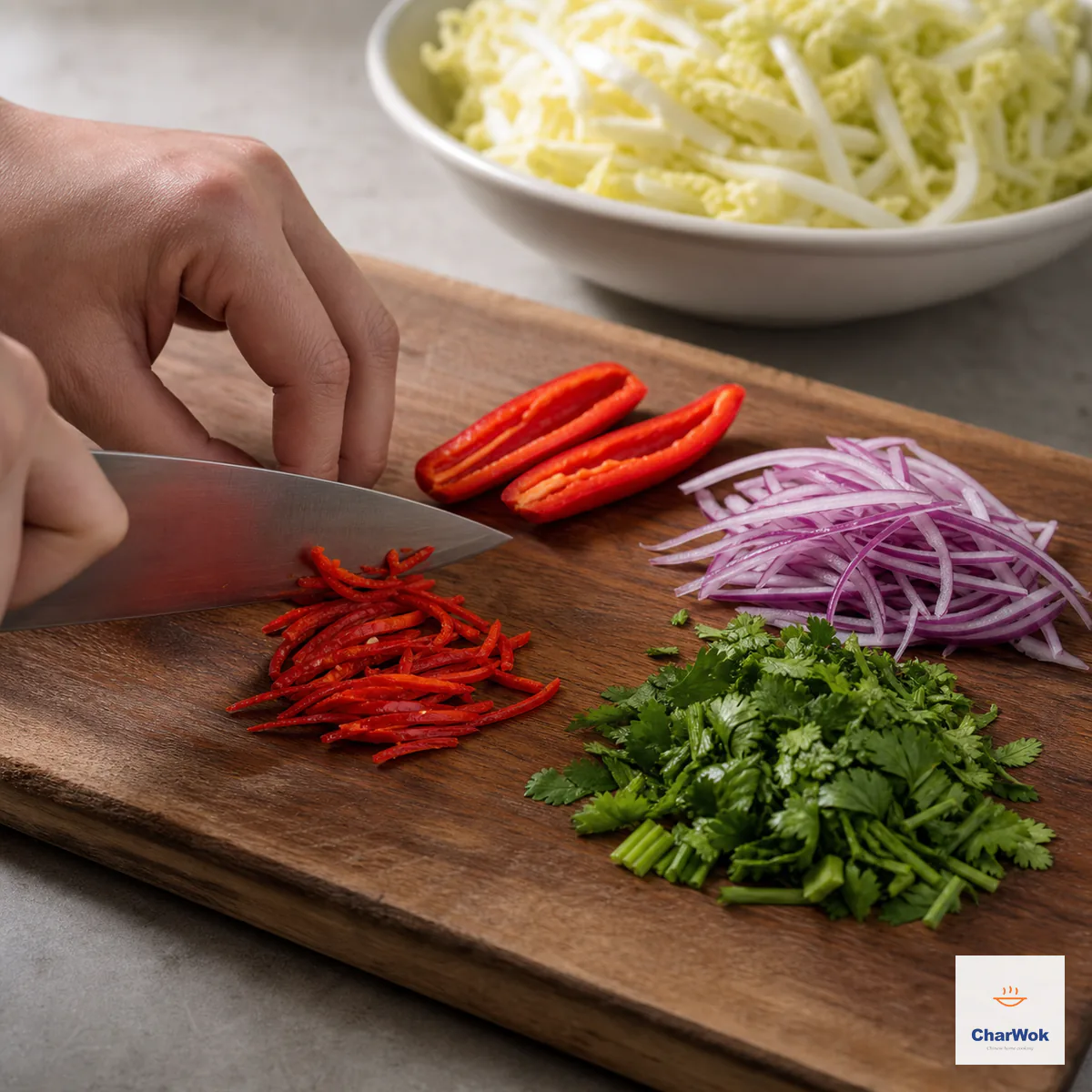
Remove the chili seeds and membranes, then cut the chili, onion, and cilantro to a similar scale so every bite stays balanced
- Whisk the dressing and dissolve the sugar completely. Combine the soy sauce, black rice vinegar, lime juice, sugar, sesame oil (or chili oil), and minced garlic in a small bowl. Stir until you can't feel any grain of sugar when you rub a drop between your fingers. Undissolved sugar is the difference between a balanced dressing and one that lands sweet in one bite and sour in the next.
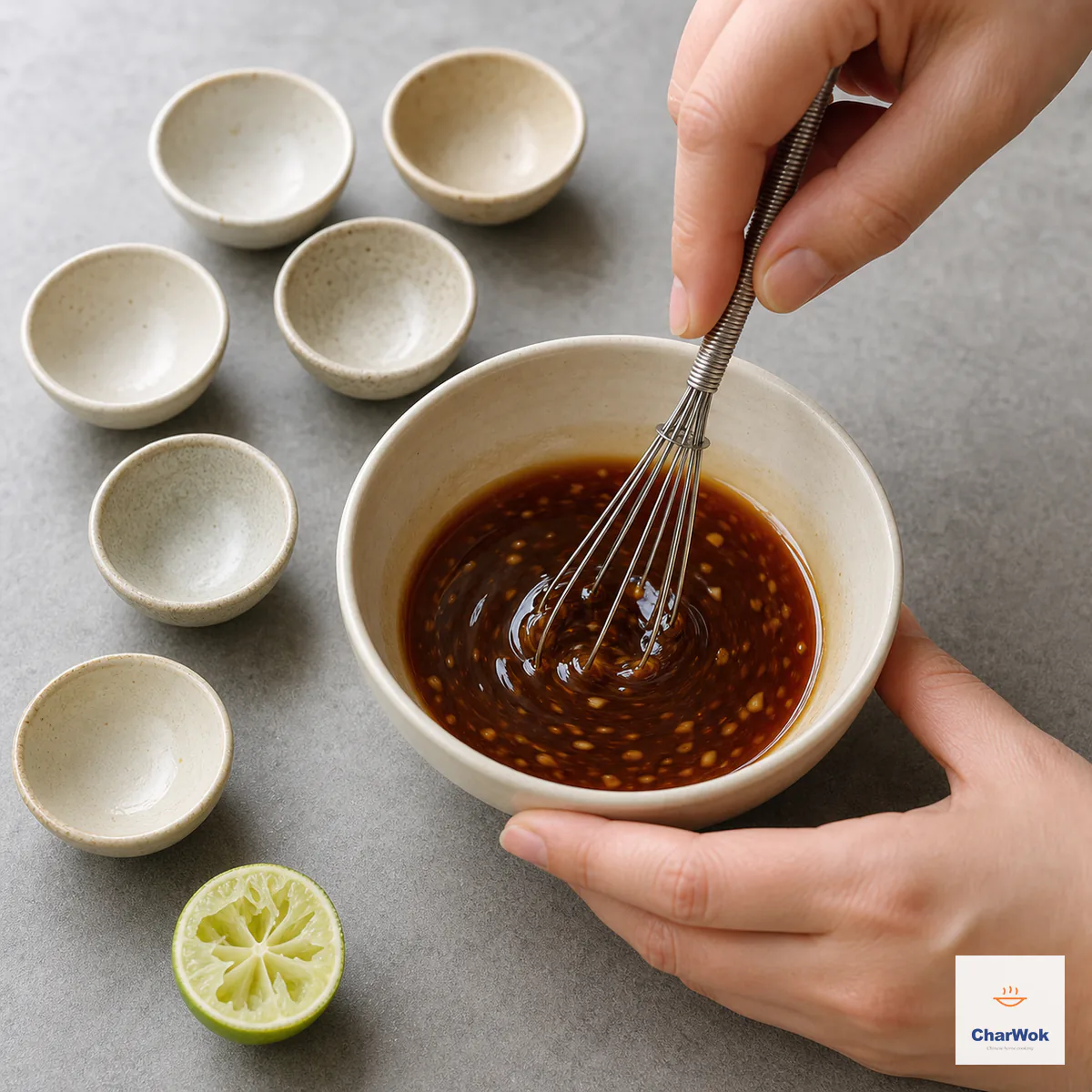
Whisk until no grain of sugar remains on the bowl or whisk; complete dissolution keeps every bite evenly sweet, sour, and savory
- Combine at the last second, and toss hard. Put all the vegetables in a wide bowl. Scatter the peanuts and sesame seeds on top. Pour the dressing over everything and, using your hands (in food-safe gloves to avoid chili burn) or tongs, lift and rub the leaves so the oil and vinegar coat every strip. The brief massage helps the dressing cling. Move it to a serving plate and eat right away.
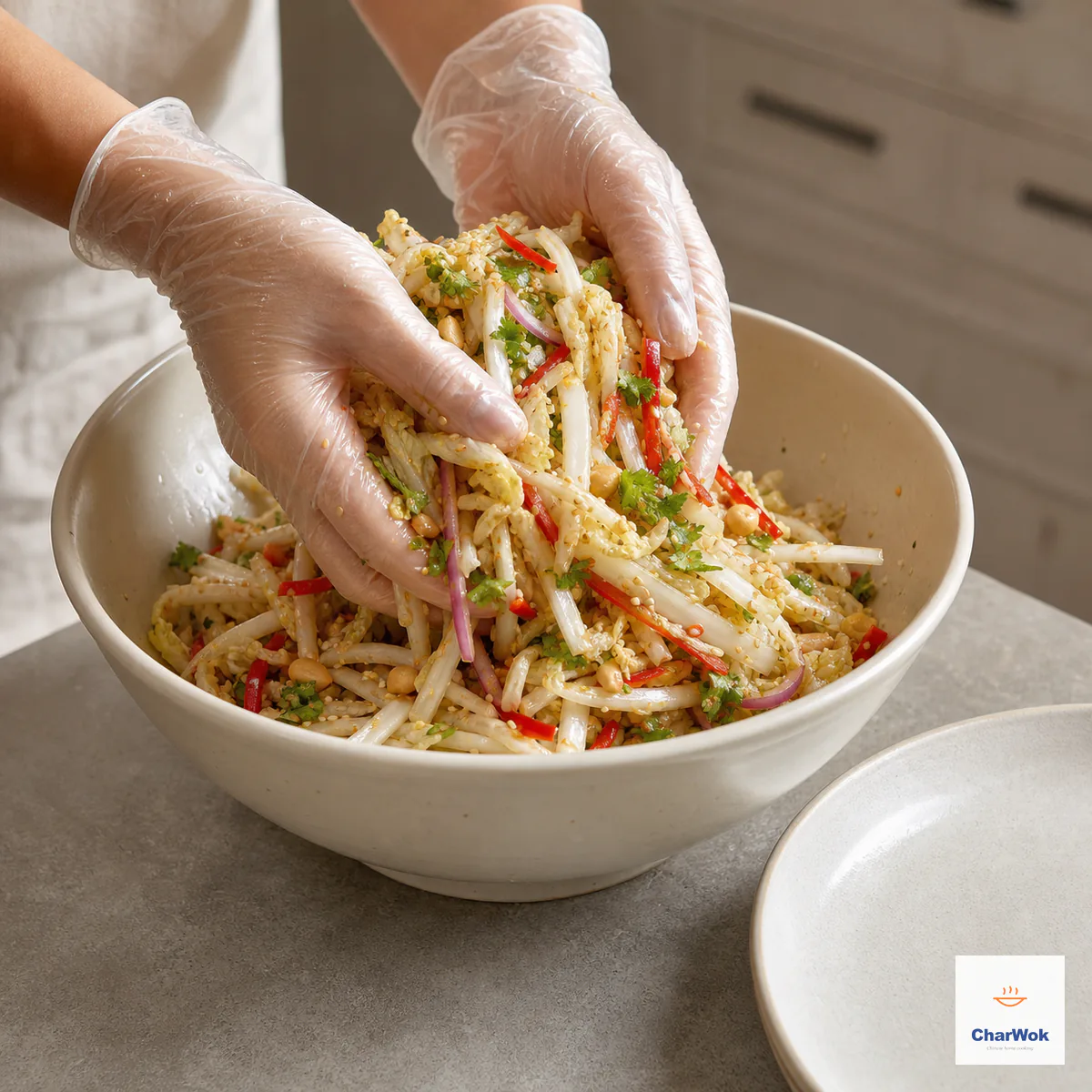
Add the dressing only when everyone is ready, toss vigorously enough to coat every strip, and serve immediately before the cabbage releases water
What goes wrong, and how to fix it
I've made this salad dozens of times and ruined it in most of the ways below. Each one has a clean fix.
- The bowl is swimming in liquid after ten minutes. Two causes, same root: you either dressed it too early or used the soft green leaves. Next time, dress only what will be eaten immediately, and favor the white stems. To rescue what's in front of you, lift the vegetables out with a slotted spoon onto a fresh plate and leave the pooled juice behind; it still tastes fine, just not as crisp.
- The salad tastes flat, not punchy. Almost always under-acid. Add lime a teaspoon at a time and taste; the dressing should read tart first, then sweet, then savory. Cold food numbs the palate, so a dressing that tastes correct warm will taste mild once the cabbage is ice-cold.
- The raw onion burns your throat. Either you didn't soak it or you used a hot storage onion instead of a sweeter red onion. A five-minute cold-water soak leaches the sulfur compounds. If it's still aggressive, halve the amount next time.
- The peanuts are soft, not crunchy. They went in too early and absorbed dressing moisture. Add nuts and sesame seeds in the final seconds, after the vegetables are already coated. Raw peanuts should be toasted in a dry skillet first; raw nuts will never crisp in a salad.
- It's too spicy, or not spicy enough. Heat lives in the seeds and white ribs of the chili, not the flesh. For a mild version, deseed fully and use one chili. For serious heat, keep the seeds and add a spoonful of chili oil in place of the sesame oil.
- The dressing separates and sits on top. It wasn't emulsified. Whisk harder, or add a tiny pinch of sugar or a few extra drops of lime; the sugar helps bind the oil and water phases. It will still separate after a minute; that's normal, just stir again before pouring.
Variations and what to serve it with
Once the core technique is in your hands, the salad bends easily. Swap half the cabbage for cucumber for a lighter, juicier version, or fold in rehydrated wood ear mushrooms for a darker, earthier note, closer to a classic cold banquet plate. A spoonful of quick-pickled vegetables on top adds the fermented tang you'd find at a northern cold-bar.
Because the salad is cold, sharp, and low in fat, it pairs best with something rich and warm. A few mains I keep coming back to: glossy char siu, saucy oyster sauce chicken, sticky sweet and sour ribs, or a roasted five spice chicken. It's also a natural cool-down for any of the summer recipes that lean heavy or oily.
Storage and reheating
Honestly: don't. This is a dress-and-eat dish, not a make-ahead one. Once salt meets leaf, the clock starts. If you must prep ahead, keep the chopped vegetables, the nuts, and the dressing in three separate containers in the fridge for up to a day, then combine at the table. Leftovers that have already been dressed will keep another few hours refrigerated but will be noticeably wetter and softer, still edible as a quick snack, not worth serving to anyone.
Frequently asked questions
Can I use regular green cabbage instead of Napa?
You can, but the result is different. Green cabbage is tougher and less juicy, so shred it finer and consider a 30-second blanch in salted boiling water, then shock in ice water and dry thoroughly. Napa's advantage is its natural sweetness and high water content, which reads as refreshment rather than fibrous chew.
Do I really have to dry the leaves that carefully?
Yes. Rinse water on the leaves dilutes the dressing and speeds up the weeping. A salad spinner or a thorough towel pat-down takes a minute and pays off in flavor. Wet cabbage is the number-one reason home versions taste washed-out next to restaurant ones.
Is there a way to make it ahead for a party?
Prep everything separately and combine at the last moment. You can chop the vegetables and whisk the dressing hours in advance; just don't let them meet until guests are seated. If you need a true make-ahead cold dish for a crowd, a glass noodle salad or steamed eggplant with chili dressing holds up far better than dressed raw cabbage.
What's the difference between this and a tiger salad?
Tiger salads (like the northeast version) are built mostly from pungent herbs and aromatics, scallion, cilantro, and chili, with little or no cabbage, and they hit much harder. This salad is milder and more vegetal, with Napa stems as the main event and everything else as support.
That's the whole dish. Two rules carry it: keep the leaves dry, and keep the dressing off them until the last possible second. Respect those and you get a salad that snaps; ignore them and you get a puddle. Everything else (the chili heat, the lime versus lemon, the peanut swap) is just you tuning it to your own kitchen.