There is a quiet kind of confidence that comes from opening the fridge on a Tuesday at 6:45 and knowing dinner is already half done. The dishes I reach for most often are not the fastest ones but the ones that hold well: the braises that deepen overnight, the dumplings that wait in the freezer, the meat that marinates while I am at work. That is the real promise of Chinese make-ahead cooking: not just speed, but flavor that gets better the longer it sits.
This guide is built around three categories that behave very differently in storage. Some dishes improve in the fridge, some are built to freeze, and some are about prepping a component so the final cook takes ten minutes. If you understand which is which, you stop fighting the food and start letting time do the work for you.
Most of these dishes reheat from frozen or fridge in under 20 minutes, and the ones built on a soy-and-shaoxing base genuinely taste better on day two. The single rule: separate starchy components (rice, noodles, dumpling skins) from saucy ones before you store them, or the starch turns to mush.
Why some Chinese dishes were made to wait
Make-ahead Chinese cooking at a glance
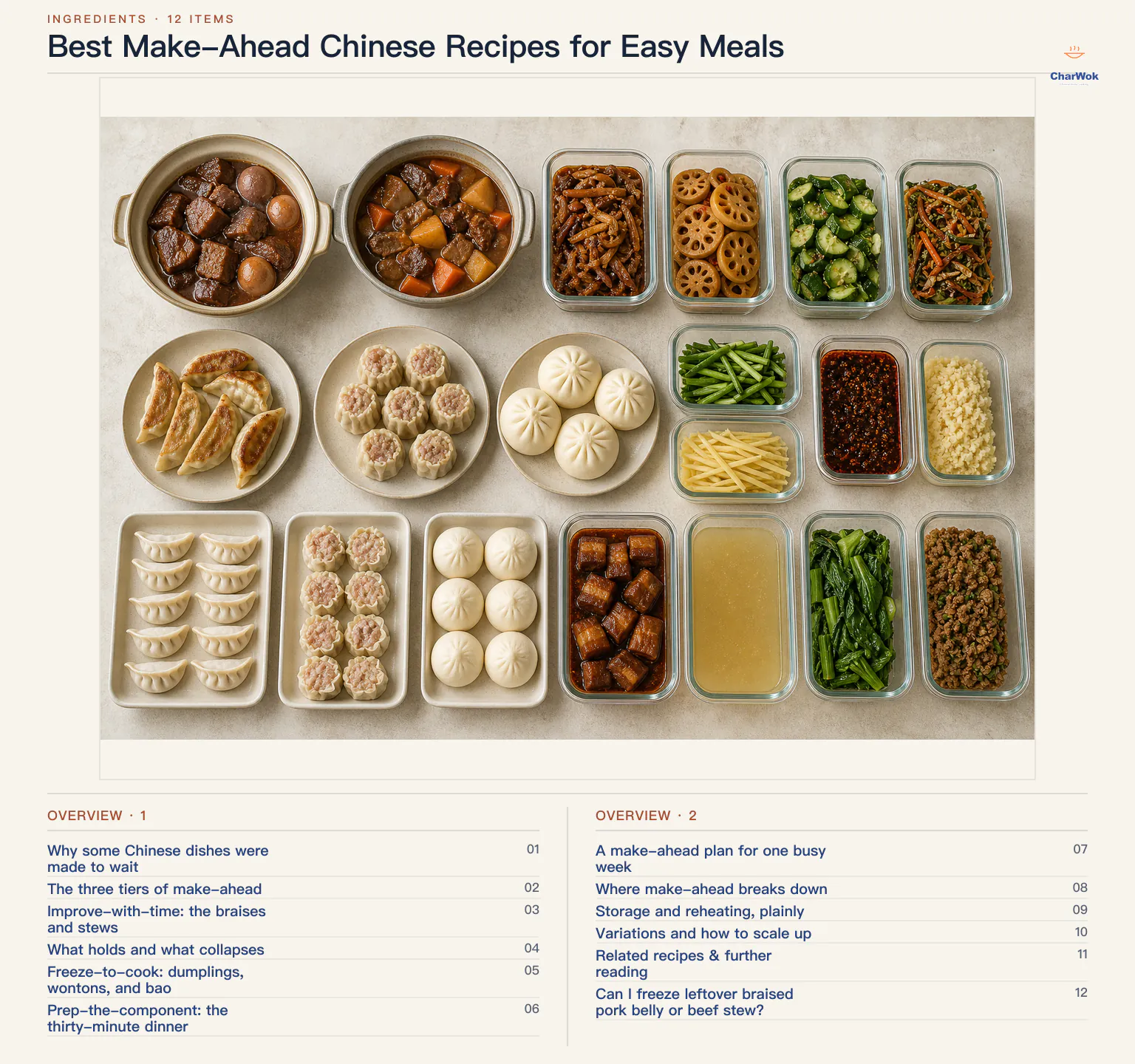
A lot of traditional Chinese home cooking was never designed to be eaten the instant it was finished. Slow braises, master stocks, and cold appetizers all assume a gap between cooking and serving. There is a reason for that. When you braise pork belly or beef shank in soy, rice wine, aromatics, and a little sugar, the proteins continue to absorb the braising liquid as they cool. Gelatin from connective tissue sets into a soft jelly around the meat, and that jelly carries flavor straight into every bite when you reheat.
This is also why a braised dish reheated the next morning can taste rounder and more cohesive than it did at dinner. The salt, sugar, and umami have had hours to migrate into the center of the meat. A stir-fry, by contrast, is built on fresh contrast — a crackling crust, crisp greens, a glossy sauce — and those qualities collapse in the fridge. So the first principle of make-ahead Chinese cooking is honest: lean into the dishes that were slow-cooked, and keep the wok-tossed ones for the night you eat them.
The three tiers of make-ahead
I sort every candidate dish into one of three buckets before I commit freezer space to it. Mixing them up is how you end up with a sad, waterlogged leftover.
| Tier | What it is | Storage ceiling |
|---|---|---|
| Improve-with-time | Braises, stews, master-stock meats, red-cooked dishes; flavor deepens after a rest | 4 days fridge, 2 months freezer |
| Freeze-to-cook | Raw dumplings, wontons, bao buns, marinated proteins ready to drop in the pan | 2 to 3 months freezer |
| Prep-the-component | Stock, congee base, sauces, blanched vegetables, cooked rice for fried rice | 4 days fridge, 1 month freezer |
Improve-with-time: the braises and stews
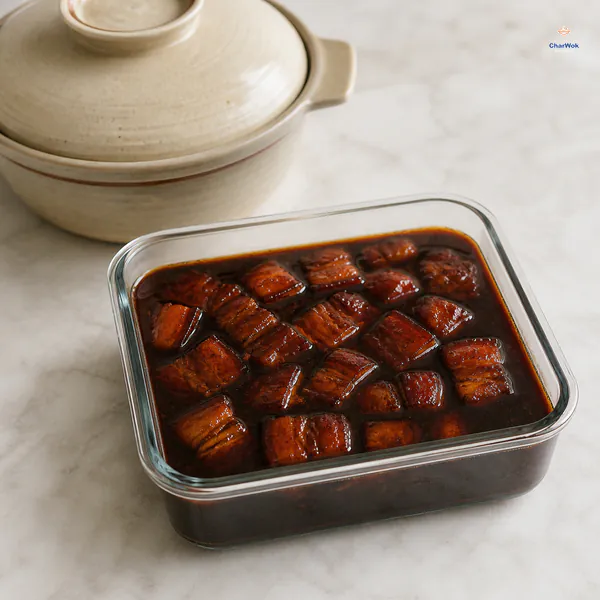
Cool and store a braise with the meat covered by its own sauce; the resting time lets the seasoning settle into the meat while protecting it from drying out.
This is the most rewarding tier, and the one most home cooks underuse. A pot of red-cooked pork belly made on Sunday will feed you through Wednesday, and the second and third servings will be the best. The fat renders further on the reheat, the sugar in the sauce caramelizes a touch more, and the whole thing settles into something you cannot rush no matter how high you turn the flame.
Beef is even more forgiving. A Chinese beef stew with potatoes or a sliced braised beef shank kept in its master stock will keep improving for three or four days, and the stock itself can be reused as a flavor base for the next batch. I keep a jar of master stock in my freezer and top it up each time I braise. Over a year it becomes something you cannot buy.
If you want a one-bowl version of the same idea, Lu Rou Fan, the Taiwanese braised pork over rice, was practically invented for the make-ahead cook. The braising liquid is the point, and it only gets richer. Just store the meat and sauce on their own, and make the rice fresh each time. Reheated rice is a different ingredient, not the same one warmed up.
What holds and what collapses
Here is where I have to be honest about failure. I have tried, more than once, to make a giant batch of mapo tofu and eat it across the week, and the tofu always ends up slightly spongy and the oil a little separated by day three. Mapo tofu is still make-ahead friendly, but it is at its best within 48 hours, and you should reheat it gently over low heat, never in a rolling boil. Treat soft tofu like a delicate protein, not like a stew.
Soups split the same way. A clear, nourishing pork rib soup or a homemade chicken stock keeps beautifully for days and freezes for months, and the fat that solidifies on top is a protective lid you can lift off if you want a lighter bowl. But a soup thickened with cornstarch, or one loaded with leafy greens, will turn cloudy and limp. The rule: freeze the broth, add the greens fresh on reheat.
Freeze-to-cook: dumplings, wontons, and bao
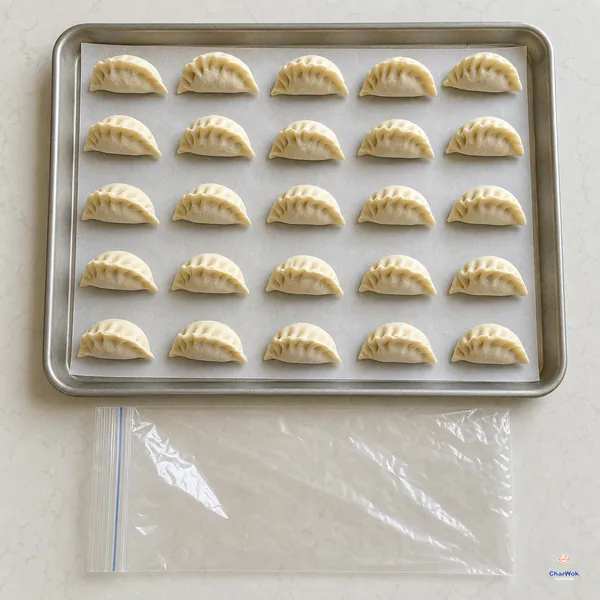
Freeze raw dumplings spaced apart on a lined tray until firm, then transfer them to a bag and cook straight from frozen without thawing.
This is the tier that pays back a lazy Sunday afternoon for months. If you are going to make dumplings from scratch or fold a tray of steamed bao buns, there is no good reason to make a single batch. Freeze them raw on a tray, then transfer to a bag, and you have weeknight dinner waiting for the nights you cannot face the stove.
The single most common mistake I see is freezing dumplings that have already touched each other. They weld into a lump and you end up prying them apart and tearing the skins. Freeze them spaced out on a parchment-lined tray until they are firm, then bag them. From frozen, drop them straight into boiling water for boiled dumplings, or into a hot pan with oil and a splash of water for potstickers. Do not thaw them. Thawing ruins the wrapper.
Prep-the-component: the thirty-minute dinner
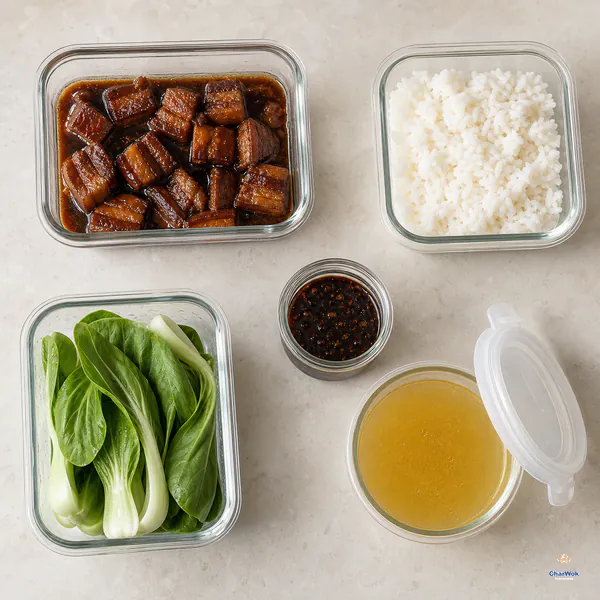
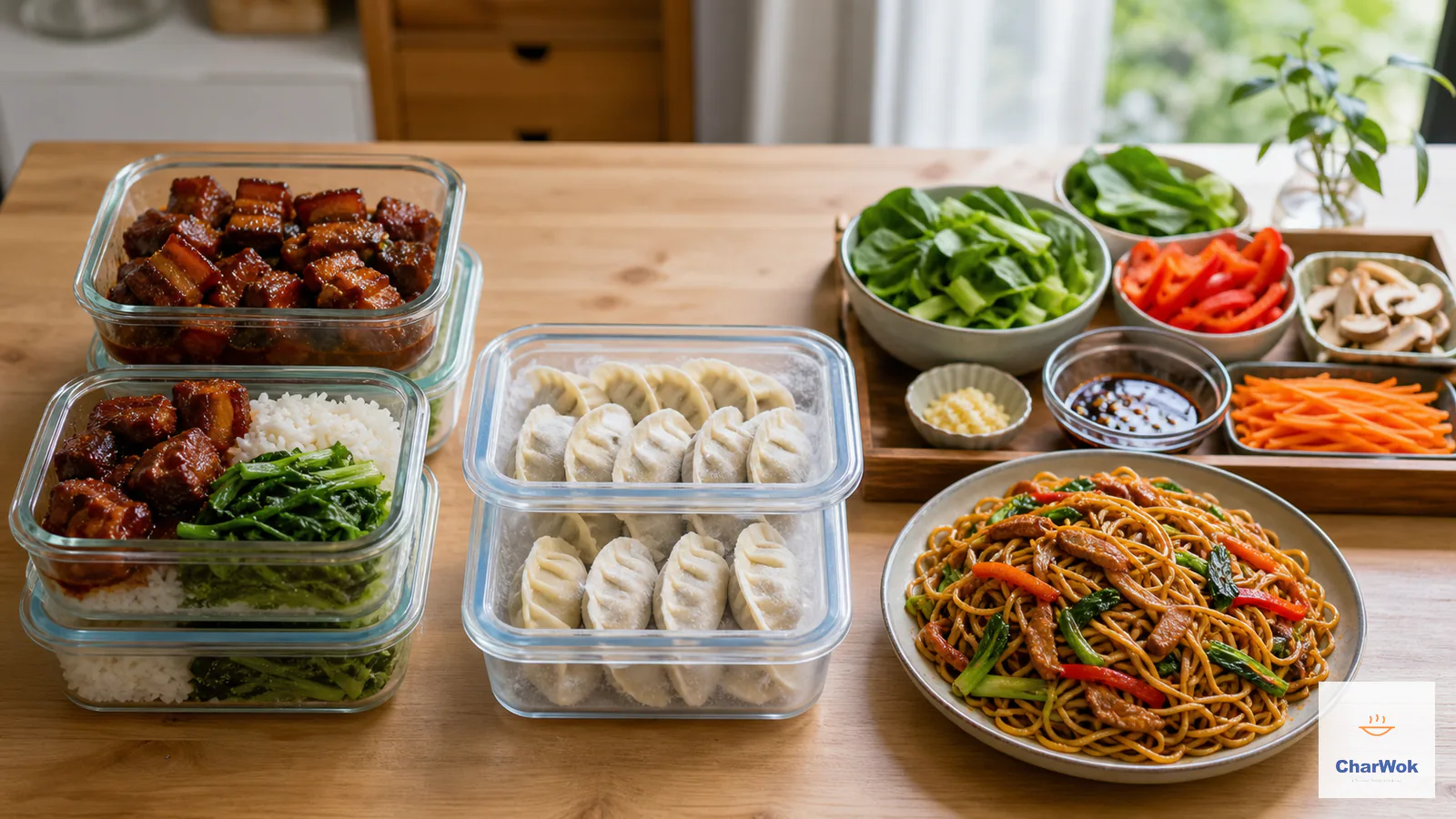
Keep the starch, saucy protein, stock, sauce and fresh greens separate so each component keeps its texture until the final meal comes together.
The third tier is not a finished dish at all. It is a set of building blocks you make when you have a spare hour, so that a real dinner comes together in the time it takes to boil water. A container of cooked rice in the fridge is the foundation of egg fried rice tomorrow. In fact, day-old cold rice is the only rice that fries properly, because fresh rice holds too much moisture and steams instead of crisping.
A pot of congee will keep for four days and reheats in minutes with a splash of water. A bowl of chicken noodle soup base, minus the noodles, is a meal waiting on whatever starch you feel like that night. Marinate a batch of chicken thighs the night before and a dish like scallion chicken chops or three-cup chicken is a fifteen-minute job after work.
This is also the smart way to handle ginger chicken and other soy-braised poultry. Marinate or pre-braise, slice cold, and you have a protein that goes into noodle bowls, fried rice, or a quick stir-fry without any further thought.
A make-ahead plan for one busy week
If you want a concrete template, here is the rhythm I fall into when I know the week is going to be rough.
- Sunday afternoon: braise a batch of pork belly or beef and cook a large pot of rice. Eat one serving hot, refrigerate the rest of the meat in its sauce, and chill the rice uncovered so it dries out.
- Monday: reheated braise over fresh rice, plus a quick stir-fried green. Total active time, ten minutes.
- Tuesday: Zha Jiang Mian using the pork braising technique, or fried rice from Sunday's rice. If you keep a bag of frozen dumplings, this is also a dumpling night.
- Wednesday: a pot of congee or wonton noodle soup, built on stock you made or bought, with whatever vegetables are left.
- Thursday: finish the braise, or pivot to a marinated chicken dish you prepped Tuesday night.
Where make-ahead breaks down
I want to name the failures plainly, because most make-ahead advice skips them. Leafy greens do not come back from the fridge. Bok choy, gai lan, spinach. Once cooked, they go olive and limp by the next day. Cook them fresh, in the quantity you will eat. Cornstarch-thickened sauces split when frozen. The starch weeps and turns grainy. If you must freeze a sauced dish, under-thicken it, and add a fresh slurry on the reheat.
Deep-fried foods lose their crust the moment they meet a container. Spring rolls and salt-and-pepper anything are same-night foods; do not plan around reheating them. And reheated rice is a food-safety line you have to respect: cool it fast, refrigerate it within an hour, and reheat it steaming hot all the way through. Cold rice from the fridge, eaten warm, is how people get sick.
Storage and reheating, plainly
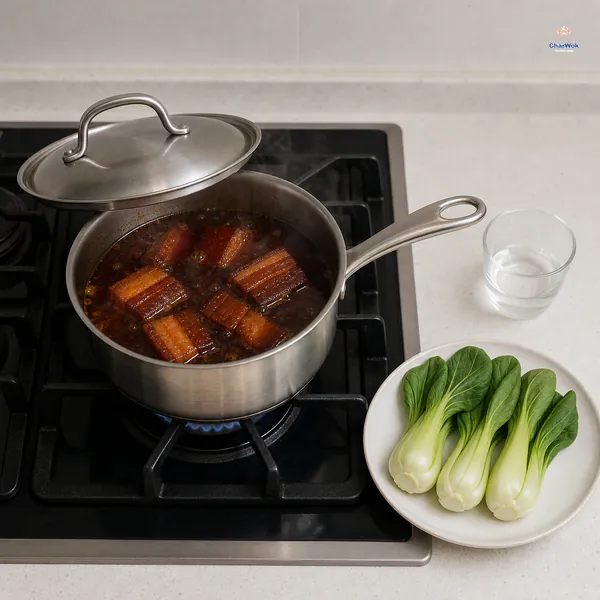
Reheat braises gently in a covered pot with a splash of water if needed, and cook leafy greens fresh instead of storing them with the braise.
For braises and stews, store the meat submerged in its own sauce and reheat gently in a covered pot over low heat, with a splash of water if it has tightened up. The microwave works in a pinch, but it will dry the edges. For dumplings and wontons, cook straight from frozen and add a minute or two to the time. For bao buns, re-steam for five minutes from frozen, or thaw and resteam; never microwave them bare, or the skin turns leathery.
Always label what you freeze with the date and the dish. I have, more than once, pulled a mystery container from the back of the freezer and had to defrost it to find out whether it was stock or soup. Two minutes with a marker saves that whole dance.
Variations and how to scale up
The beauty of the braised tier is that it scales without extra effort. Doubling a red-cooked pork belly recipe does not double your time at the stove. It adds maybe ten minutes of chopping. If you are cooking for a crowd, lean on the dishes that improve with rest and do the quick, last-minute stir-fries à la minute. For more ideas along these lines, my weeknight recipes collection overlaps heavily with the make-ahead mindset.
One variation I rely on: turn leftover braise into noodle soup. A spoonful of beef stew or pork belly, with its sauce, dropped into a bowl of hot stock with noodles and scallions, is a completely different meal from the one you started with, and it uses up exactly the amount of leftover that would otherwise go to waste.
Related recipes & further reading
Once you have the storage tiers in your head, the rest of the kitchen opens up. These are the dishes I keep coming back to when I am planning a week of cooking that does the work for me.
- For a wider sweep, start with the must-try authentic Chinese recipes and the technique-first core cooking skills guide.
- If the improve-with-time tier is what you want, a steamed Mei Cai Kou Rou over pork belly or a slow braised beef with daikon both reward a night in the fridge.
- Lion's head meatballs hold their shape and flavor for days, and the leftover braising sauce is the best part.
- On the freeze-to-cook side, a tray of mantou steamed buns or a batch of red bean buns reheats straight from the freezer.
- Build a make-ahead wonton soup from a stash of frozen wontons and stock, and dinner is ten minutes away.
- Day-old rice is the foundation of a clean pork fried rice, or keep things even simpler with a one-pot Chinese sausage rice that reheats without complaint.
- For a beef dish that holds up better than most stir-fries, spicy orange beef keeps its sauce in the fridge far better than it has any right to.
- If you want the wider story behind why so much of this food was built to wait, the culinary tour of China walks through the regional traditions these recipes come from.
FAQ
Can I freeze leftover braised pork belly or beef stew?
Yes, and it freezes well for about two months. Keep the meat covered in its sauce to prevent freezer burn, and reheat gently in a covered pot. The texture of the fat changes slightly after freezing, which some people prefer.
How long do cooked dumplings and bao last in the freezer?
Raw dumplings and bao are best within two months; past that the wrappers dry out and crack. Freeze them spaced apart on a tray first, then bag them, and cook straight from frozen without thawing.
What Chinese dishes do not reheat well?
Cooked leafy greens go limp, cornstarch-thickened sauces turn grainy after freezing, and anything deep-fried loses its crunch. Make those fresh and eat them the same night.
Is leftover fried rice safe to eat the next day?
It is, if you cool it quickly and refrigerate it within an hour, then reheat it until steaming hot throughout. Use cold day-old rice to fry in the first place, since fresh rice is too wet to crisp.
Can I make the congee or noodle soup base ahead?
Yes. Make the broth or congee base and store it up to four days in the fridge or a month in the freezer, then add noodles, toppings, and greens fresh when you serve. It thins out on the reheat, so keep a little extra water or stock handy.