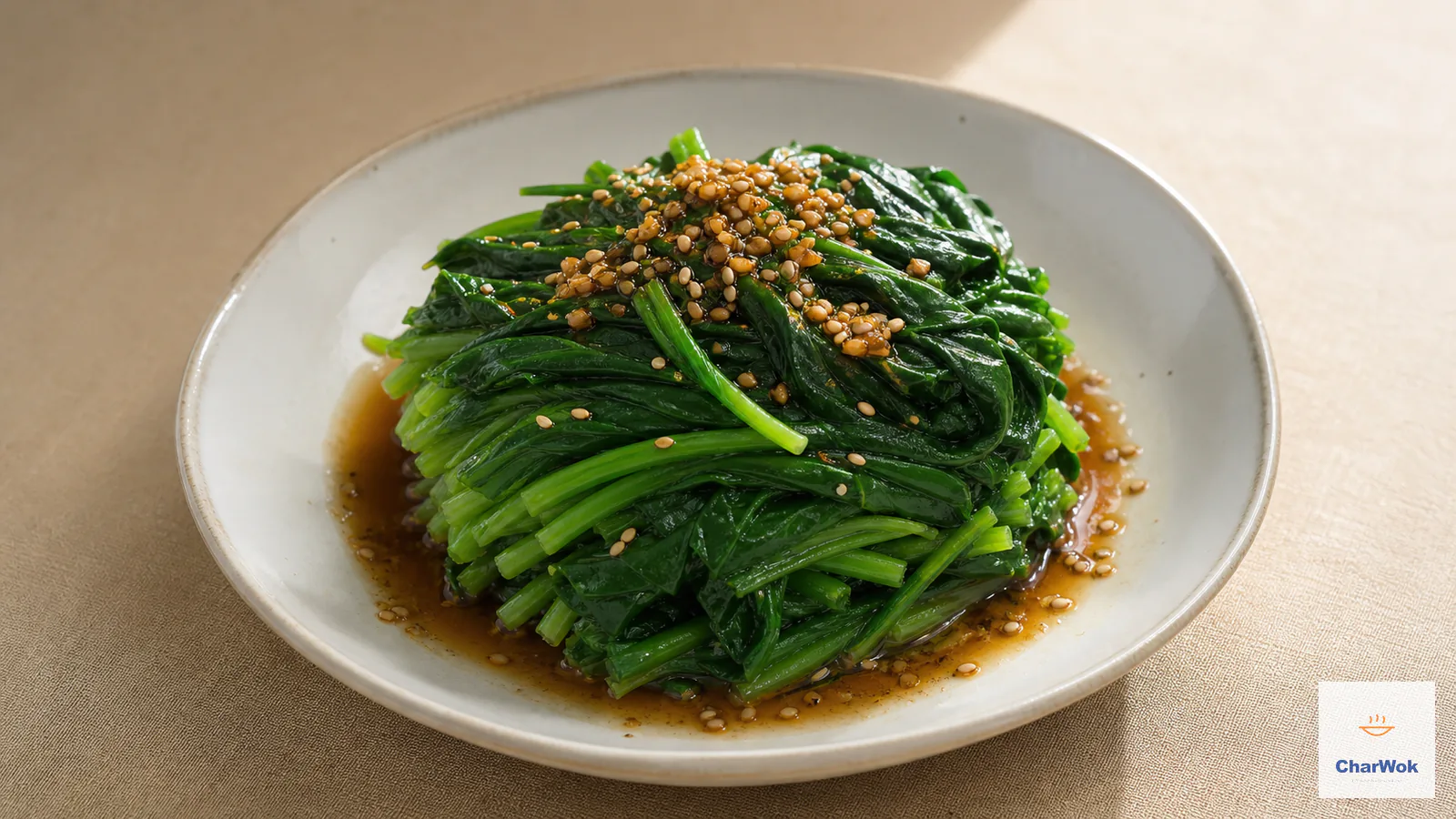
A cold plate of ginger-dressed spinach is one of those dishes that looks like nothing on the menu and quietly becomes the first bowl to empty. The trick isn't the ingredient list, which is five items long. The trick is that almost everyone at home overcooks the spinach and under-squeezes it, and a spinach salad built on waterlogged leaves dilutes the dressing until it tastes like salty dishwater. I've done exactly that, more than once, before I understood what the blanch was actually for.
This is Jiang Zhi Bo Cai (姜汁菠菜), a northern Chinese cold starter that shows up on the table before the stir-fries land. It belongs to the same family of quick-blanch-then-dress greens as wood ear mushroom salad and smashed cucumber, dishes that earn their keep by being sharp, cold, and ready in under ten minutes. What makes this one different from a generic napa cabbage salad is the ginger, which I'll argue about below, because how you prep it changes the whole plate.
Blanch the spinach for under 20 seconds, shock it cold, then squeeze it hard enough to halve its volume. A dressing built on about three parts black rice vinegar to one part light soy, with grated (not minced) ginger, is what separates this from boiled greens in salt water. The whole dish takes about five minutes.
What this dish is, and where the ginger comes from
Cold vegetable plates (liang cai, 凉菜) are the opening act of a northern Chinese meal, and ginger-and-greens is one of the older, plainer entries. The version most people know leans on savoy spinach, the curly, dark-leafed type with the pale pink root end, but the same treatment works on any sturdy cooking green. You'll see cousins of this dish dressed with everything from sesame paste to chili oil, but the ginger-and-vinegar school is the one that exists to wake up your appetite, not to comfort it.
Two pantry items do the heavy lifting, and neither is optional in the way recipe writers sometimes pretend. The first is black rice vinegar, which is malty, smoky, and round where white vinegar is thin and sharp; substituting distilled vinegar here will make the dish taste like it came from a diner steam table. The second is light soy sauce, the thin, salty one, not the dark molasses-thick variety that would turn this gray and cloying.
The ingredients
Ingredients at a glance
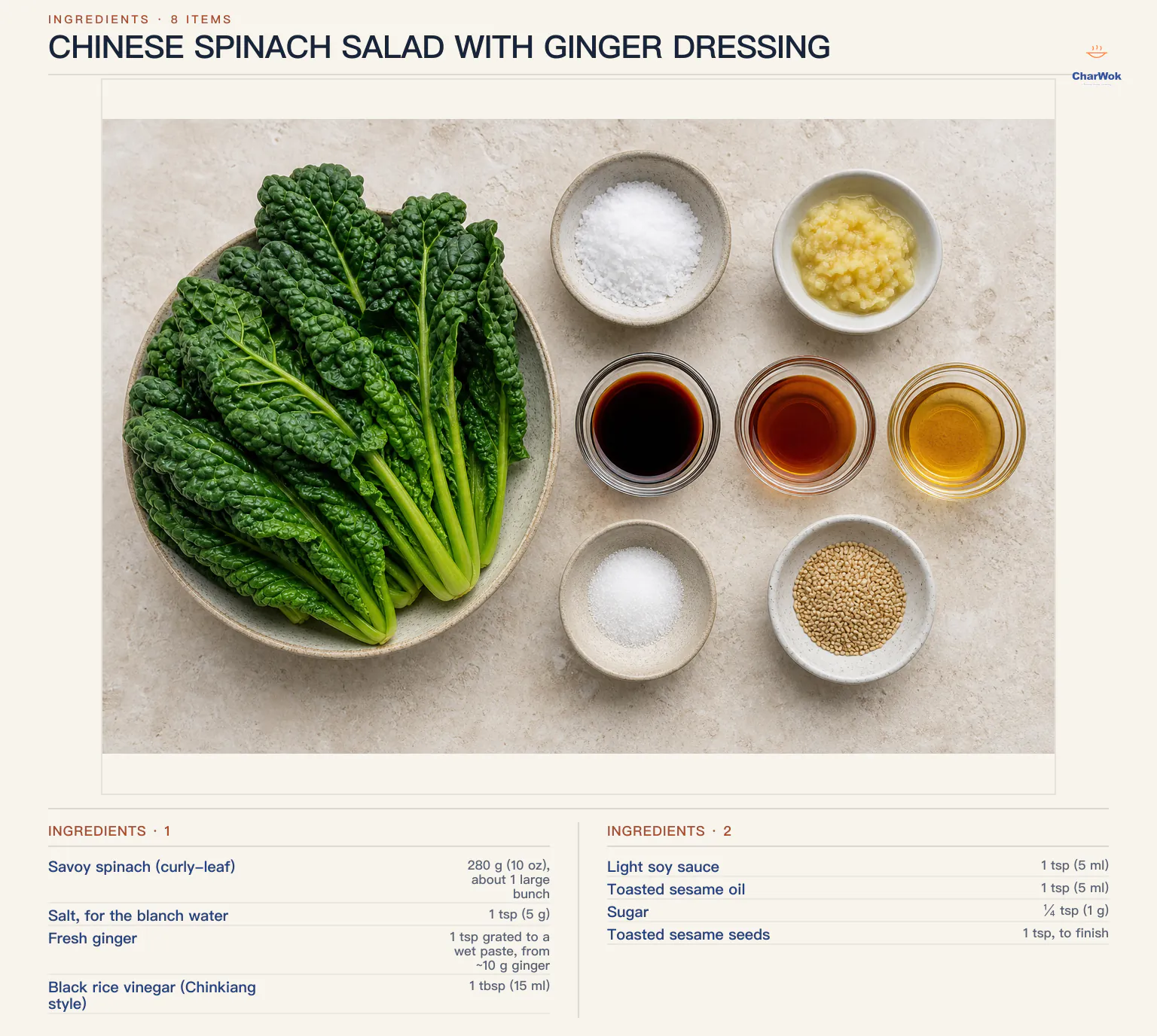
| Ingredient | Amount | Notes / substitute |
|---|---|---|
| Savoy spinach (curly-leaf) | 280 g (10 oz), about 1 large bunch | Regular flat-leaf spinach works; blanch it 3–4 seconds less, it wilts faster. Stem-on is traditional. |
| Salt, for the blanch water | 1 tsp (5 g) | Kosher or fine sea salt. A light salinity, just enough to season the leaves. |
| Fresh ginger | 1 tsp grated to a wet paste, from ~10 g ginger | A Microplane or ceramic ginger grater is ideal. Jarred ginger paste is a fair shortcut; minced ginger is not the same and you'll feel the fibers. |
| Black rice vinegar (Chinkiang style) | 1 tbsp (15 ml) | If you can't find it, a 2:1 mix of balsamic and rice vinegar is the closest stand-in. Do not use plain white vinegar. |
| Light soy sauce | 1 tsp (5 ml) | The thin, salty one. Not dark soy sauce. |
| Toasted sesame oil | 1 tsp (5 ml) | A little goes far; more than 1 tbsp makes it greasy. |
| Sugar | ¼ tsp (1 g) | Rounds the vinegar's edge. Skip only if your vinegar is already sweet. |
| Toasted sesame seeds | 1 tsp, to finish | Optional but worth it for the crunch. |
Why every step matters more than the recipe lets on
- Wash the spinach, keep it whole. Hold the bunch under cold water and rinse grit from the root crowns; that's where sand hides. Leave the stems attached and the bunch intact. Cooking it whole keeps the structure intact so it slices cleanly later, and the pinkish root ends carry a gentle, mellow note that the leaves themselves don't. (Many cooks trim them; I keep them and so does anyone who grew up eating this.)
- Bring a full, rolling pot of water to a hard boil and salt it. Use a generous pot, not a saucepan, at least 2 liters. The water has to keep boiling the instant the greens hit it. Salt the water so it tastes faintly of the sea; this seasons the leaves from the inside. What actually keeps the colour bright is the fierce heat and the instant shock to cold that follows — salt is mostly there for flavour.
- Blanch no longer than 20 seconds. Drop the whole bunch in, press it under with a spider or chopsticks, and start counting. The instant the leaves collapse and darken, usually 10 to 15 seconds for savoy, a few seconds less for flat-leaf, it's done. Any longer and you're cooking, not blanching, and the texture turns to wet string.
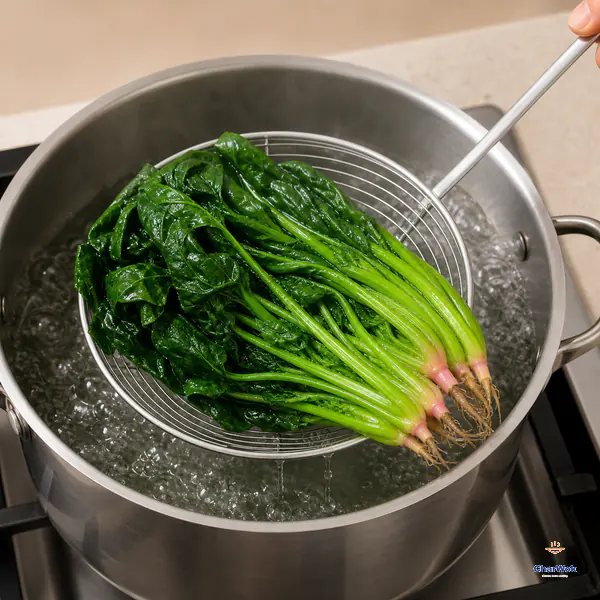
Keep the water at a full boil, press the whole bunch under, and lift it as soon as the leaves collapse and brighten—no more than 20 seconds—then cool it immediately.
- Shock and drain immediately. Pull the spinach straight into a colander and run cold tap water over it, or drop it into a bowl of ice water. The point is to stop the residual heat from continuing to cook the leaves after they leave the pot. Cold tap water is enough; an ice bath is only needed if your tap runs warm.
- Squeeze it like you mean it. Gather the cooled spinach into a ball and wring it, hard, with both hands. Then wring it again. A bunch this size will give up at least a third of its weight in green water, and that water is exactly what would have diluted your dressing. The squeezed spinach should look compressed, almost felted.
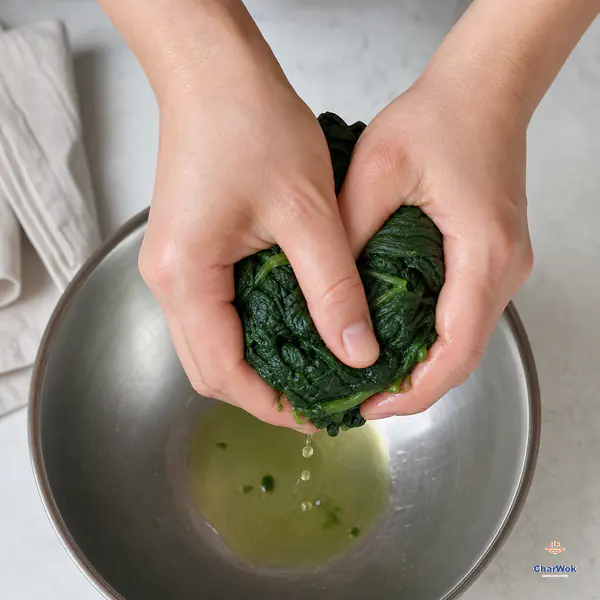
Once the spinach is fully cool, wring it firmly in small handfuls until almost no droplets fall and the leaves feel compressed; this keeps the dressing from being diluted.
- Grate the ginger to a paste, don't mince it. Use a fine Microplane or a ceramic ginger grater (the kind with the little teeth that catch the fibers). The aim is to release the aromatic oils and leave the tough fibers behind on the grater; a knife only chops the ginger into fibrous shards that ambush people mid-bite and never fully dissolve into the dressing. A mortar and pestle pounded to a paste works too.
- Mix the dressing and let it sit a minute. Combine the ginger paste with the vinegar, soy, sesame oil, and a pinch of sugar in a small bowl. Letting it stand for even two minutes pulls more ginger heat into the liquid. Taste it on the back of a spoon; it should be tangy-salty with a clean ginger burn at the back of the throat.
- Cut and plate. Slice the squeezed spinach crosswise into 5 cm (2 inch) sections. Arrange them in a low, shallow bowl so they sit in a compact mound rather than a flat scatter. This is the restaurant move, and it matters because a tidy pile holds the dressing on top instead of letting it pool away. Pour the dressing over, scatter sesame seeds, and serve.
When it goes wrong, and how to fix it
The salad tastes watery and bland. This is the number-one failure, and the cause is almost always inadequate squeezing. Rewind to step five and wring the leaves until they feel like a dense sponge. If you've already dressed it, lift the spinach out, squeeze it again into a clean cloth, and reduce the leftover dressing with a pinch more salt before pouring it back.
The leaves are mushy or stringy. You blanched too long, or the water wasn't actually boiling when the spinach went in. There is no rescue for overcooked spinach. Compost it and start over, and next time wait for a true rolling boil with big bubbles breaking the surface.
The dressing is harsh and one-note. Usually means distilled white vinegar stood in for black rice vinegar, or the ginger was added as a mince instead of a paste. The fix is the vinegar: even a small amount of a real Chinkiang-style black rice vinegar, or a balsamic-rice blend, rounds the acid into something malty. A pinch more sugar also helps if your vinegar is sharp.
The dish looks gray-brown instead of bright green. Either the blanch water wasn't salty and fully boiling, or the spinach sat warm too long before shocking. Color goes first, then texture; if it's brown, treat it as a sign the whole technique needs redoing.
Variations and what to serve it with
Trade the ginger for garlic if you want a sharper, more pungent plate. A teaspoon of garlic pounded to a paste in place of the ginger turns this into suan ni bo cai, a sibling dish that hits harder and more aggressively than the warm ginger version. My default when I want something in between is to split the difference, half ginger and half garlic in the same paste.
Add a chili-oil spoonful. A teaspoon of chili oil or Chiu Chow chili oil floated on top turns a mild starter into something with a slow burn; it's the move if the spinach is sharing the table with mapo tofu or another Sichuan cold dish. A few drops of toasted sesame oil already in the dressing are enough fat; don't add more.
Pair it plainly. This is a palate-opener, so it belongs next to dishes that are richer or hotter than it is. I like it before a bowl of chicken noodle soup or alongside garlic bok choy and a main like scallion ginger salmon. It also plays well as one of several cold plates. Set it next to silken tofu with scallions and the cucumber salad above and you've built a full liang cai spread.
Storing and reheating
This is a cold dish and should stay cold. Squeeze and dress the spinach up to a day ahead and keep it covered in the fridge; the flavor actually settles and improves after a few hours. Don't freeze it; frozen spinach collapses into slime and there's no way back. Leftovers will keep two days refrigerated but lose their bite, so I usually make only what I'll eat at the meal.
Quick questions
Can I use regular flat-leaf spinach? Yes. It wilts faster, so cut the blanch to about 5 seconds and watch it closely.
Why grate the ginger instead of mincing it? Grating releases the juice and leaves the fibrous bits behind, so the dressing is smooth and the heat is even. Minced ginger gives you sharp chunks and less flavor in the liquid.
Is the pink root end safe to eat? Yes, and it's the sweetest part. Trim only if it looks woody or dirty after washing.
Can I make it vegan? It already is. Every ingredient here is plant-based.
At the end, this dish lives or dies on two movements: a brutally short blanch and a ruthless squeeze. Get those right and the rest of it, the vinegar, the ginger, the sesame, falls into place almost on its own. If you take one thing from this, take the squeezing. Most home versions fail there, and most restaurant versions win there.