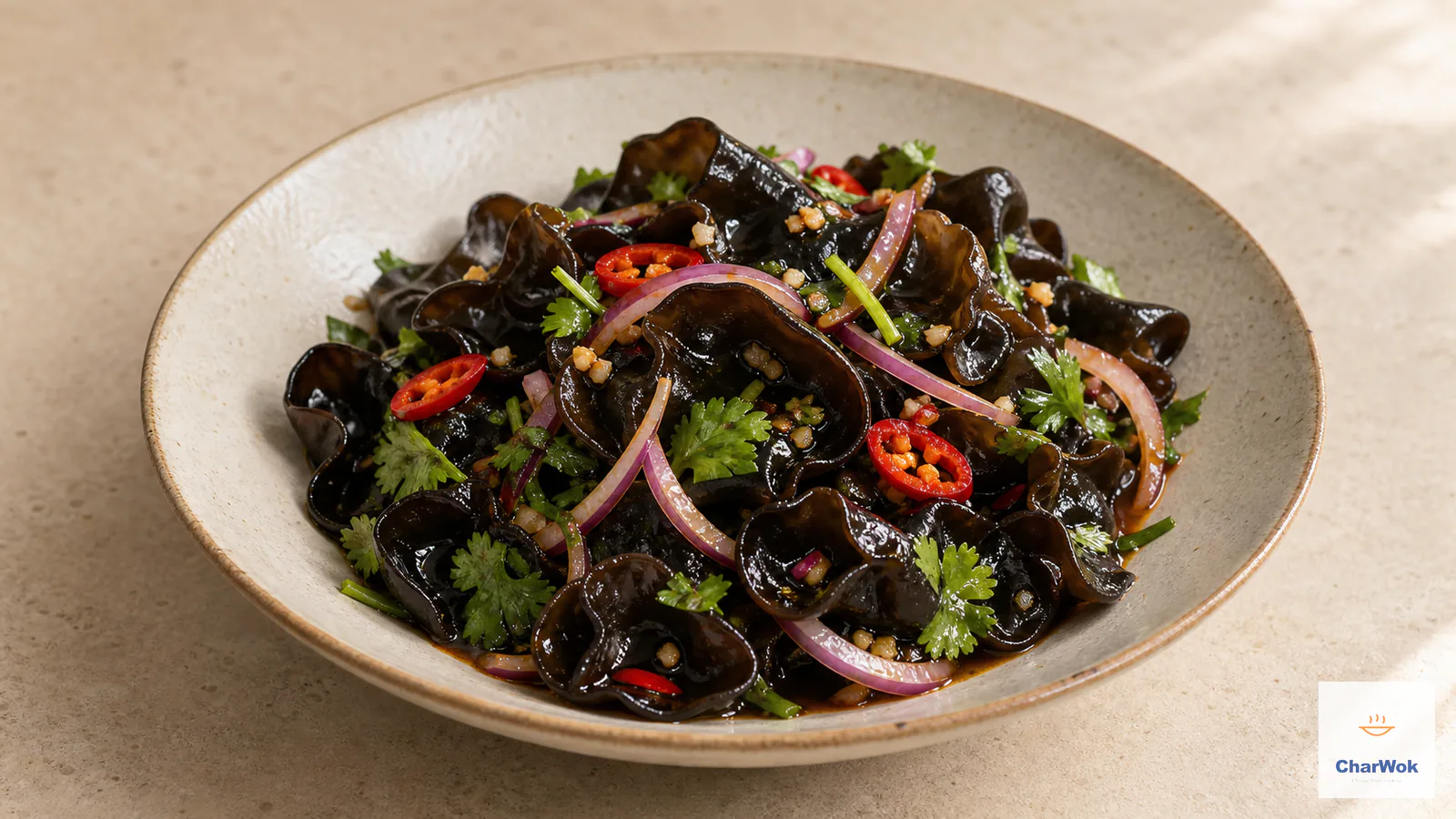
Wood ear mushroom salad is built around two contrasts: cool, springy mushrooms and a sharp dressing mellowed by hot oil. The key technique is you po, pouring hot oil over dry aromatics so the garlic loses its raw edge and the chilli and Sichuan pepper release their fragrance.
The most important stage is rehydrating. Dried wood ear (also called black fungus, tree ear, or mu'er) is sold as flat, light, grey-black curls. After a controlled cold-water soak, it becomes translucent brown, springy and able to hold the dressing in its folds.
At a glance: Rinse 25 g dried wood ear, then soak it in cold water for no more than 2 hours at room temperature; refrigerate any longer soak. Blanch for 5 minutes in a full rolling boil, then rinse cold. Heat the oil to about 180°C (356°F), when it is fluid and shimmering but not smoking, and pour it over the aromatics.
What wood ear actually is
Wood ear is a fungus that grows on dead elder and other broadleaf trees, and it has been dried and traded across China for centuries. Dried wood ear is the practical choice for this recipe because it stores and travels well. Do not eat foraged mushrooms unless a qualified expert has identified them; look-alikes can be dangerous.
The reason it earns a permanent spot in a Chinese pantry is texture, not flavor. Eaten plain, wood ear is faintly earthy and almost bland. What it offers is kou gan, mouth-feel: a cool, gelatinous snap that Chinese diners prize the way Western diners prize crisp. The point for a cook is that wood ear is a carrier. Its folds and ruffles soak up seasoning, which is exactly why the cold-tossed salad is its best showcase. The same absorbing quality also makes it a quietly useful team player elsewhere, folded into dumpling fillings for crunch, dropped into a simmering pot of hot pot at home, or added to a proper bowl of hot and sour soup where its slip is part of the identity.
The soak is the whole game
Dried wood ear expands dramatically, so use a clean bowl much bigger than you think you need. Rinse the mushrooms first, cover them with cold water and soak at room temperature for no more than 2 hours. If they need longer, move the covered bowl to the refrigerator. Use the rehydrated mushrooms promptly, and discard any that become slimy or develop an unusual smell. Properly rehydrated pieces are plump, translucent brown and springy rather than brittle.
These time and temperature controls follow the Centre for Food Safety guidance for soaking dried mushrooms: use a clean container, limit room-temperature soaking to 2 hours, refrigerate longer soaks and use the mushrooms as soon as possible.
A hot-water shortcut can rehydrate wood ear in about twenty minutes, but the texture is softer and slightly slick. That trade-off may be acceptable in a stir-fry; for this cold salad, use cold water and stay within the safe soaking limits above.
After soaking, wash each piece individually under the tap, rubbing the folds with your thumb. Grit hides in those ruffles, and one grain of sand will announce itself in a otherwise perfect bite. Snip out any hard, woody base where the cluster attached to the tree. Then tear large pieces by hand into bite-sized florets, roughly the size of a potato chip. Tearing by hand, with the grain, leaves a frilly edge that drinks up the dressing far better than a clean knife cut.
Cooking the mushrooms, briefly
This is the step people skip and should not. Wood ear should not be eaten raw. Beyond the food-safety reason, raw rehydrated wood ear tastes flat and feels slightly tacky on the tongue. A short blanch fixes both. Bring a generous pot of water to a full, rolling boil, drop in the torn mushrooms, and cook five minutes for average thickness, three minutes if yours came out paper-thin. You are not trying to make them soft. The brief boil softens the gelatinous surface layer of the fungus, rounding off that raw, tacky edge while the firm chitinous body underneath stays intact.
Drain, then immediately rinse under cold running water. This does two things: it stops the residual cooking so the mushrooms don't go limp, and it shrinks the surface slightly so they stay snappy. Squeeze them gently in your fists to push out excess water, but don't crush them. Wet mushrooms will thin your dressing into a puddle, which is the most common reason a wood ear salad tastes insipid at home. Get them as dry as you reasonably can.
Ingredients
Ingredients at a glance
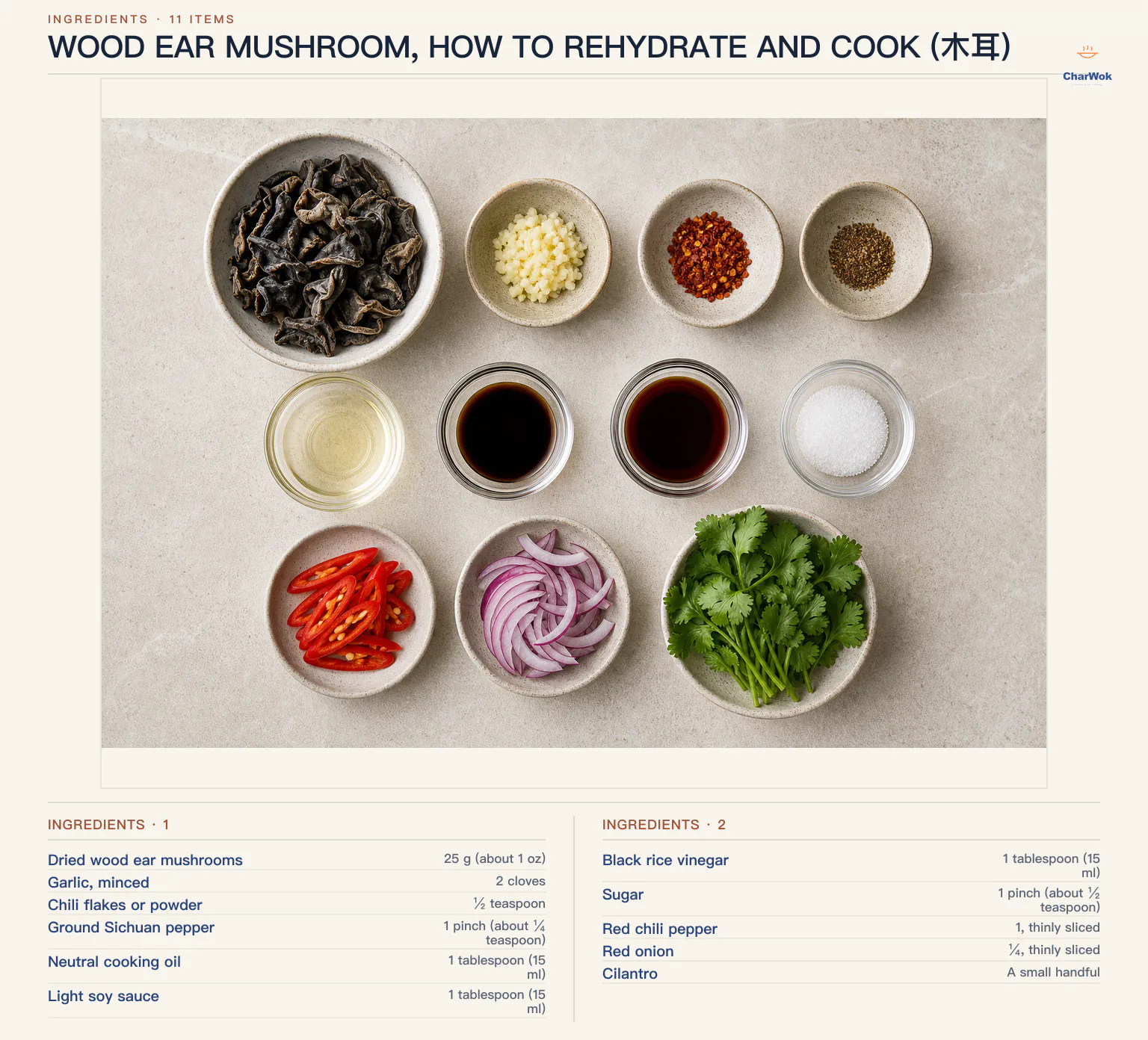
| Ingredient | Amount | Notes / substitute |
|---|---|---|
| Dried wood ear mushrooms | 25 g (about 1 oz) | Expands several times in size once soaked. Look for whole, flat curls labeled "black fungus" or mu'er. |
| Garlic, minced | 2 cloves | Fine mince, not pressed. Pressed garlic turns bitter in hot oil. |
| Chili flakes or powder | ½ teaspoon | Korean or standard red pepper flakes both work. Use powder for a smoother, deeper red oil. |
| Ground Sichuan pepper | 1 pinch (about ¼ teaspoon) | See how to grind Sichuan pepper correctly; freshly ground is far more fragrant than pre-ground. |
| Neutral cooking oil | 1 tablespoon (15 ml) | Grapeseed, canola, or avocado. Avoid olive oil; its flavor fights the dish. |
| Light soy sauce | 1 tablespoon (15 ml) | Use light, not dark; light vs. dark soy sauce differ a lot in salt and color. |
| Black rice vinegar | 1 tablespoon (15 ml) | Chinkiang style; black rice vinegar is maltier than white rice vinegar. |
| Sugar | 1 pinch (about ½ teaspoon) | Rounds the acid; do not omit. |
| Red chili pepper | 1, thinly sliced | Fresno or red jalapeño for heat without pain; bell pepper for zero heat. |
| Red onion | ¼, thinly sliced | Soak slices in cold water 5 min if your onion is pungent. |
| Cilantro | A small handful | Optional but recommended; adds color and a clean top note. |
Method
- Rehydrate safely. Rinse 25 g dried wood ear, then submerge it in plenty of cold water in a clean bowl. Soak for no more than 2 hours at room temperature; refrigerate any longer soak. Use promptly and discard pieces that are slimy or smell unusual. The pieces should be plump, translucent brown and bend without snapping.
- Clean and tear. Rub each piece under the tap to flush grit from the folds. Cut out any hard woody base. Tear by hand into bite-sized florets so the ragged edges will catch the dressing.
- Blanch. Drop the mushrooms into a full rolling boil for 5 minutes (3 if very thin). This softens the gelatinous surface layer and removes the raw, tacky taste while keeping the snap. Raw wood ear should not be eaten.
- Shock and dry. Drain and rinse immediately under cold water to halt the cooking, then squeeze gently to remove excess water. Wet mushrooms dilute the dressing, which is the most common cause of a bland salad.
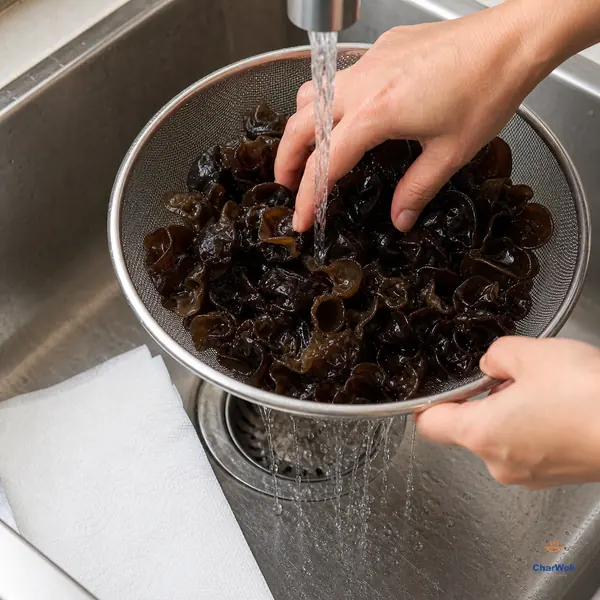
Rinse the blanched mushrooms immediately under cold running water, turning them until every piece feels completely cool. Let all water escape through the colander and drain them thoroughly; water left in the folds will dilute the dressing and soften its flavour.
- Bloom the aromatics. Pile the minced garlic, chilli flakes and ground Sichuan pepper into a heatproof bowl. Heat the oil in a small pan to about 180°C (356°F), when it is fluid and shimmering but not smoking, then pour it directly over the aromatics. You should hear a lively sizzle and see the oil turn red. If the oil begins to smoke, turn off the burner and let it cool before pouring. This you po step mellows the garlic and releases the fragrance of the chilli and pepper. If you make your own chilli oil, this is the same principle on a small scale.
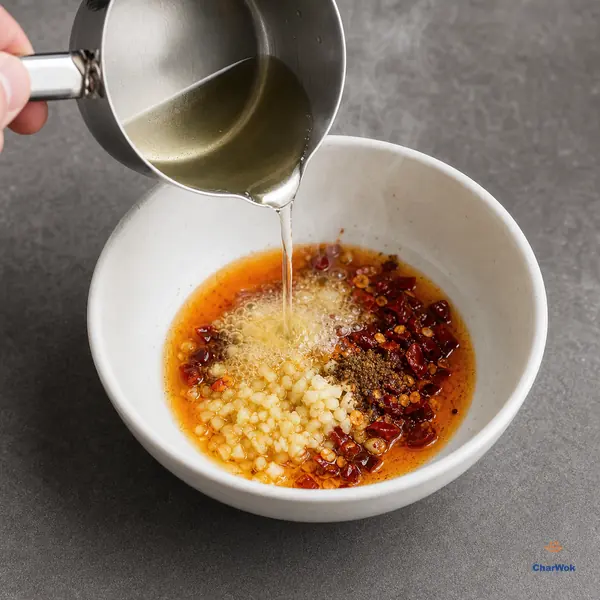
Heat the tablespoon of neutral oil to about 180°C (356°F), when it is fluid and shimmering but not smoking, then pour it over the garlic, chilli flakes and Sichuan pepper. A lively sizzle, pale-golden garlic edges and clear red-orange oil show that the aromatics bloomed without burning; if the oil smokes, turn off the burner and let it cool first.
- Finish the dressing. Stir in the light soy sauce, black rice vinegar, and sugar while the oil is still warm. Taste. It should be tangy first, salty second, with a low hum of heat and a sweet edge at the back.
- Combine. In a wide bowl, toss the mushrooms, sliced red chili, red onion, and most of the cilantro with the dressing. Let it sit five minutes before serving, or refrigerate for an hour, because the wood ear keeps drinking the sauce and the flavor deepens. Finish with the rest of the cilantro.
When things go wrong
The mushrooms are rubbery, not snappy. You either hot-soaked them or overcooked them. Hot-soaking softens the jelly-like layer too far; there is no rescue, only a longer cold soak next time. Over-blanching (more than about 7 minutes) does the same. Pull them at 5 and shock immediately.
The dressing tastes sharp and raw. The oil may not have been hot enough, or the aromatics may have been stirred into cold oil instead of receiving the pour. Put fresh aromatics in a dry heatproof bowl, heat fresh oil to about 180°C (356°F), when it shimmers but does not smoke, and pour it over them.
The salad is watery and bland. Two likely causes, both fixable. The mushrooms were still wet when dressed, so squeeze them harder next time. Or the dressing ratios drifted; the vinegar and soy should be roughly equal by volume, with the oil just enough to bloom the spices. A salad that tastes thin usually needs more vinegar and salt, not more oil.
There is grit in every bite. You washed the cluster as a lump instead of piece by piece. The sand lives in the folds. Re-soak, then rub each floret under the tap with your thumb. It is tedious for one minute and worth it.
Variations and pairings
The dressing here is a workhorse. Pour it over smashed cucumber and you have smashed cucumber salad; over shredded raw napa and you have a quick napa cabbage salad; over cooked glass noodles and you are looking at a glass noodle salad. It is the same flavor family that seasons cold Sichuan dishes like sliced pork with garlic sauce, and it doubles as a quick dip; thin it with a little warm water and use it as one of your dumpling sauces.
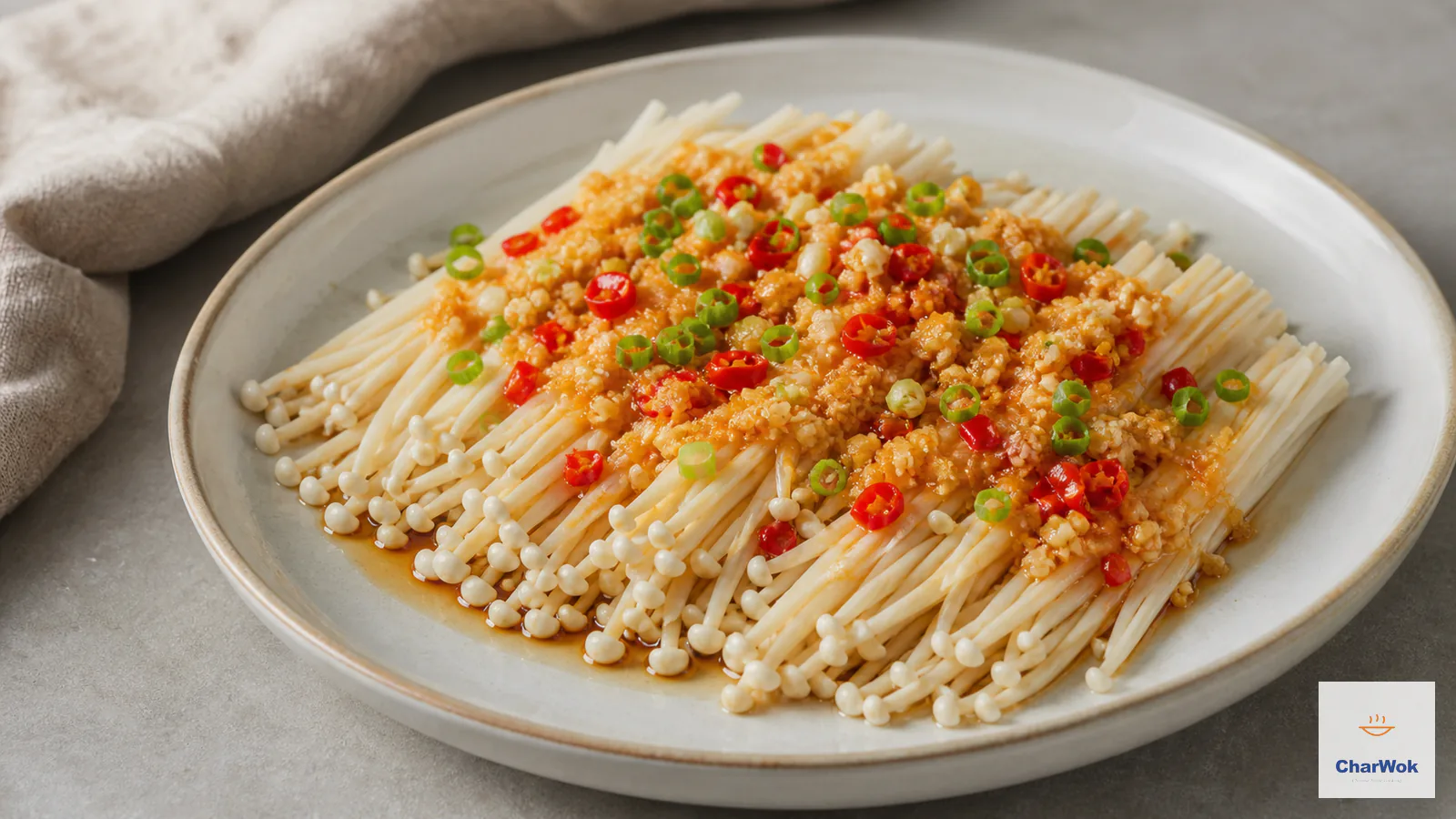
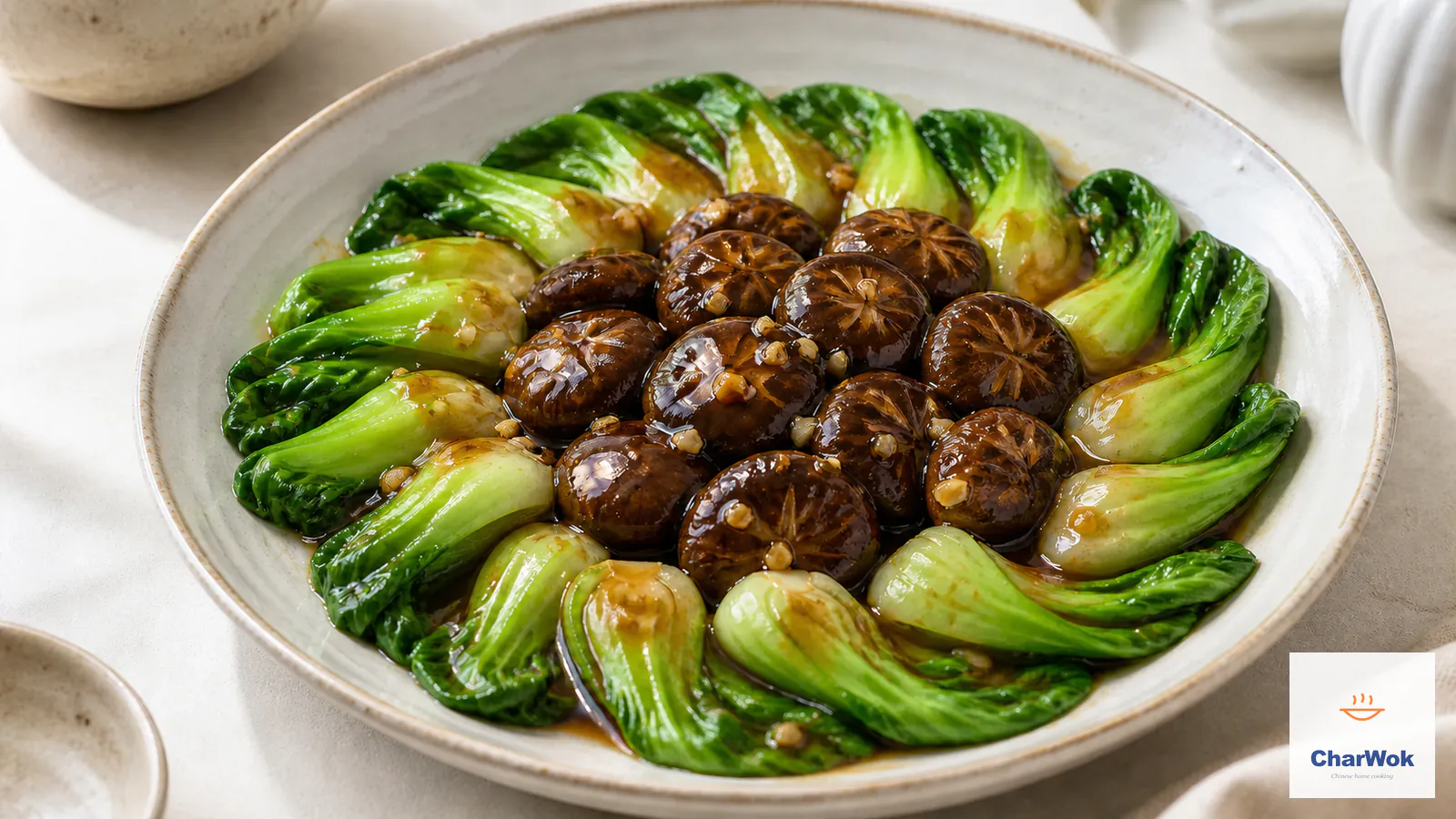
To change the salad itself: add a handful of thinly sliced celery or lotus root for a second, brighter crunch; swap the red onion for shallot; or fold in steamed enoki for a softer mushroom note, the way steamed enoki borrows the same garlic-oil dressing. If you want the salad to lead a vegetarian plate, pair it with braised shiitake and bok choy, a relative of braised mushroom with bok choy, and rice.
Storage and leftovers
For the best texture, dress only what you plan to serve and eat the salad the same day. Refrigerate leftovers promptly in a covered container and use them within one day. Do not keep raw rehydrated wood ear submerged for several days: cook it as soon as possible after soaking. Freezing is not recommended because it destroys the crisp texture.
Frequently asked questions
Can I use hot water to soak the mushrooms faster? Yes, in about 20 minutes, but the texture will be softer and slightly slick. Acceptable for stir-fries; for this cold salad, use cold water and give it the full two hours.
Do I have to cook the mushrooms, or can I eat them raw after soaking? Always blanch them. Beyond the safety concern, raw rehydrated wood ear tastes flat and feels tacky. Five minutes in a full boil fixes both without making the mushrooms soft.
Why pour oil over the aromatics instead of frying them in the pan? Pouring hot, shimmering oil onto dry aromatics heats them quickly and evenly, mellowing the garlic and releasing the fragrance of the chilli and Sichuan pepper. With such a small amount, frying the garlic directly in a pan can scorch it before the spices bloom.
Is there a substitute for black rice vinegar? Use a 50/50 mix of balsamic and white rice vinegar, or malt vinegar cut with a little water. Plain white rice vinegar works but is sharper and less round; add an extra pinch of sugar.
Can I make this ahead for a crowd? Prepare and chill the cooked mushrooms and dressing separately on the same day, then combine them shortly before serving. Add the cilantro and sliced chilli last so they stay bright.