Walk into any Chinese home kitchen and the one bottle within arm's reach of the stove is soy sauce. Not a fancy finishing oil, not a chili paste, not the wine. The soy sauce. And almost every cooking mistake I get asked about, the dish that "tastes flat" or "looks gray" or "got too salty," traces back to grabbing the wrong one of the two bottles that live side by side on the shelf.
Here is the short version of the confusion: there are two. One seasons. One colors. They are not interchangeable, and most home cooks use them as if they were. This guide is about why they behave so differently once they hit a hot pan, and how to choose between them with confidence instead of guessing.
At a glance: Keep two bottles in the pantry. Light soy sauce (生抽) is your seasoning, saltier and thinner, the one a recipe means when it just says "soy sauce." Dark soy sauce (老抽) is a coloring and glazing agent, less salty, thicker, with a faint caramel sweetness; a tablespoon is usually plenty for a whole braise. A typical stir-fry uses light alone. A typical braise uses both.
What you are actually pouring
Chinese soy sauce guide at a glance
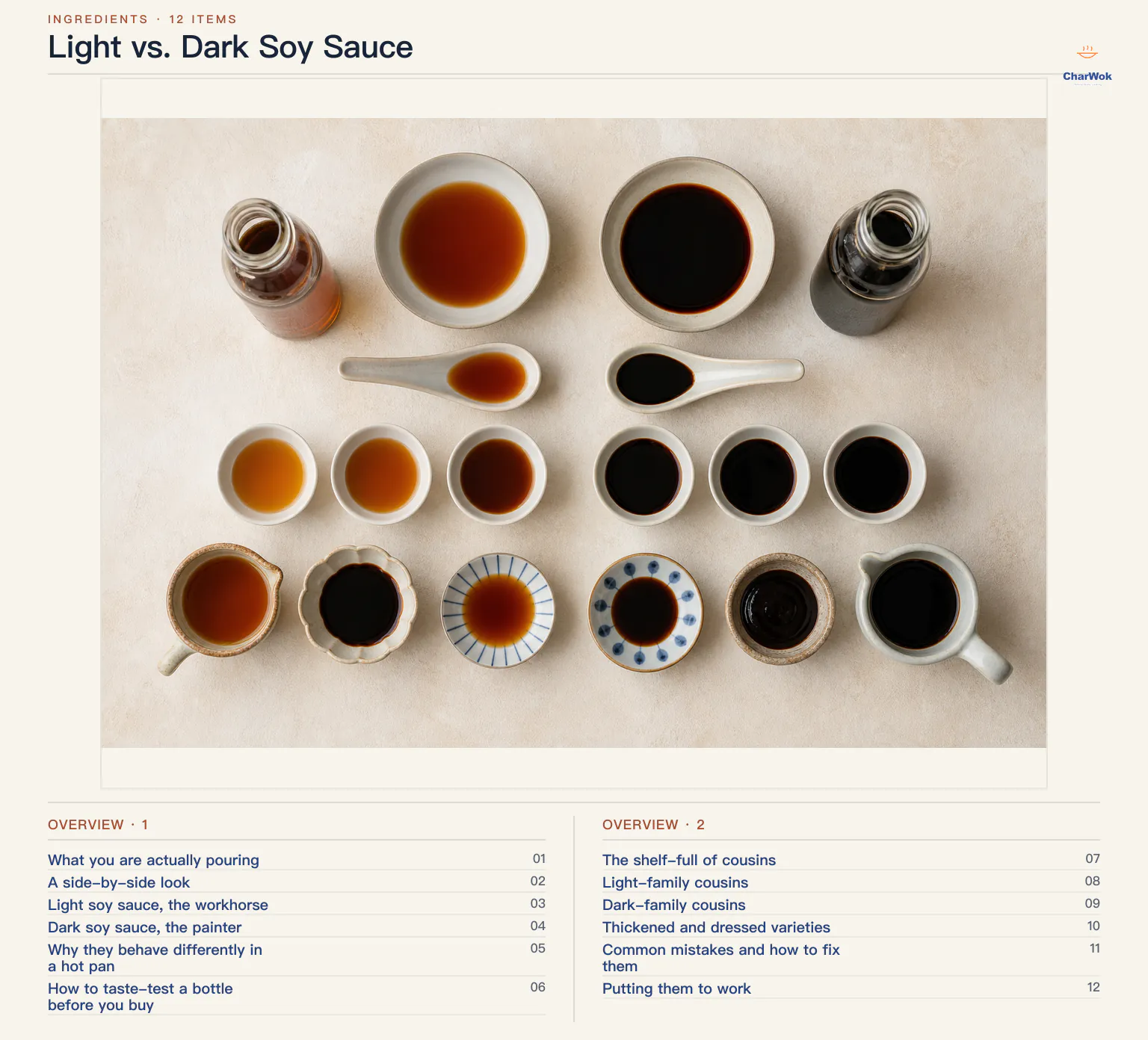
Both bottles start from the same mash: cooked soybeans and roasted wheat inoculated with mold spores, then mixed with brine and left to ferment. Over weeks or months, enzymes break the proteins down into amino acids and peptides (this is where the savory, mouth-filling quality comes from), and the starches break into sugars. Salt holds the whole thing in check so it ferments instead of rotting. Read more on how soy sauce fits into the wider Chinese condiment lineup if you are stocking a pantry from scratch.
From that single starting point the two products diverge. The liquid drawn off the fermented mash is the light one, sharp, salty, full of free amino acids, and thin enough to flow like water. Dark soy sauce is not a separate, later draw. It is that same light base put through a second round of aging, then finished with a measured dose of caramelized sugar that darkens it and lends a faint, rounded sweetness. The longer the base rests, the more the raw saltiness softens, and the caramel addition is what pulls the color down toward near-black. That is the entire mechanical difference, and it explains everything that happens in the pan.
A side-by-side look
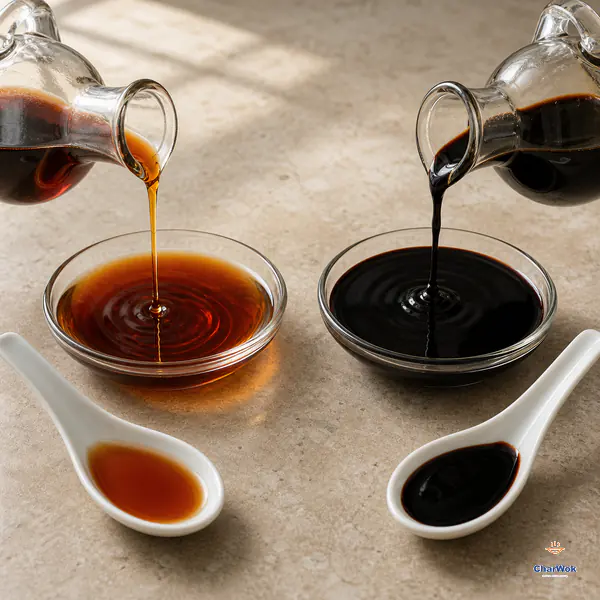
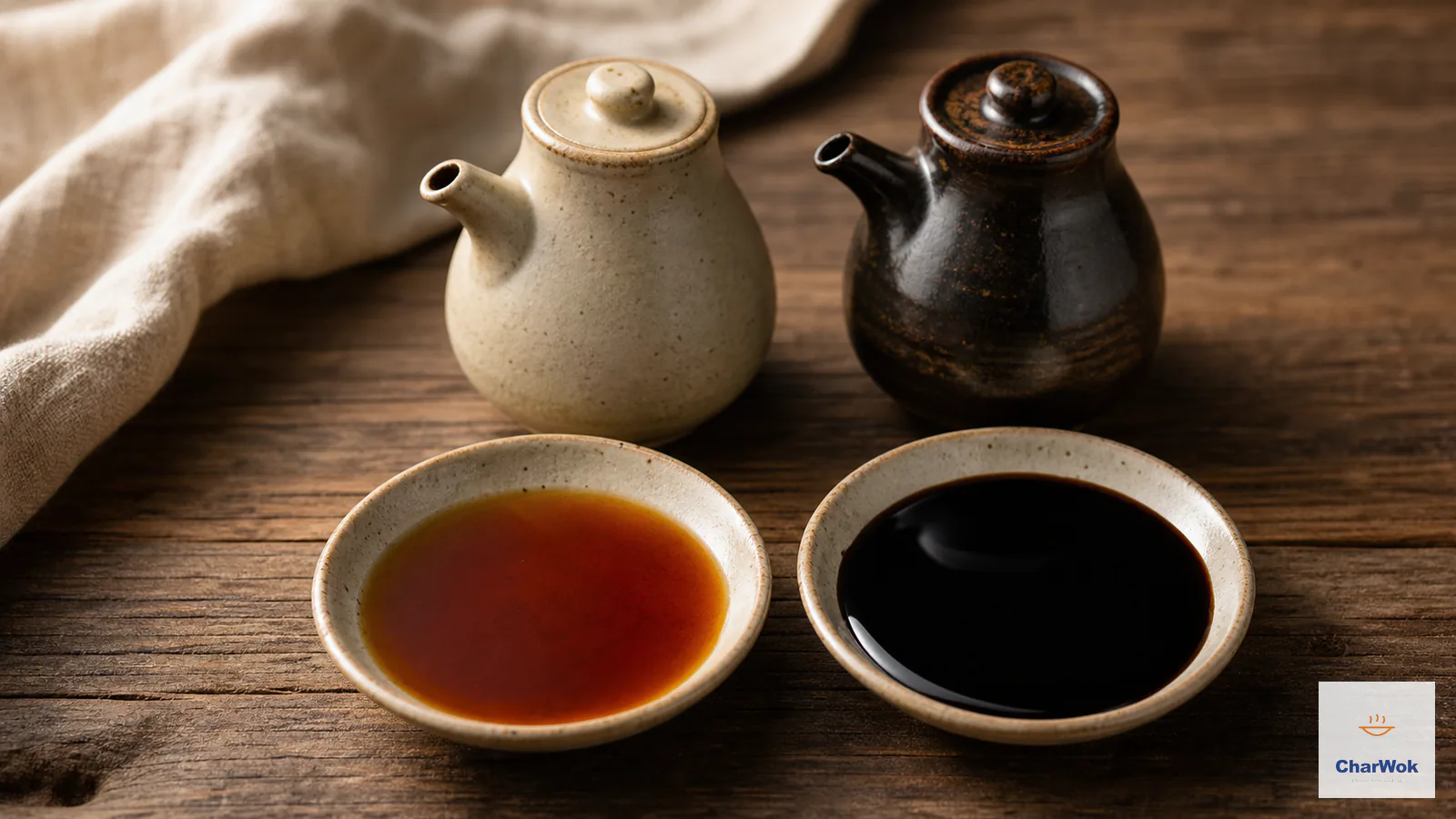
Light soy is reddish brown, translucent and water-thin; dark soy is near-black, opaque and slightly syrupy, so use the first primarily for seasoning and the second in smaller amounts for colour and glaze.
| Light soy sauce (生抽) | Dark soy sauce (老抽) | |
|---|---|---|
| What it does | Seasons and adds aroma | Colors, glazes, adds a faint sweetness |
| Color | Reddish brown, translucent | Near-black, opaque |
| Body | Thin, pours like water | Slightly syrupy, coats the glass |
| Saltiness | Higher (use it like salt) | Lower (it will not season for you) |
| Sweetness | Dry | A soft caramel note |
| Where it shines | Stir-fries, marinades, dips, dressings | Braises, stews, anything that needs a mahogany glaze |
| Priority | Essential | Highly recommended if you braise at all |
One trap worth naming early: "light" here refers to color, not sodium. A low-sodium soy sauce is a separate product. If a doctor told you to cut salt, reach for the bottle labeled reduced-salt, not the one labeled light.
Light soy sauce, the workhorse
This is the bottle I reach for first in nearly every savory dish. Its real job in a dish is seasoning, but it seasons with personality: it brings aroma and a rounded, savory depth that plain table salt simply lacks. When a Chinese recipe says "soy sauce" and nothing else, this is the one it means.
Use it in marinades, in Cantonese-style steamed fish where the hot oil is poured over scallions and a thin stream of soy at the end, in quick stir-fries, in noodle broths, in cold salads like smashed cucumber, and in the dipping sauces that go alongside dumplings. I keep a small squeeze bottle of it next to the stove so I can hit a wok of greens with a teaspoon mid-stir without fumbling with a cap.
A note on substitutes. If you only have Japanese soy sauce, it will carry you through most of these uses. The profile is a touch cleaner and less beany than Chinese light, but the salt level is in the same range, so measure it the same way. Alkaline-adjusted and reduced-salt variants exist, but those solve specific problems and are not general upgrades.
Dark soy sauce, the painter
Dark soy exists to make food look the way braised food is supposed to look. A spoonful swirled into a stewing liquid turns pale pork into the glossy red-brown that signals "cooked low and slow" before you taste it. That color change is not just cosmetic. Much of it is the dark soy's own caramel pigment staining the liquid; as the braising juice reduces, that pigment concentrates and the glaze turns deeper and glossier, while the sauce's sugars help the surface of the meat brown and stick.
Because it is less salty than light, adding more dark soy does not season a dish the way adding more light would. This trips people up. They taste a braise, find it under-salted, and pour in dark soy, which darkens the pot further without fixing the seasoning. Reach for light (or plain salt) to correct flavor, and treat dark soy as a one-shot addition for color at the start.
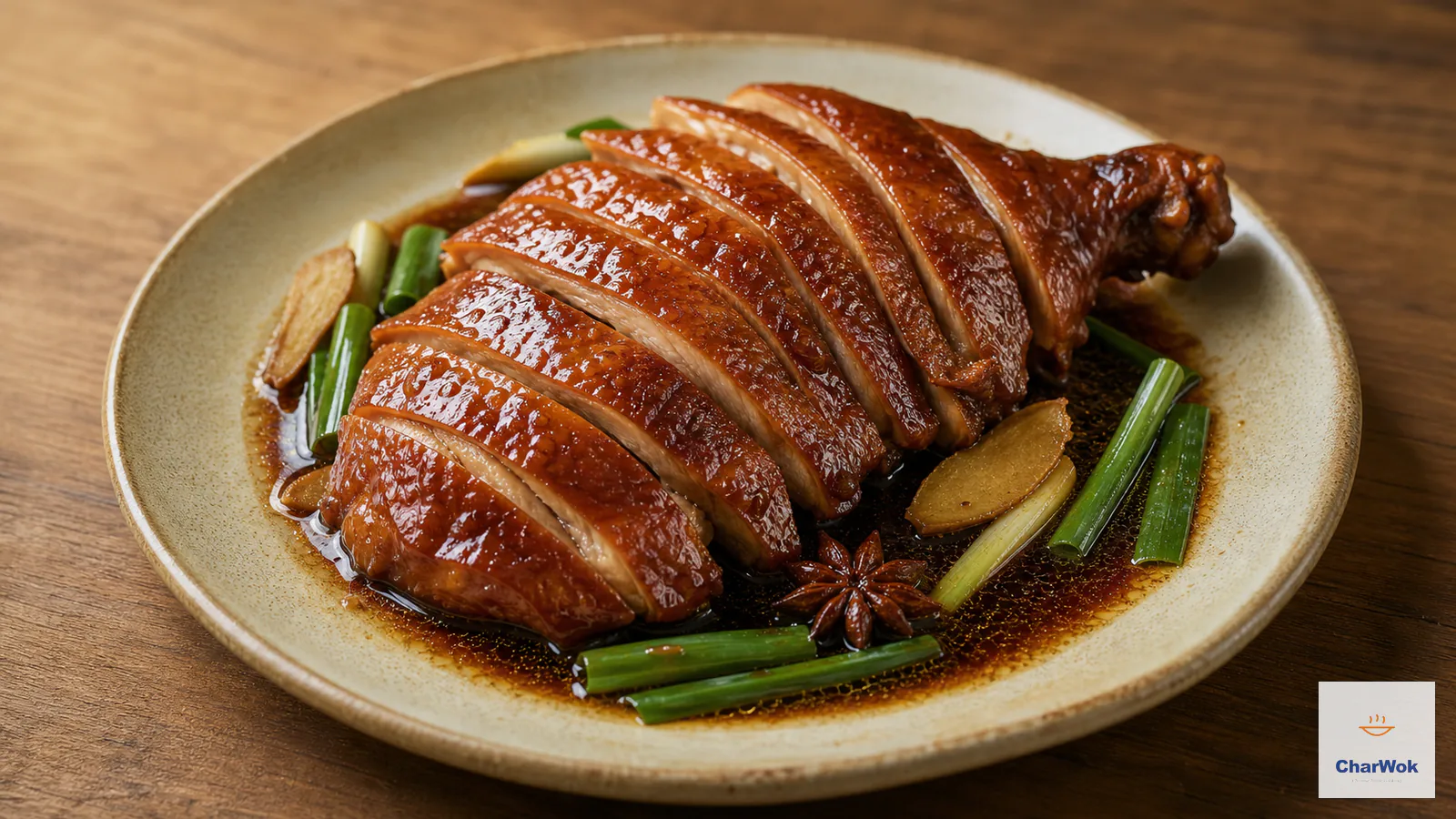
Classic uses include red-cooked pork belly, the soy-bath of soy sauce chicken, and long-simmered stews. The finished scallion oil noodles many of us love get their burnished tone from a few drops of dark soy folded in at the end, which is also a handy trick when you want pan-fried noodles to look restaurant-dark.
Why they behave differently in a hot pan
This is the part most guides skip, and it is the part that actually makes you a better cook. The two sauces differ in sugar content, water activity, and how they reduce, and each difference shows up the moment heat is applied.
- Salt delivery is instant, color is not. The salt and amino acids in light soy dissolve into whatever moisture is in the pan and season the food almost immediately. The pigment in dark soy needs time and a little reduction to deposit on the food, which is why dark soy added at the very end of a stir-fry barely changes anything while dark soy added at the start of a braise transforms the dish.
- Sugar burns. Dark soy carries caramel sugars that scorch easily over high heat. If you dump it into a screaming-hot wok with no liquid, it will blacken and turn bitter within seconds. Add dark soy along with a splash of water, wine, or stock so it dilutes before it can burn. Light soy is drier and tolerates a hot pan far better.
- Reduction thickens dark soy, not light. As a braising liquid cooks down, the sugars in dark soy concentrate and the sauce turns glossy and coats the back of a spoon. This is the built-in glaze that makes a finished braise cling to rice. Light soy reduces to a thinner, saltier liquid, which is fine for a quick sauce but will not give you that lacquered finish.
- Acid and heat change the aroma. The nose of light soy is volatile. Add it early and a lot of that aroma cooks off, leaving salt behind; add a few drops at the very end, off the heat, and you get a fresh top-note that smells alive. This is the move behind the finishing drizzle on scallion oil chicken and many cold dishes.
How to taste-test a bottle before you buy
The ingredient list should be short: soybeans, wheat, salt, water, and culture. Maybe a little alcohol or sugar. If the list reads like a chemistry exam, with hydrolyzed vegetable protein and caramel color carrying the load, you are looking at a chemically accelerated product rather than a brewed one. It will work, but the aroma is flatter and the finish harsher.
For brewed soy sauce, a few names show up in nearly every Asian grocery and are a safe bet: Pearl River Bridge, Lee Kum Kee, and Haday. Of those, I have cooked through the most bottles of Pearl River Bridge, because its light soy reads clean and its dark has an honest, un-molasses-y salt level for the price, so it is what I stock by default. One practical tip regardless of label: buy from a shop with steady turnover, not a dusty bottle at the back of a supermarket aisle. Brewed soy sauce does fade over time even when sealed, and a bottle that has sat on a shelf for two years will taste duller than a fresh one of the same brand.
The shelf-full of cousins
Once you start browsing a Chinese grocery you will spot bottles beyond the basic two. You do not need any of them to start, but it helps to know what they are when a recipe names one. Grouping them by what they actually do, rather than by the order they appear on the shelf, makes them easier to place.
Light-family cousins
- Seasoned steamed-fish soy (蒸鱼豉油): a light soy sweetened and softened for the Cantonese finishing pour over steamed fish. The sweetness is the point here; if you do not have it, thin regular light soy with a little water and dissolve in a pinch of sugar and you are most of the way there.
- Seafood soy (海鲜酱油): light soy rounded out with savory extracts, which gives it a fuller, slightly sweeter profile than straight light. Because it is built on light soy, you can pour it anywhere a recipe calls for the plain version without throwing the salt balance off.
- Double-fermented light (双璜生抽): light soy that goes through a second fermentation round, which lifts the aroma and deepens the savory notes. Think of it as the same product aged for more character; a worthwhile upgrade if you cook a lot, never a requirement.
Dark-family cousins
- Mushroom dark soy (草菇老抽): dark soy infused with straw mushroom extract. The mushroom adds an earthy undertone on top of the color, so reach for it when the dish is already mushroom- or pork-forward; in everything else it behaves like your regular dark.
Thickened and dressed varieties
- Soy sauce paste (酱油膏): a Taiwanese condiment thickened with starches and sugar into a glossy, mildly sweet sauce. The body comes from the thickener, not from concentration, so it clings to buns, dumplings, and blanched greens the way a thin soy never could.
- Spiced sweet soy (复制酱油): soy simmered down with sugar, star anise, and aromatics until it turns into a dark, fragrant dressing. In Sichuan cooking it lands on cold dishes and dumplings like Zhong dumplings as a finishing sauce, not something you cook with.
If you are also exploring the broader pantry, this is a good moment to look at black rice vinegar, Shaoxing rice wine, toasted sesame oil, and Sichuan chili bean paste, which together with the two soy sauces cover most of what northern and Sichuan cooking asks for.
Common mistakes and how to fix them
- The dish is too salty and very dark. You used dark soy to season. Pull back the dark next time and correct salt with light or plain salt. For the pot in front of you now, dilute with water or unsalted stock and extend the cooking time to reduce again, or serve over more rice.
- The braise looks pale and gray. Either you skipped dark soy or you added it too late. Add it at the start, with the liquid, so it has time to deposit color. A teaspoon of sugar helps the glaze set.
- The sauce tastes burnt and bitter. Dark soy scorched in a dry hot pan. Next time, deglaze with water or wine the instant the soy goes in. For the current batch, a splash of Shaoxing wine and a half-teaspoon of sugar can mask mild scorch, but a badly burnt pot is a lost cause; start over.
- Your stir-fry is dark but bland. Classic sign of using dark soy where light was meant to go. Switch to light for seasoning, reserve dark for color, and the dish wakes up.
- Cold dishes taste one-dimensional. Light soy added only at the start loses its top notes. Finish with a few drops of raw light soy off the heat so the volatile aromatics survive.
Putting them to work
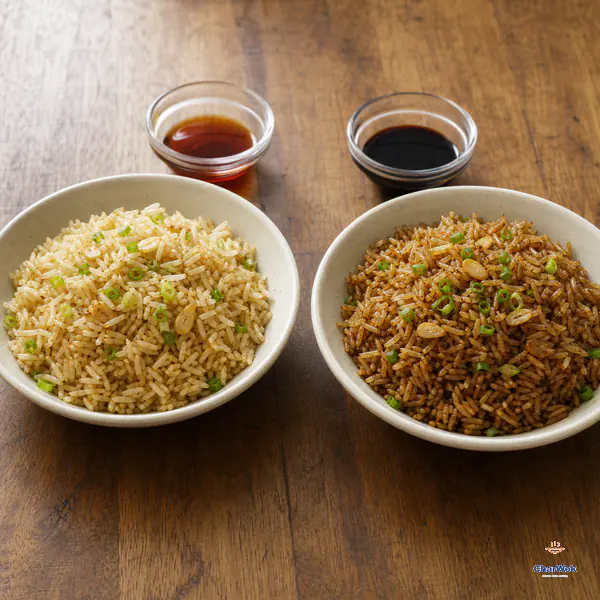
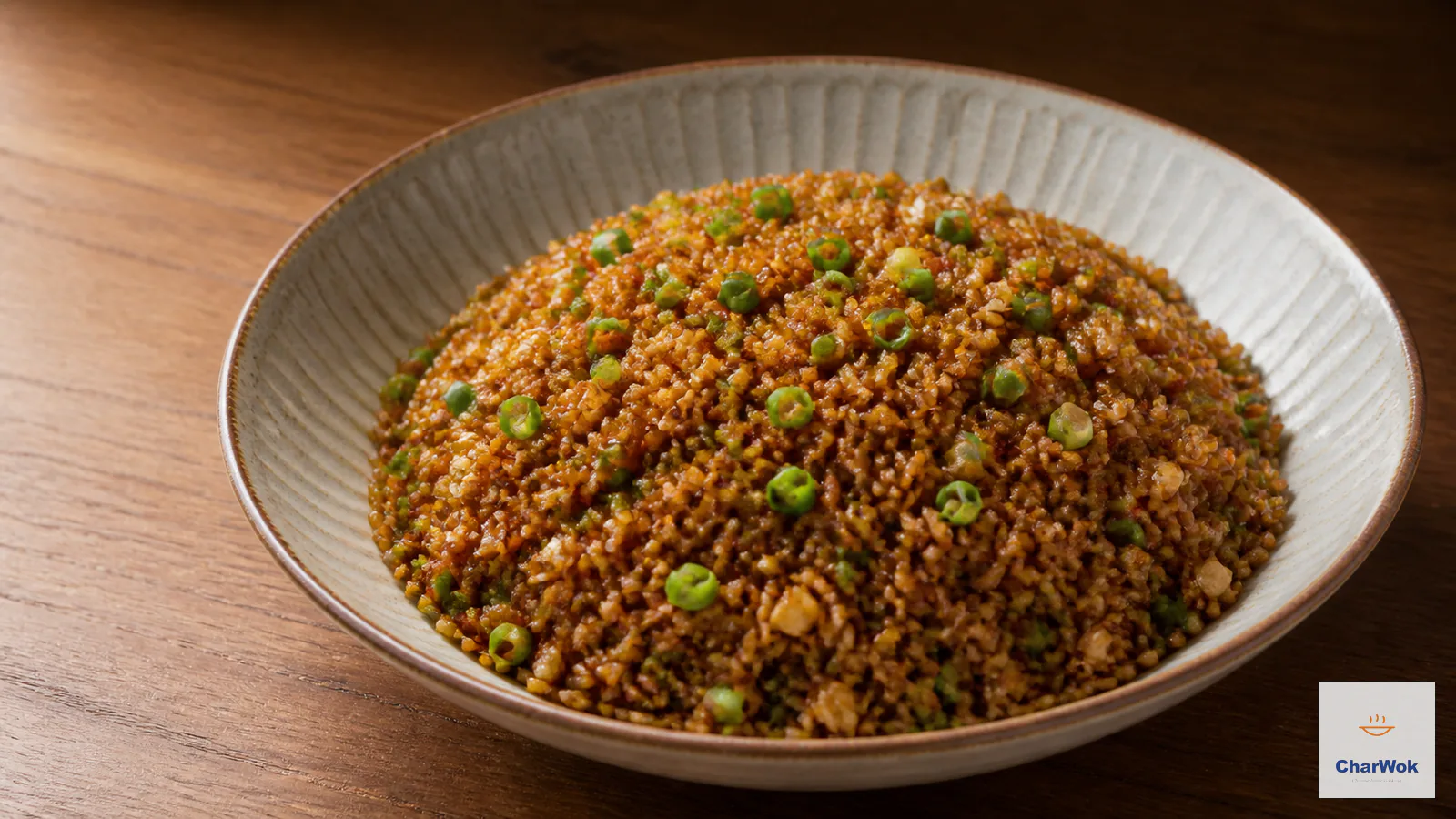
Cook the same simple fried rice twice to learn the bottles by sight: light soy alone keeps it pale and clean-tasting, while a little dark soy added with the seasoning builds the deeper mahogany colour.
The fastest way to feel the difference between the two bottles is to cook the same dish twice. Make a batch of soy sauce fried rice with light soy only, then make it again with dark added at the start. The first will taste bright and clean and look pale gold; the second will look like takeout and taste a touch sweeter. Once you can see that contrast in your own pan, you will never confuse the two again.
For dipping, the ratio that works for most things is roughly three parts light soy to one part warm water, loosened with a little black vinegar and a few drops of sesame oil, with fresh scallion and ginger stirred in. This is the foundation behind most of the classic dumpling dips; adjust the vinegar and chili to taste rather than reaching for a different soy.
Diet and storage notes
Because traditional brewing uses only soybeans, wheat, salt, water, and culture, standard Chinese soy sauces are vegan. The catch for anyone avoiding gluten is the wheat: it is roughly half the mash by weight, so a regular bottle is not gluten-free. Tamari (which is wheat-free or wheat-light depending on the maker) or a specifically labeled gluten-free brewed soy are the safe substitutes, and both behave like light soy in cooking. Expect a slightly different aroma, tamari tends toward a deeper, less beany profile, but the division of labor holds: light still seasons, dark still colors.
Soy sauce holds up best kept dark and cool, so a closed cupboard away from the stove does the job; refrigeration is unnecessary for a bottle you move through in a few months. I keep mine close to the burner for convenience, and the turnover is fast enough that quality never slips. The one bottle that benefits from cold storage is dark soy in a slow-cooking household: because it is opened less often and oxidation works gradually, refrigerating it holds the aroma in place across the months it takes to finish. Whichever bottle, wherever it lives, keep the cap on between pours. The volatile top notes you want preserved in the dish are the same ones that drift off into a kitchen that smells of soy.
Honestly, the whole subject comes down to one habit: read your recipe, decide whether the dish is being seasoned or being colored, and pick the bottle that does that job. Do that and the rest of Chinese cooking gets measurably easier.
FAQ
Can I use dark soy instead of light? Not as a one-to-one swap. Dark is less salty and sweeter, so substituting it leaves food under-seasoned and overly dark. Use light for seasoning and keep dark for color.
Which one should I buy first? Light. It handles the majority of everyday cooking on its own. Add dark once you start braising or want that takeout look.
Does "light" mean low sodium? No. Light refers to color only. For less salt, buy a bottle specifically labeled reduced-salt or low-sodium.
Do I need to refrigerate soy sauce? Not for daily-use bottles kept in a cool, dark cupboard. Refrigerate the dark bottle if you use it slowly, to slow oxidation.
Is Chinese soy sauce the same as Japanese? Close enough to swap in most cooking. Japanese soy tends to be a little lighter and less beany in aroma; measure it the same way you would Chinese light.