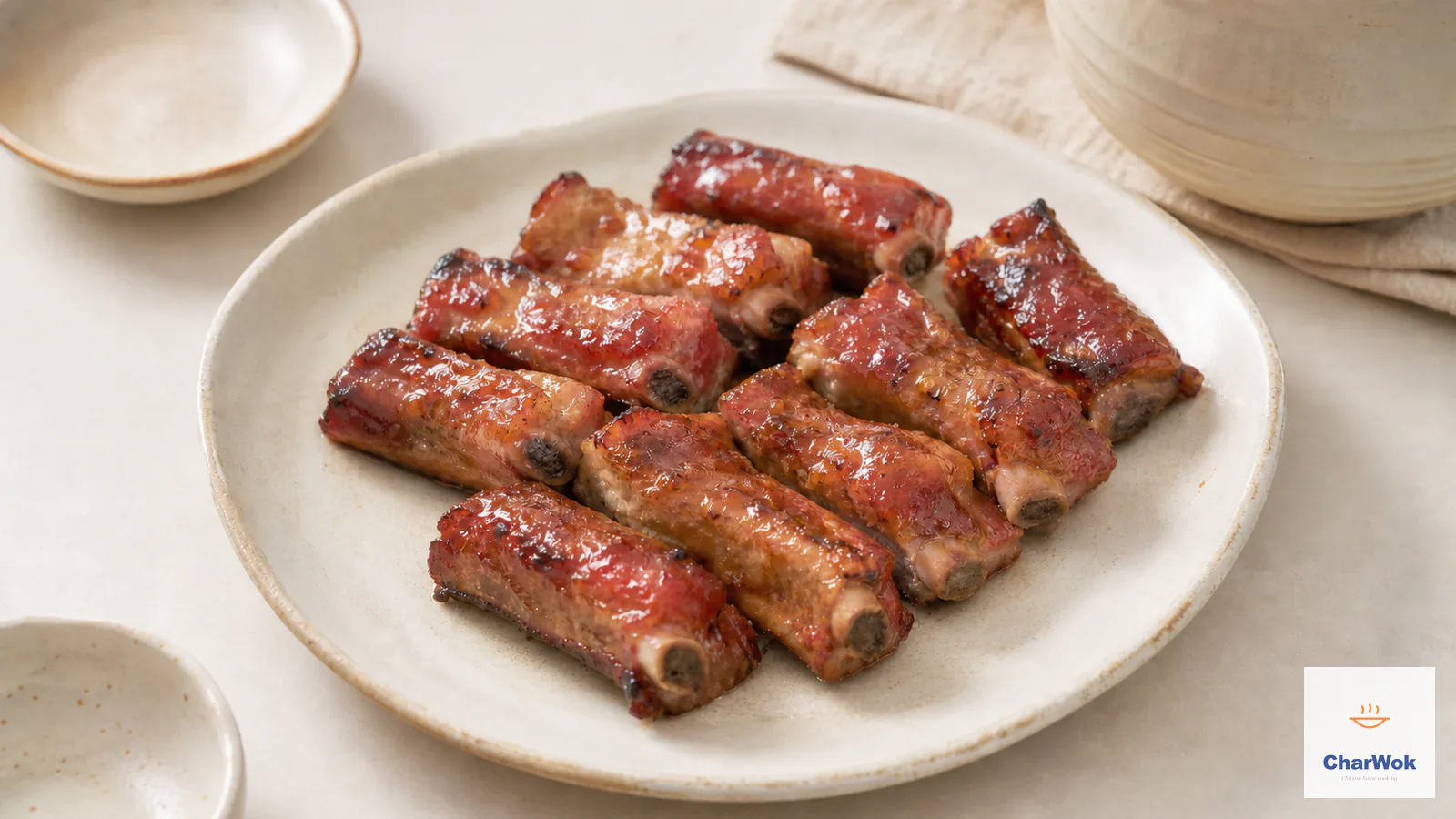
The best thing about Chinese BBQ ribs is that they taste like the lacquered, reddish slabs hanging in a Cantonese roast-meat window, but they come out of a home oven with about ten minutes of real work. The worst thing is that most home versions end up either dry and chalky, or burnt on the edges with raw sauce pooled underneath. I have made both mistakes more than once. The fix is not a secret ingredient. It is a two-temperature roast, foil for the long low phase, and honey held back until the end.
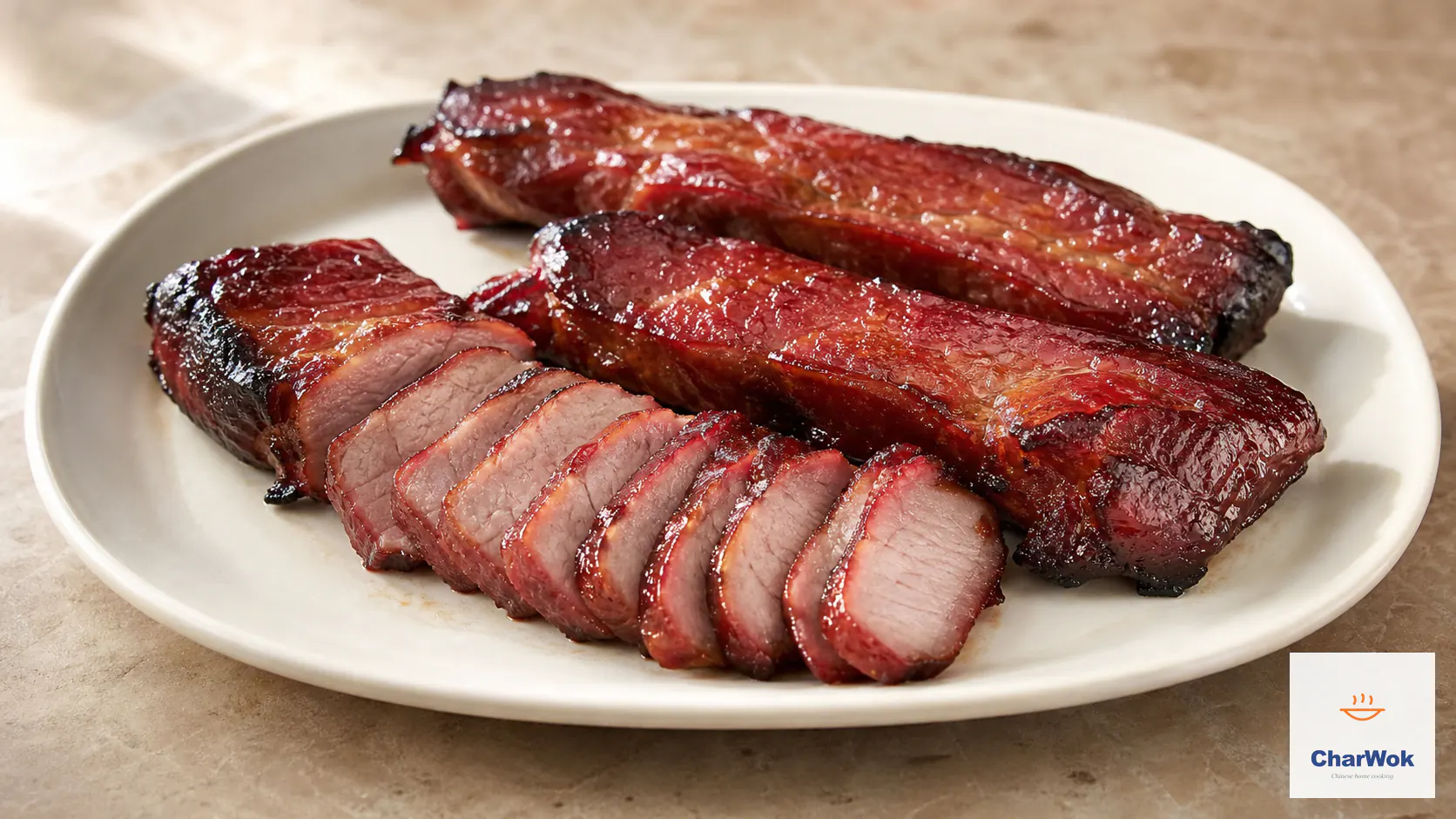
These are char siu ribs, the rack version of the char siu you see in Chinatown shop windows. The marinade is the same family (sweet bean or hoisin, light soy, oyster sauce, five-spice, a little heat), but the bone changes the cooking. Bones insulate, so ribs can take a longer, gentler bake than a loin strip, and they release juice that would wash the glaze off a boneless piece. Treat that as a feature: we wrap them in foil for most of the cook, then unwrap, raise the heat, and glaze.
At a glance. Marinate 2 racks (about 1.4 kg / 3 lb) in the refrigerator for at least 4 hours. Keep them cold until the oven is ready. Roast foil-wrapped at 210°C / 410°F for 35 minutes, then unwrap, brush honey, and finish at 220°C / 425°F for about 10 minutes until the edges char. Rest 10 minutes before cutting. The single decision that matters most: never let the honey go in before the final ten minutes, or it burns.
What kind of ribs to buy
Use pork baby back ribs (also called loin back ribs), not St. Louis spareribs. Baby backs are shorter, meatier over the bone, and cook evenly in the time below; spareribs are fattier and need closer to an extra 20 minutes plus a longer rest. One rack around 680 g (1.5 lb) serves two people generously, so two racks is the right batch for four.
Ask the butcher to leave the flap meat on if you like chewy, well-charred edges, and leave the membrane on the back (I know, most American BBQ advice says to strip it). For this recipe I want you to remove it anyway, not for tenderness but so the marinade and glaze can actually reach the meat on both sides. Slip a butter knife under the silverskin along one bone, grab the edge with a paper towel, and peel. If it tears, start again on the next bone.
The marinade, and why each thing is in it
Char siu sauce and hoisin are not the same thing, but either works as the base here. Char siu sauce (the bottled seasoning, often labeled "Chinese barbecue sauce") is sweeter and redder; hoisin is darker, saltier, more fermented. If you have a jar of char siu seasoning or have made char siu pork before, use it. If not, hoisin gives a deeper, less candy-like result that I actually prefer on ribs. Do not use both at full volume; pick one and measure it generously.
Oyster sauce adds the umami backbone and a glossy finish; light soy sauce brings salt without darkening the meat the way dark soy would. Five-spice is the perfume: a pinch is enough, more than half a teaspoon and the ribs taste medicinal. If your five-spice has been in the cupboard over a year, make a fresh batch from toasted whole spices; dead five-spice is the most common reason a char siu marinade falls flat.
Garlic powder is intentional, not lazy. Fresh garlic burns at the finishing temperature and turns bitter; garlic powder survives the high-heat glaze and keeps its flavor. Ground chili (gochugaru, aleppo, or a mild Chinese chili powder) gives color and a low warmth. This is not a spicy dish. A splash of Shaoxing wine (a tablespoon, even though it is not in the base list) is a welcome addition if you have it; it lifts the pork flavor and tenderizes slightly. If you want the iconic red without food coloring, double the chili powder and accept a more brick-toned result.
Ingredients
Ingredients at a glance
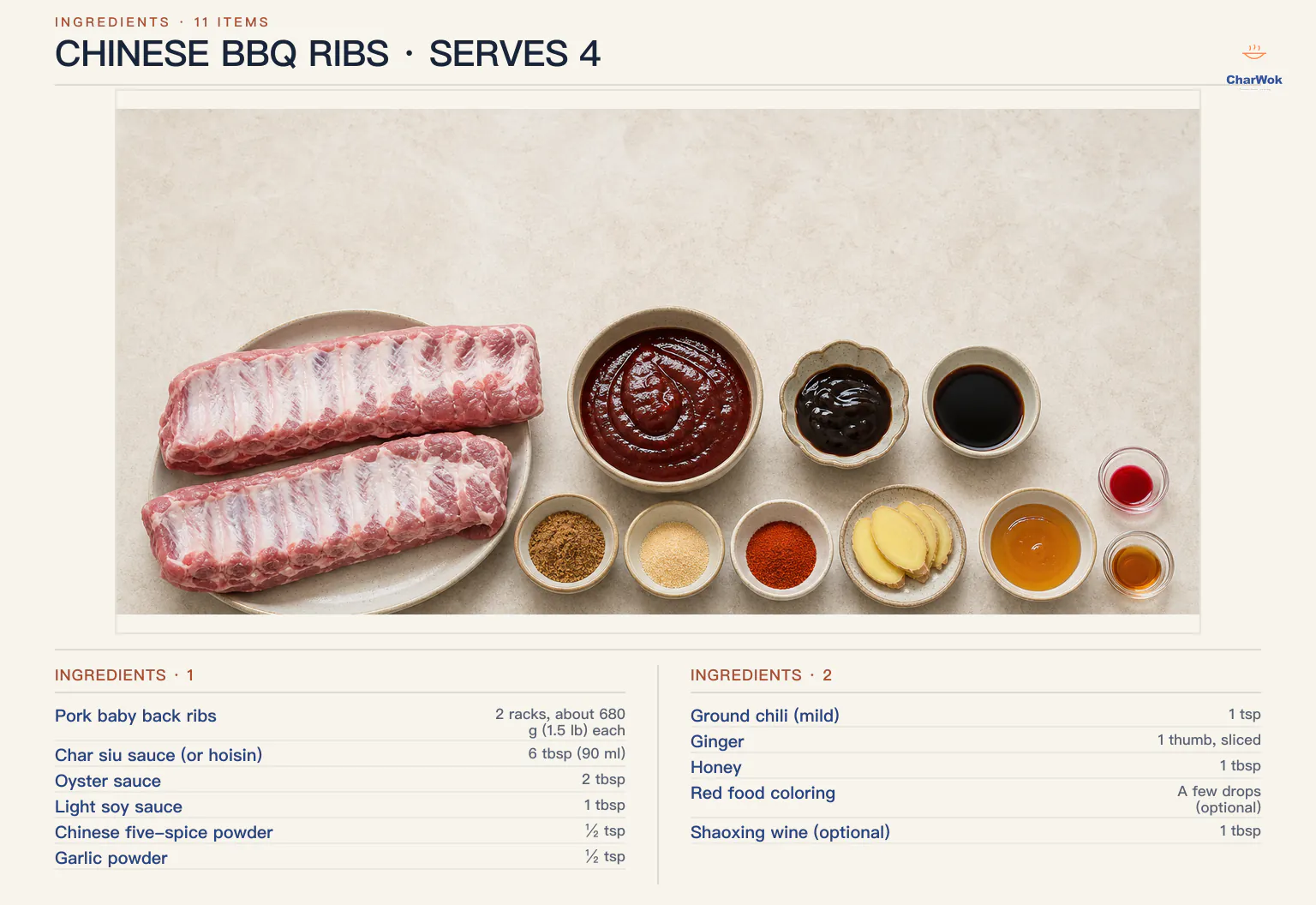
| Ingredient | Amount | Notes / substitute |
|---|---|---|
| Pork baby back ribs | 2 racks, about 680 g (1.5 lb) each | St. Louis spareribs work but add ~20 min cook time |
| Char siu sauce (or hoisin) | 6 tbsp (90 ml) | Pick one; do not blend both at full strength |
| Oyster sauce | 2 tbsp | Vegetarian mushroom oyster sauce is fine |
| Light soy sauce | 1 tbsp | Not dark soy; see light vs. dark soy |
| Chinese five-spice powder | ½ tsp | Freshly ground if possible |
| Garlic powder | ½ tsp | Or 1 tsp garlic paste; avoid fresh garlic here |
| Ground chili (mild) | 1 tsp | Gochugaru, aleppo, or Chinese chili powder |
| Ginger | 1 thumb, sliced | For the marinade only; discard before roasting |
| Honey | 1 tbsp | Or maltose / light corn syrup for a shinier glaze |
| Red food coloring | A few drops (optional) | Omit; the chili gives a natural red-brown |
| Shaoxing wine (optional) | 1 tbsp | Dry sherry in a pinch |
Method
- Mix and divide the marinade. In a bowl, stir together the char siu sauce (or hoisin), oyster sauce, light soy, five-spice, garlic powder, ground chili, Shaoxing wine if using, and food coloring if using. Before any brush or utensil touches the raw pork, transfer half to a separate clean, covered bowl and refrigerate it. The reason to combine before tasting is so the salt and sugar balance reads correctly; a smear of neat hoisin will lie to you about how sweet the finished glaze is.
- Prep and coat the ribs. Remove the membrane. Lay each rack on a sheet of foil large enough to fold shut (double the foil if thin). Use only the marinade left in the mixing bowl to brush both sides generously; do not dip a brush that has touched raw pork into the clean reserved portion. Lay the sliced ginger on top. Wrap the foil tight around each rack. A loose wrap lets steam escape and the meat dries out; a tight wrap turns the foil into a mini braise that keeps the ribs juicy through the long roast.
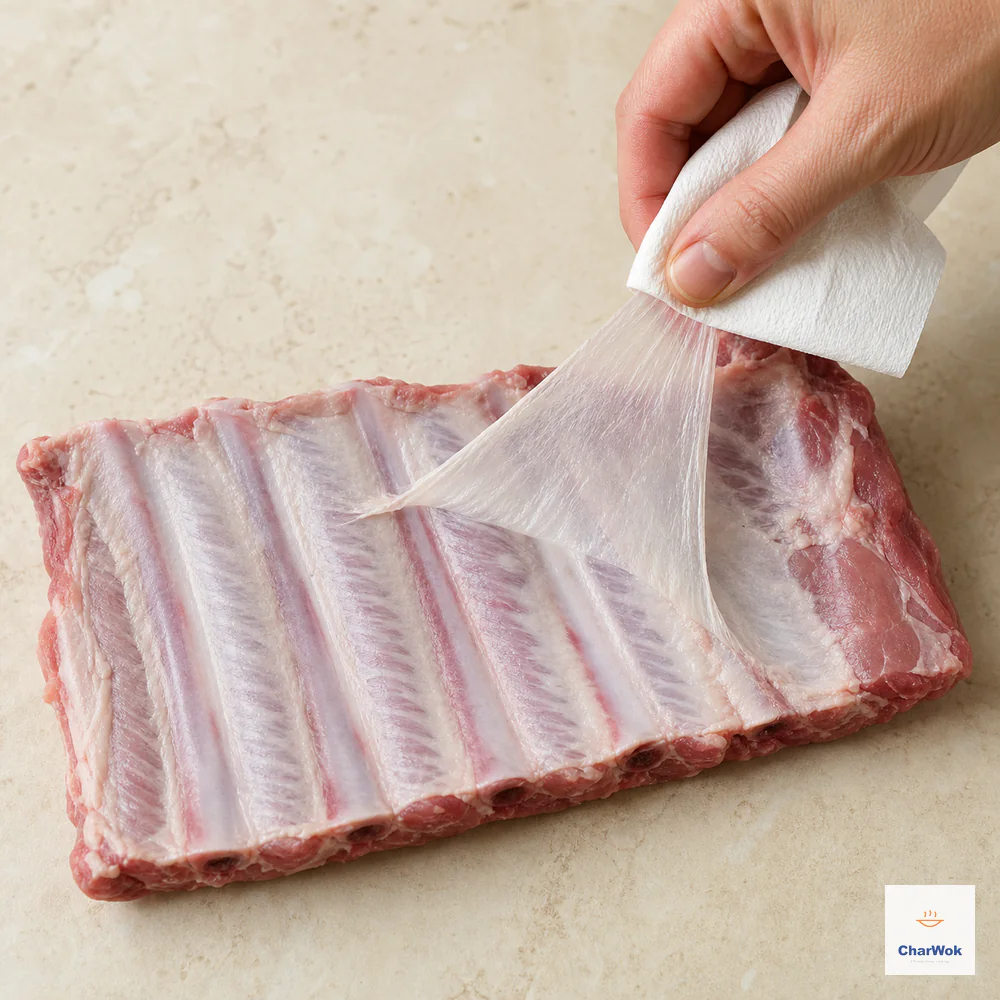
Loosen one corner on the bone side, grip it with kitchen paper, and pull steadily until the tough membrane comes off in one sheet.
- Marinate cold. Refrigerate at least 4 hours and no more than 24. Beyond a day the salt in the soy and oyster sauce starts to cure the surface and the texture turns hammy. Keep the ribs refrigerated until the oven is preheated, then move them directly from the refrigerator to the roasting tray.
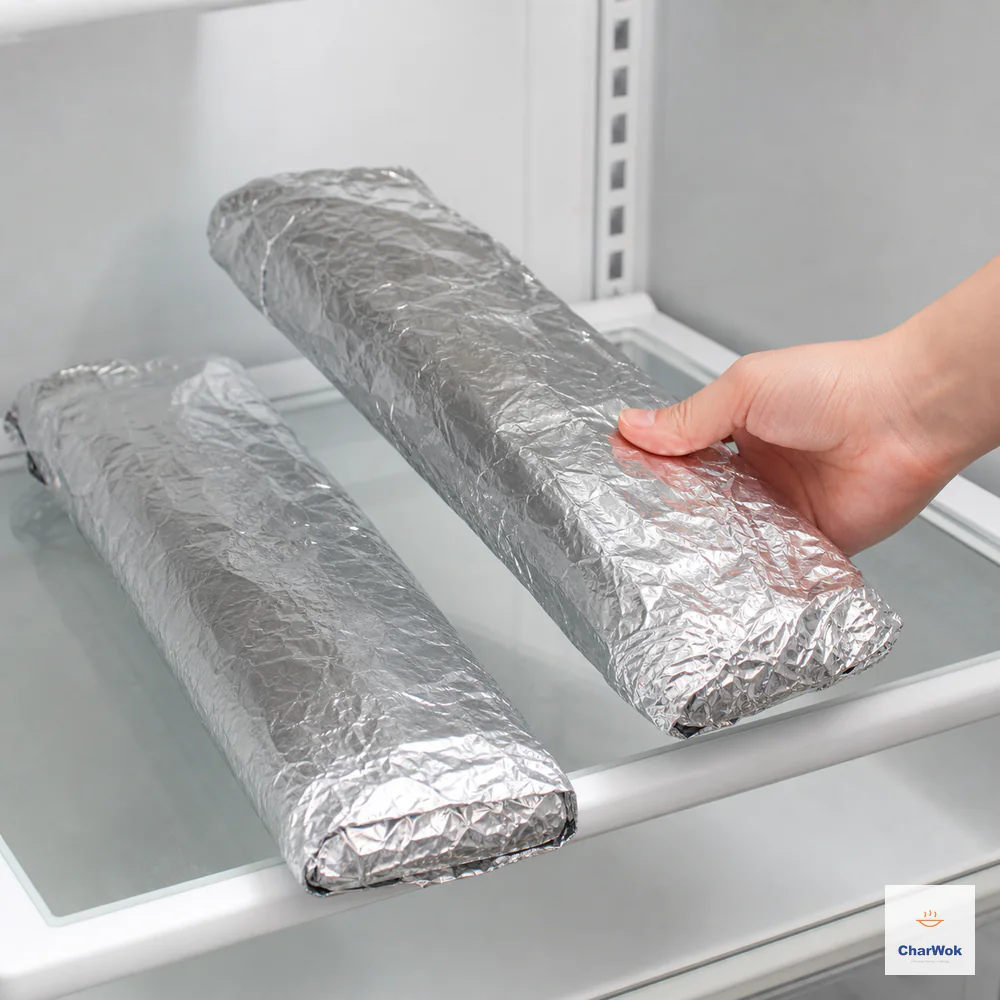
After coating both sides and adding the ginger, double-wrap each rack tightly so it cannot leak; chill for 4 to 24 hours, then take it out 1 hour before roasting.
- Oven, low phase. Heat the oven to 210°C / 410°F (fan 190°C). Unwrap the ribs, discard the ginger, and set the racks on a wire rack over a roasting tray. Pour hot water into the tray to about 1 cm depth, making sure it does not touch the meat. The water bath keeps the oven humid so the marinade does not scorch and the foil-less surface stays tacky rather than crusty. Roast 35 minutes, topping up the water if it dries.
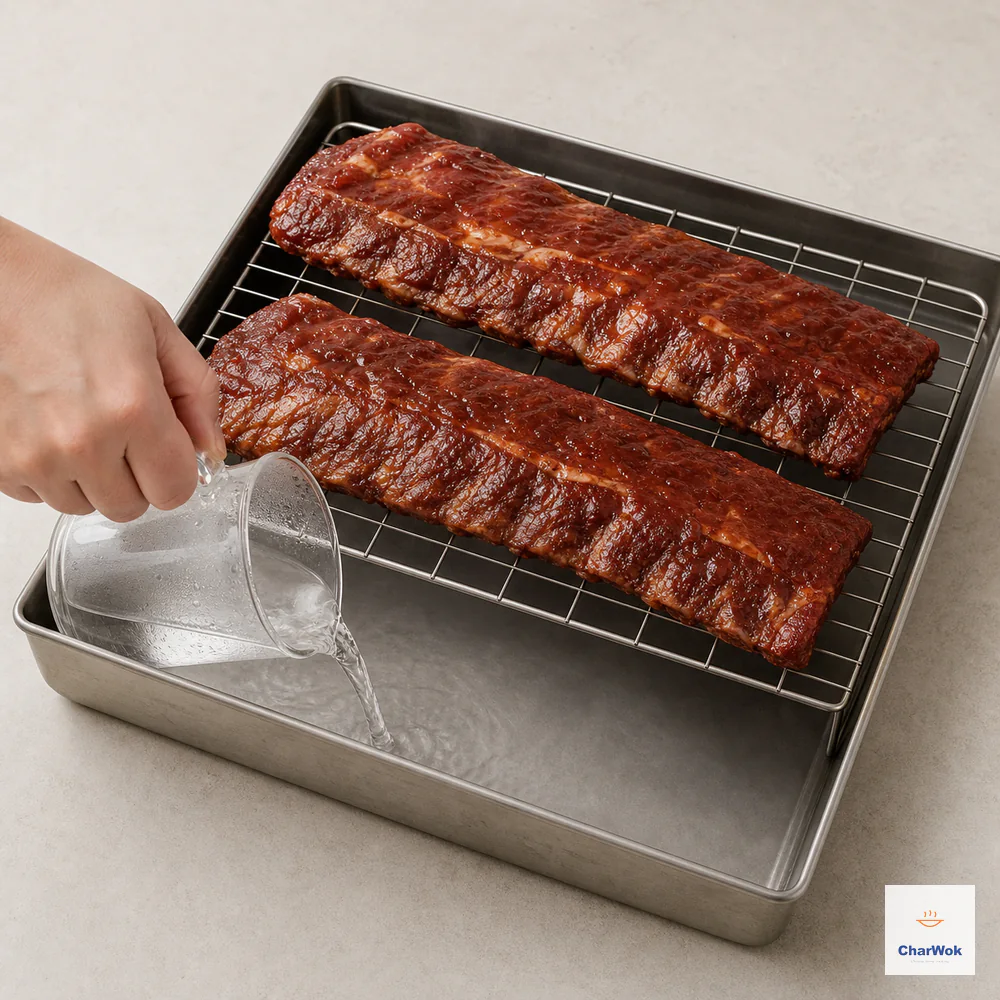
Discard the ginger, set the unwrapped ribs on a wire rack, and pour about 1 cm hot water into the tray below without letting it touch the rack or meat.
- Oven, glaze phase. Brush the tops of the racks with honey. Raise the heat to 220°C / 425°F (fan 200°C) and roast another 8 to 10 minutes, watching closely, until the edges darken and char in spots. This is the Maillard and caramelization window. Honey hits around 160°C and browns fast, which is exactly the look we want but also the line between lacquered and acrid. Pull them the moment the edges look right.
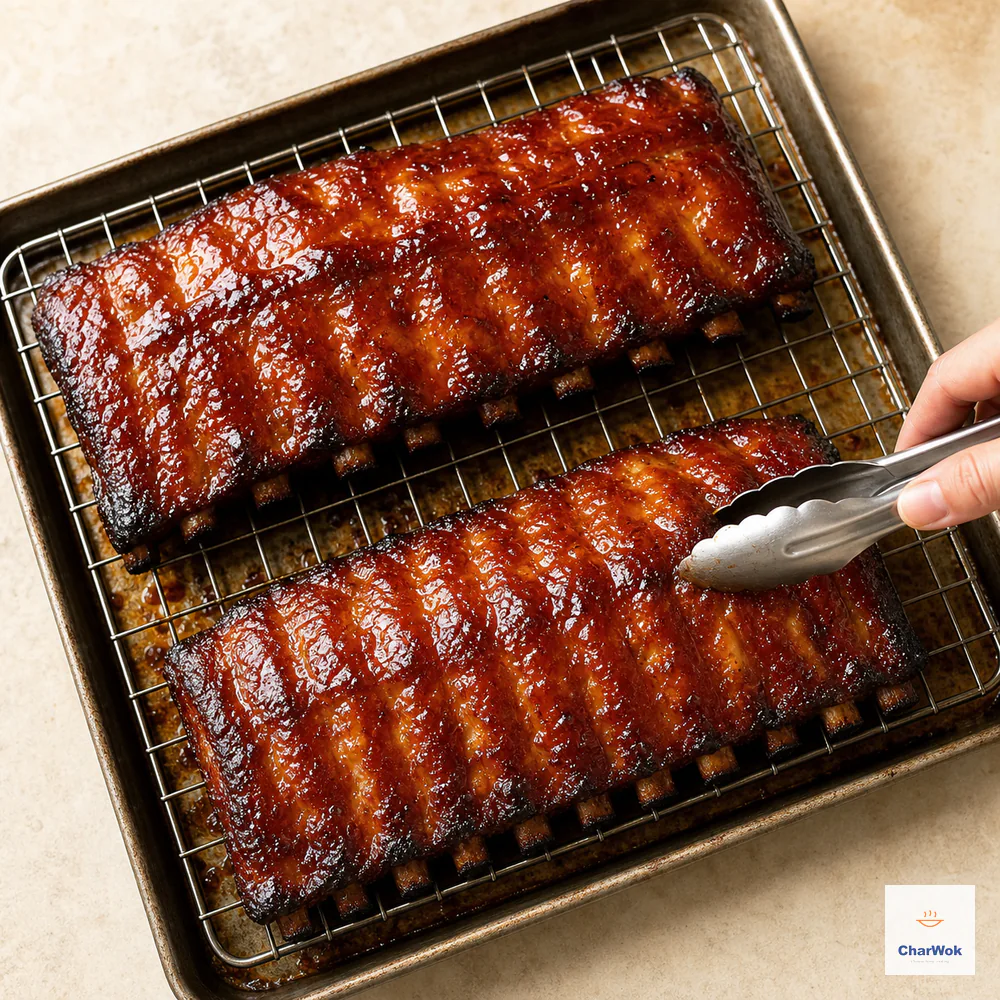
Brush on the honey, raise the oven to 220°C / 425°F, and watch from 8 minutes; pull the ribs after about 8 to 10 minutes when only the edges begin to char.
- Air-fryer alternative. Preheat at 200°C / 390°F for 3 minutes. Lay the marinated racks on the crisper tray without overlap (cut a rack in half to fit if needed). Cook 10 minutes, brush with honey, cook 2 minutes more. Air-fryer ribs char faster and run drier, so check at 8 minutes the first time you try this.
- Rest, then cut. Let the racks rest 10 minutes so the juice redistributes; cut too soon and the meat weeps onto the board. Separate into individual ribs with a sharp knife and serve at once.
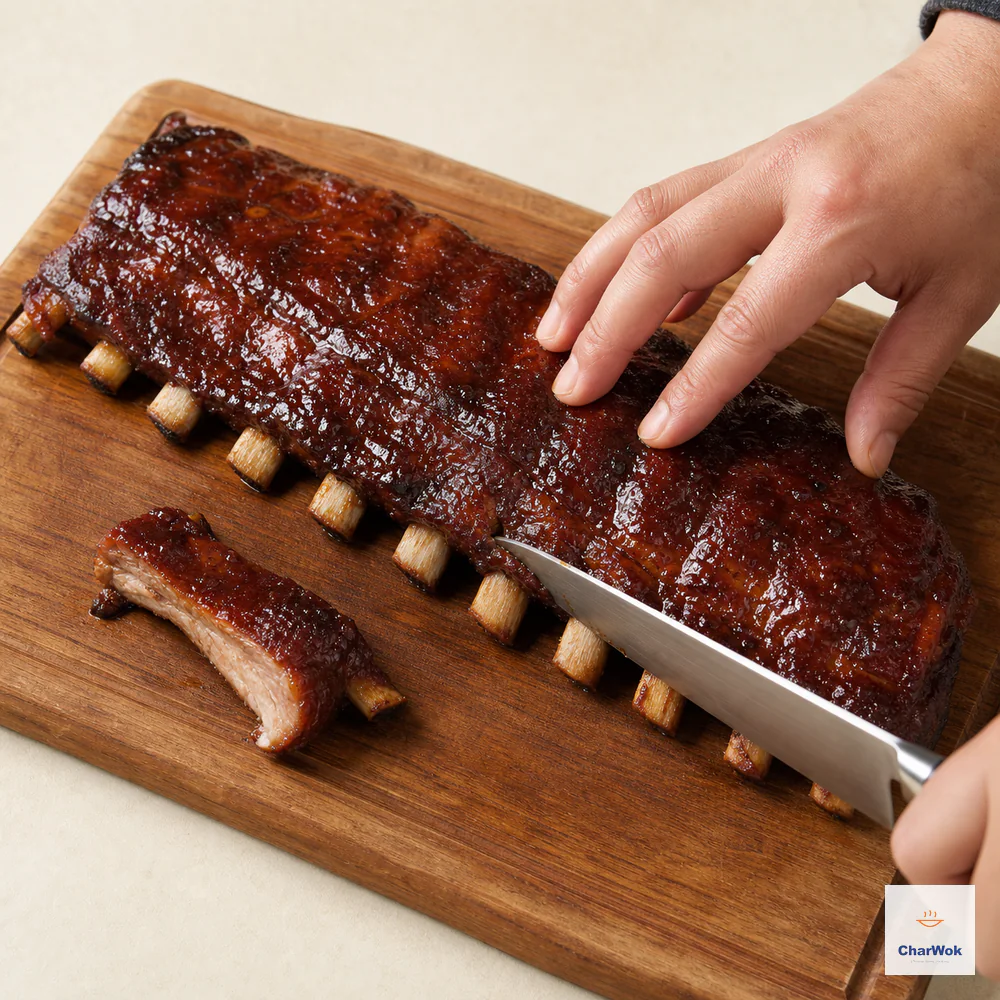
Rest the whole rack for 10 minutes so the juices settle, then follow the visible bone gaps and slice cleanly between the bones.
When things go wrong
The glaze burned but the meat is still pink. Your oven runs hot, or the rack sat too close to the element. Next time move it to the center or lower third, and start checking the glaze phase at 6 minutes. For the current batch, scrape off the worst of the char and finish the meat covered loosely with foil at 190°C / 375°F until cooked through.
The ribs are dry and pale, not sticky. Two likely causes: the foil wrap was loose, or you skipped the water bath. Both let steam escape so the surface dried out before the sugars could set into a glaze. Also check that you reserved enough marinade; the meat needs to be wet going into the oven. A reader once wrote that hers came out "a dry rib, not sticky," and the fix was simply more sauce on the racks before wrapping.
Too salty. You used dark soy instead of light, or doubled the oyster sauce. Dark soy is saltier than it looks and stains the meat brown, killing the red char-siu color. Rinse the racks under water next time before marinating, and stick to light soy for the salt component.
Meat is tough, not tender. You may have used meatier spareribs without adding enough cooking time. Keep marinating ribs refrigerated rather than tempering them on the counter; adjust the oven time for the cut and thickness instead. If tenderness matters more than a chewy bite, drop the low phase to 180°C / 350°F and extend it to 60 minutes before glazing.
The membrane will not peel. It happens on older pork or ribs that have been frozen. Score it in a crosshatch with a sharp knife instead of removing it; the marinade will still penetrate the cuts.
Variations and what to serve alongside
Spike the honey glaze with a teaspoon of chili oil or a finely minced bird's-eye chili for a hot-sweet finish. Swap the honey for maltose if you can find it. Maltose is what Cantonese roast shops actually use, and it gives the glassy, slightly stretchy glaze that honey cannot quite match. A teaspoon of scallion oil brushed on after cooking adds a fresh green top note that the roast lacks.
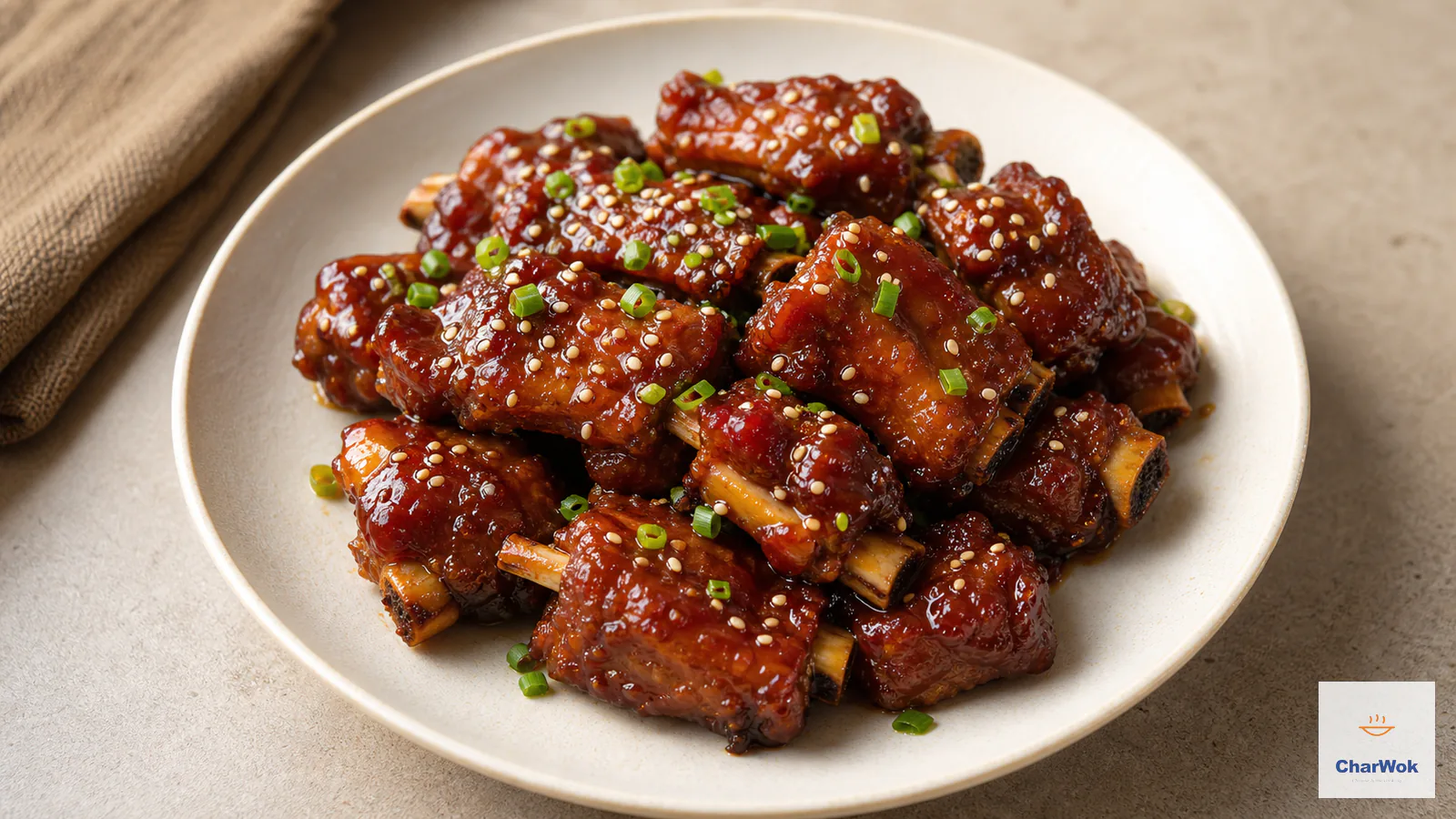
For a Sichuan-leaning rib, replace the five-spice with a half-teaspoon of ground Sichuan pepper and serve with a dish from the spicy pork family. Hunan stir-fried pork makes a good tablemate if you want heat on heat, though I usually balance these sweet ribs against something plain. Plain steamed rice and a quick stir-fried green (garlic bok choy or blanced broccoli with oyster sauce) are the correct answer most weeknights.
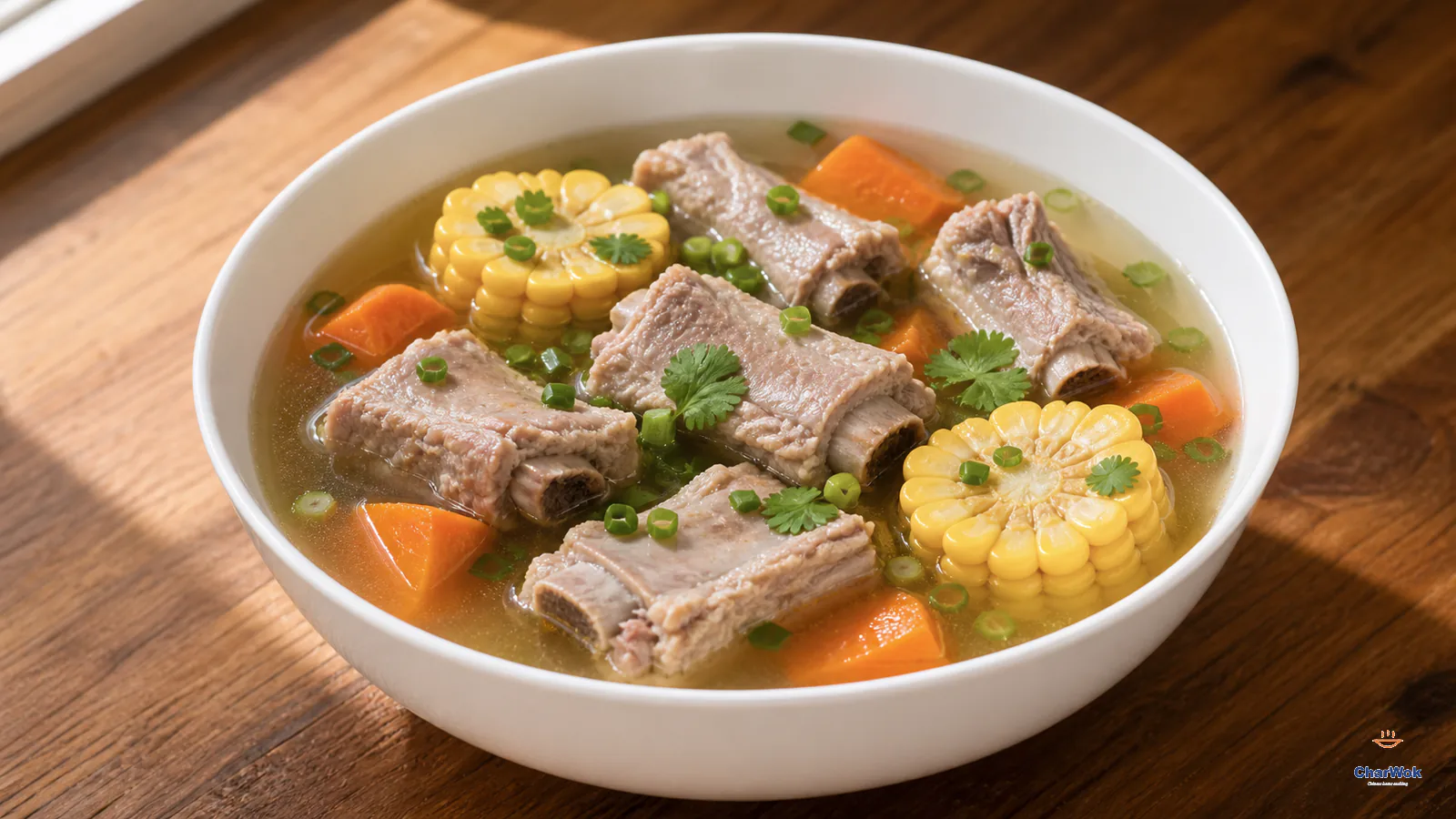
If you are feeding a crowd, the ribs slot into a multi-dish spread the way a roast does in a Western meal: one centerpiece protein, then supporting dishes. The feast-planning approach I use elsewhere on the site works well here: count the ribs as the main, add a soup like pork rib soup or a lighter egg drop soup to open, and round out with one or two vegetable plates.
Storage and reheating
Cooked ribs keep three days in the fridge, whole or separated. Reheat them in a 180°C / 350°F oven for 8 to 10 minutes, uncovered. The microwave makes the glaze weep and the meat rubbery. To freeze, wrap the cooled racks tightly and keep up to two months; thaw overnight in the fridge and reheat the same way. Raw marinated ribs, still in their foil, also freeze well for up to a month, so I often double the marinade and stash a second rack for a weeknight I do not feel like cooking.
Trimmed raw bones can go straight into a fully cooked stock or rib soup. Discard the ginger, marinade, and any sauce or tool that touched the raw pork. The clean portion reserved before raw-meat contact can stay covered in the refrigerator and be simmered into a dipping sauce or a brush-on glaze for scallion pork chops the next night.
Frequently asked questions
Can I skip the overnight marinade?
Four hours in the refrigerator is the practical minimum; overnight gives deeper flavor. Do not shorten the wait by marinating at room temperature.
Char siu sauce or hoisin: which is better?
Hoisin for a darker, less sweet rib; char siu sauce for the classic candy-red result. I reach for hoisin at home because it is easier to find and the flavor reads more grown-up next to rice.
Why does my honey glaze burn every time?
Honey is going on too early or the rack is too high in the oven. Add it only in the last 10 minutes and keep the ribs in the center slot. Maltose burns slightly later than honey if your oven runs hot.
Do I need food coloring?
No. The red in shop-window char siu comes from curing and coloring; at home the chili powder gives an honest red-brown that I prefer. A few drops of red coloring will get you closer to the takeaway look if that matters to you.
Can I cook these on a grill instead?
Yes, indirectly over low heat (around 120°C / 250°F) for about two hours foil-wrapped, then unwrapped over direct heat for the honey glaze. They come out closer to fall-off-the-bone than the chewy oven version.
If you remember one thing, make it the glaze timing. Everything else — the membrane, the water bath, the rest — improves the ribs, but the honey is the difference between a rack that looks and tastes like char siu and one that tastes scorched. Get that right and the rest is forgiving.