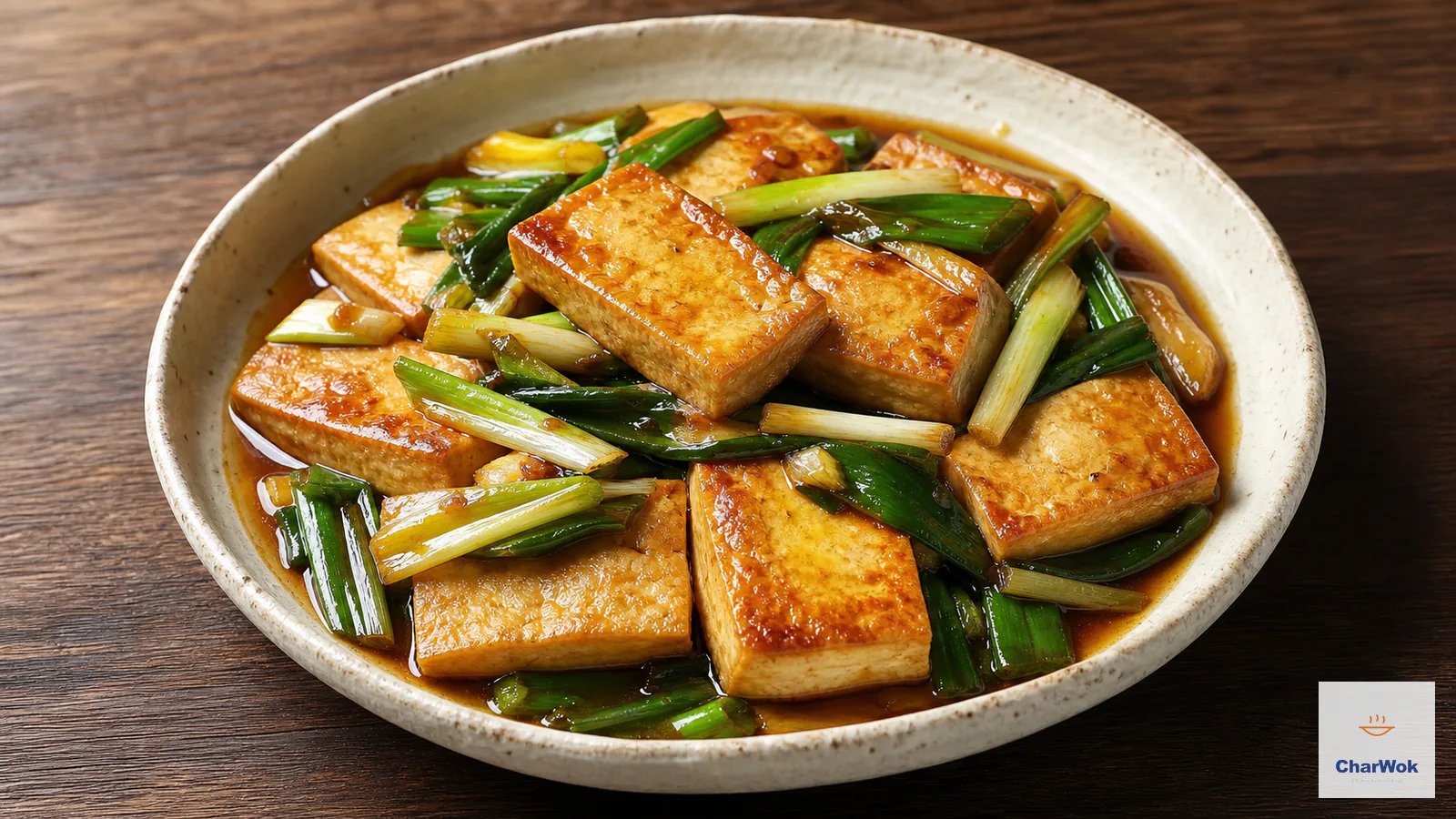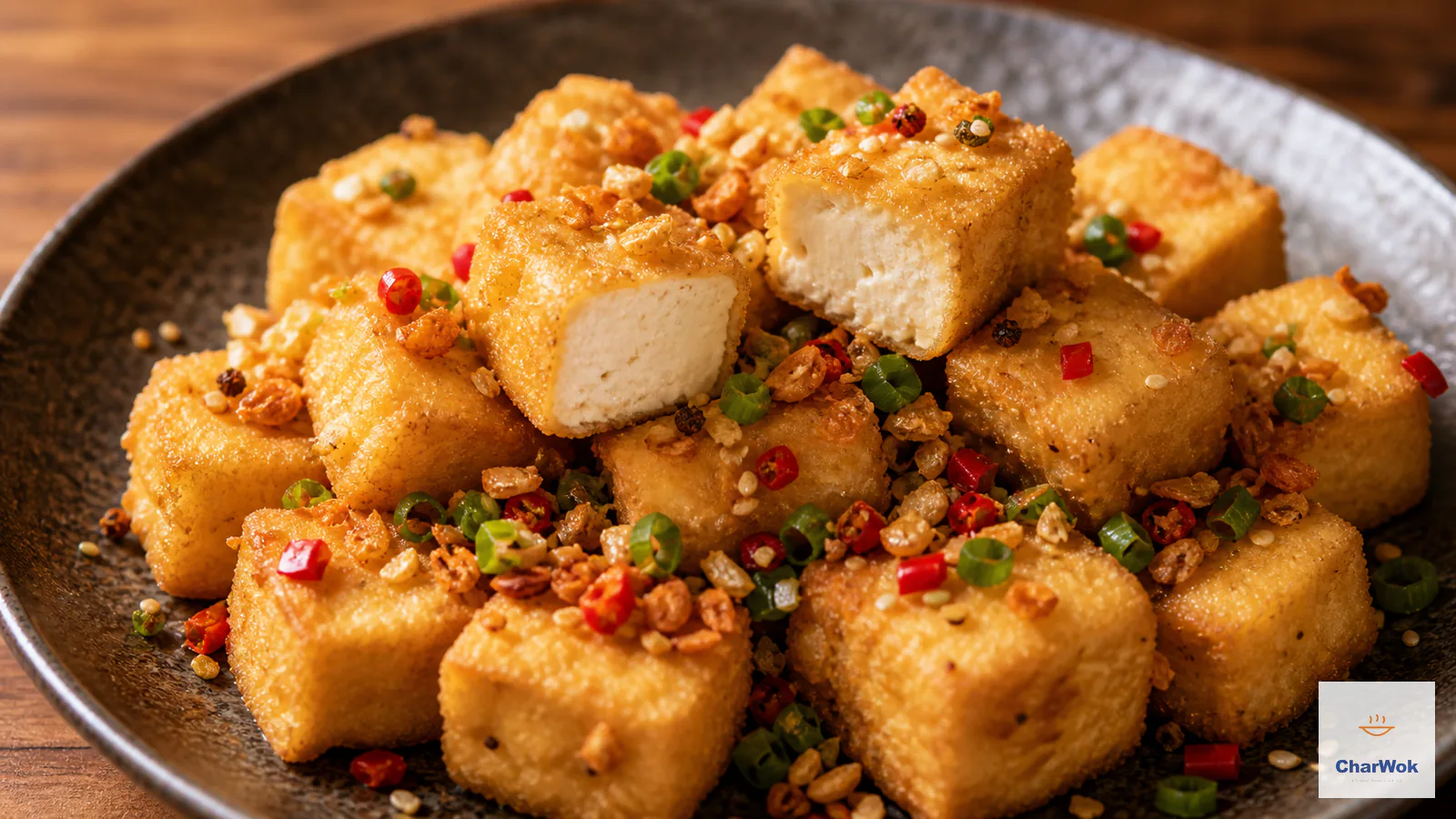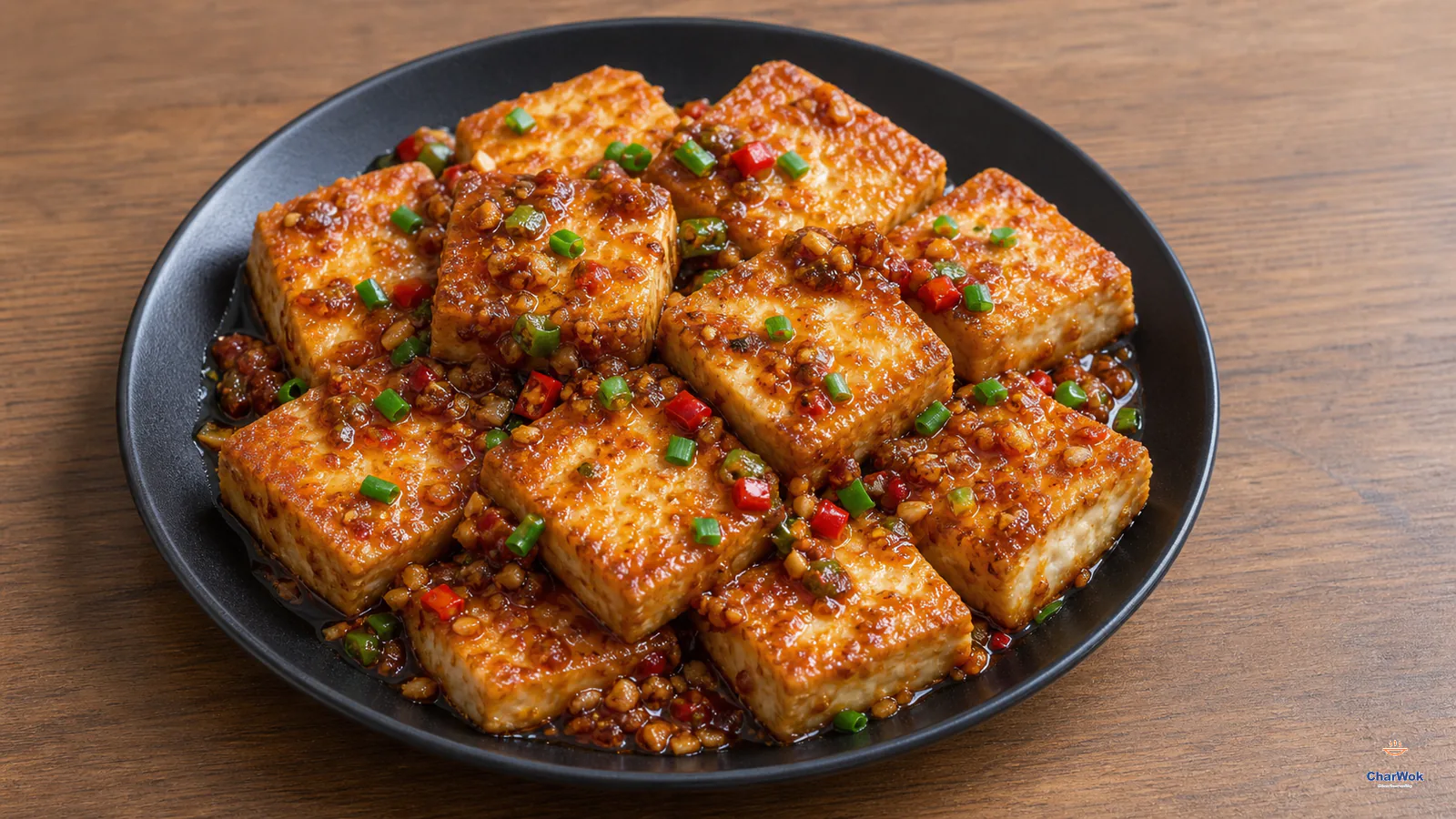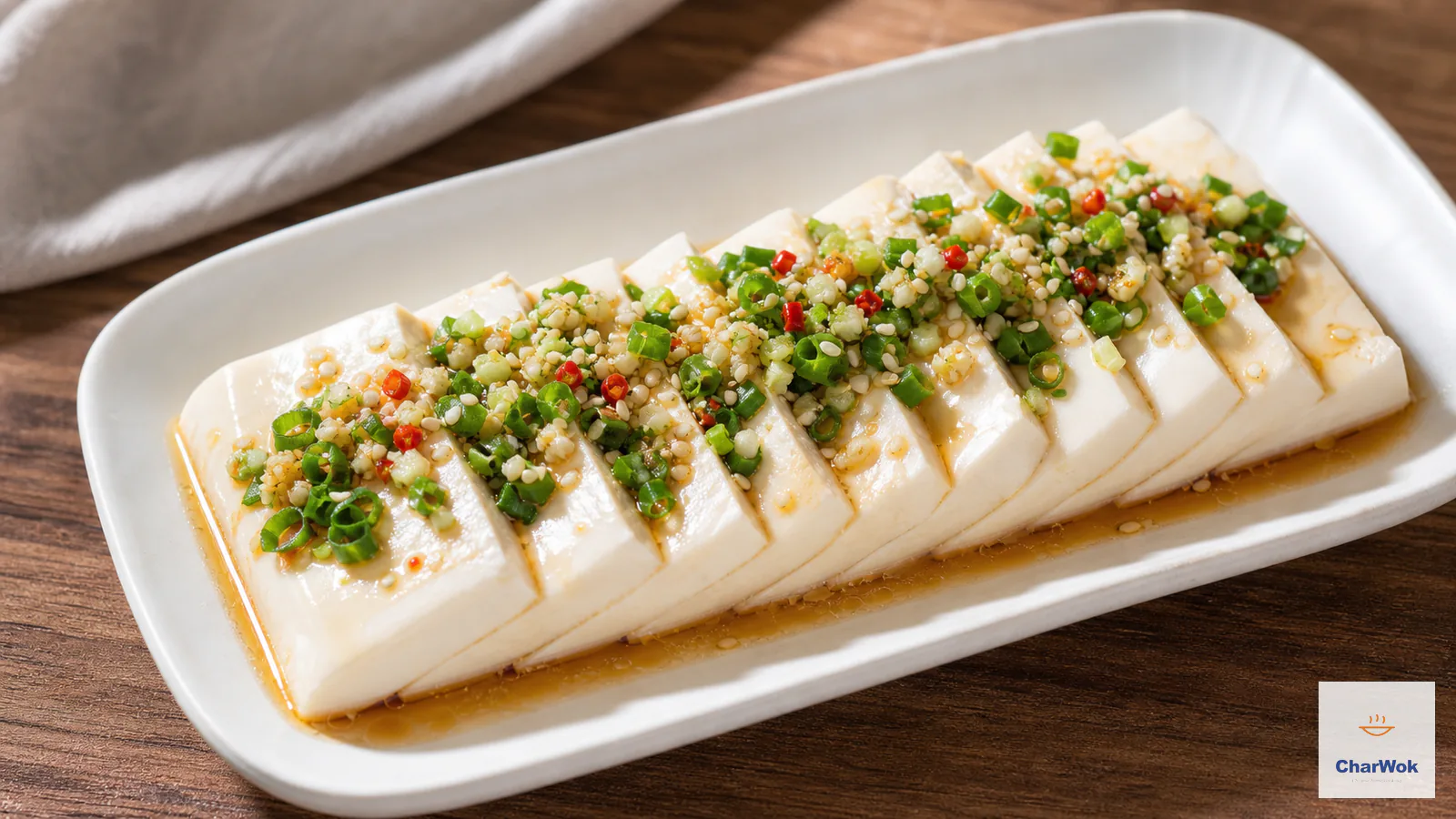
A cold block of silken tofu, naked on a plate, will not impress anyone on its own. Spoon over a spoonful of just-cooked scallion-and-garlic oil and the whole thing changes in seconds: the oil hisses against the cool surface, the aromatics bloom, and a dish that looked like diet food suddenly tastes like something you would order twice. That gap between appearance and flavor is the whole reason this dish exists.
I have served versions of this to people who claim to hate tofu, and watched them go back for thirds. The trick is not the tofu. It is the oil, and the confidence to pour it hot.
At a glance: One 500 g (about 1 lb) block of silken tofu serves two as a side. The entire dish is ten minutes of work, of which roughly four minutes are real cooking. The make-or-break move is pouring sizzling scallion-garlic oil over cold tofu; the dressing is built in the same pan and spooned straight on. Serve cold; chill the tofu first.
What this dish is, and where it comes from
Known in Mandarin as cong you juan dou fu (scallion-oil silken tofu), this is a home-style cold dish from the everyday northern and eastern Chinese table. It belongs to the same family of quick, oil-bloomed cold dishes that show up as the first of many plates in a family meal: cheap, fast, and built to wake up the appetite before the heavier braises and stir-fries arrive.
The principle is borrowed from scallion oil. You gently cook alliums in oil until their flavor dissolves into the fat, then use that flavored fat as the actual seasoning. If you have ever made a batch of homemade scallion oil, you already know the technique; this is simply the five-minute, single-serving version, finished in the pan with soy and vinegar instead of being bottled for later.
Why silken tofu behaves the way it does
Most tofu is curdled, then pressed to squeeze out water and firm up the curd. Silken tofu skips the pressing. The soy milk is coagulated directly in its container, so the curd never gets compressed and the water stays trapped inside the protein network. That is why it is custardy rather than spongy, and why it tears if you look at it wrong.
Two practical consequences follow. First, silken tofu holds a lot of loose water that will bleed out onto your plate and dilute the dressing if you do not drain it first. Second, it has almost no structural strength, so you serve it in the container's shape and break it with a spoon at the table rather than trying to cube it neatly. Both of these shape the method below.
You will see soft, firm, and extra-firm silken tofu in shops. All three work here. I prefer soft for the pudding-like texture against the crunchy alliums, but firm holds its slab shape better if you are nervous about the unmolding step. Do not substitute regular firm block tofu; it tastes like a different ingredient entirely.
Ingredients
Ingredients at a glance
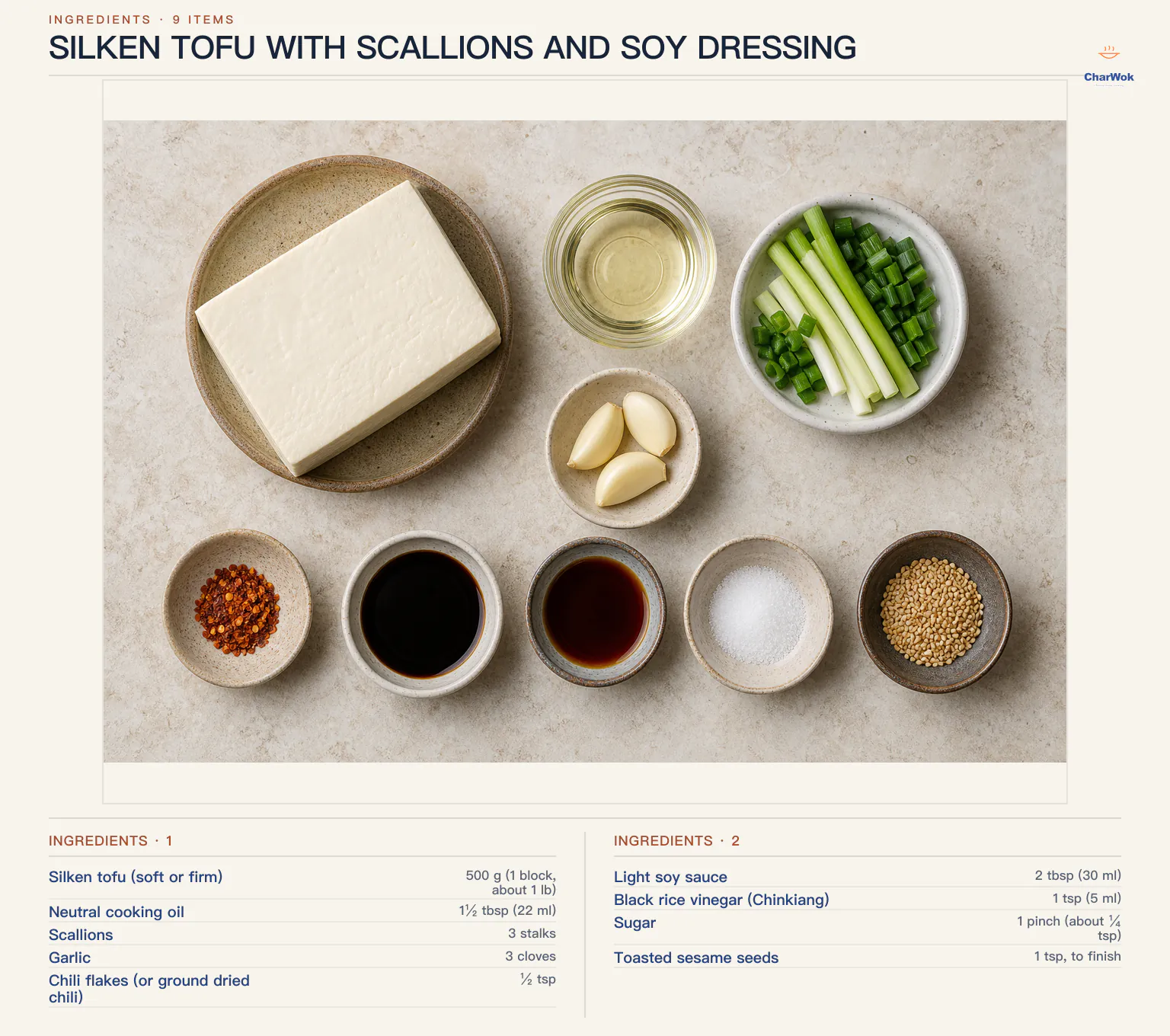
| Ingredient | Amount | Notes / substitute |
|---|---|---|
| Silken tofu (soft or firm) | 500 g (1 block, about 1 lb) | Refrigerated tub or shelf-stable aseptic box. Soft block tofu works if you cannot find silken; do not use firm block tofu. |
| Neutral cooking oil | 1½ tbsp (22 ml) | Grapeseed, canola, or avocado. Avoid olive oil; its flavor fights the dish. |
| Scallions | 3 stalks | Green and white parts. Shallot or small onion works in a pinch. |
| Garlic | 3 cloves | Minced coarse, not paste. Paste burns before it flavors the oil. |
| Chili flakes (or ground dried chili) | ½ tsp | Optional but I always add it. Use mild flakes for aroma, ground facing-heaven chilies for heat. |
| Light soy sauce | 2 tbsp (30 ml) | Use light, not dark. See the light vs. dark soy sauce guide; dark will muddy the color and oversalt. |
| Black rice vinegar (Chinkiang) | 1 tsp (5 ml) | Malted, smoky-sweet. Read about black rice vinegar; rice or black vinegar both work, but Chinkiang is correct here. |
| Sugar | 1 pinch (about ¼ tsp) | Balances the salt and acid. Skip only if your soy sauce is sweet. |
| Toasted sesame seeds | 1 tsp, to finish | For garnish. A few drops of toasted sesame oil stirred in at the end is a welcome addition. |
Method
- Drain the tofu while still in its container. Peel back the plastic lid. Lay three or four sheets of paper towel over the top, then invert the whole tub onto a flat surface so the paper sits underneath and wicks the loose water away. Leave it five minutes. This is not optional: undrained tofu will weep a puddle that washes your dressing flat. Skip this and the dish is half as good.
- Build the dressing in one small saucepan. Add the oil, the chopped scallions (hold back a teaspoon of green for garnish), and the garlic to a small pan over low heat. You are infusing fat, not frying. Low heat pulls the sulfur compounds out of the alliums gently and dissolves them into the oil; high heat just crisps the outside and leaves the inside raw-tasting, then burns them.
- Watch for the color change and pull the pan immediately. After two to four minutes the scallion greens will darken and the garlic will turn the color of weak tea. The moment you see gold, take the pan off the heat. Alliums in hot oil cross from golden to bitter in about ten seconds; I have ruined this dressing by answering a text message.
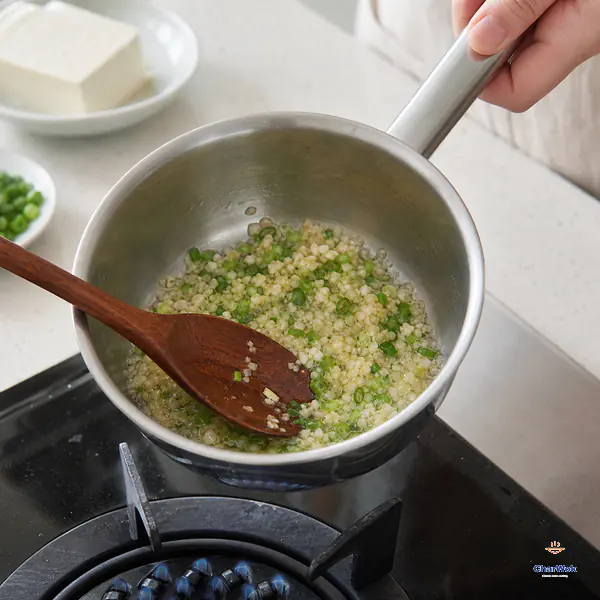
Keep the oil over low heat and move the alliums gently; the moment the first pale-gold edges appear, lift the pan away because another few seconds can make the garlic bitter.
- Bloom the chili off the heat. Stir in the chili flakes while the oil is still hot. The residual heat is enough to release the capsaicin and the paprika-like red color without scorching them. If you want a deeper, smokier version, a spoonful of chili oil added here works too.
- Finish the sauce in the same pan. Add the light soy sauce, black rice vinegar, and sugar. Stir. The liquid will hiss and pick up every bit of flavored oil stuck to the pan. Taste it: it should read salty first, then tangy, with a faint sweet tail. Add a few drops of sesame oil if you like.
- Unmold the tofu in one piece. Right the tub and peel off the wet paper. For a fresh tub of silken tofu, snip a small triangle off each corner of the plastic; the air vent breaks the vacuum that holds the tofu in. Set a serving plate upside down over the tub, flip the whole stack, and lift the tub straight up. A few tears are fine. You are going to break it with a spoon anyway.
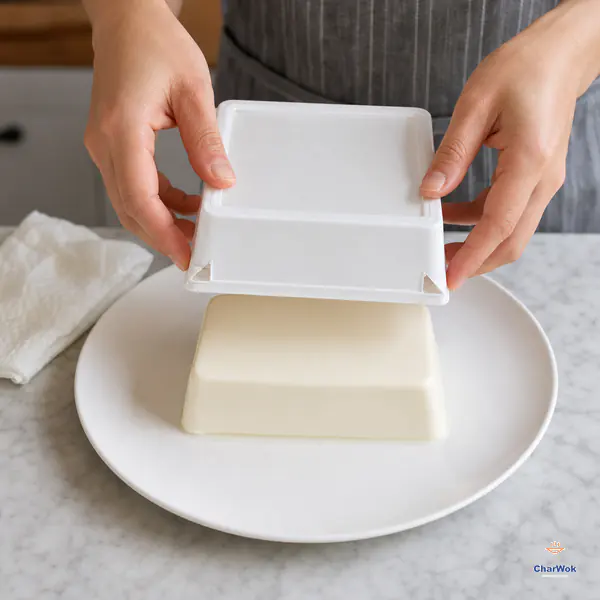
Vent the tub corners, cover it with the serving plate, flip both together and lift the tub straight upward; properly drained silken tofu should release as one smooth unbroken block.
- Pour the hot dressing over the cold tofu. Spoon every drop, oil and liquid together, across the top. The temperature contrast is part of the pleasure. Finish with the reserved scallion greens and the sesame seeds. Serve within ten minutes, before the tofu warms through.
When it goes wrong, and how to fix it
The dish is simple, which means there is nowhere to hide a mistake. Here are the failures I see most often.
- The tofu arrives swimming in water. You skipped the drain, or you sliced into it before serving. Next time, drain it in the tub for the full five minutes, and do not cut it; break it at the table. To save the current plate, tilt it and pour off the pooled liquid before adding the dressing.
- The dressing tastes bitter and sharp. The garlic or scallions burned. There is no real rescue; start the oil over and keep the heat genuinely low. Burnt garlic oil does not improve with soy sauce.
- The tofu splits into crumbs when you unmold it. Either it was a very soft block or you rushed the flip. Snip those corner vents first, flip with confidence rather than hesitation, and accept that a soft block will always tear a little. Torn silken tofu dressed in scallion oil still tastes exactly right; this is a presentation problem, not a flavor one.
- The whole thing tastes flat. Almost always under-salted dressing or the wrong soy sauce. Light soy sauce is the salt here; if you used a reduced-sodium version, increase to two and a half tablespoons. A few extra drops of vinegar also wake it up.
- The chili flakes turned black. They went in while the pan was still on the flame. Off-heat only.
Variations and pairings
The scallion-garlic oil base is a template. Once you can make it, you can riff.
- Add century egg. Dice one century egg over the tofu before dressing for the classic cold combo; the century egg and tofu salad is a close cousin of this dish and arguably the more famous one.
- Make it a meal with rice. Spoon the tofu and its dressing over a bowl of steamed jasmine rice. Cold tofu, hot rice, salty oil; this is a legitimate summer lunch on its own.
- Warm version. Steam the drained tofu for five minutes, pour off any new water, then dress. The dressing stays pungent and the tofu turns soothing; good in winter.
- Pair it as part of a multi-dish dinner. It sits happily next to a braised meat like red-cooked pork belly, a quick green such as stir-fried gai lan or hand-torn cabbage, and a soup. Hot and sour soup or a simple egg drop soup both work; the tofu salad is the cold contrast to a hot soup.
Silken tofu shows up elsewhere in the kitchen too. The firm version can stand in for soft tofu in Mapo tofu if that is what you have, and it dissolves beautifully into a light tofu soup. For more cold-weather-to-hot-weather pivots, this salad belongs on any summer Chinese recipes list. A smashed cucumber salad alongside makes the perfect two-cold-plate starter.
Storage and reheating
This is a make-and-eat dish. Once dressed, silken tofu keeps releasing water and the alliums lose their punch; after an hour in the fridge it is noticeably duller and the oil congeals. If you must prep ahead, make the dressing and store it separately at room temperature for up to a day, then drain and dress the tofu right before serving. I do not recommend reheating dressed leftovers.
The undressed tofu itself keeps in the fridge for two to three days in its tub with the water changed once. The cooked dressing keeps a day in a sealed jar; warm it briefly to melt the oil before using.
Common questions
Can I use regular firm tofu instead?
Not for this dish. Firm block tofu has a totally different texture and needs pan-frying to taste good; cold and undressed it is bland and rubbery. If silken tofu is unavailable, soft block tofu is the closest stand-in. For a hot version using the firmer stuff, try scallion tofu instead.
Is the tofu safe to eat cold and raw?
Yes. Commercial silken tofu is fully coagulated and effectively cooked during production, whether refrigerated or shelf-stable. Cold silken tofu salad is eaten raw by design. If you prefer it warm or have a compromised immune system, steam the drained block for five minutes first.
Why heat the oil instead of just mixing everything raw?
Cooking dissolves the fat-soluble flavor compounds in the scallions and garlic and transfers them into the oil, which then carries them onto the tofu. Raw soy sauce and raw oil alone sit on the surface and taste flat. The thirty seconds of sizzling is what turns condiments into a dressing.
Can I make it ahead for a party?
Prep the dressing up to a day ahead and keep it in a jar; leave the tofu in its tub, drained just before serving. Assemble at the last minute. Dressed tofu does not hold.
That is the whole dish. Drain the tofu, bloom the alliums in gentle oil, finish with soy and vinegar, pour it hot over cold tofu. Get the oil step right and everything else forgives you.