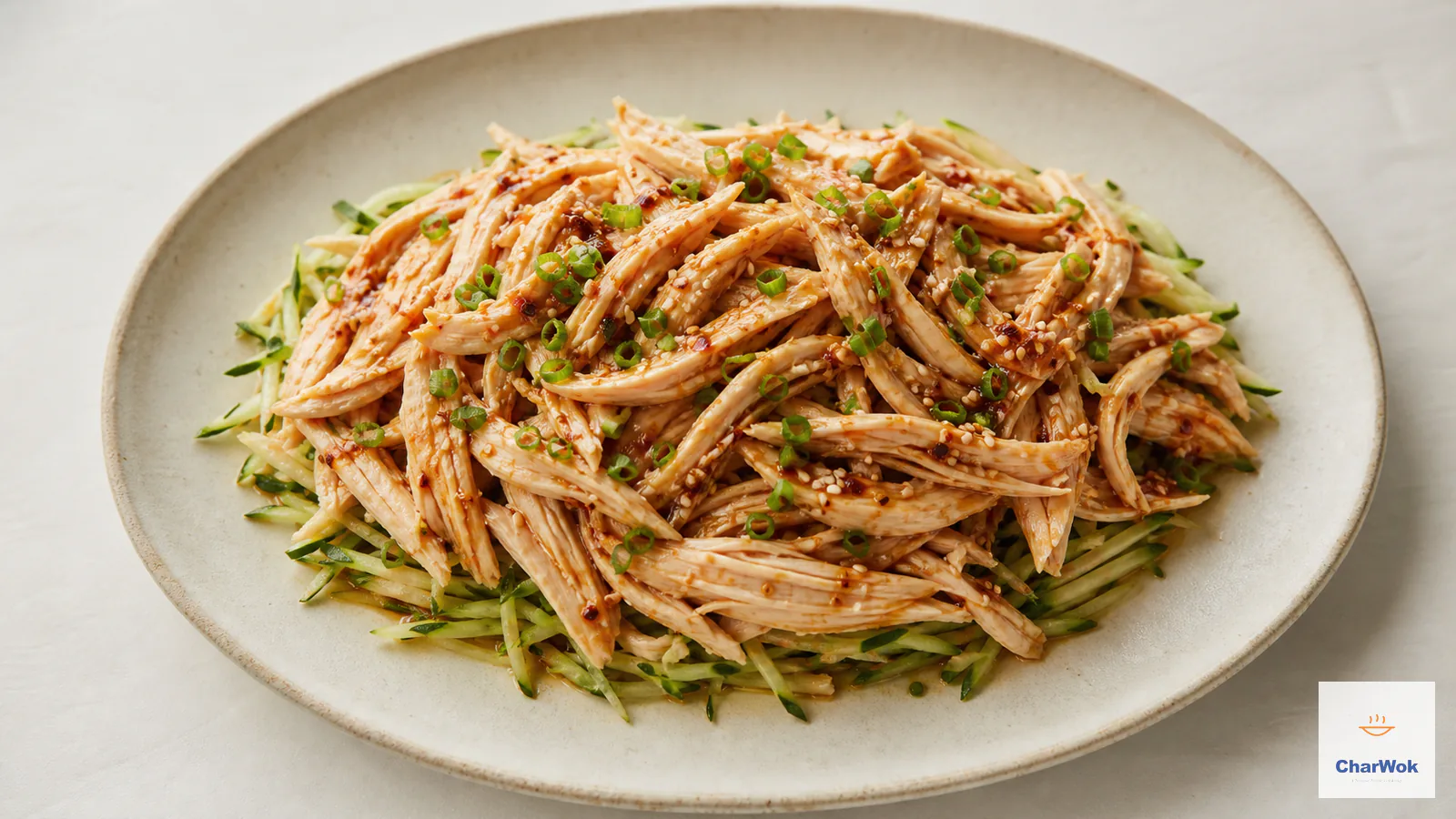
Bang Bang Chicken turns gently poached chicken, crisp cucumber, and a thin Sichuan chili dressing into a cold appetizer with contrasting textures. The key is not a secret ingredient: it is measuring the chicken at its thickest point before chilling it.
A bare simmer helps the breast stay tender, but time alone cannot establish doneness because thickness, starting temperature, pan size, and burner output vary. Use the 8-minute simmer and 3-minute covered rest as a first check, then rely on a food thermometer.
At a glance. Poach one boneless, skinless chicken breast (about 230 g / 8 oz) at a bare simmer for 8 minutes, then rest it off the heat and covered for 3 minutes. Measure the thickest point: it must reach at least 165°F (74°C). If it has not, return the chicken to barely simmering liquid and check again before moving it to ice water. Loosen the chili-soy-vinegar dressing with 2 tbsp of the reserved broth. Serves 2; the stated cook time is an estimate, not a doneness test.
What the name is actually telling you
Bang Bang (Bàng Bàng Jī, 棒棒鸡) is a Sichuan cold dish (liang cai). The name is commonly associated with using a wooden stick to loosen cooked chicken before pulling it into shreds. At home, light pounding can loosen the grain and produce ragged strands that hold the dressing.
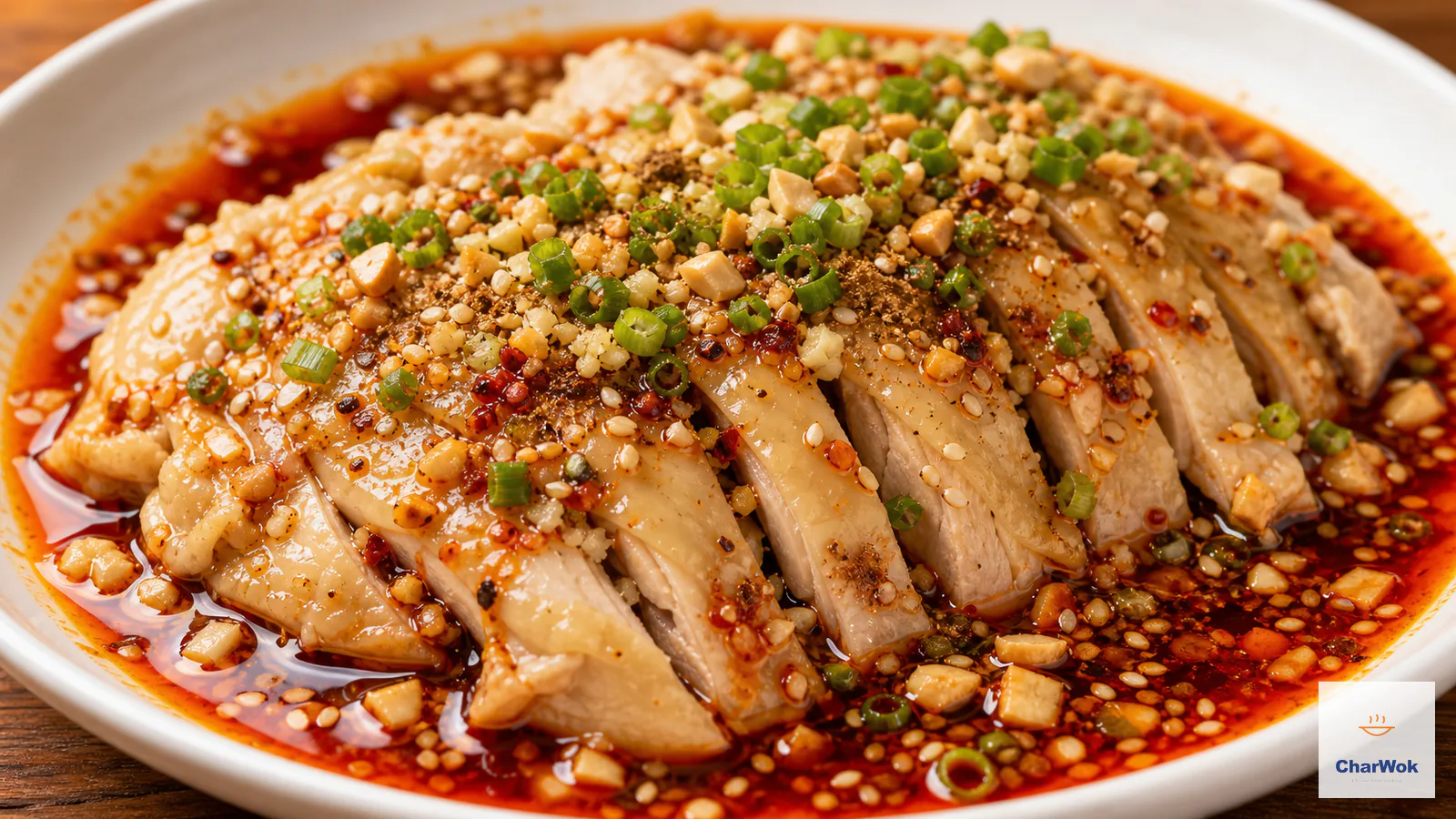
You do not need a baton. A rolling pin, the flat of a cleaver, or just patient hand-tearing gets you there. But the underlying instinct, that the texture has to be opened up rather than sliced clean, is the whole reason this dish exists. If you've had its close cousin Mouth-watering Chicken (Kou Shui Ji), you know the family: cold poached bird, a sauce that lands somewhere between spicy, numbing, savory, and nutty. Bang Bang leans drier and more shredded, where Kou Shui Ji is usually served in larger pieces swimming in a pool of sauce.
Why temperature matters more than the timer
Chicken breast is lean, so a hard boil can make the outside firm before the thickest part is ready. Keeping the water at a bare simmer gives the meat gentler, more even heat.
Use a thin food thermometer in the thickest part and continue gentle cooking until it reads at least 165°F (74°C), the safe minimum for poultry. Only then move the chicken to ice water. The chill stops further cooking and firms the breast for shredding; it never replaces the temperature check.
Ingredients
Ingredients at a glance
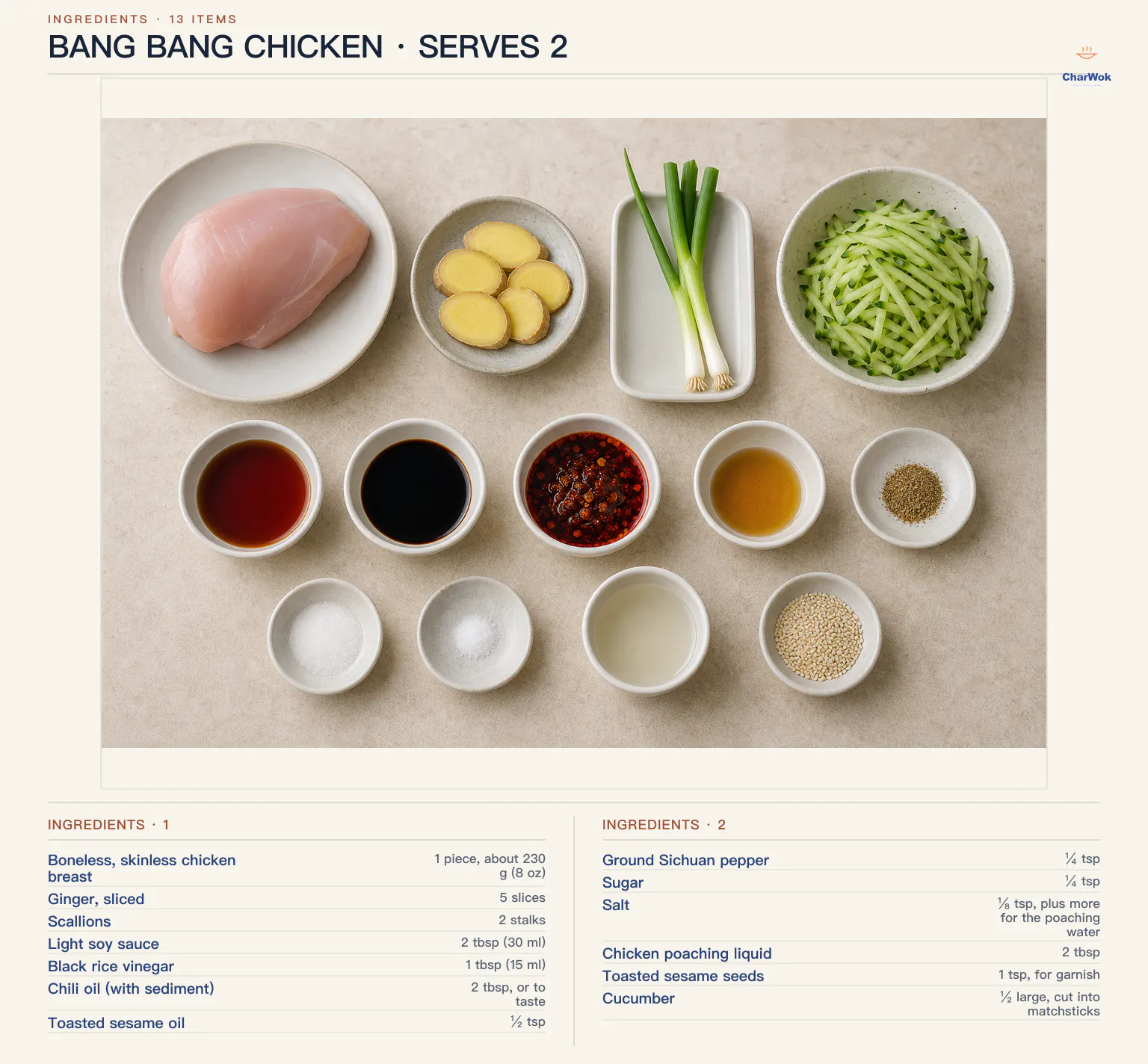
This is a small dish with a small ingredient list, so each one counts. The pantry items are part of the basic Chinese condiment shelf; if you cook Sichuan food with any regularity, you already have them.
| Ingredient | Amount | Notes / substitute |
|---|---|---|
| Boneless, skinless chicken breast | 1 piece, about 230 g (8 oz) | Skin-on boneless thigh works and is more forgiving; a small whole bird is the traditional route |
| Ginger, sliced | 5 slices | Smashed slices release more aroma; do not skip |
| Scallions | 2 stalks | Split whites and greens; both get used |
| Light soy sauce | 2 tbsp (30 ml) | Use light, not dark; see light vs. dark soy sauce |
| Black rice vinegar | 1 tbsp (15 ml) | Chinkiang style; black rice vinegar is mellow and malty, not sharp |
| Chili oil (with sediment) | 2 tbsp, or to taste | Homemade chili oil with the crushed flakes is best; the sediment carries flavor, not just heat |
| Toasted sesame oil | ½ tsp | A little goes far; too much turns the dish cloying |
| Ground Sichuan pepper | ¼ tsp | Freshly ground from whole peppercorns; pre-ground loses its tingling buzz in weeks |
| Sugar | ¼ tsp | Balances the salt and acid; you should not taste sweetness |
| Salt | ⅛ tsp, plus more for the poaching water | Taste the sauce at the end and adjust |
| Chicken poaching liquid | 2 tbsp | This is what turns the dressing into a sauce |
| Toasted sesame seeds | 1 tsp, for garnish | Toasted white sesame, crushed lightly |
| Cucumber | ½ large, cut into matchsticks | English or Persian; peel if the skin is bitter |
On the Sichuan pepper: this is the ingredient that gives the dish its signature mouth-tingle (málà), the same buzz you find in Mapo Tofu or Dan Dan Noodles. Buy whole red peppercorns and grind them yourself; the hydroxy-alpha-sanshool that produces the numbing effect degrades fast once ground. The full Sichuan pepper guide covers sourcing and toasting, and the grinding method matters because burnt pepper goes bitter in seconds.
The method, step by step
- Set up the poach. Put the chicken breast, ginger slices, and the white parts of the scallions into a saucepan just large enough to hold them. Pour in cold water to cover by about 2 cm (an inch), add a generous pinch of salt, and set the pan over high heat. Cold start, not hot, so the meat comes up to temperature gradually and the aromatics infuse the water as it warms.
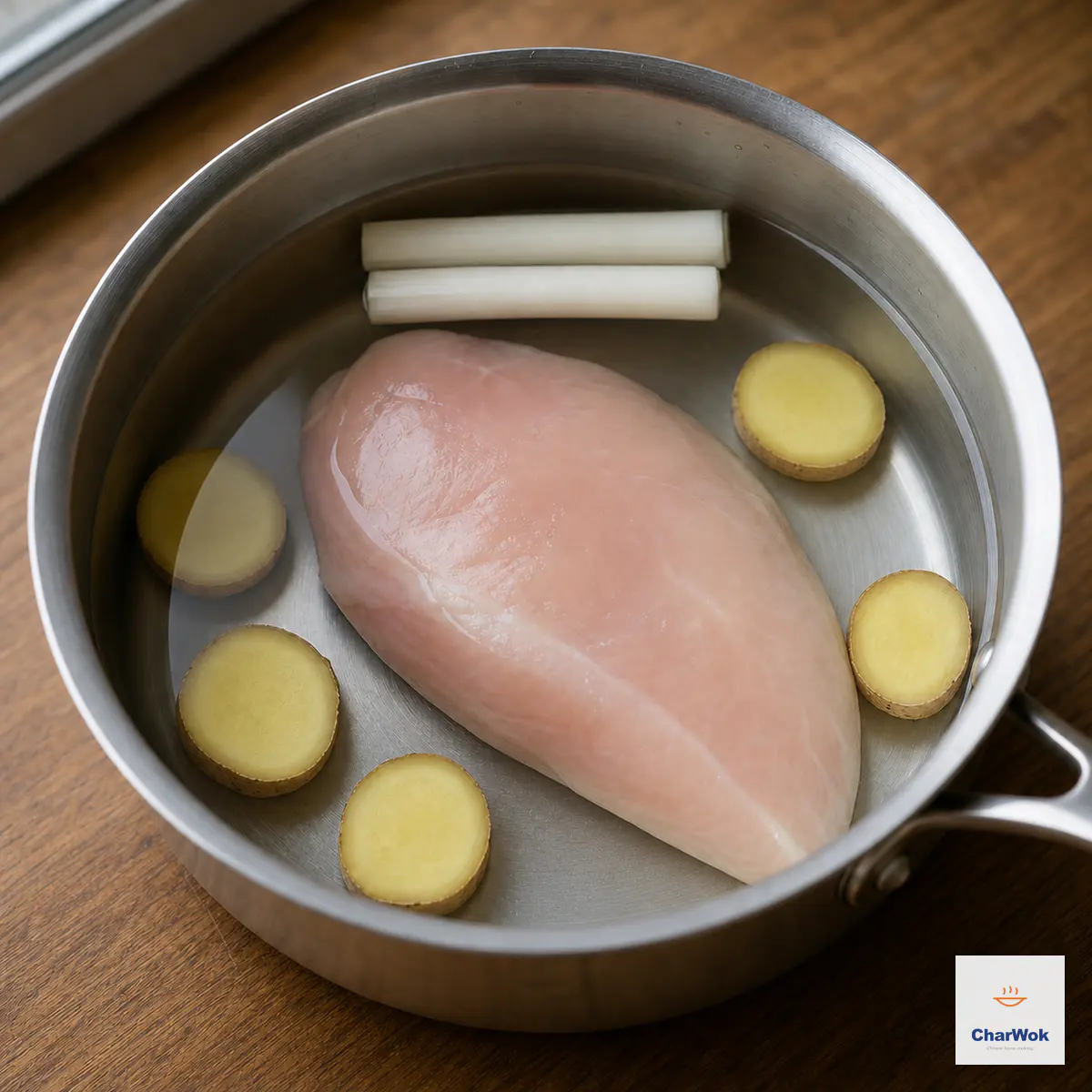
Start the chicken, five ginger slices, and two scallion whites in cold water that covers the meat by about 2 centimetres.
- Hit a simmer, then back off. The moment the water shows a rolling boil, drop the heat until the surface only trembles. Cover the pan. A hard boil will toughen the breast before it is cooked through; the goal is a poaching temperature around 85-90°C at the water and well under that at the meat's core.
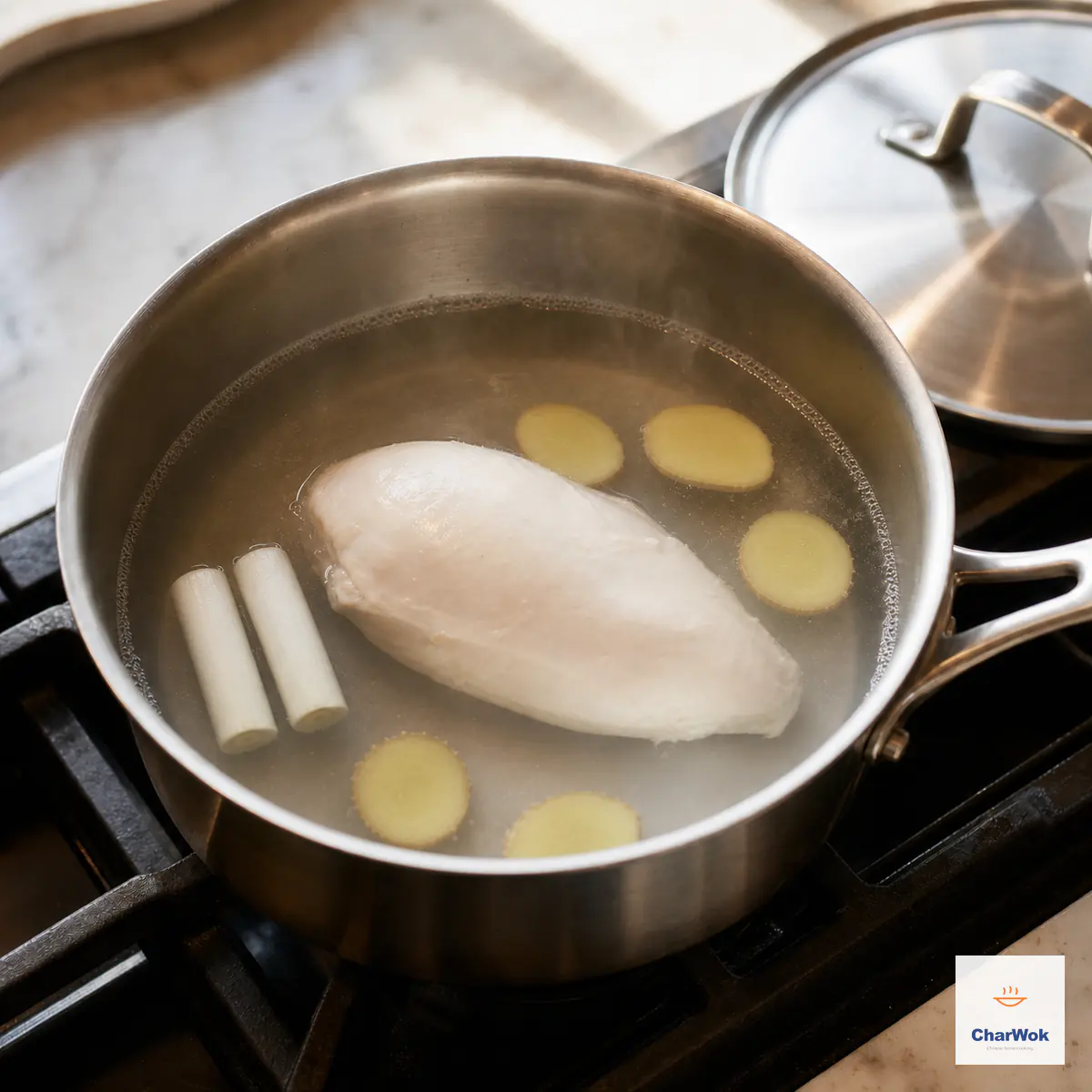
Reduce to a bare simmer, cover for 8 minutes, then rest off heat for 3 minutes as a starting estimate; measure the thickest point and continue gently if it is below 165°F (74°C).
- Cook 8 minutes, then rest 3 with the heat off. Treat this timing as the first measurement point, not proof of doneness. Insert a thin food thermometer into the thickest part; it must read at least 165°F (74°C). If it is lower, return the pan to a bare simmer and check again after a short interval. Larger, thicker, or multiple pieces can take longer.
- Shock in ice water only after the temperature check. Once the thickest point reaches 165°F (74°C), lift the chicken straight into a bowl of ice water. Keep the poaching liquid for the sauce, but transfer any extra broth you plan to save to a shallow container and refrigerate it promptly.
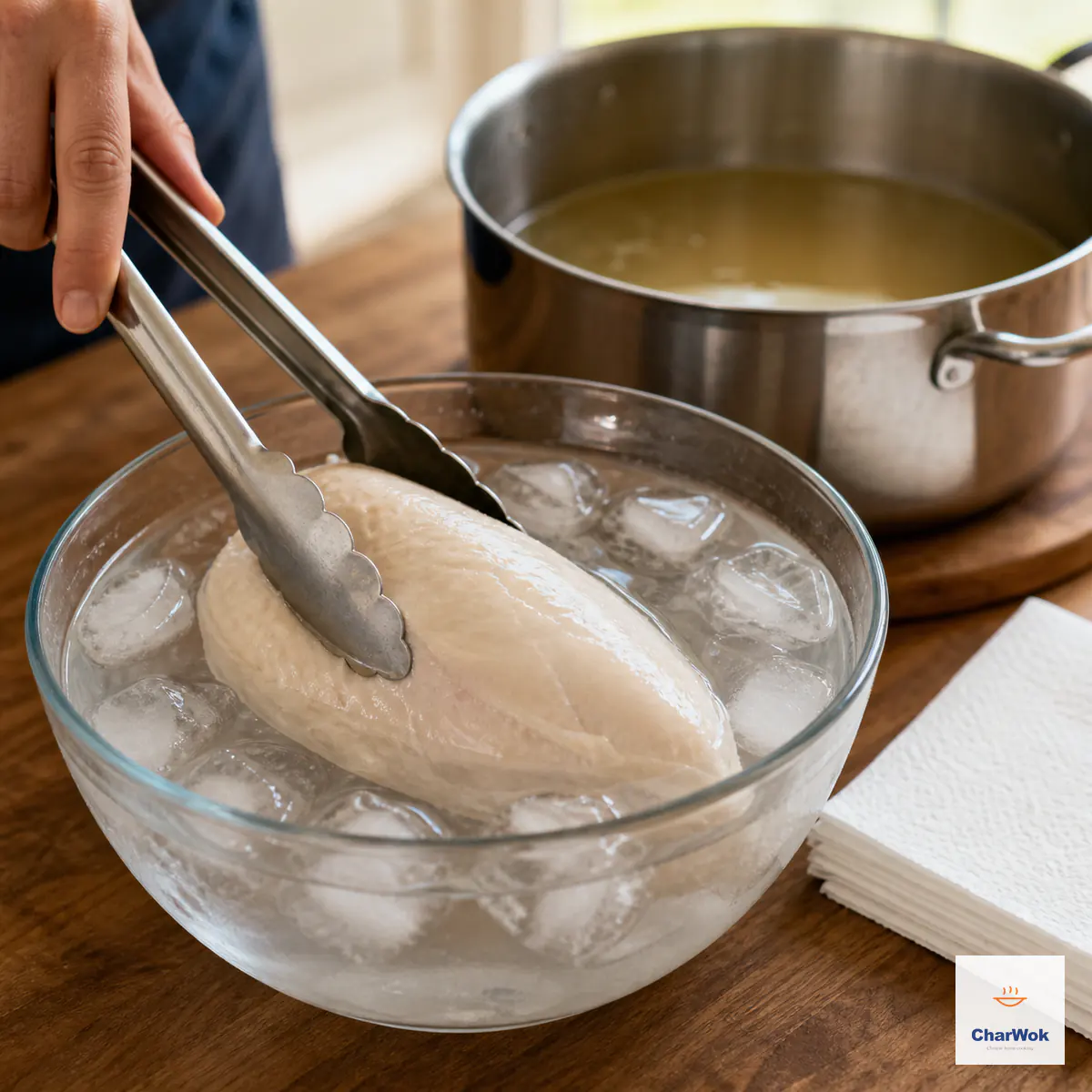
Only after the thickest point reaches at least 165°F (74°C), move the breast into ice water, keep the poaching liquid, then drain and pat dry.
- Shred the chicken. Once it is cool enough to handle, pat the surface dry. Lightly pound the breast with a rolling pin if you want to loosen the grain, then pull it apart along the fibers into strips about the width of a matchstick. Hand-shredding produces a ragged surface that holds the dressing.
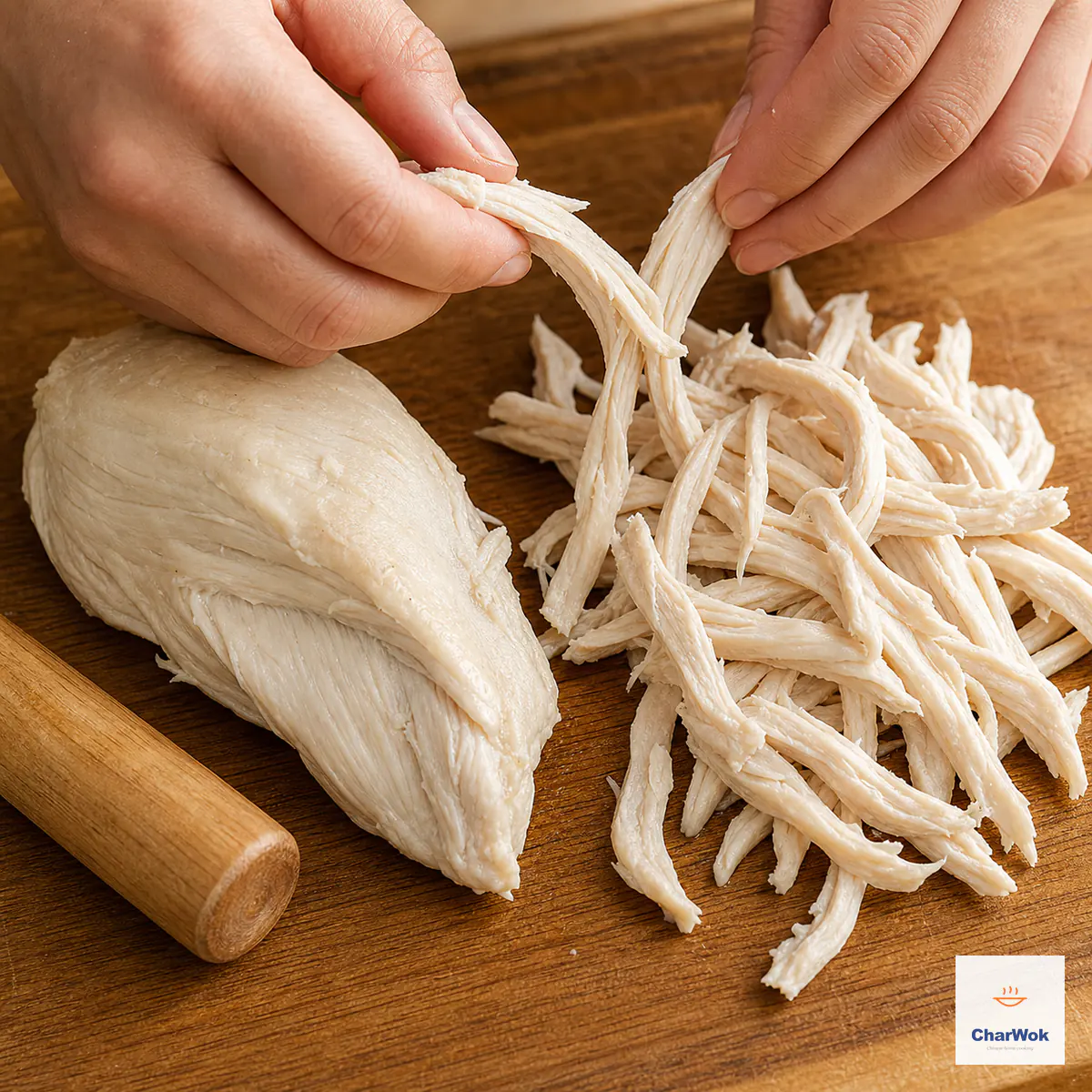
Lightly pound to loosen the grain, then hand-tear along the fibres for ragged matchstick-width strands that catch the sauce.
- Build the sauce in the same bowl. Combine the light soy sauce, black rice vinegar, chili oil (with its sediment), sesame oil, ground Sichuan pepper, sugar, and salt. Add 2 tablespoons of the reserved poaching liquid and stir. Taste it. The broth is what turns this from an oil-and-soy mixture into something with body; if the sauce feels thin, add another spoonful. If it reads flat, a few more drops of vinegar wake it up.
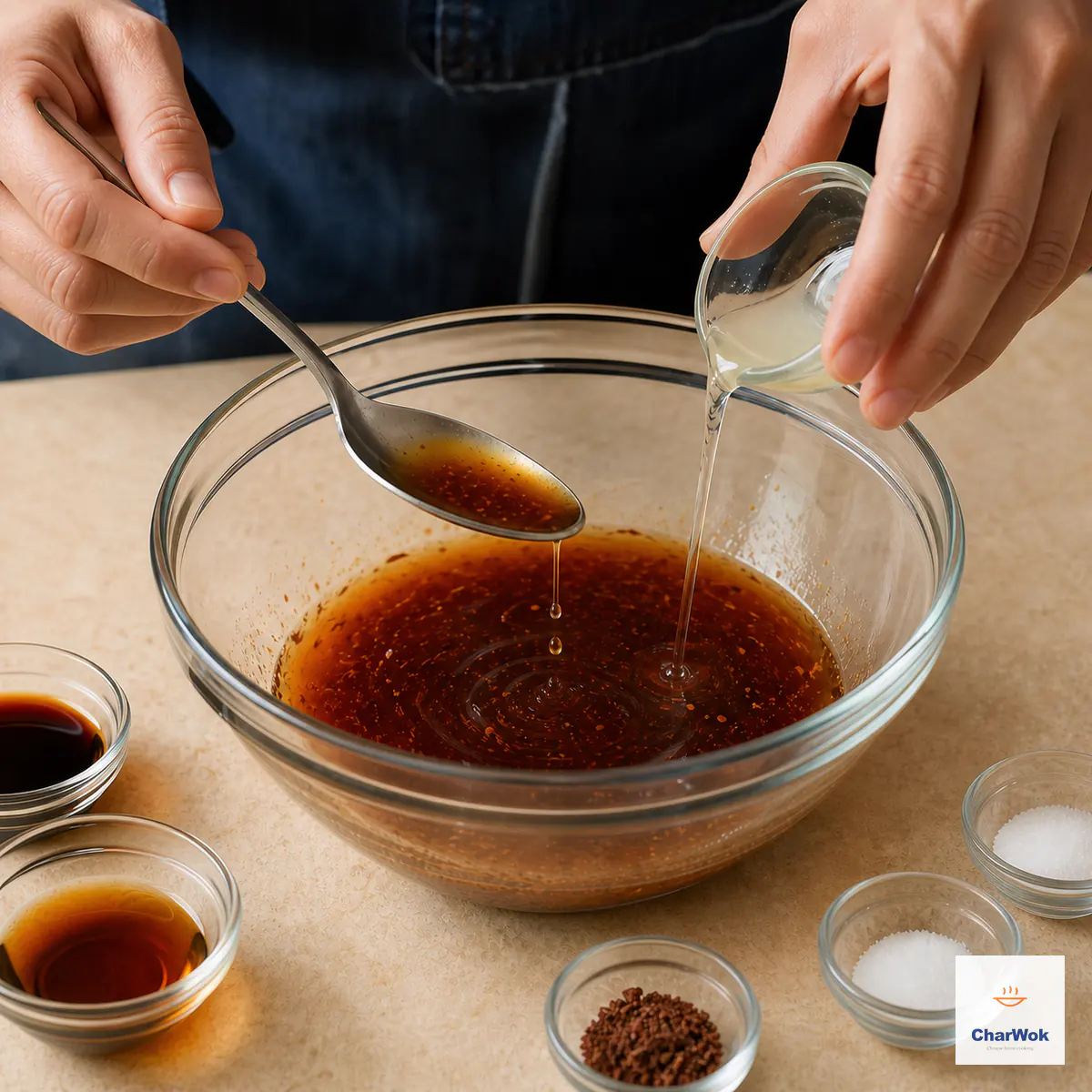
Stir in 2 tablespoons of the reserved broth until the dressing is thin, glossy, and pourable rather than pasty or oily.
- Plate. Spread the cucumber matchsticks on a shallow serving dish. Pile the shredded chicken on top. Pour the sauce over evenly so it filters down through the meat into the cucumber. Finish with the finely chopped scallion greens and a scatter of toasted sesame seeds. Let it sit 5 minutes before eating so the flavors merge.
When it goes wrong, and how to fix it
This recipe is forgiving in ingredients and unforgiving in technique. Most failures trace back to one of four things.
- The chicken is dry and stringy. The poach may have boiled hard or continued longer than needed. Next time, keep a bare simmer and begin checking at the stated time, but never remove poultry below 165°F (74°C). For the current batch, shred it finely and add a little more dressing.
- The sauce pools on the plate and won't cling. Two causes. Either you skipped the poaching liquid (the broth's gelatin and dissolved proteins are what emulsify the oil), or you cut the chicken with a knife instead of tearing it. Add a tablespoon of warm broth and stir vigorously; the sauce should loosen into a pourable but cohesive dressing.
- It tastes flat, just salty and oily. Usually missing acid. Add black rice vinegar a half-teaspoon at a time until the flavor lifts. If it is one-note salty, a pinch more sugar rounds the edge without making it sweet. Under-toasted Sichuan pepper also reads as flat; toast the whole peppercorns dry in a pan until fragrant before grinding.
- The cucumber weeps and waters down the plate. Salt the matchsticks lightly and let them drain in a strainer for 10 minutes before plating, then pat dry. This is the difference between a clean plate and a pink puddle by the last bite.
Boneless thighs contain more fat and connective tissue than breast, so they generally stay juicier but pull into shorter, less even shreds. Use the same gentle-poaching method, while measuring each thickest piece to at least 165°F (74°C).
Variations and what to serve it with
The base recipe is a template. Swap the bed of cucumber for blanched bean sprouts, julienned celtuce, shredded carrot, or thin celery, and you change the crunch without disturbing the sauce. A spoonful of toasted sesame paste (or tahini in a pinch) added to the dressing pushes the dish toward the northern Chinese sesame-chicken style, thicker and more coating.
In a Sichuan meal this is a liang cai, the cold opener that arrives first alongside steamed rice and the hot mains. For a spread, pair it with something smoky and grilled like Char Siu or cumin lamb skewers, plus an interactive dish such as Sichuan lettuce wraps and a noodle anchor like Chow Mein. If you want to lean fully Sichuan, add Kung Pao Chicken or Mala chicken (Laziji) for heat contrast.
Toss the leftover chicken and sauce with cold cooked noodles and you have lunch in the style of Sichuan cold noodles. The dish also sits happily next to other cold poultry classics like scallion oil chicken if you are building a cold-plate spread.
Storage and reheating
For the best texture, serve Bang Bang Chicken the day it is made and keep the chicken, sauce, and cucumber separate until plating. Refrigerate cooked chicken and reserved broth in shallow containers within 2 hours, or within 1 hour when the surrounding temperature is above 90°F (32°C). Keep them at 40°F (4°C) or below and use within 3 to 4 days; this recipe's cucumber is best within 24 hours. Take the chicken out only when you are ready to assemble the cold dish. See the official safe temperature, cold storage, and leftover handling guidance.
Frequently asked questions
Why shock the chicken in ice water?
After the thickest point reaches at least 165°F (74°C), the ice bath stops further cooking and firms the chicken for shredding. It does not make undercooked chicken safe, so always measure before chilling.
Can I use chicken thighs instead of breast?
Yes. Boneless thighs generally stay juicier but vary in thickness and pull into shorter shreds. Use the timing only as a starting point and measure every thickest piece to at least 165°F (74°C).
Do I really need to hammer the chicken?
No. Hand-tearing along the grain gives you the ragged fibers that hold sauce, which is the whole point of the pounding. A few taps with a rolling pin can help loosen a very dense breast, but it is optional. A knife, by contrast, leaves smooth surfaces that repel dressing, so avoid it.
Is this the same as the deep-fried Bang Bang Chicken at takeout?
No. The takeout version is breaded and fried chicken in a sweet, creamy, mildly spicy sauce, often with mayonnaise. The original Sichuan dish is poached and shredded, dressed in a thin, oil-based sauce that is spicy, numbing, savory, and nutty. They share a name and almost nothing else.
How long can I keep Bang Bang Chicken?
Refrigerate the cooked chicken and broth in shallow containers within 2 hours, or within 1 hour above 90°F (32°C), and use them within 3 to 4 days. Keep the cucumber separate and use it within 24 hours for the best texture.
The timer tells you when to start checking; the thermometer tells you when the chicken is ready. Once the thickest point reaches 165°F (74°C), chill it promptly, shred it, and dress it just before serving.