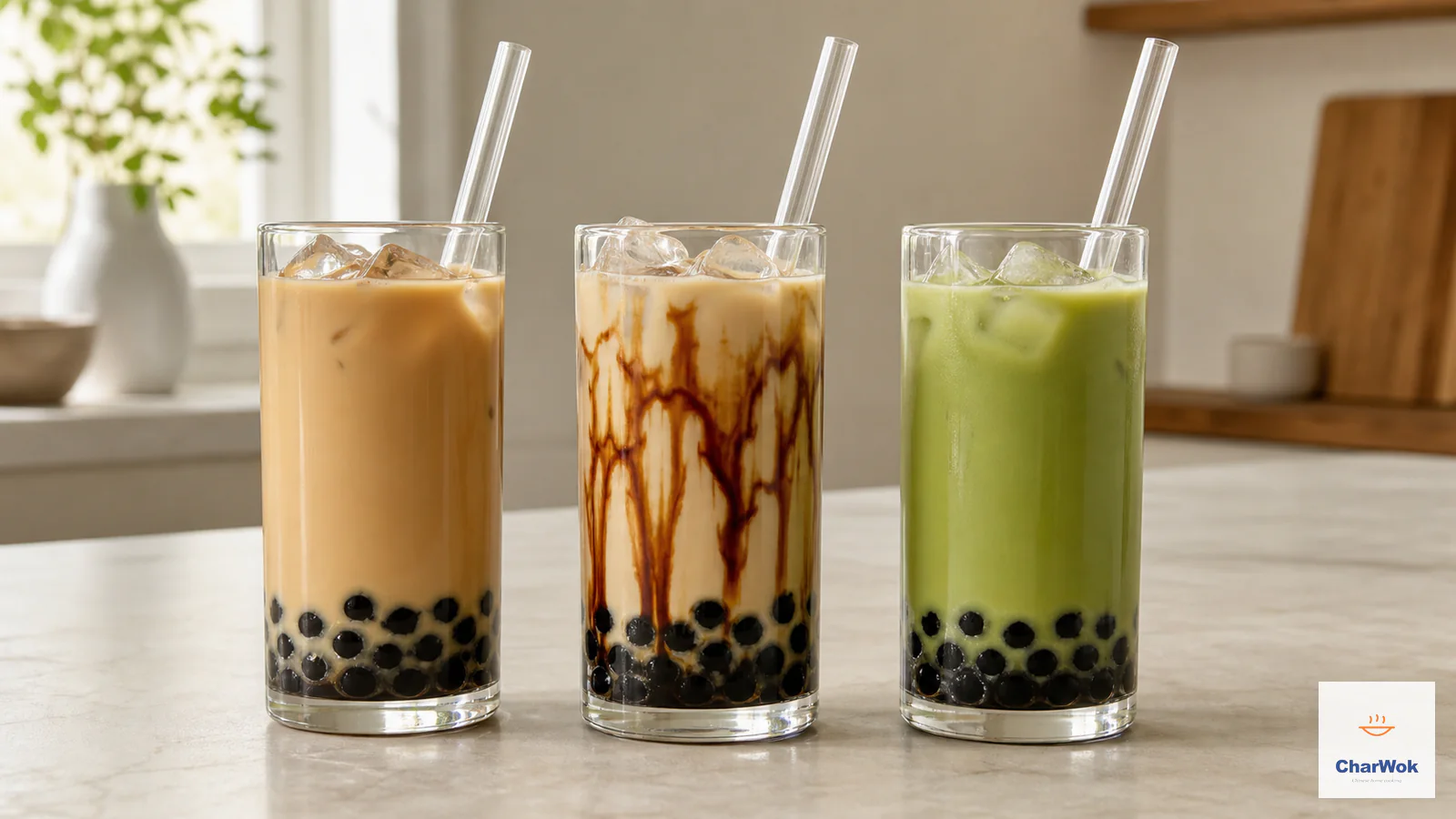
The first time I cooked tapioca pearls at home they came back from the pot looking perfect on the outside and chalky in the middle, like a gumball stuffed with baby powder. That hard, raw core is the single failure that turns people off bubble tea for good, and it is also the one a shop gets right and a home cook usually does not. The drink itself is forgiving. The pearls are not. So this guide leads with the pearls, then builds three drinks around them: the classic black-tea-and-milk original, the brown-sugar version with its streaked glass, and a matcha version for people who like their sweets a little bitter.
Bubble tea emerged in Taiwan in the 1980s, but its exact inventor and city of origin remain disputed. The Chinese name zhen zhu nai cha (珍珠奶茶) just means "pearl milk tea." The word boba (波霸) arrived later as a slangy marketing term and now covers the whole category in the West. Whatever you call it, the appeal is the same: a cold, milky, sweet tea you chew as much as sip. The "bubble" most people guess wrong about. It does not refer to the pearls. It refers to the foam that forms when the tea is shaken, which is why a sealed-cup shaker is the traditional serving vessel.
Make-or-break: cook instant pearls in a true rolling boil for the time on the bag, rest them off the heat with the lid on, then shock them in cold water. Skip the cold bath and you get the chalky-center problem. Eat them within 4 hours; the fridge kills the chew.
What you are actually cooking when you cook boba
Tapioca pearls are nearly pure cassava starch with a little sugar and usually a touch of brown sugar or caramel for color. Raw starch is a tight knot of molecules that your teeth read as chalk. Heat plus water unwinds that knot in a process called starch gelatinization: as the granules reach roughly 60 to 70°C (140 to 158°F), they swell, burst, and leak starch that re-bonds into the stretchy, bouncy network you want. Two things follow from this.
First, the pearls must hit water that is already at a full rolling boil. Drop them into warm or simmering water and the outside gelatinizes while the inside never gets hot enough, which is exactly how you produce a gummy shell around a raw core. Second, the off-heat rest is not downtime; it is when the residual heat finishes cooking the center through. The cold-water bath afterward is the trick shops use to set the surface so the balls stay distinct and slippery instead of fusing into a lump. If you want a deeper stretch on the science of how starch behaves under heat, the same logic explains why glutinous rice balls need a boil-and-add-cold-water routine and why nian gao rice cake stays chewy long after it cools.
One honest limit: home-cooked pearls are never quite as good as a shop's, because shops cook from dry in large batches and serve within minutes. You will get close with the steps below, close enough that the gap stops mattering, but do not expect the elastic snap of a $7 cup. You will get a drink that costs about a dollar and that you control the sweetness of.
Buying the right pearls
Look for bags labeled instant, quick-cook, or "ready in 5 minutes." The Chinese characters are 快煮. These are partially cooked and dried, so they need only a few minutes in boiling water. Traditional raw pearls (the kind shops use) take close to an hour plus a long rest, and there is no good reason to use them at home unless a bag fell into your hands for free. Asian grocery stores stock them in the tea aisle, and the large black ones with a faint brown-sugar flavor are the standard. Smaller white pearls exist; they cook faster and read as more delicate. For the drinks here I use the large black ones, about 120 g for three servings.
Ingredients
Ingredients at a glance
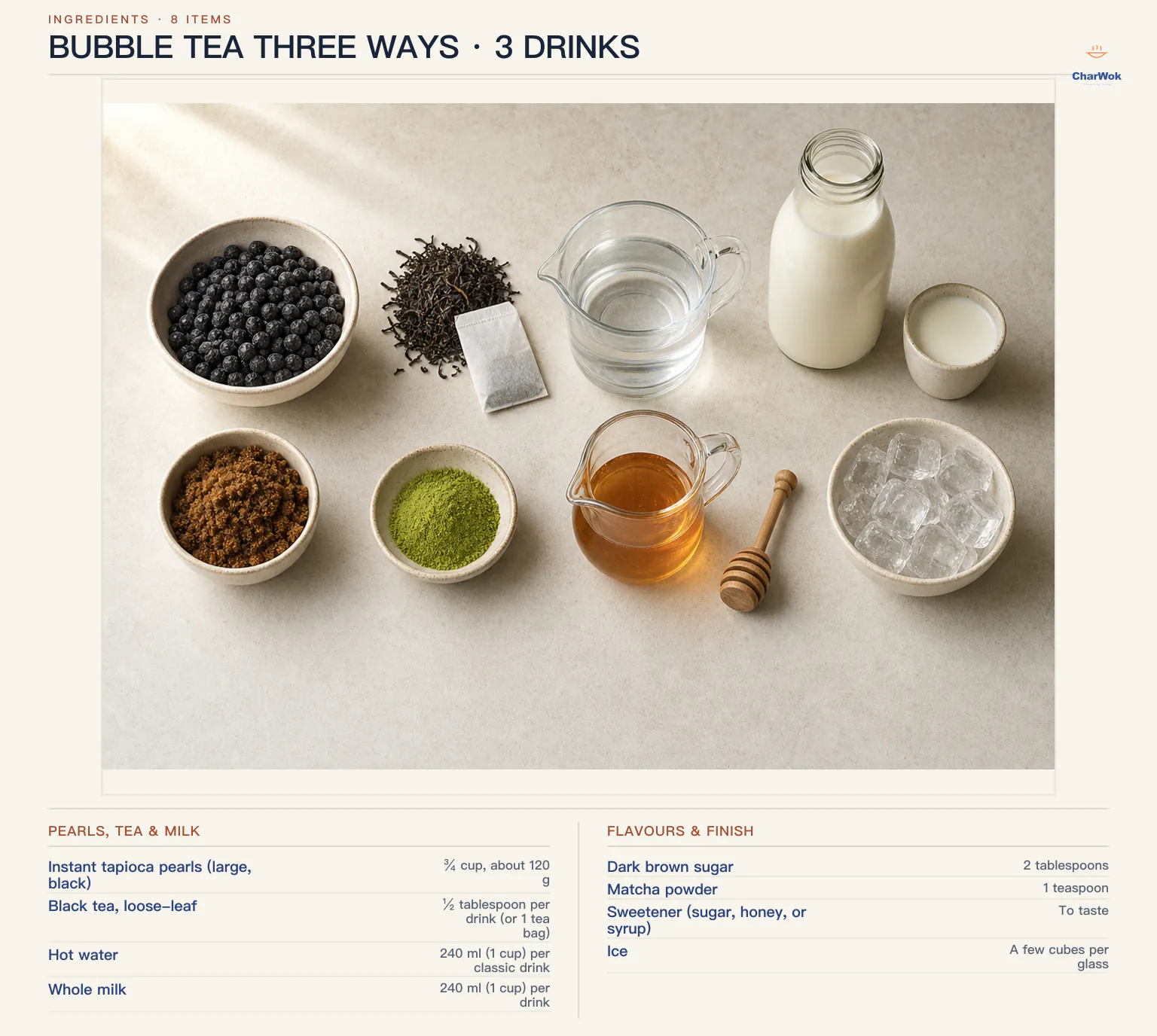
Quantities are for three drinks, one of each style. The sweetener is left loose on purpose; you should taste and adjust. If you are weighing, the metric figures are the ones to trust.
| Ingredient | Amount | Notes / substitute |
|---|---|---|
| Instant tapioca pearls (large, black) | ¾ cup, about 120 g | Split across three drinks. Quick-cook / 快煮 only; raw pearls need ~1 hr. |
| Black tea, loose-leaf | ½ tablespoon per drink (or 1 tea bag) | Assam or Ceylon for that shop taste. For the brown-sugar version I steep the tea directly in hot milk. |
| Hot water | 240 ml (1 cup) per classic drink | Just off the boil, about 95°C / 200°F. |
| Whole milk | 240 ml (1 cup) per drink | Oat milk gives the creamiest dairy-free result; soy and almond work and pair especially well with matcha. |
| Dark brown sugar | 2 tablespoons | For the brown-sugar syrup. Muscovado or Chinese hei tang (黑糖) are even better. |
| Matcha powder | 1 teaspoon | Ceremonial is overkill here; a decent culinary grade is fine. |
| Sweetener (sugar, honey, or syrup) | To taste | Use syrup for the cold matcha version; sugar and honey will not dissolve in cold liquid. |
| Ice | A few cubes per glass | Optional. I use little or none so the tea does not get thin. |
Step 1: Cook the pearls (all three drinks share this)
- Bring a generous pot of water to a full rolling boil before the pearls go in. Use at least a 6:1 ratio of water to pearls by volume; the starch needs room and the water needs to stay near boiling when the cold pearls drop in. A too-small pot is the most common reason for a chalky center.
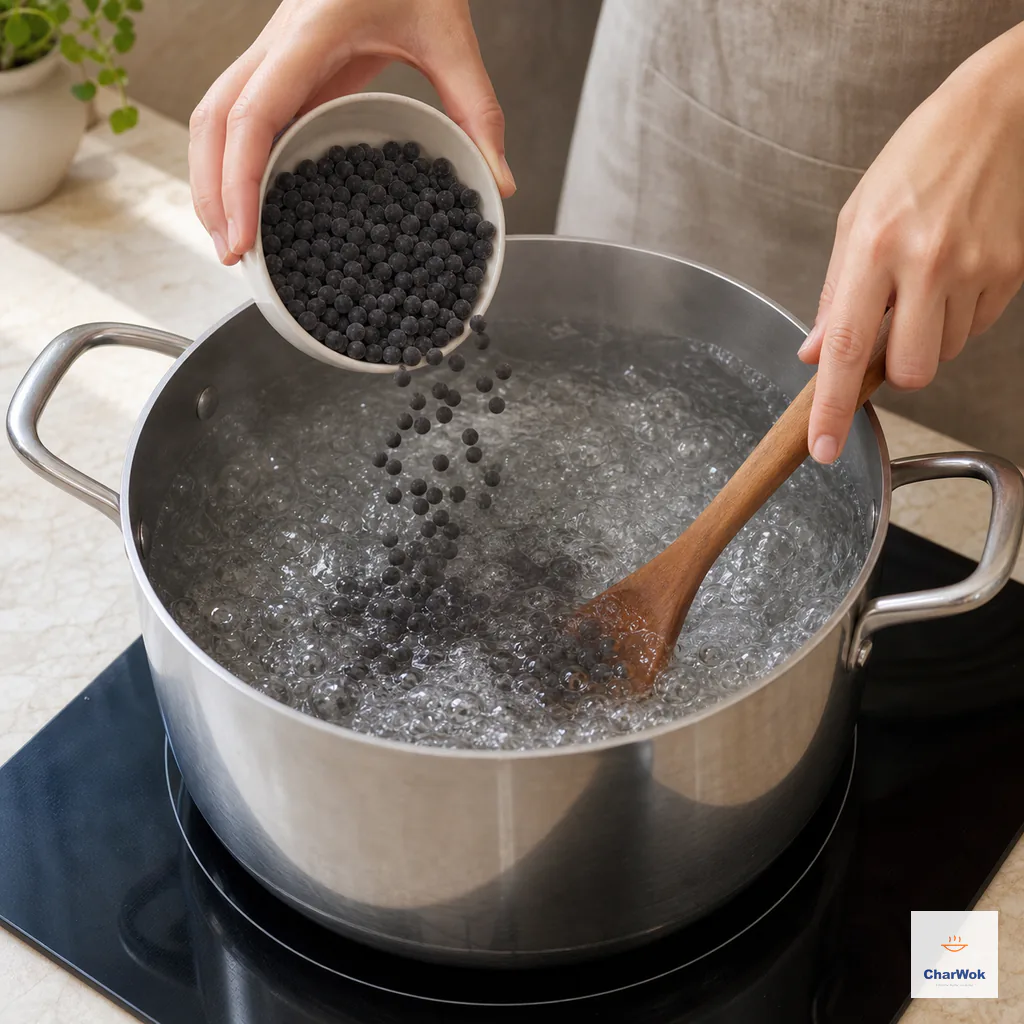
Use a generous pot and wait for a full rolling boil before adding the pearls; stir immediately so none settle into a clump.
- Add the pearls and stir once so they do not stick to the bottom. Wait for them to float to the surface, then cover and boil gently for 3 minutes over medium heat. Floating is your visual cue that the outside has set.
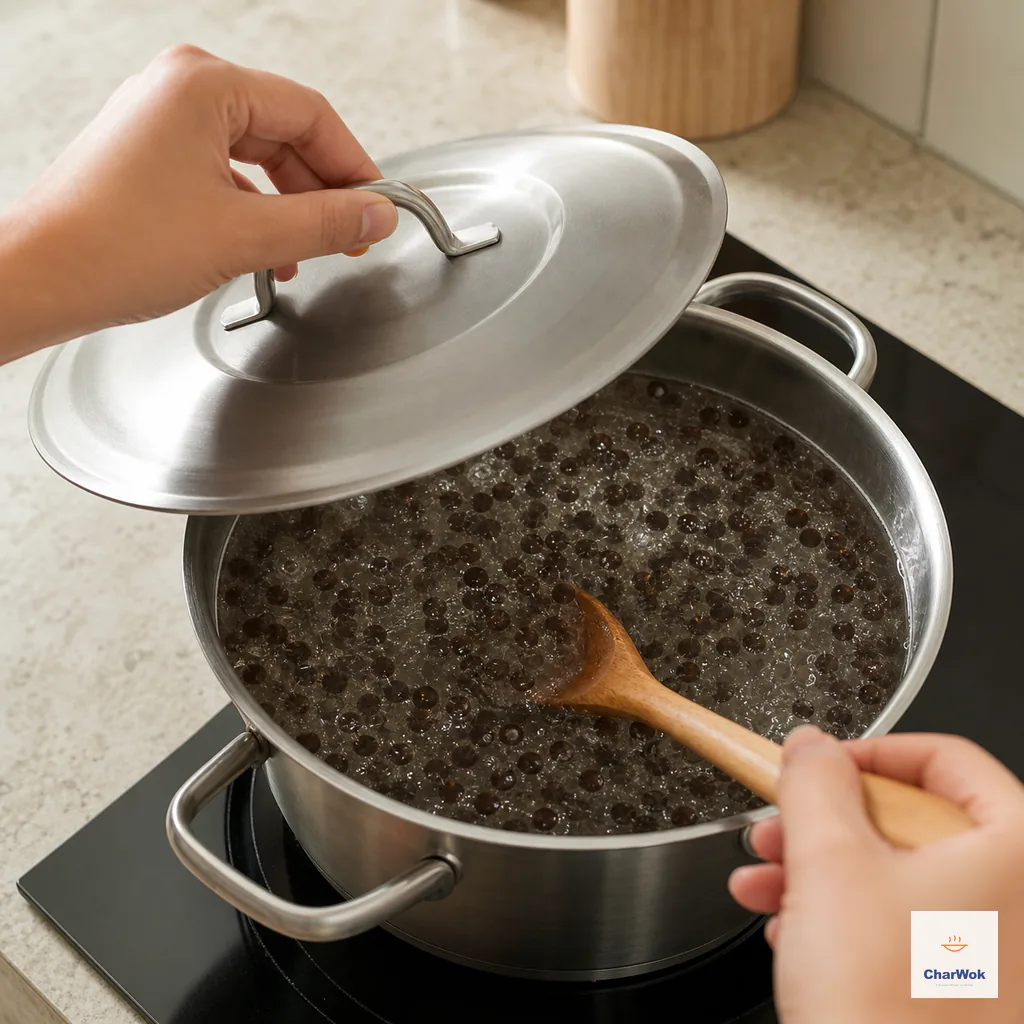
Once every pearl has risen, reduce to a gentle boil, give one final stir and cover for the timed three-minute cook.
- Turn the heat off and leave the pot covered for another 3 minutes. This rest is where the center finishes cooking; cutting it short is what leaves the raw core I ruined my first batch with.
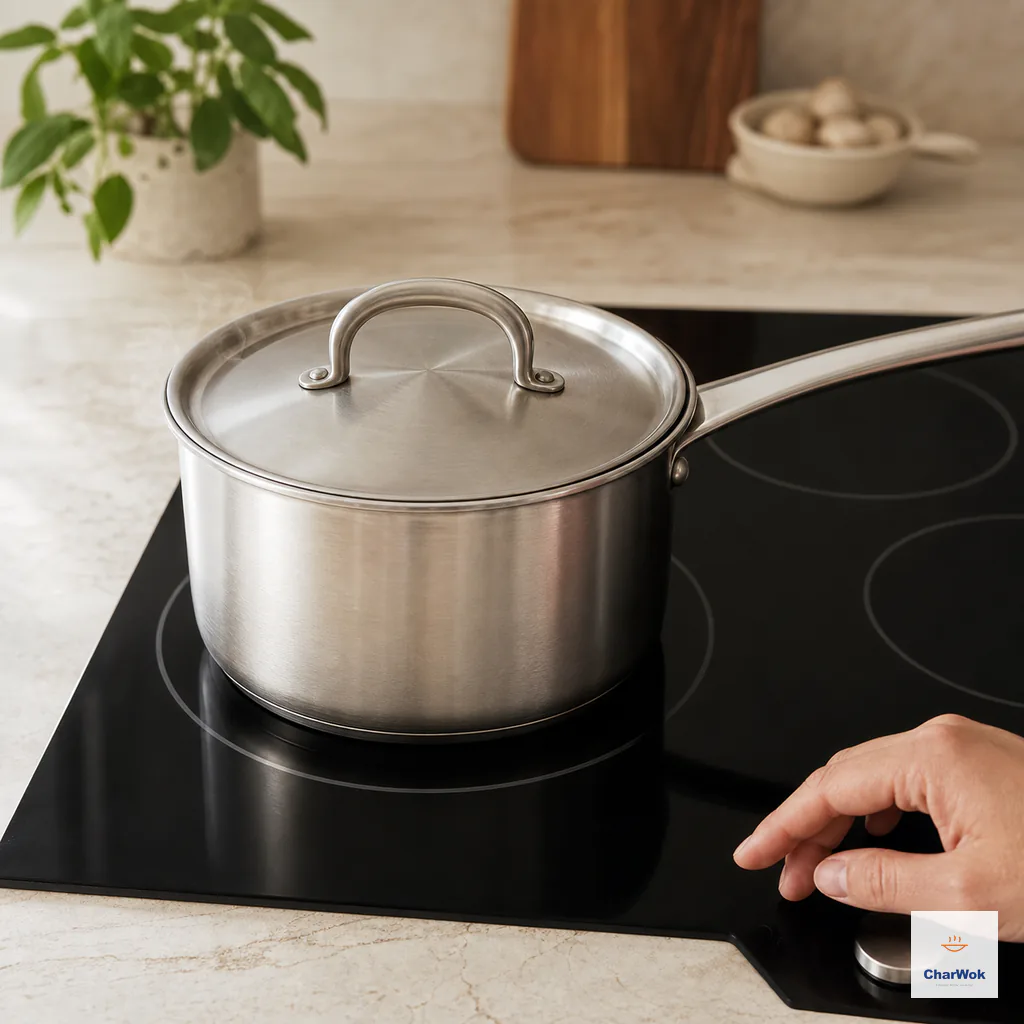
Turn the heat completely off and leave the lid closed for another three minutes so residual heat cooks the centers through.
- Drain and immediately drop the pearls into a bowl of cold water. The cold shock sets the surface and stops the carryover cooking so the balls stay separate and springy. Drain them well once cool.
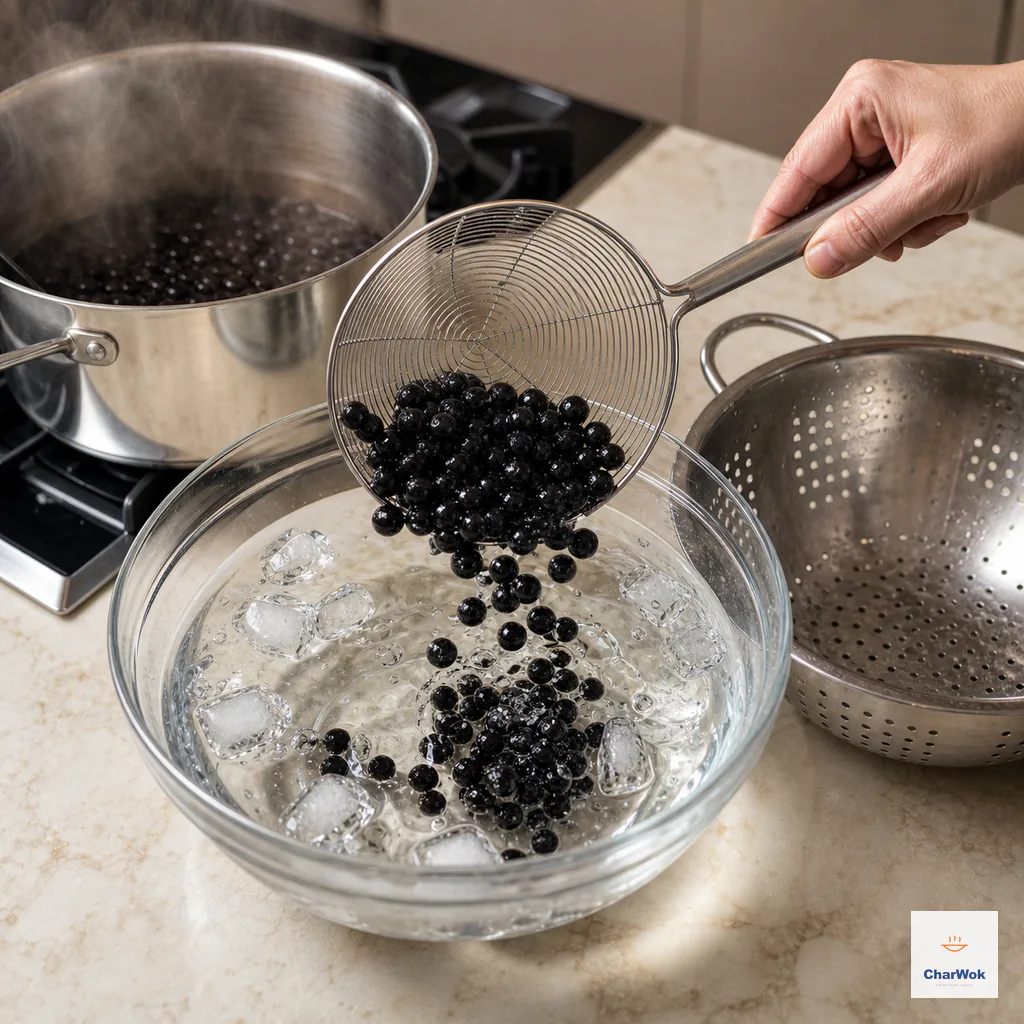
Move the pearls straight into cold water to stop carryover cooking, then drain them thoroughly once cool.
- If you are not using them right away, toss with a little syrup or honey to keep them from clumping. Keep them at room temperature and use within 4 hours. Do not refrigerate cooked pearls; cold retrogrades the starch and turns them hard overnight.
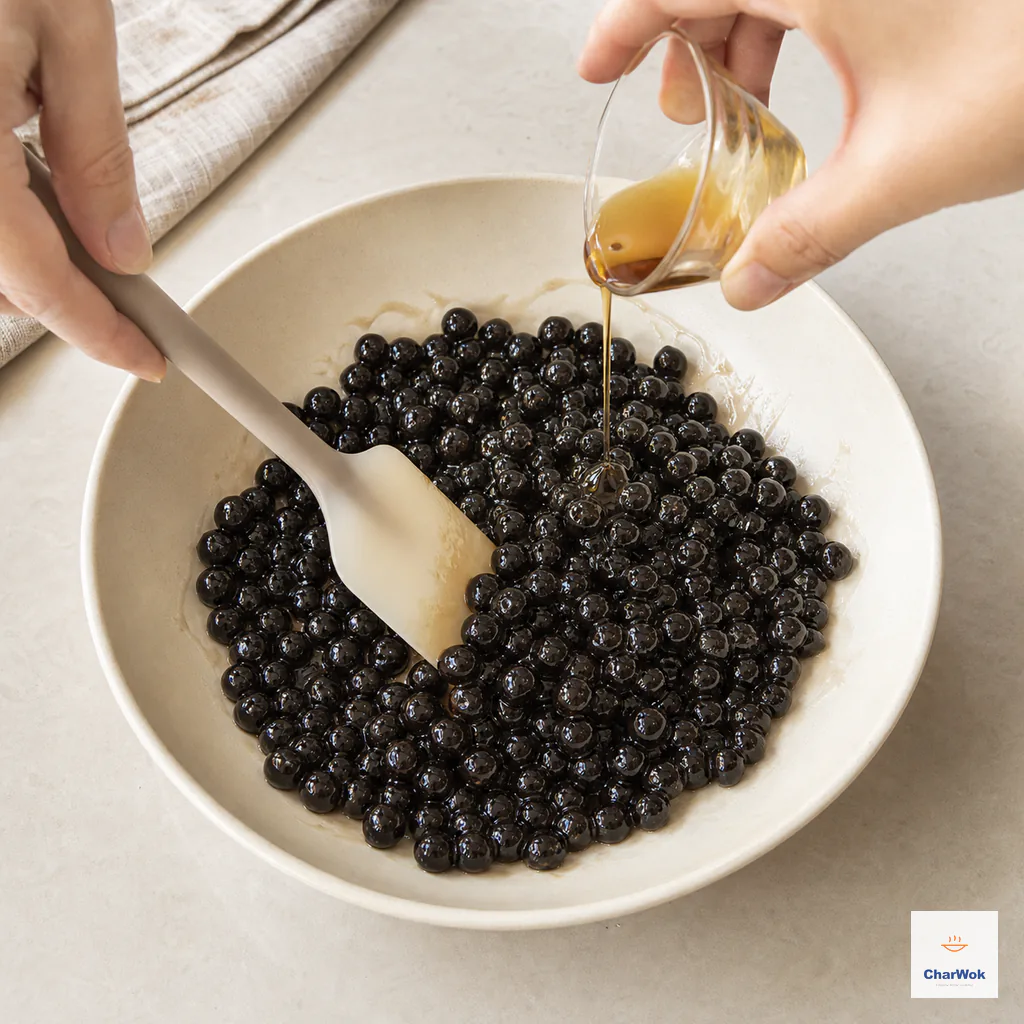
If the pearls will wait, coat them while warm with only enough syrup or honey to keep every ball glossy and separate.
The classic: black tea, milk, boba
This is the original, and still the one I make most. The only decision that matters is the tea. Use a robust black tea, Assam or Ceylon, because it has to survive being diluted by milk and ice. Lipton-style teabags will get you a drink, but it will taste like the tea was an afterthought.
- Steep ½ tablespoon of loose-leaf black tea (or one bag) in 240 ml of just-off-the-boil water for 4 to 5 minutes, then strain. A longer steep pulls tannins that read as bitter once the milk goes in, so resist the urge to "make it stronger" by over-steeping; use more leaf instead.
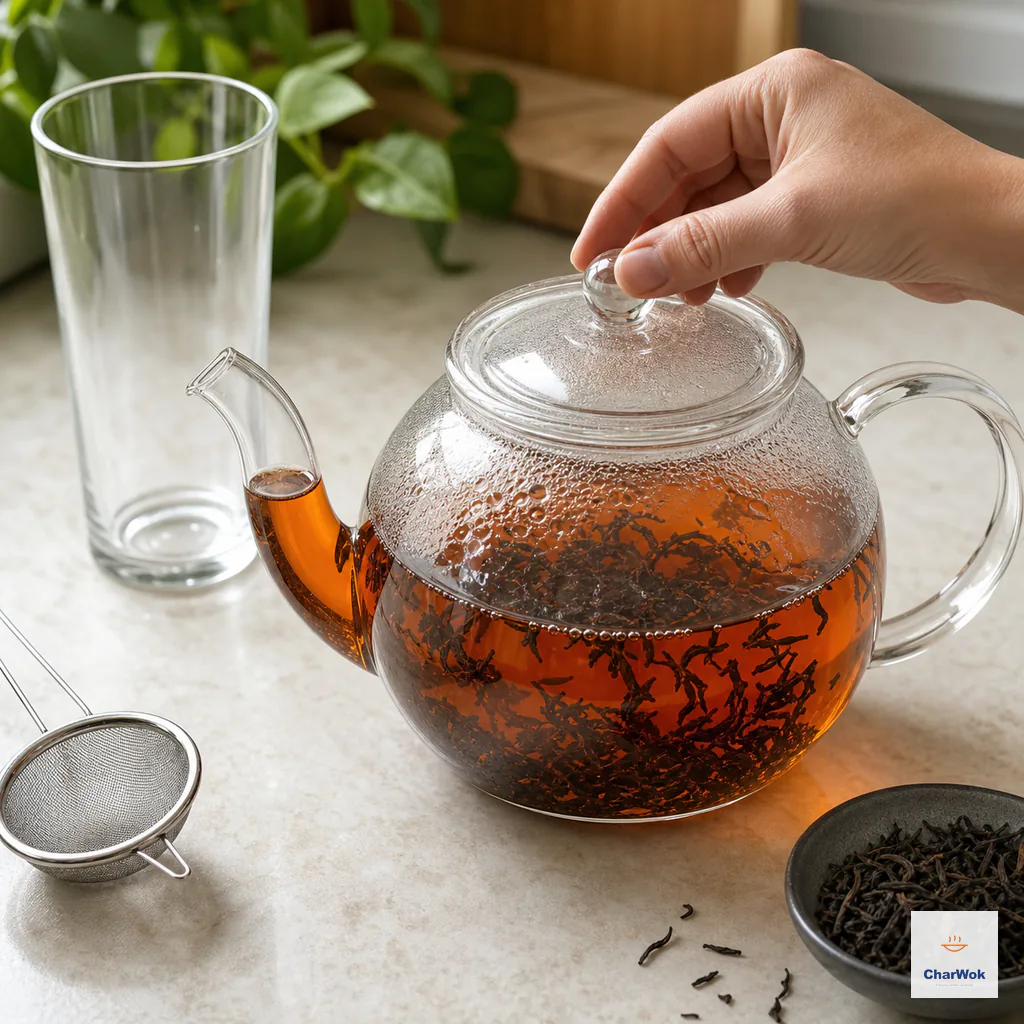
Steep the measured tea in just-off-boil water for four to five minutes, then strain before tannins make it bitter.
- Let the tea cool. If you have time, chill it; cold tea means less ice later and a less watered-down drink.
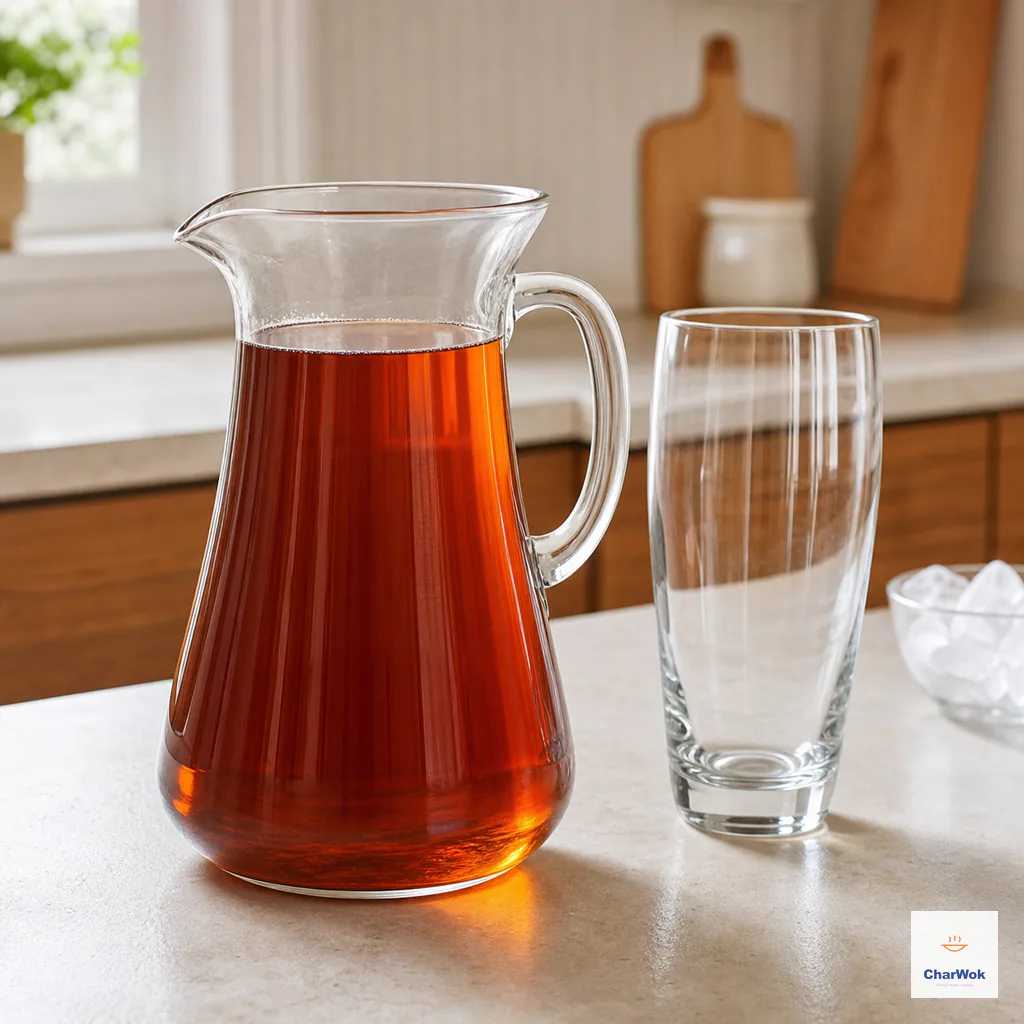
Let the strained tea cool completely; colder tea needs less ice and keeps the finished drink from becoming thin.
- Spoon the cooked pearls into a glass, add sweetener (sugar or honey only while the tea is still warm enough to dissolve them; syrup anytime), pour in the cooled tea, top with milk, and stir. Add a few ice cubes if you like it cold.
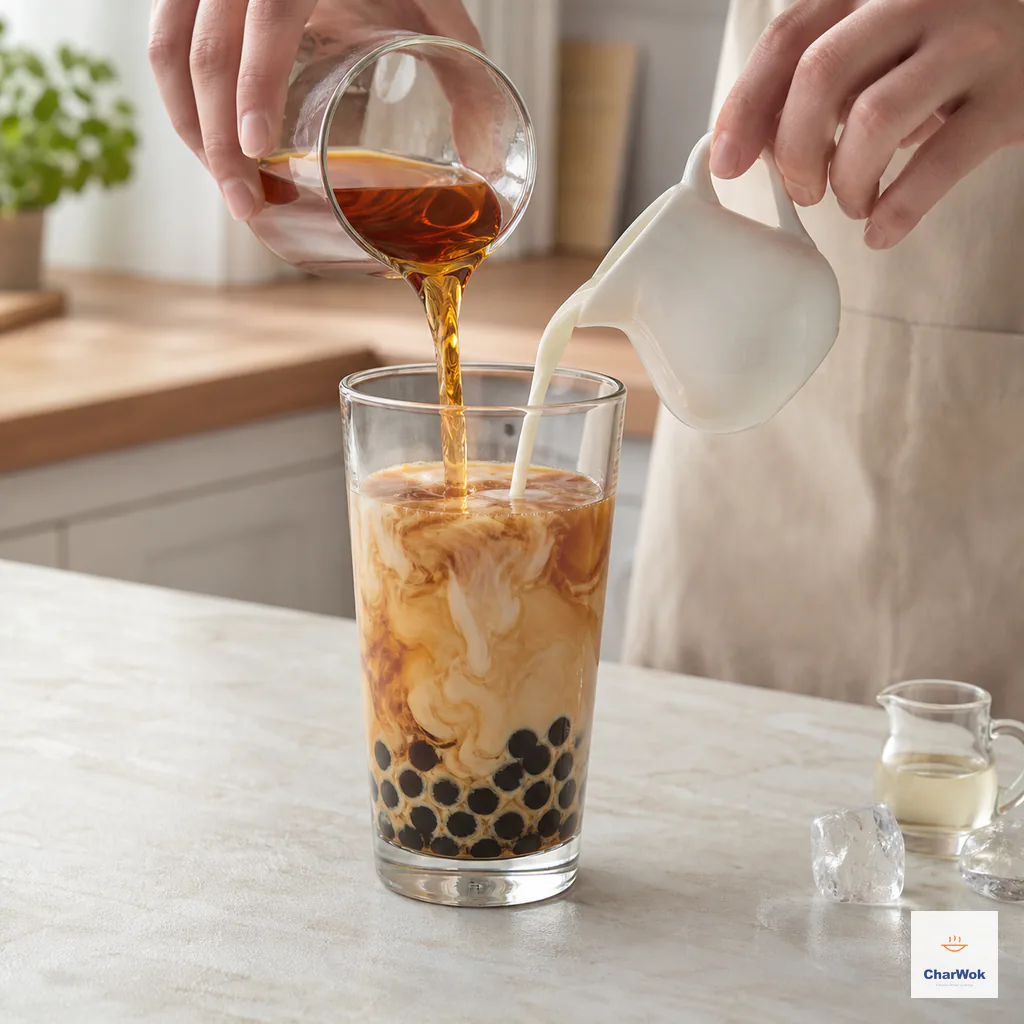
Build the classic drink over pearls with cooled tea, sweetener and milk; stir, then add only the ice you need.
For sweet drinks that pair naturally with tea, the warm spice of eight treasure rice pudding or a bowl of sweet red bean soup sits well on the same afternoon table, and both keep the dairy-and-sugar theme without competing for attention.
Brown sugar: the streaked glass
This is the version that took over shop windows in the late 2010s, the one where the milk cascades down dark caramel stripes. The stripes are not decoration; they are the syrup clinging to the glass as it cools, and they are the whole point. You build them by cooking the cooked pearls in dark brown sugar until the sugar foams into a thick syrup, then swirling that syrup up the inside of the glass before the cold milk goes in.
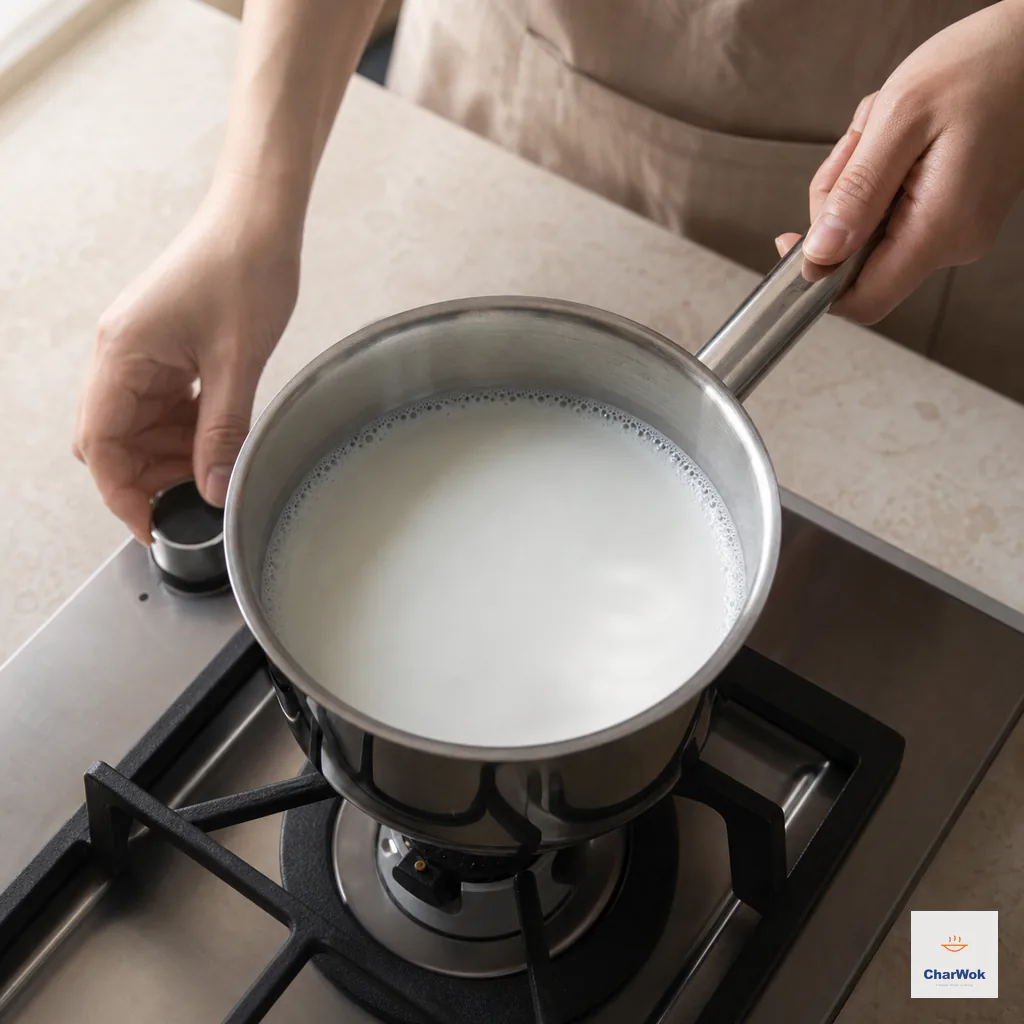
For the brown-sugar version, stop heating as soon as tiny bubbles ring the edge; boiling creates an unwanted milk skin.
- Heat 240 ml of milk in a small pot until small bubbles ring the edge, then take it off before it boils. Add the black tea and let it steep and cool. Steeping in hot milk instead of water is what gives this version its richer body.
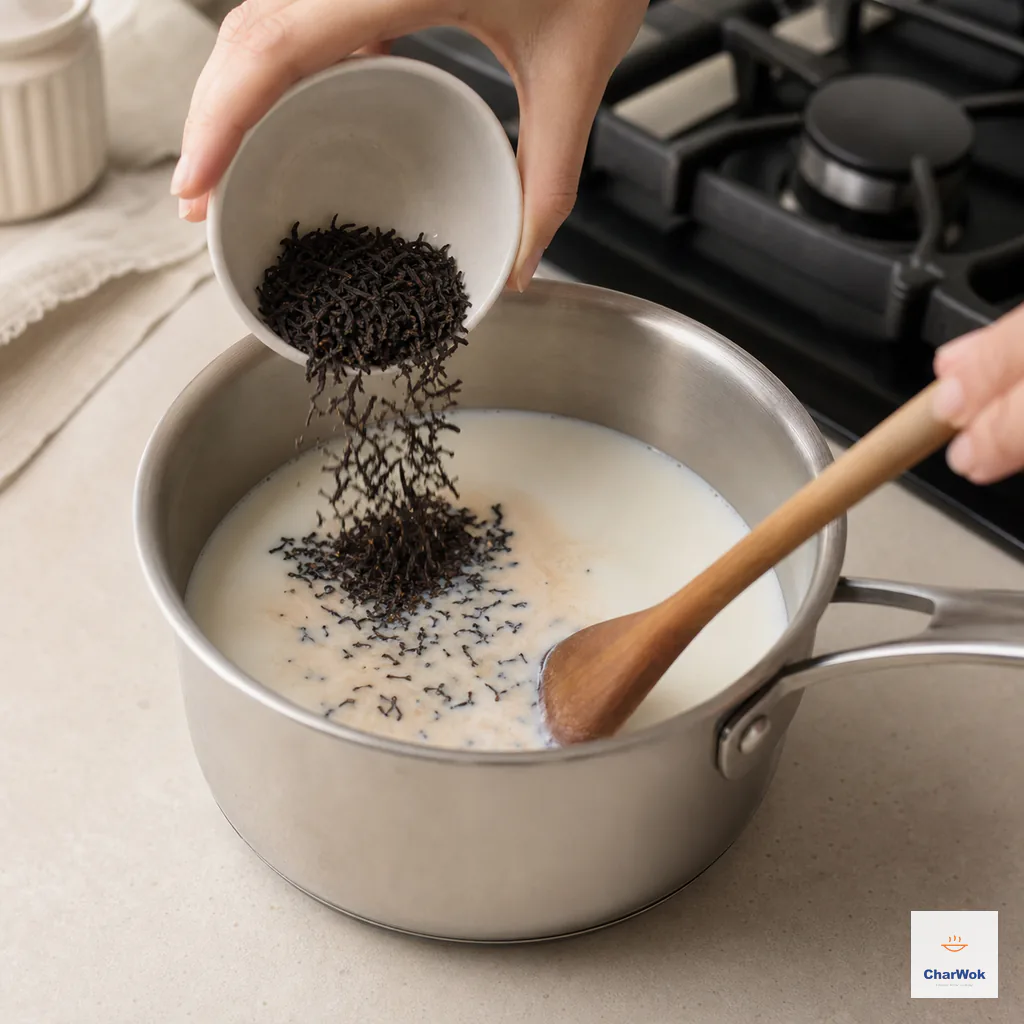
Take the milk off the heat, add the tea and let it steep and cool naturally for a softer, richer base.
- In a dry pan, combine 2 tablespoons of dark brown sugar with the drained cooked pearls. Cook over low heat, stirring, until the sugar melts and turns into a thick, glossy, foamy syrup that coats the pearls.
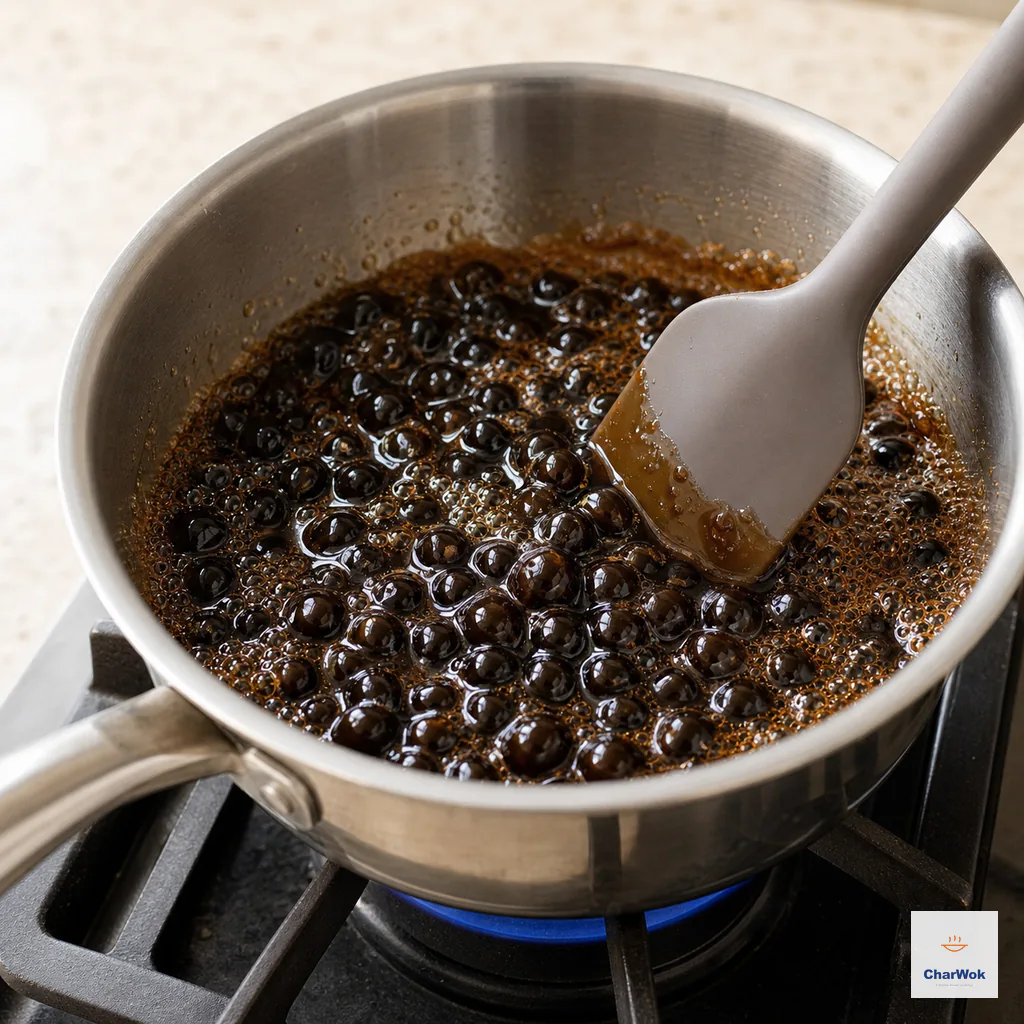
Cook drained pearls with dark brown sugar over low heat until a thick glossy syrup produces fine dense bubbles without scorching.
- Spoon the pearls and syrup into a serving glass. Tilt and rotate the glass so the syrup streaks down the inner walls. Pour the cooled milk tea in slowly, down the side, and watch the stripes set. Add ice if you want.
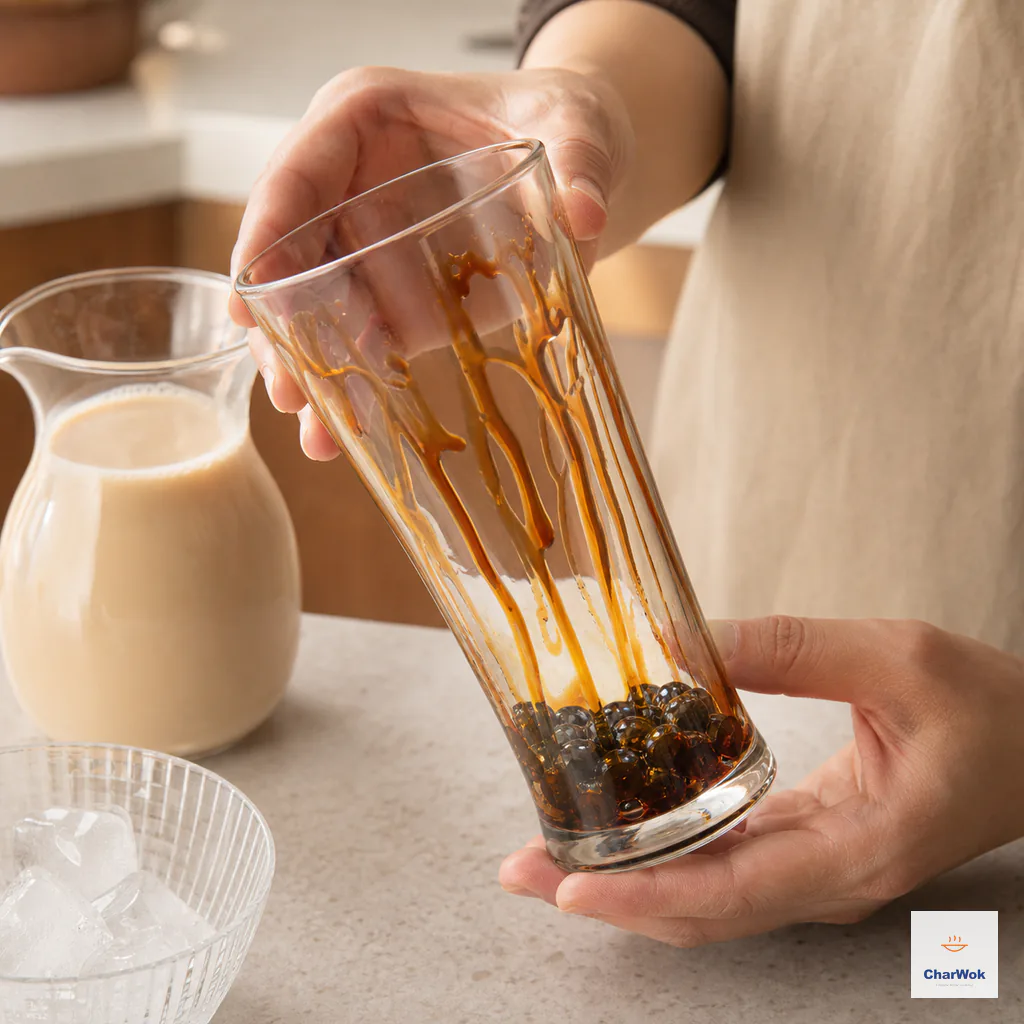
Rotate the glass while the syrup is hot to set the tiger stripes, then add ice and pour the cooled milk tea slowly down the side.
If you want to lean into the brown-sugar-and-chew texture in other desserts, black sesame filling inside mochi hits a similar roasted note, and the caramel edge of this drink is a good match for the toasty sweetness of almond cookies.
Matcha: for the bitter-tooth
Matcha is stone-ground green tea, and because you drink the whole leaf rather than an infusion, its flavor is denser and more vegetal than steeped tea. That earthiness is a natural partner for milk and a little sweetness. The trap here is lumps: matcha clumps in cold liquid, so you have to build a paste first.
- Sift 1 teaspoon of matcha into a bowl (a fine tea strainer works). Add 1 tablespoon of hot water, not boiling, around 80°C / 175°F; boiling water scorches matcha and turns it bitter. Whisk or stir into a smooth, lump-free paste. A bamboo whisk is traditional but a small regular whisk or even a fork does the job.
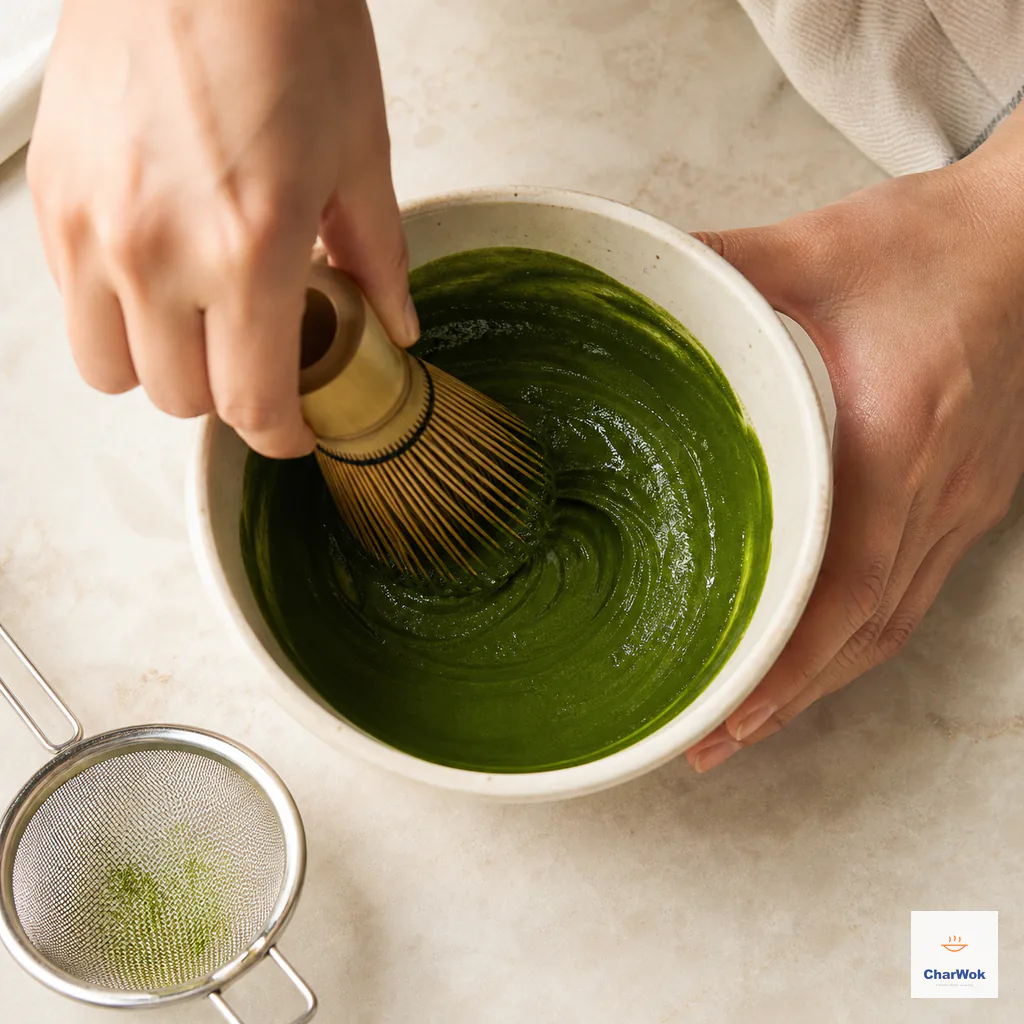
Sift the matcha and whisk it with only one tablespoon of warm, not boiling, water until no dry clumps remain.
- Pour in 240 ml of cold milk and stir until evenly green. Sweeten with syrup, not granulated sugar, since the drink is cold and sugar will not dissolve. Assemble over the cooked pearls with ice if you like.
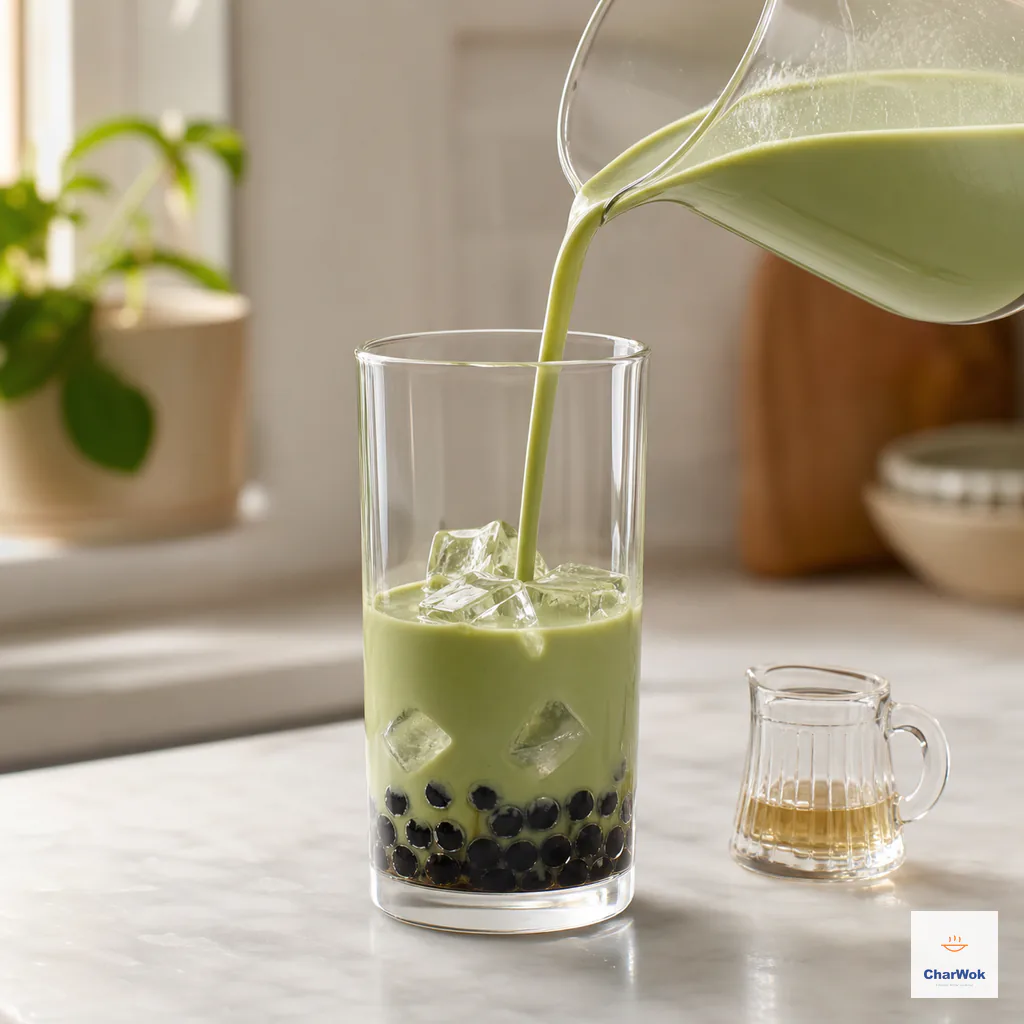
Blend the smooth paste with milk and syrup, then pour it over fresh pearls and a few ice cubes for the matcha version.
Matcha and nutty plant milks are a known good pairing, which is why oat and soy beat cow's milk for many people here. On the dessert side, the clean grassy note of this drink plays well against creamy chilled sweets like mango sago or a delicate snow skin mooncake.
When things go wrong
Most bubble-tea problems are pearl problems. Here are the ones I have personally made.
- Chalky or hard center. The water was not at a full boil when the pearls went in, the pot was too small, or the off-heat rest was skipped. Next time use more water, wait for a true rolling boil, and keep the lid on for the full rest. You can sometimes rescue a slightly underdone batch by returning it to a boil for another minute, then resting again, but a badly raw batch is a write-off.
- Pearls dissolved into sludge. They went into water below a boil and the surface melted before the inside set. There is no rescue; start over and watch the boil.
- Pearls fused into one rubbery mass. You skipped the cold-water bath, or drained them and left them sitting dry. The cold shock is what keeps them separate. Toss with syrup immediately after draining.
- Pearls turned hard the next day. You refrigerated them. Starch retrogrades in the cold and goes stiff; this is the same reason day-old rice hardens. Cook only what you will drink within 4 hours.
- Brown-sugar stripes slid off the glass. The glass or the milk was too warm, so the syrup stayed runny. Use a cool glass and cold milk, and swirl the syrup up the walls before pouring.
- Matcha came out clumpy. The powder was not sifted, or the water was too cold to wet it evenly. Always sift, and use hot (not boiling) water to make the paste before the milk goes in.
Variations and pairings
Once the pearl base is reliable, the drink is a template. A few directions worth trying:
- Tea swaps. Replace the black tea with oolong for a roasted, floral cup, or hojicha for a toasty, low-caffeine version that is excellent with the brown-sugar syrup.
- Fruit layer. A spoon of mashed fresh mango or passion-fruit pulp at the bottom of the glass turns the classic into something close to a fruit-tea shop drink. The mango pancake flavor profile translates directly.
- Cold-day dessert table. Bubble tea is a summer drink, but it sits comfortably alongside sesame balls or red bean sweets for a full Taiwanese dessert spread, and it earns a spot in any summer recipe lineup.
- Simple syrup to keep on hand. Simmer equal parts sugar and water until clear, cool, and bottle; it lasts a month in the fridge and dissolves in cold drinks where granulated sugar will not. Make it with brown sugar and you have a shortcut for the streaked-glass version.
Storage and reheating
Cooked pearls do not store. They are a cook-and-eat ingredient with a window of about 4 hours at room temperature, and refrigeration ruins them. The clean move is to cook only what you will drink. If you absolutely must hold them, keep them submerged in a little syrup at room temperature and accept that by hour four they will be noticeably less bouncy. The tea base, on the other hand, keeps beautifully: brew a stronger batch, strain, chill, and it will hold for two to three days in the fridge, ready to pour over fresh pearls whenever you cook them. Assembled drinks do not keep; the pearls harden and the milk thins.
Frequently asked questions
A short note before the structured block, since the same questions come up every time: can you prep ahead, what to do with leftover pearls, and whether the instant ones are cheating. The quick answers are below.
- Can I cook the pearls ahead of time? Not really. They lose their chew within about 4 hours and the fridge hardens them. Cook right before drinking.
- Are instant pearls cheating? No. They are pre-gelatinized and dried, which is why they cook in minutes instead of an hour. Shops use the raw kind for scale, not quality. Use instant at home.
- Why did my pearls dissolve? The water was not at a full boil when you added them. Always wait for a rolling boil first.
- Can I make it vegan? Yes. Swap in oat, soy, or almond milk; oat is closest to whole milk in body. Check that your pearls are not made with honey.
- Do I need a fat straw? Helpful but not required. A wide boba straw lifts the pearls; otherwise use a long spoon.
That is the whole game. Get the boil right, respect the rest, shock in cold water, and drink within the afternoon. The three drinks are just variations on that one reliable base, and once the base is yours, the shop version stops being worth the trip.