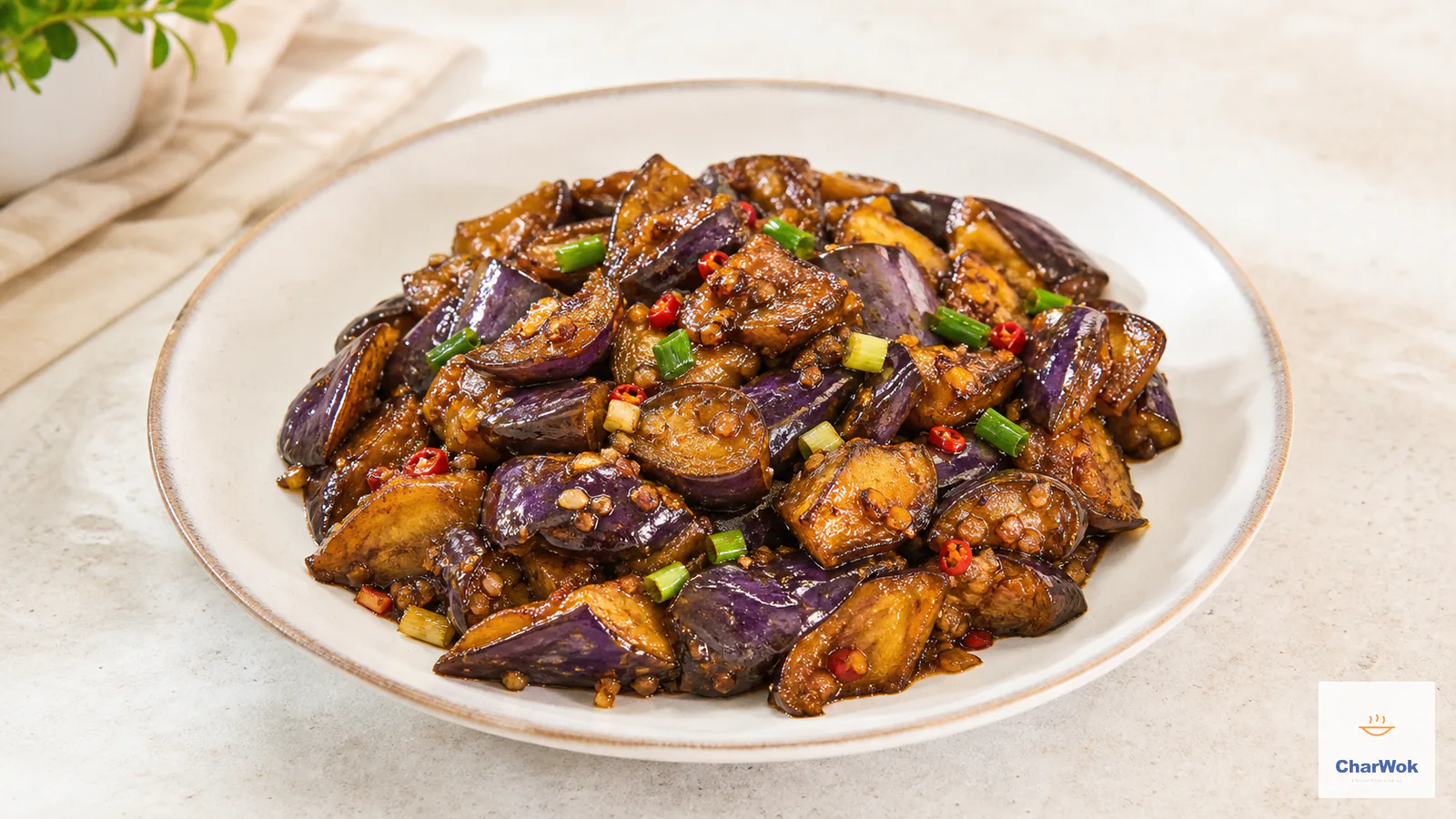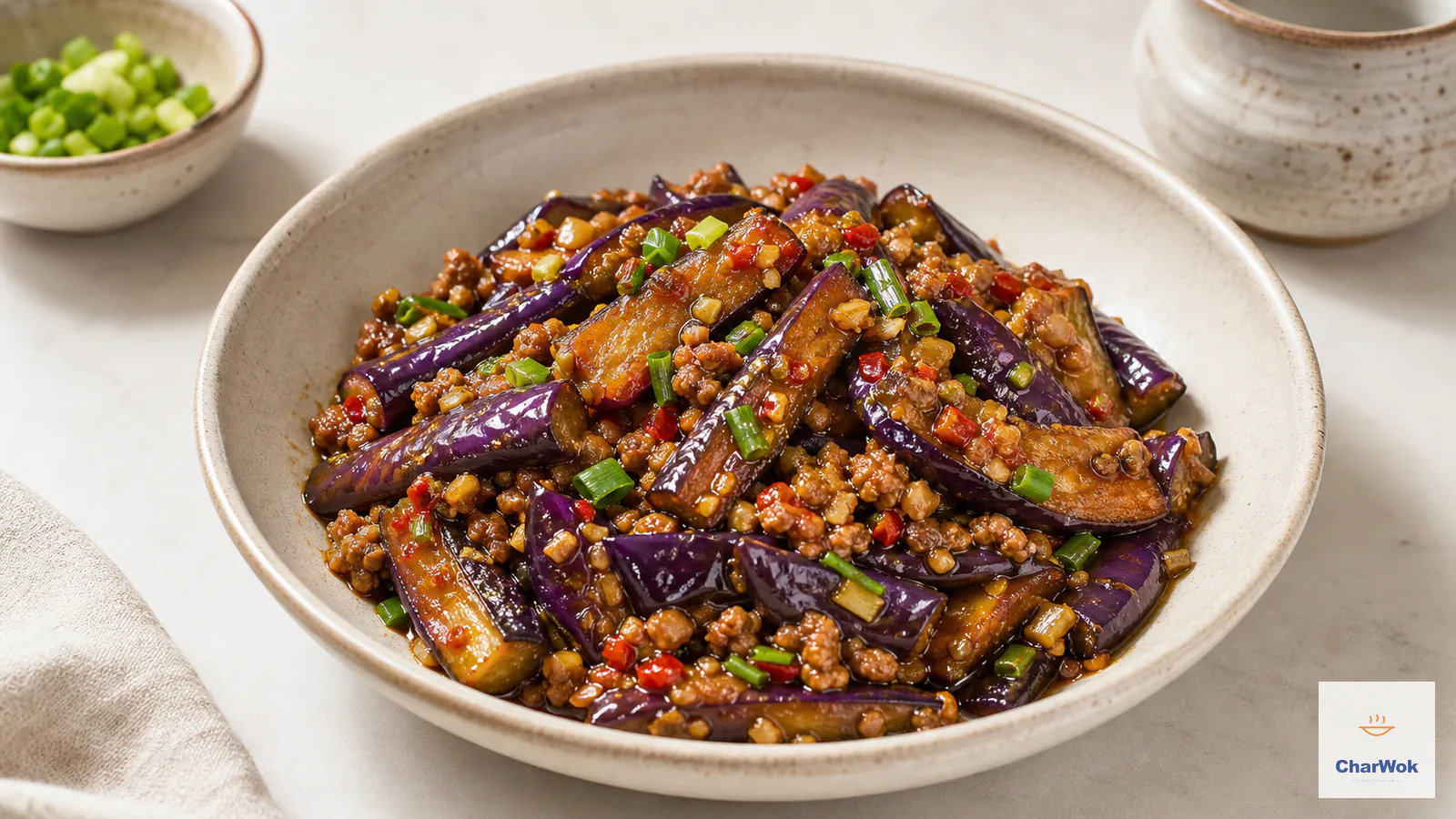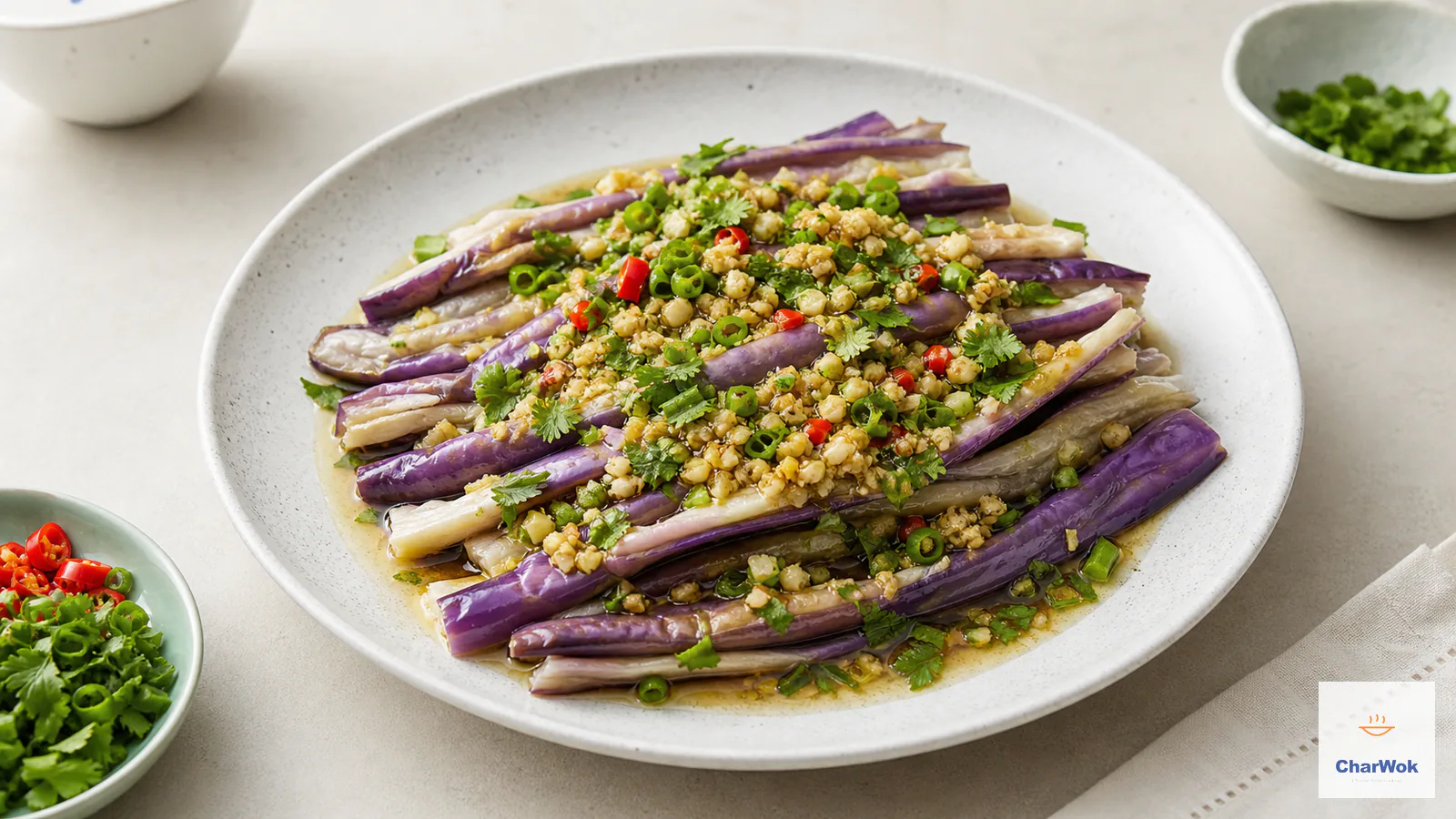
The best eggplant dish I know is also the laziest. Steam the eggplant until it slumps, flood it with raw garlic, black vinegar, and chili, and you have something silkier than any fried eggplant and far less work. The catch is the texture: one minute too long in the steamer and the purple skin turns gray-brown and the flesh goes from creamy to paste. I have overcooked this dish plenty of times, and I will tell you exactly where the line is.
This is Suanni Zheng Qiezi (蒜泥蒸茄子), garlic-paste steamed eggplant, a cold dish with Sichuan and northern Chinese roots that shares its soul with 蒜泥白肉, the cold sliced pork bathed in the same garlicky dressing. Where Yu Xiang eggplant leans on a wok and a hot oil sizzle, this one leans on steam and raw aromatics. No deep-frying, no cornstarch slurry, almost no oil. It is the dish I make when it is hot out and I cannot face the stove for more than ten minutes.
At a glance: about 280 g (10 oz) eggplant, 6 minutes of high steam, then a raw dressing of garlic paste, light soy sauce, oyster sauce, black vinegar, sesame oil, and sugar. The make-or-break detail is garlic as a paste, not a mince, and steaming only until a skewer meets slight resistance at the skin. Serve hot or fully chilled.
Why steaming beats frying here
Eggplant is a sponge. Fried right, as in Di San Xian or eggplant with plum sauce, it soaks up oil and turns golden. But the goal of this dish is the opposite of crisp: you want the flesh to collapse into something custardy, and you want it to taste clean, not greasy. Steam does that without a single drop of cooking oil. The heat gelatinizes the starch in the flesh and softens the cell walls so the vegetable practically melts; the skin stays intact and keeps the pieces from falling apart into soup.
Raw garlic and vinegar then do the work that a wok seasoning normally would. Raw alliums carry a sharp, sulfur-driven heat that cooked garlic loses, and that heat is what makes the dressing feel alive against the bland, sweet eggplant. Add a little sugar and the acid stops biting and starts brightening.
Ingredients
Ingredients at a glance
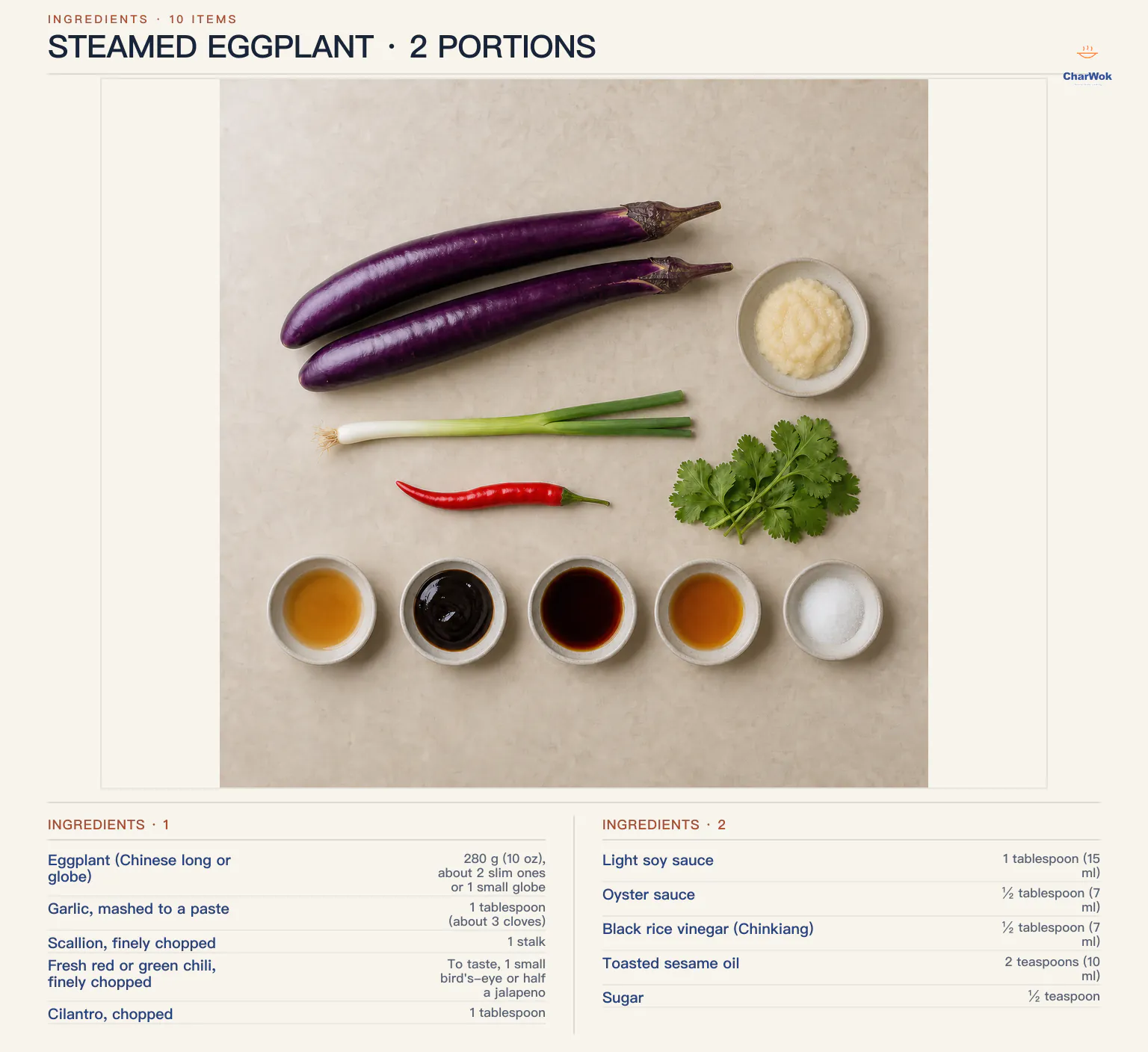
| Ingredient | Amount | Notes / substitute |
|---|---|---|
| Eggplant (Chinese long or globe) | 280 g (10 oz), about 2 slim ones or 1 small globe | Young, firm, heavy for its size with few seeds. Skin stays on. |
| Garlic, mashed to a paste | 1 tablespoon (about 3 cloves) | Paste, not mince. Use a mortar and pestle or a Microplane. |
| Scallion, finely chopped | 1 stalk | Green and pale parts. |
| Fresh red or green chili, finely chopped | To taste, 1 small bird's-eye or half a jalapeno | Seed it for less heat. Or use 1 tsp chili oil. |
| Cilantro, chopped | 1 tablespoon | Omit if you dislike it; the dish is fine without. |
| Light soy sauce | 1 tablespoon (15 ml) | Light, not dark. See the light vs. dark soy sauce guide. |
| Oyster sauce | ½ tablespoon (7 ml) | Vegan: mushroom stir-fry sauce, or extra light soy sauce plus a pinch of sugar. |
| Black rice vinegar (Chinkiang) | ½ tablespoon (7 ml) | This is what gives the dish its dark, malty tang. See black rice vinegar notes. |
| Toasted sesame oil | 2 teaspoons (10 ml) | Toasted, not cold-pressed light. |
| Sugar | ½ teaspoon | Rounds the acid; do not skip. |
The method, and the reasoning behind each step
- Get the steamer boiling first. Put water in your wok or pot and bring it to a full, rolling boil before the eggplant goes anywhere near it. If you are new to the setup, a bamboo steamer over a wok is the classic tool; a metal rack holding a heatproof plate works just as well. The reason to start hot: cut eggplant oxidizes, and the longer it sits raw in air, the browner the flesh and the duller the skin. Steam kills the browning enzymes within seconds, so the gap between cutting and steaming should be as short as you can make it.
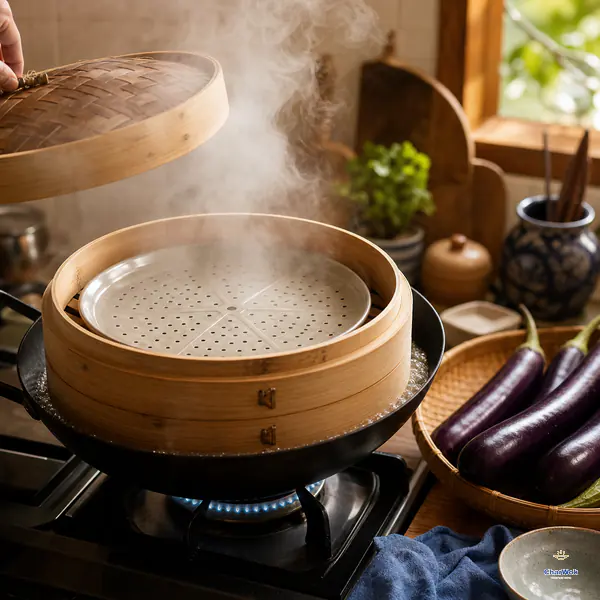
Bring the steaming water to a full rolling boil before cutting the eggplant so the fresh cut surfaces can go straight over strong steam.
- Trim and cut just before steaming. Slice off the stem cap but leave the skin on, both for fiber and for the deep purple color that makes the dish look like anything. Cut the eggplant one of two ways: into fat sticks (about the size of a thumb, 5 minutes of steam) or into roll-cut chunks (6 minutes). For maximum dressing pickup, halve the eggplant lengthwise, steam it, then tear the warm flesh into rough strips with your fingers. The torn surface is ragged and grabs sauce the way a knife edge never will.
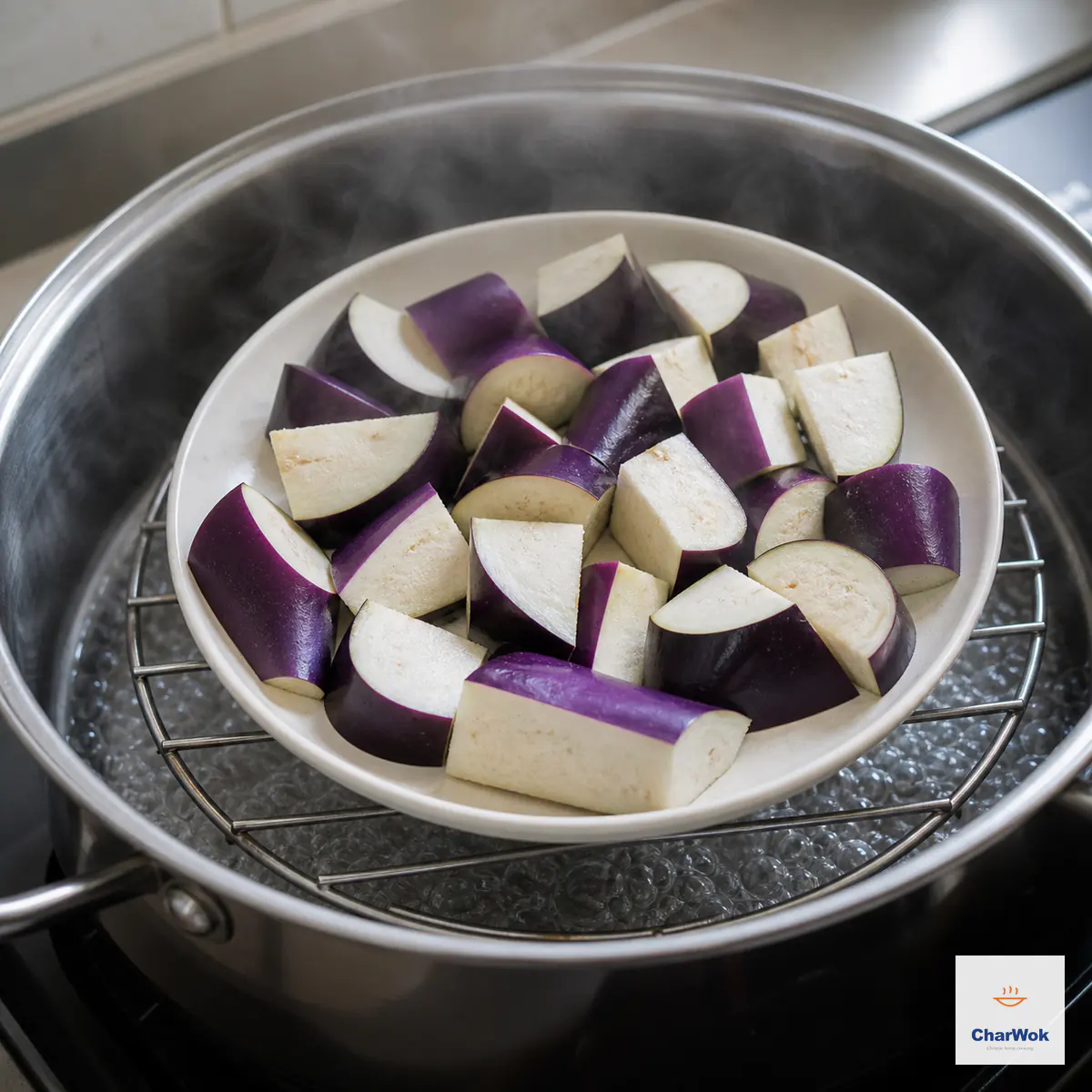
Bring the steamer to a full boil first, then cut the eggplant and place it over the steam immediately to limit browning
- Lay the eggplant on the plate you will serve it on. Transferring steamed, collapsing eggplant from one dish to another is a mess. Put it on a shallow serving plate, set the plate on the rack, and cover. Steam over high heat for 5 to 6 minutes. Test with a skewer: it should slide through the flesh and meet only the faintest catch at the skin. That catch is the moment to stop. Pull the plate out.
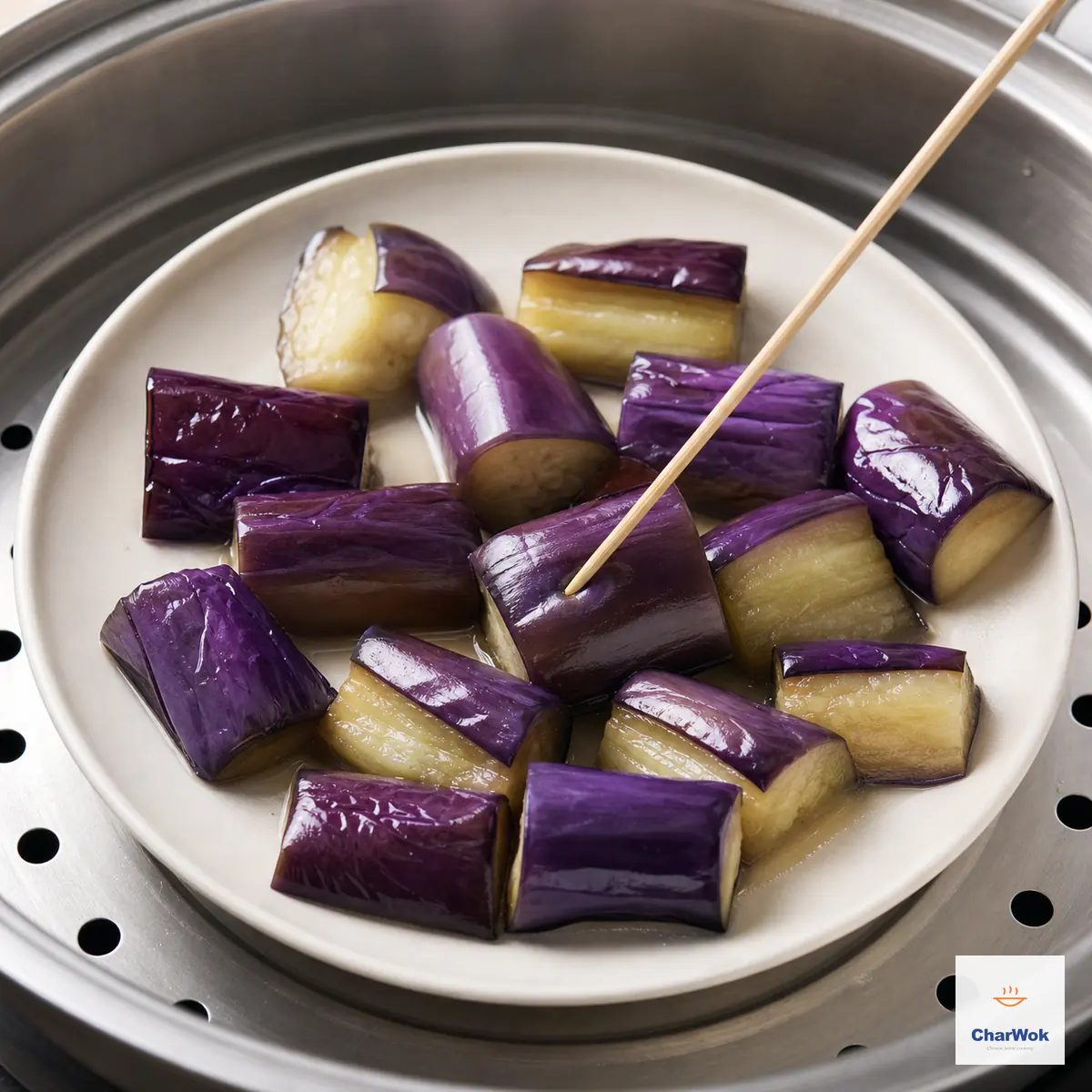
Stop steaming when a skewer passes through the soft flesh and meets only a faint catch at the skin
- Make the dressing while the eggplant steams. In a small bowl, combine the garlic paste, chopped chili, scallion, cilantro, light soy sauce, oyster sauce, black rice vinegar, sugar, and sesame oil. Stir. Taste it. It should be salty, sour, sweet, and punchy in roughly equal measure; if the garlic burns your nose, that is correct. For a deeper, oilier heat, add a spoonful of chili oil.
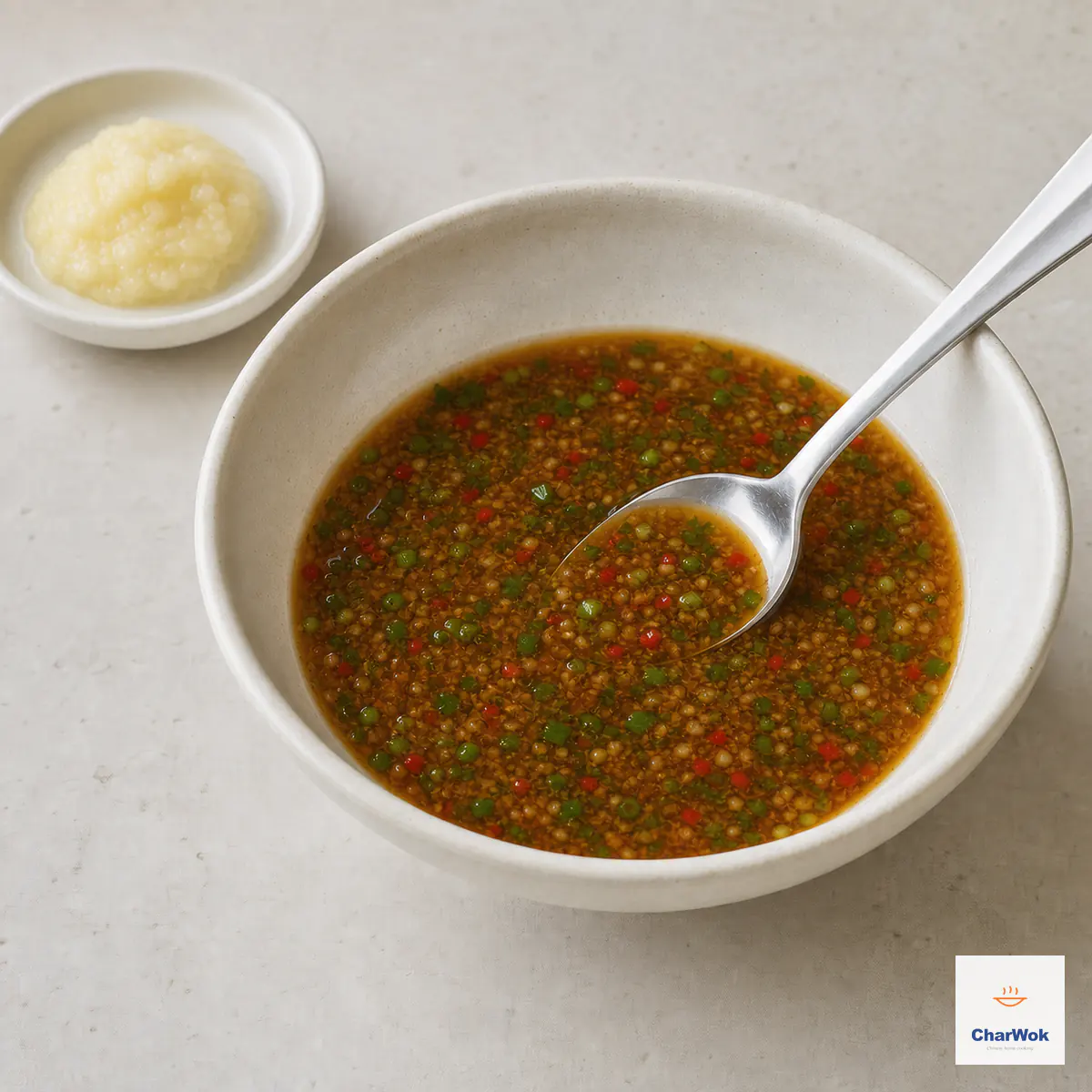
Mix the smooth garlic paste with soy sauce, oyster sauce, vinegar, sesame oil, sugar, scallion, chili, and cilantro
- Choose hot or cold, then dress. For a hot side dish, pour the dressing straight over the just-steamed eggplant and take it to the table. For a cold salad, let the eggplant cool fully on the plate (a little cooking liquid will pool in the bottom; leave it, it thins the dressing), then chill it 20 to 30 minutes and add the dressing at the end. Cold, the garlic and vinegar read louder; hot, the aromatics smell louder. I prefer it cold in summer and hot in winter.
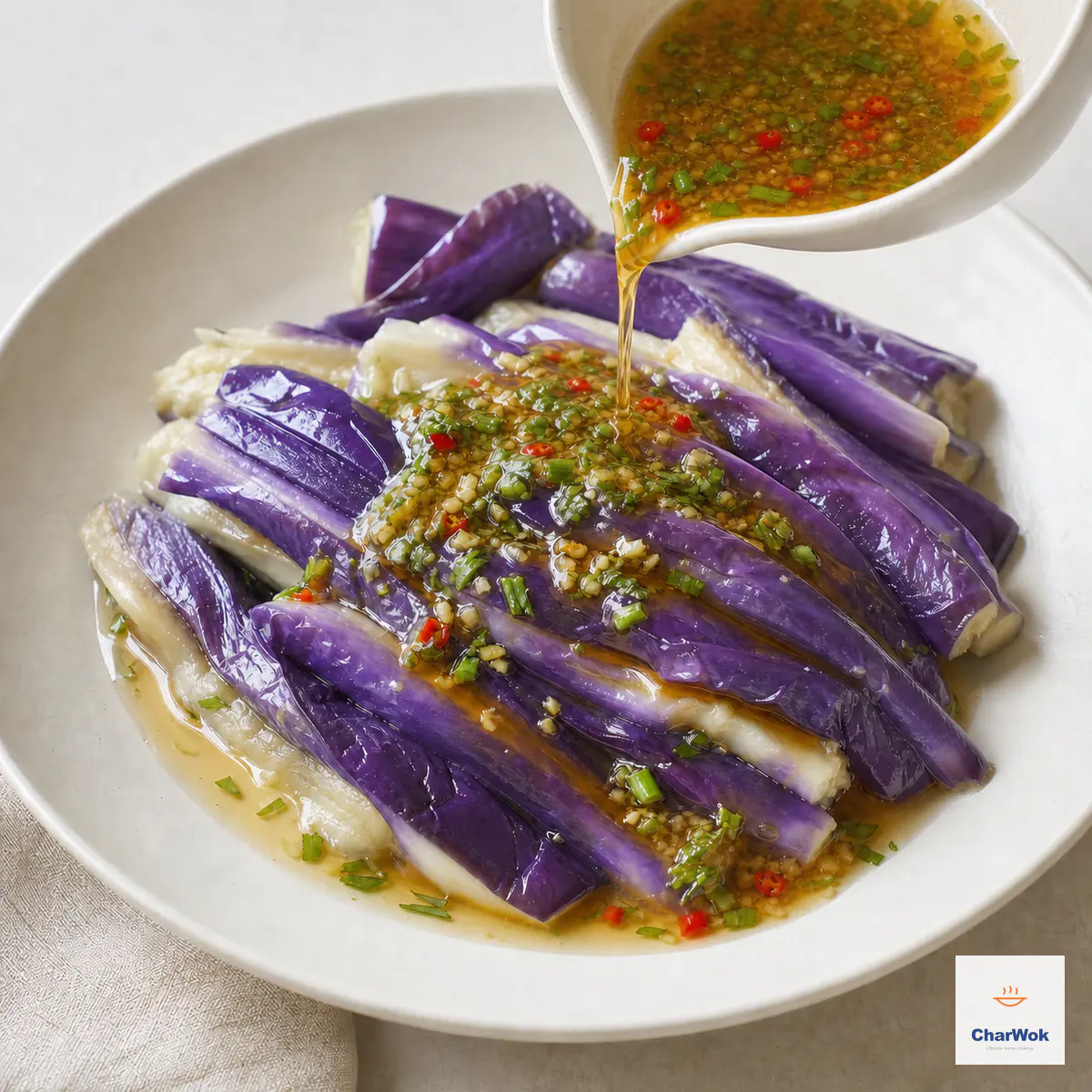
Keep the steaming liquid, pour the dressing over the eggplant, and serve warm or chill before serving
When it goes wrong, and how to fix it
The skin turned brown and the flesh looks muddy. This is oxidation, and it is purely cosmetic, but you can avoid it next time. Either move from knife to steamer in under a minute, or, if you must wait, soak the cut pieces in 500 ml (2 cups) of water with 1 tablespoon of any light-colored vinegar or lemon juice until you are ready. Drain well before steaming.
The eggplant collapsed into mush. You steamed too long. Globe eggplant and very ripe specimens fall apart fastest. Cut back to 5 minutes for sticks, 6 for chunks, and check one minute early the first time you cook a new batch. There is no rescuing overcooked eggplant; fold it into the dressing and call it a spread for toast.
The eggplant is still firm in the middle. Your steamer was not at a full boil when you started, or the lid was loose and steam escaped. Get a hard boil before the plate goes in, keep the heat high, and weigh the lid down with a kitchen towel if it rattles. Undercooked eggplant rebounds with another 90 seconds.
The dressing tastes flat or one-note. Usually it needs more acid or more sugar, not more salt. Add black vinegar in ¼-teaspoon doses and taste each time. If you used regular distilled vinegar instead of black rice vinegar, that is the problem; the malty depth of Chinkiang vinegar is doing most of the work here.
You bit into a raw chunk of garlic. Minced garlic hides in pockets; garlic paste dissolves into the dressing and coats every strip. If you do not own a mortar or a Microplane, smash the cloves flat with the side of a knife, sprinkle with a pinch of salt, then drag the blade across them repeatedly. The salt acts as an abrasive and breaks the garlic down faster.
Variations and what to serve it with
The dressing is a template. Drop the oyster sauce and you have a cleaner vegan version; add a teaspoon of toasted sesame paste and the dish tilts toward northern cold-noodle territory, closer to Sichuan liang mian than to a vegetable side. A pinch of ground roasted Sichuan pepper adds the numbing buzz that turns this from a cool salad into something with a slight electrical hum.
As part of a meal, this eggplant is the cool, soft contrast on a table that needs one. I like it next to a salty, glossy protein such as soy sauce chicken or a steam-and-sauce dish like steamed ribs with black beans, with a bowl of steamed jasmine rice to soak up the dressing. For a fully cold spread in summer, lay it out with smashed cucumber salad, silken tofu with scallion and soy, and a plate of tiger-skin peppers. Hot or cold, leftover dressing is good stirred into plain noodles the next day.
Storage and reheating
Undressed steamed eggplant keeps, covered, in the fridge for up to a day, though it will weep water and soften further. Dress it close to serving, not ahead; raw garlic left in soy and vinegar turns aggressively pungent after a night and the cilantro goes gray. Once dressed, eat within a few hours. I do not recommend reheating this dish; the whole point is the contrast between soft eggplant and bright, raw dressing, and a microwave flattens both.
Questions home cooks actually ask
A few quick answers in plain language.
Do I have to peel the eggplant?
No. The skin holds the strips together and carries the purple color. Leave it on, and pick young, slim eggplants whose skin is thin.
Can I use a regular supermarket globe eggplant?
Yes. Globe eggplants steam well; just cut them smaller so the center cooks before the outside collapses. Chinese long eggplants have thinner skin and look brighter, but the flavor is nearly identical once dressed.
Is it better hot or cold?
Both work. Hot, the aromatics smell stronger; cold, the garlic and vinegar taste sharper. Try it cold the first time, which is how it is classically served as a salad.
What if I do not have black rice vinegar?
Use a mix of balsamic (a splash) and rice vinegar to mimic the malty depth, or substitute Chinese aged vinegar. Plain white vinegar will taste thin and harsh.
The short version
Get this dish right and you have a reliable ten-minute cold side for the rest of your cooking life. The two things that decide it are garlic beaten to a true paste and an eggplant pulled from the steam the instant a skewer meets the skin. Get those two and the dressing almost does not matter; you can bend it to your pantry and your mood, and it will still taste like the best eggplant you know.