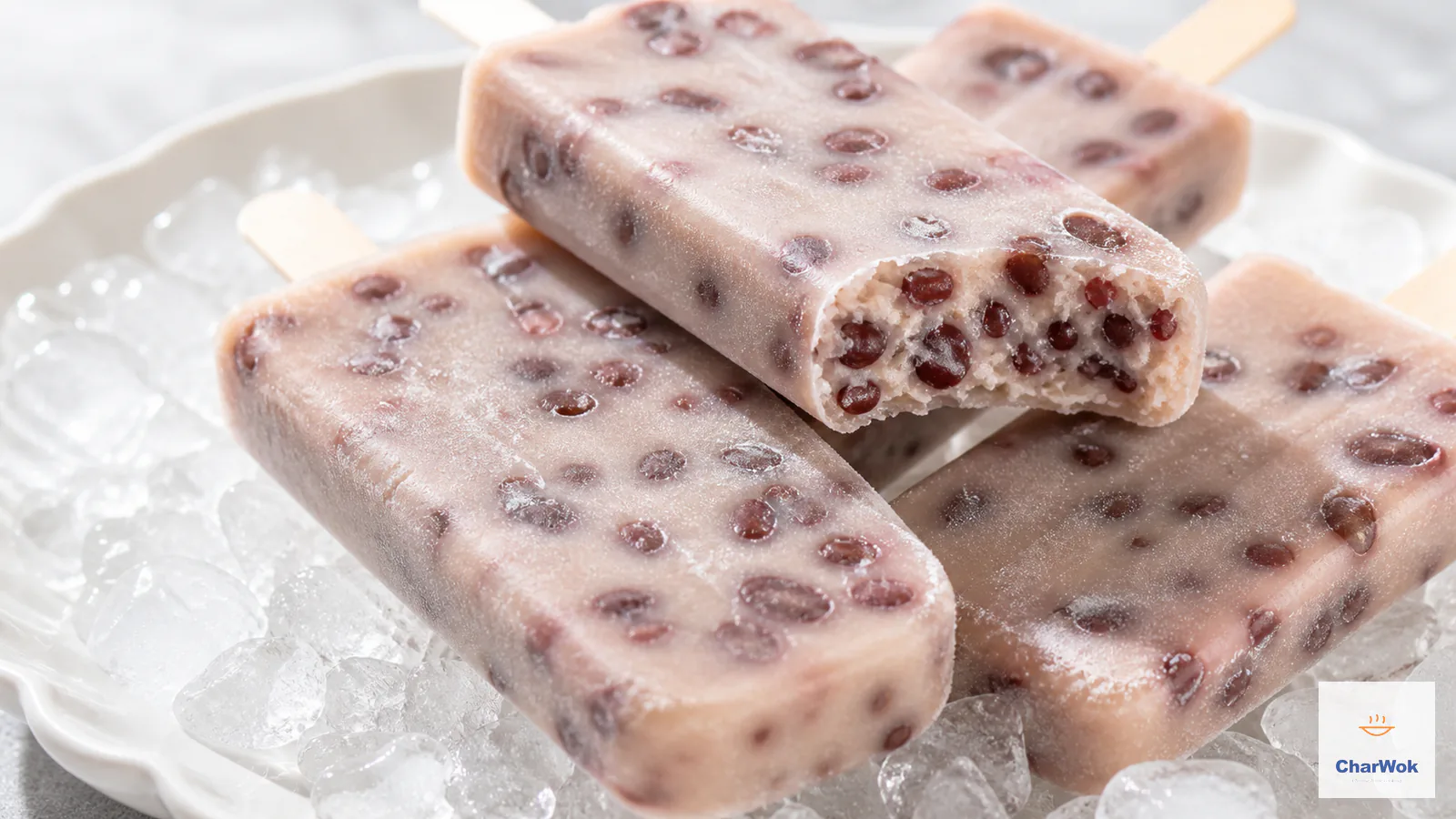
Store-bought red bean popsicles fail in two directions: they are either icy and granular, the kind that leaves frozen shards on your teeth, or pumped so full of stabilizers that the texture turns gummy and clings to the roof of your mouth. The street-style Hong Kong treat I remember (creamy, faintly chewy, freckled with soft beans) is neither. The good news is that the home version is one saucepan, one blender, and about twelve minutes of active work. The whole trick is a cooked cornstarch slurry that turns ordinary milk into a custard-thick base, which freezes smooth instead of crystallizing.
This is a recipe I burned through five batches to get right. My first attempt was basically frozen sweet milk with beans sinking to the bottom. The fix turned out to be two things: thicken the dairy before it ever meets the beans, and hold back a quarter of the condensed milk until you taste. Below is the version that survived my freezer and a small panel of heat-exhausted friends.
At a glance. Four ingredients, ~12 minutes hands-on, 4 hours in the freezer. The make-or-break step is cooking 3 tablespoons of cornstarch into the milk until it coats a spatula like runny yogurt — that cooked starch is what blocks ice crystals and gives the popsicle their signature slight chew. Use full-fat milk and do not skimp on the beans.
What these popsicles are (and are not)
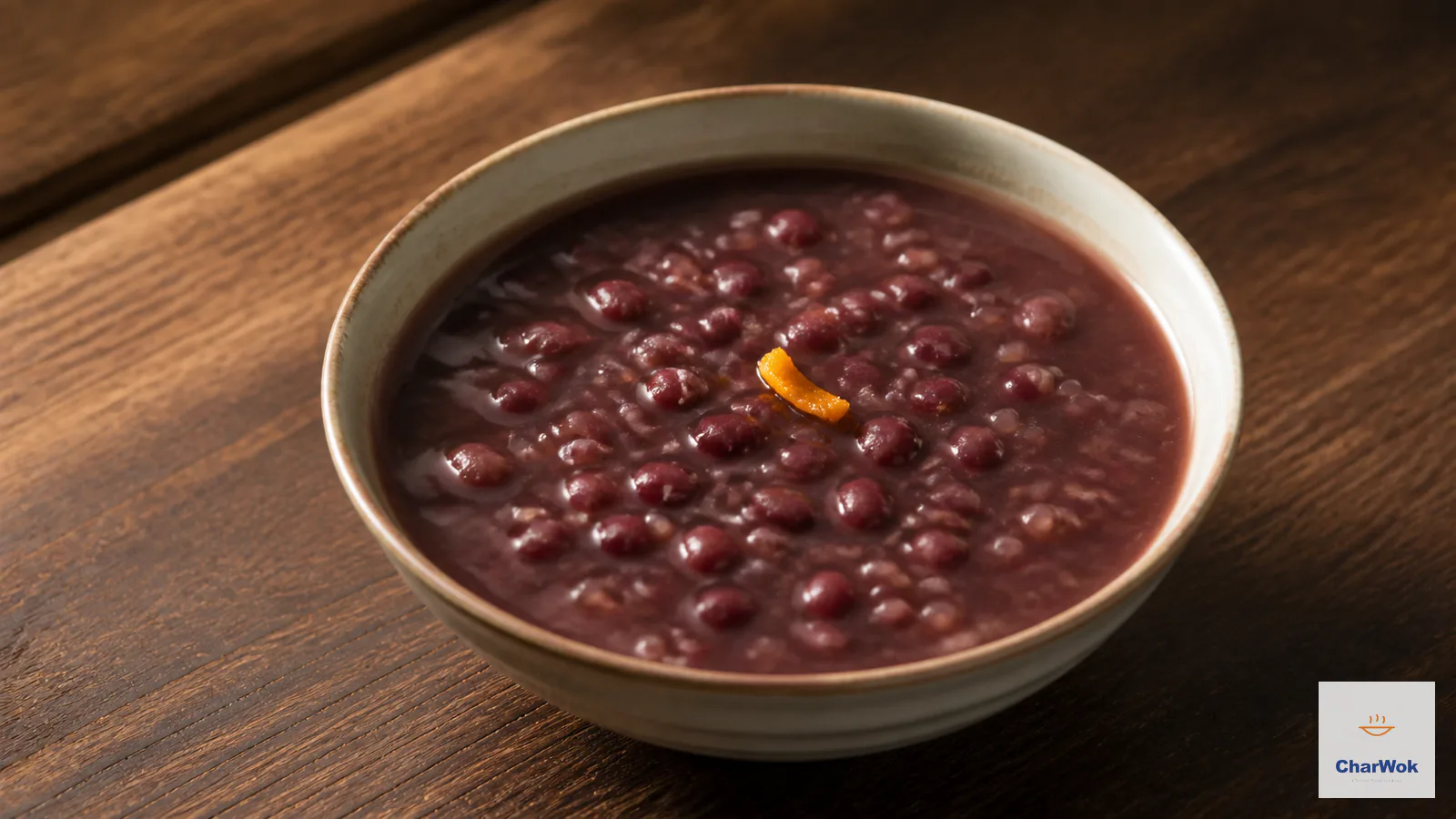
These are bing gun (冰棍), the Chinese ice pop on a stick, not Western ice cream and not the shaved-ice dessert bing sha. The Cantonese version leans on adzuki beans cooked soft in sugar, suspended in a sweetened milk base. Think of it as the frozen cousin of the hot red bean soup you drink in winter, or a cousin to the creamy ginger pudding ginger milk curd: same milk-and-starch logic, different temperature.
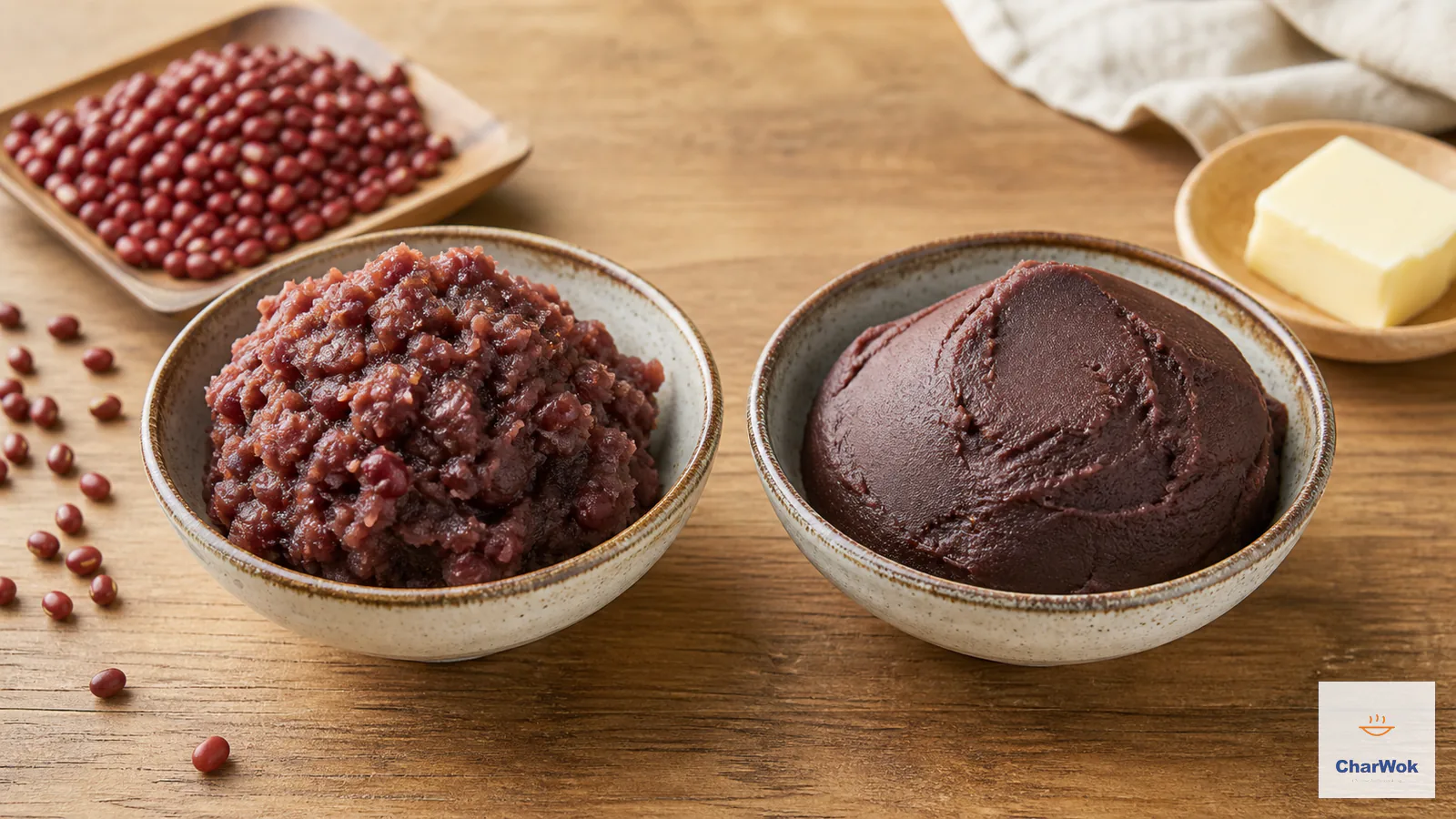
Adzuki is the bean of Chinese sweets: small, dark red, earthy-sweet rather than sugary. You will find it folded into red bean paste for buns, layered into the classic eight treasure rice at New Year, stuffed inside sesame balls, and rolled into red bean buns (dou sha bao). Once you have a pot of cooked beans, the popsicles are the easiest possible encore.
Why the recipe works
Three pieces of food science decide whether a homemade pop is smooth or gritty:
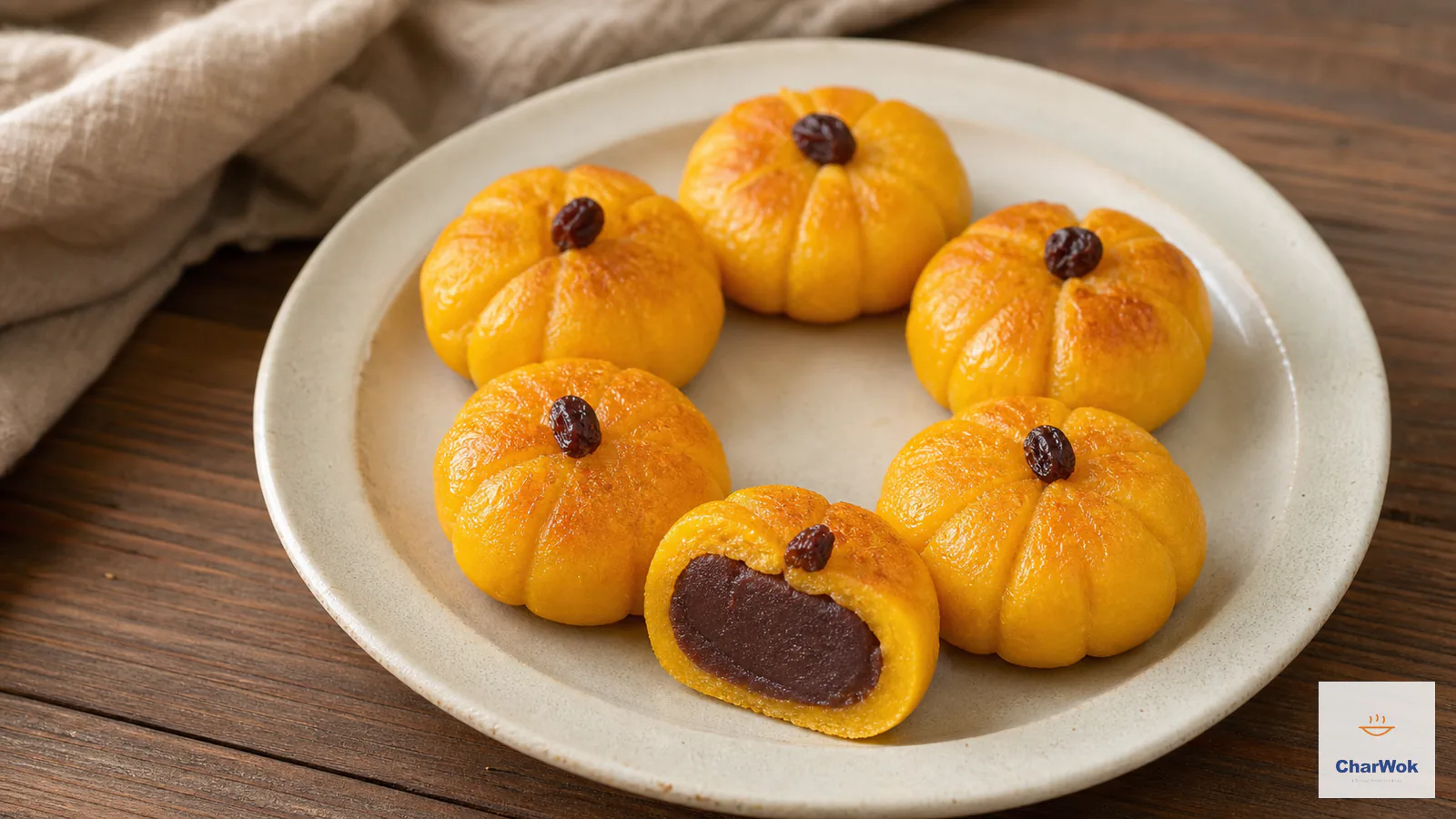
- Starch gelatinization kills ice crystals. Plain milk freezes into sharp, jagged crystals because water has nothing to interfere with its crystal lattice. Heat cornstarch past about 65°C (150°F) and the starch granules swell, burst, and tangle into a net that traps water molecules so they cannot organize into large crystals. This is the same mechanism behind the soft set of the pumpkin mochi with red bean or a baked rice cake (cooked starch equals a creamier freeze).
- Fat and sugar both depress the freezing point. Full-fat milk and condensed milk keep the base from freezing rock-hard, so the pop yields when you bite instead of shattering. Fat also coats the tongue and carries flavor. Skim milk will work in a pinch but you will taste the difference: drier, thinner, faster to melt.
- Beans add body and slow melt. The cooked adzuki fibers and starch act like a second stabilizer. A pop that is mostly dairy melts into a puddle; a pop with beans holds its shape longer on the stick.
Ingredients
Ingredients at a glance
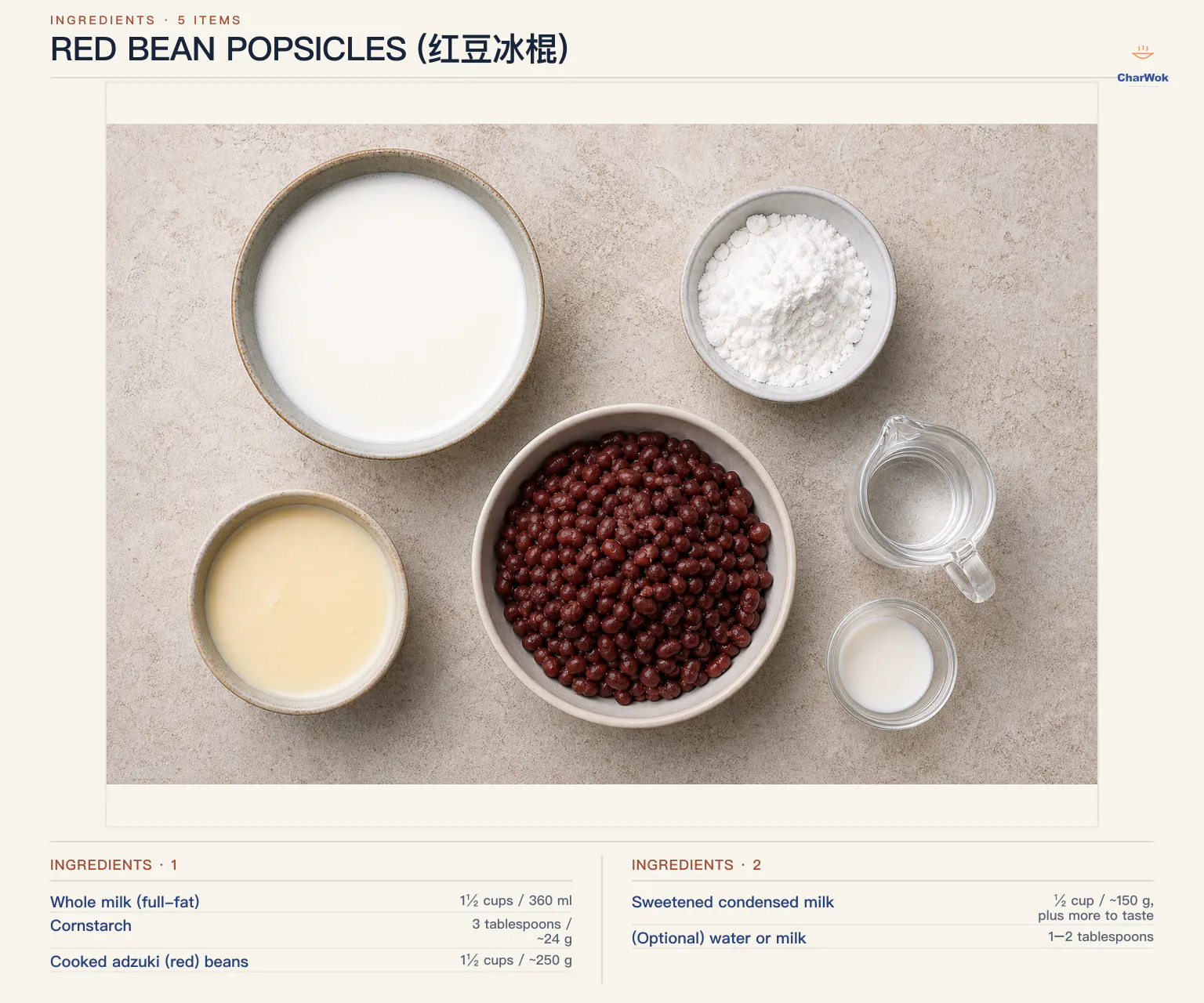
Makes about 8 standard 3-oz (85 ml) popsicles. Quantities are forgiving within reason; the ratio that matters is roughly 1 tablespoon cornstarch per cup of liquid.
| Ingredient | Amount | Notes / substitute |
|---|---|---|
| Whole milk (full-fat) | 1½ cups / 360 ml | Do not use skim if you can help it. Half-and-half makes a richer, softer pop. |
| Cornstarch | 3 tablespoons / ~24 g | Glutinous rice flour (sweet rice flour) works equally well and gives a slightly chewier, more mochi-like bite. Plain rice flour does not; it will not gel the same way. |
| Cooked adzuki (red) beans | 1½ cups / ~250 g | Cook your own from dried, or use canned adzuki drained and lightly rinsed. See the section below. |
| Sweetened condensed milk | ½ cup / ~150 g, plus more to taste | This is your only sugar. Start with ¾ of the amount, taste, then add. Coconut condensed milk works for a dairy-free spin. |
| (Optional) water or milk | 1–2 tablespoons | Only if your blender struggles and the mix is too thick to pour. |
Getting the beans right
The single biggest quality jump comes from the beans. If you cook your own adzuki, you control the texture: tender skins, intact beans, not canned mush. Pick over the dried beans, soak 4–6 hours or overnight, then simmer in plenty of water until a bean crushes easily between two fingers but has not split open, about 45–60 minutes. Drain. You want them cooked but still holding their shape; overcooked beans turn the whole pop brown and pasty. Cook a big pot once and you have the base for several sweets at once; the rest can go toward a steaming bowl of bean soup or be mashed for a bun filling.
Canned adzuki is fine and I use it on weeknights. Rinse gently so you do not wash away the bean skins, and drain very well; extra can-liquid will thin your base and throw off the set.
Method
- Make a slurry first, never dump dry cornstarch into hot milk. In a small bowl, whisk 3 tablespoons cornstarch with about 3 tablespoons of the cold milk until completely smooth. Any lumps now will be lumps in your popsicle. Pour the slurry and the rest of the milk into a saucepan.
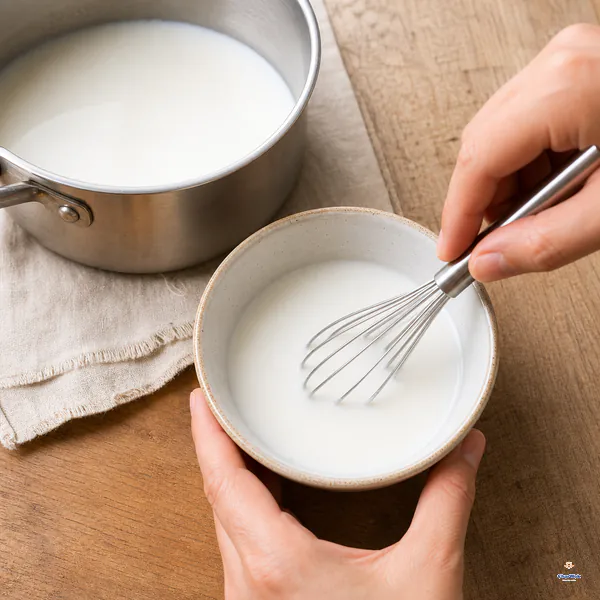
Whisk the cornstarch with about three tablespoons of cold milk until no dry specks or lumps remain, then combine it with the remaining milk in the saucepan.
- Cook, stirring constantly, until it coats the spatula. Set the pan over medium heat. Stir with a silicone spatula, scraping the bottom and corners (cornstarch settles and scorches). After 3–5 minutes the milk will be hot to a clean fingertip; keep going, stirring, until it suddenly thickens to the consistency of runny yogurt or pourable custard. That moment is the starch gelatinizing. Pull the pan off the heat the instant it thickens, because overcooked cornstarch thins back out.
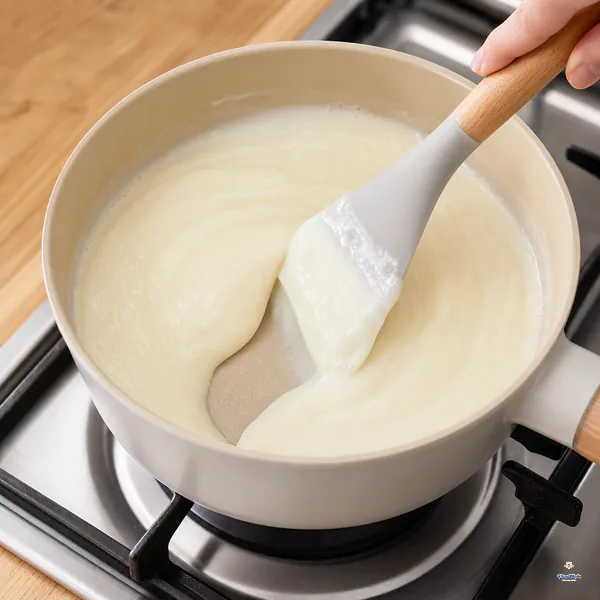
Stir constantly over medium heat, scraping the bottom and corners, and remove the pan as soon as the mixture thickens to pourable custard and briefly holds a channel.
- Blend with the beans and most of the condensed milk. Pour the thickened milk into a blender or food processor. Add the cooked beans and about ¾ of the condensed milk (hold the rest back). Blend in short pulses, stopping to scrape down, until you reach the texture you want. I like flecks and bits of bean visible; blend longer if you want a smooth, almost ice-cream base.
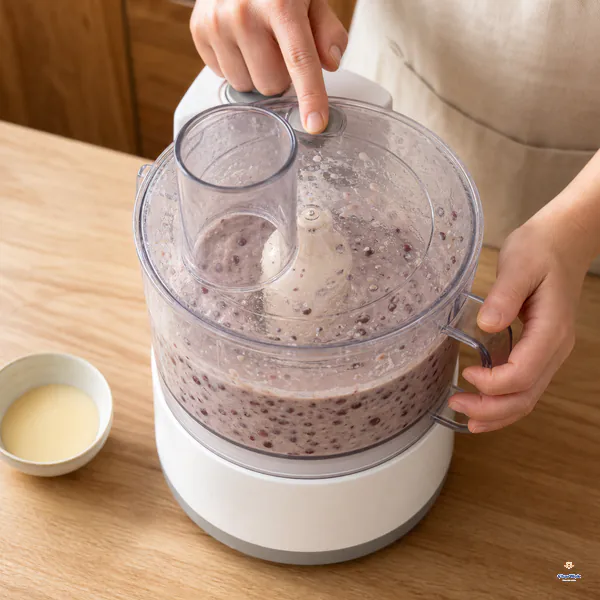
Pulse the warm custard with the cooked beans and about three quarters of the condensed milk, stopping while bean flecks remain or blending longer for a smoother base.
- Taste, then sweeten to frozen. Dip a spoon in. Here is the part most people get wrong: cold dulls sweetness dramatically, so the mix should taste slightly too sweet at room temperature. Stir in more condensed milk until it reads a touch sweeter than you think you want. Add a tablespoon of water or milk only if the mix will not pour.
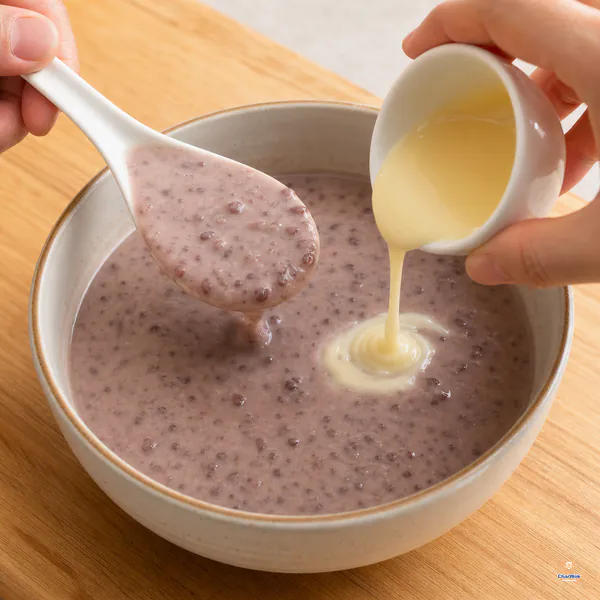
Taste the base at room temperature and add the reserved condensed milk until it seems slightly sweeter than your target, since freezing will dull the sweetness.
- Fill the molds, leaving headroom. Pour (a spouted jug helps) into popsicle molds, stopping about ½ inch (1 cm) below the rim; the base expands as it freezes. Tap the molds on the counter to knock out air pockets, especially around the beans. Insert sticks. If your mold does not have a stick lid, cover tightly with foil and push the sticks through the foil to hold them upright.
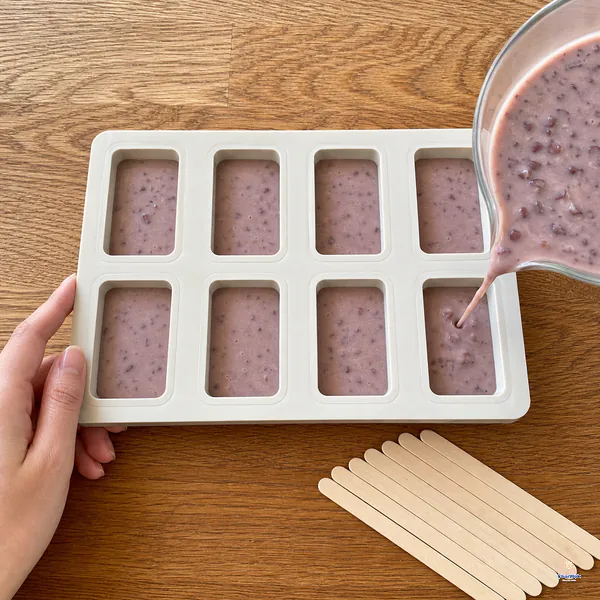
Divide the mixture among all eight cavities, stopping about one centimetre below every rim; tap the tray to release trapped air before inserting the sticks.
- Freeze until solid, 4–8 hours. Four hours is enough for standard small molds; overnight is foolproof. Resist opening the freezer early: partial freezing is what produces the icy, grainy pops I made in batch one.
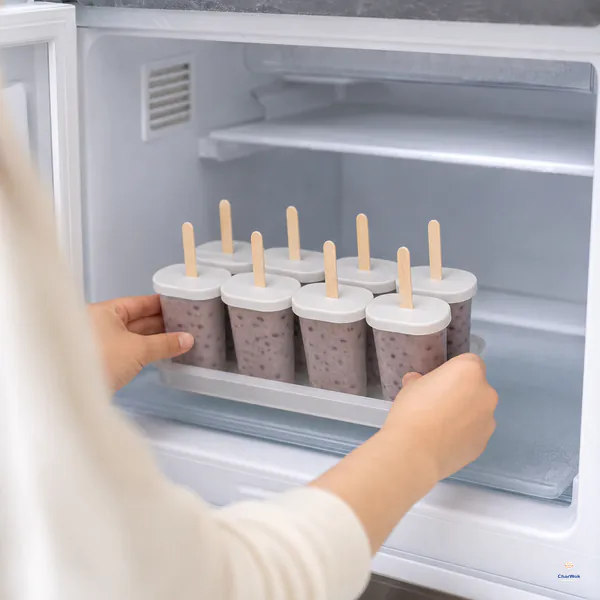
Keep the tray level and freeze undisturbed for 4 to 8 hours, preferably overnight, until every pop is solid through the centre.
- Unmold with warm water, not force. Hold each mold upside down and run warm (not hot) tap water over the outside for 10–15 seconds, then pull gently. If it resists, another 5 seconds of water. Yanking a frozen pop by the stick will pull the stick out and leave the body behind. I have done this, it is frustrating.
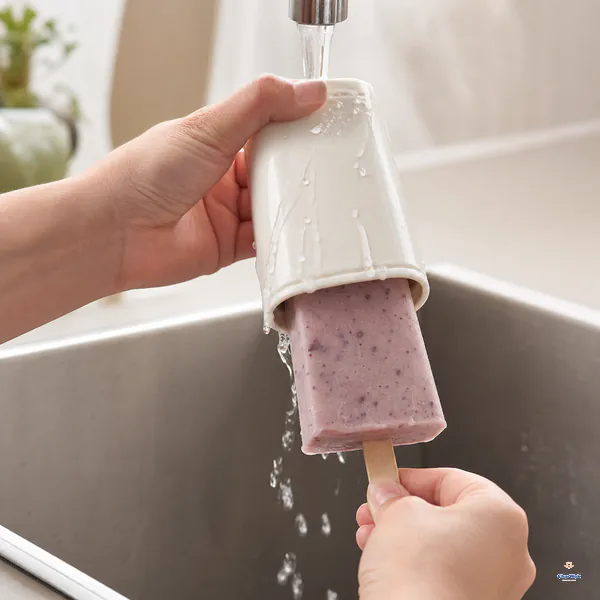
Run warm, not hot, water over the outside for 10 to 15 seconds, then pull gently; repeat for another five seconds instead of forcing a resistant pop.
When things go wrong
| Problem | Likely cause | Fix |
|---|---|---|
| Icy, grainy, shards on the teeth | Cornstarch undercooked, or not enough of it; mixture diluted | Cook until it visibly thickens like runny yogurt. Do not add extra water. Reheat and recook if you caught it early. |
| Popsicle will not release from the mold | Not enough warm-water time, or sticky bean residue | Run warm water longer, 20–25 seconds. A tiny smear of neutral oil in the mold before filling helps next time. |
| Beans all sink to the tip | Base too thin; beans too wet | Thicken the base more (the yogurt-coat test). Drain beans thoroughly before blending. |
| Pop freezes rock-hard, hard to bite | Too little fat or sugar | Use full-fat milk, or swap 2 tablespoons milk for cream. A touch more condensed milk also softens the freeze. |
| Not sweet enough once frozen | Tasted at room temp without accounting for cold | The base should taste a little too sweet pre-freeze. Add condensed milk, not plain sugar; you want the fat and body too. |
| Stick pulls out, body stays in mold | Pulling before fully loosened | More warm water, gentler pull. If it happens, refreeze 20 minutes and try again. |
Variations and pairings
The cornstarch-milk base is a canvas. A few directions worth trying:
- Black sesame. Replace a third of the beans with a few tablespoons of black sesame paste. The pop goes deep, toasty, faintly savory — my favorite variation.
- Coconut adzuki. Swap the whole milk for full-fat coconut milk and the condensed milk for sweetened coconut condensed milk. Tastes closer to a Southeast Asian ice cream bar.
- Sticky-rice stuffed. Drop a small spoonful of cooked sticky rice into each mold before filling, a chewy surprise at the center, echoing the texture of sticky-rice-stuffed lotus root.
- Matcha or osmanthus. Whisk 1 teaspoon matcha into the cornstarch slurry, or steep a small handful of dried osmanthus flowers in the hot milk before thickening.
For serving, these pop on their own, but they also sit happily next to other chilled Chinese sweets on a hot-weather dessert board: slices of mango pancakes, a piece of peanut sesame brittle for crunch, or the no-bake snow skin mooncakes if you want something more composed.
Storage
Once unmolded, wrap each pop tightly in wax paper or plastic and store in a sealed bag or container in the freezer for up to a month. Unwrapped, they pick up freezer smell and develop a tough icy skin within days. The base (before freezing) keeps in the fridge for up to 3 days, handy if you want to pour a few fresh pops on demand. They do not refreeze well once melted, so eat them straight from the freezer.
A note on equipment
Any silicone or rigid plastic popsicle mold works. Silicone releases more easily; rigid plastic gives sharper edges and a glossier surface. Wooden craft sticks are traditional and cheap; reusable plastic or silicone sticks are sturdier and pull out more cleanly. If you have no molds at all, pour the base into small paper cups, cover with foil, and push sticks through; the result is the same, just rounder.
Frequently asked questions
Can I use canned red beans? Yes. Rinse gently and drain very well; extra liquid thins the base and weakens the set. Texture will be slightly softer than home-cooked.
Is glutinous rice flour a real substitute for cornstarch? It is, and it gives a chewier, almost mochi-like bite. Use the same 3 tablespoons. Do not confuse it with regular rice flour, which will not gel properly.
Why do my popsicles taste bland after freezing? Cold suppresses sweetness. The pre-frozen base should taste a little too sweet at room temperature; add condensed milk until it does.
Can I make them dairy-free? Yes: full-fat coconut milk plus coconut condensed milk works well. The freeze will be slightly softer and the flavor clearly coconut.
How long do they keep? Best within two weeks; up to a month if wrapped airtight. They do not refreeze cleanly once melted.