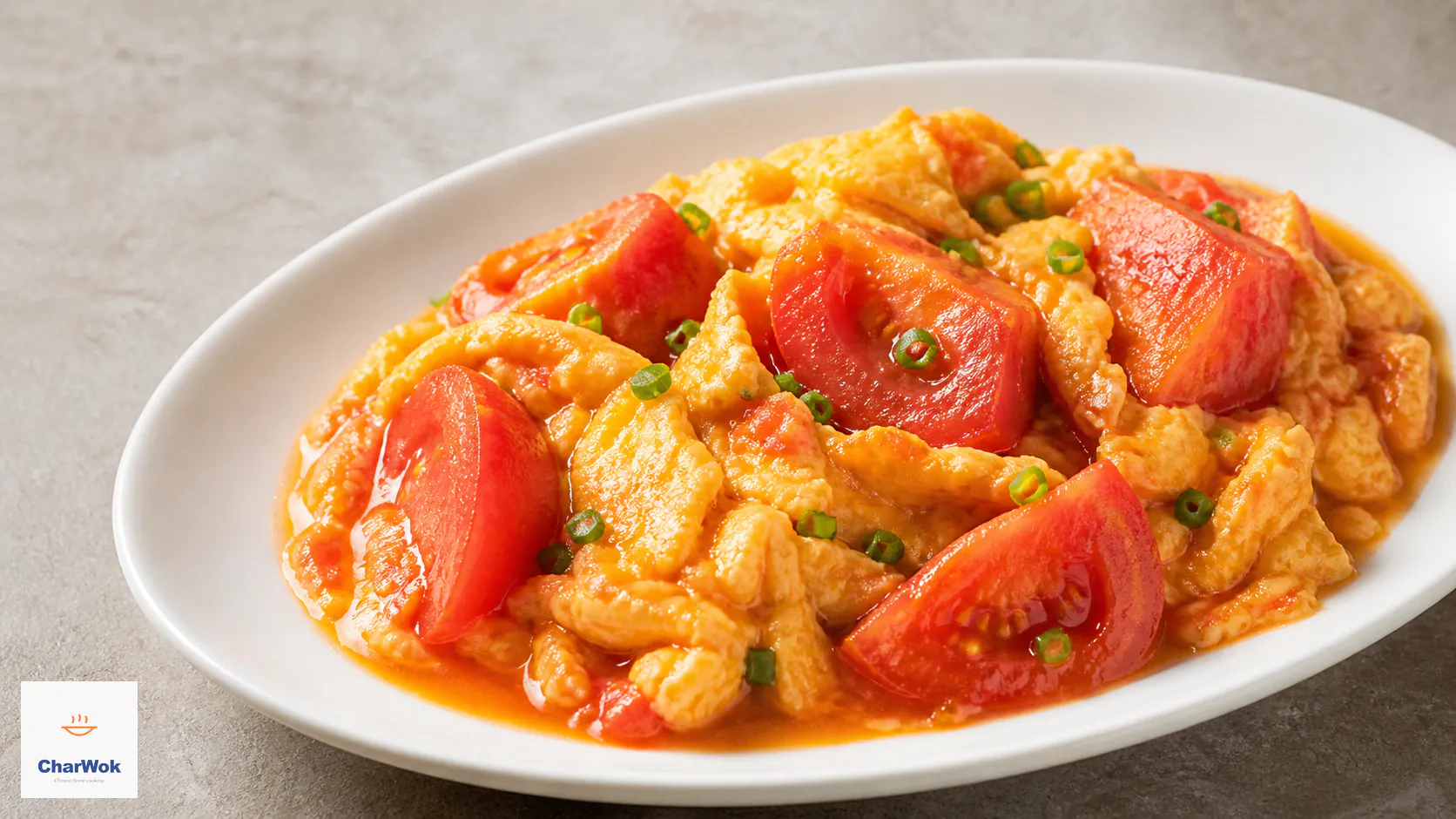
Tomato egg stir-fry is the dish I reach for when the fridge is bare and dinner is twenty minutes away. Four ripe tomatoes, four eggs, one pan, a little garlic. Yet for something so cheap and quick, it fails more often than it should: watery eggs, sour tomatoes that never sweeten, scrambled curds that turn rubbery. The reason is almost never the recipe. It is the heat, the sequence, and one ingredient most home cooks forget to add to the bowl.
This is the version I cook on a weeknight, built around two judgments I will not hedge on. Cook the eggs hot and fast, then take them out before they finish. Cook the tomatoes lower and slower, until they collapse into a glossy sauce on their own. If you reverse those temperatures you get exactly the bad outcome above.
At a glance: four eggs to four medium tomatoes (roughly 310 g), cooked in two separate shifts. Beat two tablespoons of water into the eggs for fluffier curds, fry them in oil heated to about 175–180°C (350–355°F) without smoking, pull them out still soft, then let the tomatoes break down for a full two to three minutes before they come back together. Ready in under ten minutes; the whole thing lives or dies on heat control and one pinch of sugar.
What this dish is, and where it comes from
Tomato scrambled eggs, or fan qie chao dan, is northern Chinese home cooking at its most elemental. The tomato is a New World ingredient that arrived in China in the late nineteenth century and was folded into everyday cooking through the twentieth. The pairing with eggs is now so common that it is one of the first things a child learns to make, and one of the default toppings for a bowl of hand-pulled noodles.
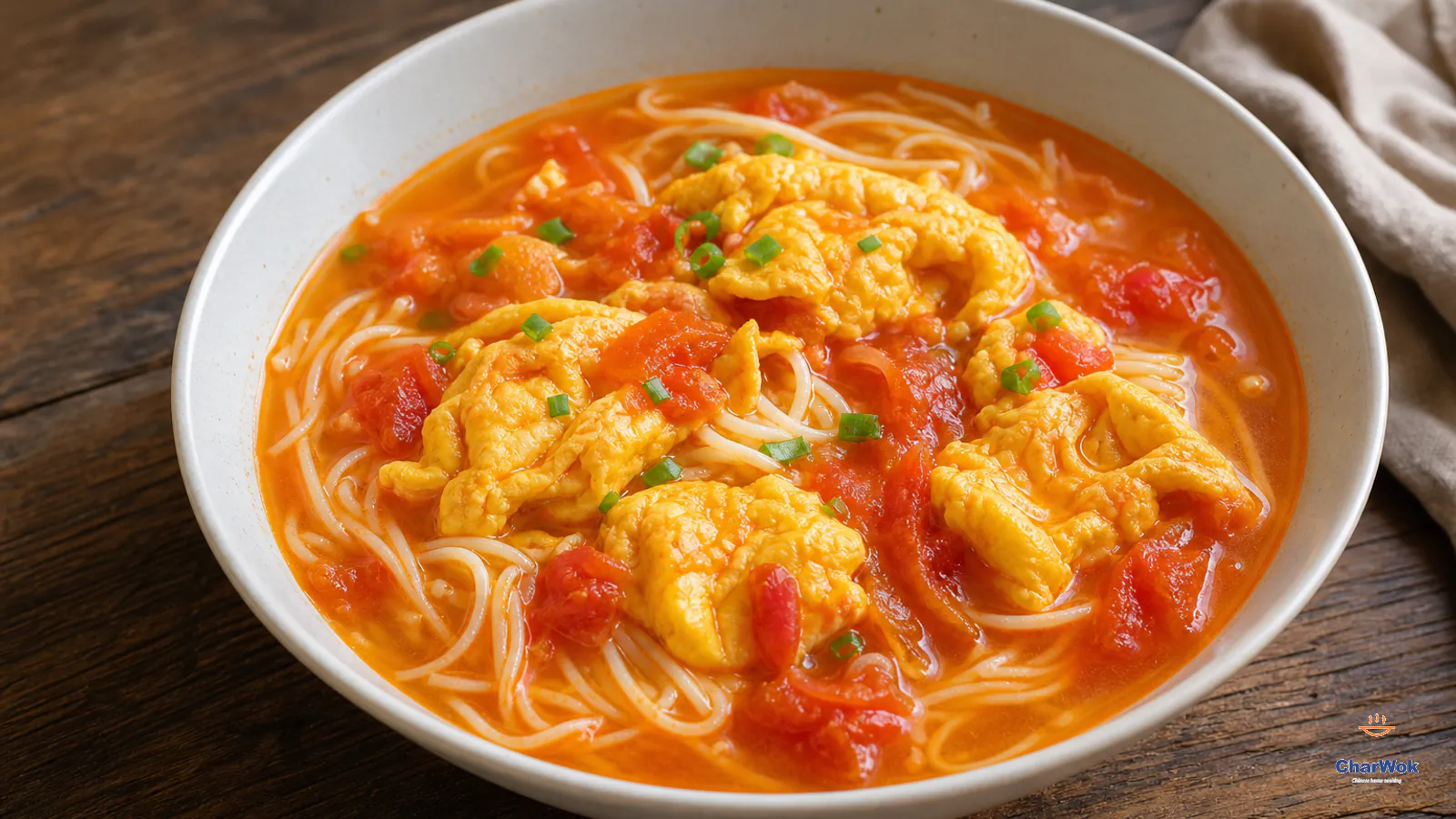
There are two broad schools. The northern version, the one most people know, leans savory, with garlic and scallion and a thin sauce that you mix into rice. The southern, sweeter version sometimes adds ketchup, which I find unnecessary if your tomatoes are ripe; if yours are pale and out of season, a teaspoon of ketchup is an honest fix. If you want the same flavors stretched over noodles instead of rice, the classic vehicle is a bowl of tomato and egg noodle soup, where the sauce becomes broth.
Ingredients
Ingredients at a glance
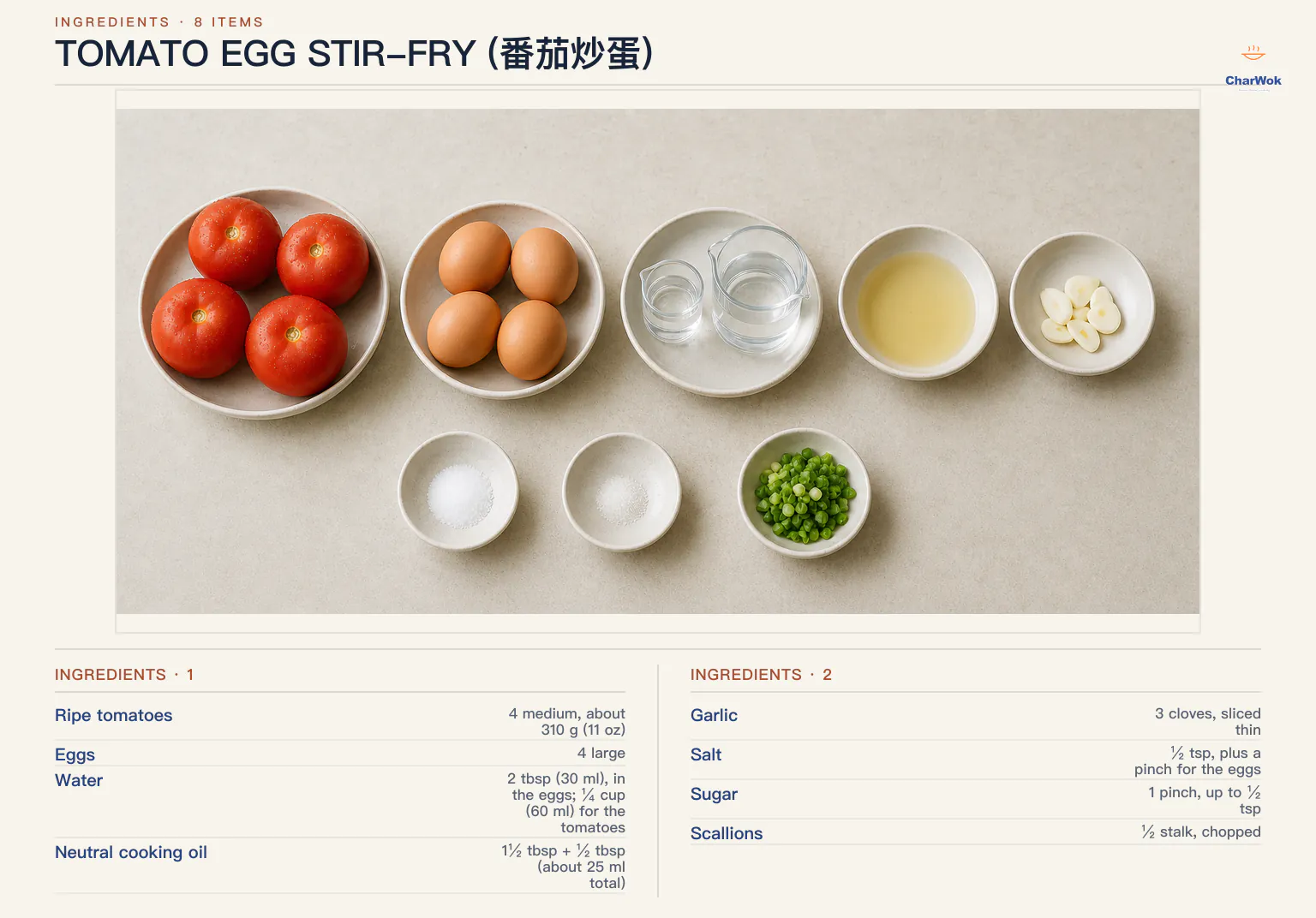
| Ingredient | Amount | Notes / substitute |
|---|---|---|
| Ripe tomatoes | 4 medium, about 310 g (11 oz) | Vine-ripened or Roma. Out of season, add 1 tsp ketchup. Cherry tomatoes work if halved. |
| Eggs | 4 large | Room temperature if you can; cold eggs seize tighter. |
| Water | 2 tbsp (30 ml), in the eggs; ¼ cup (60 ml) for the tomatoes | The water in the eggs is the step most people skip. It steams the curds from the inside and keeps them soft. |
| Neutral cooking oil | 1½ tbsp + ½ tbsp (about 25 ml total) | Grapeseed, canola, or peanut. Avoid olive oil; its flavor fights the tomato. |
| Garlic | 3 cloves, sliced thin | Ginger is an acceptable swap; scallion whites work too. |
| Salt | ½ tsp, plus a pinch for the eggs | Taste the finished sauce before adding more; tomatoes vary wildly. |
| Sugar | 1 pinch, up to ½ tsp | This is not for sweetness. It rounds out tomato acid. Omit only with peak-season fruit. |
| Scallions | ½ stalk, chopped | Cilantro or Chinese chives are good alternatives. |
The method, with the reasoning behind each move
Before you turn on the stove, get every ingredient ready. This dish moves fast once the heat is on, and the failure mode I see most often is burnt garlic while someone is still chopping scallions. If you are rusty on the pace of Chinese stir-frying, the garlic-and-greens rhythm in this bok choy stir-fry is good practice for the same prep-first habit.
- Prep the tomatoes. Core them and cut into rough bite-sized wedges. Skinning is optional. I peel only when the tomatoes are genuinely in season and the skin is tough, because the peel holds the pieces together during the hard cook. If you want to peel, score an X on the bottom, drop into boiling water for 20 seconds, then into ice water; the skin slips off. Cut larger wedges for a chunkier sauce, smaller for something closer to a gravy.
- Beat the eggs with water and a pinch of salt. Crack the eggs into a bowl, add the 2 tablespoons of water, and beat until the whites and yolks are fully blended with no streaks. The water is doing real work: as the egg hits the hot pan it turns to steam, which lifts and aerates the curd. Under-beating is the other common mistake; streaks of white mean uneven, lumpy scrambled egg.
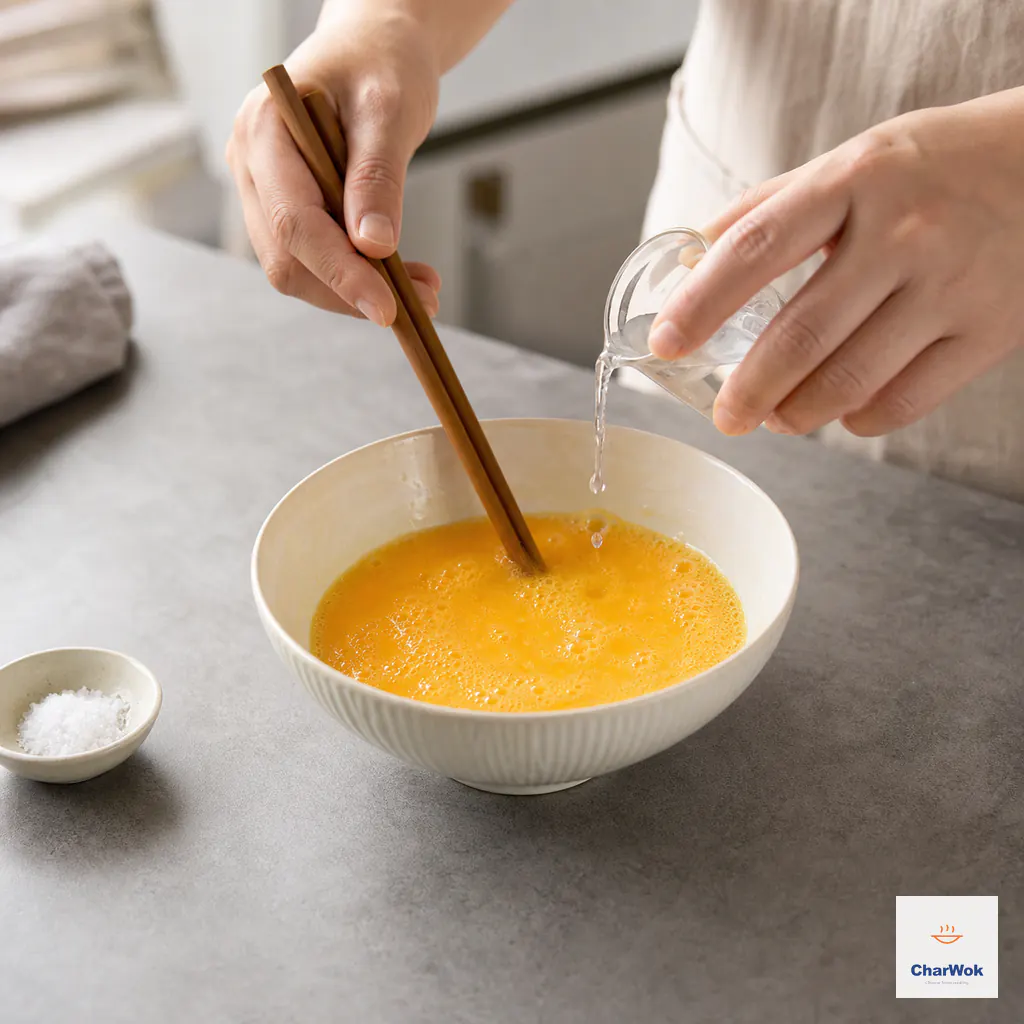
Beat in the water until no white streaks remain and fine bubbles form
- Get the oil properly hot, then cook the eggs fast. Heat 1½ tablespoons of oil gradually in a skillet or flat-bottomed wok over medium-high to about 175–180°C / 350–355°F. The oil should move freely and shimmer but not smoke; if smoke appears, turn off the burner and let it cool. Pour in the egg and wait two seconds for the bottom to set, then push the set curds around with a spatula so the liquid flows onto the hot surface. Stop when the eggs are set but still glossy and slightly runny in places, then transfer them to a plate immediately.
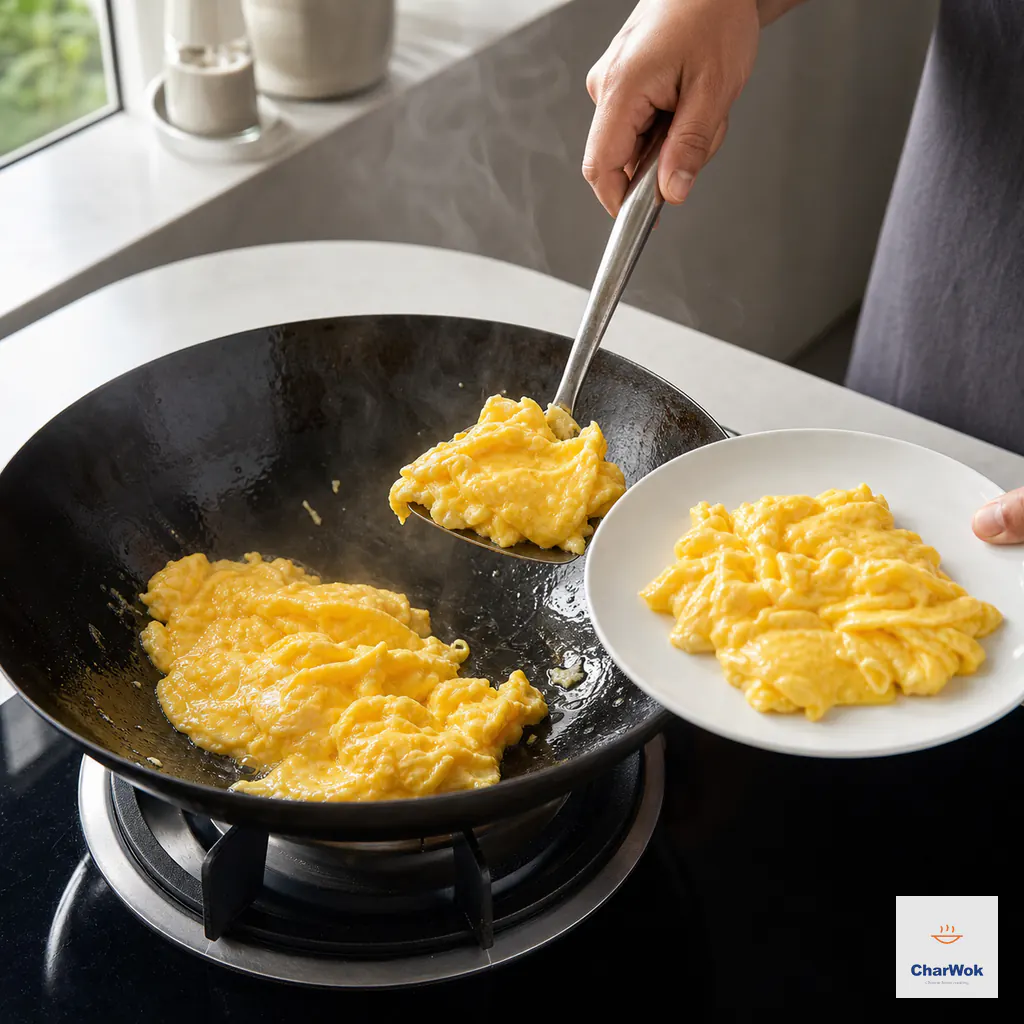
Heat the oil to about 175–180°C / 350–355°F without smoking, then pull the large curds while just set and still glossy
- Sweeten the garlic over medium heat. Lower the heat to medium and add the remaining ½ tablespoon of oil to the same pan. Add the sliced garlic and fry just until fragrant, about 10 to 15 seconds. Burnt garlic turns bitter and ruins the dish, so if the pan is still screaming hot from the eggs, take it off the burner for a moment first.
- Cook the tomatoes until they collapse. Add the tomato wedges and stir for about 20 seconds to coat them in the garlic oil, then pour in the ¼ cup of water. Now leave them alone. Let them cook two to three minutes, stirring only occasionally, until the edges soften and they release their juice into a thin sauce. Press a few pieces against the side of the pan with your spatula to help them break down. This slow collapse is where the flavor builds, and it is the part people rush.
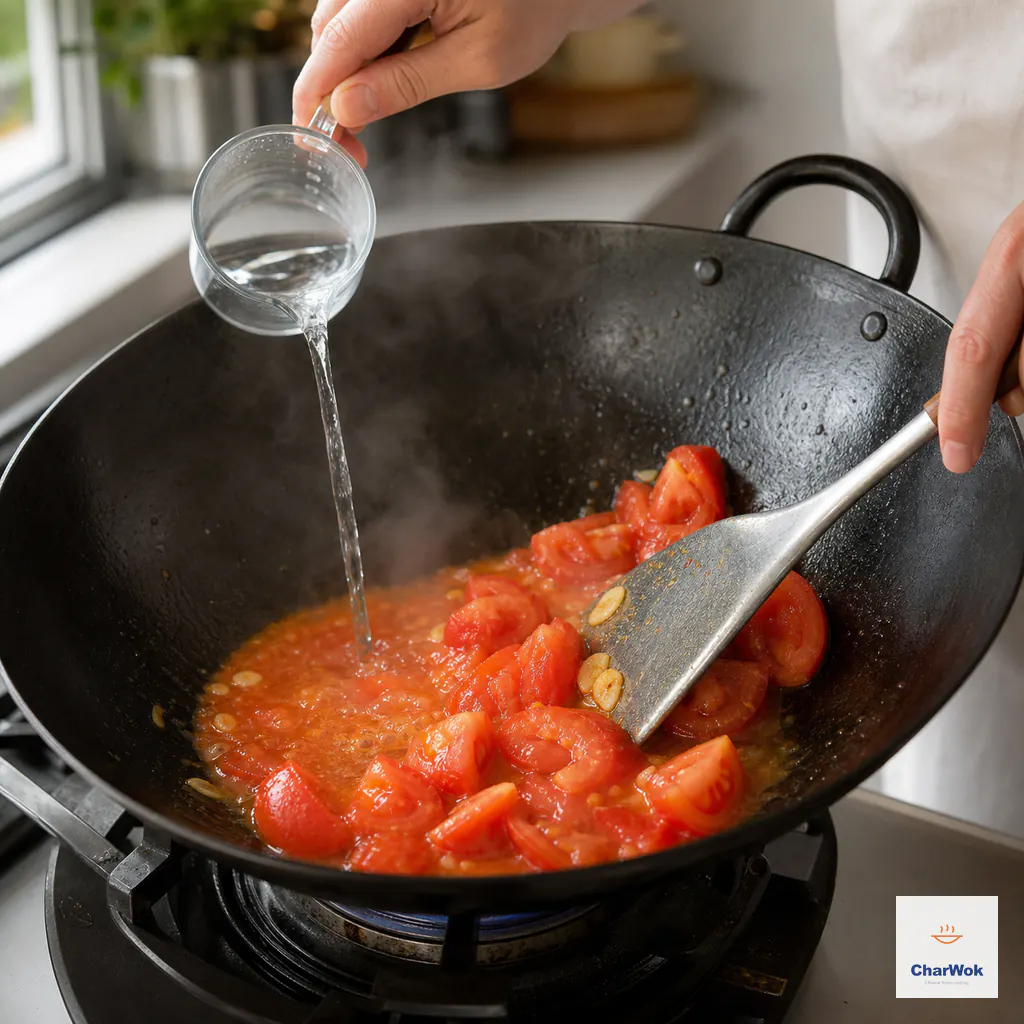
Cook until the tomato edges soften and release a light sauce
- Bring the eggs back, season, finish. Return the scrambled eggs to the pan. Sprinkle in the salt, the sugar, and most of the scallions. Stir for 20 to 30 seconds, just long enough for the eggs to soak up some sauce and warm through. Over-stirring here breaks the curds into threads; you want them in soft pillows. Taste, adjust salt, and serve immediately over rice.
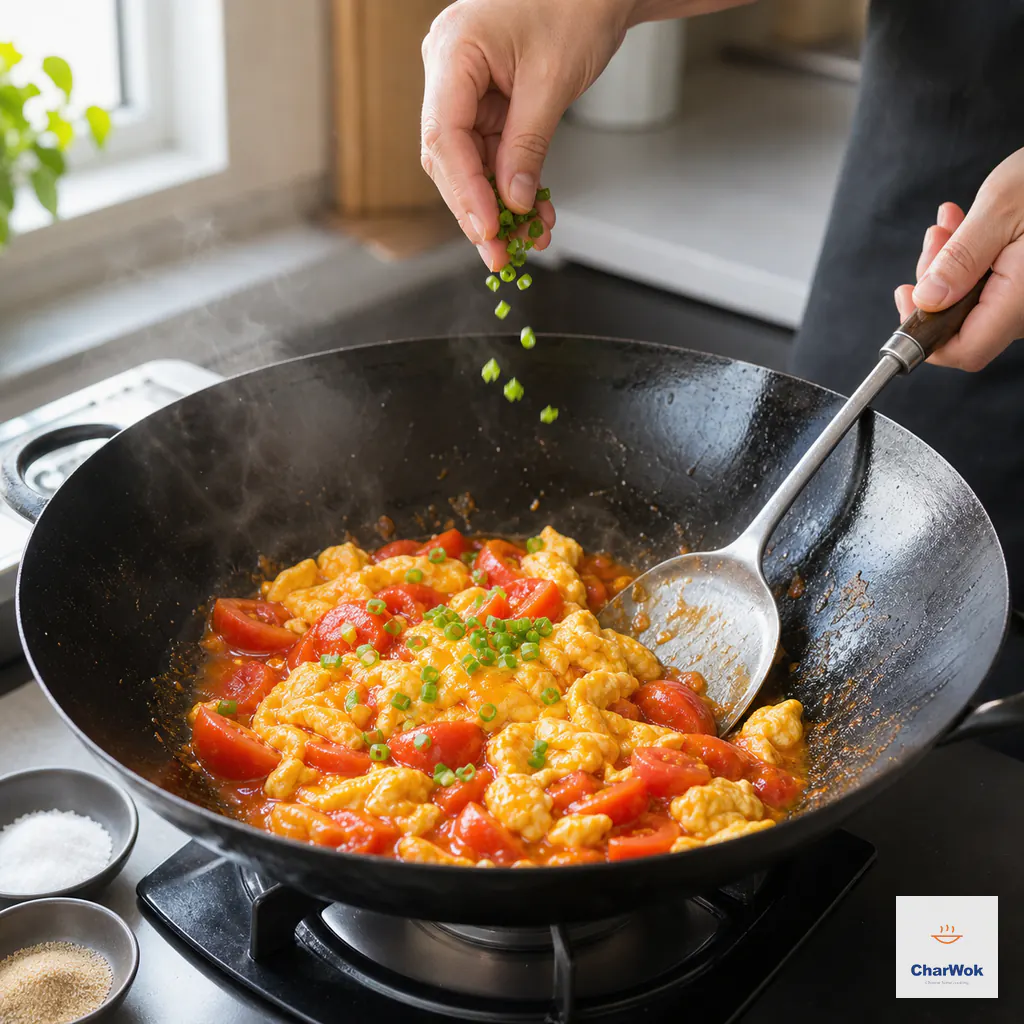
Fold the egg back in for only 20 to 30 seconds, keeping the curds large
Oil-temperature safety follows the U.S. Fire Administration cooking guidance: stay beside the pan, turn off the burner if oil smokes, and never add water to burning oil.
When it goes wrong, and how to fix it
I have made every mistake below at least once, usually because I was in a hurry or cooking on a weak burner. None of them ruin the ingredients, but they do ruin the dish, so it is worth knowing the diagnosis.
- Weeping puddle on the plate. The tomatoes were never cooked long enough to release and re-absorb their juice, or you added too much water. Next time, give the tomatoes a full two to three minutes before the eggs go back in. If the pan is already soupy, raise the heat for thirty seconds at the end to boil it down before serving.
- Rubbery, dense curds. The eggs were cooked to completion in the pan instead of pulled early, or beaten without the water. Pull them when they still look slightly underdone; carryover heat finishes them.
- Sour, thin sauce. Pale, out-of-season tomatoes, or you skipped the sugar. Add the pinch of sugar, or a teaspoon of ketchup, and let the tomatoes cook a minute longer to concentrate.
- Bitter, acrid undertone. The garlic burned. Once garlic goes past pale gold it is unrecoverable; start that step over and pull the pan off the heat sooner.
- Eggs shredded into tiny threads. You over-stirred the final combine, or the curds were too soft going back in. Stir gently and briefly at the end.
- Sticking in a carbon steel wok. Preheat a seasoned dry wok over medium-high for 60 to 90 seconds, add the oil and swirl, then wait until it shimmers before adding the egg. For nonstick, add the oil before heating. Do not use smoke as the readiness cue.
Variations and what to serve it with
The base recipe is a canvas. A few directions I cook often:
- Tomato egg over rice. The classic. The sauce should be loose enough to soak into a bowl of plain rice. If you want to build the whole meal in one pan the night before, egg fried rice uses the same kind of fluffy scrambled curds and reheats beautifully.
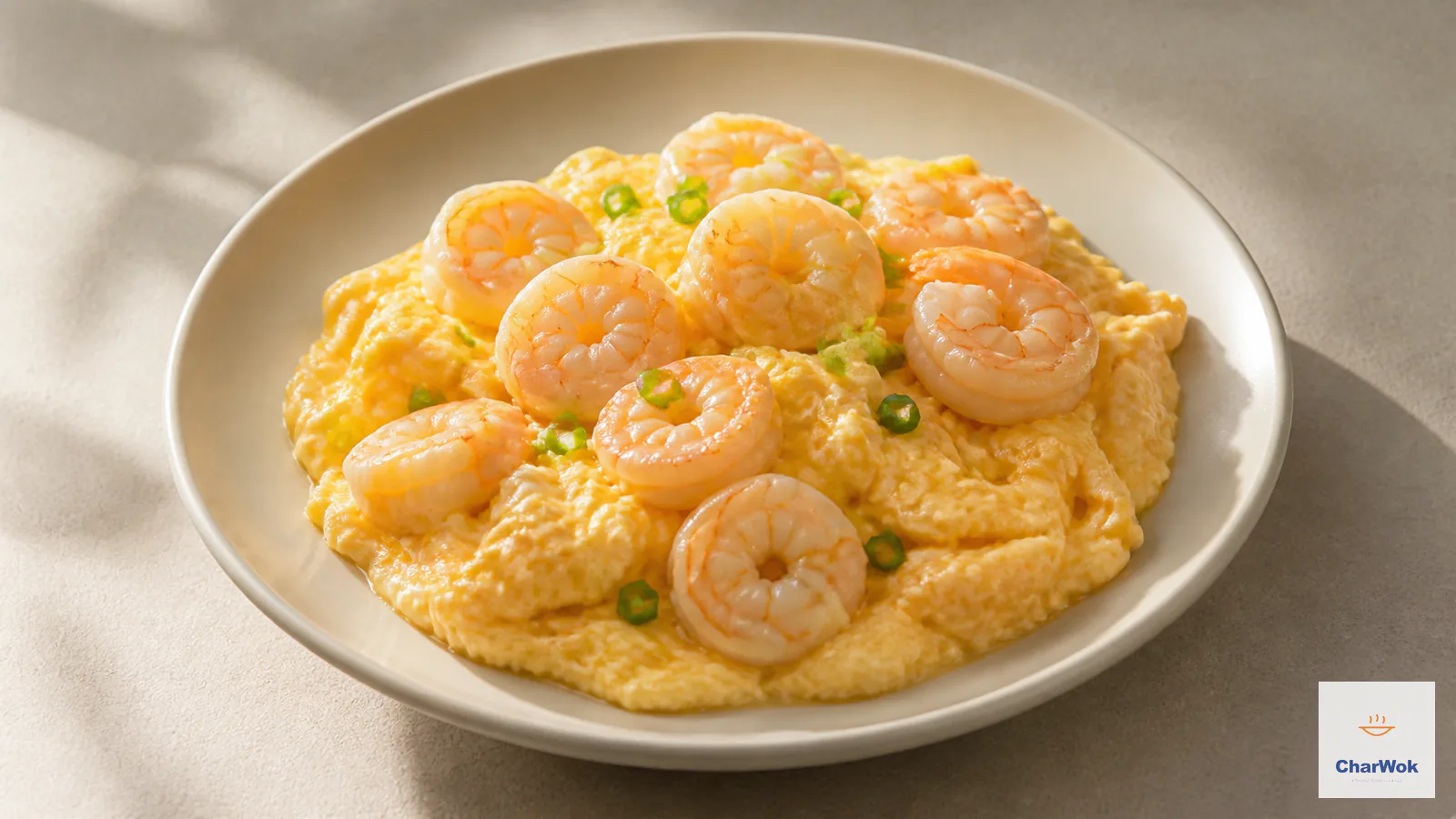
- Add shrimp. Half a pound of peeled shrimp, briefly stir-fried and folded in at the end, turns this into something close to shrimp and egg stir-fry with a tomato base. Dry the shrimp well first or the pan temperature drops.
- Make it richer. A teaspoon of toasted sesame oil stirred in off the heat adds a northern-style aroma. A teaspoon of light soy sauce deepens the savory note; add it to the tomatoes, not the eggs, or the curds gray.
- Serve it soupy. Add an extra half cup of water and a splash of stock and you are most of the way to a quick tomato egg drop soup. Slivered scallion and a few drops of sesame oil finish it.
- Pair it. Two or three small dishes is the Chinese table rhythm. Tomato egg is sweet and soft, so balance it with something sharp or crunchy: a cold cucumber salad, smashed cucumber, or lettuce with oyster sauce for a quick green. A bowl of plain rice and a simple egg drop soup round out a light meal.
- Make it for breakfast. Fold leftovers into a warm flatbread the way you would for an egg and scallion crepe, or spoon the last spoonfuls over a bowl of congee.
Storage and reheating
Tomato egg keeps in the fridge for up to two days in a sealed container. It does not freeze well; the eggs weep and turn spongy on thaw. Reheat gently in a pan over medium-low with a splash of water, just until warm through. Microwaving works in a pinch but toughens the curds, so cover the bowl and use medium power. Honestly, this dish is best the day it is made, and the leftovers are best repurposed into fried rice or noodle topping rather than eaten straight.
A few notes on technique
The single most useful thing you can do is stop thinking of scrambled egg as a side cooked alongside the tomato, and start thinking of it as an ingredient you par-cook, rest, and finish. The same logic applies to other soft egg stir-fries; the curd handling in chive and egg stir-fry and the silken texture in Chinese steamed eggs both reward the same restraint at the stove. Once the muscle memory is there, the whole family of egg dishes gets easier.
One honest limitation: this recipe depends on tomato quality more than technique can fix. In deep winter, when even vine-ripened tomatoes taste of nothing, the sugar and the ketchup rescue will only carry you so far. On those nights I switch to the ketchup-forward version, or I simmer the same ingredients into a noodle soup, where the long cook extracts more from a mediocre tomato.
Frequently asked questions
A short summary of the questions that come up most. The answers below are deliberately briefer than the body of the article.
Do I need to peel the tomatoes?
No. The skin helps the wedges hold together during cooking. Peel only if the tomatoes are peak-season and you want a smoother, more refined sauce.
Why add water to the eggs?
The water turns to steam as the egg hits the hot pan, which lifts and aerates the curd for a softer, fluffier result. About two tablespoons per four eggs is the right ratio.
Can I make it without sugar?
Only with genuinely ripe, in-season tomatoes. The sugar rounds out acidity, so skip it just in summer and use the pinch the rest of the year.
What if my tomatoes are pale and out of season?
Add the pinch of sugar and a teaspoon of ketchup to the cooking tomatoes. It is an honest shortcut, not a compromise, when the fruit itself has no flavor.
Skillet or wok?
A flat-bottomed skillet on a home stove is easier and more forgiving. A carbon steel wok works if it is well seasoned and you keep the heat high; otherwise the eggs stick.