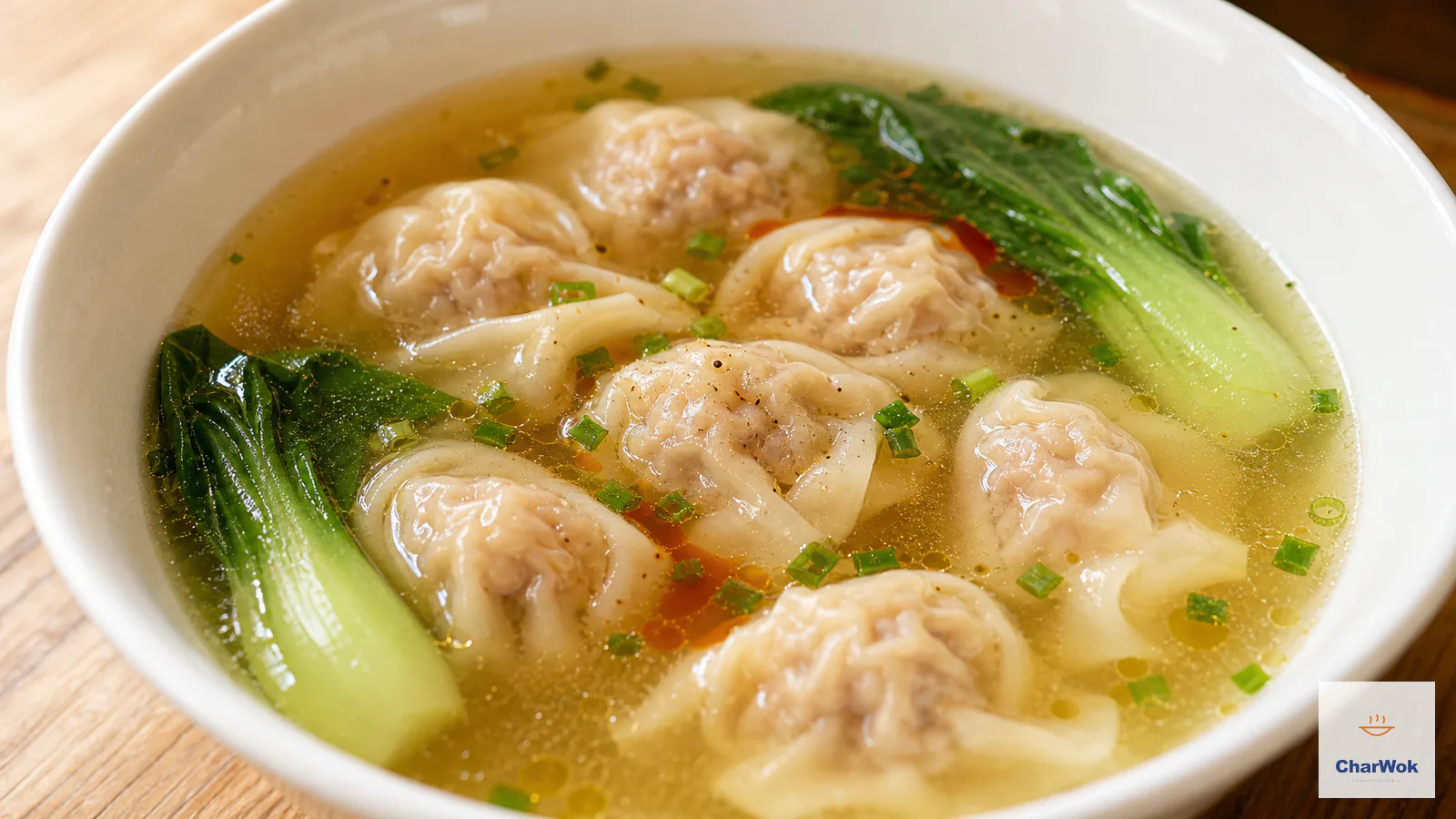
A satisfying pork wonton soup needs two things: a juicy, cohesive filling and a clear broth that does not taste floury. Both are manageable at home when the pork is mixed until sticky, the broth and wontons use separate pots, and the filling is checked with a thermometer rather than a timer.
Juiciness does not come from adding spoonfuls of oil. The useful technique is to work a measured amount of cold broth into the pork until the mixture turns tacky and holds together. That protein network retains moisture while the wontons cook.
Use roughly 1 tablespoon of cold broth or water per 100 g of ground pork and stir in one direction until the meat turns sticky. Keep the raw filling at 40°F / 4°C or below. Floating is only the cue to start checking: 2 to 3 of the largest wontons from different parts of the pot must each reach 160°F / 71°C in the pork centre.
What kind of wontons are these, and where do they come from
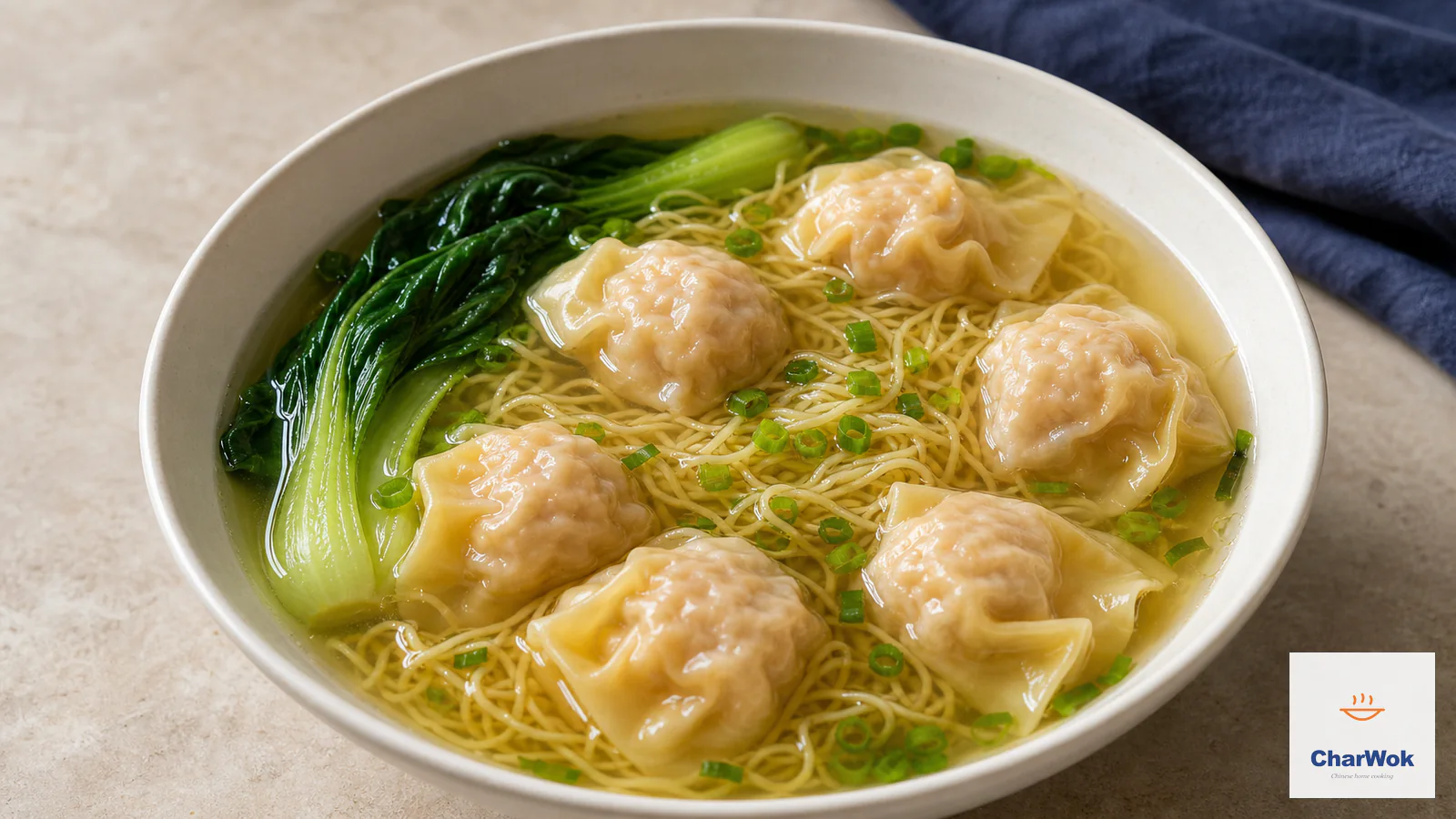
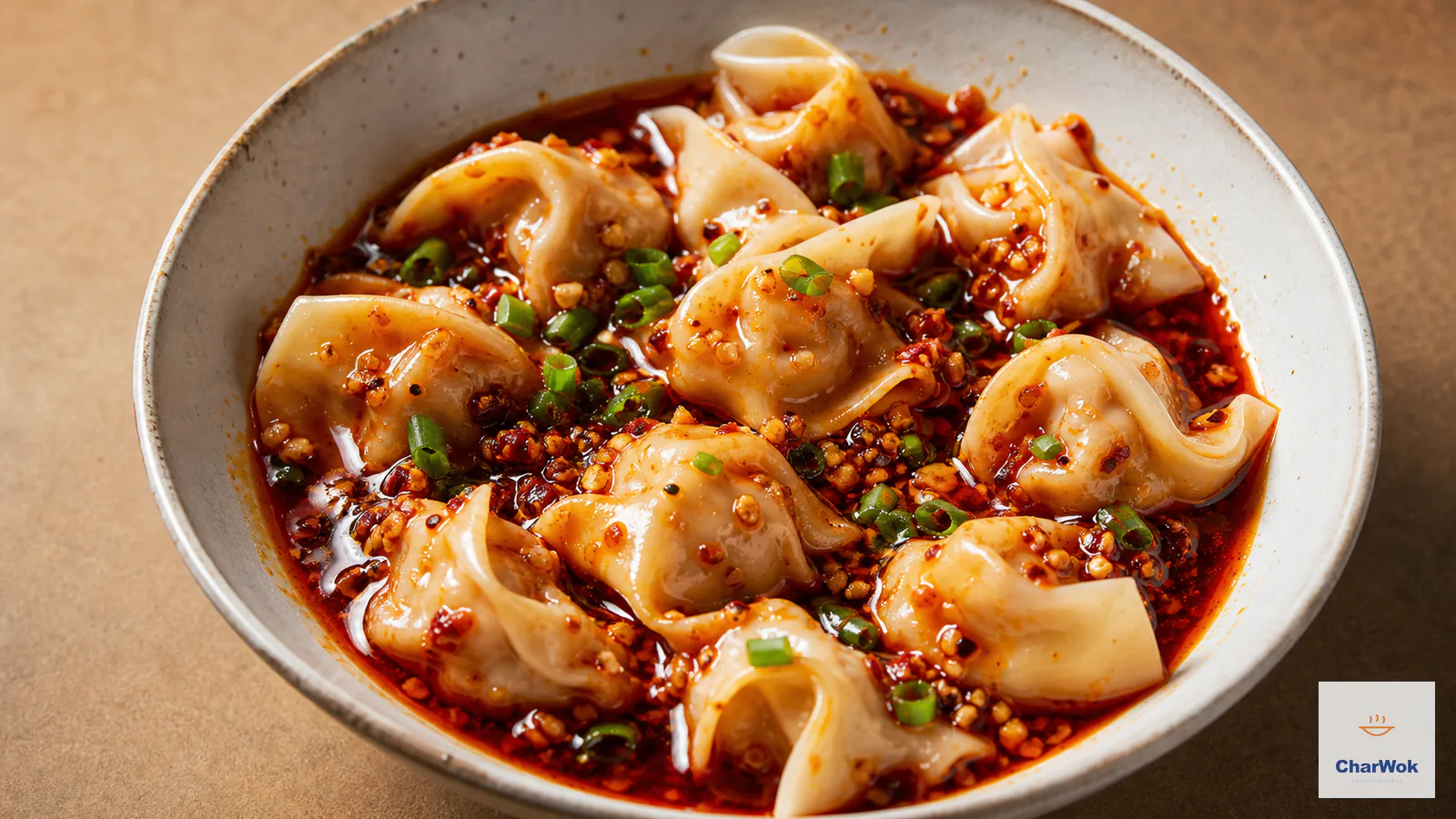
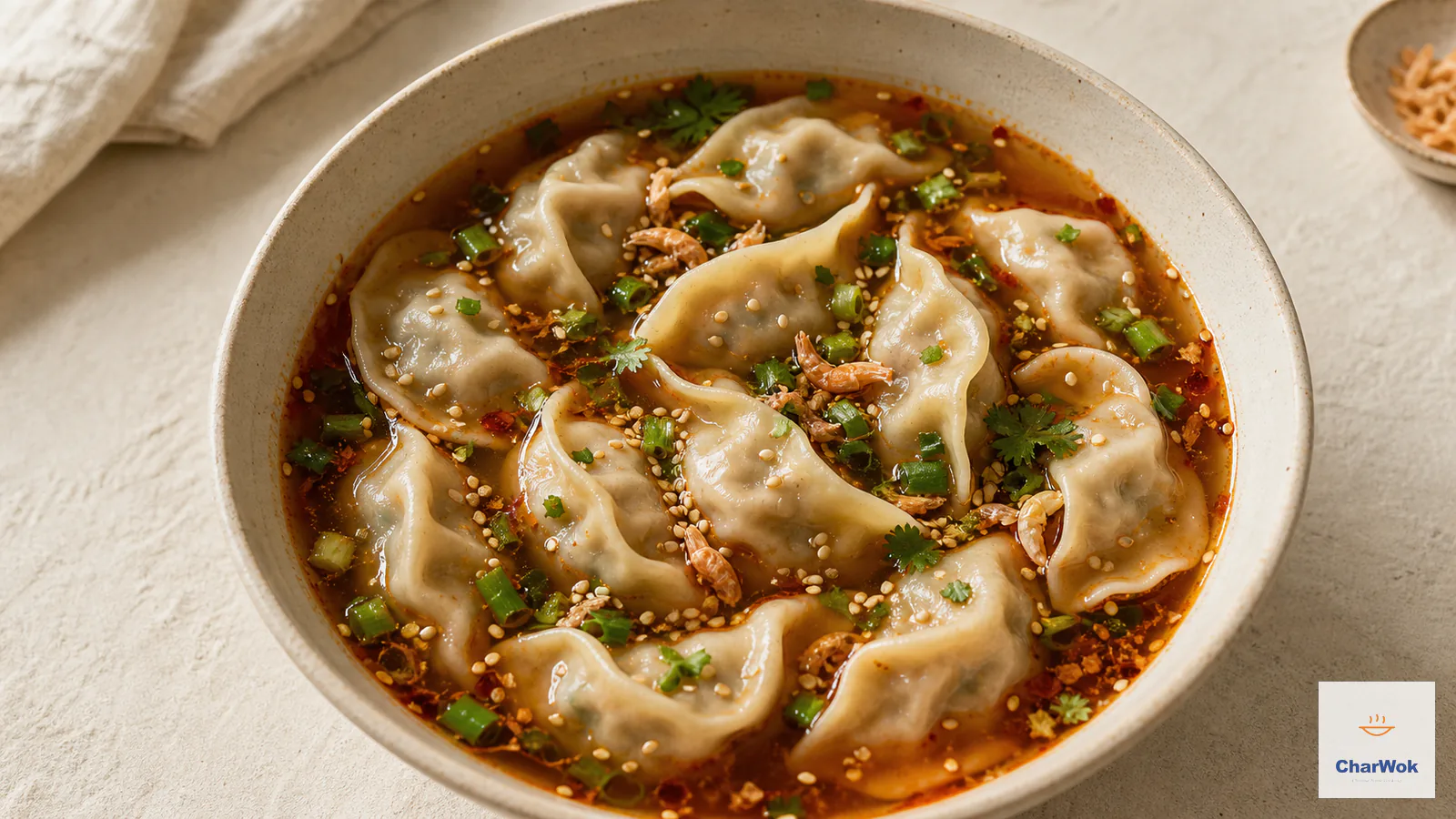
Wontons appear in several regional Chinese styles. Cantonese wontons often feature shrimp and may be served with thin egg noodles; Sichuan red-oil wontons, or hong you chao shou, use a chile-and-soy dressing. This home-style soup keeps the filling focused on pork, ginger, and scallion in a clear chicken or pork broth.
Across those styles, the basic construction is similar: a thin wheat wrapper, a small amount of seasoned filling, and a water-sealed edge. The wrapper thickness, fold, filling, and serving sauce or broth create the regional differences.
The ingredients, and why each one matters
Complete ingredients for pork wonton soup
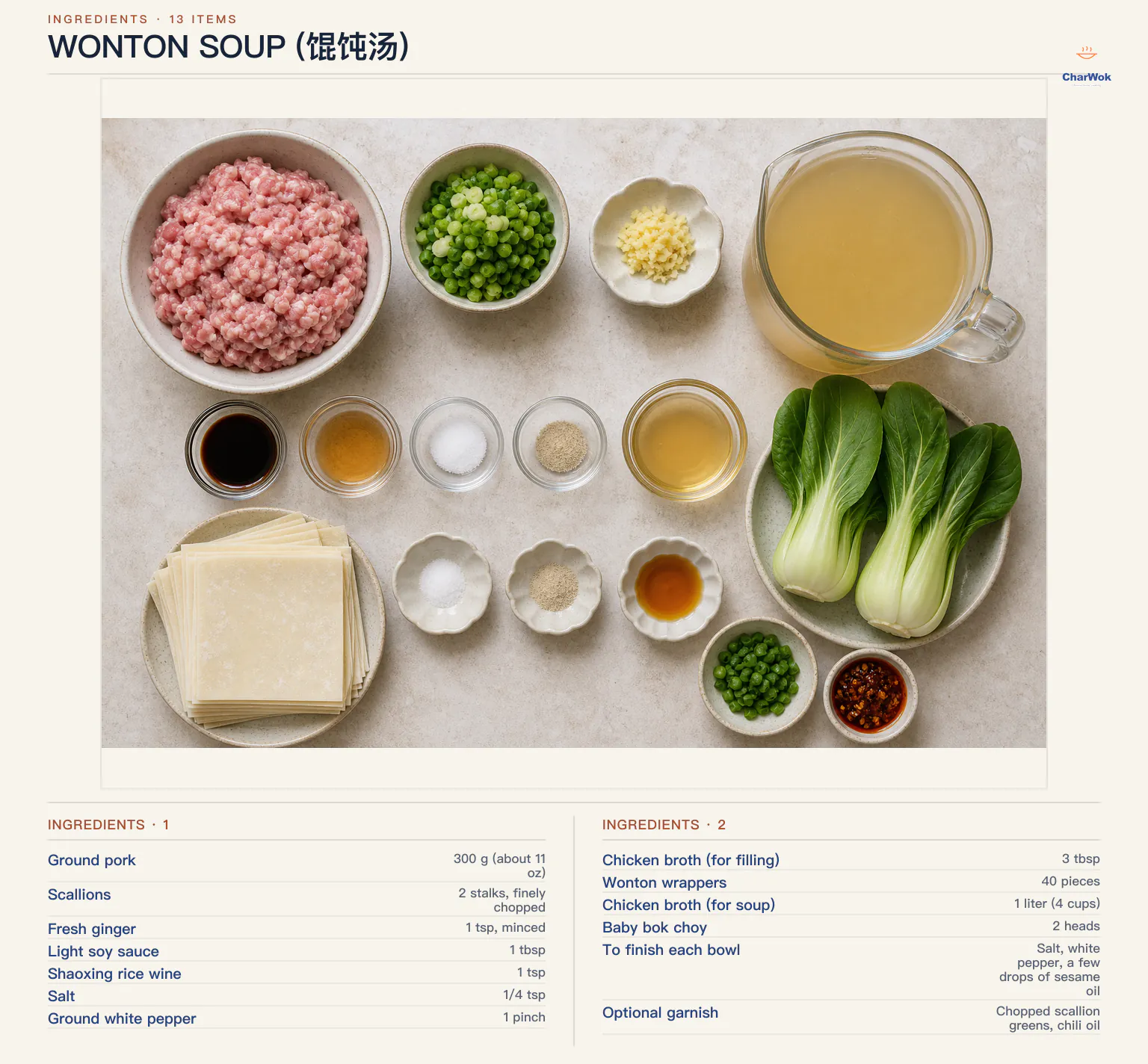
| Ingredient | Amount | Notes / substitute |
|---|---|---|
| Ground pork | 300 g (about 11 oz) | Use ground pork with some visible fat for a juicy filling; this recipe does not treat other meats as one-to-one substitutes. |
| Scallions | 2 stalks, finely chopped | The white and pale green parts go in the filling. Save the dark green for garnish. |
| Fresh ginger | 1 tsp, minced | Peel it. Ginger powder is a poor substitute here; the brightness is missing. |
| Light soy sauce | 1 tbsp | Salt and a little color. Use light, not dark; dark soy would muddy the broth. |
| Shaoxing rice wine | 1 tsp | Removes the pork's raw edge. Dry sherry is the classic substitute. |
| Salt | 1/4 tsp | Seems low, but the soy sauce carries the rest. Taste a cooked tester wonton before adding more. |
| Ground white pepper | 1 pinch | White, not black. Black pepper fights the delicate broth. |
| Chicken broth (for filling) | 3 tbsp | This is the secret to juicy pork. Water works if you have no broth. |
| Wonton wrappers | 40 pieces | Store-bought Hong Kong-style wrappers (yellow, square) are ideal. Make your own if yours are stale or cracked. |
| Chicken broth (for soup) | 1 liter (4 cups) | The bowl's backbone. Homemade stock is worth the effort; boxed low-sodium is fine. |
| Baby bok choy | 2 heads | Spinach, napa cabbage, or gai lan tips all work. |
| To finish each bowl | Salt, white pepper, a few drops of sesame oil | Season the bowl, not the pot. Each diner can adjust. |
| Optional garnish | Chopped scallion greens, chili oil |
Why this filling is juicy and most aren't
Here is the food science, because it changes how you cook. Ground pork is mostly muscle fiber. When you stir it aggressively and add liquid in small doses, two things happen. The salt dissolves some of the myosin, a protein in the muscle, which makes the meat sticky and able to hold water. The mechanical stirring aligns those proteins into a network that traps the broth you're adding. This is the same principle behind a good Lion's Head meatball or a properly made dumpling filling.
If you skip this step, the liquid can weep out during cooking and pool in the wrapper or leak into the boiling water. Stir consistently until all the liquid is absorbed and the mixture clings to itself. Direction matters less than sustained mixing and keeping the filling cold; choosing one direction simply makes the texture change easier to judge.
Make the filling
- Put the pork, scallion whites, ginger, light soy, Shaoxing wine, salt, and white pepper in a bowl. Add the 3 tablespoons of broth.
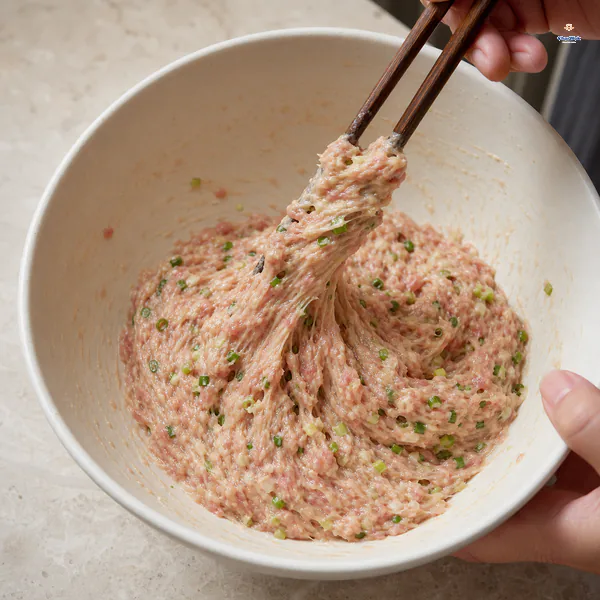
Beat the pork with scallion, ginger, soy sauce, Shaoxing wine, salt, white pepper and three tablespoons of broth until sticky and elastic rather than wet.
- Stir with chopsticks or a wooden spoon in one direction, pressing the meat against the side of the bowl. After about a minute the mixture will look wet and sloppy. Keep going.
- Stop when the meat has absorbed all the liquid and turned pale, sticky, and slightly stringy. It should climb the chopsticks when you lift them. This takes 2 to 4 minutes by hand.
- Cook a half-teaspoon of the filling in the microwave or a dry pan to taste for salt. Adjust now, not later.
Cover and refrigerate the filling for 10 minutes so it firms up and becomes easier to portion. Keep it at 40°F / 4°C or below, cook or freeze it within one day, and wash hands, the bowl, and utensils before they touch cooked food or garnishes.
Fold the wontons
- Keep a small bowl of water and a clean towel next to you. Work with one wrapper at a time and keep the rest under a damp towel so they don't dry out and crack.
- Place a rounded teaspoon of filling slightly off-center. Less is more here; an overstuffed wonton splits in the boil.
- Dip your fingertip in water and run it along two adjacent edges of the square. Fold the wrapper corner to corner to make a triangle, pressing the air out toward the seam before you seal it. A pocket of trapped air is the number one cause of burst wontons.
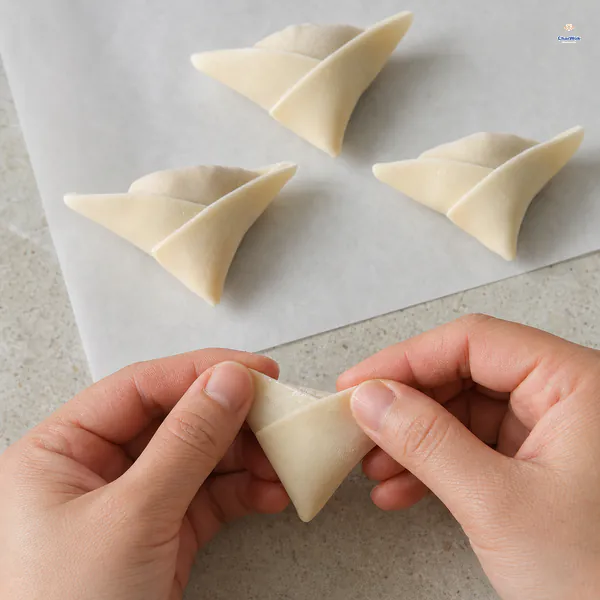
Use only a modest spoonful of filling, press out trapped air, seal the main seam completely, then overlap and pinch the two corners.
- Bring the two long corners of the triangle toward each other, overlap them, and press to seal. You now have the classic "nurse's cap" shape. This is the simplest fold; for a visual on the others, see the six wonton folds guide.
- Set each finished wonton on a parchment-lined tray, not touching its neighbors. They will stick together irreversibly if they touch. The same water-seal principle applies to every jiaozi and wonton fold, so if you've made dumplings before, this is familiar ground.
Build the broth and cook
- Heat the 1 liter of broth in a saucepan until it just boils, then turn it down to a bare simmer and cover it. You want it hot but not reducing, because a heavily reduced broth gets salty fast.
- In a separate wide pot, bring a generous amount of water to a full rolling boil. Use a different pot than your broth pot. Cooking the wontons in the broth would cloud it and turn it floury.
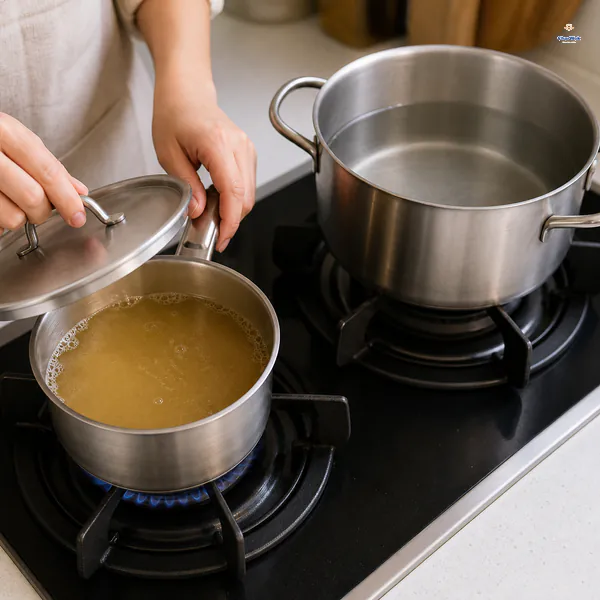
Heat the chicken broth gently and keep it covered while a separate wide pot of plain water comes to a full boil for the wontons.
- Drop the wontons in, ideally 10 to 12 at a time so they have room. Nudge them gently off the bottom with the back of a spoon in the first 10 seconds, before the wrapper sets. This is the moment they stick most.
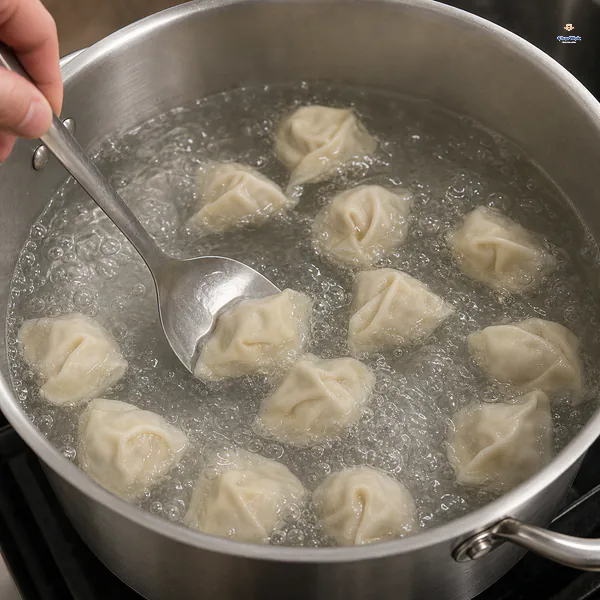
Add the wontons in batches to fully boiling water and gently sweep the spoon across the bottom for the first 10 seconds so they do not stick.
- When the wontons float, start checking rather than starting a timer. Insert a thin instant-read thermometer sideways into 2 to 3 of the largest wontons from different parts of the pot, avoiding the wrapper. Every sampled pork centre must reach 160°F / 71°C; if one is cooler, keep boiling and recheck.
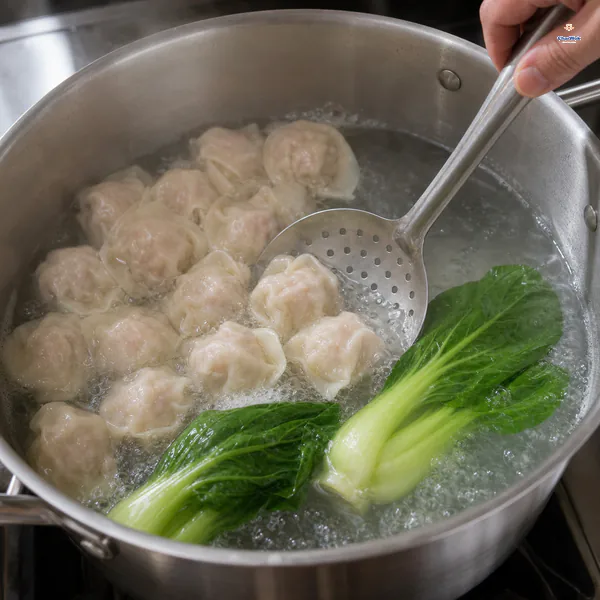
Floating is the cue to check 2 to 3 large wontons from different pot positions; once every pork centre reaches 160°F / 71°C, blanch the bok choy briefly.
- After the wontons pass the temperature check, drop in the baby bok choy for 20 to 30 seconds. Lift everything out with a spider or slotted spoon.
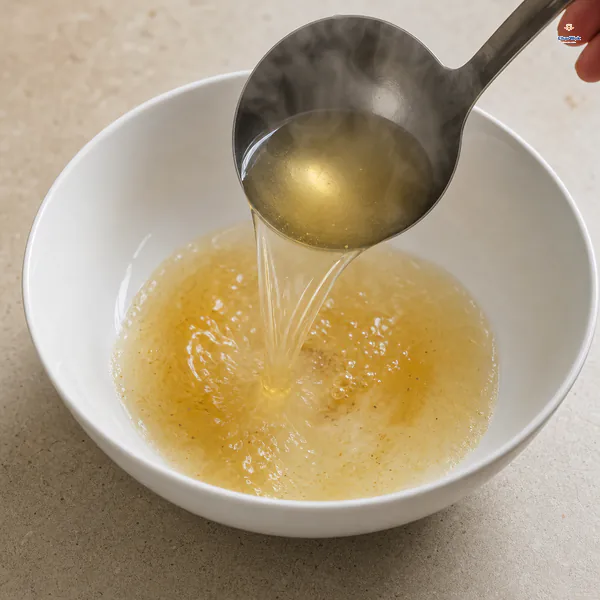
Divide the salt, white pepper and sesame oil among the serving bowls, then ladle in the hot chicken broth before adding the wontons.
Assemble the bowls
- In each serving bowl put a pinch of salt, a small pinch of white pepper, and a few drops of sesame oil.
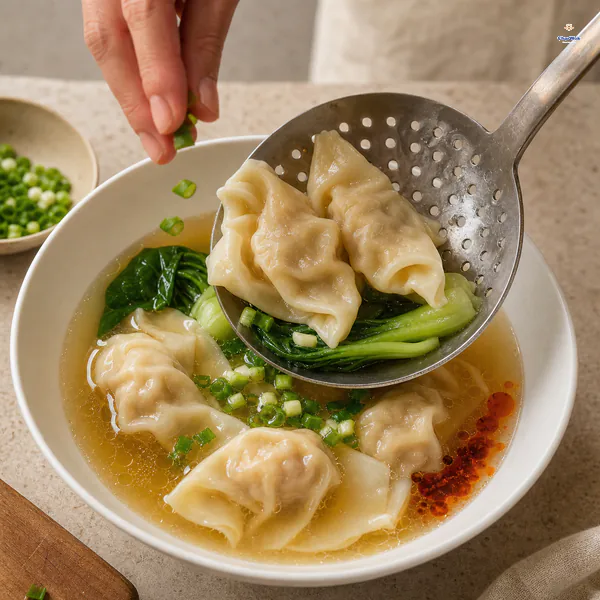
Transfer the drained wontons and bok choy into the seasoned broth, then finish with scallion and only a little chili oil if desired.
- Ladle the hot broth in and swirl to dissolve the seasonings. Doing it this way, rather than seasoning the pot, lets each bowl be tuned to taste.
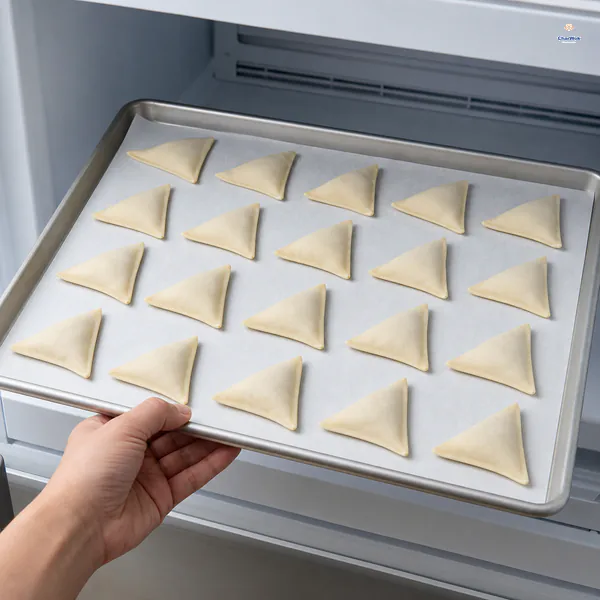
For make-ahead wontons, freeze the raw sealed parcels in a single layer without touching; move them to a freezer bag only after solid.
- Arrange the wontons and greens in the broth. Finish with scallion greens and a spoon of chili oil if you like heat.
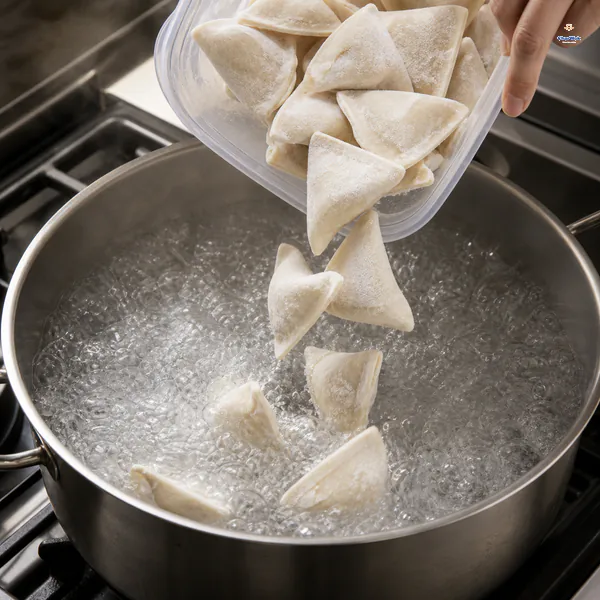
Cook frozen wontons straight from the freezer, then check 2 to 3 large pieces from different pot positions and require 160°F / 71°C in every pork centre.
When things go wrong, here is the fix
The filling is dry and dense. Either you didn't stir in enough liquid, or you didn't stir long enough for the meat to absorb it. Next time, add the broth in two doses and stir until the meat visibly changes texture. You can also rescue a dry filling by adding a teaspoon of water and stirring another minute.
The wontons split open in the water. Usually too much filling, or trapped air. Use a measured teaspoon, not a heaping one. Press the filling flat in the wrapper before folding so air has somewhere to escape, and seal every millimeter of the edge.
The wrappers are tearing as you fold. They've dried out. Cover the stack with a damp paper towel and let them sit five minutes. Wrappers that are cracking at the corners straight out of the package are stale; make a fresh batch from the wrapper dough method instead, scaled to wonton thickness.
The wontons stick to the tray or to each other. They weren't kept apart on parchment, or they sat too long. Freeze any you're not cooking today (see below). If they've already fused, cook them as a block in the broth and call it a rustic version.
The broth tastes flat. Two likely causes. The boxed broth you used is under-seasoned, or you over-reduced it and now it's just salty without depth. Build flavor in the bowl with white pepper, a few drops of toasted sesame oil, and a splash of light soy. A pinch of sugar also rounds out a thin commercial broth.
The wontons are doughy, not silky. The water may not have returned to a steady boil after the batch went in, or the wrappers may be unusually thick. Keep the batch uncrowded and continue cooking until 2 to 3 large wontons from different pot positions each reach 160°F / 71°C in the pork centre.
Variations and what to serve alongside
Swap the greens. Baby bok choy is the default, but a handful of napa cabbage shreds, water spinach, or snow pea shoots all play well. Add them at the same point in the cook so nothing goes limp.
Add shrimp to the filling. Finely chop 100 g of peeled shrimp and fold it into the pork after the stirring stage. This is the Cantonese move and it gives the filling a bouncy texture. A few whole shrimp tucked into each wonton is the foundation of siu mai and many dim sum dumplings.
Make it a full noodle bowl. Cook a small nest of thin egg noodles first, lift it into the serving bowl, then cook the wontons in the same water and verify the pork centres at 160°F / 71°C. The complete sequence is in the wonton noodle soup guide. A spoon of chili oil brings the bowl closer in spirit to Zhong dumplings in sweet soy.
Go crispy instead by following the complete fried wonton method. Browning is a texture cue, not a pork doneness test; check sampled filling centres at 160°F / 71°C before serving.
On the side, this soup pairs well with a crunchy vegetable to balance the soft wontons. A smashed cucumber salad or a plate of cold cucumber in garlic sauce is what most Chinese homes would put on the table.
Storage, freezing, and reheating
Freeze folded, uncooked wontons in a single layer on a parchment-lined tray without touching, then transfer them to a sealed bag once solid. Label the bag and use within one month for the best wrapper quality. Pre-freezing keeps the wontons separate and lets you cook only what you need.
Cook frozen wontons without thawing, in smaller batches than fresh ones. Do not add a fixed number of minutes: on the first batch, check 2 to 3 of the largest wontons from different parts of the pot and require 160°F / 71°C in every sampled pork centre. If one is cooler, keep boiling and recheck.
For better texture, store cooked wontons and broth separately. Follow the USDA leftovers guidance: refrigerate in shallow containers within 2 hours, or within 1 hour when the surrounding temperature is above 90°F / 32°C. Eat within 3 to 4 days and reheat the broth and wontons to 165°F / 74°C before serving.
Frequently asked questions
Can I make the filling ahead? Yes. Keep the raw pork filling covered at 40°F / 4°C or below and cook or freeze it within one day. Fold just before cooking, or freeze the folded wontons in a single layer before the wrappers soften.
Do I have to stir in one direction? No. Consistent mixing helps the salted pork become cohesive and absorb the cold liquid. Using one direction makes the texture change easier to judge, but the useful finish line is that no free liquid remains and the filling is sticky and holds together.
Why a separate pot for the wontons? Cooking them in the broth clouds it with starch from the wrappers and leaches filling flavor out into the liquid. A clean water boil keeps the broth clear and the filling intense. Use a wide pot so the wontons aren't crowded.
How do I know pork wontons are cooked, including from frozen? Floating is only the cue to start checking. Insert a thin instant-read thermometer sideways into 2 to 3 of the largest wontons from different parts of the pot, avoiding the wrapper. Every sampled pork centre must reach 160°F / 71°C; continue boiling and recheck if any one is cooler.
Can I bake or air-fry pork wontons? For a crisp version, use a complete fried-wonton method and verify sampled pork filling centres at 160°F / 71°C. Browning alone does not prove that the filling is cooked.
What's the difference between wontons and dumplings? Wontons use thin square wrappers and are usually served in soup or with sauce. Dumplings like jiaozi use round wrappers with thicker dough and are more often pan-fried or boiled on their own. The folds and the dough tell them apart.
The one thing to take away
If you walk away with a single idea, make it this: juicy wonton filling is a function of technique, not ingredients. Three tablespoons of liquid and a few minutes of patient, one-directional stirring turn ordinary ground pork into something that bursts in the mouth. Once that clicks, the rest, the folding, the boiling, the broth, is just assembly. Keep the wrappers damp, the water at a true boil, and the broth seasoned in the bowl, and you'll have a soup worth making again next week.