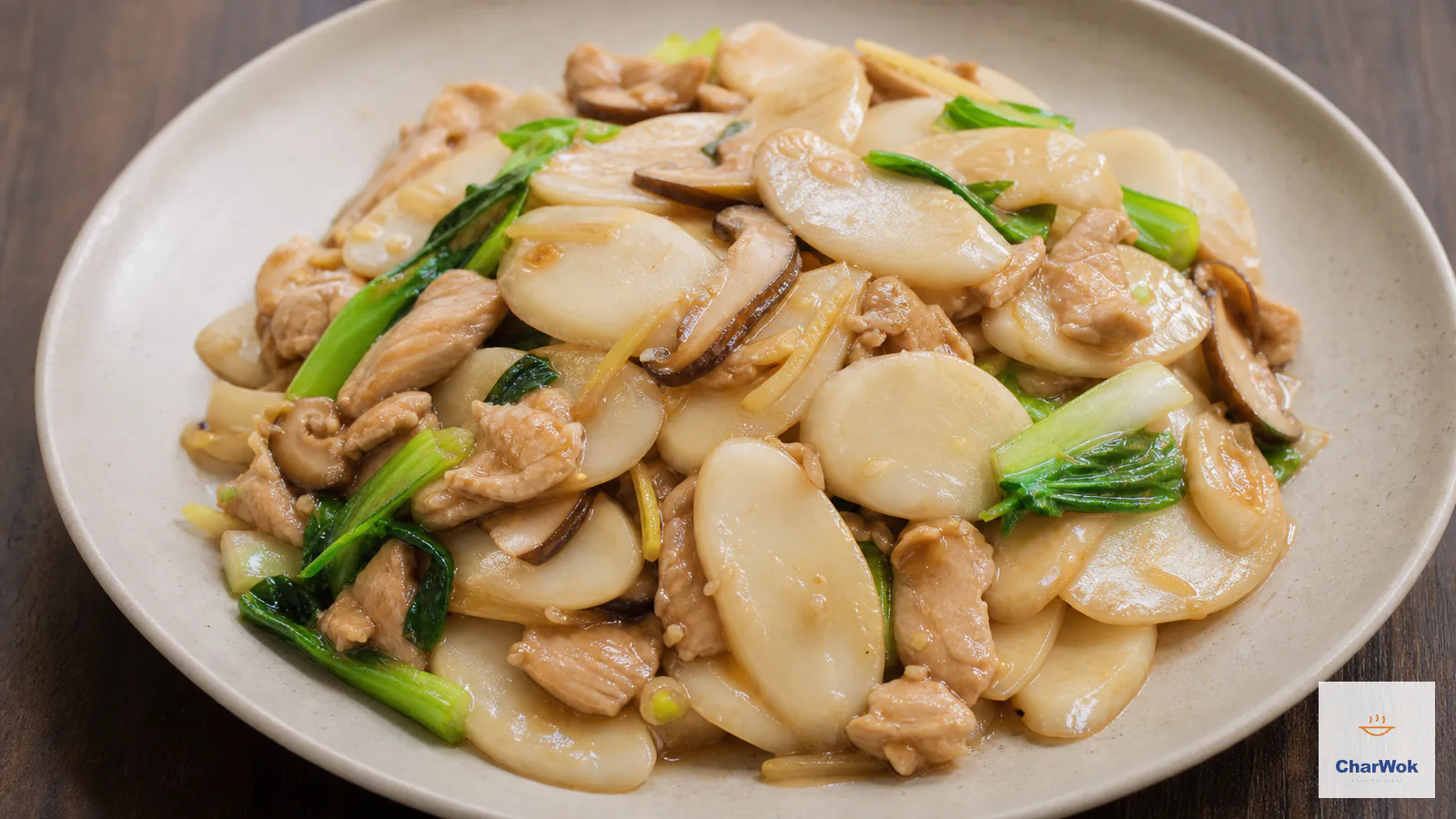
The appeal of chao nian gao is contrast: chewy, slippery rice cakes in a dark soy glaze with crisp greens and tender velveted chicken. The covered steaming stage softens the cakes; the final uncovered toss reduces the glaze. Too little moisture leaves hard centers, while too much can turn the cakes soft and sticky.
Most packaged sliced rice cakes are already cooked and set, but products vary. Follow the package directions for soaking or thawing, then use only enough stock to steam the cakes until pliable. A brief uncovered toss reduces the liquid into a glaze.
At a glance: Steam 450 g (1 lb) sliced rice cakes under a lid in 120 ml (½ cup) stock for about 3 minutes, using texture and the package directions as the final guide. Return the partially cooked chicken for the uncovered glaze stage, then check several of the thickest pieces and continue cooking until each reaches 165°F (74°C).
What these rice cakes actually are
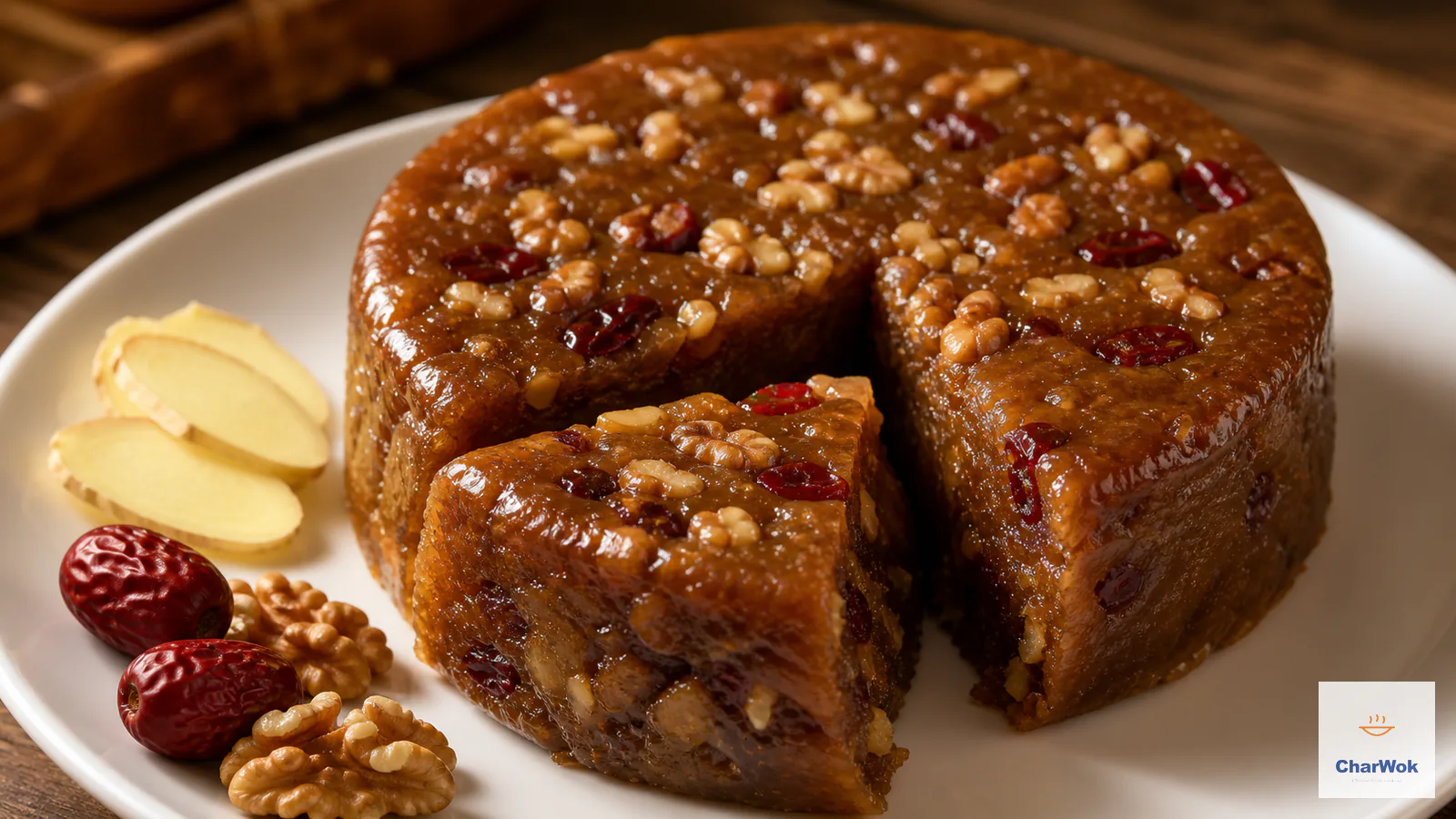
The sliced rice cakes here are a savory starch, not a dessert. They are made primarily from rice and water, cooked, shaped, cooled and sliced into flat ovals. Check the ingredient label because the rice type and added starches vary by brand. Do not confuse them with the sweet, slab-style Chinese New Year rice cake, which is sweetened and commonly sliced and pan-fried as a snack.
Shanghai- and Ningbo-style versions commonly pair rice cakes with pork or chicken and bok choy. This recipe uses chicken, shiitake and greens in a reduced soy glaze.
Fresh, chilled, frozen and dried products need different preparation, so use the package directions first. Chilled slices may need only a warm rinse to separate; frozen cakes may require thawing; dried slices generally need soaking until pliable. Small Korean cylindrical tteok are thicker and usually take longer to soften.
Ingredients
Ingredients at a glance
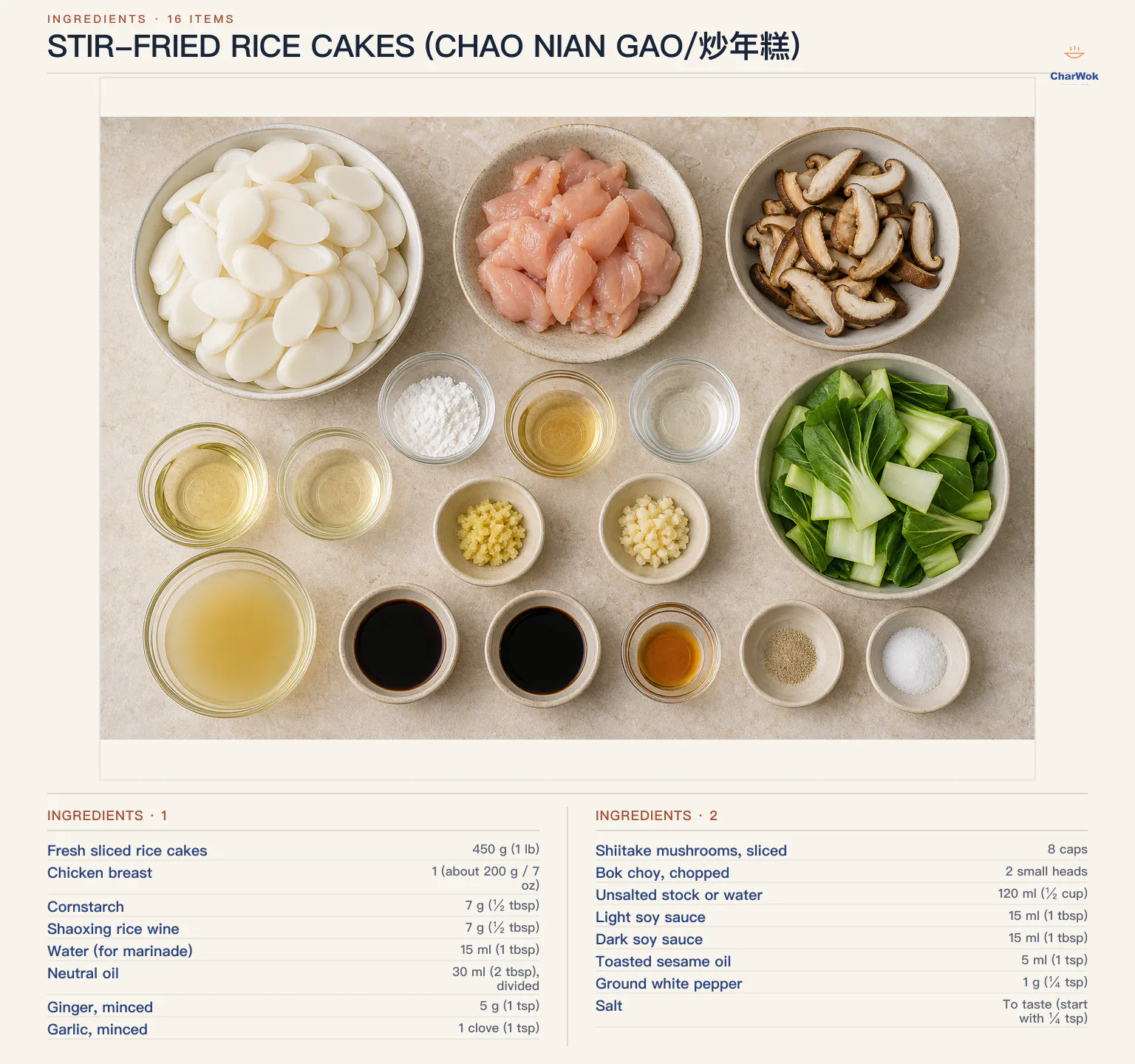
| Ingredient | Amount | Notes / substitute |
|---|---|---|
| Fresh sliced rice cakes | 450 g (1 lb) | Chilled/frozen preferred; dried needs a long soak first |
| Chicken breast | 1 (about 200 g / 7 oz) | Thighs stay juicier; pork, shrimp, or firm tofu all work |
| Cornstarch | 7 g (½ tbsp) | Potato starch is a fine substitute |
| Shaoxing rice wine | 7 g (½ tbsp) | Dry sherry; skip alcohol altogether with a pinch of sugar |
| Water (for marinade) | 15 ml (1 tbsp) | The liquid the cornstarch needs to hydrate |
| Neutral oil | 30 ml (2 tbsp), divided | Peanut, canola, or grapeseed; not olive |
| Ginger, minced | 5 g (1 tsp) | Fine microplaned is best |
| Garlic, minced | 1 clove (1 tsp) | Crush just before cooking, never jarred |
| Shiitake mushrooms, sliced | 8 caps | Fresh, or dried rehydrated in hot water |
| Bok choy, chopped | 2 small heads | Napa cabbage or Chinese broccoli are good swaps |
| Unsalted stock or water | 120 ml (½ cup) | Mushroom soaking liquid is the best choice |
| Light soy sauce | 15 ml (1 tbsp) | Salt and savor; understand your soy sauces |
| Dark soy sauce | 15 ml (1 tbsp) | Color and a little sweetness; molasses thinned out works |
| Toasted sesame oil | 5 ml (1 tsp) | Added off the heat so the aroma survives |
| Ground white pepper | 1 g (¼ tsp) | Warmer than black; do not swap unless you must |
| Salt | To taste (start with ¼ tsp) | Taste at the end; soy varies a lot in salinity |
Why this method works (the short food-science version)
Cooked rice starch firms as it cools and softens again with moisture and heat. The low covered stage warms the cakes without pressing them directly against dry hot metal. Three minutes in 120 ml of stock is a starting point, not a universal endpoint: stop when the thickest cake is pliable and hot through while still pleasantly chewy.
The velveted chicken is the other half of the engineering. A thin cornstarch slurry with a little wine and water coats the slices and gelatinizes in the hot oil into a glossy barrier that traps moisture. You finish it with a film of oil so the pieces drop into the wok individually instead of stewing in their own juice. This is the same trick behind chicken chop suey and chicken and mushroom stir-fry, and once you own it, your stir-fried proteins stop turning dry and stringy.
Step-by-step method
- Separate the rice cakes. Follow the package directions. For chilled cakes that permit rinsing, use warm water to loosen the slices, then drain thoroughly. Thaw frozen cakes first if the label requires it. Soak dried cakes until pliable as directed, then drain. Excess surface water can spit when it reaches hot oil.
- Velvet the chicken. Slice the breast across the grain into pieces about 5 mm (¼ inch) thick. Toss with the cornstarch, Shaoxing wine and 1 tbsp water until absorbed, then stir in about ⅓ tbsp oil. Refrigerate if the 10-minute rest will be delayed, keep raw chicken and its utensils away from the ready-to-eat ingredients, and wash hands after handling. See the Shaoxing rice wine guide if you are substituting.
- Partially sear the chicken. Heat a wok or large skillet over medium-high until a water drop skitters, then wipe it completely dry. Add about ⅔ tbsp oil and start cooking while the oil shimmers but does not smoke. Lay the chicken in one layer; when the contact sides release with pale-gold spots, toss briefly and transfer to a clean plate. The centers are still undercooked and must finish during the glaze stage. For non-stick cookware, add oil before heating and follow the maker's heat limit.
- Bloom the aromatics and vegetables. Add the remaining tablespoon of oil to the wok, still on medium-high. Tip in the ginger and garlic and let them sizzle for ten seconds. Add the sliced shiitake mushrooms and toss for about thirty seconds, until their edges darken and they smell toasty. Add the chopped bok choy and toss just until it wilts, then spread the vegetables to cover the wok surface so the rice cakes can sit evenly on top.
- Steam the rice cakes. Pile the drained cakes over the vegetables and pour the stock down the side of the wok. As soon as it comes to a gentle simmer, drop the heat to low and cover with a lid. Set a timer for three minutes. Lift the lid once and nudge any stuck slices apart with chopsticks, then cover again. The cakes are done when they are warm through and yielding but still offer resistance when you bite one.
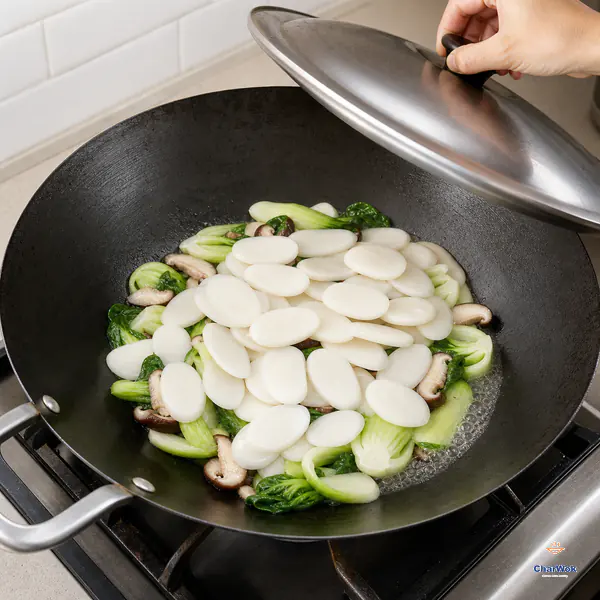
Spread the vegetables over the wok, pile the drained rice cakes on top and pour ½ cup of stock down the side. Once it gently simmers, cover over low heat for about 3 minutes; separate any stuck slices once, without letting the cakes sit directly on the hot metal.
- Glaze and finish the chicken. Return the chicken with both soy sauces, white pepper and salt. Toss over medium-high until the sauce lightly coats the cakes, then insert a thin-tip food thermometer into several of the thickest chicken pieces. Continue cooking until each reaches 165°F (74°C). If the sauce tightens first, add a spoonful of water. Turn off the heat, add the sesame oil and serve immediately.
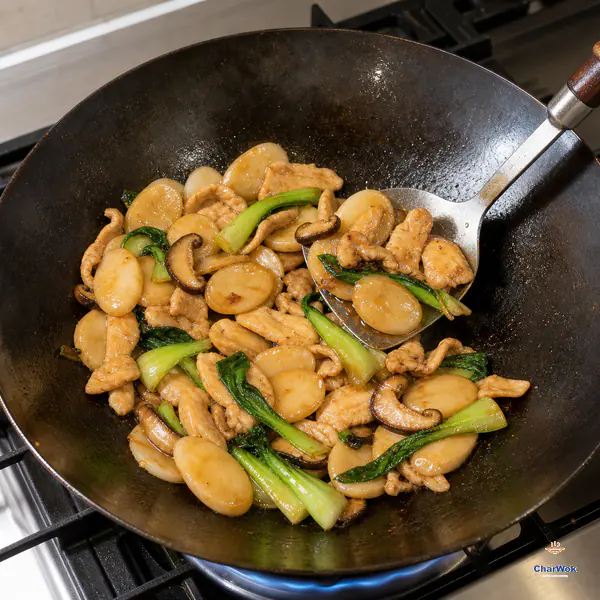
Return the chicken with both soy sauces, white pepper and salt, then toss over medium-high heat until the sauce forms a thin glaze. Check several of the thickest chicken pieces and continue until each reaches 165°F (74°C), adding a spoonful of water if the sauce tightens first; turn off the heat before adding sesame oil.
When it goes wrong, and how to rescue it
These are the most common texture problems and their practical fixes.
- The cakes clump into a single block. That is surface starch that dried and welded under high heat. Fix: nudge them apart with chopsticks the moment you lift the lid, before they cool. Prevention: lower heat for the covered step, and do not skip the warm-water rinse.
- Everything turns to mushy paste. You either steamed too long or used too much liquid. There is no great rescue once starch has over-gelled; your best move is to drain off the excess and do a hard final toss to evaporate what is left, then accept a softer texture. Next time, cap the covered step at three minutes and keep the liquid at 120 ml.
- The chicken is dry. The first sear may have gone too far, or the slices may be uneven. Keep that first stage brief, cut the pieces evenly and begin checking early after the chicken returns. Color is not a safe doneness test; several of the thickest pieces still need to reach 165°F (74°C).
- The sauce is thin and pools on the plate. The final reduction was too short or the heat too low. Pour off the excess into a small pan, reduce it hard, and pour it back over the cakes. The cornstarch from the chicken usually thickens it enough; if not, a slurry of ½ tsp cornstarch in a tablespoon of water, whisked in during the final toss, will do it.
- The cakes taste bland in the center. Rice starch is dense and seasoning sits on the surface. Counter it by salting the steaming liquid and tasting one cake before you plate; adjust salt in the final toss, not before.
Variations and what to serve alongside
Once the technique is stable, this dish absorbs substitutions as happily as egg fried rice or lo mein. Swap the chicken for thin-sliced pork shoulder, shrimp, or strips of smoked tofu for a vegan version. For vegetables, reach for napa cabbage, snow peas, sliced onion, bell pepper, or celery, anything that cooks fast and holds some crunch. A pork-and-cabbage combo is the most traditional after chicken.
For a saucier bowl, add stock gradually instead of doubling it at once, then recheck the seasoning. For spice, add a teaspoon of chili bean paste with the aromatics or finish with chili oil. Add toasted sesame oil after the burner is off.
It works as a one-plate meal or alongside a light soup and a cold cucumber salad. For a larger menu, compare other fast starch dishes such as chow mein, Singapore rice noodles or Chinese sticky rice.
Storage and reheating
Divide leftovers into small, shallow containers and refrigerate within two hours, or within one hour when the surrounding temperature is above 90°F (32°C). For best rice-cake texture, eat within two days; do not exceed the four-day food-safety limit. Reheat only the portion needed with a spoonful of water, stirring and checking several places until they reach 165°F (74°C). Freezing is safe, but the rice cakes may become grainy or split after thawing.
For advance prep, keep the raw chicken in a covered, leakproof container on the lowest refrigerator shelf, separate from the vegetables and rice cakes, and cook it within one to two days. Follow the rice-cake package for storage after opening. Prepare the actual stir-fry shortly before serving; see more options in the weeknight dinner collection.
Safety sources: See FoodSafety.gov for safe minimum internal temperatures, its cold-storage chart, and leftover cooling, storage and reheating guidance.
Frequently asked questions
Do I need to soak the rice cakes first? Follow the package. Chilled cakes may need only a warm rinse, frozen cakes may require thawing, and dried cakes generally need soaking until pliable.
Can I make this gluten-free? Often, yes. Check the cake ingredient list, because some add wheat starch. Use tamari in place of both soy sauces, and confirm your Shaoxing wine is gluten-free or swap it for dry sherry.
Why does my chicken stick and tear in the wok? Preheat a seasoned wok or stainless pan until a water drop skitters, wipe it dry, then add oil. Start cooking while the oil shimmers but does not smoke, and leave the chicken until the contact sides release. For non-stick cookware, add oil before heating and follow the maker's limit.
Is there a vegetarian version that still tastes rich? Yes. Skip the chicken and use smoked firm tofu or rehydrated dried mushrooms for umami, and use mushroom soaking liquid in place of stock. A teaspoon of vegetarian oyster sauce deepens the glaze.
How should I store and reheat leftover stir-fried rice cakes? Refrigerate them in shallow containers within two hours, or within one hour above 90°F (32°C). For best texture, eat within two days; do not exceed four days. Reheat with a little water until several places reach 165°F (74°C).