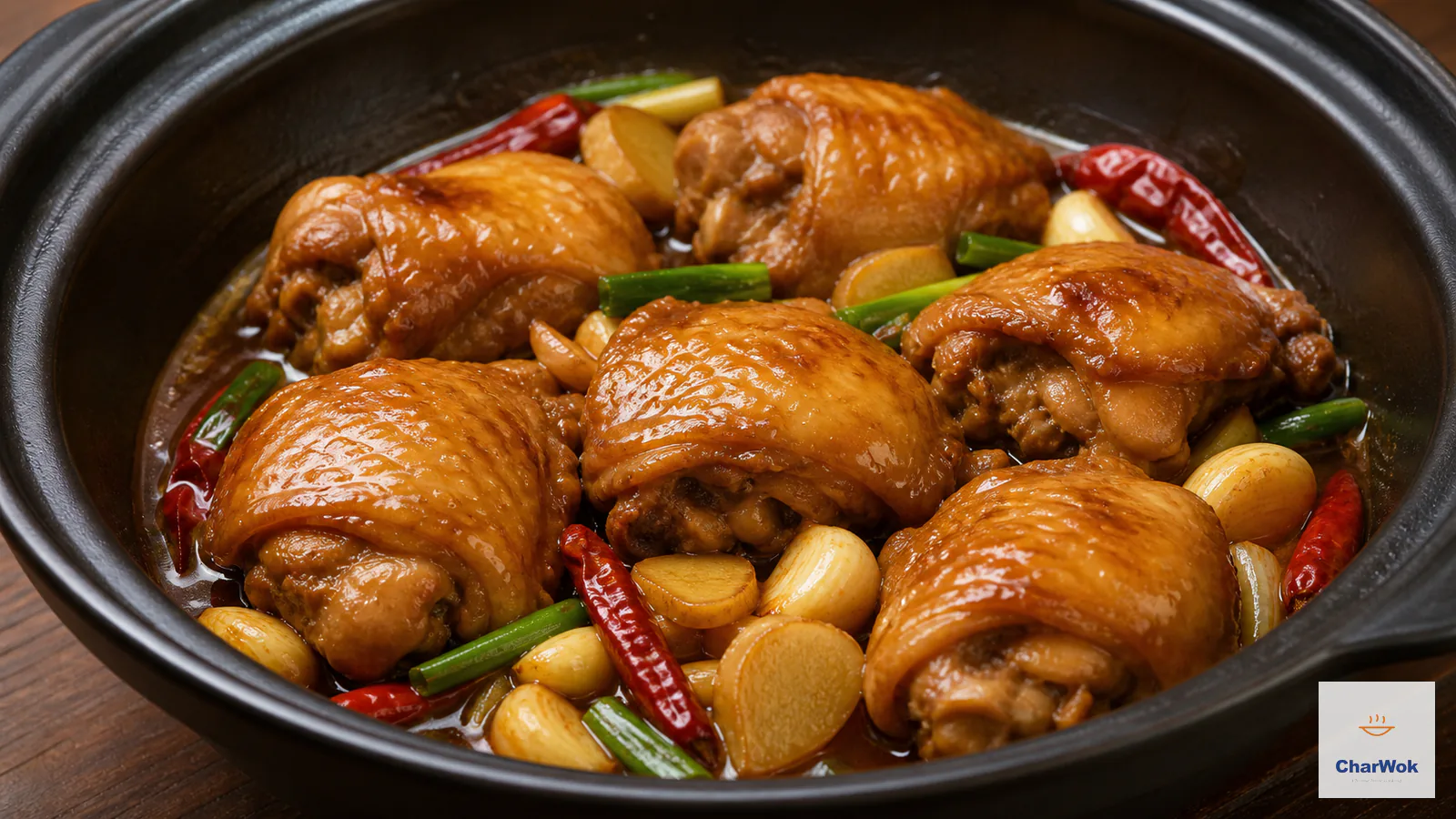
The best oyster sauce chicken I have ever eaten was not in a restaurant. It was at a friend's apartment in Guangzhou, cooked by her mother in a beat-up wok that had clearly seen decades of braises. The chicken arrived in a shallow dish, skin glossy and slack, surrounded by a dark sauce so reduced it clung to the back of a spoon. We fought over that sauce with rice. I went home and tried to copy it. My first attempt tasted like boiled chicken in salty brown water, and it took me three more tries to understand why.
The mistake almost everyone makes with this dish is treating it like a stew. It is not a stew. It is a two-stage braise: render and brown the skin first so the fat and collagen leave the meat, then simmer just long enough for that collagen to melt back into the liquid and thicken it on its own. Skip the browning and you get flabby skin and thin sauce. Rush the simmer and you get tough meat and a sauce that never sets. Get both stages right and you do not need cornstarch, you do not need a long list of ingredients, and you do not need more than about half an hour.
At a glance: Six bone-in, skin-on chicken thighs (about 900 g / 2 lb) braise in 240 ml (1 cup) seasoned liquid. After about 25 minutes, check every thigh beside the bone and continue until each reaches 74°C (165°F); only then reduce the sauce until it coats a spoon.
What this dish is, and where it sits
Oyster sauce chicken (hao you men ji, 蚝油焖鸡) is a Cantonese home-style braise. The character 焖 (men) means to cover and cook in a small amount of liquid, which is exactly the technique here. It belongs to the same family as soy sauce chicken and three-cup chicken, but it is the most forgiving of the three. Soy sauce chicken wants a whole bird and a master stock; three-cup chicken wants sesame oil, basil, and a clay pot that can take high heat. This one asks for a skillet, a lid, and a bottle of oyster sauce.
In Lee Kum Kee's account of its own history, the company's oyster sauce began by accident in late-19th-century Guangdong, when a cook left a pot of oyster soup on the stove and returned to a thick, dark, intensely savory paste. That browned, slowly reduced quality is the soul of the sauce, and it is why this dish rewards the same patience at the end. If you want a deeper look at how oyster sauce fits into a Chinese pantry alongside the soy sauces and rice wine used here, see my guide to the basic Chinese condiments.
Ingredients
Oyster sauce chicken ingredients at a glance
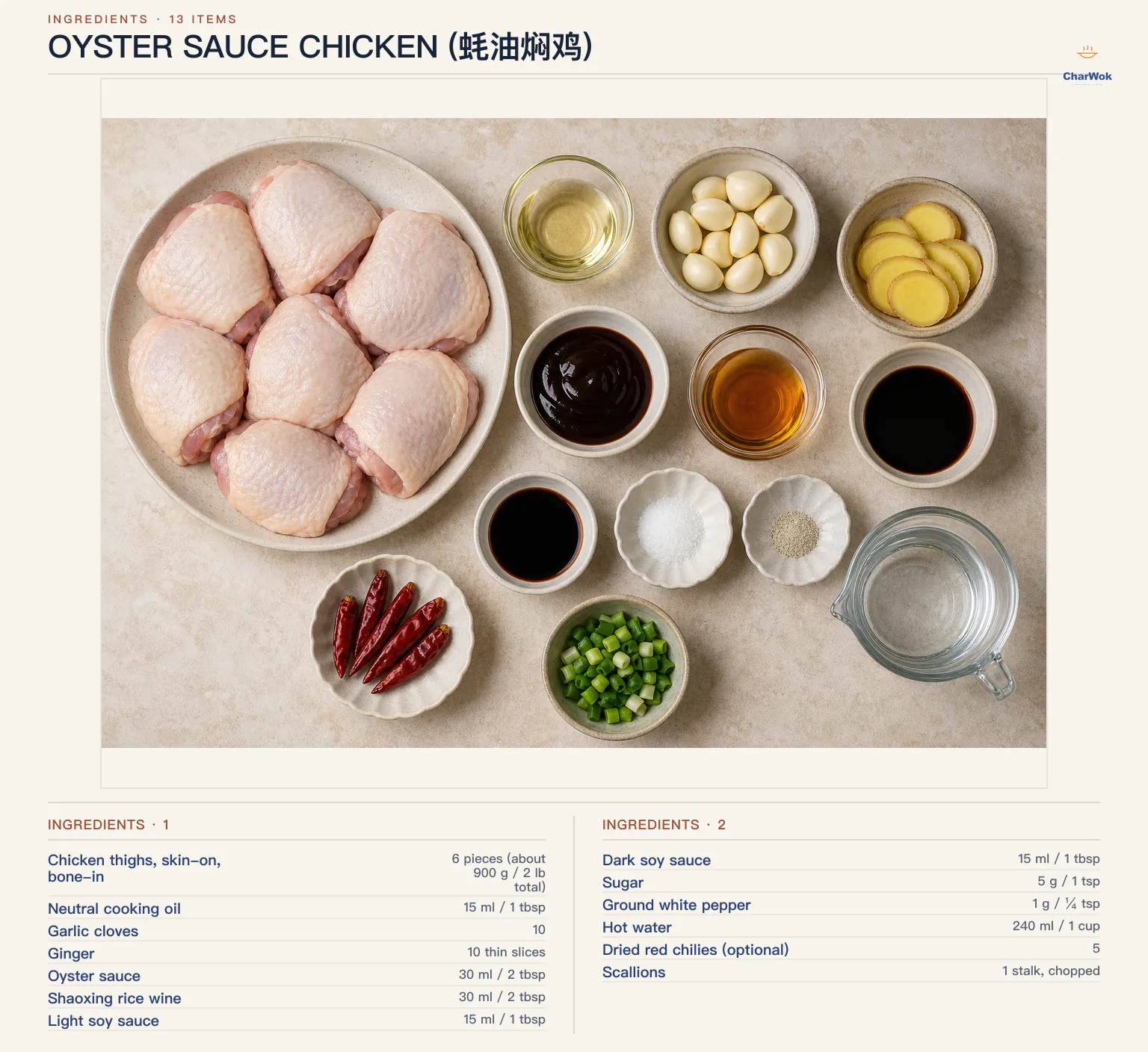
The list is short, so the quality of each item matters. Two things will make or break the result: the cut of chicken and the brand of oyster sauce. Use skin-on, bone-in thighs; do not substitute breasts, they will go dry and stringy in a 25-minute braise. For oyster sauce, the mass-market sweet supermarket brands will work, but a premium oyster sauce (the kind where oyster extractives are the first ingredient, not sugar and caramel color) will taste noticeably deeper.
| Ingredient | Amount | Notes / substitute |
|---|---|---|
| Chicken thighs, skin-on, bone-in | 6 pieces (about 900 g / 2 lb total) | Drumsticks, bone-in wings, or leg quarters also work; adjust time by size. Avoid breast. |
| Neutral cooking oil | 15 ml / 1 tbsp | Grapeseed, canola, or peanut. Not olive oil. |
| Garlic cloves | 10 | Left whole, lightly smashed. Don't mince; they'd burn in the sear. |
| Ginger | 10 thin slices | About a 30 g / 1 oz knob. Cut across the grain so the fibers are short. |
| Oyster sauce | 30 ml / 2 tbsp | Premium brand preferred. For a seafood-free version, use vegetarian mushroom stir-fry sauce. |
| Shaoxing rice wine | 30 ml / 2 tbsp | Dry sherry is the closest Western substitute. Read more in my Shaoxing rice wine guide. |
| Light soy sauce | 15 ml / 1 tbsp | For salt and savory depth. |
| Dark soy sauce | 15 ml / 1 tbsp | For color. If you only have one soy, use light and accept a paler sauce. Details in my soy sauce guide. |
| Sugar | 5 g / 1 tsp | White is fine; rock sugar gives a glossier finish. |
| Ground white pepper | 1 g / ¼ tsp | White, not black; black pepper fights the oyster sauce. |
| Hot water | 240 ml / 1 cup | Hot, not cold, so the braise doesn't stall when the liquid hits the pan. |
| Dried red chilies (optional) | 5 | Whole, for a faint warmth. Leave them out for a strictly classic version. |
| Scallions | 1 stalk, chopped | Garnish. Add at the very end so they stay bright. |
Equipment
You need a wide skillet or braiser, at least 28 cm / 11 inches, with a tight-fitting lid. A wok works too and is what I reach for at home, but the wider base of a skillet gives more contact between skin and metal, which means better browning. Cast iron is excellent here because it holds heat through the braise. Nonstick is not ideal; you actually want some fond to build on the pan floor, because that stuck-on brown is pure flavor for the sauce.
The method, step by step
- Dry the chicken thoroughly. Pat every thigh with paper towel, skin side especially. Wet skin steams instead of browns, and browning is where the flavor compounds (Maillard reactions on the skin's proteins) are built. Skip this and the whole dish tastes flat.
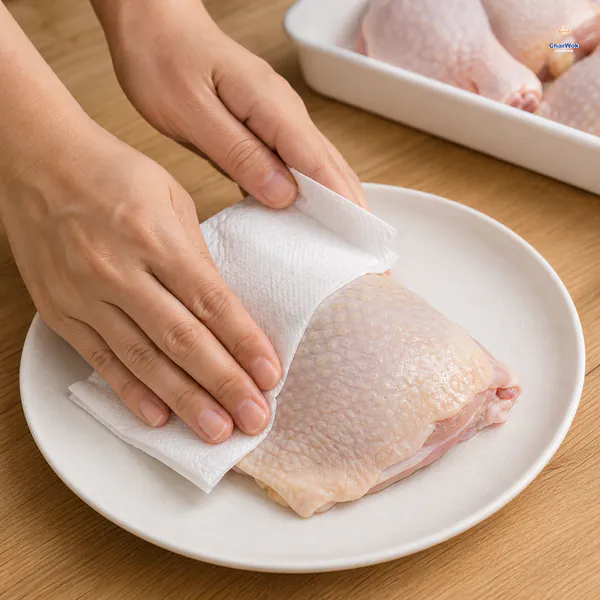
Pat every thigh completely dry, especially the skin; surface moisture turns the sear into steam and prevents deep browning.
- Sear skin-side down in a hot, lightly oiled pan. Heat the oil over medium until it shimmers, then lay in the thighs skin down, along with the whole garlic cloves and ginger slices. Do not move them. Let the skin render and brown for about 5 to 7 minutes; you want a deep gold, not a hard crust. The fat that pools in the pan is the chicken's own, and it will carry flavor into the braise. Flip and brown the other side for another 3 to 4 minutes. This stage is why skin-on is non-negotiable.
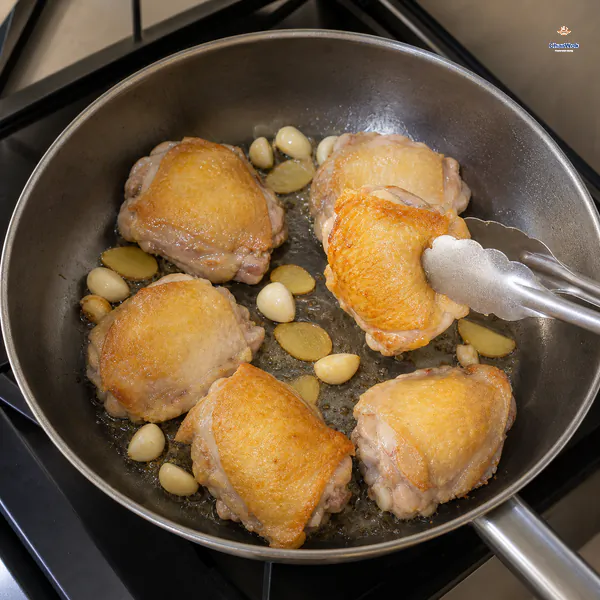
Sear the six thighs with whole garlic and sliced ginger until the skin is deep gold and releases cleanly, then brown the second side.
- Build the braising liquid while the chicken browns. Stir the oyster sauce, Shaoxing wine, both soy sauces, sugar, and white pepper into the hot water until the sugar dissolves. Having it ready means you can deglaze the instant the chicken is browned, lifting all the fond off the pan.
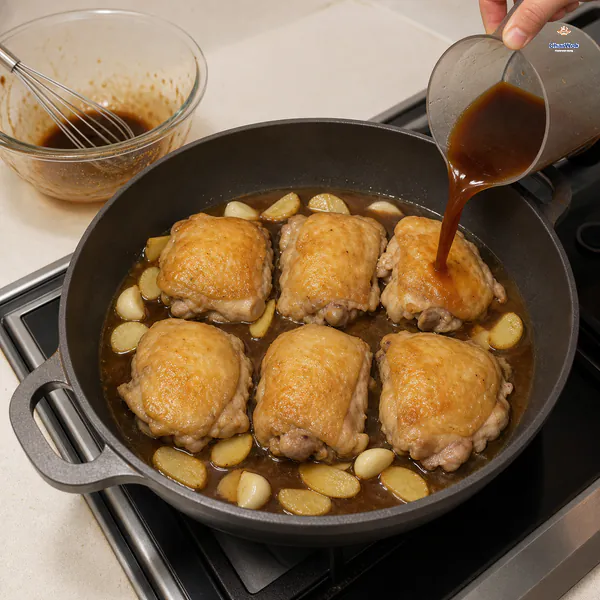
Mix the oyster sauce, wine, soy sauces, sugar, white pepper and hot water first, then pour it around the browned chicken so the liquid reaches only partway up the thighs.
- Deglaze and braise, covered. Pour the liquid over the chicken so it comes about a third of the way up the thighs. Add the dried chilies if using, cover and simmer gently for 15 minutes. Flip, cover and cook about 10 minutes more as the first check point. Use a clean instant-read thermometer on the thickest part of every thigh, beside but not against the bone. Continue simmering until each reaches 74°C (165°F); time, meat color and sauce texture cannot replace this check.
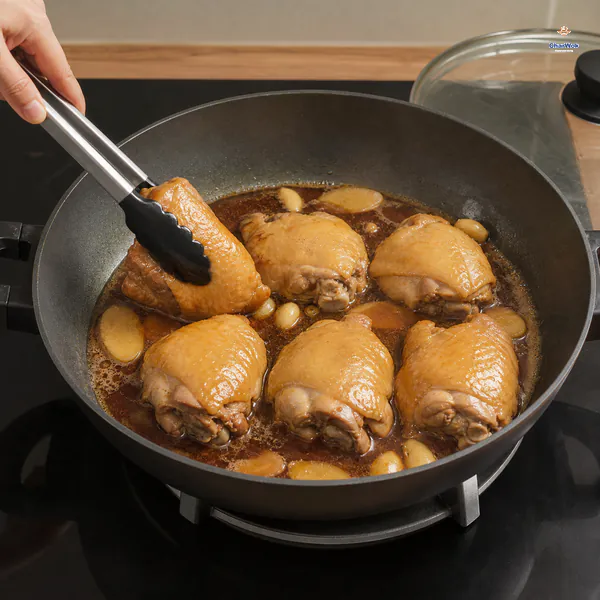
Cover and braise gently for 15 minutes, turn all six thighs, then cover for about 10 minutes as the first check point. Probe every thigh beside the bone with a clean thermometer and continue until each reaches 74°C (165°F).
- Reduce only after the chicken is safe. Once every thigh has reached 74°C (165°F), uncover and raise the heat. Spoon the sauce over the thighs as it reduces, usually about 3 minutes, and stop when it coats a spoon without tasting burnt.
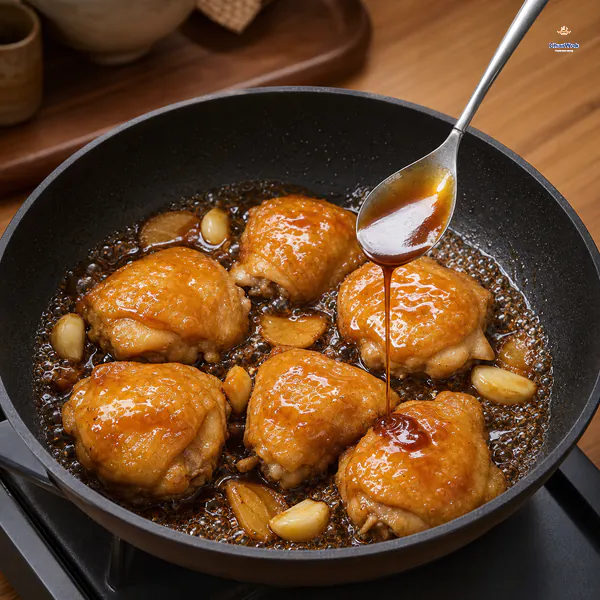
Only after every thigh reaches 74°C (165°F), remove the lid and reduce over high heat, spooning sauce over the chicken until it coats the back of a spoon without burning.
- Finish and serve. Move the pan off the heat, scatter over the chopped scallions and serve promptly over freshly steamed rice.
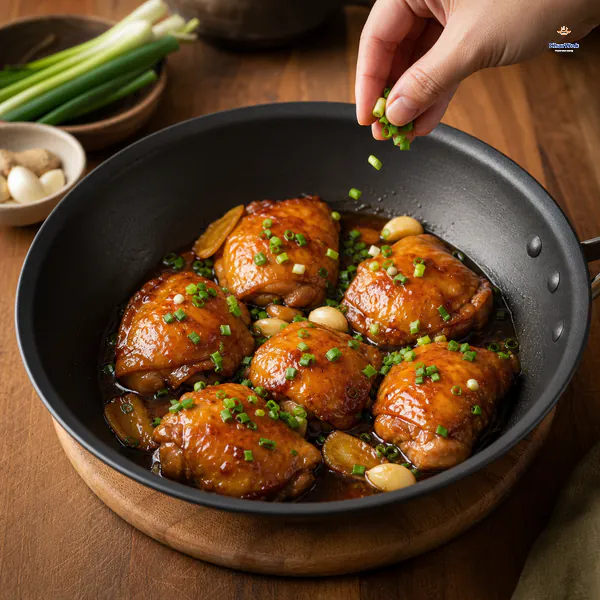
Move the pan off the heat before scattering over the scallions; the glossy sauce continues to tighten, so serve the chicken promptly.
When it goes wrong
I have made every one of these mistakes. Here is how to spot and fix them.
The skin is flabby and grey. You did not brown it long enough, or the pan was not hot when the chicken went in, or the skin was wet. Next time, dry harder, heat the oil until it shimmers, and wait for real color before flipping. Rescue move for the current batch: pull the chicken out at the end, return the meat skin-up under the broiler for 2 minutes while you reduce the sauce.
The sauce is thin and watery. Either you did not reduce long enough, or the liquid never had enough dissolved collagen because you used skinless chicken, or the lid was loose and the braise barely simmered. Reduce longer and harder; if you used skinless chicken, you will need a cornstarch slurry (1 tsp starch in 1 tbsp water) to rescue it, because there is no collagen to do the work.
The sauce tastes one-note salty. This is almost always the oyster sauce. Cheap brands lean on salt and caramel. Balance it in the pan with an extra pinch of sugar and a splash more Shaoxing wine, and buy a better bottle next time.
The meat is dry even though it braised. Breast and small pieces cook faster. Begin temperature checks earlier for wings or small drumsticks and remove each piece once it reaches 74°C (165°F), rather than applying the full thigh timing to every cut.
The bottom of the pan is black and bitter. The final reduction went too far or the heat was too high during the braise. Don't scrape the black bits in. Pour off the sauce, add a splash of hot water to the pan to loosen what is salvageable, strain it, and recombine. Burnt fond will ruin the whole pot.
Variations and pairings
The base recipe is a template. Once you understand the sear-then-braise logic, you can spin it in several directions without losing the soul of the dish.
Change the sauce, keep the technique. Swap the oyster sauce for sha cha sauce and you have sha cha chicken, deeper and a little funky. Drop the oyster sauce and lean on scallion oil and ginger and you are in scallion oil chicken territory. The braise times stay the same; only the seasoning jar changes.
Use wings or drumsticks. Braised chicken wings use the same method. Start checking smaller pieces earlier, but continue until every piece reaches 74°C (165°F).
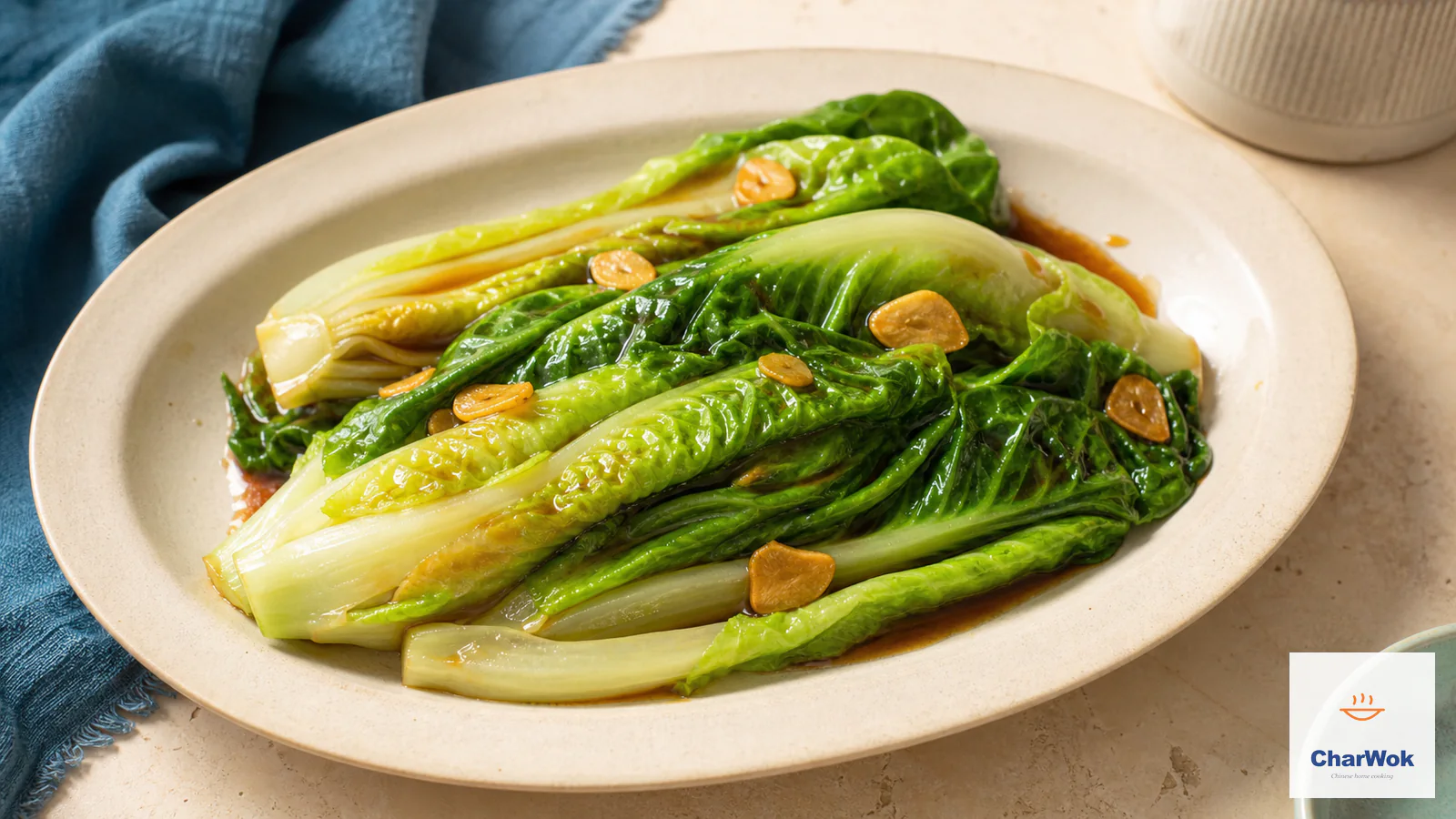
Pair it simply. This is a saucy, rich dish, so the sides should be plain or bright. Steamed rice is mandatory in my house. For vegetables, I like something crisp and clean: garlic bok choy, oyster sauce lettuce, or gai lan all echo the sauce without competing. For a heartier meal, serve it over a clay pot rice base so the sauce soaks into the crust at the bottom.
Storage and reheating
Refrigerate leftovers in shallow covered containers within 2 hours of cooking, or within 1 hour above 32°C (90°F). Eat within 3 to 4 days or freeze promptly. Reheat every thigh to 74°C (165°F), adding a tablespoon of water in a covered pan if needed. The sauce may set into a soft gel when cold and loosen again as it heats.
Questions I get asked
Can I use boneless, skinless thighs?
You can, but you lose the two things that make the dish work: the rendered skin flavor and the collagen that thickens the sauce. The result will be paler and thinner, and you will need a cornstarch slurry to fix the sauce. Skin-on, bone-in is worth the small extra cost.
Is there a vegetarian version?
Yes, swap the chicken for firm tofu or mushrooms and replace the oyster sauce with a vegetarian mushroom stir-fry sauce, sold under brands like Lee Kum Kee. The braise time drops to about 10 minutes since there is no collagen to dissolve.
Do I need a wok?
No. A wide skillet with a tight lid works just as well and gives better browning because of the larger contact area. Use whatever holds heat evenly and seals in steam.
Why no cornstarch?
The dissolved collagen from the skin and connective tissue thickens the sauce on its own once you reduce it. Adding starch muddies the glossy texture and is only a rescue move if you started with skinless chicken.
Looking for more ideas in this family? Round out the rotation with the rest of these Chinese chicken recipes by cooking method, or try the technique on pork with a classic red-cooked pork belly.
Food-safety references
- USDA FSIS: Chicken from Farm to Table — safe poultry temperature and handling.
- USDA FSIS: Leftovers and Food Safety — cooling, storage and reheating.