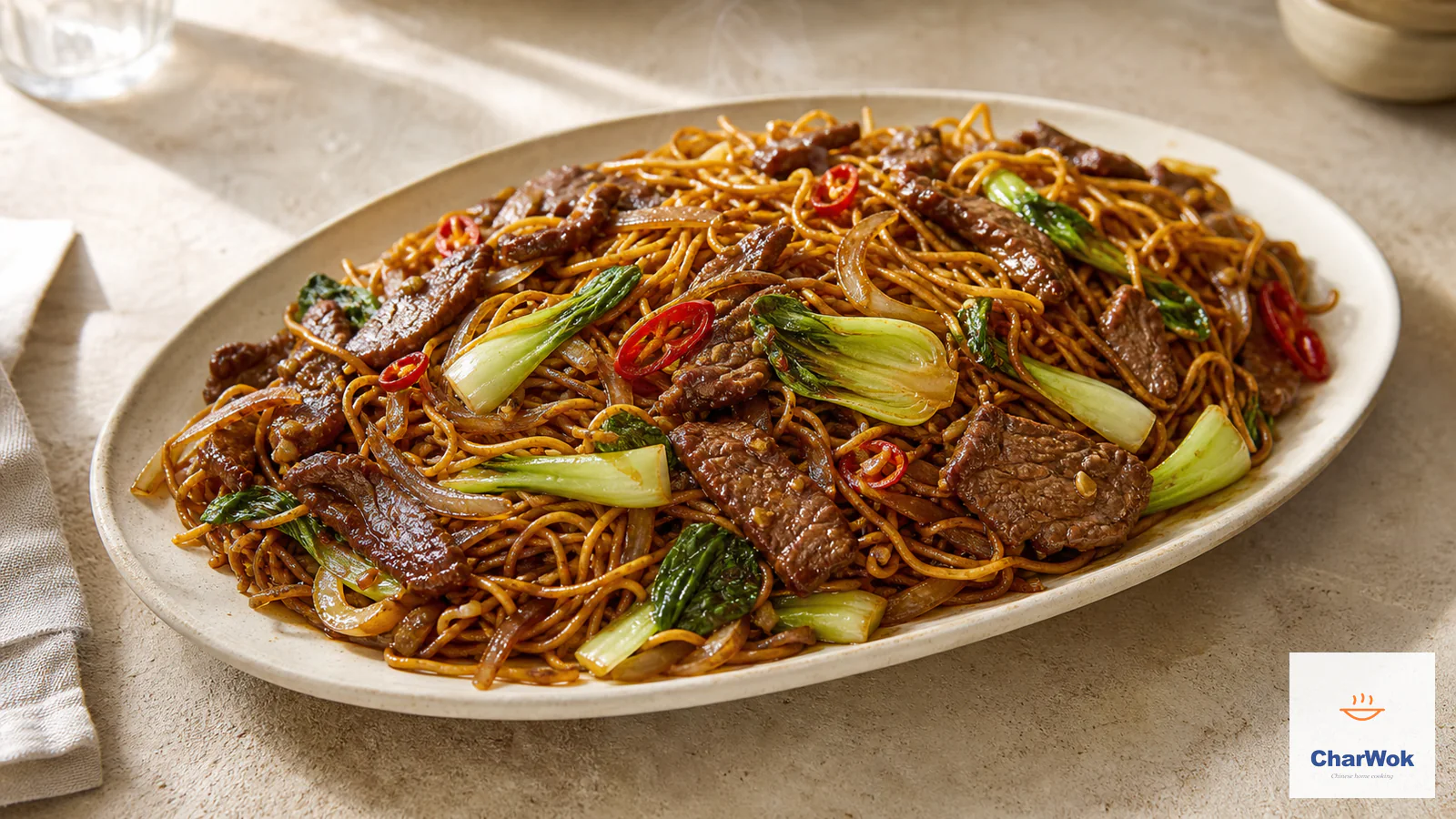
The difference between chow mein that tastes like a takeout box and chow mein you'd actually want seconds of comes down to about ninety seconds of heat and one sauce decision. I cooked this version weekly for a stretch last winter, and the thing that finally fixed it was not a better cut of beef or fancier noodles. It was learning to cook the beef, the vegetables, and the noodles in three separate beats instead of shoving everything into the wok at once and hoping.
This recipe leans on sha cha sauce, the thick, rust-colored Fujianese-Taiwanese condiment built from dried shrimp, flatfish, garlic, and spices. It does the heavy lifting that oyster sauce does in a lot of home stir-fries, but with more backbone: briny, slightly sweet, a little funky. Paired with quickly seared beef and parboiled egg noodles, it turns a sixteen-minute dinner into something that doesn't feel like a compromise.
At a glance: Serves 4 in about 16 minutes (8 prep, 8 cook). The make-or-break move is searing the beef alone over a screaming-hot wok and pulling it out the instant the pink is gone, because overcooked beef is the single thing that ruins this dish. Parboil dried egg noodles until just underdone, then let the sauce finish them in the wok.
What chow mein is, and why this one goes its own way
Chow mein (炒面) just means "stir-fried noodles" in Cantonese, and across China the word covers a huge family of dishes: wheat noodles, rice noodles, pan-fried cakes, crisp nests. The Cantonese takeout version most Americans know is its own branch, and the broader chow mein family is worth exploring if you've only ever had the one. What ties them together is the method, a short, violent stir-fry that gives the noodles flavor without turning them to mush.
Most chow mein I cook at home runs on soy sauce and maybe a little oyster sauce. This one swaps that backbone out for sha cha, which pushes the dish toward Taiwan and Fujian rather than Guangdong. If you've made sha cha beef stir-fry or sha cha chicken before, you already know the direction. The sauce is assertive enough that you don't need a long ingredient list; a few aromatics, one green vegetable, and a protein are plenty.
The ingredients, and the choices that matter
Ingredients at a glance
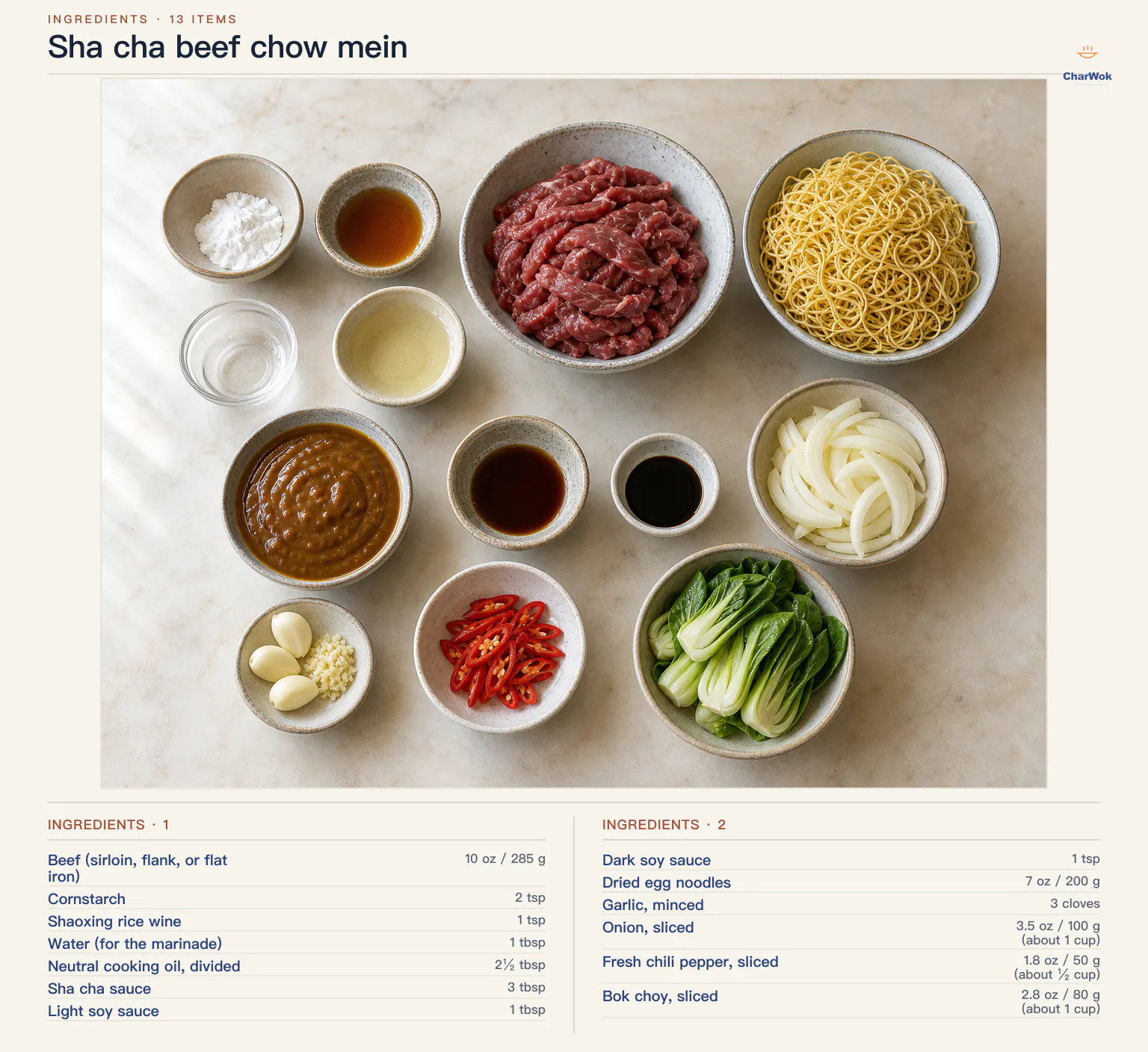
| Ingredient | Amount | Notes / substitute |
|---|---|---|
| Beef (sirloin, flank, or flat iron) | 10 oz / 285 g | Slice across the grain into thin strips. Flank is the most reliable; skirt works too. |
| Cornstarch | 2 tsp | Velveting tenderizer. Potato starch works equally well. |
| Shaoxing rice wine | 1 tsp | Dry sherry is the closest Western substitute; skip the salt-reduced cooking wine. |
| Water (for the marinade) | 1 tbsp | Hydrates the starch so the beef absorbs it instead of wearing a chalky coat. |
| Neutral cooking oil, divided | 2½ tbsp | Peanut, canola, or grapeseed. Half tablespoon goes in the marinade to seal it. |
| Sha cha sauce | 3 tbsp | Look for Bull Head (牛頭牌) if you can find it; stir the jar first to mix the oil layer back in. |
| Light soy sauce | 1 tbsp | For salt and umami. Regular (not dark) soy is what you want here. |
| Dark soy sauce | 1 tsp | For color and a touch of sweetness. If you don't keep it, add a few drops more light soy and a tiny pinch of sugar. |
| Dried egg noodles | 7 oz / 200 g | Or 1 lb / 450 g precooked Hong Kong-style noodles. Thin wonton-style strands work best. |
| Garlic, minced | 3 cloves | Don't substitute garlic powder; the raw bite matters. |
| Onion, sliced | 3.5 oz / 100 g (about 1 cup) | Yellow or white. Cut with the grain for strips that hold shape. |
| Fresh chili pepper, sliced | 1.8 oz / 50 g (about ½ cup) | Red Fresno or jalapeño for color and mild heat. Remove seeds to dial it back. |
| Bok choy, sliced | 2.8 oz / 80 g (about 1 cup) | Any quick-cooking green works; see the variations. |
On the noodles, since they're where most people trip
Egg noodles are the default for Cantonese stir-fries. You'll see them in lo mein, chicken chow fun's wheat-noodle cousins, and most takeout boxes. You have three realistic options, and they behave differently.
The most forgiving is the precooked Hong Kong-style noodle pack sold in the refrigerated or frozen aisle of any Asian grocery. It goes straight from pack to wok, no boiling, and it browns nicely because the surface is already dry. The second is thin dried egg noodles, often the kind used in wonton noodle soup. These cook in under two minutes and have a springy, slightly alkaline chew. The third is fresh alkaline noodles; if you go that route, read up on how alkaline noodles behave, because they throw off more water when they hit the pan.
Whichever you pick, the goal of the parboil is to stop just short of done. The noodles will keep cooking in the wok when you toss them with the sauce. If you boil them fully, they'll be soft by the time you serve. Bite one strand; if there's a thin chalky core still resisting your teeth, that's exactly right.
The method, step by step
- Marinate the beef (10 minutes ahead). Slice across the grain into strips roughly the thickness of a pencil. In a bowl, combine the beef with the cornstarch, Shaoxing wine, and 1 tablespoon water, and rub with your fingers until the liquid disappears into the meat. This is the velvet coating that keeps it tender. Add ½ tablespoon oil and toss so the strips separate easily later. The oil film also slows moisture loss when the beef hits the hot pan. If you want to understand the why behind Shaoxing rice wine, it's mild deglazing and aroma, not tenderizing; that's the cornstarch's job.
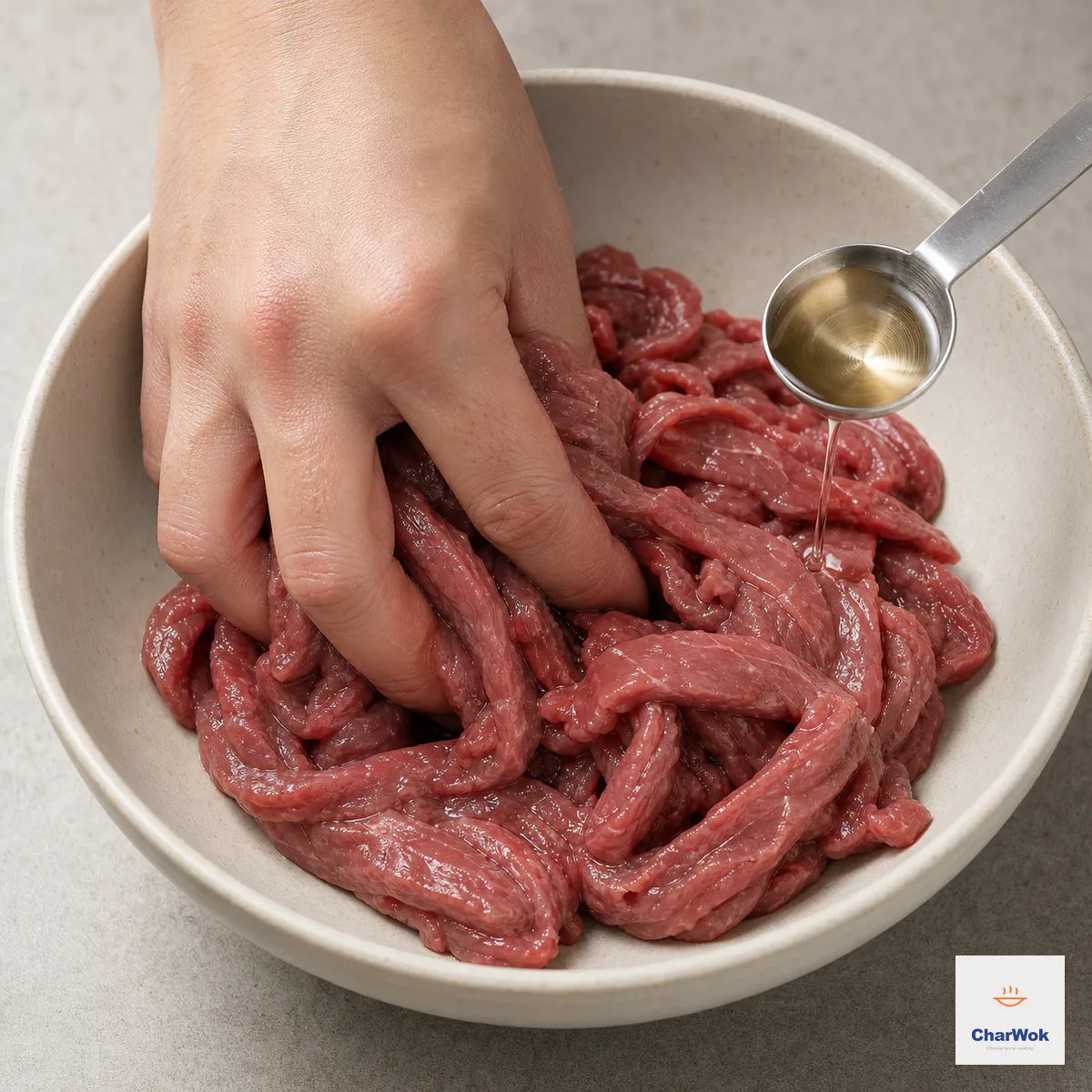
Massage the beef until the liquid disappears and the surface turns tacky, then mix in the oil last to seal in moisture
- Mix the sauce. Stir 3 tablespoons sha cha sauce, 1 tablespoon light soy, and 1 teaspoon dark soy into 3 tablespoons water. Sha cha is a thick paste with an oil layer on top, so really work it with a spoon until the jar is uniform before you measure. The added water is non-negotiable: it gives the sauce enough volume to coat a full pan of noodles instead of clumping on three of them.
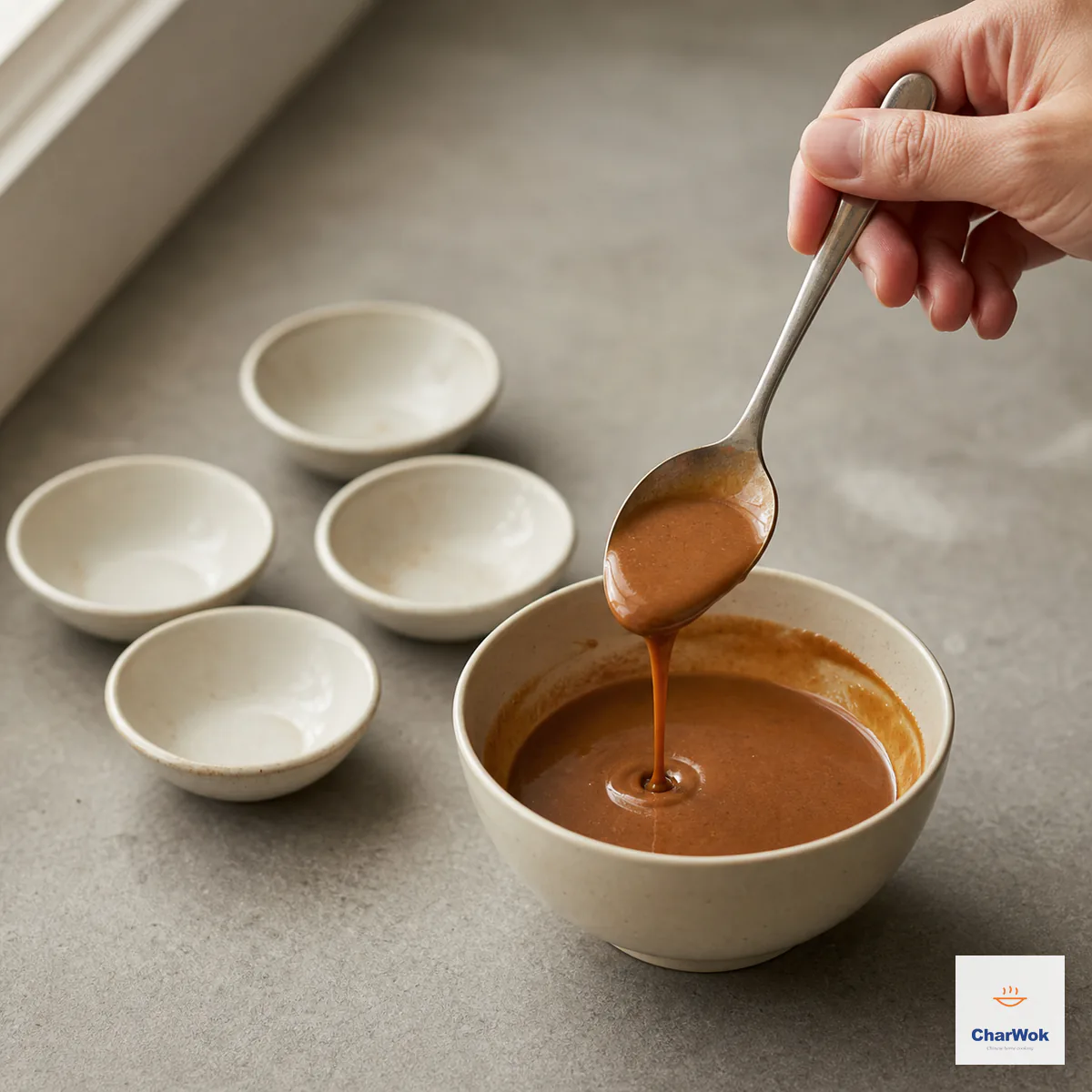
Whisk until the sha cha paste loosens into a smooth sauce that pours in a continuous stream, with no dense clumps or separated oil
- Parboil the noodles (skip this entirely if using precooked). Bring a large pot of water to a rolling boil, plenty of water, not a half-full one, so the temperature doesn't crash when the noodles go in. Drop in the dried egg noodles and cook until just underdone, testing one strand. Drain, then snip the mass a few times with kitchen scissors so the strands aren't one giant tangle. Set aside. Snipping matters more than it sounds; long tangled noodles are impossible to toss evenly later.
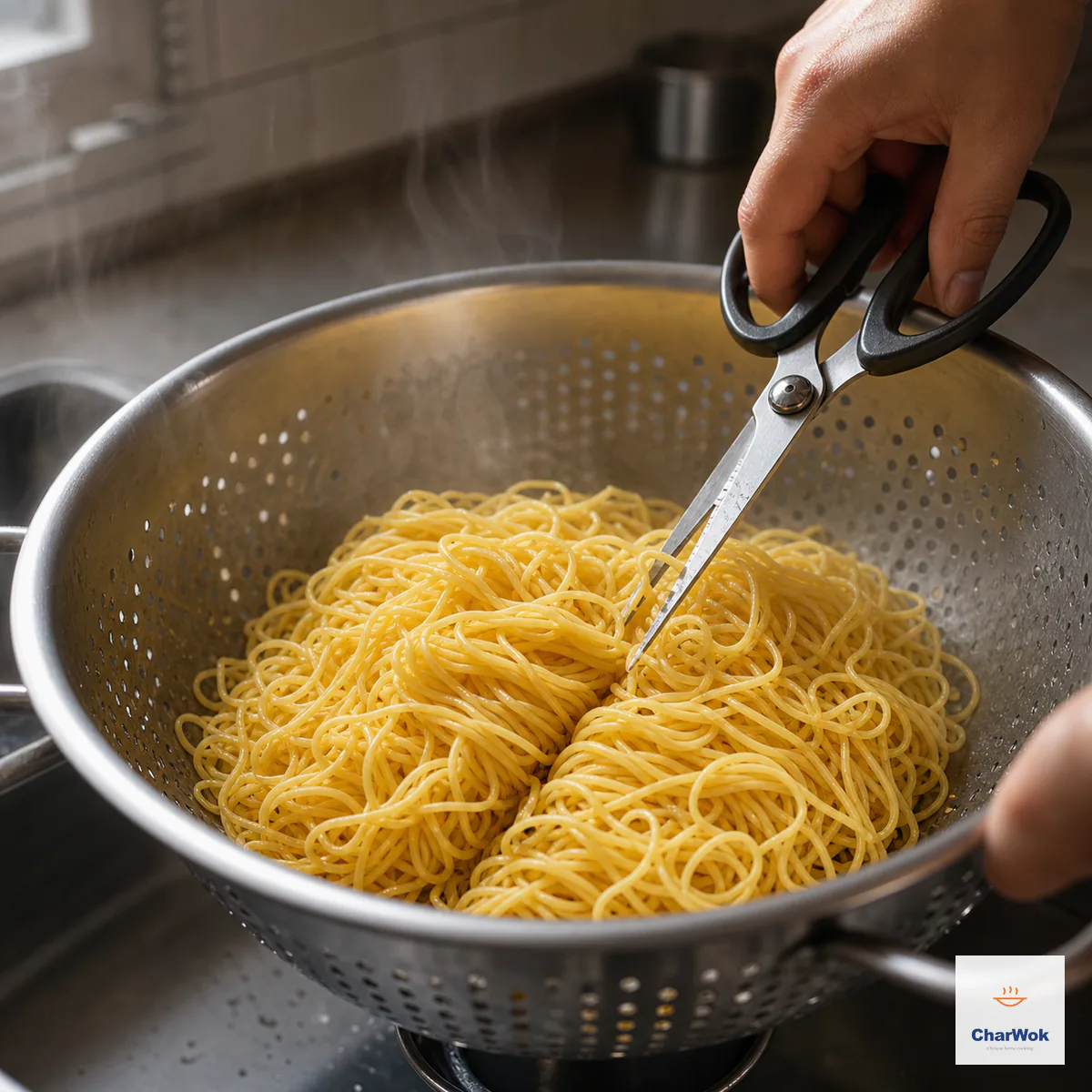
Cook the noodles one minute short of done, test a strand, drain thoroughly, and snip only the longest strands so they toss without clumping
- Sear the beef, by itself. This is the step that separates a real chow mein from a sad one. Heat your wok (a properly seasoned carbon-steel wok is ideal, but any wide heavy pan works) over high heat until it's visibly smoking. Add 1 tablespoon oil and swirl to coat. Spread the beef out in a single layer and let it sit for ten seconds before you touch it. That contact is what builds the Maillard browning that reads as "flavor." Once the underside has lost its pink, flip and toss just until no red remains, then immediately transfer to a plate. The beef should still be medium inside; it's going back in at the end.
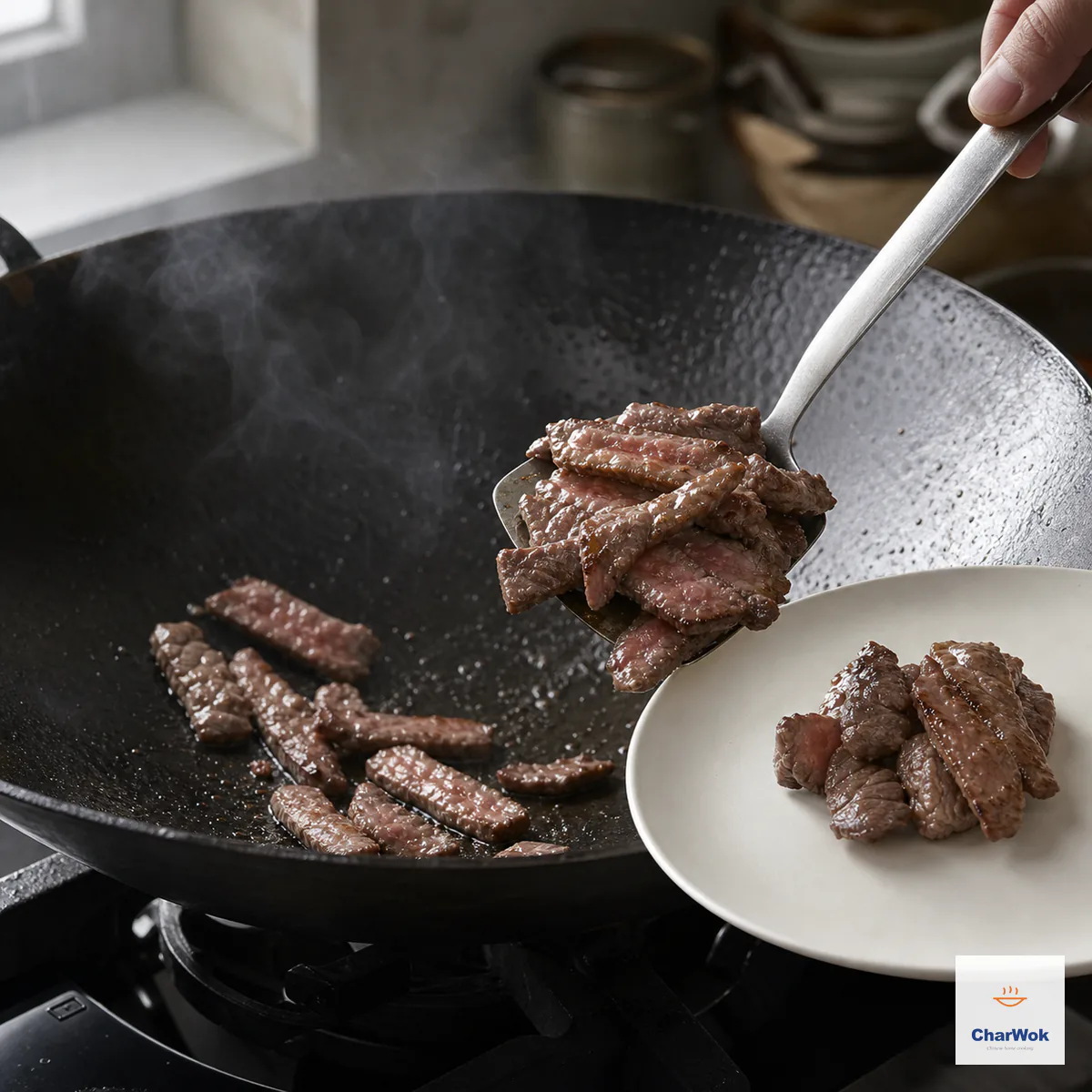
Sear the beef by itself over high heat and remove it as soon as no red remains on the outside; it will finish cooking when returned to the wok
- Fry the aromatics and vegetables. With the pan still hot, add the remaining 1 tablespoon oil, then the garlic and onion. Stir-fry until the onion edges soften but the slices still hold their shape, about 30 seconds. Add the chili and bok choy and toss for another 30 seconds, keeping the greens barely wilted and still bright. If the bok choy throws off a lot of water, push everything up the sides of the wok for a moment and let the liquid boil off, or your noodles will steam instead of fry.
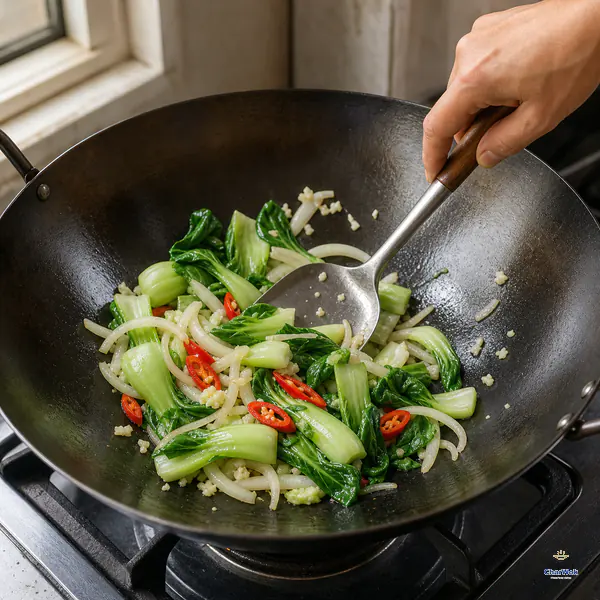
After removing the beef, stir-fry the garlic and onion until just translucent, then add the red chili and bok choy for about 30 seconds without adding water.
- Bring it together. Add the noodles and the beef back to the wok and toss to separate the strands and warm the meat through. Pour the sauce around the edges of the pan, not directly onto the noodles. Hitting the hot metal first flashes the alcohol and caramelizes the sugars a touch. Keep tossing for another 30 to 45 seconds, until every strand is glossy and the sauce has reduced to a clinging glaze rather than a puddle. Serve immediately.
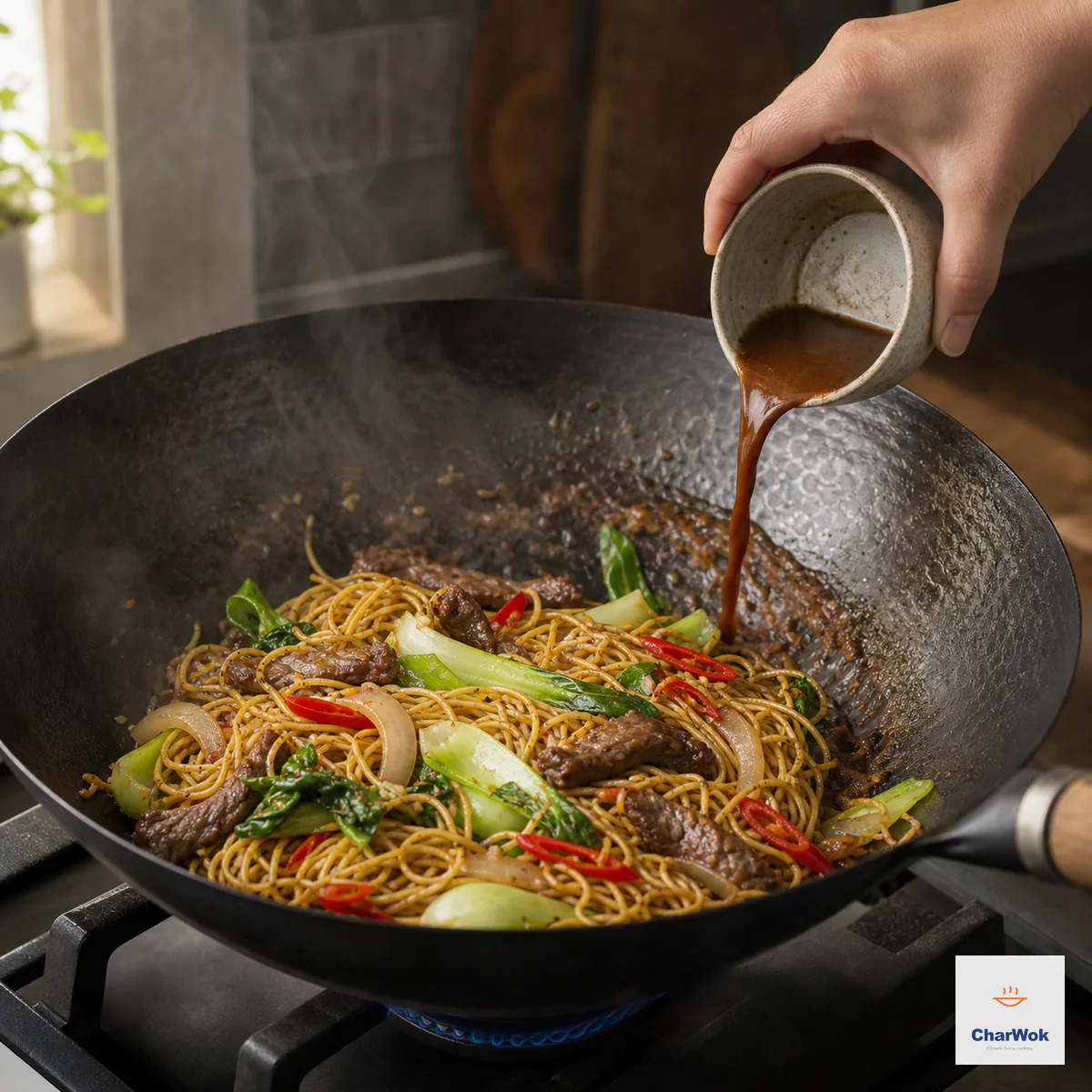
Return the beef, pour the sauce around the hot rim rather than onto one spot, and toss until every noodle is glossy with no puddle below
When it goes wrong, and how to fix it
I've made every one of these mistakes, most of them more than once.
The beef is tough and chewy. Two usual suspects. Either you sliced with the grain instead of across it, or you overcooked it in the pan. Look at the raw piece before you cut: the muscle fibers run in parallel lines. Cut perpendicular to those lines, and each strip becomes short fibers that fall apart between your teeth. Cut parallel, and you've built a rubber band. As for doneness, pull the beef the instant the pink is gone. It finishes cooking when it rejoins the hot noodles.
The noodles are gummy and stuck together. You either boiled them too long or didn't drain them well enough. Next time, pull them a full minute before you think they're done, shake the colander hard, and don't let them sit wet. A few drops of oil tossed through the drained noodles buys you insurance against clumping.
The dish tastes flat even though you used sha cha. The jar probably separated. Sha cha sauce settles into a dense paste under a layer of red oil, and if you scoop from the top you get mostly oil and almost no flavor. Stir the whole jar thoroughly before measuring. I keep a dedicated spoon in the jar for this. If you've already cooked and it's still dull, a tiny pinch of sugar and a few drops more dark soy perked up at the edge of the pan will rescue it.
The wok is full of liquid instead of sizzle. Your heat was too low, or the greens were too wet going in. Crank the burner, push the food up the sides so the liquid pools at the bottom and reduces, and be patient for fifteen seconds. A wet stir-fry is a steamed stir-fry, and steamed chow mein is depressing.
The beef sticks and tears when you try to flip it. The pan wasn't hot enough or wasn't fully seasoned. Wait longer before adding the oil, and let the oil shimmer before the beef goes in. Patience in the first ten seconds of contact prevents almost all sticking.
Variations and what to serve alongside
The protein and the vegetable are the two easiest things to swap. Thinly sliced pork loin or chicken thigh both work with the same marinade; for chicken, give the strips a little longer in the marinade, and you're basically making a cousin of the sha cha chicken stir-fry. For beef lovers, this method is nearly identical to the logic behind beef with Chinese broccoli and pepper steak, so you can use those as templates once the technique is in your hands.
If you prefer rice noodles, the whole thing transplants neatly; see beef chow fun for the broad-noodle version, which needs a slightly drier pan and a longer sear on the noodles. Want a non-sha-cha chow mein? Drop the sha cha and double the light soy, then finish with a spoonful of Chiu Chow chili oil for a similar seafood-and-chili kick. For a totally different beef-and-noodle night, black pepper beef stir-fry over the same egg noodles is a reliable second option.
Vegetable-wise, anything that cooks in under a minute is fair game: snap peas, bean sprouts, shredded napa cabbage, sliced bell pepper, or the white stems of scallions. Add a quick-pickled cucumber salad or a bowl of egg drop soup on the side and it's a full meal. For a wider roadmap of noodle dishes in this style, my roundup of classic Chinese noodle recipes has more than twenty to work through.
Storing and reheating
Leftovers keep in an airtight container in the fridge for up to two days; the noodles firm up as they sit, which is normal. Reheat in a dry skillet over medium-high heat with a teaspoon of water and a few drops of oil, tossing until steam rises and the strands loosen again. The microwave works in a pinch but dulls the texture; the skillet is worth the extra two minutes. I don't recommend freezing; the egg noodles turn grainy and the bok choy collapses into water on thaw.
Questions I get asked
A few that come up whenever this one lands on the dinner table.
At its core this is a dish about sequencing: beef out, vegetables through, everything back together at the end. Once that rhythm is in your hands, the recipe stops being a recipe and becomes a template. Swap the protein, swap the green, keep the sha cha, and you've got a week's worth of dinners from one method.