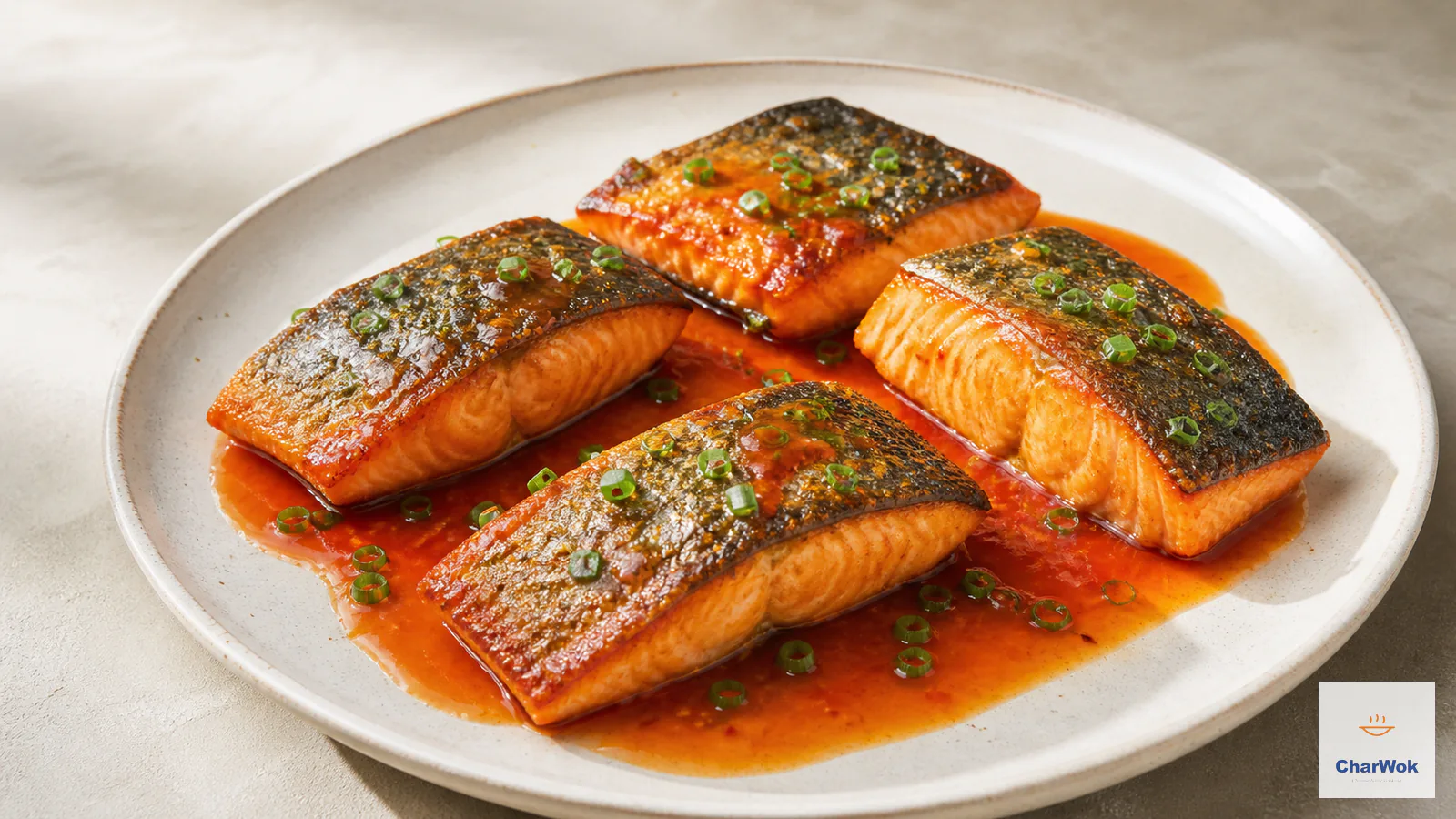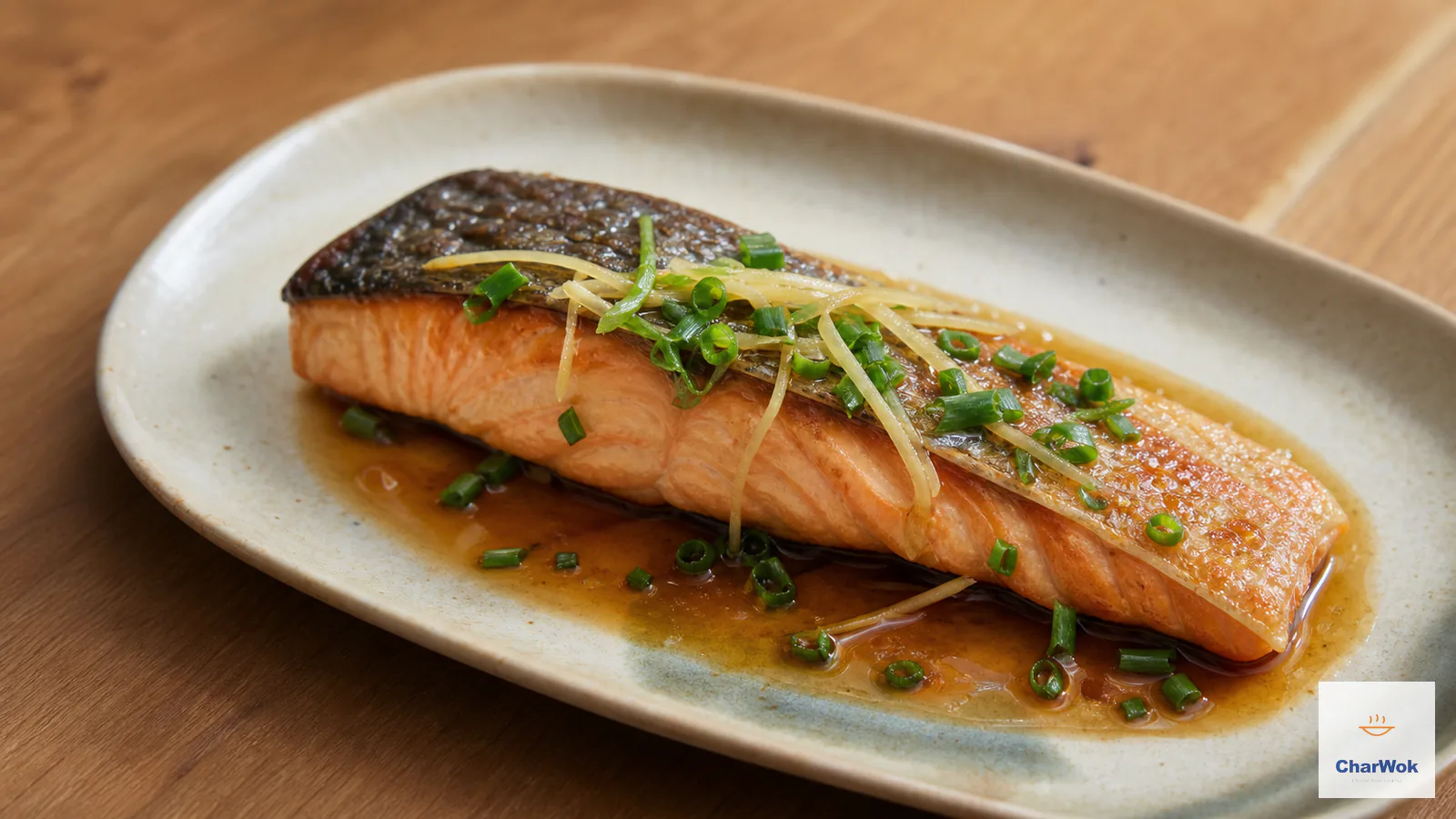
Most home cooks panic-fry salmon two ways: either the skin turns soggy and grey, or the flesh dries out chasing that crisp. This recipe sidesteps both problems by borrowing one move from the Chinese scallion-oil playbook, then handing the oil straight to the fish it was cooked in. You fry the aromatics in the pan first, push them aside, and sear the salmon in that same fragrant oil. The scallions and ginger flavor the fat, the fat crisps the skin, and nothing gets washed down the drain.
It is the same logic behind scallion oil chicken and the cult-favorite scallion oil noodles: render the alliums into oil, then let that oil be the seasoning. Salmon happens to be the perfect vehicle because its skin is thick, fatty, and forgiving. If you have ever overcooked a thin-skinned fillet of sole, you will appreciate how much room for error a fat salmon belly gives you.
Cook the aromatics in the oil, then sear the salmon skin in that same oil for 3 minutes skin-down, 4 minutes flesh-down, then 1 minute skin-up on high. Crisp lives on the skin side; pour the soy dressing around the fish, never over it.
What this dish is, and where the idea comes from
This is not a traditional Chinese salmon preparation. Salmon is a Northern Pacific fish, and most classic Chinese seafood cooking grew up around freshwater and coastal species further south. What is traditional is the technique: the hot-oil-over-aromatics finish you see on Cantonese steamed fish, where a final pour of smoking oil blooms the scallion and ginger on top of the fish. Here I fold that finishing move into the cooking itself, so the oil does double duty as both cooking medium and dressing.
If you want the cleaner, more delicate version of this idea, steamed whole fish is the reference point. Pan-frying a salmon fillet is the weeknight, boneless, crispy-skin adaptation. For a feasting table it sits happily alongside other Chinese New Year recipes, but honestly I make it on a Tuesday more often than I make it for company.
Ingredients
Ingredients at a glance
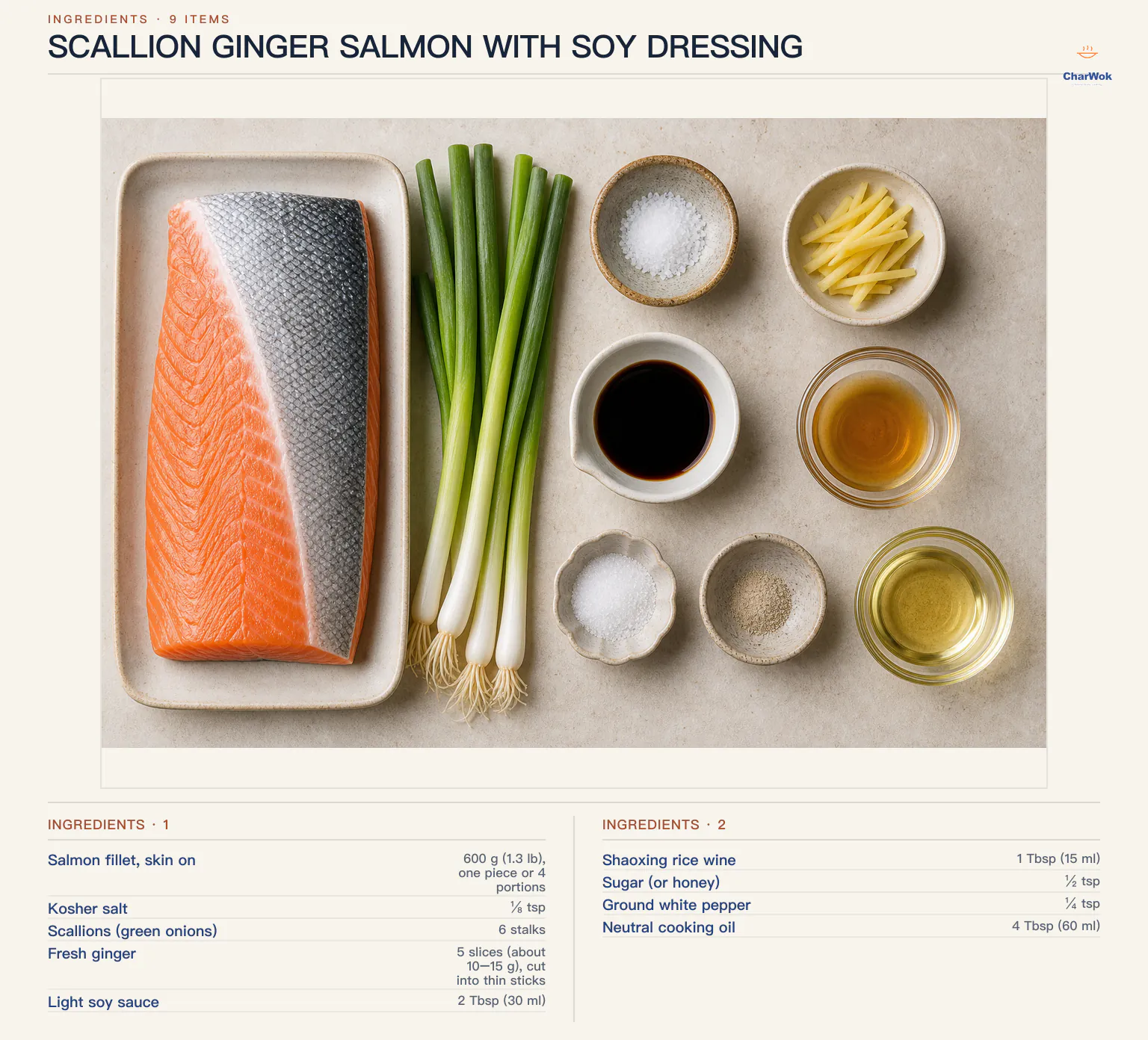
Skin-on is non-negotiable. The whole dish is built around crisping that skin, and a skinless fillet gives you nothing to press into the pan. Buy one large piece for a sharing plate, or four single-portion fillets if you prefer individual servings. Serves 4.
| Ingredient | Amount | Notes / substitute |
|---|---|---|
| Salmon fillet, skin on | 600 g (1.3 lb), one piece or 4 portions | Any firm white fish works in a pinch; try hake or pollock, or a thick cod or halibut steak. Skin-on still best. Avoid thin trout fillets. |
| Kosher salt | ⅛ tsp | The whole pinch, applied once to the flesh side. Fine sea salt works too. |
| Scallions (green onions) | 6 stalks | Cut into 5 cm lengths, then julienned lengthwise. Save the dark green tops for garnish. |
| Fresh ginger | 5 slices (about 10–15 g), cut into thin sticks | No substitute; dried ginger powder is wrong here. |
| Light soy sauce | 2 Tbsp (30 ml) | See the light vs. dark soy sauce guide. Use light, not dark; dark is too heavy and sweet for this. |
| Shaoxing rice wine | 1 Tbsp (15 ml) | No Shaoxing on hand? Dry sherry is its closest cousin; a dry white wine will do in a stretch. Cooking alcohol-free is fine too — just leave it out. |
| Sugar (or honey) | ½ tsp | Balances the soy. Honey adds a faint floral note; either works. |
| Ground white pepper | ¼ tsp | White, not black. Black pepper looks like specks of dirt on a pale fish. |
| Neutral cooking oil | 4 Tbsp (60 ml) | Peanut, canola, sunflower, or grapeseed. Not olive oil; it smokes and fights the flavor. |
The method, with the why behind each step
You need a heavy-bottomed skillet, ideally cast iron or carbon steel. A thin pan sheds heat the moment the cold fish lands, and you lose the sear. Non-stick is acceptable but never gives you the same crust. Size matters too: use a 28 to 30 cm (11 to 12 inch) pan so the aromatics can sit around the fish without piling up and steaming it.
- Dry the fish, then salt the flesh. Press both sides of the salmon firmly with paper towels until the surface feels tacky, not wet. Surface moisture is the enemy of a crisp skin; it turns to steam in the pan and you get grey, leathery skin instead of glass. Sprinkle the full ⅛ teaspoon of salt evenly over the flesh side only. Do not salt the skin, and do not salt ahead of time, because salt draws moisture out of the flesh and undoes the drying you just did.
- Prep the aromatics and the dressing. Cut the scallions into 5 cm lengths, then slit each piece lengthwise into fine strands. The reason for julienning rather than chopping is surface area: thin strands fry fast and crisp up, chunks stay wet and stew. Cut the ginger into similar matchsticks. Whisk the soy sauce, Shaoxing wine, sugar, and white pepper in a small bowl and set it next to the stove; once the fish is in the pan you will not have hands free to measure.
- Fry the aromatics in the oil first. Put the pan over medium heat, add the oil, then drop in the scallions and ginger. Cold oil, cold aromatics, then heat is deliberate here. It lets the flavors seep into the fat gently instead of scorching on contact. Stir for about 2 minutes, until the scallions soften and the kitchen smells of ginger. They should still be bright green, not brown. This is the same low-and-slow infusion that builds spring onion oil.
- Push aromatics aside and lay the salmon skin-down. Scoot the scallions and ginger to the edges of the pan so most of the oil pools in the center. Lay the salmon in, skin side down, and immediately press it flat with a spatula for 5 to 10 seconds. The skin will try to curl as the connective tissue contracts; pressing keeps full contact with the hot oil so the whole surface crisps evenly. Hold the pressure; do not fidget.
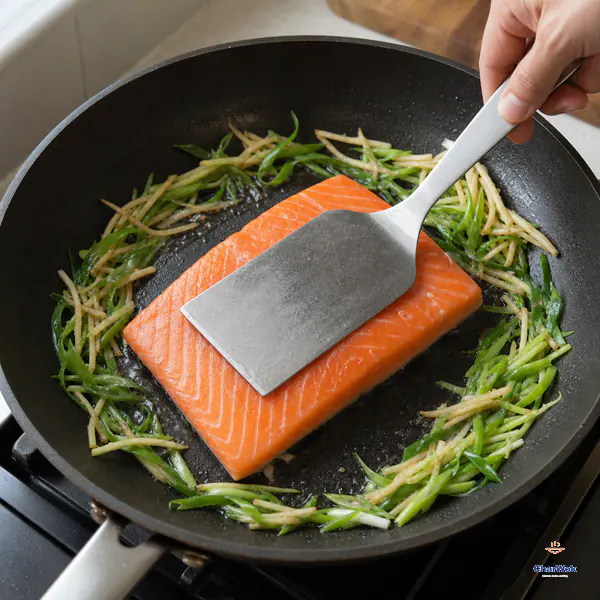
Lay the salmon skin-side down in the cleared oil and press it flat for 5 to 10 seconds so the contracting skin stays in full contact with the pan.
- Three minutes skin-down, undisturbed. Leave it on medium heat for about 3 minutes. Do not peek, do not move it. You are rendering the fat under the skin and setting the crisp. If you lift early, the skin tears and sticks. You will see the flesh change color from the bottom up, climbing the sides of the fillet.
- Flip, and pull the aromatics when they darken. Gently turn the fish flesh-side-down. Use two spatulas or a spatula and a fork for balance; a big fillet will break under its own weight if you lever it from one point. Cook 4 minutes on the flesh side. While it cooks, watch the scallions and ginger sitting in the hot oil at the edge. The moment they turn deep golden, fish them out with tongs onto a plate. Burnt scallion is bitter and that bitterness will ride the oil straight into your sauce. Set the fried aromatics aside; they are your garnish.
- One minute skin-side-up on high to finish the crust. Flip the salmon back to skin-down and turn the heat to high for the final minute. This last blast dehydrates any residual surface moisture and deepens the Maillard browning on the skin. Lift a corner with the spatula to check; you want a deep amber, almost mahogany. Pull the pan off the heat the instant it looks right, because the carryover heat in the skin will keep browning for another 10 seconds.
- Plate skin-up, then flash the sauce in the residual heat. Transfer the salmon to a serving plate, skin side up. Pour off the scallion-ginger oil from the pan and spoon it around the fish on the plate, not over the skin. Now pour the dressing mixture into the still-hot, empty pan. It will sizzle and reduce for about 5 seconds, concentrating the flavor slightly and burning off the raw alcohol edge from the wine. Pour that around the salmon too. Keep every drop of liquid off the top of the skin. Even a teaspoon of sauce pooled up there is enough to undo the crust you just spent ten minutes building. Scatter the reserved fried scallions and ginger over the top and serve at once.
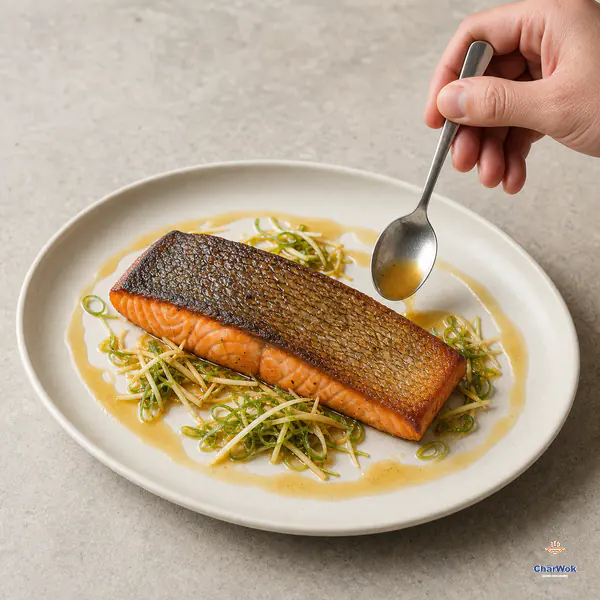
Plate the salmon skin-up and spoon the hot dressing around it, never over it, so the crisp surface stays dry through serving.
When it goes wrong
This is a forgiving dish, but it fails in a few predictable ways. Here is how I have personally ruined it, and the fixes.
- The skin is rubbery, not crisp. Two causes, both fixable. Either the fish went in wet, or you moved it too soon. Next time, dry for a full minute with pressure, and commit to the 3-minute skin-down cook without lifting. Pressing flat for those first 10 seconds matters more than people think.
- The scallions burned and the sauce tastes bitter. You left them in the oil past golden. They go from golden to black in about 15 seconds, especially the ginger. Pull them the instant the color deepens, even if it feels early. Burnt aromatics cannot be rescued; start the oil over.
- The salmon is dry and chalky inside. You cooked it too long on the flesh side, or your fillet was thin. For a 2.5 cm (1 inch) thick fillet, 4 minutes flesh-down is plenty; for thinner single portions, drop it to 2 to 3 minutes. The center should still be just translucent. Carryover cooking will finish it on the plate.
- The fillet fell apart when flipping. You flipped too early, before a crust formed on the bottom, or you used a single narrow spatula on a heavy piece. Let the sear set, and use two tools to support the whole fillet.
- The dressing tastes flat. Usually missing the sugar or the wine. The ½ teaspoon of sugar is not dessert-sweet; it just rounds the salt edge of the soy. Without it the sauce reads as one-dimensional and harsh.
Variations and what to serve with it
The scallion-ginger-soy base is a chassis. Once you have the technique, small changes take it in different directions without breaking it.
- Add a spoon of chili oil at the end. A teaspoon of chili oil swirled into the dressing gives the dish a Sichuan-leaning heat that plays well with the rich fish. A few drops of toasted sesame oil off the heat adds nuttiness without smoke.
- Swap the fish. The same method works on pan-fried belt fish strips or on a thick piece of cod. Adjust times for thickness; thinner fillets need only a couple of minutes per side.
- Make it a feast plate. For four people, serve this alongside salt and pepper squid and a vegetable like garlic bok choy, with steamed jasmine rice to soak up the dressing. That is a balanced Chinese-style seafood spread without much extra effort.
- Stuff it into bao. Flake whatever salmon is left off the bone, fold it through the crispy aromatics and the pan juices, and pile the lot into warm folded bao buns with a few cilantro leaves. Leftover night has never been the problem; it is the part I plan for.
- Sour angle. A squeeze of lime or a spoon of rice vinegar-style acidity at the table cuts the richness if your salmon is on the fatty side.
For a totally different direction with the same fish, the sweet and sour salmon recipe leans candy-sweet and batter-crisp, while Sichuan suan cai yu poaches fish in a sour-vegetable broth. Same protein, three completely different personalities.
Storage and reheating
This is a cook-and-eat dish; the crisp skin does not survive storage. If you must refrigerate leftovers, keep the fish, oil, and dressing in an airtight container for up to 2 days, and reheat skin-side-up in a 200°C (400°F) oven for 8 to 10 minutes. A microwave will turn the skin to wet paper and is not worth it. The dressing actually improves overnight as the flavors meld, so if you are planning ahead, make a double batch of the sauce and keep the extra for drizzling over rice or scallion tofu.
Questions home cooks actually ask
A short FAQ, worded for the cook standing at the stove.
The one thing to remember
Everything in this recipe serves one goal: keep the skin dry and the aromatics out of the burn zone. Do those two things and the rest is hard to mess up. Dry fish, hot fragrant oil, three minutes undisturbed, pull the scallions before they darken, and keep the sauce off the crust. The fish does the rest of the work for you.