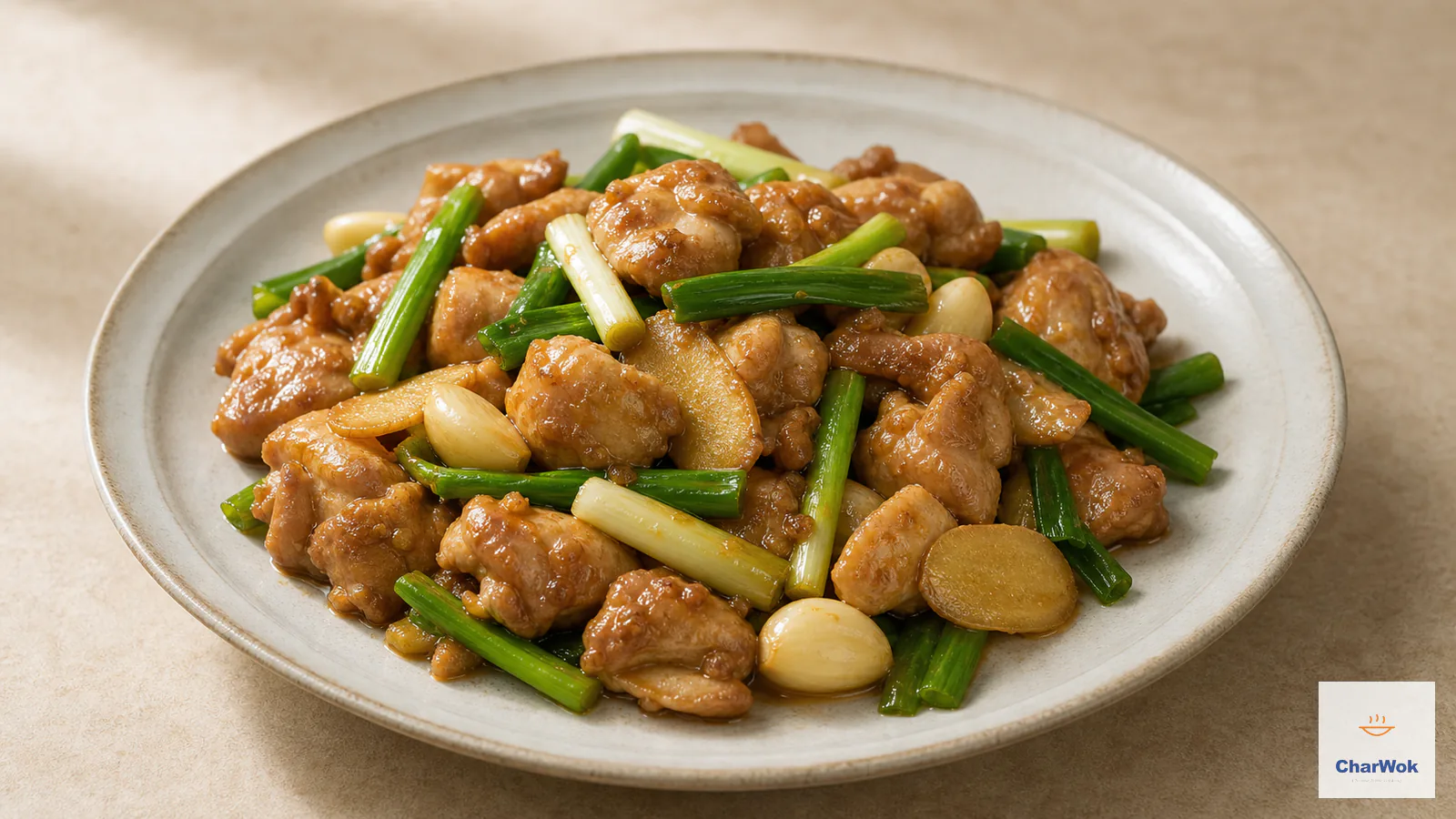
Sha Cha Chicken, or Shā Chá Jī, coats chicken pieces with shacha sauce, soy sauce, and cornstarch before browning and a short covered braise. Stir the jar before measuring because the oil and paste separate in storage. Shacha formulas vary by brand, so read the ingredient and allergen statements rather than assuming every jar contains the same seafood, soy, sesame, or peanut ingredients.
A pale, watery result usually comes from crowding the pan, which steams the chicken instead of browning it, or from skipping the cornstarch coating. Searing the chicken in one layer before adding water gives the finished sauce more roasted flavor and helps it cling.
At a glance: 450 g (1 lb) boneless dark-meat chicken, 2 tablespoons shacha sauce, one pan, and roughly 25 minutes end to end. Sear before adding water, verify the chicken reaches 165°F (74°C), then reduce uncovered until the sauce clings instead of pooling.
What this dish is, and where it comes from
Shacha is a savory condiment used in Chaozhou, Fujian, and Taiwanese cooking, including hot-pot dipping sauces and dishes such as sha cha beef. It is not a direct substitute for a sweet tomato-based barbecue sauce, and it should not be treated as interchangeable with every product labeled satay sauce.
The method is straightforward: marinate in the refrigerator, sear in one uncrowded layer, then add water and cover so the chicken cooks through. The uncovered reduction at the end thickens the sauce; it is a texture step, not the test for poultry doneness.
Ingredients
Ingredients at a glance
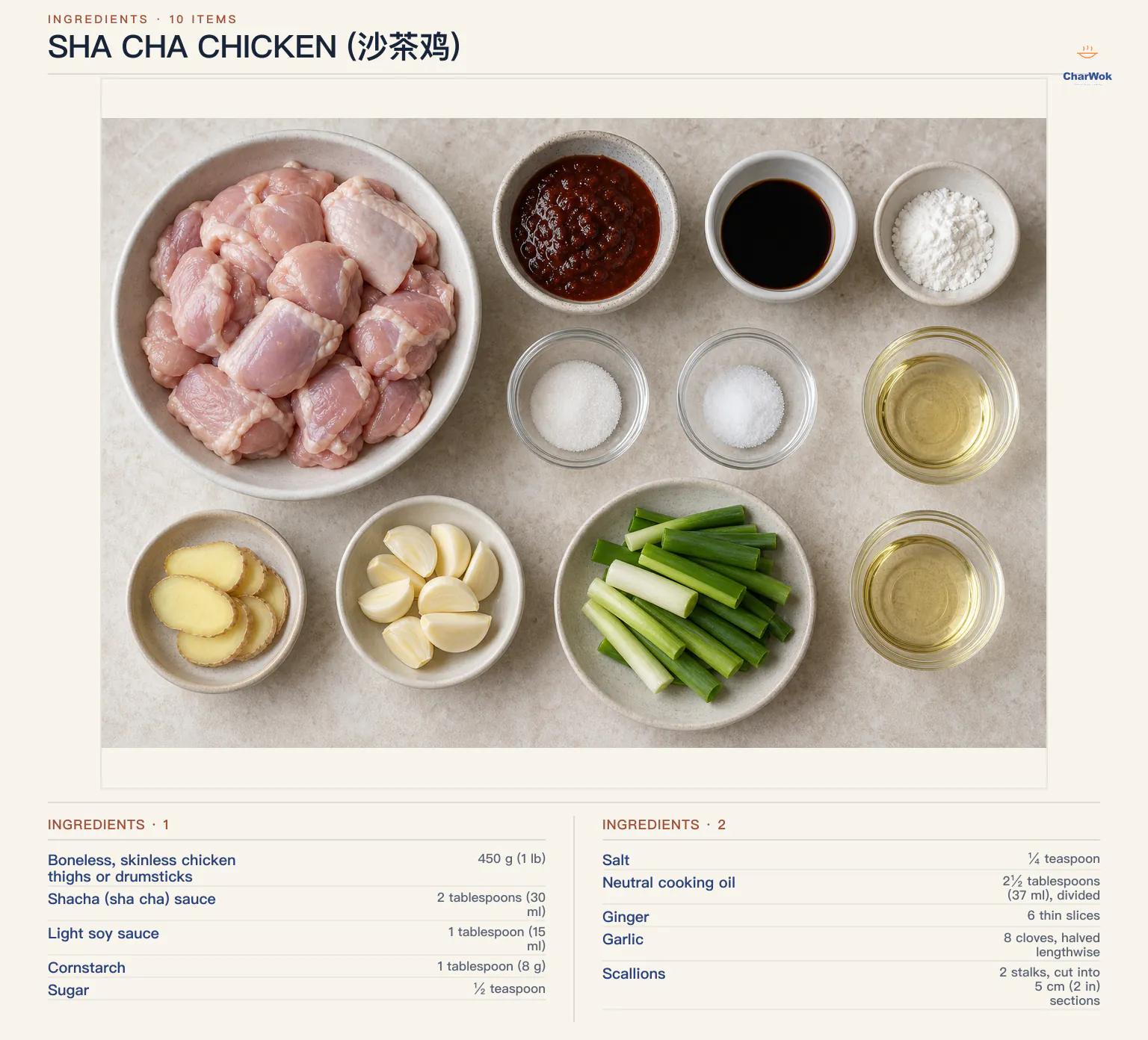
| Ingredient | Amount | Notes / substitute |
|---|---|---|
| Boneless, skinless chicken thighs or drumsticks | 450 g (1 lb) | Cut to similar sizes so the pieces reach the safe temperature together; breast can be used but should still be checked to 165°F (74°C) |
| Shacha (sha cha) sauce | 2 tablespoons (30 ml) | Stir the separated oil and paste together before measuring; check the label for allergens |
| Light soy sauce | 1 tablespoon (15 ml) | Regular soy sauce can be used in a smaller amount, then adjusted after reduction |
| Cornstarch | 1 tablespoon (8 g) | Potato starch also works; flour produces a different coating |
| Sugar | ½ teaspoon | Balances the salty sauce |
| Salt | ¼ teaspoon | Shacha and soy sauce are already salty; reduce or omit according to the product label |
| Neutral cooking oil | 2½ tablespoons (37 ml), divided | Choose an oil labeled suitable for pan-frying |
| Ginger | 6 thin slices | Slice thinly so it perfumes the oil |
| Garlic | 8 cloves, halved lengthwise | Halved cloves are less likely to burn during the sear than minced garlic |
| Scallions | 2 stalks, cut into 5 cm (2 in) sections | Add during the final reduction |
A short refrigerated marinade
A 10-minute refrigerated marinate is enough to coat the small pieces. If preparing ahead, keep the covered chicken in the refrigerator and cook it within 2 hours for this recipe. Do not marinate raw poultry at room temperature or leave this salty mixture overnight.
How to cook it, step by step
- Cut the chicken large. Halve drumsticks; quarter thighs. Pieces about the size of a golf ball are right; smaller and they overcook in the braise, larger and the sear cannot reach the center before the outside burns. Put them in a bowl with the shacha, light soy, cornstarch, sugar, and salt. Toss until every piece is filmed with paste. The cornstarch is doing two jobs here: it protects the meat surface from the direct heat of the pan, and it thickens the braise later so you get a glossy sauce instead of gray dishwater.
- Seal with oil and refrigerate. Drizzle ½ tablespoon of the oil over the coated chicken and toss again. Cover and refrigerate for 10 minutes, or up to 2 hours. Keep raw chicken separated from ready-to-eat food.
- Sear hot, in a single layer. Heat the remaining 2 tablespoons of oil in a wide skillet over medium until it shimmers. Lay the chicken down with space between pieces. Crowding drops the pan temperature and causes the chicken to steam in its own liquid instead of browning. If your pan is small, cook in two batches. Scatter the ginger and garlic around the chicken, not on top, so they fry in the oil and flavor it.
- Flip once, when it releases. Leave the chicken alone for about 3 minutes. When the underside is deep golden and lifts without tugging, flip. If it sticks, it is not ready; give it another minute. The Maillard browning on that first side is where the sauce gets its roasted depth, so do not rush it.
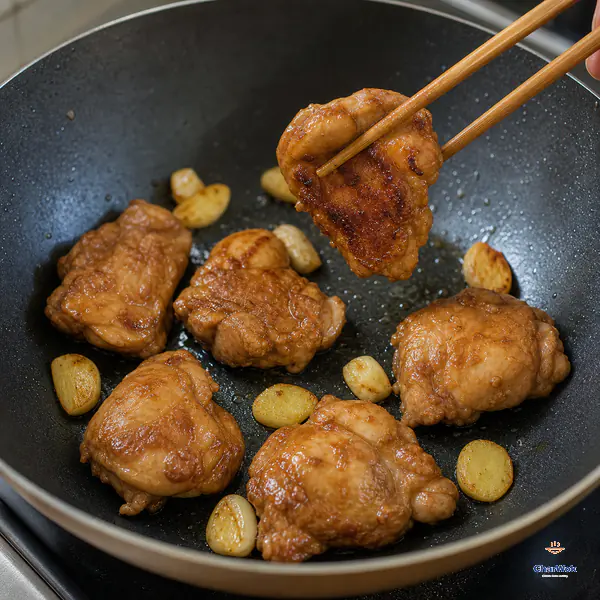
Leave the first side alone until it turns deep golden and lifts without tugging; if it sticks, give it another minute before flipping.
- Add water, cover, and verify doneness. Pour in about 120 ml (½ cup) water, cover, and bring it to an active simmer. Start checking boneless pieces after about 4 minutes; bone-in pieces usually need longer. Insert a food thermometer into several of the largest pieces, avoiding bone, and continue cooking until every tested point reaches 165°F (74°C).
- Finish uncovered with scallions. Once the chicken is safely cooked, take off the lid, add the scallions, and reduce until the sauce coats a spoon and clings to the chicken. Sauce thickness does not replace the temperature check. Serve immediately over steamed jasmine rice.
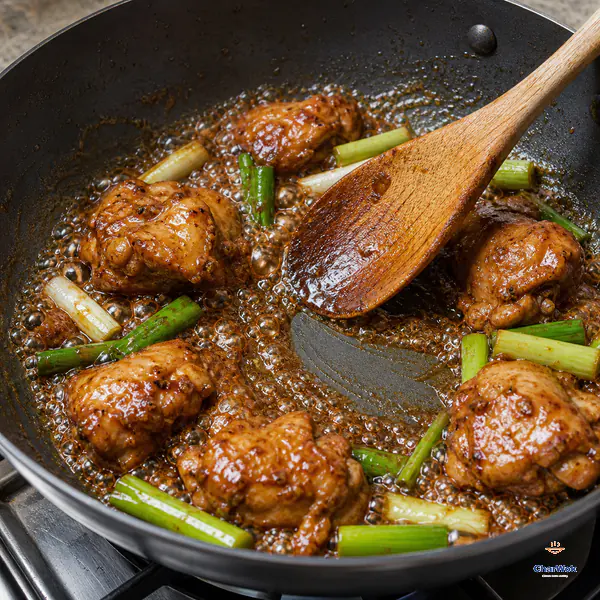
Check several of the largest pieces at 165°F (74°C) first; then remove the lid, add scallions and reduce until the sauce clings instead of pooling.
When it goes wrong: troubleshooting
The sauce is thin and pooled at the bottom. You either added too much water or pulled the pan off the heat too early. Pour off the excess into a cup, reduce what is left until it is syrupy, then pour back. Or dissolve ½ teaspoon cornstarch in a tablespoon of water and stir it in over heat for thirty seconds.
The chicken is pale and gray. The pan was not hot enough or it was overcrowded. Next time, fewer pieces per batch and wait for the shimmer. You can still rescue this batch: pour off the liquid, return the pan to high heat, and let the chicken color before adding the liquid back.
The garlic burned and tastes bitter. Crushed or minced garlic burns fast in a searing pan. Use halved cloves and keep them in the oil between the chicken pieces, where the temperature is gentler. If you must use minced garlic, add it in the last minute with the scallions.
The chicken is dry. The pieces may have been uneven or cooked well past 165°F (74°C). Cut them to similar sizes, begin checking the largest pieces early, and stop once all test points reach the safe temperature. Breast meat has less margin than thigh meat, so temperature is more useful than a fixed number of minutes.
Variations and what to serve alongside
For another use of the condiment, make sha cha beef with its own ingredient ratios and cooking method. This chicken version can take a handful of blanched green beans or mung bean sprouts during the final reduction. For more heat, add dried chilies with the ginger or stir a little chili bean paste into the sauce, checking its label before adjusting the salt.
For a cool, crisp contrast, serve the chicken with smashed cucumber salad. Steamed enoki mushrooms or silken tofu salad are lighter additions to the table. You can also tuck the chicken into freshly steamed bao buns with a small spoonful of the reduced sauce.
Storing and reheating
Move leftovers to shallow containers and refrigerate within 2 hours of cooking, or within 1 hour above 90°F (32°C). Use within 3 to 4 days. Reheat in a covered pan with a spoonful of water until the chicken reaches 165°F (74°C); a thermometer, not steam or sauce texture, confirms it is ready. See the USDA leftovers guidance.
Questions home cooks actually ask
Is shacha sauce the same as satay sauce? No. Recipes and commercial formulas vary, but the two names do not guarantee the same flavor, ingredients, or allergens. Use a product labeled shacha for this recipe and read its ingredient statement.
Can I use chicken breast? Yes. Cut it into even pieces, start checking earlier than thigh meat, and continue cooking until several of the largest pieces reach 165°F (74°C). Do not use a fixed two-minute braise as the safety test.
What if I cannot find shacha sauce? XO sauce or a mixture of miso and fish sauce produces a different dish, not a like-for-like replacement. Check each label separately because the allergen profile can change with the substitute.
Why does the recipe say to stir the sauce before using? The oil separates and rises to the top in the tin. If you scoop from the surface you get only flavored oil. Stir so paste and oil are combined, then measure.
Can I make it less salty? Start with 2 teaspoons soy sauce and omit the added salt, then taste only after the chicken is safely cooked and the sauce is reduced. Sodium varies across shacha and soy sauce brands, so compare the labels and adjust the next batch if needed.
Does shacha sauce always contain seafood or peanuts? Do not assume either way. Formulas vary by brand and market, so read the full ingredient and allergen statements on the exact jar every time, especially when cooking for someone with an allergy.
The three checkpoints are simple: stir the shacha before measuring, brown the chicken without crowding, and verify 165°F (74°C) before reducing the sauce. For related methods, browse Chinese chicken recipes by cooking method, Hunan chicken, or scallion oil chicken.