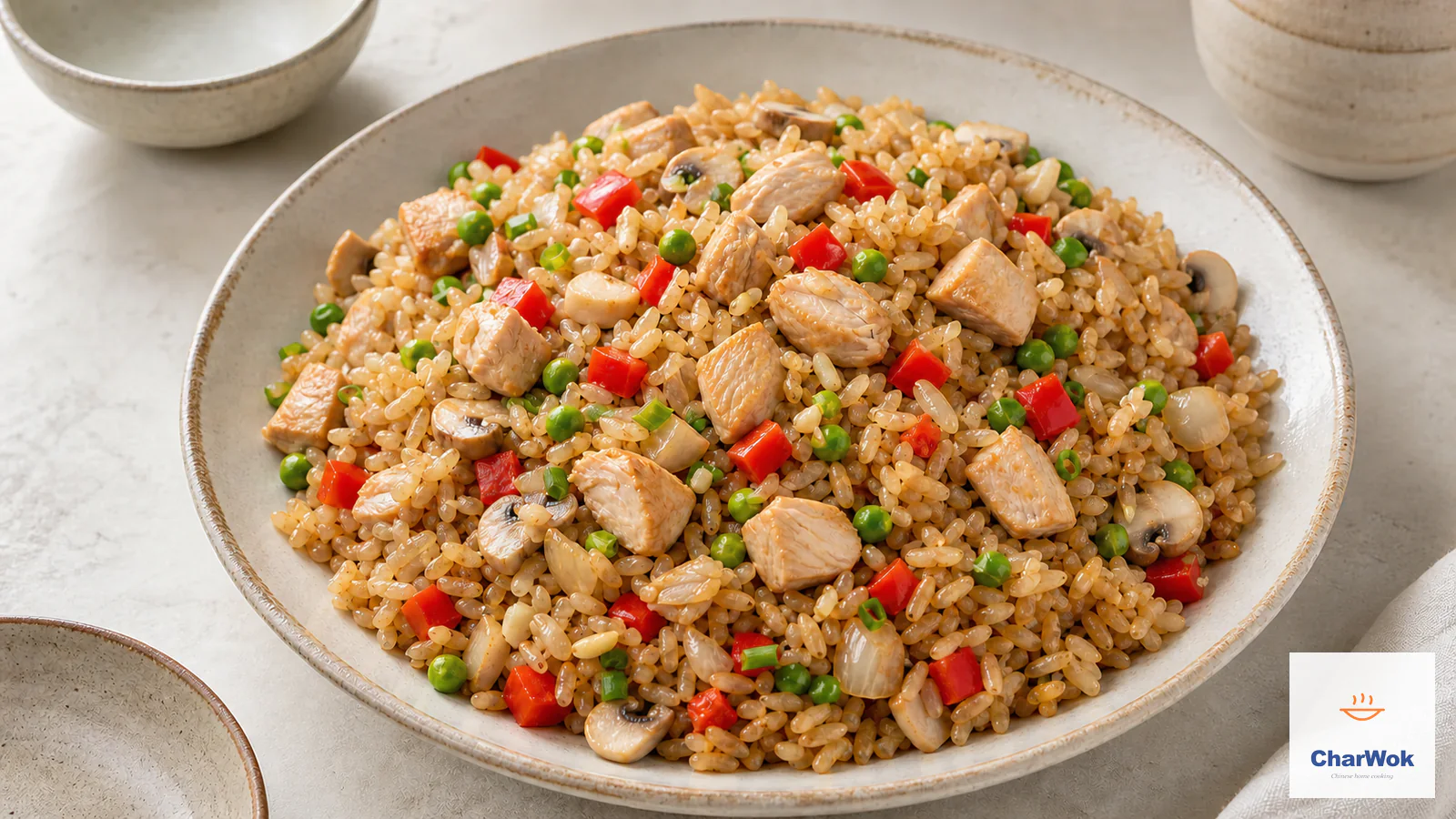
Good chicken fried rice depends less on a secret sauce than on three controllable details: cold, dry rice; small, evenly cut chicken protected with a thin cornstarch coating; and a wide pan that stays hot without pushing the oil to smoke. Those choices keep the grains separate and the chicken tender while making the recipe realistic on a home stove.
This version uses chicken breast, mushrooms, red pepper, peas, and a measured light-and-dark soy seasoning. The chicken is seared briefly, removed, then returned only after the rice is hot; the final safety check is an internal temperature of 74°C (165°F), not colour or a fixed number of seconds.
At a glance: Three servings, about 16 minutes hands-on. The non-negotiables are cold day-old rice, chicken cut small and velveted for five minutes, and a wok hot enough to sear on contact. Use two tablespoons of oil total and add the sauce around the rice, never under it, so the grains toast instead of steaming.
What we are really making
This is a home-style chicken chao fan, the everyday stir-fried rice you find across northern and southern Chinese kitchens rather than the banquet-style Yangzhou fried rice with its long roster of cured and seafood additions. The protein is chicken, the aromatics are garlic and onion, and the color comes from a measured pour of light and dark soy sauce. Mushrooms, red pepper, and peas are there for sweetness and bite, not as decoration.
The dish rewards you for understanding one piece of food science: stir-frying rice is dry cooking, not steaming. The goal is to drive surface moisture off each grain so the starch firms up and the outside browns in the hot oil. Anything that adds water at the wrong moment, wet rice, watery vegetables, sauce poured onto bare metal, works against that goal. Once you internalize that, every step below stops feeling arbitrary.
Ingredients
Ingredients at a glance
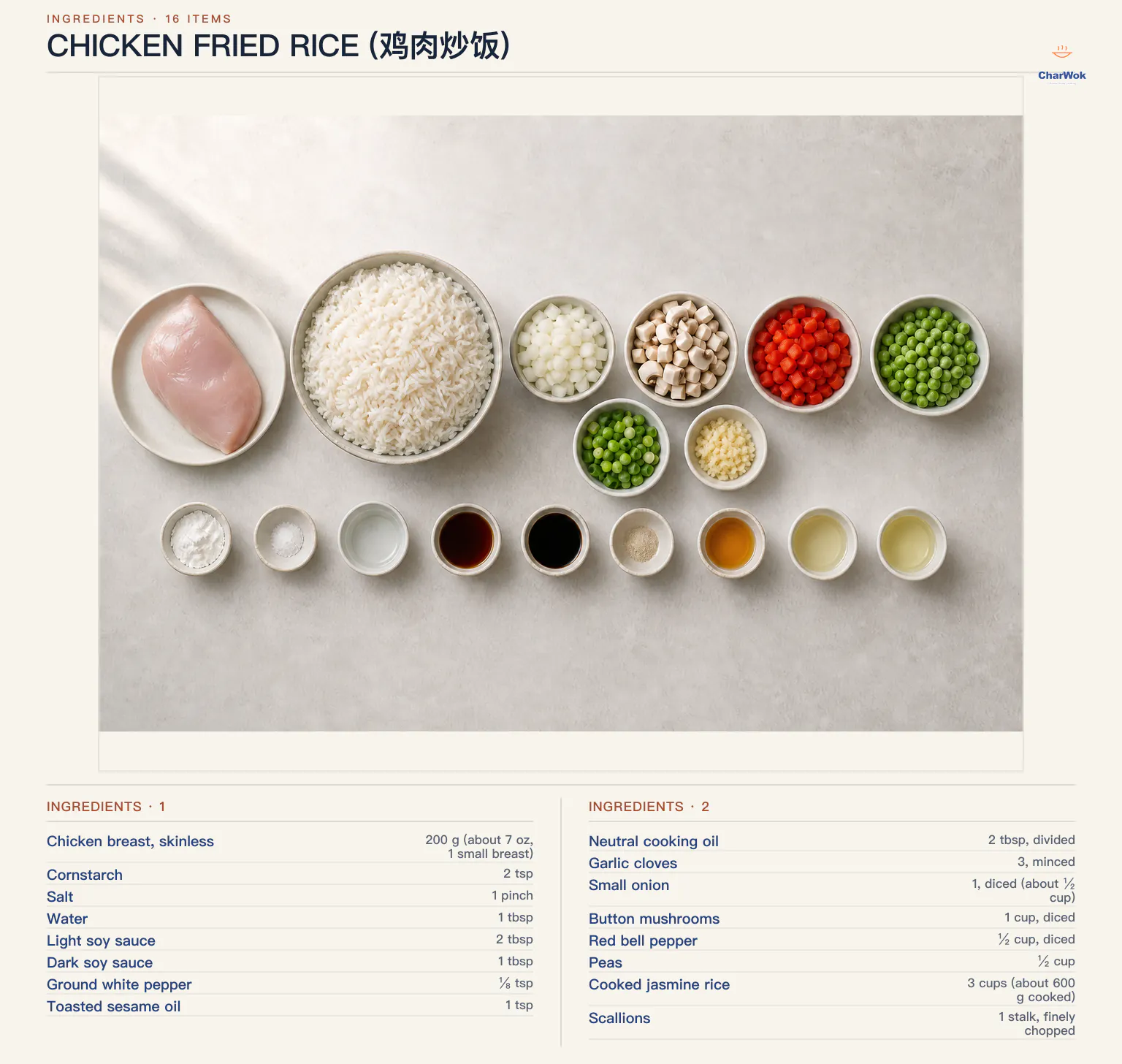
Serves 3 as a main, 4 to 5 as part of a multi-dish meal. Metric first; household US cups noted where they are the easy measure.
| Ingredient | Amount | Notes / substitute |
|---|---|---|
| Chicken breast, skinless | 200 g (about 7 oz, 1 small breast) | Thigh works and is more forgiving; slice it the same size |
| Cornstarch | 2 tsp | This is the velvet coat; do not skip |
| Salt | 1 pinch | |
| Water | 1 tbsp | Helps the starch cling to the meat |
| Light soy sauce | 2 tbsp | For salt and savory depth; see light vs dark soy sauce |
| Dark soy sauce | 1 tbsp | For color; omit and add extra light if you only have one |
| Ground white pepper | ⅛ tsp | Milder and cleaner than black; black is an acceptable sub |
| Toasted sesame oil | 1 tsp | Added off the heat, never as a frying oil |
| Neutral cooking oil | 2 tbsp, divided | Peanut, canola, or avocado; high smoke point matters |
| Garlic cloves | 3, minced | |
| Small onion | 1, diced (about ½ cup) | Yellow or white; shallot works |
| Button mushrooms | 1 cup, diced | Cremini or shiitake are better; chicken and mushroom is a natural pairing |
| Red bell pepper | ½ cup, diced | Carrot or diced celery for a different crunch |
| Peas | ½ cup | Frozen is fine; thaw and pat dry |
| Cooked jasmine rice | 3 cups (about 600 g cooked) | Must be cold and day-old; see the rice note below |
| Scallions | 1 stalk, finely chopped | Save a few dark green slices for finishing |
About the rice. Cook it the day before with slightly less water than usual, divide it into shallow containers, and refrigerate promptly, always within 2 hours of cooking (within 1 hour above 32°C/90°F). Once chilled, cover it and keep it refrigerated overnight so the surface firms and dries. Freshly cooked rice holds more surface moisture and can mash under a spatula. For how to cook the base grain itself, the stovetop jasmine rice guide walks through three methods.
The marinade is doing two jobs at once
Coating the chicken in cornstarch, a pinch of salt, and a tablespoon of water is called velveting, and it is the single biggest difference between takeout texture and home texture. The starch gelatinizes into a thin shell the moment it hits the oil, locking moisture inside the meat and giving you that slippery, almost silky bite. Without it, breast in particular seizes up and turns stringy. Give it five minutes; longer is unnecessary because the salt will start pulling moisture back out.
Cut the chicken small, roughly pea-to-diced-onion size, so it cooks through in under a minute and distributes evenly through the rice. Big chunks mean overcooked edges by the time the centers are done.
Method
- Prep the chicken. Cube the breast small and toss with cornstarch, salt, and the tablespoon of water until each piece is coated. Let it sit five minutes while you measure everything else. Mise en place is not optional here; once the pan is hot you will not have time to mince garlic.
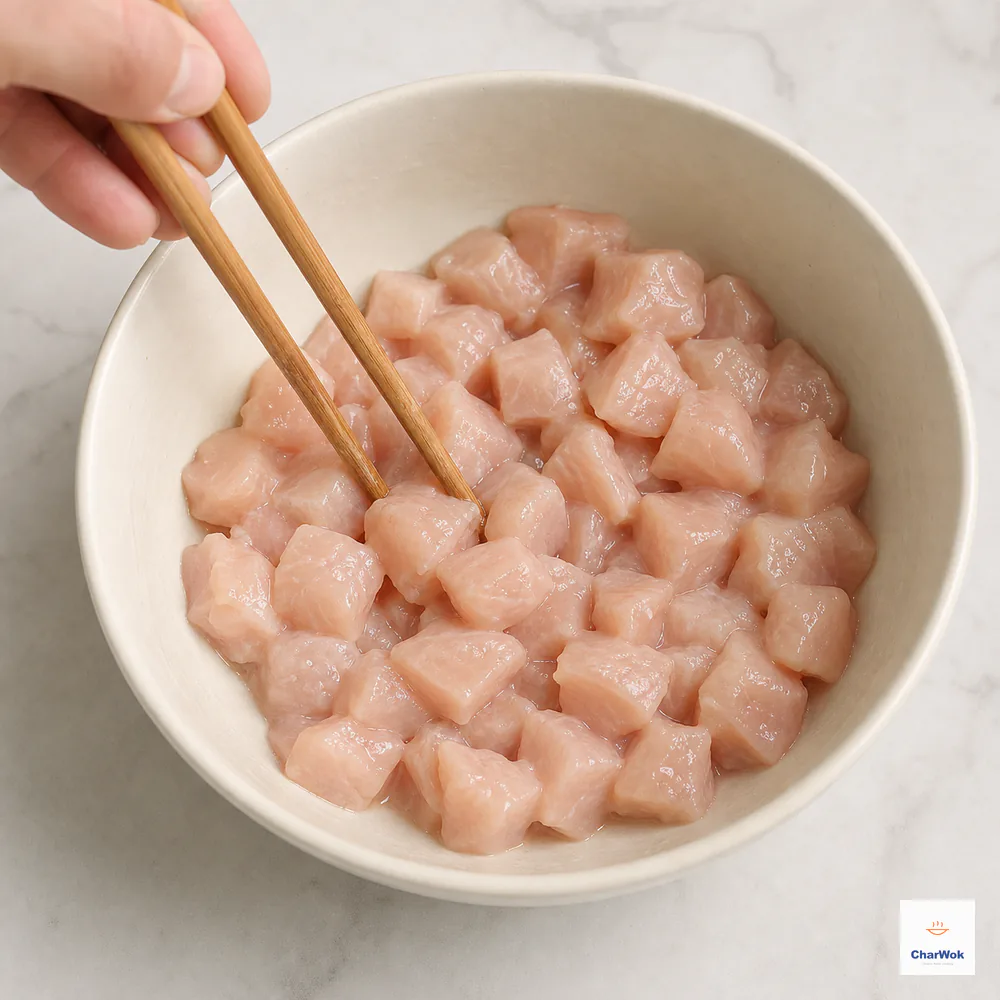
Cut the chicken into small even cubes, mix with cornstarch, salt, and water until fully coated, then rest for five minutes while preparing everything else.
- Mix the sauce in one bowl. Combine light soy, dark soy, white pepper, and sesame oil. Having it ready means you can pour it over the rice in one motion instead of dribbling each bottle in. This same light-plus-dark ratio is what gives soy sauce fried rice its clean flavor, and it is the backbone of most Chinese rice recipes by cooking method.
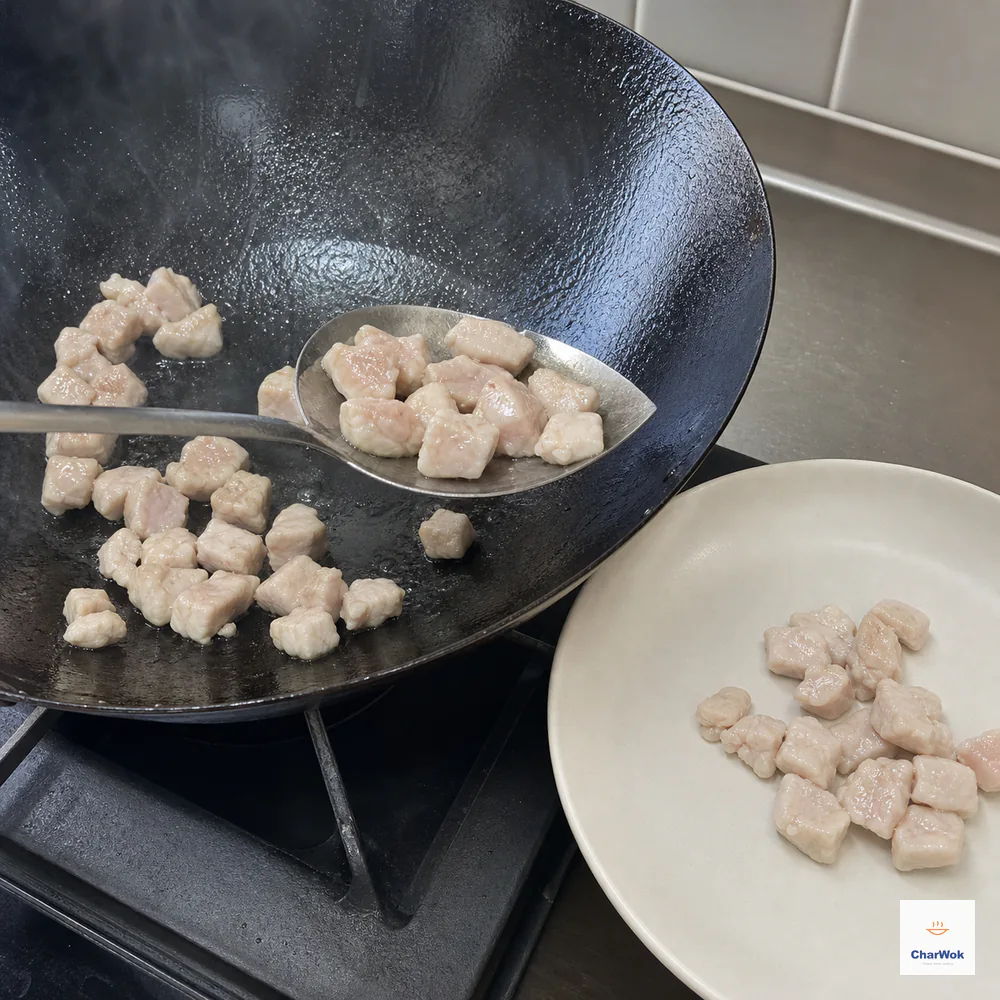
Sear the velveted chicken in one layer and remove it as soon as the surfaces turn opaque while the centers remain tender; it will finish cooking when returned later.
- Sear the chicken, then pull it. Preheat a seasoned carbon-steel wok or stainless skillet over medium-high heat until a water drop skitters and evaporates quickly, then wipe it completely dry. Add 1 tablespoon of oil and swirl; start cooking when it shimmers at about 175 to 180°C (350 to 355°F), before it smokes. Add the chicken in one layer, sear for 15 to 20 seconds, then stir until the surfaces turn opaque while the centres remain partially cooked. Transfer it to a clean plate; it must finish cooking after it returns to the rice. With nonstick cookware, add oil before heating and follow the manufacturer's heat limit.
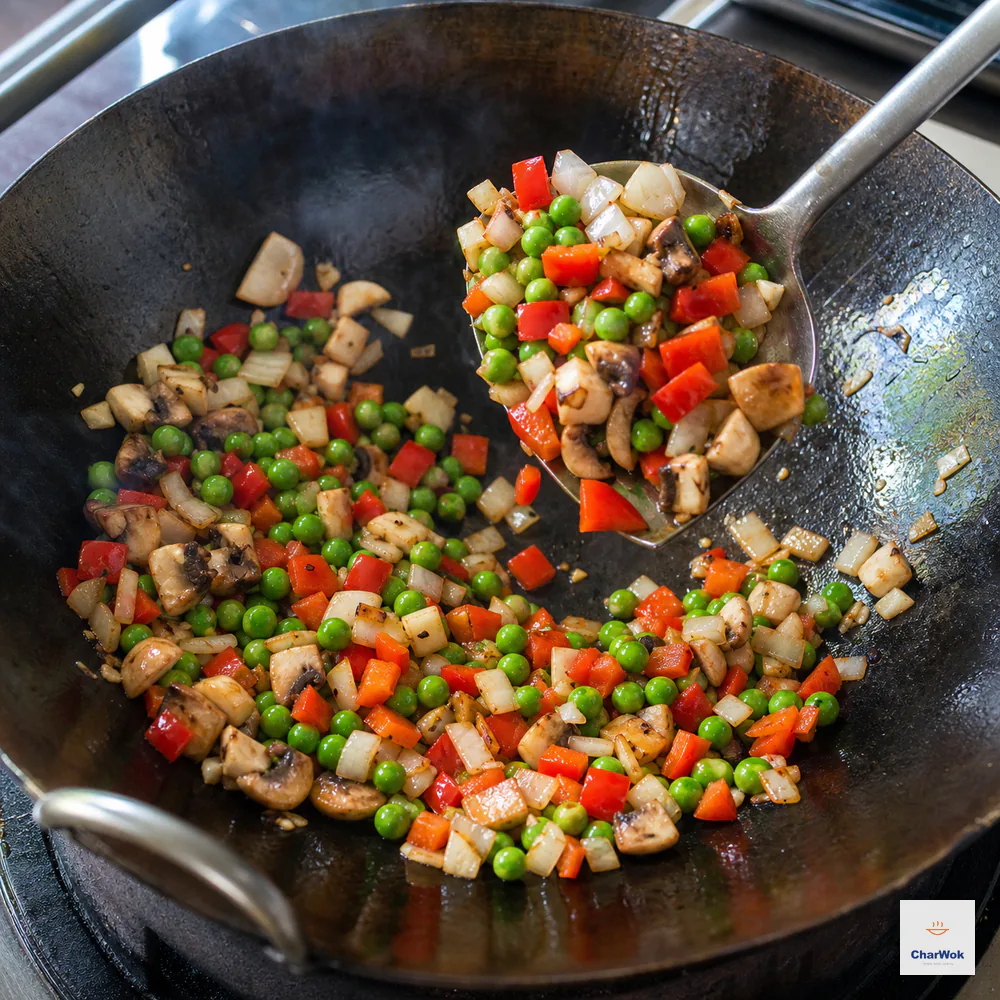
Bloom the garlic and onion, then fry the mushrooms, red pepper, and well-drained peas over high heat for about one minute without adding water.
- Bloom the aromatics. Add the remaining tablespoon of oil. Tip in the garlic and onion and let them sizzle for about 20 seconds. You want the onion edges to take on a little gold, not soften completely. This is where the dish builds its savory floor.
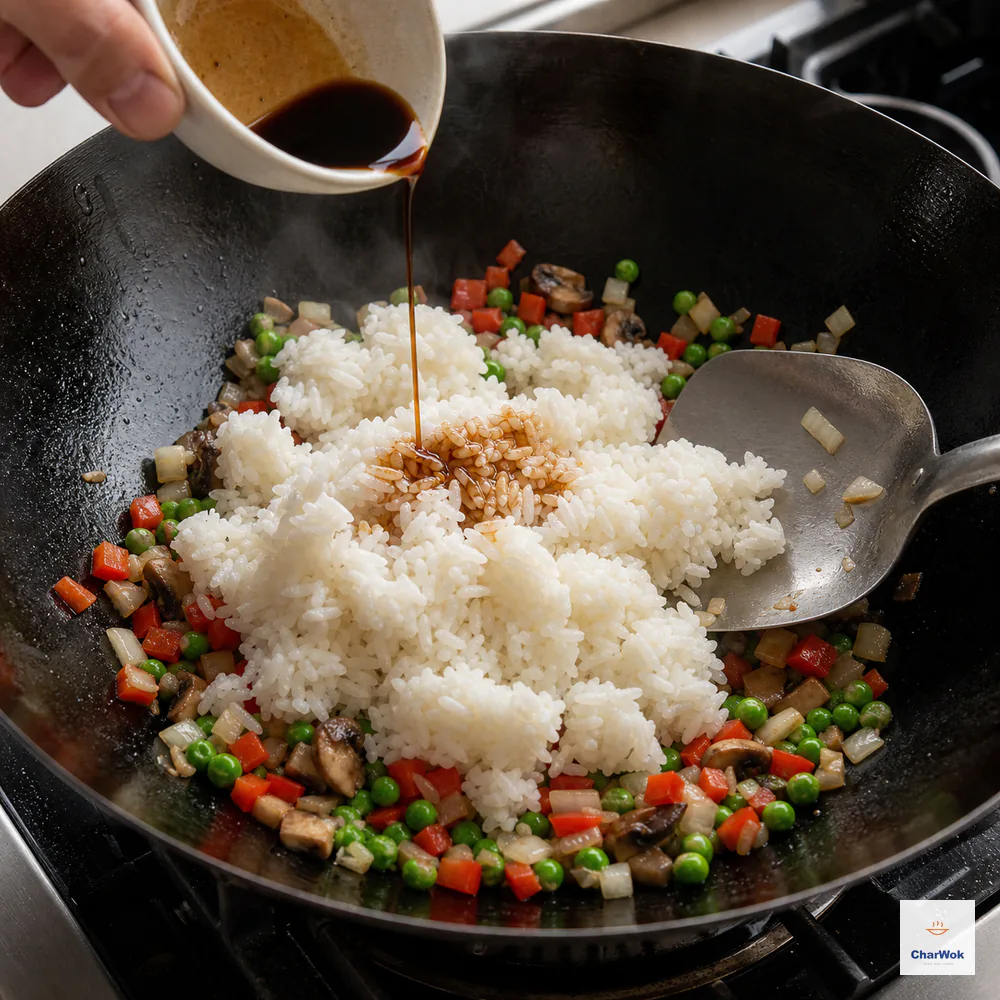
Add the cold rice and pour the mixed seasoning over the top of it, not into the empty pan; press and chop the loose clumps apart until every grain is hot and evenly stained.
- Fry the vegetables hot and fast. Add the mushrooms, red pepper, and peas. Toss over high heat for about a minute, until the mushrooms shrink slightly and shed their raw smell. If the pan looks dry, that is correct; do not add water. The vegetables should char at the edges, not steam.
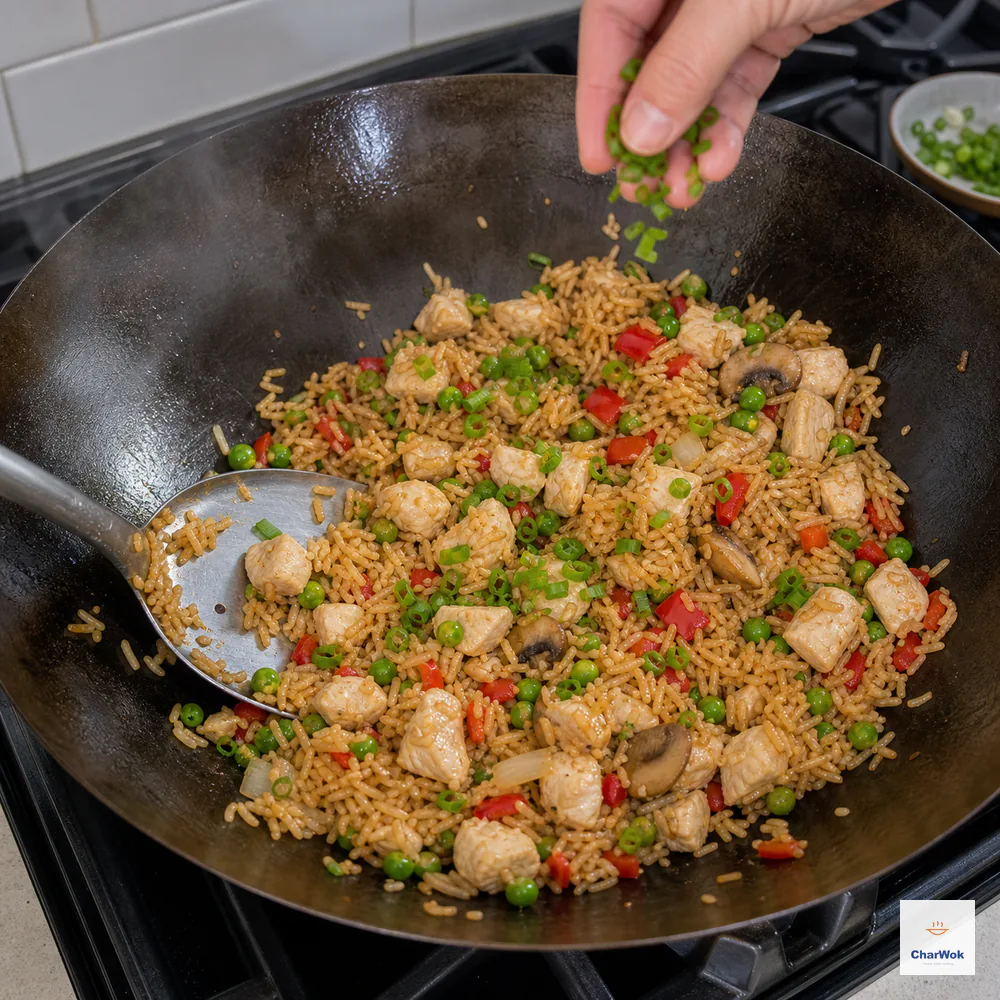
Return the chicken and toss until several of the largest pieces reach 74°C (165°F); do not rely on a fixed 30 seconds, then turn off the heat and fold in the scallion.
- Add the rice and break it down. Tip in the cold rice and immediately pour the sauce over the top of it, not into the empty pan. Press and chop with the edge of your spatula to separate every lump. Keep the rice moving so each grain passes through the hot oil and picks up color. You are looking for the grains to look distinct, slightly puffed, and individually coated, about 2 minutes. This tossing rhythm is the same one you would use for egg fried rice or shrimp fried rice.
- Return the chicken and finish. Once the rice is hot and evenly stained, slide the chicken back in and toss until several of the largest pieces reach 74°C (165°F) on an instant-read thermometer. Do not rely on a fixed 30-second toss or colour alone. Turn off the heat, scatter in the scallions, and toss once more so the residual heat softens them without cooking away their bite.
Cooking and leftover safety: FoodSafety.gov lists 74°C (165°F) for poultry and reheated leftovers. Its leftover guidance says to refrigerate perishable food in shallow containers within 2 hours, or within 1 hour above 32°C (90°F). The U.S. Fire Administration advises turning off the burner if cooking oil starts to smoke.
When it goes wrong, and how to fix it
I have made every mistake below at least twice. None of them ruins dinner, but they are the gap between fine and memorable.
- Wet, clumpy rice. The cause is almost always warm or freshly cooked rice, or sauce poured straight onto the metal. Spread the rice out and press lumps apart with a chopping motion rather than stirring. For next time, refrigerate the rice uncovered overnight. In a pinch on the same day, cook the rice with a little less water, spread it thin on a sheet pan, and freeze it for 15 minutes before frying.
- Tough, rubbery chicken. Either the cubes were uneven, the coating was skipped, or the meat stayed in the pan throughout. Cut evenly, coat with cornstarch, and pull the chicken after the first sear; on the final toss, stop as soon as the largest pieces reach 74°C (165°F).
- Pale, sad color. You likely skipped the dark soy or used too little oil to transfer heat. Dark soy is mainly for that warm caramel stain. A teaspoon of oil is not enough; the two tablespoons here are the minimum for proper wok hei at home.
- Everything tastes salty but flat. Too much light soy, no sugar or fat to round it. Add a quarter teaspoon of sugar and an extra few drops of sesame oil off the heat. A tiny pinch of MSG or a splash of Shaoxing wine on the chicken during searing also deepens the savory note without adding salt.
- Vegetables are soggy. The pan was not hot enough or you crowded it. Cook in a wok that is wide and preheated, and pat thawed frozen peas dry before they go in. Wet peas throw water into the oil and kill the sear.
- Rice sticks to the wok and scorches. The pan was not hot enough before the oil went in, or the oil was not spread up the sides. Heat the empty wok first, add oil, swirl to coat the sides, then add food. A well-seasoned carbon steel wok releases naturally once it is properly hot.
Variations and pairings
The core technique, cold rice plus a quick sauce plus hot-pan searing, is endlessly swappable. A few directions I keep coming back to:
- Swap the protein. Diced pork shoulder is the classic and gives you pork fried rice; peeled shrimp turns it into a seafood version of the same dish; a handful of diced Chinese sausage, or lap cheong, fried crisp first, adds a sweet cured-pork note that regular chicken cannot match. For the sausage route, a dedicated Chinese sausage rice is worth studying too.
- Add the egg. Push the rice to one side after step 5, crack an egg into the empty space, and scramble it until just set before folding it through. A glossy ribbon of egg running through the grains is what separates a forgettable plate from one people fight over.
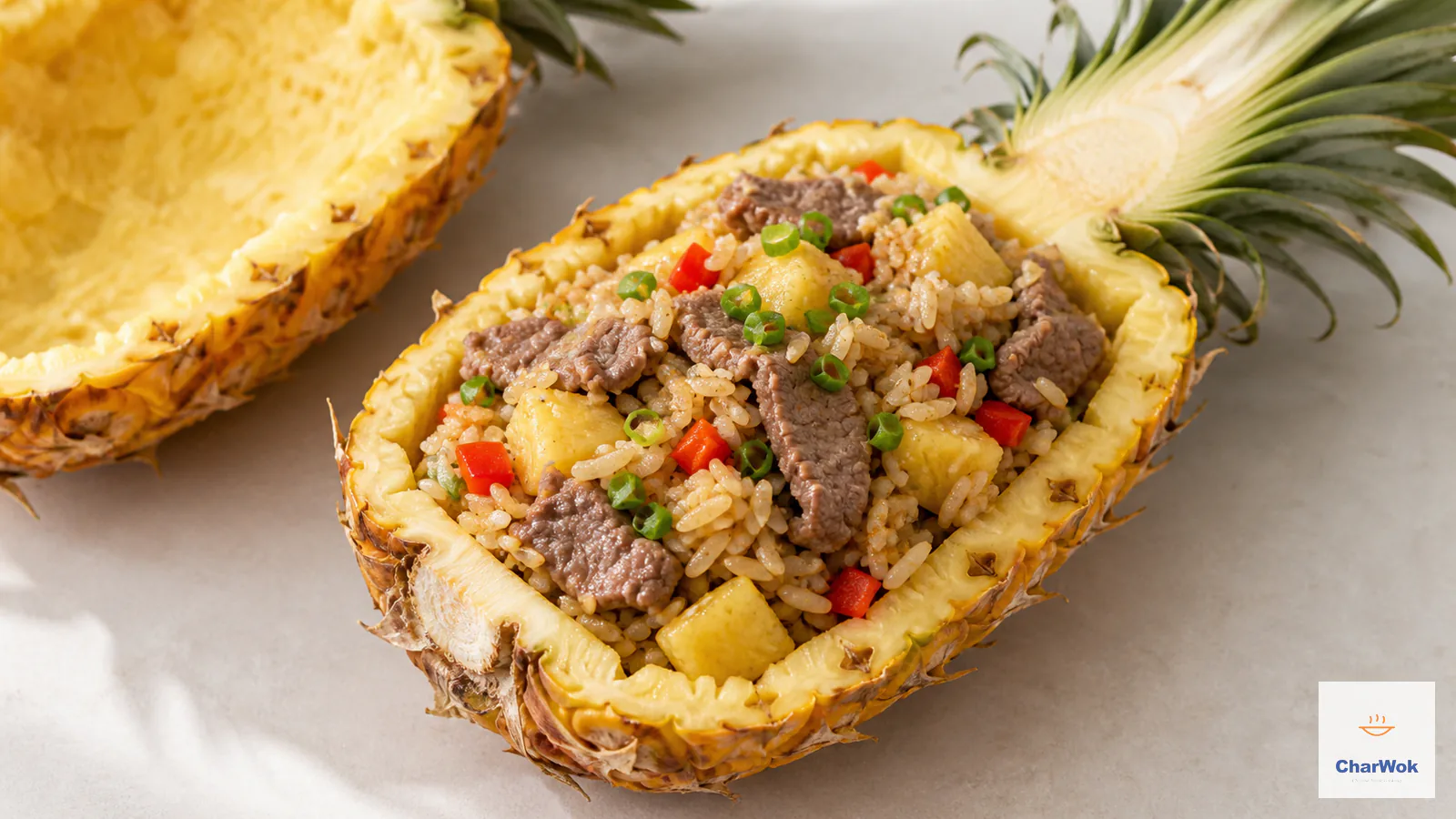
- Go sweet and tropical. Diced pineapple and a squeeze of lime at the end lean toward beef and pineapple fried rice territory and cut through the soy beautifully.
- Make it a full plate. Serve with a quick smashed cucumber salad or a bowl of egg drop soup on the side. The cold crunch and the brothy warmth both reset the palate between bites of rice.
- Heat it up. A spoonful of chili oil stirred in at the end, or a dab of black bean sauce on the chicken as it sears, shifts the whole dish toward the takeout-style versions people love.
If you want more chicken ideas that play nicely with rice, the round-up of Chinese chicken recipes by cooking method is a good place to browse, and a simple scallion oil chicken makes a fine companion dish when you want a second protein on the table.
Storage and reheating
Do not leave fried rice at room temperature until it cools completely. Divide it into shallow containers and refrigerate within 2 hours of cooking, or within 1 hour above 32°C (90°F); discard it if that limit has passed. Use refrigerated leftovers within 3 to 4 days. Reheat only the portion needed, covered, until several spots reach 74°C (165°F). Raw marinated chicken must stay separately covered in the refrigerator and should never share a plate or utensil with the cooked rice.
Frequently asked questions
Can I use chicken thigh instead of breast? Yes, and it is more forgiving. Thigh stays juicy longer and is actually my preferred cut. Dice it the same size and velvet it the same way.
Do I really need day-old rice? For best texture, yes. Cold rice has lost surface moisture, so the grains stay separate and brown instead of clumping. If you are short on time, cook fresh rice with less water, spread it on a tray, and chill it for 15 minutes in the freezer before frying.
Why pull the chicken out partway through? It prevents overcooking during the long rice-frying stage. The first sear is intentionally partial; after the chicken returns, use an instant-read thermometer to confirm the largest pieces reach 74°C (165°F).
What is the difference between light and dark soy sauce here? Light soy supplies salt and savory depth, dark soy supplies the warm brown color and a faint sweetness. If you only have one, use all light; the dish will taste right but look paler.
Can I make this without a wok? Yes. A large stainless-steel, cast-iron, or carbon-steel skillet holds heat well. A nonstick pan can also work in a smaller batch; add oil before heating and stay within the manufacturer's heat limit.
The whole dish, start to plate, takes about sixteen minutes once the rice is cold and the chicken is marinated. The work is in the setup, not the cooking. Get the rice dry, velvet the chicken, and let the pan scream before anything goes in, and the version in your kitchen will quietly outdo the one in the takeout box.