The first time I tried to make Chinese sausage rice at home, I dumped everything into a rice cooker, hit start, and ended up with pale, washed-out grains and rubbery disks of lap cheong that tasted like nothing in particular. The dish I had been chasing, the glistening one-bowl meal from Cantonese dai pai dong tables, was nowhere to be found. What I had missed was not the ingredient list. It was the order of operations and, more importantly, the reason behind that order.
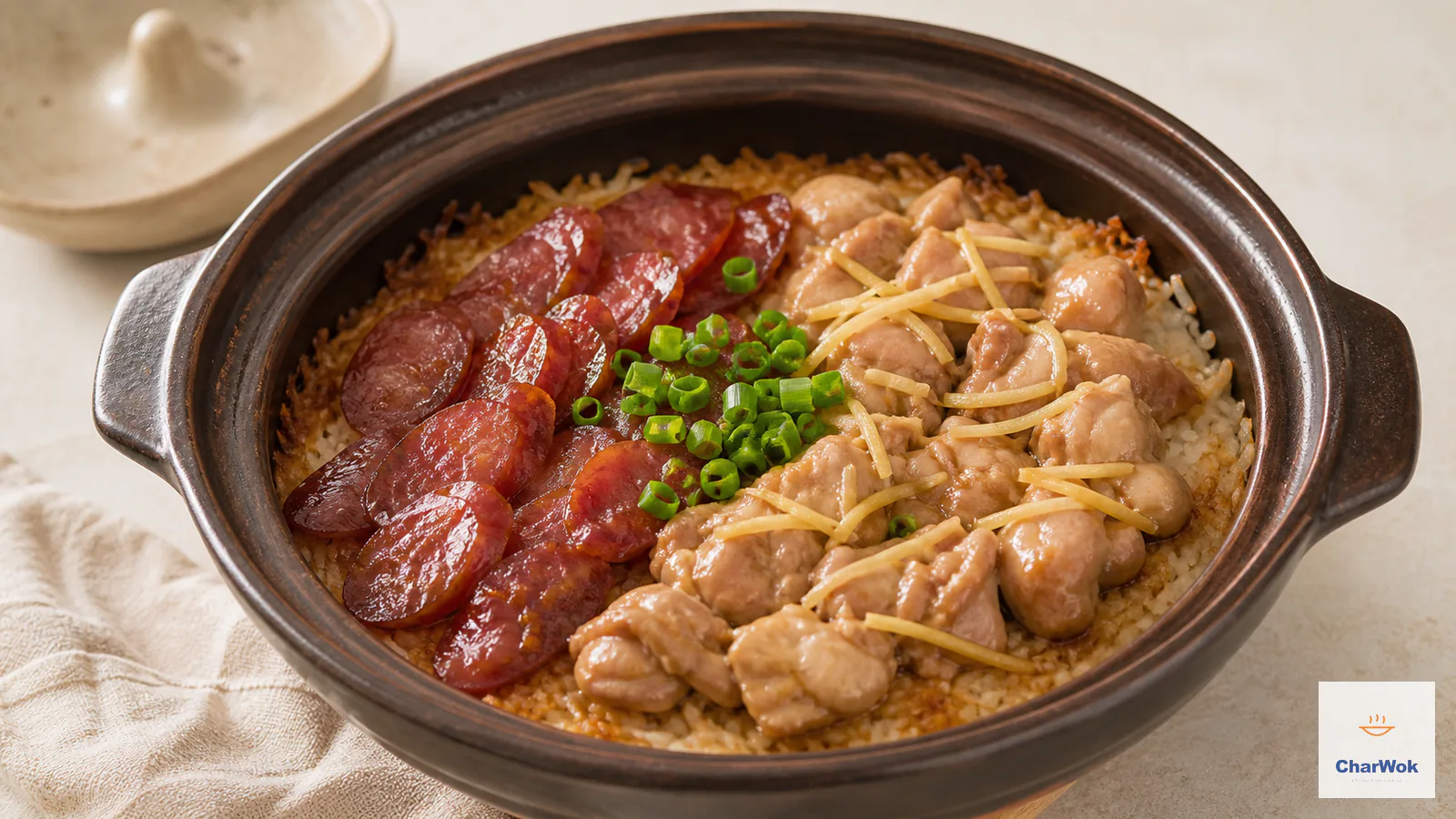
Chinese sausage rice, la chang fan in Mandarin, is the weekday cousin of clay pot rice. The clay pot version is a slow ritual that earns you a layer of crackling crust at the bottom. This saucepan version trades that crust for speed and convenience, and it gets you something the clay pot cannot: a single pan that scales up to feed six without any fuss. You are not settling. You are picking the right tool for a Tuesday.
At a glance. Two cups of raw jasmine rice, two cups of water, four lap cheong, ten minutes covered on the lowest heat plus five minutes off the heat. The whole dish turns on one judgment call: pull the pot down to a whisper the instant the water level drops even with the rice. Miss that window and you get mush on the bottom and dry grains on top.
What the dish actually is
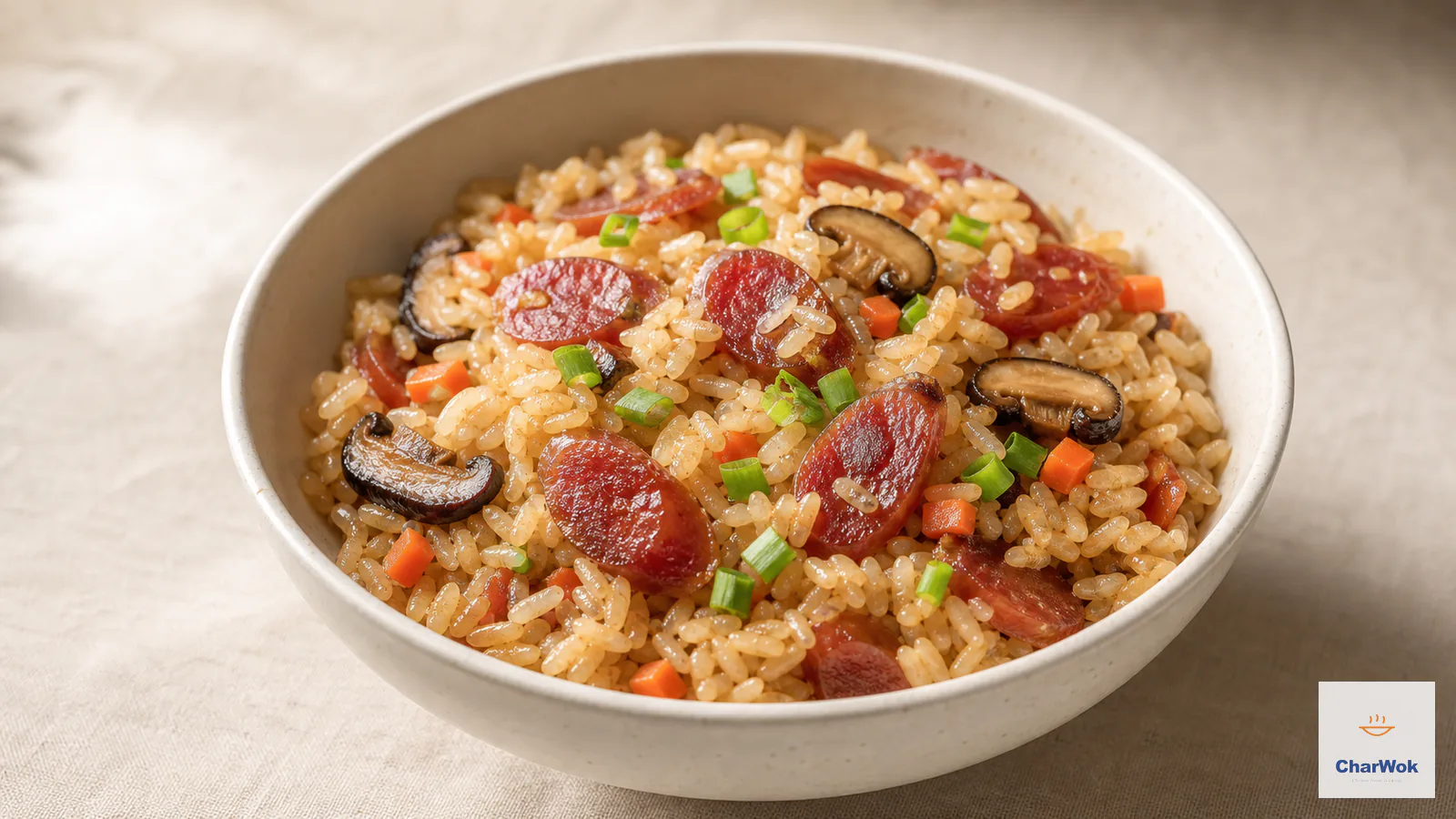
This is a steamed-topping rice bowl from southern China, built around cured lap cheong. The sausages release their seasoned pork fat into the rice as they steam, so each grain ends up faintly glossy and fragrant with rose-flavored wine and soy. Carrot and dried shiitake round out the toppings, and a soy-oyster sauce is folded in at the very end. There is no frying, no wok work, and no leftover rice required, which is what separates it from egg fried rice or a proper Yangzhou fried rice that demands day-old grains.
I cook it most often on nights when I want the satisfaction of fried rice but have not planned ahead. It hits the same pleasure points: savory, slightly sweet, fatty, and easy to eat out of a deep bowl with a spoon.
Choosing the right sausage
Not all lap cheong are the same, and the one you pick changes the dish. The standard Cantonese pork sausage is what most American Chinese groceries stock, usually vacuum-packed in the refrigerated section. It is sweet, boozy, and a little smoky from the curing and drying process. Duck liver sausage, yun cheong, is richer and more iron-forward, and I reach for it when I can find a link or two to mix in.
Buy sausages that feel firm and look glossy with a deep ruby red. Anything gray-pink, soft, or leaking oil has sat too long. If you cannot find lap cheong, Chinese cured pork belly, la yuk, slices and steams in similarly, though it gives a leaner, smokier result. Standard grocery chorizo or salami will not work here. They are fermented and acid-driven in a way that fights the gentle sweetness this rice needs.
The rice question
Use jasmine rice. I have tested this with short-grain Japanese rice, basmati, and even leftover sticky rice logic, and jasmine is the clear winner for this method. Its grains are long enough to stay distinct through the open-then-covered cooking, but soft enough to absorb the sausage fat without turning to paste. The floral note also cuts through the richness in a way short-grain cannot.
Short-grain works as a fallback if that is what your pantry holds, and it will give you a stickier, more congee-adjacent bowl. Basmati cooks up loose and separate, which reads as dry next to fatty sausage, so I avoid it. If you have never cooked jasmine on a stovetop without a machine, the technique in my stovetop jasmine rice guide covers the rinsing and resting habits that matter here.
Ingredients
Ingredients at a glance
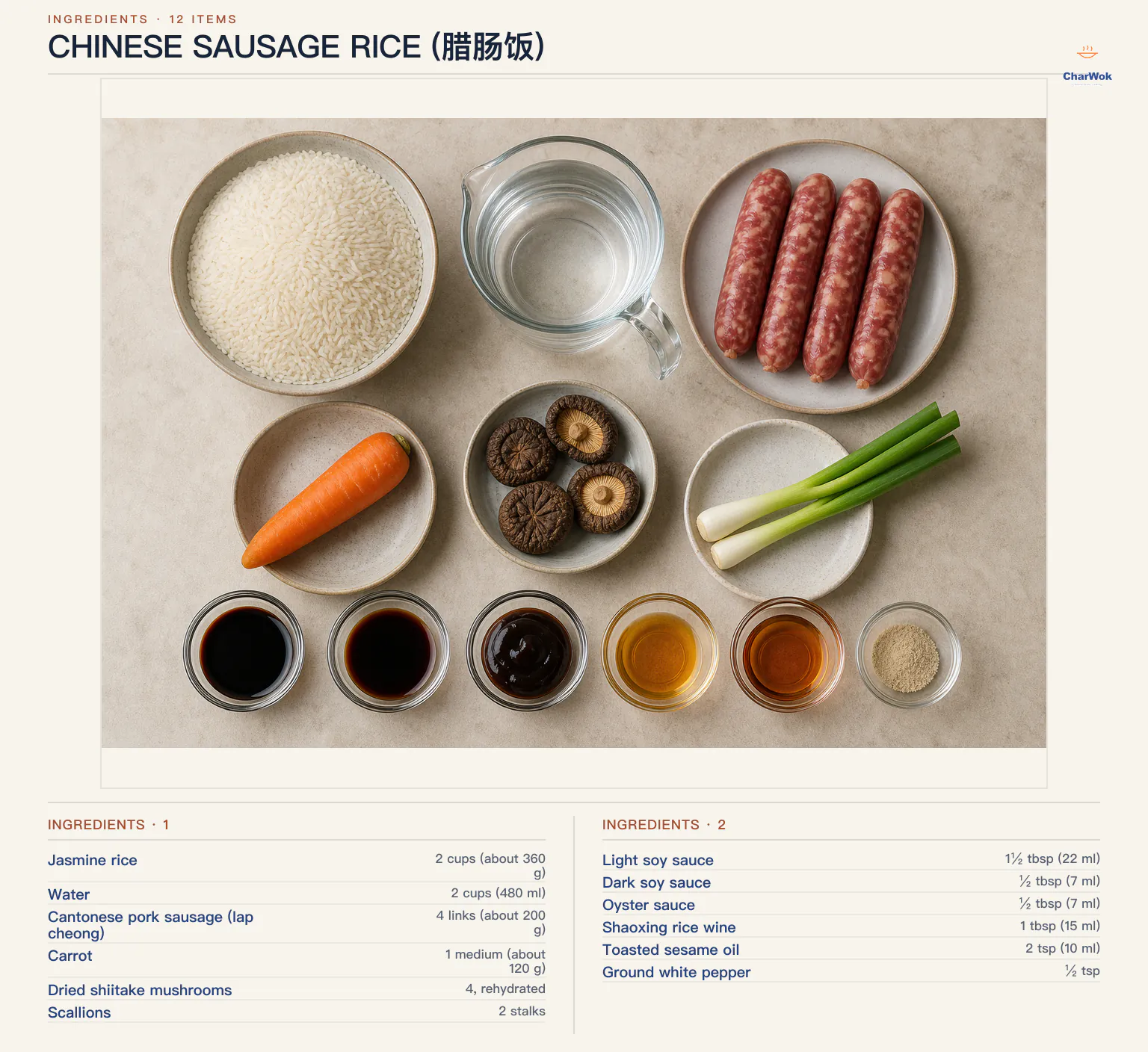
| Ingredient | Amount | Notes / substitute |
|---|---|---|
| Jasmine rice | 2 cups (about 360 g) | Rinse until water runs almost clear; short-grain white rice is the best fallback |
| Water | 2 cups (480 ml) | Cold; equal volume to the rice, not equal weight |
| Cantonese pork sausage (lap cheong) | 4 links (about 200 g) | Mix in 1 duck liver sausage if you can find it; la yuk works too |
| Carrot | 1 medium (about 120 g) | Diced small; frozen diced carrot is fine, thawed and patted dry |
| Dried shiitake mushrooms | 4, rehydrated | See my shiitake guide; fresh shiitake works but is less flavorful |
| Scallions | 2 stalks | Green and white parts, finely chopped |
| Light soy sauce | 1½ tbsp (22 ml) | For salt and savory base; see light vs. dark soy |
| Dark soy sauce | ½ tbsp (7 ml) | For color only; omit if you only have light |
| Oyster sauce | ½ tbsp (7 ml) | Mushroom oyster sauce for a vegetarian swap |
| Shaoxing rice wine | 1 tbsp (15 ml) | Check salt content; details in the wine guide |
| Toasted sesame oil | 2 tsp (10 ml) | Added off the heat; toasted, not cold-pressed |
| Ground white pepper | ½ tsp | Prefer white over black for color and a cleaner heat |
How to cook it, and why each step matters
- Prep the toppings while the rice is still dry. Rinse the sausages under the tap first. Lap cheong sits in a humid pack and picks up a faint surface tackiness; a quick rinse removes that and any loose casing fragments. Slice on a sharp diagonal about 5 mm thick. Thinner slices render more fat and cook through faster; thick coins stay chewy and greasy. Peel and dice the carrot small so it steams in the same window as the rice. Trim the tough stems off the rehydrated shiitake and slice the caps. Chop the scallions and hold them aside for the very end.
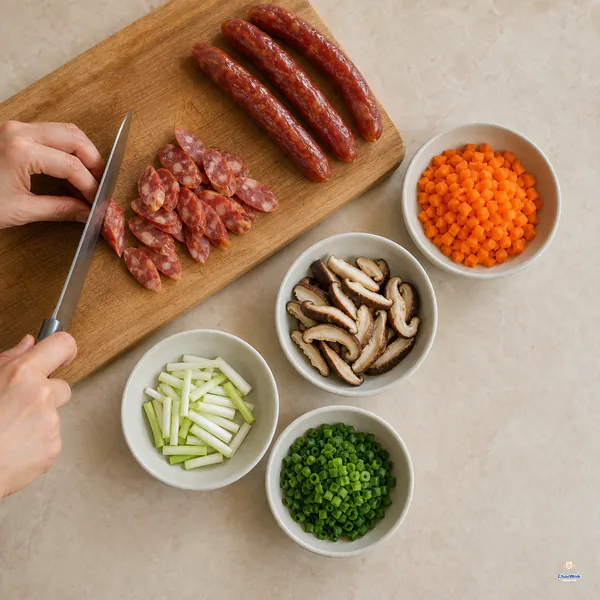
Rinse the four sausages and slice them diagonally about 5 mm thick; dice the carrot, remove the shiitake stems and slice the caps, then keep the scallion whites and greens separate.
- Rinse the rice, then measure water by volume. Wash the rice in three changes of cool water, massaging gently, until the water is only faintly cloudy. You are removing loose surface starch that would otherwise thicken the cooking liquid into paste. Drain well. Put the rice into a heavy-bottomed saucepan or small Dutch oven. A thin pan will scorch the bottom before the top grains are tender. Add two cups of cold water for two cups of rice.
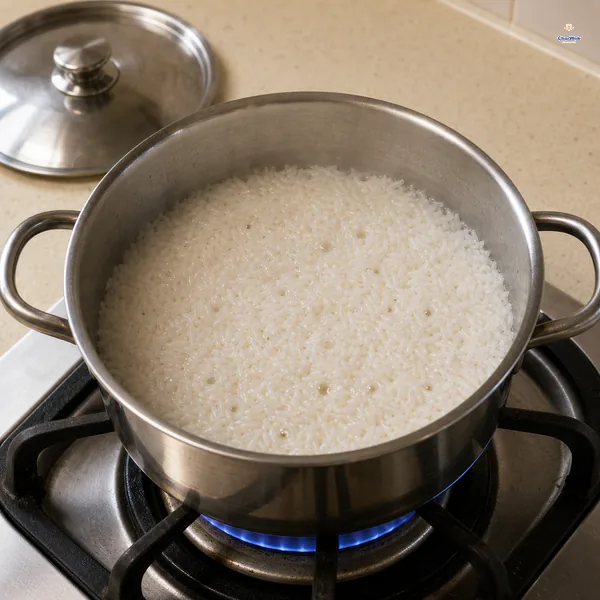
Rinse and drain the rice, add an equal volume of cold water, then boil uncovered over high heat only until the water is exactly level with the wet grains.
- Boil hard, uncovered, until the water level drops to the rice. Set the pan over high heat with no lid. Watch it. The water will first come to a rolling boil and roll the grains around, then recede. The moment the water drops to sit level with the top of the rice, with craters forming where steam escapes, you move. This open phase is what sets the texture. Boiling off the surface water drives off excess moisture so the final steam does not swamp the grains. For me this stage takes about five minutes on a gas burner; electric coils run a minute or two longer.
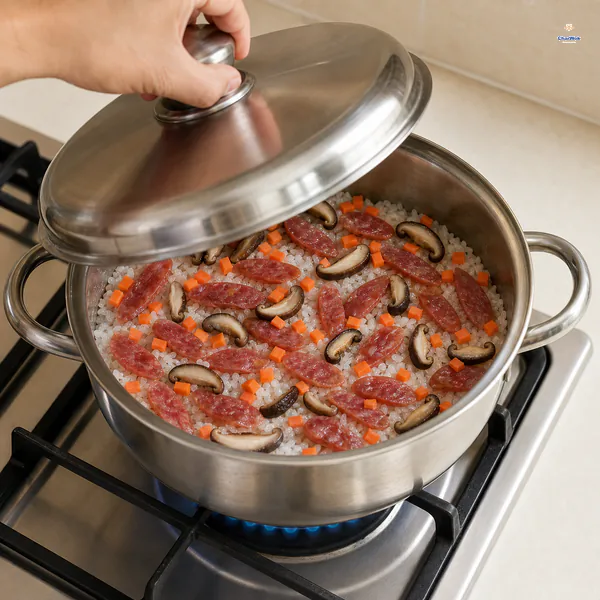
Immediately turn to the lowest heat, spread the sausage, carrot and mushroom on top without stirring, cover tightly and steam for 10 minutes.
- Drop to the lowest heat and lay the toppings on top. Turn the burner down to its absolute lowest setting, or move the pan to a small back burner on its tiniest flame. Spread the sausage slices, carrot, and mushrooms in a single layer across the rice. Do not stir. Put the lid on tight and set a timer for ten minutes. The toppings steam in the trapped moisture while the sausage fat melts downward into the rice, which is the entire point of the dish.
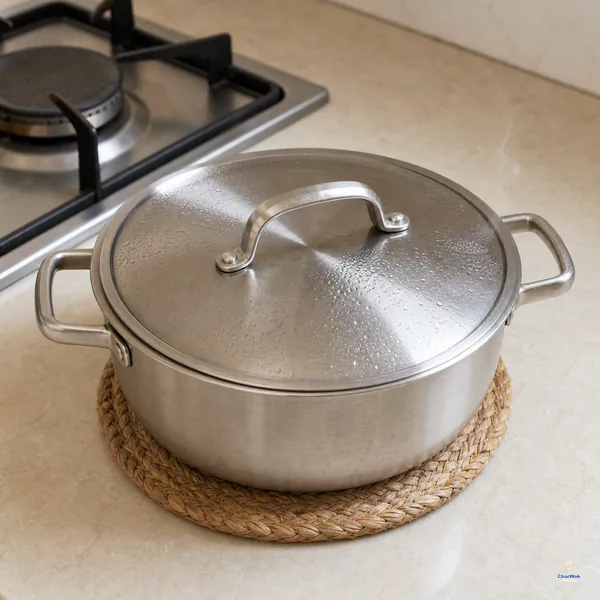
Remove the saucepan from the burner and leave it covered and untouched for 5 minutes so residual heat finishes the rice evenly.
- Kill the heat and rest, still covered, for five minutes. Take the pan off the burner entirely and leave the lid alone. Off-heat resting lets the grains finish absorbing the last of the water through residual heat, so the texture evens out from top to bottom. Peeking releases steam and lengthens the cook, so resist the urge.
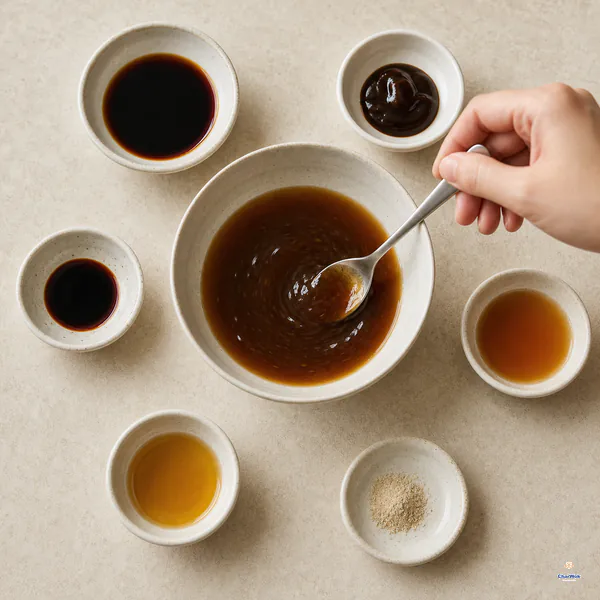
During the covered rest, mix the light soy, dark soy, oyster sauce, Shaoxing wine, toasted sesame oil and white pepper into a thin sauce.
- Stir in the sauce and scallions at the last second. While the rice rests, whisk the light soy, dark soy, oyster sauce, Shaoxing wine, sesame oil, and white pepper in a small bowl. Pull the lid off, scatter the scallions over the top, and pour the sauce around the edges rather than in one puddle. Fold everything together with a spatula, lifting from the bottom to bring up the glossy, fat-stained grains. Serve right away in deep bowls.
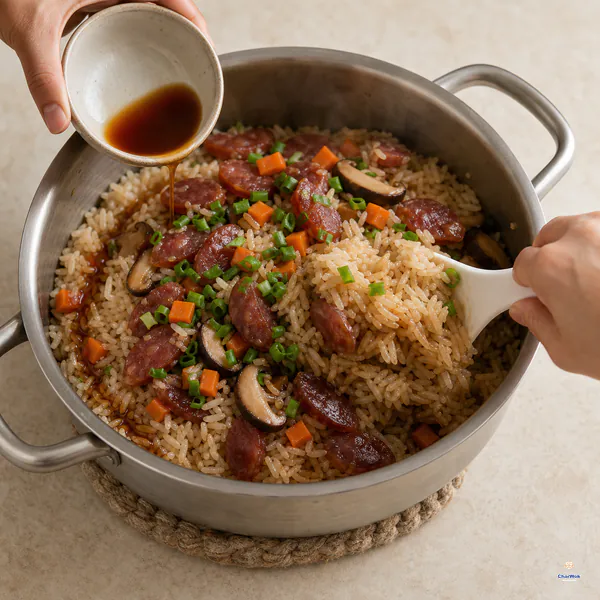
Open the pot, add the scallions, pour the sauce around the edges and fold from the bottom until every grain is glossy; serve immediately.
When things go wrong
I have wrecked this dish in nearly every way possible, so here are the failures I see most and the fixes that actually work.
- Bottom layer scorches, top grains are still crunchy. Your heat was too high during the covered phase, or your pan is too thin. Move to a heavy-bottomed pot and trust the lowest setting. A flame tamer under a thin pan is a fair workaround.
- Rice turns to mush. You let the open-boil phase run too long and lost too much water, then added the toppings and compensated by steaming wet rice. Next time, pull the heat the instant the water hits rice level. If it already happened, spread the rice on a tray to dry for ten minutes before reheating.
- Sausage is rubbery and pale, fat did not render. The slices were too thick, or you skipped the rinse and a film of starch sealed the casing. Slice thinner and rinse first.
- Everything tastes bland despite the sauce. The Shaoxing wine is the usual culprit. Some brands are heavily salted, others barely seasoned. Taste your sauce before pouring; if it reads flat, add a pinch of sugar and a few drops more light soy rather than more dark soy, which would just darken the color.
- Rice is gummy and sticks together in clumps. You skipped the rinse or shorted it. Three changes of water is the floor. Cold-pressed sesame oil added too early also makes grains clump; add it only with the finished sauce.
Variations and what to serve alongside
The base recipe takes additions well. A handful of thawed frozen peas or edamame tossed on with the carrot adds color and sweetness. A few slices of poached chicken thigh laid on top with the sausage turns it into a fuller meal, and a spoon of lu rou fan-style minced pork braised in soy is the move when I want something richer still.
For a vegetarian version, skip the sausage and double the mushroom, then bloom a tablespoon of Chinese condiment pantry staple like mushroom soy or a spoonful of fried shallot oil to replace the missing fat. The texture will be leaner, so do not skip the sesame oil at the end.
Pair it with something bright and crunchy to balance the richness. A quick stir-fried napa cabbage with hot and sour sauce, or a simple plate of silken tofu with scallions and soy dressing, does the job without competing. A bowl of thin congee alongside is traditional if you want a more fluid meal.
Storage and reheating
Leftovers keep three days in the fridge in a sealed container. The rice dries out, which is a feature rather than a bug because day-old sausage rice makes an excellent quick fried rice the next morning. To reheat as-is, add a tablespoon of water per serving, cover, and microwave in short bursts, or re-steam covered on the stovetop over low heat until just warmed through. Do not overcook or the sausage toughens. I do not recommend freezing; the texture of the rice and the sausage both suffer.
Common questions
Can I make this in a rice cooker? Yes, and many readers do. Rinse the rice, add the water, then scatter the raw toppings on top before starting the cycle. Stir the sauce in after cooking. The trade-off is a slightly softer bottom layer, since cookers run hotter than a true low simmer. For a hands-off machine version, the method in my soy sauce rice pilaf adapts cleanly.
Do I need a clay pot? No. A heavy saucepan is all this recipe requires. The clay pot earns its keep on the crackly bottom crust, which this stovetop shortcut does not produce. For the full crust experience, see the clay pot rice recipe.
What if I only have light soy sauce? Use 2 tablespoons of light and skip the dark soy entirely. The dish will be paler but taste nearly identical. Dark soy is mostly for color. Browse more rice ideas in the Chinese rice recipes by cooking method collection if you want to branch out.
Can I prep the toppings ahead? Yes. Slice sausage, carrot, and mushroom up to a day in advance and refrigerate separately. Bring them close to room temp before they go on the rice so they do not stall the steam.