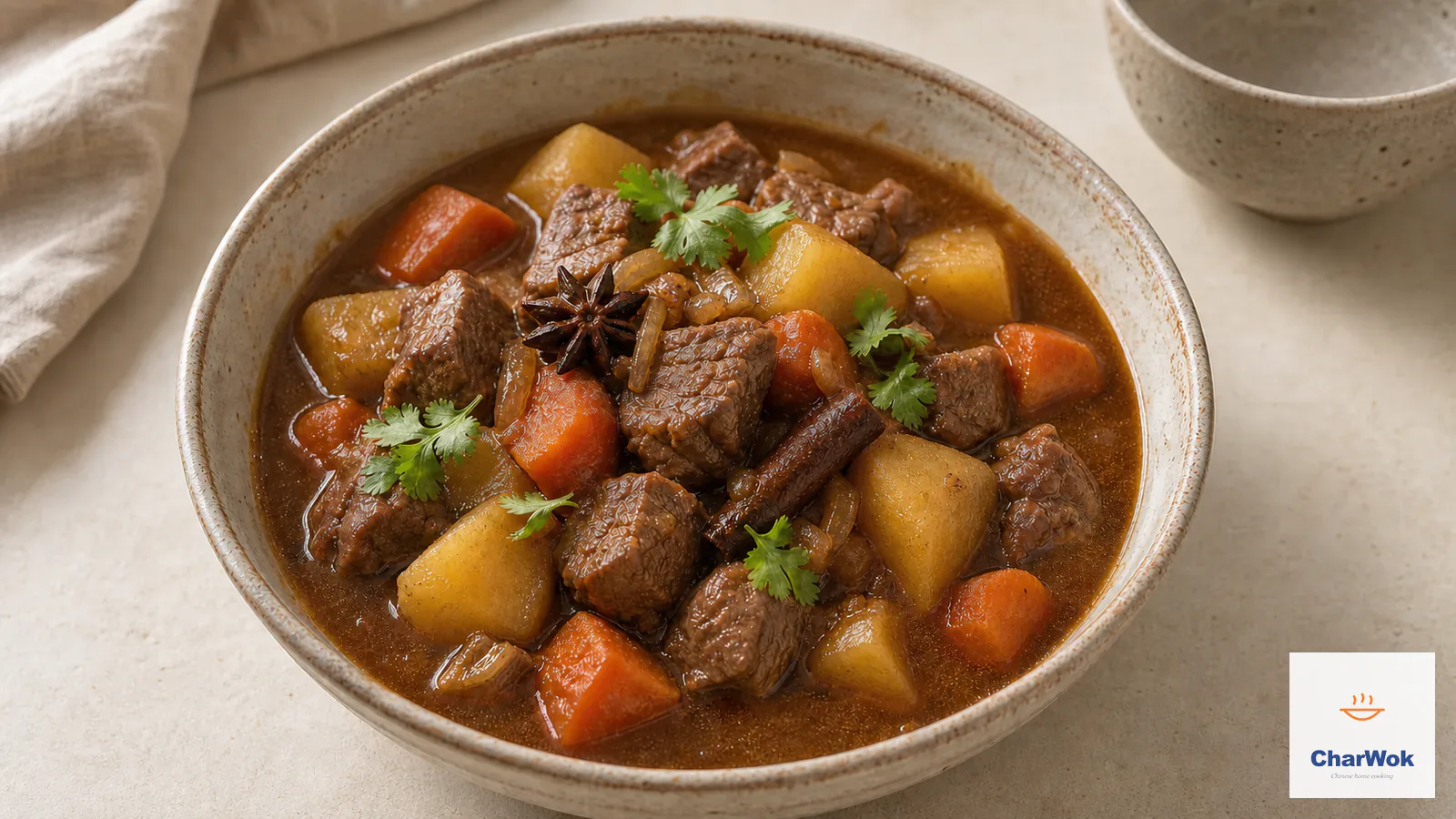
A bowl of Chinese beef and potato stew is mostly about the broth. The meat is the price of admission; the liquid, glossy with rendered fat and stained dark by soy sauce and cassia, is what everyone is really after. Spoon it over rice and the rest of the meal almost doesn't matter.
What trips people up at home is not the technique, which is forgiving. It is two specific moments: the blanch, which most Western recipes skip and which is exactly why home versions taste muddy; and the moment you add the potatoes, which decides whether you get tidy chunks or a pot of dissolved starch. I have ruined this dish both ways and I will tell you where the line is.
At a glance
Braise 700 g (1.5 lb) of collagen-rich beef with star anise, cassia, bay, cloves, and soy for about 1 hour 30 minutes, then add potatoes and carrot for the final 15. The non-negotiables: blanch the meat from cold water, and add the vegetables only after the beef is already tender. Serves 4.
What this dish is, and where it sits
Beef braised with potatoes (tu dou dun niu rou, 土豆炖牛肉) is everyday northern food, the kind of thing that shows up in a steel canteen in a Shandong or Dongbei kitchen rather than on a banquet table. It belongs to the same extended family as Chinese braised beef shank and the red-cooked pork belly lineage: tough cuts, soy, aromatics, time. The potatoes are not a garnish. They are the point. They drink the spiced broth and turn into something richer than potatoes have any right to be.
What makes it read as Chinese and not as a European stew is the spice combination and the absence of wine or tomatoes. The sweetness comes from caramelized onion, not sugar; the depth comes from soy and toasted spices; the heat, if you want it, from dried chilies. There is a logic to each choice, and once you see it you can stop needing a recipe.
Why tough, fatty beef is the only correct choice
This is the single most common mistake. People reach for a lean steak or, worse, a pre-cut "stewing beef" tray that is often trim from round or sirloin. The problem is structural: a tender raw steak simply has nothing inside it to melt. There is no gristle, no silver skin, no web of connective tissue to break down. All the braise can do is drive moisture out of fibers that were already soft, so you end up with dry, stringy chunks. Tenderness in a stew is something you build, not something you preserve, because it comes from collagen, and lean meat doesn't have any to give.
What you want is muscle that did hard work on the animal, the kind shot through with the tough white connective tissue you'd trim off for a stir-fry. In a low, patient braise that tissue stops being the enemy. Held between 85 and 95 °C (185 to 203 °F), the collagen in it converts to gelatin, and that gelatin does two jobs at once: it lets the muscle fibers slide apart into silky strands rather than gripping each other as dry plugs, and it dissolves into the cooking liquid, giving the broth body and a slight cling. This is the same logic that builds the braised beef with daikon sauce and the Taiwanese beef noodle soup broth.
Walk past the steak case and look for cuts built for working muscles. Chuck (sold variously as braising steak or shoulder) is the dependable default: widely available, reasonably priced, and forgiving of a few extra minutes. If you want the broth itself to be the star, reach for shin or shank, where the bone-adjacent tissue gives you the most gelatin of all, at the cost of a longer cook. Brisket splits the difference, richer and fattier; budget time to skim the rendered fat before serving. Whatever you pick, read the label for the words round and lean and put it back.
Ingredients
Ingredients at a glance
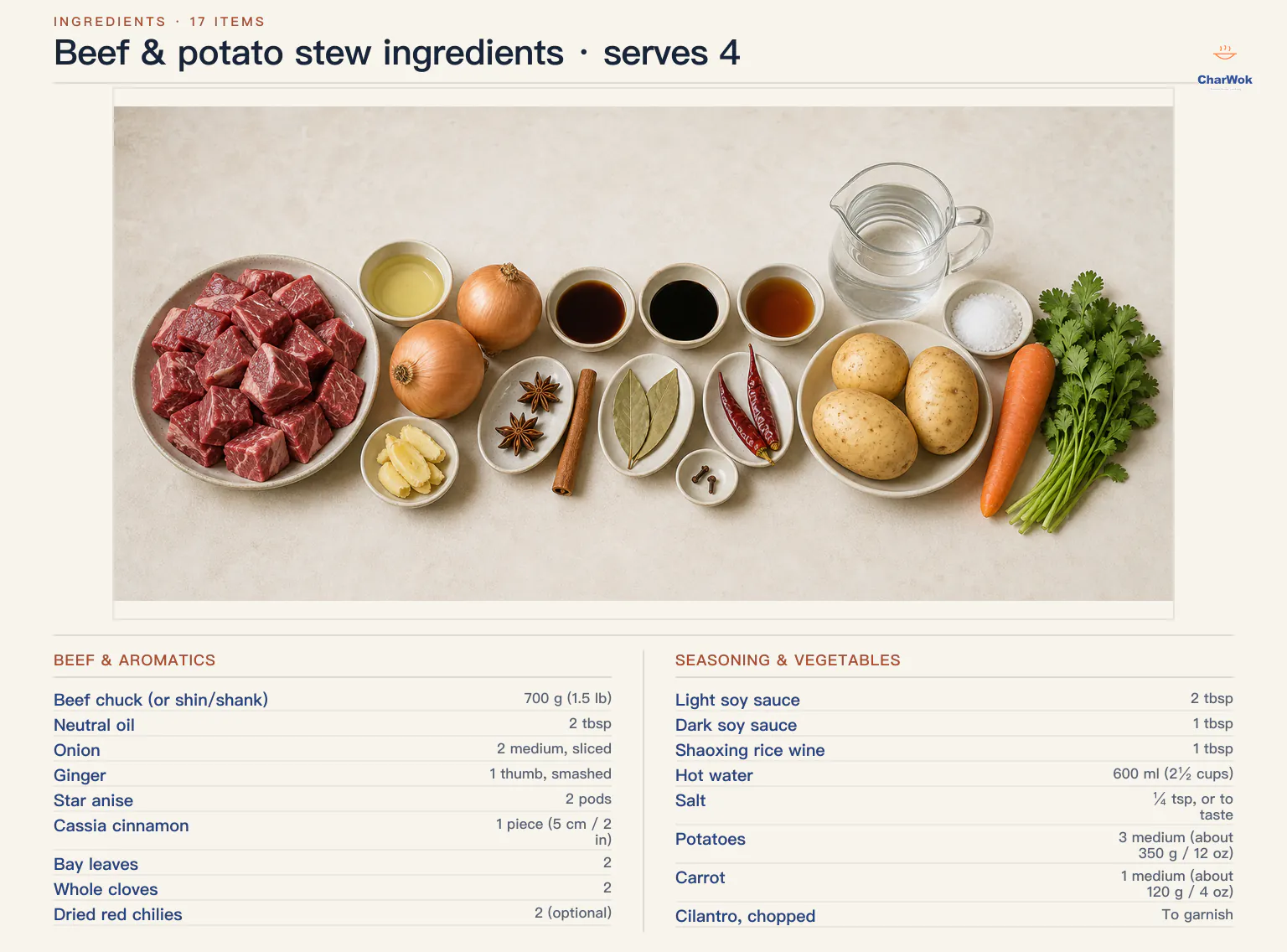
| Ingredient | Amount | Notes / substitute |
|---|---|---|
| Beef chuck (or shin/shank) | 700 g (1.5 lb) | Collagen-rich cut, in 4 cm / 1.5 inch chunks. Avoid lean steak. |
| Neutral oil | 2 tbsp | Canola, grapeseed, or vegetable. |
| Onion | 2 medium, sliced | Yellow or white. Provides sweetness; no sugar needed. |
| Ginger | 1 thumb, smashed | Smash to release flavor; keep in big pieces so you can fish it out. |
| Star anise | 2 pods | The lead spice. Don't omit. |
| Cassia cinnamon | 1 piece (5 cm / 2 in) | True Chinese cassia preferred; regular cinnamon works but is milder. |
| Bay leaves | 2 | Standard bay is fine. |
| Whole cloves | 2 | Powerful; don't exceed the count or the broth turns medicinal. |
| Dried red chilies | 2 (optional) | Add a background warmth. Remove if cooking for kids. |
| Light soy sauce | 2 tbsp | Salt and savory base. See light vs. dark soy sauce. |
| Dark soy sauce | 1 tbsp | Color and slight sweetness. Omit only if you accept a paler stew. |
| Shaoxing rice wine | 1 tbsp | Read about Shaoxing rice wine; dry sherry substitutes. Skip for alcohol-free. |
| Hot water | 600 ml (2½ cups) | Hot, not cold, so the braise doesn't stall. |
| Salt | ¼ tsp, or to taste | Adjust at the end; soy sauce is already salty. |
| Potatoes | 3 medium (about 350 g / 12 oz) | Waxy hold their shape; floury melt and thicken the broth. I like one of each. |
| Carrot | 1 medium (about 120 g / 4 oz) | Color and sweetness. |
| Cilantro, chopped | To garnish | Optional but recommended. |
The method, with the reasoning
- Clean the meat with a cold-start blanch. Drop the chunks into a pot and cover them with cold water by a couple of inches, then bring it to a full boil and skim the grey-brown foam that floats up. This is the step Western stew recipes usually skip, and skipping it is why their broths taste metallic and cloudy. The reason you start cold (not by dunking the meat into already-boiling water, the way you would blanch a vegetable) is mechanical. As the water climbs toward a boil, the residual blood and surface proteins leach out through the muscle gradually. Plunge the same meat into a rolling boil and the outer layer sets instantly, sealing the impurities inside, where they have nowhere to go but into your finished braise. Drain the meat and rinse it. Do not keep this liquid.
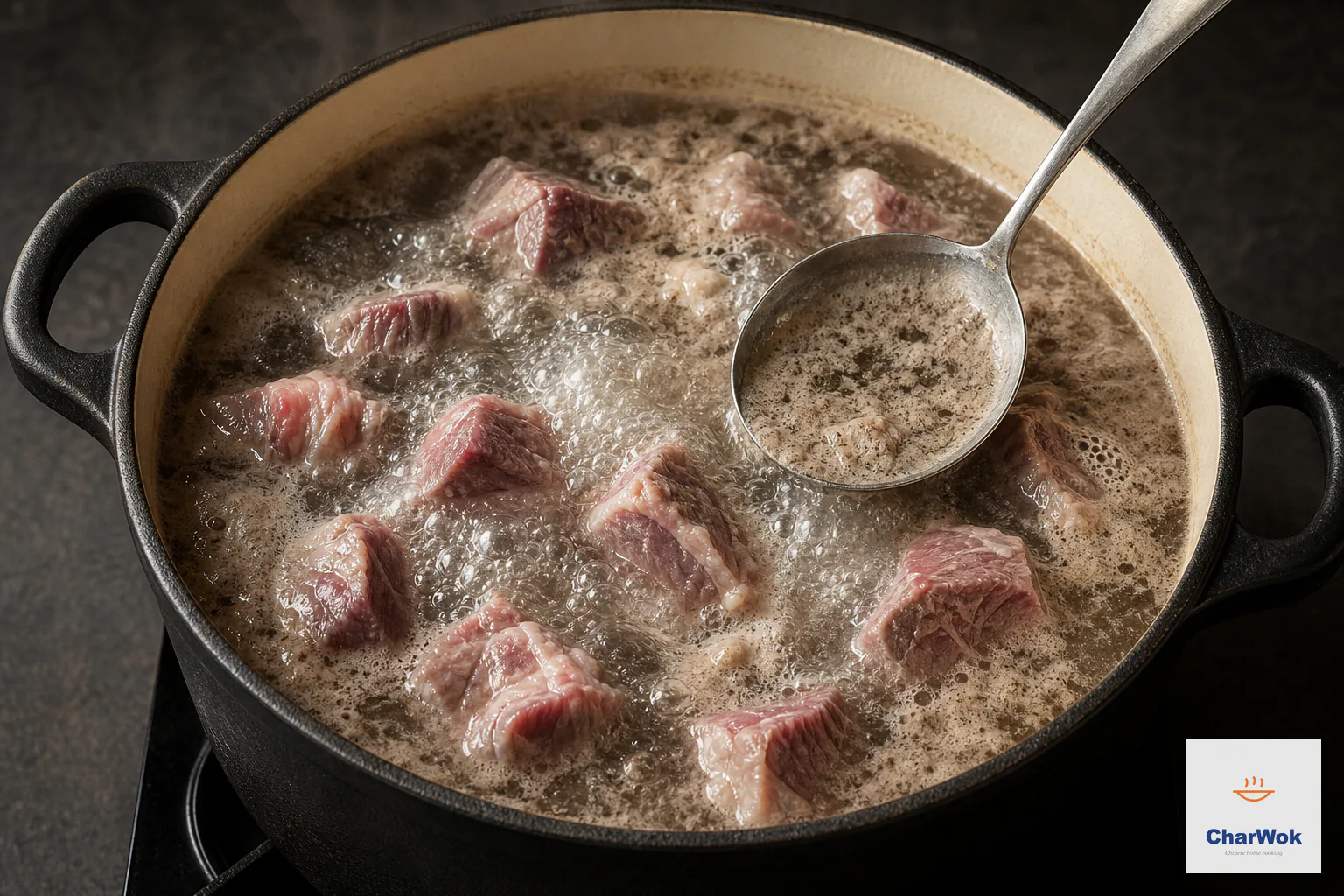
Start the beef in cold water, bring it to a full boil, skim the gray-brown foam, then drain and rinse the meat; discard the blanching water.
- Build the flavor base: onion first, then bloom the spices. Warm the oil in a heavy pot or Dutch oven over a gentle flame and sweat the sliced onion without rushing it, giving it 8 to 10 minutes to go translucent and take on color at the edges. The browning is doing real work here: it generates the Maillard-driven sweetness that older recipes used to chase with a spoonful of rock sugar, so the pot never needs any. Once the onion is where you want it, push in the smashed ginger, star anise, cassia, bay, cloves, and chilies and let them swim in the hot fat for about a minute. The point of blooming whole spices in oil rather than dropping them straight into liquid is that their aromatic compounds are fat-soluble; a minute in warm oil extracts and carries them, so the finished broth actually tastes of the spice instead of merely smelling of it.
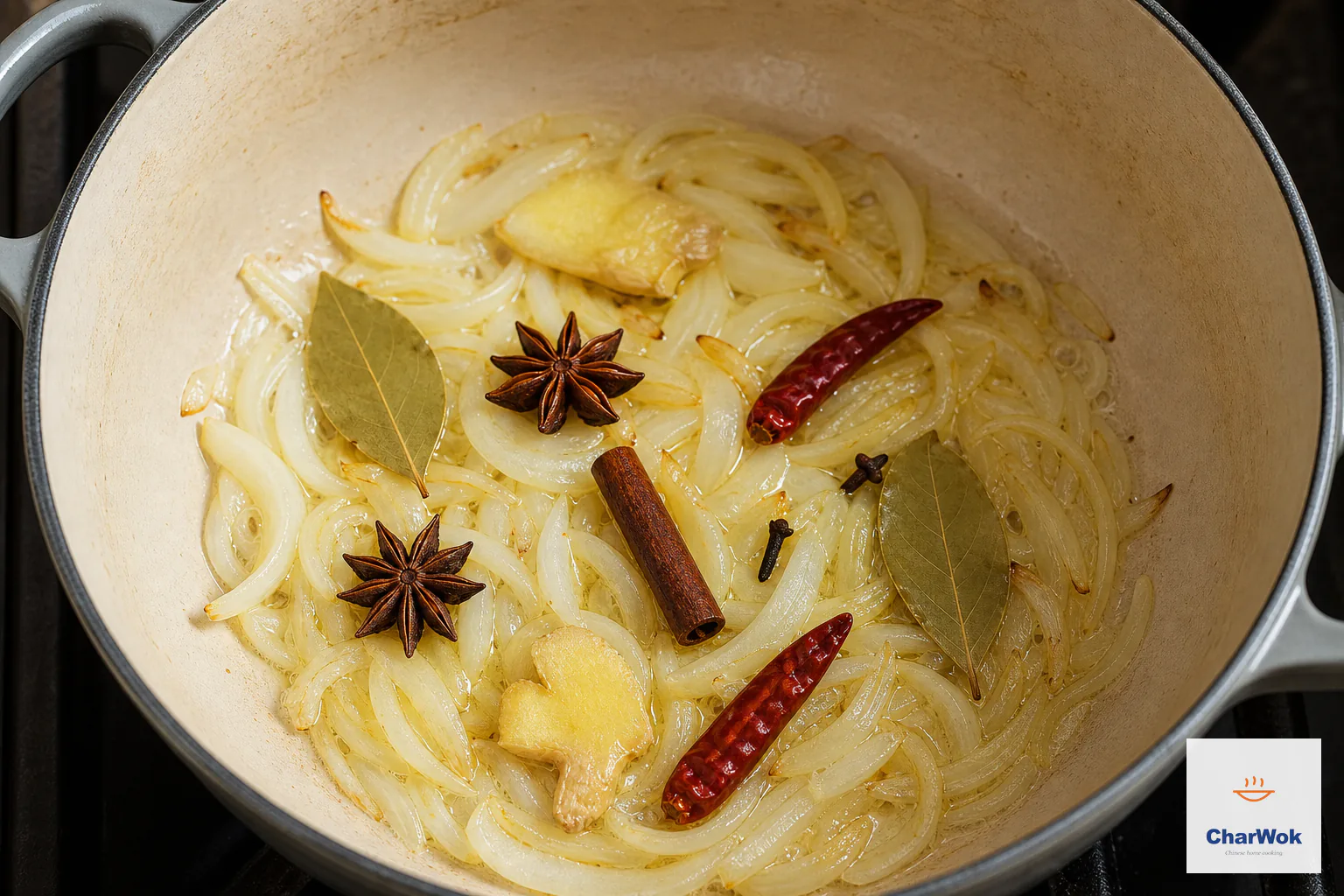
Soften the onions for 8–10 minutes until their edges color, then bloom the ginger and whole spices in the oil for about one minute.
- Add the beef and liquids, then braise covered on low. Tip in the drained beef, the light and dark soy, the rice wine, and the hot water. Bring to a full boil, then drop the heat to the lowest flame that keeps a lid on gentle bubbling. Cover and cook about 1 hour 30 minutes, until a piece of beef yields to a fork with only slight resistance. Check once at the 45-minute mark and add a splash of hot water if the level has dropped below the meat. A heavy, tight-lidded pot holds moisture far better than a thin one; if yours runs dry, that is the pot, not the recipe.
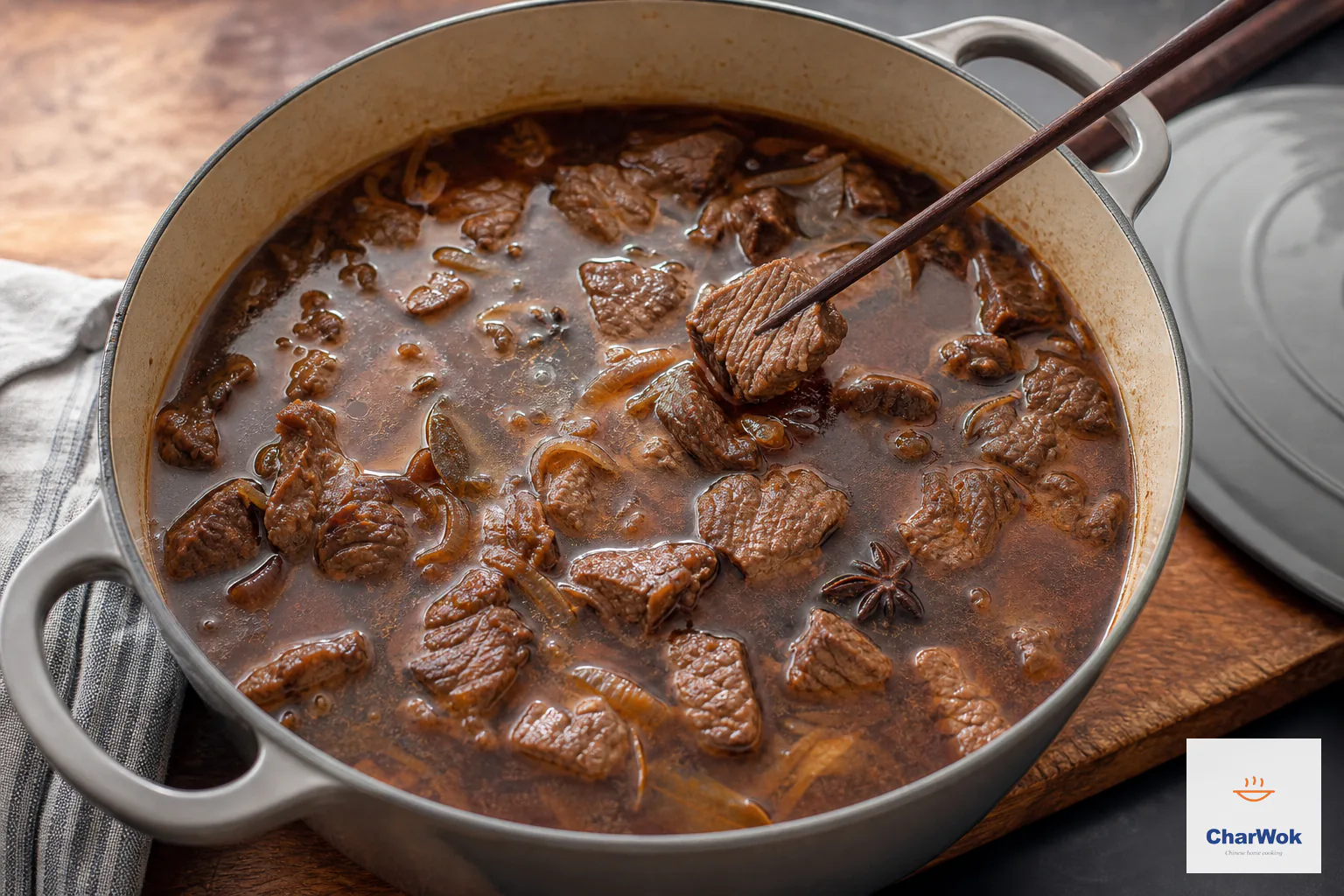
Add the blanched beef, both soy sauces, Shaoxing wine and hot water; cover and keep the gentlest simmer for about 1 hour 30 minutes, until the beef yields with slight resistance.
- Season the broth before the vegetables dilute it. Once the beef is yielding, taste the liquid and add salt only if it needs it. Do this now rather than at the end: in a minute the potatoes will soak some of that seasoning up, and you want to know what the broth actually tastes like while it is still the whole dish.
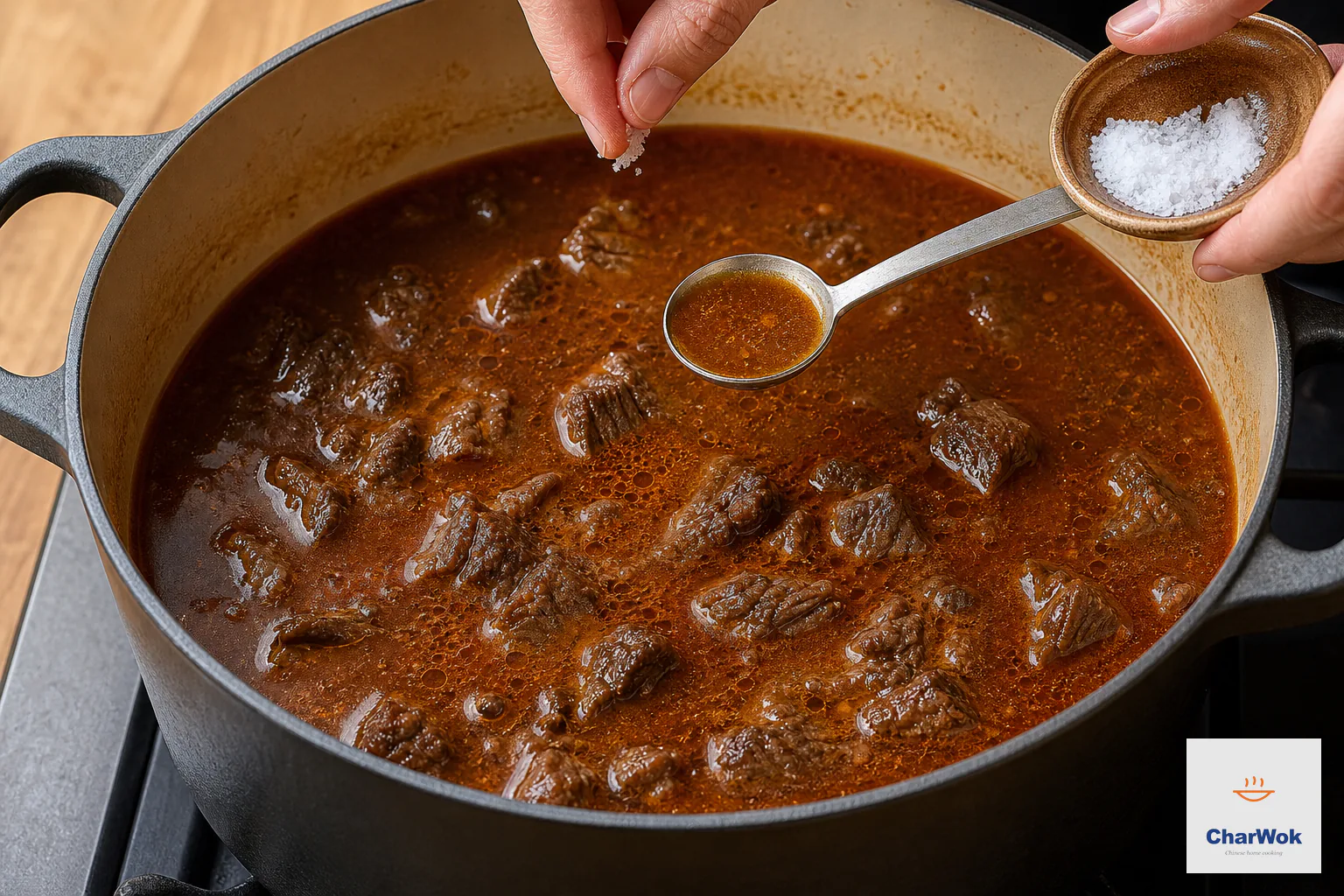
Taste the tender beef and broth before adding the vegetables, then add salt only if needed so the potatoes absorb balanced seasoning.
- Finish with the vegetables, lid off. Drop in the potato and carrot chunks and leave the pot uncovered for the final 10 to 15 minutes, until a paring knife slides through a potato chunk with no resistance but the piece still holds its shape. The open lid is deliberate — it lets the broth reduce and concentrate at exactly the moment the starch is going to start thinning it, and it keeps the surface calm so the potatoes aren't battered into sludge by a hard boil.
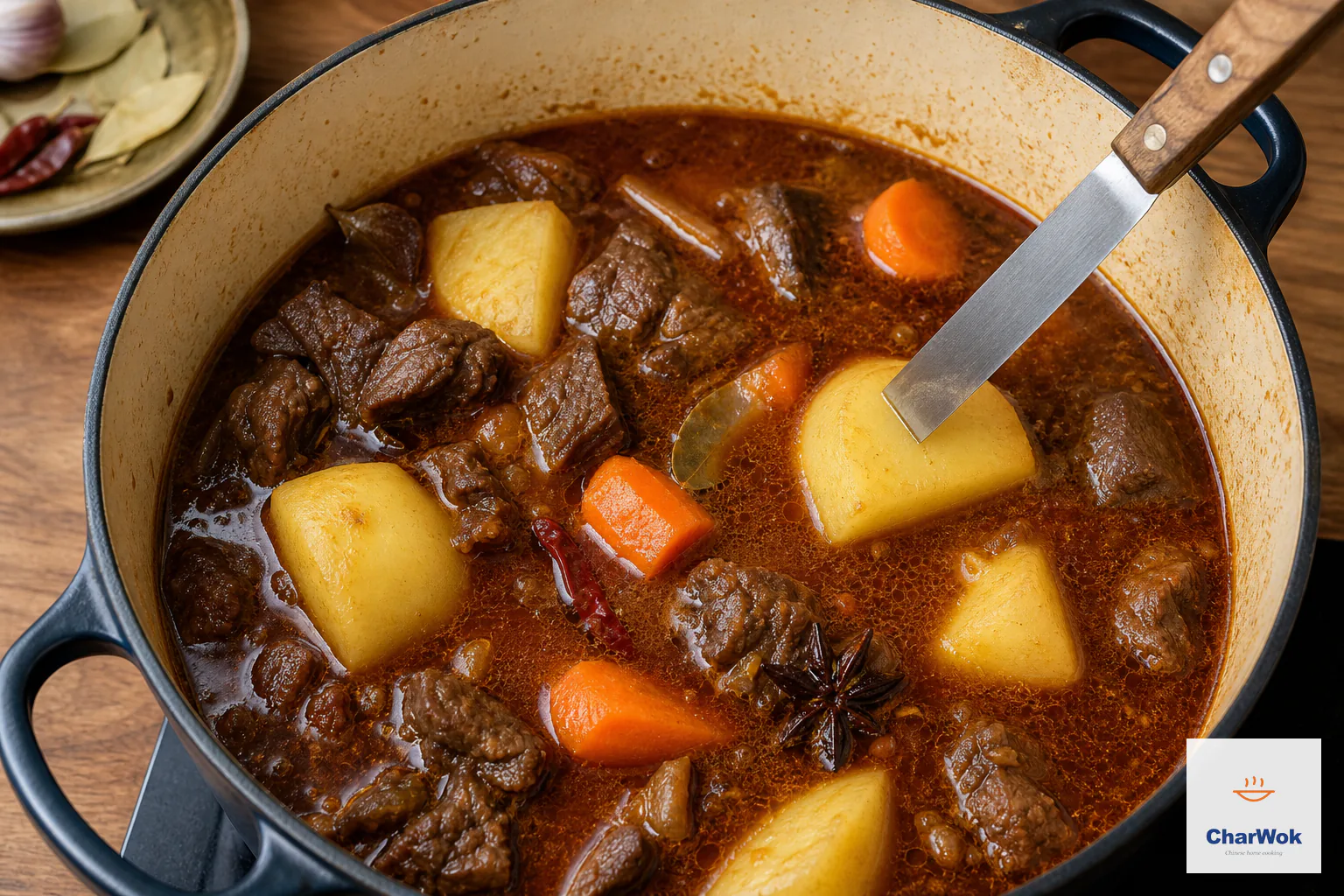
Add the potatoes and carrot only after the beef is tender, then simmer uncovered for 10–15 minutes until a knife slides through a potato without breaking it apart.
- Reduce if you like, then serve. If you want a tighter, saucier result, raise the heat for a few minutes to reduce. Otherwise serve as is, over steamed jasmine rice, with cilantro scattered on top. The broth is the headline; make sure each bowl gets a generous spoonful.
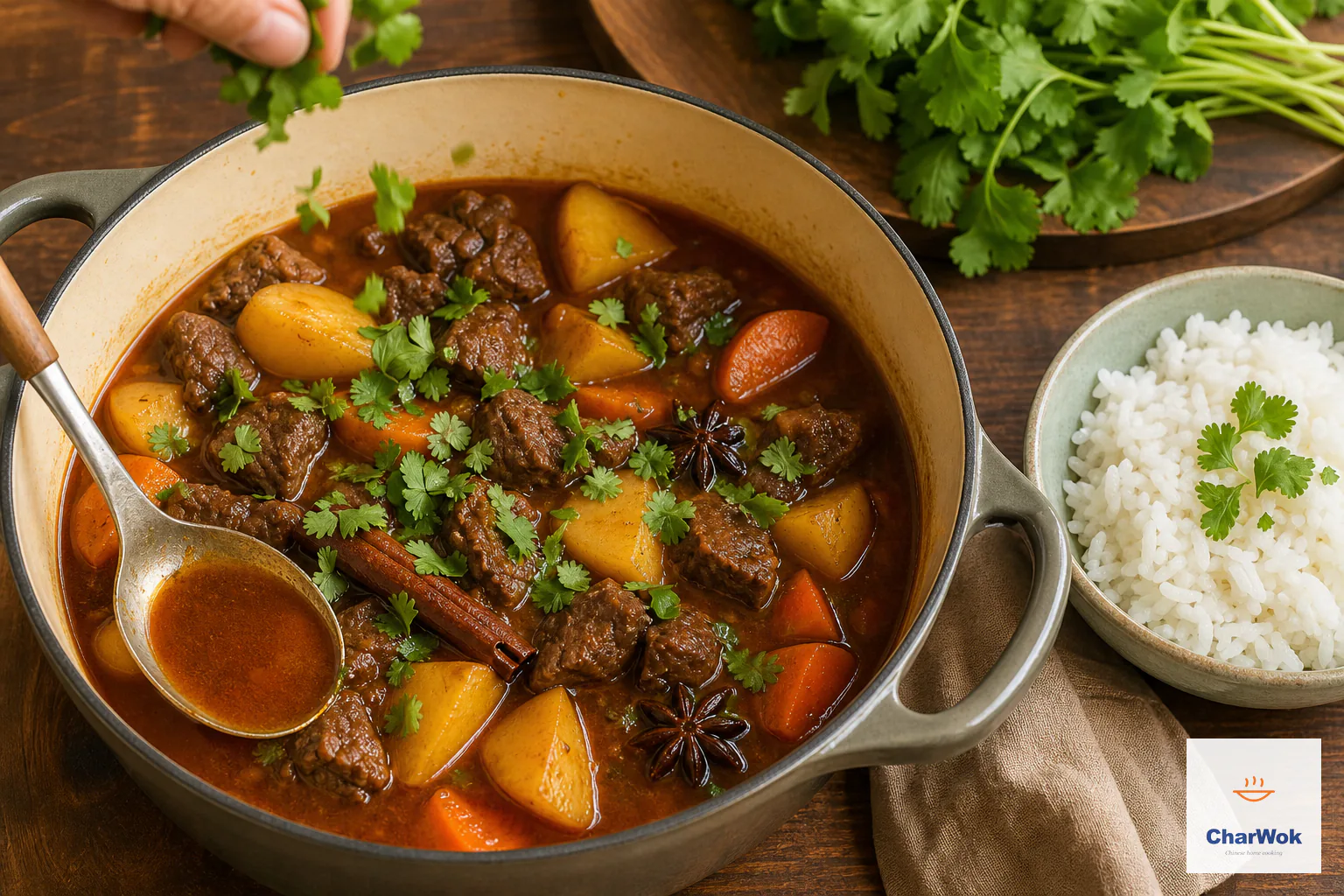
Reduce briefly only if you want a tighter broth, then scatter with cilantro and serve with plain rice, giving every bowl a generous spoonful of broth.
When things go wrong
The beef is tough after 90 minutes. It is undercooked, not ruined. Collagen melting is slow and nonlinear, and a stubborn piece of shin can take 2 hours or more. Put the lid back on and give it another 30 minutes, checking every 15. If you hit 2.5 hours with no progress, you bought a cut with almost no collagen, and next time buy chuck.
The potatoes dissolved into the broth. Either you used floury potatoes and simmered too hard, or you added them before the beef was fully tender, which extends their cooking time. Use waxy potatoes if you want intact chunks, add them late, and keep the simmer gentle. If you actually like a thicker, broken-down broth, use floury (russet-type) and let them go; the dish is still good, just different.
The broth tastes thin or one-dimensional. Usually under-salted or under-spiced. Fix salt first. Then, if it lacks backbone, it is the spice bloom: next time toast the whole spices a beat longer in the oil before adding liquid, and do not skimp on the star anise. A single whole clove too many will make it taste like a dentist's office, so count them.
The broth is cloudy and tastes metallic. You skipped the blanch or started the meat in hot water. There is no rescue once the impurities are in the pot, but it is fully preventable next time.
Too much fat floats on top. Skim it with a spoon, or chill the whole pot overnight and lift off the solidified fat cap in one sheet. The overnight rest also improves the flavor, so this is a feature, not a bug.
Variations and what to serve it with
The bones of this recipe adapt well. Swap the potatoes for daikon radish for a lighter, cleaner version of the same braise. Add a tablespoon of rock sugar with the soy for a darker, lacquered finish closer to red-cooking. A pinch of ground Sichuan pepper at the end gives a hum that pairs nicely if you lean into the dried chilies; for a fully different but related spice profile, try the cumin-and-chili direction of Hunan beef or the broth-bathed Sichuan boiled beef.
If you want to lean into the spice blend as a pantry habit, the star anise, cassia, and clove in this pot are three of the five components of homemade five-spice powder — fennel and Sichuan peppercorn round out the classic formula. A sachet of the whole spices you already have is a fine stand-in when you don't want to grind a fresh batch.
For sides, this is a one-bowl meal with rice, so keep the rest light: a quick clear pork rib soup if you are feeding a crowd, or a simple stir-fried green. Leftovers turn into noodles: thin the leftover broth with a little water or stock, heat, and pour over cooked noodles for a fast, spiced beef noodle bowl in the spirit of spicy beef noodle soup. A stir-fry like pepper steak or beef and mushroom gives you a second beef course another night without repeating the braise.
Storage and reheating
This is one of the best make-ahead dishes in the repertoire. Cool it quickly, refrigerate up to 3 days, or freeze up to 2 months. The flavor is better on the second day because the spices keep infusing and the gelatin sets the broth into something almost jelly-like overnight. Reheat gently on the stove with a splash of water until it is bubbling throughout, and add fresh cilantro at the very end so it doesn't go flat. Potatoes soften on reheating, which most people don't mind; if you want them firmer, undercook them slightly the first time.
Frequently asked questions
Can I use a pressure cooker or Instant Pot? Yes. After browning the onion and spices, add the beef and liquids and pressure cook on high for about 35 minutes, then let it natural-release for 15. Add the vegetables afterward and simmer uncovered until tender. Do not pressure-cook the potatoes with the beef or they will disintegrate.
Do I really have to blanch the beef? Yes, if you want a clean broth. It takes five minutes and removes the scum that otherwise turns the liquid cloudy and metallic. Starting from cold water is what makes it work.
Which potatoes should I use? Waxy or all-purpose potatoes keep their shape and give you tidy chunks. Floury or russet potatoes break down and thicken the broth. Both are correct; pick based on the texture you want.
Can I skip the dried chilies? Easily. Two dried chilies add only a faint warmth, not real heat, so you can leave them out for a fully mild stew or keep them for the aroma.
Why is my broth pale instead of dark brown? Dark soy sauce is doing that coloring. If you left it out, the stew will taste right but look lighter. Add it back, a teaspoon at a time, until the color is where you want it.