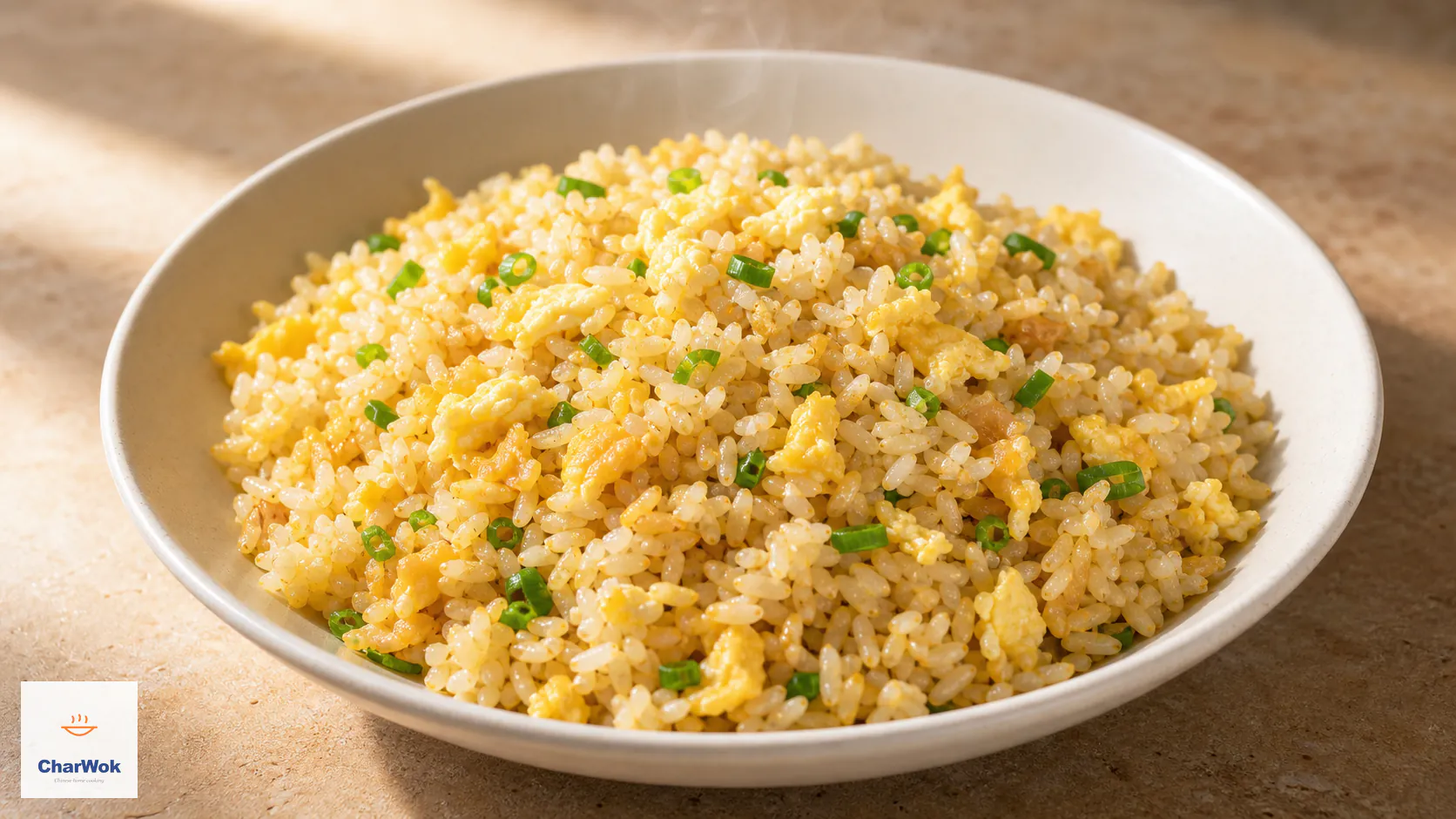
The plainest Chinese dish is also the one that reveals, in under five minutes, whether the cook understands heat. Egg fried rice has four ingredients plus oil and seasoning, and yet most home versions land as a damp, slightly sweet clump that tastes like breakfast cereal. The restaurant plate you remember is dry to the touch, flecked with bright yellow egg, and every grain stands apart. That gap is not about a secret sauce. It is about rice that has been left to firm up, and a pan hot enough to flash-fry rather than steam.
I cooked this badly for years. I would use rice straight from the cooker, add the egg on top of the rice because it seemed efficient, and wonder why the whole thing turned into paste. The fixes are small and counterintuitive, and once you know them the dish becomes the most reliable thing in your weeknight rotation.
Cook the rice the day before and chill it uncovered; that one decision does more for the final texture than any wok technique. Aim for roughly 130 g cooked rice per egg, fry hot and fast for under five minutes, and season lightly. Clumpy, wet rice is a storage failure, not a stirring failure.
What this dish actually is
Egg fried rice (蛋炒饭, dan chao fan) is the northern Chinese home-cook template, distinct from the loaded Cantonese Yangzhou fried rice with its shrimp, char siu, and peas. The northern version strips everything back: rice, egg, scallion, a whisper of soy. The point is the rice itself, and the toasty aroma the egg leaves on the fat. It is the dish you make the morning after a big dinner, or the night you have nothing in the fridge but yesterday's rice and two eggs.
In a Chinese family it is rarely a planned meal. You cook extra rice on purpose, knowing that in 24 hours it becomes fried rice for breakfast. The recipe below scales the traditional three-serving version down to the logic behind it, so you can make one bowl or five without thinking.
Why the rice matters more than the recipe
Starch is the whole story. Freshly cooked rice is saturated with water bound up inside each grain, and the surface is sticky with gelatinized starch. Put that into a hot pan and the surface starch melts again, the grains weld together, and the water leaks out and steams everything into mush. A night in the fridge does two things at once: it pulls moisture out of the grain so the surface dries and firms, and it retrogrades the starch, recrystallizing it so it resists re-gelatinizing. That is the food-science name for day-old rice behaving better than fresh.
Use medium or long-grain white rice. Jasmine is the standard in most Chinese restaurants because the grains stay separate and carry a faint floral note that survives the pan. Short-grain sushi rice works but is starchier and will trend toward clumpy; save it for congee. If you want to control the texture from scratch, the steaming method in my guide to cooking rice on the stove produces a firmer, drier grain that fries well even the same day.
Ingredients
Ingredients at a glance
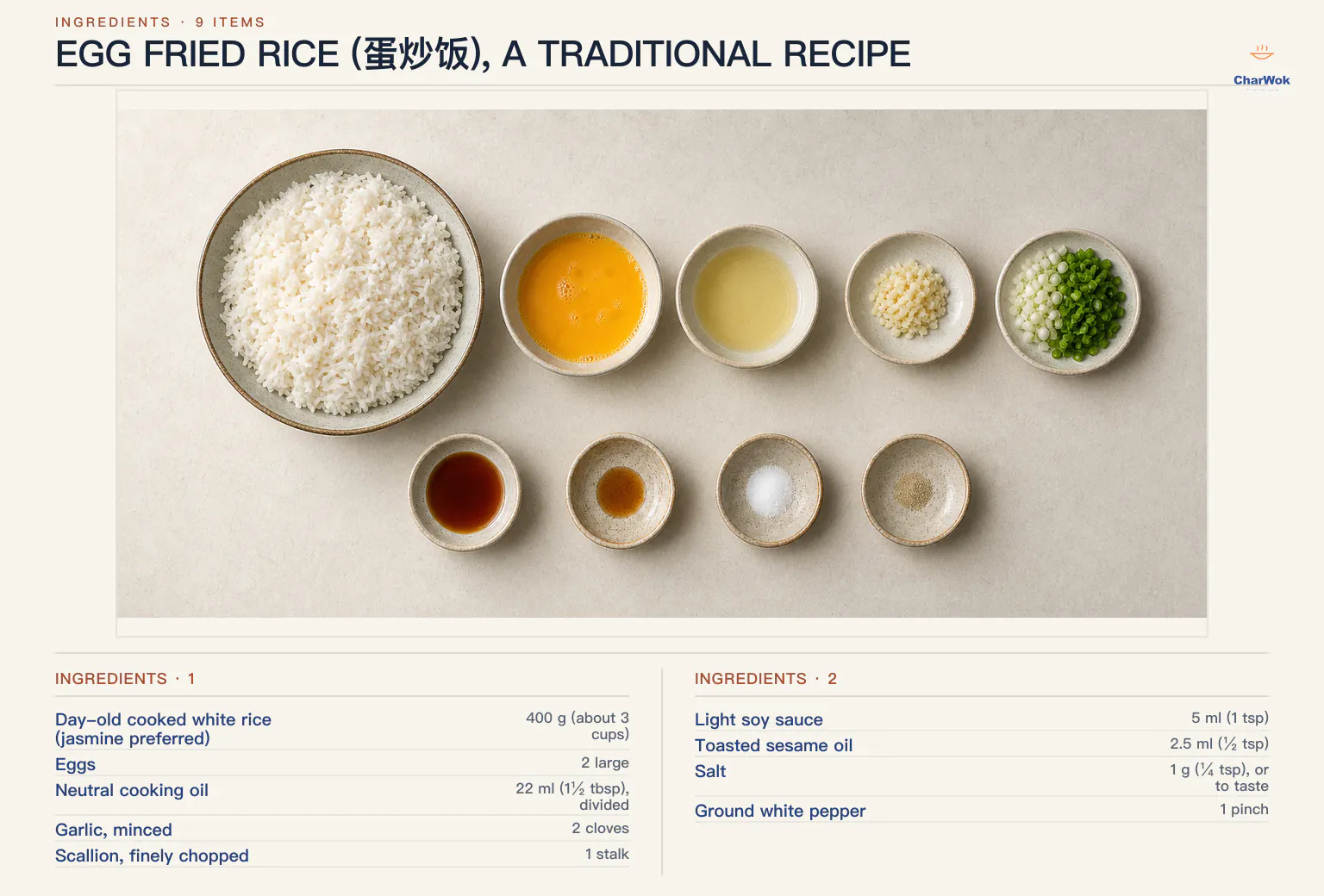
| Ingredient | Amount | Notes / substitute |
|---|---|---|
| Day-old cooked white rice (jasmine preferred) | 400 g (about 3 cups) | Chilled, uncovered, overnight. Basmati works in a pinch. |
| Eggs | 2 large | Room temperature beats more evenly. |
| Neutral cooking oil | 22 ml (1½ tbsp), divided | Peanut, canola, or sunflower. Not olive oil. |
| Garlic, minced | 2 cloves | One clove if you want the egg to lead. |
| Scallion, finely chopped | 1 stalk | Split the white from the green; use white to fry, green to finish. |
| Light soy sauce | 5 ml (1 tsp) | Or tamari / gluten-free soy sauce. See light vs. dark soy sauce. |
| Toasted sesame oil | 2.5 ml (½ tsp) | Added off the heat so the aroma survives. |
| Salt | 1 g (¼ tsp), or to taste | Kosher dissolves cleaner than table salt. |
| Ground white pepper | 1 pinch | Black pepper works but is sharper and less traditional. |
Note the seasoning ratio. A lot of recipes pile on soy, oyster sauce, sugar, and MSG until the rice tastes like a stir-fry sauce. The traditional version does the opposite: salt and white pepper set the base, a teaspoon of soy adds umami and color, and the sesame oil is a finishing perfume, not a cooking fat. When the rice is this lightly seasoned it can sit next to a strongly flavored main without competing.
The method, step by step
- Prep everything before the heat goes on. Stir-frying happens in under five minutes, so there is no time to mince garlic mid-cook. Break the cold rice apart with wet fingers or a wooden spoon so no clumps remain; if you skip this, the clumps will only harden in the pan. Beat the eggs loosely, just until yolk and white are combined. Over-beating incorporates air that makes the egg foam and turn rubbery.
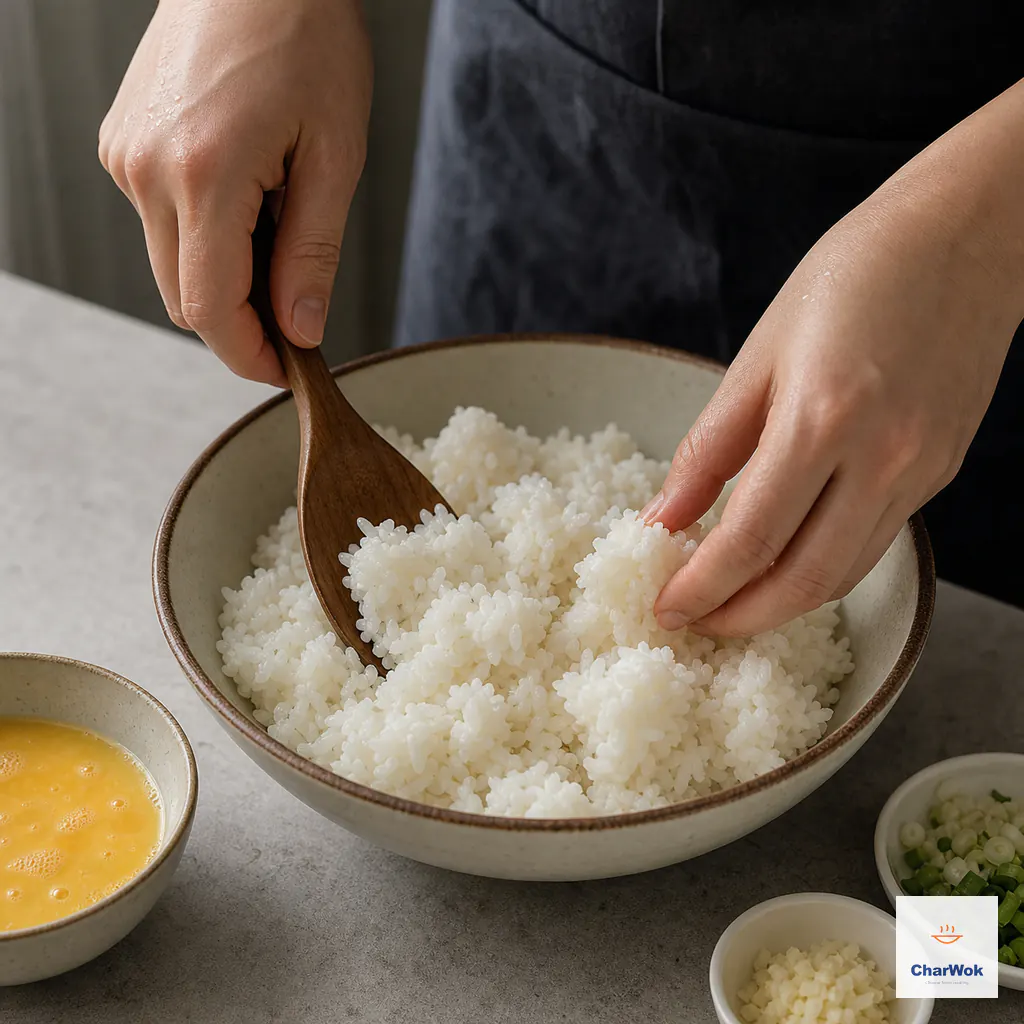
Loosen the cold rice until no hard clumps remain
- Get the wok smoking, then add oil. Heat a dry carbon-steel or cast-iron wok (or a wide skillet) on high until a drop of water dances and evaporates instantly and you see the faintest wisp of smoke. Add 1 tablespoon of the oil and swirl to coat the sidewall. This sequence, hot pan then cold oil, is what prevents protein from sticking; it works because the oil instantly polymerizes a thin film over the seasoned metal. If your pan has a nonstick coating, never heat it dry, add the oil first, then turn on the burner.
- Cook the egg alone, then pull it out. Pour in the beaten egg. It should puff and bubble at the edges within seconds. Push the set curds around to let the liquid run onto the hot surface, and chop the mass into small, soft curds with your spatula. The moment the egg is just set but still glossy, transfer it to a plate. It will cook a second time later. Cooking the egg with the rice, in one pan, is the most common home mistake, and it guarantees gray, overcooked egg shards swimming in wet rice.
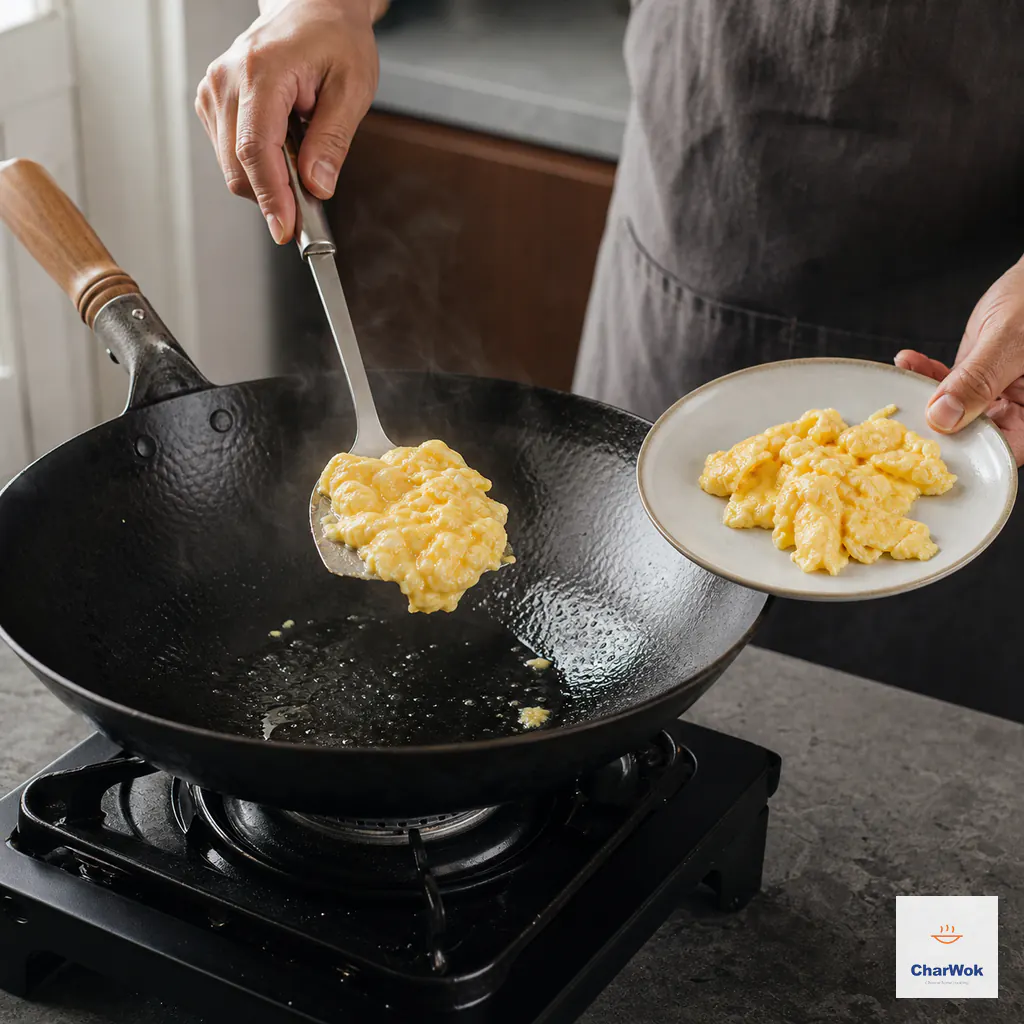
Pull the egg while the curds are just set and still glossy
- Fry the aromatics and rice. Return the pan to high heat, add the remaining ½ tablespoon oil, and the garlic and scallion whites. Ten seconds, no more; garlic burns past that and turns bitter. Add the rice and press it flat against the hot surface in a thin layer, then pause for a few seconds before tossing. That brief contact is where the Maillard browning and the smoky wok hei flavor come from. Toss and press, toss and press, breaking any remaining clumps, until every grain is hot and separate and the rice has been in the pan about three minutes.
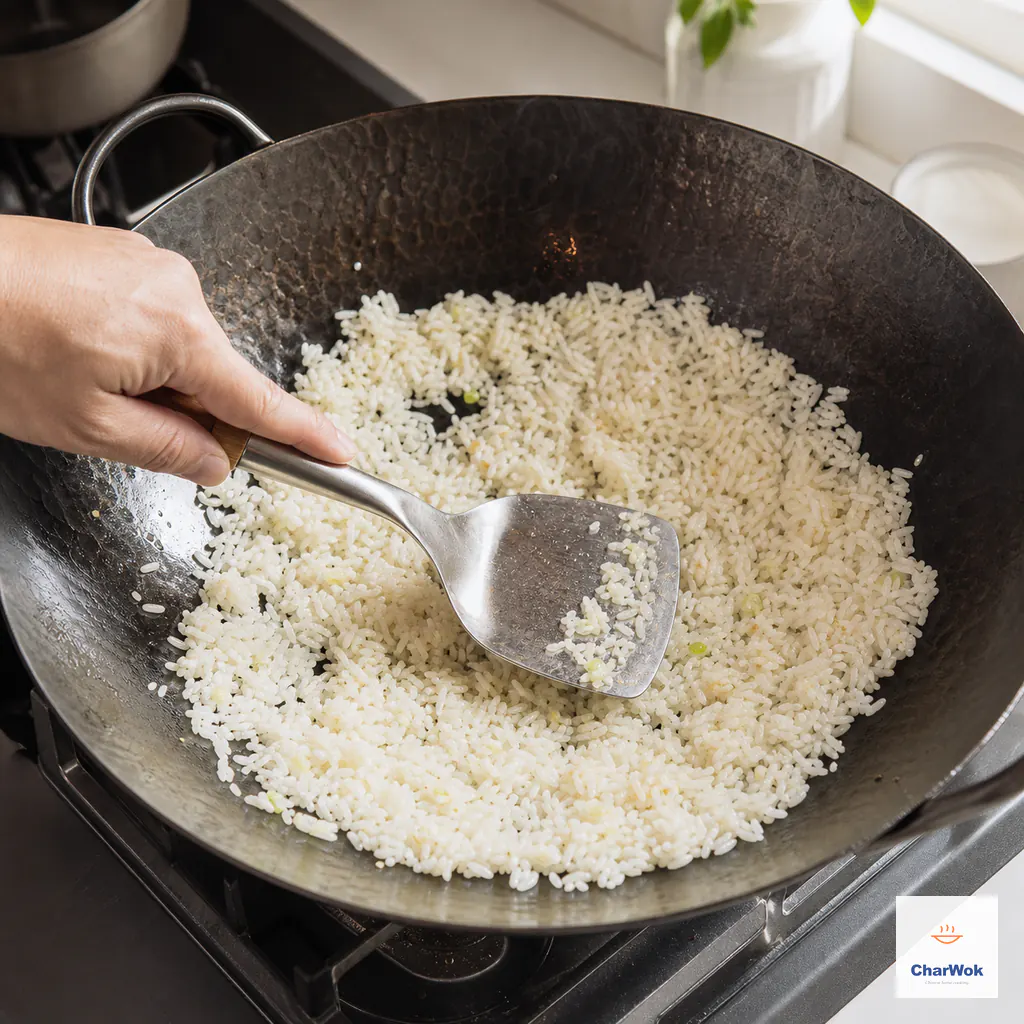
Press and toss until every grain is hot, dry, and separate
- Return the egg, add the scallion greens, season. Tip the egg back in along with the scallion greens. Toss to combine. Move the pan off the heat for a moment, then add the soy sauce down the side of the pan rather than directly onto the rice; hitting the hot metal first caramelizes it slightly and avoids spotting the rice with dark patches. Add sesame oil, salt, and white pepper. Toss once more, taste, and adjust salt.
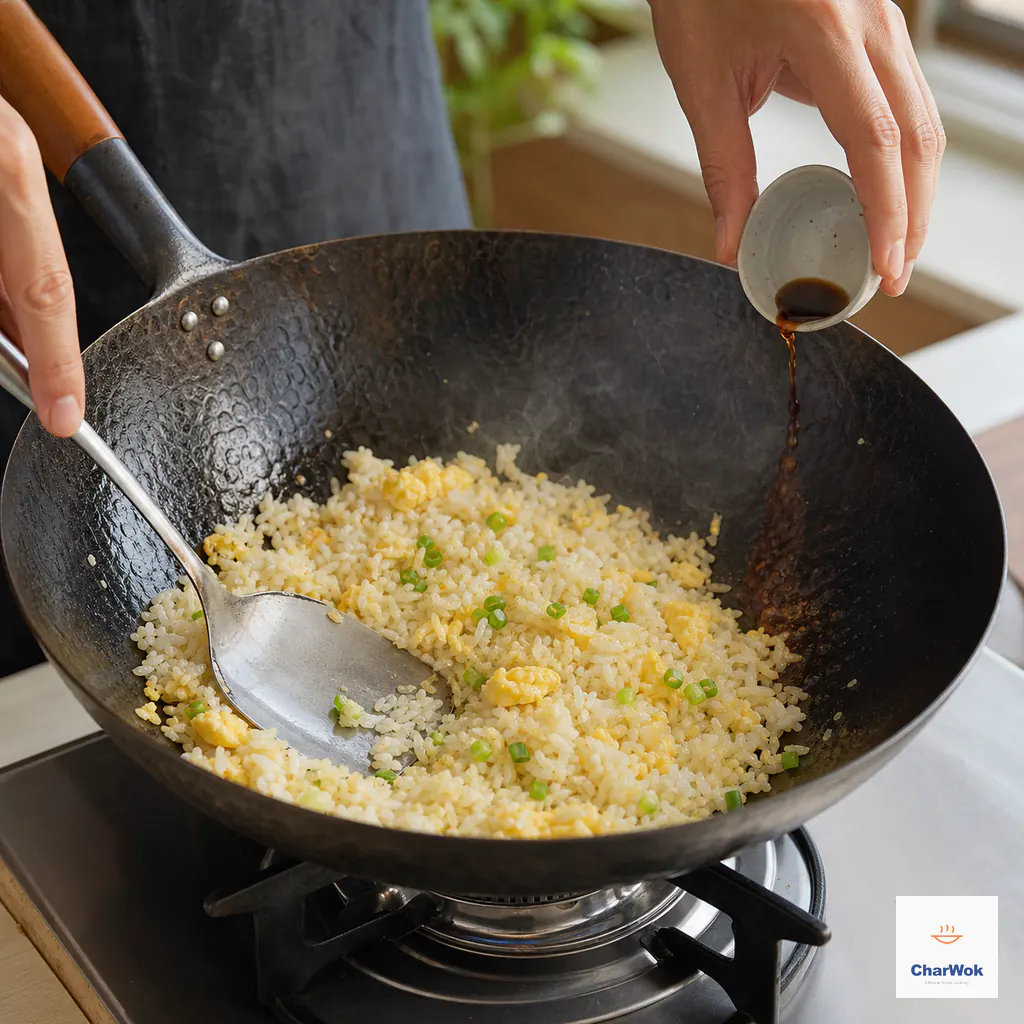
Return the egg, pour soy around the hot wok rim, then finish
- Serve immediately. Fried rice waits for nobody. The texture collapses as it sits.
When it goes wrong, and how to fix it
Mushy, clumped rice
The rice was too wet or too fresh. There is no rescue mid-cook; you can only fry longer to drive off water, which overcooks the egg. For next time, spread freshly cooked rice on a tray to cool fast, then chill it uncovered overnight so the surface dries. If you forgot to plan ahead, spread hot rice on a plate and refrigerate it for at least 90 minutes, or flash it under a fan until the surface loses its shine.
Everything sticks to the wok
Either the pan was not hot enough before the oil went in, or the wok's seasoning is thin. Re-heat the empty pan until it smokes, add oil, swirl hard, and only then add food. A poorly seasoned carbon-steel wok will stick no matter what you do; re-season it before the next attempt. A nonstick skillet sidesteps all of this at the cost of browning.
Gray, weepy egg
You cooked the egg with the rice, or you left it in the pan too long. Cook the egg on its own, pull it while still slightly soft, and return it only at the end. If the egg looks gray, the heat was too low and it sat in moisture. Hot and fast keeps it yellow.
Bitter, burnt garlic
Garlic goes in after the oil and before the rice, and it has about a ten-second window. Mince it fine so it releases flavor fast, and have the rice measured and within reach. Burnt garlic cannot be undone; start over.
Bland rice
Usually under-salted or cooked without enough high-heat browning. Salt is doing more work here than the soy sauce; do not be precious about it. The dish also tastes flat when the pan was too crowded or too cool, because you never developed any toasted flavor.
Variations and what to add
Once the base is reliable, fried rice becomes a cleanup-the-fridge dish. The rules for adding things are simple: cut everything to roughly rice-sized pieces, cook raw protein separately and fold it in at the end, and keep wet vegetables out until the rice is already dry.
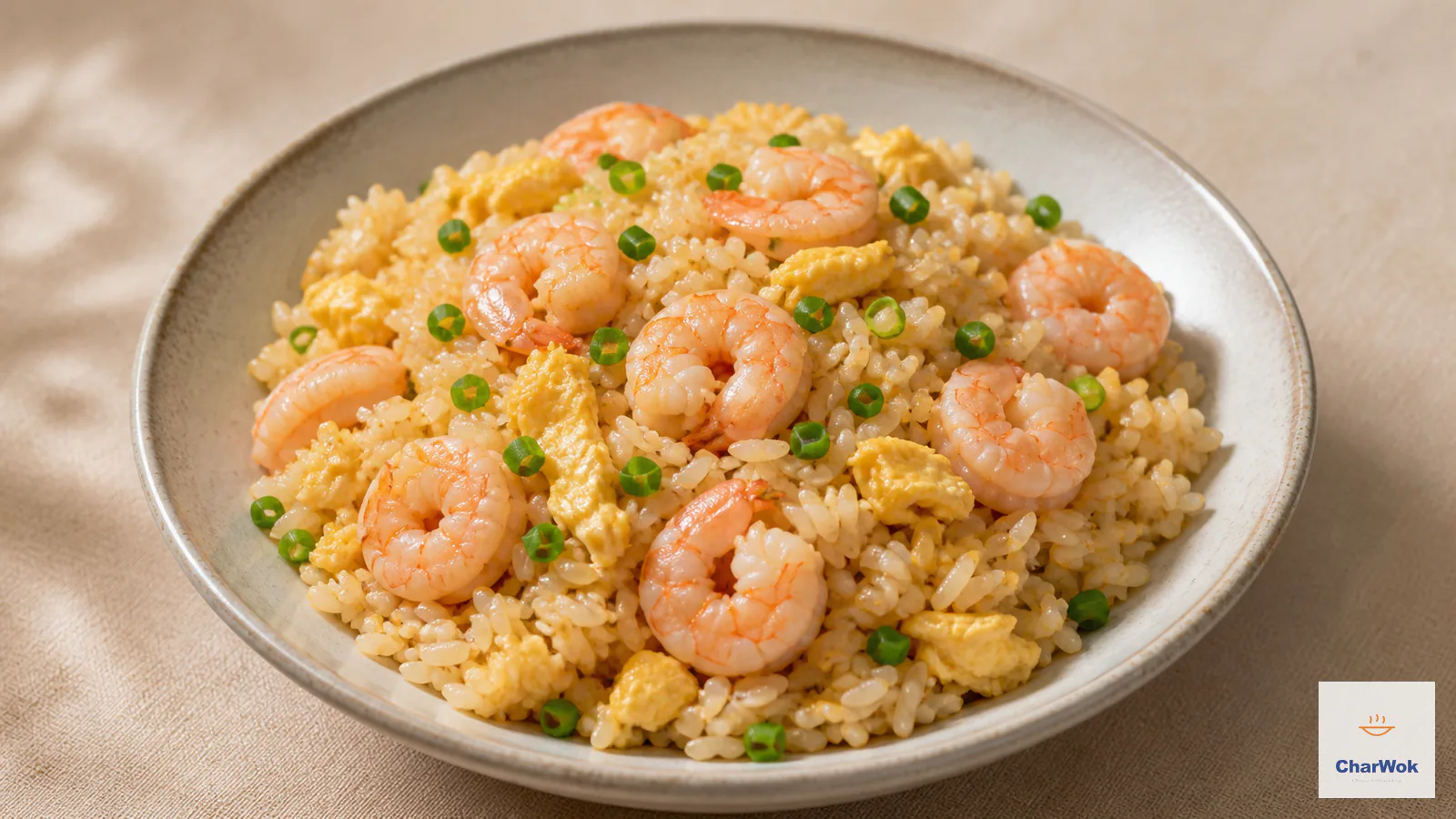
- Protein. Dice leftover char siu, cooked chicken, or ham and warm it through at the end. For raw shrimp or strips of pork, pan-fry them first in the same wok, set aside with the egg, and combine at the finish. The classic upgrade is chicken fried rice; for seafood, see shrimp fried rice.
- Cured meats. Thin-sliced lap cheong (Chinese sausage) rendered in the oil before the garlic is the single best addition. Its rendered fat flavors the whole pan.
- Vegetables. Dice carrot and blanch it first so it is tender, not chalky. Frozen peas and corn go in frozen, straight from the bag. Add watery greens, like napa cabbage or bean sprouts, only in the last thirty seconds so they do not leak. Avoid mushrooms unless pre-cooked; raw mushrooms flood the pan.
- Vegan. Replace the egg with firm tofu pressed and crumbled, pan-fried until golden, and seasoned with a pinch of turmeric for color. The technique is otherwise identical.
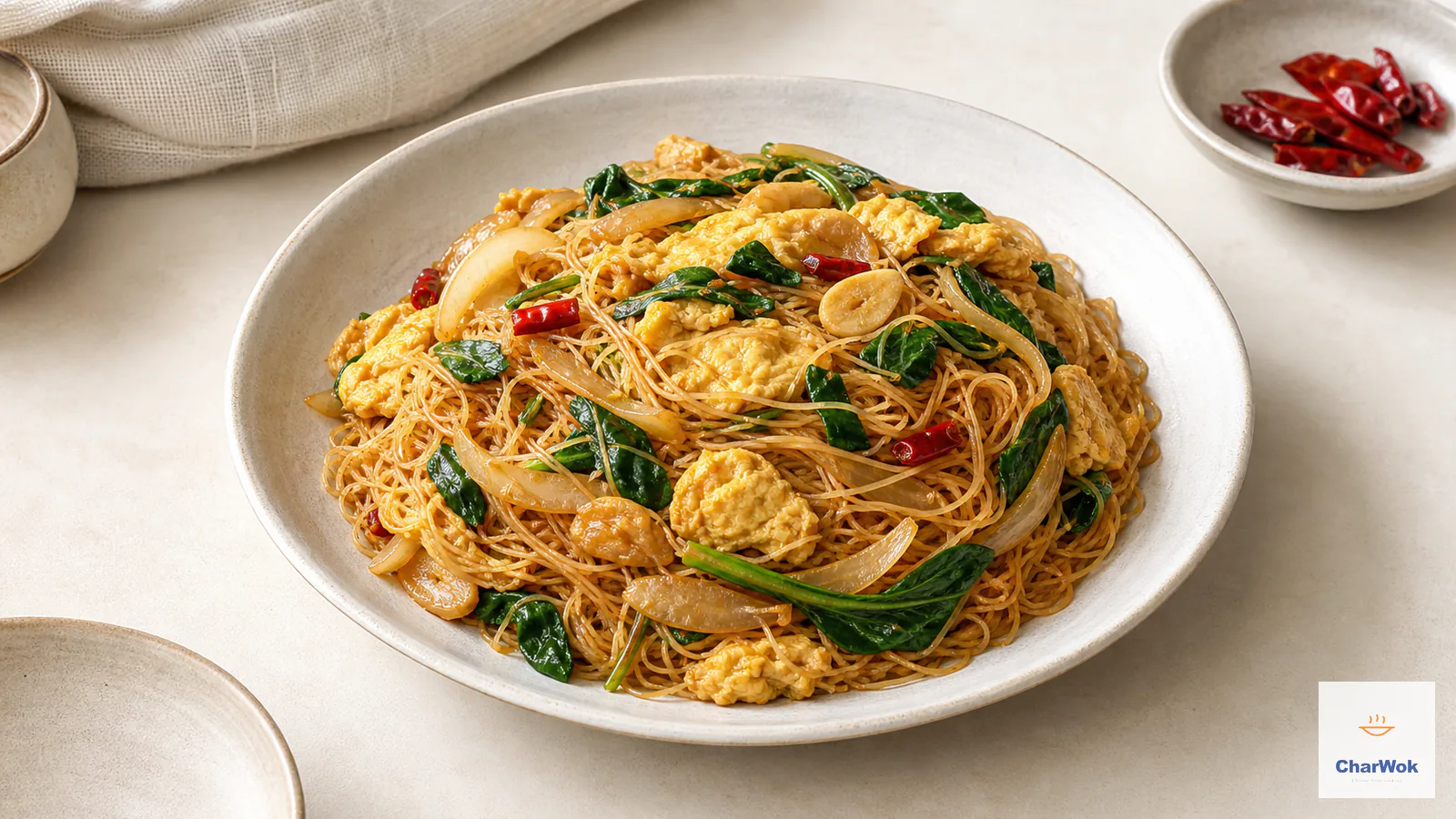
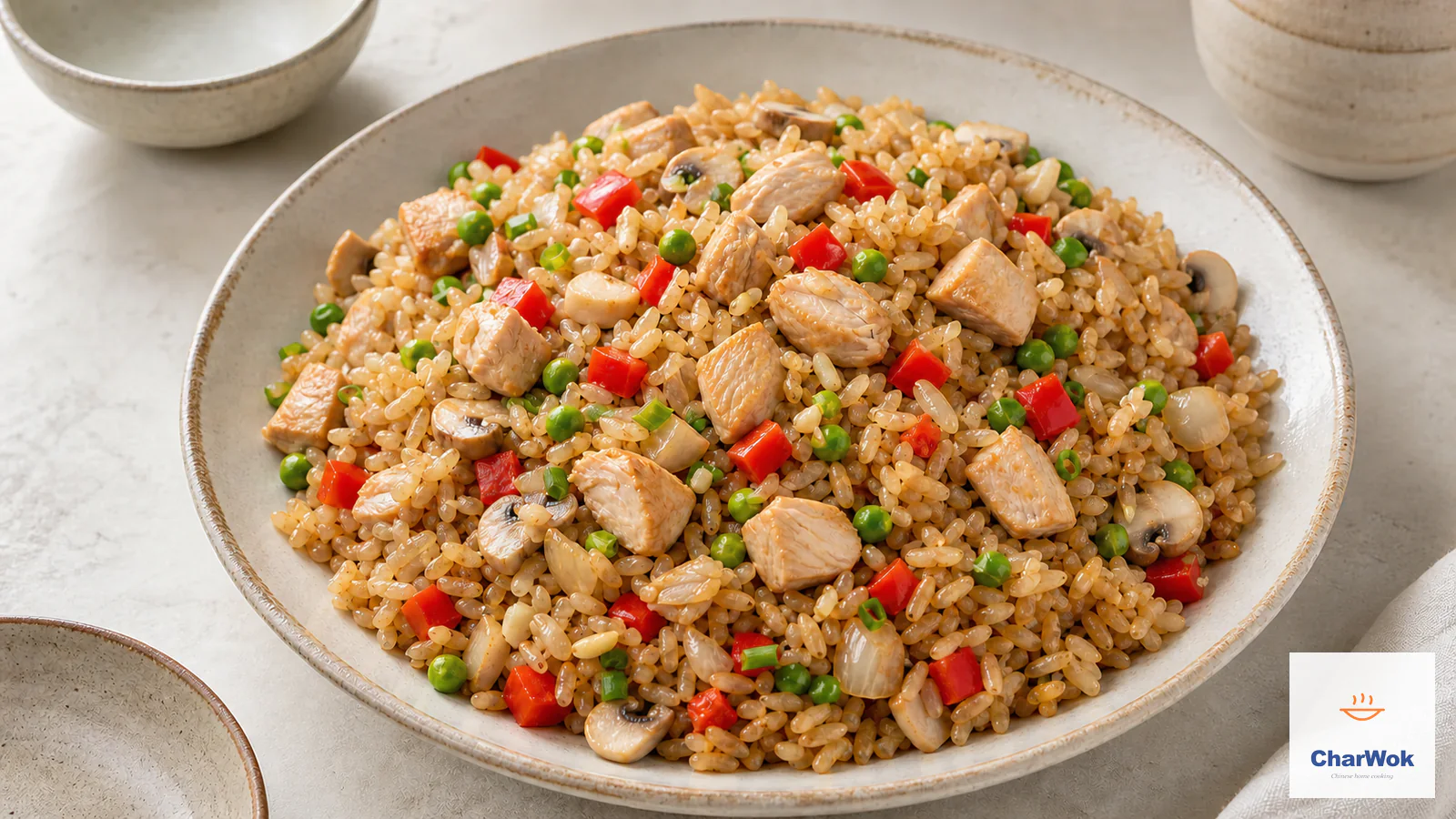
If you want the fully loaded version with mixed proteins and vegetables, pork fried rice walks through the layering. The same logic applies to egg fried rice noodles, which is the noodle sibling of this dish. And if you want fried rice but have no cold rice on hand, soy sauce fried rice shows a few shortcuts for starting from warm rice.
How to serve it
Plain egg fried rice is strong enough to stand alone with a fried egg on top and a drizzle of chili oil or Lao Gan Ma. As part of a multi-dish meal, keep the mains saucy and bold: a hot and sour soup, red-braised pork, or a quick egg stir-fry like tomato egg all sit well beside it. The rice is the neutral anchor.
Storage and reheating
Cool leftovers quickly and refrigerate for up to two days; do not freeze, the texture breaks. To reheat, use a dry pan on medium-high with a few drops of oil and toss constantly, or microwave covered with a damp paper towel, then finish in a hot pan for thirty seconds to crisp the surface back up. Adding a splash of water before microwaving keeps it from drying out, but never much; you are trying to lose moisture, not add it.
Frequently asked questions
Can I use freshly cooked rice? Not with good results. Fresh rice holds too much water and the starch is still soft, so it turns gummy in the pan. If you are stuck, spread the hot rice on a tray, chill it uncovered for at least 90 minutes, and break it up before frying.
Do I need a wok? No. A large cast-iron or stainless skillet with sloped sides works almost as well. Avoid nonstick if you want real browning, since it cannot reach the high temperatures the dish depends on.
Why cook the egg separately? Egg cooked on top of raw wet rice turns pale and rubbery and weeps water into the grains. Cooking it alone over high heat keeps it bright yellow and tender, and folding it back in at the end preserves both color and texture.
Is brown or white rice better? White is traditional and fries cleaner. Brown rice works if it is day-old and on the dry side, but the bran makes the grains heavier and the dish less delicate.
How do I make it gluten-free? Swap the light soy sauce for tamari or a certified gluten-free soy sauce, and confirm your sesame oil is pure, not blended with wheat-derived flavors.
The whole dish comes down to two judgments: cold rice, and a hot pan. Get those right and the rest is seasoning to taste. Cook it a few times and you will stop measuring, which is the sign that a recipe has become yours.