Good fried rice is not really about the recipe. It is about two things the cook does in the last ninety seconds: getting the pan hot enough that the rice actually fries instead of steams, and keeping the moisture out so every grain stays separate. Get those right and the pork, egg, and peas almost take care of themselves. Get them wrong and you have a pan of warm, clumpy rice with meat in it, which is what most home versions turn into, including plenty of mine before I figured out what I was doing wrong.
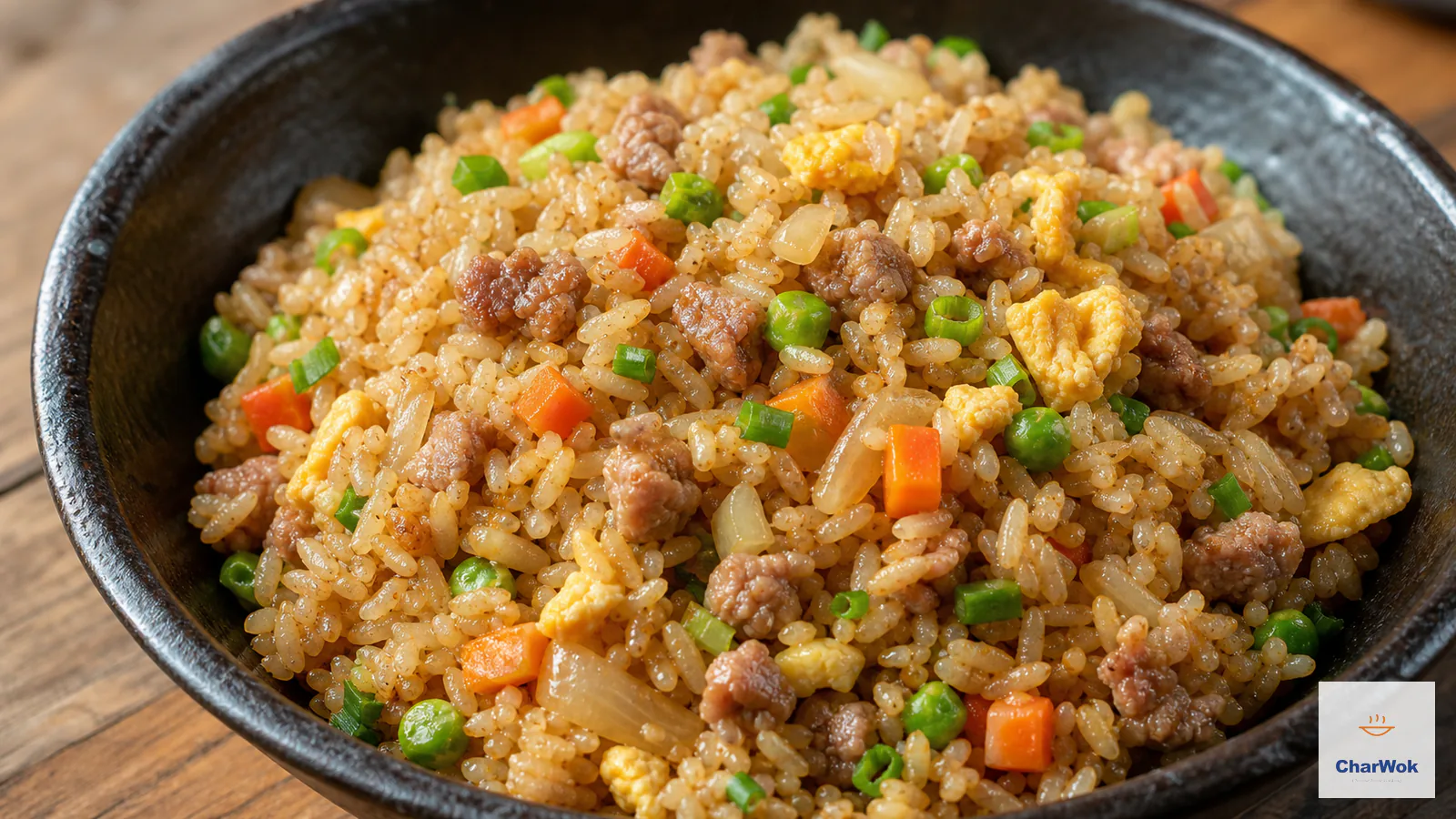
This pork fried rice is the version I cook on weeknights when there is leftover rice in the fridge and a package of ground pork from the supermarket. It takes about eight minutes over heat once everything is prepped, feeds three, and tastes better than the takeout box because you control the oil and the salt. Below I walk through why each step matters, where things go wrong, and how to fix them.
At a glance
Use 3 cups (about 400 g) of cold, day-old jasmine rice to roughly 1 cup (225 g) of ground pork. Work in a thoroughly preheated carbon-steel wok if you have one, keep the oil shimmering rather than smoking, and never add the sauce until the rice has had at least 30 seconds alone in the pan. Total time on the stove is under 10 minutes; the whole dish succeeds on steady heat and dry rice, not on forcing the pan past a safe oil temperature.
What this dish is, and where it sits in the family
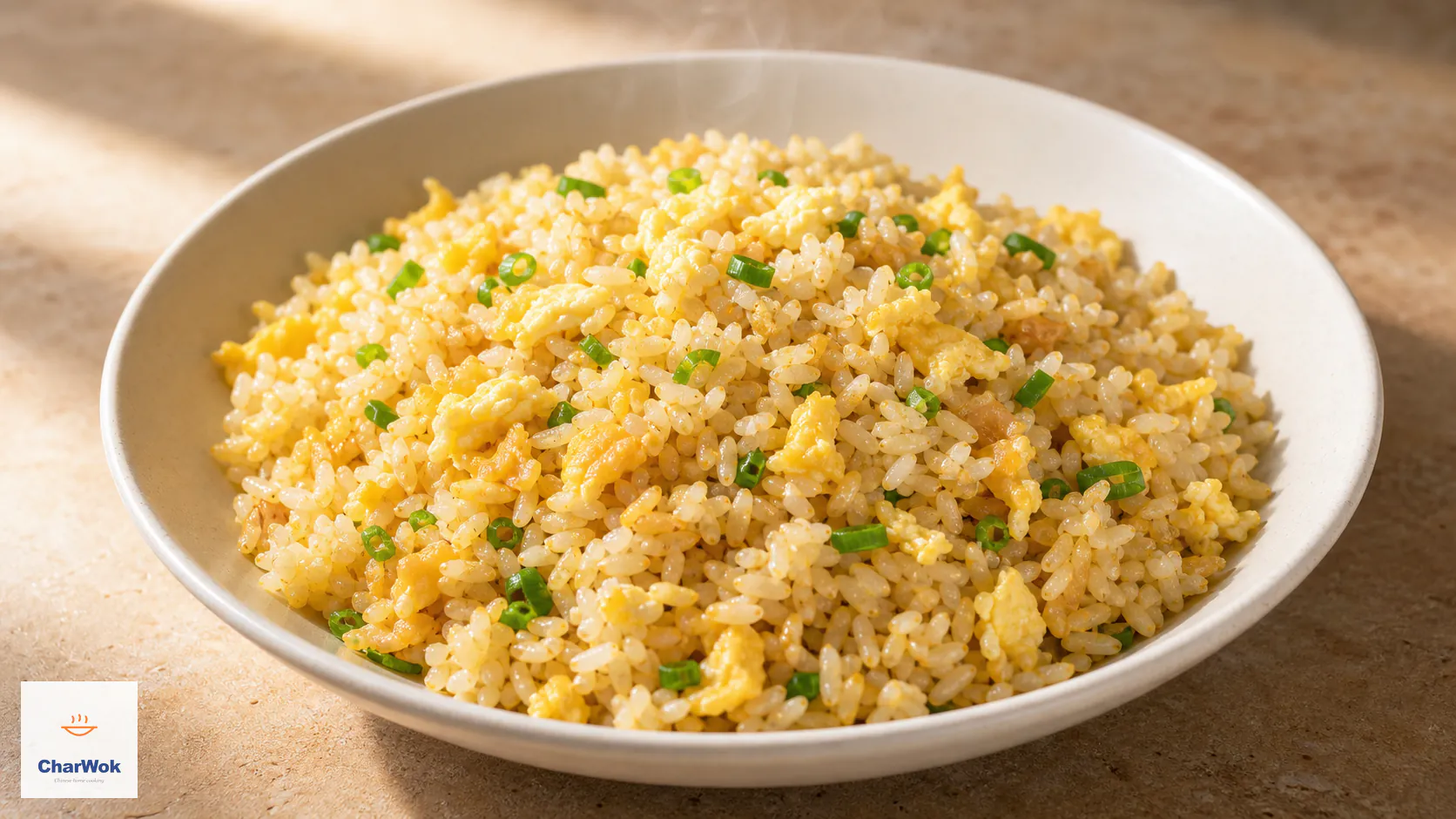
Fried rice in China is a leftover dish first and a recipe second. Cooked rice that has gone a little firm in the fridge gets revived in a hot wok with whatever protein and vegetable are lying around. The bare-bones version is just rice, egg, and scallion, and if you want to understand fried rice at its purest I would start with a classic egg fried rice before piling on extras. This pork version adds ground meat for richness and peas and carrot for color and sweetness, which puts it closer in spirit to a casual home lunch than to banquet cooking.
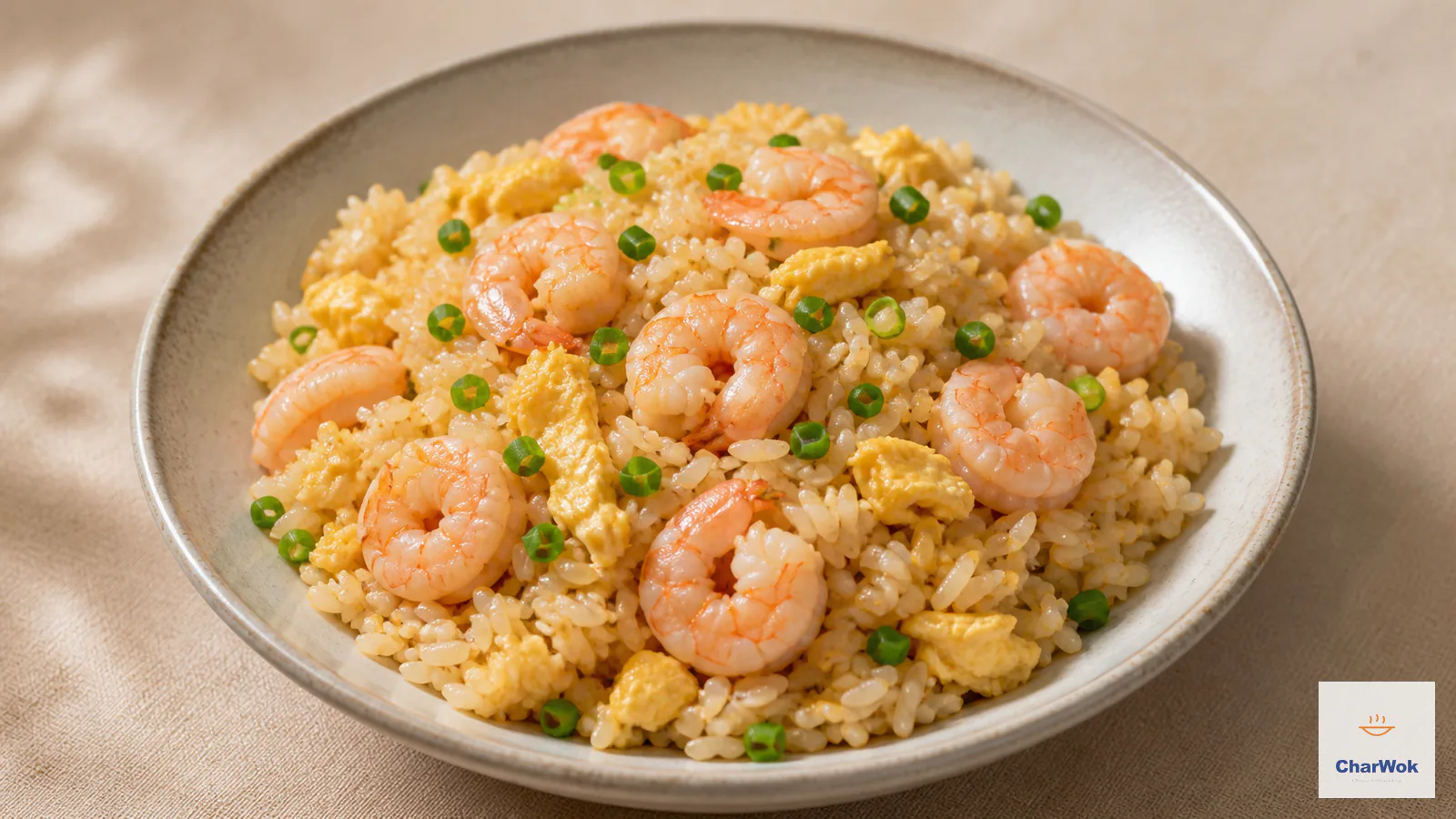
It is also the quieter cousin of the famous Yangzhou fried rice, which layers in shrimp, char siu, ham, and sometimes crab for a restaurant showpiece. The tradeoff is worth knowing. The banquet version looks impressive but asks you to prep four or five proteins. This ground-pork version asks for one pan, one meat, and one bowl of sauce, and on a Tuesday that is the whole point.
The two rules that decide everything
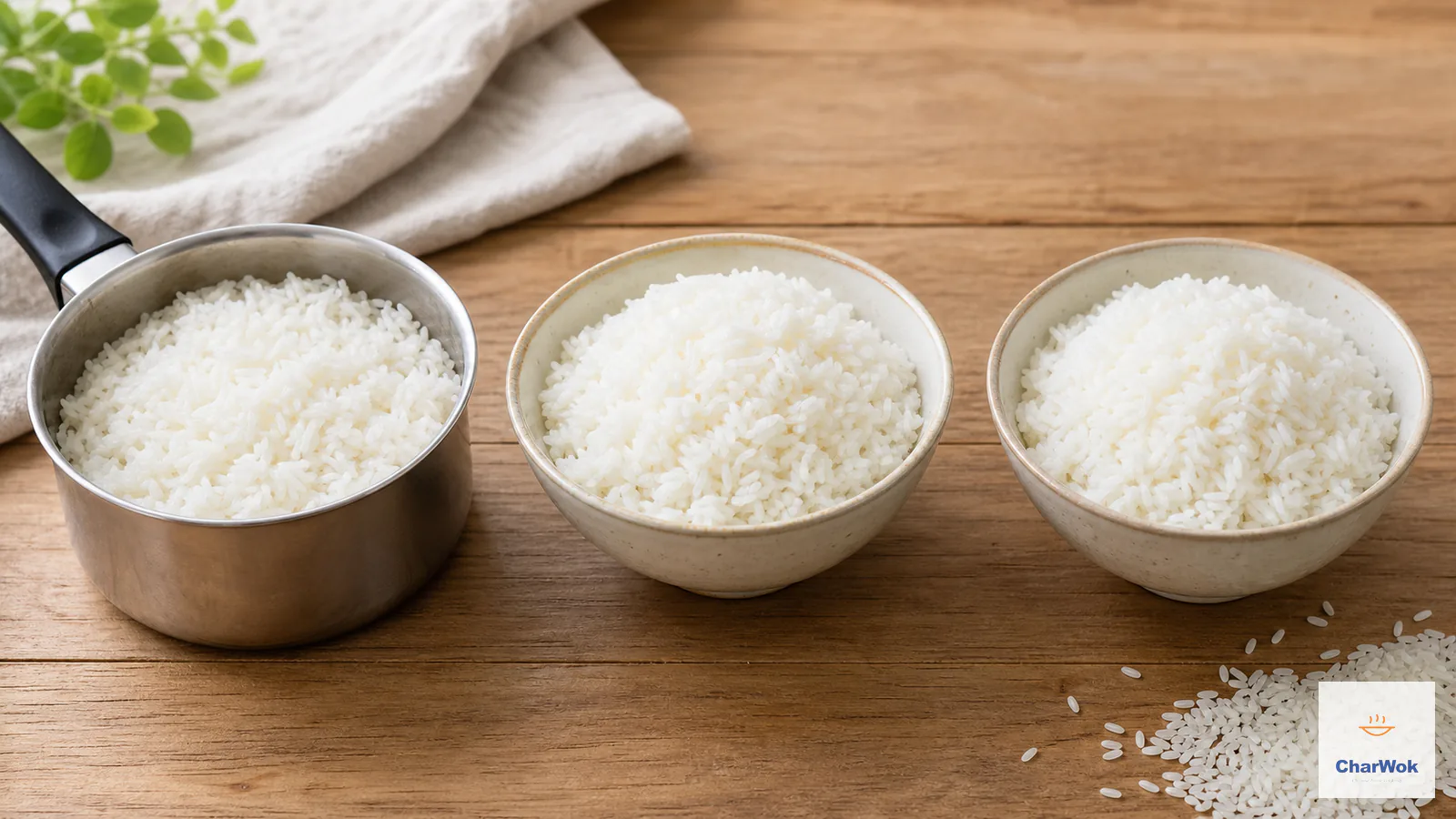
Rule one: the rice must be cold and slightly dry. Freshly cooked rice is full of surface water. Drop it into a hot pan and that water turns to steam, which is exactly the opposite of frying. The grains stick together and the whole pan turns gummy. Day-old jasmine rice straight from the fridge has lost enough moisture that the starch on the surface has firmed up, so each grain holds its shape and crisps at the edge instead of collapsing. If you must use same-day rice, spread it on a tray and chill it uncovered for at least an hour. For the firmest grains possible, the steamer and strainer methods in my guide to cooking jasmine rice on the stove produce rice so firm you can fry it the same day without refrigerating.
Rule two: preheat the pan without overheating the oil. A restaurant wok burner throws flame up the sides of the wok. Your home burner will not, but a seasoned carbon-steel wok can still be preheated over medium-high heat until a drop of water skitters and evaporates quickly. Wipe away any water, add the oil, and start cooking when it flows freely and shimmers at about 175 to 180°C (350 to 355°F), before it smokes. That contact heat creates browning on the rice and pork; a wide pan, small batch, and dry ingredients matter more than visible smoke. With nonstick cookware, add the oil before heating and follow the manufacturer's heat limit.
Ingredients
Complete ingredients for pork fried rice
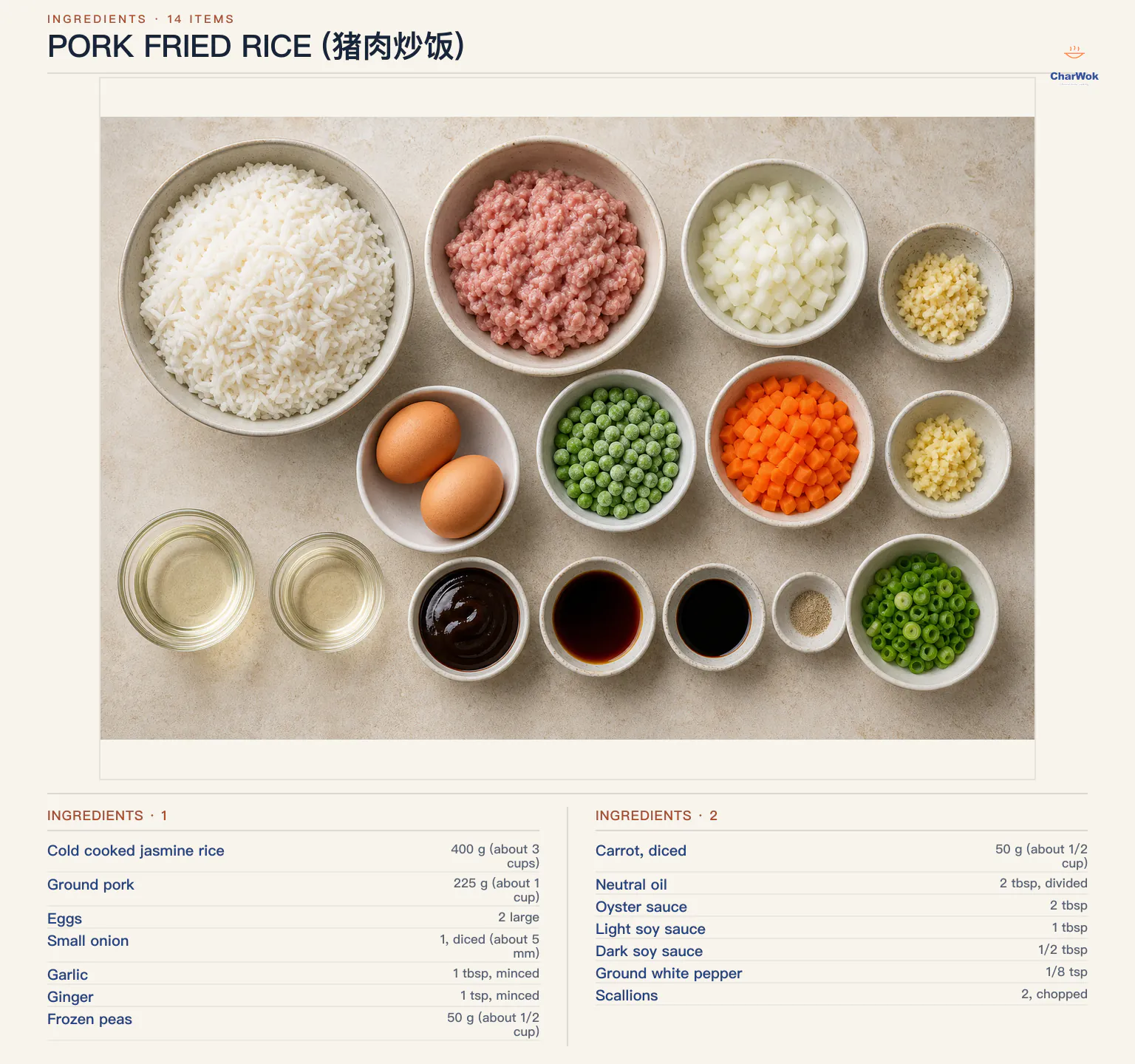
This serves three as a main, or four alongside a soup or a vegetable dish. The quantities are scaled for the rice given; if you double the rice, bump the sauce by about three-quarters rather than doubling it, or the dish gets too salty and wet.
| Ingredient | Amount | Notes / substitute |
|---|---|---|
| Cold cooked jasmine rice | 400 g (about 3 cups) | Day-old, from the fridge. Short-grain works but is starchier; basmati is fine if that is what you have. |
| Ground pork | 225 g (about 1 cup) | 20% fat is ideal for flavor. Diced char siu, ham, or bacon all swap in directly. |
| Eggs | 2 large | Lightly beaten. For a richer version, add a third. |
| Small onion | 1, diced (about 5 mm) | Yellow or white. Shallot works for a sweeter note. |
| Garlic | 1 tbsp, minced | About 3 cloves. Don't substitute powder here. |
| Ginger | 1 tsp, minced | Peel first. A microplane makes this fast. |
| Frozen peas | 50 g (about 1/2 cup) | No need to thaw. Edamame is a good swap. |
| Carrot, diced | 50 g (about 1/2 cup) | Cut to match the peas for even cooking. Frozen mixed veg works. |
| Neutral oil | 2 tbsp, divided | Peanut, canola, or soybean. Avoid olive oil. |
| Oyster sauce | 2 tbsp | Mushroom stir-fry sauce for a vegetarian version. |
| Light soy sauce | 1 tbsp | For salt. See my notes on light vs dark soy sauce. |
| Dark soy sauce | 1/2 tbsp | For color only. Skip if you don't have it. |
| Ground white pepper | 1/8 tsp | Milder and more aromatic than black. Black pepper in a pinch. |
| Scallions | 2, chopped | White and light green parts cook in; dark green for garnish. |
Method
Before you turn on the burner, have every ingredient measured and within arm's reach. This is a stir-fry: once the pan is hot the whole thing moves in under five minutes, and there is no time to dice an onion. I keep the rice, the beaten egg, the bowl of sauce, and the prepped vegetables lined up next to the wok.
- Mix the sauce. Stir the oyster sauce, light soy, dark soy, and white pepper together in a small bowl. Combining them now means you can pour everything at once later, which keeps the pan hot and the cooking fast.
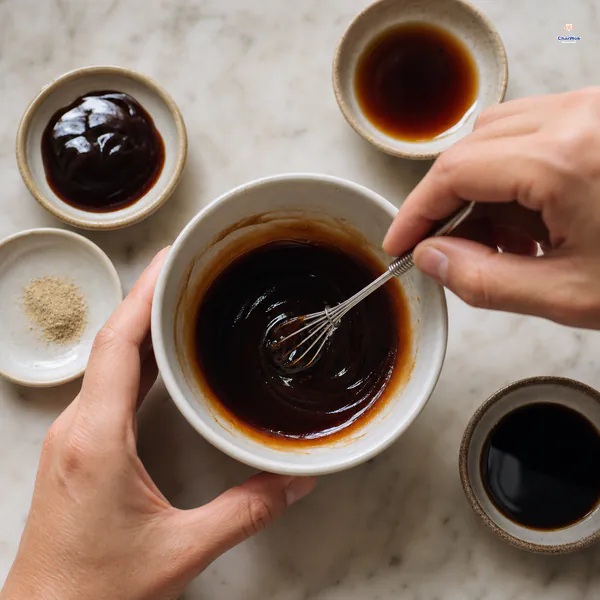
Mix the oyster sauce, both soy sauces and white pepper before heating the wok so the seasoning can be added in one quick pour.
- Preheat the wok, then add oil. Put an empty, well-seasoned carbon-steel wok over medium-high heat until a drop of water skitters and evaporates quickly. Wipe the wok completely dry, add 1 tablespoon of oil, and swirl it up the sides. Start cooking when the oil flows freely and shimmers at about 175 to 180°C (350 to 355°F), before it smokes. If the oil smokes, turn off the burner and let it cool. With nonstick cookware, add the oil before heating and follow the manufacturer's heat limit.
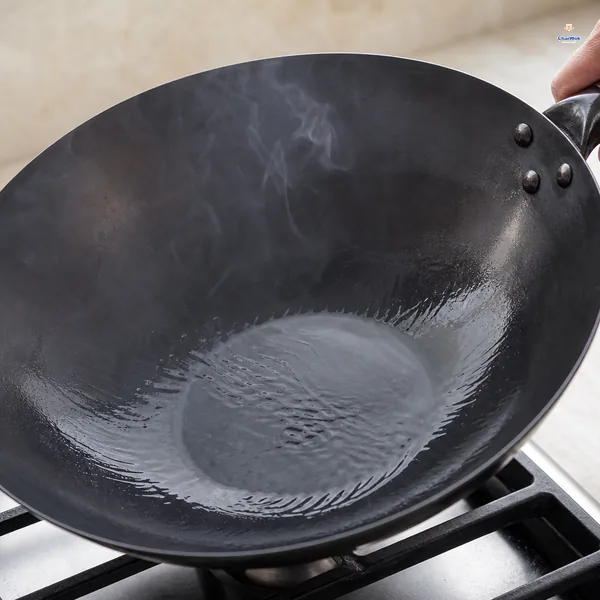
Preheat the seasoned wok over medium-high heat, wipe it dry after the water-drop test, then add one tablespoon of oil and cook at about 175 to 180°C before it smokes.
- Cook the egg, then pull it out. Pour in the beaten egg and let the underside set for a few seconds before you stir. Push the set egg around so the runny part flows to the hot surface, breaking it into small curds as it firms. As soon as it is just cooked through and still soft, scoop it onto a plate. The reason to remove it is that egg overcooks into rubber in seconds; it will reheat perfectly when you add it back at the end.
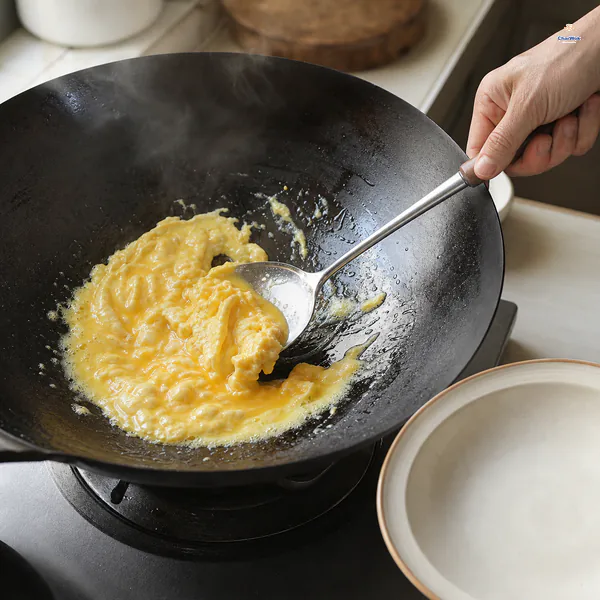
Push the setting egg so the runny part reaches the wok, break it into small soft pieces and transfer it out before it turns dry.
- Brown the pork in one layer. Add the remaining tablespoon of oil to the wok, then the ground pork. Spread it flat and press it down so the bottom makes full contact with the hot metal. Let it sit undisturbed for about 30 seconds so it browns, then break it into small pieces and cook until representative pieces reach 71°C (160°F) on an instant-read thermometer. Do not use pinkness alone as the safety test. That initial sear builds flavor; if you stir constantly from the start, the pork steams in its own liquid.
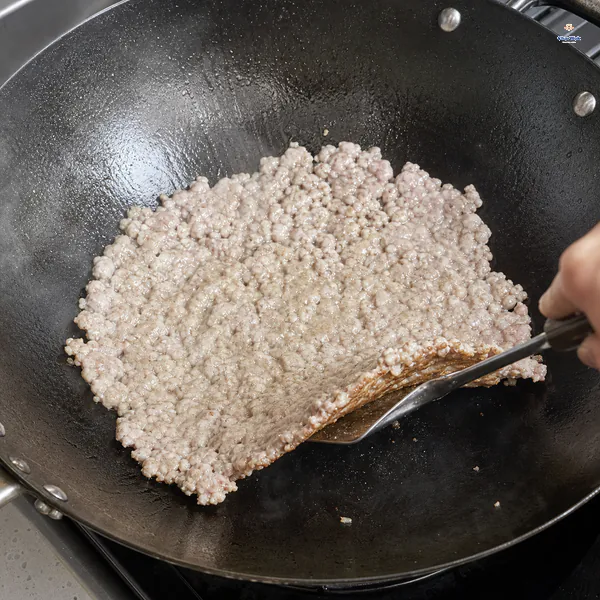
Spread the ground pork into a broad layer, wait for light browning underneath, then flip and break it apart to cook through.
- Soften the aromatics. Add the onion, garlic, and ginger. Toss for about a minute, until the onion turns translucent at the edges. You want them fragrant and soft, not browned.
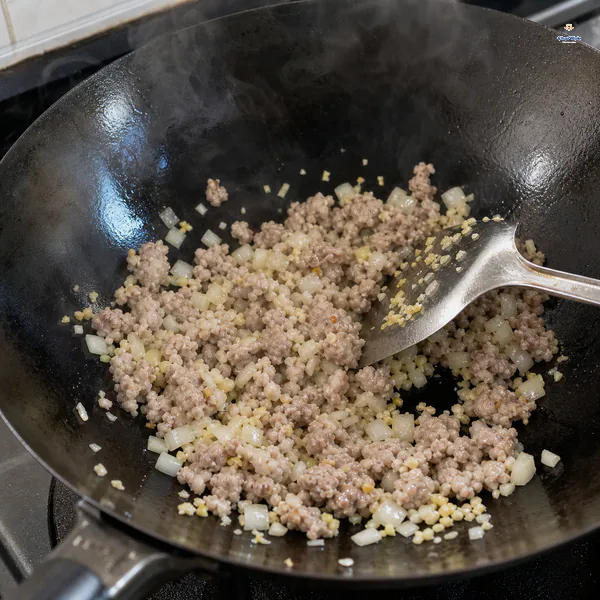
Check representative pork pieces reach 71°C rather than relying on colour, then add the onion, garlic and ginger and fry until translucent.
- Flash the vegetables. Add the peas and carrot and stir-fry for 30 seconds. Keep the heat at maximum so the vegetables warm through without going soft. Crunch is the whole point of adding them.
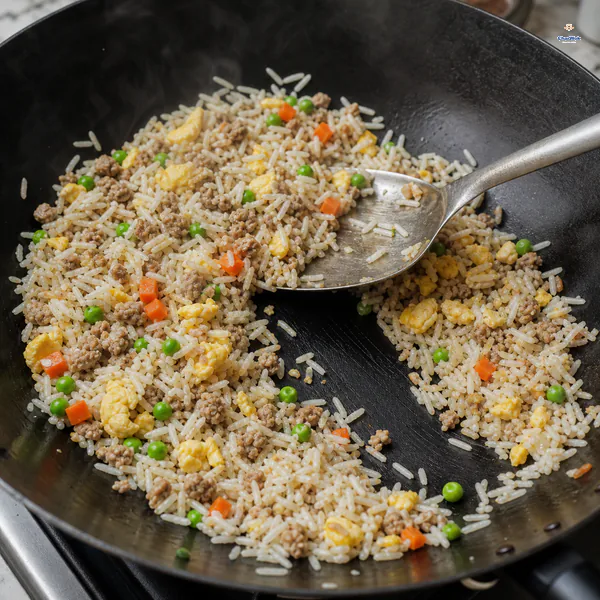
Flash-fry the peas and carrot, then add the cold rice and reserved egg; press apart every clump until the grains move freely.
- Fry the rice on its own. Add the cold rice and use the edge of your spatula to break apart any clumps. Press the rice against the hot metal for 30 to 40 seconds before you start tossing, so the grains sear and the surface dries out. This is the step most people skip, and it is the difference between fried rice and rice that has been warmed in a pan.
- Return the egg and add the sauce. Add the egg back to the wok, breaking the curds into smaller pieces, then pour the sauce over everything. Toss constantly for another 30 seconds so every grain is coated and the dish is piping hot throughout. Pull the wok off the heat, scatter the scallions over the top, and toss once more. Serve immediately.
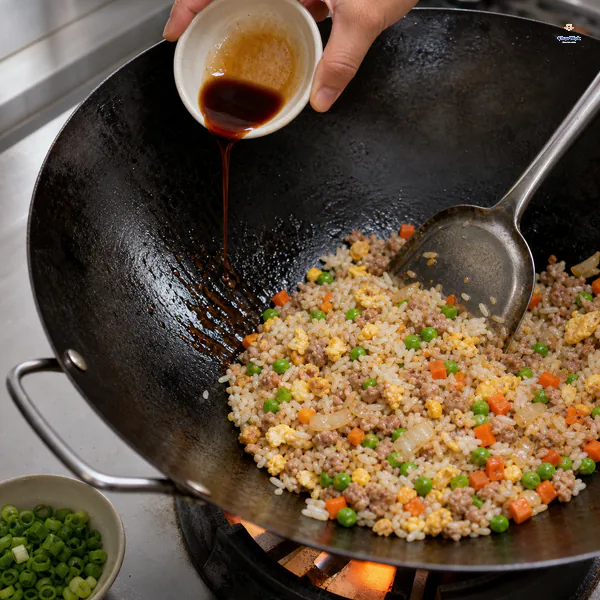
Pour in the mixed seasoning, toss constantly until every grain is coated and piping hot, then turn off the heat and fold in the scallions.
Cooking and leftover safety: FoodSafety.gov lists 71°C (160°F) for ground meat and 74°C (165°F) for reheated leftovers. Its leftover guidance says to refrigerate perishable food in shallow containers within 2 hours, or within 1 hour above 32°C (90°F). The U.S. Fire Administration advises turning off the burner if cooking oil starts to smoke.
When it goes wrong, and how to fix it
Most fried-rice disasters fall into one of four buckets. Here is how to read your pan and recover.
The rice clumps into one sticky mass. The rice was too wet, too fresh, or the pan was not hot enough. There is no rescue once it has happened; you can only break the clumps up as best you can and accept a softer texture. Next time, chill the rice uncovered overnight and heat the wok longer before adding the oil.
The pan fills with liquid and the rice boils instead of fries. You either added the sauce too early, used vegetables that were wet, or crowded the pan so the temperature dropped. The fix is patience: cook the rice alone for a full minute before any sauce goes in, and drain thawed vegetables if you are using frozen ones. If the pan is already soupy, turn the heat up and let the liquid reduce for 30 to 60 seconds before finishing.
The egg turns tough and rubbery. You either overcooked it the first time or left it in the wok too long. The cure is simple: cook the egg just to set, remove it the instant it is done, and only return it in the final 30 seconds.
The pork is gray and flavorless. You stirred it from the moment it hit the pan. Let it sit in one layer and brown before you break it up. That brown crust is pure Maillard flavor, and it is the cheapest upgrade you can make to ground meat.
Build it your way
This recipe is really a template. Once you have the technique, the protein and vegetable are negotiable. Dice leftover char siu or ham and add it where the pork goes, or swap the pork entirely for a chicken fried rice built on diced thigh, or a shrimp fried rice with raw peeled shrimp cooked until pearly, opaque, and firm. For a sharper, more savory profile you can lean on a soy sauce fried rice approach and drop the oyster sauce altogether.
The vegetable drawer is your friend. Bell pepper, corn, celery, broccoli florets, mushrooms, and green beans all work; cut them small and roughly even so they cook at the same rate as the peas. If you want a more substantial, saucier pork flavor, a spoonful of the seasoned minced pork from a Hunan pork stir-fry folded in at the end is excellent.
Serving, finishing, and what to put on the table next to it
Fried rice is a complete meal in one pan, but it plays well with others. A drizzle of chili oil or a dab of chili garlic sauce on the side lets each person dial in their own heat. For a fuller spread, pair it with a quick stir-fried green like garlic bok choy, or fold leftover fried rice into the rotation next to dishes like moo shu pork when you are doing a pork-themed week. If you have a crowd to feed, this recipe scales up cleanly as part of a roundup of Chinese pork dishes, and it belongs in any collection of Chinese rice recipes by cooking method.
One upgrade I always make at the table: a few drops of toasted sesame oil stirred in just before eating. It loses its aroma if you cook it, so it belongs at the end, never in the pan.
Storage and reheating
Do not leave the fried rice out to cool completely. Divide it into shallow containers and refrigerate within 2 hours of cooking, or within 1 hour if the room or outdoor temperature is above 32°C (90°F); discard it if it has exceeded that limit. Use refrigerated leftovers within 3 to 4 days. Reheat only the portion you need to 74°C (165°F), measured in several spots, in a covered skillet or microwave; add a small splash of water if the rice is dry.
Frequently asked questions
Can I make this with freshly cooked rice? You can, but the texture suffers. Fresh rice steams instead of fries and tends to clump. If you are stuck, spread the hot rice on a tray and chill it uncovered for at least an hour to dry the surface before frying.
What can I use instead of oyster sauce? Mushroom stir-fry sauce is the closest vegetarian swap. Hoisin is too sweet on its own; if that is all you have, mix it half and half with light soy sauce and a squeeze of the rice vinegar from your pantry.
I don't own a wok. Will a frying pan work? Yes, use the deepest skillet you have and cook in two batches if your pan is small, so the rice has room to sear rather than steam. With nonstick, add the oil before heating and never heat the empty pan.
Why is my fried rice bland? Usually one of two things: the pan was not hot enough to brown the pork and rice, or the sauce went in too early and steamed off. Sear harder and add the sauce only in the final 30 seconds.