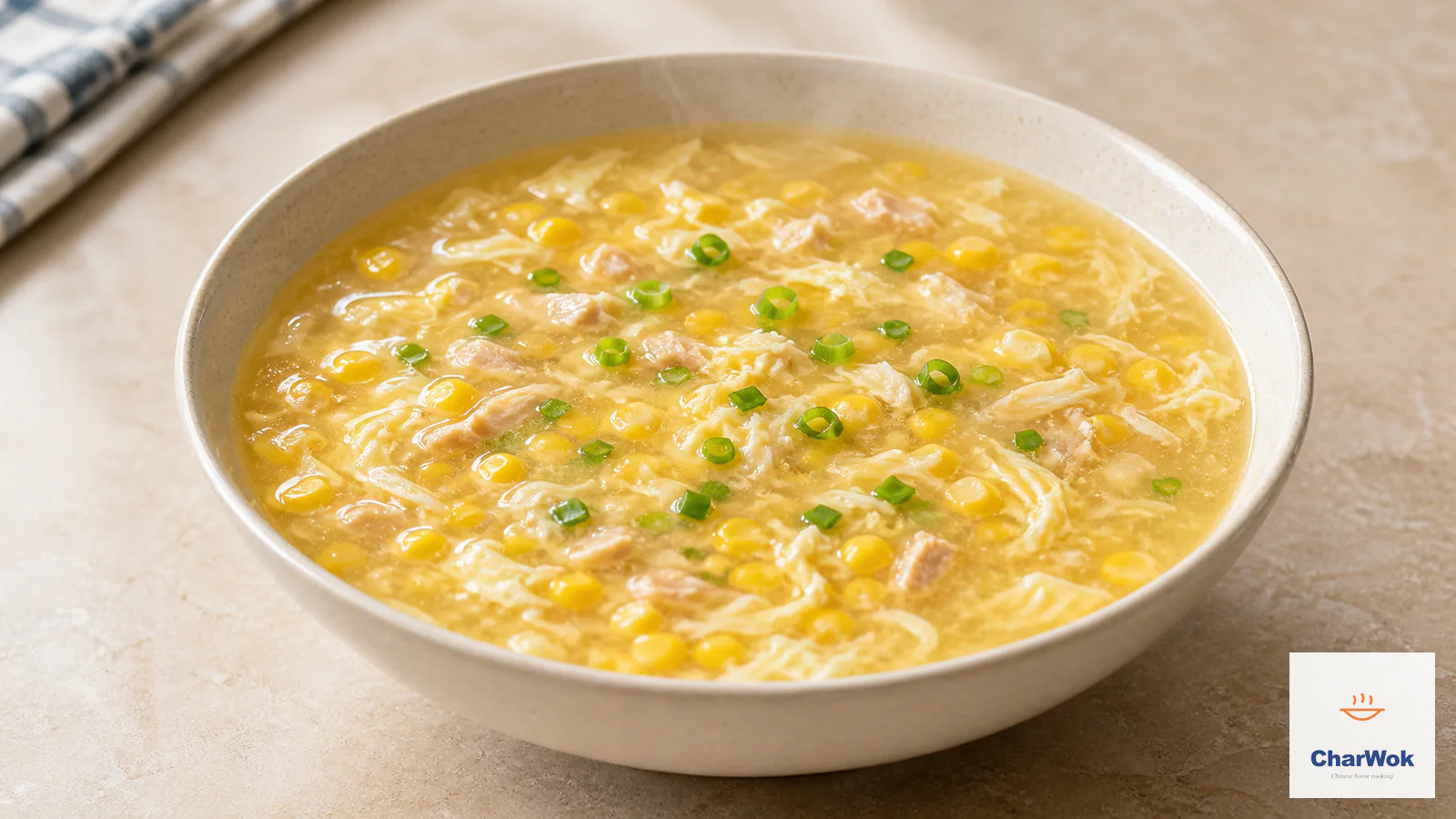
Chicken corn soup should be glossy and pourable, with tender chicken, partly crushed corn, and pale egg ribbons. A gluey broth or rubbery pieces usually point to one of three problems: the corn was blended too far, the slurry was overused, or the chicken cooked past its safe finishing temperature.
The method takes about thirteen minutes and fits a weeknight meal. Cut the chicken evenly, crush only half the corn, and verify the chicken reaches 165°F (74°C) before adding the egg and slurry.
For four bowls, use 4 cups (950 ml) stock and roughly 1½ cups (230 g) corn. Velvet the chicken, crush about half the corn, then gently simmer until the largest chicken piece reaches 165°F (74°C). The listed cook time is an estimate; colour and minutes are not doneness tests.
Where this soup actually comes from
The dish is often called "chicken and sweet corn soup" in English. Its Chinese name, jī róng sù mǐ gēng (鸡茸粟米羹), describes the form: róng (茸) refers to finely cut meat, and gēng (羹) is a thickened soup. Unlike hot and sour soup or classic egg drop soup, this one gets much of its body from crushed corn.
The seasoning is light: a little soy sauce on the chicken, then white pepper and sesame oil at the end. Compared with pork rib soup, it is a quick thickened soup rather than a long simmer.
The science behind the three steps
Most of the confusion around this soup comes from skipping the reasoning. Here is what is actually happening in the pot.
Why the chicken gets a cornstarch bath
Small pieces of chicken breast can turn dry in simmering stock. Velveting coats them with cornstarch, water, and a teaspoon of light soy sauce. The thin coating limits surface moisture loss and helps the pieces stay separate, but it does not change the safe finishing temperature: the chicken still needs to reach 165°F (74°C).
Why you do not fully blend the corn
Pulse the corn too long and the texture becomes uniform; leave every kernel whole and the broth stays thinner. Stop when roughly half the kernels are crushed and half remain intact. Cream-style canned corn is already partly broken down and may contain added starch, sugar, and salt, so check its label before deciding whether to add the full slurry or more seasoning.
Why the egg and slurry go in last
After the chicken reaches 165°F (74°C), pour in the egg as a thin stream and let it set briefly before stirring. The same gentle pouring technique is used in egg drop soup. Add the cold-water slurry afterward and stir only until the soup is lightly glossy; this order matches the Recipe instructions and prevents the temperature check from being hidden beneath a thickened broth.
Ingredients
Ingredients at a glance
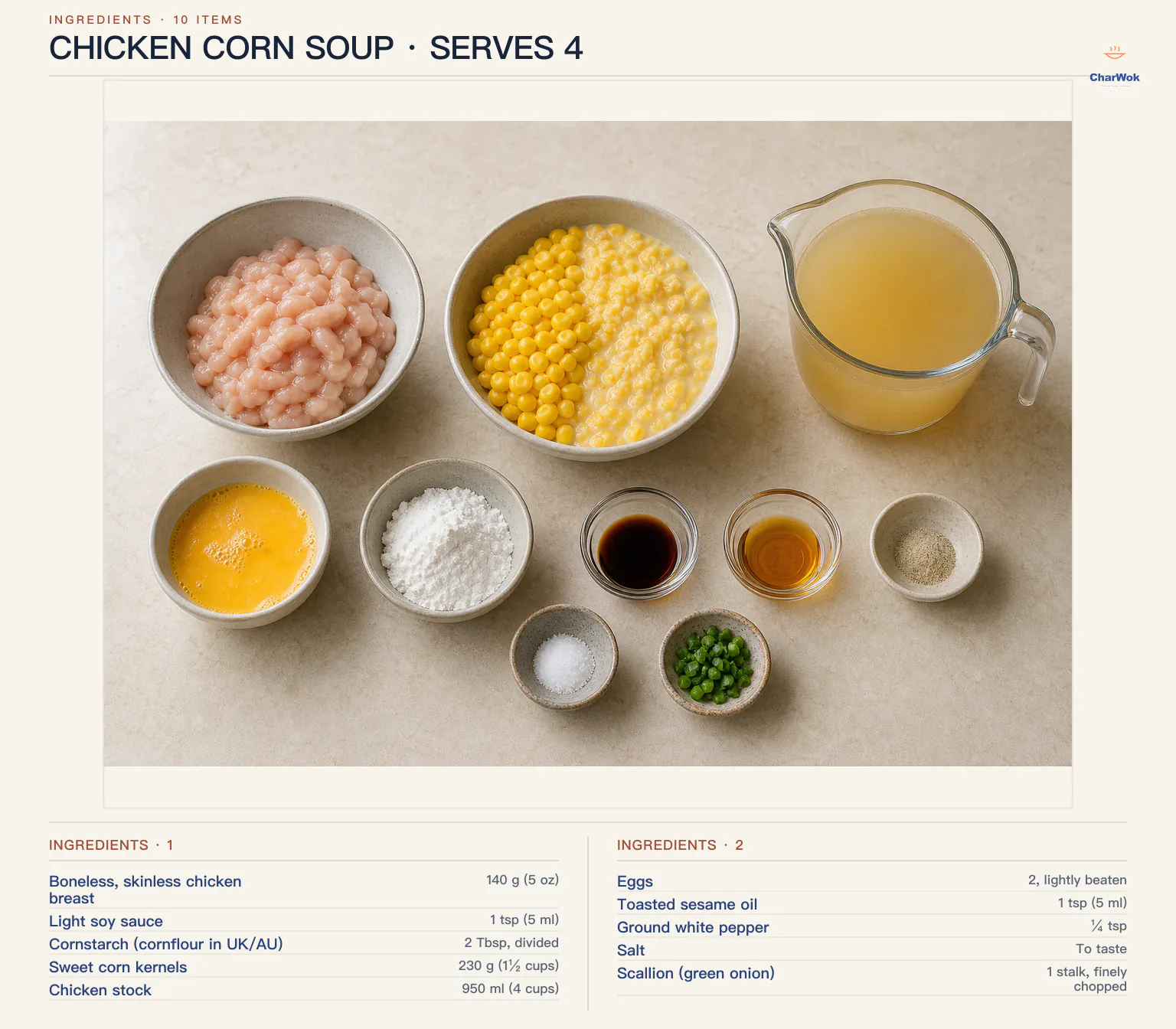
The quantities make four small starter bowls or two larger bowls. A scale helps with the corn and chicken; measure the cornstarch level rather than heaped, since a small excess noticeably changes the texture.
| Ingredient | Amount | Notes / substitute |
|---|---|---|
| Boneless, skinless chicken breast | 140 g (5 oz) | Thigh works and stays juicier; cooked leftover roast chicken (see five-spice or smoked below) can go in at the end, no marinating needed |
| Light soy sauce | 1 tsp (5 ml) | For the marinade; a dab of regular light soy sauce is right, dark soy will darken the broth |
| Cornstarch (cornflour in UK/AU) | 2 Tbsp, divided | 1 Tbsp for the marinade, 1 Tbsp for the slurry; do not swap for flour, it will taste pasty |
| Sweet corn kernels | 230 g (1½ cups) | Fresh cut from the cob is brightest; frozen (thawed) is fine; 1 can (about 400 g) cream-style corn is the richest shortcut, see note below |
| Chicken stock | 950 ml (4 cups) | Homemade chicken stock is best; a good low-sodium box works; vegetable stock for a meatless version |
| Eggs | 2, lightly beaten | If the eggs are very large, use 1½; you want ribbons, not a thick omelette |
| Toasted sesame oil | 1 tsp (5 ml) | See the site's sesame oil guide; added off the heat so the aroma survives |
| Ground white pepper | ¼ tsp | White pepper specifically; black pepper looks like specks and reads harsher |
| Salt | To taste | Hold back if your stock or cream corn is already salty |
| Scallion (green onion) | 1 stalk, finely chopped | Cilantro is a fair swap for garnish; a few drops of chili oil on top is not traditional but very good |
Method
Have everything prepped before you turn on the stove. This soup moves quickly once the stock boils, and the chicken will overcook while you hunt for the cornstarch.
- Cut and velvet the chicken. Slice the breast across the grain, then cut it into even pieces about the size of a corn kernel. Toss with the light soy sauce, 1 Tbsp cornstarch, and 1 Tbsp water until slightly sticky. Cover and refrigerate while preparing the corn. Keep raw chicken on a low shelf away from ready-to-eat food, and use a clean board, plate, and utensils afterward. If needed, chill the breast in the freezer for about 20 minutes so it firms without freezing solid.
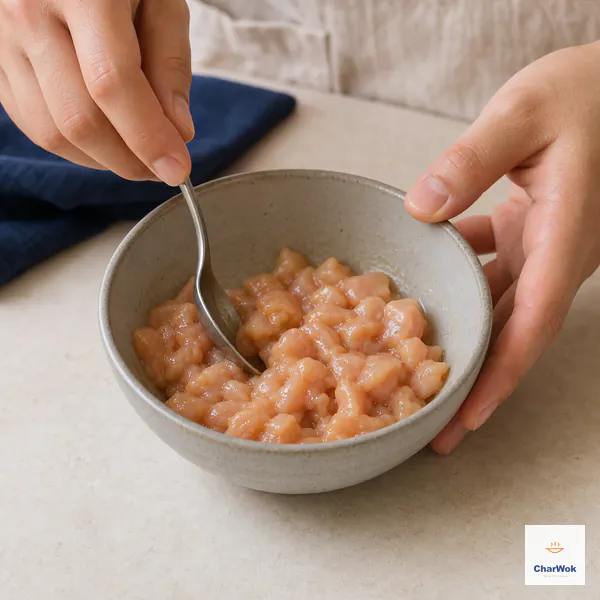
Cut the chicken to about corn-kernel size and mix until the thin marinade is absorbed and each piece feels slightly sticky
- Prep the corn. If using fresh or whole canned or thawed kernels, pulse them in a food processor or blender with short taps, or chop coarsely with a knife. Stop when roughly half the kernels are crushed and the rest are intact. You are looking for a lumpy, milky mash, not a smooth puree.
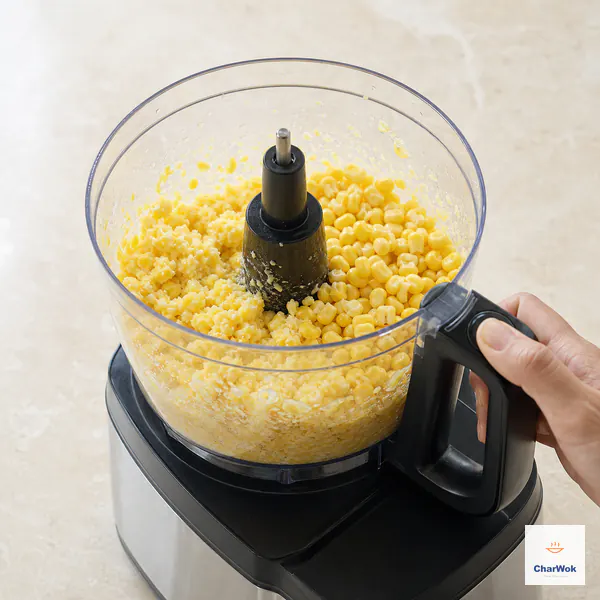
Pulse only two or three times and stop while roughly half the kernels remain whole; the mixture should be lumpy, not a smooth puree
- Boil the stock, add the corn. Bring the stock to a full rolling boil in a saucepan, then pour in the corn with any juice. Let it come back to a gentle boil for about a minute so the corn's starch starts thinning into the broth.
- Add, separate, and check the chicken. Add the marinated chicken and stir immediately so the pieces do not clump. Keep the soup at a gentle simmer. Use a thin-tip instant-read thermometer on one of the largest pieces and continue cooking until it reaches at least 165°F (74°C). Time and colour are only visual progress cues, not substitutes for this check.
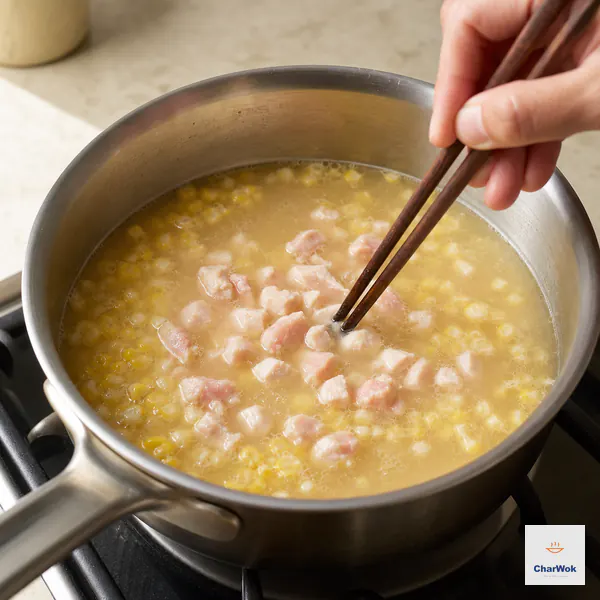
Separate the chicken immediately, keep a gentle simmer, and use a thin-tip thermometer to verify one of the largest pieces reaches at least 165°F (74°C); do not rely on colour
- Add the egg, then thicken. With the soup barely simmering, pour the beaten egg in a thin, slow stream. Wait 5 to 8 seconds, then gently pull the set egg into ribbons. Mix the remaining 1 Tbsp cornstarch with 2 Tbsp cold water, stir it again just before use, and pour it in while stirring. Stop when the soup turns lightly glossy; the roughly 20-second thickening time is an estimate.
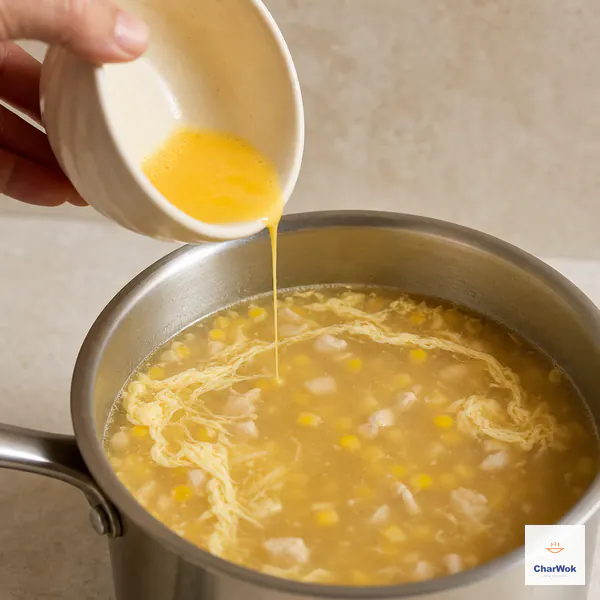
Keep the soup barely simmering, pour the egg in a fine slow thread, wait 5 to 8 seconds, then pull the set egg gently into ribbons
- Season off the heat and serve. Kill the heat. Stir in the white pepper and sesame oil, taste, and add salt only if needed (cream corn and box stock are often salty enough). Ladle into bowls and scatter the scallion on top so it wilts slightly but stays bright. Serve at once.
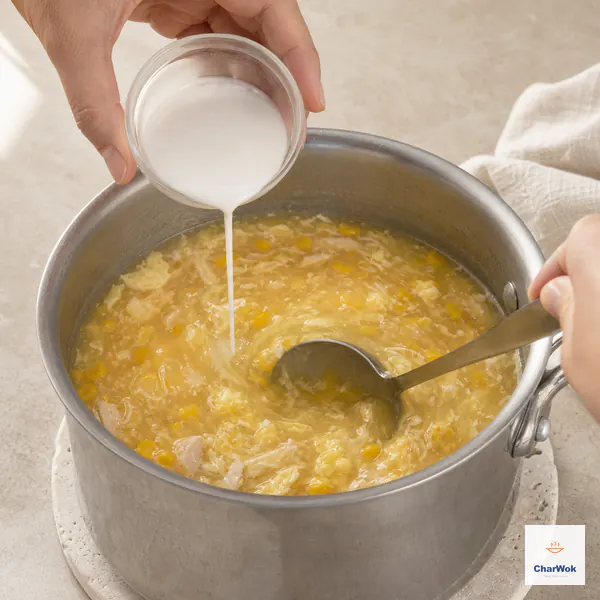
Restir the cold slurry, pour it in after forming the egg ribbons, and stop when the soup turns lightly glossy
When the soup goes wrong
These problems usually come from heat, timing, or starch concentration.
- The chicken is tough and chewy. The pieces may be uneven, the soup may have boiled hard, or the chicken may have cooked well beyond 165°F (74°C). Cut evenly, velvet the meat, keep a gentle simmer, and use a thin-tip thermometer rather than colour or a fixed number of seconds.
- The chicken clumped into one blob. You did not stir immediately, or the pieces were wet when you coated them and the marinade slid off. Next time, pat the cubed chicken dry before adding the cornstarch mix, and stir the moment it touches the stock.
- The soup is thin and watery. The slurry was added to boiling liquid and the starch cooked out before it could thicken, or the slurry used warm water. Cold water slurry into a simmering (not boiling) pot is the rule. You can whisk a little more cornstarch into cold water and stir it in to rescue it.
- The soup turned to glue. Too much cornstarch, or it sat and kept thickening. Cornstarch soups thicken further as they cool, so aim slightly thinner than you want the final bowl. A splash of hot stock loosens it on a reheat.
- The egg disappeared into tiny flecks. The pot was boiling when you poured it, or you stirred too soon. Low simmer, thin stream, then a short pause before pulling the egg into ribbons.
- The corn tastes raw or starchy. It needed one more minute in the boiling stock before the chicken went in. Frozen corn especially benefits from that full minute.
- It tastes flat. Almost always under-salted stock or missing white pepper. White pepper is not optional here; it is the backbone of the savory side that balances the corn's sweetness. A few drops of sesame oil at the end also wakes it up.
Variations and what to serve it with
The base also works with cooked chicken or crab, with a few handling changes:
- Crab and corn. Replace the chicken with about 120 g (4 oz) lump crab meat, checking carefully for shell. Skip the marinade and add the crab near the end, then bring the soup back to 165°F (74°C) before serving.
- Leftover cooked chicken. Dice five-spice roast chicken or wok-smoked chicken and add it before the egg. Reheat the soup and chicken to 165°F (74°C), then continue with the egg and slurry.
- Add noodles or rice. Drop a small handful of cooked noodles or a scoop of leftover rice into the bowl to turn the soup into a one-bowl meal. For something in the same spirit but already built as a noodle soup, the tomato egg noodle soup on the site uses the same egg-ribbon move.
- Make it a set meal. Pair a small bowl with a simple chicken and mushroom congee for a light dinner, or serve it as the opener to a cold-weather spread. A bowl of tofu soup with dried shrimp or winter melon soup with meatballs makes a good second soup if you are feeding a crowd.
Storage and reheating
Divide leftovers into small, shallow containers and refrigerate within two hours, or within one hour when the surrounding temperature is above 90°F (32°C). Eat or freeze within three to four days. Reheat only the portion needed over low heat with a splash of water or stock, stirring so it warms evenly, until several checked spots reach 165°F (74°C). Avoid a hard boil after it reaches temperature. Freezing is safe, but the egg and starch may separate after thawing, so the texture is better when refrigerated.
Food-safety sources: the U.S. government's safe minimum internal temperature chart and FoodSafety.gov leftover guidance.
Frequently asked questions
Can I use creamed corn from a can?
Yes, and many takeaway shops do exactly that for the richer body. Because it already contains starch, sugar, and salt, skip the cornstarch slurry and taste for seasoning before adding any salt.
Can I make it without chicken stock?
Vegetable stock works fine. Water is possible but the soup will taste thin, so add an extra pinch of white pepper and a little more soy to compensate for the missing backbone.
Why velvet the chicken if the soup is so quick?
The cornstarch coating stops the small pieces from seizing into tough nubs the moment they hit hot liquid. Without it, even thirty seconds in simmering stock is enough to make breast meat stringy.
Can I use chicken thigh instead of breast?
Thigh works and stays juicier with less fuss. Cut it a touch smaller than breast, since it is firmer, and trim the excess fat so the broth stays clean.
How do I get long egg ribbons instead of little flecks?
Pour the egg in a thin stream into barely simmering soup, then wait about six seconds before gently pulling it into swirls with chopsticks. Pour into a rolling boil or stir instantly and you get flecks.