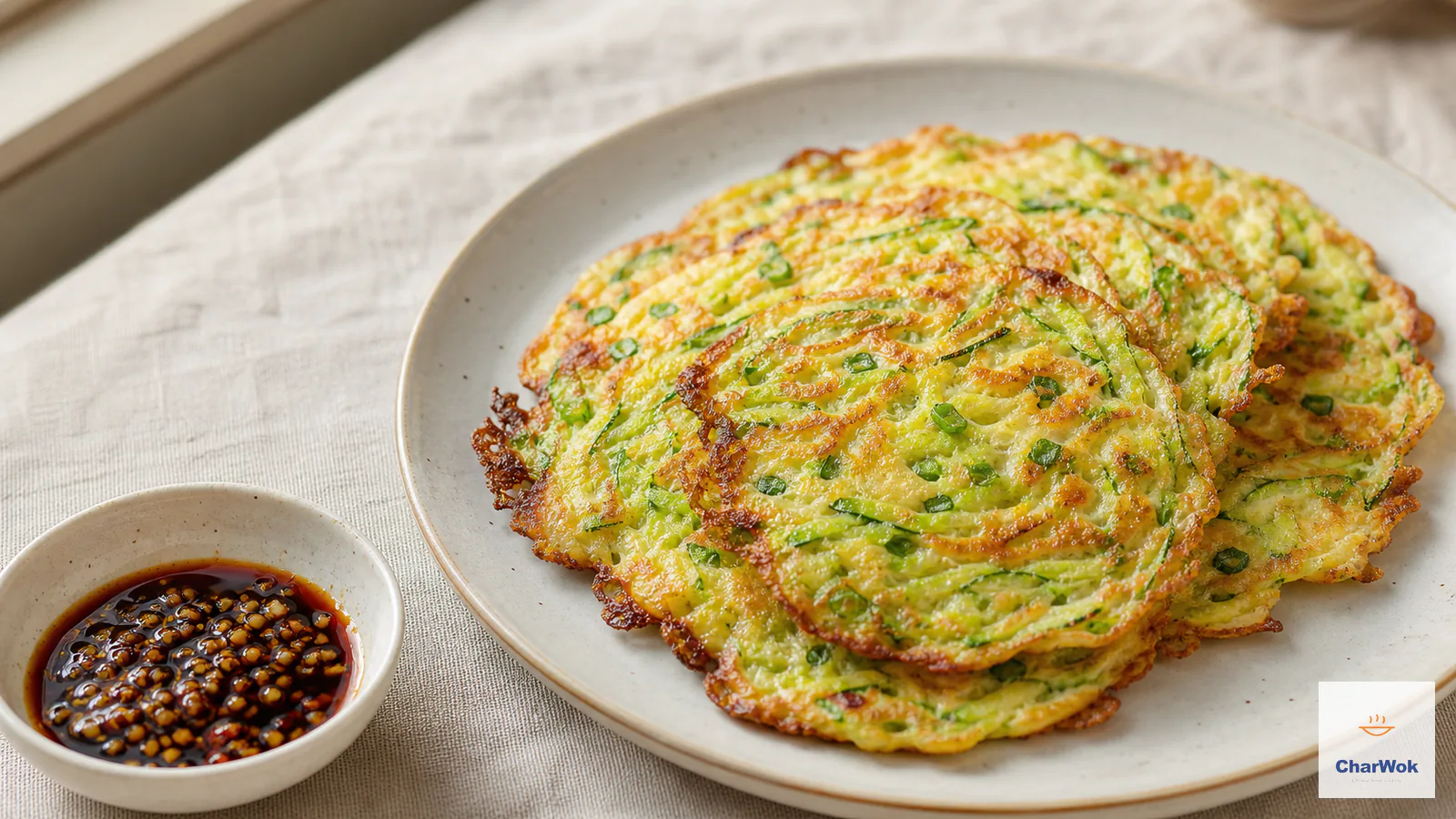
The first few times I made zucchini pancakes, I ended up with a soggy mess that tore when I tried to flip it. The batter looked right in the bowl. The pan was hot. And still, the thing collapsed into shreds. The fix turned out to be one counterintuitive move: salt the grated zucchini, then walk away for ten minutes. That single rest is the whole trick, and almost nobody explains why it works.
Known in Mandarin as hutaizi (糊塌子), these are a Beijing and northern-Chinese home breakfast, the sort of thing a grandparent whips up before the rest of the house is awake. They sit in the same family as the egg-and-scallion crepe but lean softer and wetter, because the zucchini keeps sweating moisture into the batter as it cooks. Get the moisture under control and the rest is forgiving.
One medium zucchini (about 280 g) yields 6 pancakes roughly 15 cm across. Salt the shreds and rest 10 minutes before adding flour, cook each pancake about 90 seconds per side over medium-high, and never add water to the batter. The squash provides all of it.
What a hutaizi actually is
The name translates literally to " mush-folded-thing," which tells you the texture before you taste it: somewhere between a thin omelet and a vegetable fritter, tender enough to fold, with a golden, slightly crisp underside. Unlike the layered, dough-rolled scallion pancake (cong you bing) or the griddled jian bing you fold around a cruller, a hutaizi is a pour-and-spread affair. No rolling pin, no rest for gluten, no special pan. It belongs on any short list of easy Chinese recipes a beginner can nail, and it reheats well enough to make on Sunday for the week.
It is a savory breakfast, eaten plain or dunked, often with a bowl of rice congee alongside. In my house it is also the dish I reach for when the garden is dumping zucchini on me faster than I can grill it.
The one step that decides everything
Zucchini is roughly 95 percent water. If you grate it and immediately stir in flour, two things go wrong. First, the batter looks thick in the bowl but thins out over the next half hour as the squash keeps weeping, so your first pancake holds together and your last one runs across the pan. Second, all that loose water turns the cooked pancake gummy inside instead of tender.
Salt fixes both. Toss the shreds with salt and the osmotic pressure pulls the cell water out now, on your schedule, into the bottom of the bowl. After ten minutes you will be startled at how much liquid has pooled. That pooled juice is exactly the moisture you need to hydrate the flour, nothing more. You are not draining it away. You are simply timing the release so the flour meets a known quantity of liquid instead of an unknown one.
Ingredients
Ingredients at a glance
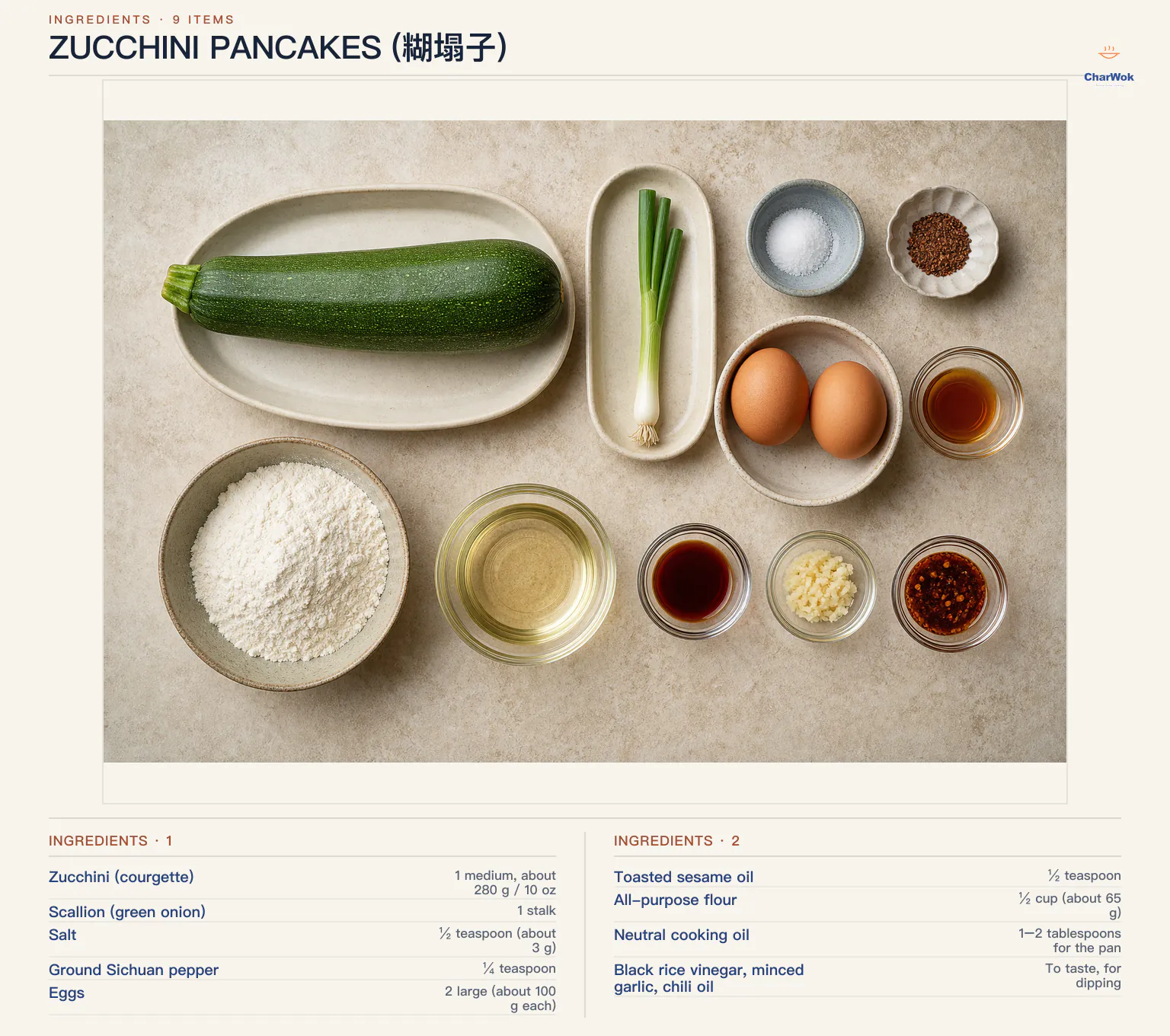
| Ingredient | Amount | Notes / substitute |
|---|---|---|
| Zucchini (courgette) | 1 medium, about 280 g / 10 oz | Leave the skin on for color and fiber. Yellow summer squash works but is wetter; grate it a touch finer. |
| Scallion (green onion) | 1 stalk | Use both white and green. Chives or garlic chives are a fine swap if that is what you have. |
| Salt | ½ teaspoon (about 3 g) | Kosher or fine sea salt. This does double duty: seasoning and drawing out moisture. |
| Ground Sichuan pepper | ¼ teaspoon | My default for savory pancakes. Substitute white pepper for heat without the numbing note, or a pinch of five-spice powder for warmth. See how to grind Sichuan peppercorn correctly so it is not gritty. |
| Eggs | 2 large (about 100 g each) | They bind the batter and add fat that helps browning. |
| Toasted sesame oil | ½ teaspoon | A little goes far; it is aroma, not a cooking fat. Toasted-sesame oil from any Asian grocery works. |
| All-purpose flour | ½ cup (about 65 g) | Plain AP flour. Rice flour (same weight) makes a gluten-free version that is actually crispier. |
| Neutral cooking oil | 1–2 tablespoons for the pan | Canola, grapeseed, sunflower, or peanut. Not olive oil, which smokes and tastes wrong here. |
| Black rice vinegar, minced garlic, chili oil | To taste, for dipping | Optional but recommended. Black rice vinegar (zhenjiang xiang cu) and homemade chili oil are the classic pairings. |
How to cook them, step by step
- Grate, do not chop. Shred the zucchini on the large holes of a box grater. You want long threads, not a pulp; pulp releases water too fast and disappears into the batter. Finely chop the scallion. Pile both into a bowl.
- Salt and wait ten minutes. Add the salt and Sichuan pepper, toss to coat, and leave it alone. This is the step that makes or breaks the dish. You will see a pool of green-tinted liquid form at the bottom. Do not pour it off.
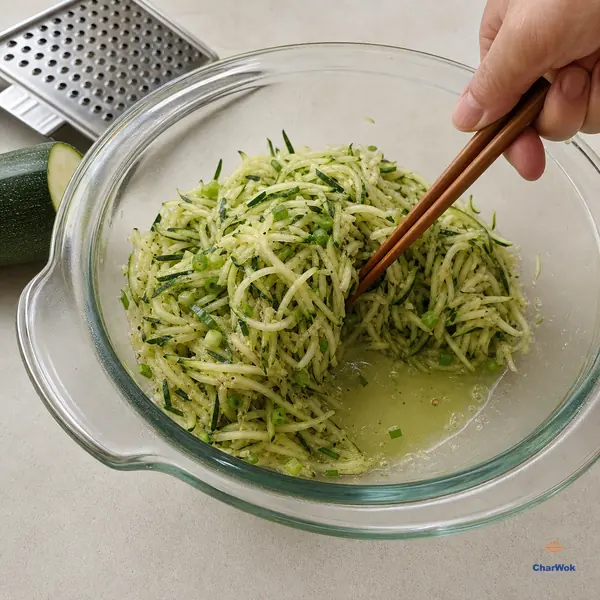
Toss the long zucchini shreds and scallion with the salt and Sichuan pepper, then leave them for ten minutes. When a visible pool of pale-green liquid has formed, keep it in the bowl instead of squeezing or draining the shreds; that measured vegetable water hydrates the flour.
- Beat in the eggs and sesame oil. Crack the eggs straight onto the salted squash and add the sesame oil. Stir until the whites and yolks are broken up and evenly mixed through the vegetables.
- Add the flour in two or three additions. Sprinkle the flour over the surface, stir, then add more. You are looking for a batter that falls off the spoon in a slow, thick ribbon and holds the zucchini threads in suspension. If it pools like pancake batter, add another tablespoon of flour. The exact amount swings with how wet your squash was, which is why we rest first.
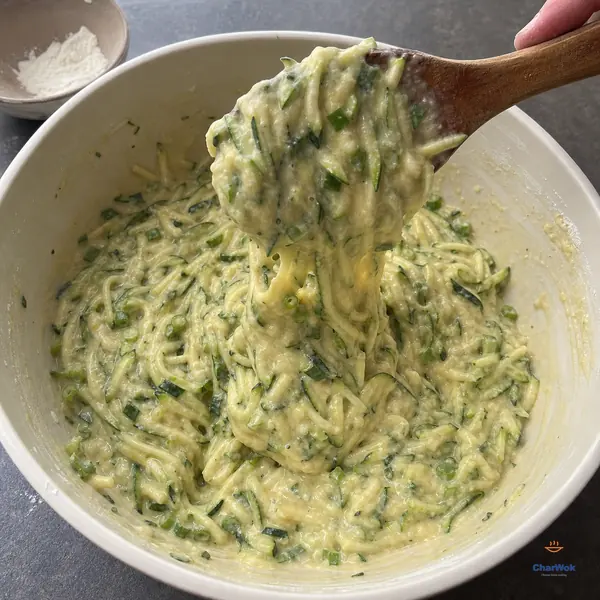
Stir the flour into the zucchini, egg and sesame-oil mixture in two or three additions until no dry pockets remain. The correct batter leaves the spoon in a slow thick ribbon, briefly mounds where it lands and keeps the long shreds suspended; add a little flour if it runs like a thin pancake batter.
- Heat the pan properly. Film a heavy skillet (cast iron or carbon steel is ideal) with a thin layer of neutral oil and set it over medium-high until a drop of batter sizzles and sets at the edges within a couple of seconds. A pan that is too cool is the second most common failure; the batter soaks oil and turns greasy.
- Spread thin and wait. Spoon in enough batter for a 15 cm (6 inch) pancake and use the back of the spoon to nudge it into an even layer about 5 mm thick. Then stop touching it. Let it cook undisturbed until the top looks almost dry and matte, about 90 seconds. Pressing or prodding seals in steam and makes it soggy.
- Flip once. Slide a thin spatula under the whole pancake and turn it in one motion. Cook the second side 60–90 seconds, until it is burnished gold with darker lacy edges. Move it to a plate and repeat, adding a half-teaspoon of oil between pancakes if the pan looks dry.
When they go wrong, and how to fix it
I have wrecked this dish in most of the ways it can be wrecked. Here is the diagnostic guide I wish I had had earlier.
- The pancake falls apart on the flip. The batter is too wet or too big. Add a tablespoon of flour, stir, and make the next one smaller, around 12 cm. Also confirm the first side is actually set before you turn; if the top is still glossy and liquid, it is not ready.
- The inside is gummy, the outside pale. Too much liquid got in, usually because you skipped or shortened the salt rest. Even now you can rescue the rest of the batch by stirring in more flour. Next time, salt first and wait the full ten minutes.
- The edges brown but the center stays raw. The heat is too high or the pancake is too thick. Drop to medium and spread the next one thinner. The visual cue is a dry, matte top, not bubbling like a Western pancake.
- Greasy, oil-logged pancakes. The oil was not hot enough when the batter went in, or you used too much. Use just enough to film the pan and let it shimmer before pouring.
- Bitter, gritty aftertaste. Over-toasted Sichuan pepper that was ground coarse. Toast peppercorns only until fragrant and grind to a true powder. White pepper sidesteps this entirely.
Variations worth making
The base batter is a template. Once the moisture is controlled, you can bend it in several directions without recalculating.
- Carrot and chive. Swap half the zucchini for grated carrot and use garlic chives instead of scallion. The texture is firmer and the color is striking. This is close in spirit to chive pockets (jiu cai he zi) but far less work.
- Kimchi version. Fold in 3 tablespoons of chopped kimchi and a teaspoon of the brine; cut the added salt in half. The ferment makes the pancake taste like a distant cousin of kimchi dumplings, tangy and a little funky.
- Protein-loaded. A handful of small peeled shrimp, or 50 g of crumbled firm tofu squeezed dry, turns this into a one-pan meal. Add a teaspoon of water only if the batter seizes up.
- Crispy-edged, gluten-free. Replace the flour with the same weight of rice flour. You lose the slight chew but gain a shatteringly crisp crust that holds up to a punchy dumpling-style dipping sauce.
Dips, sides, and how I serve them
Plain and hot, straight out of the pan, a hutaizi needs nothing. But a dip turns it from breakfast into something you would put on a weekend table. My default is minced garlic stirred into black rice vinegar, with a spoonful of chili oil floated on top for heat. The vinegar's malty acidity cuts the richness of the fried edges the way it does in di san xian and other northern vegetable dishes.
For a full meal, the pancakes pair naturally with congee or a quick soup like egg drop soup or tomato egg soup. On a weeknight I sometimes fold a pancake around slices of char siu or leftover five-spice chicken and call it a wrap. A cool, crunchy side such as garlic-smacked cucumber salad balances the soft texture nicely.
Make-ahead, storage, and reheating
You can mix the batter the night before and refrigerate it. Two things to know: the zucchini keeps weeping, so by morning the batter will be looser than when you made it. Stir in an extra tablespoon of flour before cooking. And stir the batter thoroughly before each pancake, because the liquid separates as it sits.
Cooked pancakes keep, covered, in the fridge for up to three days and freeze well for a month, separated by parchment. To reheat, skip the microwave; it steams them limp. A hot dry skillet for about a minute per side brings back the crisp edges. They also reheat respectably in a toaster on a low setting, which is how I take them to work.
Frequently asked questions
Do I peel the zucchini? No. The skin holds the shreds together and adds color. Just scrub it well.
Can I make the batter ahead and cook in the morning? Yes, refrigerate overnight. Expect a thinner batter by morning, so add a tablespoon of flour and stir well before cooking.
Why did my pancake tear when I flipped it? Usually too much liquid or too large a pancake. Tighten the batter with flour and keep each one around 12 to 15 cm, and confirm the top looks dry before turning.
Is there a gluten-free option? Rice flour, equal weight by grams, works and is actually crisper. Avoid just swapping to a 1:1 blend with xanthan, which can turn gummy here.
What can I use instead of Sichuan pepper? White pepper for clean heat, or a pinch of five-spice for warmth. The dish is still good with neither if you are cooking for kids.
That is the whole dish. The technique is small but it carries a lot of weight. Salt, wait, control the moisture, and cook hot enough that the edges crisp. Do that and the rest of the recipe gets out of your way. My one lasting quibble is that even a good hutaizi is best in the first five minutes; it is a cook-and-eat food, not a hold-for-guests food. Plan accordingly.