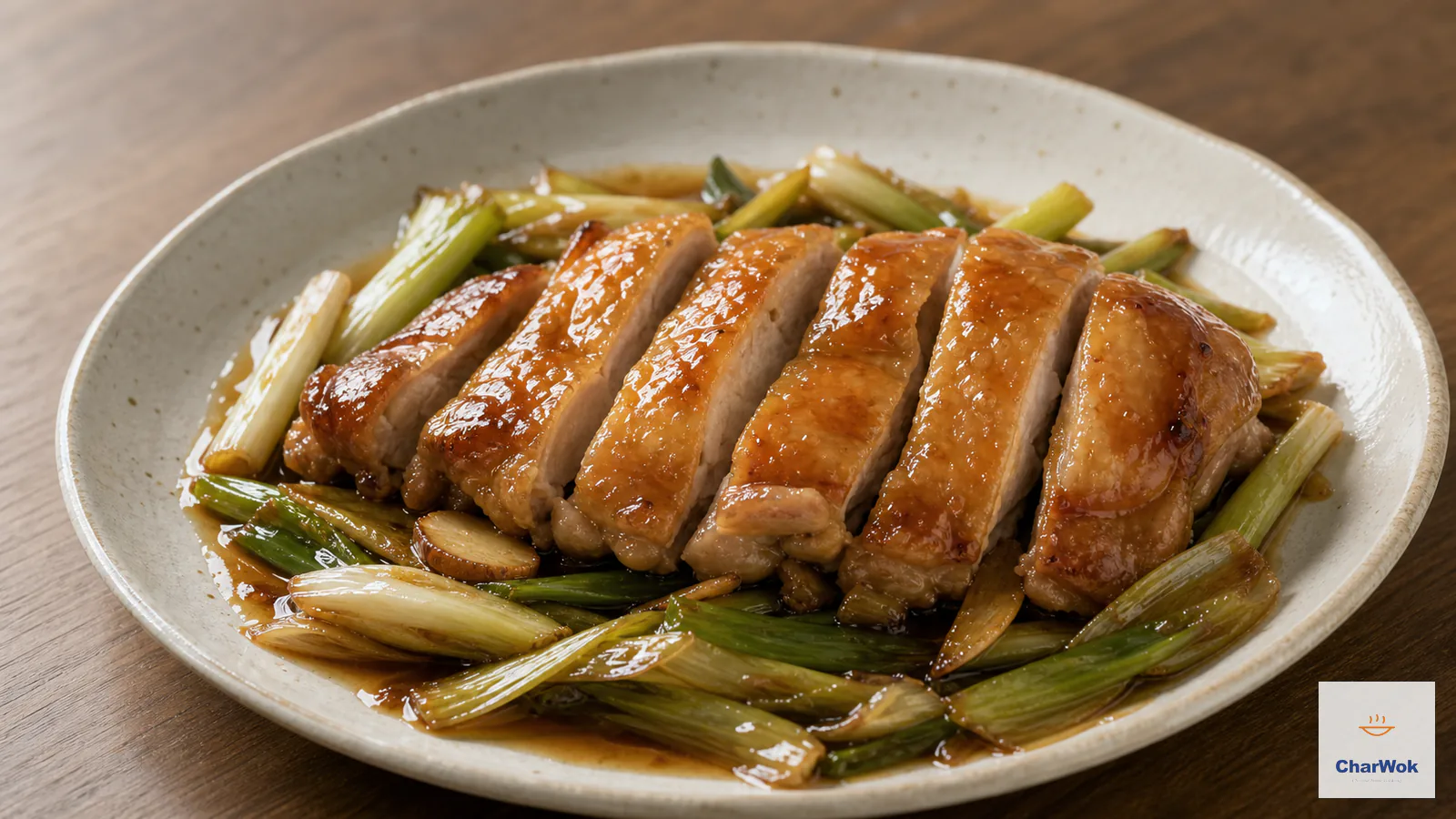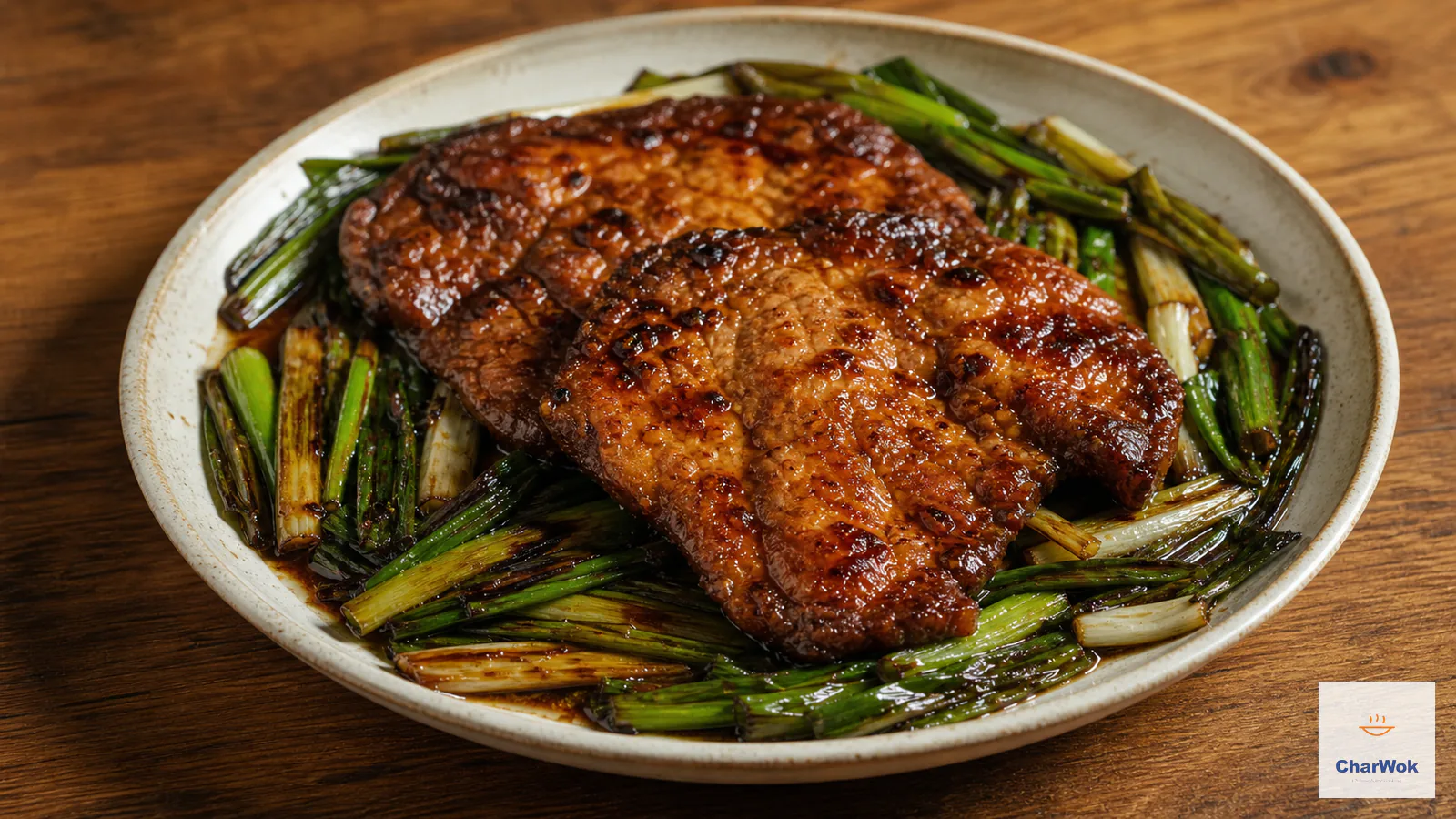
Scallion pork chops, or cong kao da pai, are the Shanghai home cook's answer to a question every kitchen eventually faces: how do you turn a cheap, lean pork chop into something that tastes like it took all afternoon, in under an hour? The trick is not the cut of meat. It is two deliberate moves that most weeknight recipes skip: pounding the chop thin, then building a glossy scallion-scented sauce in the same pan. Do those two things and even a supermarket loin chop eats tender. Skip them and you are back to chewing shoe leather.
I have wrecked this dish more times than I care to admit, almost always the same way: I got impatient, skipped the pounding, and braised a thick chop until the sauce was perfect and the meat was gray and dry. So let me say it up front. The pounding is not optional cosmetic fluff. It is the whole technique.
At a glance. Pound boneless pork chops to half their thickness, sear fast on both sides, then braise in a dark soy–Shaoxing sauce with plenty of scallions for 5–7 minutes. The ratio that matters: about 1 part dark soy to 1 part sugar to 4 parts wine, loosened with hot water. If you get the chop thin and the braise short, the rest is hard to ruin.
What this dish actually is
The name is a little misleading. There is no oven involved. Kao (烤) can mean "roast," but in old Shanghai market-stall cooking it came to describe this quick braise-then-glaze treatment for pounded pork, where the finished chop ends up lacquered dark and faintly caramelized as if it had been roasted. The scallions are not garnish; they are cooked down in the pork fat until they slump and char at the edges, and that browned scallion oil is what flavors the whole sauce. It sits in the same family as red-cooked pork belly and the broader Shaoxing wine braise tradition of the lower Yangtze. It is sweet, savory, and built on a dark soy base.
Shanghai braises lean sweet. If you grew up on northern food, the sugar here will feel high. Trust it the first time, then dial it to your taste.
Ingredients
Ingredients at a glance
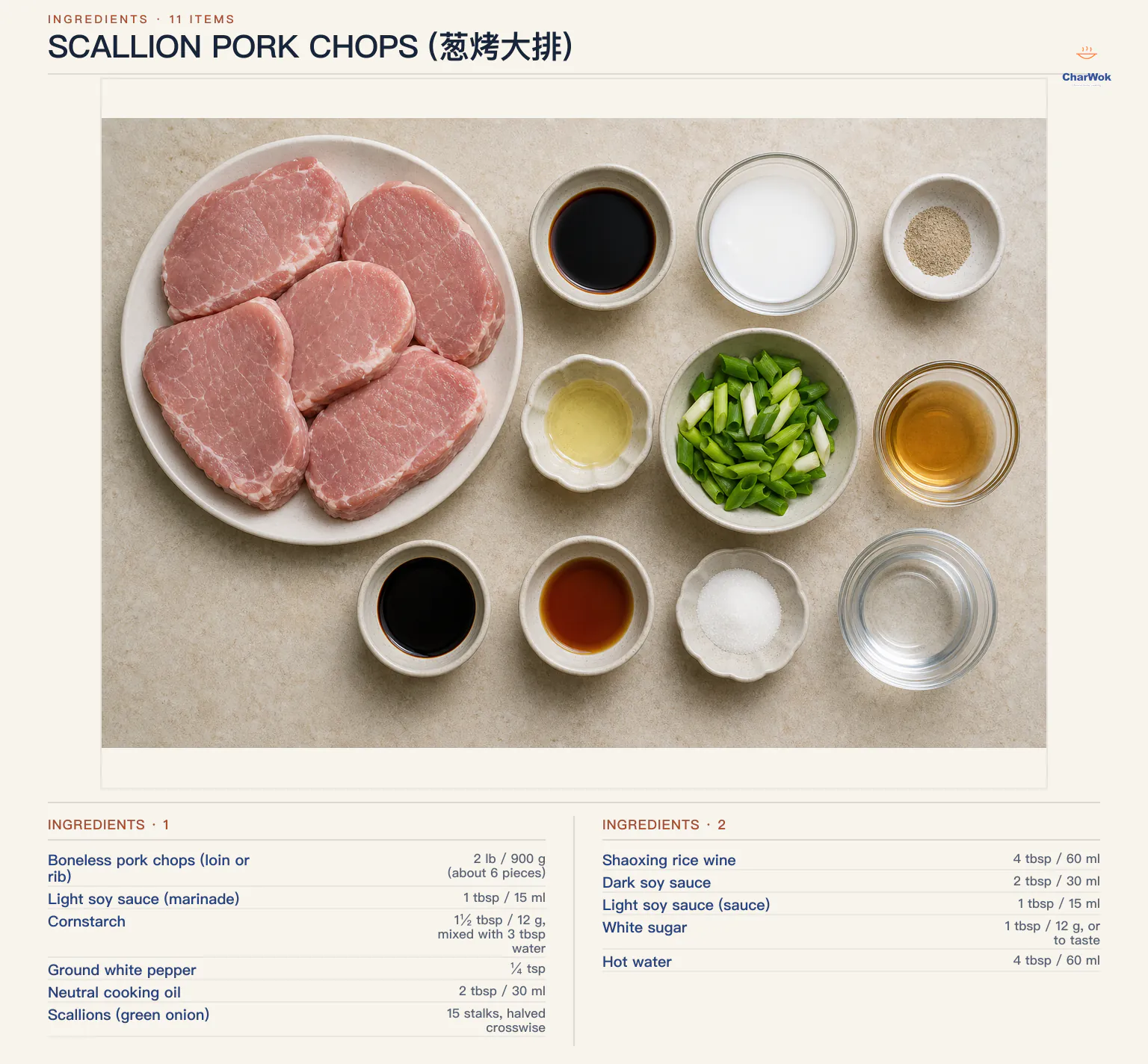
Quantities below serve 6 as a main over rice. I use boneless loin or rib chops, about 2 lb / 900 g total, cut into 6 portions. Bone-in works too; it just takes a few extra minutes in the braise and rewards you with a deeper-flavored sauce.
| Ingredient | Amount | Notes / substitute |
|---|---|---|
| Boneless pork chops (loin or rib) | 2 lb / 900 g (about 6 pieces) | Bone-in chops fine; add 2–3 min to braise. Shoulder steaks are more forgiving if you tend to overcook. |
| Light soy sauce (marinade) | 1 tbsp / 15 ml | This is salt + umami, not color. See light vs. dark soy sauce. |
| Cornstarch | 1½ tbsp / 12 g, mixed with 3 tbsp water | Potato starch works. This is a velvet-light coating, not a thickener for the sauce. |
| Ground white pepper | ¼ tsp | Prefer white over black here — cleaner heat, no flecks. |
| Neutral cooking oil | 2 tbsp / 30 ml | Peanut, canola, or grapeseed. Not olive oil. |
| Scallions (green onion) | 15 stalks, halved crosswise | The white and pale green parts are the aromatic base; keep the dark greens long for drama. No good substitute — this dish is about scallion. |
| Shaoxing rice wine | 4 tbsp / 60 ml | Dry sherry is the classic substitute. Avoid "cooking wine." |
| Dark soy sauce | 2 tbsp / 30 ml | Gives the mahogany color. Light soy will not brown the same way. |
| Light soy sauce (sauce) | 1 tbsp / 15 ml | Adds salt without more color. |
| White sugar | 1 tbsp / 12 g, or to taste | Roughly, take it up to 1½ tbsp for a true Shanghai sweetness. |
| Hot water | 4 tbsp / 60 ml | Use hot, not cold, so you do not stall the braise. |
Step 1: Pound the chops thin
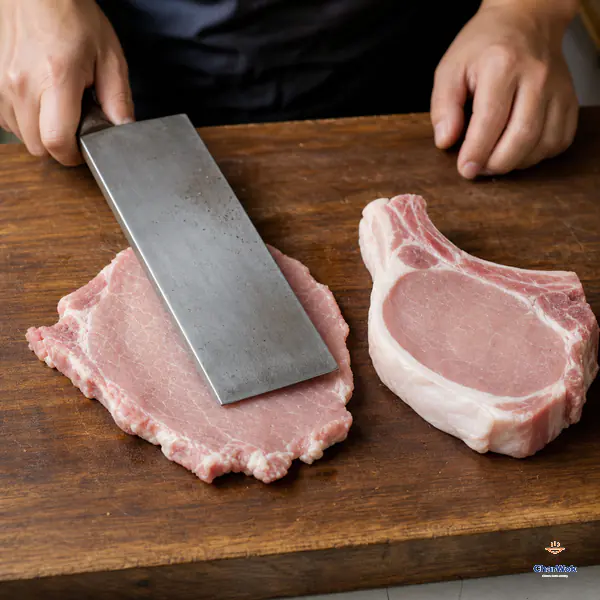
Pound both sides from the center outward until each chop is broad, even and about half its original thickness.
One chop at a time on a sturdy board. Use a meat mallet, the spine of a Chinese cleaver, or the bottom of a heavy pan. Work from the center outward, gently. You are not trying to pulverize. You are redistributing the muscle fibers and breaking them partially so they cannot seize into a tight, tough bundle when they hit heat. Flip the chop and do the other side. Stop when each piece is roughly half its original thickness, about 6–8 mm / ¼–⅓ inch.
Why this matters more than any other step: thin meat cooks through before the surface has time to dry out. A 2 cm / ¾ inch chop is dry on the outside before the inside is safe. A pounded chop is edge and surface, and the braise finishes it gently.
Step 2: Marinate, briefly
Put the pounded chops in a bowl with the light soy, the cornstarch slurry, and white pepper. Mix with your hand and really rub the liquid in; you want the meat to drink it. When the bowl looks almost dry, cover and rest 30 minutes. A longer marinate (an hour, refrigerated) is fine and slightly better, but past two hours the cornstarch coating starts to get pasty.
The cornstarch here is doing two quiet jobs. It holds a thin film of moisture against the meat so the sear browns instead of burning, and it gives the final sauce something to cling to. You are not trying to thicken the braise with it. That comes from reduction.
Step 3: Sear hot, then pull
Heat a wide skillet (well-seasoned wok or large frying pan) with the oil over medium-high. Bring the oil gradually to about 175–180°C / 350–355°F, fluid and shimmering but not smoking, then lay the chops in without crowding. If smoke appears, turn off the burner and let the oil cool. Sear in two batches if needed; overlapping chops will steam, not brown.
Watch the underside, not the clock. As soon as the surface loses its raw pink and takes on a light gold crust, flip. The second side is faster. Pull the chops out the moment both sides are done. They will not look fully cooked, and that is correct. You are deliberately undercooking them here because they finish in the braise. Leave them in the pan and they will be dry by the time the sauce is ready.
Step 4: Build the scallion oil, then braise
Drop the heat to medium. Tip all the scallions into the oil left in the pan, the same fat the pork just rendered into. Fry them, stirring, until they wilt and the edges char in spots, about 2 minutes. This is where the dish's flavor is born: the scallions are releasing their sulfurous sweetness into hot pork fat, and the char is generating the browned, roasted notes that read as "roast" in the name. It is the same principle behind scallion oil and scallion oil noodles. Fat is a flavor carrier, and browned alliums are the payload.
Nestle the chops back over the scallions. Pour in the Shaoxing wine, dark soy, light soy, sugar, and hot water. Cover with a lid and braise at a steady, gentle bubble for 5–7 minutes, turning the chops once halfway. Check the thickest chop reaches at least 63°C / 145°F, then rest it for 3 minutes before serving. The liquid should never boil hard; a hard boil will toughen the lean meat.
Oil handling follows the U.S. Fire Administration cooking guidance. Pork temperature and rest time follow the FoodSafety.gov safe minimum temperature chart.
Step 5: Glaze
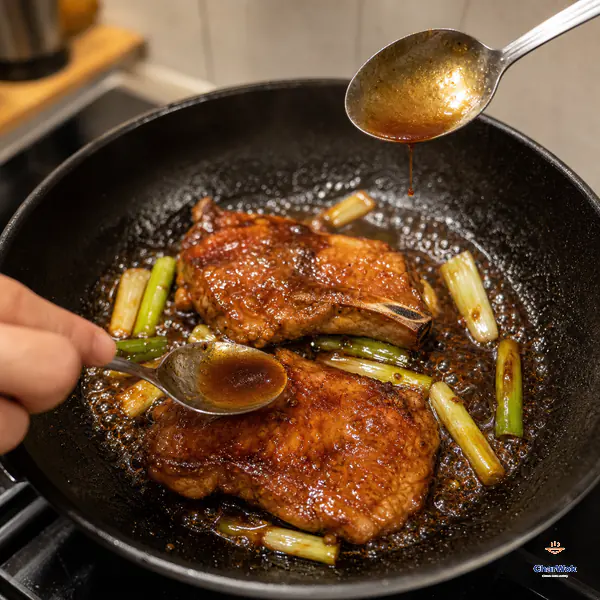
Reduce uncovered over high heat while basting; stop when large bubbles form and the sauce leaves a thin glossy coat on the back of a spoon.
Take the lid off and turn the heat to high. Let it boil vigorously now. This is the reduction stage: as water evaporates, the sugar concentration climbs and the sauce thickens into a glossy lacquer that coats each chop. Keep the chops moving so they glaze evenly. Stop when the sauce is dark, shiny, and just loose enough to pool; pull it too far and it will seize into hard candy as it cools. Total glazing time is usually 1–2 minutes.
When things go wrong
The meat is tough. Nine times out of ten you did not pound it thin enough, or you let it boil hard in the braise instead of bubble gently. Next time, pound more aggressively and keep the covered braise at a murmur. If you consistently overcook chops, switch to shoulder steaks. They carry more fat and connective tissue and are far more forgiving.
The sauce is pale, not glossy. Either you used light soy in place of dark, or you did not reduce far enough. Dark soy is what gives the mahogany color; reduction is what gives the sheen. Crank the heat and boil it down another minute, watching closely at the end.
The sauce seized into a hard sticky mass after plating. You reduced too far. Sugar goes from caramel to candy in seconds. Next time pull the pan off heat when the sauce is still a little looser than you think it should be. It tightens as it cools. To rescue a seized batch, add a splash of hot water off the heat and stir to re-melt.
The cornstarch coating burned in the sear. Your pan was too hot or your oil too sparse. The film should brown, not blacken. Use a touch more oil and back the heat off from a scream to a strong, steady high.
It tastes one-dimensional. Usually means the scallions did not get browned enough. They need real char at the edges, not just a wilt. If your scallions are very thin, lower the heat a touch so they brown before they burn.
Variations and what to serve it with
This is a rice dish first. The whole point of the glossy sauce is to soak into freshly steamed jasmine rice. A bowl of plain congee works on a cold night. If you want noodles instead, the source tradition suggests turning the leftover sauce into a quick soup. Thin it with hot water and pour it over cooked noodles for a scallion-pork noodle bowl, a close cousin of egg fried rice territory in terms of weeknight comfort.
For a sharper table, a small dish of chili oil or a few drops of black rice vinegar cuts the sweetness beautifully. Plain stir-fried greens (bok choy, braised mushrooms with bok choy, or a quick blanch) balance the richness. I would not serve another heavy braise alongside; one saucy pork dish per meal is enough.
Variation worth trying: add a thumb of smashed ginger to the scallion oil for warmth, or a dried red chile for a faint hum. A pinch of rock sugar instead of white gives a cleaner, less sharp sweetness. If you can find pork rib chops on the bone, leave them bone-in; the marrow deepens the braise noticeably, the way it does in pork rib soup.
Storage and reheating
Leftovers keep 3 days refrigerated, sauce and all, and they actually improve overnight as the meat soaks up flavor. Reheat gently in a covered pan over low heat with a tablespoon of water to loosen the glaze. Microwave reheating tends to overcook the pork and turn the sauce gummy. I do not recommend freezing; lean chops go woolly on thaw.
Frequently asked questions
Can I use bone-in pork chops? Yes. Add two to three minutes to the covered braise and let the bone face down where you can. The sauce will be richer.
Do I really need to pound the meat? Yes, this is the one non-negotiable step. Without it the lean chop turns dry and chewy no matter how good the sauce is.
What if I do not have dark soy sauce? Use light soy but expect a paler, saltier result. A teaspoon of molasses mixed in helps recover some color and depth.
Can I skip the alcohol? Shaoxing wine does real work. It lifts the pork smell and adds depth. Dry sherry is the best substitute. Plain water will work in a pinch but the dish will be flatter.
Why hot water and not cold? Cold water drops the pan temperature and stalls the braise, which toughens the meat. Hot keeps the cook continuous.