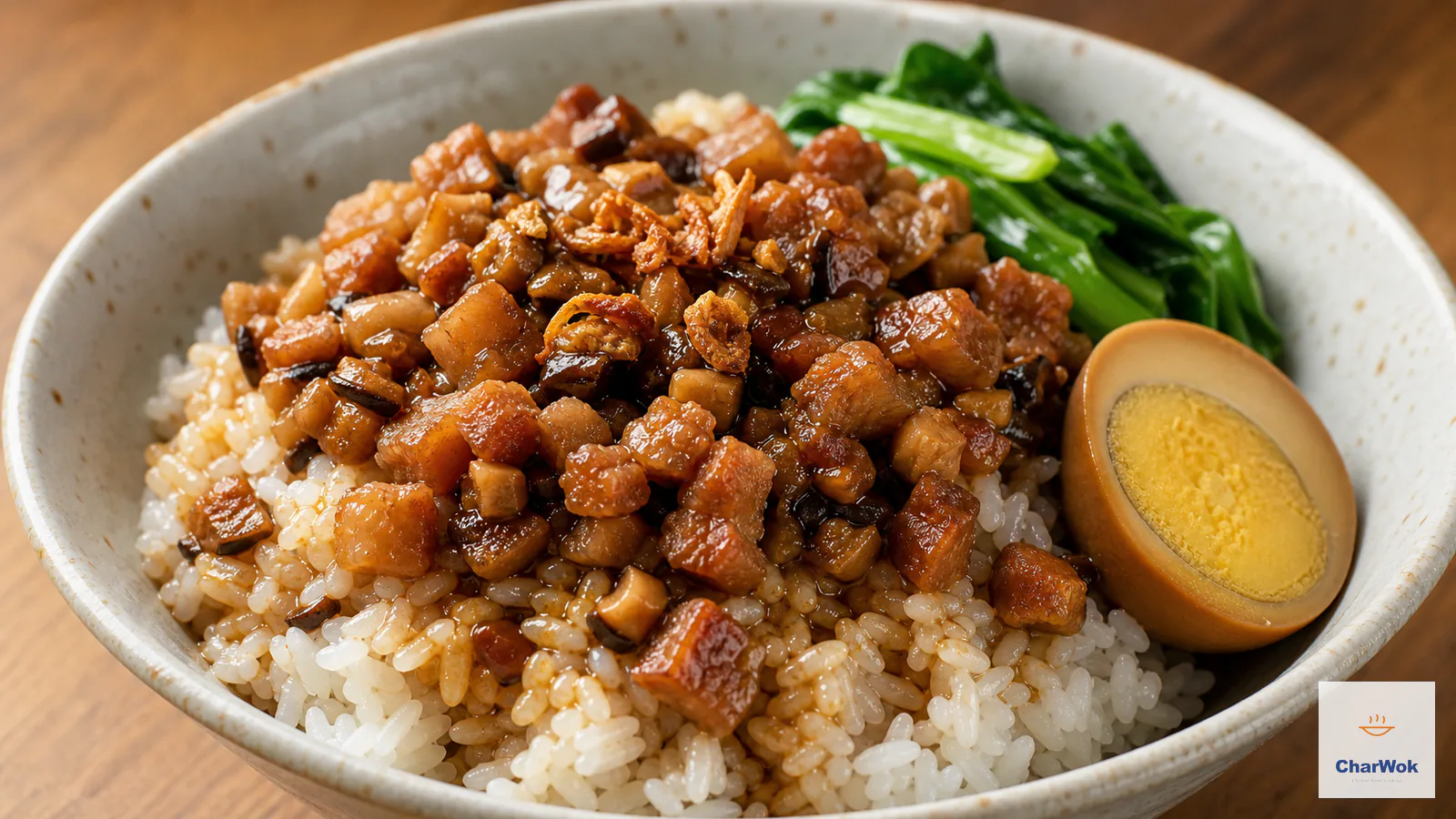
Lu Rou Fan is the bowl I keep coming back to when I want dinner to feel like it took all day but actually took one lazy hour of simmering. The soul of the dish is simple: fatty pork braised in a dark, sweet-salty broth until it falls into shreds, ladled over hot rice so the grain drinks up every drop of fat. The pain point most home cooks hit is a thin, gray sauce that tastes like boiled pork instead of the glossy, mahogany gravy you get from a good street stall. Almost always, the problem is the same: they skipped the crispy shallots.
One key ratio: use about 140 g of shallots to 450 g of skin-on pork belly, and don't rush the braise. A full hour at the lowest flame is what turns tough skin spoon-tender. If your shallots burn, your sauce will taste bitter; if your pork has no skin, it will never set into that clinging, glossy gravy.
What this bowl actually is
Lu Rou Fan (滷肉飯) is a Taiwanese rice bowl built on three things: chopped skin-on pork belly braised in soy and rock sugar, fried shallots stirred into the gravy, and a hard-boiled egg that soaks in the broth until its white turns brown. Over steamed white rice, with a side of blanched greens, it is a complete meal in one vessel.
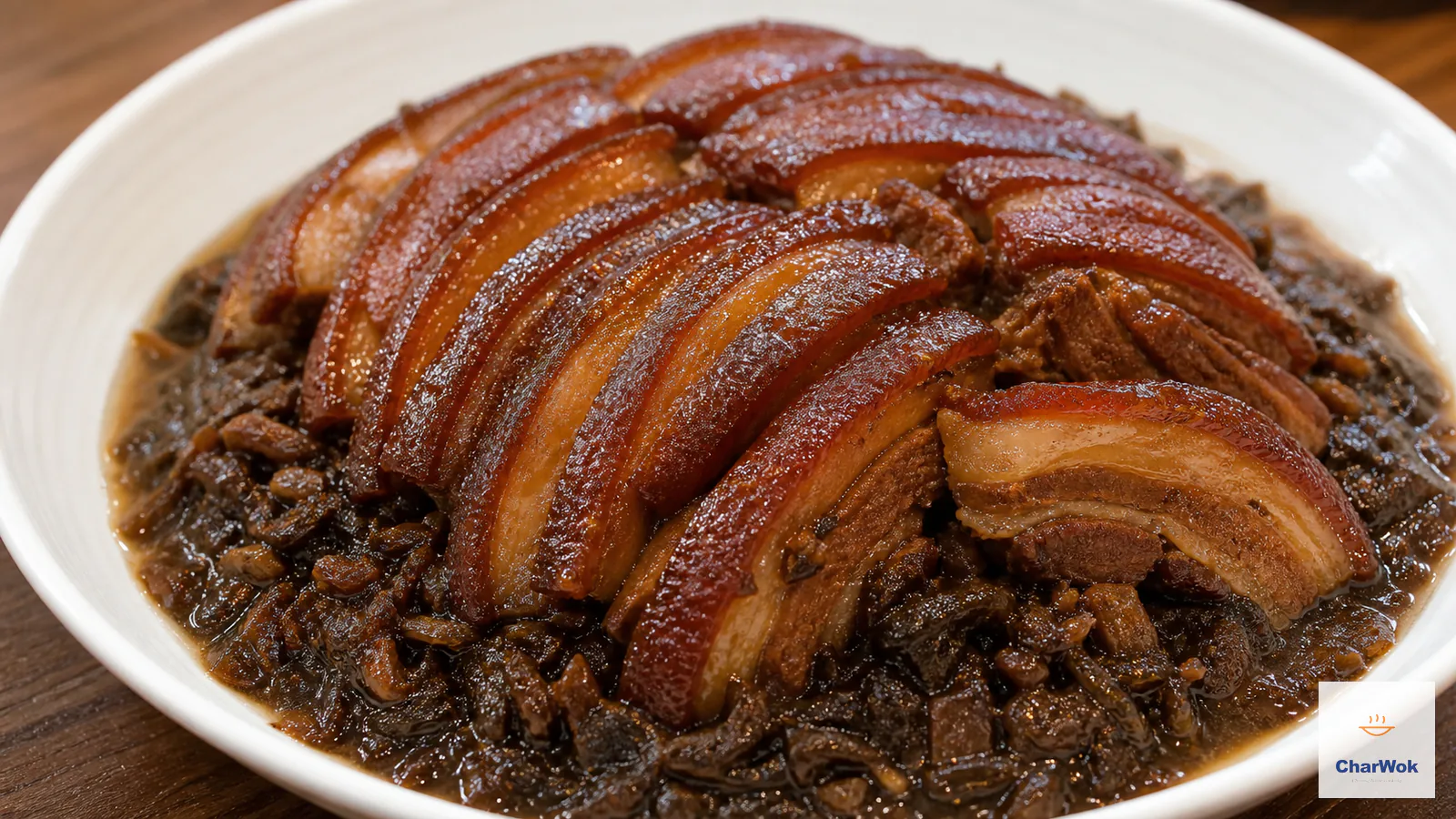
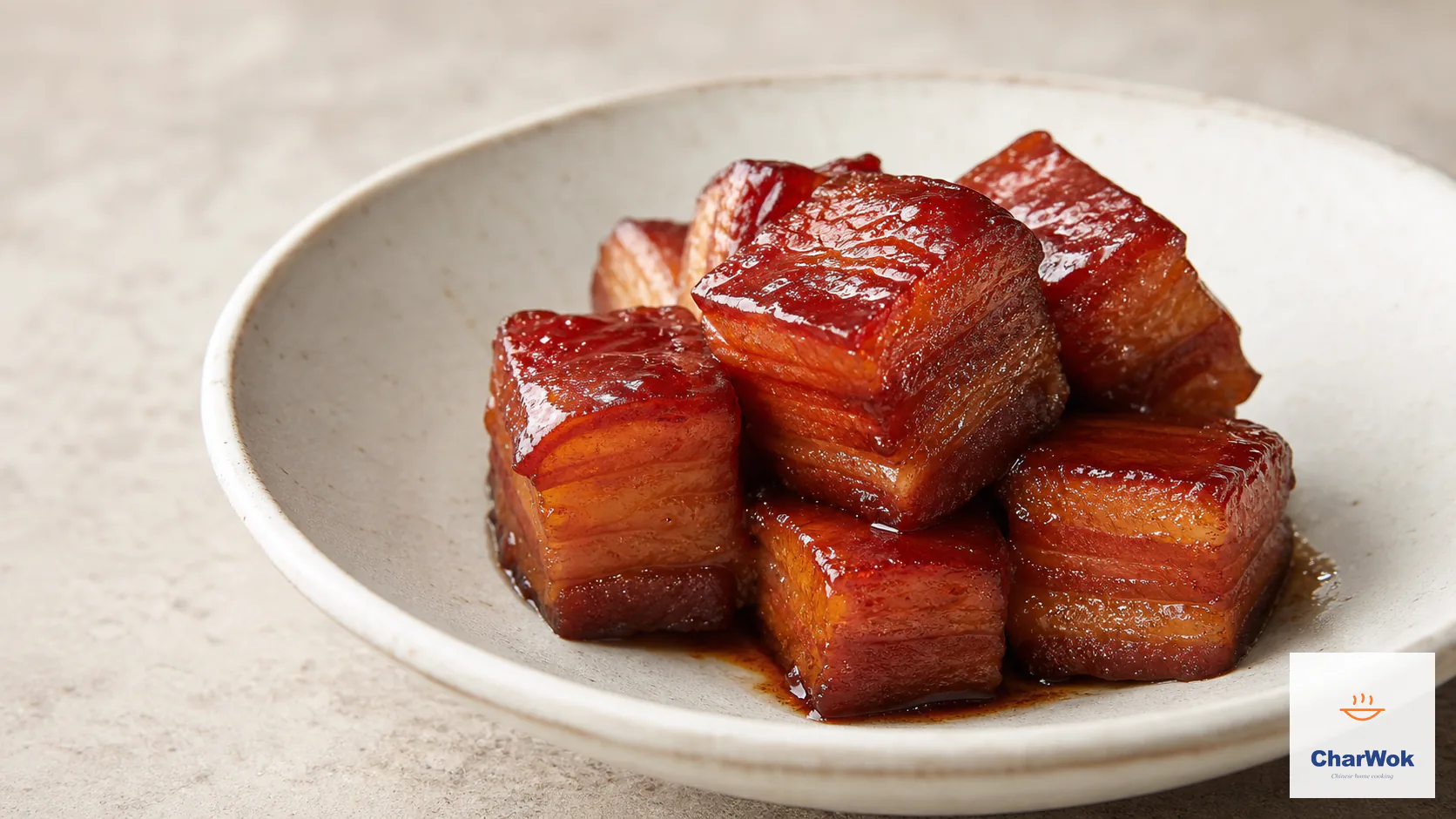
People often confuse it with red-cooked pork belly (Hong Shao Rou), the mainland braise. The two share ancestors in soy, sugar, and pork, but they read differently. Hong Shao Rou keeps the belly in large blocks and leans on Shaoxing rice wine and caramel for a deep, lacquered finish. Lu Rou Fan chops the pork small so it coats the rice like a ragù, and the defining flavor is fried shallot, not caramel. Think of one as a steak and the other as a sauce. Both are good. They are not the same dish.
The ingredient list, with my opinions baked in
Ingredients at a glance
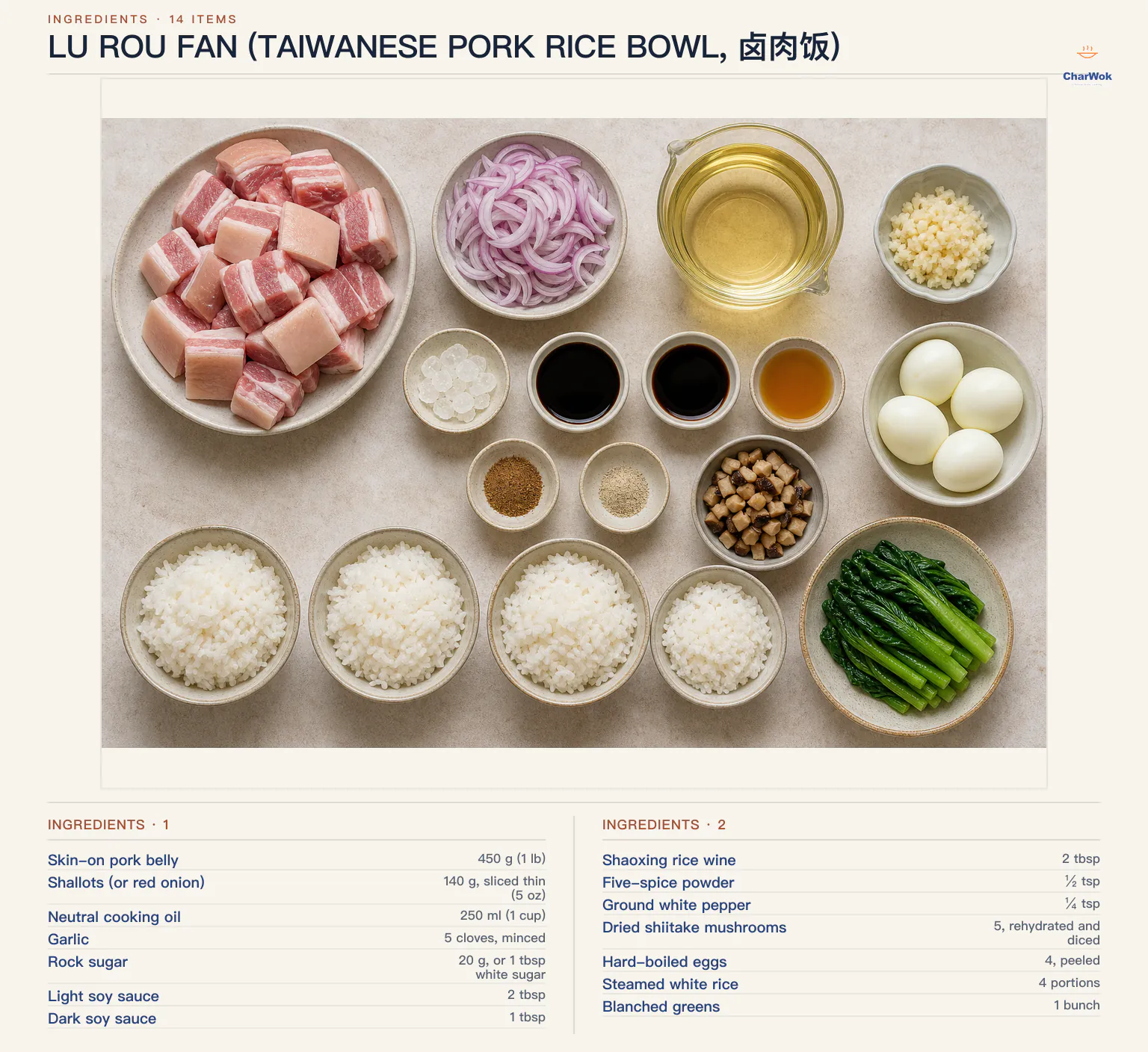
| Ingredient | Amount | Notes / substitute |
|---|---|---|
| Skin-on pork belly | 450 g (1 lb) | Non-negotiable. The skin is what gives the sauce body once the collagen melts. Boneless pork shoulder works in a pinch but the gravy will be thinner. |
| Shallots (or red onion) | 140 g, sliced thin (5 oz) | Asian shallots are smaller and sweeter. Red onion is the standard substitute and behaves almost identically in the fry. |
| Neutral cooking oil | 250 ml (1 cup) | You are shallow-frying the shallots; you will not eat all this oil. Peanut, canola, or sunflower all fine. |
| Garlic | 5 cloves, minced | Smashed then minced is fine. Don't use a press; it makes a wet paste that burns. |
| Rock sugar | 20 g, or 1 tbsp white sugar | Rock sugar gives a rounder, less sharp sweetness and a glossier finish. White sugar is acceptable; brown works too. |
| Light soy sauce | 2 tbsp | For salt and the savory base. See my light vs. dark soy sauce breakdown if you only have one. |
| Dark soy sauce | 1 tbsp | For color only. It is less salty than it looks. If you skip it, the bowl will taste fine but look pale. |
| Shaoxing rice wine | 2 tbsp | Off the heat it smells rough; cooked in, it rounds the pork. Dry sherry is the closest Western substitute. |
| Five-spice powder | ½ tsp | The clove-and-anise note that signals "Taiwanese." A pinch more is fine; too much reads medicinal. |
| Ground white pepper | ¼ tsp | Warmer and less harsh than black pepper here. Don't swap. |
| Dried shiitake mushrooms | 5, rehydrated and diced | Optional but worth it. They add umami and the soaking liquid becomes part of the broth. A guide to dried shiitake covers rehydrating. |
| Hard-boiled eggs | 4, peeled | They braise alongside the pork and turn into the best part of the bowl. |
| Steamed white rice | 4 portions | Short or medium grain. Long-grain rice is too dry and fluffy to hold the gravy. |
| Blanched greens | 1 bunch | Baby bok choy or gai lan (Chinese broccoli) are the classic choices. |
Frying the shallots: the step that makes or breaks the bowl
This is the only fussy part, and it is where most people give up and use store-bought fried shallots. Those will do in an emergency. Fresh-fried ones are louder, sweeter, and the oil they leave behind is liquid gold for the braise. Budget fifteen minutes and don't walk away.
Slice the shallots thin and even. Unequal slices mean some burn before others crisp. Heat the 250 ml of oil in a wok or wide pan over medium flame; you want a steady, gentle fry, not a sear. Drop in one ring as a tester; it should bubble calmly, not violently. Add the rest.
The color change happens fast at the end and carries over after you pull them. Pull them when they are pale gold and still slightly translucent in the center. By the time they cool they will be deep golden and shatter-crisp. If you wait until they look done in the oil, they will be bitter. Scoop them out with a fine sieve and spread on paper towel. Save every drop of that shallot oil; you will use most of it in the braise and the rest is superb on soy sauce fried rice or stirred into noodle dishes.
The braise, step by step
- Render the pork in a dry pan. Cut the belly into strips roughly the width of your pinky, small enough that finished bits will coat a grain of rice. Drop them into a dry wok over medium-high heat. No oil. The point here is to melt out a layer of fat so the meat fries in its own lard and the surface browns. This browning is Maillard, and it is the difference between meat that tastes boiled and meat that tastes roasted. Give it five to seven minutes until the pork has shrunk, colored at the edges, and there is a shallow pool of fat in the pan.
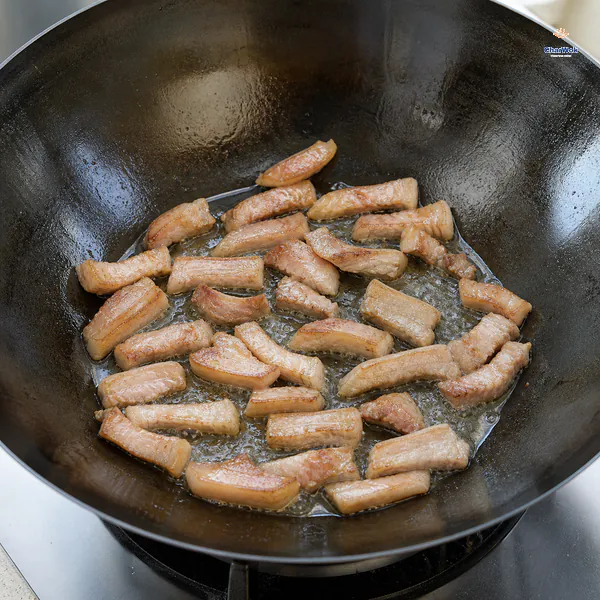
Start with a dry wok and render until the pork edges turn golden, the strips shrink slightly and a clear shallow pool of lard collects below.
- Add aromatics and sugar. Stir in the minced garlic and the rock sugar. Keep the heat up and stir until the sugar melts and the garlic smells sweet instead of raw. The sugar is doing two jobs: sweetening the braise and laying down a thin layer of caramel color on the pork.
- Deglaze and season. Pour in the light and dark soy sauces, the Shaoxing wine, the five-spice, and the white pepper. The wine will hiss and lift the browned bits off the pan. That is flavor you do not want to lose. Add the diced rehydrated mushrooms and most of the fried shallots, holding a tablespoon back for garnish. Nestle in the peeled eggs.
- Cover with liquid and simmer. Pour in the mushroom soaking water (pour slowly and leave the grit at the bottom), then top up with hot water until the meat is just submerged. Bring it to a full rolling boil, then drop the heat to the lowest flame your stove will hold, cover, and walk away for an hour.
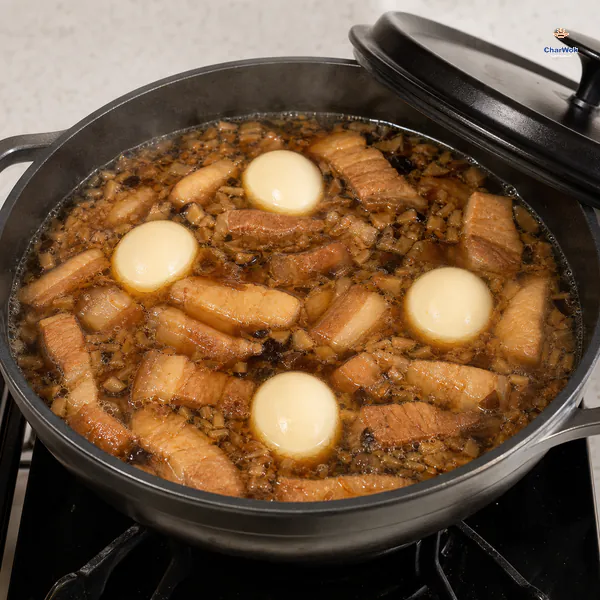
After the initial boil, lower the heat until only tiny edge bubbles remain and keep every pork strip covered with liquid.
- Check tenderness at the one-hour mark. Press a piece of pork against the side of the pan with a spatula. It should part with gentle pressure. If it resists, give it another twenty minutes. If the liquid has dropped below the meat, add a splash of hot water. The skin is the slowest part to soften; when the skin yields, everything else is done.
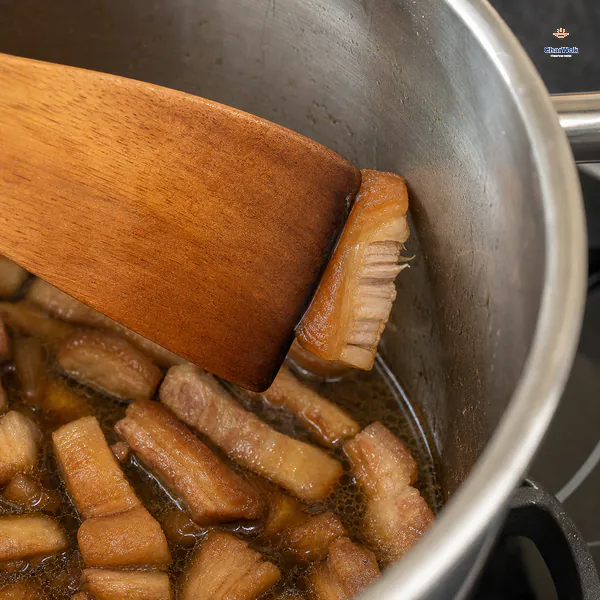
At one hour, press a strip against the pot wall; the skin should yield and the meat should begin to part under gentle pressure.
- Reduce to a gravy. Uncover and turn the heat up. You are not making soup; you want the liquid to settle into something that coats a spoon and clings to rice. Five to eight minutes of an active bubbling reduction is usually right. Stop while there is still plenty of sauce; it thickens further as it cools, and a dry pan is a failed bowl.
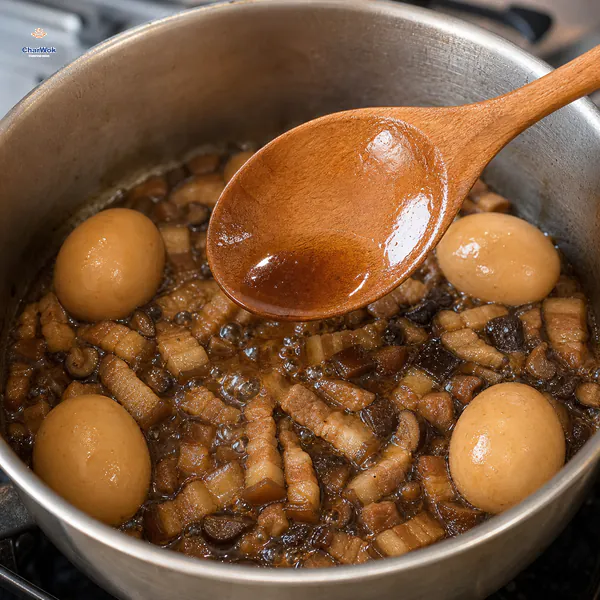
Stop reducing when the gravy coats the spoon but a generous shallow pool still surrounds the pork; it will thicken more as it cools.
Assembling the bowl
Hot rice first, pressed slightly so it holds a little well in the center. Lay the blanched greens along one side. Halve a braised egg and set it against the greens. Spoon the pork and a generous pour of gravy over the rice. Aim for more liquid than looks reasonable, because the rice will absorb it in the first minute. Finish with the reserved crispy shallots. Serve immediately, while the shallots are still crisp and the fat is still liquid and glossy.
When it goes wrong, and how to fix it
The sauce is thin and gray. Two likely causes. One: you did not brown the pork first, so there was no Maillard and no fond to dissolve into the broth. Two: you did not reduce at the end. There is no rescue for missing browning except time; simmer longer to concentrate. For a thin finish, just boil it down uncovered.
The sauce tastes bitter. Your shallots burned, or your dark soy was old and oxidized. Burned shallots cannot be saved; fish them out, add a pinch more sugar, and accept a slightly less shallot-forward bowl next time.
The pork is tough. It is undercooked, full stop. Skin-on belly needs that full hour minimum, sometimes ninety minutes. Pressure cookers collapse it in thirty minutes under pressure; that is the one shortcut I endorse. The texture should be so yielding that a chopstick parts it.
A layer of fat floats on top and looks unappetizing. That is correct and desirable; it carries the aroma. If it bothers you, chill the whole pot overnight, lift off the solidified fat cap in one sheet, and reheat. Honestly, the chilled version is better than the fresh one; I make it a day ahead on purpose.
The eggs are bland inside. They need to braise at least forty minutes to take on color through the white. For deeper flavor, let them sit in the cooled braising liquid in the fridge overnight, and they will be light brown all the way to the yolk by morning. This is the same logic behind Chinese tea eggs: time in the liquid does the work.
Variations and what to serve alongside
The mushroom version above is my house standard, but the dish bends easily. Skip the mushrooms for a cleaner, more purely pork-and-shallot flavor. Add a teaspoon of doubanjiang for a faintly spicy, Sichuan-leaning bowl. Swap the eggs for halved century eggs if you want a more old-school Taiwanese profile. The alkaline edge cuts the richness beautifully.
On the side, blanched baby bok choy is the default, but a quick garlic bok choy stir-fry or a smashed cucumber salad will lighten the plate. A spoonful of chili oil or Chiu Chow chili oil on the table is non-negotiable in my house: the heat and the glossy fat were made for each other. A bowl of plain egg drop soup turns it into a full meal without competing for attention.
One confession: I have tried to make this lean, with pork loin, because I wanted a "healthier" version. Do not do this. Lean pork has no collagen to melt, no fat to carry the aromatics, and it dries out in the braise. You will end up with gray string in thin sauce and you will be unhappy. Use the belly. Eat a smaller bowl. That is the better trade.
Storing and reheating
This is a make-ahead dish. Cooled and kept airtight, the braise keeps three days in the fridge and about two months in the freezer. Reheat gently over low heat with a splash of water to loosen it; a microwave works if you cover the bowl and stir once halfway. The eggs and mushrooms actually improve overnight. Make the rice fresh each time. Reheated rice is the one thing that will drag this dish down.
If you want to put the leftovers somewhere other than rice, spoon the pork over plain noodles for an instant Zha Jiang Mian-style bowl, or fold it into a wider rotation of Chinese pork dishes where it earns its keep alongside char siu and master-stock beef shank.
Common questions
Short answers to the things readers ask most. The full reasoning lives in the sections above.