Pork is the quiet engine of a Chinese home kitchen. Walk into any household in the country on a weeknight and the odds are good that a wok is hissing with sliced pork, a clay pot is braising a slab of belly, or a bowl of minced pork is waiting to become a filling. In northern China the word da rou (大肉), literally "big meat," is reserved for pork alone. No other protein earns that title, and once you cook enough of these dishes you understand why: pork takes seasoning, fat, and long, slow heat better than almost anything else in the larder.
This is not a ranked list of recipes to gawk at. It is a working map of how pork actually moves through a Chinese kitchen, organized by what the pork has to do for you on a given night. Some nights you have twenty minutes and a hot wok. Some nights you want a clay pot simmering on the back of the stove until the meat forgets it was ever solid. The fifteen dishes below cover that whole range, and each one teaches a transferable technique you will reuse for the rest of your cooking life.
At a glance: pick the dish by the cut and the clock. Thin-sliced lean pork stir-fries in under five minutes; belly wants forty minutes to two hours; ribs split between a fast roast and a slow steam. One rule runs through all of them: never skip the Shaoxing wine and a brief marinade, because that is where tender meat and clean flavor begin.
Why pork sits at the center of the table
Three things make pork the default. It is forgiving: a slightly overcooked slice is still palatable because the fat carries it. It pairs with the entire Chinese pantry, from light and dark soy sauce to doubanjiang and fermented black beans, without ever fighting back. And it stores well; braised pork and dumpling filling are arguably better the next day. Beef is pricier and leaner. Chicken is beloved but, in much of inland China, historically a celebration bird. Pork is the everyday answer, and the recipes here reflect that. A single slab of belly might become Cantonese char siu one night, red-braised hong shao rou the next, and steamed mei cai kou rou on the weekend, and none of them will complain.
Five things I learned the hard way
Fifteen Chinese pork dishes across five cooking families
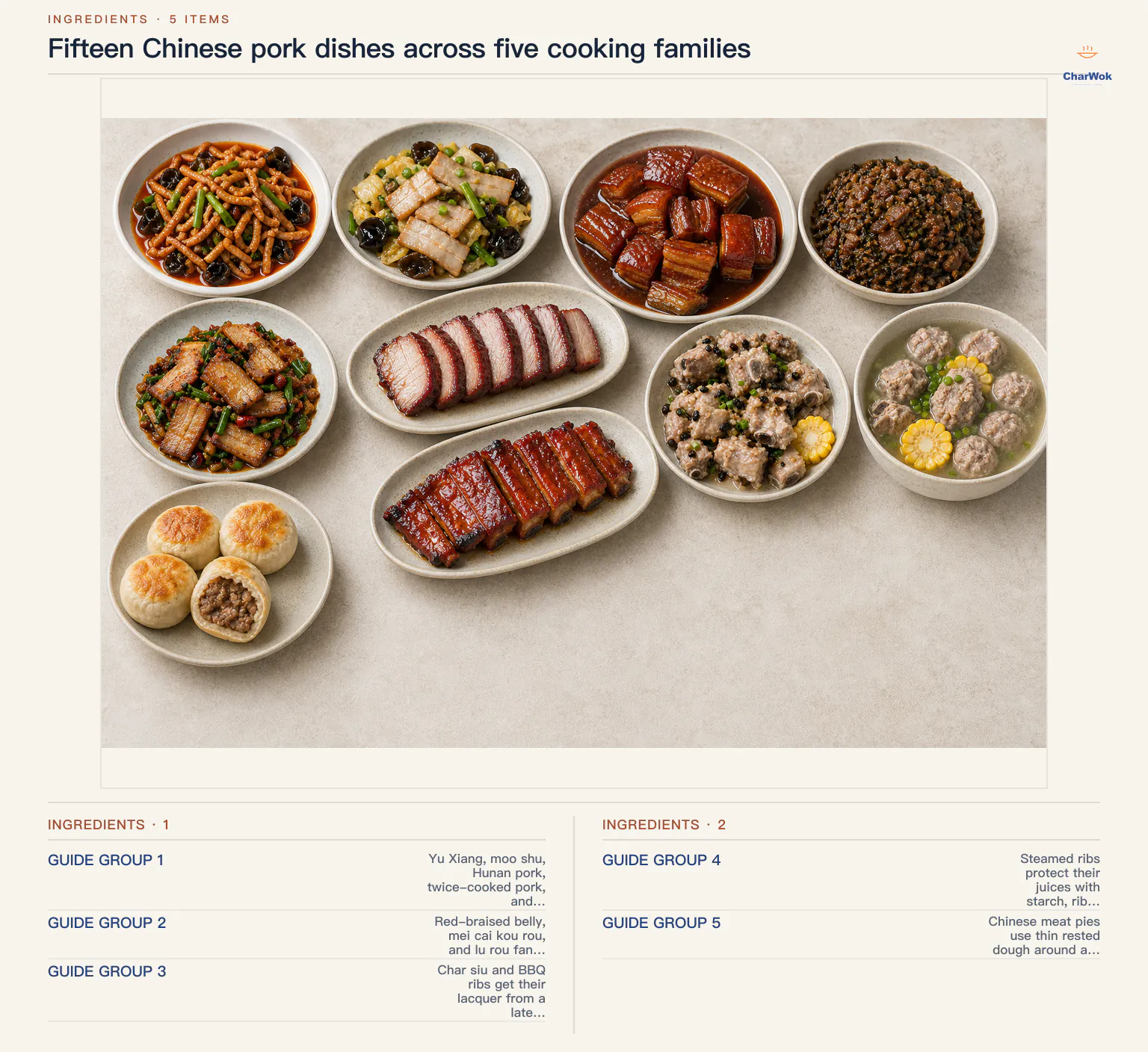
- Marinate the pork, even briefly. Ten minutes with a little wine, soy, and cornstarch coats the proteins and keeps thin slices tender under high heat. I skipped this for years and blamed my wok.
- Cut across the grain, not along it. For stir-fries this is the single biggest difference between tender and chewy. Look at the muscle fibers and slice perpendicular.
- Respect the fat. Belly, pork shoulder, and rib tips need their fat to braise properly. Trimming it out of a slow-cooked dish is how you end up with dry, stringy meat.
- Render before you braise. Browing belly in a dry pan first releases surface fat, builds Maillard flavor, and stops the finished dish tasting boiled.
- Pat ribs dry before steaming or roasting. Wet ribs will not brown and will weep gray juice into the pan. Paper towels are not optional.
Fast weeknight stir-fries (under 30 minutes)
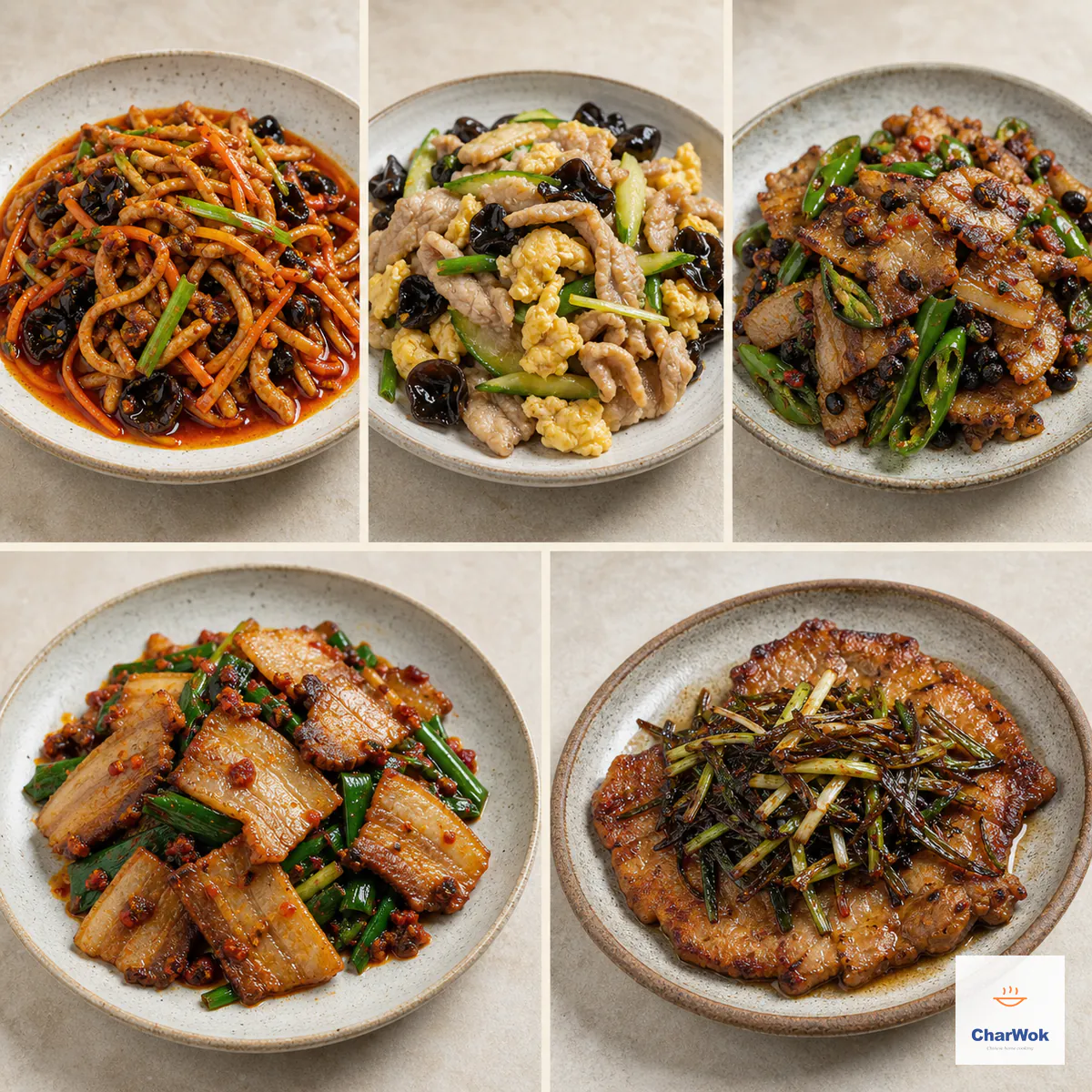
Yu Xiang, moo shu, Hunan pork, twice-cooked pork, and scallion chops rely on the right cut, a dry hot pan, and deliberate sequencing rather than long cooking.
These are the dishes you reach for when the rice is already cooking. The shared principle is heat: a ripping hot wok, a short marinated protein, and vegetables that stay crisp. Sichuan pork with garlic sauce (yu xiang rou si) is the technique class of the bunch, teaching you the yu xiang flavor balance of salty, sweet, sour, and spicy that you can later apply to eggplant and tofu. Slice the pork thin, velvet it with cornstarch, and cook the aromatics just until fragrant before the sauce goes in.
If you want something with less chopping, moo shu pork is a one-pan lesson in sequencing: eggs first, then pork, then wood ear and cucumber, each cooked just to done. Hunan pork stir-fry leans on chili and black bean for a smoky, ferocious bite that wants nothing but rice. And for a Shanghai weeknight, scallion pork chops prove that thinly pounded chops and a pile of fried scallions can feel like a restaurant dinner in fifteen minutes.
The slow-braised showpieces
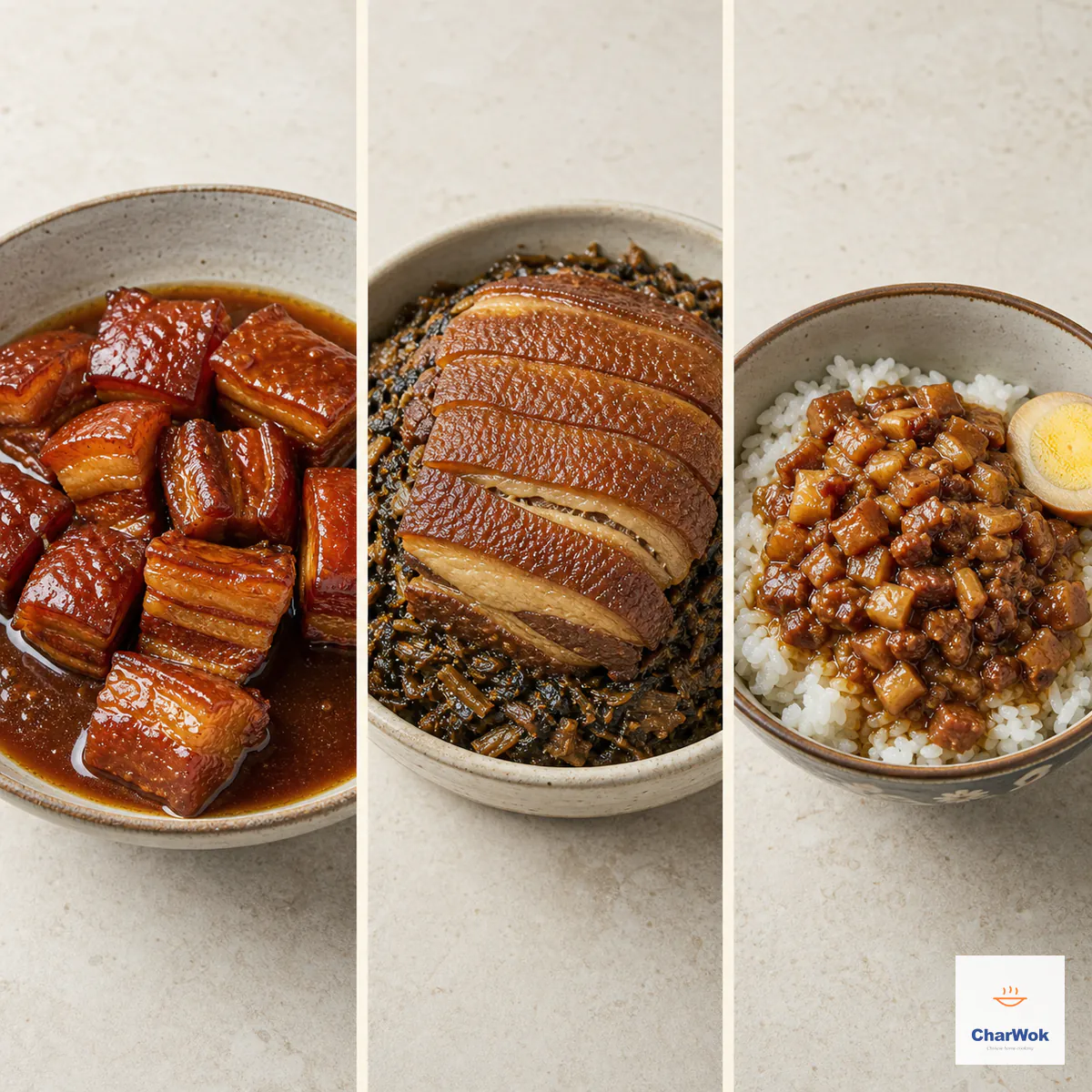
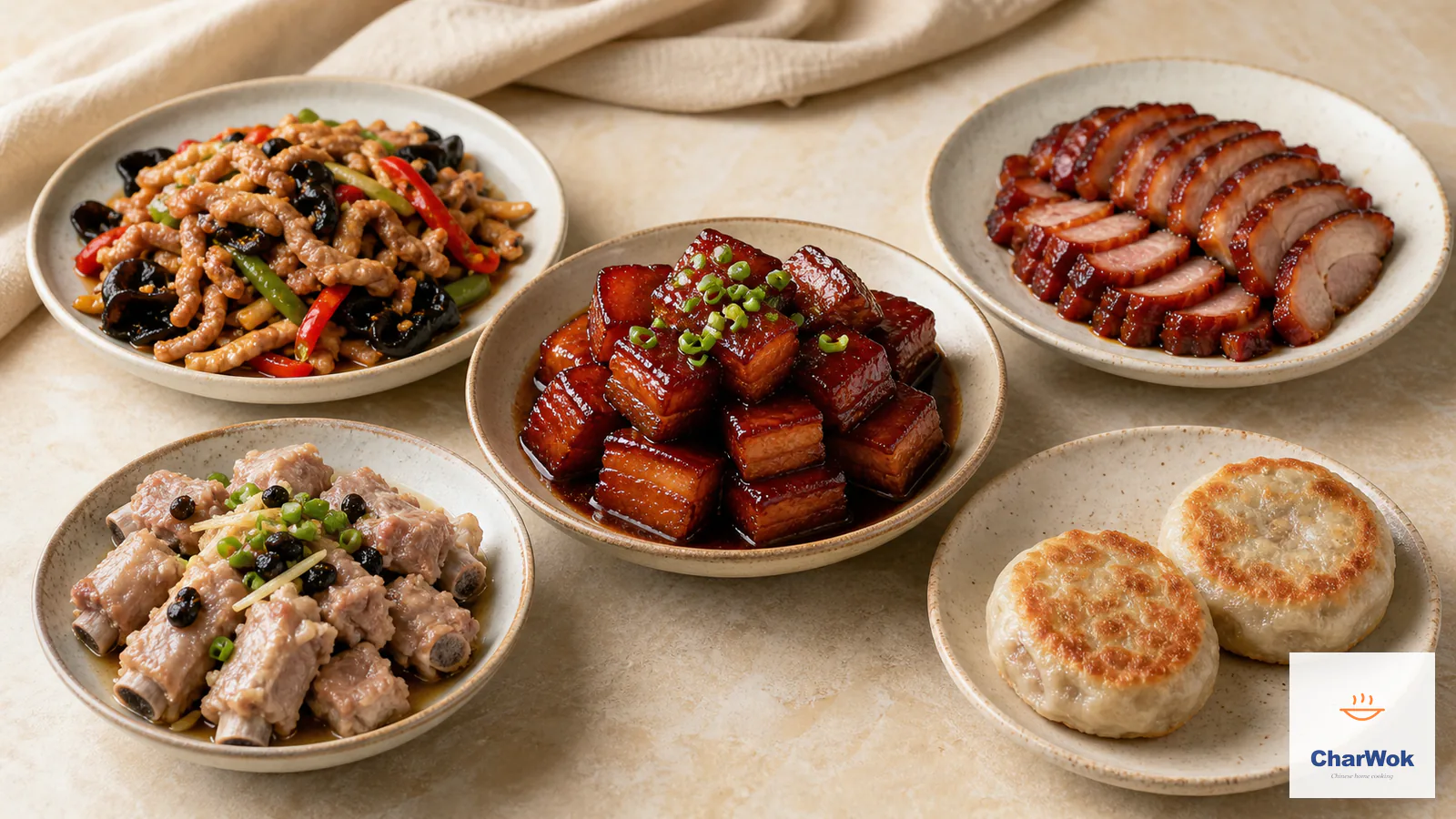
Red-braised belly, mei cai kou rou, and lu rou fan all turn skin, fat, and collagen into body, but use different cuts and finishing methods.
This is where pork does its best work, and where most home cooks leave the most flavor on the table. Red-braised pork belly is the dish to learn first. The color comes from caramelized rock sugar toasted until amber, not from soy sauce alone; that step is what separates a real hong shao rou from a gray, soy-heavy imitation. Lu rou fan, the Taiwanese rice bowl, takes a similar idea and uses hand-minced belly so every spoonful mixes tender meat with melting fat over rice.
For a celebration, mei cai kou rou steams sliced belly over preserved mustard greens until both melt together; the trick is frying the belly skin first, soaking it in water, then slicing. That sequence is what softens the skin instead of turning it rubbery. And if you want the most dramatic centerpiece of all, char siu roasts a marinated pork shoulder or belly into lacquered, sweet-savory slices that also happen to make the best char siu bao you will ever steam at home.
Ribs: two ways to think about them
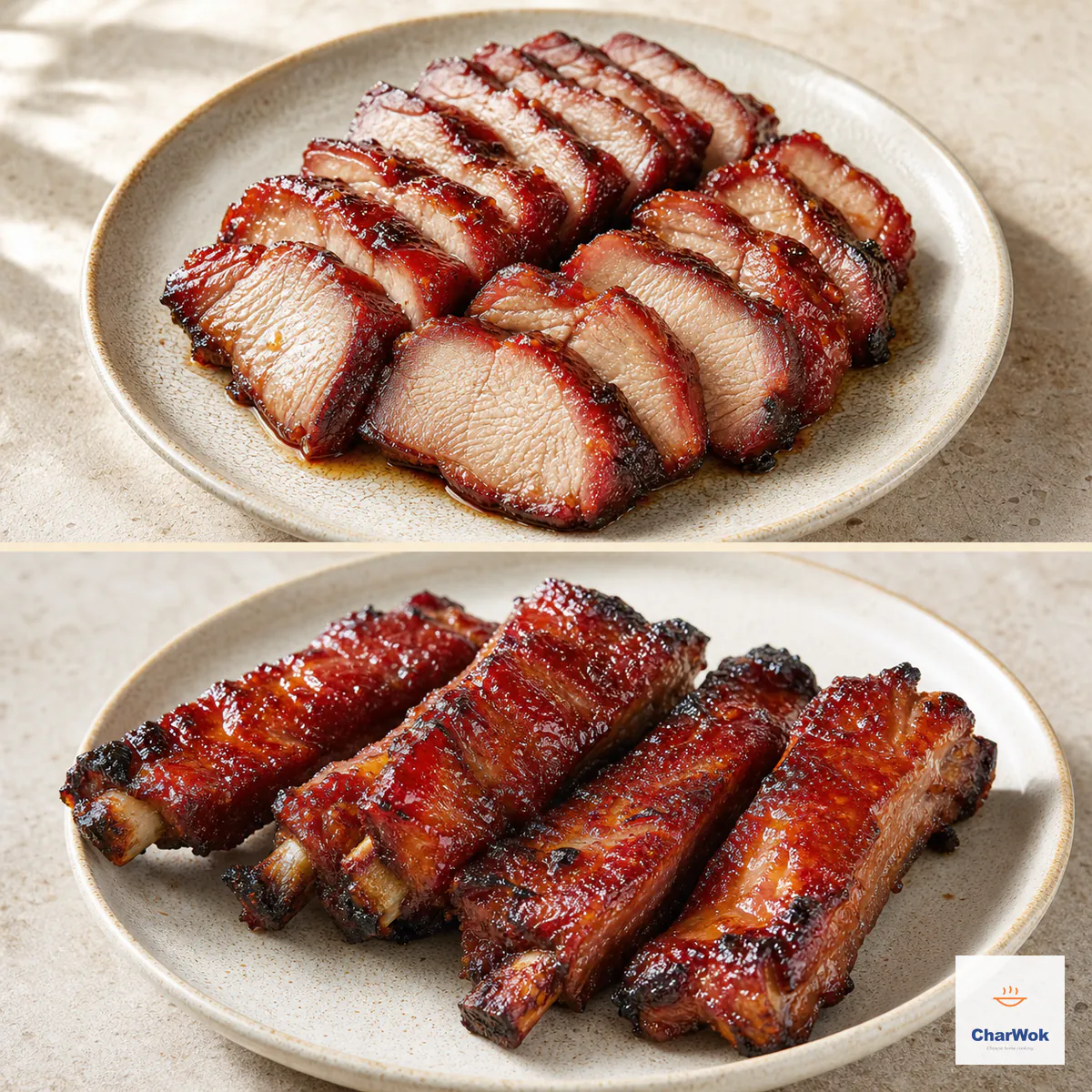
Char siu and BBQ ribs get their lacquer from a late honey or maltose glaze and enough final heat to caramelize the edges without drying the meat.
Ribs reward two opposite treatments, and both appear here. For a deep, sticky, char siu-style glaze, Chinese BBQ ribs roast in a hot oven or air fryer until the marinade caramelizes onto the bone. Pat them dry and do not crowd the pan. For something gentler and more delicate, steamed ribs with black beans is the dim sum classic: chopped ribs tossed with fermented black bean, garlic, and a little starch, steamed until the meat pulls cleanly off the bone. The starch is not a thickener here; it locks in the juices so the ribs stay silky instead of dry.
When pork becomes comfort food
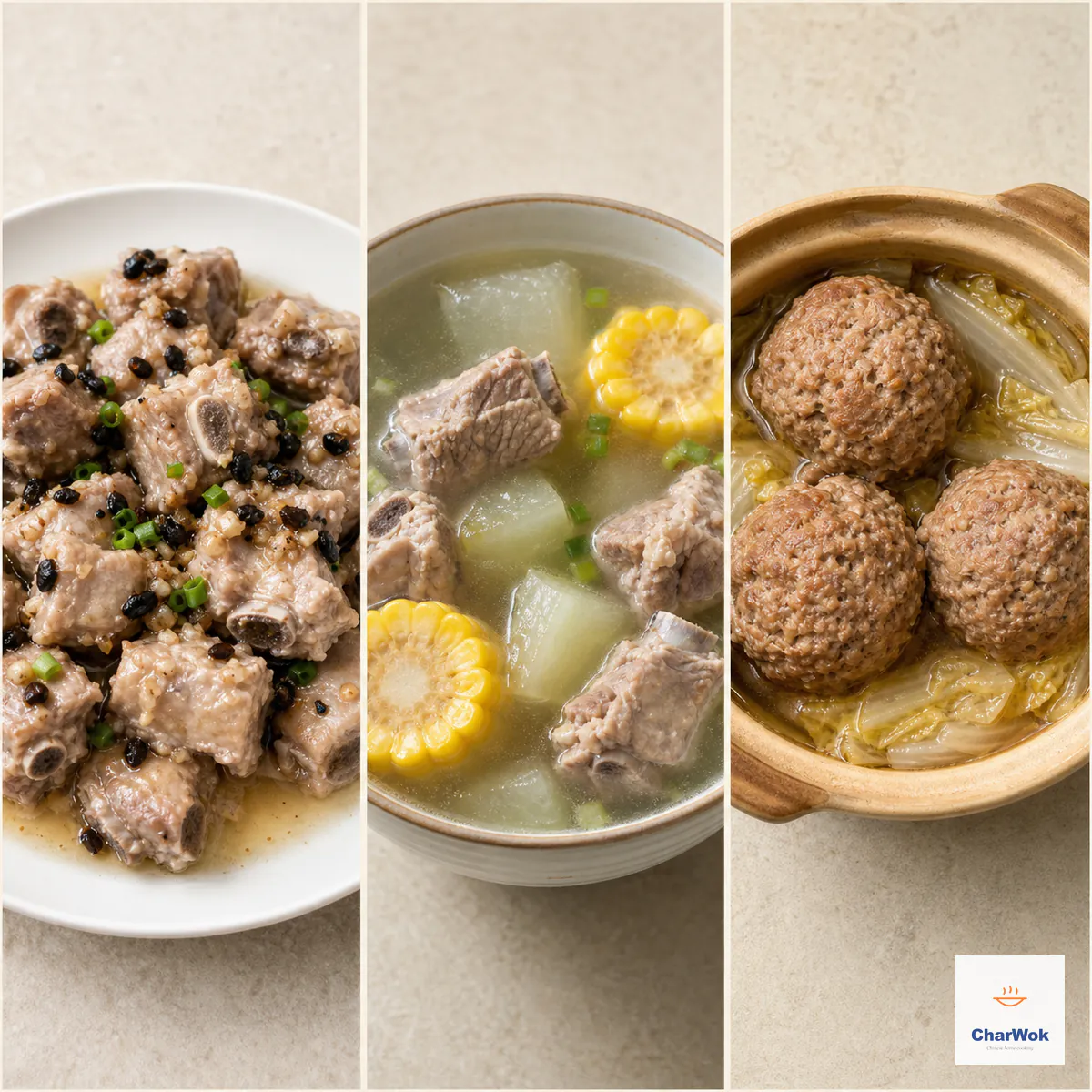
Steamed ribs protect their juices with starch, rib soup stays clear through skimming and gentle heat, and Lion’s head meatballs need enough fat and mixing to hold together tenderly.
A few recipes here are less about flash than about warmth. Lion's head meatballs are enormous, tender pork meatballs braised with napa cabbage, the kind of dish your grandmother would have made. The tenderness comes from beating the minced pork in one direction with added water until it turns sticky, a step you cannot shortcut. Pork rib soup is even quieter: ribs simmered gently with vegetables into a clear, nourishing broth that is more everyday meal than special occasion.
And then there is the snack food. Chinese meat pies (xian bing) wrap a juicy pork filling in dough and pan-fry it crisp, while the Chinese pork burger (rou jia mo) tucks spiced, slow-cooked belly into a flatbread with cilantro and chili. Both reheat well and both teach you that a great filling is mostly about keeping the juices inside.
The lineup at a glance
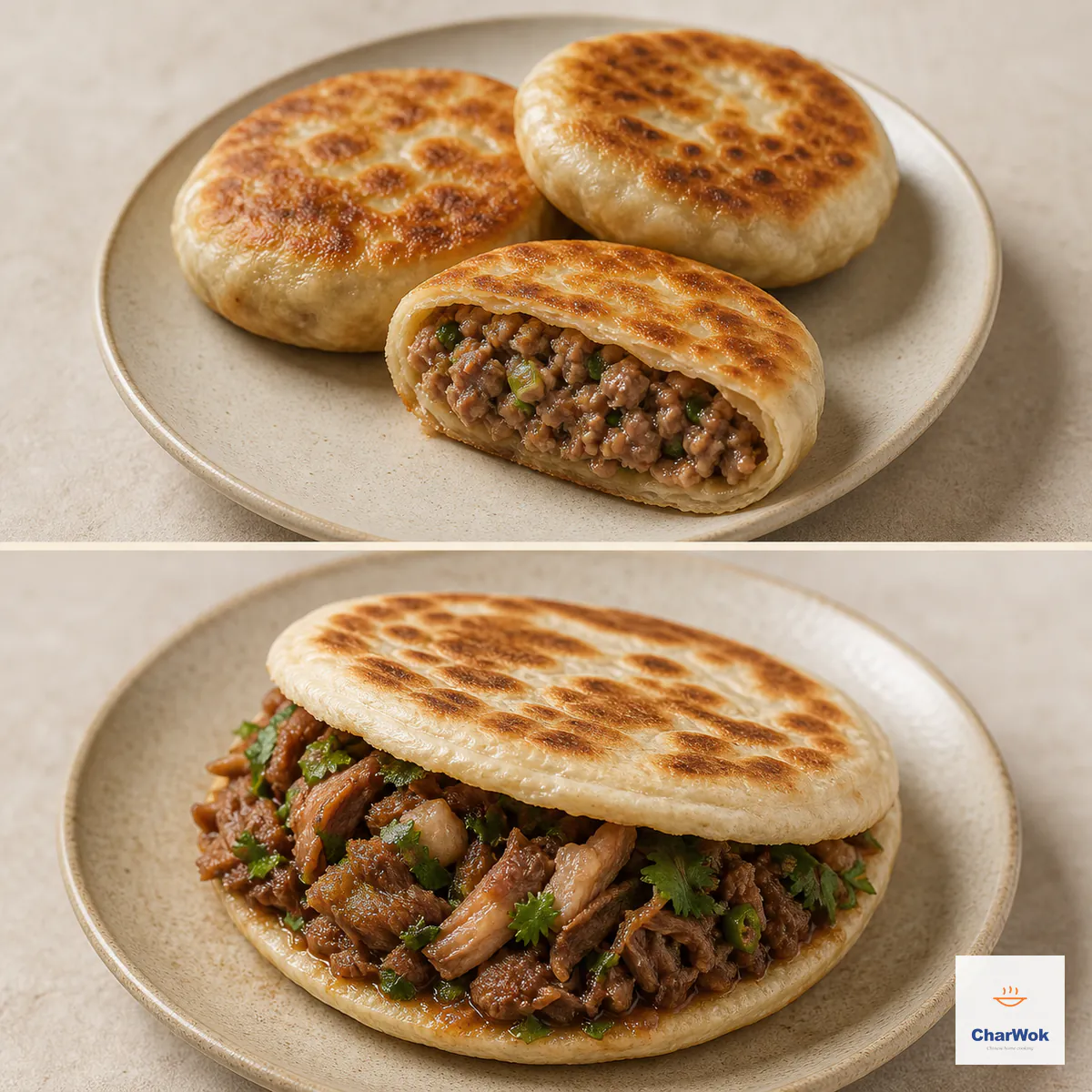
Chinese meat pies use thin rested dough around a juicy mince, while rou jia mo pairs griddled flatbread with chopped long-braised pork and concentrated juices.
| Dish | Main cut | Method | Hands-on time | Best for |
|---|---|---|---|---|
| Char Siu | Pork shoulder or belly | Roast | 20 min + marinate | Meal prep, bao filling |
| Red-Braised Pork Belly | Skin-on belly | Braise | 20 min | Celebration, leftovers |
| Yu Xiang Shredded Pork | Tenderloin or lean shoulder | Stir-fry | 15 min | Weeknight, technique drill |
| Moo Shu Pork | Lean pork, sliced | Stir-fry | 20 min | Weeknight, pantry clear-out |
| Mei Cai Kou Rou | Skin-on belly | Fry then steam | 45 min | Centerpiece, holidays |
| Lion's Head Meatballs | Minced pork with fat | Braise | 30 min | Family dinner |
| Scallion Pork Chops | Pork chops, pounded | Pan-fry | 15 min | Shanghai weeknight |
| Hunan Pork | Fatty pork slices | Stir-fry | 15 min | Spicy-craving nights |
| Lu Rou Fan | Hand-minced belly | Braise | 25 min | One-bowl meal |
| Twice-Cooked Pork | Pork belly | Boil then stir-fry | 25 min | Sichuan dinner |
| Chinese BBQ Ribs | St. Louis ribs | Roast | 15 min + marinate | Crowd-pleaser |
| Steamed Ribs with Black Beans | Small rib pieces | Steam | 20 min | Dim sum at home |
| Pork Rib Soup | Ribs on the bone | Simmer | 15 min | Quiet weeknight, nourishing |
| Chinese Meat Pies | Minced pork | Pan-fry | 45 min | Snack, lunchbox |
| Chinese Pork Burger (Rou Jia Mo) | Braised belly | Slow cook then stuff | 30 min + braise | Street food night |
A representative recipe: Yu Xiang Shredded Pork
Among the fifteen, this Sichuan stir-fry is the one I would teach a beginner first. It builds the whole technique foundation: slicing, velveting, sauce-mixing, and high-heat cooking, all in under fifteen minutes of actual cooking. Get this right and the rest of the list gets easier.
Ingredients
| Ingredient | Amount | Notes / substitute |
|---|---|---|
| Pork tenderloin or lean shoulder | 250 g | Slice against the grain, about 5 cm x 0.3 cm |
| Cornstarch | 1 tbsp | For velveting; do not skip |
| Shaoxing rice wine | 1 tbsp | Dry sherry works in a pinch |
| Light soy sauce | 1 tsp | For the marinade |
| Water | 1 tbsp | Helps the pork absorb moisture |
| Neutral oil | 3 tbsp, divided | Peanut, canola, or avocado |
| Wood ear mushroom, rehydrated | 40 g | Or bamboo shoots; both add bite |
| Carrot | 50 g | Julienned |
| Sichuan pickled chili (or doubanjiang) | 1 tbsp | Defines the dish; chili bean paste if you cannot find pickled chili |
| Garlic, minced | 2 cloves | |
| Ginger, minced | 1 tsp | |
| Scallion, white and green分开 | 2 stalks | Whites with aromatics, greens to finish |
| Sugar | 1 tsp | Balances the salt and acid |
| Black rice vinegar or Chinkiang vinegar | 1 tbsp | The sour note; rice vinegar is milder |
| Light soy sauce (sauce) | 1 tbsp | |
| Sesame oil | 1/2 tsp | To finish |
Note: the table contains one slip. The Chinese characters "分开" mean "separated," i.e. keep the scallion whites and greens apart. Use whites with the garlic and ginger, greens at the very end.
Method
- Marinate the pork. Toss the slices with the wine, soy, cornstarch, and water until the liquid is absorbed and the pork looks glossy. Rest at least 10 minutes. The cornstarch forms a thin gel around each slice that sets into a barrier in the hot wok, which is the entire mechanism behind velveted meat.
- Mix the sauce. Stir the sugar, vinegar, soy, and 2 tablespoons of water in a small bowl. Pre-mixing matters because a stir-fry moves too fast to measure at the stove.
- Heat the wok until it smokes lightly. Add 2 tablespoons of oil and swirl. Add the pork in a single layer, let it sear for 20 seconds before stirring, then break it up and cook until just barely opaque. Remove to a plate. Cooking it twice, in two batches of heat, is what keeps it tender; pushing it through to fully done in one go will overcook it.
- Sweat the aromatics. With the wok still hot, add the remaining oil, then the pickled chili, garlic, ginger, and scallion whites. Stir for 10 to 15 seconds: long enough to release the chili's red oil, short enough that the garlic does not brown.
- Add the vegetables. Toss the wood ear and carrot for 30 seconds. They should warm through and pick up flavor, not collapse.
- Return the pork and add the sauce. Pour in the sauce, toss vigorously for 20 seconds so it coats everything and reduces to a glossy cling, then kill the heat.
- Finish. Drizzle the sesame oil and scatter the scallion greens. Serve immediately over rice. The dish is best the instant it leaves the wok; ten minutes on a warm plate and the magic dulls.
When things go wrong
I have wrecked every dish on this list at least once. Here is what each failure looks like and how to fix it.
- Tough, chewy pork slices in a stir-fry. You either cut with the grain or skipped the cornstarch. Slice perpendicular to the fibers and always velvet thin cuts. If the meat is already cooked and tough, there is no rescue; note it and move on.
- Red-braised pork belly that tastes flat and gray. The rock sugar was not caramelized, or the belly was not browned first. Toast the sugar to a deep amber in a little oil before adding the meat, and never rush the initial sear.
- Lu rou fan that is greasy on top. The belly was too lean to begin with, or you did not skim. Use belly with a clear fat layer and skim the surface once it has braised for 20 minutes; the fat will rise and you can lift it off cleanly.
- Steamed ribs that are gray and weeping. Wet ribs and no starch. Pat bone dry with paper towels and toss with cornstarch before steaming so the juices set into a light sauce instead of pooling gray.
- Char siu that is pale and dry on the inside. The oven was too low, or the roast was overcooked. Char siu wants a hot oven, around 200°C (400°F), and a short rest under foil; pull it when the center is just barely done.
- Lion's head meatballs that fall apart in the braise. The mince was not beaten enough, or the fat ratio was too low. Beat the pork in one direction until it turns sticky and stringy, and aim for roughly 70 percent lean to 30 percent fat.
- Moo shu pork that turns into a soggy heap. Too much was in the pan at once, or the eggs were not cooked and removed first. Cook ingredients in sequence, in batches, and never crowd the wok.
Build a whole meal around pork
A pork stir-fry or braise is usually the centerpiece of a meal that wants a vegetable and a soup. Pair twice-cooked pork with a plate of dry-fried green beans and a bowl of egg drop soup, and you have a balanced Sichuan dinner without overthinking it. For a Cantonese-leaning night, char siu alongside garlicky bok choy and steamed rice is hard to beat.
Storage and reheating
Braised dishes like red-braised belly, lu rou fan, and twice-cooked pork keep for three to four days in the fridge and are noticeably better on day two, once the sauce has soaked into the meat. Reheat gently in a pan with a splash of water; the microwave will toughen the protein. Stir-fries are best eaten immediately but will keep one day if you undercook the vegetables slightly the first time. Char siu is a meal-prep champion: it freezes well for up to two months and thaws straight into bao filling or fried rice. Minced-pork fillings for meat pies and dumplings can be made a day ahead and rested in the fridge, which actually improves the texture.
Related recipes & further reading
Once you have these fifteen in your rotation, a handful of other pork dishes round out the same skill set. The links below cover more stir-fries, dumplings, and a couple of guides that sit alongside this one.
- For a northern stir-fry built on the same slicing technique, try Peking shredded pork with sweet bean sauce.
- If you liked the char siu ribs, sweet and sour ribs cover the other side of the rib spectrum.
- A cold plate of Sichuan garlic pork slices pairs well with any of the braises here.
- Pearl meatballs coat minced pork in sticky rice for a festive, dim-sum-style bite.
- For a lighter, hands-on course, Sichuan-style lettuce wraps let the pork filling do the talking.
- The pan-fried sibling to steamed bao, sheng jian bao, gives you a crisp bottom and a juicy pork filling.
- A quick pork and sour vegetable stir-fry uses minced pork the way Sichuan home cooking does.
- Move that minced pork into wrappers with pork and napa cabbage dumplings or pan-fried pork and chive dumplings.
- Leftover braised pork finds a second life in a fast pork fried rice.
- Browse the wider must-try Chinese recipes guide and the core cooking skills guide for more ideas across every category.
- For context on how these dishes fit into regional cooking, read the culinary tour of China notes.
Frequently asked questions
Which cut should I buy if I can only get one? Skin-on pork belly. It braises, it roasts, it steams, and its fat carries the dish through overcooking. Lean cuts punish mistakes; belly forgives them.
Is velveting really necessary? For thin-sliced stir-fries, yes. The cornstarch-and-water coating is the reason restaurant pork is tender and yours is not. It takes ten minutes and costs nothing.
Can I substitute chicken or beef? Often, yes, with adjustments. Chicken thigh works in most stir-fries; beef needs a firmer hand on slicing and a touch of baking soda in the marinade for tenderness. Slow-braised belly dishes do not translate well, since the fat is the point.
Why does my char siu look nothing like the restaurant version? Two reasons: most home ovens run cooler than they claim, and the glaze needs a final high-heat pass. Roast hot, brush the glaze on in the last five minutes, and let the edges char a little.
How do I keep braised pork from tasting greasy? Skim the surface fat after the first 20 minutes of braising, chill the dish overnight, and lift off the solidified fat cap before reheating. The flavor concentrates and the texture improves.