The hard part of a Chinese feast isn't any single dish. It's the last eight minutes, when you've got a stir-fry screaming in the wok, a fish that needs another minute of steam, and a guest asking where the rice is. I have burned the greens and overcooked the fish in the same meal more times than I want to admit, and almost always the problem was the same: I treated the menu as a list of recipes instead of one connected timetable.
This guide is about that timetable. Pick the dishes, yes, but then sequence them by heat and holding power so you can sit down while the food is still hot. The goal isn't a restaurant-perfect spread. It's a meal where the cook actually eats with everyone else.
At a glance: count heads, then count dishes, and let most of the table come from dishes that wait patiently, that is the make-ahead, braised, steamed, and cold ones. Cap the panic-at-the-stove items at two quick wok dishes, and anything you can pull from a warm oven or a lidded pot is a safe bet for the line-up.
What a balanced Chinese spread is doing
Plan the whole feast as one connected timetable
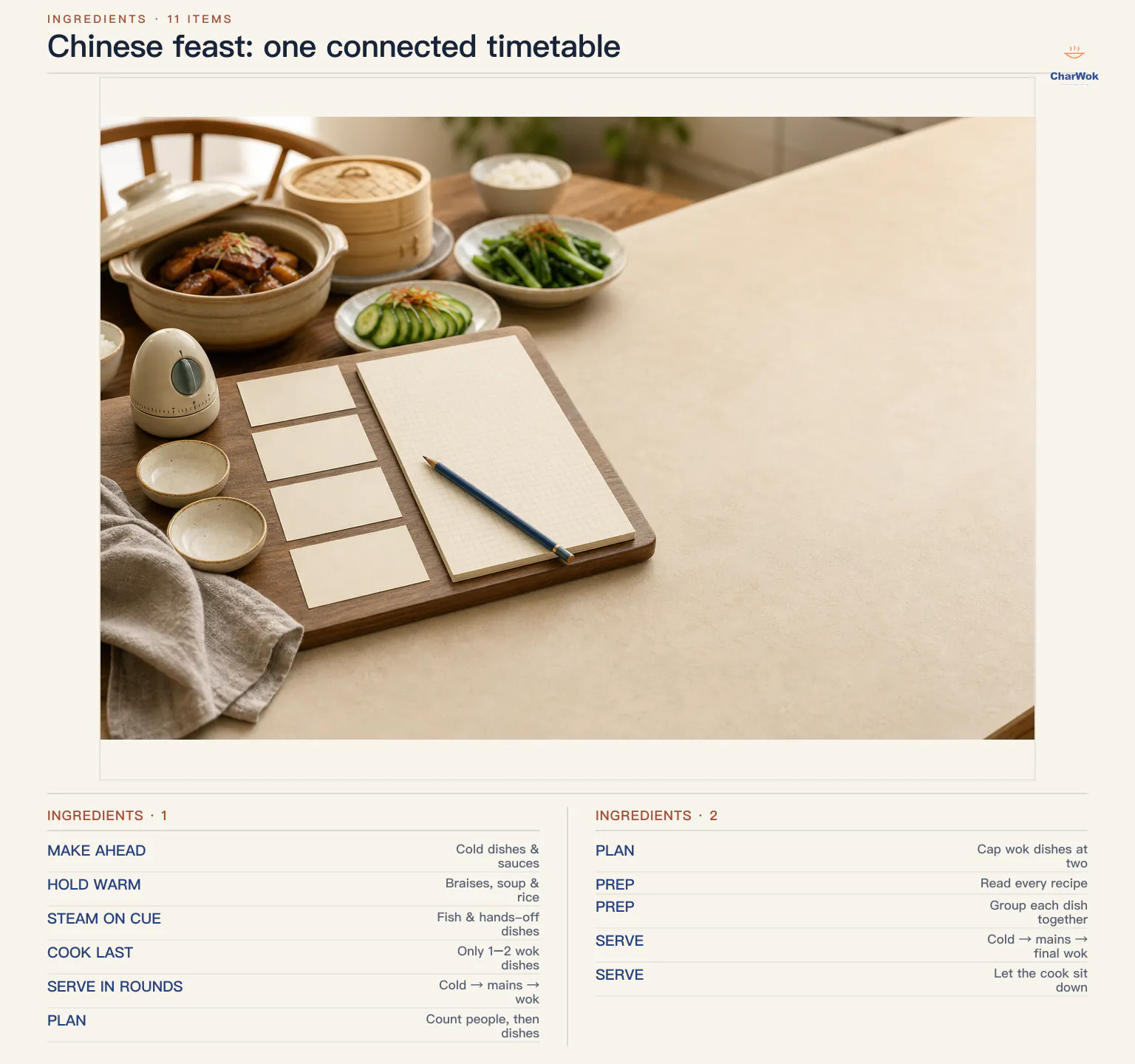
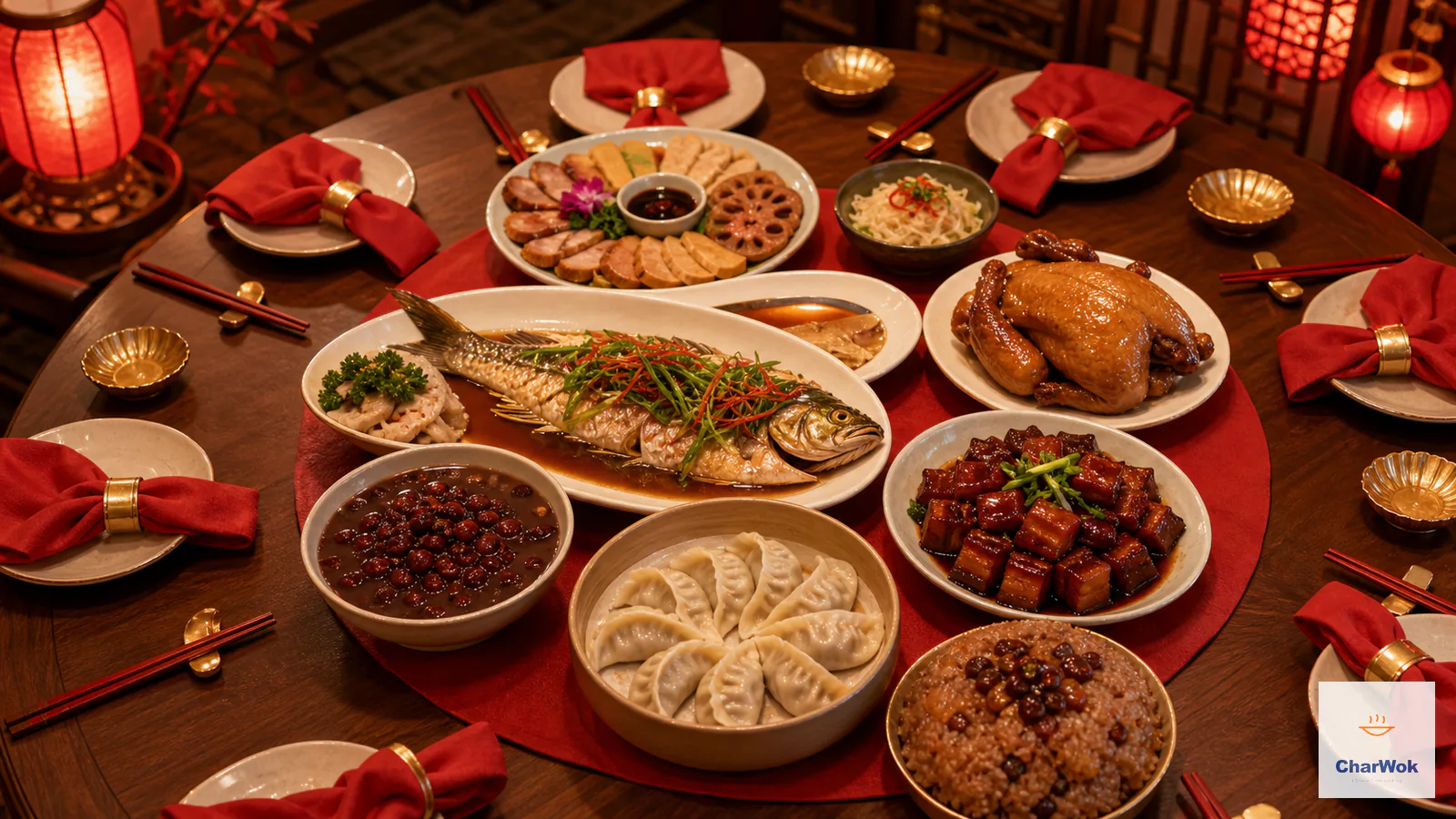
A northern or Cantonese family table isn't built on one hero plate. It's a system of contrasts meant to keep the palate interested across a long meal: cold opening dishes to wake the appetite, a slow-braised centerpiece that anchors the table, a quick stir-fry for brightness, a soup to reset between bites, and a starch that soaks everything up. Think of the classic Lunar New Year spread: a whole fish for surplus, a glazed meat for richness, vegetables for relief. The reason that structure has lasted centuries is that it also solves the cook's problem: the cold and braised items buy you time.
So before you reach for recipes, sort every candidate dish into one of four buckets. That single move will do more for your stress level than any knife skill.
The four-bucket sorting method
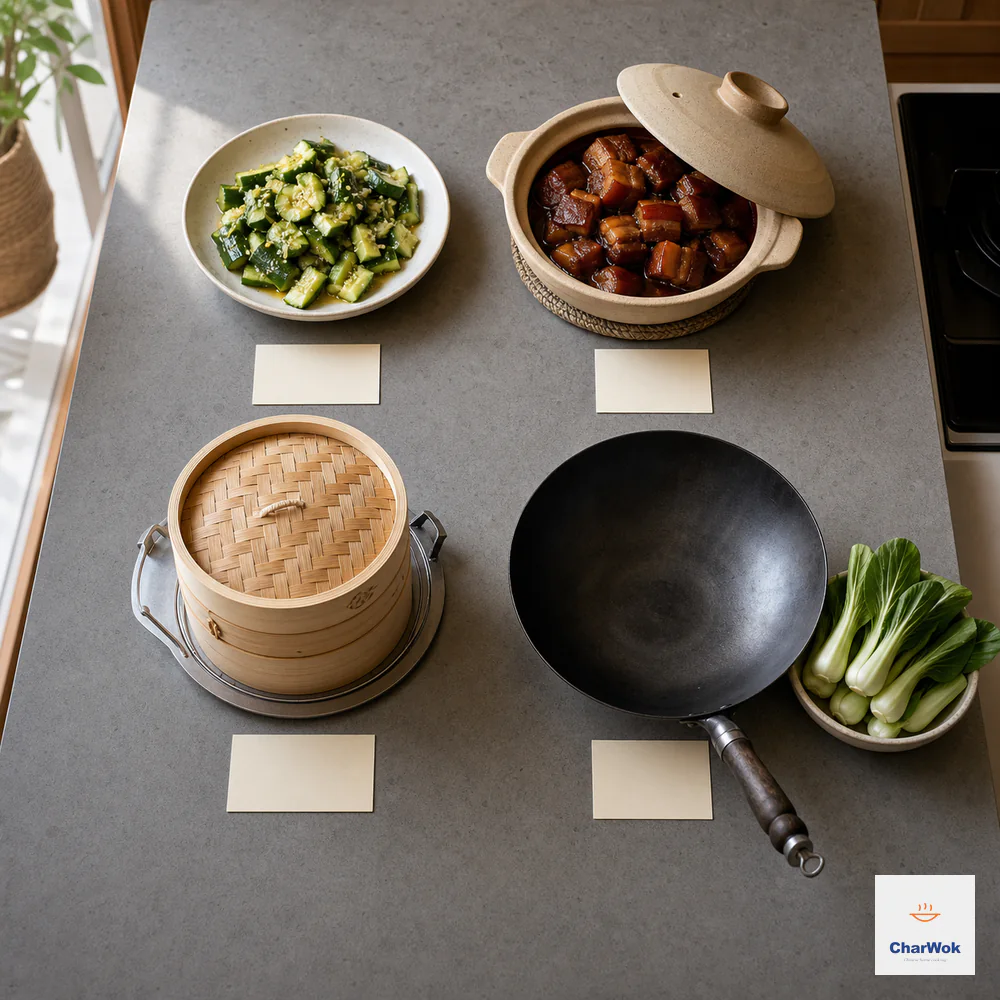
Sort by holding power before choosing the menu: cold dishes wait, braises improve, steamed dishes run on a timer, and only the bright vegetable needs the wok at the buzzer.
| Bucket | What goes here | When it's ready |
|---|---|---|
| Make-ahead / holds cold | Braised meats, poached-and-chilled poultry, cold salads, pickles | 1 to 3 days before; serve straight from the fridge |
| Hands-off / holds warm | Stews, sticky rice, soups, anything in a slow cooker or Instant Pot | Morning of; sit on warm until serving |
| Oven or steamer | Roasted meats, steamed fish, steamed eggs, buns | Timer-driven; finish 10 to 15 min before sitting down |
| Last-minute wok | Quick stir-fries, blanched greens | Right at the table; limit to two |
Picking dishes that play well together
Once you know your buckets, choose so no two dishes fight for the same burner or the same flavor slot. A few rules I lean on:
- One braised centerpiece, not two. A glossy red-cooked pork belly or a deep master-stock beef shank does the heavy lifting; two long braises crowd the stove and the stomach.
- Vary protein and texture. If pork stars, let a cold chicken dish like Sichuan mouthwatering chicken or Bang Bang chicken open, and a steamed whole fish close.
- Keep one cold, crunchy opener. A smashed cucumber salad or silken tofu with scallions gives the table something to nibble the instant people sit down, with zero last-minute work.
- One bright vegetable, fast. A garlic bok choy stir-fry or quick broccoli with garlic sauce is the single green you cook at the buzzer.
Use every heat source you own
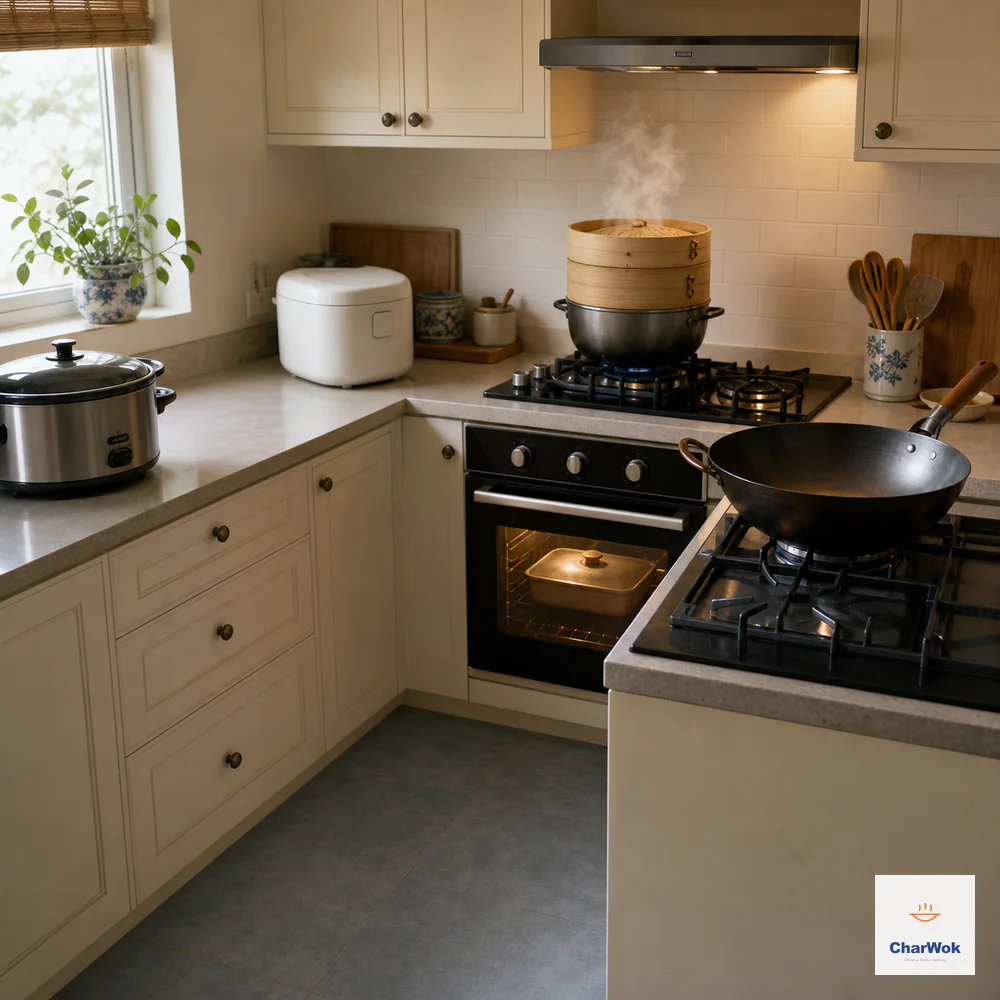
Give each patient dish its own heat source: slow cooker, rice cooker, oven, and stacked steamer carry the long work while the wok stays free for the last quick dish.
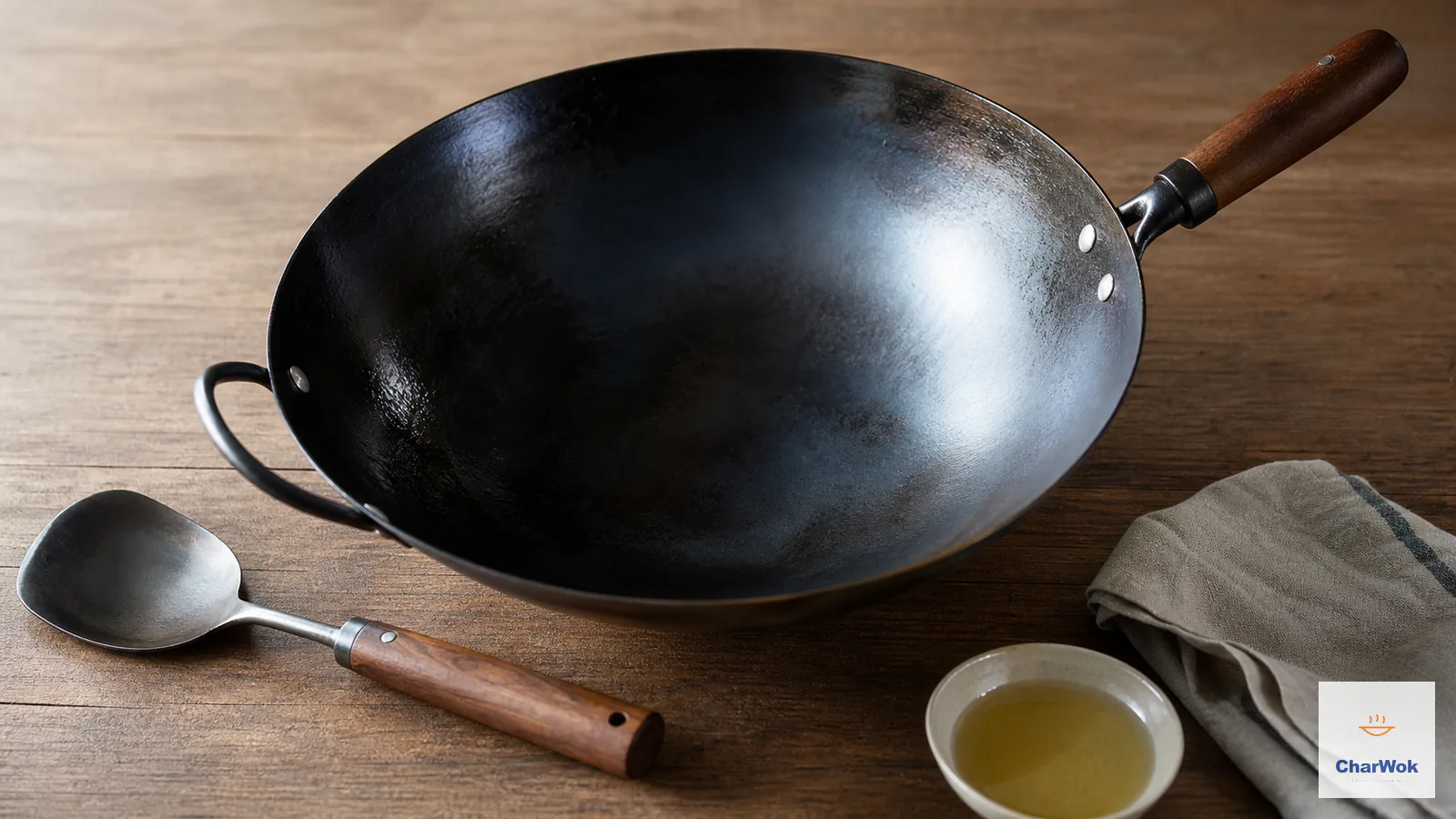
This is where most home cooks leave performance on the table. You likely have four burners, an oven, a rice cooker, maybe an air fryer or Instant Pot. A feast is the one day to fire all of them.
- Run a long, hands-off braise in the slow cooker from first thing in the morning. A master-stock beef shank or red-cooked pork belly only gets better on Keep Warm while you handle everything else.
- Let the oven carry a char siu pork or a soy-sauce chicken; both hold beautifully in a 75°C (170°F) oven with a pan of water. Save crisp-skin roasts like Peking duck for the rare feast you can serve the instant they come out, because even loose foil softens that skin.
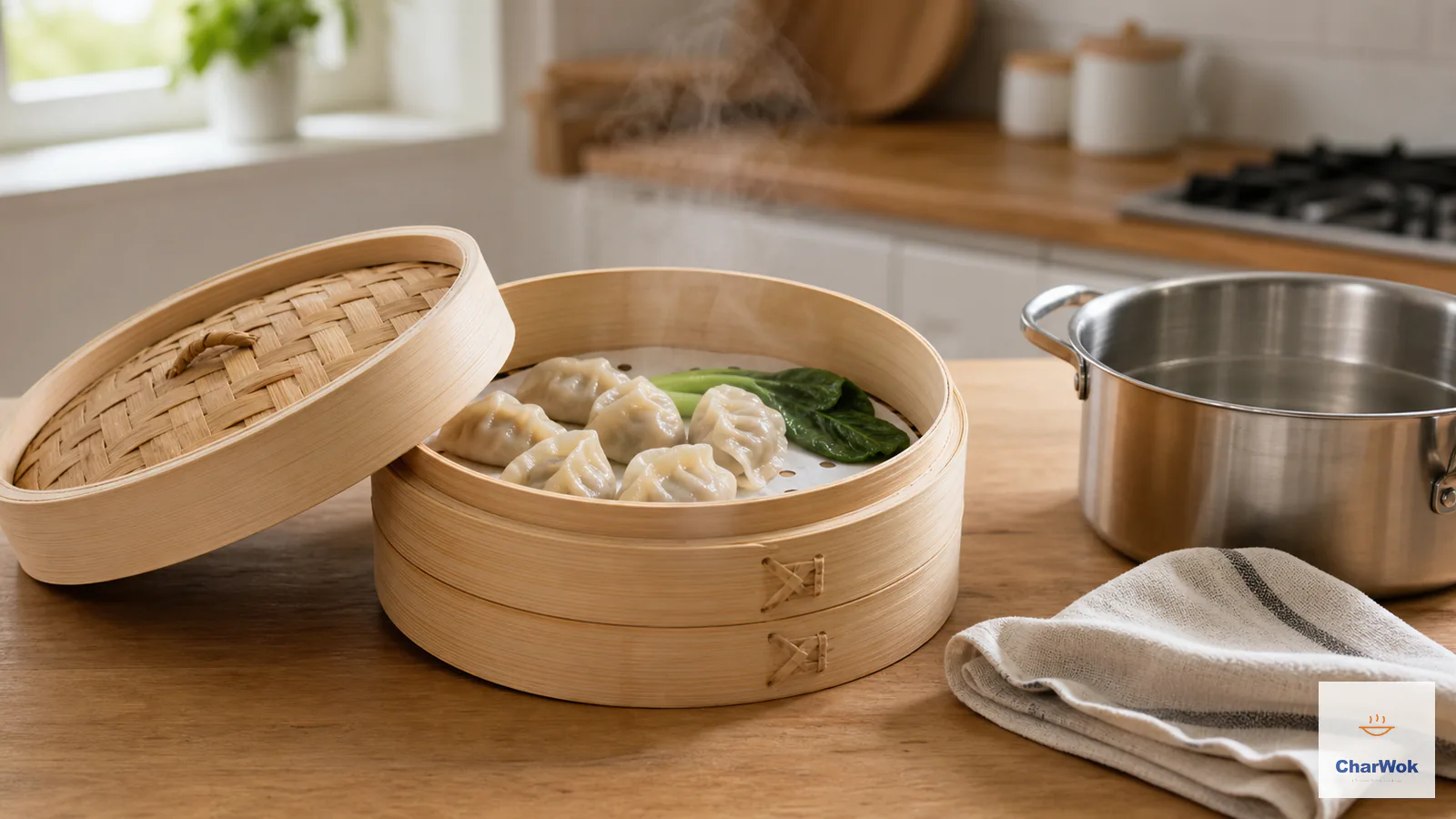
- Use bamboo steamers stacked over a pot; that's how you'll hold steamed fish and a steamed chicken with shiitake without tying up a burner each. The right steamer setup lets you cook two dishes on one flame.
- Move shallow-fried snacks to the air fryer so the wok stays free. Salt and pepper tofu cubes crisp up in the basket with a fraction of the oil, and a tray of pearl meatballs reheats there in minutes instead of demanding a pot of hot oil.
The reverse-countdown that saves the meal

Work backwards from serving time. Give every dish a start point and finish point, then mark the collisions before pots are hot and guests are waiting.
Write the timeline backward from the moment you want to sit. Most feasts I cook, I aim to sit at 7:00, and the menu is built around that single anchor. Working backward forces you to see the bottleneck before the guests arrive. Here is the order I use:
- Two to three days out: Make the braised cold dish. A master-stock beef shank or red-cooked pork is better after a night in the fridge: the fat sets, the flavors marry, and slicing is cleaner cold. A sweet and sour ribs glaze also holds perfectly.
- The day before: Poach and chill any cold poultry (mouthwatering chicken, Bang Bang chicken). Mix every sauce and dressing in jars. If you're folding dumplings, freeze them now on a tray, then bag them, and go straight from freezer to pan on the day; letting them thaw first only turns the wrappers soggy.
- Morning of: Load the slow hands-off dishes: stew in the Instant Pot, sticky rice in the rice cooker, soup on a back burner. Hot and sour soup and egg drop soup both reheat without losing character.
- Ninety minutes out: Oven and steamer go on. Char siu or duck roasts; fish and steamed eggs sit in the steamers ready to fire.
- Thirty minutes out: Pull cold dishes from the fridge to take the chill off. Plate the opener salads so the table isn't empty when people arrive.
- Final ten minutes: Fire the wok. Cook your one or two quick stir-fries back to back, hit the steamed fish with sizzling oil, and carry everything out together.
The principle behind the countdown is simple: a dish that can hold should hold, so the dishes that can't wait (the greens, the fish) never wait. Once you internalize that, the chaos drops away.
Mise en place, but only the part that matters
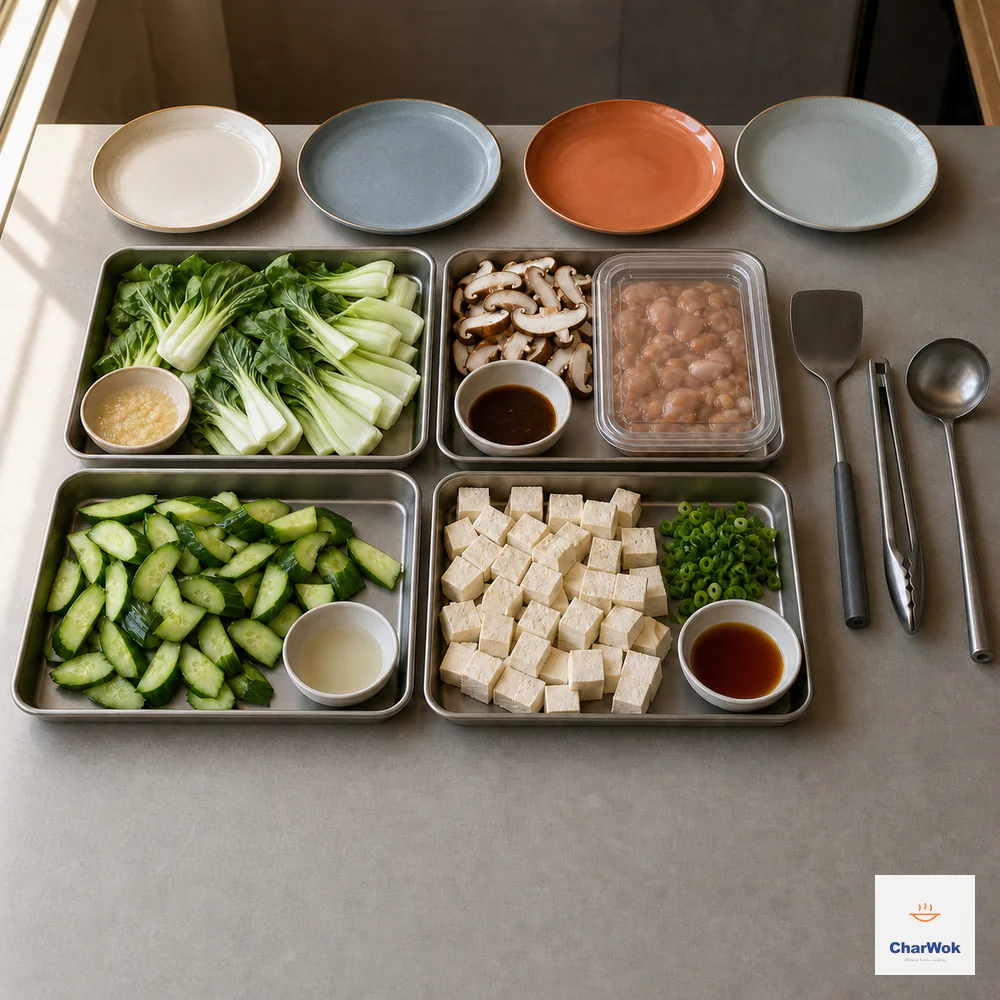
Group every dish as one unit—prepared food, premixed sauce, utensil, and serving plate—so the final cook never has to search the kitchen mid-stir-fry.
The French term means "everything in its place," and for a feast it's non-negotiable, because Chinese cooking moves at wok speed. The moment meat hits hot oil you won't have time to mince garlic. So pre-measure and group every dish's components on a single tray, sauce already mixed in a bowl, aromatics cut and covered. Marinate proteins ahead; rehydrate anything dried (shiitake mushrooms, dried shrimp, wood ear) the night before. When the burner is free, you dump a tray in, not six jars.
One habit that pays off disproportionately: pick your serving dishes now, label them with a sticky note naming the dish that goes in each. You will not be hunting for a platter while the fish oversteams.
When things go wrong: a troubleshooting table
| Failure | Why it happened | The fix |
|---|---|---|
| Greens are limp and grey by the time you sit | Cooked too early; held warm uncovered | Make greens the literal last wok dish, cover loosely, and never hold more than 5 minutes. If you must delay, under-blanch and finish in the wok for 30 seconds at service. |
| Two stir-fries needed the wok at once | Menu had too many last-minute dishes | Move one to the steamer or oven next time. Cold ginger spinach replaces a hot green and frees the wok. |
| Steamed fish overcooked while you plated soup | No timer; fish held in residual heat | Steam by time (about 8 to 10 minutes per inch of thickness), lift the steamer off the water the second the timer goes, and pour the sizzling oil last. |
| Braised meat tastes flat on reheat | Fat skimmed before chilling; reheated dry | Always chill with its braising liquid, then reheat gently in that liquid; never drain and microwave. |
| Rice or dumplings ready an hour early | No warm-holding plan | Keep rice on the cooker's Warm setting. Cook dumplings in two batches and tent the first under foil. |
| You're still cooking when guests sit | Timeline ran forward, not backward | Write the countdown from the sit-down time and cut any dish that doesn't fit the first three buckets. |
Three menus you can steal
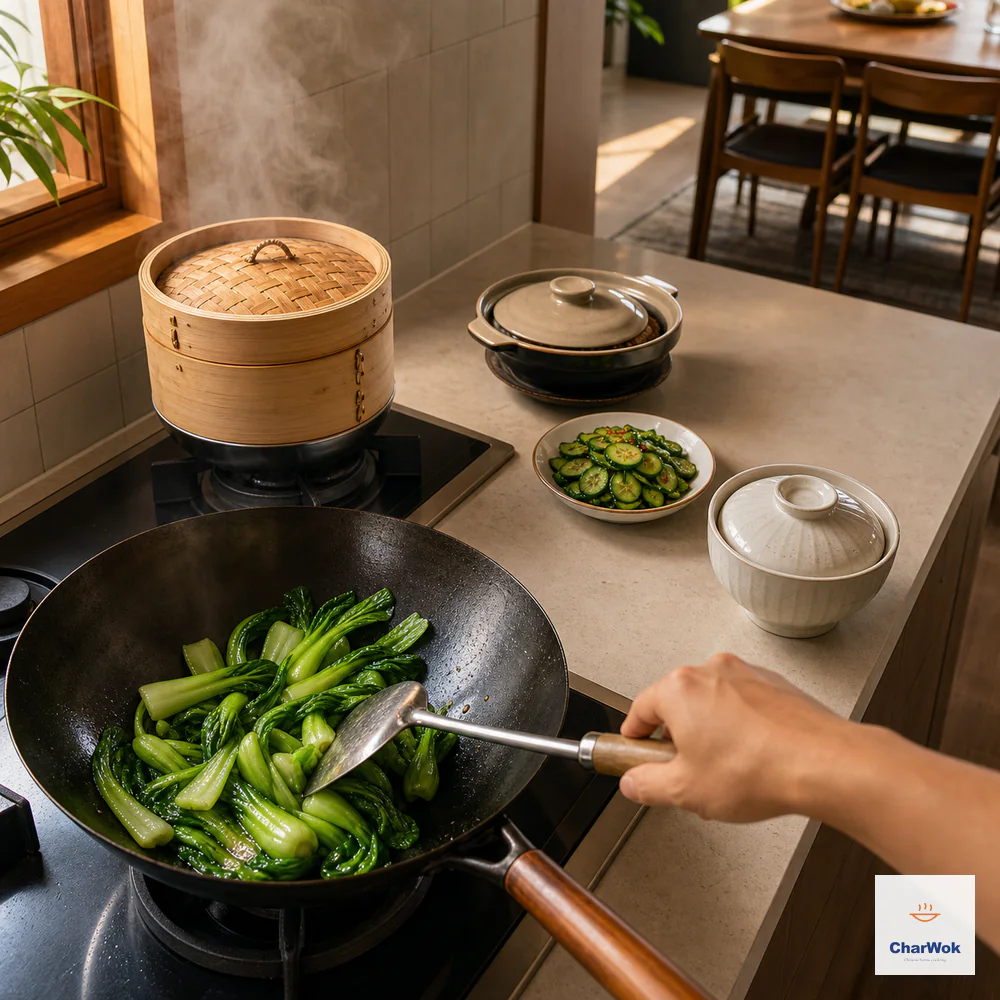
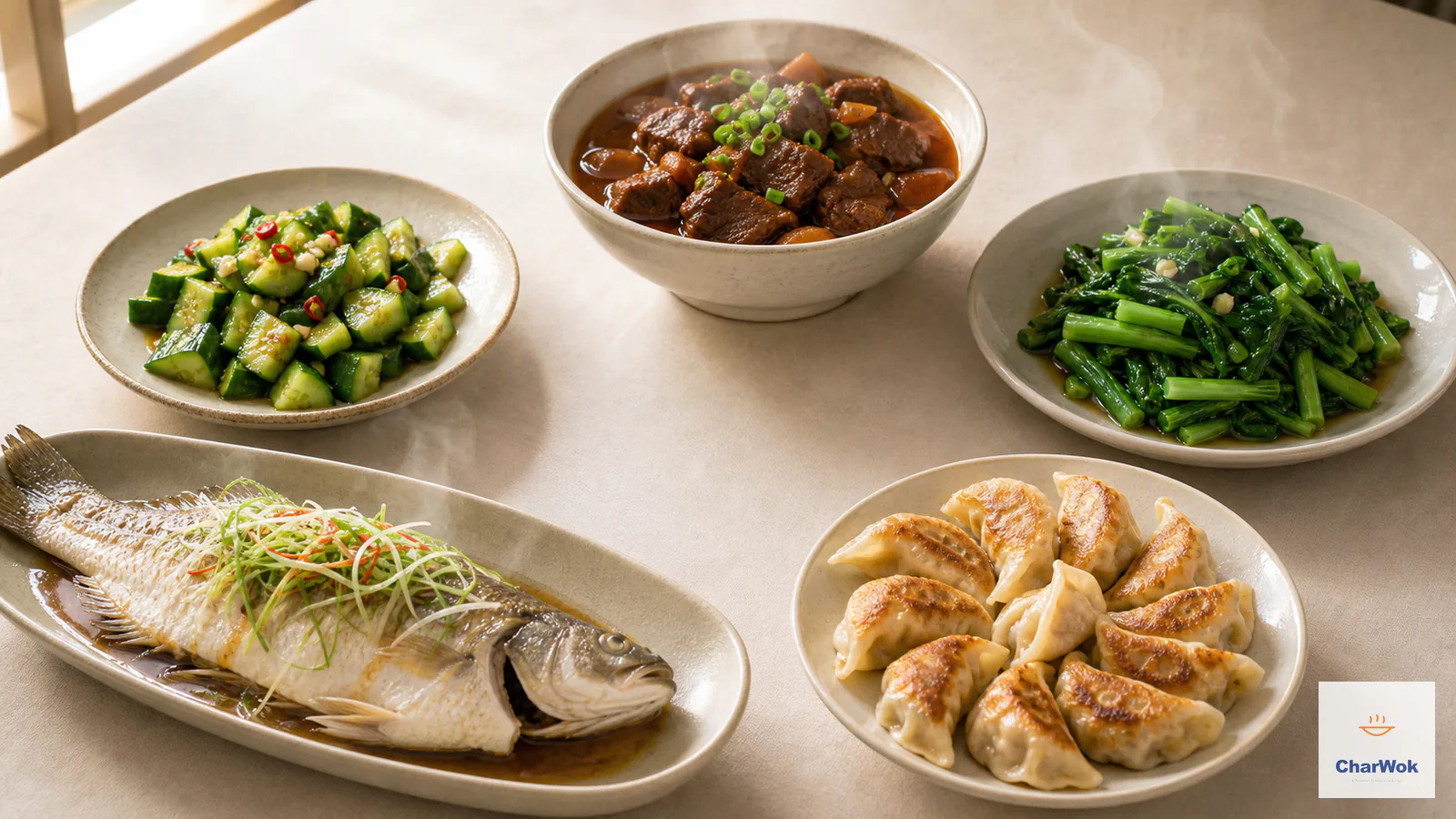
A workable menu reaches the last ten minutes with only one or two wok dishes left; the cold, braised, steamed, and soup courses are already plated or holding safely.
Each of these runs eight dishes for six to eight people and is built so only one or two need the wok at the end. None includes dessert here. Add tang yuan, eight treasure rice, or fresh fruit to close.
Menu one: the celebration table
- Silken tofu with scallions (cold opener, plated the night before)
- Drunken chicken (poached and chilled a day ahead)
- Red-cooked pork belly (the braised centerpiece, made days ahead)
- Sweet and sour ribs (reheated in their glaze, holds warm)
- Steamed whole fish (steamer, fired in the final ten minutes)
- Garlic bok choy (the single last-minute wok dish)
- Hot and sour soup (made ahead, brought back to a simmer)
- Pearl meatballs (steamed, then held warm in the steamer)
Menu two: weeknight upgrade
- Glass noodle salad (cold, dressed ahead)
- Chili garlic steamed eggplant (cold, made the day before)
- Red-cooked pork belly (braised a day ahead, reheated in its sauce)
- Tofu and vegetable soup (simmering on a back burner, holds well)
- Steamed chicken with shiitake (steamer, hands-off)
- Hot and sour napa cabbage (wok, fired second-to-last)
- Shrimp and egg stir-fry (wok, the final dish)
- Soy sauce fried rice (starch that can sit covered and warm)
Menu three: casual, mostly hands-off
- Cold noodles with Sichuan dressing (no last-minute work, dressed ahead)
- Smashed cucumber salad (no-cook opener)
- Lion's head meatballs (shaped a day ahead, simmered in broth on the day)
- Three cup chicken (braised, sits happily on low heat)
- Egg drop soup (reheated, holds at a whisper of a simmer)
- Garlic shrimp with vermicelli (steamer, fired near the end)
- Stir-fried napa cabbage (the one quick wok dish)
- Lo mein (tossed ahead, refreshed in the wok for a minute)
Keeping it hot without drying it out
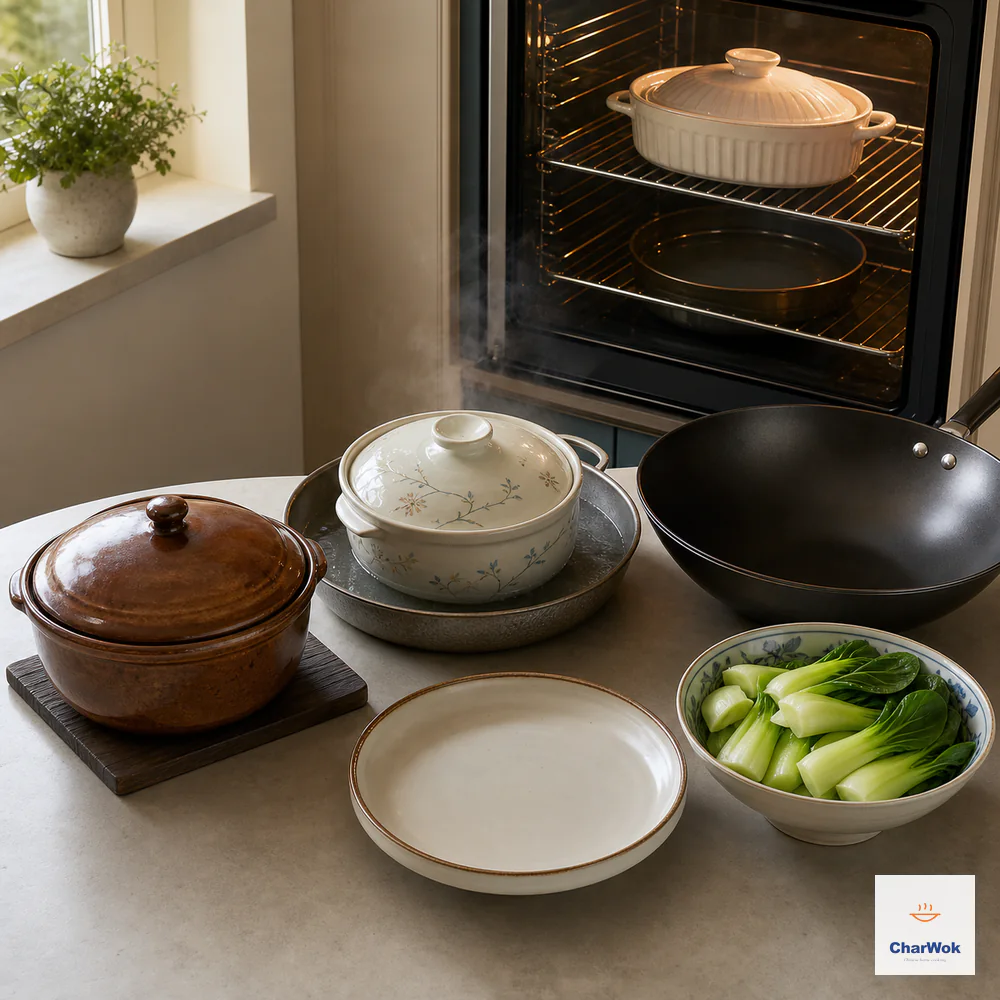
Use covers, gentle heat, and moisture for foods that hold well; keep quick greens raw until the table is ready instead of letting them wilt under a lid.
Holding temperature is the quiet skill of a feast cook. A 75°C (170°F) oven with a pan of water is your friend for roasted and braised items, warm enough to serve but gentle enough not to cook further. A rice cooker's Keep Warm setting holds rice and sticky rice for an hour without harm. Tent steamed and stir-fried dishes loosely with foil; tight foil traps steam and turns crisp skin soggy. And when the table is full, bring the food out in courses rather than all at once: a cold opener round, a main round, a final wok round. Every course reaches the table at the temperature it was meant to be eaten at, and you stop fighting to plate everything in the same sixty seconds.
Leftovers are the point, not the failure
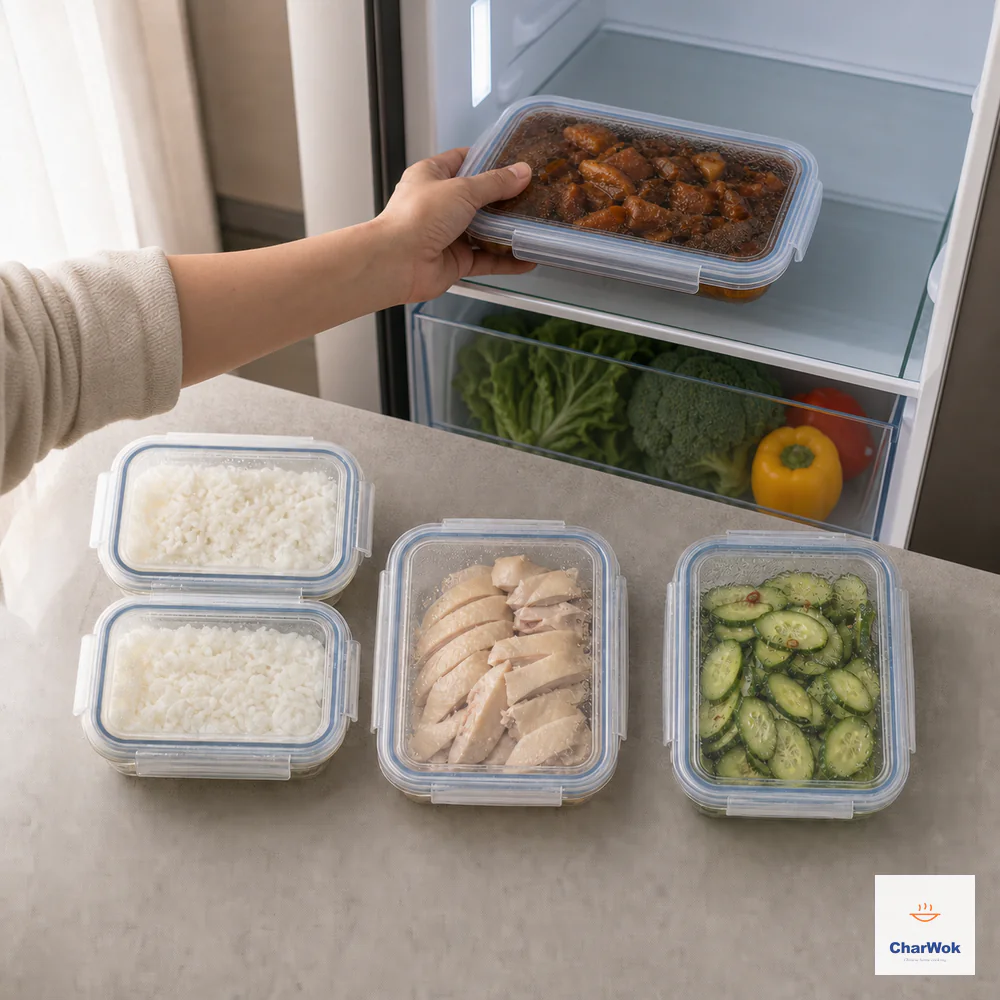
Plan the surplus: cool and seal each dish, refrigerate the braise, chicken, and cucumber promptly, and keep the rice ready to become tomorrow’s fried rice.
In the tradition these meals come from, abundance is the message. A table that's exactly enough reads as stingy. So cook a little more than you need. Braised meats deepen overnight and become the next day's noodles; leftover rice is the starting point for egg fried rice; cold chicken and cucumber salads keep two days in the fridge. Plan the surplus on purpose and the "too much" stops feeling like a mistake.
Frequently asked questions
How many dishes should I make per person?
Match the dish count to the head count: six people at the table usually means six dishes on it. For a celebration like Lunar New Year, overshoot by a dish or two; the surplus is intentional and the leftovers are welcome.
Can I make the braised and cold dishes the day before?
Yes, and you should. Red-cooked pork belly, master-stock beef shank, and poached cold chicken all improve after a night in the fridge and free your stove on the day.
What if I only have one wok and four burners?
Lean on the oven, steamer, and rice cooker to carry the hands-off dishes, and keep the wok for one or two quick stir-fries at the very end. Stacking bamboo steamers over one burner cooks two steamed dishes on a single flame.
How do I keep stir-fried greens from going limp?
Cook them last, plate immediately, and serve within five minutes. If timing forces a delay, under-blanch by thirty seconds and flash-finish in the wok for thirty seconds right before carrying to the table.
Should frozen dumplings be thawed before cooking for a feast?
No. Cook them straight from frozen. Thawing makes the wrappers soggy and the filling weeps. Pan-fried or boiled from frozen, they're an ideal make-ahead dish for a crowd.