Drunken chicken is poached chicken chilled in a Shaoxing-wine brine. The two practical challenges are cooking every roll safely without drying it out, then cooling the chicken and brine quickly enough to keep a cold dish cold. A food thermometer, a clean ice bath, and uninterrupted refrigeration matter more than a fixed poaching schedule.
Because the wine is added after the stock has cooled, its flavor and alcohol remain noticeable in the finished dish. Choose an unsalted Shaoxing huangjiu or Hua Diao that you enjoy, and treat the finished chicken as an alcoholic dish rather than assuming the alcohol cooks away.
At a glance: roll and tie the chicken legs, begin with a gentle covered simmer, then finish off the heat. The suggested 10-minute simmer and 10-minute steep are starting points only. Check the center of every roll and continue cooking until each reaches 74°C (165°F). Chill in clean ice water, cool the brine over ice, then combine and refrigerate for at least 12 hours.
Where drunken chicken comes from
Zui ji (醉雞) literally means “drunken chicken.” It is associated with Jiangnan cooking and uses Shaoxing huangjiu (yellow wine) to season cooked chicken served cold. Rolling and tying boneless leg meat produces neat round slices, but it is a presentation choice rather than a safety or flavor requirement; whole legs can be cooked and sliced instead.
Other cold chicken dishes use different finishing sauces: Sichuan mouth-watering chicken uses chili oil, while scallion oil chicken centers on scallion and ginger. Drunken chicken is the wine-forward option and should be clearly identified as containing alcohol when served.
Why this technique works
Three controls shape the result: gentle cooking, measured doneness, and rapid cooling.
Low-and-steep cooking moderates the heat. A gentle simmer followed by an off-heat steep reduces aggressive boiling, but the size of the rolls, pot, water volume, and burner all change the cooking time. The sequence is a technique, not proof of doneness; every roll still needs to reach 74°C (165°F).
A clean ice bath cools the cooked rolls quickly. Prepare a clean bowl with potable water and ice before the chicken is done. Once every roll has reached the safe temperature, chilling limits carryover cooking and starts moving the meat toward refrigerator temperature. Use clean utensils and keep raw-poultry tools away from the ice bath.
The refrigerated soak seasons the chicken. A 12- to 24-hour soak gives the brine time to season the surface and cut faces. Stock made with skin and bones may set into a soft gel in the refrigerator; that is a normal texture change, not a measure of quality or safety.
Ingredients
Ingredients at a glance
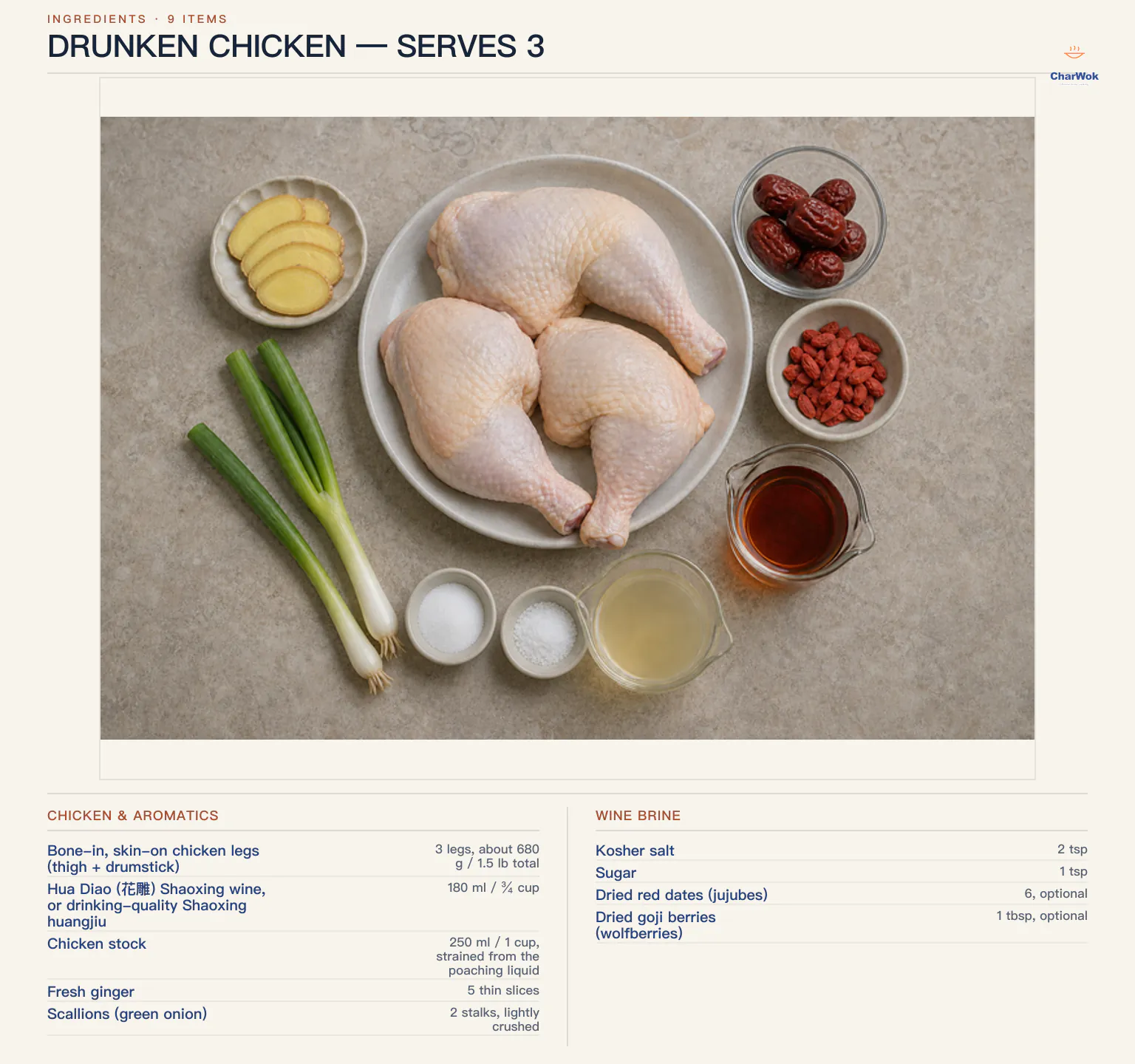
Serves 3 as a first course. The quantities are intentionally modest because the brine ratio is what matters, not the volume of meat.
| Ingredient | Amount | Notes / substitute |
|---|---|---|
| Bone-in, skin-on chicken legs (thigh + drumstick) | 3 legs, about 680 g / 1.5 lb total | Skin and bones add gelatin to the brine. Boneless skinless thighs also work, but the chilled brine will have less body. |
| Hua Diao (花雕) Shaoxing wine, or drinking-quality Shaoxing huangjiu | 180 ml / ¾ cup | Choose an unsalted bottle you enjoy drinking. Salted cooking wine may make the brine too salty; see Shaoxing rice wine for label guidance. |
| Chicken stock | 250 ml / 1 cup, strained from the poaching liquid | The poaching liquid becomes the stock. If cooking boneless meat, use a mild homemade chicken stock and adjust the salt to taste. |
| Fresh ginger | 5 thin slices | Peel only if the skin is gritty. Smash slightly to release flavor. |
| Scallions (green onion) | 2 stalks, lightly crushed | Use the whole stalk, white and green. |
| Kosher salt | 2 tsp | Diamond Crystal. If using Morton or fine table salt, start with 1½ tsp because it is denser. |
| Sugar | 1 tsp | Rock sugar or regular sugar both work; see rock sugar for the differences. |
| Dried red dates (jujubes) | 6, optional | They add mild sweetness and color. Soak for 10 minutes if very hard. |
| Dried goji berries (wolfberries) | 1 tbsp, optional | They soften in the brine and add a lightly sweet garnish. |
Method
- Debone the legs, keeping the skin intact. Lay a leg skin-down and run a paring knife along the femur and drumstick bones, scraping the meat free. Save every bone; they go into the pot. If deboning intimidates you, ask your butcher, or skip the rolls entirely and cook the legs bone-in (see the troubleshooting note below).
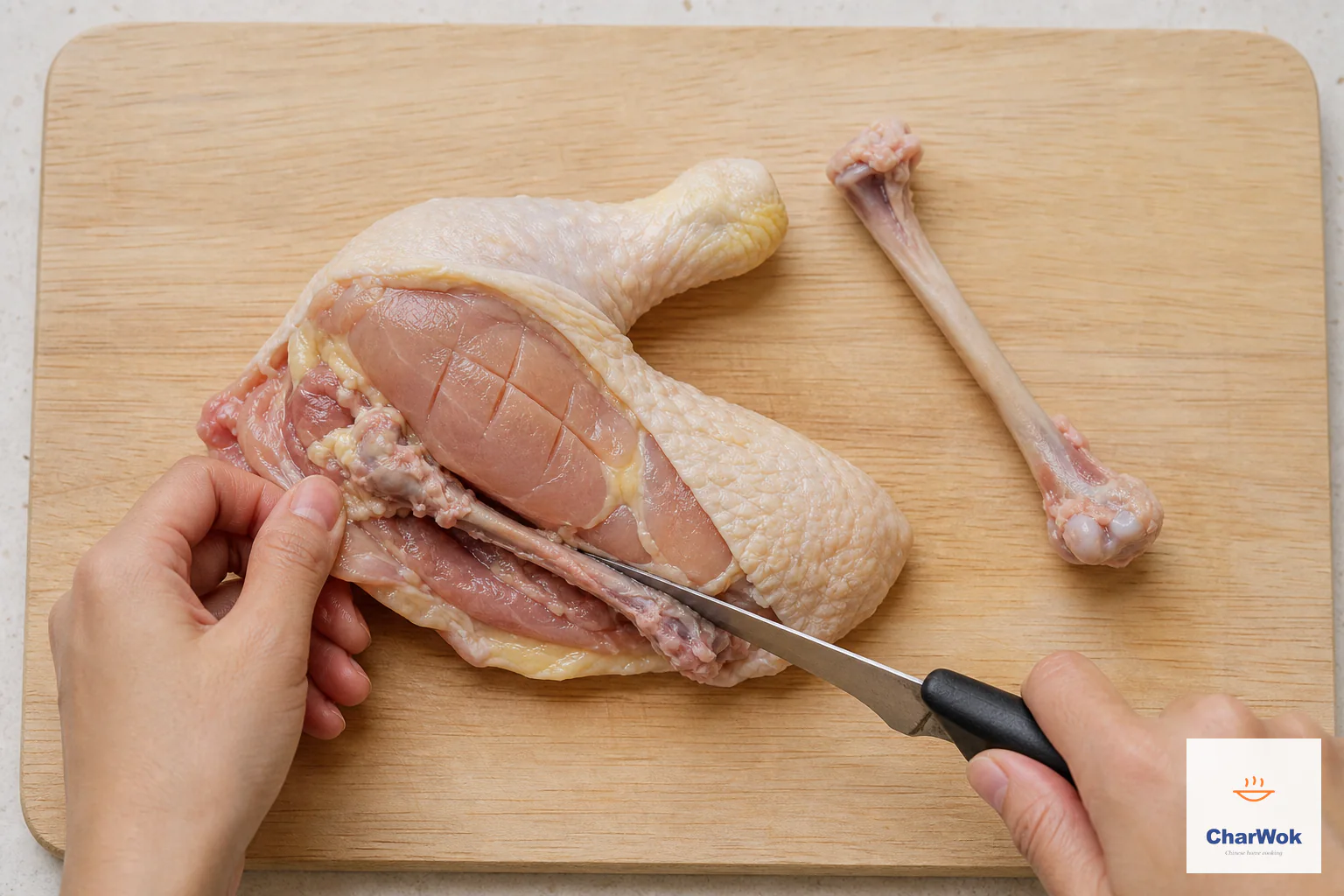
Debone each leg, save the bones, and shallowly score only the thick meat so the skin stays intact.
- Even out the thickness, then roll and tie. With the leg skin-down, score the thickest parts of the meat in a shallow crosshatch without cutting through the skin. This lets an uneven leg cook uniformly. Roll each leg into a tight cylinder and tie at 2 cm intervals with kitchen twine. Tightness matters: a loose roll slices ragged and floats apart in the brine. Foil works as a substitute tie if you have no twine, but twine gives a rounder cylinder.
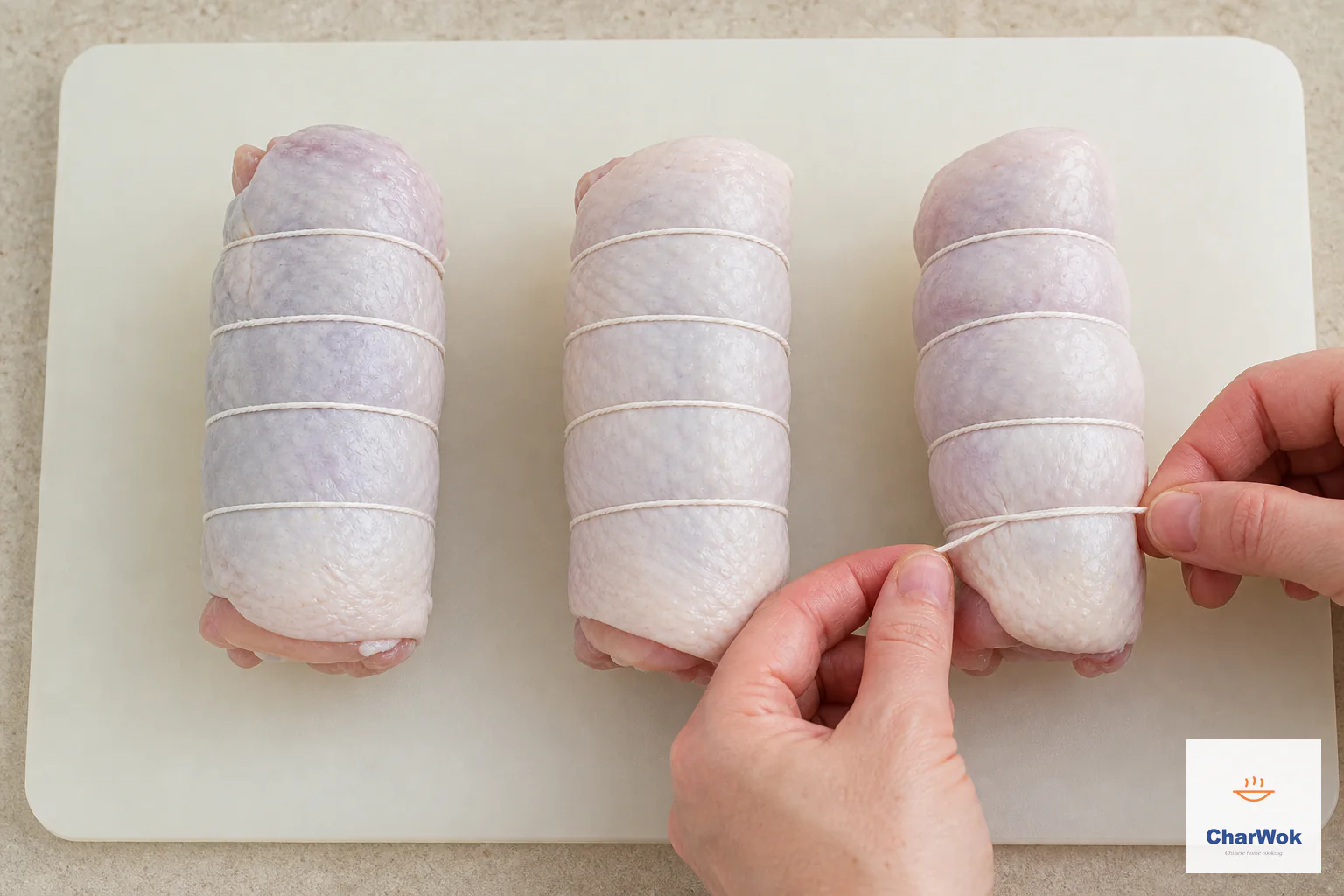
Roll all three thighs tightly with the skin outside and tie every 2 to 3 centimetres so no loose flap opens.
- Poach gently, bones included. Put the rolls and saved bones into a pot just large enough to hold them in a single layer. Add ginger, scallions, and red dates, then pour in enough cold water to cover. Bring to a full boil, immediately reduce to the lowest simmer, cover, and start checking after 10 minutes. Avoid a rolling boil.
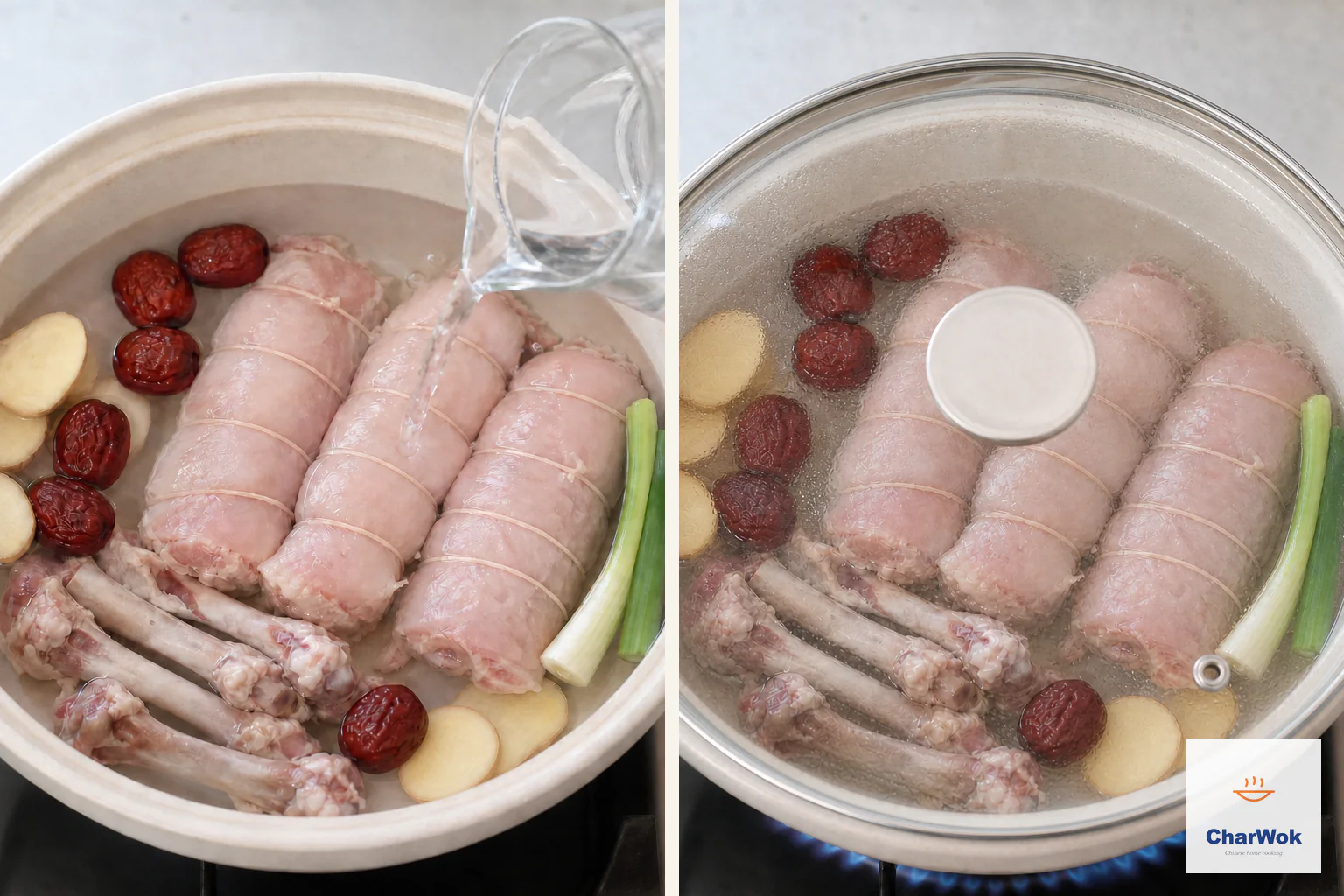
Start in cold water, bring to a full boil, reduce to the lowest covered simmer, and treat 10 minutes only as the first checkpoint.
- Finish off the heat, then measure. Move the covered pot completely off the burner and steep for 10 minutes as a starting point. Transfer each roll to a clean plate and insert a clean food thermometer into its thickest center. Every roll must reach 74°C (165°F), the USDA minimum for poultry. If any roll is cooler, return it to a simmer, cook longer, and recheck with a clean probe.
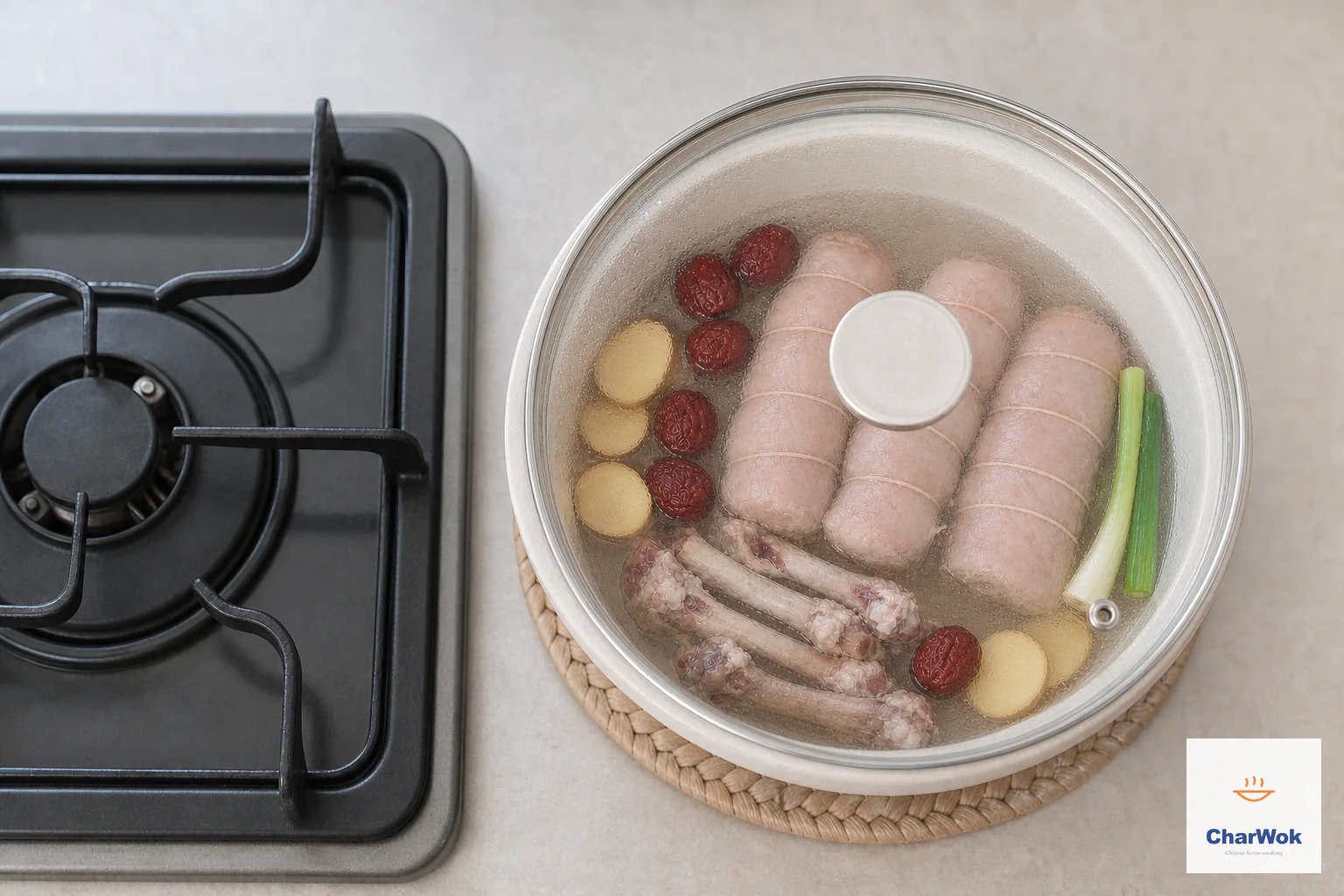
Move the covered pot off the burner and steep for 10 minutes as a starting point, then measure every roll rather than trusting the schedule.
- Chill in clean ice water. As soon as every roll is safely cooked, move it with clean utensils into the prepared ice bath. Chill for 10 minutes, drain, and place the rolls in a clean covered container in the refrigerator while you finish the brine.
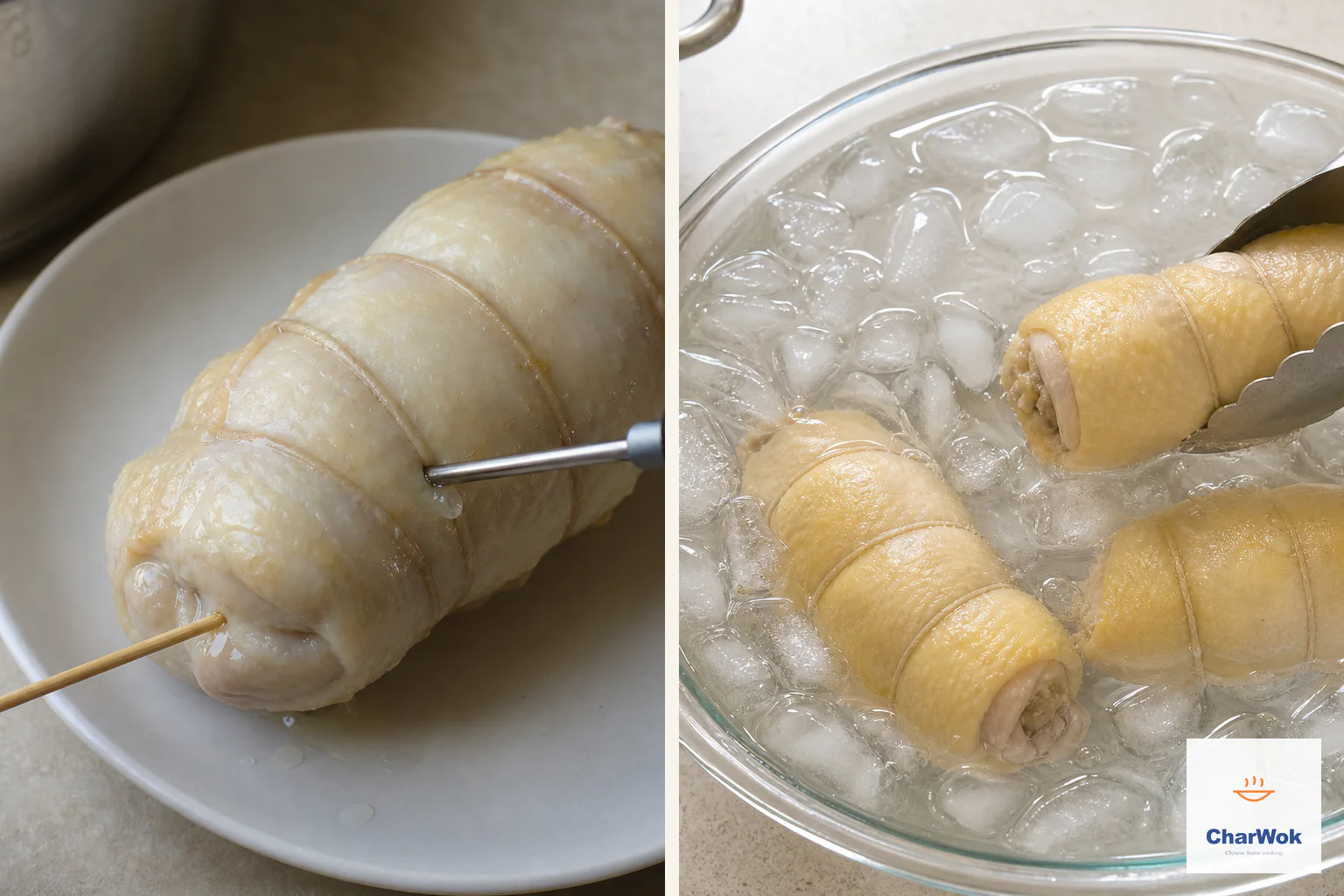
Every roll must reach 74°C (165°F); then use clean utensils to chill all three in potable ice water for 10 minutes and refrigerate.
- Cool the brine rapidly. Strain 250 ml of hot poaching stock into a shallow glass or ceramic bowl and dissolve the salt and sugar. Set that bowl in a larger ice bath and stir until cold, then add the dates, goji berries, and 180 ml Hua Diao wine. Do not leave the stock on the counter waiting to reach room temperature.
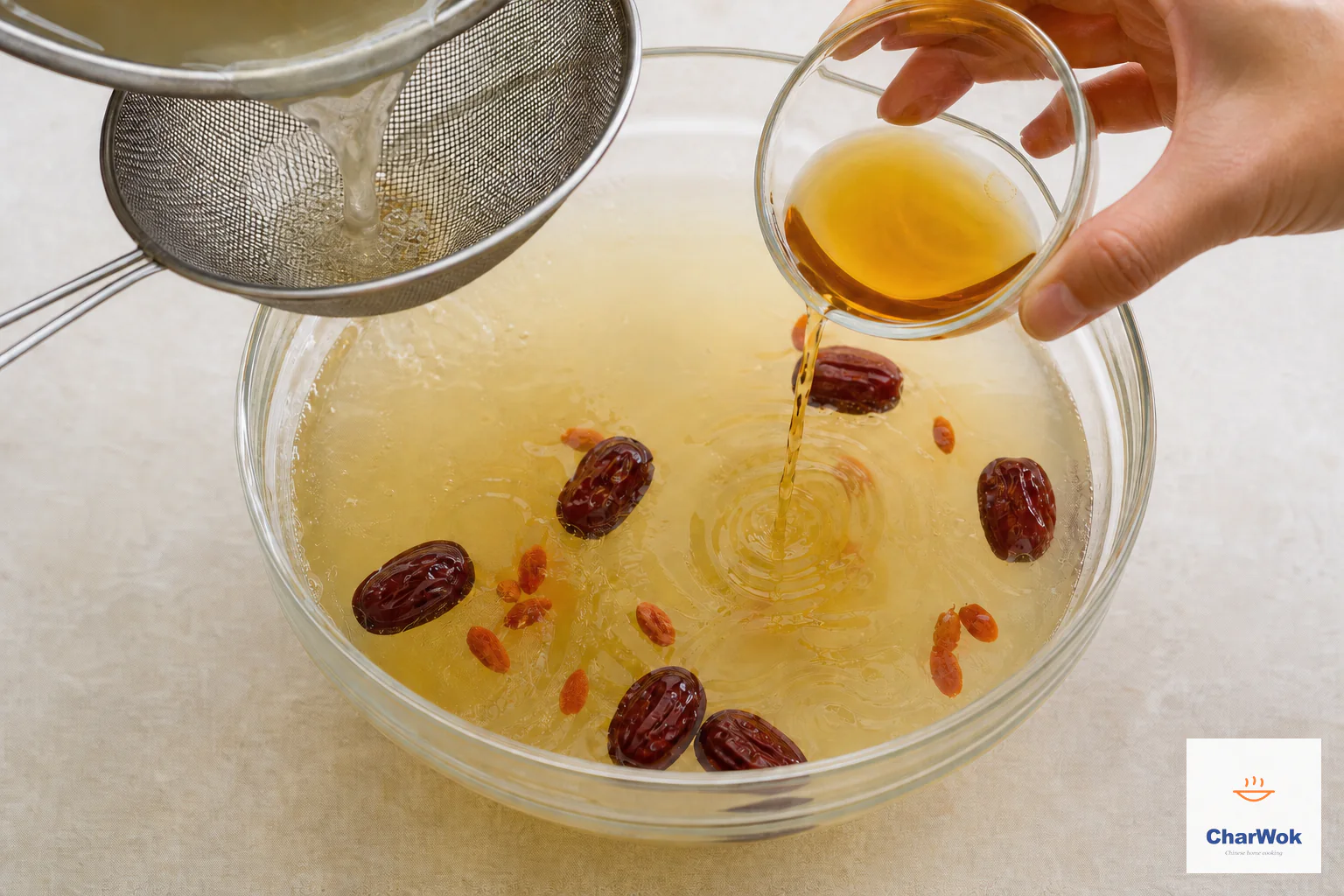
Strain 250 ml stock into a shallow nonreactive bowl, dissolve the salt and sugar, cool rapidly over ice, then add the fruit and wine.
- Submerge and refrigerate. Put the chilled rolls into the cold brine, top up with cold stock if needed, cover, and refrigerate immediately for at least 12 hours and up to 24 hours before slicing. Turn once with clean utensils if part of a roll is not submerged.
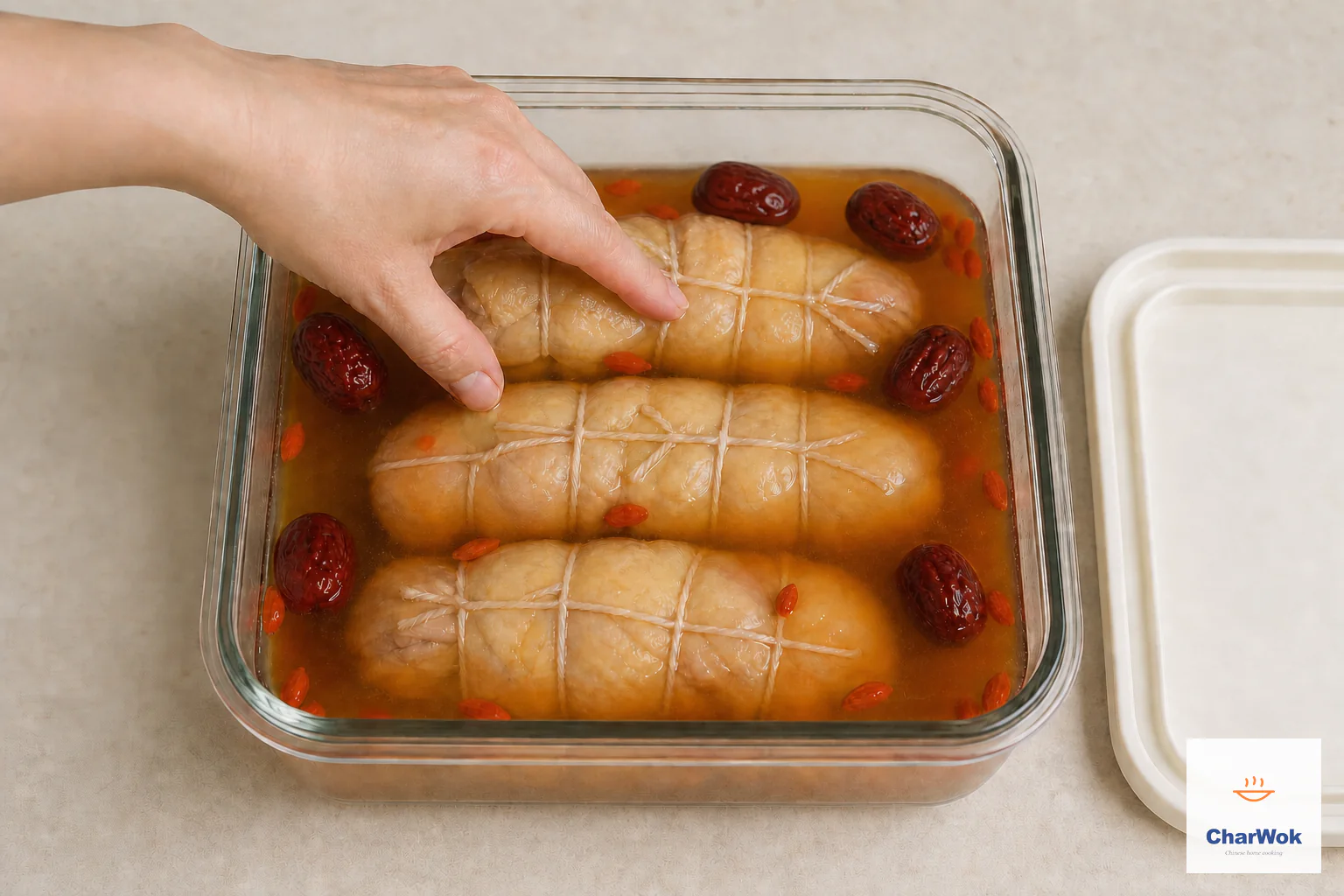
Keep the twine on for the English method, submerge every chilled roll in cold brine, cover, and refrigerate immediately.
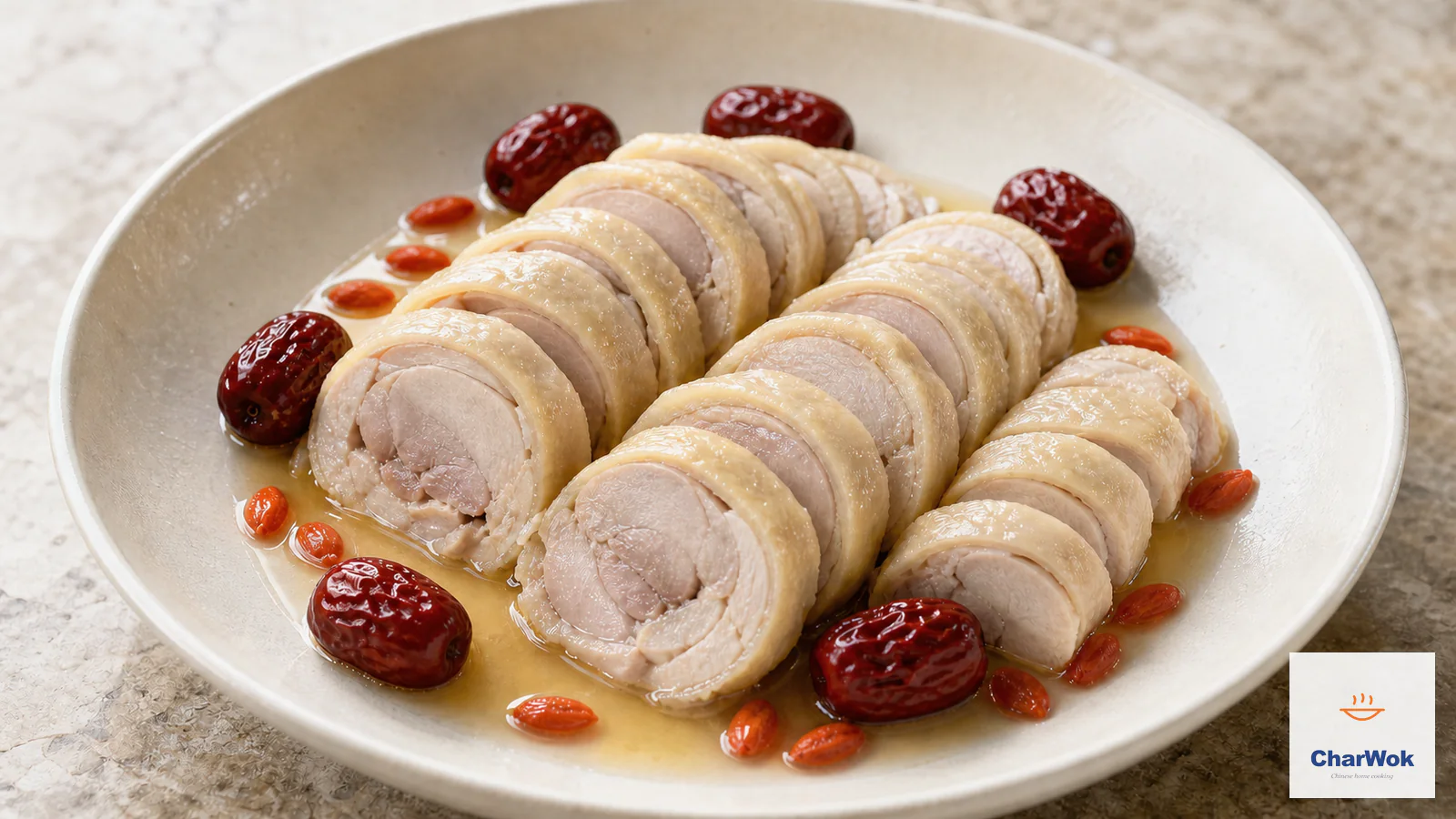
- Slice and serve cold. Lift out the rolls, snip and remove the twine, and cut crosswise into 1.5 cm / ½-inch discs. Arrange in a shallow bowl, spoon over enough brine to pool in the bottom, and scatter the plumped red dates and goji berries on top. Serve chilled, as the opening dish of a larger meal.
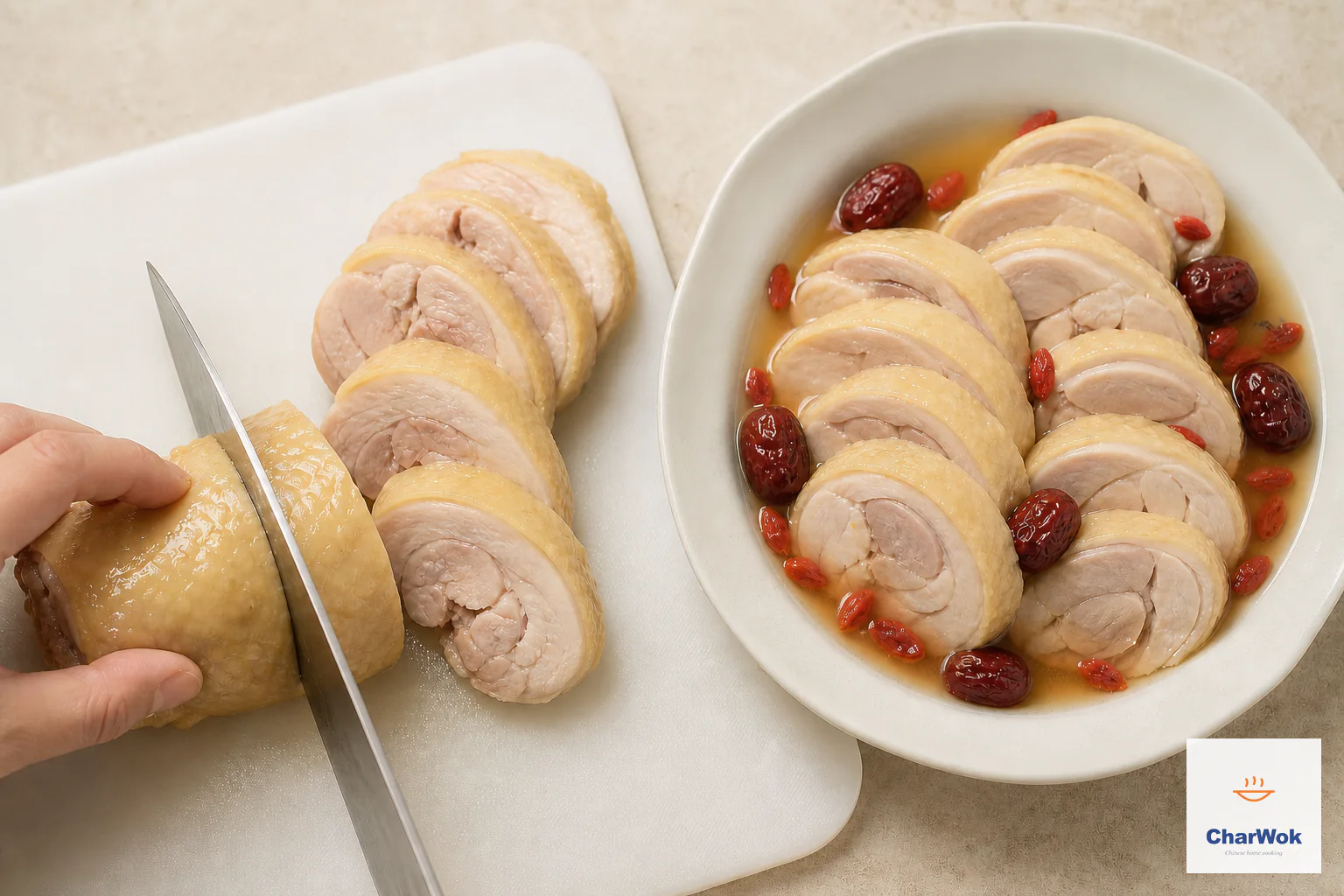
After 12 hours, ideally 24, remove the twine, cut 1.5-centimetre discs and serve cold with a little brine, dates and goji.
When things go wrong
Most problems can be traced to the wine, cooking temperature, cooling, or rolling technique.
The brine tastes harsh or bitter. Check whether the wine contains added salt or caramel color, and whether the opened bottle still tastes pleasant. Use an unsalted drinking-quality Shaoxing wine next time. For the current batch, dilute a small serving portion with cold unsalted stock; do not treat brief boiling as a way to make the dish alcohol-free.
The chicken is dry or stringy. The pot may have boiled too hard, or the rolls may have continued cooking after reaching 74°C (165°F). Use a gentle simmer, begin checking early, and move safely cooked rolls into the clean ice bath without delay.
The brine sets into a firm gel overnight. Gelatin from the skin and bones can set the stock in the refrigerator. Stir in a spoonful of cold stock to loosen only the portion you plan to serve, and keep the remaining chicken refrigerated.
The slices fall apart. The roll was tied too loosely, or you sliced while the meat was still warm. Cold meat slices cleanly; warm meat shreds. Chill the rolls thoroughly, and use a thin, sharp knife wiped between cuts.
The flavor is only on the outside. Keep the rolls fully submerged and allow up to 24 hours for a stronger flavor. The total refrigerated storage clock starts when the chicken is cooked, not after marinating ends.
Variations and pairings
The wine brine is a base you can bend. For a deeper, more savory version, swap a tablespoon of the wine for a tablespoon of light soy sauce, leaning toward the seasoning profile of soy sauce chicken; the color will darken and the umami will sharpen. A slice or two of fresh galangal alongside the ginger pushes the dish toward a more aromatic, almost Southeast-Asian register.
For other chicken preparations with different finishes, compare salt-baked chicken, Chinese smoked chicken, and ginger chicken. Their cooking and safety checks differ, so follow the method on the selected recipe rather than transferring this page's timing.
Because drunken chicken is served cold and slightly sweet-savory, it wants crisp, acidic, or bitter neighbors on the table. A plate of smashed cucumber salad or one of the three-way cucumber salads cuts the richness, and a tangle of cold noodles with Sichuan dressing turns the appetizer course into a light summer meal. For a more substantial spread, lay it out as the cold opener to a multi-dish Chinese feast, followed by something hot and contrasting.
Storing and making ahead
Keep drunken chicken at 4°C (40°F) or below and use it within 3 to 4 days of cooking, including the 12- to 24-hour soak. Serve a small portion at a time and return the rest to the refrigerator. Discard chicken left out for more than 2 hours, or 1 hour when the air temperature is above 32°C (90°F). These limits follow USDA leftovers guidance. Freezing is possible but may soften the texture after thawing in the refrigerator. Serve with jasmine rice, or browse the chicken collection for other methods.
Questions home cooks ask
Can I make drunken chicken with chicken breast instead of legs? Yes, but breast is leaner and contributes less gelatin. Do not shorten the cook to a fixed number of minutes; start checking earlier and cook every piece to 74°C (165°F).
Why did my brine turn to jelly in the fridge? Gelatin from the skin and bones set as the stock chilled. Loosen the portion you are serving with a spoonful of cold stock, and keep the rest refrigerated.
Does drunken chicken contain alcohol? Yes. The wine is added after cooling, so this recipe should be treated and labeled as alcoholic. Briefly boiling wine does not provide a verified alcohol-free result. People who are pregnant should avoid it because the CDC identifies no known safe amount of alcohol during pregnancy. For children or anyone avoiding alcohol, reserve cooked chicken before adding wine and season that separate portion with cold stock, ginger, salt, and a little rice vinegar.
What can I substitute for Shaoxing wine? Dry sherry can provide a similarly nutty flavor, but it still contains alcohol. For an alcohol-free version, do not use a wine substitute; prepare a separate cold chicken in seasoned stock and expect a different dish.
Do I have to roll and tie the chicken? No. Rolling creates round slices, but whole boneless legs can be poached and sliced. Check the thickest center of every piece rather than assuming the same timing will apply.
How long does drunken chicken keep? Keep it at 4°C (40°F) or below and use it within 3 to 4 days of cooking, counting the marinating time. Discard it after more than 2 hours at room temperature, or 1 hour above 32°C (90°F).
A final word
The dependable sequence is simple: cook every roll to 74°C (165°F), cool the chicken and brine rapidly, keep the dish refrigerated, and allow 12 to 24 hours for seasoning. The schedule guides the workflow; the thermometer and cold chain establish safety.