The first few times I made red braised pork belly, I got the color right and the tenderness wrong. The cubes looked like polished mahogany, but they fought back when you bit into them. I assumed the problem was the cut of meat. It wasn't. The problem was that I'd skipped the part that actually does the work: a long, lazy simmer in wine and soy, with almost nothing in the pot. Hong shao rou (红烧肉) is not a complicated dish. It is a patient one. Strip away the spices and the sugar and you are left with two ideas, braised pork that surrenders to the heat, and a sauce that turns lacquered and glossy in the final minutes. Get those two things and the rest is decoration.
This is the version I cook on a weeknight when I want the deep, slightly sweet, faintly winy character of the classic Shanghai or Hunan style without standing over the stove. It uses one pot and about eight ingredients, most of them already in your pantry if you cook Chinese food at home. If you are new to Chinese soy sauce or Shaoxing rice wine, this is a forgiving place to learn how they behave together.
At a glance: 600 g pork belly, 250 ml Shaoxing wine as the main cooking liquid, simmer 60 to 90 minutes, then drive off the liquid hard with rock sugar for the glaze. The two make-or-break moments are a real braise (low, slow, covered) and a vigorous final reduction that leaves the sauce clinging to the meat, not pooling like soup.
What red cooking actually means
"Red cooking" (卤, lu, or 红烧, hong shao) is a family of slow braises built on soy sauce, wine, sugar and warm spices. The name refers to the dark reddish-brown color the meat takes on, partly from caramelized sugar and partly from dark soy. It is one of the oldest flavor systems in Chinese home cooking, and once you understand it you can apply the same backbone to chicken wings, beef shank, hard-boiled eggs or tofu. The pork belly version is the dish everyone meets first, and for good reason: belly has the fat and collagen that turn silky in a long braise, where a leaner cut would just go dry.
Regionally there are endless arguments about whose hong shao rou is the real one. The Shanghai style leans sweet and glossy. The Hunan Mao family version uses less sugar and more chili. Northern versions are darker and drier. This recipe sits closer to the Shanghai end, because that lacquered, sticky finish is the one most home cooks fall in love with, and it is also the most foolproof to get right in a Western kitchen.
Choosing and cutting the pork
Use skin-on, boneless pork belly. Skinless will work but you lose the gelatinous texture that makes the sauce cling. Look for a slab with a clear, even layering of fat and lean. If your grocery store only sells pre-sliced bacon-thin belly, go to a butcher or an Asian market and ask for a whole piece; it makes a real difference here.
Cut the slab into generous cubes, roughly the size of a golf ball. Go larger rather than smaller. Tiny pieces overcook and shred; chunky ones hold their shape through a long braise and look right on the plate. I once cut mine too neat and small trying to be precise, and by the ninety-minute mark half of them had dissolved into the sauce. Now I cut chunky and don't stress about perfect geometry.
Ingredients
Ingredients at a glance
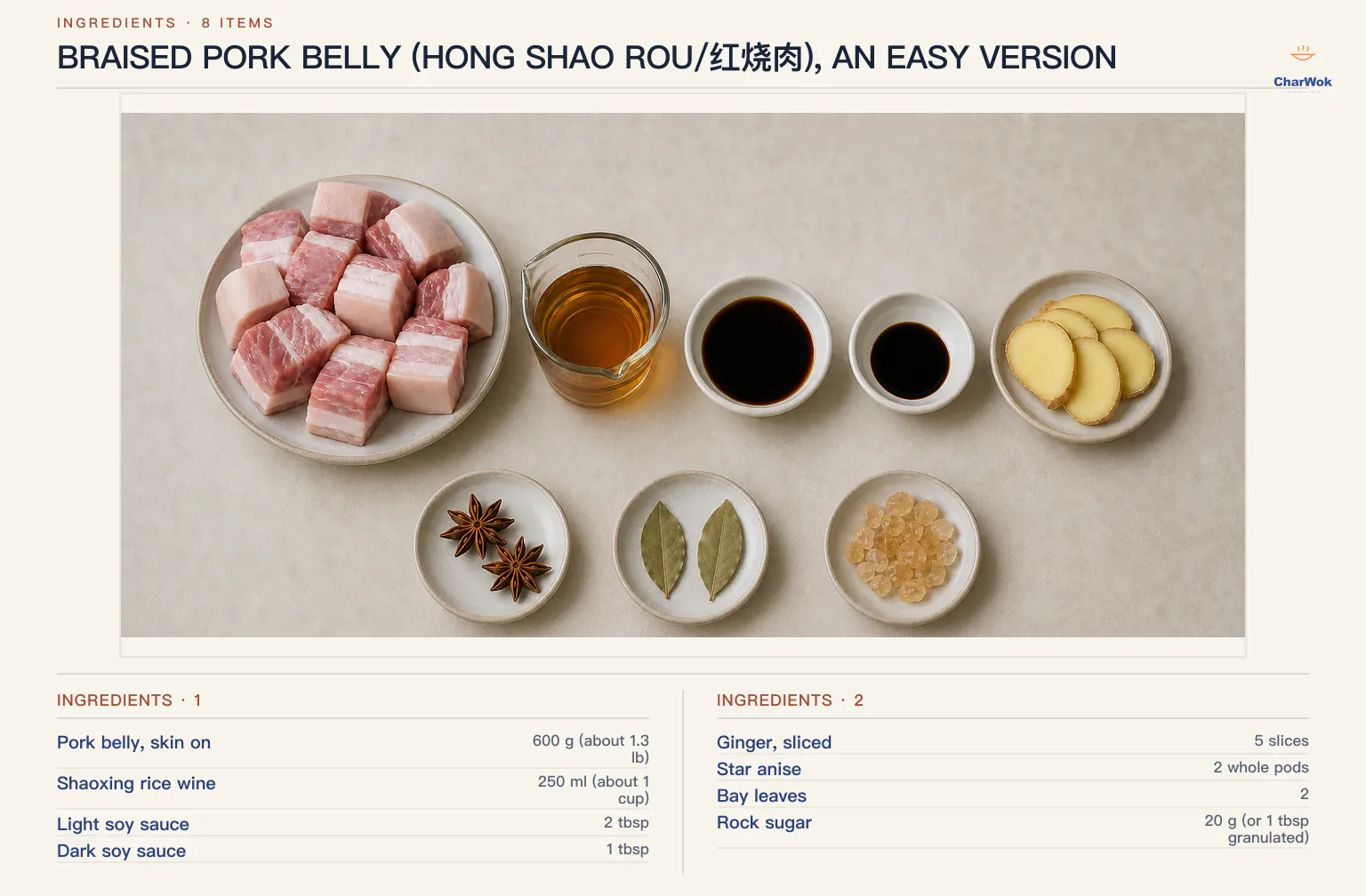
| Ingredient | Amount | Notes / substitute |
|---|---|---|
| Pork belly, skin on | 600 g (about 1.3 lb) | One slab is best. Skinless works but is less silky. |
| Shaoxing rice wine | 250 ml (about 1 cup) | The main cooking liquid. The closest Western stand-in is an off-dry sherry; avoid "cooking wine" with added salt. |
| Light soy sauce | 2 tbsp | For salt and savory depth. Regular Chinese light soy is what you want, not low-sodium. |
| Dark soy sauce | 1 tbsp | For color. If you can't find it, use more light soy and accept a paler finish. |
| Ginger, sliced | 5 slices | Smashed slightly to release flavor. Don't substitute powder here. |
| Star anise | 2 whole pods | No whole pods? A pinch of five-spice powder (star anise is its dominant note) will carry the dish. |
| Bay leaves | 2 | Standard bay leaves are fine. They add a mild, slightly resinous warmth. |
| Rock sugar | 20 g (or 1 tbsp granulated) | Rock sugar gives a clearer, less cloying sweetness and a better glaze. Brown sugar is an acceptable swap. |
The method, step by step
- Blanch the pork first, always. Put the cubes in a pot and cover with cold water. Bring to a boil over high heat. As it boils, gray foam and scum will rise. Skim it. Starting in cold water draws the impurities out gradually; dropping meat into boiling water seals the surface and traps them inside, leaving you with a cloudy, muddy-tasting sauce. Drain and rinse the pork under running water. This single step is why restaurant hong shao rou tastes clean and clean-tasting while many home versions taste murky.
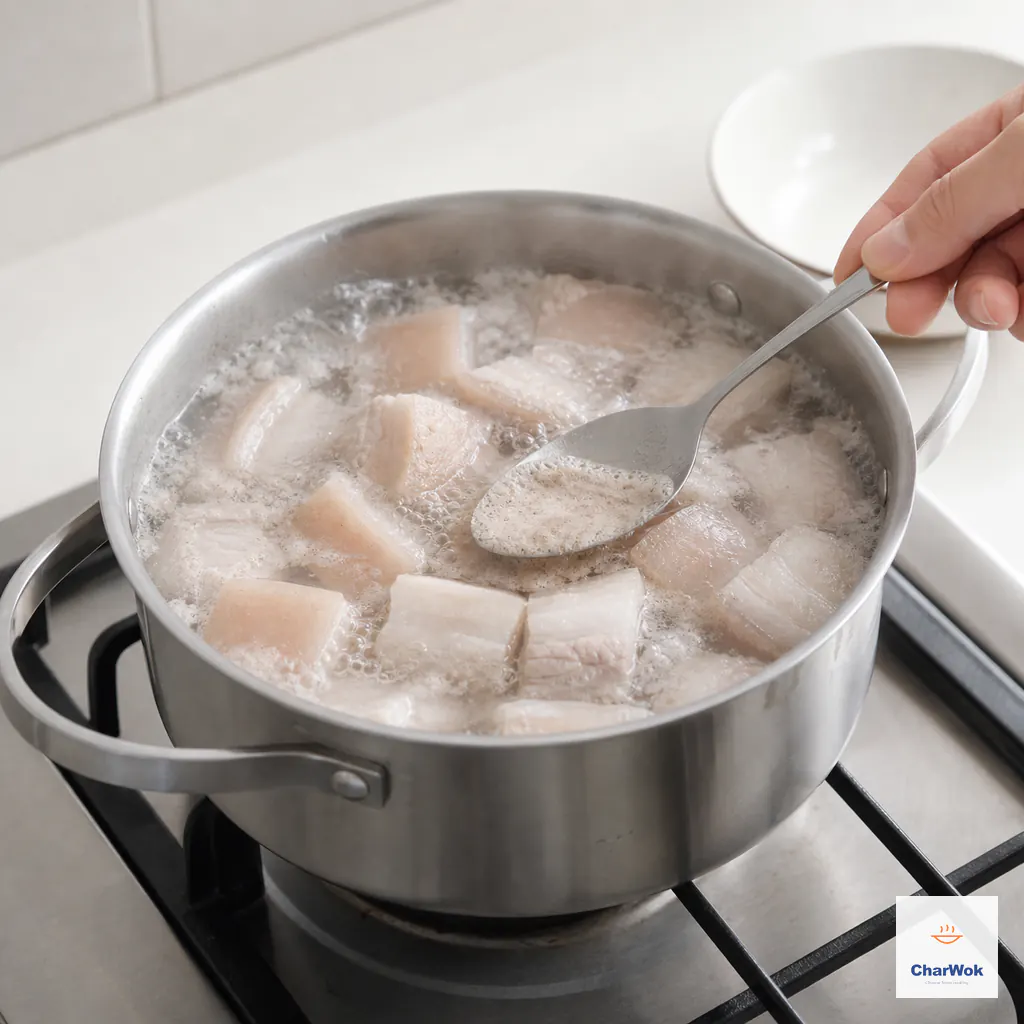
Skim the gray foam, then drain and rinse the blanched pork
- Load the braise pot. Put the rinsed pork into a clean, heavy pot, ideally a smallish one so the meat sits in a tight layer. Pour in the Shaoxing wine, then top up with hot water just until the liquid barely covers the meat. Add the light soy, dark soy, ginger, star anise and bay leaves. A smaller pot matters because the pork needs to sit submerged; in a wide Dutch oven 600 g of belly spreads out and half of it pokes above the liquid.
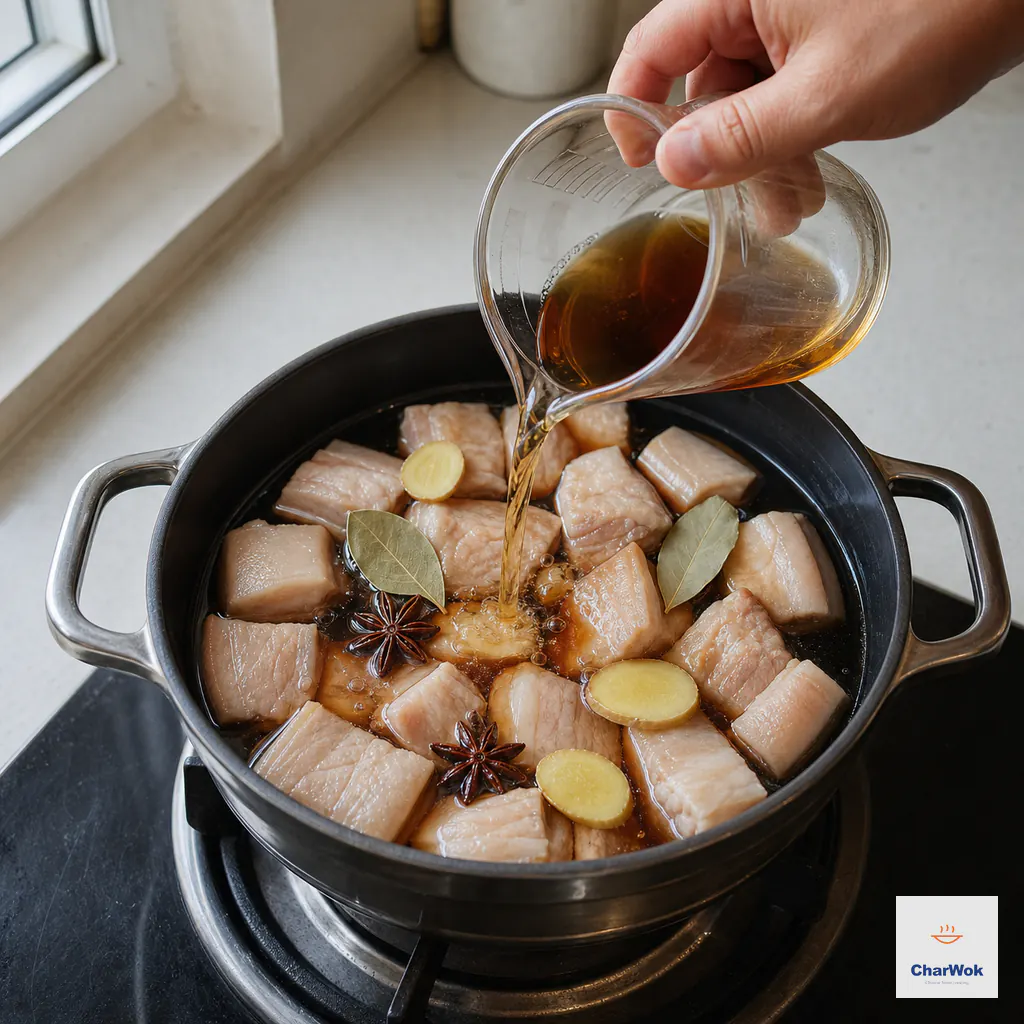
Use a small pot and add liquid only until it barely covers the pork
- Simmer low and covered. Bring it to a full boil, then drop the heat to the lowest setting that still maintains a gentle simmer. Cover with a tight lid and leave it for 60 to 90 minutes. Check occasionally and stir so nothing catches on the bottom. You are looking for cubes that yield to a fork with almost no resistance. Underdone is the most common failure, not overdone. If in doubt, give it another 15 minutes.
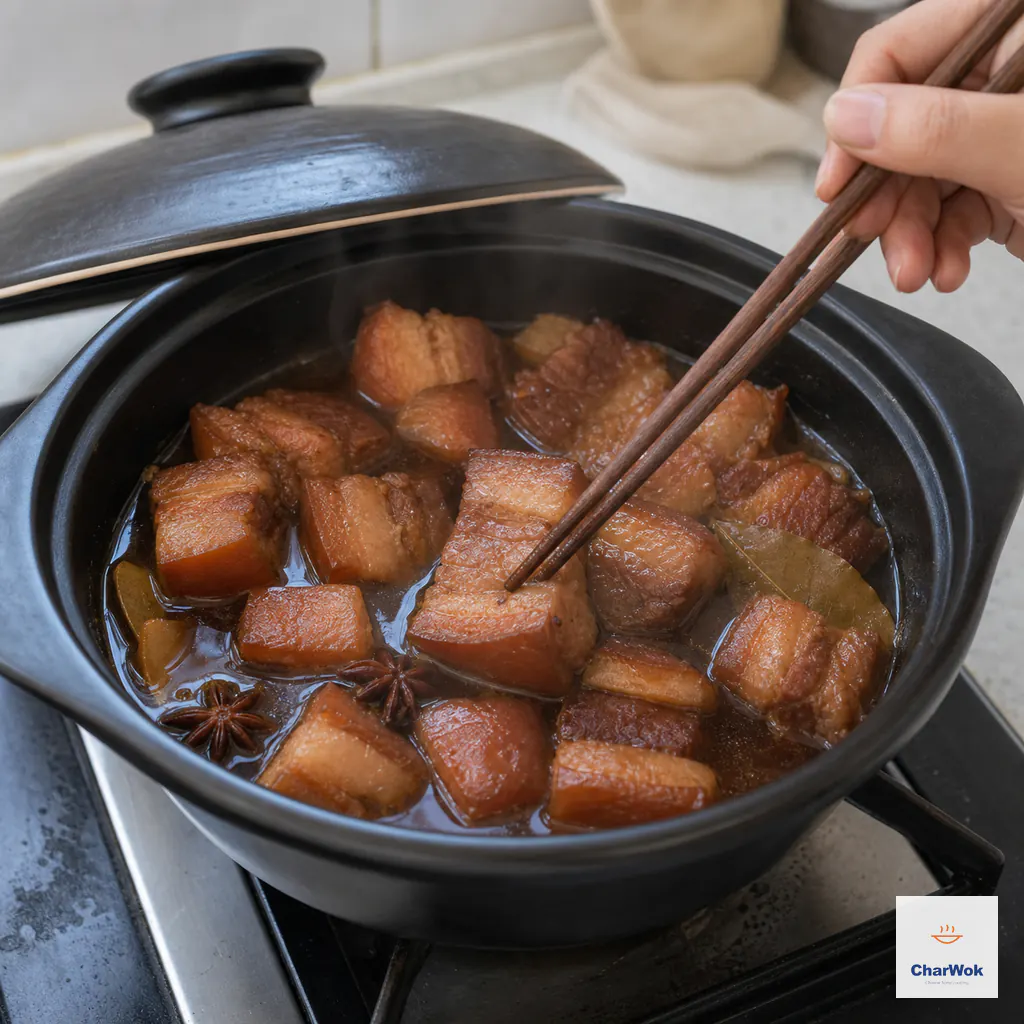
Keep only a lazy simmer until the thickest cube yields with little resistance
- Hold the sugar until the end. This is the part many recipes bury: do not add the sugar at the start. Sugar in a long braise can make the meat fibers tighten and the sauce turn harsh. Add it now, with the lid off.
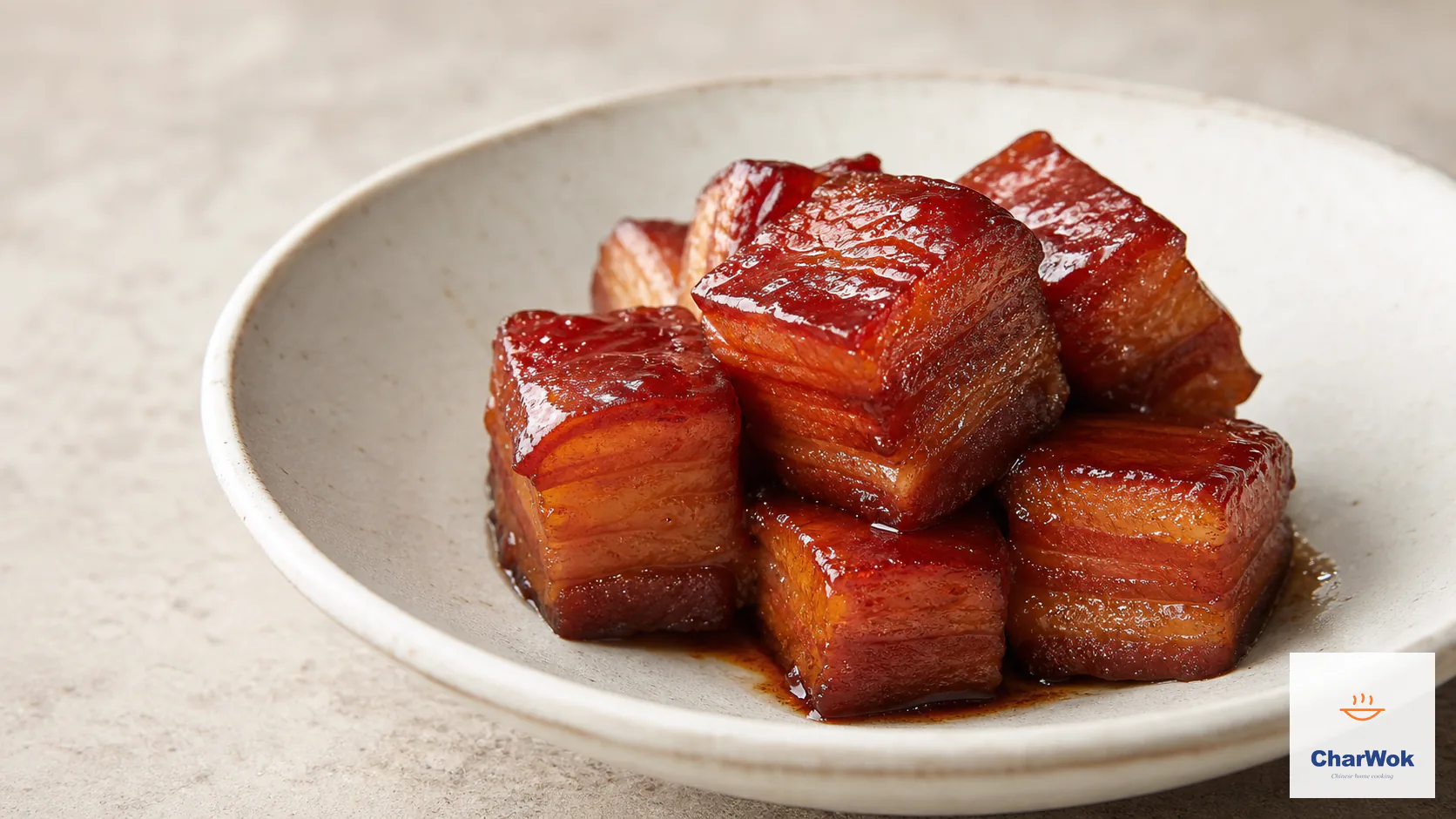
- Reduce hard for the glaze. Uncover, add the rock sugar, and turn the heat to high. Let it roll at a hard, rolling boil, stirring often so the meat glazes evenly rather than burning on one side. The liquid will reduce and darken. Stop when only a thick, glossy film remains, clinging to each cube. It should coat the pork, not pool around it. This takes roughly 8 to 15 minutes. Watch the last five minutes closely, sugar crosses from caramelized to burnt very fast.
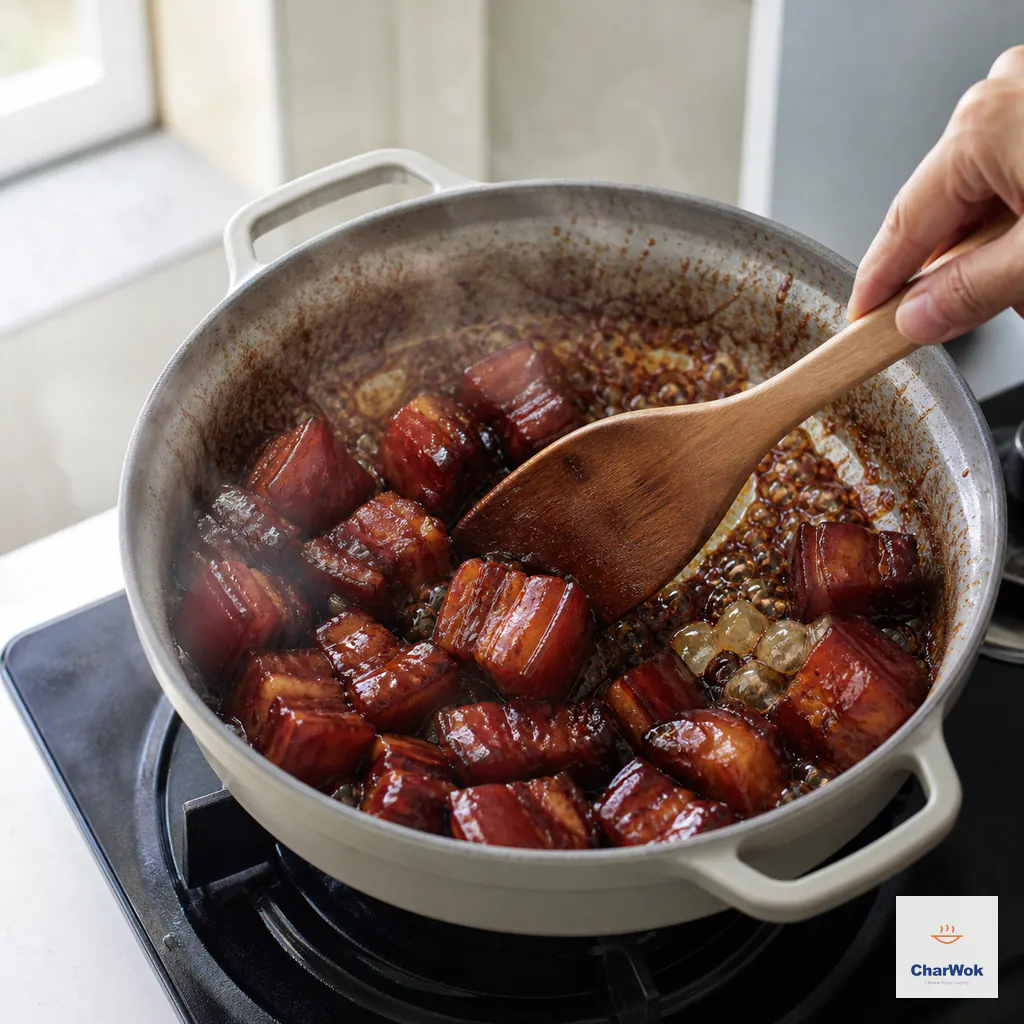
Add sugar only after tender, then reduce until the glaze clings and no sauce pools
- Serve immediately. Scoop the pork over hot steamed rice so the sauce soaks in. Red braised pork is not a dish that benefits from resting; the glaze sets up as it cools and you want it loose and shiny.
Why each step works
The science is unromantic but useful. The long covered simmer dissolves the collagen in the connective tissue into gelatin, which is what gives the meat that yielding, lip-sticking texture and what thickens the sauce without any cornstarch. Wine rather than water as the braising liquid does two jobs: its alcohol carries aromatic compounds from the ginger and spices into the meat, and its acidity keeps the muscle fibers from collapsing into mush. Skipping wine, or watering it down too much, is why some versions taste flat.
The final hard reduction is Maillard and caramelization working together. As water boils off, the temperature of the remaining liquid climbs past 100°C, the sugars and amino acids brown, and the sauce turns from thin broth to lacquer. If you stop too early you get soup; if you go too far you get candy and then carbon. The window for "just right" is only a few minutes wide, which is why you stir and watch.
When things go wrong
The meat is tough. It was not cooked long enough. Belly needs time to convert its collagen. Add a splash of hot water back to the pot, cover, and simmer another 20 to 30 minutes. There is no shortcut here, and no amount of sugar or soy will fix undercooked pork.
The sauce is thin and soupy. Either you added too much liquid at the start, or you did not reduce hard enough at the end. Pour off the excess into a measuring cup, then boil the remaining sauce down with the pork until it coats a spoon. You can always reduce more; you cannot easily un-reduce.
The sauce tastes burnt or bitter. The sugar went too far in the final reduction, or the heat was too high and the bottom scorched. Once it burns you cannot fully save it. Tip out the sauce, deglaze the pot with a little water, add fresh soy and a small amount of sugar, and toss the pork to recoat. It will be paler but salvageable. Next time, stir more and pull the pot a minute sooner.
The color is pale and grayish. You skipped or skimped on the dark soy, or the final reduction was too short. Dark soy is mostly there for color; the long boil concentrates it. A thin, pale sauce usually means you stopped reducing before the sugars caramelized.
It tastes too sweet. You added too much sugar or reduced too far. Dilute with a splash of hot water and a teaspoon of light soy to bring back savory balance. Rock sugar is less cloying than white sugar, which is why traditional recipes call for it.
Variations and pairings
Once you have the base, the dish takes variation easily. Drop in peeled hard-boiled eggs or cubed firm tofu for the last 20 minutes and they will soak up the sauce beautifully; these are classic "red-cooked eggs." Add a few dried shiitake mushrooms, rehydrated and quartered, for an earthy note. For heat, tuck in a couple of dried red chilies with the star anise.
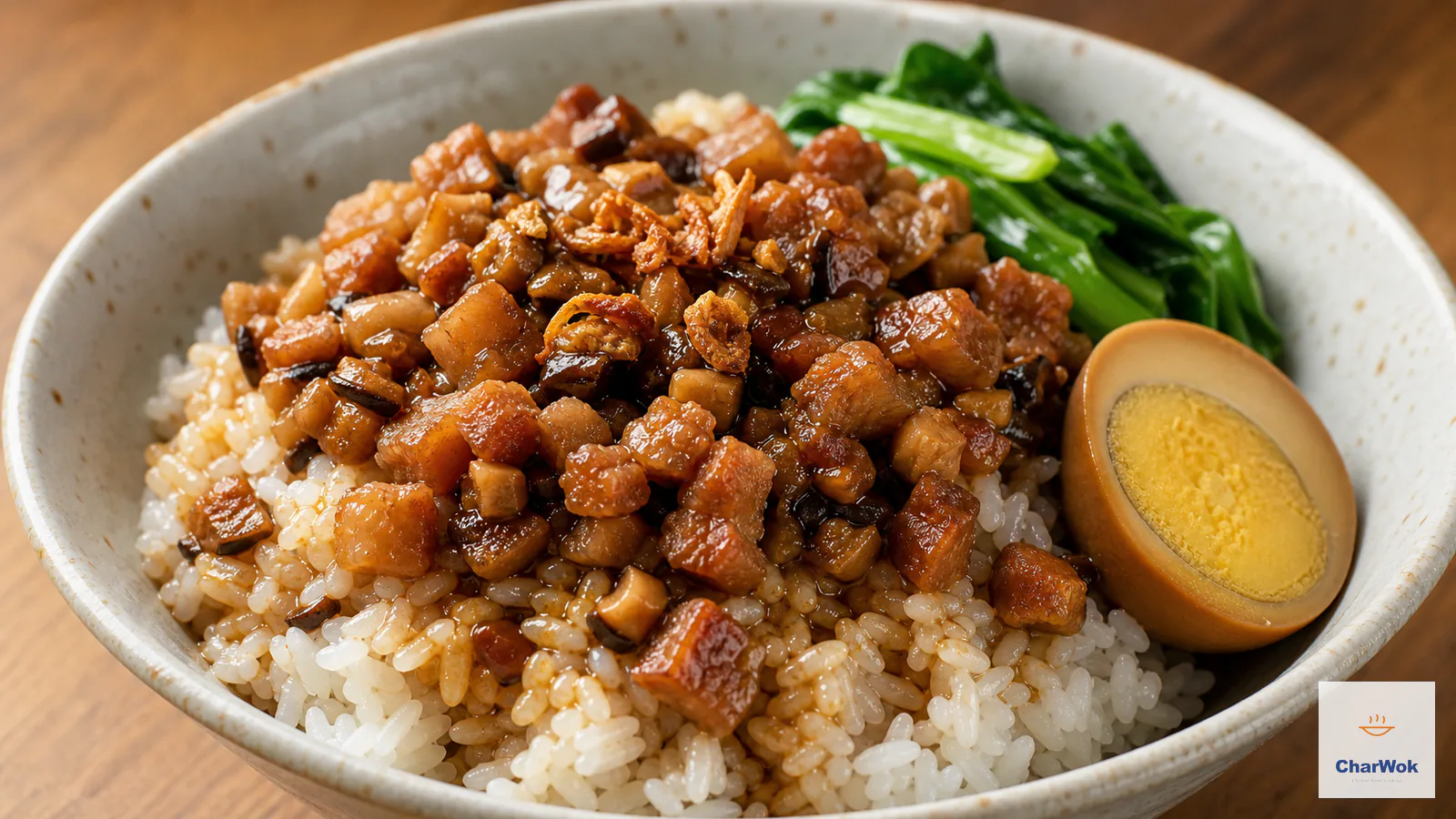
The same red-cooking liquid is the ancestor of other braised classics. Braised chicken wings use the same logic on a leaner, quicker-cooking protein. Braised beef shank applies it to a cut that needs even longer. If you want the concentrated pork flavor without the cubes, lu rou fan, the Taiwanese minced-pork rice bowl, is a cousin built on a similar soy-sugar-wine trinity.
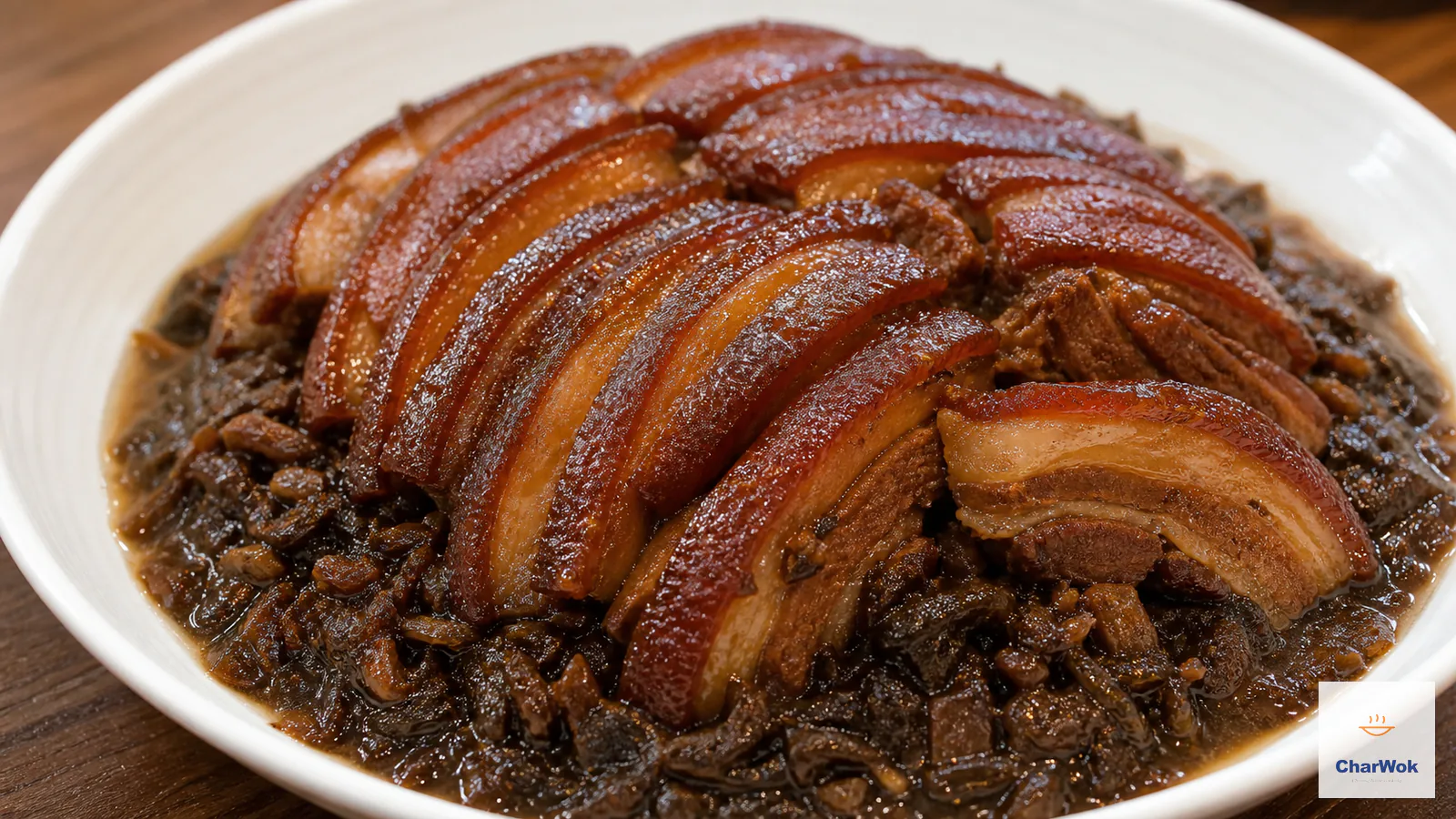
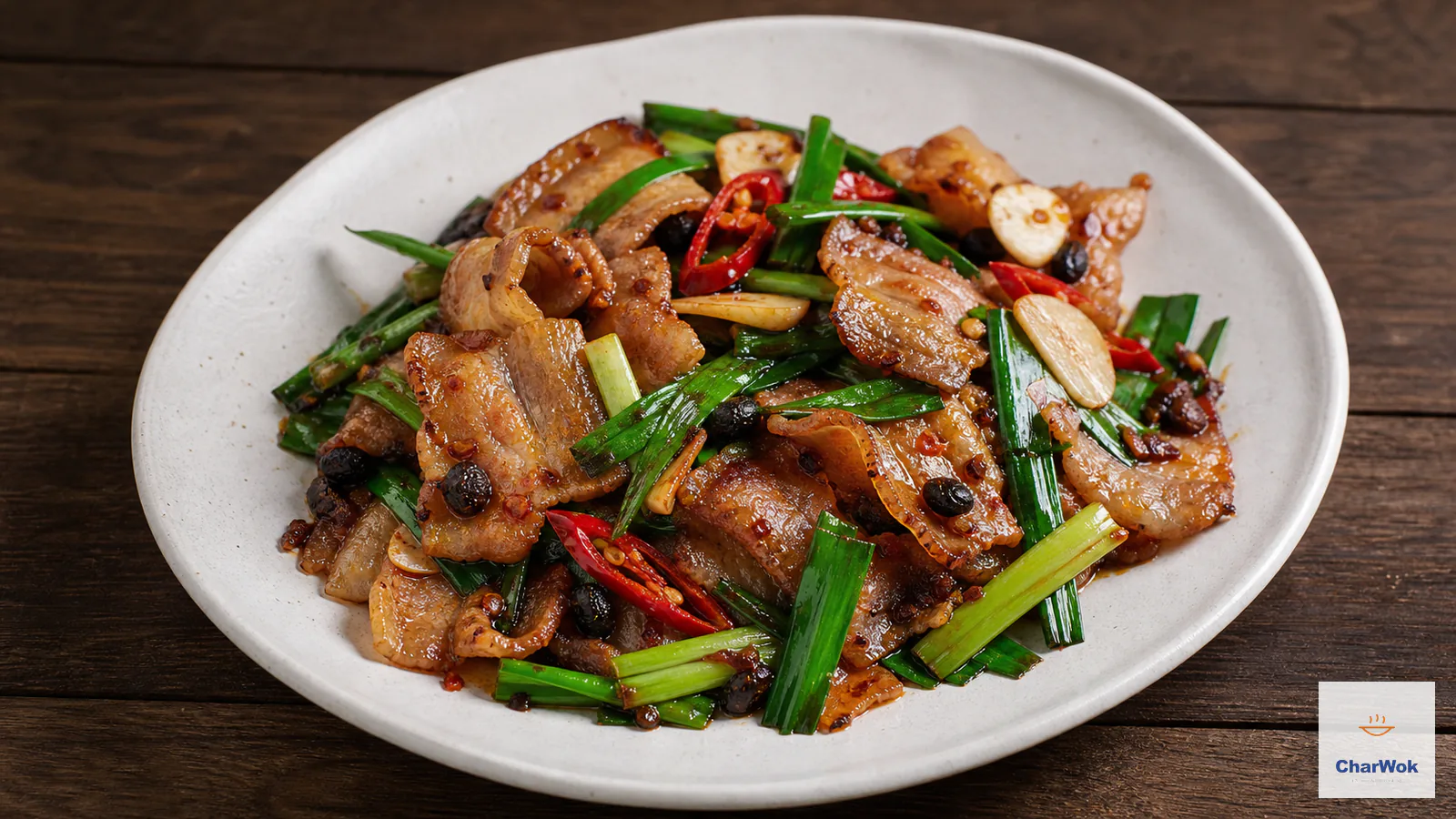
For a richer pork-belly project on a day with more time, mei cai kou rou layers belly over preserved mustard greens, and gua bao tucks sliced belly into steamed buns. The Hunan classic twice-cooked pork takes precooked belly in a spicier, quicker direction. And if you ever want a tour of what this protein can do across a menu, the round-up of essential Chinese pork recipes is a good map. For something sweeter and stickier in a different register, sweet and sour ribs use a similar sugar-driven glaze on ribs.
On the side, keep it simple and green. A quick bok choy stir-fry or Chinese broccoli (gai lan) gives the bitterness and crunch the richness needs. Steamed rice is not optional here; the sauce is the point of the dish and it needs somewhere to land. Plain jasmine rice is ideal, and leftover rice becomes tomorrow's soy sauce fried rice.
Storing and reheating
Red braised pork keeps better than almost anything else in the Chinese repertoire. The flavor deepens overnight as the spices and soy meld. Kept chilled it will hold for about three days, and frozen it stays good for roughly two months. The fat will set into a pale cap on top, which you can scoop off if you want a lighter sauce, or leave on for full richness.
Reheat gently in a pot over low heat with a splash of water to loosen the glaze back into a sauce. Defrost frozen portions fully before reheating so the meat warms through evenly without the sauce scorching. Microwave reheating tends to toughen the lean parts; use the stove when you can.
This is one of those dishes that genuinely improves on day two, which makes it ideal for cooking ahead when you have people over. I often braise it the day before a dinner, chill it, and finish the reduction just before serving. The make-ahead approach also lets you lift off the solidified fat cleanly for a cleaner-tasting sauce. It pairs well with the make-ahead mindset in this collection of do-ahead Chinese dishes.
Frequently asked questions
Can I use water instead of Shaoxing wine? You can, but the dish loses most of its character. Wine is both the braising liquid and a flavor here. A 50/50 split of wine and water still works; all water gives you boiled pork in soy sauce. An off-dry sherry is the best non-Shaoxing option.
Do I really need to blanch the pork? Yes. Blanching in cold water pulls out the blood and albumin that would otherwise cloud and sour the braise. Skipping it is the single most common reason a home version tastes dull next to a restaurant one.
Why add the sugar at the end instead of the start? Sugar added early can tighten the meat and turn the long braise slightly harsh. Adding it for the final reduction keeps the pork tender and lets the caramelization happen only in the glaze, where you want it.
Can I make this in a pressure cooker or slow cooker? A pressure cooker cuts the simmer to about 25 minutes under pressure; finish the reduction uncovered on the stove afterward. A slow cooker works for the braise but will not reduce the sauce, so transfer to a pot for the glaze step. The stovetop version still gives the best texture.
Is there a non-alcoholic substitute for Shaoxing wine? A mix of half water and half unsweetened apple cider or white grape juice, with a splash of rice vinegar, approximates the acidity and fruit. The flavor will not be as deep, but it is a fair stand-in for cooks who avoid alcohol.
To tie it together: red braised pork belly rewards the two things most home cooks skip, a real blanch and a real braise, and punishes the one thing most rush, the final reduction. Get the simmer long enough that a fork meets no resistance, then watch the glaze like a hawk for those last few minutes. Do that and the rest of the recipe will forgive you.