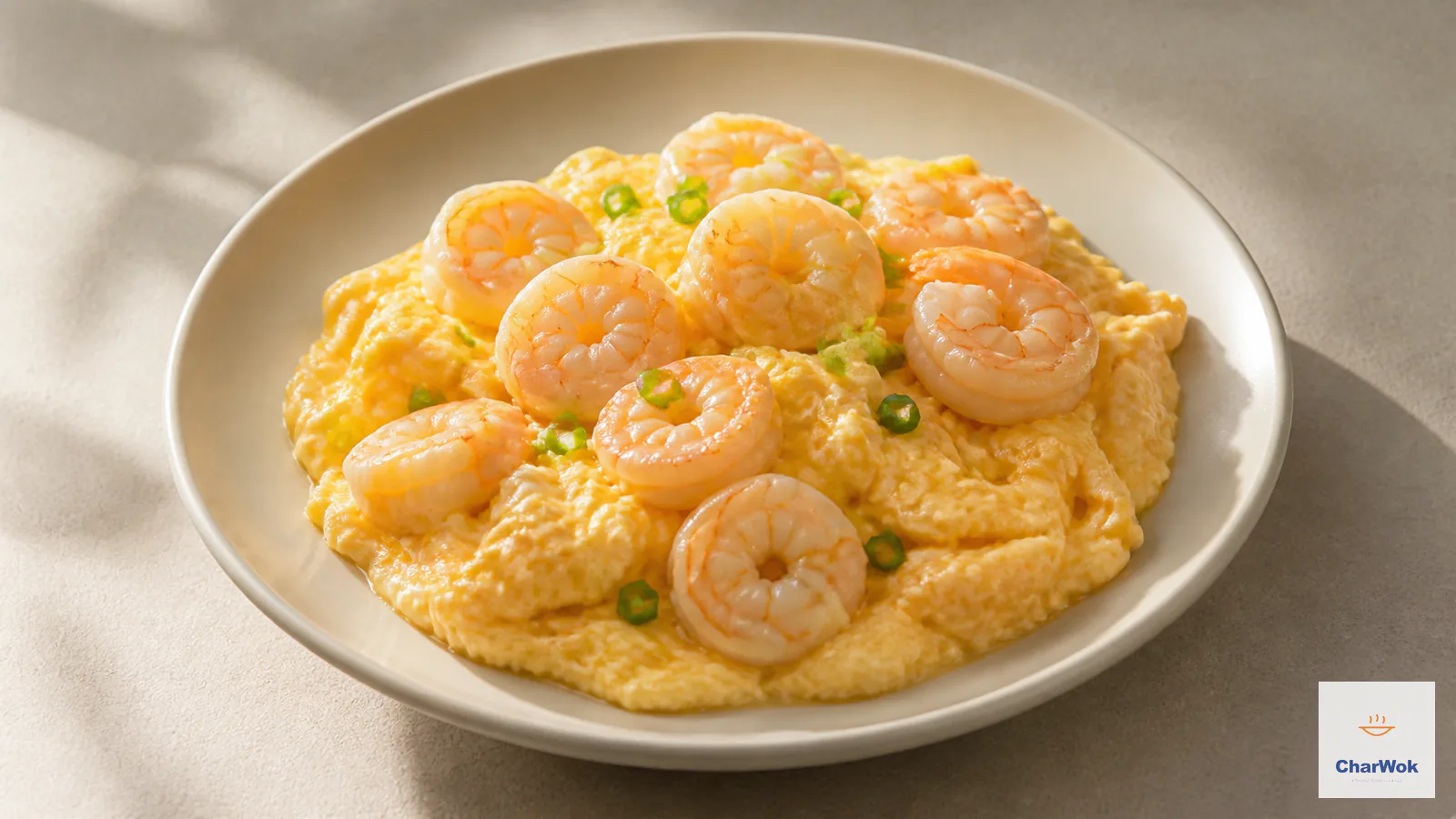
There is a Cantonese stir-fry that takes seven minutes from the time you open the fridge to the time you sit down, and it is the one dish I make when I want to remind myself that good cooking is mostly about restraint. Two eggs' worth of buttery curds wrapped around sweet shrimp, scallion scattered on top, onto rice. The whole genre is called hua dan, "slippery egg," and the slip is the entire point. Get it right and the egg folds like soft sheets around the shrimp. Get it wrong and you have rubbery scrambled eggs with shrimp in them, which is what most home cooks produce the first three tries, including me.
The failure is not a recipe failure. It is a heat failure. The dish asks you to cook eggs at a temperature most people never use for eggs, and to stop at a moment that looks, to any reasonable person, like you are serving raw food. I will walk you through both. I will also tell you about the two batches I wrecked last month so you do not repeat them.
The whole dish turns on one idea: cook the shrimp barely, then cook the eggs even less. Use five eggs to 140 g of shrimp, add two tablespoons of water to the eggs, and pull the pan off the heat while the curds still look wet and glossy. They finish cooking on the plate.
What "hua dan" actually means
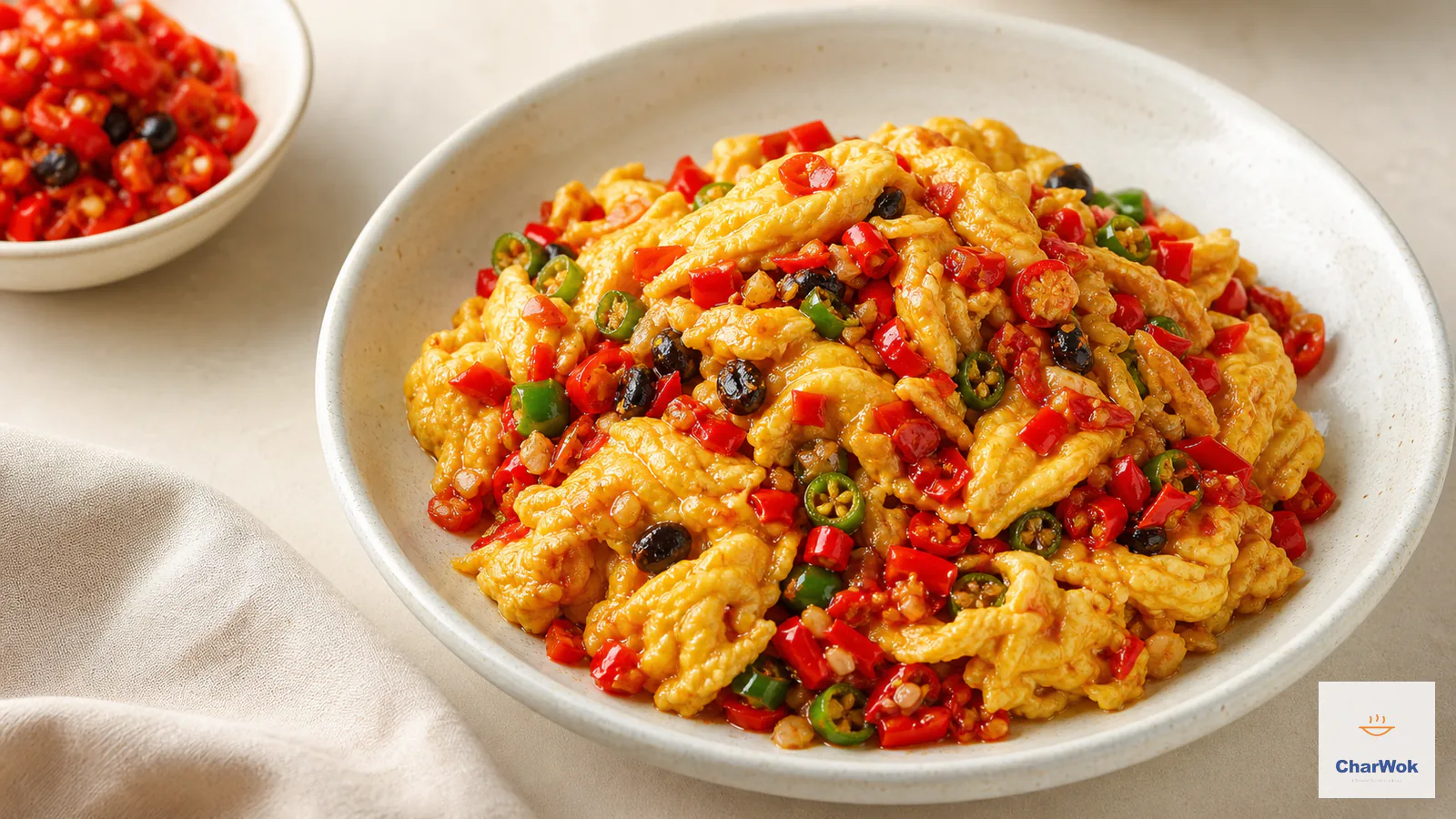
The Chinese name, Huá Dàn Xiā Rén (滑蛋虾仁), names the texture before it names the ingredients. Huá means slick, smooth, slippery: the feeling of egg curds that have been pushed, not stirred, and never allowed to brown. The dish belongs to the Cantonese chao tradition of fast wok cookery, the same family as the fluffy Cantonese omelette called egg foo young and the silky egg folds you find folded into shrimp fried rice at a good dim sum hall. Northern Chinese cooking fries eggs hard and dry, often with chiles or tomatoes. Cantonese cooking treats egg as a delicate protein that should barely see heat, closer in spirit to French scrambled eggs than to a diner scramble.
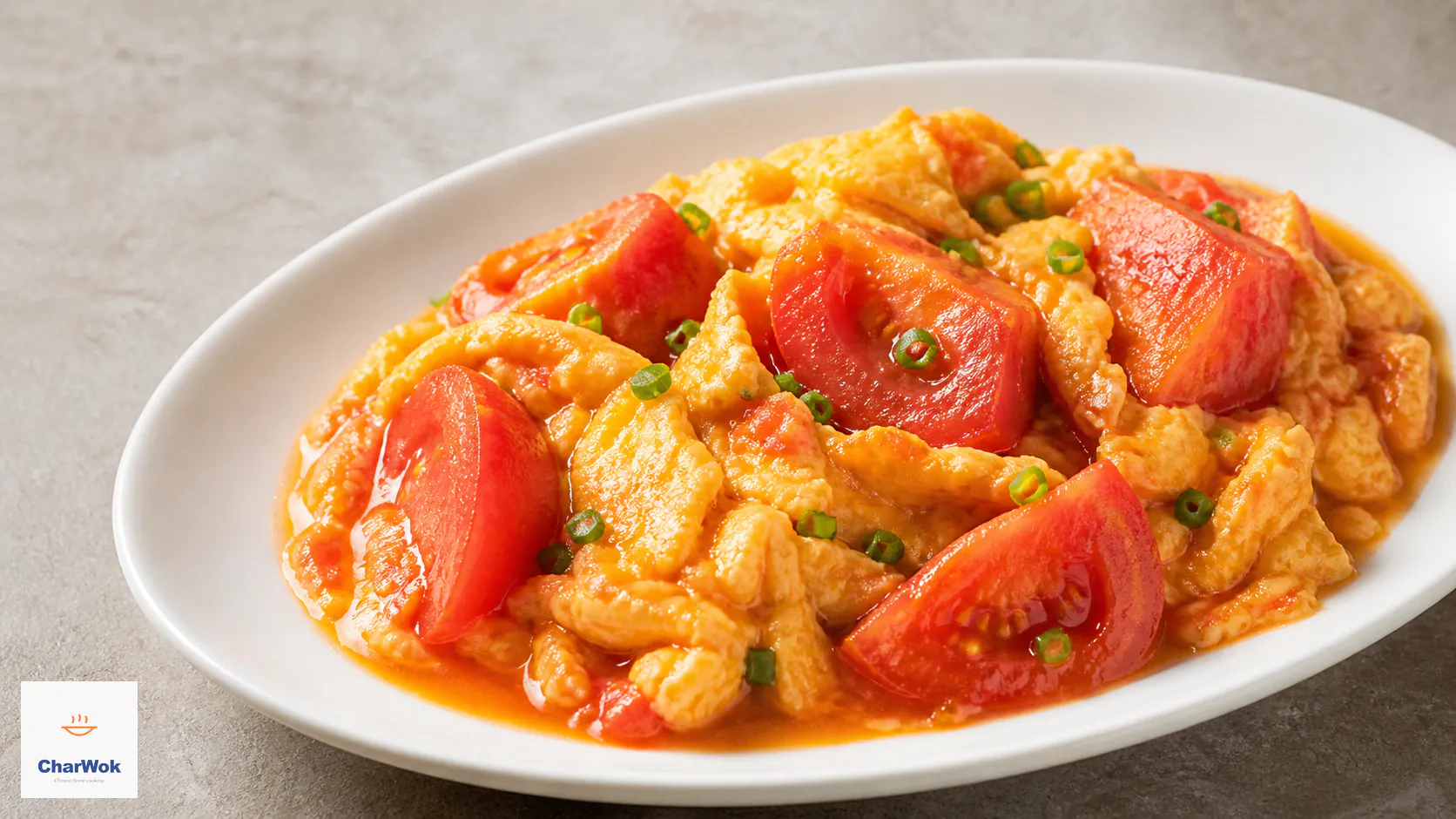
This is also why the recipe is short. There is no sauce to hide behind, no aromatics to mask a mistake. If you want a fast, forgiving egg dish with more wiggle room, tomato egg stir-fry is more forgiving; the tomatoes add acid and liquid that buy you time. Shrimp and egg gives you none of that. The eggs are the dish. Everything has to be timed.
Ingredients
Ingredients at a glance
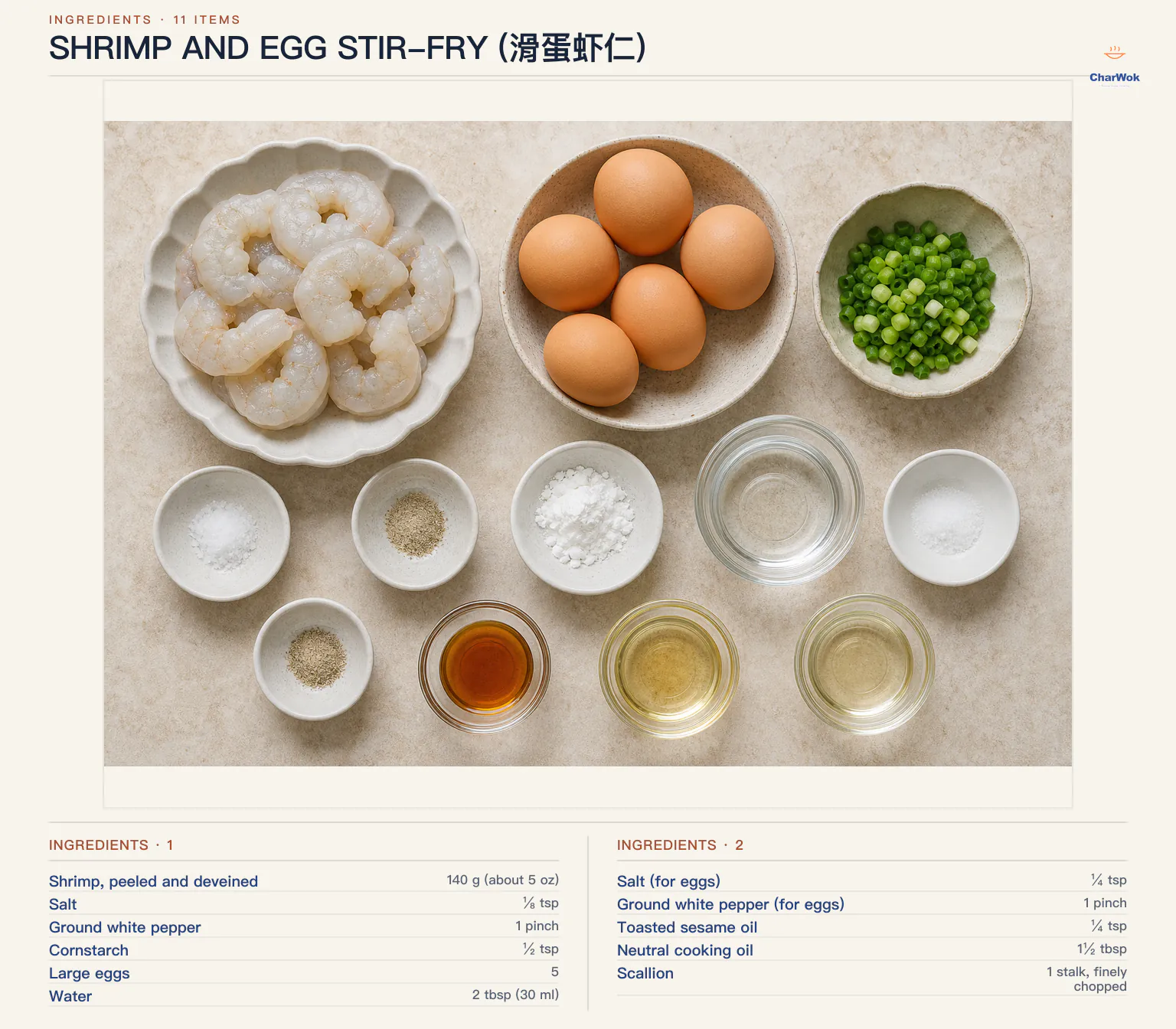
Serves two as a main with rice, or four as one dish in a spread. The shrimp-to-egg ratio below is the one I have settled on after testing: enough shrimp that every bite has one, not so much that the egg stops being the star.
| Ingredient | Amount | Notes / substitute |
|---|---|---|
| Shrimp, peeled and deveined | 140 g (about 5 oz) | Medium 26/30 count is ideal. Thawed frozen works; pat very dry. |
| Salt | ⅛ tsp | For the shrimp. Kosher or fine sea salt. |
| Ground white pepper | 1 pinch | Black pepper works but leaves dark flecks; white keeps the dish pale. |
| Cornstarch | ½ tsp | Tapioca or potato starch are equal here. This is the velvet coat. |
| Large eggs | 5 | Room temperature. Cold eggs seize the pan and lower the heat. |
| Water | 2 tbsp (30 ml) | The secret to soft curds. Stock or Shaoxing wine can replace half. |
| Salt (for eggs) | ¼ tsp | |
| Ground white pepper (for eggs) | 1 pinch | |
| Toasted sesame oil | ¼ tsp | Asian toasted sesame oil, not cold-pressed. A guide to Chinese sesame oil if you are unsure which bottle to buy. |
| Neutral cooking oil | 1½ tbsp | Grapeseed, canola, or peanut. Needs to tolerate a hot pan. |
| Scallion | 1 stalk, finely chopped | Green parts for color, a little white for bite. |
The method, and the reasoning behind each step
- Velvet the shrimp. Toss the shrimp with the ⅛ tsp salt, a pinch of white pepper, and the ½ tsp cornstarch until each shrimp wears a thin, slightly cloudy film. Rest five minutes if you have it. The starch is not thickening here. It is velveting lite, the same principle that keeps shrimp and broccoli tender in a takeaway kitchen. The coating locks in moisture and gives the shrimp that faintly crisp, slippery surface instead of a tight, rubbery one. It also absorbs surface water, so the shrimp spits less when it hits the pan.
- Beat the eggs with water. Crack the five eggs into a bowl, add 2 tbsp water, ¼ tsp salt, a pinch of white pepper, and the sesame oil. Beat with chopsticks or a fork just until smooth; there is no need to whip air in. The water is the make-or-break addition. Egg proteins set into a tight mesh as they cook; added liquid stretches that mesh apart so the curds end up tender and loose rather than dense and springy. This is the same reason French scrambled eggs call for cream. A spoonful of Shaoxing rice wine swapped in for half the water adds a clean aromatic note without making it taste of alcohol.
- Sear the shrimp, then stop. Heat the 1½ tbsp oil in a nonstick pan or flat-bottomed wok over medium until it shimmers. Lay the shrimp in a single layer. Do not crowd, do not stir. Let the first side go pink and just opaque at the edge, about 30 seconds, then flip. The instant the second side is pink, kill the heat. The shrimp should still look a touch translucent in the very center. Scoop them straight into the beaten egg and leave the flavored oil behind in the pan. You are deliberately undercooking, because the shrimp will cook again inside the egg. This is the step everyone overdoes. Shrimp cooked to "done" the first time turns to pencil erasers by the end.
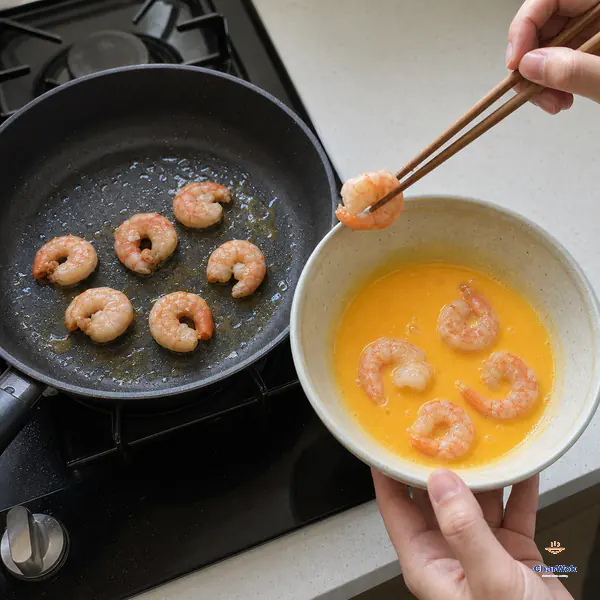
Turn off the heat as soon as both shrimp sides turn pink, then move them into the beaten egg while leaving the flavoured oil in the pan; they are meant to be underdone.
- Return to low heat and push, do not stir. Pour the egg-and-shrimp mixture back into the warm pan. Turn the heat to its lowest setting. On a gas stove that is the small burner, barely flickering. Wait. When you see the bottom just begin to set, take a silicone spatula and push the egg from the edges toward the center in slow sweeps, letting liquid egg run back to the hot surface. Keep pushing. You are not scrambling. You are building large, soft folds.
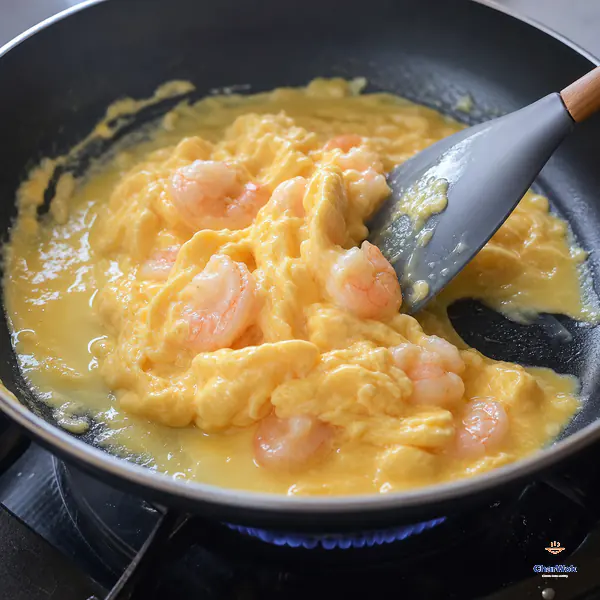
Use the lowest heat and push from the edge toward the centre instead of stirring; let liquid egg flow back onto the pan and stop while the large folds still look moist.
- Pull it while it still looks wrong. The dish is ready when most of the egg has gathered into moist, glossy curds but there is still visible wet egg running in the pan, somewhere between 60 and 90 seconds. Scatter the scallion over the top, slide everything onto a plate or straight over rice, and walk away. The residual heat finishes the wet egg on the way to the table. If you wait until it looks fully done in the pan, it will be overdone on the plate. This is the second-most-common failure and it is purely psychological.
When it goes wrong, and how to fix it
I keep a short list of the ways I have personally ruined this dish. Most of them are recoverable next time, none of them this time.
The eggs weep a puddle on the plate. That is the added water separating out because the curds were pushed past their setting point. You cooked it about 30 seconds too long. Next time, pull when it still looks genuinely underdone. There is no rescue for the current batch. Pour the wept liquid off and serve it anyway; it still tastes fine.
The shrimp is tough and rubbery. You fully cooked them in step 3. They only needed to be seared pink on the surface. Cut them smaller next time so they cook faster, or drop the heat to medium-low for the sear.
The egg is brown and dry, not pale and glossy. Your heat was too high in step 4. Cantonese hua dan never browns. If you see color forming on the bottom, the burner is too big. Move to a smaller burner or lift the pan off the heat between pushes.
The egg broke into tiny dry curds instead of soft folds. You stirred instead of pushed, or you stirred too fast. Large folds come from slow, infrequent movement. Push once, wait five seconds, push again. Patience is the technique.
The pan splattered violently when the shrimp went in. The shrimp were wet. Pat them dry with paper towel before velveting. Surface water is the enemy of a clean sear and a calm cook.
Variations worth making
The core technique (velvet a protein, beat egg with water, push over low heat) adapts to other quick fillings. A few I cook regularly:
- Shrimp and asparagus. Blanch 80 g of thin asparagus spears for 30 seconds, cut into 3 cm lengths, and fold in with the shrimp before the final cook. Asparagus and shrimp are a classic Cantonese pairing for good reason.
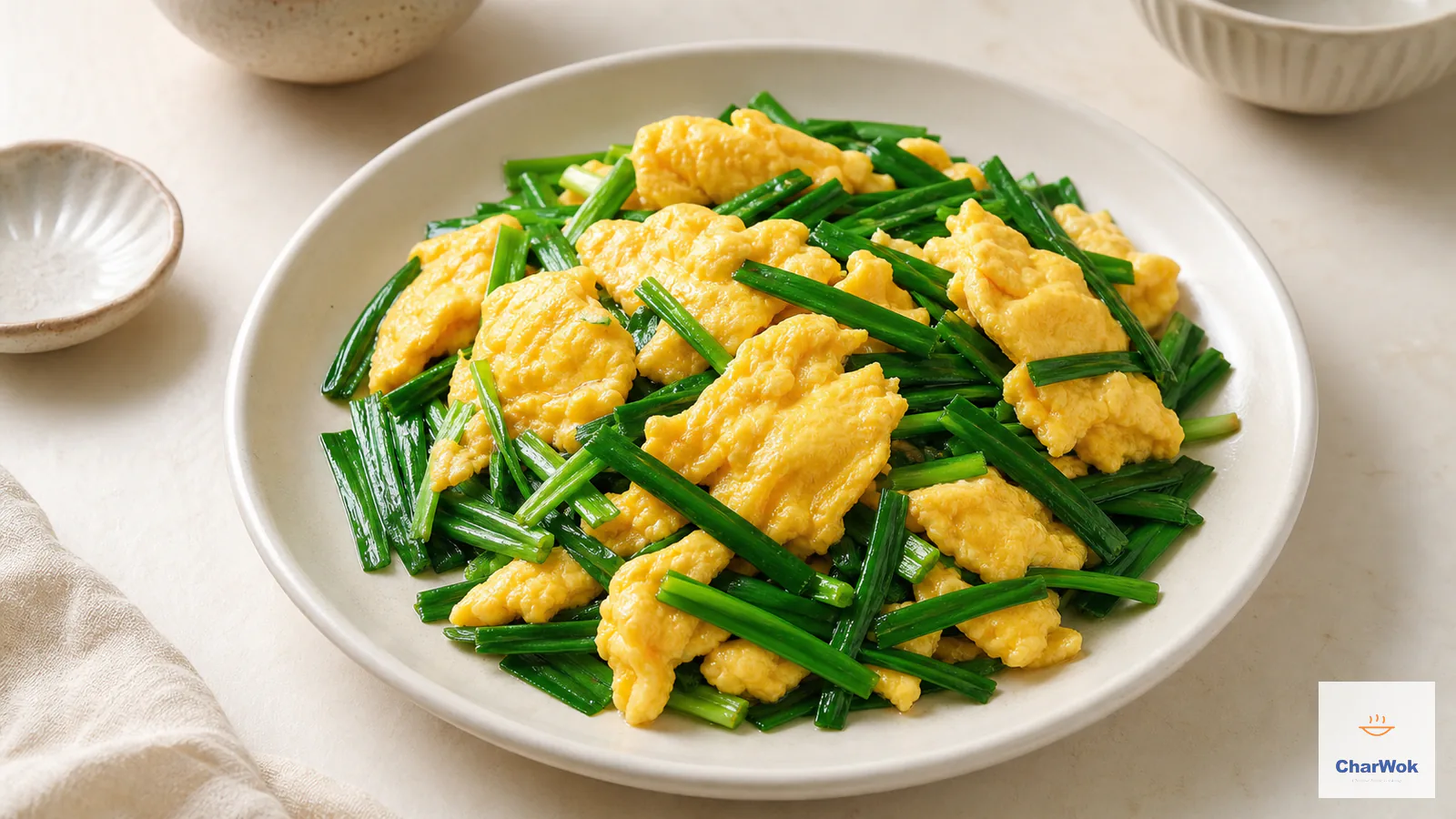
- Chive and shrimp. Add a handful of chopped Chinese chives to the egg along with the scallion. The garlic-onion bite of chive is the traditional partner; if you have access, this is arguably better than the scallion version, closer to chive and egg stir-fry but richer.
- Dried shrimp intensity. Soak a tablespoon of dried shrimp in hot water for ten minutes, mince finely, and add to the egg. It turns a subtle dish into a punchy one and is excellent over congee.
- Lobster mushroom or crab. Same method, swap the shrimp for picked crabmeat (no velvet needed) or torn cooked lobster. A restaurant-style luxury version.
What to serve with it
Plain jasmine rice is the default and the best. The eggs need something neutral to land on, and properly cooked jasmine rice on the stove is it. For a quick dinner I will build a two-dish meal around this: the shrimp and egg as the protein, plus a bright vegetable that does not compete. Garlicky bok choy stir-fry or lettuce with oyster sauce both work because they are green, quick, and slightly crunchy, a texture contrast to the soft eggs.
If you want a more Cantonese dim-sum spread, it also sits happily next to a whole steamed fish or a plate of salt and pepper shrimp, where the soft egg becomes the gentle counterpoint to the louder dishes. Avoid pairing it with another wet, soft dish; two silken things on the table read as mush.
Storage and reheating
This is a cook-and-eat dish. The whole point is the soft, just-set texture, and that texture does not survive a fridge. If you must, leftovers keep one day covered in the refrigerator. Reheat gently in a pan over the lowest possible heat, pushing once or twice, never more than warm, or the eggs will weep and the shrimp will toughen. The microwave will ruin it. Honestly, if you have leftovers, fold them cold into the next morning's fried rice instead, where the dryness becomes a feature rather than a flaw.
Frequently asked questions
A few questions that come up reliably, in the kitchen and in comments.
Can I use milk instead of water in the eggs? Yes. Milk, cream, or unsalted stock all work on the same principle: added liquid stretches the egg-protein mesh for softer curds. Water is traditional and the cleanest tasting; milk adds richness that leans Western. I switch between them depending on what is open in the fridge.
Do I have to velvet the shrimp? No, but skipping it costs you tenderness for the sake of two minutes. The cornstarch film is the difference between a shrimp that snaps back rubbery and one that yields. If you are out of cornstarch, tapioca or potato starch do the same job. Do not skip the rest and dry-pat, though. Wet shrimp in a hot pan is a mess.
Can I make this without a wok? A 25 cm nonstick skillet is actually better for home cooks than a wok, because the flat bottom gives the eggs an even heat surface and the low sides make the pushing easy. A carbon-steel wok is more authentic but punishes you for any heat mistake. Use what holds a steady low flame.
Is it safe to eat eggs that look underdone? The eggs are not raw. They are cooked to a soft, glossy set, roughly the texture of a soft scramble. The residual heat on the plate finishes the wettest parts. If you are serving anyone pregnant, elderly, or immunocompromised, use pasteurized eggs and pull the pan a touch earlier so the curds are fully set but still glossy.
What if I only have large eggs from the fridge, cold? Let them sit in warm water for five minutes before cracking. Cold eggs dropped into a warm pan cool the pan, stretch the cook time, and make the curds grainy. Room-temperature eggs behave.
The short version
Velvet the shrimp. Beat the eggs with water. Sear the shrimp barely and pull them into the egg. Return everything to a low flame and push the eggs into soft folds until they still look a little wet. Dish out. Eat over rice. The whole thing is a lesson in trusting residual heat, and once it clicks, it becomes the fastest real dinner in your rotation — one of those weeknight recipes you stop needing to look up.