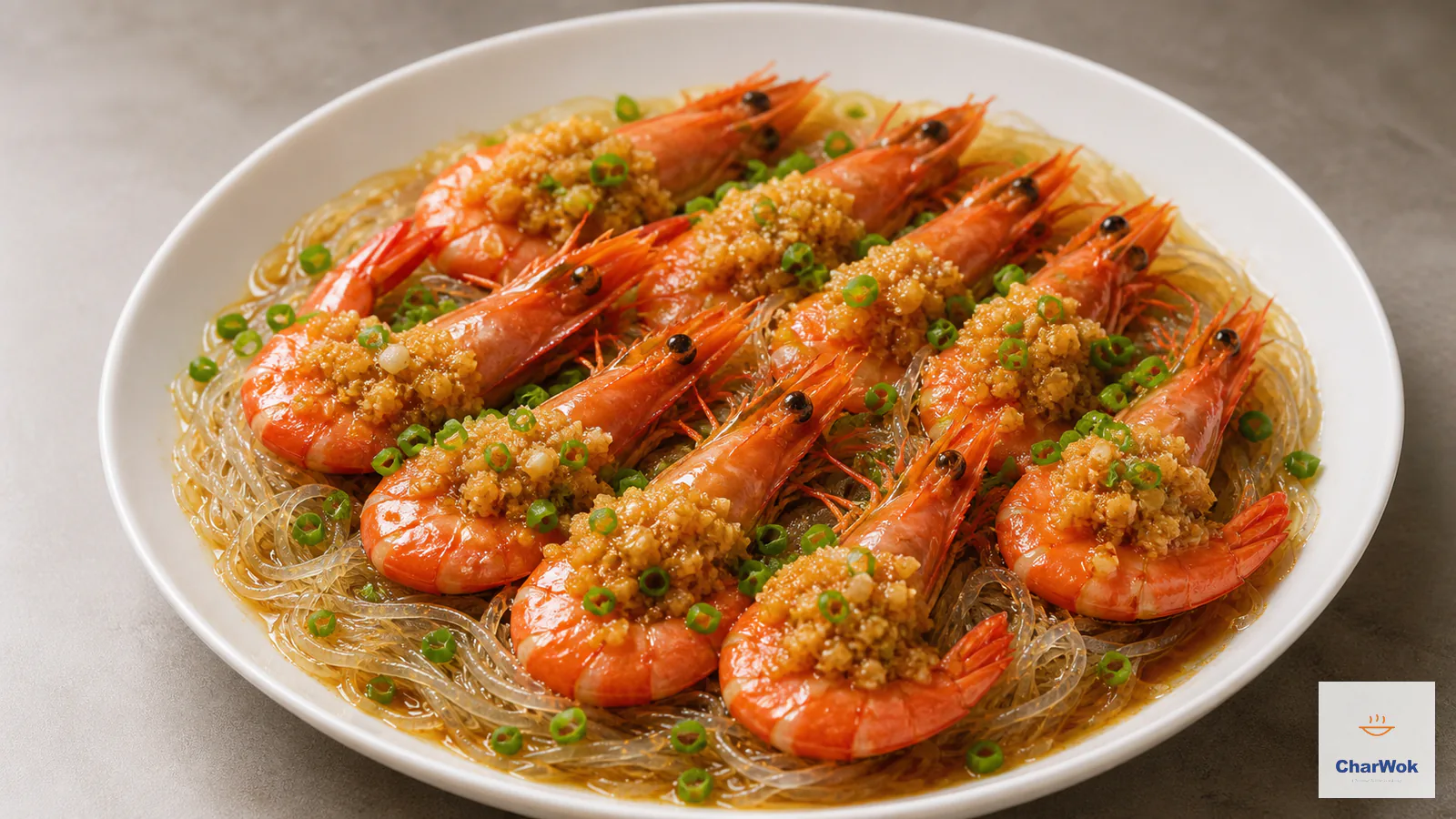
The real star of steamed garlic shrimp with vermicelli isn't the shrimp. It's the noodles underneath. As the shrimp cook, their juices, garlic oil, and sauce drip down into a bed of mung bean glass noodles, and those noodles drink up every drop. By the time you lift the lid, the shrimp are just the headline act. The tangle of noodles beneath is what people fight over at the table.
Here is the pain point most home cooks hit: rubbery shrimp and bland noodles. Both failures come from the same mistake, treating this like a lazy weeknight steamed dish instead of a quick, precise Cantonese one. Steam the shrimp one minute too long and they turn to pencil erasers. Skip the hot-oil garlic step and the noodles taste flat. Get the two make-or-break moves right—a clean butterfly cut and garlic bloomed with hot, shimmering oil—and dinner is on the table before the rice finishes steaming.
At a glance. Whole, head-on shrimp split open along the back and steamed over mung bean vermicelli for about 5 minutes (start checking at 4 for medium shrimp). Bloom the garlic with hot, shimmering oil before it touches the shrimp, then serve the moment the lid comes off.
Doneness check: time is only a guide. FoodSafety.gov advises cooking shrimp until the flesh is pearly or white and opaque. If the thickest part is still translucent, keep steaming in short intervals before serving.
Where this dish comes from
This is a Cantonese home and restaurant classic, the same lineage of light, fast steaming you see in whole steamed fish finished with sizzling oil or scallion oil chicken. The principle is identical across all of them: cook pristine seafood or poultry gently, then hit it with a layer of aromatics and hot fat that carry the seasoning into every crevice. Cantonese cooking prizes the natural sweetness of fresh ingredients, so the seasoning here is restrained (light soy sauce, a touch of oyster sauce, white pepper, a whisper of sugar), never enough to bury the shrimp.
The glass-noodle base is borrowed from the broader Chinese steamed-seafood vocabulary. You'll see the same idea under steamed spare ribs or steamed scallops, because vermicelli is essentially a flavor sponge that turns pan drippings into a side dish. Once you understand that mechanic, you can swap the protein around freely.
Why glass noodles, not rice noodles
Mung bean vermicelli (Fen Si in Mandarin, sometimes labeled Longkou or glass noodles) is not the same as the rice vermicelli in Singapore mei fun or the potato starch noodles you see in cold salads. Mung bean starch gelatinizes into a translucent, chewy strand that holds its shape through steam and actually firms up as it absorbs liquid. It won't collapse into paste the way rice vermicelli can. That chew against the soft shrimp is half the appeal of the dish.
If you grab the wrong bag by mistake, you can still make the dish, but the texture under the shrimp will be different. Reach for mung bean vermicelli for this one. It's cheap and shelf-stable, and you can use the rest of the bag in a cold glass noodle salad or in winter melon meatball soup later in the week.
Ingredients
Ingredients at a glance
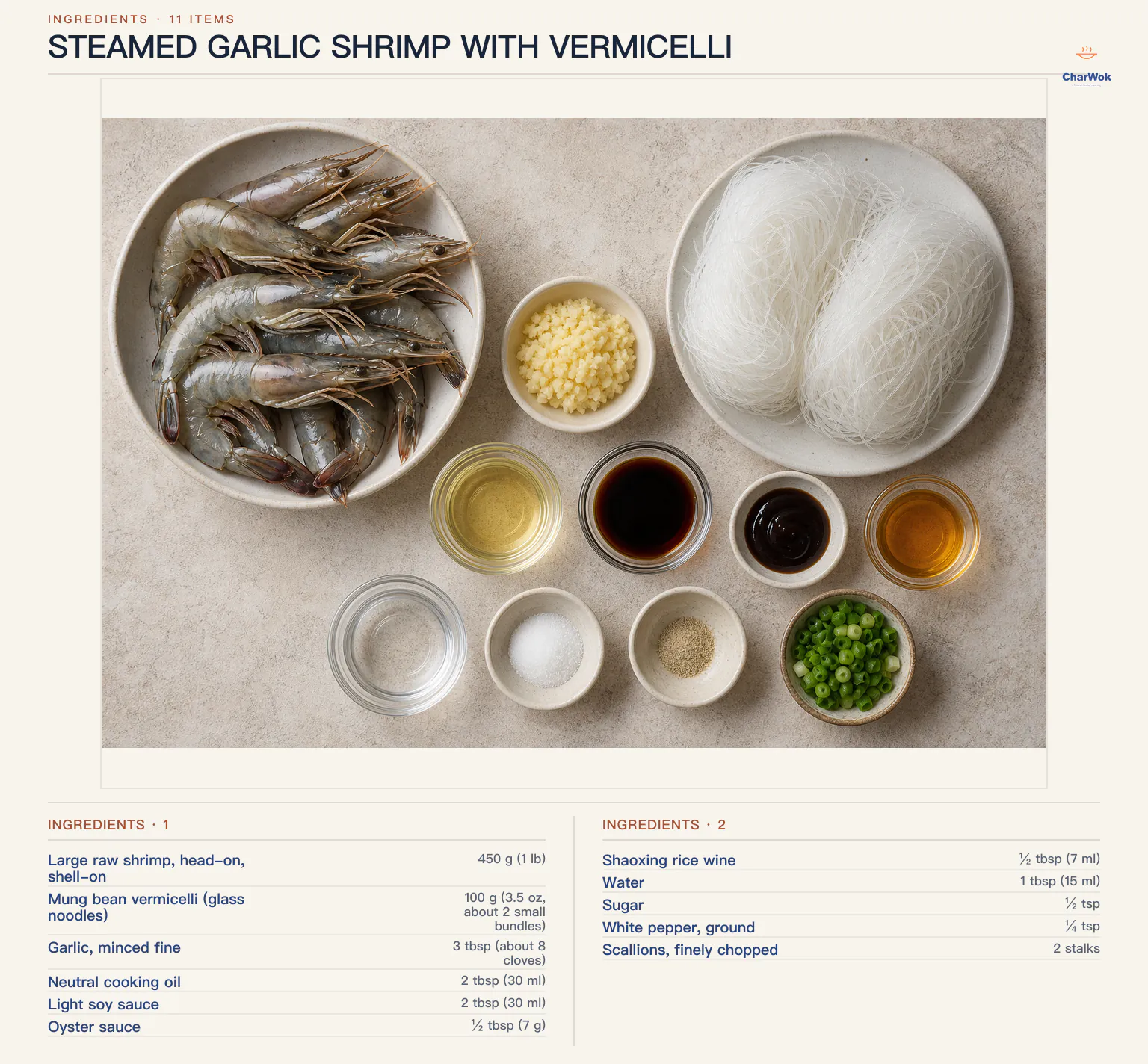
Quantities below feed four as part of a multi-dish meal, or two as a main with rice. Metric first; cups and ounces noted where they are the household standard in the US.
| Ingredient | Amount | Notes / substitute |
|---|---|---|
| Large raw shrimp, head-on, shell-on | 450 g (1 lb) | About 12 to 15 shrimp. U/15 or 16/20 count is ideal. Head-on is traditional; see the shrimp section below. |
| Mung bean vermicelli (glass noodles) | 100 g (3.5 oz, about 2 small bundles) | Longkou / mung bean starch. Do not swap for rice vermicelli. |
| Garlic, minced fine | 3 tbsp (about 8 cloves) | Mince by hand or microplane. Pre-minced jar garlic tastes flat here. |
| Neutral cooking oil | 2 tbsp (30 ml) | Grapeseed, canola, or avocado. Avoid olive oil. |
| Light soy sauce | 2 tbsp (30 ml) | Chinese light soy, not Japanese or dark soy. See the light vs. dark soy guide. |
| Oyster sauce | ½ tbsp (7 g) | Vegetarian mushroom oyster sauce works. |
| Shaoxing rice wine | ½ tbsp (7 ml) | Optional but recommended. Dry sherry is the closest Western substitute; rice vinegar is not. |
| Water | 1 tbsp (15 ml) | Loosens the sauce so it spreads over the noodles. |
| Sugar | ½ tsp | White or raw; balances the salt and rounds out the garlic bite. |
| White pepper, ground | ¼ tsp | Use white, not black, to keep the sauce clean-looking. |
| Scallions, finely chopped | 2 stalks | For finishing. Green parts only if you want a brighter color. |
About the shrimp
Use raw shrimp. Not the pink, pre-cooked, ready-to-eat kind; those have already met heat once and will turn to rubber the instant you steam them. Fresh or thawed frozen both work; frozen-at-sea head-on shrimp are often the best quality you can buy in a typical US supermarket, and the heads add real flavor to the drippings that soak into the noodles.
Head-on, shell-on is traditional for two reasons. The shell keeps the meat moist during steaming and the head turns dark red and glossy, which is gorgeous on the plate. Yes, you have to peel at the table; that's part of how this dish is eaten in a Chinese home, and the head fat inside is a reward worth the trouble. If your family flatly refuses to deal with shells, peel them down to the tail and leave the tail on for the look; the dish will still work, it just loses a little drama and a little flavor. For a more hands-off shrimp dish, see shrimp and broccoli stir-fry instead.
Method
The whole sequence is built around two ideas: a clean butterfly cut that opens the shrimp to the steam, and a garlic sauce that's been shocked with hot oil. Do those two well and the rest is forgiving.
- Soften the vermicelli. Drop the bundles of mung bean noodles into a bowl of cold tap water and leave them to soak for roughly a dozen minutes, until they've gone fully limp and yield easily when bent but still look faintly opaque. Why cold and not hot: hot water over-soaks the surface and the noodles go mushy by the time they hit the steamer. Drain well, then snip the clump in a few places with kitchen scissors so the strands aren't one long tangle to wrestle with at the table. Lay them flat across the plate you'll steam and serve in, a shallow, heatproof dish with a slight rim to hold the juices.
- Prep and butterfly the shrimp. Rinse the shrimp and pat dry. With scissors, snip off the swimming legs on the underside and trim the sharp top of the head. Now the key cut: starting just behind the head, run the scissors down the back, through the shell and about halfway into the flesh, stopping at the tail. Open the shrimp like a book and press it flat. The point is to expose the meat so steam and garlic sauce reach it directly. A whole, uncut shrimp steams from the outside in and is overcooked on the surface before the center is done. Dig out the dark vein if you see it. Arrange the shrimp cut-side-up on top of the vermicelli.
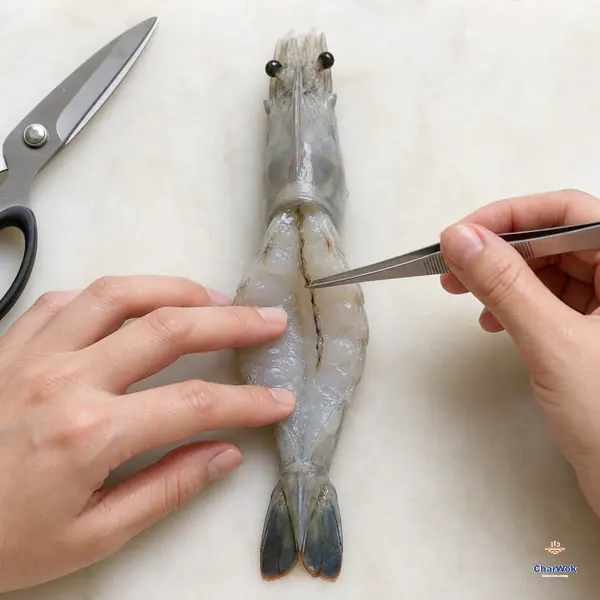
Trim the legs and sharp head tip, cut down the back from behind the head to before the last tail segment, remove the vein and press the connected flesh open. An even thickness lets the prawn cook through in five minutes.
- Bloom the garlic in hot oil. Put the minced garlic in a small heatproof bowl. Warm the oil gradually in a small pan or your wok until the surface shimmers, around 180 °C / 350 °F, then take it off the heat and pour it over the garlic. Stay beside the stove; if the oil smokes, turn off the burner and let it cool briefly before pouring. It should sizzle immediately and soften the garlic's raw edge. If you skip this step and stir raw garlic into cold soy sauce, the sauce will taste sharper.
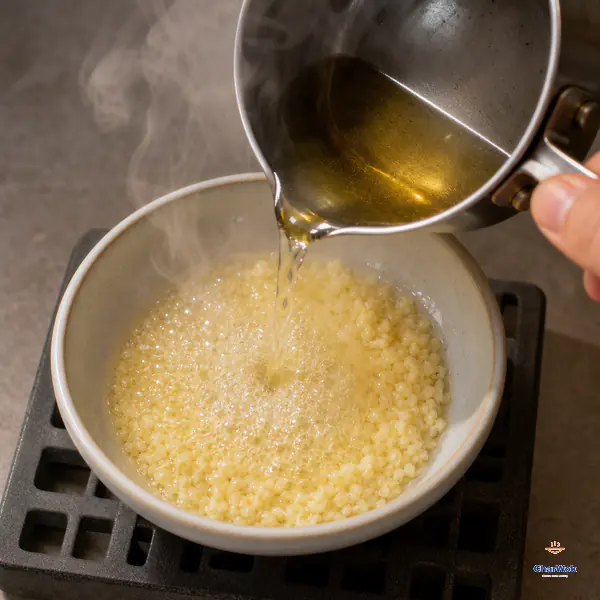
Heat the 2 tablespoons of oil gradually to about 180°C / 350°F, when it shimmers but does not smoke, then pour it over the minced garlic. If smoke appears, turn off the burner and let it cool briefly before pouring.
- Finish the sauce. Once the sizzling dies down, stir in the light soy sauce, oyster sauce, Shaoxing wine, sugar, white pepper, and the tablespoon of water. Spoon most of it over the exposed cut surface of each shrimp, and drizzle whatever's left over the noodles so they're seasoned from the start, not just from above.
- Steam hard and fast. Get your steamer set up (a bamboo steamer, a metal steamer rack in a wok, or a large pot with a trivet) and get roughly half a liter (a couple of cups) of water bubbling hard in the base before the plate ever goes in. Settle the shrimp plate onto the rack, clap the lid on, and steam over medium heat for 5 minutes for large shrimp (start peeking at 4 minutes for medium). The shrimp are done the instant they turn fully opaque pink and curl into a loose C. A tight, tightly curled O means they're already overcooked. Garnish with scallions and bring the plate straight to the table.
When it goes wrong
This dish has only a few ways to fail, but each one is common. Here's how to spot the failure and what to change next time.
- Rubbery, dry shrimp. Almost always, they spent too long in the steam. Shrimp go from perfect to tough in under a minute, so pull them the moment they're opaque pink. Also check that you started the timer when the water was already at a full boil. Putting the plate in over lukewarm water stretches the cook and dries the meat out.
- Bland, starchy-tasting noodles. Two causes. Either you under-soaked them (they'll still be hard in the center after steaming) or you didn't put any sauce on them before steaming. The noodles only get seasoned by what drips down from above, so spoon some sauce directly onto them in step four.
- Mushy, disintegrating noodles. You over-soaked, or you used hot water to soak. Twelve minutes in cold water is the target; any longer and the strands lose their chew.
- Garlic tastes raw and harsh. The oil may not have been hot enough, or the garlic was wet. Pat the garlic dry and heat fresh oil gradually until it shimmers. Do not keep heating once it smokes; turn off the burner and let it cool briefly.
- Watery sauce pooling on the plate. The shrimp were wet when they went in, or the steamer lid dripped condensation onto the dish. Pat the shrimp dry before arranging, and tilt the lid slightly so condensation runs down the outside of the dome, not onto the food.
- Shrimp split unevenly or fell apart. You cut too deep. Butterfly only halfway through the flesh so the shrimp stays in one piece and opens like a book rather than splitting in two.
Variations and pairings
Once the base technique is dialed in, the dish bends easily. A few directions worth trying:
- Spicy garlic shrimp. Stir a teaspoon of pickled chili garlic sauce (duo jiao) into the bloomed garlic before spooning it over. The salt-fermented chilies add a clean, bright heat that complements the sweet shrimp without turning it into a Sichuan dish.
- Add a mushroom layer. Spread a handful of enoki mushrooms between the vermicelli and the shrimp. They soak up the same juices and add a different texture. Shiitake, sliced, works too.
- Scallops instead of shrimp. The garlic-and-vermicelli treatment is a Cantonese classic for diver scallops: same sauce, same noodles, about 4 minutes of steam.
- Make it part of a feast. This is a natural anchor for a multi-dish meal. Pair it with something heartier like three cup chicken or braised mushrooms with bok choy, plus a quick vegetable such as garlic bok choy, and steamed rice. The same logic that goes into planning a Chinese feast applies: one steamed, one braised, one stir-fried, one vegetable.
- Swap the dipping angle. If you like a saucier, more aggressive finish, finish with a spoonful of chili oil right at the table instead of (not in addition to) the scallions.
Storage and reheating
This is a dish to eat the day it's made. Leftover shrimp will go rubbery no matter how gently you reheat them, because the proteins have already tightened once and a second pass through heat just tightens them further. If you do have leftovers, the noodles actually reheat better than the shrimp. Warm them gently in a covered pan with a splash of water, and eat the shrimp cold, dipped in a little extra soy sauce. Don't microwave; it wrecks both textures.
You can prep ahead, though. Make the garlic sauce up to one day in advance, cool it promptly, and refrigerate it covered; do not hold fresh garlic in oil at room temperature. The shrimp can be butterflied and the vermicelli soaked earlier in the day; keep both covered in the fridge and assemble right before steaming. The actual steam is the last five minutes of the meal.
Frequently asked questions
Can I use peeled shrimp instead of head-on? Yes. Peeled shrimp work, though you lose some flavor and visual appeal. Leave the tail on if you can, and butterfly them the same way.
Can I use rice vermicelli or angel hair pasta? Mung bean vermicelli is the right call because it stays chewy and translucent under steam. Rice vermicelli turns mushy and pasta gets gummy.
How do I know when the shrimp are done? When they turn fully opaque pink and curl into a loose C. A tightly curled O means they are already overcooked. Large shrimp take about 5 minutes.
Can I make the garlic sauce in advance? Yes. Bloom the garlic in hot oil, stir in the seasonings, cool it promptly, and refrigerate it covered for up to one day. Do not hold fresh garlic in oil at room temperature. Spoon it over the shrimp right before steaming.
The one thing to remember
If you forget everything else, remember this: bloom the garlic with hot, shimmering oil, and pull the shrimp when they're fully opaque pink. Those two moves carry the dish; the vermicelli, head-on presentation, and scallion garnish support them.