The thing that ruins homemade tang yuan isn't the recipe. It's that the filling leaks into the cooking water and you end up with a pot of grey sesame soup and twenty sad, hollow shells. I've done it. The fix has almost nothing to do with the filling itself and everything to do with two things the average writeup glosses over: how hot your water is when you start the dough, and how firmly that filling is frozen before you wrap it. Get those two right and the chewy, lava-filled glutinous rice ball you remember from a Lantern Festival night becomes a project you can repeat on any Tuesday.
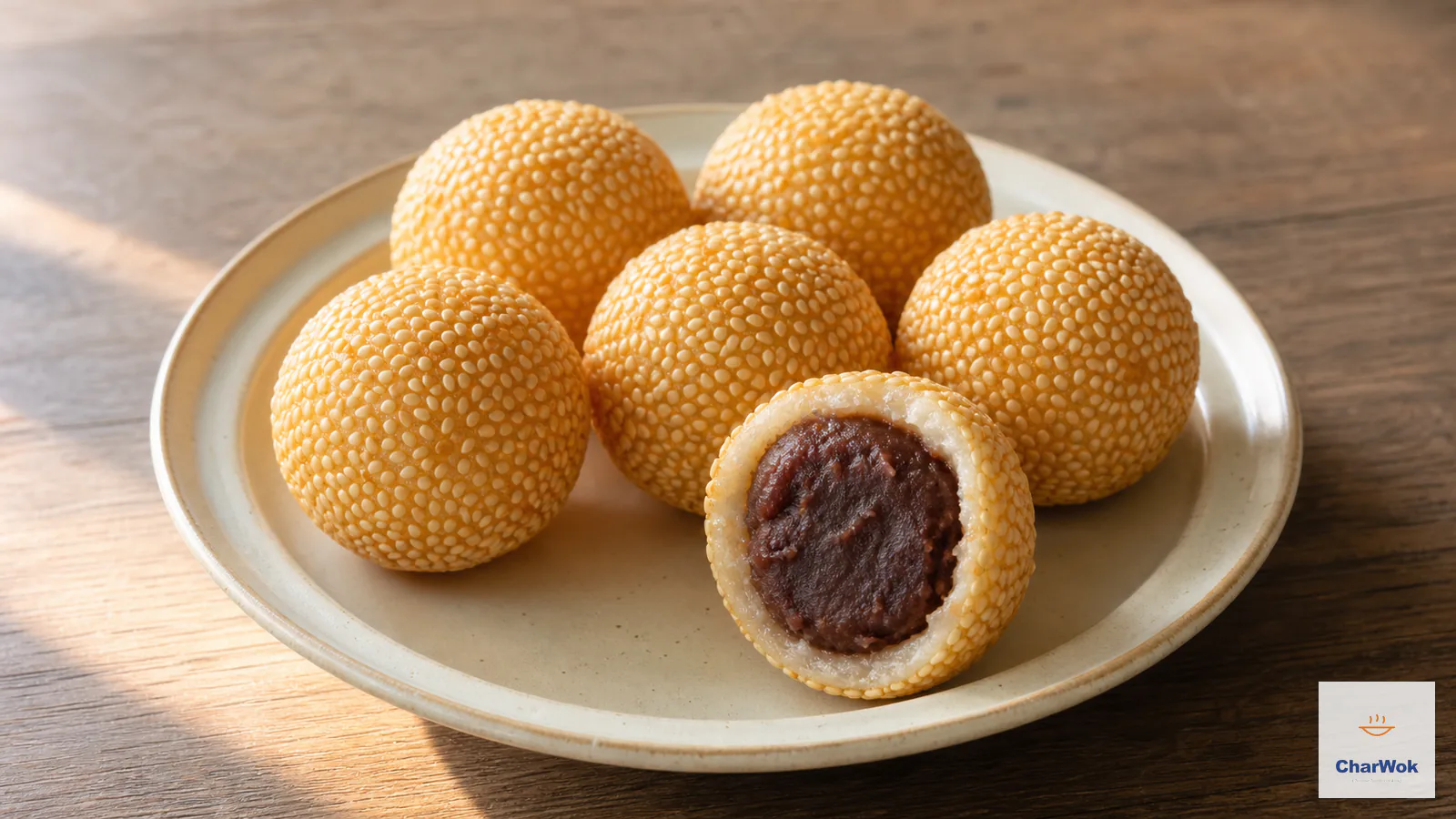
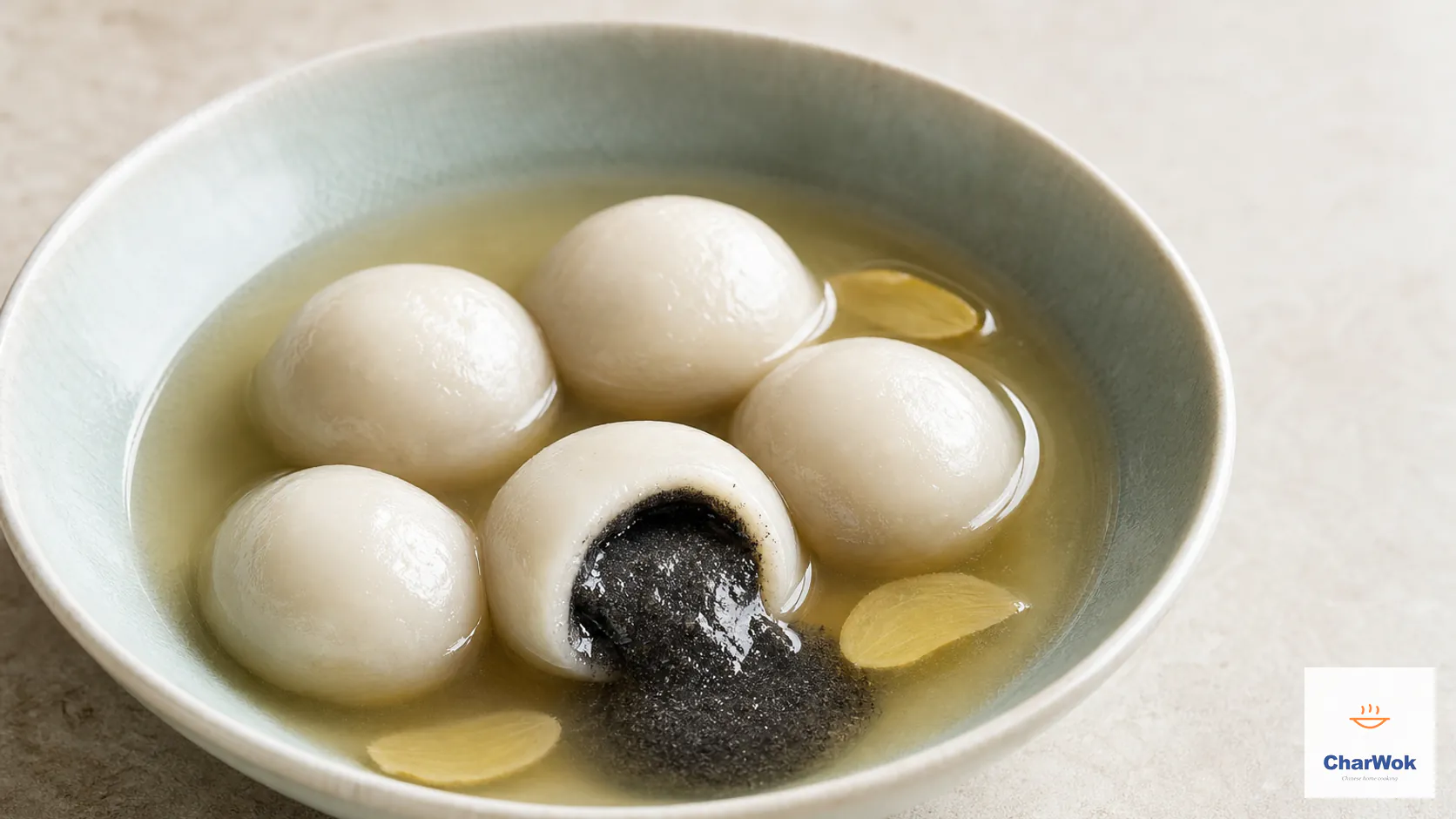
Tang yuan are round dumplings made from glutinous rice flour dough, usually stuffed with a sweet filling and boiled until they float. Bite one and the skin stretches in that distinctive bouncy, mochi-like way, then the filling runs out warm. Black sesame is the classic, and the one I'll walk you through here, but the wrapper technique is the same for any filling you choose. If you've made Chinese New Year rice cake or fried sesame balls, the dough will feel familiar, though tang yuan dough is softer and more forgiving than both.
At a glance. Twenty filled balls in about 35 minutes of active work, plus a chill. The non-negotiables: pour genuinely boiling water over the flour first (this pre-gelatinizes the starch so the dough holds a filling instead of cracking open), and chill the filling until it's firm enough to roll. Boil only until they float, then sixty seconds more. Undercooking leaves the skin chalky; overcooking turns it to paste.
What tang yuan are, and why the round shape matters
The name is literal: yuan means round, and tang is the soup they're served in. The roundness is the whole point. They're eaten at the Lantern Festival, which closes out the Lunar New Year, and at weddings and Winter Solstice, because the round shape stands for completeness and the family gathered around one table. Saying it out loud sounds sentimental, and it is, but it's also why the dish survives: it's the rare dessert people make specifically to mark an occasion, not just to eat.
Regional style splits cleanly. The southern, Shanghai-style version is the small, filled, black sesame tang yuan most people picture, often floating in plain hot water or a light ginger syrup. Northern style leans toward larger, unfilled or lightly sweetened balls served in a sweet fermented rice wine soup with osmanthus and goji berries. Both are legitimate. This recipe is the southern filled style, because the leaking-filling problem people email me about is a filled-tang-yuan problem.
The science of the wrapper, before you touch the flour
Glutinous rice flour (also called sweet rice flour) is almost pure amylopectin starch, with very little amylose. That's why it cooks up sticky and stretchy instead of firming into a noodle-like bite. It's also why it has no gluten to hold a dough together, the exact problem that makes the wrappers split. The standard fix in every shop and grandparent's kitchen is the same: hit a portion of the flour with boiling water first. The near-100°C water gelatinizes that starch on contact, turning it into a sticky paste that acts like internal glue for the rest of the dough. Skip this and you'll be patching cracks all afternoon.
This is the same principle behind hot-water doughs elsewhere in the kitchen. If you've rolled dumpling wrappers from a boiling-water dough, you've already felt how much more pliable and tear-resistant a pre-gelatinized dough is. The difference here is that glutinous rice dough has even less structure, so the hot-water step isn't optional polish, it's the load-bearing wall.
Ingredients
Ingredients at a glance
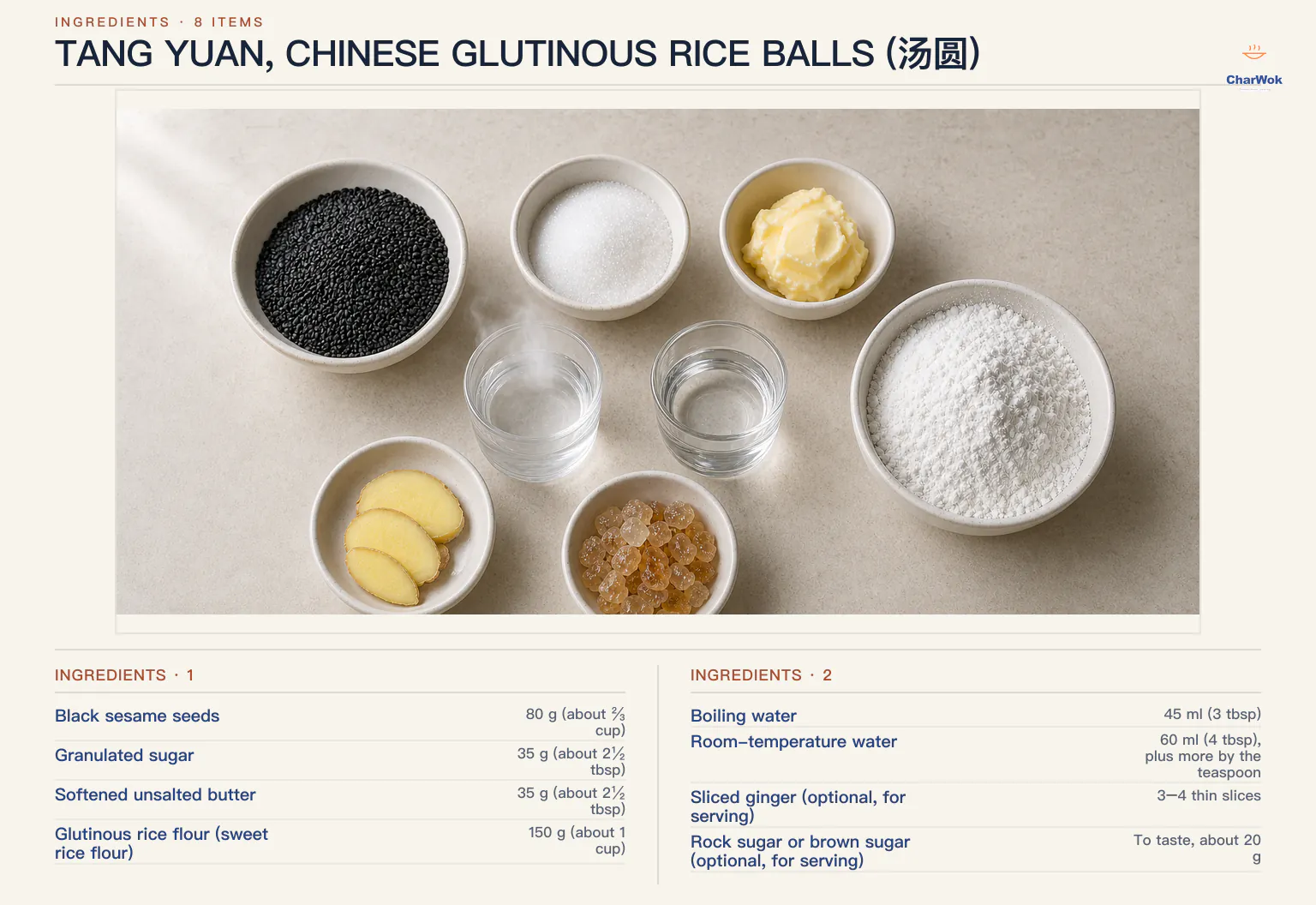
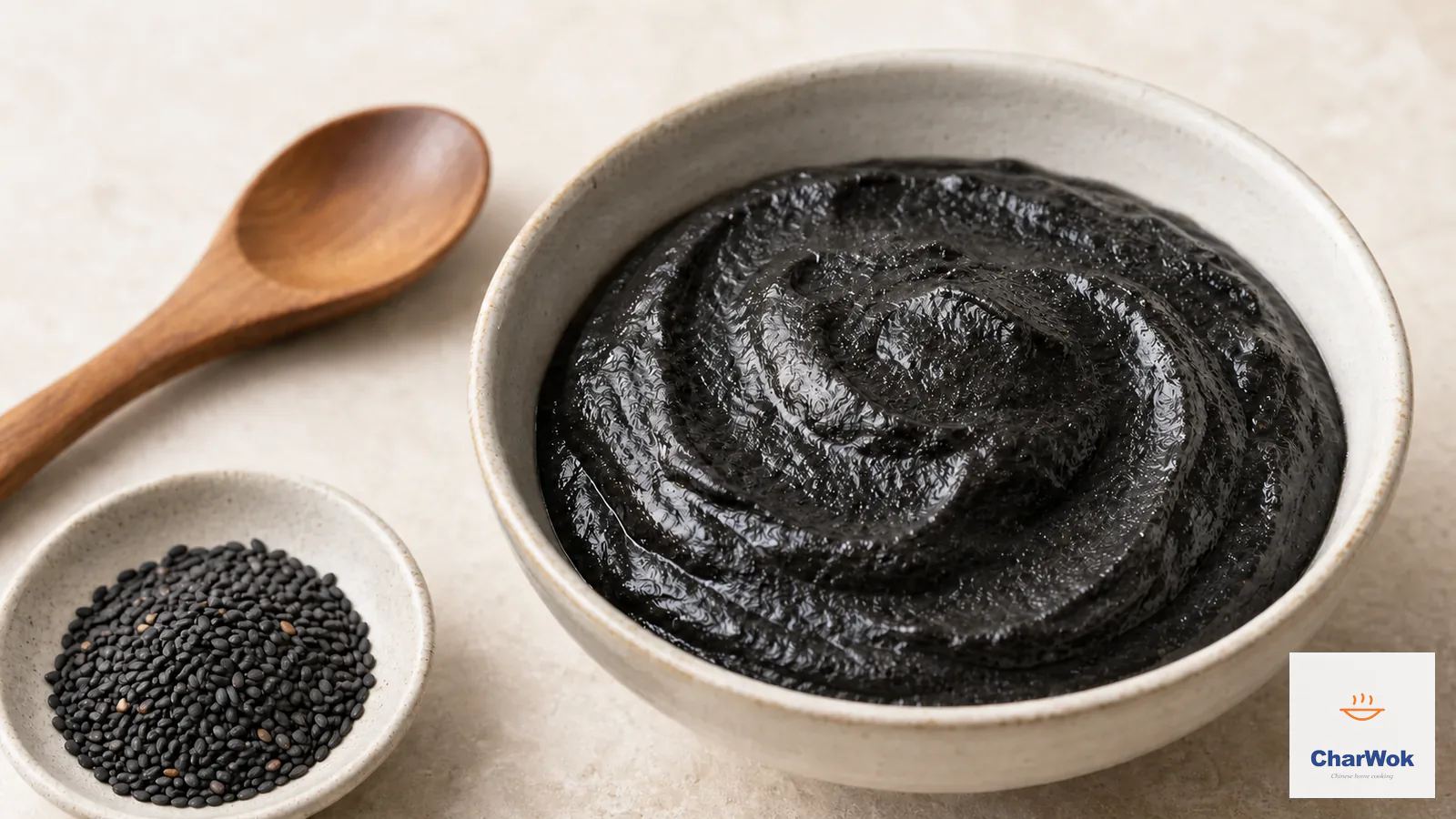
Makes about 20 filled balls. The filling recipe below is essentially a fresh, looser version of black sesame paste, tuned so it stays fluid when hot and firm when cold. If you'd rather skip toasting and grinding, red bean is the other traditional filling; see how to make red bean paste and use it the same way.
| Ingredient | Amount | Notes / substitute |
|---|---|---|
| Black sesame seeds | 80 g (about ⅔ cup) | Toast from raw. Pre-toasted lose aroma; untoasted taste flat. |
| Granulated sugar | 35 g (about 2½ tbsp) | Use raw cane or white. Honey makes the filling too wet to roll. |
| Softened unsalted butter | 35 g (about 2½ tbsp) | Coconut oil or rendered lard also work. Lard is the most traditional and firms best; butter is the easiest US default. |
| Glutinous rice flour (sweet rice flour) | 150 g (about 1 cup) | Mochiko or Shanghai-brand glutinous rice flour. Do NOT substitute regular rice flour or tapioca starch, they won't form a stretchy dough. |
| Boiling water | 45 ml (3 tbsp) | Must be a true rolling boil the instant it hits the flour. |
| Room-temperature water | 60 ml (4 tbsp), plus more by the teaspoon | Swap some or all for beetroot juice or strawberry water for a pink dough. Avoid adding oil to the dough. |
| Sliced ginger (optional, for serving) | 3–4 thin slices | For a ginger-sugar serving broth. |
| Rock sugar or brown sugar (optional, for serving) | To taste, about 20 g | See the guide to rock sugar for the type that dissolves cleanest. |
Method
- Toast the sesame seeds dry and low. Put the seeds in a dry skillet over low heat and stir almost constantly. You're not chasing color; you're driving off moisture so the seed cracks cleanly when you press it between two fingers instead of denting. Five to eight minutes. The moment they smell distinctly nutty and a crushed seed shatters rather than squishes, pull the pan off. They keep cooking from residual heat, so erring slightly early is safer than slightly late. Cool fully before grinding, warm seeds turn the butter to soup.
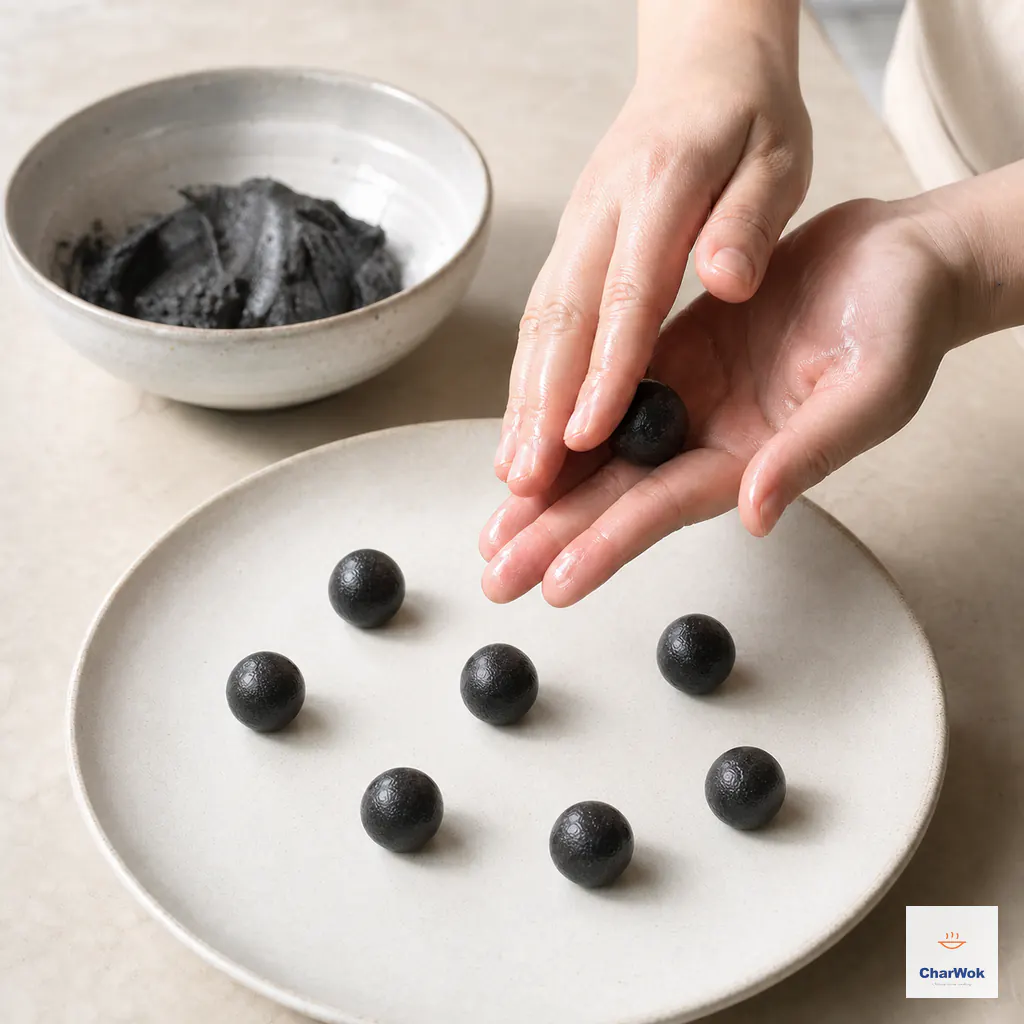
Chill until the paste holds a clean ball, portion the filling at about 7 g, then return every rolled piece to the refrigerator
- Grind cool seeds with the sugar until the paste looks wet and shiny. A spice grinder or food processor works. You're rupturing the seeds so their oil releases and binds the sugar. Stop when the mixture clumps and looks glossy, not powdery. Under-grinding leaves a gritty filling; you can't really over-grind.
- Work in the butter (or lard) and chill hard. Stir the softened fat into the warm-ground sesame until even. It will look loose. That's correct. Spread it on a plate and refrigerate at least 30 minutes, or freeze 15 if you're in a hurry. The fat needs to be solid enough that you can scoop and roll it into 20 small balls without it sticking to your palms. This firmness is what stops leakage later.
- Portion and roll the filling into 20 balls, then chill again. About 7 g each. Roll them between lightly oiled (not floured) hands and put them back in the fridge while you make the dough. Cold, firm filling is the single biggest leak-prevention step in the whole recipe.
- Start the dough with boiling water. Put the glutinous rice flour in a bowl. Have the just-boiled water ready and pour it in a thin stream while stirring with a spatula or chopsticks. You'll see the wetted flour turn translucent and gummy where the water hits. That translucent paste is the gelatinized starch doing its job as internal glue. Don't skip this and don't use merely hot tap water.
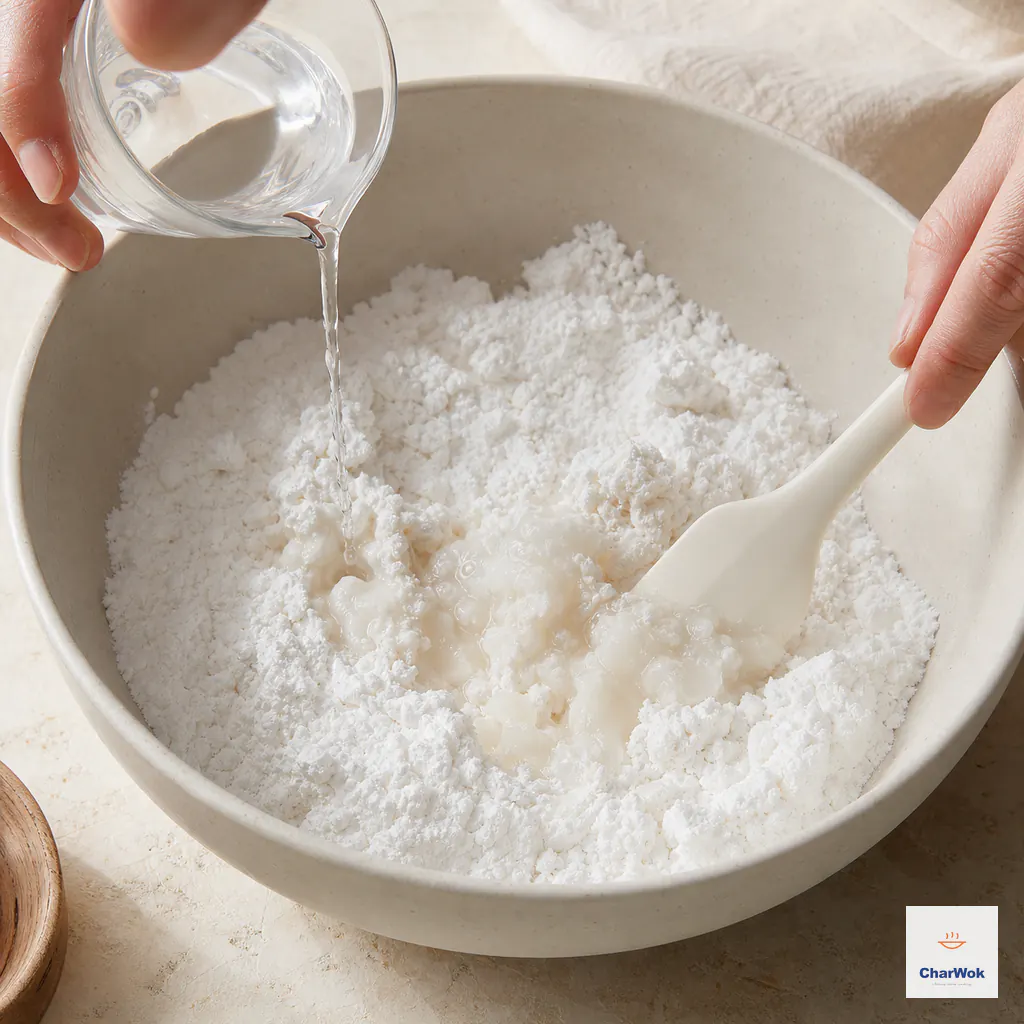
Use truly boiling water and stir immediately; the translucent gummy patches are the gelatinized starch that keeps the wrapper flexible
- Add room-temperature water gradually and knead to a soft dough. Knead by hand once it's cool enough to touch. Add the remaining water a splash at a time. Stop when the dough feels like playdough: it should hold a smooth ball, dent slowly when you press, and not crack at the edges. If it tears, add water a teaspoon at a time. If it's tacky and sticks to your fingers, dust with a little more flour. Cover with cling film the moment it's right, glutinous rice dough skins over and cracks within minutes in open air.
- Divide into 20 pieces and roll smooth. About 13 g each. Keep the unused pieces under the film. A dry, cracked ball cannot be patched after wrapping, so cover aggressively.
- Shape one wrapper at a time. Take a dough ball, roll it smooth between your palms, then press your thumb into the center and rotate, pressing the wall thinner and thinner until you have a shallow bowl about 5 cm across. The wall should be thinner than the base. Thick bases make lopsided, heavy balls; thin bases split.
- Wrap with the wall pushed up, not folded over. Drop a cold filling ball into the bowl. Push the dough up the side of the filling with your thumb, rotating, until the wall rises above the filling and meets at the top. Pinch closed, then roll between your palms to smooth the seal. This push-up motion, rather than pulling the edges together like a purse, keeps the wall even and avoids the thin spot that always leaks.
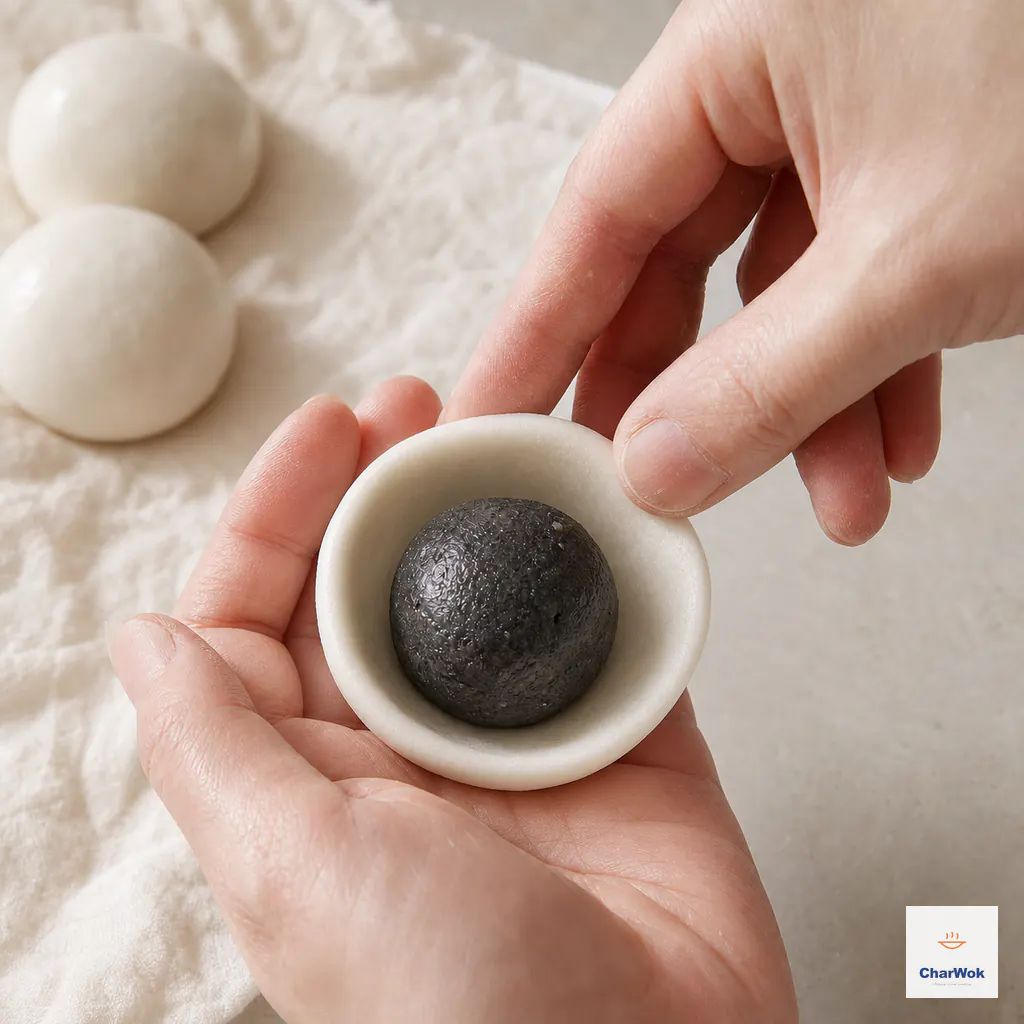
Keep the filling cold, thin the rim, and push the wrapper wall upward around the center before pinching the seal completely closed
- Cover and rest the shaped balls ten minutes. A short rest lets the starch hydrate evenly and tightens the seal. Keep them under a damp cloth so they don't dry and crack before they hit the water.
- Boil in a roomy pot, in batches if needed. Use the largest pot you have and bring it to a full, rolling boil. The balls expand as they cook and crowding guarantees sticking. Slide them in gently and immediately nudge the bottom of each with the back of a spoon so it doesn't weld to the pot. Drop the heat to medium-high to keep a steady but not violent boil.
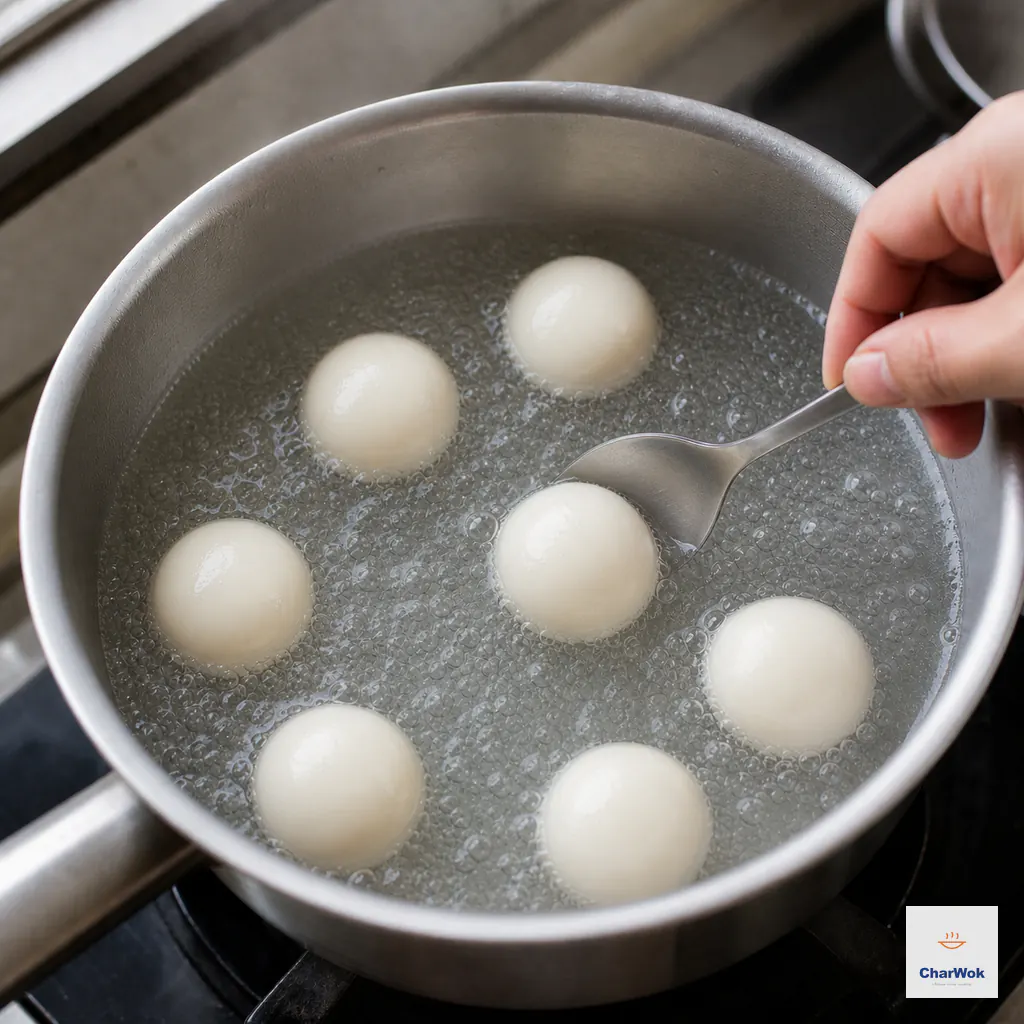
Cook in an uncrowded pot, nudge gently to prevent sticking, and continue for one full minute after every ball floats
- Cook until they float, then one minute more. Floating means the dough has set on the outside; it does not mean the inside is done. That extra sixty seconds lets the center heat through so the filling liquefies and the dough cooks fully instead of staying chalky at the core.
- Serve immediately, in their own liquid or ginger syrup. Lift the balls out with a slotted spoon into small bowls and ladle some cooking water over them. For the traditional sweet broth, simmer the ginger slices with rock sugar in water for a few minutes and serve the balls in that. The stretch and runniness only last minutes off the heat.
When the balls split, leak, or sink
This is the section most recipes leave out, and it's the one that decides whether you make these twice or never again. Almost every failure traces back to a single cause.
- The filling clouds the cooking water / balls open during boiling. The filling wasn't firm enough when you wrapped, or you crowded the pot. Chill the filling until a ball holds its shape pressed between your fingers. Boil in two batches and use the biggest pot you own.
- The dough cracks as you wrap it. Either you skipped the boiling-water step, or the dough dried out. Re-knead in a few drops of water and a pinch of flour, and keep every unused piece under cling film. A hairline crack can be patched by dabbing water on it and pressing a small flap of dough over the seam before boiling.
- The skin is chalky or raw-tasting in the middle after boiling. You pulled them the instant they floated. Boil the extra minute. If they're still chalky, your dough wall was too thick, roll thinner next time.
- The skin is mushy and falls apart. Overcooked, or boiled too hard. A rolling boil batters the balls against each other. Keep a steady medium-high simmer and pull them at the one-minute-after-floating mark.
- They stick to the bottom and tear on lifting. You didn't nudge them loose in the first ten seconds. Glutinous dough loves to weld to stainless steel; a quick spoon nudge right after they go in prevents it. An enamel or nonstick pot forgives a lot here.
- The frozen balls crack open when boiled from frozen. They were freezer-burned or boiled too aggressively. Keep a thin ice glaze on them (a quick water spritz before freezing helps), and bring the pot back to a full boil before adding frozen ones so the water doesn't drop to a limp simmer.
I'll admit the limit of the technique: even with everything done right, one or two balls out of twenty may weep a little sesame into the water. That's normal for a homemade, butter-based filling. Lard firms firmer and weeps less, if you keep rendered lard on hand.
Variations and what to serve alongside
Once the wrapper and filling technique is solid, tang yuan is a template. A few directions worth taking:
- Swap the filling. Sweet red bean is the second classic, and red bean paste made ahead works identically. Crushed peanut mixed with sugar and a little coconut oil is a quick third option.
- Color the dough naturally. Replace some of the water with beetroot juice for pink, matcha-infused water for pale green, or pumpkin puree for yellow. Avoid food coloring pastes, they streak unevenly in glutinous dough. This is the same trick used for pumpkin mochi.
- Serve in sweet soup instead of plain water. A bowl of sweet red bean soup or a clear ginger-rock-sugar broth turns the dish into a more substantial dessert. A cold-weather pairing I like is a small bowl of tang yuan followed by ginger milk curd, the two share a warm, gently spicy register.
- Pair it on a festival table. For a Lunar New Year spread, tang yuan sits well next to eight treasure rice pudding and sweet lotus root stuffed with sticky rice, a trio of glutinous-rice sweets that each play the starch differently. For a broader menu, browse the full Lunar New Year recipe collection or the wider festive-season recipes.
- Reframing it for breakfast or snack. Smaller, unfilled versions in fermented rice wine soup are a classic Chinese breakfast item, lighter than the filled dessert version.
Storage and reheating
Freeze them raw, never cooked. Cooked tang yuan turn to glue overnight. Lay the just-shaped, dry balls in a single layer on a parchment-lined tray and freeze until solid, about an hour, then transfer to an airtight bag. They keep two to three months. To cook from frozen, do not thaw, thawing makes the surface gummy and prone to splitting. Drop them straight into a full boil and add about a minute to the float time. If you toast and grind extra sesame, that sesame brittle is a good way to use up surplus seeds rather than letting them go stale.
FAQ
Quick answers to the questions I get most often. The method above has the full reasoning.
Can I use regular rice flour instead of glutinous rice flour? No. Regular rice flour lacks the amylopectin that gives the stretchy, chewy skin. You'll get a brittle dough that won't hold a filling. Look for glutinous rice flour, sweet rice flour, or mochiko.
Why do my tang yuan leak when boiling? Almost always because the filling was too soft or warm when you wrapped it. Chill the filling until it rolls into firm balls, and don't crowd the pot.
Can I cook them straight from frozen? Yes, and you should. Drop frozen balls into a full boil without thawing and add about a minute after they float. Thawing first causes the surface to split.
Is butter or lard better for the filling? Lard firms more firmly and weeps less, which is why traditional shops use it. Butter is easier to find in a US kitchen and tastes cleaner; just chill it thoroughly before wrapping.
Why do I add boiling water first instead of all room-temperature water? The boiling water gelatinizes part of the starch, which acts like glue for the gluten-free dough. Without it, the wrappers crack and split during boiling.
How do I know when they're done? When they float, the outside is set. Boil one more minute so the center heats through and the filling liquefies. Pull them sooner and the skin tastes chalky.
Make these once and the technique sticks. The dough is forgiving once you respect the boiling-water start and the cold-filling rule, and from there the filling is whatever you want to put inside. Start with black sesame, then try red bean, then start coloring the dough. The second batch always goes more smoothly than the first.