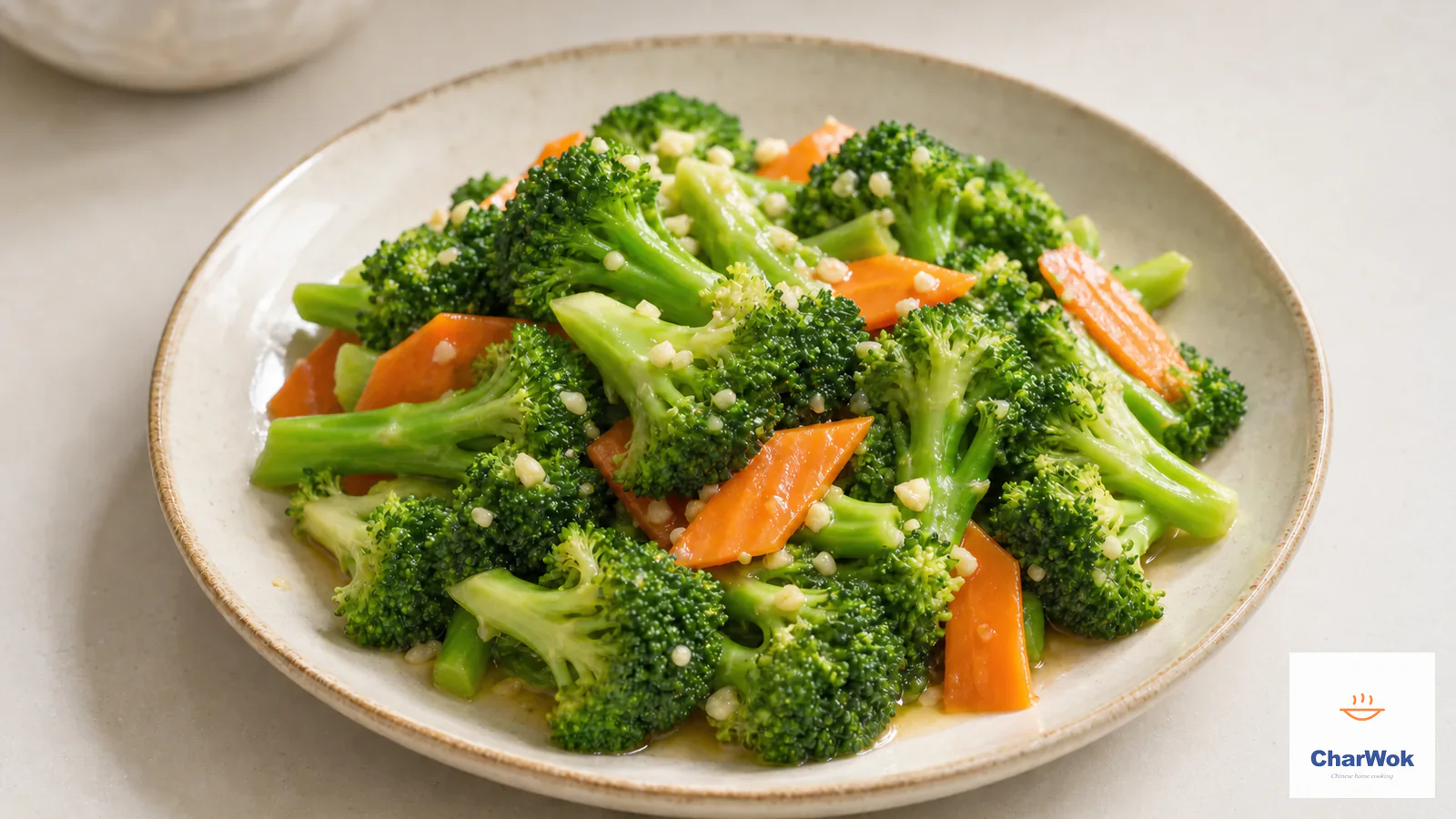
The soul of this dish is a thin, glossy sauce that clings to every floret. Not a heavy brown gravy, not a watery slick at the bottom of the plate. A real Chinese restaurant broccoli with garlic sauce coats the vegetable like a glaze, and the florets stay bright green with a snap when you bite them. At home the dish often fails two ways: the broccoli goes dull and olive, and the sauce either runs off or turns to paste. Both failures are fixable, and neither takes extra ingredients. They take timing and heat.
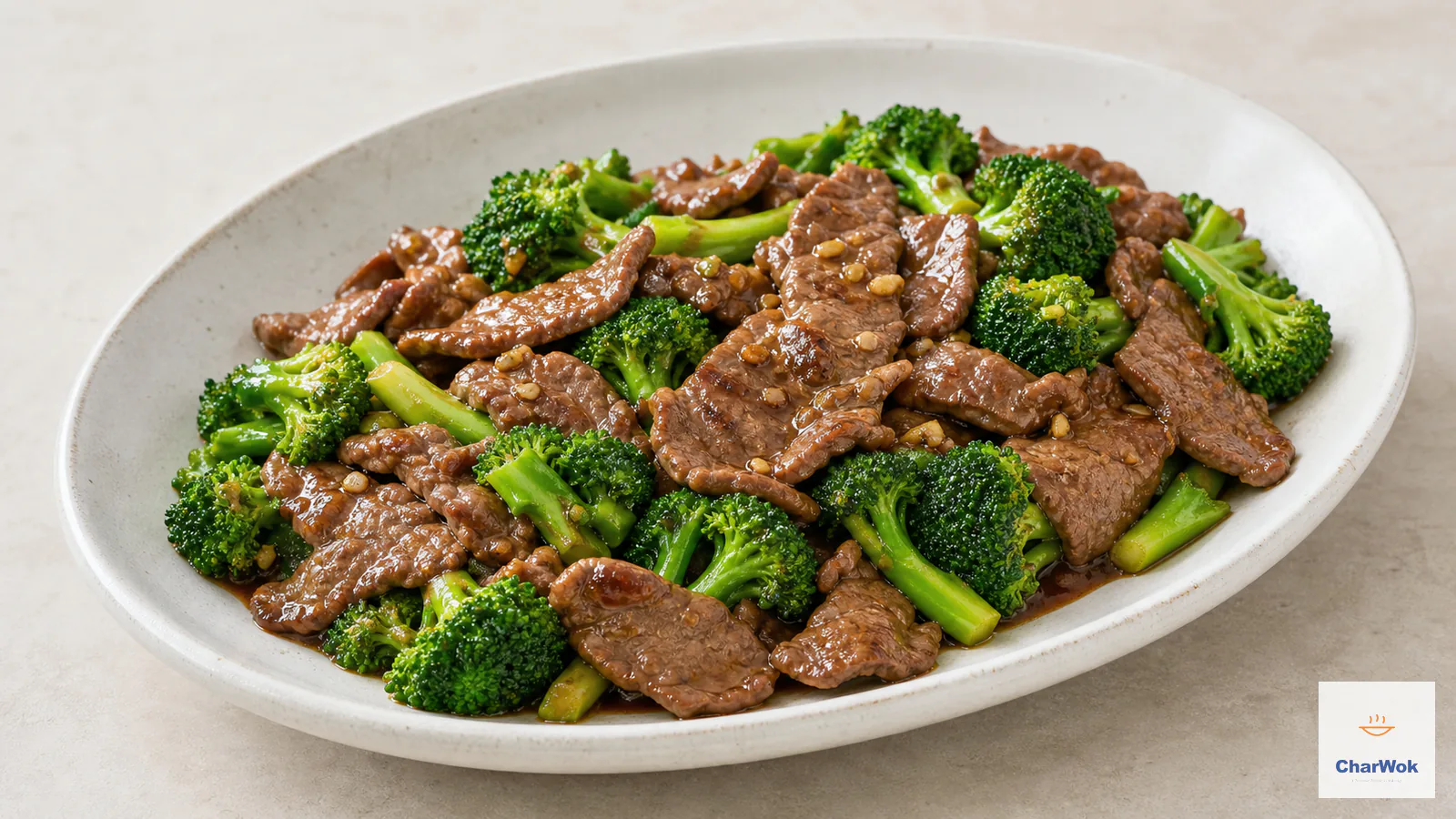
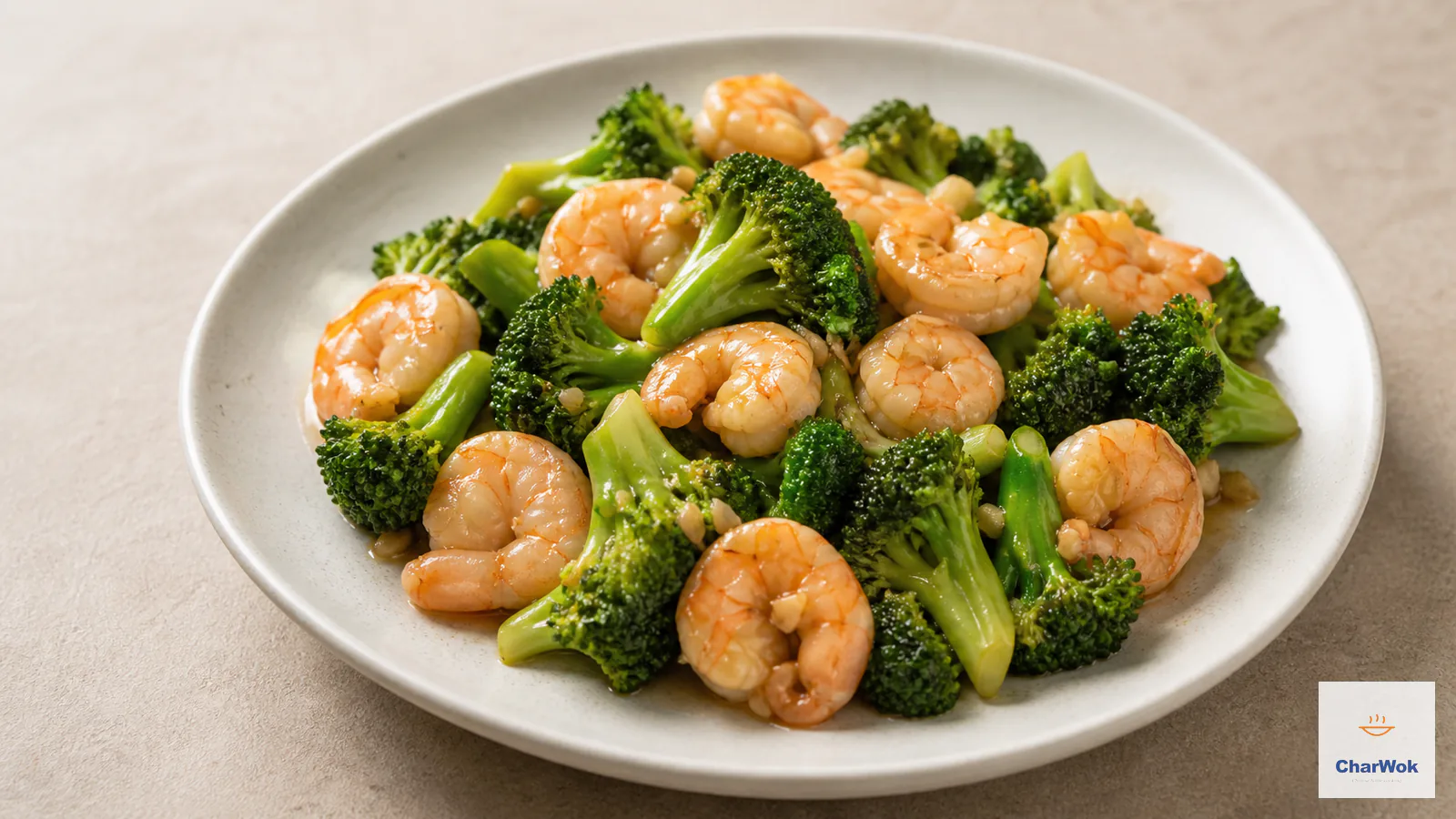
What trips people up is the assumption that stir-fry means everything happens in the wok at high heat. For dense vegetables like broccoli, that assumption is the whole problem. Florets are thick little trees. By the time the core is tender in a screaming-hot pan, the tips are charred and the color has gone gray. The fix is old and boring: blanch first, then finish in the sauce. It is the same logic behind takeout beef and broccoli and shrimp and broccoli, and once you internalize it, it changes how you cook every sturdy vegetable.
Blanch the florets 60 to 90 seconds in salted boiling water, shock the garlic in warm oil for 15 seconds, then thicken the sauce on low heat before the vegetables go back in. That order, and the low heat at the end, are what keep the sauce glossy instead of gummy.
Where this dish comes from
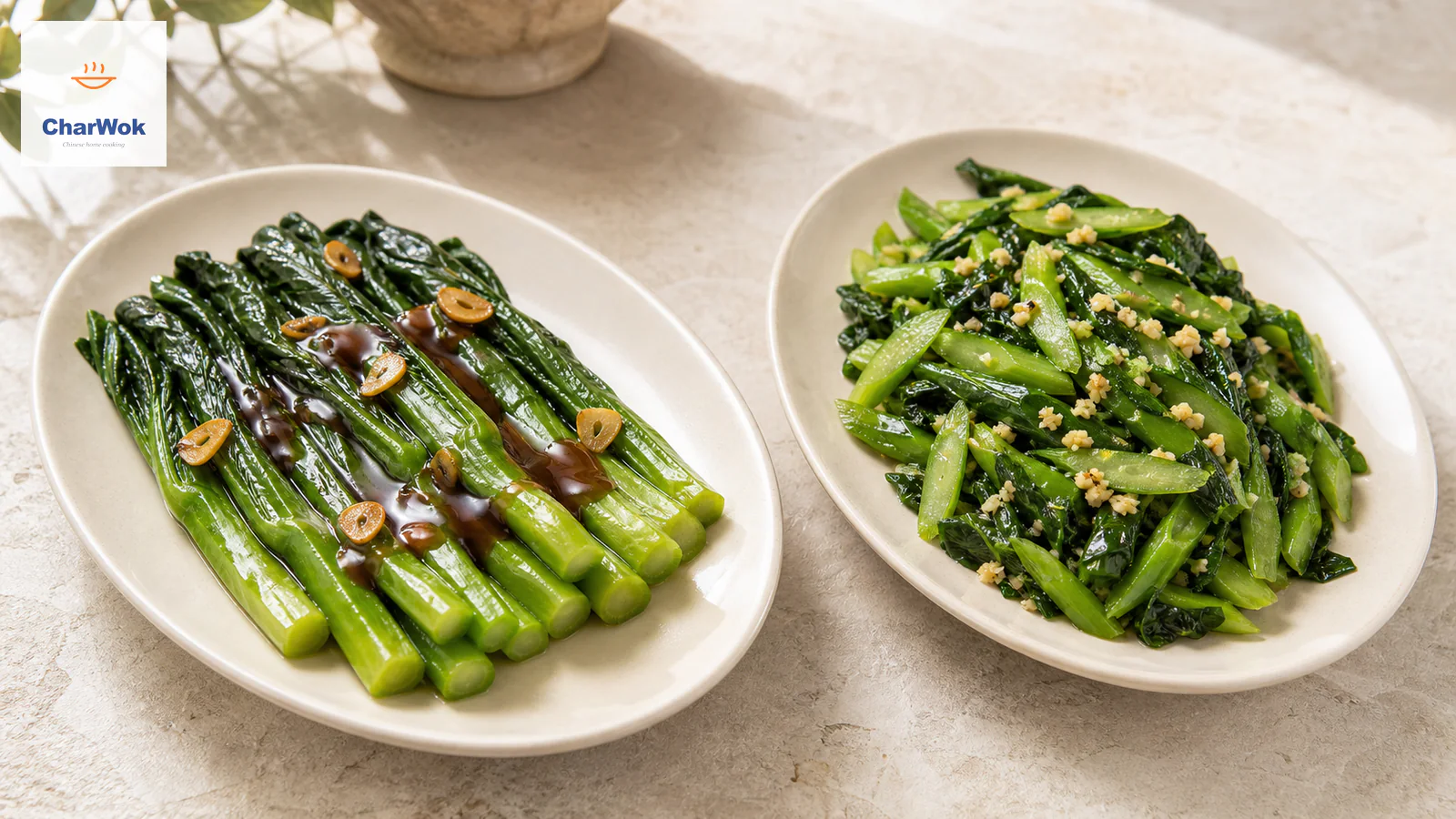
Garlic-sauced vegetables are a broad family in Chinese cooking, not a single recipe. The Cantonese version keeps it clean: oyster sauce, a little garlic, a cornstarch slurry, and that is the whole seasoning. This is the style you see in oyster sauce lettuce and blanched Gai Lan, and it is the style this recipe follows.
Do not confuse it with the Sichuan "fish-fragrant" or "garlic sauce" family. When a Sichuan recipe says garlic sauce, it means a built-from-scratch blend of chili, garlic, vinegar, and sugar, the kind that powers eggplant with garlic sauce or king oyster mushrooms in garlic sauce. Those are louder, sweeter, more sour. This broccoli is the quiet cousin. It relies almost entirely on one good Chinese condiment doing the heavy lifting.
That condiment is oyster sauce. If yours tastes only of salt and caramel color, the dish will taste flat no matter what you do. Buy a brand that lists oyster extracts near the top of the label. It is the single biggest quality lever here.
Ingredients
Ingredients at a glance
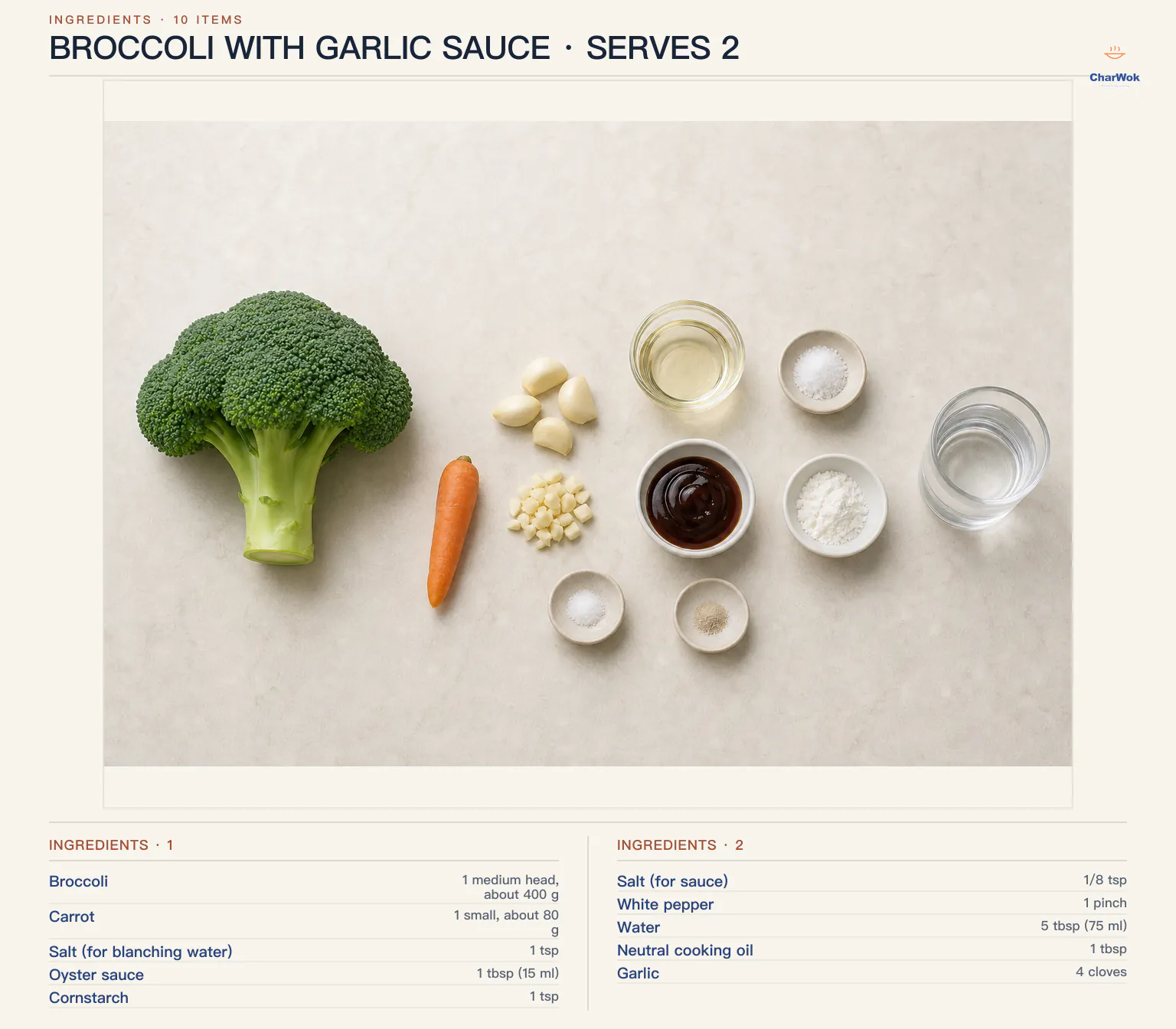
| Ingredient | Amount | Notes / substitute |
|---|---|---|
| Broccoli | 1 medium head, about 400 g | Use the stem too; peel and slice it. |
| Carrot | 1 small, about 80 g | For color. Leave out if you prefer. |
| Salt (for blanching water) | 1 tsp | Seasons the water roughly like the sea. |
| Oyster sauce | 1 tbsp (15 ml) | Vegan oyster sauce or mushroom stir-fry sauce work; GF oyster sauce exists. |
| Cornstarch | 1 tsp | Potato starch or tapioca starch substitute evenly. |
| Salt (for sauce) | 1/8 tsp | Oyster sauce is already salty; taste before adding more. |
| White pepper | 1 pinch | Optional. Adds a faint warm bite without coloring the sauce. |
| Water | 5 tbsp (75 ml) | Warm or cool, either is fine. |
| Neutral cooking oil | 1 tbsp | Grapeseed, canola, or peanut. Not olive oil. |
| Garlic | 4 cloves | Crush, then chop coarse. Do not mince fine. |
Method
- Cut for even cooking. Separate the head into florets, then halve any large ones so every piece is close to the same size. This is not fussiness. Uneven florets mean some go soft while the big ones are still raw at the core. Peel the tough outer skin off the stem and cut it into coins; the stem is sweet and tender once the fibrous layer is gone. Peel the carrot and cut it on a sharp diagonal into thin ovals so it cooks in the same window as the florets.
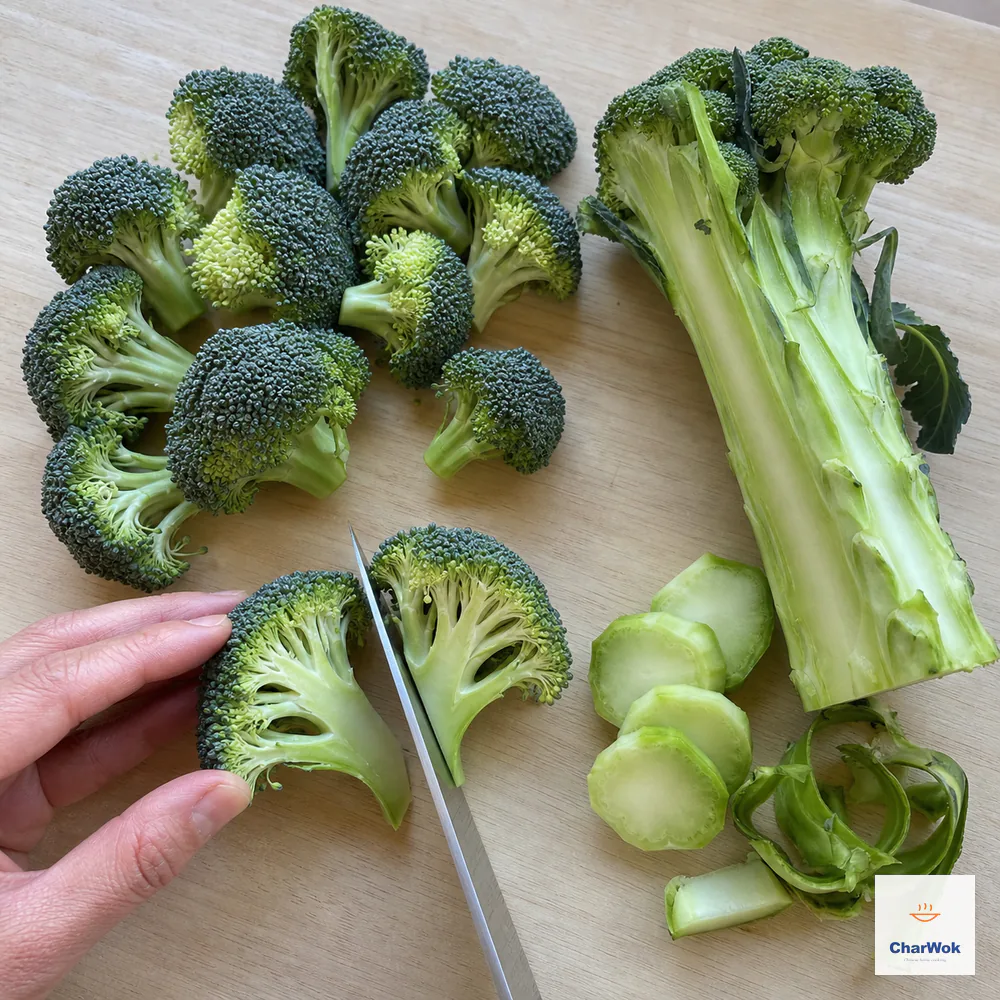
Cut the crown into evenly sized florets, halve the large ones, and peel the tough outside from the sweet central stem before slicing it.
- Bring a lot of water to a full boil. Use about 1 liter (4 cups) for one head of broccoli. A large volume of water barely drops in temperature when the vegetables go in, which is what keeps the color bright. Add the salt. Without it the broccoli tastes like hot water; with it the salt migrates into the florets and the seasoning sauce has less work to do.
- Blanch broccoli 60 to 90 seconds, then carrot for 1 minute. Drop the broccoli in at a rolling boil and watch the color sharpen to vivid green. Pull a piece at 60 seconds and bite it; you want tender-crisp, not soft. Add the carrot slices and boil one more minute, then drain immediately. Do not let the broccoli sit in the hot water off the heat, because it keeps cooking and goes dull.
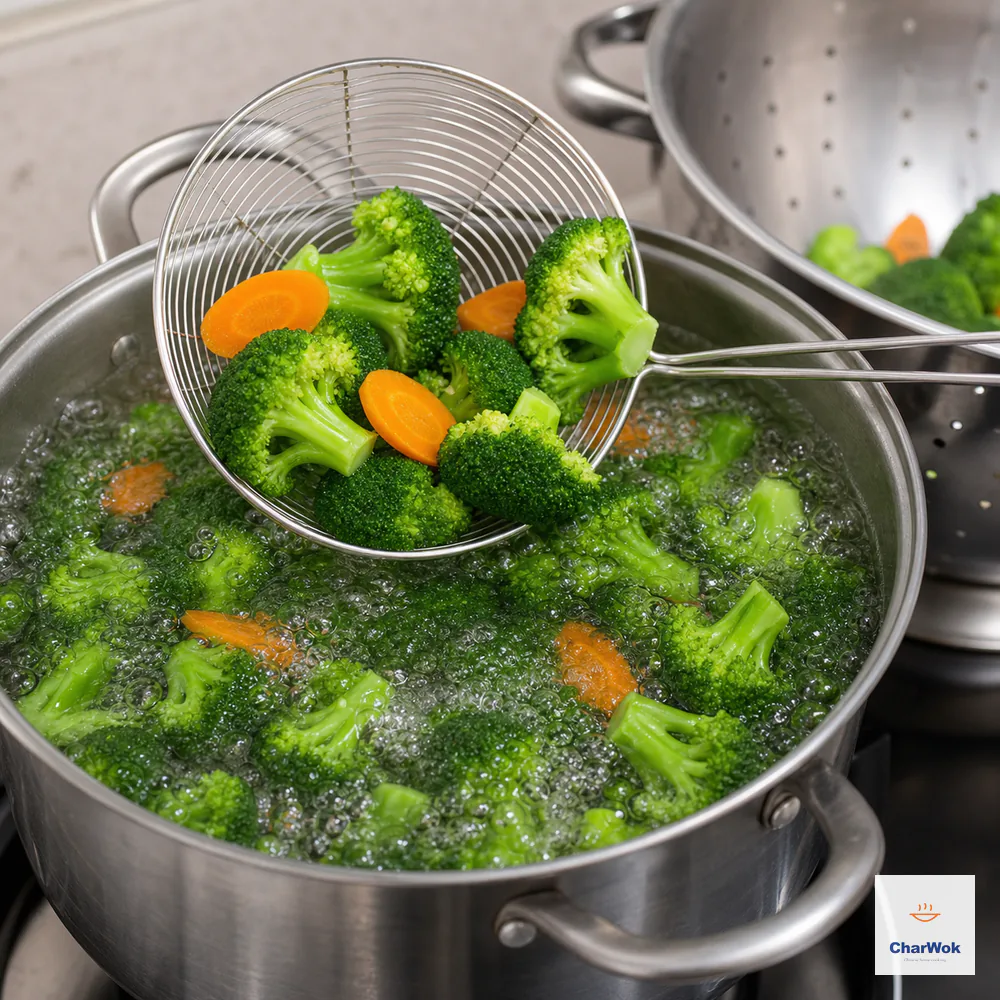
Blanch broccoli in fully boiling salted water for 60 to 90 seconds, add the thin carrot for 1 more minute, then drain immediately while both remain bright and crisp.
- Mix the sauce while the vegetables blanch. Stir the oyster sauce, cornstarch, the 1/8 tsp salt, white pepper, and water together until smooth. The cornstarch settles fast, so give it another stir right before you pour.
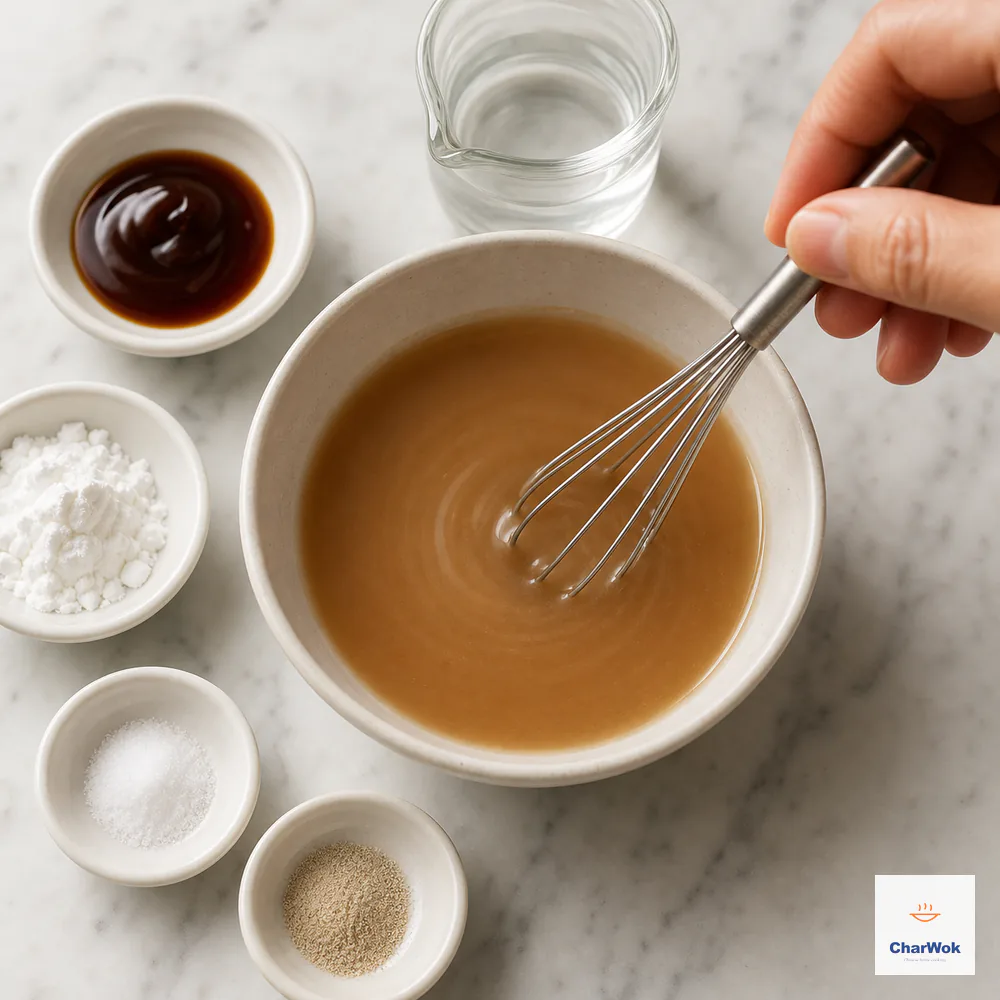
Whisk the oyster sauce, starch, sauce salt, white pepper, and water until smooth, then stir again immediately before pouring because the starch settles fast.
- Sizzle the garlic in warm, not smoking, oil. Heat the oil in a well-seasoned wok or wide skillet over medium. Add the garlic when the oil is warm but not hot, and let it sizzle gently for about 15 seconds, just until the edges start to color. Garlic burned past pale gold turns bitter and drags the whole dish down. Coarse chop rather than mince protects you here, because larger pieces brown more slowly.
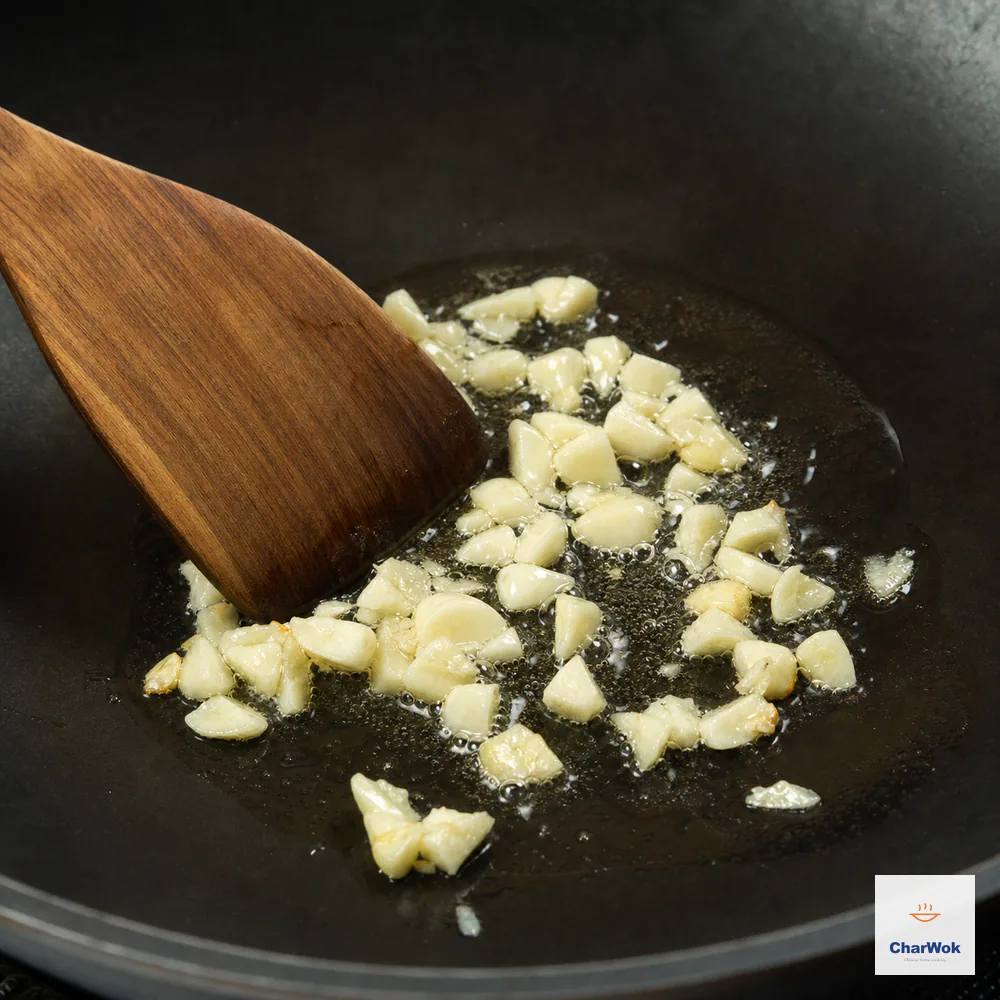
Add the coarse garlic while the oil is warm, not smoking, and sizzle for about 15 seconds; move on as soon as a few edges begin to color.
- Drop the heat to low before the sauce goes in. This is the step most home cooks skip, and it is the one that separates glossy sauce from lumpy paste. Cornstarch thickens sharply around 70 to 80 degrees C and keeps tightening as it sits in a hot pan. On low heat the slurry thickens gradually and stays smooth. If your burner is electric and holds heat, lift the pan off the flame for a few seconds at a time to slow the gel.
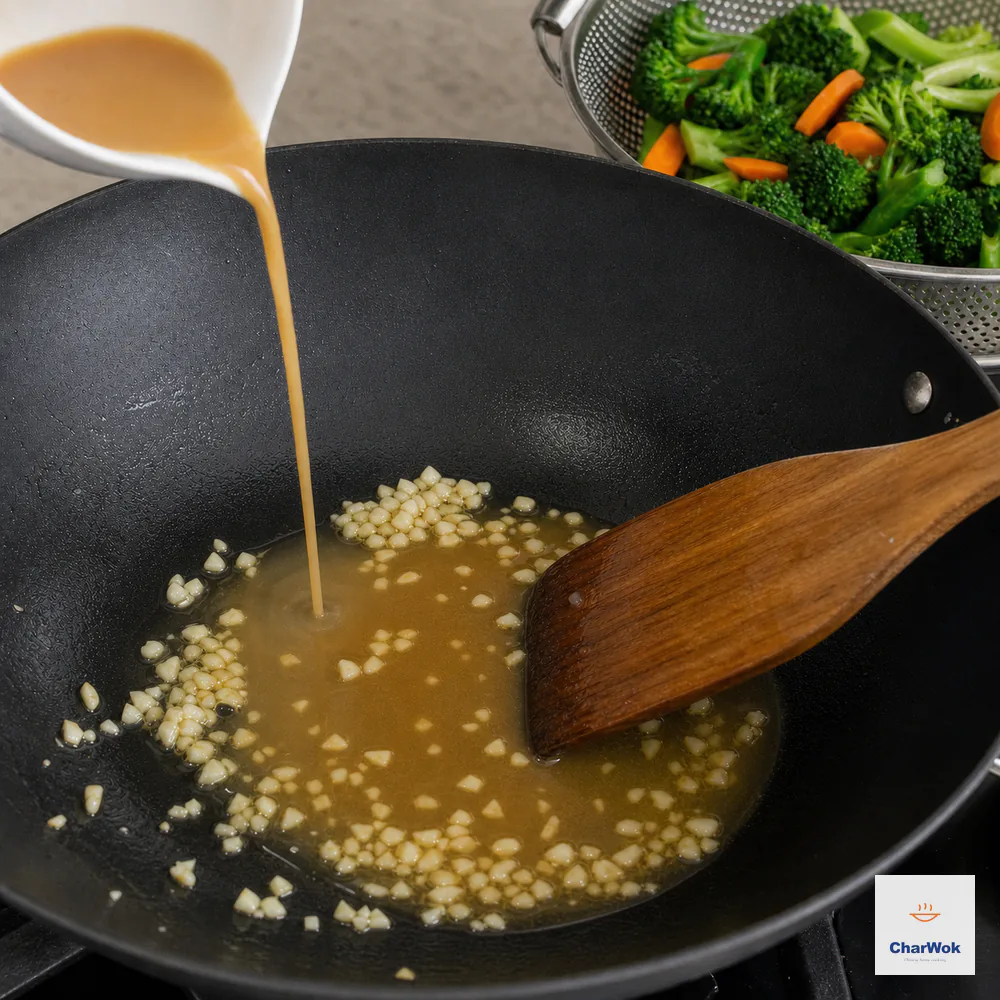
Drop the heat to low before pouring, then keep the sauce moving until it turns smoothly glossy without bubbling or setting into lumps; add the drained vegetables next.
- Pour, swirl, then add vegetables. Stir the slurry once more and pour it in. Swirl the pan as the sauce clouds and turns glossy, about 10 to 15 seconds. The moment it coats the back of a spoon, tip in the broccoli and carrot and toss fast so every surface gets a film of sauce. Serve at once.
When it goes wrong, and how to save it
The broccoli came out dull and olive. The water was not at a full boil when the florets went in, or they sat in the pot after the heat went off. Next time wait for a rolling boil and drain the second the timer ends. You can also drop the drained broccoli into a bowl of cold water to halt the cooking, though you lose a little of the heat that helps the sauce cling.
The sauce turned into a gummy lump. The pan was too hot when the slurry hit it, or the cornstarch had settled and you poured mostly water first. Fix it now by adding a tablespoon of water off the heat and swirling until it loosens. Prevent it next time by dropping to low heat and stirring the slurry right before pouring.
The sauce is thin and pools on the plate. Either you skipped the cornstarch, or the slurry did not come to a thicken. Let the coated dish sit on low heat another 10 seconds and swirl; cornstarch needs a brief hot moment to fully gel.
The garlic tastes bitter. It browned past pale gold. There is no real rescue; strain it out, wipe the pan, and start the garlic step over with fresh oil. It costs two minutes and saves the dish.
The whole thing tastes bland. Almost always the oyster sauce. A thin, cheap brand reads as salt and not much else. The carrot also dilutes the flavor; if you doubled the vegetables, bump the oyster sauce by half a tablespoon.
Variations and pairings
The blanch-then-glace method is portable. Use it for garlic bok choy, dry pot cauliflower, green beans, snow peas, or sliced Chinese cabbage. Adjust the blanch time to the vegetable: tender greens need only 20 to 30 seconds, while dense cauliflower wants a full two minutes. Stir-fried napa cabbage and northern Di San Xian are good company if you are building a vegetable-forward meal.
For a heartier dinner, fold in proteins. Add a half cup of sliced shiitake mushrooms to the blanch, or stir-fry strips of chicken briefly before the garlic and finish with soy sauce to taste. The same glaze turns plain poultry into something close to oyster sauce chicken in spirit.
If you want depth without adding salt, a few drops of toasted sesame oil off the heat, or a teaspoon of Shaoxing rice wine deglazed into the garlic, lifts the flavor toward a restaurant version.
Storage and reheating
This dish is best the minute it leaves the pan. The cornstarch sauce thickens further as it cools and the broccoli softens, so leftovers never quite match the original. That said, it keeps one day in the fridge in an airtight container. Reheat gently in a covered pan over low heat with a teaspoon of water to loosen the glaze, just until warm. Microwaving works but tends to push the broccoli past tender-crisp. I would not freeze it.
Frequently asked questions
Can I skip the blanching and just stir-fry raw broccoli?
You can, but the result is worse. Raw florets char at the tips before the cores soften, and the color fades. Blanching takes a minute and solves both problems.
Is there a vegan version?
Yes. Swap the oyster sauce one-for-one with a vegetarian mushroom stir-fry sauce or vegan oyster sauce. Both are widely sold and behave the same way in the glaze.
Why low heat at the end instead of high heat?
Cornstarch seizes and turns gummy in a very hot pan. Low heat lets it thicken slowly into a smooth, glossy film that coats the florets rather than clumping on them.
What can I use instead of cornstarch?
Potato starch and tapioca starch thicken the same amount by volume and give a slightly clearer, more elastic sauce. Arrowroot also works but breaks down if held at a boil, so keep the heat gentle.
If you are new to Chinese cooking, this is one of the best dishes to learn first. It teaches two habits, blanching dense vegetables and throttling heat for a starch-thickened sauce, that show up again in countless recipes. Get those right and most quick weeknight sides become a matter of changing the vegetable.