Egg drop soup is the dish I make when I want something warm in a bowl but I have roughly four minutes and a cold kitchen. Three eggs, a quart of broth, a spoonful of cornstarch. Yet most home versions come out looking like egg drop soup's sad cousin: cloudy broth studded with rubbery curds, or a thin, watery disappointment with the egg sitting in a clump at the bottom. The fix is not in the ingredients. It is entirely in temperature and pour rate, and almost nobody explains why.
I have ruined this soup more times than I care to admit, usually by dumping beaten egg into a rolling boil and then stirring hard to "distribute it." That is exactly backwards. Once you understand what the egg is actually doing at the surface of the broth, the whole technique clicks, and you stop needing a recipe.
Bring the broth to a simmer, thicken it lightly so it coats a spoon, then kill the heat to a bare tremble before pouring the egg in a thin stream. The single move that makes or breaks the bowl: the broth must barely be moving when the egg lands. Serves 4 in about 5 minutes, with 3 large eggs against 1 liter (4 cups) of broth.
What this soup actually is
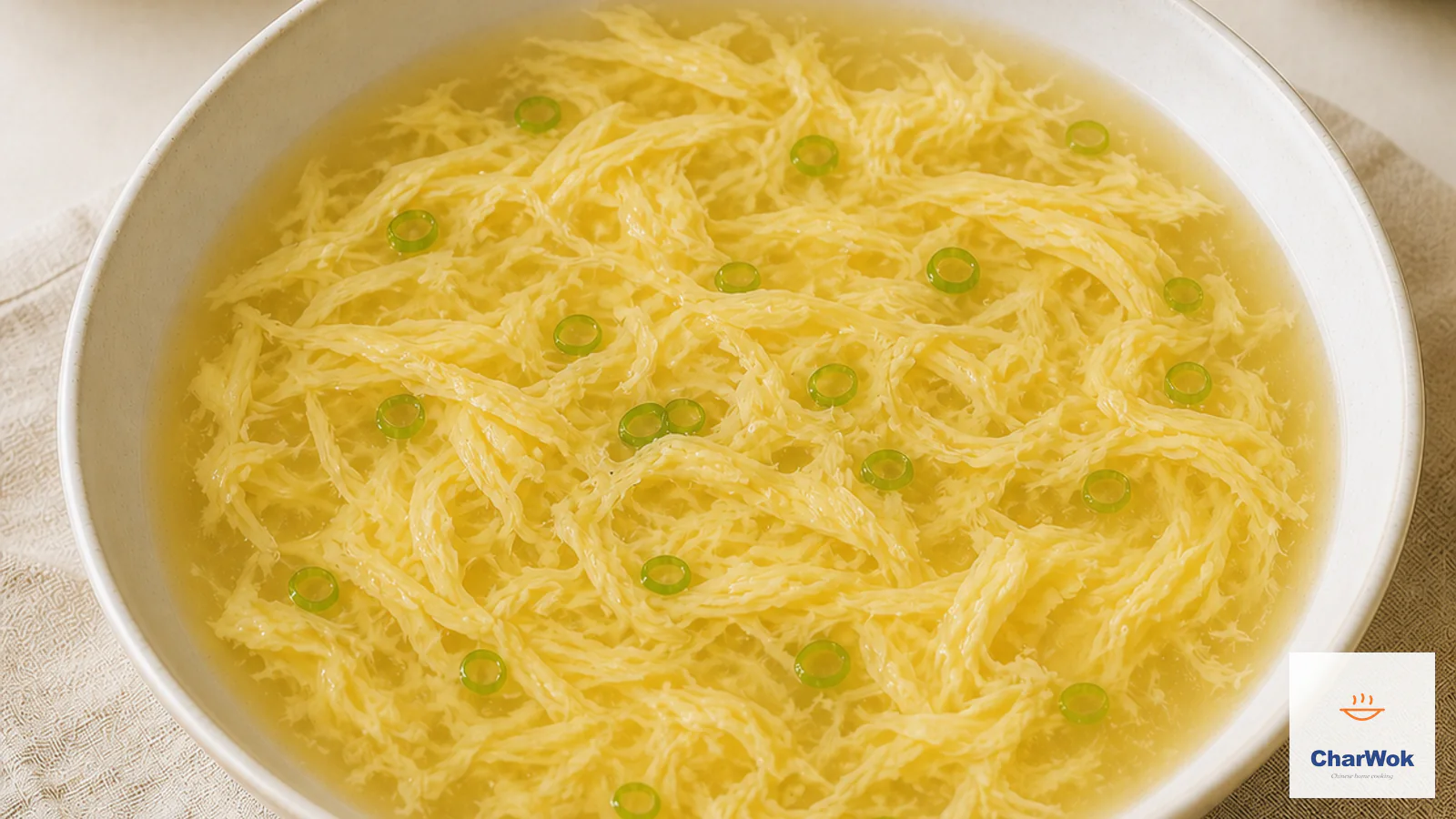
The Chinese name is dan hua tang, "egg flower soup," and the flower is the wispy curtain of cooked egg that drifts through the bowl. It is not scrambled egg in broth and it is not a fine custard. It is somewhere between the two: a translucent shawl of coagulated albumin, fragile enough to read a menu through.
This is everyday home food across northern China, not banquet food. It shows up at the end of a meal of fried noodles or fried rice, or on its own as a quick, restorative late supper. For a lot of Chinese cooks it sits in the same mental category as congee: the thing you make when somebody is tired, sick, or just cold. It is gluten-free by nature, and it turns vegetarian the moment you swap the chicken broth for mushroom or vegetable stock.
The four ingredients, and what each one does
Ingredients at a glance
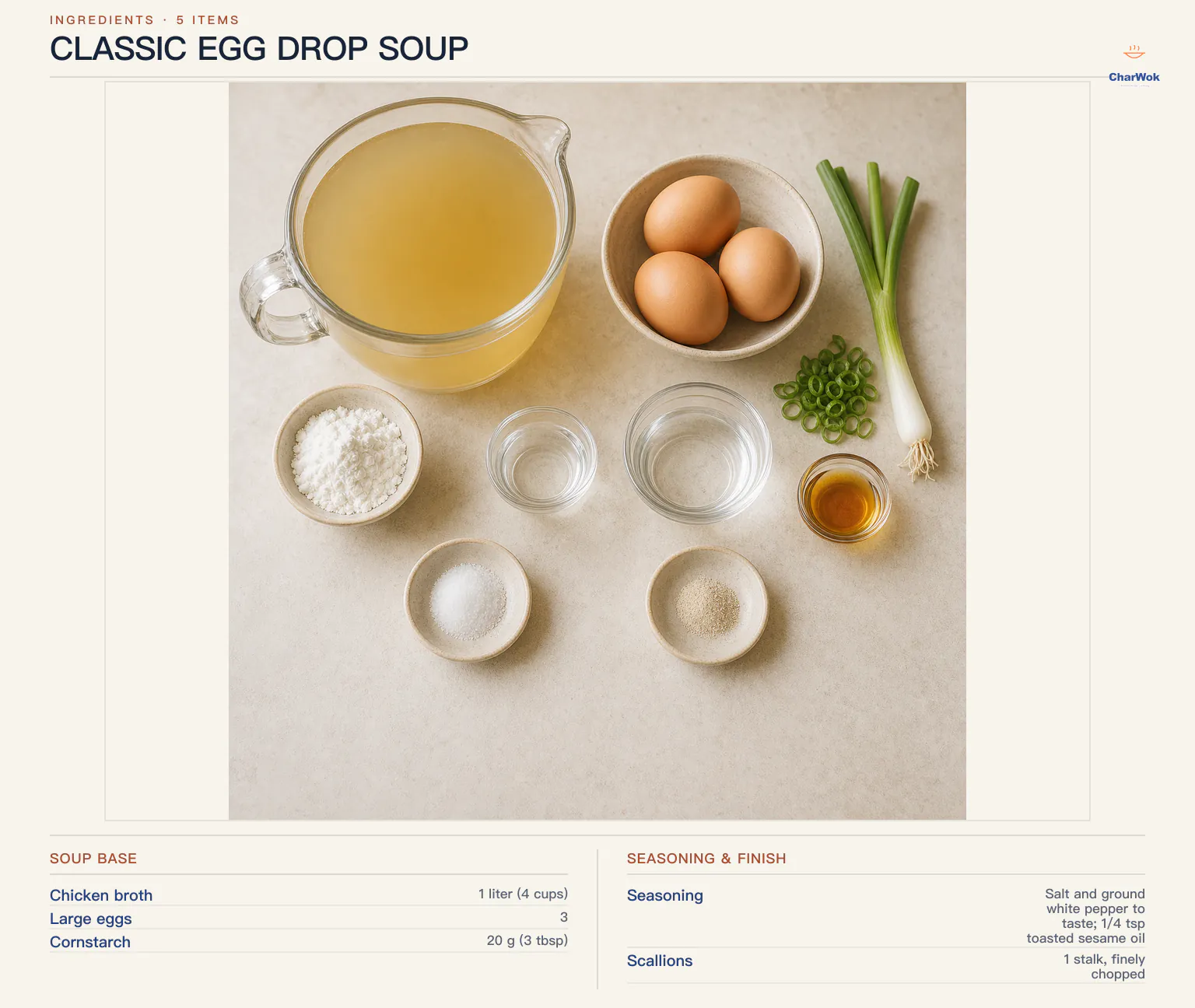
This recipe leans on four things, and skipping or misjudging any of them is how good soup goes wrong. Here is what to buy and why it matters.
| Ingredient | Amount (for 4 servings) | Notes / substitute |
|---|---|---|
| Chicken broth | 1 liter (4 cups) | The backbone. Use homemade if you have it; better-than-bouillon paste dissolved in water beats most cartons. Vegetable or mushroom stock for a vegetarian version. Avoid plain water unless you doctor it hard. |
| Large eggs | 3 | Pasture-raised eggs give a deeper yolk color naturally. You thin them with 30 ml (2 tbsp) water before pouring. |
| Cornstarch | 20 g (3 tbsp) | Mixed with 90 ml (6 tbsp) cold water into a slurry. Potato starch or arrowroot work almost as well. Do not use all-purpose flour. |
| Seasoning | Salt and ground white pepper to taste; 1/4 tsp toasted sesame oil | White pepper, not black. The faint heat and clean aroma are part of the dish's identity. |
| Scallions | 1 stalk, finely chopped | Garnish. Chives or cilantro are fine stand-ins. |
Why broth and not water
Plain water leaves you with seasoned dishwater. The egg has no backdrop to float against, and the soup tastes thin no matter how much salt you add. Chicken broth gives the egg something rich to contrast with, and the gelatin from a real stock helps the ribbons hang suspended instead of sinking. If you have no broth, do what a lot of Chinese home cooks do: dissolve a teaspoon of chicken bouillon powder or mushroom powder into hot water. It is not the same as broth, but it is closer than water alone.
Why thin the eggs with water
Raw egg straight from the bowl is too viscous to drizzle; it falls in heavy blobs and cooks into chunky curds. Adding a couple tablespoons of water and whisking lightly breaks the viscosity so the egg flows off a fork or spouted jug in a continuous ribbon. I use the same trick in tomato egg stir-fry and Chinese steamed eggs: a small splash of water is the cheapest, most reliable way to get a tender egg texture.
Why white pepper and not soy sauce
White pepper brings a slow, clean warmth that does not muddy the pale color. Soy sauce tastes fine, but it turns the broth brown and you lose the contrast that makes the "flowers" visible. If you want a deeper savory note, add a few drops of Shaoxing wine to the broth while it heats, then taste. Keep the sesame oil to a quarter teaspoon; more and it drowns everything else.
The method, and the science behind each step
- Beat the eggs with water. Crack 3 large eggs into a bowl, add 30 ml (2 tbsp) water, and whisk just until yolk and white are blended. Do not whip air in; you want a thin liquid, not a foam. Set aside.
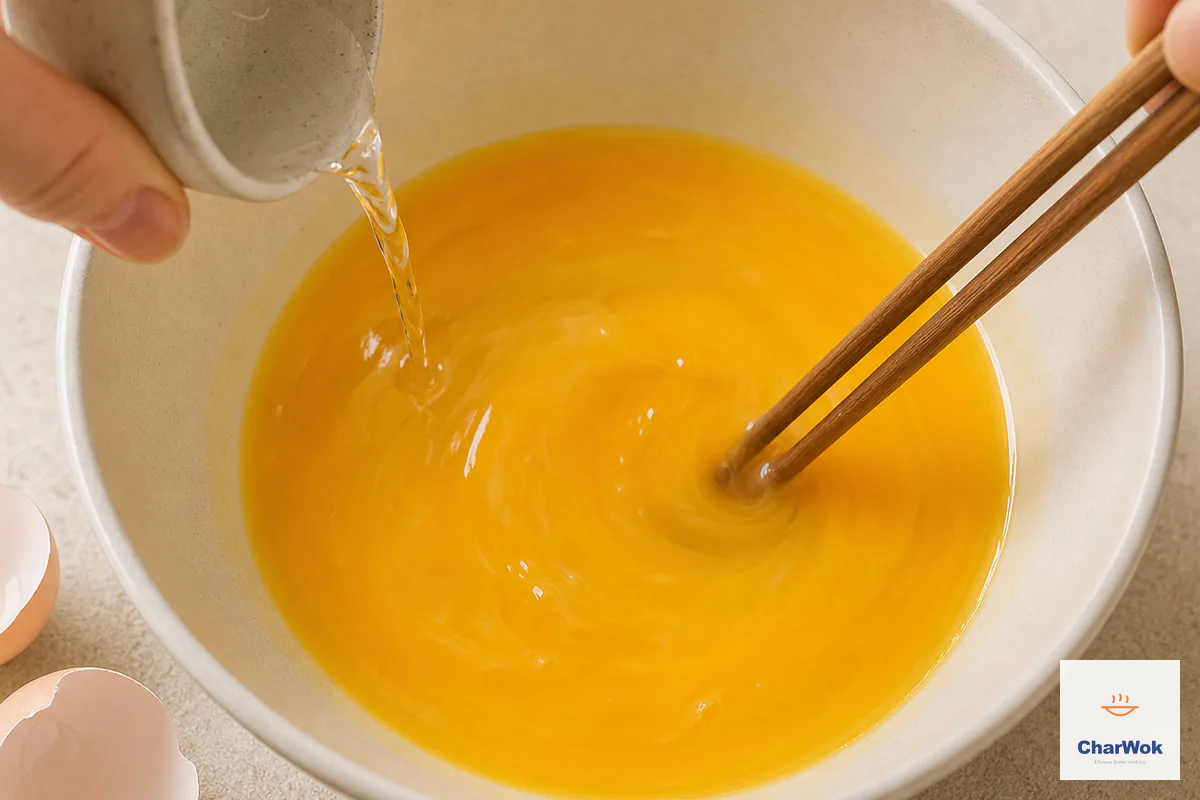
Add the 2 tablespoons of water and blend only until yolks and whites merge; stop before bubbles or foam form.
- Heat the broth to a boil, then drop to a simmer. Pour 1 liter of broth into a saucepan and bring it to a full rolling boil, then immediately lower the heat to a gentle simmer. The full boil matters because it pulls flavor out of any aromatics and dissolves your seasoning evenly; the immediate drop to a simmer matters because of what happens in the next two steps.
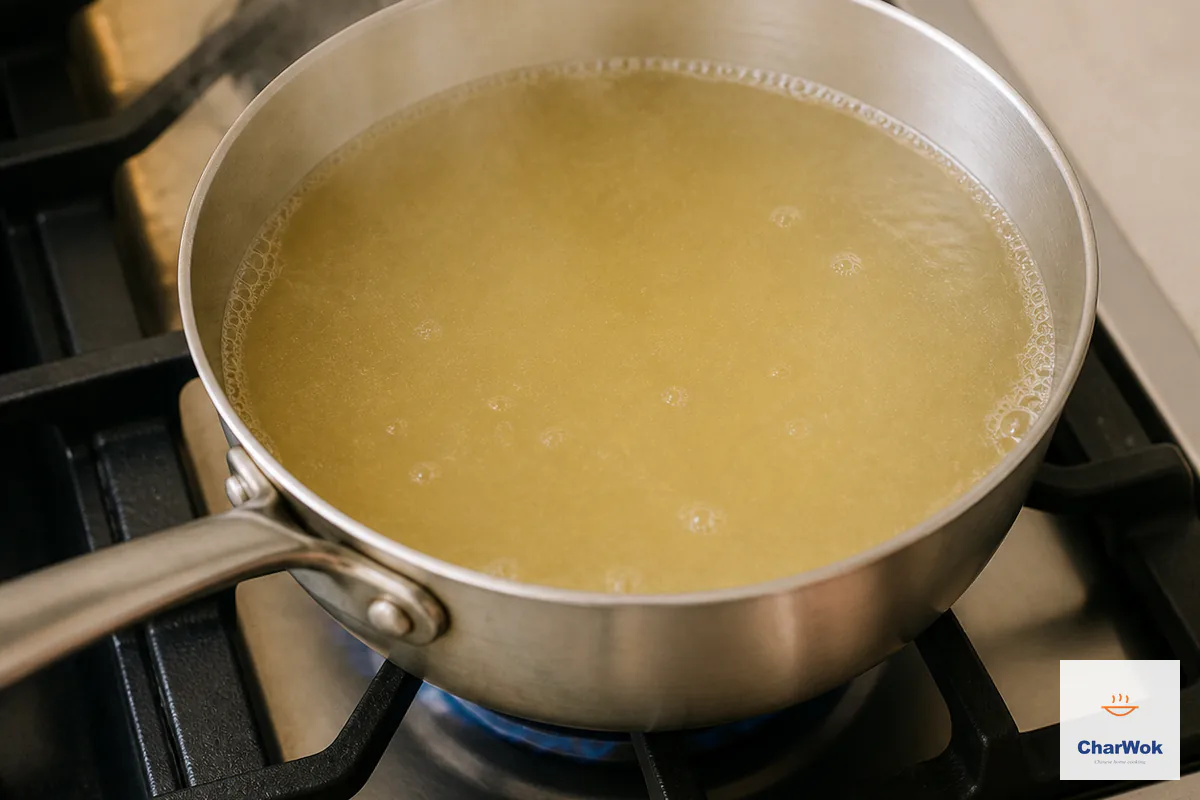
Bring the broth fully to the boil, then immediately reduce it to a gentle simmer with a calm center and small edge bubbles.
- Season and taste. Add salt, white pepper, and the sesame oil. If your broth is already salted, hold back and taste first. The soup should taste a touch salty on its own, because the bland egg will pull it back into balance.
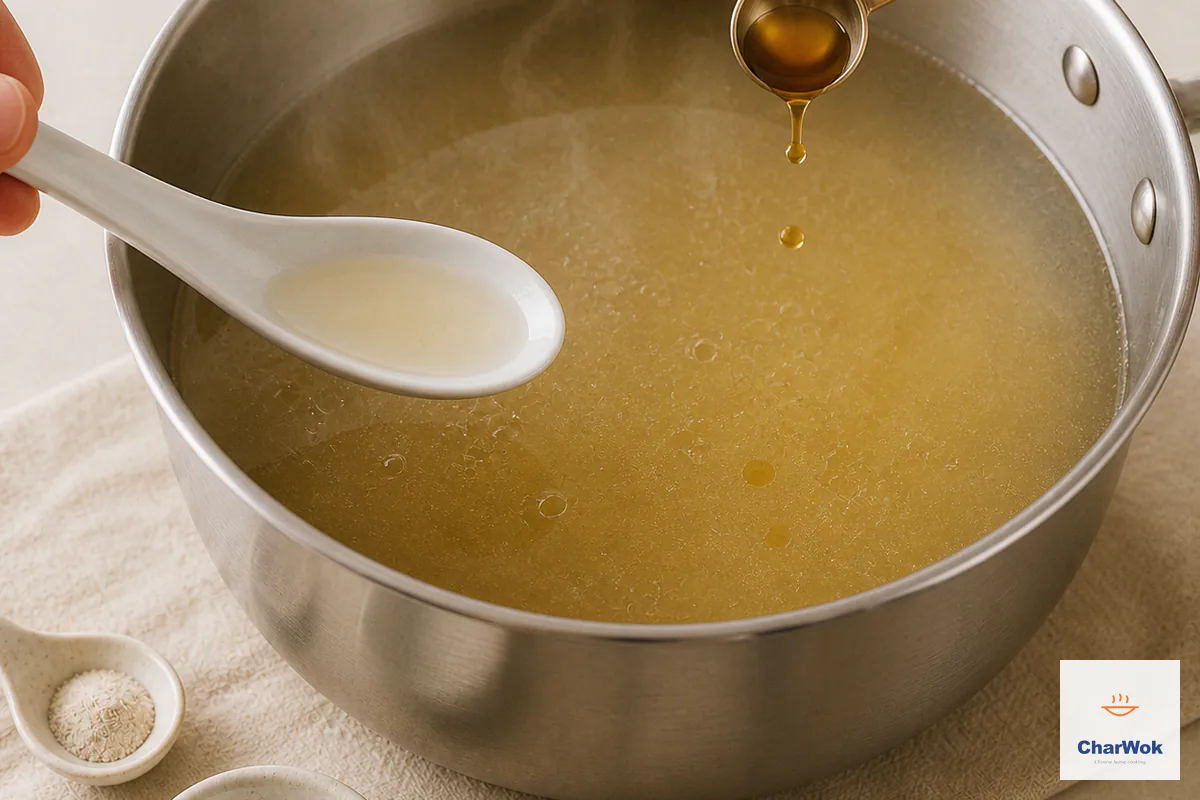
Season lightly with salt, white pepper and only a quarter teaspoon sesame oil, then taste before adding more salt.
- Stir in the cornstarch slurry. Mix 20 g cornstarch with 90 ml cold water until nothing is settled on the bottom, then pour it into the simmering broth in a thin stream while stirring. The soup will not look thick, just slightly glossy. This is correct. The starch gelatinizes around 60 to 70 degrees C (140 to 160 F) and forms a light network that increases the liquid's viscosity just enough to suspend the egg. Without it, the egg ribbons sink. Too much and you get wallpaper paste.
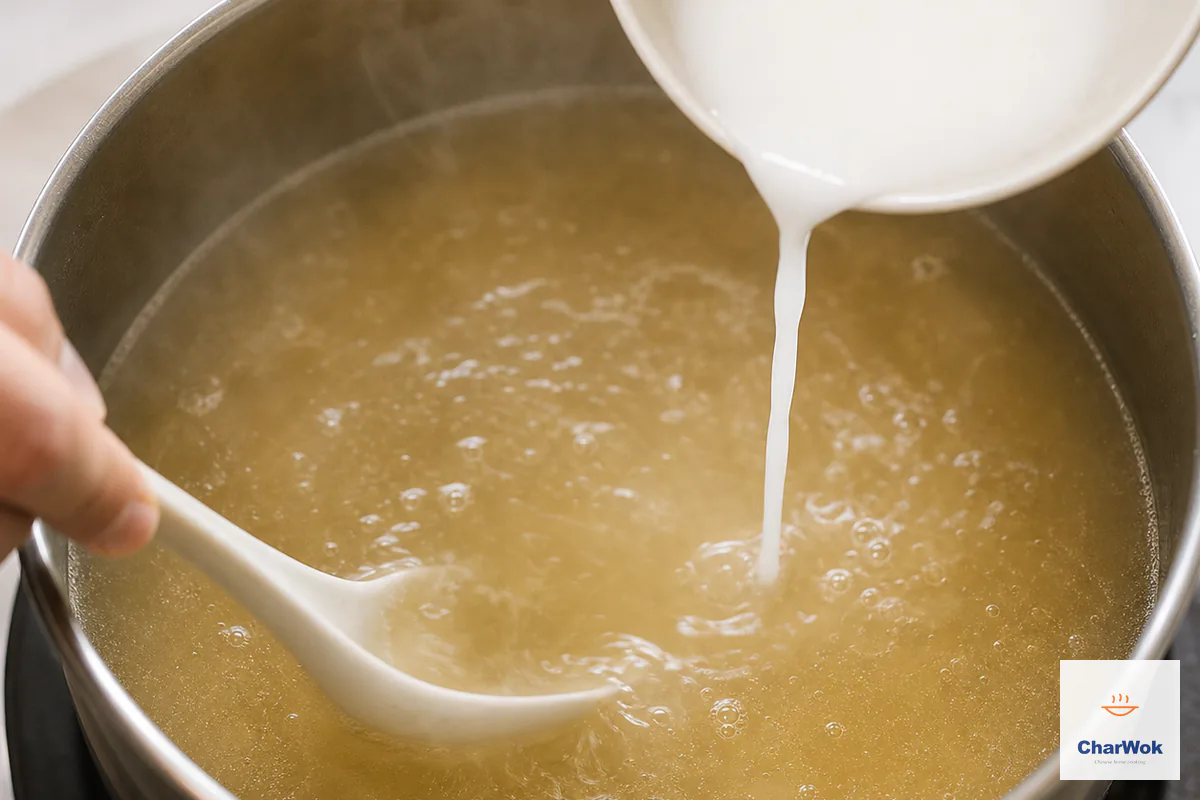
Stir the lump-free slurry in gradually and cook only until the broth looks lightly glossy and still flows freely.
- Lower to a bare tremble, then pour the egg. This is the step everyone blows. Turn the heat as low as it goes. The surface should barely shiver, with only the occasional small bubble. Now pour the thinned egg in a slow, thin stream from a height of about 10 cm (4 inches) while you stir the broth gently in one direction with a spoon or chopsticks. The egg hits the surface and the proteins coagulate into long, silky ribbons that ride the current you are creating. A hard boil would shatter them into bits; aggressive stirring would shred them into confetti. Pour slowly, swirl slowly.
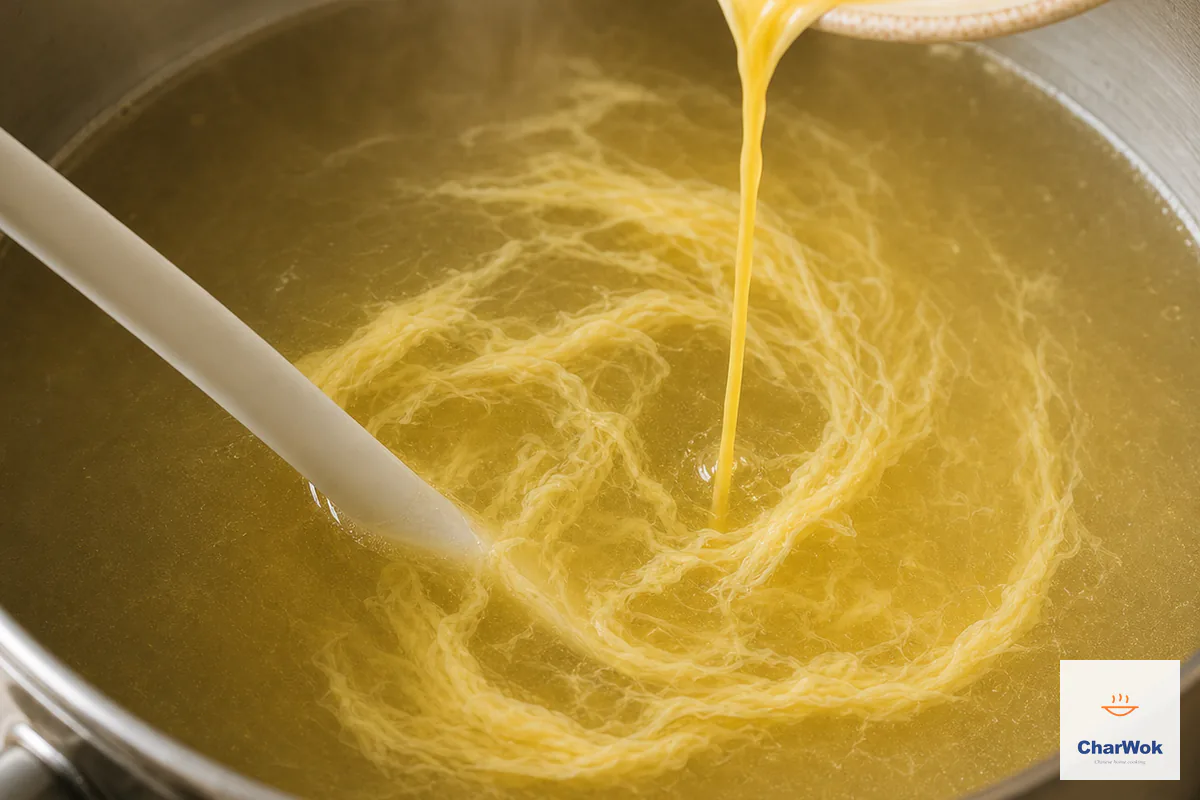
Use the lowest heat, pour a very thin stream from about 10 centimeters, and swirl slowly in one direction so the egg forms long ribbons.
- Stop, garnish, serve. Once the last of the egg is in, stop stirring. Let it sit ten seconds so the ribbons set, then ladle into bowls and shower with scallions. Serve immediately. The egg continues to tighten as it sits, so this soup is at its best in the first five minutes.
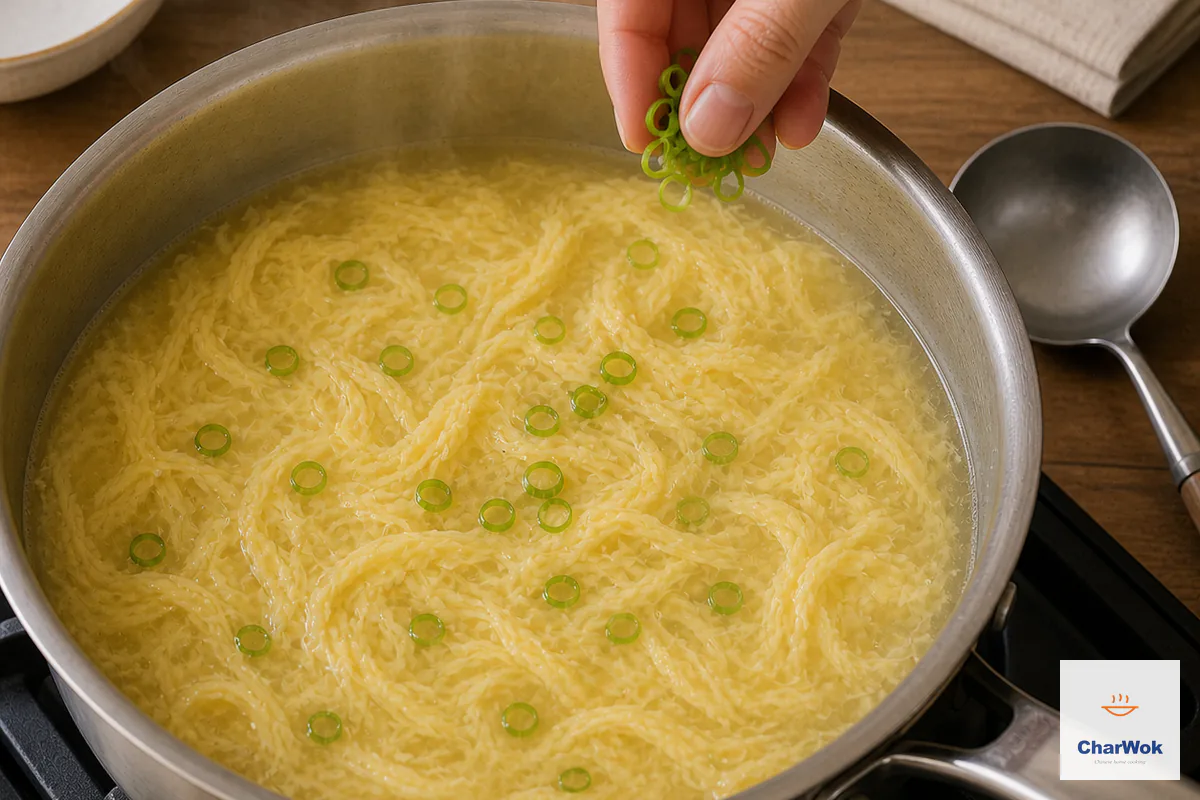
Stop stirring after the last egg, let the ribbons set for 10 seconds, then garnish and serve immediately.
Want big ribbons instead of fine threads?
The amount of swirling controls the size of the egg pieces. Stir continuously while you pour and you get fine threads. Pour without stirring and the egg sets into large, languid sheets that some people prefer. There is no right answer; it is a texture preference. My only firm advice is to pick one and commit, because stirring, stopping, then stirring again gives you the worst of both worlds.
When it goes wrong: troubleshooting
This soup fails in predictable ways, and almost every failure is fixable on the next batch if you know what caused it.
- The egg turned into chunky curds, not ribbons. The broth was too hot or you stirred too hard. Drop the heat to a bare tremble next time, and stir slowly in one direction rather than whipping. A boil will always give you egg-drop grit.
- The egg sank to the bottom in a single mass. You forgot the cornstarch, or did not let it thicken before pouring. The slurry is what holds the egg up. Also check that you thinned the egg with water; raw egg is too heavy to float on its own.
- The soup is cloudy and opaque. Two usual causes: you boiled instead of simmered after adding the egg, or you used all-purpose flour instead of cornstarch. Cornstarch sets clear; flour sets cloudy.
- The soup is slimy or gelatinous. You overdid the cornstarch. Back it down to 15 g (about 2 tbsp) next time. The liquid should coat a spoon lightly, not cling to it.
- It tastes flat. Almost always weak broth. Try a better stock, or fortify with bouillon paste, a splash of Shaoxing wine, or a pinch of sugar to round the salt out.
- The color is pale, not golden like the takeout version. Restaurants boost the color with turmeric or food coloring. A pinch of turmeric in the heating broth will do it without changing the flavor. Honestly, I usually skip it; a naturally pale soup is nothing to apologize for.
Variations and what to serve it with
The classic version is a blank canvas. Once you have the technique down, you can fold in extras without changing the method.
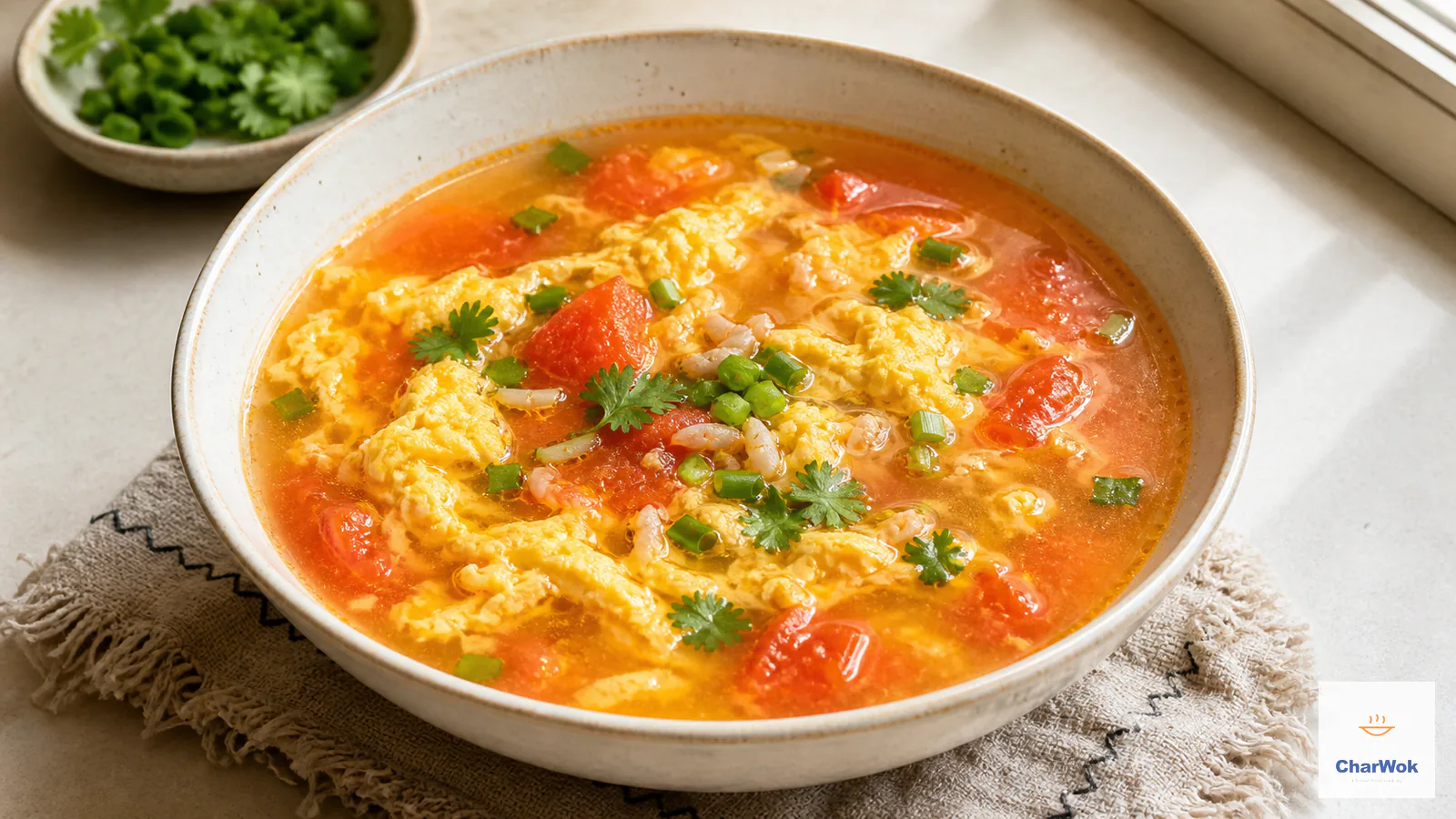
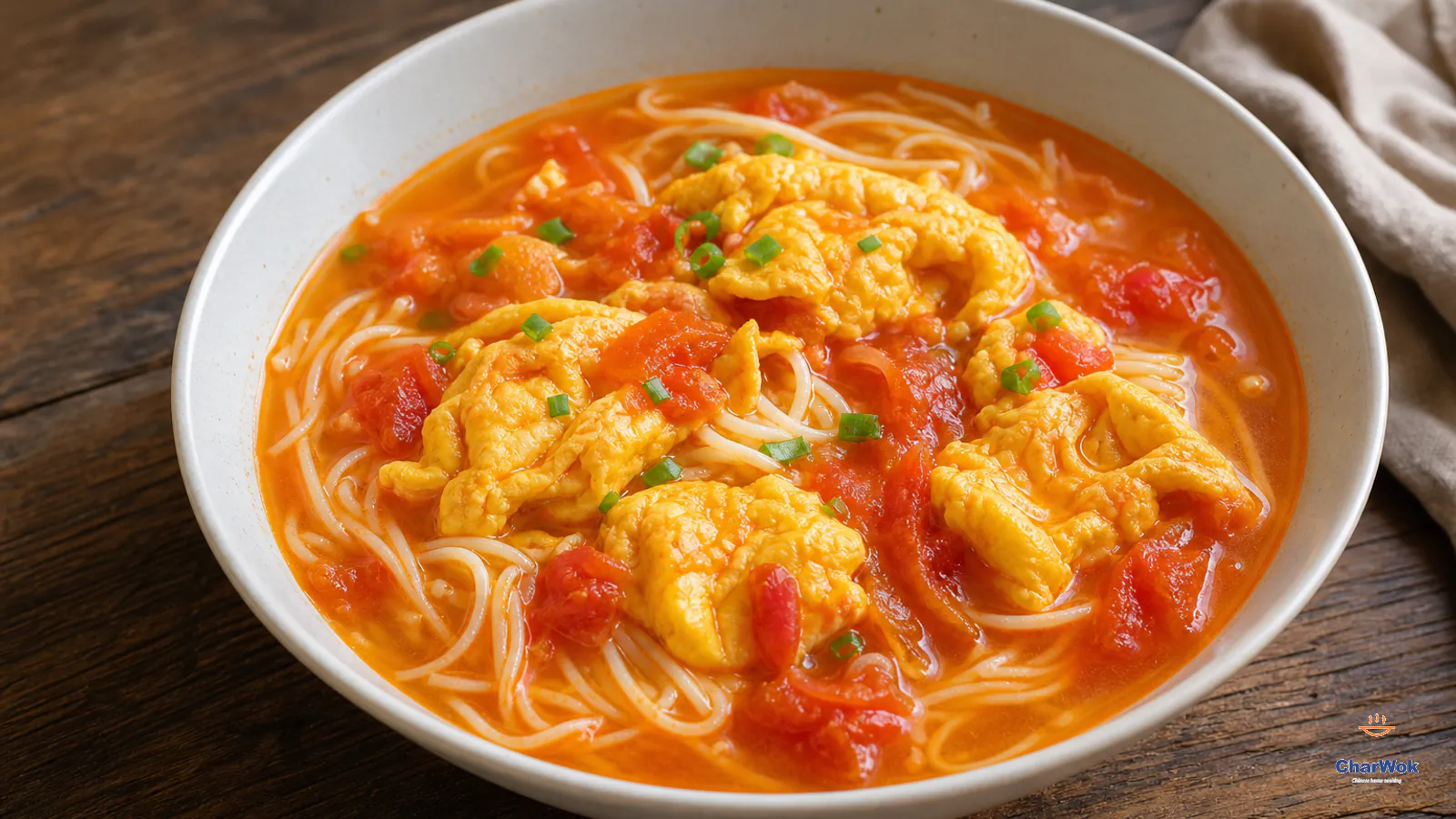
- Tomato egg drop soup. Sauté chunks of ripe tomato in a little oil until they collapse, add the broth, and proceed. The acid and sweetness turn this into a different dish entirely. This is the version I make most often at home.
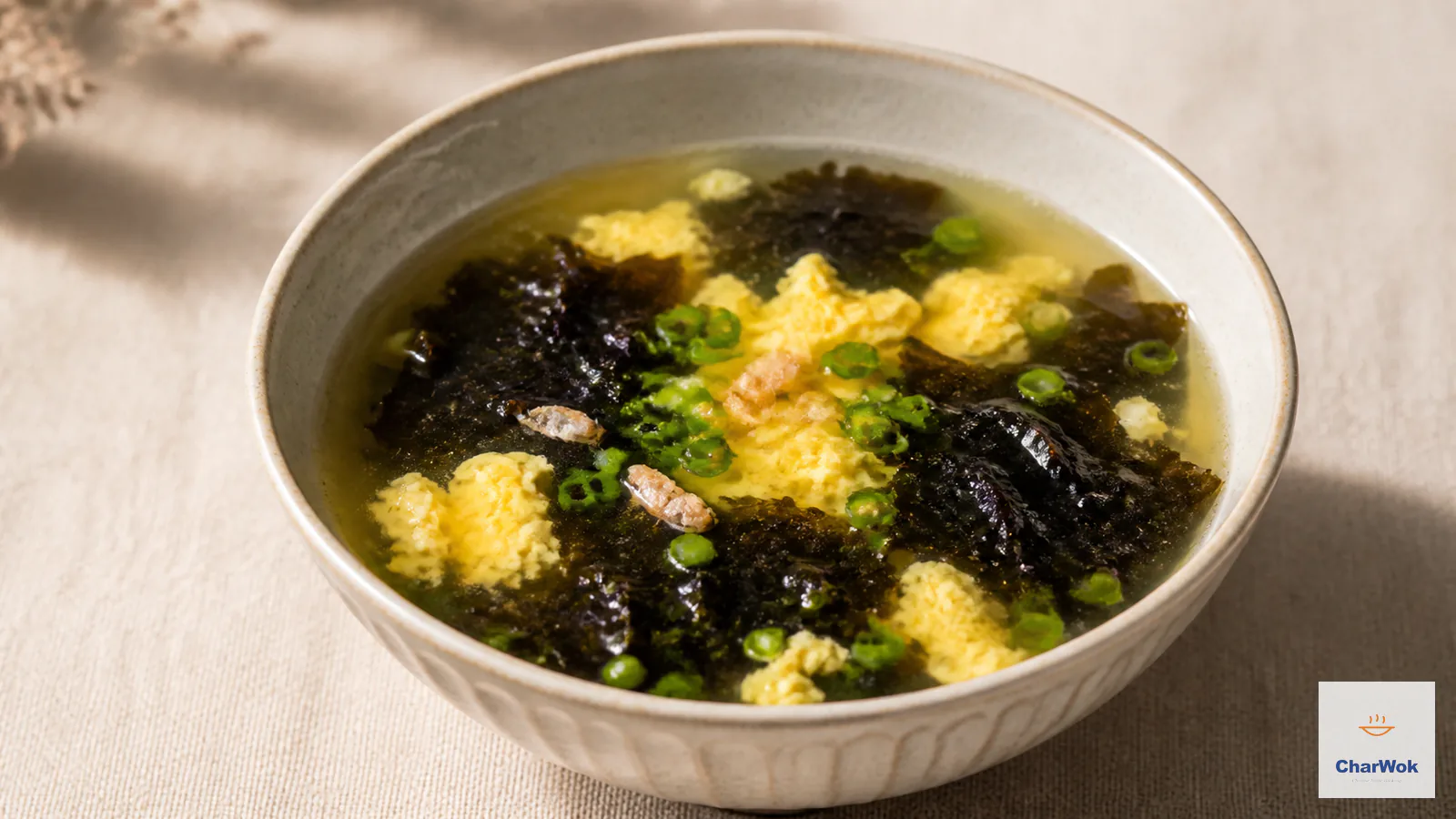
- Seaweed egg drop soup. Add torn dried nori or wakame to the broth before the egg. It brings a clean, briny depth. A few drops of rice vinegar at the end wake it up.
- Corn and egg drop soup. Stir in a handful of sweet corn kernels with the slurry. Children love this one.
- Wonton egg drop soup. Drop cooked wontons into individual bowls and ladle the soup over. It turns a quick soup into a real meal.
- Pair it with bread and starch. The classic move is to dunk something bready into it: scallion pancakes, steamed mantou buns, or you tiao doughnut sticks torn into pieces. It also works as the lighter half of a meal built around chicken corn soup or a heartier bowl of wonton noodle soup.
Storage and reheating
Leftovers keep in the fridge for about two days in an airtight container. Reheat gently over low heat just until steaming, and do not let it boil, or the egg will toughen. I do not freeze finished soup because the egg goes rubbery on thaw. You can freeze the seasoned, thickened broth on its own, then defrost, reheat, and pour in fresh egg right before serving. That is a neat trick if you want to prep ahead for guests.
Questions home cooks actually ask
A few things come up over and over. The short answers are here; the longer reasoning is in the sections above.
Why is mine pale while the restaurant version is bright yellow? Restaurants use turmeric or food coloring. A pinch of turmeric in the heating broth will mimic the color without changing the taste.
Can I leave out the cornstarch? You can, and the soup will still taste fine, but the egg will sink instead of floating and the texture will be thinner. If you want the classic look, keep the slurry.
Will all-purpose flour thicken it instead? No, not well. Flour leaves the broth cloudy and opaque, and it adds a cereal taste. Stick with cornstarch, or potato and arrowroot starch in a pinch.
Can I add soy sauce? You can, in small amounts, but it darkens the broth and hides the egg. White pepper and salt are the traditional seasonings precisely because they keep the soup pale and clean.
Why thin the egg with water? Plain egg is too thick to pour in a ribbon. A couple tablespoons of water loosen it so it flows and sets into sheets rather than blobs.
If you take one thing from this, let it be the heat. Get the broth seasoned and thickened, then drop it to the faintest simmer before the egg goes in. Pour slow, swirl slow, stop. The rest is just eggs and water, and a bowl of something warm that took less time than boiling pasta.