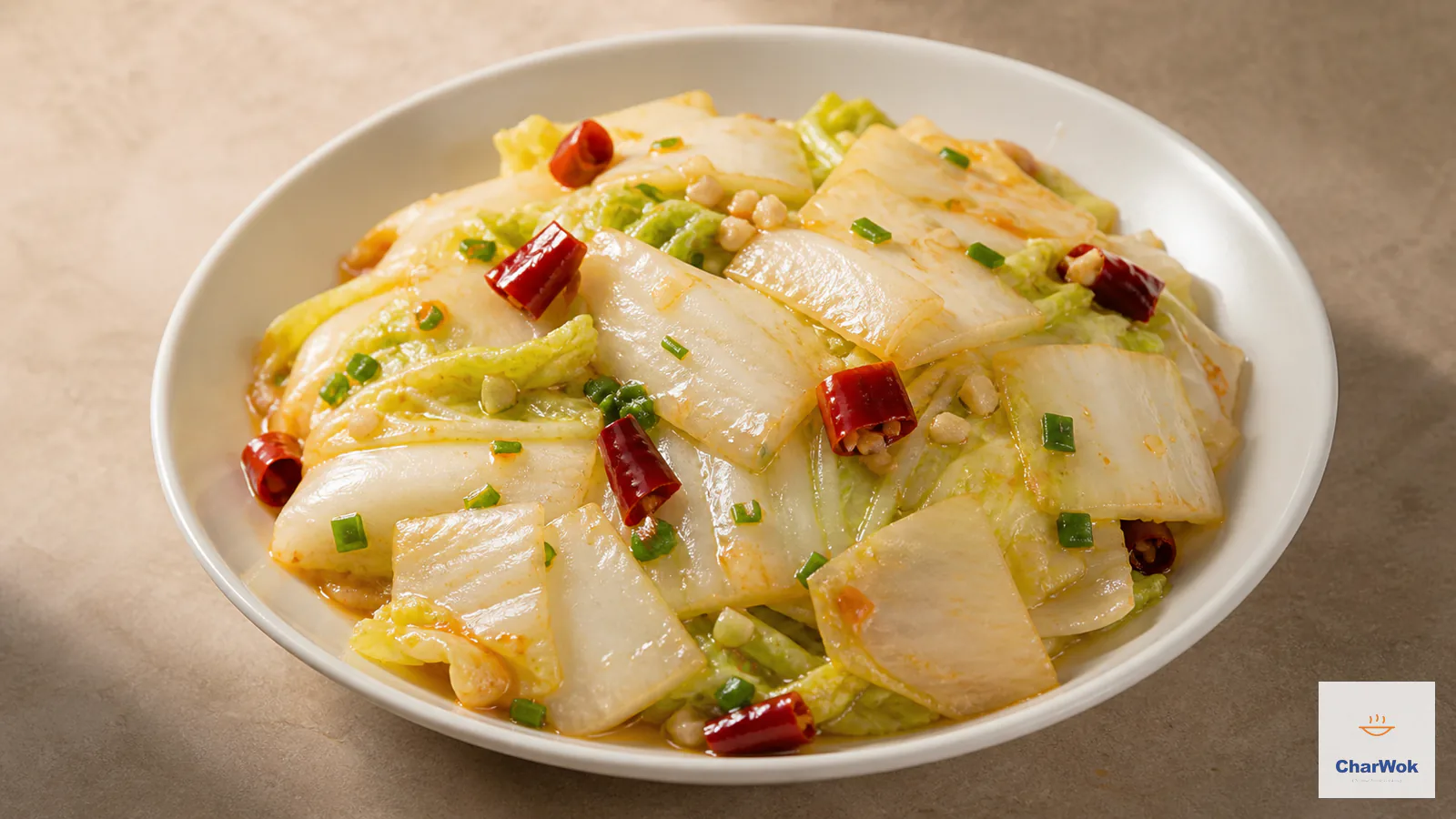
The whole trick to hot and sour napa cabbage is a contradiction: you have to cook it fast enough that the white ribs stay snappy, but long enough that the sauce actually clings. Most home versions fail one side or the other. You get either a sad, watery pile of greens or a charred mess because you panicked and held the cabbage too long waiting for it to "look done." This recipe is the version I cook on weeknights when I want a vegetable that fights back a little, with a vinegary bite that cuts through anything rich on the rest of the table.
Under three minutes in the wok, sauce added at the very end, and the cabbage goes in dry. The white ribs should still snap when you bite them; if they collapse, you cooked it a minute too long. Heat stays on high the entire time.
What this dish is, and where it comes from
Suan la bai cai (酸辣白菜) is a northern Chinese home stir-fry, the kind of thing that shows up alongside braises and noodle soups rather than as a centerpiece. The name tells you the formula: sour from black rice vinegar, heat from dried chili. That same sour-spicy backbone runs through a whole family of dishes, from hot and sour soup to hot and sour noodles and the hot and sour potato stir-fry that uses the exact same seasoning logic. Once you understand the ratio, you can swing it across whatever vegetable or starch you have on hand.
Napa cabbage itself is the quiet hero of the northern winter kitchen. Before greenhouse supply chains, it was one of the few fresh vegetables available through the cold months, and northern cooks built an entire repertoire around it, from dumpling filling to braises to cold salads. The leaves cook to silk in seconds; the thick white ribs hold structure and crunch. A good stir-fry leans on that contrast rather than fighting it.
The ingredients, and what you can swap
Ingredients at a glance
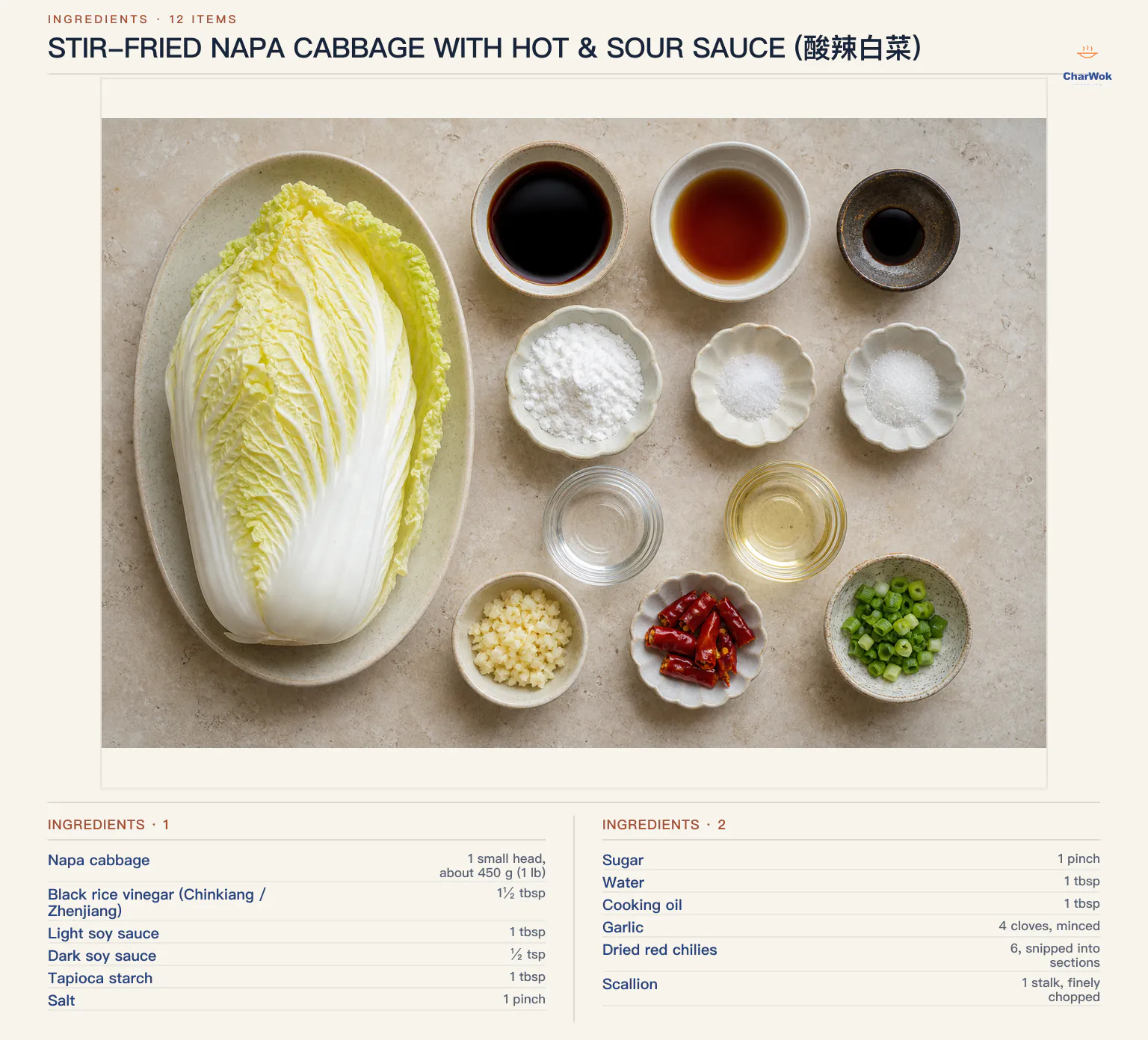
This serves two as a side. Scale the cabbage freely, but keep the sauce quantities close to what is listed; doubling the liquid will drown the dish.
| Ingredient | Amount | Notes / substitute |
|---|---|---|
| Napa cabbage | 1 small head, about 450 g (1 lb) | Use a tight, heavy head. Green cabbage works but cooks faster and softer. |
| Black rice vinegar (Chinkiang / Zhenjiang) | 1½ tbsp | Do not swap for balsamic. If you cannot find it, a milder rice vinegar plus a few drops of dark balsamic for color is a flawed but edible stand-in. |
| Light soy sauce | 1 tbsp | Regular Chinese light soy. See our light vs. dark soy sauce primer. |
| Dark soy sauce | ½ tsp | Optional, for color. Skip if you do not keep it. |
| Tapioca starch | 1 tbsp | Cornstarch works; tapioca gives a clearer, glossier finish. |
| Salt | 1 pinch | The soy sauce is already salty; taste before adding more. |
| Sugar | 1 pinch | Just to round the vinegar's edge, not to sweeten. |
| Water | 1 tbsp | To dissolve the starch. |
| Cooking oil | 1 tbsp | Neutral: peanut, canola, or sunflower. |
| Garlic | 4 cloves, minced | Generous is correct here. |
| Dried red chilies | 6, snipped into sections | Adjust to your heat tolerance. Deseed for less fire. Fresh red chili is a fair substitute. |
| Scallion | 1 stalk, finely chopped | For finishing. |
A word on the vinegar
Black rice vinegar is the one ingredient I will not let you skip. It is fermented from grains rather than grapes, and it carries a malty, almost smoky depth that bright white rice vinegar and balsamic both lack. Chinkiang (Zhenjiang) vinegar is the classic choice and is widely sold in Chinese groceries. If you have only been cooking with light rice vinegar, this dish is the moment to buy a bottle of the dark stuff. It is what separates a version that tastes like cabbage with soy sauce from one that tastes like the thing you order at a restaurant.
The method
- Cut the cabbage for maximum surface area. Slice off the root end and separate the leaves. Lay a leaf flat and slice it on a shallow bias into rough 4 cm (1½ inch) pieces. The angled cut exposes more edge to the pan and the sauce, and it gives the dish its characteristic look. Keep the white rib pieces and the green leafy pieces in roughly the same size so they finish cooking together. Dry the washed leaves thoroughly; water is the enemy of a hot wok.
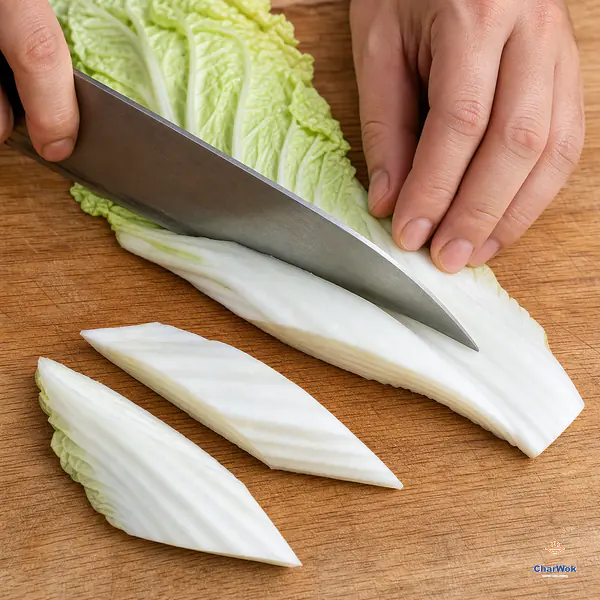
Remove the root, separate and dry the leaves, then hold the knife at a shallow roughly 30-degree bias and cut rough 4 cm pieces. The long sloped white-rib faces expose more surface to the hot wok and sauce.
- Mix the sauce before you turn on the stove. In a small bowl, stir together the black rice vinegar, light and dark soy sauce, starch, salt, sugar, and water until the starch is fully dissolved. The starch will settle as it sits, so give it another stir right before pouring. Having this ready is what lets you move fast once the cabbage hits the pan.
- Heat the wok until it smokes. Use your most powerful burner and a carbon steel wok if you have one. The pan needs to be genuinely hot, visibly smoking when empty, before the oil goes in. Add the oil, swirl, then the garlic and dried chilies. Toss for about ten seconds, just until the garlic is fragrant. If the garlic starts browning, you have already gone too far; pull the pan off heat for a beat.
- Add the cabbage and keep it moving. Pile it in. It will seem like a lot; it is not. Stir and toss constantly so every piece touches the hot metal. You are looking for the green leaves to just begin wilting while the white ribs stay opaque and firm, roughly 60 to 90 seconds. The pieces will still look larger than you think they should. Resist the urge to keep going.
- Pour in the sauce and finish. Re-stir the sauce, pour it around the edges of the wok so it seizes on contact, then add the scallions and toss hard. The liquid will thicken in 15 to 30 seconds and cling to the cabbage. The moment it coats and turns glossy, pull the pan off the heat. Residual heat will carry it the rest of the way. Serve immediately.
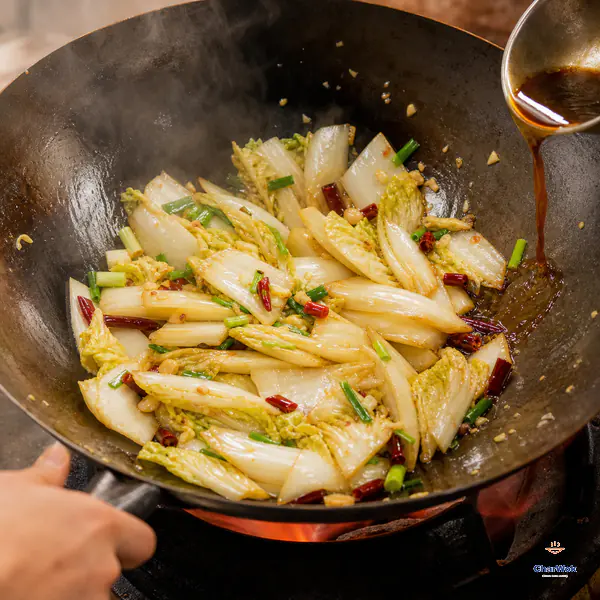
Re-stir the sauce, pour it around the exposed wok edge and toss with the scallion. In 15 to 30 seconds it should cling in a thin glossy coat while the leaves are only just wilted and the white ribs stay opaque and crisp; remove from heat immediately.
When it goes wrong, and how to fix it
A pool of liquid at the bottom of the plate. Two causes. Either the cabbage was wet when it went in, or the sauce went in too early and the salt pulled water out of the leaves before they could set. Next time, dry the leaves more carefully and wait to add the sauce until the green parts have already started to collapse. For the current batch, pour off the liquid, return the pan to high heat for 20 seconds to reduce, and toss again.
The ribs are soft and translucent. You cooked it too long, or on heat that was too low. There is no rescue for overcooked cabbage; learn the cue for next time and pull it earlier. The right moment feels premature. The leaves are barely shrinking and the ribs still look sturdy.
Burnt garlic and bitter chilies. Your pan was too hot for the aromatics, or you left them too long before adding the cabbage. Burnt garlic will haunt the whole dish. Start the aromatics the instant the oil is hot, work fast, and have the cabbage cut and within arm's reach so you are not hunting for it while the garlic scorches.
The dish tastes flat, not sour enough. Either the vinegar was weak or you added the sauce so early the acid cooked out. Black rice vinegar is robust, but heat mutes sourness. Adding the sauce at the end preserves the bright tang. If it still reads dull, a few drops of vinegar off the heat at the very end will wake it up.
Too spicy, or not spicy enough. Dried chili heat varies wildly by source and age. Six dried facing-heaven chilies is a proper kick; six mild er jing tian will barely register. Start with fewer if you are unsure, taste a sliver raw to gauge the heat, and adjust upward next time. Remember you can always add chili oil at the table, but you cannot take it out.
Variations and what to serve it with
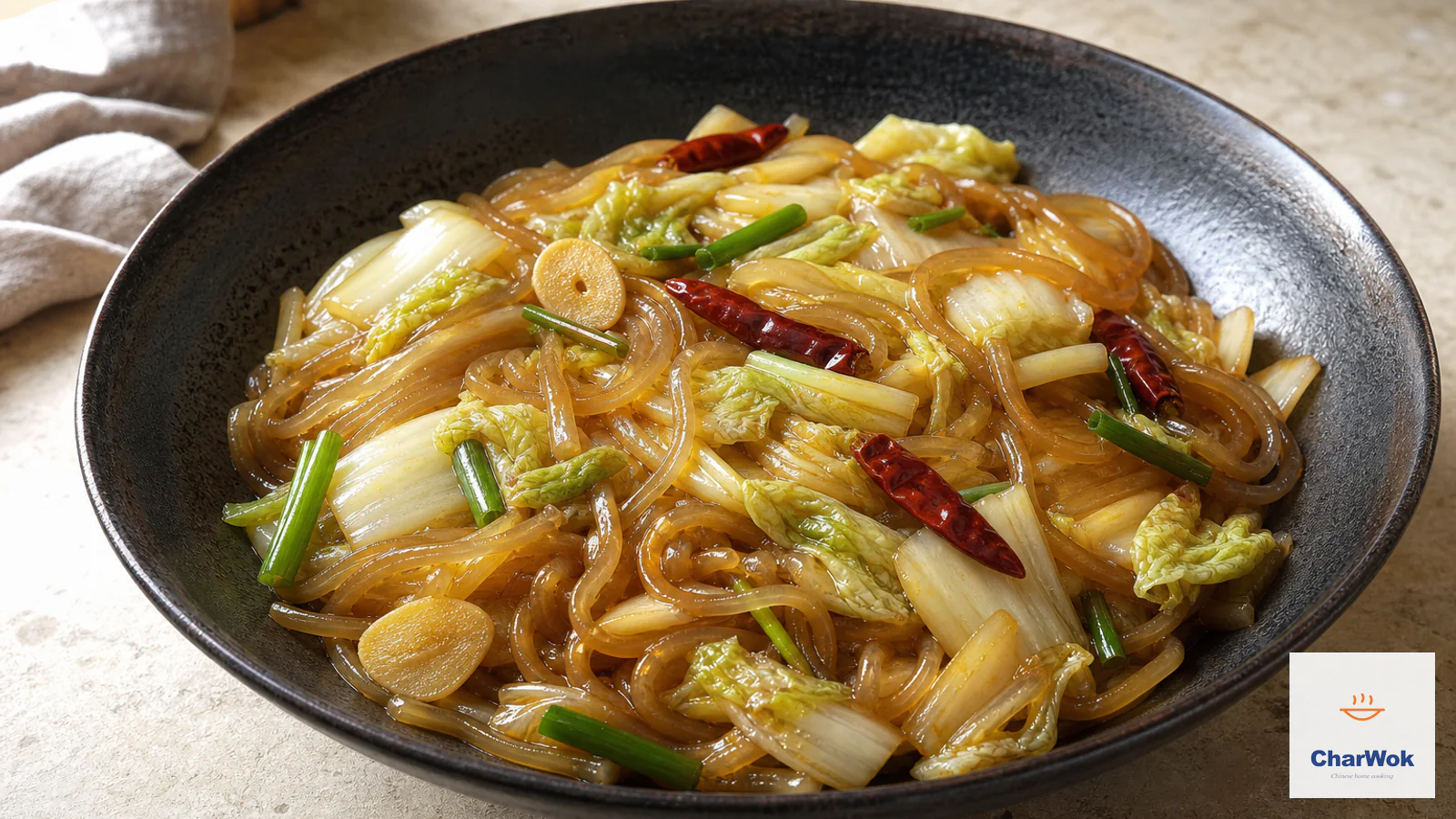
This seasoning template is endlessly portable. Try the same sauce on shredded potato for a version of the classic hot and sour potato, or on lotus root for something with even more crunch. A handful of soaked glass noodles thrown in at the end turns it into a heartier dish in the spirit of cabbage and glass noodle braise, though that one wants a gentler, longer cook.
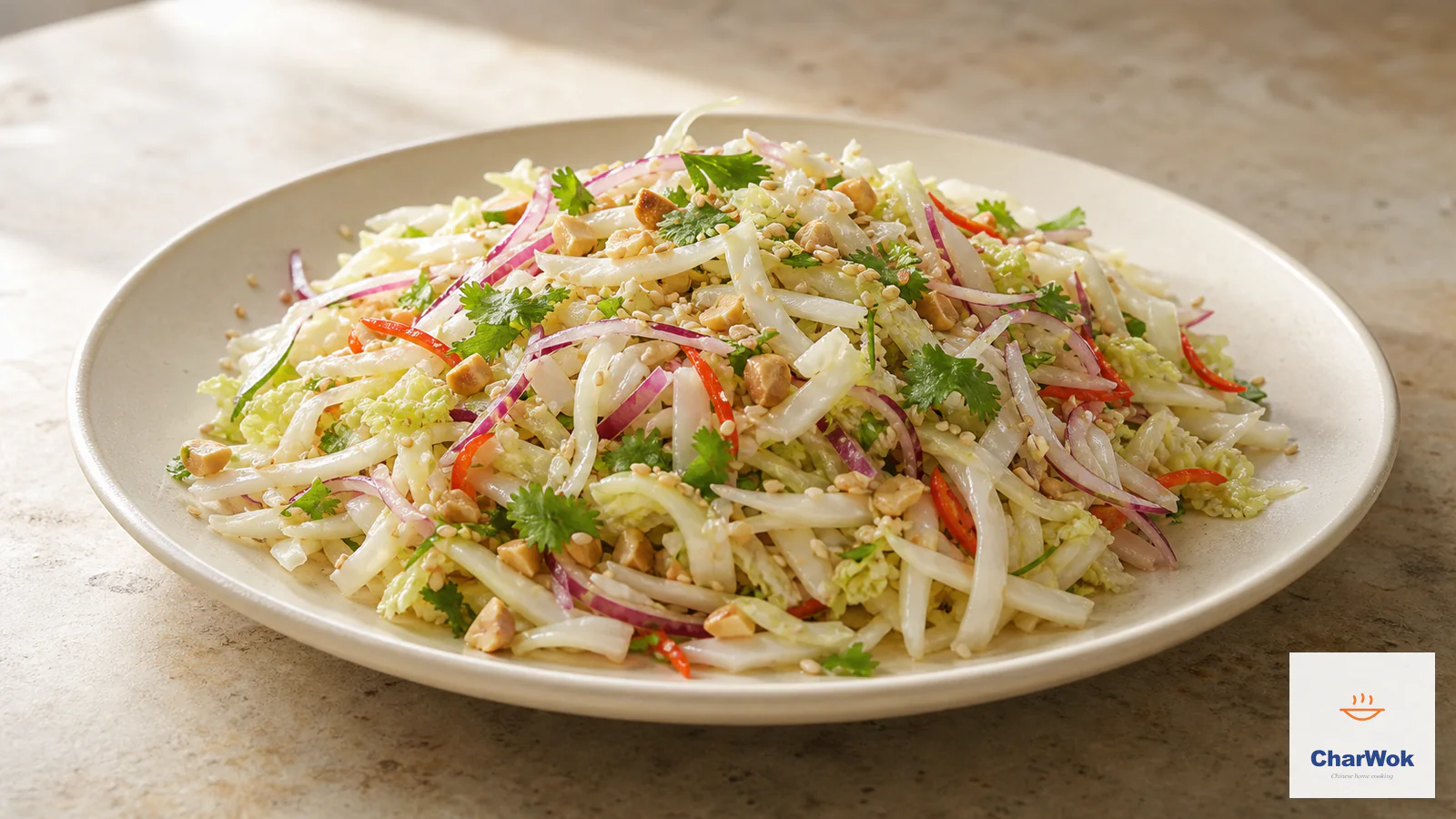
As a side, pair it with something rich or plain so the acidity does its job. It sits happily next to braised pork belly, soy-braised chicken, or a simple bowl of rice and soup. For a lighter vegetarian meal, team it with garlic bok choy, a plate of broccoli with garlic sauce, or the classic northern Di San Xian for a multi-vegetable spread. Leftover napa that you do not want to cook? Make a cold napa cabbage salad the next day instead.
Storage and reheating
This is a cook-and-eat dish. The texture degrades the moment it sits, and reheating turns the ribs to mush. If you must hold it, keep it refrigerated for no more than a day and reheat briefly in a dry pan over very high heat, just until warmed through, accepting that it will be softer than fresh. Honestly, plan your portions so there are none left.
Questions I get asked
A few things come up often enough that they are worth answering directly.
Can I use regular green cabbage instead?
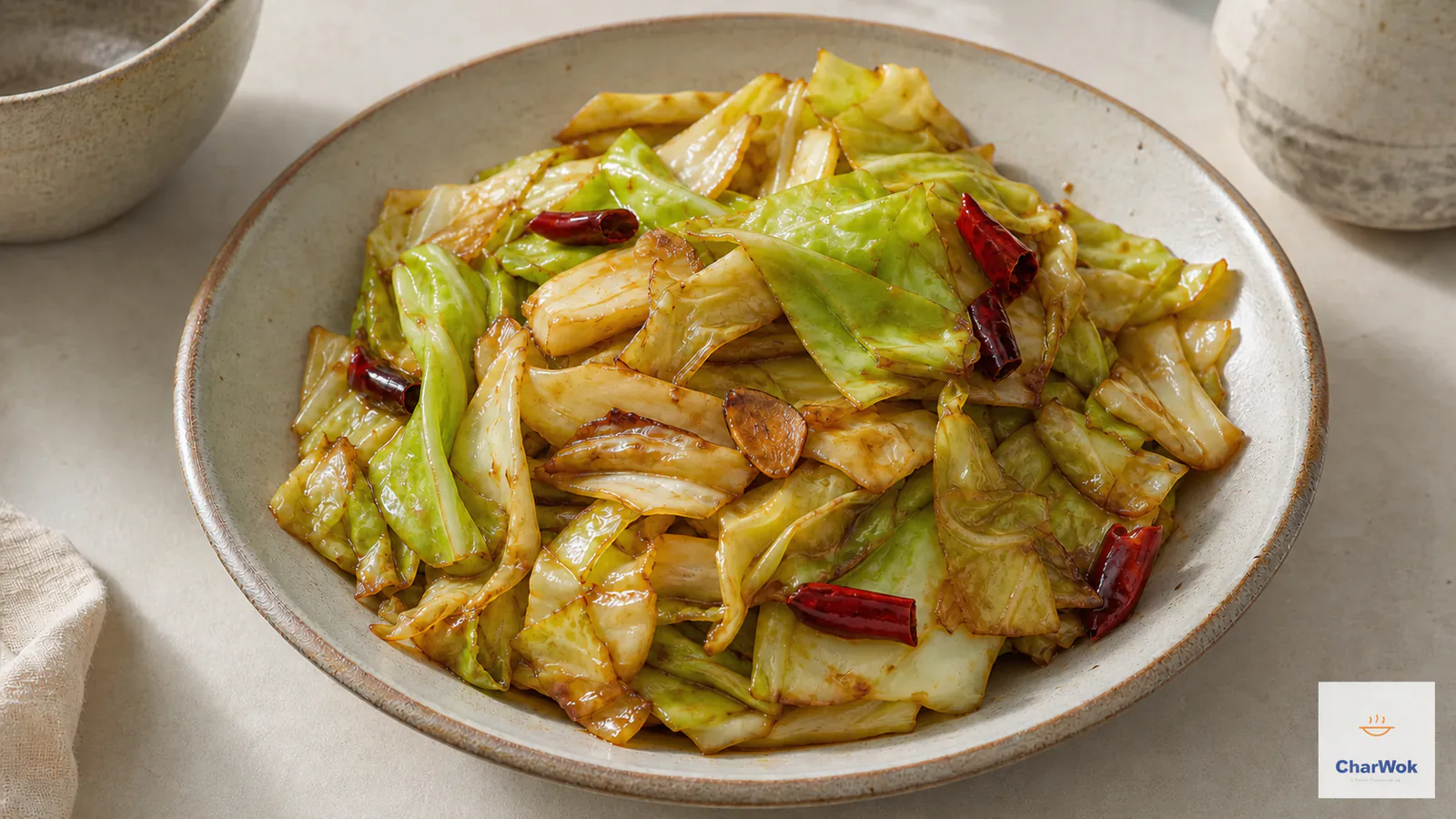
Yes, but it cooks faster and releases more water, so cut it a little larger and shave 20 to 30 seconds off the stir-fry. The result is softer and less dramatic than napa, but the flavor profile still works.
Do I really need black rice vinegar?
For the authentic taste, yes. White rice vinegar is too thin and bright, and balsamic is too sweet and grapey. If you cannot find Chinkiang vinegar locally, order it online; one bottle lasts months and transforms dozens of dishes.
My wok is not carbon steel. Will a skillet work?
A heavy stainless or cast iron skillet works if you get it properly hot first. Nonstick is the one to avoid; it cannot take the heat this dish needs and the cabbage will steam instead of fry.
How do I control the heat level for kids?
Use two or three dried chilies, split them open and scrape out the seeds before snipping, and pull the chili pieces out before serving. The aroma stays in the oil without the burn. For a genuinely mild version, skip the chilies entirely and rely on the garlic and vinegar.
A final note
The dish lives or dies on two judgments: when to pull the cabbage, and when to add the sauce. Get those right and the rest of the recipe forgives a lot. I still overcook it about one time in ten when I am distracted, and the difference between a good plate and a great one is genuinely those fifteen seconds at the end. Pay attention at the finish line, and you will have a vegetable side that outshines most of the main courses on your table.