The first time I sliced into my own braised beef shank, it fell apart into ragged, gray-tinted hunks that looked nothing like the thin, rosy, spice-flecked cold cuts from a Chinese deli. I had overcooked it, and I had sliced it warm. Both are easy mistakes, and both are fixable. Jiang niu rou (酱牛肉), braised beef shank, is a two-part project: a slow braise that turns a tough working muscle into something yielding but still sliceable, and a master stock that gets better every time you reuse it. The cut does most of the work for you, if you respect what it is and what it is not.
Shank is not a tender cut. It is the muscle the animal walked on, laced through with silver skin and connective tissue that would be leather at medium-rare. That same collagen is exactly why we braise it. Given time and moisture, it melts into gelatin and turns the surrounding muscle fibers silky instead of stringy. This is the same logic behind a good Lanzhou beef noodle soup, where slices of chilled shank are laid over hand-pulled noodles, and the broth is built from the same kind of long, patient cooking.
At a glance: 1.5 kg boneless beef shank, marinated 4 hours or overnight, then simmered gently for about 90 minutes in a spiced master stock, cooled completely in the liquid, and chilled before slicing. The two make-or-break moments are pulling the meat at the right tenderness (a chopstick should pierce it with light resistance, not slide through) and slicing it cold so the layers hold together.
Why this dish rewards patience
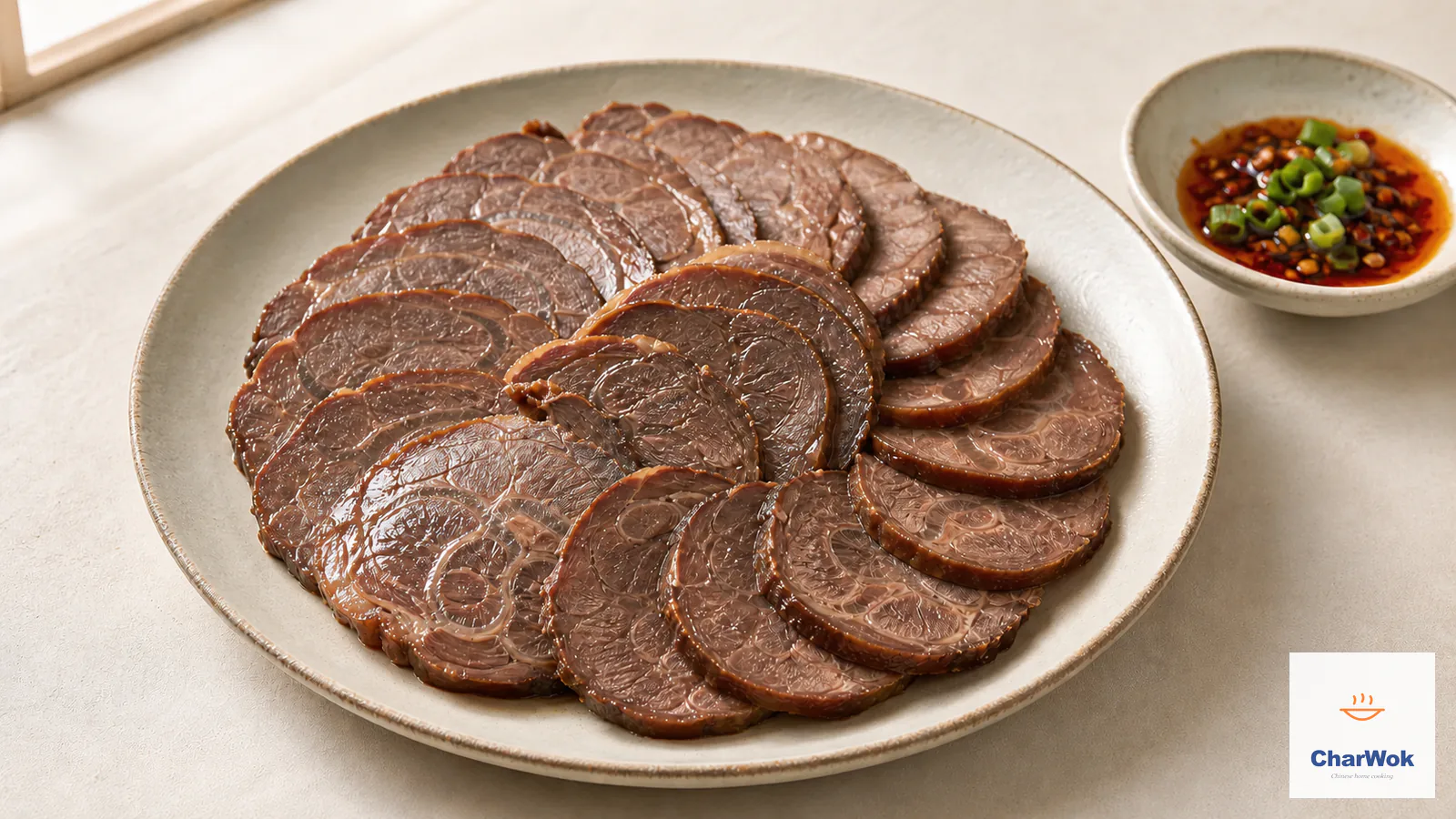
Braised beef shank shows up all over northern China as a cold appetizer, sliced thin and fanned onto a plate with a splash of chili oil and a scatter of scallions. You will meet it on dim sum carts, on banquet tables, and piled into flatbreads at street stalls. The flavor profile is a master-stock family of aromatics — star anise, cassia, fennel, clove, Sichuan pepper — built on soy and rock sugar and a slug of Shaoxing rice wine. Once you have that stock, it becomes a reusable thing: strain it, chill it, bring it back for eggs, tofu, wings, or another round of beef. Each braise layers a little more depth into the liquid.
The home-cook version below leans on the same backbone but skips the theater. You do not need a clay pot, a sealed braise, or a thermometer. You need a heavy pot, a timer, and the willingness to walk away from the stove for an hour and a half.
Choosing the right cut
Ask for boneless beef shank, also called beef shin. An Asian market or a real butcher is your best bet; mainstream supermarkets often do not stock it. Look for a piece with visible cross-grains of connective tissue running through it. Those bands are what create the beautiful concentric pattern when you slice the chilled meat, and they are what melt into gelatin during the braise.
One warning I earned the hard way: do not swap in a lean, tender cut like eye of round thinking it will save time. Without the collagen, you end up with dry, fibrous meat that no amount of stock can rescue. Shank is the dish. If your market only has it bone-in, ask them to remove the bone and save it; the bone makes superb stock for a Taiwanese beef noodle soup another day.
Ingredients
Ingredients at a glance
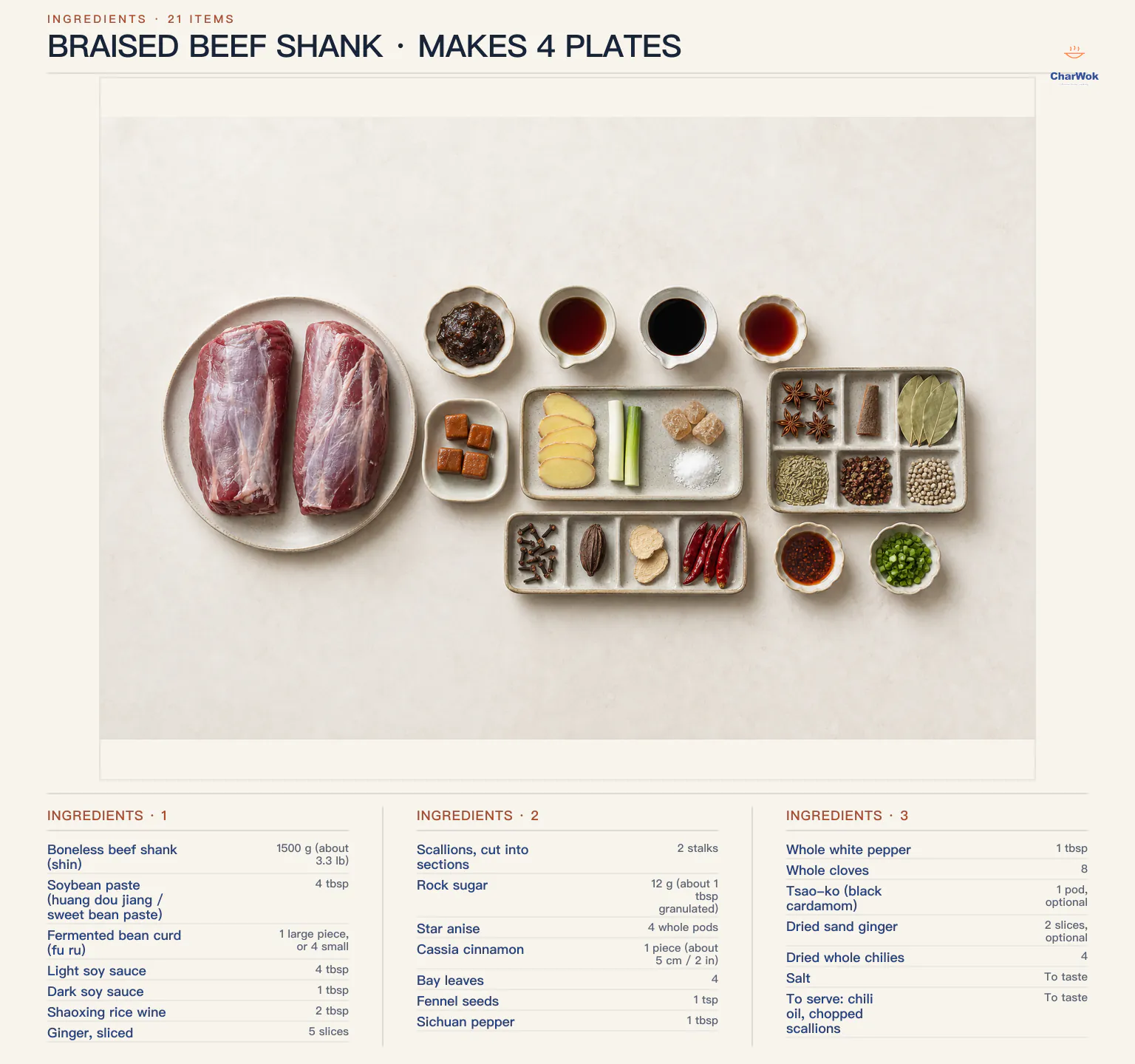
| Ingredient | Amount | Notes / substitute |
|---|---|---|
| Boneless beef shank (shin) | 1500 g (about 3.3 lb) | One or two whole pieces. Do not substitute lean round; you need the collagen. |
| Soybean paste (huang dou jiang / sweet bean paste) | 4 tbsp | Gives body and a savory-sweet base. Miso (preferably a brown or red) is the closest Western substitute; hoisin is too sweet but works in a pinch. |
| Fermented bean curd (fu ru) | 1 large piece, or 4 small | Adds umami and a faint tang. If you cannot find it, add 1 extra tbsp soybean paste and a splash of rice vinegar. |
| Light soy sauce | 4 tbsp | For salt and savory depth. Regular Chinese light soy is what you want; low-sodium will leave the braise tasting flat. |
| Dark soy sauce | 1 tbsp | For color. Skip it and the meat will be paler but still good. |
| Shaoxing rice wine | 2 tbsp | For the braise liquid. Dry sherry is the standard substitute; skip the salted "cooking wine." |
| Ginger, sliced | 5 slices | Smashed gently to release flavor. |
| Scallions, cut into sections | 2 stalks | Whole green onions; the white and pale green parts do most of the work. |
| Rock sugar | 12 g (about 1 tbsp granulated) | Rock sugar gives a cleaner, rounder sweetness than white sugar. Brown sugar works too. |
| Star anise | 4 whole pods | The signature note of a master stock. No whole pods? A pinch of five-spice powder will carry the dish since star anise dominates that blend. |
| Cassia cinnamon | 1 piece (about 5 cm / 2 in) | Cassia is what Chinese markets sell as cinnamon; standard supermarket cinnamon is a close second. |
| Bay leaves | 4 | Standard bay leaves are fine. |
| Fennel seeds | 1 tsp | Whole, not ground. |
| Sichuan pepper | 1 tbsp | Whole, lightly toasted. Read up on how Sichuan pepper works if you are new to it; the numbing warmth is what balances the richness. |
| Whole white pepper | 1 tbsp | Black peppercorns are an acceptable substitute, slightly more pungent. |
| Whole cloves | 8 | A little goes a long way; do not increase. |
| Tsao-ko (black cardamom) | 1 pod, optional | Adds a smoky, resinous depth. Leave it out if you cannot find it. |
| Dried sand ginger | 2 slices, optional | A northern Chinese pantry item. Galangal is the closest substitute; skip if unavailable. |
| Dried whole chilies | 4 | For background warmth, not heat. Remove seeds if you want it milder. |
| Salt | To taste | The stock should taste slightly too salty on its own; that is what seasons the meat correctly. |
| To serve: chili oil, chopped scallions | To taste | A drizzle of chili oil and a scatter of scallion over the sliced meat is the classic finish. |
The method, step by step
- Soak the meat (optional, but I do it). Rinse the shank and cut each piece in half lengthwise so it fits in the pot and soaks evenly. Put it in a bowl, cover with cold water, and leave it for an hour, then drain. This is a Chinese cold-water soak, not a Western blanch. The goal is to draw residual blood out gently so the finished stock stays clean-tasting and the meat slices rosy rather than muddy. Skip it if you are short on time; the dish will still be good, just a little cloudier in the broth.
- Build the marinade. In a bowl, mash the fermented bean curd with the back of a spoon until smooth, then stir in the soybean paste, light soy, and dark soy. The fermented bean curd looks odd, like a wobbly red-tinged cube, but it dissolves into the marinade and contributes a deep umami that soy alone cannot reach.
- Coat and rest the beef. Pour the marinade over the drained beef and rub it over every surface. Rest at least 4 hours, or ideally overnight, in the fridge. This step is not about tenderizing; salt and the bean pastes season the meat all the way through, so the finished slices taste of something rather than just the stock on their surface. A short rest gives you a gray band of seasoned meat near the edge; an overnight rest gives you seasoning edge to edge.
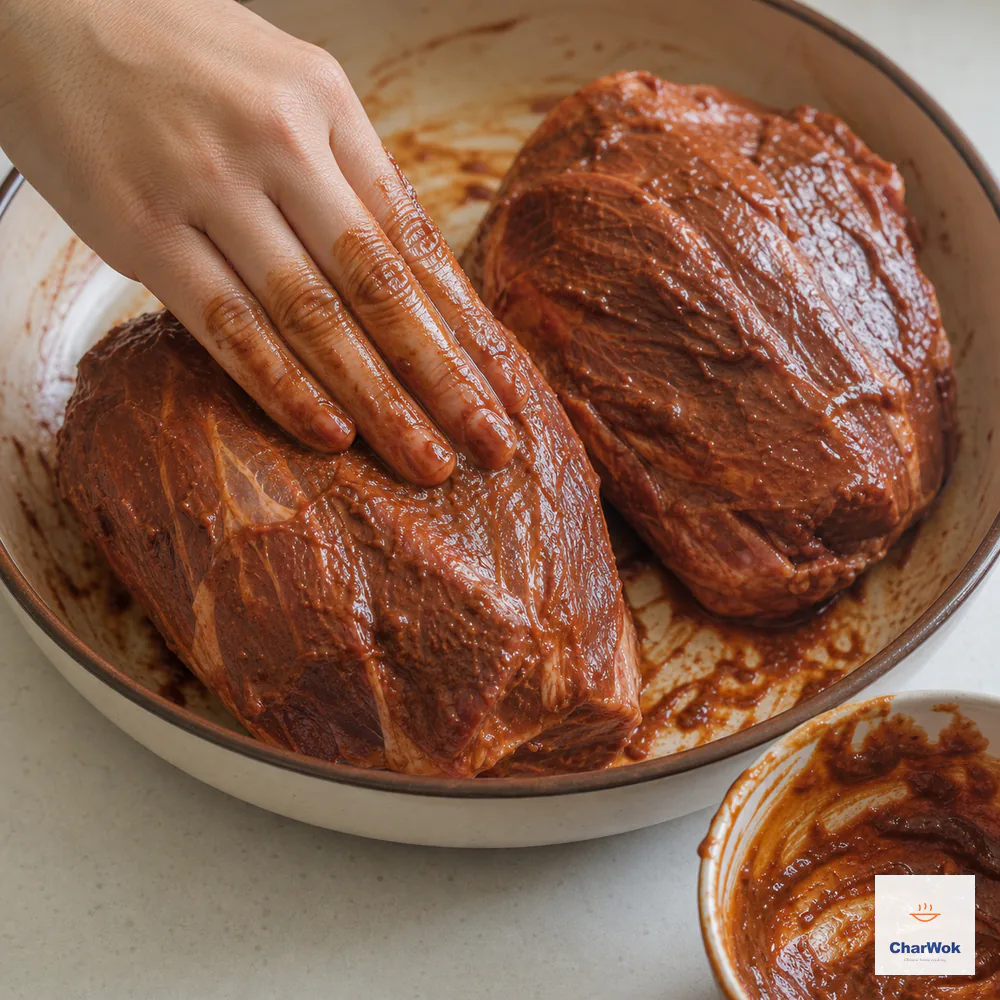
Rub the fully mashed bean-curd and soy mixture over every surface, then cover and refrigerate for at least 4 hours or ideally overnight so the seasoning reaches beyond the edge.
- Start the braise. Put the beef and all the marinade into a heavy pot. Add about 750 ml (3 cups) of water, or enough to just cover the meat. The exact amount depends on your pot; use the smallest pot that holds the beef in a single snug layer so you need less liquid to submerge it. Add the Shaoxing wine, scallions, ginger, rock sugar, and every spice on the list.
- Bring to a boil, then drop to the lowest simmer. A full boil first is intentional; it forces the proteins on the surface to set quickly so the meat holds its shape. Then the heat goes all the way down. A bare murmur, the occasional lazy bubble, is what you want for the next 90 minutes. A hard boil will make the muscle fibers seize and the meat stringy; a true simmer lets the collagen melt at its own pace. Cover with a tight lid.
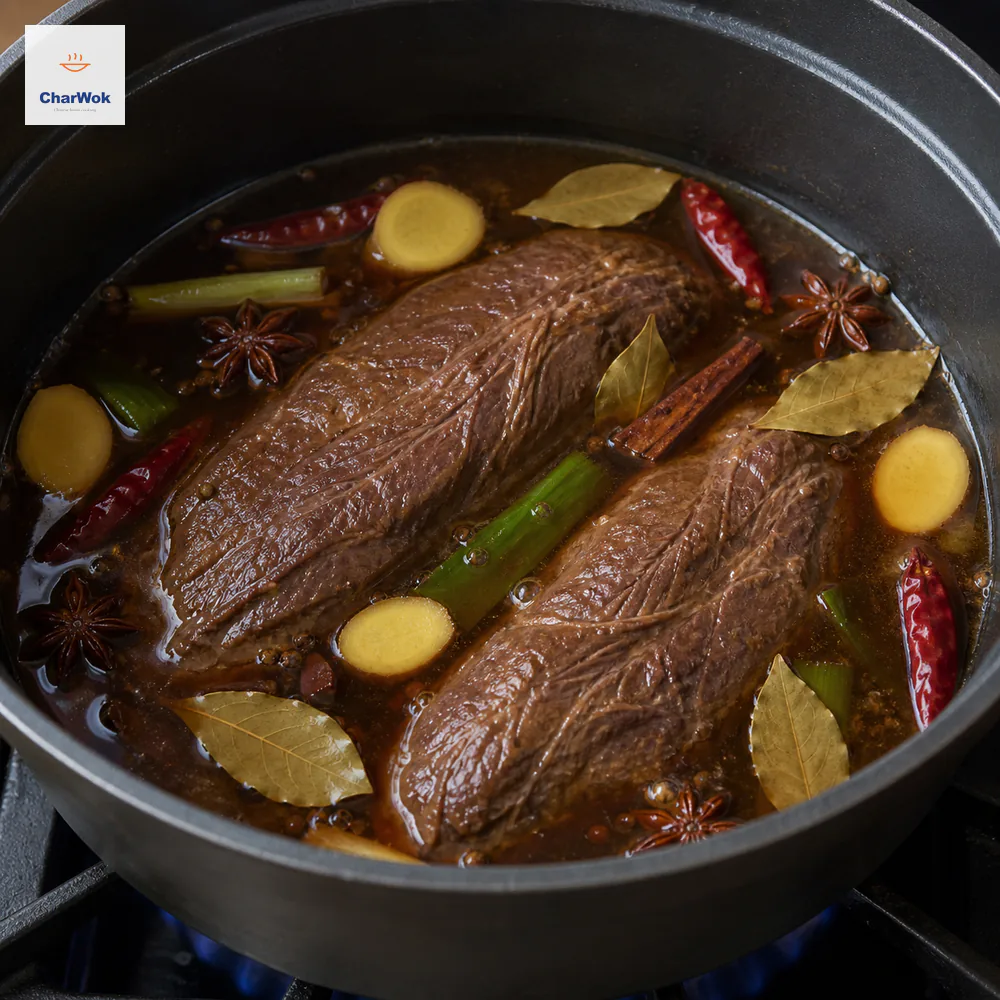
After the initial full boil, turn the heat all the way down and hold only a bare murmur for about 90 minutes; a hard boil tightens the fibers and clouds the stock.
- Check salt halfway through. Around the 45-minute mark, taste the stock. It should taste a touch too salty on its own, because the beef will only ever be slightly less salty than the liquid around it. If it tastes balanced to you, add a pinch of salt; if it is already salty, leave it. This is the single most reliable seasoning check in the whole recipe.
- Test doneness with a chopstick. At roughly 90 minutes, poke the center of the largest piece with a chopstick. You want it to slide through with light, steady resistance, the way a cooked potato gives. If it meets a hard center or fights you, give it another 15 to 20 minutes and test again. The mistake to avoid is cooking until the chopstick glides in effortlessly; that is overcooked, and the meat will shred instead of slice.
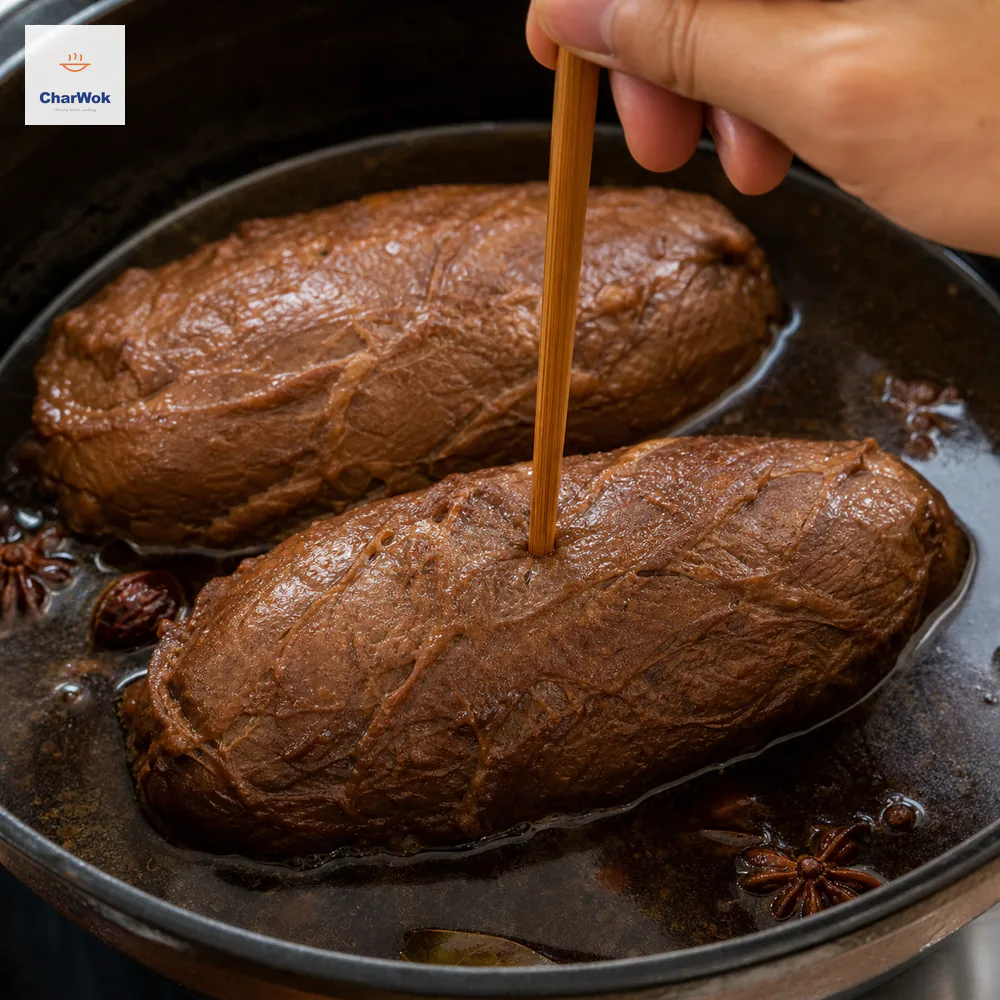
Stop when a chopstick passes through the largest piece with light steady resistance; effortless entry means the shank has gone too far to slice cleanly.
- Cool the beef in the stock. Take the pot off the heat and let everything come down to room temperature together. Do not lift the meat out hot. As it cools, the meat reabsorbs some of the liquid it gave up, and the gelatin from the collagen sets into a thin, glossy layer on the surface. This is the step that separates deli-style shank from dry, stringy shank.
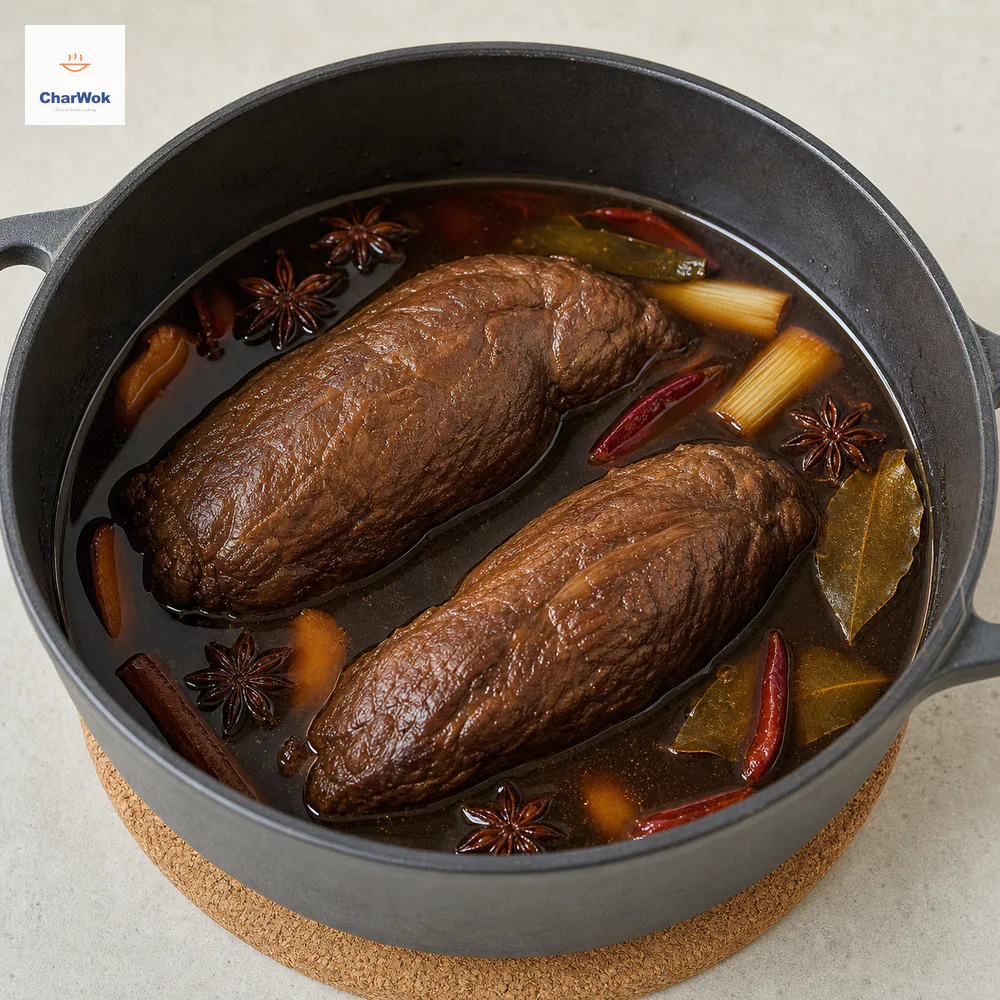
Leave the whole shanks in their stock until both reach room temperature, then transfer and chill until completely firm before any slicing.
- Chill before slicing. Transfer the cooled beef to a container and refrigerate it until completely firm, at least 4 hours or overnight. Cold slicing is non-negotiable. Warm shank crumbles under the knife; chilled shank cuts into clean, thin rounds that show off the concentric pattern of muscle and connective tissue.
- Save the master stock safely. Pour the stock through a fine sieve and discard the spent spices and aromatics. Divide it into shallow containers so it cools quickly, label the date, and refrigerate for no more than 3 to 4 days or freeze it. Reboiling does not erase a missed cooling or storage limit, so discard any batch whose time or temperature history is uncertain. When you use a safely stored batch again, top it up with fresh soy, wine, water, and spices.
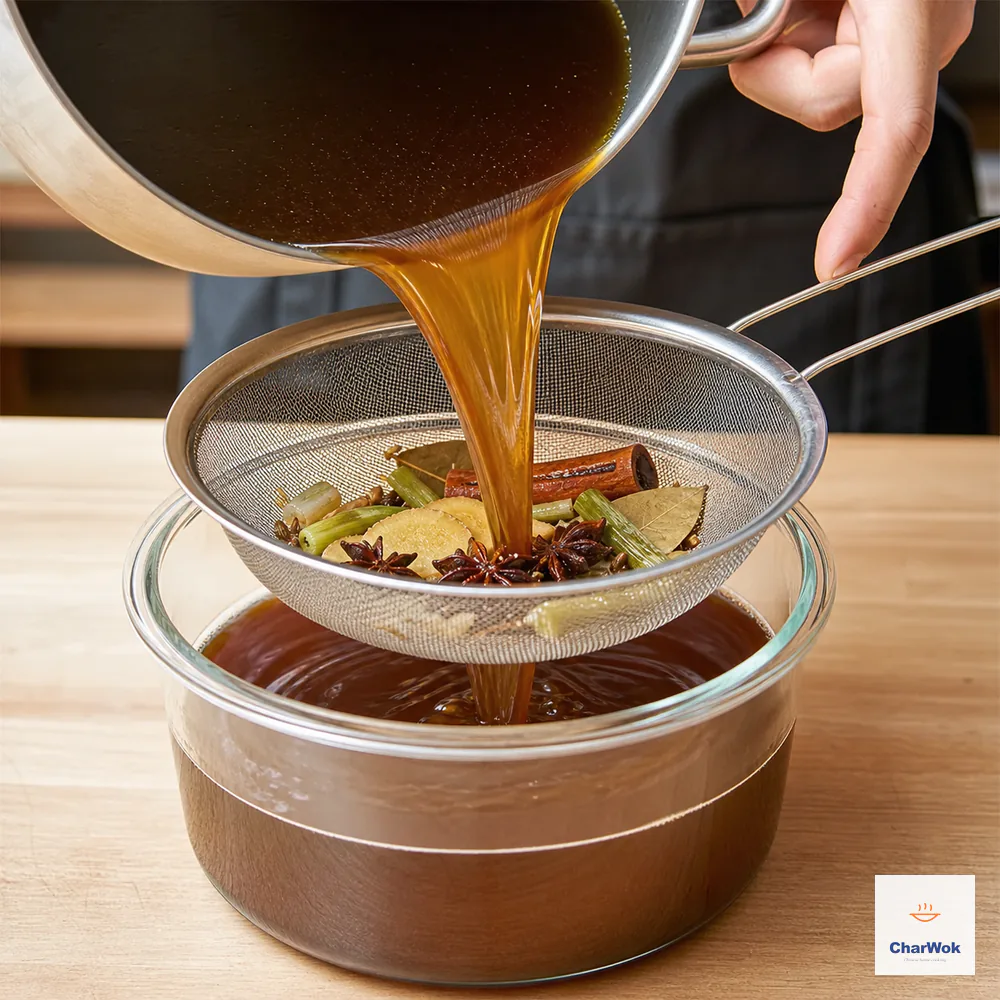
Strain out every solid, cool the clean stock quickly, and refrigerate or freeze it so the next braise can build on this first master stock.
When things go wrong
Most failures with braised beef shank come down to one of four things, and three of them are avoidable.
The meat shreds instead of slicing. Either it is overcooked, or you sliced it warm. Test earlier next time, and always chill the beef until firm before cutting. If it has already happened, lean into it: shred the meat and use it as a filling, tossed with a little of the reheated stock, in a crispy stuffed flatbread or folded into noodles.
The slices are gray and dull. Usually a sign the meat was boiled too hard or skipped the cold-water soak. A gentle simmer and the soak both keep the finished color rosy. Gray is still safe and edible, just less pretty on the plate.
The meat is bland inside. You cut the marinating short or pulled the beef out of the stock while it was still hot. The overnight marinade and the cool-down in the liquid are what season the beef through; skipping them gives you meat that tastes only of whatever sauce you pour on top.
The stock is bitter or harsh. You almost certainly added too much clove, or you boiled the spices too hard for too long. Cloves in particular turn acrid with extended hard cooking. Next time, measure the cloves exactly and keep the braise at a murmur. If a stock is already bitter, dilute it with water and fresh soy in your next use rather than throwing it out.
Variations and pairings
The most classic way to serve chilled braised beef shank is also the simplest: slice thin, fan the slices onto a plate, warm a little of the master stock in a small pan, and pour it over the top. Finish with chili oil and chopped scallions. If you want it warm, steam the sliced beef for about 3 minutes, just until heated through; any longer and it tightens up.
From there, the same shank becomes a dozen other dishes. Pile the slices over a bowl of noodles with hot stock and you have the cold-cut ancestor of a spicy beef noodle soup. Tuck them into a steamed bun with a smear of chili oil for a quick snack. Dice the trimmings and fold them into beef dumpling filling for extra depth. And the master stock does not stop at beef; it is the same liquid you would use to braise tea eggs, wings, or a piece of tofu for a cold plate.
For a full cold-appetizer spread, pair the shank with something crunchy and acidic to cut the richness. A plate of smashed cucumber salad or a simple vinegar-dressed vegetable does the job. Round it out with steamed rice or, for a northern feel, a basket of steamed mantou to soak up the juices.
Storage and reheating
Keep the whole chilled piece of beef in an airtight container in the fridge for up to 4 days, or freeze it for up to 3 months. Freeze it whole or in a single block rather than pre-sliced; pre-sliced pieces dry out and stick together. Defrost overnight in the fridge, then slice cold. Treat the master stock as a perishable leftover: cool it promptly in shallow containers, refrigerate for 3 to 4 days or freeze it, and reheat sauces and gravies to a rolling boil before use. The USDA leftovers guidance explains why boiling is a reheating step, not a reset for unsafe storage.
If you plan to make this for a crowd, it is an ideal make-ahead dish: the flavor improves after a day in the fridge, and slicing cold meat to order is far less stressful than doing it hot at the table. It also earns a place on a Chinese New Year cold-plate lineup, where a row of glistening beef slices next to the other cold appetizers is exactly the kind of thing that signals care without last-minute work.
The bottom line
Braised beef shank is forgiving in the ways that matter and demanding in only two: cook it gently, and slice it cold. Get those right and you will turn a cheap, tough cut into something that looks and tastes like it came from a deli counter. A safely cooled, dated batch of master stock can flavor a later batch of eggs, tofu, or meat, but it remains perishable and should never be kept on reputation alone. If you want a single addition to round out your pantry for this style of cooking, a jar of good core Chinese condiments covers most of the master-stock flavor system in one go.
Frequently asked questions
Can I use a pressure cooker? Yes. About 35 to 40 minutes at high pressure, then a natural release, gets you to the same tenderness as a 90-minute simmer. Still let the meat cool in the stock afterward, and chill before slicing. The flavor is slightly less deep than a slow braise because the spices have less time to infuse, so taste the stock and adjust before serving.
Do I have to marinate overnight? No, but a short marinate of at least 4 hours is worth it. The overnight version seasons the meat edge to edge; a 4-hour version gives you a seasoned outer band and a plainer center, which is still good, just less even.
How many times can I reuse the master stock? There is no safe unlimited count. Reuse only a batch whose full handling history you know: strain and cool it promptly, refrigerate for no more than 3 to 4 days or freeze it, label each cycle, and discard it whenever storage time or temperature is uncertain. Bring a safely stored batch to a rolling boil when reheating, but do not use boiling to rescue stock that sat out too long.
Why is my stock bitter? Almost always too much clove or a boil that ran too hot and too long. Measure the cloves precisely, simmer gently, and if a stock is already bitter, dilute it with water and fresh soy on the next use instead of throwing it out.
Can I braise other meats in the same stock? That is the whole point. Try peppercorn braised chicken wings, hard-boiled eggs, firm tofu, or pork belly in the same liquid. Each new ingredient leaves a little of itself behind, which is why master stocks deepen over time.