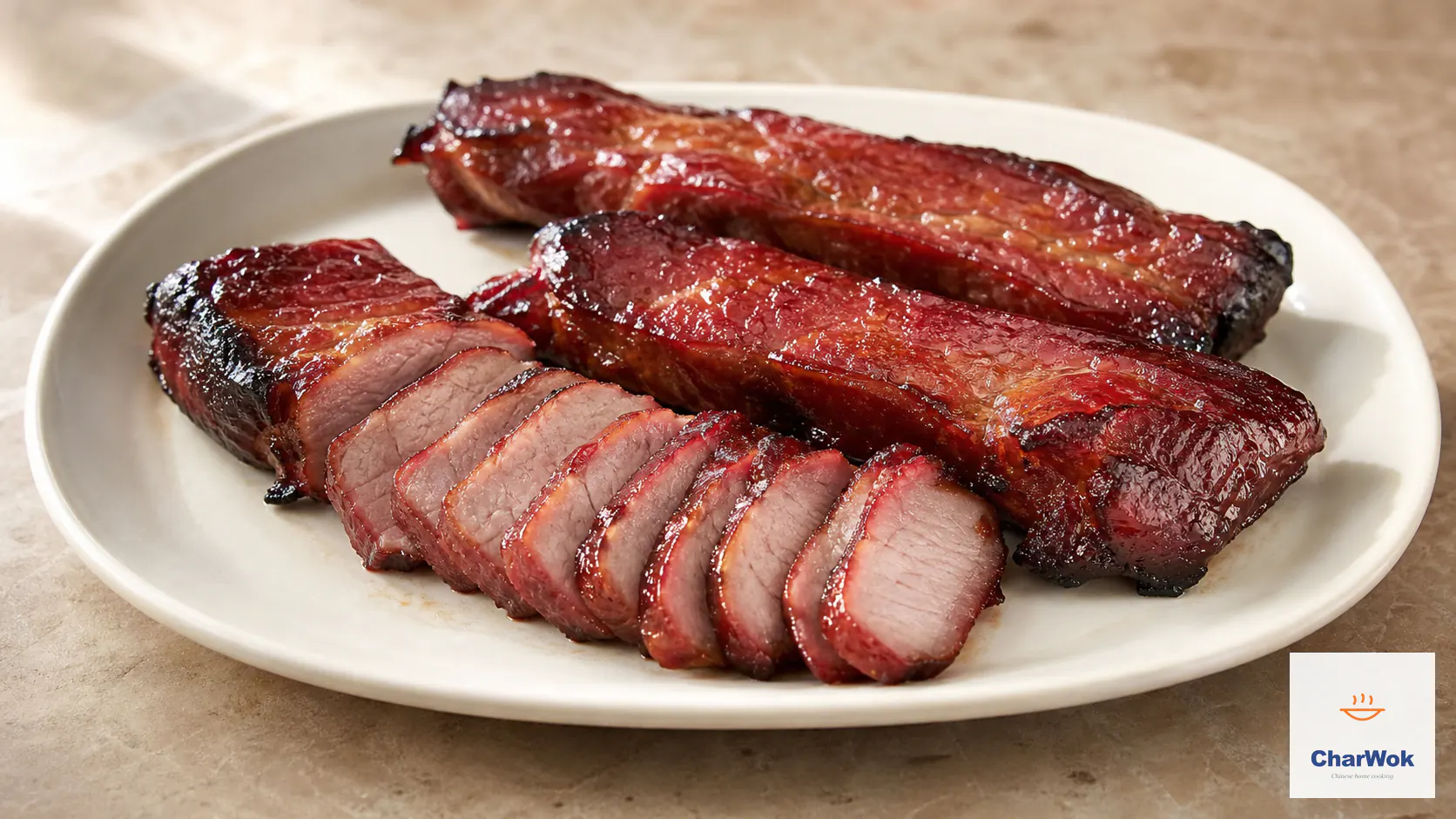
The best char siu I ever made was also the ugliest. The edges were charred black on one side and pale on the other, and I had to trim a quarter of the meat and hide the evidence under a pile of rice. But the slice I bit into was so good I ate it standing over the cutting board. That's the thing about Cantonese BBQ pork: the flavor is easy, the lacquer is easy, and the only part that will fight you is the heat.
Good char siu is sweet and savory and faintly smoky, with a glossy red-brown skin that tears slightly before giving way to tender, juicy pork. The red you see at the roast-meat window comes from a marinade built around fermented bean products and aromatics, then a honey glaze laid on at the end under fierce heat. Once you understand why each layer is there, you can stop following a recipe and start reading the meat in front of you.
At a glance: Marinate strips of pork shoulder overnight in a soy-oyster-honey base, roast at 220°C/425°F over a water bath for 25 minutes, then crank to 240°C/460°F and brush with honey twice to build the lacquer. The two steps that decide success are an overnight cure and a final two-stage honey glaze. If you skip either, you get pork, not char siu.
What char siu actually is
Char siu (叉烧, "fork-roasted") is Cantonese, and the name tells you the original method: long strips of pork hung on metal forks over a fire in a siu mei shop. The hanging version you see in Chinatown windows, glowing an improbable red, is the same dish cooked in a controlled oven at home. The red is partly natural, from the browning of honey and sugar and the red yeast rice or food coloring some shops add. At home you can leave the dye out; the color will lean more amber than fire-engine, and the flavor will be better for it.
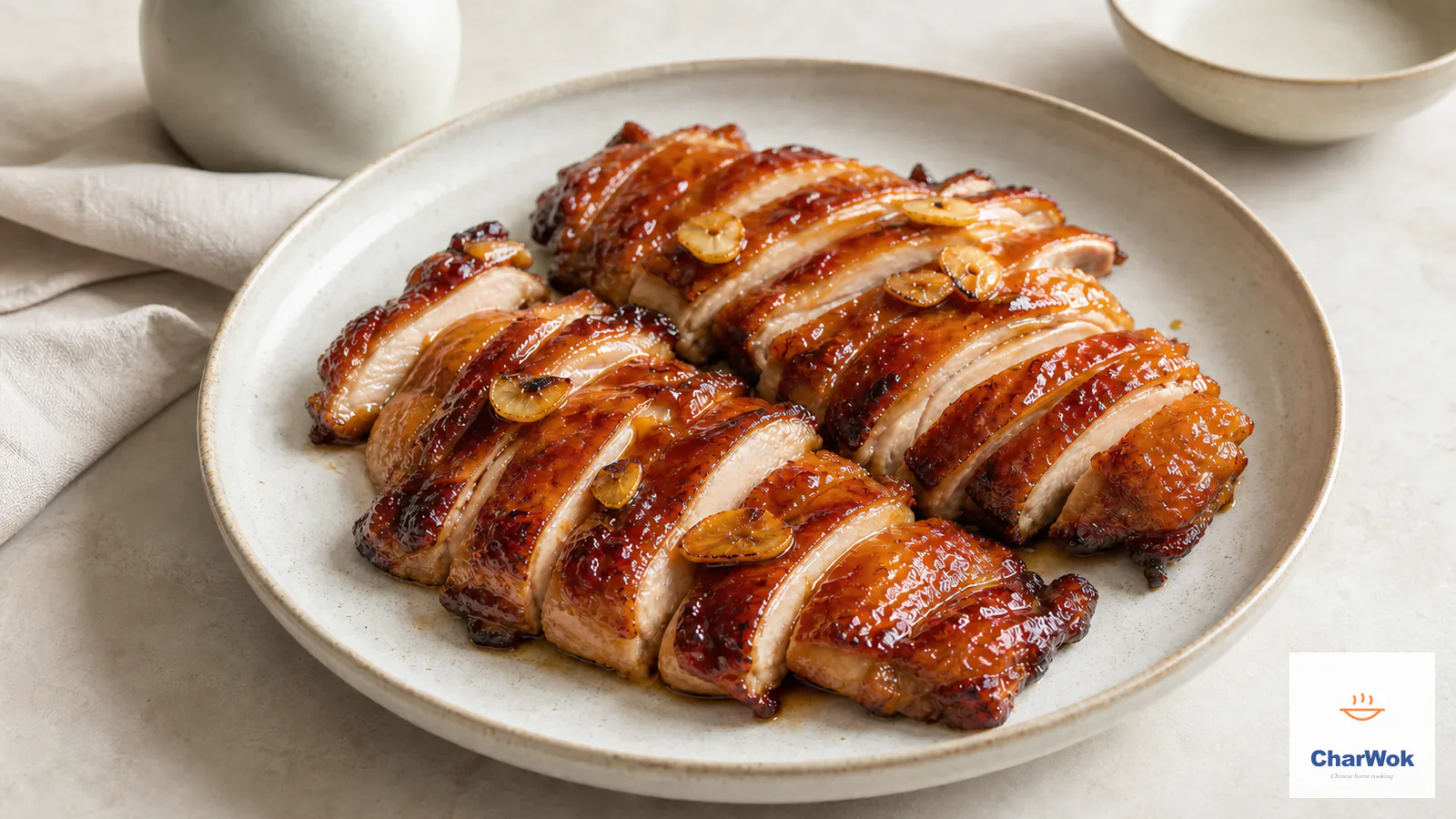
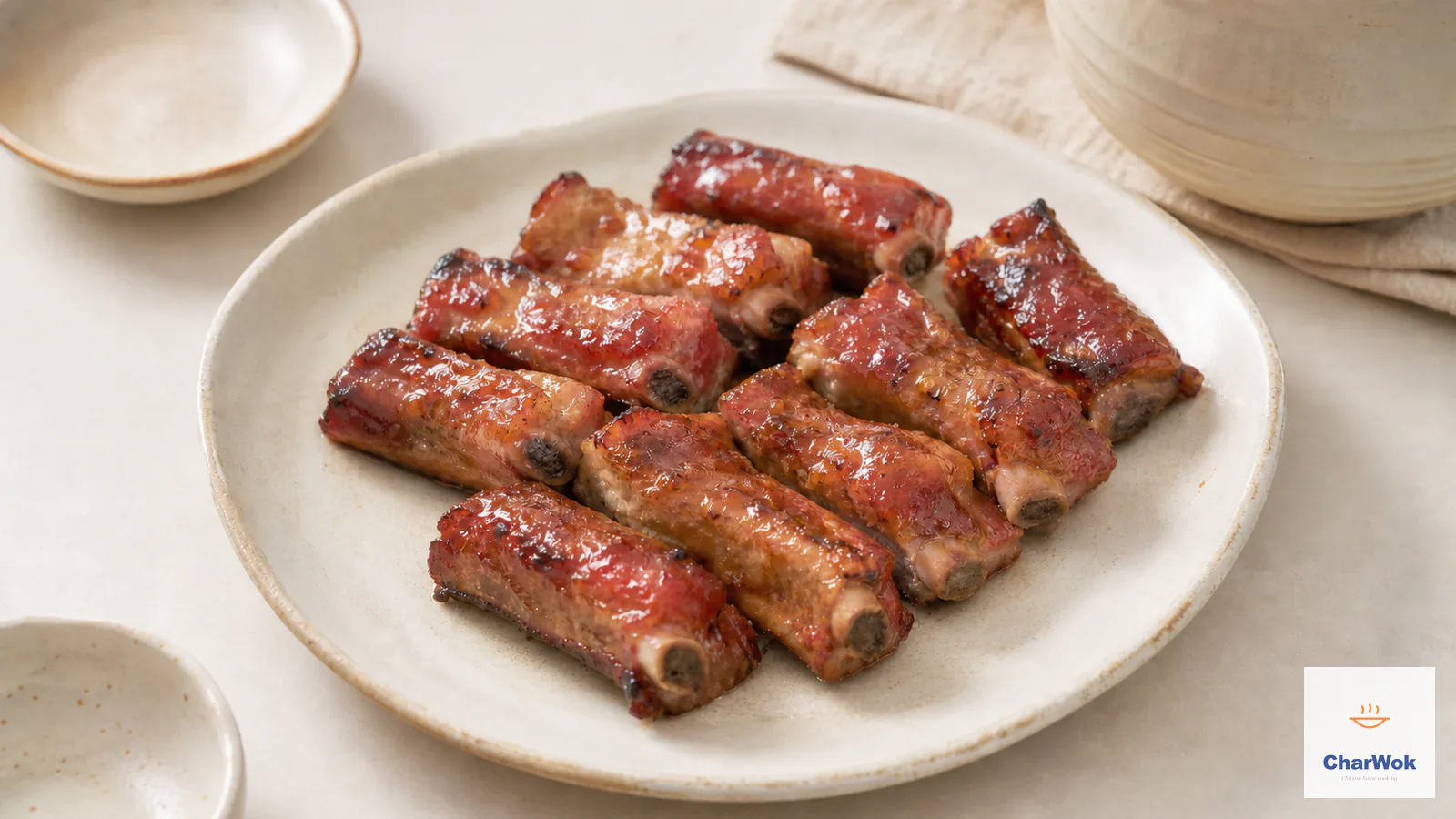
The same technique extends to other proteins. You can run the marinade on chicken thighs and you get char siu chicken, or pack it into steamed BBQ pork buns once the meat is cooked. The ribs version, Chinese BBQ ribs (char siu pai guw), uses the same glaze on bone-in pork. Master the pork and you have the whole family.
Picking the cut
I use pork shoulder, also sold as pork butt, and I am firm about this. Belly is too fatty and renders into a greasy puddle; tenderloin is too lean and dries out before the glaze can set. Shoulder hits the sweet spot: enough internal fat to stay juicy through a 30-minute roast, enough structure to slice cleanly. Ask for it in a single thick piece about 350 g/12 oz, or two thinner shoulder steaks if that is what the store has.
Cut the meat with the grain into strips roughly two fingers wide. Cutting with the grain sounds wrong if you are used to slicing against it for stir-fries, but here you want long fibers that hold together on the rack and pull apart tenderly when you bite. Against the grain and the strips fall apart into shreds halfway through roasting. If you want a deeper look at how Cantonese shops treat pork, the same shoulder shows up in char siu bao fillings and in the cured, sliced form across many pork dishes.
The marinade, ingredient by ingredient
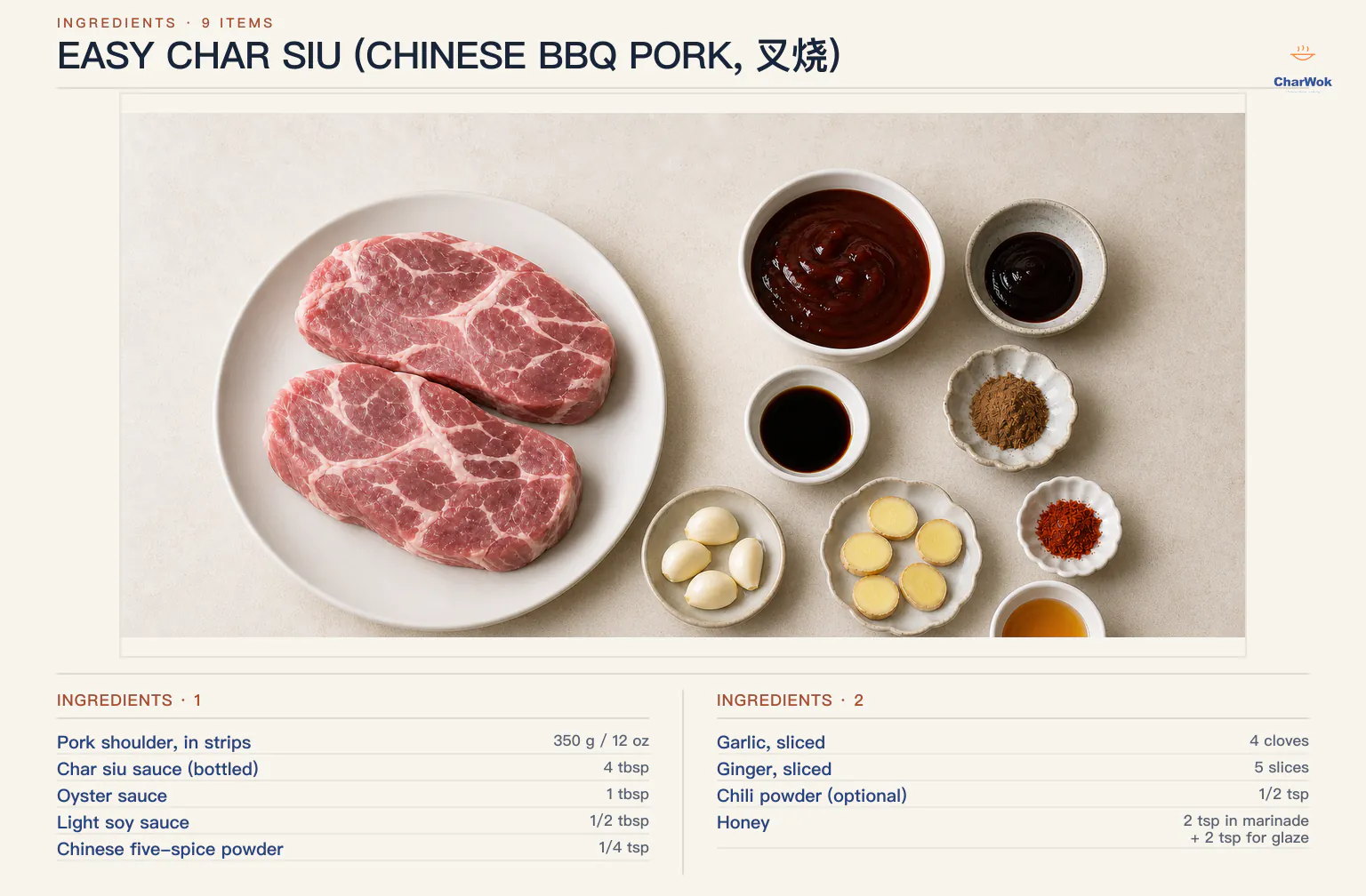
Ingredients at a glance
| Ingredient | Amount | Notes / substitute |
|---|---|---|
| Pork shoulder, in strips | 350 g / 12 oz | Pork butt. Avoid tenderloin (too dry) and belly (too greasy). |
| Char siu sauce (bottled) | 4 tbsp | If you can't find it, use 3 tbsp hoisin + 1 tsp fermented red bean curd, mashed. |
| Oyster sauce | 1 tbsp | Adds umami and body; vegetarian mushroom version works. |
| Light soy sauce | 1/2 tbsp | Salt and color base. See my light vs. dark soy sauce notes if unsure. |
| Chinese five-spice powder | 1/4 tsp | The warm backbone. A little goes far; too much tastes medicinal. |
| Garlic, sliced | 4 cloves | Aromatics only; remove before glazing. |
| Ginger, sliced | 5 slices | Cuts the sweetness and tenderizes slightly. |
| Chili powder (optional) | 1/2 tsp | A faint heat. Skip for the classic sweet profile. |
| Honey | 2 tsp in marinade + 2 tsp for glaze | Sugar works but honey gives a cleaner shine. |
Why overnight matters
The salt in the soy and oyster sauces does two things. In the first hour it pulls moisture out of the meat through osmosis. Over the next several hours that same salty liquid, now flavored, diffuses back inward and seasons the pork from the inside. Six hours gets you most of the way; overnight gets you the rest, and the difference is not subtle. A same-day marinade tastes salty on the surface and bland at the center. I have tried shorting this step when I forgot to plan ahead, and the pork always comes out one-dimensional.
Put the strips and all the marinade in a zip-top bag, squeeze the air out, and rub it around so every surface is coated. Keep it in the fridge. The bag is better than a bowl because the marinade stays in full contact with the meat instead of pooling at the bottom.
Roasting setup: the water bath is not optional
Heat the oven to 220°C/425°F (200°C fan). Set a wire rack inside a roasting tray and pour hot water into the tray so it sits just below the rack. Lay the pork strips on the rack and slide the whole thing to the middle of the oven.
The water does real work. Fat drips off the pork, hits the hot pan, and would otherwise smoke and burn. The water catches those drips and steams instead, which keeps the oven atmosphere moist and stops the exposed surfaces from drying into jerky before the inside is done. If your oven will not fit a tray with a rack inside, put a wide tray of hot water on the bottom shelf and lay the pork directly on the middle oven rack over it. Either way, check the water level each time you open the door; top it up with hot water if it runs low.
The method, step by step
- Mix the glaze. Before the meat goes in, combine all the marinade ingredients except the glazing honey. Reserve the meat and refrigerate overnight (minimum 6 hours). Save any leftover marinade when you remove the pork; you will use it for basting.
- Preheat to 220°C/425°F (200°C fan). While the oven warms, set up the rack, water bath, and pork strips. Make sure the water sits below the rack, not touching the meat.
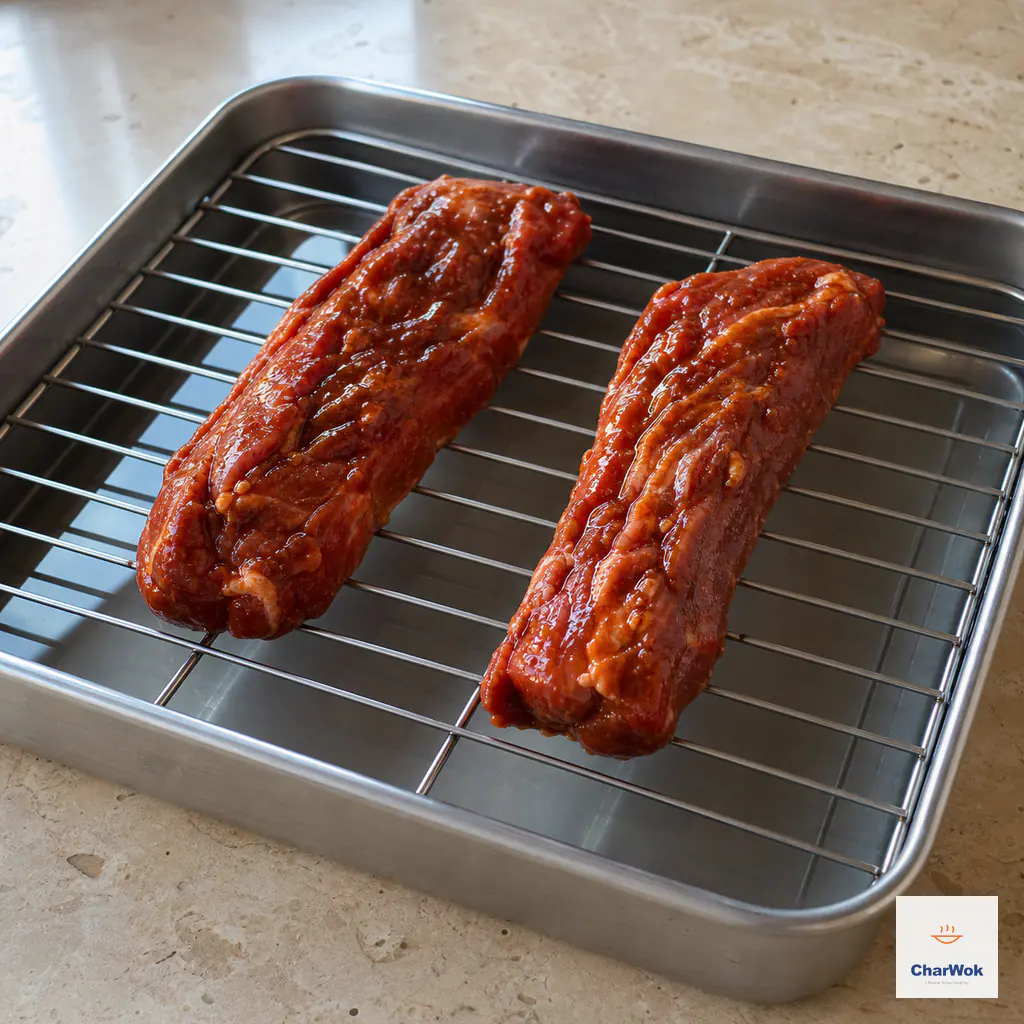
Keep the hot water below the rack so it catches drips without touching the pork
- First roast, 15 minutes. Slide the tray in and leave it alone. The surface dries and starts to brown; the inside comes up to temperature gently.
- Flip and baste. Pull the tray out, turn the strips over, and brush them with the reserved marinade. Check the water level while you are at it. Back in for another 10 minutes.
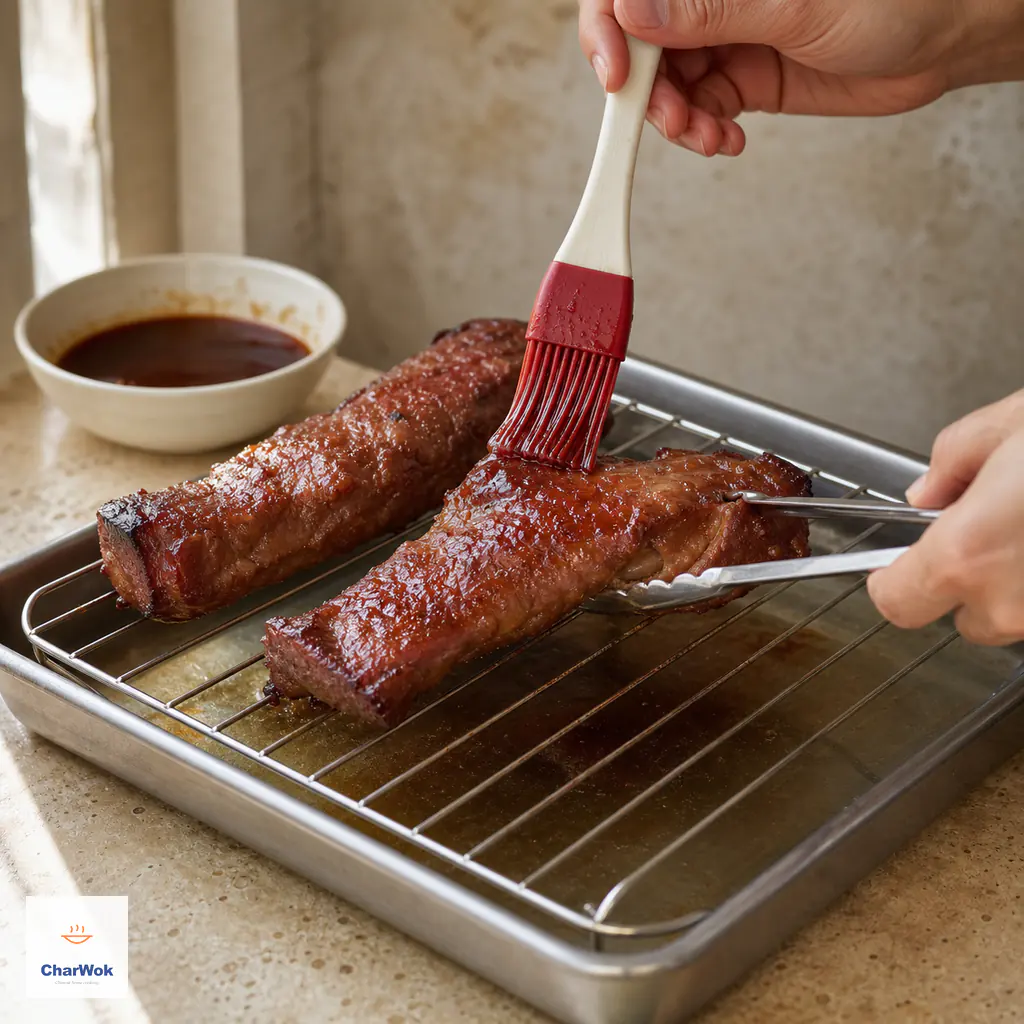
Flip, brush a thin marinade coat, and top up the tray before the next 10 minutes
- Mix the honey glaze. While the second roast runs, stir 2 tsp honey into 2 tsp of the reserved marinade. This thinned glaze will lay down a thin, even layer rather than a heavy coat that burns.
- Crank to 240°C/460°F (220°C fan) and glaze. The high heat is what sets the lacquer. Brush one side with the honey mixture, return to the oven for 5 minutes, then flip, glaze the other side, and roast a final 3 minutes. Watch closely in this last stretch. The line between caramelized and burnt is about 90 seconds.
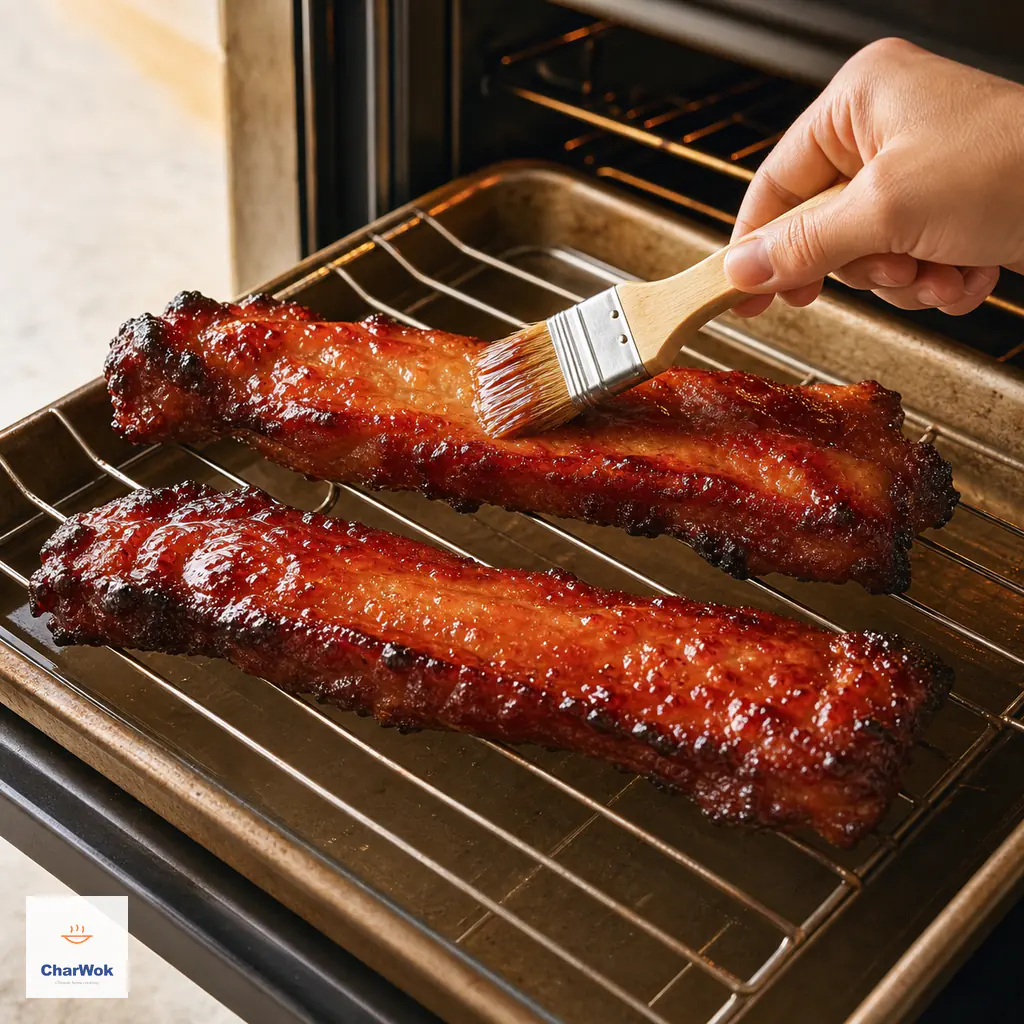
Use a thin glaze at high heat and pull it when the edges turn deep brown, not black
- Rest 5 minutes before slicing. The juices redistribute and the glaze firms up enough to slice cleanly rather than smear.
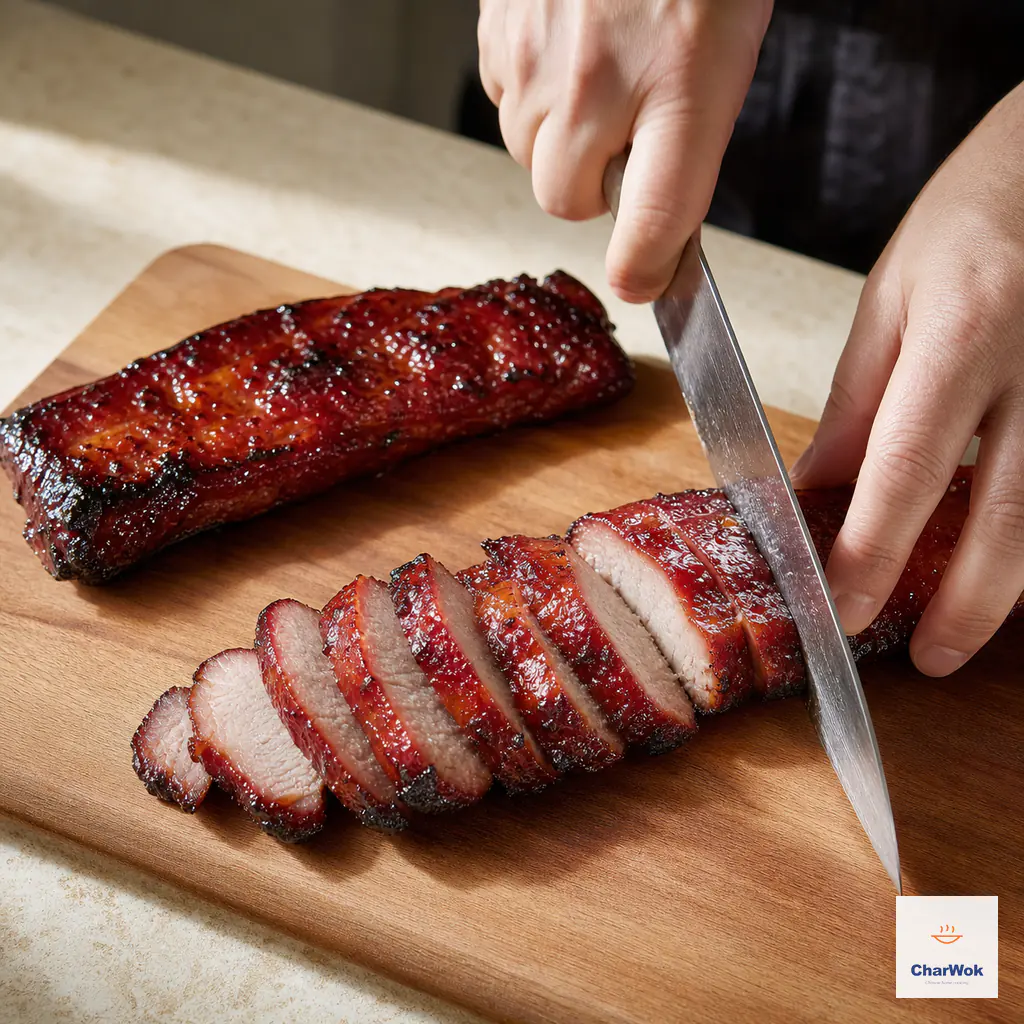
Rest 5 minutes, then slice across the grain once the glaze no longer smears
When it goes wrong
Burnt edges, raw center. Your oven runs hot or the strips were too thick. Halve the first-roast time on the next batch, or cut the pork into thinner, more even strips. An oven thermometer is worth the five dollars; most home ovens lie by 10 to 15 degrees.
Pale, dull surface. The glaze never caramelized. Either the oven was not hot enough at the end, or the honey layer was too thin to brown. Bump to 240°C/460°F and give it another 2 to 3 minutes under the broiler, watching the whole time.
Dry, stringy meat. You used tenderloin, or you overcooked shoulder past about 71°C/160°F internal. Switch to shoulder and pull the pork when a thermometer in the thickest part reads 68 to 70°C. The rest will carry it up.
Glaze sliding off, not sticking. The surface was wet when you brushed it. Pat the strips lightly before the glaze step so the honey has something to grab.
Smoke alarm going off. The water bath ran dry and the drips are burning. This is the single most common home-kitchen failure with char siu. Top up with hot water at every basting break, and never walk away during the final high-heat glaze.
What to do with leftover marinade
Strain out the garlic and ginger, pour the liquid into a small pot, and bring it to a full boil for at least two minutes to make it safe. It is now a ready-made seasoning: spoon it over plain rice, thin it for a quick noodle broth, or use it as a stir-fry sauce base. It also folds beautifully into fried sauce noodles or a bowl of rice congee the next morning.
Variations and pairings
The classic plate is char siu sliced over steamed jasmine rice with a side of blanched greens, often broccoli with garlic sauce or simple lettuce with oyster sauce. The greens cut the sweetness and the rice catches every drop of glaze.
Slice the pork over a bowl of wonton noodle soup or into Yangzhou fried rice and you have a full meal. Leftover char siu is even better the next day chopped into pork fried rice, where the caramelized edges perfume the whole wok. For something with more bite, tuck slices into a gua bao bun in place of belly, or fold them into a quick chow mein.
If you want to lean spicier, a half-teaspoon of chili powder in the marinade gives a faint heat that plays well against the honey. For a deeper, smokier version, swap a teaspoon of the light soy for Shaoxing rice wine and add a pinch more five-spice. Both are small moves that change the character without breaking the dish.
Storing and reheating
Cooled char siu keeps in the fridge for three to four days and freezes well for up to two months; slice before freezing so you can pull out only what you need. To reheat without turning it to leather, warm the slices gently in a covered pan over low heat with a spoonful of water, or give them 20 seconds in the microwave covered with a damp paper towel. The glaze will soften and reseal. Avoid a hot pan, which scorches the honey before the center is warm.
FAQ
Can I use a different cut of pork? Shoulder is the reliable choice. Tenderloin dries out, and belly renders too much fat for the glaze to set. If you must substitute, pork loin with a thin fat cap is the closest second, but pull it a few degrees earlier.
How long should I marinate? Overnight is ideal, six hours is the floor. Anything shorter leaves the center bland no matter how much sauce you pile on later.
Why is restaurant char siu so red? Shops use red yeast rice or food coloring for that color. Home versions go amber-brown from the honey and soy alone, and most cooks find the flavor cleaner without the dye.
Do I need the water bath in the oven? Yes. It catches fat drips so they steam instead of smoking, and it keeps the air moist so the pork does not dry out before the glaze sets.
Can I make this in an air fryer? Yes, with adjustments. Marinate the same way, then cook at 200°C/400°F for about 12 minutes, flipping and basting halfway, and finish with the honey glaze for 2 to 3 minutes. The strips will be smaller, so check early.
A final note
Char siu rewards patience and punishes distraction. Give the pork its overnight cure, set up the water bath, and stand by the oven for those last three minutes of glazing. Skip any of those and you are back to ordinary roast pork, which is fine, but it is not the dish with the glossy red skin that makes you eat standing up.