If you keep only one dried ingredient in your Chinese pantry, make it shiitake. A handful of these brown caps, soaked and sliced, will lift a plain chicken stir-fry into something that tastes like it came out of a restaurant kitchen. The reason is almost embarrassingly simple: drying concentrates the free glutamate that gives the mushroom its savory depth, so a few grams carry the kind of flavor you would otherwise need stock or meat to build.
What trips people up at home is not the cooking itself. It is the rehydration. Soak them wrong and you get caps that are leathery at the stem, gummy in the middle, and a soaking liquid that tastes of cardboard. Soak them right and the caps turn plush, the stems stay tender, and the water they leave behind is practically liquid seasoning. This guide is built around that one decision, then everything that follows from it.
At a glance: Dried shiitake are a more useful, longer-keeping pantry item than fresh. The single decision that matters is the soak: cold water for 8 hours (overnight) gives the best texture and the cleanest, most mushroom-flavored liquid; hot water is a 30-minute rescue that works for the caps but dulls the broth. Always save the soaking water, decant the clear top layer, and trim the stems of dried caps before cooking.
What you are actually buying
Shiitake mushroom guide at a glance
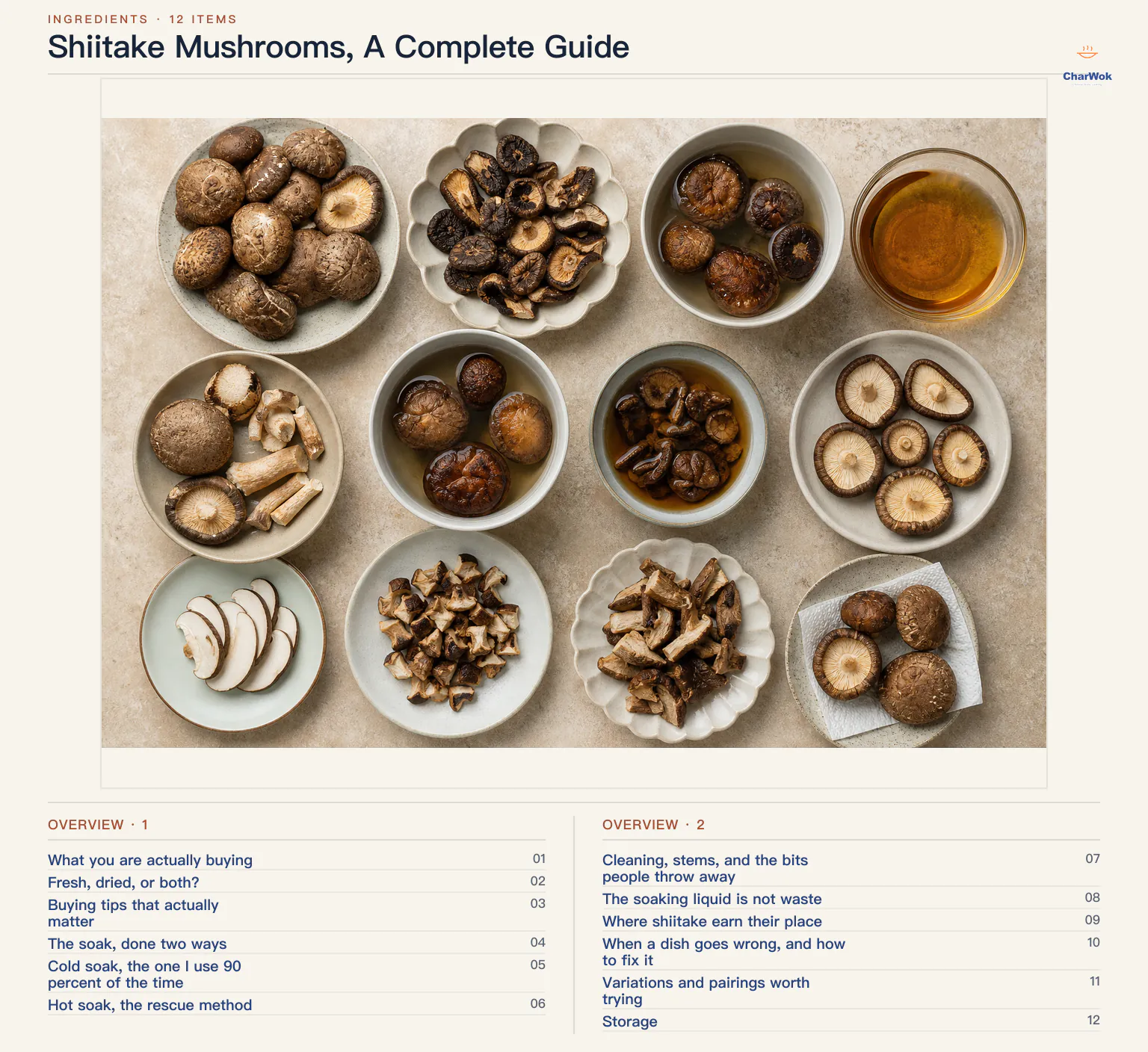
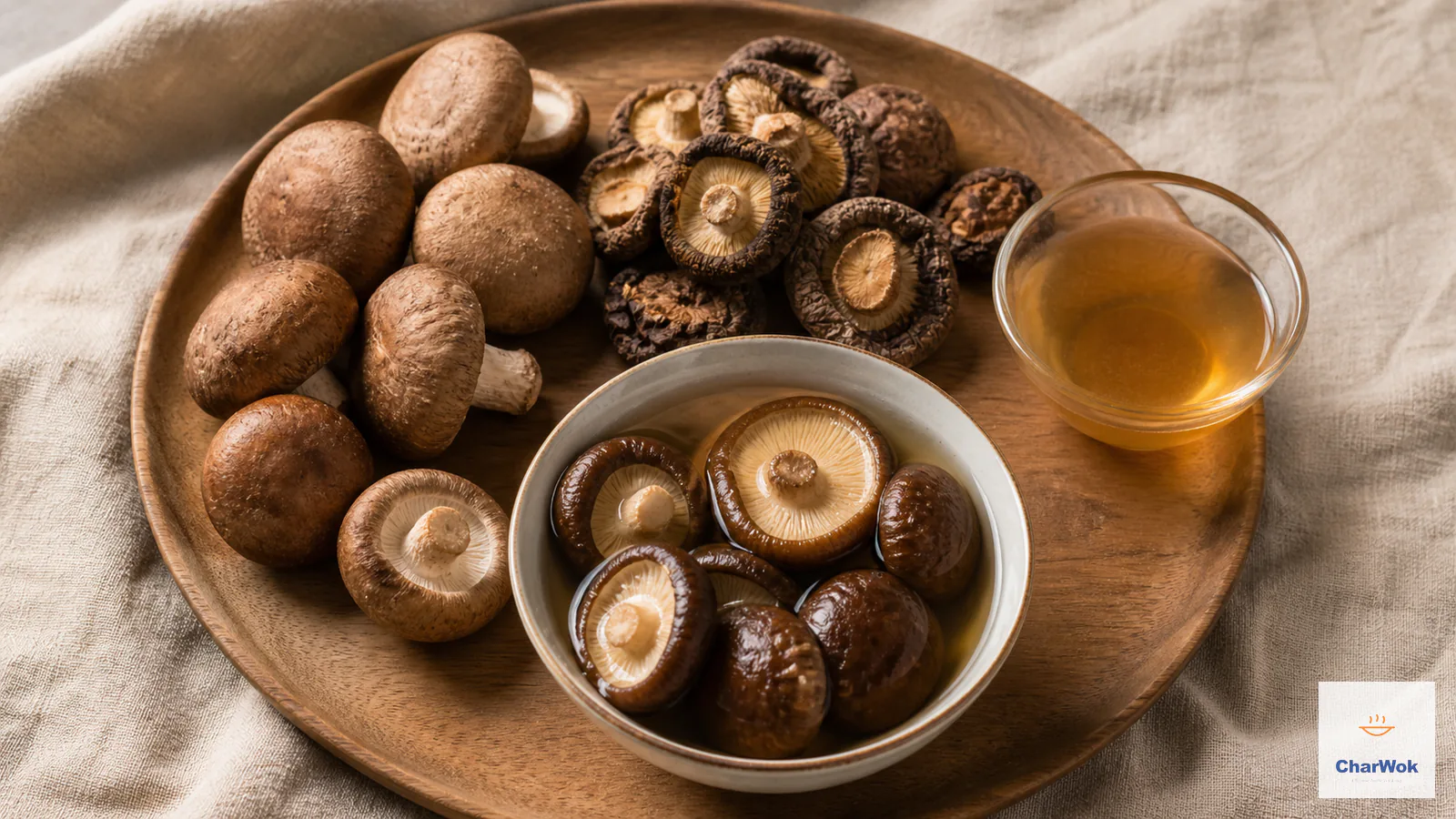
Shiitake are cultivated, not foraged, and they have been farmed in East Asia for so long that the distinction between "wild" and "farmed" barely applies. What sets them apart from a button mushroom is how little of their weight is water, only about three-quarters, against roughly nine-tenths for the pale caps sold in most supermarkets. That lower water content is why a raw shiitake has real resistance when you bite into it. Drying pulls most of the remaining moisture out, and in doing so collapses the cell structure and concentrates the guanylate and glutamate inside. That is the chemistry behind the famous umami. There is no secret ingredient; there is only water removal and time.
The names on the bag grade more than they identify. The umbrella term for all of them is xiang gu (香菇), literally "fragrant mushroom." Underneath that sit two quality tiers. Hua gu (花菇), the "flower" grade, is the top of the line: its cap is mapped with a cracked mosaic, a stress pattern the mushroom lays down when growth slows in cold, dry weather, and that slow growth packs in flavor. Below it sits dong gu (冬菇), the everyday "winter" cap, smoother and darker, which is what most recipes mean when they call for dried shiitake. Reach for hua gu when the mushroom is the whole point of the dish; dong gu is what you reach for the other ninety percent of the time.
Fresh, dried, or both?
Most home cooks I know keep dried and treat fresh as a nice-to-have. Dried keeps for a year or more in a sealed jar, intensifies in flavor, and pays you back with that soaking liquid. Fresh is milder, a little buttery, and better behaved in fast cooking because it has no rehydration step. I reach for fresh when I am cooking hot pot or throwing caps onto a grill where the texture matters more than the depth. For almost everything else (braises, dumpling fillings, soups, steamed dishes) dried wins.
If a recipe just says "shiitake" and you only have fresh, you can usually substitute directly by weight after rehydrating. Go the other way and you lose both the concentrated flavor and the broth, so I would not swap dried into a quick stir-fry that expects the fresh mushroom's softer bite.
Buying tips that actually matter
| Look for | What it tells you |
|---|---|
| Thick, domed caps with pale underside | A thicker cap means more flesh and better texture once rehydrated; a pale, dry gill surface means it was dried properly. |
| A clear crack pattern (hua gu) | Premium grade; pay more only when the mushroom is the star of the dish. |
| Caps that feel dry but not brittle | Properly dried. Snapping like a cracker is fine; crumbling to dust means they are old and stale. |
| Strong, clean mushroom smell from the bag | Freshness. A flat or dusty, cardboard smell means the flavor has faded. |
| Avoid: dark spots, mold, or a damp feel | Moisture has got in; the batch will taste off and may not keep. |
Cap size is the other choice. Large caps are meatier and want to be sliced or kept whole in a braise; small ones can go into a filling whole and save you the knife work. For dumpling fillings and spring rolls, I buy small. For a braise where the cap is on display, I buy large.
The soak, done two ways
This is the part most recipes hand-wave. It is also the part that decides whether your dish is good or merely fine. The goal is to drive water back into collapsed cells without leaching flavor out, and the two methods trade speed against quality.
Cold soak, the one I use 90 percent of the time
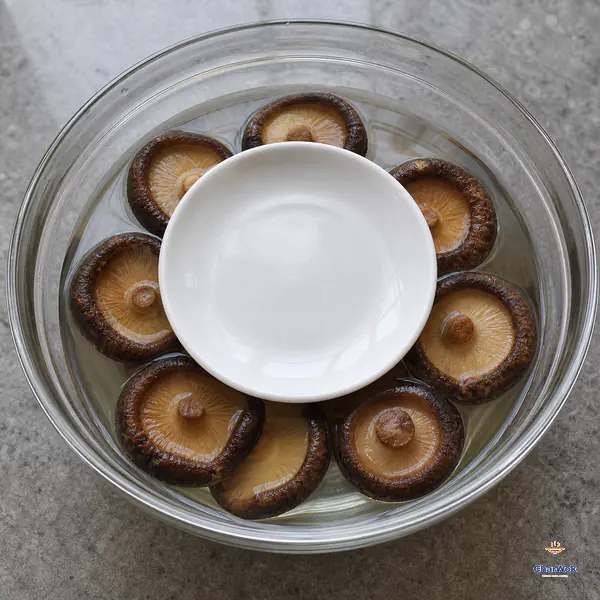
Cover dried caps generously with cold water and use a clean saucer to keep every cap submerged until the thick centres are fully plump.
- Rinse the caps first. A quick rinse under the tap removes the surface dust that drying never fully gets rid of. Do not soak them dirty; that grit ends up in your soaking liquid.
- Cover generously with cold water in a bowl. Dried caps want to float as they swell, so give them a wide bowl with water to spare and drop in something to hold them down: a ramekin, a glass of water, anything clean that sits on top.
- Let the bowl sit until the caps are fully plump. Plan on an overnight soak (give or take eight hours). Room temperature is fine; move the bowl to the fridge when the weather turns hot. The slow, even uptake of water is what makes the center as tender as the rim.
- Save the liquid. This is the whole point of going slow. Cold water pulls flavor out gently, leaving you a clear, deeply mushroomy stock that is better than anything you can buy.
Hot soak, the rescue method
- Hot, but not boiling. Water straight off a rolling boil will scald the outside of the cap and set it slightly rubbery. Let the kettle rest a minute or two. You want something in the 80 to 90°C / 175 to 195°F range, and the caps will be plump in 20 to 30 minutes with less damage.
- Keep them under. Caps bob to the surface faster in hot water, so weight them with whatever is handy: a heatproof glass or cup pressing down on top does the job.
- Check by feel, not the clock. A cap is ready when the thickest part yields to a squeeze with no hard center. Twenty minutes is a minimum, not a target.
- Treat the liquid as second-class. The heat leaches color and some of the murkier soluble compounds while driving off the more delicate aroma, so the broth comes out cloudier and flatter. Fine for a quick braise; not what you want in a delicate soup.
I will be honest about the limit of the hot soak: it gets you out of trouble when you forgot to soak the night before, but you can taste the difference. If a dish leans on the mushroom flavor, plan ahead and use cold.
Cleaning, stems, and the bits people throw away
Fresh shiitake do not grow in soil, so they do not need soaking. A damp paper towel wiped across the cap and gills is enough. Drop them in water and they hoard it, then weep that moisture out the moment they hit a hot pan, which is how you end up braising when you meant to stir-fry.
The stem is the one place fresh and dried behave differently. Fresh stems are tender enough to eat; trim only the very base where they were cut. Dried stems turn fibrous and tough no matter how long you soak them, so cut the stem off flush with the cap and either discard it or save it in a bag in the freezer for stock. I keep a jar of dried shiitake stems next to my wood-ear and other dried bits precisely for this: drop a handful into a long-simmered broth and strain it out at the end.
The soaking liquid is not waste
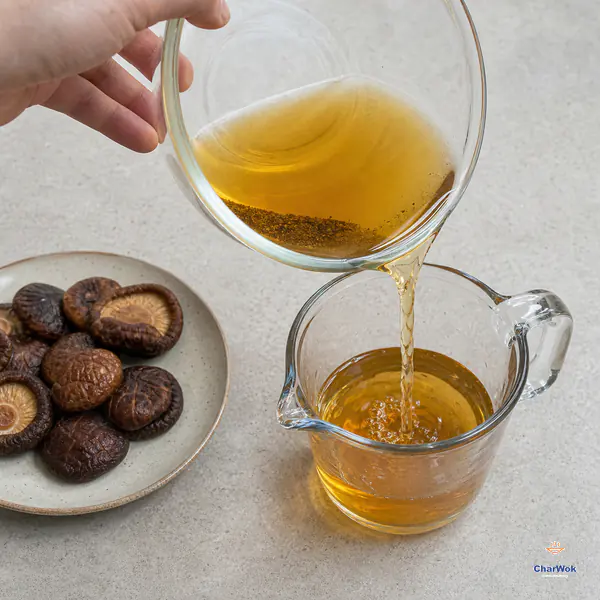
Lift out the mushrooms, let the bowl stand, then slowly decant only the clear upper liquid and stop before the dark grit reaches the rim.
After you lift the caps out, give the bowl five minutes of stillness so any grit drifts to the floor of the bowl. From there, treat it like decanting wine: tip the liquid slowly into a second container and stop the moment you see the cloudy dregs at the bottom start to move. What you have poured off is a free umami stock, and once you start using it you will not go back to plain water.
- In braises and stews, swap it for water or chicken stock. It is what gives braised mushrooms with bok choy that deep, glossy sauce.
- In fillings, a few spoonfuls stirred into a pork or shrimp filling make the dumplings juicier and more savory without adding fat.
- In soups, it is the backbone of a proper hot and sour soup and the broth for Lion's Head meatballs.
- In congee and rice dishes, use it as part of the cooking liquid for congee or lo mai gai, the dim sum sticky-rice parcel.
One caution: if you hot-soaked, the liquid will be murkier and slightly cloudier than a cold soak gives. Still usable, but keep it for boldly seasoned dishes like a mapo tofu braise or dan dan noodles sauce where the mushroom note is a supporting player, not the lead.
Where shiitake earn their place
Rather than list dishes by category, it helps to think in terms of the job the mushroom is doing. Once rehydrated and trimmed, the caps are remarkably flexible. They sponge up whatever they cook in while holding their texture through a long braise. Here are the five jobs I ask them to do most often.
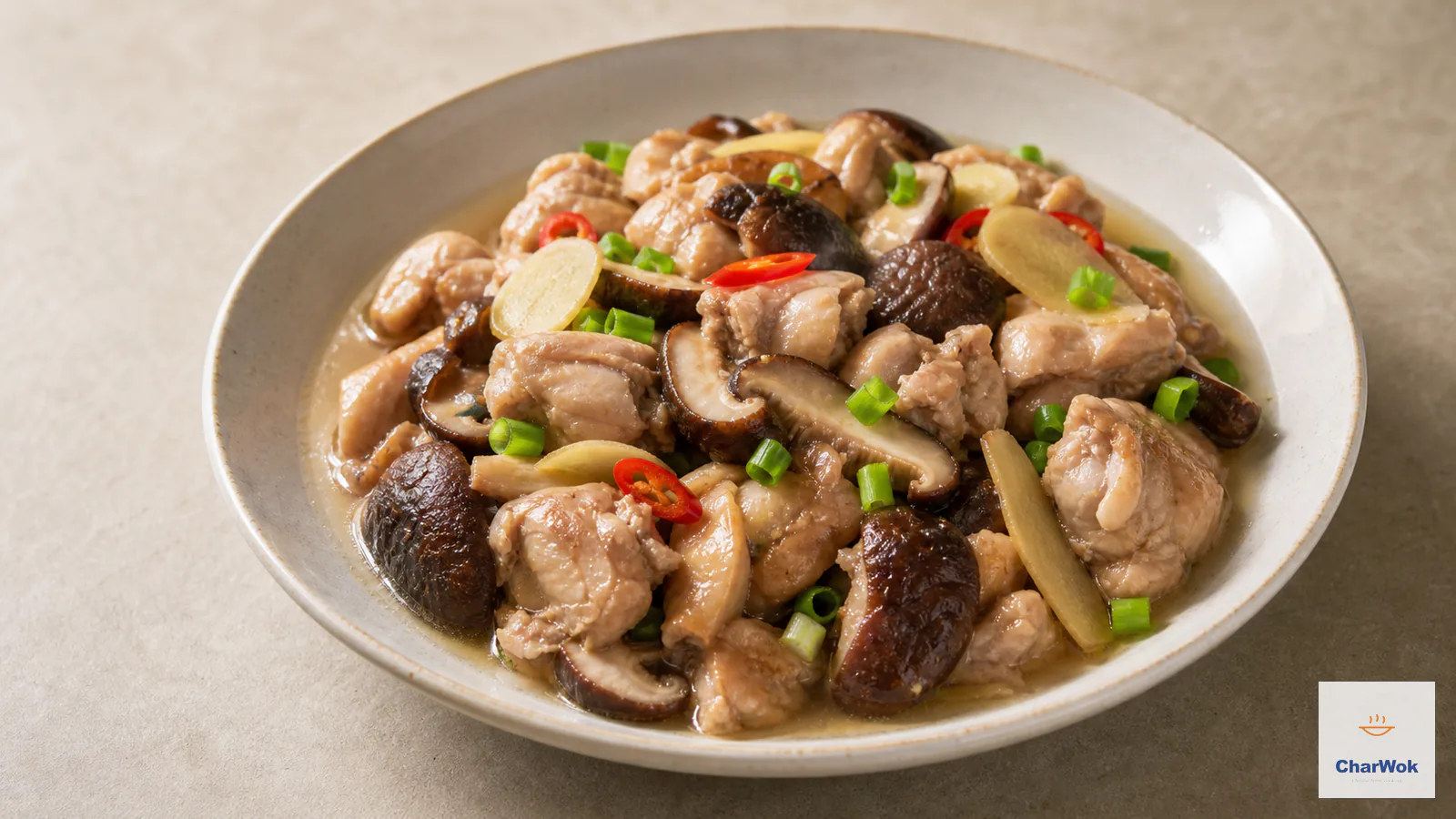
- Carrying the dish. When the mushroom is the headline, spend on hua gu and let them sit center-plate. Braised mushrooms with bok choy and steamed chicken with shiitake are the classic examples.
- Standing in for meat. Mince rehydrated caps and use them to replace some or all of the ground meat in yu xiang eggplant, a vegetarian mapo tofu, or dan dan noodles. You cut richness without losing the savory floor the dish is built on.
- Building a broth. Toss a few caps into the pot for hot and sour soup, Lion's Head meatballs, or homemade hot pot broth and they outwork any stock cube.
- Thickening a filling. Finely minced into the mix for stuffed tofu, lettuce wraps, or dumplings, shiitake disappears texturally but makes everything around it taste rounder and more juicy.
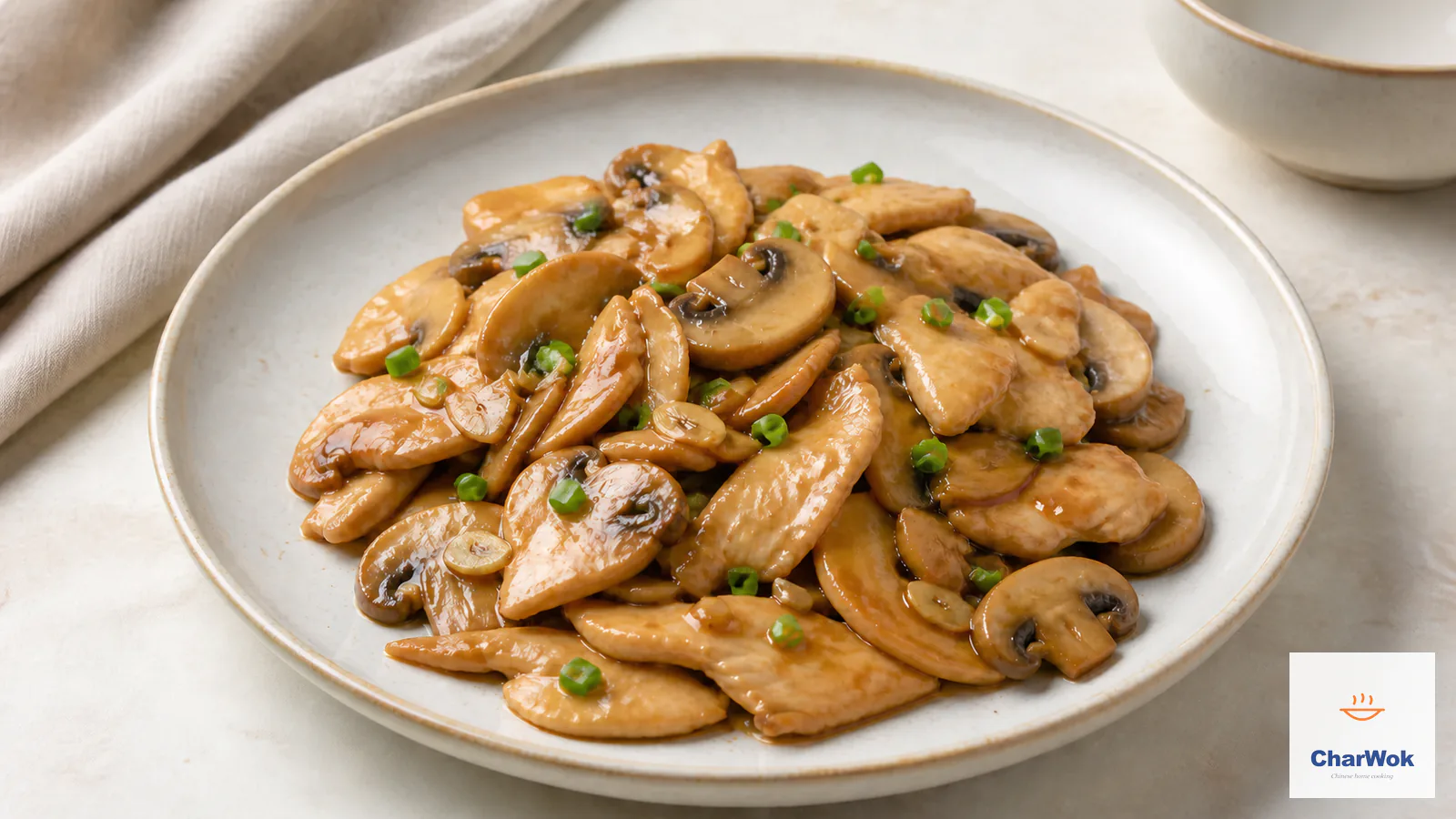
- Punching up a quick cook. Sliced into chow mein, fried rice, or a five-minute chicken stir-fry, they bring chew and savor to dishes that have no time for a long soak of their own.
When a dish goes wrong, and how to fix it
| Symptom | Likely cause | Fix |
|---|---|---|
| Rehydrated caps are rubbery or leathery | Under-soaked, or hot-soaked too aggressively | Move to a cold soak for another 2 to 3 hours; squeeze-test the thickest part before using. |
| Center stays hard even after soaking | The cap was very thick or old | Score a shallow cross on the underside, then simmer gently in the soaking liquid for 10 minutes before slicing. |
| Soaking liquid tastes flat or dusty | Old stock, or hot-water method | Use it only in strongly seasoned dishes; next time buy fresher caps and soak cold. |
| Stir-fry comes out watery and grey | Caps not drained, or overcrowded pan | Squeeze excess water from sliced caps by hand, then sear in a hot pan in two batches so they brown instead of stew. |
| Braise sauce is gritty | Sand poured in with the soaking liquid | Always decant the clear top layer and leave the last centimeter with its sediment behind. |
| Caps are tough and chewy even after cooking | Dried stems left on | Trim stems off dried caps before cooking; reserve them for stock only. |
| Fresh caps turned slimy in the fridge | Stored sealed in their original pack | Store fresh caps loosely wrapped in paper towel inside an open bag; use within one to two weeks. |
The single most common failure I see is the under-soak. People read "20 minutes in hot water," follow it to the letter, and end up with a cap whose outside is soft and whose center is still a compressed brick. Squeeze the cap. If it resists in the middle, it is not ready, no matter what the clock says.
Variations and pairings worth trying
Shiitake plays well with a short list of partners, and knowing them saves you inventing dinner from scratch. Soy sauce and a splash of Shaoxing wine are its closest friends; a few drops of toasted sesame oil at the end of a stir-fry is the finish that ties it together. Pair the caps with oyster sauce for a quick braise, or fold minced caps into the mix for steamed ribs with black beans and the meatballs in a noodle soup.
For a vegetarian main that feels substantial, braise whole rehydrated caps in soy, rock sugar, and ginger until the sauce is syrupy, then serve over rice the way you would red-cooked meat. A spoon of that same braising liquid stirred into a bowl of plain congee is, in my opinion, one of the best quick lunches in the repertoire.
Storage
Dried caps want cool, dark, and dry. Once the bag is open, transfer them to a jar with a tight lid and keep them in a cupboard away from the stove. No fridge needed unless your kitchen is genuinely humid, in which case the fridge is the lesser evil because it stops mold. Stored this way they hold their flavor for a good year and remain safe to eat well beyond that (properly sealed dried shiitake keep for years), though the aroma slowly fades over time. Fresh caps are the opposite problem: they suffocate in the closed pack they come in. Take them out, wrap loosely in paper towel, put them in an unsealed bag in the fridge, and they will keep for one to two weeks.
Questions home cooks actually ask
A few short answers to the things that come up again and again. The details are in the sections above; these are the cheat-sheet versions.