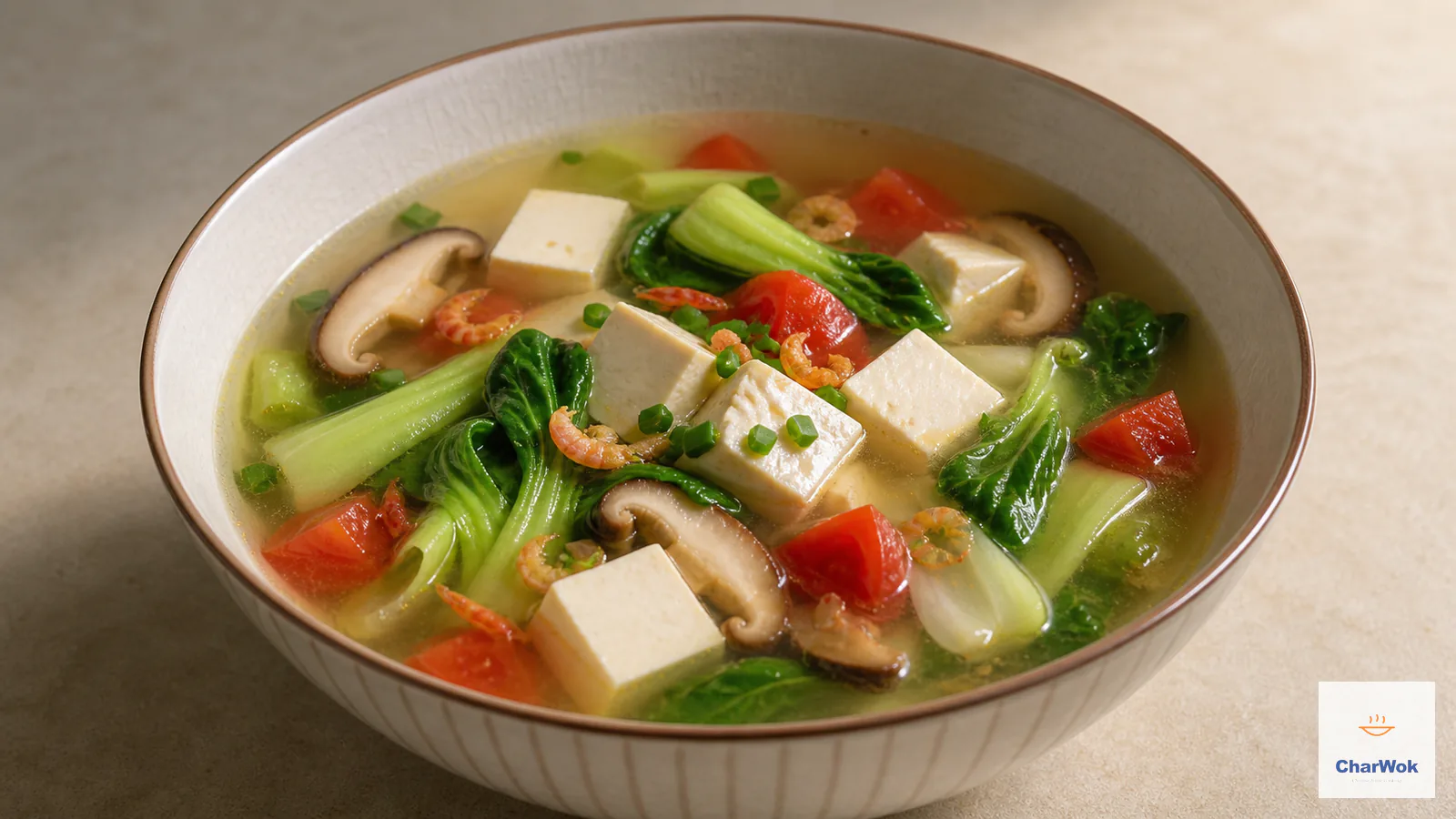
A bowl of tofu soup with vegetables is one of those dishes I turn to when I want dinner on the table in ten minutes but still want it to taste like someone cared. The whole thing lives or dies on the broth, and the broth lives or dies on two cheap pantry items: dried shiitake mushrooms and dried shrimp. Rehydrate them, and the soaking water becomes the soup. Skip them and reach for a stock cube, and you'll get something that tastes like a stock cube.
I've ruined this soup more times than I want to admit. The first few attempts were cloudy and bitter because I poured the grit from the bottom of the mushroom bowl straight into the pot. Once I dumped bok choy leaves in at a rolling boil and turned them into army-green mush. The version below is the one I cook weekly now, with the timing that actually works in a home kitchen.
At a glance: A clear, savory Chinese soup built on two soaking liquids (dried shiitake and dried shrimp) plus silken tofu, tomato, and bok choy. Plan six hours (or overnight) for a cold mushroom soak; the actual cooking is under five minutes. Use soft tofu, not firm. Add the bok choy stems before the leaves, kill the heat before the leaves go in, and never let the soup come back to a hard boil once the tofu is in. Serves four as part of a meal, two as a light bowl on its own.
What this soup is, and where it sits at the table
豆腐鲜蔬汤, "fresh vegetable tofu soup," is a home-style Cantonese and southern Chinese staple. It is not the kind of soup you simmer for hours, and it is not a banquet showpiece. It belongs to the family of quick egg drop soups and light broth soups that round out a meal of rice and two or three stir-fried dishes. The job of this bowl is to be gentle, savory, and slightly sweet from the tomato, so that a salty main like Mapo Tofu or a heavy braised dish doesn't overwhelm the table.
The trick that lifts it above plain boiled water is using the rehydration liquid from dried mushrooms and dried shrimp as the soup base instead of throwing it away. Those two soak waters are essentially free dashi: full of glutamate from the mushrooms and inosinate from the shrimp. Together they hit the umami synergy that makes a broth taste rich even though it has almost no fat.
Ingredients
Ingredients at a glance
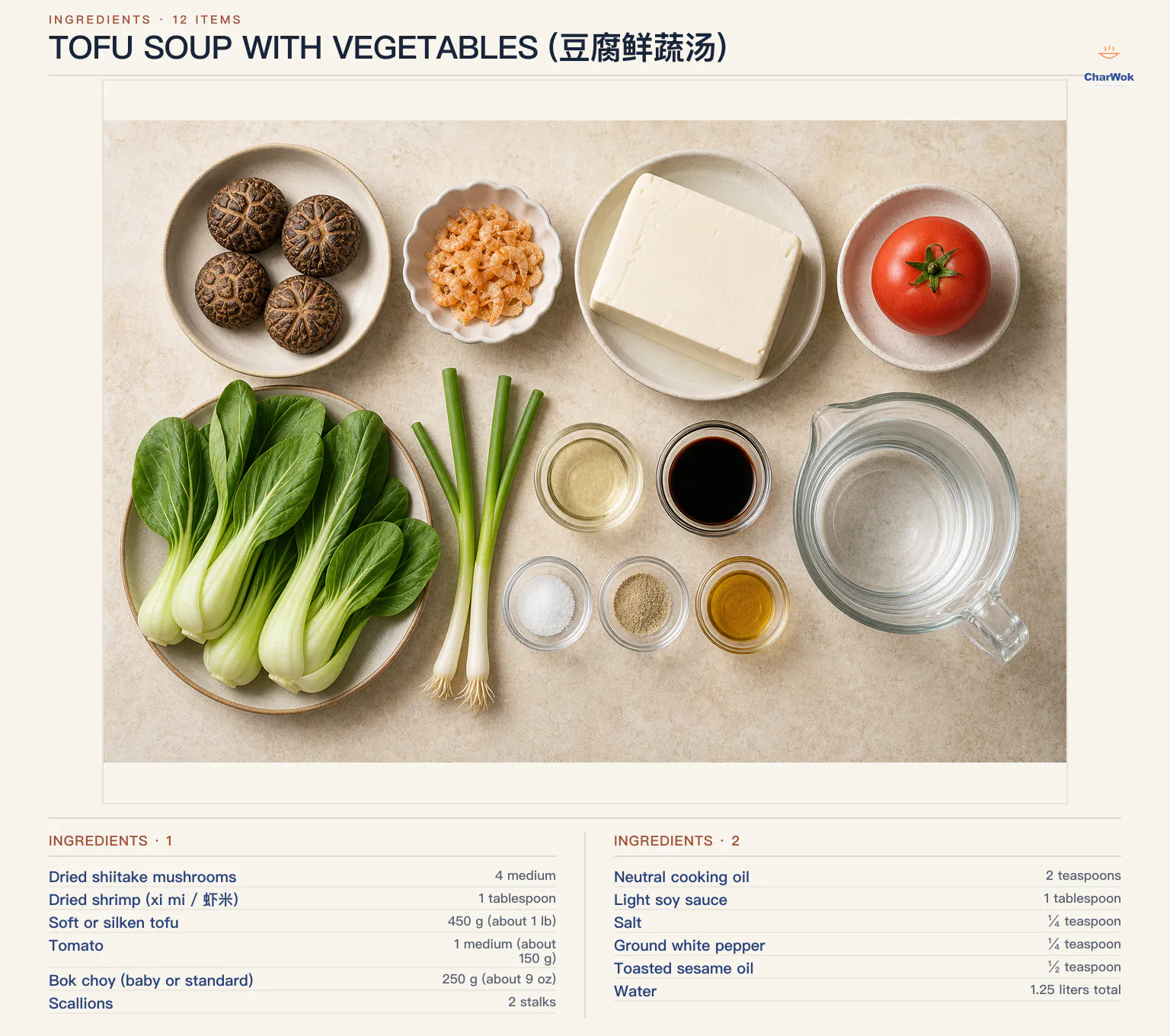
A note before the table: the dried goods matter more than the fresh ones here. If you only have one of the two dried items, make it the dried shiitake; the shrimp can be fudged, the mushrooms cannot.
| Ingredient | Amount | Notes / substitute |
|---|---|---|
| Dried shiitake mushrooms | 4 medium | Substitute: 80 g (about 3 oz) fresh shiitake, sliced, but you'll lose the soaking-liquid flavor, so add 1 tsp mushroom soaking powder or a small piece of kombu to compensate. |
| Dried shrimp (xi mi / 虾米) | 1 tablespoon | See the dried shrimp guide for sourcing. Substitute: 1 tsp dried scallop (conpoy), or 1 tsp anchovy flakes; omit for a vegetarian version and add an extra mushroom plus ½ tsp soy sauce. |
| Soft or silken tofu | 450 g (about 1 lb) | Soft, not firm. Firm tofu tastes chalky and spongy here. If you only have firm, pan-fry the cubes first. |
| Tomato | 1 medium (about 150 g) | Roma or vine-ripe. An underripe tomato adds nothing, so use a ripe one, or 2 canned plum tomatoes drained. |
| Bok choy (baby or standard) | 250 g (about 9 oz) | Napa cabbage works too; if using napa, separate the white ribs from the green tops just like the stems and leaves below. |
| Scallions | 2 stalks | Split into white and green parts. White goes in the oil; green is the garnish. |
| Neutral cooking oil | 2 teaspoons | Grapeseed, canola, or peanut. Not olive oil. |
| Light soy sauce | 1 tablespoon | Light, not dark. Dark soy will muddy the broth. Light vs. dark soy sauce covers the difference. |
| Salt | ¼ teaspoon | Adjust at the end; dried shrimp and soy sauce are already salty. |
| Ground white pepper | ¼ teaspoon | White, not black. Black pepper fights the delicate broth. |
| Toasted sesame oil | ½ teaspoon | Added off the heat so the aroma survives. See Chinese sesame oil. |
| Water | 1.25 liters total | 500 ml for the cold mushroom soak + 60 ml hot for the shrimp + 500 ml added to the pot + ~190 ml absorbed by the mushrooms. Aim for roughly 1.1 liters of finished soup. |
The method, with the why built in
- Soak the mushrooms cold, the shrimp hot. Rinse four dried shiitake, then cover them with 500 ml cold water and leave them six hours or overnight. Cold extraction pulls out the glutamate-rich compounds slowly and keeps the flavor clean; a fast hot soak works in a pinch (30 minutes in just-boiled water) but tastes flatter and slightly tannic. In a separate small bowl, cover 1 tablespoon dried shrimp with 60 ml hot water for 10 minutes. Rough-chop the rehydrated shrimp when soft.
- Slice the rehydrated mushrooms, save both soaking liquids. Lift the mushrooms out, snip off the tough stems, and cut the caps into thin slices. Now the make-or-break step: let both soaking bowls settle, then pour the liquid off the top slowly and stop the moment you see grit. That last tablespoon at the bottom is sand and tannins; throw it out. Pouring the whole bowl in is the single most common reason this soup tastes bitter.
- Prep the fresh ingredients so they're ready to go. Cut the tofu into 2 cm (¾-inch) cubes and leave them in their water until use so they don't dry out. Cut the tomato into 8 wedges. Trim the bok choy and separate the thicker white stems from the green leaves; cut both into 2.5 cm (1-inch) pieces. Mince the scallion whites; slice the greens on a sharp bias for the garnish.
- Bloom the aromatics in oil first. Heat 2 teaspoons neutral oil in a wok or medium pot over medium heat. Add the scallion whites and the chopped dried shrimp and sizzle for 20 to 30 seconds, until you can smell the shrimp turn toasty. This step is doing real work: the fat carries the shrimp's savory compounds and gives the broth a rounded, savory front instead of a thin watery one. If you skip it and just boil everything, the soup tastes flat.
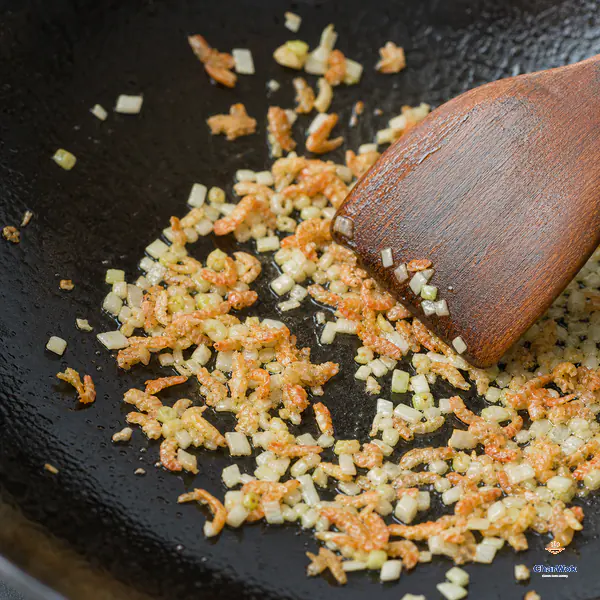
Sizzle the scallion whites and rough-chopped rehydrated dried shrimp over medium heat for only 20 to 30 seconds. Stop once the tiny shrimp smell toasty and show a few pale-golden edges, before either aromatic browns deeply.
- Add mushrooms and tomato, fry briefly. Tip in the sliced mushrooms and the tomato wedges. Stir for about a minute, just until the tomato edges soften and start to break down. You are not trying to make a sauce; you want the tomato cell walls to rupture so their sweetness and a little pectin release into the fat and, in a moment, the broth.
- Build the soup with the soaking liquids. Pour in the mushroom water and the shrimp water slowly, leaving grit behind, then add 500 ml hot water. Bring it to a full rolling boil. You want this aggressive now because the next steps all cool it down.
- Add the tofu and pull back to a simmer. Slide the cubes in gently with a slotted spoon. Drop the heat to medium and let it simmer, not boil, for 2 minutes. A hard boil will batter the soft tofu into crumbs; a simmer warms it through and lets it drink in a little broth without falling apart.
- Cook the bok choy stems, then the leaves off the heat. Add the white stems and cook 20 seconds. Now turn the heat off, drop in the green leaves, and stir. The residual heat is enough to wilt the leaves to bright green in 10 to 15 seconds. Boiling the leaves turns them olive and slimy within seconds, and you cannot undo it.
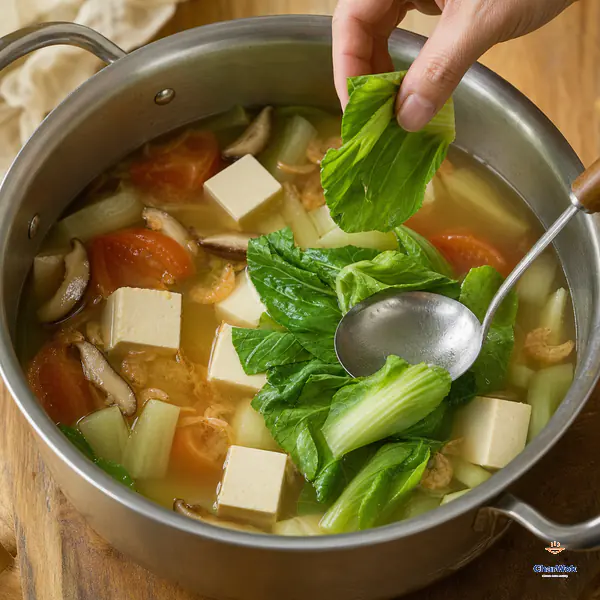
After the bok choy stems cook for 20 seconds, turn off the heat before adding the leaves. Press them gently into the still broth and let residual heat wilt them for 10 to 15 seconds so they stay vivid green instead of turning olive and soft.
- Season off the heat and finish. Stir in 1 tablespoon light soy sauce, ¼ teaspoon salt, ¼ teaspoon white pepper, and ½ teaspoon sesame oil. Taste, and correct the salt: the dried shrimp vary wildly in saltiness, so the written amount is a starting point. Ladle into bowls and scatter the scallion greens on top. Serve immediately; this soup does not improve with sitting.
Where this soup tends to go wrong
The broth is bitter or cloudy. You poured the grit from the soaking bowl into the pot. Next time, decant slowly and stop at the sediment. A secondary cause is a too-fast hot mushroom soak; cold overnight is cleaner.
The tofu has dissolved into mush. Either you used silken tofu at a hard boil, or you stirred it with a heavy hand. Use soft (not extra-firm silken) tofu, simmer gently, and move it with a spoon, not a whisk. If your tofu is the very delicate silken-in-a-tube kind, add it last and barely warm it through.
The bok choy is army green and limp. The leaves met a rolling boil. Stems can take heat; leaves cannot. Off-heat wilting is the only reliable method, and it works because the soup is still around 85°C (185°F) when you kill the burner.
It tastes bland despite all the dried goods. Two likely causes. One, you didn't bloom the shrimp in oil first; that fat-borne flavor is half the broth. Two, your dried shrimp or mushrooms were old and had lost their punch. Dried shiitake should smell deeply savory, not dusty; if yours smell like cardboard, replace them. The chicken and mushroom congee recipe puts the same mushrooms through their paces if you want to test a new bag.
It tastes too salty. Dried shrimp salt content varies by brand and batch. Hold back ¼ teaspoon of the added salt until the very end and adjust by taste.
Variations and what to serve it with
This is a template as much as a recipe. Once the dried-shrimp-and-mushroom base is in your hands, you can swap the vegetables freely.
Protein boost. Add 100 g (about 3½ oz) of thinly sliced pork tenderloin or chicken breast in step 7, right before the tofu. Stir so the slices separate, and let them cook through for 30 seconds before the tofu goes in. Thin slices cook in the residual heat and stay tender. For a heartier one-bowl meal, drop in a thin egg ribbon at the very end: beat one egg, turn off the heat, and pour it in a slow stream while stirring gently.
Change the greens. Napa cabbage is the classic alternative; treat the white ribs and green tops exactly like the bok choy stems and leaves. Spinach is faster (it needs only seconds), and water spinach works if you want something more robust. The technique in the bok choy stir-fry and the braised mushroom with bok choy both rely on the same stem-before-leaf logic.
Spicy or sour versions. For a sour tilt, add 1 tablespoon black rice vinegar at the end and a teaspoon of chili oil; this nudges the soup toward a cousin of hot and sour soup without the thickening. A spoon of Sichuan chili bean paste bloomed with the shrimp gives you a warming, gently spicy bowl.
Pairings. Serve this alongside something bold and dry. Good partners are a tomato egg stir-fry, scallion tofu, or a simple silken tofu salad with rice. For a soup course at a bigger meal, a small bowl of this works in front of winter melon soup or even a seaweed egg drop soup if you want a lighter table. If you'd rather lean into the dried-shrimp flavor across the whole meal, a good homemade stock is the other route to a deeply savory broth, but it asks for hours where this asks for minutes.
Storage and reheating
This soup is best the day it's made. If you must store it, cool it quickly and refrigerate up to 24 hours. The tofu and bok choy deteriorate fast, and the greens will go gray on a second day. Reheat gently on the stove over low heat until just steaming; do not boil. Do not freeze. The tofu's texture shatters in the freezer and never recovers.
One practical move: soak the mushrooms and shrimp the night before, then the cooking portion is genuinely five minutes. I keep a jar of rehydrated mushrooms in the fridge during the week for exactly this kind of quick soup, and for folding into a fast weeknight congee.
Frequently asked questions
Can I use chicken or vegetable stock instead of the dried goods? Yes. Replace both soaking liquids with 1.1 liters of a clean, light stock. You'll lose the characteristic dried-shrimp depth, but it's a respectable soup. Avoid strong commercial stock cubes; their salt and MSG dominate the delicate tofu.
Do I have to soak the mushrooms overnight? No, but a 30-minute hot soak is a compromise, not an equal. Cold overnight extraction gives a cleaner, sweeter broth. If you're pressed, hot-soak and add a small piece of kombu for extra glutamate.
Why add the soy sauce and sesame oil at the end? High heat dulls the toasted aroma of sesame oil and cooks the volatile top notes out of light soy sauce. Adding them off the heat preserves the fragrance you paid for.
Can I make it vegetarian? Easily. Omit the dried shrimp, add one more mushroom and ½ teaspoon extra soy sauce, and consider a small strip of kombu in the mushroom soak. The broth will be lighter but still savory.
What's the difference between this and tomato egg drop soup? Tomato egg drop soup is thinner and egg-thickened with no dried-shrimp base; it's faster but less layered. This soup trades the egg for dried-shrimp umami and bok choy texture.
The bottom line: this is a soup that rewards a small amount of planning (soak the mushrooms) and a few seconds of restraint (don't boil the tofu, don't boil the greens). Get those two things right and you have a clear, savory bowl that tastes like far more effort than it took.