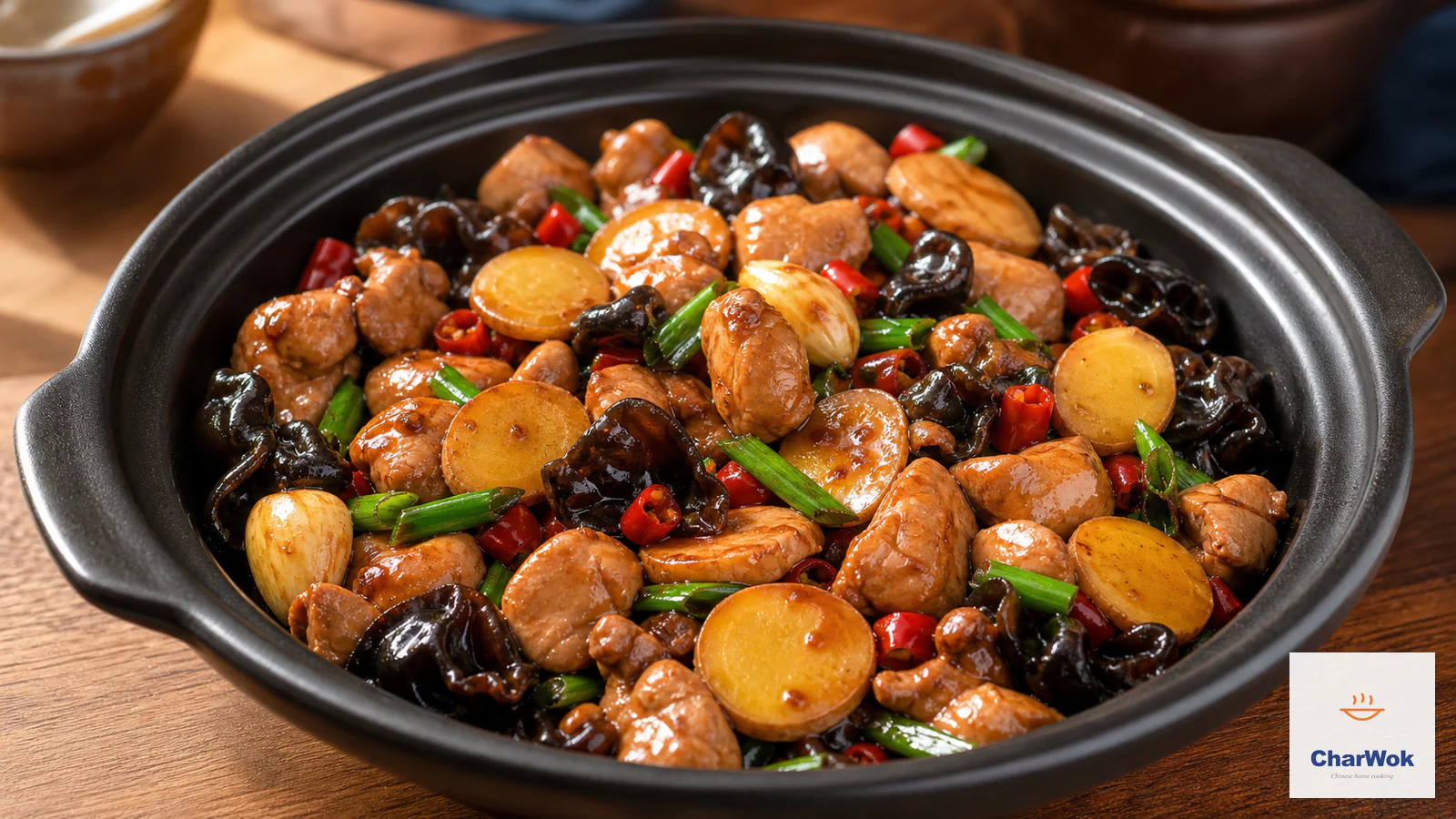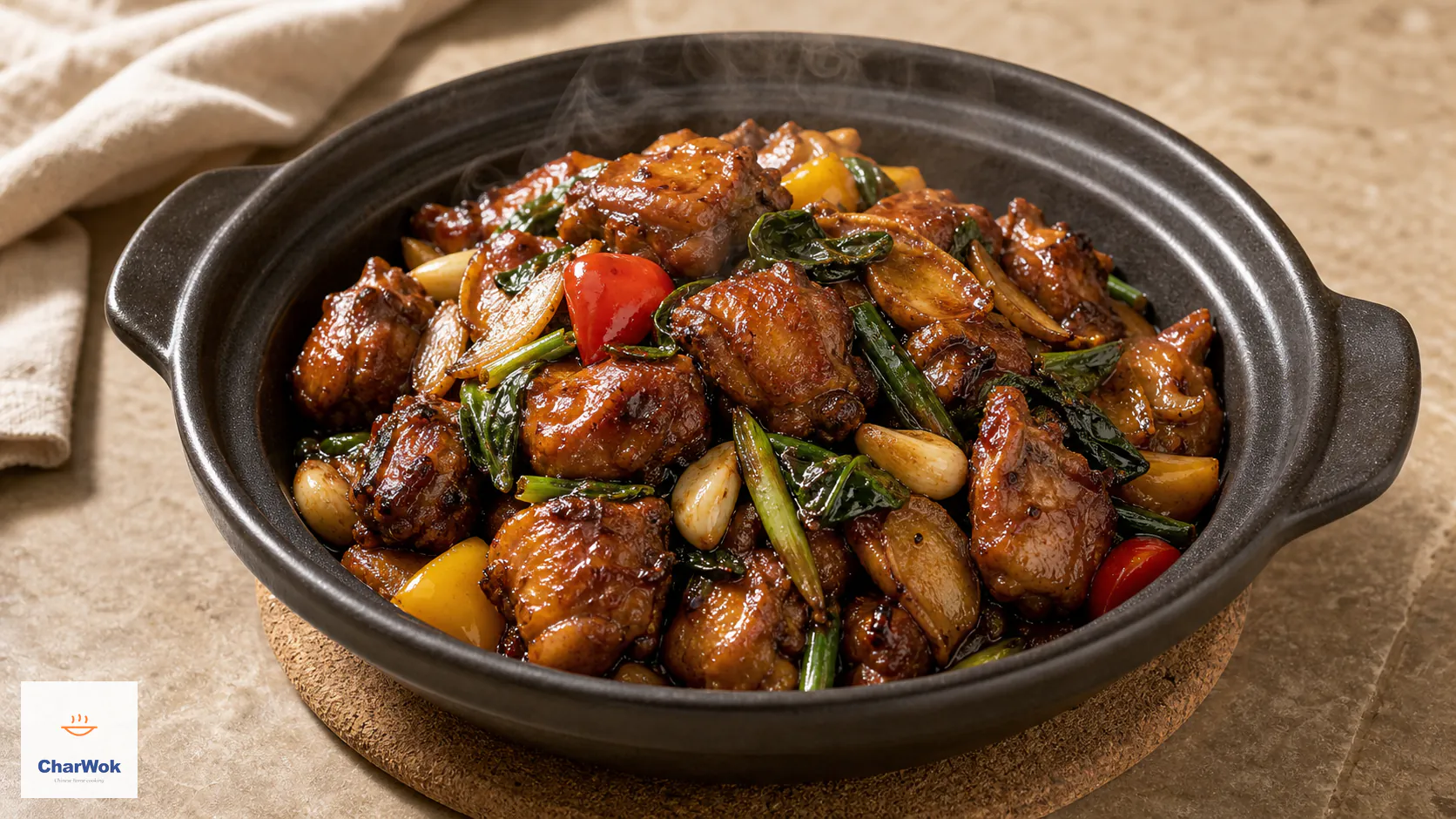
Three Cup Chicken, or San Bei Ji, braises chicken with toasted sesame oil, soy sauce, rice wine, ginger, garlic, and Thai basil. The practical checkpoints are separate: brown the chicken first, cook several of the largest pieces to 165°F (74°C), then reduce the sauce until it clings.
A thin sauce needs more uncovered reduction, but sauce thickness cannot confirm that poultry is safe. Check the chicken first; once it reaches temperature, remove it temporarily if the sauce still needs time to reduce. Fold in the basil only after turning off the heat.
At a glance. Use 900 g (2 lb) skin-on boneless chicken thighs. Brown them in one layer, braise covered, verify several of the largest pieces reach 165°F (74°C), then reduce uncovered and add Thai basil off the heat.
What three cups actually means
The name commonly refers to the three seasoning families used in the dish: oil, soy sauce, and rice wine. Taiwanese versions often use toasted sesame oil, plenty of ginger and garlic, and fresh Thai basil.
The name is not an instruction to pour three full cups into the pan, and recipes do not all use equal volumes. This version uses the amounts in the table below so the sauce can reduce around 900 g of chicken without leaving a large pool of oil.
The ingredients, and where you can cut corners
Ingredients at a glance
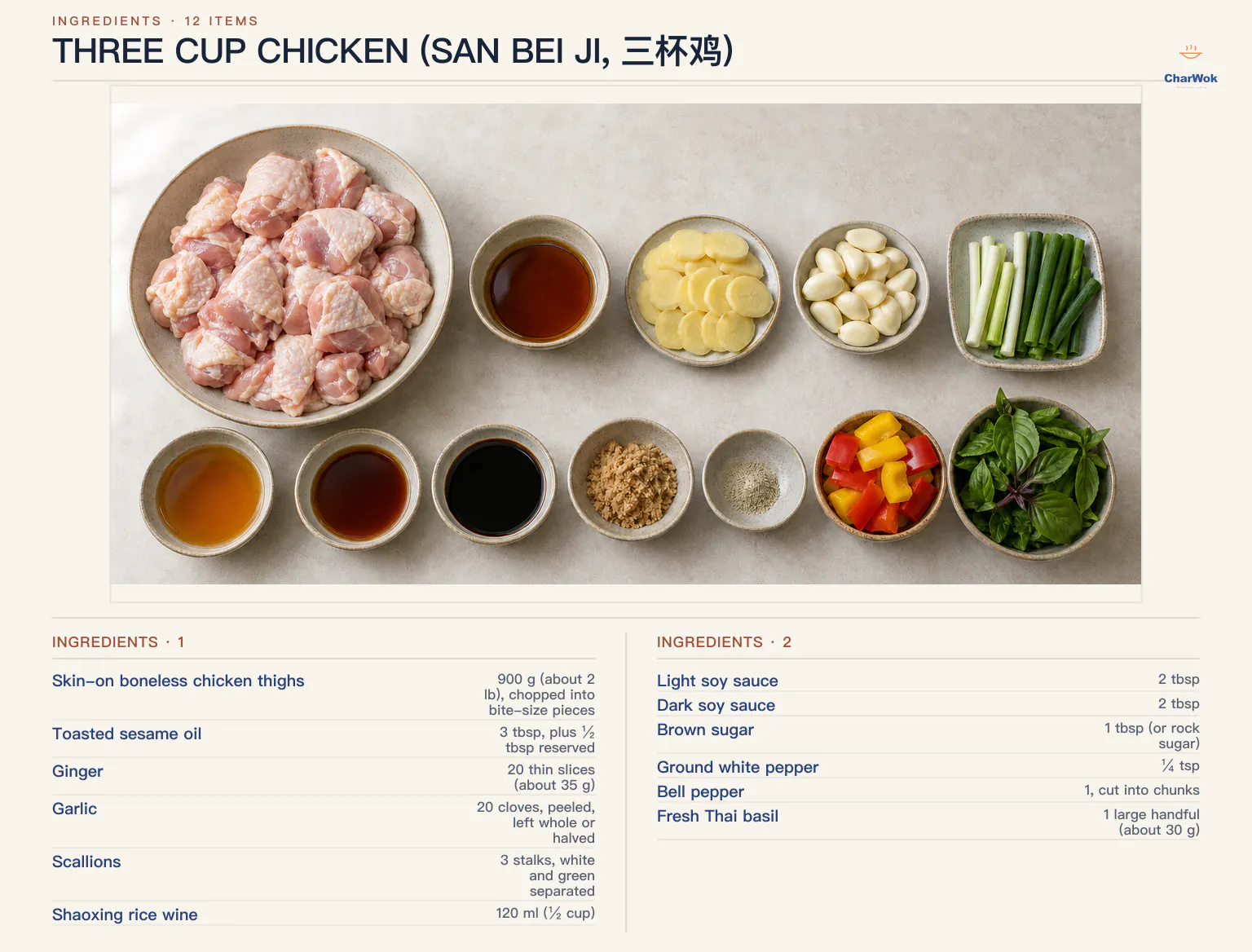
| Ingredient | Amount | Notes / substitute |
|---|---|---|
| Skin-on boneless chicken thighs | 900 g (about 2 lb), chopped into bite-size pieces | Cut to similar sizes so the pieces reach 165°F (74°C) together; wings and drumsticks take longer and must be checked away from bone |
| Toasted sesame oil | 3 tbsp, plus ½ tbsp reserved | Use toasted sesame oil for the stated flavor; for a lighter result, replace 1 tbsp with neutral oil |
| Ginger | 20 thin slices (about 35 g) | Slice thinly so it cooks through during the aromatic stage |
| Garlic | 20 cloves, peeled, left whole or halved | Whole or halved cloves are less likely to scorch than minced garlic |
| Scallions | 3 stalks, white and green separated | White parts fry with the aromatics; green parts go in during reduction |
| Shaoxing rice wine | 120 ml (½ cup) | If using salted cooking wine, reduce the soy sauce according to its label; dry sherry gives a different but workable flavor |
| Light soy sauce | 2 tbsp | Check the sodium label before adding any extra salt; see light and dark soy sauce |
| Dark soy sauce | 2 tbsp | Used mainly for darker color; products vary in sweetness and sodium |
| Brown sugar | 1 tbsp (or rock sugar) | White sugar or rock sugar can be used in the same measured amount |
| Ground white pepper | ¼ tsp | Black pepper gives a different flavor but can be used to taste |
| Bell pepper | 1, cut into chunks | Optional; add during the uncovered reduction |
| Fresh Thai basil | 1 large handful (about 30 g) | Sweet basil gives a different aroma but can be used when Thai basil is unavailable |
The method, and why each step matters
A wide wok, stainless-steel skillet, or cast-iron skillet with a tight lid can be used. The broad cooking surface helps the chicken brown in one layer and gives the liquid room to evaporate during reduction.
- Warm the oil and confit the aromatics. Pour in 3 tbsp of the sesame oil over low heat, then add the ginger, garlic, and scallion whites. The point of this slow stage is twofold: it draws the fat-soluble aromas out of the ginger and scallion, and it slowly poaches the garlic until it turns golden and soft. If the oil sizzles hard, the heat is too high. You want a lazy bubble, about 5 minutes, until the garlic takes on a pale gold edge. Reserve the last ½ tbsp of oil for the very end; if you add it now, its fragrance burns off during the braise.
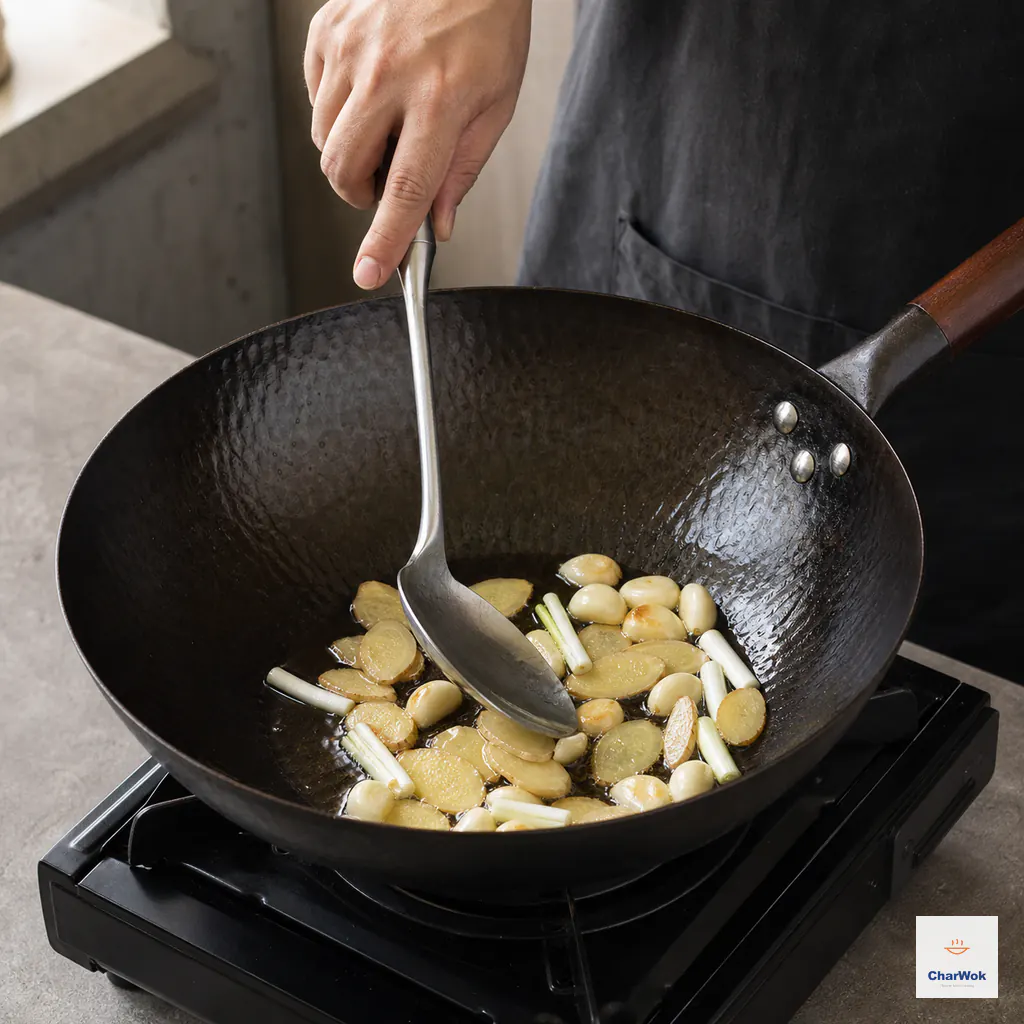
Keep a lazy bubble until the garlic shows pale-gold spots
- Sear the chicken in a single layer. Push the aromatics to the side of the pan and lay the chicken pieces flat, skin down. Do not crowd them and do not stir immediately. Skin needs uninterrupted contact with hot metal to render its fat and crisp. After 2 to 3 minutes, when the skin is golden, turn the pieces and let the other sides color. You are not cooking the chicken through here, only building the Maillard browning that gives the sauce depth.
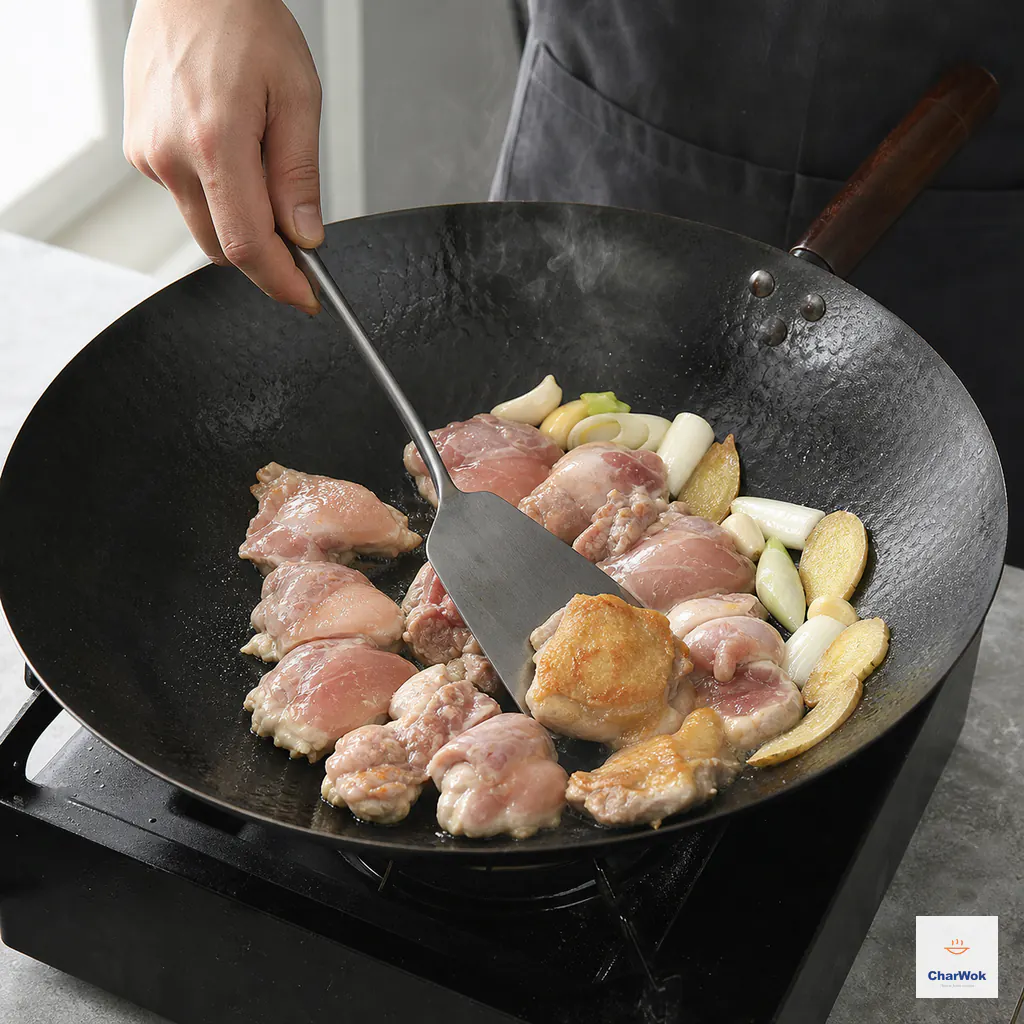
Leave the chicken in one layer until the contact side turns golden
- Deglaze, cover, and verify doneness. Pour in the Shaoxing wine, both soy sauces, sugar, and white pepper. Stir to lift the browned bits, cover, and keep at a steady simmer. Start checking boneless thigh pieces after about 5 minutes; other cuts may need longer. Insert a food thermometer into several of the largest pieces, avoiding bone, and continue cooking until every tested point reaches 165°F (74°C).
- Reduce only after the chicken is safe. Take off the lid, add the bell pepper and scallion greens, and boil until the sauce coats a spoon and briefly exposes the pan when stirred. If the chicken reaches 165°F (74°C) before the sauce is thick, transfer it to a clean plate, reduce the sauce by itself, then return the chicken. Stir frequently near the end because the concentrated sauce can scorch.
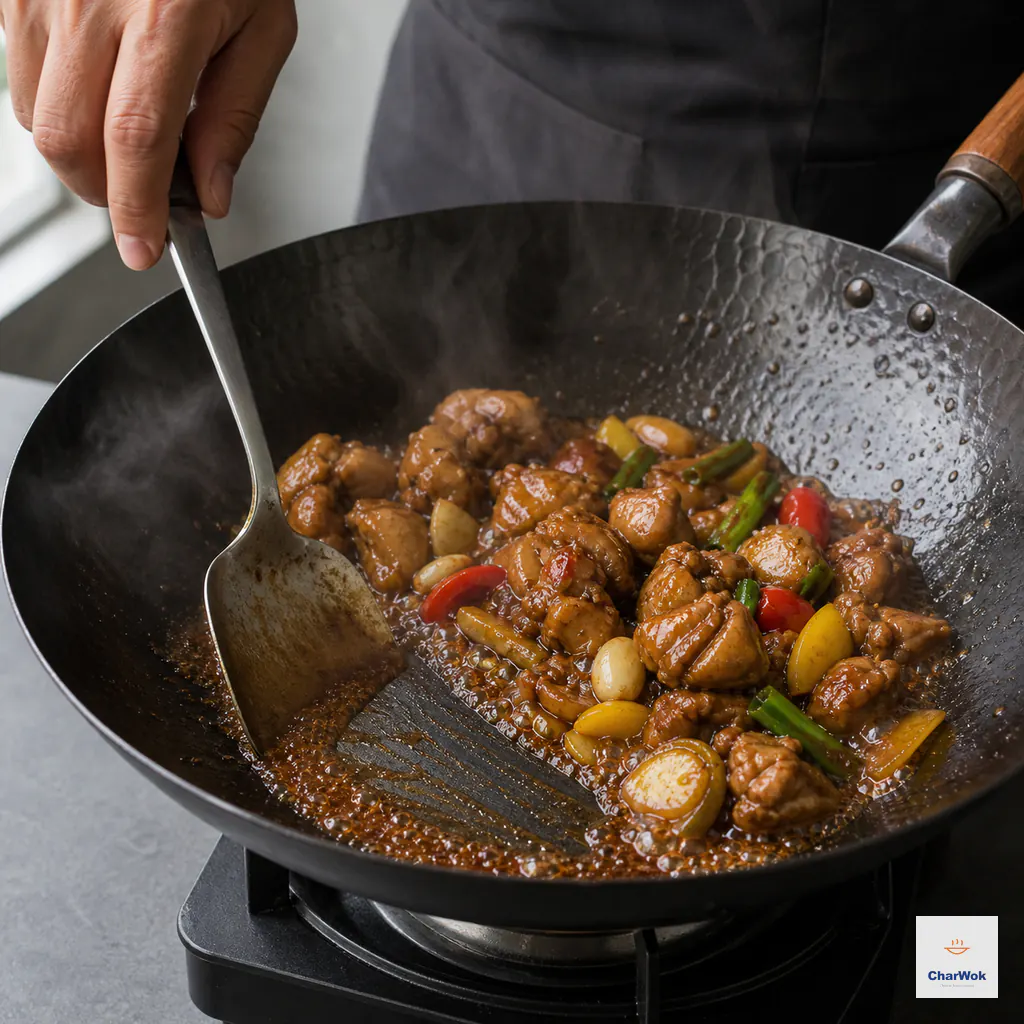
After several of the largest pieces reach 165°F (74°C), reduce uncovered until the sauce clings and briefly exposes the wok
- Kill the heat, then add basil and the reserved oil. Off the heat, stir in the Thai basil and the last ½ tbsp of sesame oil. Residual heat wilts the basil and releases its anise aroma without cooking it to mush. The final oil is uncooked, so it carries the purest sesame fragrance into the finished dish.
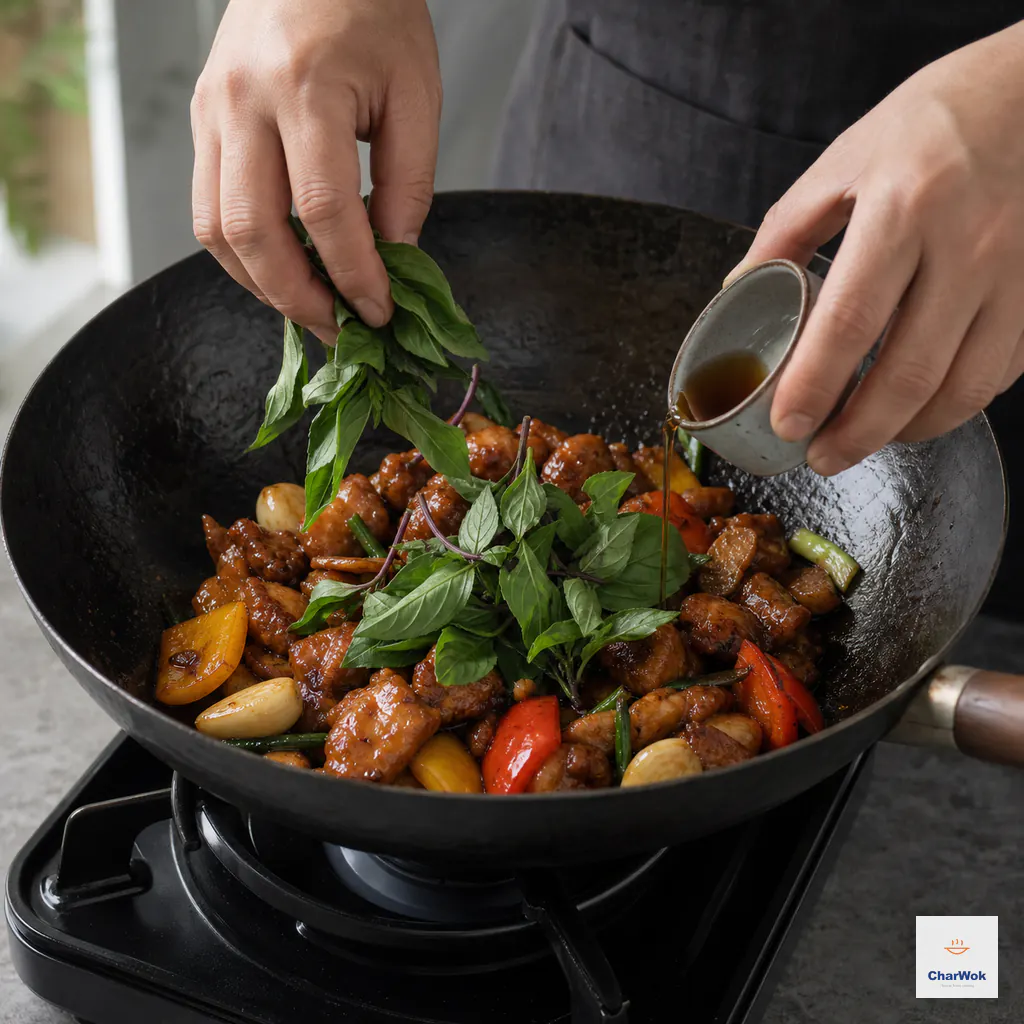
Turn off the heat before adding Thai basil and the reserved sesame oil
When things go wrong
The following fixes separate sauce texture from chicken doneness, which prevents a thin sauce from becoming a reason to overcook the meat.
- Sauce stays thin and pale. The most common failure. Keep boiling with the lid off until the liquid coats the back of a spoon. If the chicken is already cooked through, lift it out, reduce the sauce on its own, then return the chicken.
- Sauce turns bitter or scorches. You let it go too far at high heat. Once the liquid is thick, drop to medium and stir constantly for the last minute. Sugar burns fast in a syrup.
- Chicken is dry. The pieces may be uneven or may have cooked well past 165°F (74°C). Check several of the largest pieces early; once all tested points are safe, move the chicken to a clean plate while the sauce finishes reducing.
- Dish tastes one-dimensional. Usually means weak aromatics. Use real toasted sesame oil, fresh ginger sliced thin enough to crisp, and fresh Thai basil. Dried basil or sweet basil will flatten the flavor.
- Oil separates and pools. You either used too much sesame oil or reduced past the point where the emulsion holds. A tablespoon or two of warm water whisked in off the heat brings it back together.
- Sesame oil smells burnt. You heated it too hard at the start. Sesame oil has a low smoke point. Keep the aromatics stage gentle, below a hard sizzle.
Variations and what to serve it with
The classic move is to cook and serve this in an unglazed clay pot, which arrives at the table still sizzling. A cast-iron skillet gives the same effect at home. The clay retains heat so the sauce keeps bubbling for the first minute at the table, which is half the theater.
For variations, swap the chicken for bone-in wings (they braise beautifully and the skin gets even better) or use the wine-forward approach of marinating first. A spicier cousin adds a spoon of chili bean paste to the braise. If you like the ginger-scallion profile but want something lighter, scallion oil chicken is the cold-plate sibling of this dish, and old ginger chicken leans even harder into the warming ginger note, which is why all three pair so well with a bowl of plain rice on a cold night.
On the side, you want plain steamed rice to soak up the sauce. Jasmine rice cooked on the stove is the default; egg fried rice works if you are stretching leftovers. For a vegetable, a quick bok choy stir-fry or a plate of smashed cucumber cuts through the richness. If you are building a chicken-heavy menu, this dish sits comfortably next to kung pao chicken or oyster sauce chicken, and it earns a spot in any cold-weather lineup alongside peppercorn braised wings.
For drinks, the Shaoxing wine already in the pot suggests its match: a glass of the same wine, warmed, or a light beer. A tannic red will fight the sesame and basil, so skip the cabernet.
Storage and reheating
Transfer leftovers to shallow containers and refrigerate within 2 hours of cooking, or within 1 hour when the room is above 90°F (32°C). Use refrigerated leftovers within 3 to 4 days. Reheat in a covered pan or microwave until several of the largest pieces reach 165°F (74°C); steam and sauce texture are not temperature checks. See the USDA leftovers guidance.
For more ways to cook chicken or plan the starch alongside it, browse the chicken recipes by cooking method and Chinese rice recipes.
Three cup chicken: a few common questions
Can I use boneless, skinless thighs? Yes. Cut them into similar-sized pieces and use the thermometer rather than a fixed braise time; several of the largest pieces must reach 165°F (74°C).
Do I really need a clay pot? No. A wide wok or heavy skillet with a tight lid can brown, braise, and reduce the chicken. A clay pot mainly changes heat retention and presentation.
Is there a substitute for Shaoxing wine? Dry sherry gives a different but workable flavor. If the substitute or cooking wine contains added salt, reduce the soy sauce according to the label and adjust only after reduction.
Why add the basil last? Adding Thai basil off the heat limits wilting and keeps more of its fresh aroma. Stir it through the already-safe chicken just before serving.
How do I fix a thin, watery sauce? First confirm several of the largest chicken pieces have reached 165°F (74°C). Move the chicken to a clean plate, reduce the sauce uncovered until it coats a spoon, then return the chicken briefly.
How do I know the chicken is cooked? Insert a food thermometer into several of the largest pieces, avoiding bone. Every tested point must reach 165°F (74°C); meat color, sauce thickness, and a fixed number of minutes are not substitutes.