Good fried rice is a test of how well you handle heat, moisture, and timing. Soy sauce fried rice strips the dish down to its bones: cooked rice, garlic, scallions, and soy. With nothing to hide behind, every mistake shows. A clump of wet rice turns to paste. Burnt garlic turns the whole bowl bitter. Pour the sauce in too early and you stew the grains instead of frying them.
I have wrecked this dish more times than I can count, usually by reaching for warm rice straight out of the cooker because I was hungry and impatient. It always ends the same way: a sticky, steamed mass that tastes fine but looks like oatmeal. The version below is the one I make when I want loose, glossy, separate grains with that lightly smoky edge the Cantonese call wok hei. It is a side dish at heart, but it carries a meal when you add an egg or some leftover meat.
At a glance: Use cold, day-old jasmine rice and mix the seasonings in one bowl before you turn on the stove. Roughly 3 cups (about 450 g) of cooked rice feeds two and fries in under three minutes over the highest heat your burner will hold. Add the soy mixture last, off the flame or nearly so, so the liquid sears onto the grains instead of soaking in.
What this dish is, and where it sits
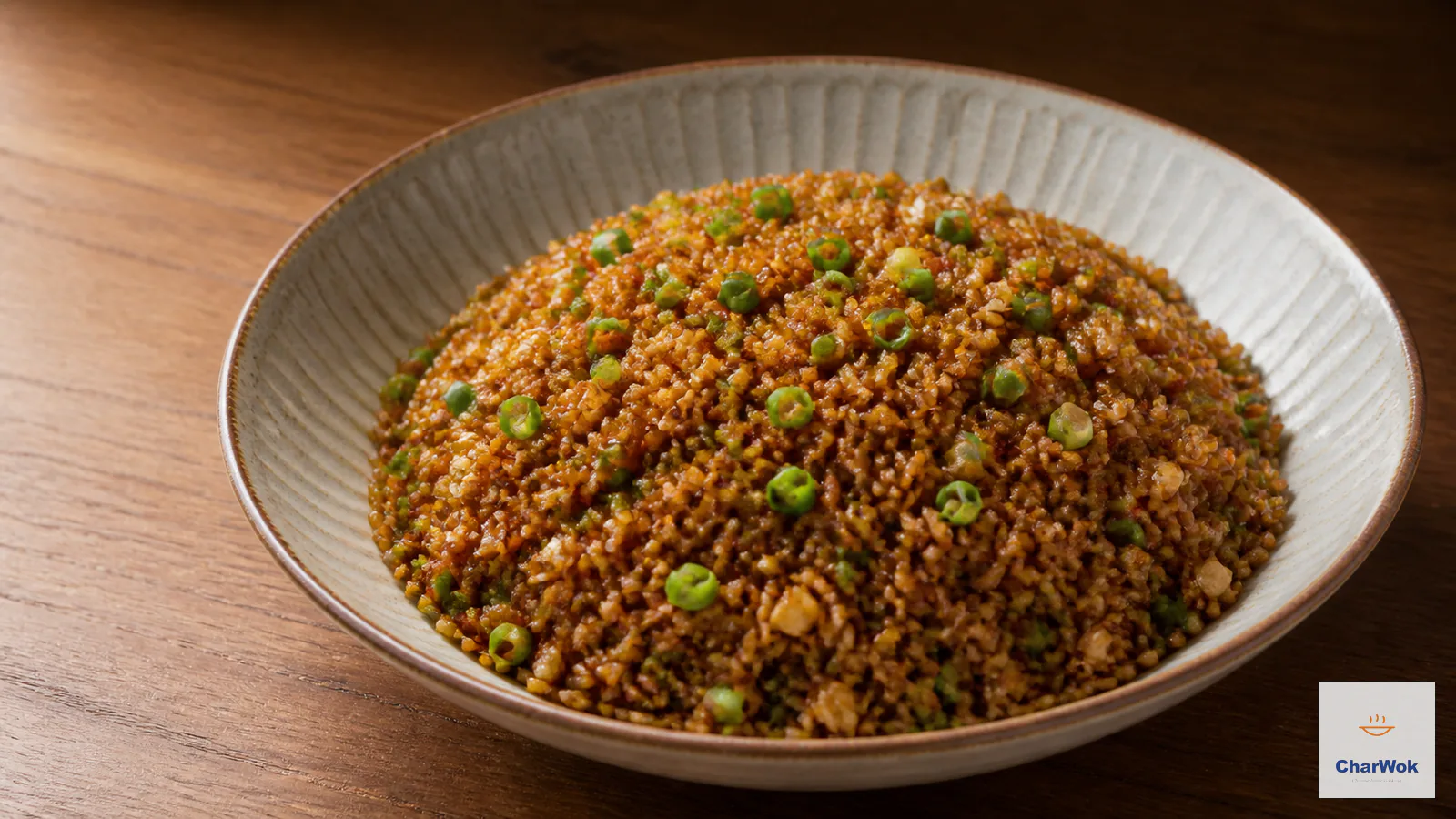
Soy sauce fried rice (jiang you chao fan, 酱油炒饭) is the plainest member of the fried rice family. Its richer cousins get the spotlight: Yangzhou fried rice loaded with shrimp, ham, and egg, or the baroque egg-fried rice where every grain is meant to wear a yellow coat. This one is the quiet weeknight version, the thing Northern and Cantonese home cooks throw together when there is leftover rice and not much else.
That austerity is the point. With only garlic, scallion, and soy in the pan, you can actually taste the soy. You taste the difference between light and dark, between toasted sesame oil and the pale stuff, between rice that was cooked dry and rice that was cooked wet. It is a dish that rewards a stocked pantry and punishes a sloppy one. If you keep the two Chinese soy sauces and a bottle of toasted sesame oil on hand, you are most of the way there.
The one decision that matters more than the recipe
The rice is the dish. Everything else is seasoning. Get the rice wrong and no amount of garlic or dark soy will save it. What you want is grains that are firm, separate, and surface-dry, so that when they hit hot oil they fry instead of steam.
Jasmine rice is my default. It is a medium-long grain with enough starch to taste soft but not so much that it glues itself together. Short-grain sushi rice works if that is what you have, but it is starchier and you must cook it drier than you would for eating plain. Basmati is too dry and fluffy for Chinese fried rice; save it for biryani.
Cooked and cooled is non-negotiable, and day-old refrigerated rice is better still. Overnight in the fridge dries the surface of each grain and firms the starch through retrogradation, so the grains hold their shape under heat instead of collapsing. If you forgot to plan ahead, spread freshly cooked rice on a tray and refrigerate it uncovered for at least an hour, or learn the stovetop steaming method that cooks rice slightly firm from the start. Fresh, warm rice is the single most common reason home fried rice turns gummy.
Ingredients
Ingredients at a glance
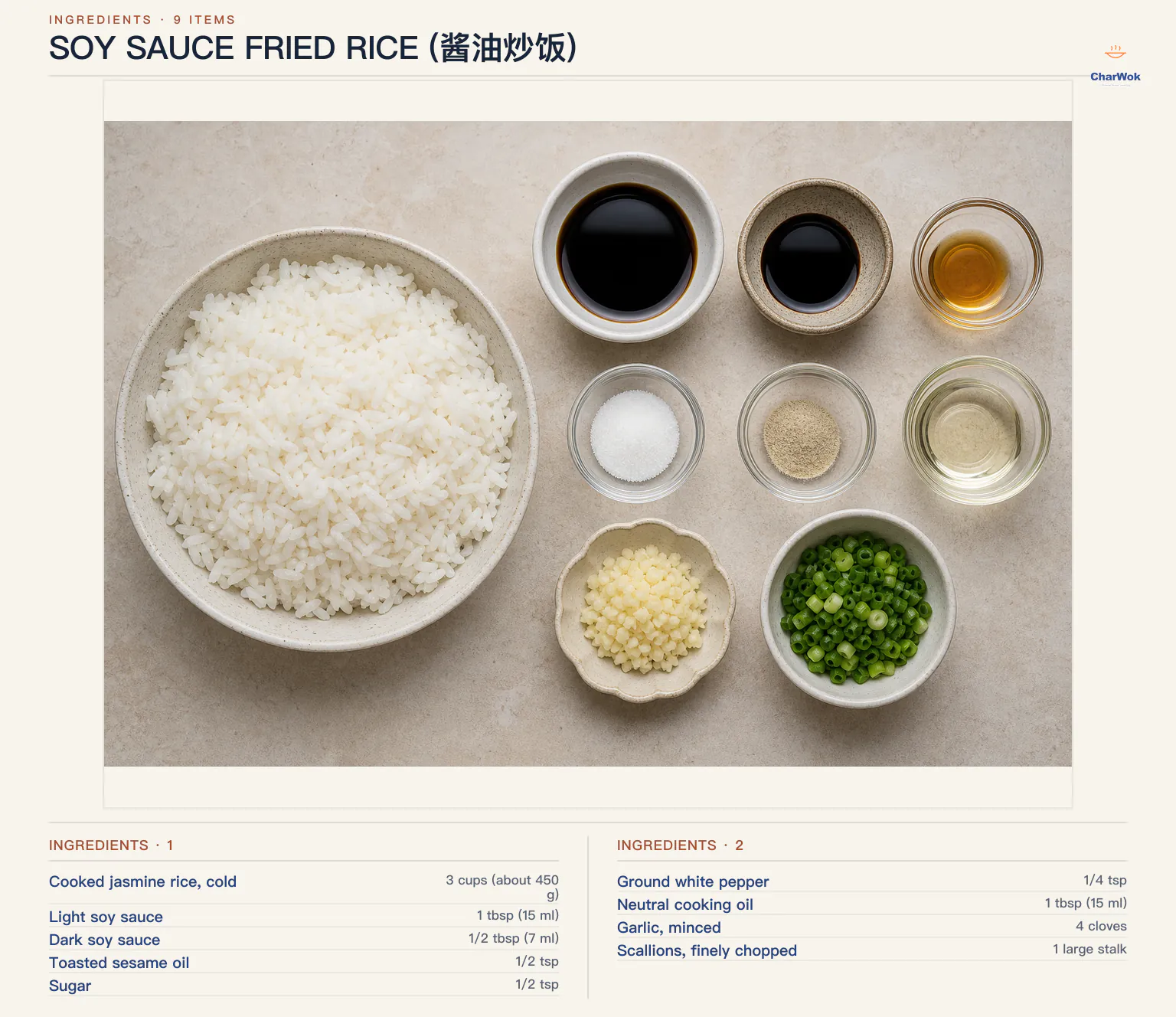
For two servings as a side dish. Double it for a main, but fry in two batches so the pan is not crowded.
| Ingredient | Amount | Notes / substitute |
|---|---|---|
| Cooked jasmine rice, cold | 3 cups (about 450 g) | Day-old, refrigerated. Short-grain white rice works if cooked firm. Basmati is not ideal. |
| Light soy sauce | 1 tbsp (15 ml) | The salty, savory one. Japanese usukuchi works; regular Japanese soy is milder, use a little more. |
| Dark soy sauce | 1/2 tbsp (7 ml) | For color and a faint caramel note. If you only have light soy, the rice will taste fine but stay pale. |
| Toasted sesame oil | 1/2 tsp | Must be the dark, Asian toasted kind. Pale cold-pressed sesame oil is the wrong ingredient here. |
| Sugar | 1/2 tsp | Balances the salt. White or light brown both fine. |
| Ground white pepper | 1/4 tsp | Sharper and cleaner than black pepper. Black pepper is an acceptable substitute. |
| Neutral cooking oil | 1 tbsp (15 ml) | Canola, grapeseed, sunflower, or peanut. Peanut is traditional and adds flavor; avoid olive oil. |
| Garlic, minced | 4 cloves | Be generous. 1/2 tsp garlic powder mixed into the sauce works if you have no fresh. |
| Scallions, finely chopped | 1 large stalk | Split the white and green parts. White goes in early with the garlic, green goes in at the end. |
Method
- Break up the rice first. While it is still in the storage container, use a fork or damp fingers to separate the cold grains and crumble any clumps. Do this now, before the pan is hot, because trying to break up a block of rice in a screaming wok while garlic burns underneath is how everything goes sideways. This single step is the difference between even cooking and lumps of cold rice folded into hot rice.
- Mix the sauce in one small bowl. Stir together the light soy, dark soy, sesame oil, sugar, and white pepper. Having it ready is not laziness, it is survival. Once the pan is hot you have seconds, not minutes, and you do not want to be measuring soy sauce while garlic crosses from golden to acrid. This is the rule for nearly all Chinese stir-fries.
- Heat the pan, then the oil. Get a wok or wide skillet hot enough that a drop of water dances and evaporates in a second. Add the oil and swirl to coat. If you are using a carbon-steel wok, the seasoning and heating technique matters: a properly heated, lightly oiled wok is genuinely nonstick and the rice will not cling. With a nonstick pan, do not preheat it dry; add oil to the cool pan, then heat.
- Bloom the garlic briefly. Add the minced garlic and the white parts of the scallions. Toss for about ten seconds, just until fragrant and barely taking color. Garlic burns between golden and bitter in the time it takes to blink, so err on the side of raw. You are flavoring the oil, not browning the garlic.
- Add the rice and press it flat. Dump in the rice and immediately toss it through the garlic so the garlic does not sit on the hot metal and scorch. Then use the back of a spatula to press the rice into a thin, even layer touching the pan. Leave it alone for about 20 seconds. That contact is where the frying happens: the surface moisture flashes off, the grains dry further, and a few of them pick up a faint crust. Stirring constantly from the start steams the rice instead of frying it.
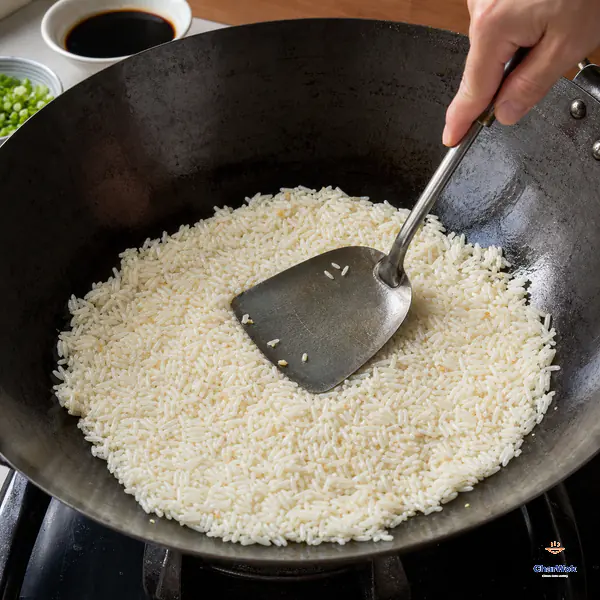
Mix the rice with the garlic first, then press it into a thin layer and leave it undisturbed for about 20 seconds; direct pan contact dries and fries the grains instead of steaming them.
- Toss to heat through. Flip and break up any remaining clumps. Keep the rice moving every few seconds so it heats evenly and the bottom does not scorch. After a minute the rice should be hot all the way through, visibly drier, and beginning to jump when you toss it.
- Add the sauce and kill the heat. Pour the sauce around the edge of the pan, not directly on the rice, then toss vigorously. Move the pan off the burner or turn it down. You want the soy to hit hot metal, sizzle, and reduce onto the grains in a thin film. If you leave the heat on high the bottom layer will soak up all the salt and color and the top will stay pale. The whole thing should take on an even warm-brown tone within 20 seconds of tossing.
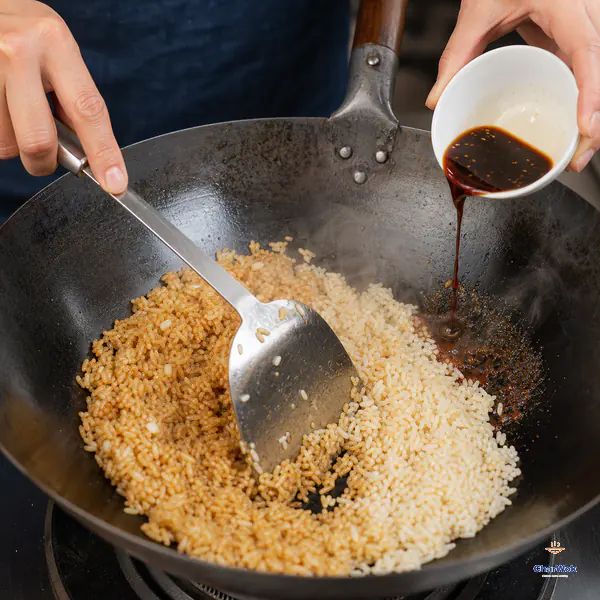
When the rice is piping hot, pour the mixed sauce around the bare wok edge rather than over the centre; toss immediately until every grain carries a thin, even warm-brown coating.
- Finish with scallion greens and serve immediately. Stir in the green parts of the scallions off the heat so they wilt slightly but stay bright. Taste and add a pinch of salt only if needed; the soy is already salty. Dish out at once. Fried rice waits for nobody, and it turns heavy and damp if it sits.
When it goes wrong, and how to fix it
Most fried rice failures fall into a handful of patterns. Here are the ones I see again and again.
- Rice clumps into a sticky mass. Cause: rice was too fresh or too wet. Fix for next time: use cold rice and break it up before frying. Fix right now: press it flat, let it sit undisturbed on the heat to dry out, then toss. You can rescue mediocre rice by giving it more time on the pan than feels comfortable.
- The rice is mushy and grey. Cause: you added the soy while the heat was low or you poured it on top of the rice and stirred slowly, so it soaked in like a braise. Fix: sauce goes around the hot edge of the pan, and you pull the pan off the flame as you toss.
- Garlic tastes bitter and burnt. Cause: too long in hot oil, or the oil was smoking before the garlic went in. Fix: ten seconds, no more. If your garlic darkens past pale gold, start over; the bitterness will poison the whole dish.
- The grains stick to a carbon-steel wok. Cause: the wok was not hot enough or was under-oiled before the rice went in. Heat it until it smokes, add oil and swirl to coat the sides, then add the rice. A well-seasoned wok is naturally slick; an unseasoned one will fight you, and the fix is building that seasoning layer before the next cook.
- It tastes flat despite looking right. Cause: missing the small things. The sesame oil, the pinch of sugar, the white pepper, and the raw scallion finish each add a layer. Skip any one and the dish reads as salty rice rather than seasoned rice. A few drops of chili oil at the table also wakes it up if you like heat.
- It is too salty. Cause: dark soy is strong, or your light soy is a salty brand. The fix is more rice, not less soy. When in doubt, hold back a teaspoon of the soy mixture and taste at the end.
Variations and what to serve it with
This recipe is the vegan base. Treat it as a canvas rather than a fixed formula.
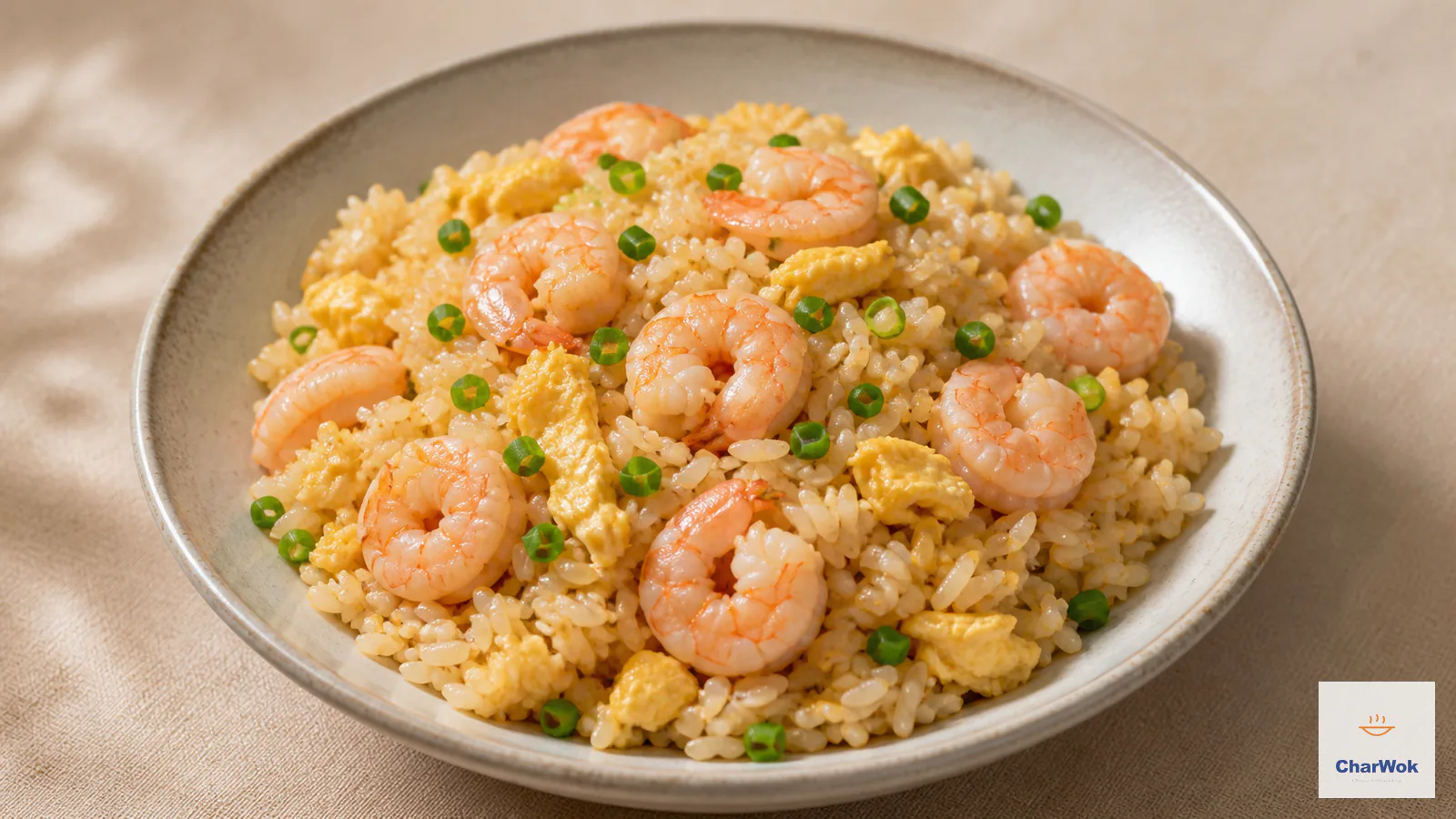
- Egg fried rice. Beat an egg, scramble it in the hot oil first, then dish it out. Fry the rice, then fold the egg back in at the end. This is the most common upgrade and turns the side into a light meal.
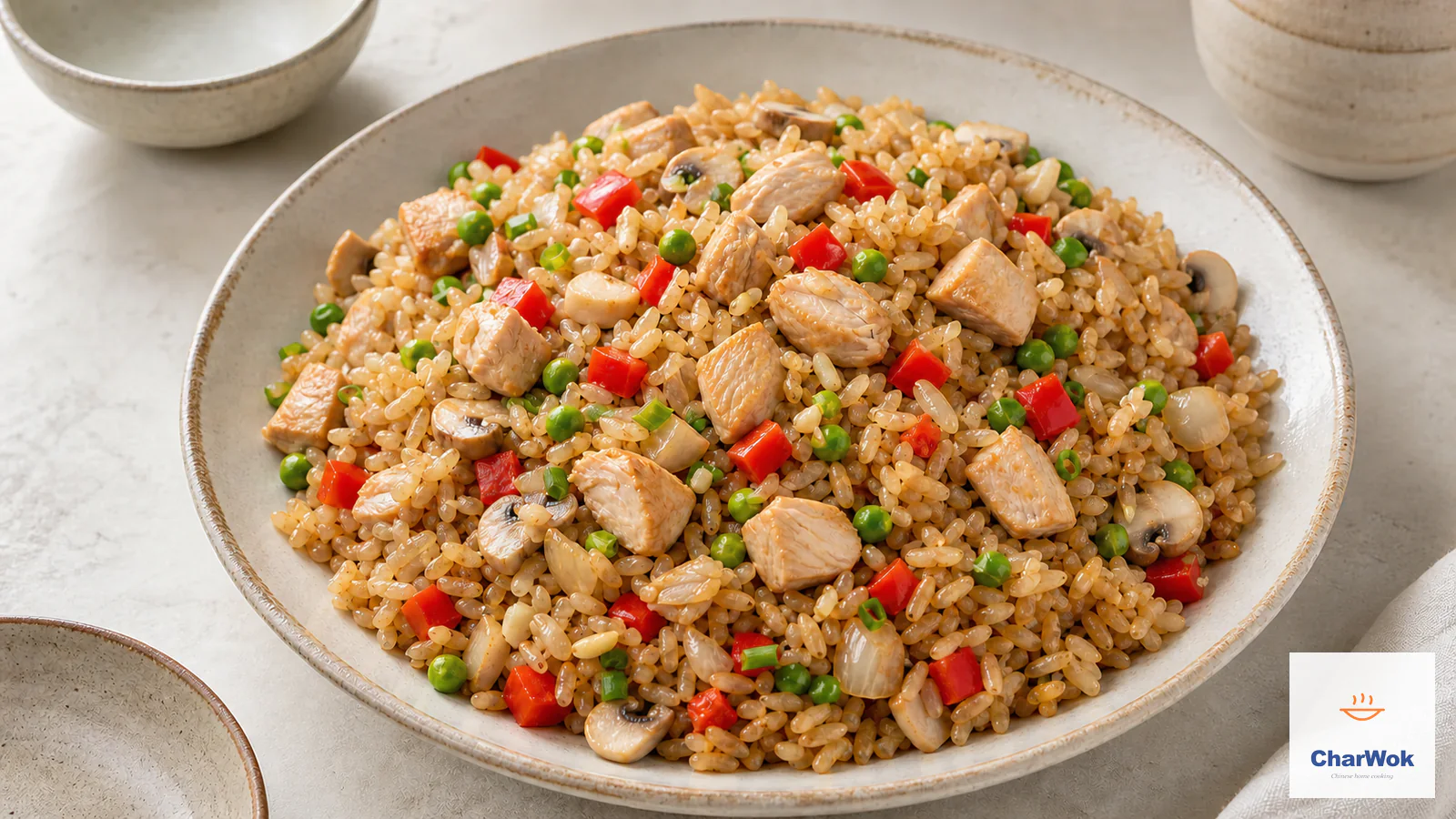
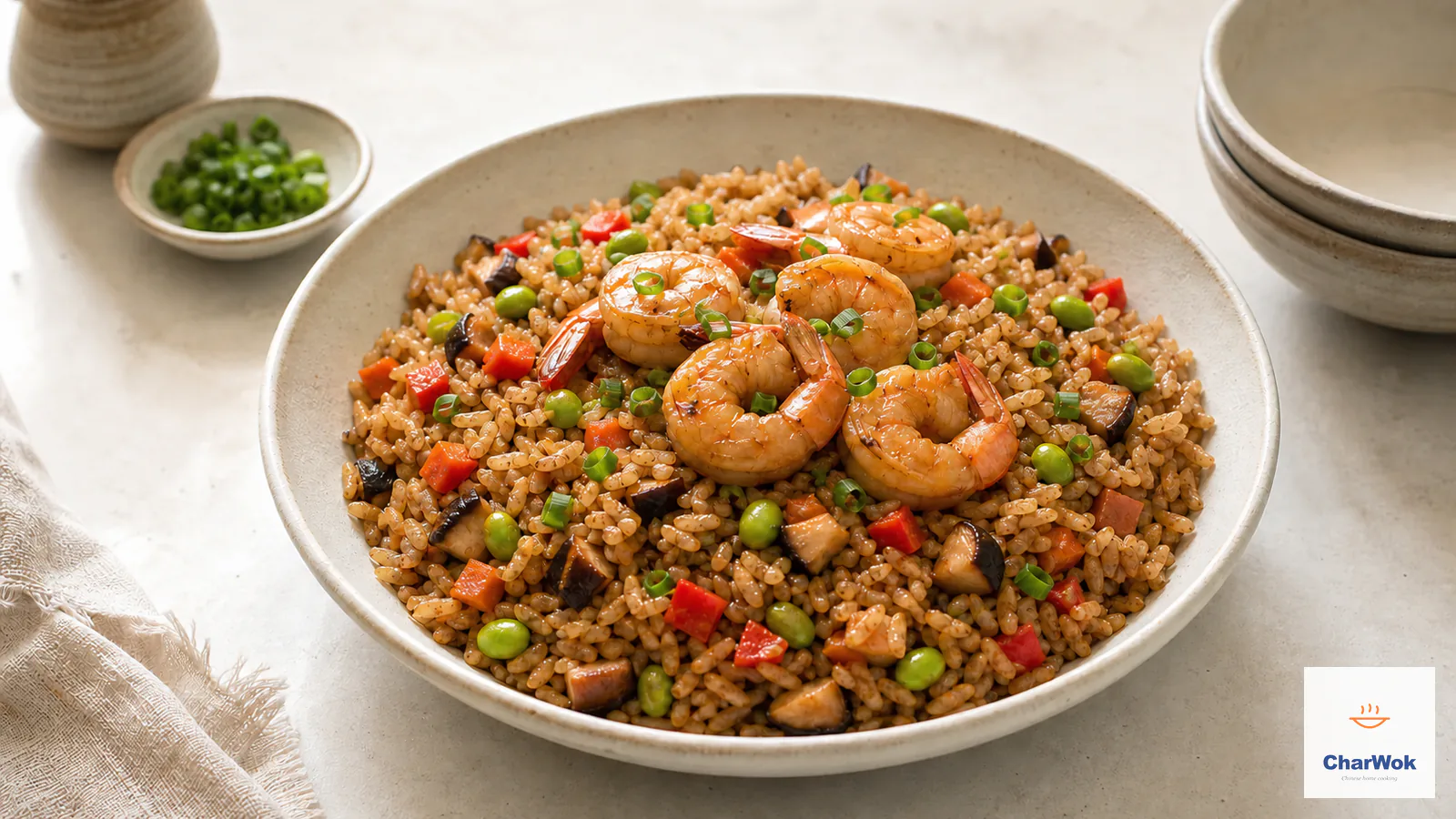
- With protein. Dice cooked chicken, smoked or five-spice tofu, or shrimp and add them when you fold in the sauce. For raw protein like ground pork or shrimp, cook it first in the oil, remove it, then proceed. The technique for pork is laid out in the pork fried rice recipe, and the seafood route is covered under shrimp fried rice. Cooked diced chicken follows the same logic as chicken fried rice.
- With vegetables. Peas, diced carrot, corn, diced bell pepper, or celery all work. Cook harder vegetables like carrot in the oil before the rice so they soften; tender ones like peas go in at the end.
- No day-old rice? The cooked-from-raw route is the soy sauce rice pilaf, which hits similar flavor notes by steaming the rice in seasoned liquid rather than frying it.
As a side, this rice pairs with anything saucy or strongly flavored. It is excellent alongside red braised pork belly, where the rice soaks up the braising liquid, or a simple stir-fried green like garlic bok choy. For a one-bowl meal, top it with a fried egg and a drizzle of chili oil, and add a quick soup on the side; a tomato egg drop soup rounds out the meal without competing. The same soy-and-garlic backbone shows up in soy sauce pan-fried noodles if you want the flavor on a different carb.
Storage and reheating
Fried rice keeps, covered, in the fridge for up to three days, though the texture is best on day one. To reheat, use a hot dry pan with a splash of oil and toss until steaming, or microwave covered with a damp paper towel to add a little moisture back. Do not add more soy when reheating; it concentrates and turns salty fast. I do not recommend freezing it; the grains crack and go chalky on thaw.
FAQ
Can I make this with freshly cooked rice?
Not really. Warm rice holds too much moisture and will clump and steam instead of frying. If you must use same-day rice, spread it on a tray and chill it uncovered for at least an hour to dry the surface. Cold, day-old rice is always better.
Do I need both light and dark soy sauce?
Dark soy gives color and a mellow caramel note; light soy gives the salt and umami. You can use only light soy and the rice will taste right, just paler. Do not swap in dark soy alone, it is less salty than it looks and will leave the dish flat and dark.
What pan works best?
A carbon-steel or cast-iron wok holds heat best and gives the most wok hei, but a large heavy skillet works on a home burner. Avoid nonstick if you want any browning on the grains. The key is a pan that stays hot when the cold rice goes in.
Why add the sauce at the end?
Liquid added early sinks in and makes the grains soggy and unevenly colored. Added at the end onto hot metal, it flashes into a glaze that coats each grain. That is the whole trick to glossy, even fried rice.