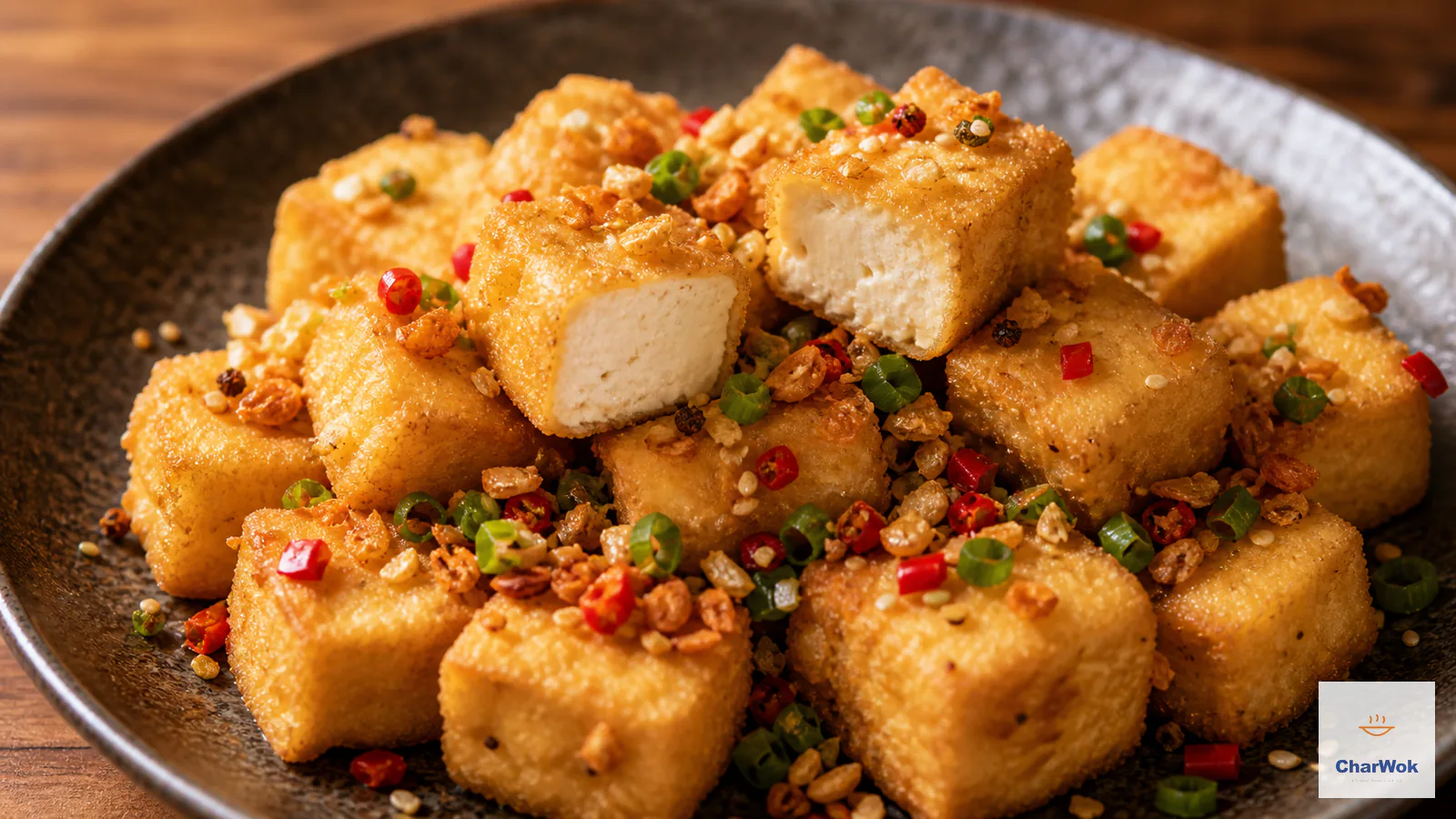
The soul of salt and pepper tofu is a collision of textures and a single principle: the crust has to stay shatteringly crisp long enough to carry the seasoned salt into your mouth, while the inside stays hot and custard-soft. The disappointment every home cook recognizes is the version that arrives at the table gummy, pale, and weeping water onto the plate ten minutes later. That outcome is not a tofu problem. It is a coating, oil-temperature, and moisture-management problem, and all three are easy to fix once you understand the starch science underneath.
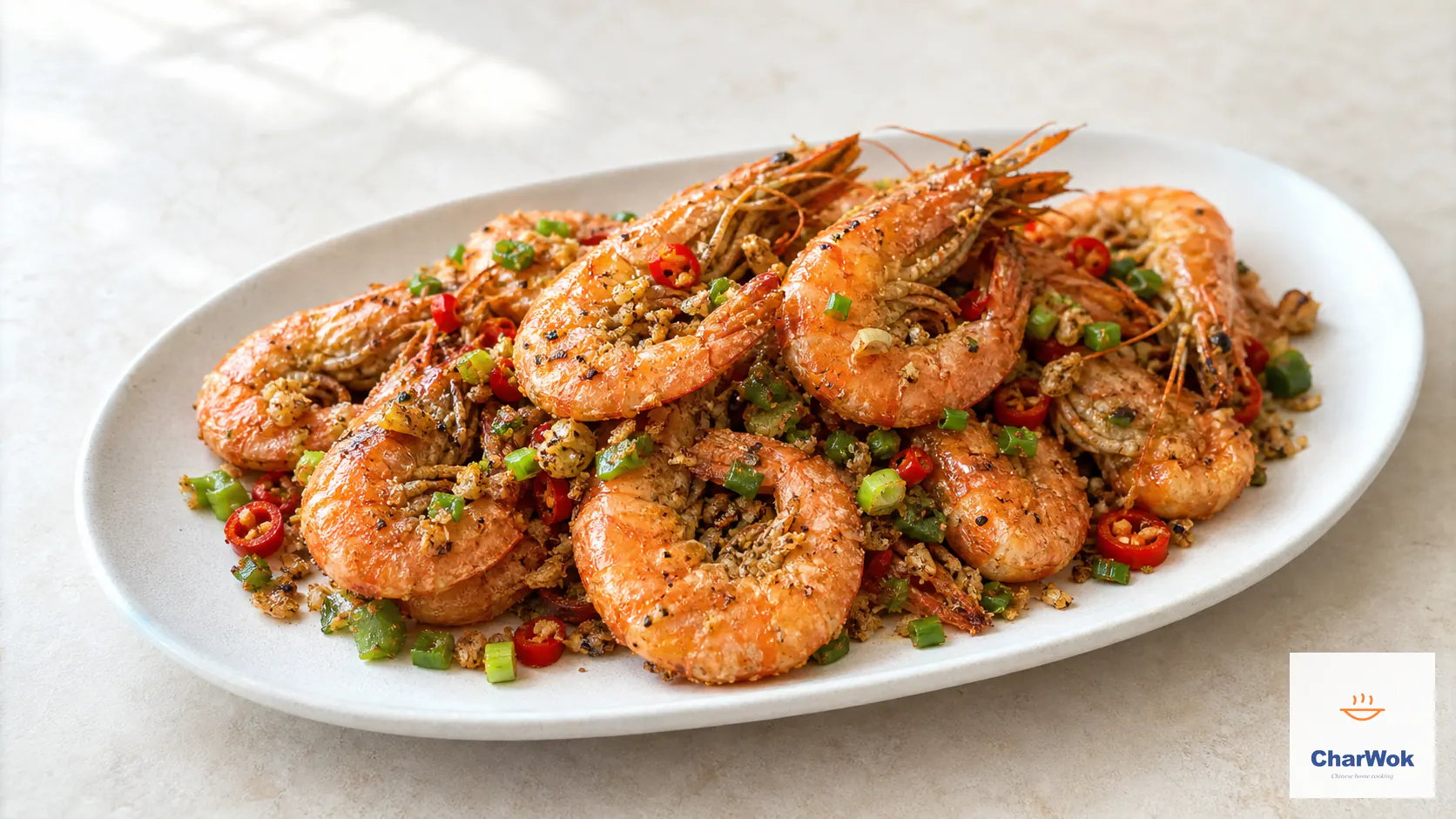
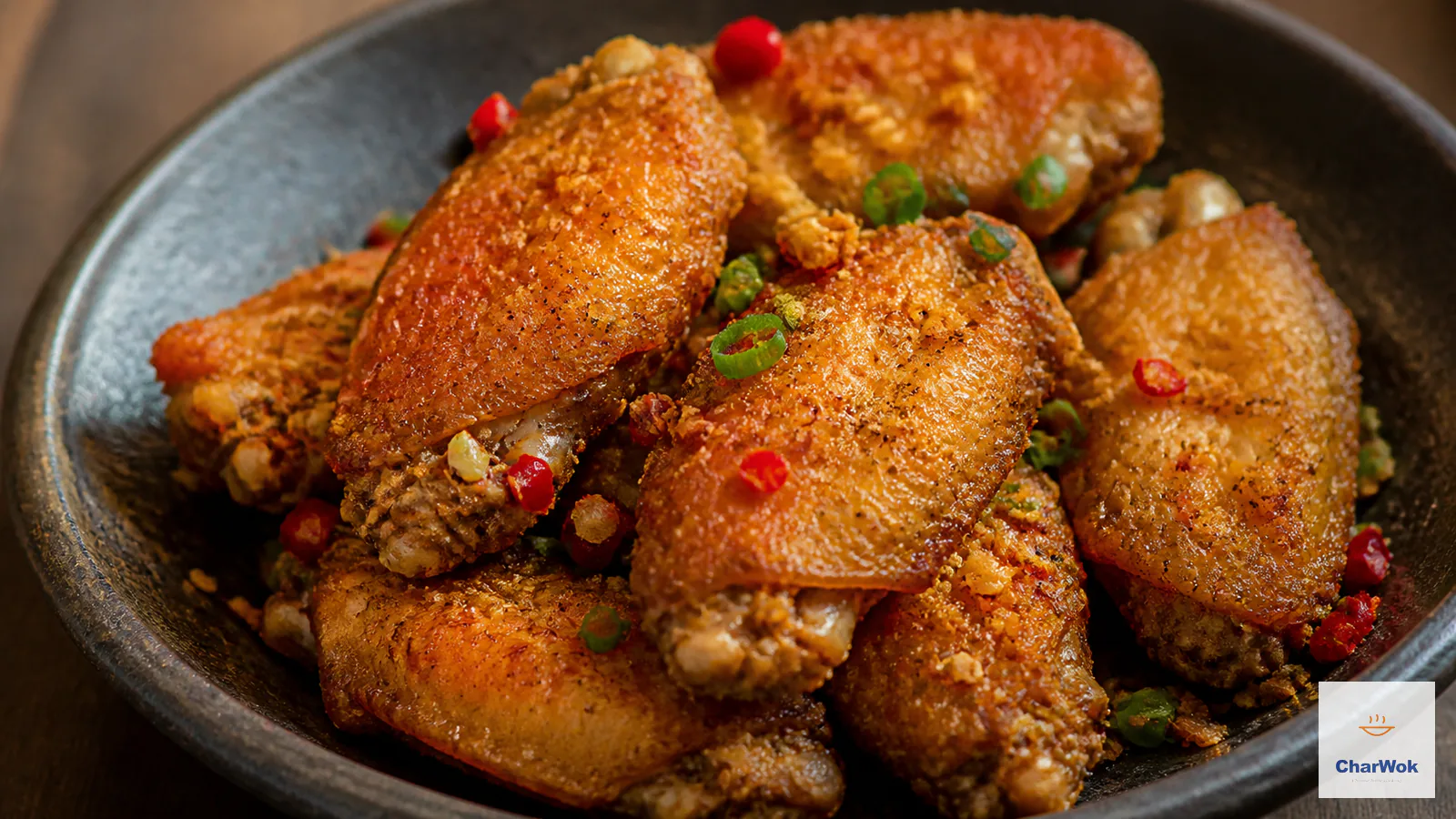
This is the Cantonese jiao yan (椒盐, "pepper salt") family of dishes, and the same seasoning that dresses salt and pepper shrimp, salt and pepper wings, and salt and pepper squid. Once you have the spice blend toasted and the coating technique down, the method transfers directly to all of them. Tofu is the cheapest and most forgiving place to learn it, because the stakes are low and a slightly broken cube still tastes good.
At a glance. Cube firm tofu, press it dry, dust in a 1:1 flour-to-cornstarch blend, shallow-fry at around 180°C / 350°F until the bubbles slow, then toss in a hot wok with toasted jiao yan and the holy trinity of minced shallot, garlic, and chili. From cutting board to plate: under 25 minutes. The make-or-break move is surface dryness before coating: wet tofu makes a soggy shell every time.
What salt and pepper tofu actually is
The jiao yan seasoning is older and broader than any single dish. Northern and western Chinese kitchens have toasted Sichuan peppercorn with salt for centuries as a finishing dust; Cantonese cooks formalized it into a fragrant blend that adds star anise, fennel, and toasted sesame, then used it as a quick post-fry coating for proteins. Tofu is the vegetarian entry point. Because the bean curd itself is bland, it is an honest canvas, and the spice and the crust have nowhere to hide.
It belongs in the same universe of crisp-tossed tofu as garlic-sauce pan-fried tofu and scallion tofu, but those are sauce dishes. Here there is no sauce, no basting, no reduction. Everything you taste is either in the coating or in the spice blend. That is why the technique matters so much: a thin, even, dry shell is the entire point.
Ingredients
Ingredients at a glance
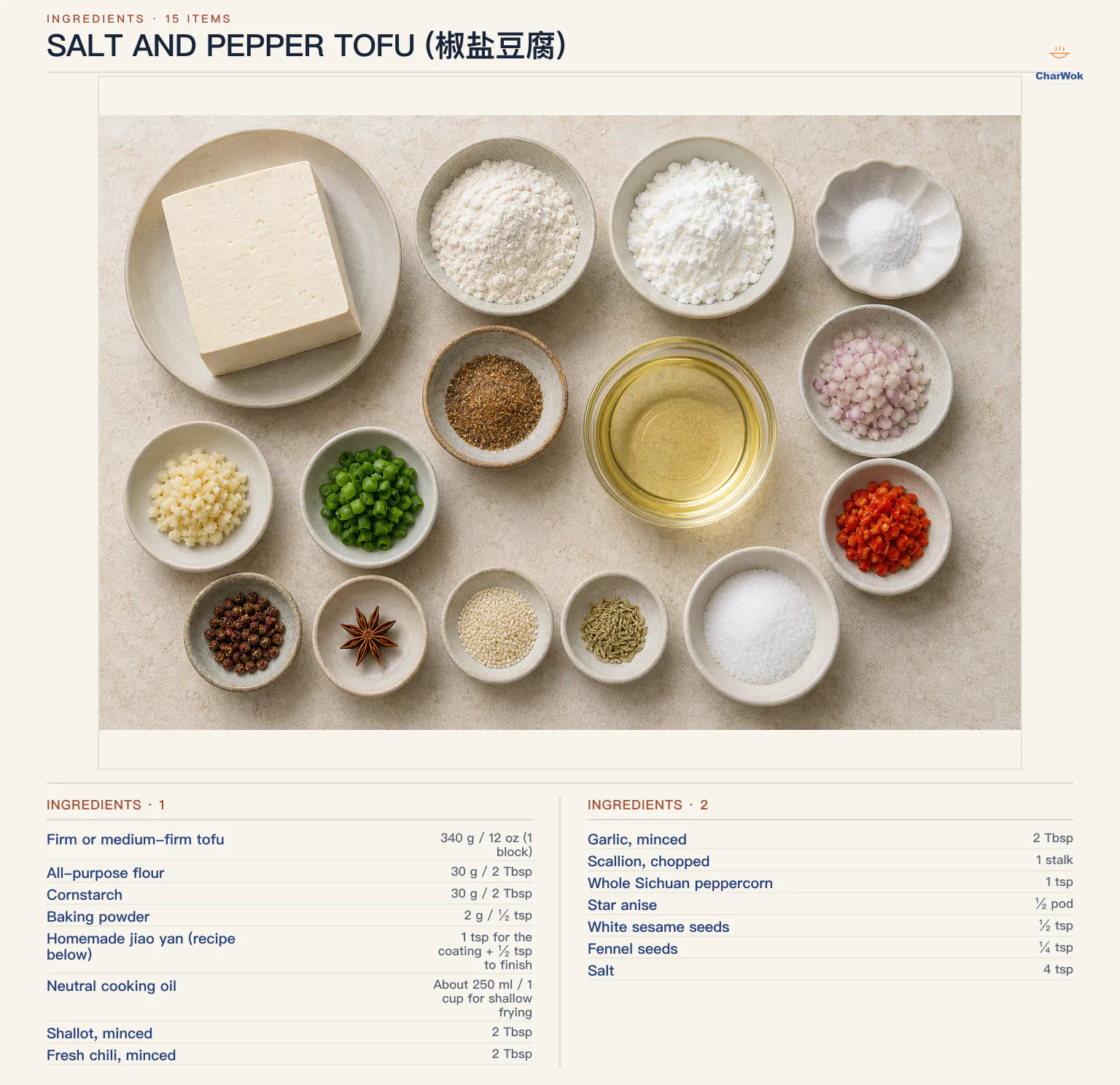
Serves 2 as a main with rice, or 4 as one dish in a larger spread.
| Ingredient | Amount | Notes / substitute |
|---|---|---|
| Firm or medium-firm tofu | 340 g / 12 oz (1 block) | Not silken. Press lightly if very wet. See tofu section below. |
| All-purpose flour | 30 g / 2 Tbsp | Provides structure; gluten holds the shell together. |
| Cornstarch | 30 g / 2 Tbsp | Potato starch or tapioca starch work; they give the crispness flour cannot. |
| Baking powder | 2 g / ½ tsp | Optional. Gives a slightly puffier, lighter crust. |
| Homemade jiao yan (recipe below) | 1 tsp for the coating + ½ tsp to finish | Or a store-bought salt-and-pepper blend; reduce salt elsewhere if yours is salty. |
| Neutral cooking oil | About 250 ml / 1 cup for shallow frying | Peanut, canola, or sunflower. Reuse once for a similar fry. |
| Shallot, minced | 2 Tbsp | Red or yellow onion in smaller quantity if you have no shallot. |
| Fresh chili, minced | 2 Tbsp | Thai bird's-eye for heat, jalapeño for milder; seeds in or out to taste. |
| Garlic, minced | 2 Tbsp | Fine mince, not crushed. You want it to distribute, not clump. |
| Scallion, chopped | 1 stalk | Added off the heat so it stays bright green. |
Homemade jiao yan (the seasoning that does the heavy lifting)
A jar of this in your cupboard is more useful than any single recipe. It seasons popcorn, eggs, roasted nuts, and the other jiao yan dishes above. Toasting matters because raw Sichuan peppercorn tastes medicinal and the fennel and star anise release their volatile oils only with gentle heat. A dry pan, low flame, and patience.
| Ingredient | Amount | Notes |
|---|---|---|
| Whole Sichuan peppercorn | 1 tsp | Pick out any black seeds; they are gritty. Green (má qīng) peppercorn is more aromatic. |
| Star anise | ½ pod | Break one arm off a whole pod. |
| White sesame seeds | ½ tsp | Toasted separately is even better. |
| Fennel seeds | ¼ tsp | Whole seeds only; ground fennel burns. |
| Salt | 4 tsp | Fine sea salt or kosher. Table iodized tastes flat here. |
Combine everything in a dry pan over low heat. Shake or stir every 20 seconds. The salt will darken just a shade and the spices will smell unmistakably warm and licorice-sweet — about 4 to 6 minutes. Pull the pan off the heat the moment the sesame starts to color, because sesame goes from golden to bitter in seconds. Cool fully, then grind in a mortar or a clean spice grinder. You want a coarse powder, not dust; a little texture is part of the pleasure.
This is also the place to read up on the peppercorn itself if you cook a lot of Sichuan food; the difference between fresh red Sichuan peppercorn and a stale jar is the difference between a tingle and nothing. See the Sichuan pepper guide and the notes on how to grind it correctly.
Picking and prepping the tofu
Use firm or medium-firm tofu, the kind sold in tubs of water. Extra-firm works too and is easier for beginners because it holds its shape. Do not use silken, because it will collapse in hot oil. If you have only silken on hand, save it for the cold silken tofu with scallions and go buy a firmer block for this.
Cut the block into cubes roughly 2.5 cm / 1 inch on a side. Smaller cubes crisp faster but lose their soft interior; larger ones stay custardy but need a longer fry and absorb more oil. Two and a half centimeters is the sweet spot. Cut evenly so they finish together.
Now the step most recipes underweight: dry the surface. Lay the cubes on a clean kitchen towel or a double layer of paper towel, lay another towel on top, and press gently for a minute or two. You are not trying to expel water from inside the tofu (you want that moisture, it is the soft interior); you are only removing the film of surface water that would otherwise turn your starch coating into paste. Wet surface, gummy crust. Dry surface, glassy crust. There is no middle ground.
The coating, and why it is half flour, half starch
Flour alone makes a bready, soft shell. Starch alone makes a brittle shell that flakes off the moment you look at it. The 1:1 ratio gives you the best of both: the wheat gluten forms a flexible film that clings, and the cornstarch gelatinizes in the hot oil into the crisp glassy layer. This is the same logic behind the coating on fried wontons and most Chinese crisp-fried proteins.
Sift the flour, cornstarch, and baking powder together onto a wide plate, then whisk in a teaspoon of your jiao yan. Sifting is not pedantry: it breaks up lumps that would land on the tofu as wet spots and fry into dark blisters.
Coat the cubes a handful at a time. Drop them in, flip with your fingers to cover all sides, then lift each one out and rub it gently between your palms to knock off the excess. You want a thin, even film you can almost see the tofu through. A thick coat turns into a dumpling wrapper around the cube and goes soft from trapped steam.
Frying: the part that decides everything
Heat the oil in a wok or wide skillet over medium-high. You want a shallow pool, enough to come halfway up the side of the cubes, not a deep fry. A 28 cm / 11 inch carbon-steel wok is ideal because the wide base lets you fry a full batch without crowding and the sloped sides make skimming easy. A heavy skillet works; just fry in two batches.
- Test the oil before committing. Drop in one bread cube or the end of a wooden chopstick. If it bubbles steadily and browns in about 60 seconds, the oil is near 180°C / 350°F. If it sits inert, wait. Dropping tofu into cool oil is the single most common cause of a greasy result; the coating drinks oil before it can set.
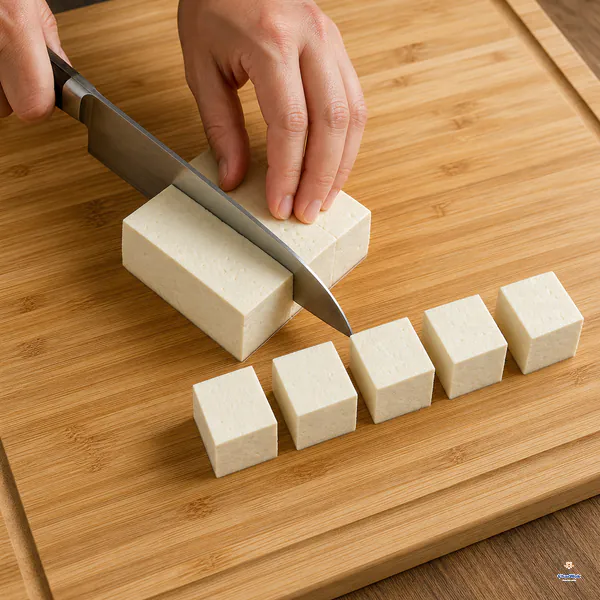
Cut firm tofu into uniform 2.5-centimetre cubes so every piece fries at the same rate.
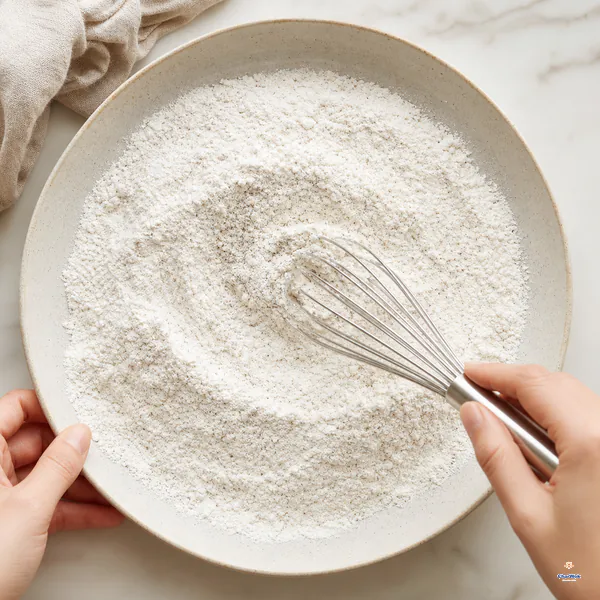
Sift and whisk the flour, starch, baking powder and half a teaspoon of seasoning until the coating is fine and even.
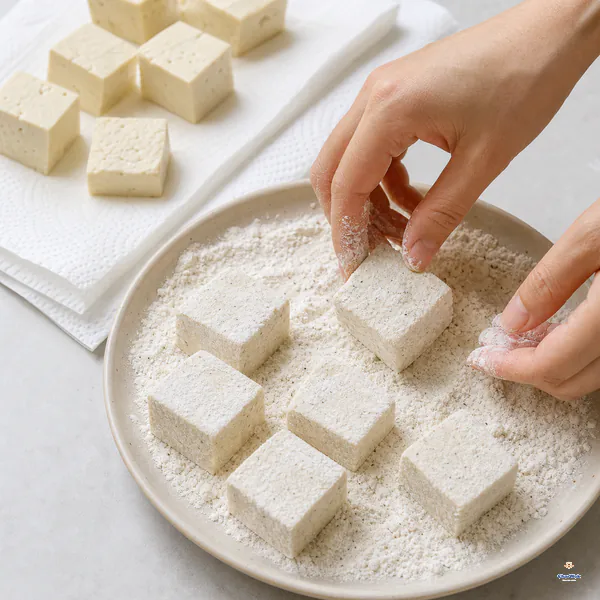
Pat the tofu thoroughly dry, apply only a thin coat, then remove every patch of loose excess before frying.
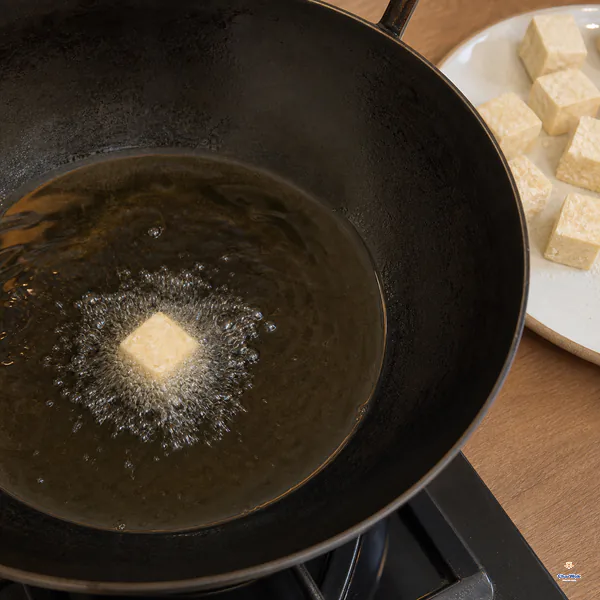
Test with one cube: immediate dense bubbles mean the oil is ready; fry in batches and leave space around every piece.
- Lower the cubes in one at a time. Use chopsticks or tongs. Do not dump the whole batch in at once, and do not let the cubes touch each other for the first 10 seconds: that is when the starch is gelatinizing, and any contact welds them together.
- Leave them alone for the first minute. The instinct to flip immediately will tear the crust off. Once the edges firm up and the bubbling slows slightly, turn each cube with tongs to brown the next face.
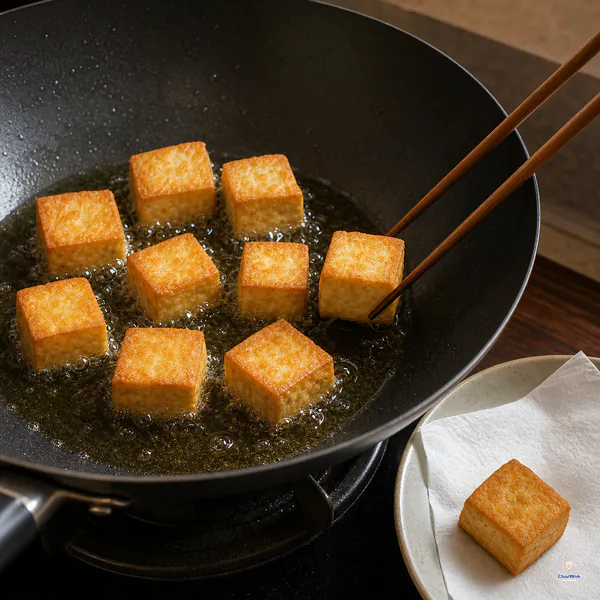
Let the crust set before turning, brown every face to a deep gold, then drain the batch on paper.
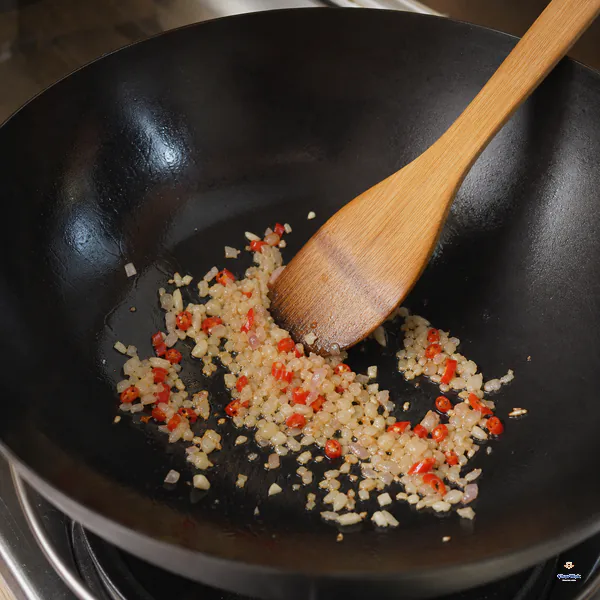
Leave about half a tablespoon of oil and stir-fry shallot, chili and garlic for about one minute, stopping at pale-golden garlic edges.
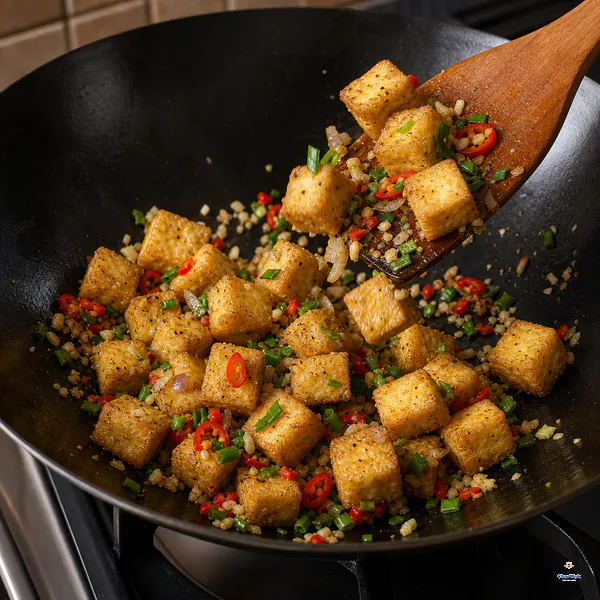
Return the tofu, add scallion and half a teaspoon of seasoning, toss only long enough to distribute the aromatics, then serve immediately.
- Flip two or three times total. You want even deep gold on every face. Total fry time is about 4 to 5 minutes.
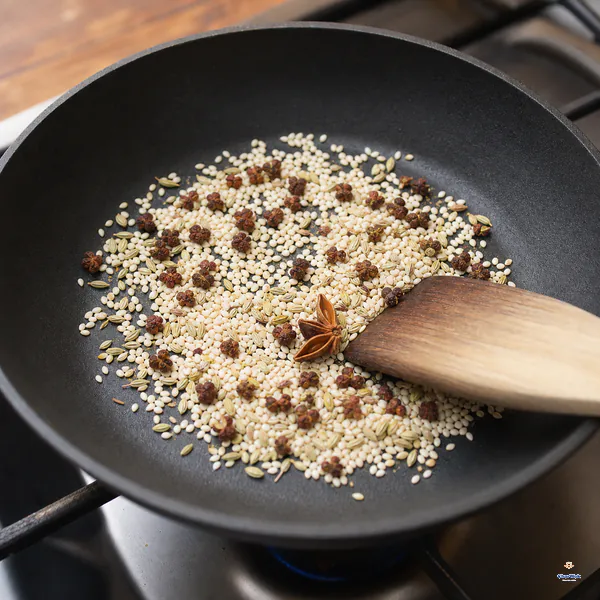
Dry-toast the peppercorns, half star anise, sesame, fennel and salt over low heat until fragrant and the salt darkens only slightly.
- Pull when the bubbling quiets. The rate of bubbling is moisture escaping as steam. When the bubbles around a cube visibly slow and the color is a warm amber, it is done. The cube continues to darken for a few seconds after it leaves the oil, so pull it one shade lighter than you think. Drain on paper towel.
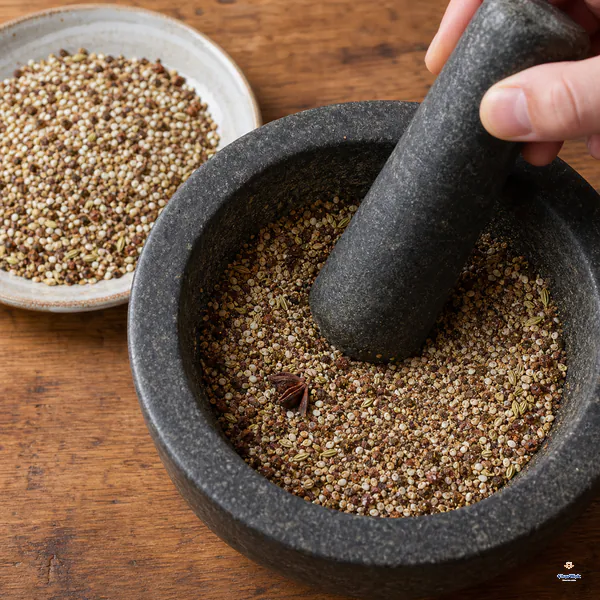
Cool the toasted blend completely, then grind it slightly coarse so the fresh aroma remains distinct.
Fry in two batches if your pan is crowded. Overcrowding drops the oil temperature, the cubes steam instead of fry, and you are back to gummy. Drain the oil back to about ½ tablespoon before the next step.
The toss
With about half a tablespoon of the fry oil left in the wok over medium heat, add the shallot, chili, and garlic. Stir for roughly a minute, just until the garlic smells sweet and the shallot softens. Garlic burns fast at this stage and turns bitter; if your wok is running hot, add the garlic a few seconds after the shallot.
Return the tofu, add the chopped scallion, and dust with the remaining ½ teaspoon of jiao yan. Toss for 15 to 20 seconds, no more. The goal is to coat the cubes in the aromatic oil and spice, not to cook them further, which would soften the crust you just built. Plate immediately. The dish does not wait.
When it goes wrong: troubleshooting
The crust is soggy within minutes. Two usual suspects: the tofu surface was wet when you coated it, or the oil was below 175°C / 350°F and the coating drank oil instead of setting. Fix: dry more aggressively next time, and verify oil temperature with the chopstick test before the first cube goes in.
The coating slides off in sheets. You used all starch, no flour, or the cubes were too wet. The flour's gluten is what anchors the crust to the bean curd. Go back to the 1:1 ratio and re-dry the tofu.
The cubes burst or spit dangerously. Surface water hitting hot oil. Pat drier. Also check that you are not using medium-soft tofu, which holds too much free water to shallow-fry safely.
Color is uneven, with pale faces and dark faces on the same cube. You flipped too early or not enough. Let each face set before turning, and turn two to three times for full coverage. A pan that is too small, forcing the cubes to lean on each other, also causes pale patches where they touch.
It tastes flat. The jiao yan is under-toasted, under-salted, or stale. Toasted correctly, it should smell warm and almost sweet from the fennel and star anise before it ever hits the wok. Make a fresh small batch and taste it raw: it should be salty, tingling, and aromatic, not just salty.
Variations and pairings
Spicy version. Double the fresh chili in the toss and finish with a spoonful of chili oil drizzled over the top at the table. The oil clings to the crisp shell without softening it the way a sauce would.
Five-spice twist. Add ¼ teaspoon of homemade five-spice powder to the coating flour. It changes the dish from Cantonese to something closer to northern street-snack seasoning, and it is excellent.
Stuffed tofu route. If you want a heartier version, the Hakka stuffed tofu technique, a slit filled with a minced-pork mixture, turns this into a main course. Fry the stuffed blocks the same way and finish with the jiao yan toss.
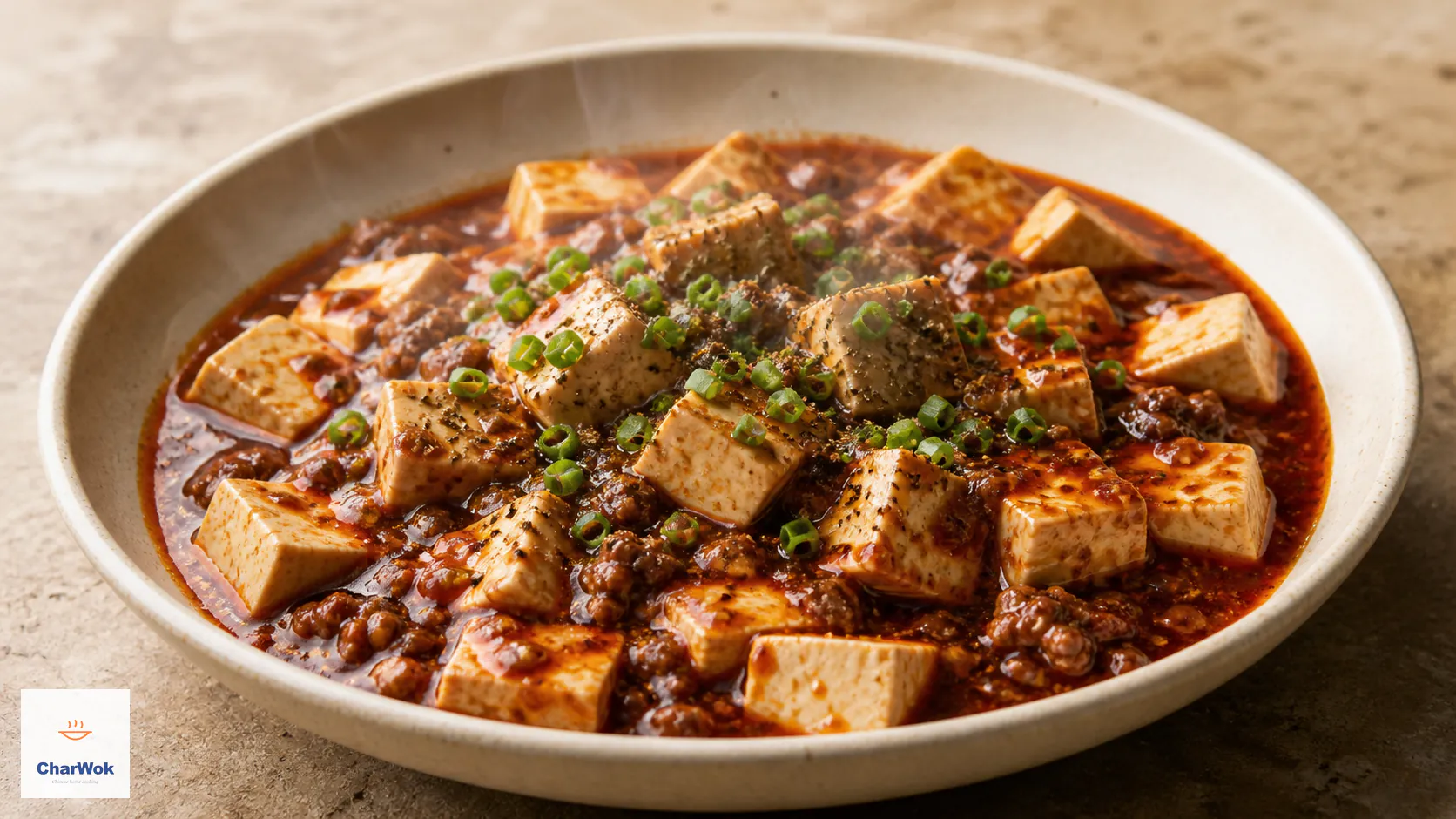
Pair it with. This is a bold, salty, fragrant dish, so build the rest of the meal around contrast: a clean soup like tofu soup with vegetables, a saucy braised dish such as Sichuan-style braised tofu or mapo tofu for the numbing-spicy counterpoint, and plenty of steamed rice. A cold beer or unsweetened barley tea balances the salt and the fry.
Storage and reheating
Salt and pepper tofu is a cook-to-eat dish. The crust will soften as it sits, because the hot interior keeps releasing steam into the coating. If you must hold it, keep the fried cubes and the jiao yan toss separate. Fry the tofu, hold it uncovered on a rack at room temperature for up to 2 hours, then do the quick toss just before serving.
Leftovers reheat best in a 200°C / 400°F oven or air fryer for 5 to 8 minutes, which re-crisps the shell. The microwave will turn it into a sponge. Re-toss briefly in a dry hot pan with a pinch more jiao yan to wake the flavor back up.
A note on the salt-and-pepper family
Once this technique is in your hands, the jiao yan blend becomes a weekday shortcut. The same blend and the same toss turn out salt-baked chicken-style wings, crisp squid, and shrimp in minutes. I keep a small jar next to the stove and reach for it more than I reach for soy sauce some weeks. The tofu is the cheapest teacher in the family; learn it here, then graduate to the more expensive proteins.
Honestly, my own first attempt years ago was a disaster: I shallow-fried dripping-wet silken tofu, the oil spat across the kitchen, and half the crust ended up stuck to the pan. The lesson was simple and I still follow it — dry surface, hot oil, 1:1 coating, brief toss. Everything else is detail.
Frequently asked questions
Can I bake or air-fry the tofu instead of shallow-frying?
Yes, with compromises. Air-fry at 200°C / 400°F for about 15 minutes, shaking halfway, and lightly oil the coated cubes first or the shell stays chalky. The result is good but never quite as shatteringly crisp as a shallow fry, because there is no oil to conduct heat evenly into the starch.
Do I need to press the tofu for hours?
No. A gentle towel press for a minute or two is enough. You want a dry surface, not a dehydrated block. Heavy pressing expels the interior moisture that keeps the center soft, and for this dish that moisture is the point.
Is store-bought salt-and-pepper seasoning fine?
It works, and many are good. Homemade tastes brighter because the spices are freshly toasted, and you control the salt level. If using a commercial blend, taste it first and cut back if it is very salty, since the coating already seasons the tofu.
Why cornstarch instead of just flour?
Cornstarch gelatinizes in hot oil into a crisp, glassy layer that flour cannot match. Flour alone leaves a soft, bready shell. The 1:1 mix balances crispness with the adhesion that keeps the coating on the cube.
Can I make it vegan and gluten-free?
It is already vegan. For gluten-free, swap the all-purpose flour for rice flour or more cornstarch; the crust will be slightly more brittle but still crisp. Confirm your soy-based condiments if you add any, though this recipe uses none.